

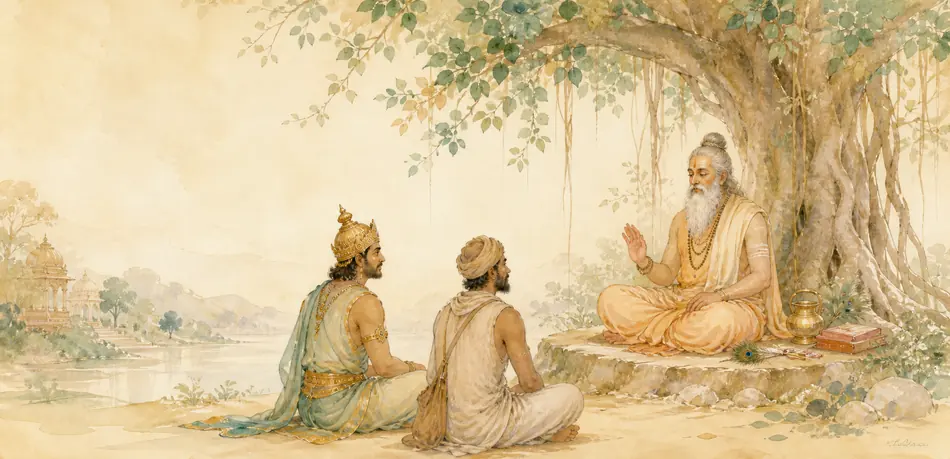
Commentary on the text “Tripura Rahasya.” The Creation of the Universe and the Path of the Jiva
First, Dattatreya speaks of Brahma: primordial Consciousness projects the Universe within itself, just as an image is reflected in a mirror. Then the primordial Consciousness, Sahaja, assumes a personal aspect called Hiranyagarbha, the Creator or the embryo of the Universe. This is Brahma. In other words, it becomes personified in the form of Ishvara, the Creator.
Within Hiranyagarbha, the embryo of the Universe, there are various egos, individualities, and jivas. Each jiva has its own predispositions. In accordance with these predispositions, Hiranyagarbha begins to devise plans for their fulfillment: he develops a framework of causes and effects, actions and fruits. As a result, the jivas that existed in embryonic form, in a latent state within Brahma the Creator, begin to develop; that is, they incarnate and take birth in order to revolve within this wheel of cause and effect.
In fact, this is how we have arrived where we are now. Who are we? We are these jivas, endowed with predispositions, who emerged from Hiranyagarbha. Hiranyagarbha, that is, Brahma, created various games and cause-and-effect situations in accordance with our predispositions. Upon incarnation, these predispositions took on a linear nature: the past and the future appeared, and in our perception they began to play themselves out one after another according to cause and effect.
When problems arise, I tell my disciples: “Brahma devised all of this. Do not take too much upon yourselves. You had predispositions, and he drew up a plan, developed chains of cause and effect, and provided an environment so that you could fully engage with these predispositions and learn to liberate them.”
Precious Human Birth
When the soul (jiva) passes through many incarnations, the development of consciousness eventually leads it to incarnation in human form. At first, a person’s aspirations are selfish. Because of their desires, such a person always seeks their unhindered fulfillment. But gradually, they turn to sacred texts because they suffer as a result of their desires and stumble about like a blind kitten. They begin seeking wise counsel and the company of sages.
And eventually, they attain what is known as a precious human birth, which is very different from other births. It is precious because this birth is intended for liberation, for seeking the teaching, a teacher, and spiritual practice. This is a very rare stage. It is as though you had been walking along some path, walking and walking, when suddenly it turned into an excellent paved road. The path changed completely. This is a precious human birth. It differs from previous karmic births in that it is intended for the path of Liberation, the study of philosophy and sacred texts, the purification of the mind, and the development of consciousness.
One of the characteristics of a precious human birth is that it allows one to meet a sage, a saint, a teacher, or many sages, whereas in non-precious births they cannot be encountered. Or even if one meets them, contact is impossible, and understanding is impossible. For example, many people encounter teachers and saints on the street, on a train, or anywhere else. They may even visit a website or forum and read the information there. But does a genuine meeting actually take place? Do many people aspire to the path of Liberation and begin practicing? Nothing of the sort. In other words, there is no meeting, and there is no precious human birth.

You look into someone’s destiny, and what do you find there? Another dozen lifetimes. The program of the svadhisthana chakra has not been worked through, the program of having children has not been worked through, the program of power has not been worked through, and the program of wealth has not been worked through. There is no opportunity; there is no precious human birth. It comes precisely when these programs have already been worked through. Brahma has created various other lilas for you, and you must work through them.
Two Ways of Working Through Karma
Karmas can be worked through in a worldly, karmic way, with consequences and obscurations, creating seeds for future births, and violating samayoga when samayoga is absent. Or they can be worked through playfully, in a self-liberated way—through contemplation and meditative experience, on the subtle level. When samayoga is present and samskaras surface from within, rnanubandhana—that is, the karmic connection with a given situation—is severed: one connection, then another, then a third.
Sometimes, while meditating, samskaras rise from the depths of the muladhara, reach the brain, and an image arises—a bhava, a coloring, and an impulse, a vasana, a desire to act. If one is vigilant, consciousness does not become involved; there is a flash—and everything dissolves into emptiness, into divine pride, as though it had never existed. But if one is not vigilant, the mind clings to these visions and seeks to develop them. As they develop, thoughts are layered upon one another and create an urge to act. That is, they convince you that something must be done, and then the action is performed. This is karma.

The process of Liberation takes place when, during meditation, as samskaras unfold, there is samayoga—that is, a sufficient inner level of awareness—and as the samskaras unfold, you can catch them with the hook of self-awareness, bring them into the state of emptiness, and dissolve them. Then all of Brahma’s tasks are experienced on the subtle level and disappear; they are no longer embodied, and there is no longer any need to materialize them. There are a great many such samskaras within us, and our task is to dissolve them all in a state of awareness, including the deepest ones, which are very difficult even to recognize.
Subtle Karmas on the Path to Liberation
Sometimes a person strives for Liberation, thinking, “I am moving toward Liberation, toward nondual Brahman,” but he has the karma to become Indra. He may renounce the world, the hells, hungry spirits, and the human realm, but then the gods of passion appear—and that is enough. His consciousness resonates, he obtains a body in Indra-loka, and he reigns in Indra-loka for one hundred and fifty thousand years. A new plan of Brahma. And if he is unfamiliar with the Teaching and lacks the proper degree of aspiration for Liberation and renunciation, this karma unfolds.
If he has overcome the tendency to become Indra within himself, there is another tendency—to become a deity in the heavenly realms. This is a very exalted state; some even call it Liberation. But it is not yet true Liberation. He may be reborn there in the World of the Gods of Form.
And so, by exhausting and releasing the tendencies within himself, a person moves toward Liberation, making stops at karmic knots, where his karmas resonate and where he has not yet passed through or learned to free himself from these tendencies. When he has freed himself from all tendencies, he merges with Brahman and fully realizes his identity with God—his realization.
The Company of a Sage as the Root Cause of All Good
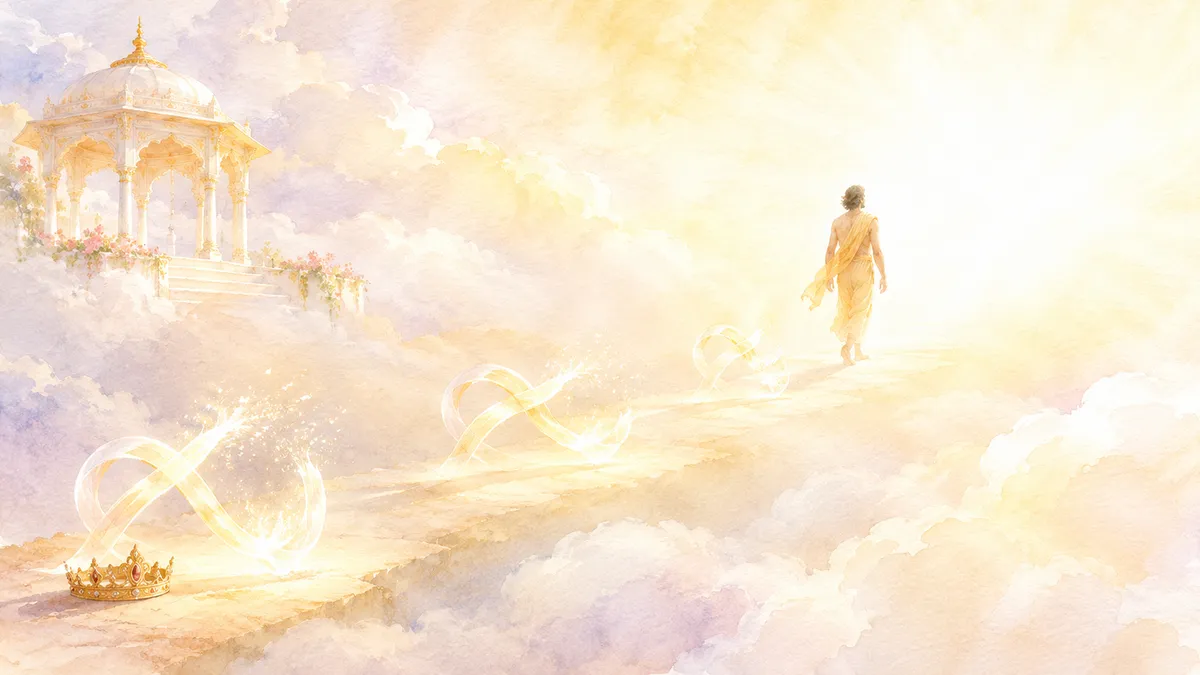
“Now you see why the company of a sage is considered the root cause of all good. This happens partly due to a person’s accumulated merit and partly due to his selfless devotion to God, but always as though by chance, like a fruit that suddenly falls from the void. Since the goal of life depends on so many causes, there are many ways of attaining it, both with regard to the mind and to a person’s predispositions. The state of a jnani also varies according to whether his efforts were greater or lesser.”
“A proportionately small effort is sufficient to erase minor vasanas. One whose mind has been purified by good deeds throughout an unbroken succession of past incarnations attains the highest results by applying the proportionately very small effort that remains for him to make (as in the case of Janaka).”
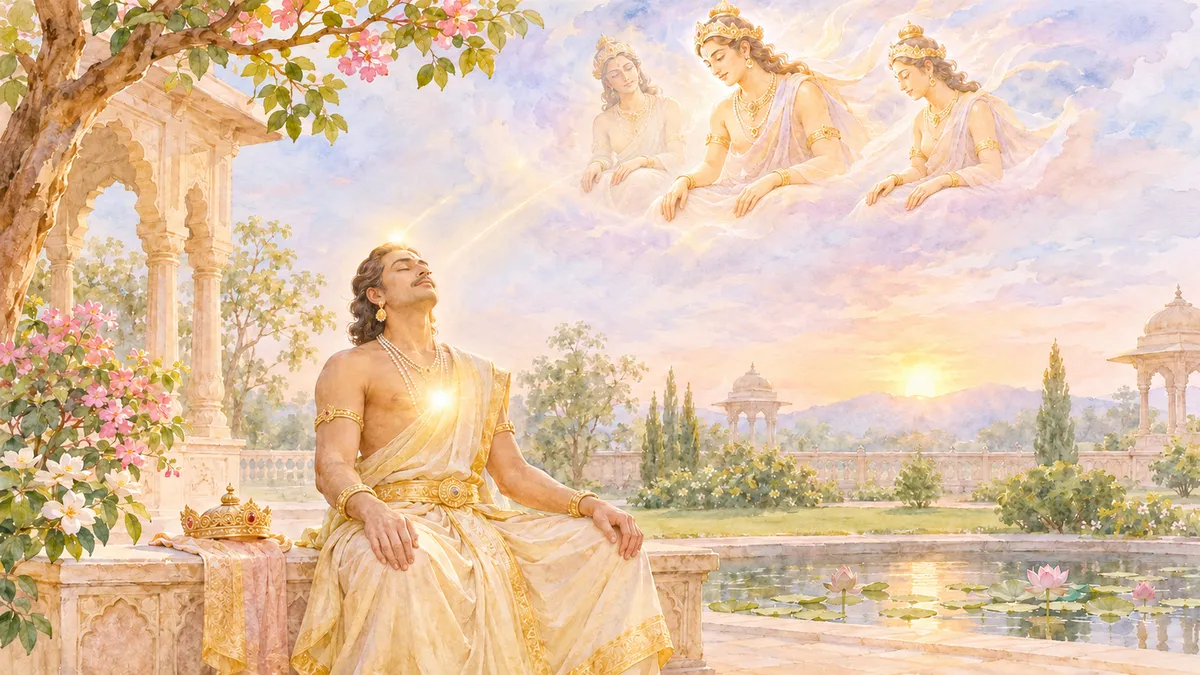
Janaka attained Enlightenment upon seeing celestial beings in the air. He had not studied philosophy, practiced pranayama, or performed austerities in a cave. He did not even have an external teacher as such. Upon seeing divine angelic beings and receiving instructions from them, he entered samadhi and never emerged from it thereafter. This happened because his mind had been purified through past lives.
Obstacles for the Unpurified Mind
Those whose minds were not purified, or were only slightly purified, in past lives encounter many difficulties and doubts on the spiritual path, and find it hard to make spiritual efforts. And as soon as they begin to make an effort, they face incredible obstacles. Sometimes it seems that these obstacles will not let them go and pursue them at every step.
Creditor spirits from past lives may be offended by something and can remember grievances for thousands of years. Spirits can live for ten thousand years and remember. You do not remember, but they remember what you did to them in a past life. The deities of samsara, who may be jealous of you, also remember who you were in a past life, despite the fact that you have become human. And samsaric deities may have no interest in your liberation. Ancestral spirits.
And when you begin to practice, all these karmas unfold, and if your mind has not been purified and you accumulated little merit in a past life, it is not easy to withstand them. Therefore, in this life, you must learn your lessons and accumulate as much merit as possible: if there is an opportunity to accumulate merit, you should do so immediately, knowing that everything comes back to you.
If there is an opportunity to make an offering to the Dharma, you should not miss it. If there is an opportunity to serve a saint, do not miss it. If there is an opportunity to serve a monk, do not miss it. If there is an opportunity to venerate a deity, do not miss it. Build temples, print sutras, strengthen sattva—do everything connected with sattva. Later, all of this will come back to you.
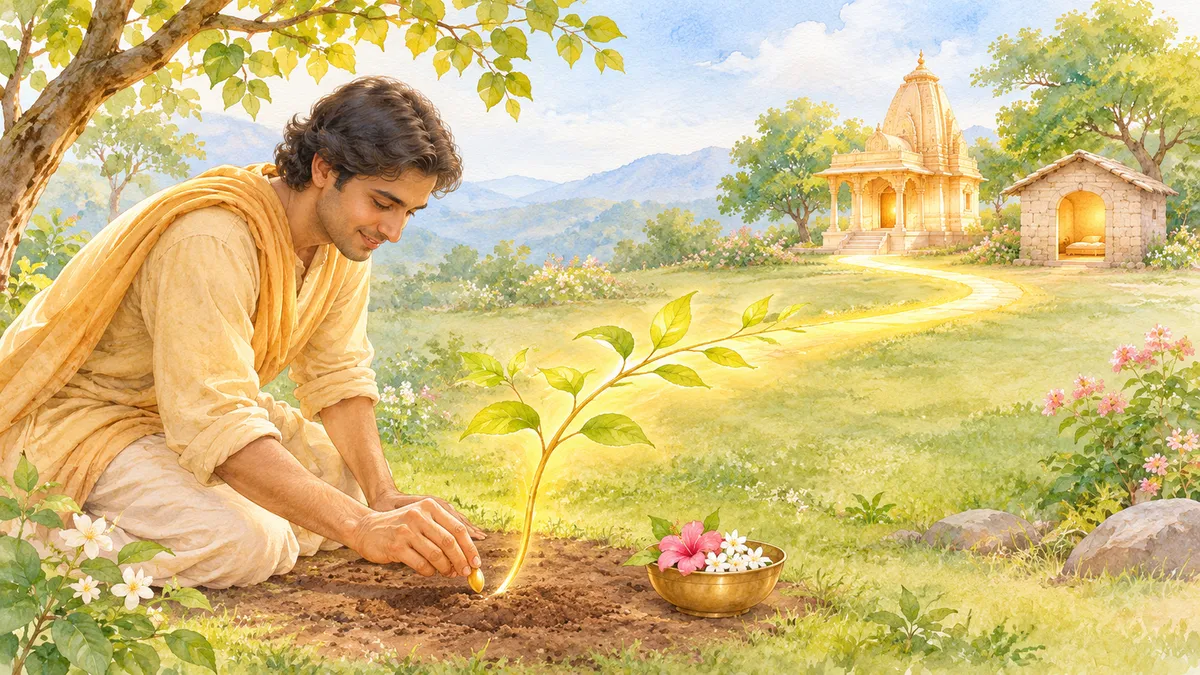
For example, sometimes there is no opportunity to practice, and a person says, “I have no cell for retreat.” This means that the causes were not created in a past life. Or there is no opportunity to perform sadhana in retreat because the mind is restless or the channels have not been purified. You need to create the causes, and then the effects will appear. If you see that something is not appearing, consider whether you need to go back a little and create sufficient causes; the effects will then manifest.
Different Categories of Sages
“A glimpse of jnana (realization) attained by one whose mind is filled with dense vasanas accumulated in past incarnations is not sufficient to overcome deeply rooted ignorance. Such an individual will have to practice samadhi (nididhyasana, or restraint of the mind and contemplation) in successive births in order to attain effective and final realization. Therefore, sages can be divided into different categories.”
Sometimes someone experiences a glimpse, that is, the stage of “conception,” and it unfolds on its own. They do almost nothing, yet it continues to grow and grow. That was the case with me. Sometimes someone experiences a glimpse but loses it and is unable to regain it, or only with great effort returns to the glimpse and engages in “gestation.” Or they engage in the “gestation” of glimpses they had in past incarnations.
Suppose someone has realized the stage of “conception” and the stage of “gestation” in this life, but there are many desires, many karmas, and many obstacles. Their “gestation” carries over and lasts for seven lifetimes. That is why it is said that through the intermediate tantras, realization can be attained in seven lifetimes.
Sometimes a person realizes the stages of “conception” and “gestation,” but their strongly negative karmas temporarily bring the process to a halt, and they lose it, become distracted, and fall back into maya. They become involved in certain activities so that these karmas may be worked out, and they no longer remember what they are doing. There are many such cases. It is very important to remember impermanence in order to help your practice develop and not allow yourself to be led astray by disruptive pranas.

The Diversity of a Jnani’s Manifestations
“O descendant of the lineage of Bhrigu! There are distinctions among the states of jnana, characterized by the aspects and relations of the intellect and by the diversity of the manifestations of activity conditioned by them.”
“Such differences are quite evident in Brahma (the Creator), Vishnu (the Preserver), and Shiva (the Destroyer), who are jnanis (sages) by their very nature. This does not mean that jnana (realization) admits of diversity. These differences depend on their vasanas (predispositions) and environment. They are the Lords of the Universe and omniscient. Their jnana is pure and is not tainted by what they do. A jnani's complexion may be fair or dark, but neither his jnana nor the qualities of his mind depend on it in any way.”
“Look at the differences among the three sons of Atri, namely Durvasa (associated with the aspect of Shiva and considered extremely irascible), Chandra (the moon, an aspect of Brahma, and regarded as the husband of the twenty-seven constellations—the daughters of Daksha), and Myself (Dattatreya, an aspect of Shriman Narayana, or Vishnu, regarded as the ideal of saints and wandering ascetics who roam naked through forests, etc.).”

“Vasishtha (one of the greatest rishis, known as the family preceptor of the kings of the Solar Dynasty) always most rigorously adheres to the performance of duties and rites prescribed by the sacred scriptures; whereas Sanaka, Sanandana, Sanatsujata, and Sanatkumara (the four sons born through the will of Brahma and instructed by Narada) exemplify hermits who are utterly indifferent to all activity, including religious rites; Narada is the ideal of bhakti (devotion to God); Bhargava (Shukra, the renowned preceptor of the asuras, who are constantly at war with the gods) supports the enemies of the gods, while the equally great sage Brihaspati (Jupiter, the preceptor of the gods) supports the gods in their struggle against their enemies; Vyasa is constantly engaged in compiling the Vedas and disseminating their truth in the form of the Mahabharata, the Puranas, and the Upapuranas; Janaka is known as an ascetic king; Bharata appears to be an idiot; and many others could also be cited as examples.”
Understanding the Transcendent Nature of a Jnani
This passage speaks of the predispositions of a jnani. All jnanis have the same realization, since they are not different from Brahman. However, the form of their manifestation may vary: their karma, outward manner of behavior, and status. People are often inclined to judge a jnani by external signs, or they tend to think, “A jnani must be like this or like that.” But this is, of course, incorrect. A jnani should be judged solely by the inner signs of awareness.
Outwardly, however, a jnani may manifest in any way, in accordance with his predispositions, and these predispositions are ordained by Brahma himself. But the conditioned minds of people are often incapable of understanding this. At first, they pay a great deal of attention to externals: the body, manner of behavior, words, and so forth. This is wrong. One should pay attention specifically to awareness.
And how can one pay attention to it? By engaging in contemplation. That is, when, as a result of practicing the teaching, you work with your awareness and it begins to arise within you, you understand: “This is a jnani. His essence is now manifesting within me. Now I can feel it myself.” Because if you pay attention to externals, you will always be confused. If you do not understand the transcendent nature of a jnani and fail to grasp the motivations, causes, and consequences, you will always be confused—one hundred percent.
For example, one might ask, “Janaka was a king. Why was he a king if he was a jnani?” A jnani may do anything; in this his mission is manifested—a particular lila of Brahman intended to reveal the Dharma for the benefit of others. However, if, without understanding the transcendent essence of a jnani, we focus on external energy, we inevitably fall into delusion.
Suppose we look at Dattatreya: we may fall into delusion by judging him from the standpoint of the body. It is very easy to be misled. One might think, “Indeed, Dattatreya likes to drink wine, amuse himself with women, and so on, act the fool, pose as a homeless man, and behave in some peculiar way.” But we do not understand the transcendent essence of Dattatreya. This is the greatest lila, one that liberates living beings. Darshan. This means that we cannot possibly understand the transcendent essence of Dattatreya from his outward behavior.
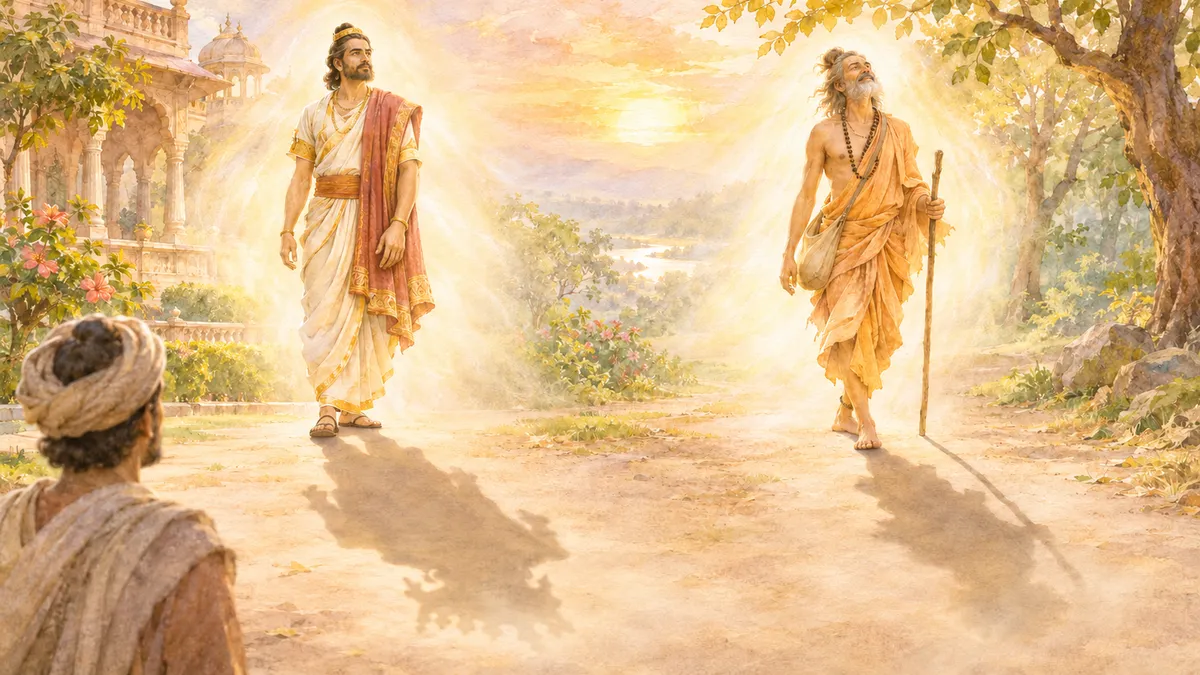
The more realized a jnani is, the more incomprehensible he becomes, because realization takes place not in the ordinary world of phenomena, but in the spiritual, magical world, in another dimension. The jnani has moved there with his consciousness; that is, he already abides in another vision, a fundamentally different one, while his body functions here, in the manifested dimension. Such is the paradox.
Vasanas and Their Influence on Realization
“There are many other individuals with distinctive characteristics, such as Chyavana, Yajnavalkya, Vishvamitra, and so on. The mystery behind all this is as follows. Of the three typical vasanas mentioned above, the vasana of action is the most powerful, and it pertains to ignorance.”
“The best are those who are free from all vasanas, and especially from even the slightest trace of the vasana of action. If a person is free from the error of disbelieving the teacher’s instructions, then the vasana of desire, not being too serious an obstacle on the path to realization, is destroyed through the practice of contemplation and reflection. In such a case, no pronounced manifestation of dispassion is required. Such people do not need to immerse themselves constantly in the study of sacred scriptures or receive instructions from the teacher—they need to engage directly in meditation and enter samadhi, the crown of the highest good. Then their lives will always resemble the lives of jivanmuktas (those liberated while still alive).”
It is very important for us to learn to enter a state of non-doing and contemplative awareness, regardless of what we are engaged in. If one has failed to discover rasa within twelve years, then after twelve years one should consider how to adjust one’s sadhana and perhaps withdraw into retreat for a long period in order to attain this rasa after all—a one-year, six-month, or even three-year retreat, until it is attained.
Those who have attained rasa and are successfully engaged in “nurturing” it may not need such a practice; they can continue practicing contemplation perfectly well in everyday life while moving and acting. These are different predispositions.
“The sages possessing subtle and clear minds did not consider it reasonable at this stage to destroy their desires and so forth, for example, by forcibly replacing some thoughts with others, for desires do not obscure realization. Therefore, their desires continue to manifest even after realization, just as they did before it occurred.”
The Transformation of Vasanas in Spiritual Practice
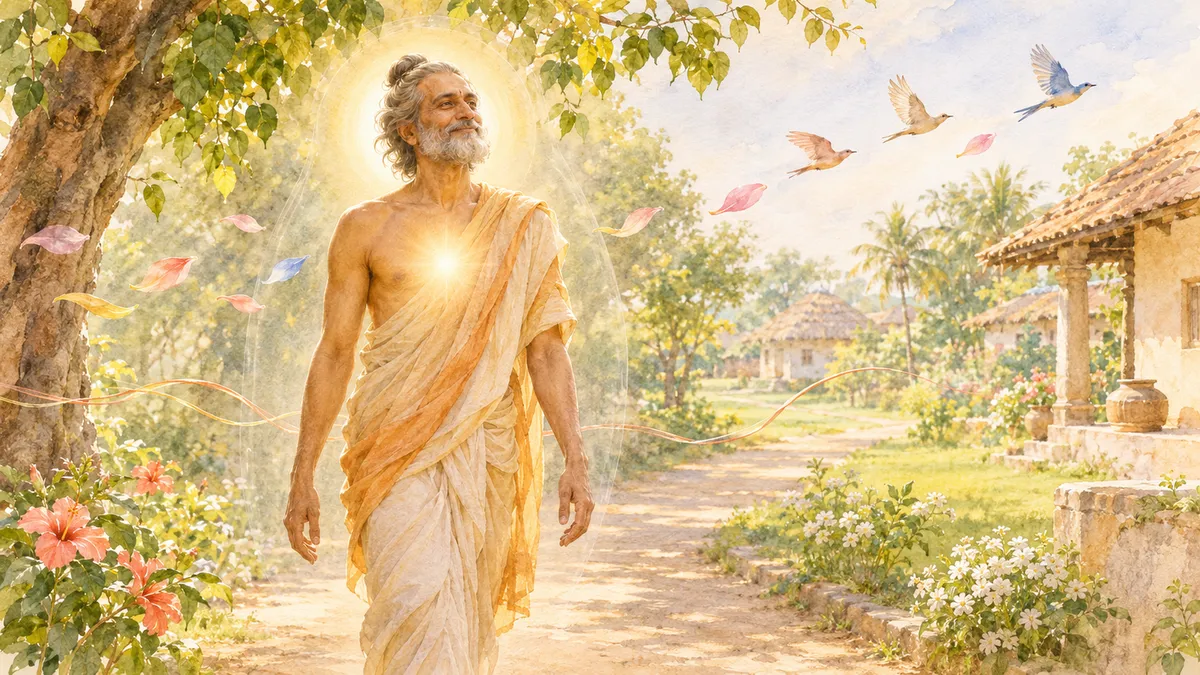
In the case of accomplished sages who specifically practice the path of Anuttara Tantra and have realized the path of nondual awareness, it is said here that their vasanas and desires do not hinder realization. In other words, their desires are a transformed form of chiti-shakti, and this chiti-shakti can move; it is neither blocked nor suppressed. However, because the principle of deep awareness is continuously present, it is fully sublimated into pure vision and manifests precisely as a play of energies. Such sages then have no need to control their desires, because these desires have been sublimated and represent a pure form of shakti; on the contrary, they use them for the benefit of others—for example, to foster the development of the Dharma and promote its dissemination. In other words, they manifest numerous versions of the Universe, as though drawing their inclinations out of themselves and allowing them to unfold. But because their ego is absent, there is no attachment to desires; there is deep awareness, so these are not desires but simply energies that serve other living beings. This is precisely the very profound approach of the principle of Sahajayana and Anuttara Tantra. We do not arrive at it immediately, because first we must realize samadhi, sahaja samadhi, non-doing, and deep contemplation. In other words, the Dharma being discussed here is a very elevated Dharma.
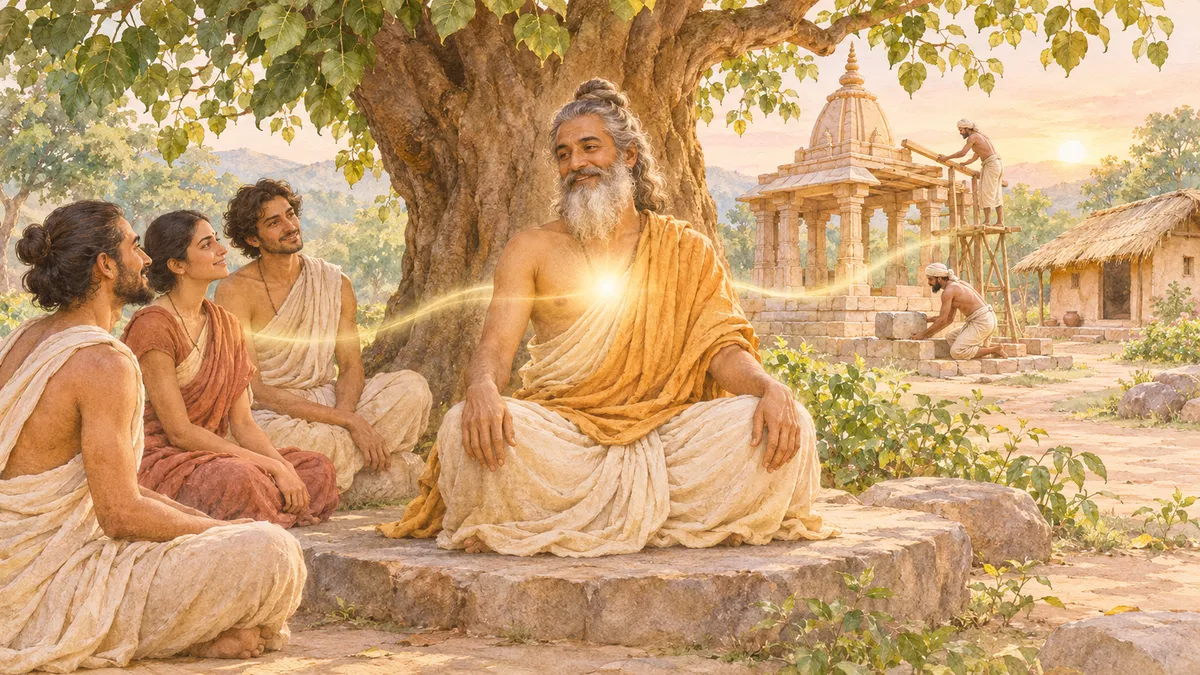
For example, someone may be inclined to talk about the Dharma, as I am (actually, I am not inclined to talk; I am inclined toward mauna). And if someone has such an inclination, then if they have realized nididhyasana and sahaja samadhi, this inclination will develop into speaking about the Dharma, becoming a good preacher, giving lectures, and transmitting genuine teachings through verbal explanations. And their entire inclination, their whole desire for communication, will result in having many disciples and much interaction, but all of this will be beneficial. They will not experience obstacles, identification, or difficulties because of it. They will then have no need to observe mauna constantly. Or someone may be inclined to engage continually in construction, buy land, and do such things. If they block this shakti and simply sit in meditation, this inclination will disappear sooner or later, provided they take care of their sahaja samadhi. But if they maintain presence and their samyoga is not disrupted, they can bring this inclination outward. Then they will be able to build temples, establish retreat centers, and help living beings attain Enlightenment. This lila, this free energy, will in no way disturb their natural state. This is exactly how saintly kings such as Janaka, as well as various sages and preachers, acted.
Unity of View and Conduct
For example, people ask: “If Shankara said that everything is illusory, that everything is nonduality, why did he travel throughout India, establish ten monastic orders, and found so many temples for worship? Why did he do all this? Everything is nondual, so he contradicts himself.” There is no contradiction whatsoever. Shankara was realized; deep within, he possessed realization, but his inclination to travel and create things, along with the immense shakti of this realization, did him no harm. He used this inclination, which had been embedded in Hiranyagarbha itself, for the benefit of other living beings. Thanks to this inclination, he spread Advaita throughout India. At the same time, his sahaja samadhi did not disappear, deteriorate, or diminish, and there was no contradiction whatsoever.
Sometimes people understand jnana and Advaita entirely on an intellectual level, and certain logical inconsistencies arise for them, contradictions between view and conduct. But in reality, there is no inconsistency with anything at all if you have truly realized the principle of presence. It is important to understand that if the view has been deeply realized, then conduct is completely self-liberated and transcendent; therefore, the conduct of an awakened being is always perfect, absolute, and beneficial.
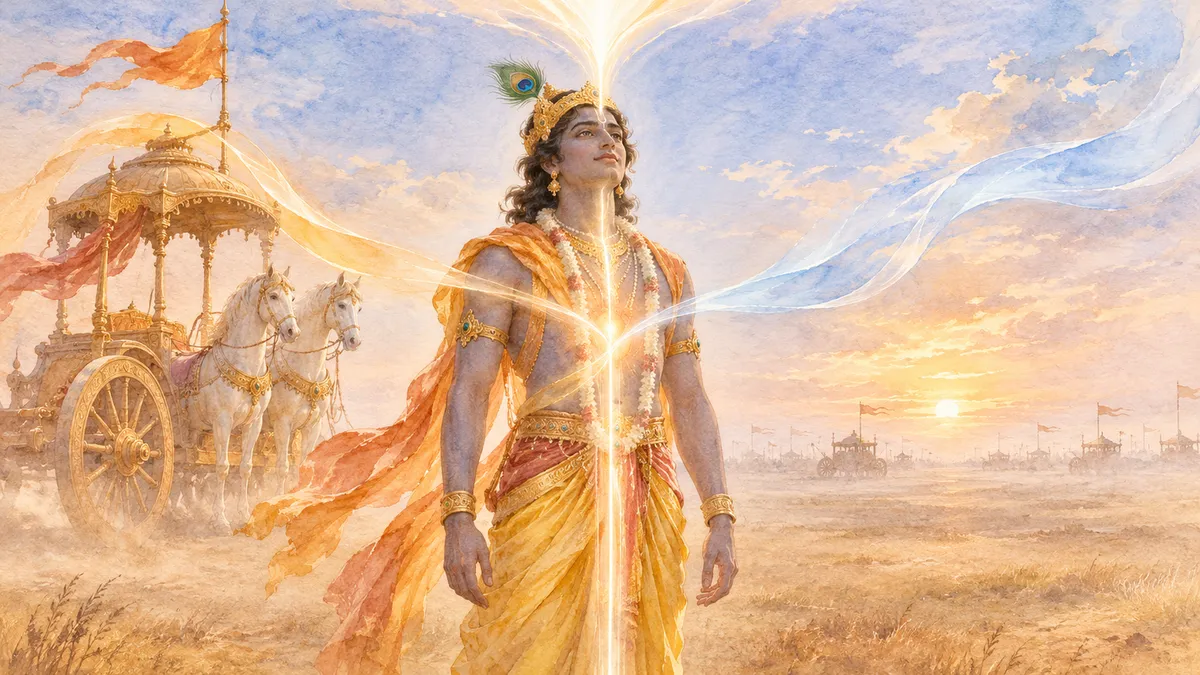
Yet again and again, people with their narrow-minded notions ask: “If Krishna was the Absolute, why did he have seventeen thousand wives? Why did he have to fight on the battlefield of Kurukshetra and kill Kamsa? He is transcendent and has no desires—this is a contradiction.” But in reality, this contradiction exists only in people’s minds; Krishna had no contradictions whatsoever. He acted lightly and spontaneously, from presence, in accordance with his nature, with absolute naturalness. That is, if he felt like fighting in the transcendent state—he went and fought; what ecstasy! He served the gods, and the gods had their own plan: for some of the non-virtuous kshatriyas to leave this world, so that the goddess Bhumi could breathe a sigh of relief. He went to enjoy himself and fight, carrying out Brahma’s plan, serving Brahma, making an offering to Brahma the Creator, and participating in the ritual. For him, it was entirely different. If any desires arose, there was no problem, because awareness was in no way obscured by them; desires were sublimated. Samyoga was accomplished, and the winds entered the central channel. Chandali yoga was completed, and desire itself, as such, did not condition him; it was a play of the energy of the bliss of emptiness. This is the principle of Sahajya Anuttara Tantra. It is a very high principle, an incredibly high one. And before we truly reach it, we must pass through nirvikalpa samadhi, savikalpa samadhi, sahaja samadhi, and profound dhyanas—that is, we must realize uninterrupted consciousness. This does not happen all at once.
Three Categories of Jnanis
“And yet they are not tainted by such vasanas. They are considered liberated and as holding various views. They are also regarded as the highest category of jnanis.
87-90. Parashurama, if a person’s mind clings to ignorance expressed as the need for activity, such an individual cannot hope for realization, even if Shiva himself undertakes to instruct him. Likewise, a person marked by the fault of indifference to the teachings or by misunderstanding them will be unable to attain realization. On the other hand, if someone is only slightly influenced by these two vasanas, while being much more strongly influenced by the vasana of desire or ambition, then, through repeatedly hearing about the holy truth, discussing it, and contemplating it, such a person will undoubtedly attain the goal, though only with considerable difficulty and after a long time. The activities of such a sage will be limited in scope, for he is completely absorbed in his efforts toward realization.”
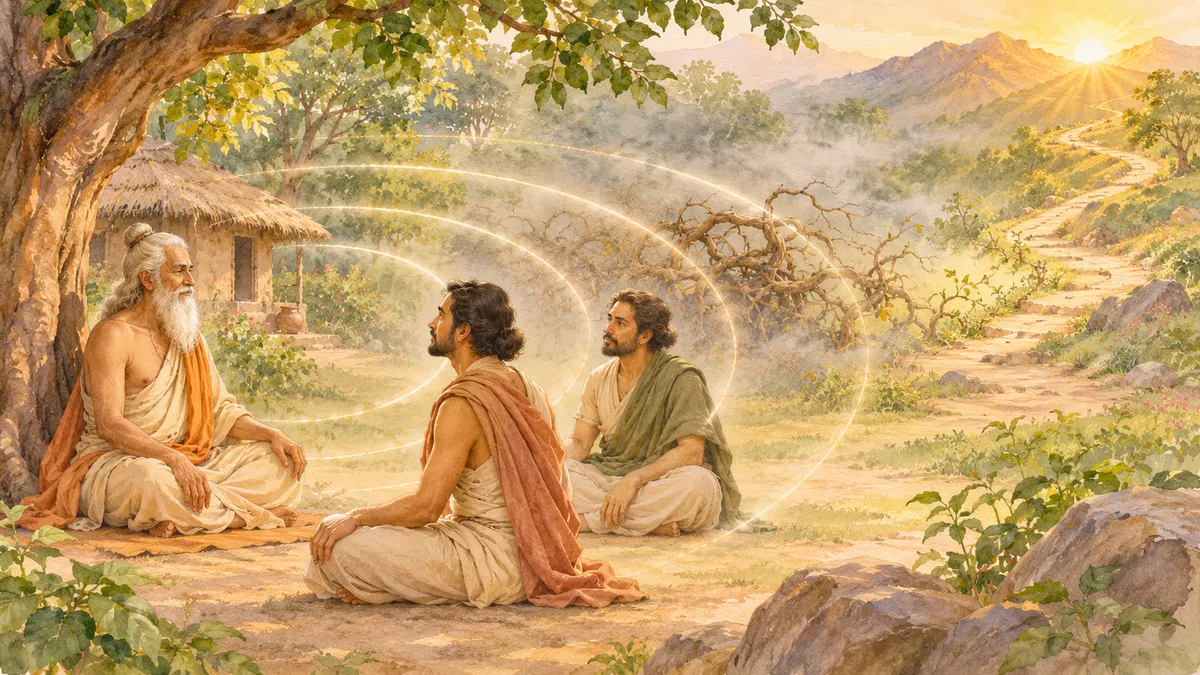
Thus, there are jnanis whose vasanas and samskaras are brought to an end through practice. And there are jnanis who do not bring their vasanas and samskaras to an end but, by purifying them, use them for the benefit of other living beings. It is very difficult for an ordinary, unawakened, uninitiated person to understand this distinction. This is precisely why it is often said that a disciple should not come too close to the teacher, because by coming too close, the disciple risks falling. In other words, the disciple can grow tremendously if their samaya is pure and they possess pure vision and deep devotion; conversely, they can lose faith and fall if their samaya is not deep. This is because they may focus on what should not be focused on: the body and actions. They may see only something commonplace without seeing the principle of awareness.
Pure Vision and Dimensions of Consciousness
In fact, when a disciple approaches a teacher, they must approach not on the level of ordinary perception or the body, but on the level of pure vision. This is the only correct way to approach: through samaya, Guru Yoga, and self-surrender.
Why? Because it is impossible to assess a teacher adequately through ordinary perception. Let us say that the surrounding dimension in which I dwell is not my own dimension; it is a dimension created for teaching others. I myself dwell in a different dimension. Unfortunately, I cannot show it to you directly, but I can show you a passage into it, an opening, and in time you too can enter it. For most of my life, my soul dwells in that dimension, while I surface in this one for the sake of others and do something here. But if you do not understand this, you think, “This is all there is; you and I are in the same dimension.” And then an incorrect perception may arise; this is precisely why such instructions exist.
Gradually, by cultivating pure vision and contemplation, the disciple also searches for an opening into this other dimension. And sooner or later, thanks to the Guru’s instructions, they enter it. It is an utterly nonhuman, uncompromising dimension. Entirely different laws operate there. It is the magical world of nonduality. It is right here and now, but it cannot be seen with ordinary eyes or ordinary consciousness. It can be seen only through deep contemplation and sahaja samadhi. Entirely different laws operate there; it has nothing in common with this world. Although it exists within this world, it is nevertheless so distant and transcendent that one could call it the secret of secrets, the greatest mystery.
Conditions for Entering the Awakened Dimension
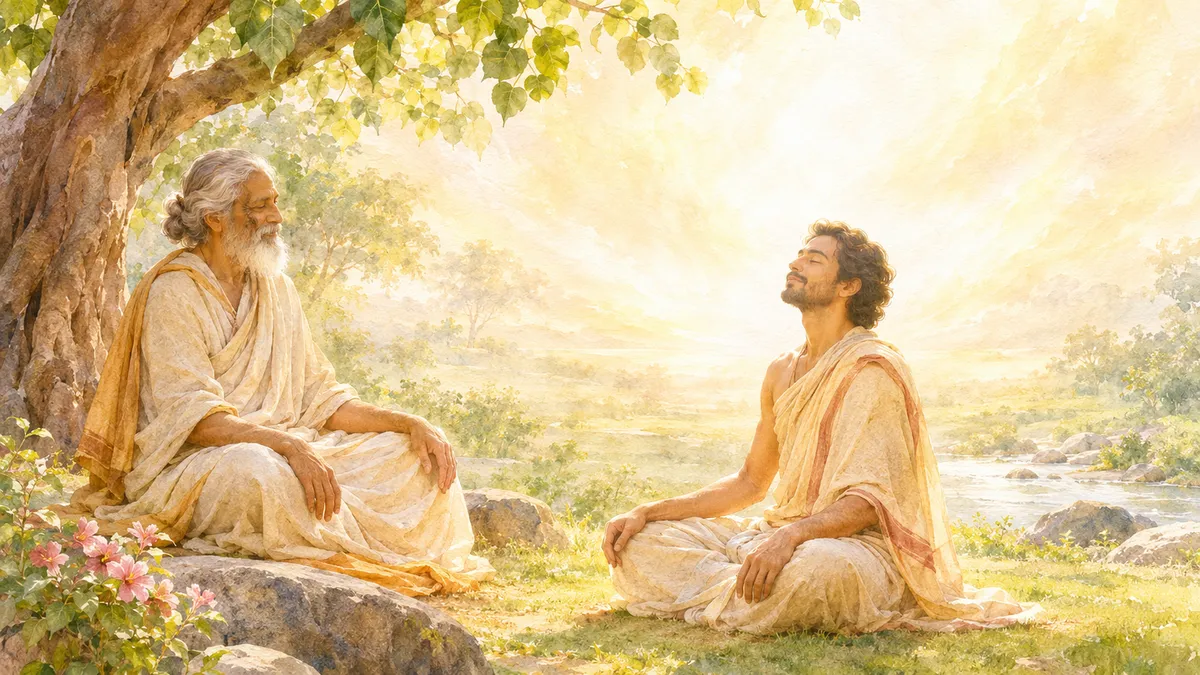
The system of spiritual training practiced by us is structured in such a way that sooner or later, if you do everything correctly, you will inevitably enter this dimension through your own direct experience. What is required to enter this dimension? You must stop taking yourself seriously and learn to cast aside selfishness. Because as soon as we take ourselves seriously and are unable to practice self-surrender, we cannot squeeze into this dimension—our size will not allow it. You must take responsibility for your path and not think that someone else can walk it for you or that someone will grant you realization. Nothing of the sort: spiritual Dharma always presupposes independence. We are always responsible for ourselves; we must make our own decisions. Even a teacher cannot make a decision for a disciple. If the teacher makes the decision, then it will not be the disciple’s decision but the teacher’s. The disciple must learn to make independent decisions. Profound faith in your Dharma and in your choice is necessary. You must also become invisible to this world, stop being accountable to it, become free from it so that it does not control you. Monks do this by taking vows; laypeople must decide for themselves how to learn this. Nevertheless, it must be learned. You must learn to control your environment. If a yogi does not control their environment, they cannot adequately pursue their sadhana. Suppose they practice sadhana in a place where their sadhana is controlled. For example, I once knew a female disciple who had to ask her husband’s permission to go to the Dharma center for Bhajan Mandala. This is impossible; it is not yogic conduct. If someone controls you, you are unable to devise your own strategy for life. Monks achieve this through the monastic system of vows and so forth, but lay disciples must think about this for themselves.
And finally, it is important to remember impermanence (the four mindfulnesses). Why are people so unconscious, and why does their sadhana progress with such difficulty? They do not remember impermanence. They think they will live forever, that they are immortal. This is the greatest childishness, shortsightedness, and forgetfulness. This forgetfulness deprives them of flexibility in spiritual life. In reality, however, the world is impermanent, and after a certain number of years, this body wears out like a car. If a car is used for a long time, it wears out. At first it is repaired, then repairing it requires a great deal of money, then it is frequently taken in for repairs; everyone is already tired of it and thinks it is time to buy a new one. The same is true of the body: the body is like a car. While it is young, it races along briskly and looks like a fine model, but later it requires many repairs. There is a saying: “If you are over fifty, you wake up, and nothing hurts, it means you are dead.” This is indeed true. But an adjustment can be made for yogis: if a yogi leads a healthy lifestyle and practices pranayama, one could say seventy instead. But for worldly people who do not take care of themselves, this is absolutely relevant. After forty, something hurts here and something hurts there, and life begins to move in a different direction. The body wears out, and sooner or later, like an unusable model, it ceases to perform its functions; sooner or later, the soul leaves it when the pranas can no longer hold the soul within the body. Then, after its fate is decided at Yama’s judgment, the soul goes either to the world of the ancestors, the world of the gods, or the hellish realms, or it is drawn once again into a mother’s womb and reborn. And although we have heard all this a thousand times, there is still no complete understanding. There is some kind of veil that prevents us from being constantly aware of impermanence.

Thus, if we fulfill all these conditions, we can enter this awakened dimension.
The Sage Without a Mind
“91. Through prolonged practice and strict discipline, a sage of this category has subdued his mind so thoroughly that all predispositions (tendencies) have been completely destroyed, and his mind is as if dead. He belongs to the middle category in the classification of sages and is called a sage who has no mind.”
A sage who has no mind is in a very happy, joyful state. He constantly abides in non-conceptual awareness. Having no mind means that his point of awareness has shifted into non-conceptuality. And in non-conceptuality there are no concepts, no distance, no time, no movement, no ego, and no activity. Of course, his conceptual mind has not disappeared, nor has he become mentally deficient. No one has ever seen a jnani become a mentally deficient person. His mind can still function like a good computer. Moreover, his mind can function even more efficiently. But he himself does not identify with the mind. It happens as though outside himself. Wherever such a jnani may go, he goes nowhere. Whatever he may do, he does nothing. Whatever he may say, he says nothing. He constantly abides at a single point of consciousness. This point is mahabindu, the great essence of the “I.” It may be called luminous space. It contains no definitions whatsoever; it does not even contain life as such in the human understanding, and therefore there is no death either. This point is attained at the moment of sahaja samadhi. According to the teaching of the sixteen kalas, it corresponds to the stage of “birth.” A jnani who has become established in it may do many things, but in reality he does nothing.
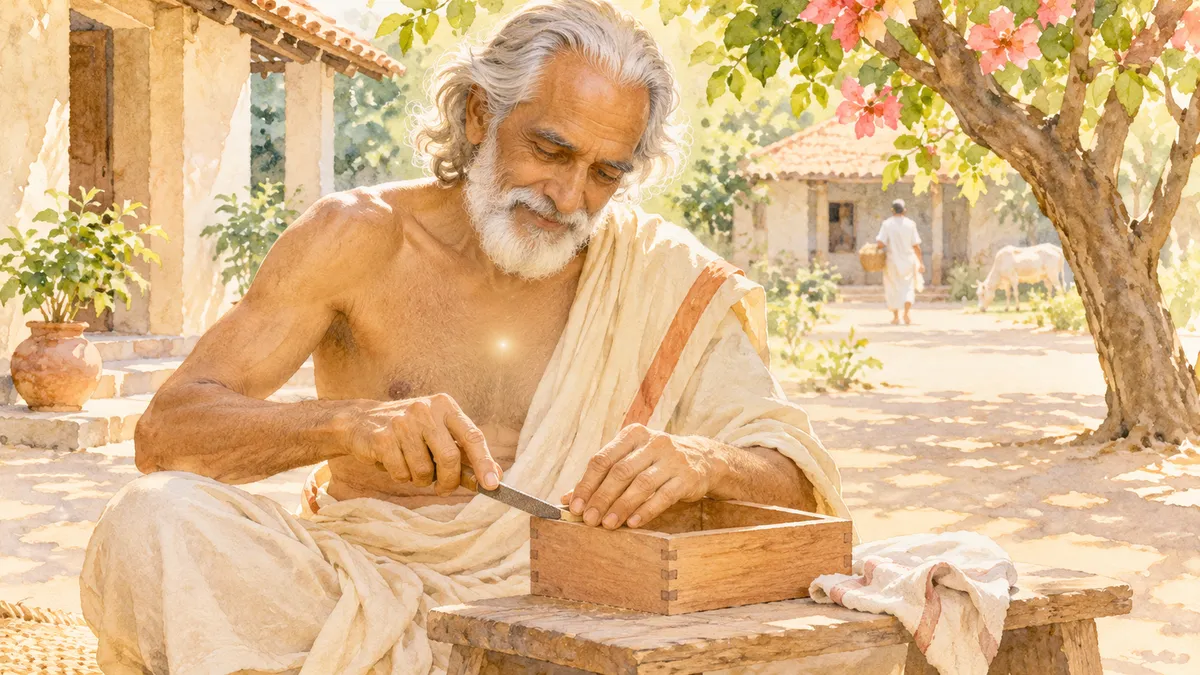
Sometimes I feel that something is happening around me. Yet I myself never do anything. What is happening does not concern me and occurs by itself. Perhaps my mind, body, and speech take part in it, but I myself simply stand aside and watch. This is because the fundamental consciousness abides beyond concepts, at such a point.
The Lowest Category of Jnanis and the Action of Prarabdha
“92-94. The last category, the lowest among the sages, consists of those whose practice and discipline are not sufficiently perfected to destroy mental predispositions. Their minds are still active, and such sages are considered bound to their minds. They are only barely jnanis, and they are not jivanmuktas like the representatives of the other two categories. They seem to experience the pleasures and pains of life like any other person and continue to do so until the end of their lives. They will be liberated after death.
95-96. Prarabdha (past karma) is completely powerless with regard to the middle category, whose representatives have destroyed their minds through prolonged practice.
The mind is the soil in which the seed—namely, prarabdha—germinates (growing into the pleasures and pains of life). If the soil is barren, then the seed loses its potency and ability to grow from being stored too long, and becomes useless.
The Diversity of Manifestations of the Highest Jnanis
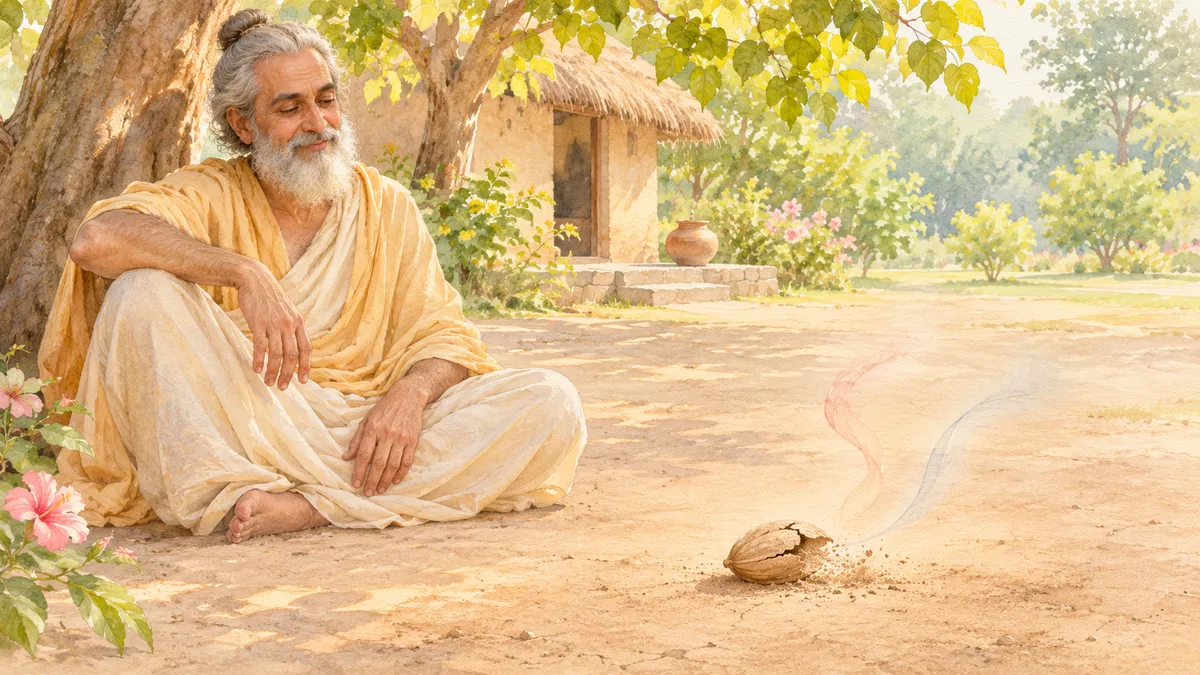
“97-103. There are people in the world who can perform several tasks simultaneously with complete attentiveness and who are known to be remarkably skillful in action; others, again, devote their attention to their work while walking and conversing with other people; or they are like a teacher who watches each student individually while maintaining control over all the students in the classroom; or you yourself knew Kartavirya Arjuna, who wielded the various weapons held in his thousand hands and fought you, using each of them skillfully and simultaneously. In all these cases, a single mind assumes different forms to meet the demands of the various actions being performed at the same time. In the same way, the mind of the best among the jnanis is only the Supreme Self, and yet it manifests as everything without undergoing any change in its eternal, blissful nature as the Supreme Self. Therefore, such jnanis have “many minds.”
The Multiplicity of a Jnani’s Minds
There are usually fixed notions about a jnani. If a jnani teaches a certain philosophy, everyone thinks that this is the philosophy he teaches. If he follows a particular way of life, everyone thinks that he adheres to that way of life. But deities are characterized by multiple realities and multiple bodies. Likewise, a jnani is characterized by possessing many minds.
For ordinary people, the distances between one particular reality tunnel or point of view and another can be very great. But for jnanis, such distances do not exist because they have multiple minds. Their consciousness can be multivariant in nature. The three heads of Dattatreya represent the multiple minds of a jnani.
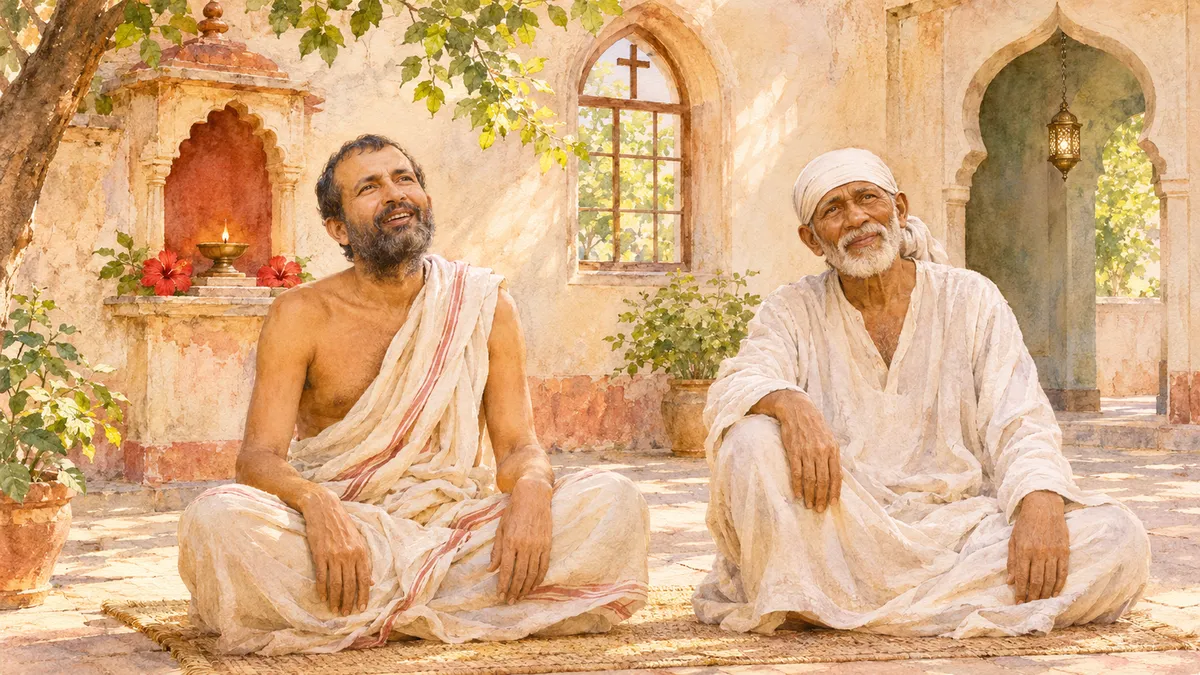
For example, Ramakrishna displayed multiple minds. He worshipped Kali, then began worshipping Muhammad, and later Christ. Everyone thought that Ramakrishna had mental problems. But others knew that he was a holy avatar and had no problems whatsoever; his mind was simply multidimensional. Ordinary people find it difficult to reconcile and accommodate what jnanis can accommodate with complete ease. They encounter no problems. Shirdi Baba was half Muslim and half Hindu. This is very difficult for the mind of an ordinary person. But for Shirdi Baba, it posed no problem at all.
The Polymorphic Nature of a Jnani’s Mind
The multiple minds of a jnani are like the many illusory bodies that a deity can emanate depending on the tasks to be accomplished or the functions to be performed. Shankara writes of a jnani: “In one place he looks like a king, in another—like a beggar asking for alms, and in a third—like a scholar.” That is, his mind can create any setting, situation, or illusory bodies whatsoever.
This multivariance is the most difficult thing for ordinary people to understand. For a jnani, it presents no difficulty whatsoever. He truly has a polymorphic mind that can assume any form depending on the situation, because his consciousness abides on the plane of the devatas, in the upper astral world.
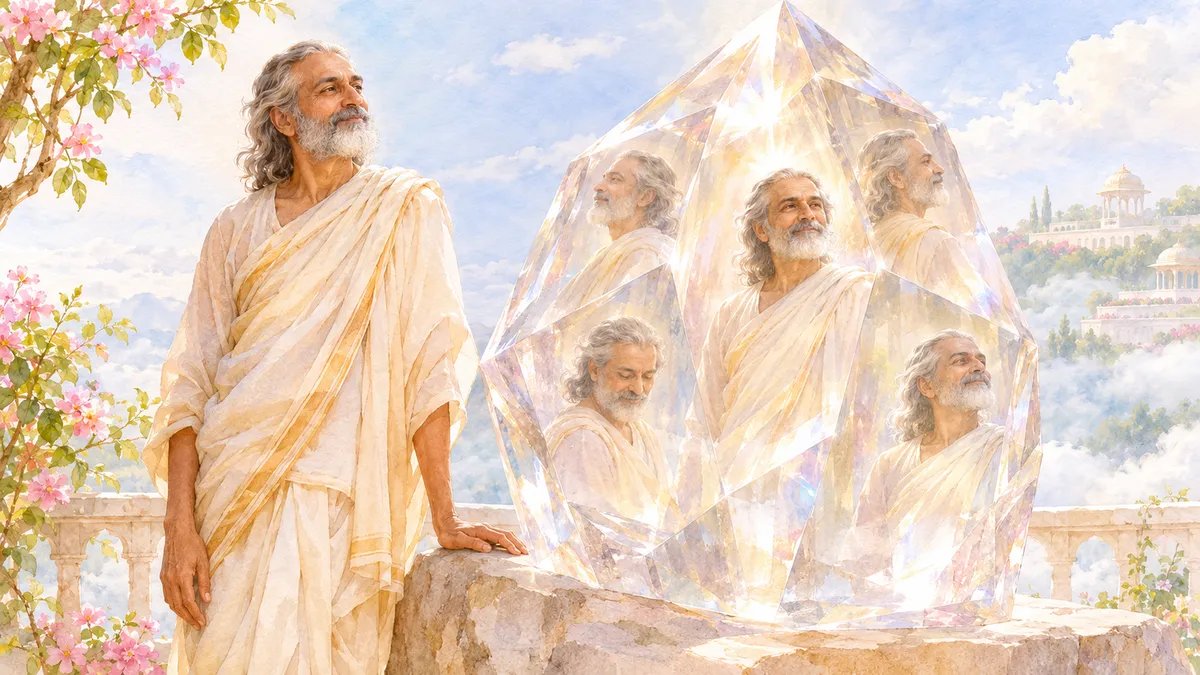
The devatas in the upper astral world can emanate any number of illusory bodies, and these illusory bodies can accomplish any number of tasks. They can assume different forms. There is not just one body there; rather, one body is like a reflection in a crystal or a mirror: it can be reflected and multiplied infinitely. The mind of a jnani is the same. In other words, a jnani is a very complex being.
However, when a jnani acts in the human world, he tries not to draw attention to his complexity so as not to disturb people, because their minds become greatly agitated and they begin discussing it through their uncomprehending, impure vision, which can only lead to the accumulation of bad karma.
