

To begin with, I would like to express my respect for the American nation and American culture, which thinks about the future. I closely follow the science-fiction films released here. For thirty or forty years, films about the future have been released here. The culture that makes films such as “Batman,” “The Terminator,” “RoboCop,” “Surrogates,” “Edelweiss,” “The Phone,” “Catwoman,” “Robert Hank,” “Bicentennial Man,” “The Butterfly Effect,” “The Matrix,” and “Avatar” is a great nation because it creates a desired image of the future.
In fact, we are holding this congress here and talking about this project for the future of humanity precisely because this desire for the future has already been created in you. The question is how to bring it to life. I think that an era is now beginning in which all people are starting to think about how to make the transition to a higher life, to a higher state of the human being, to a new race of neo-humans and god-humans. Perhaps, in a thousand years, this congress will be remembered and commemorated as the birthday of these neo-humans and god-humans, of neo-humanity.
About My Path and Research
I am a spiritual leader, a religious leader, a sannyasi of the Advaita Vedanta tradition. In addition, I also work on issues concerning the future. In 2005, I wrote a number of articles about the possible combination of new ideas with the philosophy of Advaita Vedanta, with spiritual and religious philosophy. More than two dozen such articles were published. My students also established a research center that attempted to address the issues we are discussing now. This center did not operate for long, but it managed to make progress in some areas. An attempt was also made to create an international transhumanist movement of immortals.
The Avatar Project and Transcendental Transhumanism
We can discuss the very name—the Avatar Project. In my articles, I outlined the ideals of the future of humanity and described these articles as transcendental, that is, as transhumanism that takes us beyond the human toward the divine. This is because the limitations of human nature cannot be overcome at the human level; one must go beyond one’s nature.
There is a movement in Russian philosophy called “Russian cosmism.” It includes various writers and many philosophers (Berdyaev, Losev, Tsiolkovsky, Roerich, Vernadsky). In their youth, these great philosophers also inspired me with their aspiration toward the cosmos, their desire to go beyond human nature. The cosmistic philosopher Konstantin Tsiolkovsky once said:
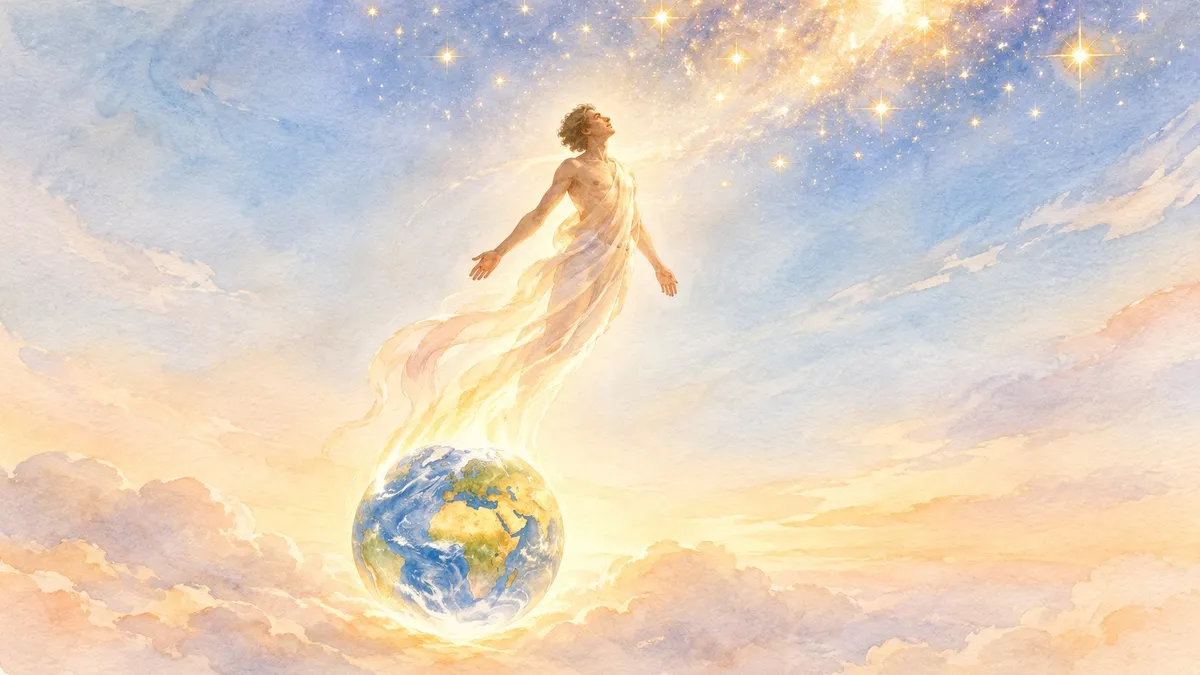
“The Earth is the cradle of humanity, but one cannot live in the cradle forever. In order to develop, humanity must go beyond its limitations, beyond the Earth, beyond the Earth’s gravity. And someday, perhaps, it will become radiant humanity, that is, it will transition to a higher state.”
In childhood and youth, I was constantly searching for a way to put this into practice, where to find this radiant humanity, how to go beyond the Earth. And I found it in my spiritual tradition—in the tradition of yoga, in the tradition of Advaita Vedanta. I saw that such immortal, divine, multi-bodied people had already existed in ancient times and had realized many of these ideals. I believe that the first transhumanists were the saint Dattatreya, the rishi Vasishtha, the saint Shankara, and many others.
Then I faced the question of how to convey this to modern society. After all, not everyone can be a yogi or a saint, but humanity must have some vector for its development, a vector for realizing its future. Thus was born the idea of transcendental transhumanism, which could unite modern technologies and scientific achievements.
The Meaning of the Term “Avatar”
This project is called “Avatar.” Everyone has probably seen the film “Avatar” and may think that the name was borrowed from that film. But in fact, “avatar” is a term from Sanskrit, from ancient Indian philosophy. It means the ability of a deity to embody its consciousness in something.
In particular, the tradition of Hinduism contains a teaching about the ten avatars of the god Vishnu. The god Vishnu is a great superconsciousness, omnipresent, omniscient, and all-pervading. Without leaving this state, the god Vishnu can project his consciousness into any body, endow that body with an artificial mind, artificial intelligence, and intention, and create a specific scenario for it. He can move it into the body of an animal (for example, into the body of a lion), into a human body—in fact, into any body. And this body fulfills its mission.
There are said to be ten avatars of Vishnu that are the best known. They include Rama, Krishna, Narasimha (half-man, half-lion), Parashurama (a man who fought against demons), Vamana (an avatar in the form of a dwarf), an avatar in the form of a tortoise, and one in the form of a fish.
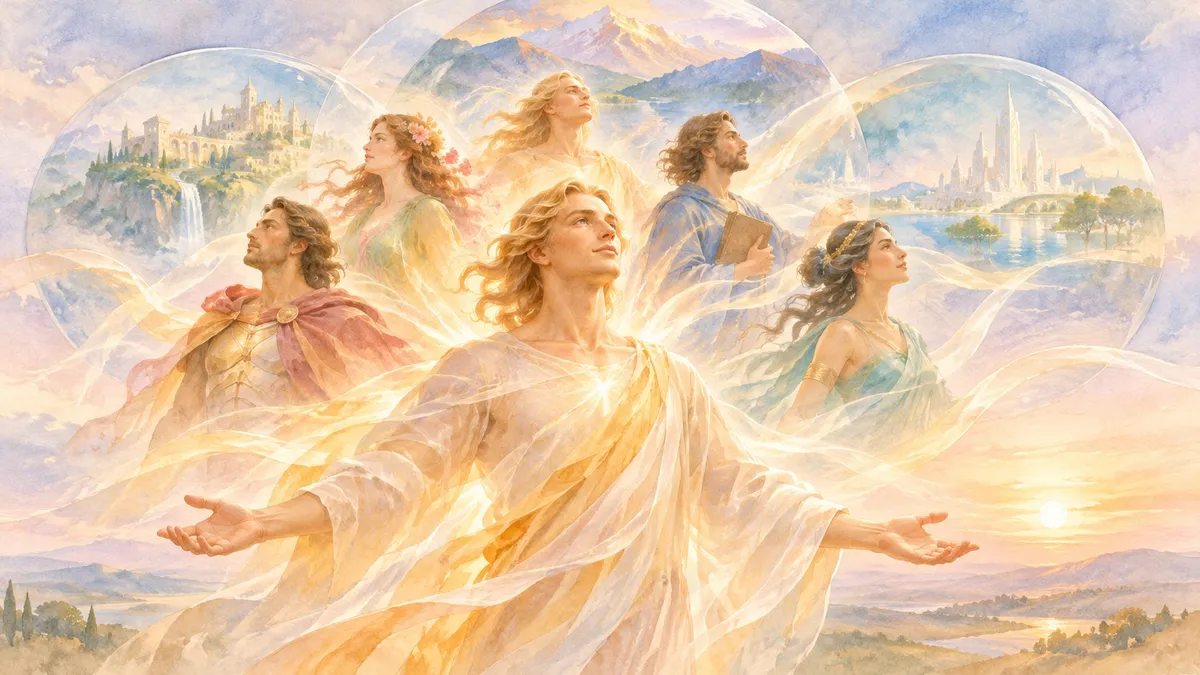
In fact, one can say that avatar technologies have long since been realized at the level of the divine. In a sense, we already have a certain ideal, a certain model that we should strive toward. At the same time, I should say that I am not trying to preach my religion. Instead of Vishnu, one could give the example of any other God from any other religious tradition. The point lies in the principle itself: these technologies of avatars, the transfer of consciousness, multiple bodies, and life in multireality have long since been realized by greater and higher beings, of whom there is evidence in our history and mythology, which literally permeate all religions.
When we understand that such an ideal exists, it becomes much easier for us as humanity to set goals, understand where we are going, what we are doing, and what these technologies will lead to. I believe it is very important to orient ourselves toward such ideals. Without such ideals, humanity may become confused somewhere along the way.
The Project’s Impact on Civilization
My dream is for all of humanity’s resources—political, economic, social, intellectual, and others—to be focused on projects like “Avatar.” I believe that the architecture and appearance of the third millennium will be determined by this project or similar projects, because they fundamentally change the very relationship between human beings and nature, themselves, and life.
Let us imagine that if the “Avatar” project is implemented, an artificial human, an avatar, will not need a home, will not need plumbing, and will not need restaurants, because everything is already present in its body. It will not need a car or numerous communications systems; all of that simply disappears—it is no longer necessary. Everything is already there in its body; all of it is built into it. It will not need clothing, it will not need a textile industry, it will not need medicines, medical care, or other such things.
There is a saying in the East: “If you are standing on the ground and thorns are pricking your feet, you do not necessarily need to cover the entire earth with a carpet; it is enough to put on shoes.” In the same way, if the “Avatar” project is implemented, we will not necessarily need to change nature, extract resources, or reverse the flow of rivers. We will not need to achieve all of this on the external level merely to sustain eighty kilograms of this body. It will be enough to change the nature of the human being itself, make it immortal and invulnerable, and enable it to feed not on food but on the energy of the stars. Then we will become completely independent of external material conditions.
If this technology is implemented, the entire architecture and appearance of human civilization will change. And in what direction will it change? Toward something higher, toward the gods.
The Life of the Gods as an Ideal
Because of my spiritual affiliation with a monastic order, I live by my spiritual practice and study extensively the mythology of traditional Advaita Vedanta and traditional Vedic culture. And there is a great deal of evidence there about how the gods live.
The gods do not live in apartments, they have no cars, they do not live among people, they are not subject to the laws of physics, they do not eat as people do, and they do not die. They do not need any of this. The bodies of the gods consist of light; they are nourished by spiritual energy; their consciousness extends throughout space and is omnipresent; their thinking is paradoxical. They do not even live so much as play, existing in unity with the Absolute Mind beyond cause-and-effect relationships. Through the power of intention, they can control reality. They themselves shape reality and their environment through the power of thought. In other words, this is an entirely different form of existence.
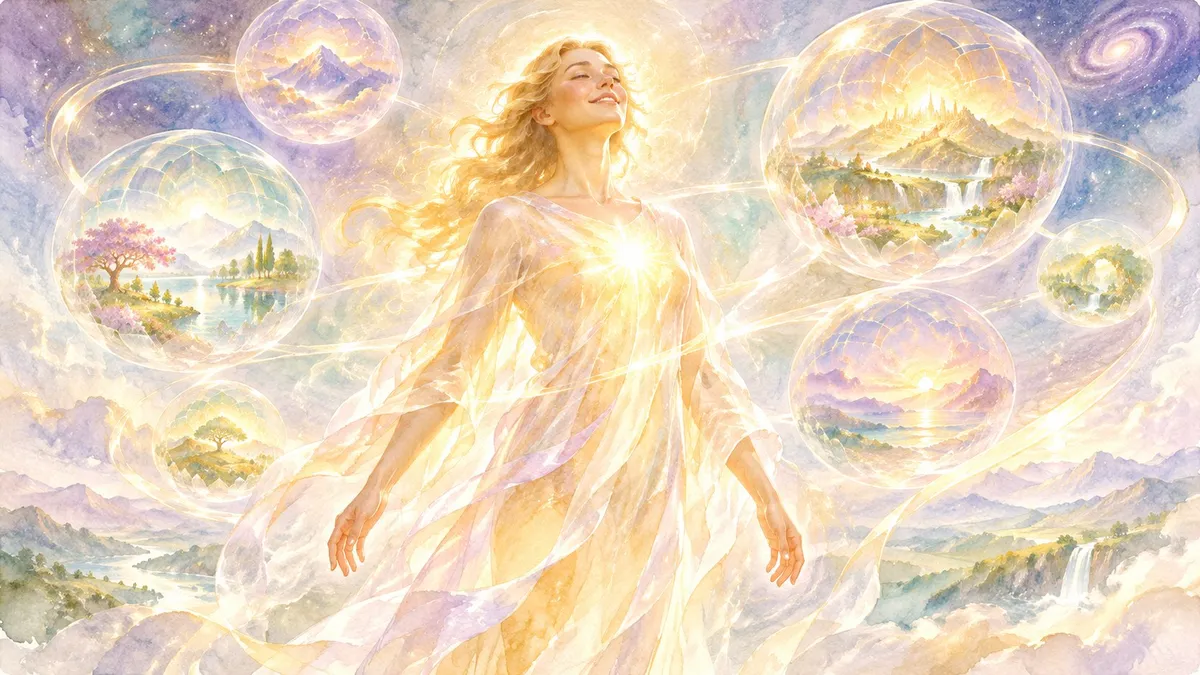
They do not exist within history, within historical time. Historical time, which for us flows from the past into the future, does not exist for them; they always live in the present moment and direct the flow of time themselves through the power of their minds. In other words, they have no collective history; for them, there is psychological personal time, and they live in their personal universes. In Sanskrit, these universes are called “mandalas.” They are immortal, have multiple bodies, play, and are very happy.
Isn’t this a wonderful state? It is a kind of ideal that all humanity could strive toward. The question is how to put it into practice.
Reflections on Helping Humanity
From a spiritual perspective, as a spiritual religious person who practices yoga, I know how to put this into practice in accordance with my tradition. But I have always been concerned by one question: not everyone can become a yogi, so is it possible to make humanity happy based on the level of economics, science, and development that exists today? How can we help humanity become happy?
These reflections were prompted by my being in a hospital when I was there for some reason. I saw how many ordinary people were suffering. I thought: “I have been practicing yoga for a very long time. Through the power of meditation, I know how to free myself from pain and solve any of my problems.” But when I saw elderly people or children suffering from illnesses, I thought that, perhaps, this would not help them at all. They need some kind of benefit right now, some technology that would free them from the need to grow old, suffer, fall ill, and die. In this case, my understanding of yoga, Vedanta, and meditation would not help; they need something direct and concrete. I believe that such a project, if implemented, could help a huge number of people and elevate all of humanity to the level of a god-civilization.
The Right to Immortality
I would be happy if the United Nations made the question of how all humanity could become immortal and attain a higher state through projects like these the number-one item on the agenda of the General Assembly. If every state amended its Constitution to include the following: “Article 1. Every person has the right to immortality,” this could perhaps bring enormous benefit to us as a civilization. Or if such a provision were included in the Declaration of Human Rights.
Because we cannot move forward, set new goals, and respond adequately to the challenges of our time unless we overcome our human nature. Computers are already becoming more intelligent than we are; even now, the amount of information exceeds our capabilities. We understand that there is virtually nothing we can do in space with a biological body; it is impossible to live there in one. We will never break beyond the limits of Earth with these restrictions; we need to transcend our human nature. And we must already be raising these questions now. If we do not try to transcend human nature, various events will occur that will nevertheless compel us to do so.
I would like to devote part of my speech to speaking as a spiritual person belonging to a particular spiritual tradition, and another part to speaking as a futurist and transhumanist.
The Goal of Yoga and Advaita Vedanta
What is the goal in yoga, in the spiritual tradition of Advaita Vedanta? It is the attainment of complete freedom. In other words, the fruit of yoga is a god-human: immortal, simultaneously living in different realities (that is, omnipresent), possessing multiple bodies, controlling reality through the power of thought, omniscient, omnipotent, independent of history (that is, of karma) and of cause-and-effect relationships, having emerged from collective history and created a personal history. This is someone who possesses paradoxical thinking and lives in a personal reality tunnel.
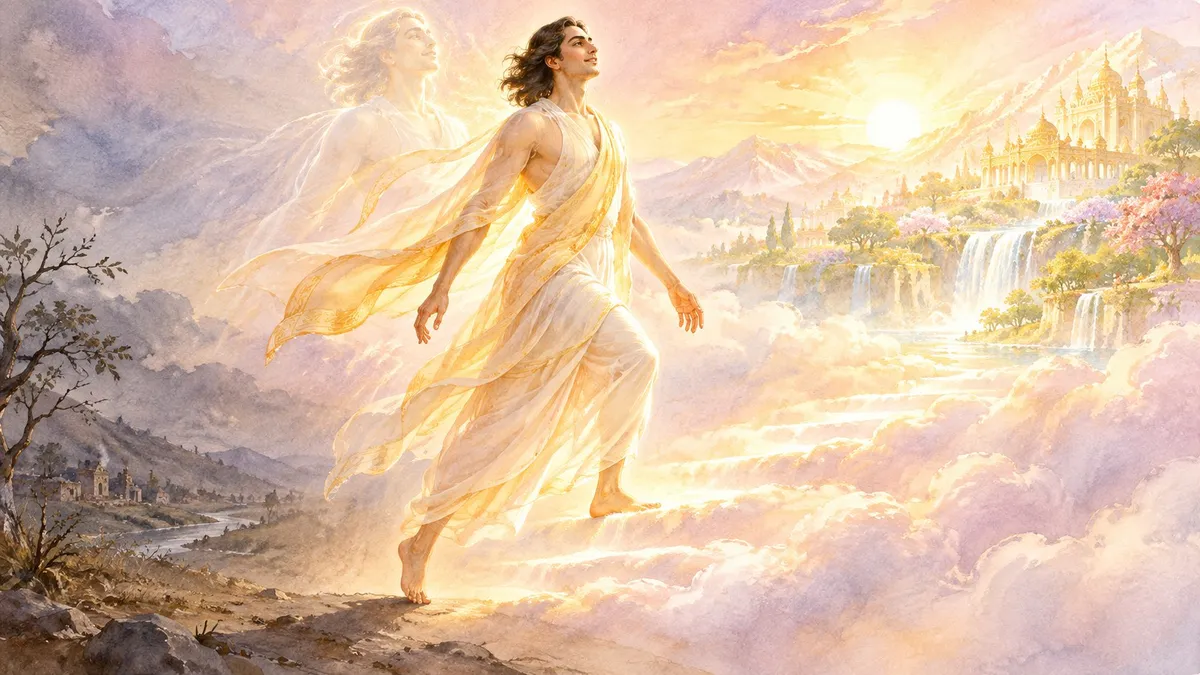
Scientists have introduced the term “psychological reality.” In yoga, this term has its own designation. It is called moksha, or mukti—the attainment of freedom. There are various types of attaining moksha. For example, there is sarupya-mukti, that is, a type of liberation in which you have a body like that of a deity. If a deity has some perfect body, possesses multiple bodies, or can change its appearance, and its body does not require any gross elements, this is called sarupya-mukti. I believe that the Avatar project is a movement toward obtaining some form—possibly the lowest form—of sarupya-mukti.
But through what is this fruit of yoga attained? It is attained through the merging of consciousness with the Absolute, through the realization of transcendental consciousness. And this is another type of liberation, called sayujya-mukti, that is, merging with the Absolute Mind.
Transferring Consciousness in the Yogic Tradition
Now, regarding the transfer of consciousness. I am constantly asked whether it is possible to transfer consciousness into an alternative substrate, a non-protein-based substrate. And I say: “Absolutely—yes.” The entire tradition of yoga, as well as the Buddhist tradition, confirms this.
We can look at the saint Shankara, the founder of the Advaita Vedanta tradition and the founder of our order. He lived a thousand years ago and founded ten monastic orders. There is a story associated with him.
Once, Saint Shankara entered into a philosophical debate with a householder named Madana Mishra. He debated with him about God, the metaphysics of the universe, and the Absolute, and defeated the householder. According to the outcome of debates in those days, under the rules of Vedic culture, whoever lost had to become the disciple of the victor. In other words, the householder had to become a sannyasi, a disciple of Shankara.
And when Shankara had already defeated him, the householder’s wife, named Ubhaya Bharati, intervened in the debate. She challenged Shankara to a duel. They once again discussed metaphysics, theology, and philosophy. Again, Shankara began to prevail, but then she started asking him questions about the Kama Shastra. The Kama Shastra is the art of attaining marital pleasures. This is also a branch of Vedic culture. Shankara, however, had been a monk since childhood, so he did not possess such knowledge. He lost to the woman, but said: “Do not count this as my defeat. Give me time; I need to study and train.”
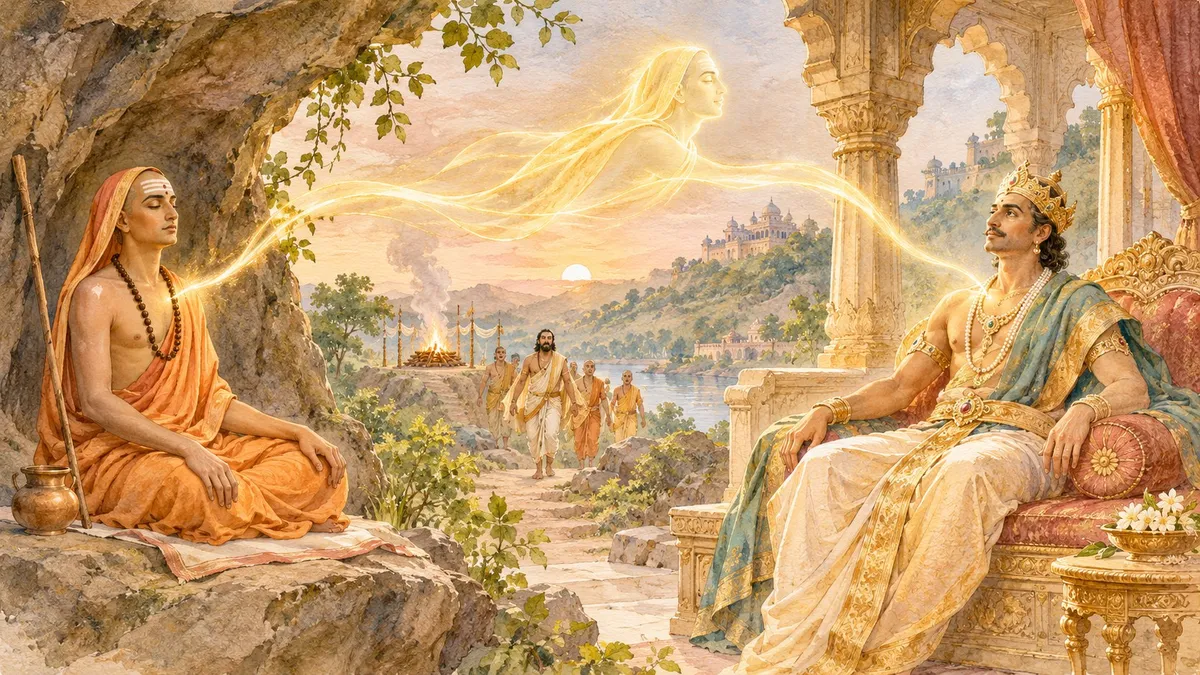
But he was a monk and could not study this text or master the erotic arts, otherwise he would have violated his vows. So what did he do? He left his physical body and entered a state of samadhi. His subtle body then emerged, and he found the body of King Amaruka, who was about to be cremated because he had died. Shankara entered his body and revived him, while he hid his own body in a cave and told his disciples not to let anyone enter it.
The king came back to life, and everyone was overjoyed. They all saw that the king had become noticeably wiser, had acquired good manners, and possessed vast knowledge of theology and metaphysics. His wives were also delighted. And for several months, Shankara studied the erotic arts in the king’s body.
The minister realized that something was wrong, that perhaps the soul of some great yogi had entered King Amaruka’s body. He told his courtiers to search the nearby caves for a yogi sitting in meditation, and if they found his body, to burn it. The minister wanted this revived king to remain alive and rule the country for as long as possible, since he was a very intelligent, refined, cultured, and capable king. The minister wanted such a king because he understood that the saint had entered Amaruka’s body.
When the guards began searching, the disciples quickly came to the palace and sang a hymn, thus reminding Shankara that it was time to finish studying the erotic arts, renounce his royal duties, and return to his own body, otherwise it would be burned. Shankara’s body had already been prepared for cremation, but he understood what was happening and left the king’s body. The king’s body died, while Shankara entered his own body again and literally rose from the funeral pyre. He burned only his hand.
Thus, this story demonstrates that the transfer of consciousness is an ancient Vedic technique that has been known for a very long time.
The ability to leave the body and enter another body also exists in Tibetan Buddhism. In India, it is called parakaya praveshana. A roundtable discussion will now take place, in which Mahayogi Babaji will participate. He is a great yogi who has repeatedly demonstrated this ability to go beyond the physical body.
Based on the fact that this is possible, we can think further and thus create technologies that could transfer consciousness into another medium.
The Nature of Consciousness from the Perspective of Yoga
Now the question arises: “What is consciousness?” There are many theories on this subject, including the idea that consciousness is the brain’s computational capacity, and so on. But from the perspective of yoga, the brain is simply a conductor, simply a radio. Consciousness exists beyond the brain. The brain does not create consciousness. On the contrary, the brain is a secondary function, a derivative of consciousness. Consciousness exists before the brain and before the body. The brain, as part of the body, manifests for a certain period and then disintegrates, but consciousness always exists.
In this regard, in the teachings of Advaita Vedanta, yogis speak of different sheaths, different subtle bodies.
The Five Sheaths of Consciousness
There is the concept of the “subtle body.” The teachings of yoga state that, in addition to the physical body, there is also an energetic duplicate of our body. It is called pranamaya kosha—the sheath of energy. Then there is the subtle body that we use in dreams. Everyone dreams, everyone sees dreams, everyone sees themselves. This is the form of the subtle body. In yoga, it is called manomaya kosha—the sheath of the mind. It is also commonly called the “astral body.” This name originated in the theosophy introduced by Blavatsky. But yoga uses the classical term “manomaya kosha”—the sheath of the mind.
In addition to the astral body, there is also a subtle mental sheath and a subtle causal sheath. All five of these sheaths, as it were, obscure our true essence, our true nature. But consciousness itself exists beyond these five sheaths. Consciousness itself is the Absolute, beyond names, beyond forms, beyond qualities, beyond definitions. The most important thing in yoga is to know this consciousness, to know Brahman. And whoever knows Brahman moves along the path of evolution. In this regard, yogis have their own evolutionary system.
The Evolutionary Ladder in Yoga
How does evolution take place from the perspective of yoga? If there is an ordinary person, then when this person embarks on the spiritual path, they begin to seek divine reality and their higher Self. They are called a sadhu. That is, sadhu means that a person meditates, recites mantras, visits places of pilgrimage, and studies philosophy. This is the path of any spiritual seeker in any tradition. I am not speaking only about our tradition.
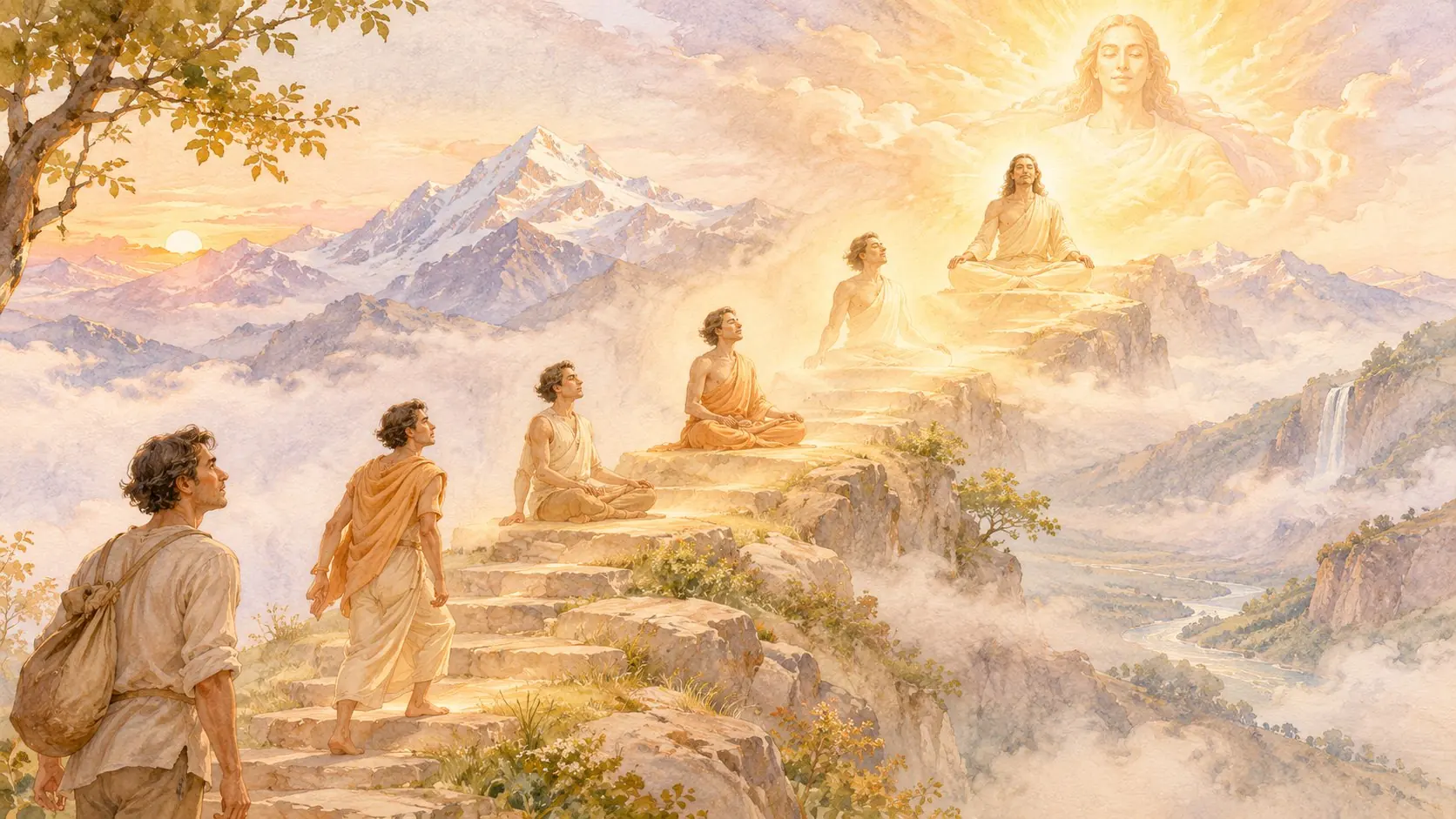
And when such a person attains the state of samadhi or the state of enlightenment, they are called an atma-jnani. They become a jnana yogi—one who has realized absolute consciousness. This means that they have discovered non-duality within themselves, beyond subject and object, beyond name and form, color, qualities, and definitions. They have discovered the most essential, luminous, spacious part of their consciousness, which lies beyond the body and mind. It is not the mind, and it is not the body.
And when such a person’s consciousness gains strength, they attain perfection: they can control time, space, and the elements of the subtle body, and materialize events through the power of intention. They are called “perfected,” that is, a siddha.
Finally, when a siddha deepens their immersion in this absolute consciousness beyond subject and object, or, in scientific terminology, fully realizes the quantum nature of consciousness, they attain the status of a deity (devata). That is, they no longer live in physical reality; they have transcended time and realized spatial consciousness. They develop a different system of values, meanings, and goals; their consciousness becomes paradoxical and alogical. They live in many realities simultaneously and can create bodies (avatars) through the power of their mind, without requiring any technology. Such deities always exist, but in their own dimension. And every person can attain such a state of divinity.
Finally, when this deity, developing further and evolving, expands its infinite potential and realizes its divine knowledge, divine will, divine capacity for action, divine freedom, divine authority, and divine power (I am expressing this in simple terms, without Sanskrit. In Sanskrit, it sounds like jnana-shakti, iccha-shakti, kriya-shakti, svatantriya-shakti, aishvarya-shakti, and so on), that is, when this deity fully realizes all its potential, it rises even higher and becomes a great deity. For example, one such as the god Vishnu, the god Shiva, or a god from any other religious tradition. Analogues can be found in the traditions of Buddhism, Judaism, Taoism, and Christianity. In other words, this is simply a status indicating that this is a superconsciousness that is omnipresent, capable of creating a body at any point, and exists beyond time and space. This is the evolutionary ladder in the teachings of yoga.
The Goals of Transhumanist Evolution
And we, as yogis and representatives of Advaita Vedanta, know perfectly well approximately where we should go; we always have this divine hierarchy before our eyes. And then the question arises: “Can this be replicated with the help of scientific technology? What is the place of scientific technology? How can we formulate a transhumanist philosophy and establish the goals and meanings of transhumanist philosophy in order to move in a similar direction?”
To this end, we can talk about the future and what the fruit of transhumanism, the fruit of the evolution of all humanity, might be from the perspective of scientific technologies. I think that the fruit should be the same. That is, immortality means:
freedom in time and freedom from time
multicorporeality, the ability to transfer one’s consciousness to any substrate
the ability to live in multireality, that is, to realize the principle of omnipresence
a subjective history, that is, an exit from karma and a transition to an independent personal history, when subjective worlds are created by the power of intention, rather than when a person blindly submits to cause-and-effect relationships, meaning that they are simply carried along by the river of time
a personal subjective reality, that is, a reality created by the power of the mind of a transhumanist person
I believe that if the entire society, regardless of religious tradition, sets such great goals for itself, if such a common vector takes shape, it will radically change the course of the history of human civilization, even if everyone realizes these goals in their own way within the framework of their religious tradition.
The Transition to a Transhumanist Civilization
Every person asks themselves: “Where is the world heading? In which direction is humanity moving as a rational civilization? What social system and way of life will replace the existing one? What will the society of the future look like?” And after analyzing current trends, we can arrive at the following conclusion: transnational post-industrial capitalism will, approximately in the middle of the twenty-first century, as I see it, inevitably be replaced by a more progressive system—transhumanism—which will respond very adequately to the challenges of the times. As a socioeconomic formation, a way of life, and a new form of civilization’s existence, it will open up a fundamentally new era, a new epoch in people’s lives. This will be realized fiction—that is, fiction that becomes reality. At that point, all the preceding development of humanity will appear to have been an age of dark ages.
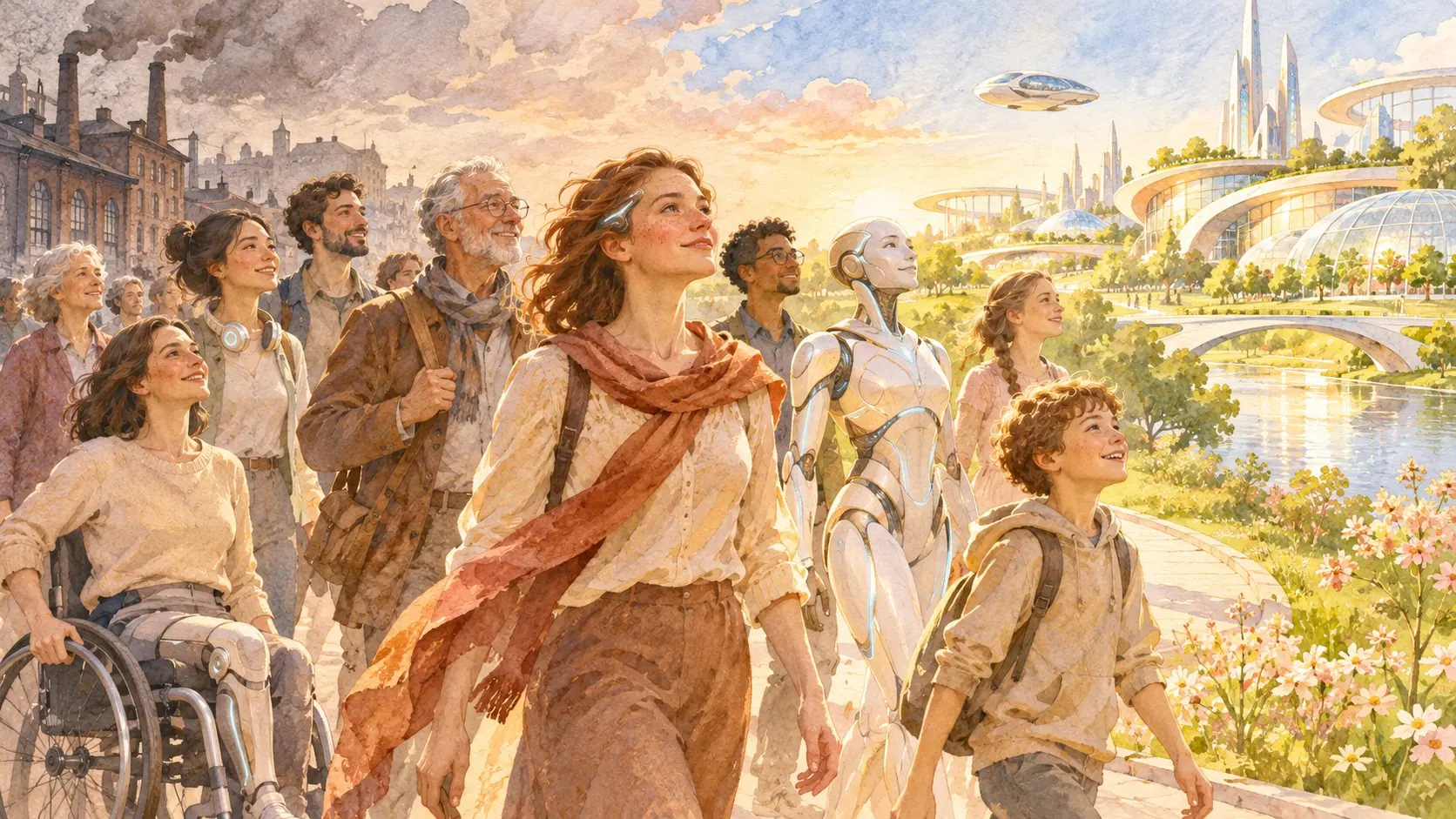
On what basis can we say this? Let us analyze it. All previous human civilization, from ancient times to modern cultures and the transnational corporations of the globalization era, is, however one looks at it, not a very advanced civilization, because it has always been built around the body. In other words, it served the needs and requirements of the body; it was tailored to the body’s needs. It lives according to the notions of the body, sees the world through the prism of the body, and was unable to create anything unrelated to the body or the body’s needs because of this rigid programming. Regardless of what tribal system prevailed, and whoever a person might be—a slave, a peasant, a soldier, the UN Secretary-General, the head of the board of directors of a transnational corporation, a president, and so on—it was still life within the narrow, archaic range of the body. In other words, it was a body-oriented civilization. It did not matter which historical era was prevailing.
But now, in my view, a new era is dawning—an era of transforming not external nature, but humanity itself. First and foremost, its consciousness, and secondly, its body. And the main conflict of the third millennium—and in my opinion, this conflict is already emerging—is the conflict between a new consciousness and an outdated body; in other words, this is a Gordian knot that will be cut. And I think it will be cut successfully.
The Conflict Between Consciousness and the Body
At the end of the twentieth century, the self-organization of collective consciousness and society as a whole increased. This led to the emergence of a great many people who possess extraordinary mental abilities. Consciousness, both at the individual level and at the level of society, continues to grow, but the body remains the same. Just as a thousand years ago or ten thousand years ago, people go to the toilet, eat, sleep, suffer from toothaches, and get runny noses. In other words, the body remains exactly the same. But consciousness has very great demands. And this conflict is growing more and more.
This is a paradox similar to programmers at Microsoft writing their programs by carving them with chisels onto stone slabs or clay tablets. Or placing an artificial intelligence system with a capacity of one thousand petaflops on a wooden abacus. This conflict will inevitably lead humanity to realize that this protein-based substrate is unsuitable for its complex and highly organized consciousness. It will prioritize the task of replacing the protein-based substrate with a more advanced one.
When movement in this direction begins, a new understanding will emerge: transhumanism is not interested in conquering, subduing, or transforming external physical nature; it is interested in transforming itself, both as consciousness and as the body that serves as the vehicle of consciousness, thereby transforming all other problems in one stroke. I believe this is the main task of transhumanism as an ideology and as the paradigm of the third millennium.
This is precisely how yogis, sadhus, and gods live. What happens when a yogi renounces everything worldly? In India, there are yogis who walk around naked. Such a yogi will say: “I am not trying to change anything in the external world. I am trying to transform my consciousness and my energy. I do not need money, fame, or wealth, but I need energy, I need spiritual strength, I need an evolved consciousness. I will focus on myself, practice various techniques, and attain an illusory divine body and transcendental consciousness.” Saints and divine beings, siddhas in the Himalayas, on Mount Kailash, live in the same way. I was at Mount Kailash last year. Gods live in the same way. They do not live in the external universe, they do not depend on external reality; they have completely turned inward, found within themselves a deep consciousness united with the Absolute, and using only the potential of this inner consciousness, they have realized everything they need—a body as a vehicle, a source of energy, a personal environment, and so on.
A New Paradigm of Development
Humanity will then change the direction of its evolution from transforming nature to transforming itself. As I said, there is no point in building homes for the comfort of the physical body and equipping them with various devices if it is possible to create an immortal, invulnerable body capable of living anywhere in the universe. There is no point in continuing to develop medicine and pharmaceuticals or creating new drugs and diagnostic tools if it is possible to create a fundamentally new field—a transhumanist medicine that will solve all problems once and for all and free humanity from disease, aging, and death.
Our body is imperfect; that is a fact. Suppose my knee hurts—in that case, the knee needs to be treated. But if the charging device in your iPhone breaks, you simply replace it with another device; it takes thirty seconds. If humanity develops a body so advanced that replacing any component takes thirty seconds and is just as accessible and inexpensive, that will be a great victory over physical reality.
Such a body is a cyborg, but it is not necessarily the case that this cyborg will remain throughout its entire existence a body consisting of crude elements. Further evolution of this body is entirely possible. It may evolve in the direction of consisting of nanorobots and eventually becoming simply liquid, or taking the form of a cloud of nanorobots; then this body may in general transition into a form of something radiant, as Konstantin Tsiolkovsky predicted, or a hologram. This body may not contain at all the technologies and elements that are currently being discussed. Nevertheless, this body will even be able to travel beyond the solar system.
This sounds fantastic now, but I believe that it is precisely such fantastic ideas that drive evolution and shape the course of history. People must set themselves such fantastic goals, because the world is a manifestation of our consciousness. No matter how fantastic an idea may be, sooner or later it will materialize if sufficient will is brought to bear by millions and billions of people, if the main vector of humanity’s evolutionary development moves in this direction.
A Vector Society
And then the question arises that we need a different society. We need a society that is more purposeful and more oriented toward achieving such a high level. Such a society can be called a vector society, that is, a society with a vector of development. Perhaps this will not be a single vector but an entire cascade of such vectors, yet the general atmosphere must be oriented toward development. If transhumanists and the transhumanist movement become increasingly active, such a vector of development will create the necessary atmosphere, which will inevitably result in political decisions, investments, funding, and scientific research.
Unfortunately, there is currently no such vector in society, or almost none—perhaps with the exception of this hall and this movement. And the issue is not so much about technology, because sooner or later the technologies will be created, but about creating this vector, creating demand, a social order, and ensuring a response in the form of corresponding political will. I believe this must be done at the level of the largest global civilizational institutions, because it is not serious when, for projects spanning millennia, people ask: “Please give me a little money to develop civilization.” Is this really how humanity’s global issues should be resolved? Shouldn’t such issues be addressed by global, powerful forces? This can be changed if there is a corresponding social order, if a culture and atmosphere of vector-based development are created.
The Convergence of the Spiritual and Technological Paths
So, I believe that a transhumanist biotechnological revolution awaits us, one that will inevitably turn humanity away from seeking perfection and happiness outside itself, in the external world, toward seeking them within. Having perfected its physical body, humanity will sooner or later face the question of the need to develop its consciousness, expand its consciousness, and reach the level of the gods. By analogy, these two lines—the scientific, technological, transhumanist one and the spiritual one—must inevitably converge at some point.
For example, an ordinary person asks themselves: “How should I live from now on? How can I develop using modern technologies?” They acquire a new, futuristic, transhumanist way of thinking and become a transhumanist. That is, a transhumanist is someone who wants to change themselves, go beyond their own limits, and improve themselves in some way. If they succeed, as described in Yuri Nikin’s book Transhuman, they may become a person who has realized some level of transhumanism within themselves. If they continue moving forward, they may become a person who has transcended their physically limited nature.
The Division of Society and Ethical Principles
Perhaps not all people will want or be able to become transhumanists; that is their personal choice. Likewise, not everyone wants to be a yogi. There is nothing wrong with that, and there is no need to be embarrassed about it. I think that society will inevitably be divided into ordinary people and transhumanists, because this is a matter of personal choice. But such transhumanists will be like astronauts, like pioneers. They are the bravest and most fearless; they will stand out and gradually begin to set the tone for the evolution of humanity and the development of civilization. They will be at the forefront.
That part of humanity which wants to continue evolving will develop great abilities, perhaps even reaching the level of gods. And now the question arises: “What should these gods be like if one part of humanity evolves while the other remains at its current level?” There will always be people who say: “We don’t need any development. We want to watch TV series, eat fast food, drink Coca-Cola—that’s enough for us.” There is nothing wrong with that; it is perfectly normal, because development cannot be forced or imposed. It is a subtle and voluntary process. And we must accept that society may become divided, but we must not be afraid of this; we must say that it is normal. Any complex system, as it develops and increases its self-organization, expands the spectrum of distinct structures within itself; it becomes more complex. And this increasing complexity is not bad, nor is it a collapse. We should not be afraid of such complexity.
The question is what the advanced part of humanity that will become gods or godlike beings should be like. Here we must turn to traditional spiritual, philosophical, and religious systems, which have already accumulated thousands of years of proven experience. This is where the question of ethics arises. The gods must be benevolent. This is the primary ethical imperative. They must have compassion, love, and selflessness; they must possess a moral and highly developed ethical culture; they must be free of egoism, pride, hatred, and so on.
If this moral and ethical component is introduced into new technologies and transhumanism, then I wholeheartedly support such transhumanism; I say that it has a future. It will be a beautiful, wonderful, and bright future. We must all ensure that humanity is guided not only by technology, but also by a new level of humanism, love, compassion, and spiritual ethics.
The Nature of Happiness and the Development of Awareness
So, what does human happiness consist in? Happiness consists in realizing one’s inner essence, one’s divine nature, which lies beyond all limitations. This is the definition of happiness in the tradition of Advaita Vedanta.
But how can this be achieved in practice? It can be achieved through the development of consciousness and the development of awareness. Awareness is not intellect; it is not thoughts or thinking. It is that which lies behind thoughts and intellect; it lies beyond conceptual thinking. Awareness is always non-conceptual. It is through the development of awareness that various abilities are realized within the system of yoga.
To increase the self-organization and complexity of consciousness, a person must purify and strengthen the mind and penetrate within themselves. In the tradition of yoga, such penetration is called samadhi. And I want to say that this cannot be achieved through technology. In other words, technology is applicable only up to a certain level, but beyond that comes a process in which we must turn to our own consciousness. Technology comes to an end, and we are left alone with our own consciousness.
When we are left alone with our own consciousness, this is called meditation, and when we are able to penetrate into this consciousness, it is called samadhi. And no matter how advanced technologies may be, fortunately or unfortunately, they will affect only the external realm; they will affect the body and energy. But beyond that, all of this must converge, and we must move toward inner, divine technologies—the art of meditation and contemplation.
When we penetrate the deepest nature of the mind, we can establish a connection with the divine supermind, the source of all the laws and principles of the universe. In Sanskrit, in Advaita Vedanta, this supermind is called Atman or Brahman. In other traditions, it is called something else, for example nirvana or Tao. It possesses an infinite level of self-organizing complexity, and its inner diversity is beyond description. In other words, it is the primordial field of all meanings, the source of all values, and the primary cause of all goals and actions. And when a yogi penetrates this unity, they attain the purpose of their life; their mind is enlightened by divine knowledge of the unity of all existence.
Technologies as an Analogue of Divine Abilities
So, what kind of future might such technologies bring us?
Multicorporeality, that is, the ability to be present in many places simultaneously, has already been realized by both the gods and the saints of the Vedic tradition, but now, for the first time, it may become accessible to every housewife. In other words, a mobile phone is an analogue of clairaudience. Google Glasses are an analogue of clairvoyance. These technologies may be available to everyone; nevertheless, they will not replace our inner subtle qualities—we still have to develop our inner divine properties ourselves. Google, Microsoft, and Apple will not be able to develop our consciousness for us. They can provide a device, but when it comes to developing the subtle structures of consciousness, we must work on it ourselves.
Divine Civilizations as a Parental Foundation
An analysis of sacred texts, historical evidence, and the mythology of our earthly culture indicates that divine civilizations lie at the foundation of our entire life. This applies not only to the Aryan Vedic civilization, but also to the civilization of China, African civilizations, and indigenous tribes. Everywhere there is evidence of divine intervention in human culture; that is, we can see how the gods teach people, improve the human gene pool, and reveal knowledge to them.
What conclusion can be drawn? We can conclude that the gods and divine civilizations are, in relation to humanity, a parental civilization, while we are a daughter civilization. If we are a daughter civilization, then, like all children, we should strive to become similar to our parents. In this regard, I think that humanity has no other developmental alternative than to move toward the divine, regardless of what it is called in a religious context or how it is interpreted. And technology can become an aid in moving in this direction.
The Main Traits of the Human Being of the Future
What are the main traits of the human being of the future?
I think that the human being of the future, as we have said, will be immortal, at the very least. At most, they will possess many bodies and live in many bodies simultaneously. For example:
one body (biological) may be sitting here at the congress
another body, in the form of a cyborg, may be traveling somewhere in the mountains, where the air is thin and it is difficult to breathe without an oxygen apparatus
a third body, in the form of nanorobots, may be traveling through the solar system
a fourth body, in the form of a quantum radiant body, may be traveling through the universe
This is a form of freedom in the guise of multicorporeality.
Another ability is the ability to live in multireality, that is, in different realities simultaneously; the ability to exercise authoritative, volitional control over the environment, when the environment is created by the power of the mind and consciousness, and when every person can become the creator of a universe. This is not fiction; it is described in our religious texts, and I believe in them with all my heart.
Our religious texts repeatedly state that every person can become Brahma—a new creator of the universe. There is a text called Mystery Beyond the Trinity (also known as Tripura Rahasya), which describes the story of the son of the sage Gana, who used the power of his mind to create an entire universe inside a hill. He took one king there with him and showed him what beings and worlds existed within that universe. He created this universe through the power of his yogic concentration.
There is a story described in the text Yoga Vasistha, which tells of ten brothers from the lineage of Indu. After their parents died, they began practicing ascetic meditation, reciting mantras, and engaging in concentration. They did this for ten thousand years; their bodies died, but they continued this concentration on the level of the subtle body. Eventually, each of them attained the state of Brahma (the god who created the universe) and created a new universe.
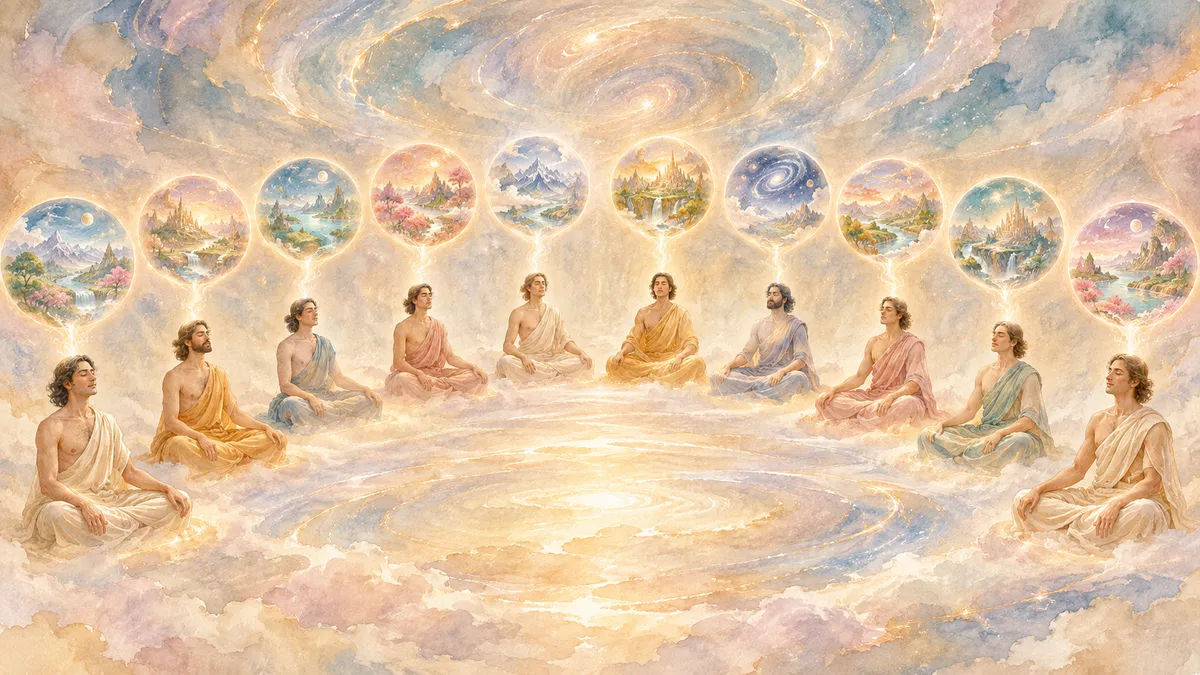
And I believe that this is a very worthy goal for transhumanists—to become a new creator and create a personal universe. I believe that what sounds fantastical now will, in the future, become one of the defining features of the human being of the future: life in a personally created universe, in a universe governed by the power of thought—in other words, in a controllable reality.
The religious, historical, philosophical, and mythological foundations for this already fully exist. Science simply needs to reread religious texts in a new way, to comprehend them and create a new paradigm capable of describing what is spoken of in ancient mythology. And such a human being of the future, of course, would no longer be merely human; they would be a god-human, a divine being. And all of this will be possible if we improve ourselves, rather than technology alone. If we cultivate compassion for others, love, and awareness within ourselves.
With that, I conclude. Thank you all.
Om, namaste.
