

A bow is a reminder to the disciple: “There is a divine Source within you. Trust it, surrender to it. Do not forget it, and give everything to it. Live without ever leaving it.” But for this, one must have faith in it or be aware of it—in principle, these are one and the same. When we are aware of it, we believe in it; or, when we believe in it, before attaining awareness, we establish a connection with it through faith.
Sometimes we practice, yet our suffering and our problems do not go away. Then the disciple asks: “Guru, I practice, and I seem to have faith, but for some reason suffering and confusion remain.” Then the Guru replies: “It is simply that your level of practice and your level of faith are insufficient. You are at the first level—the desire for enlightenment—and the first three levels do not free you from suffering. Everything is as it should be: you are supposed to suffer, to be confused, to have doubts. This is natural, just as a child is expected to cry over little things in childhood—it is perfectly normal. An adult is not supposed to, but a child is.”
Grounds of Wisdom
The first ground of wisdom is this: perhaps you are at the first stage of enlightenment. Shubheccha (the search for enlightenment): you are seeking enlightenment. You have not found it yet—you have not, so what do you expect?
Perhaps you are even on the second ground of wisdom —vicharana (self-inquiry). You practice atma-vichara, trying to understand the inner nature of all phenomena, to contemplate something, to search within. But the second level is also a worldly level. You are investigating, but you have not found it yet, and the process of investigation is like searching for gold by sifting through sand. You examine the sand in the hope of finding gold. But you are not yet the owner of gold mines or a multibillionaire who owns gold. You are searching—that is the second stage.
The second ground of wisdom is vicharana, and all of you are on either the first or, in the vast majority of cases, the second ground of wisdom, except for a few experienced sadhus. Suffering does not yet disappear at this stage, nor does ignorance disappear, and it is not supposed to. If it disappeared on the first ground of wisdom, that would be surprising, because on both the first and second grounds of wisdom, karma, inner desires, and inner tendencies have not yet dissolved—they actually lie very deep. At the first and second stages of enlightenment, the degree to which God is perceived and comprehended is not yet capable of penetrating deeply enough to free you from suffering and all doubts, or to dissolve your dualistic patterns and concepts. These are the stages. But then the Guru says: “You simply need to raise your level of enlightenment.”
For example, if there is an experienced sadhu who never suffers, this means that he is on a different ground of wisdom, such as sattvapatti (Self-realization) or even asamsakti—that is the whole point.
Likewise, if you have a white belt in karate, you will be beaten by any beginner who has trained for two months longer than you. I know what a white belt is—I wore one, and once I was paired with an orange belt. Not only was I thirteen and he older than me, about seventeen, but he was also studying at a vocational school and was close to the senior coach—that was it, the end. But thanks to my diplomatic skills, I simply made an agreement with him not to hit me too hard. I lost, but painlessly; I understood the odds of a white belt who had practiced for three months against an orange belt who had practiced for three years—it was only natural.

When you are on the first ground of wisdom, you are like a beginner with a white belt—anyone can beat you. Not in the sense that someone will physically beat you, but your mind can beat you, every thought can beat you, every emotion can beat you, every situation can beat you—you constantly lose to everything. Such is the first ground of wisdom, but at this stage, shubheccha, you desire enlightenment, and your desire must be strong and your tapas must be strong so that you strive as hard as possible to reach the second ground of wisdom.
The second ground of wisdom already entails a certain degree of experience. It is the ability to perform contemplative practices, to look within, and a certain stage of self-liberation. The second stage of enlightenment is inquiry (vicharana), and if you have understood the meaning of contemplation, the meaning of atma-vichara and self-liberation, and you have enough self-control to live by subtle realities, and your faith is strong—for example, you have received confirmation from the Guru that you are approximately at the stage of transmission—then this is the second ground of wisdom.
On the second ground of wisdom, it is as though you already possess a certain skill, but sometimes thoughts are stronger than you, and sometimes weaker; sometimes you prevail, and sometimes they prevail over you. Therefore, sometimes there is no suffering or confusion, while at other times there is suffering and confusion; sometimes a problem is resolved, and sometimes it is not.
It all depends on the level of the opponent you face. It is like having a yellow belt. A yellow belt can defeat both an orange belt and a white belt, but if a brown or blue belt steps forward, the yellow belt will be in trouble, and there are still many ahead who surpass them. They are no longer a complete novice, but many still surpass them. We do not mean external people who surpass you—the matter here is internal. We mean that your awareness, or your I-thought, is surpassed by many other thoughts. Your love, your faith, your divya-bhava are surpassed by many other inner bhavas. Many other inner emotions and judgments overpower them, and the Guru knows this perfectly well.
Your power of self-liberation is surpassed by another, inner power: the power of your pranas, the power of your patterns, the power of your karmic debts, and the power of your karmic rnanubandhas (connections). As soon as such a power prevails, your state may be one of confusion, doubt, and suffering. This is where it is important to rely on a power greater than yourself—the power of divine grace—because your own power is insufficient. But through the power of faith, you can attract the greater power of grace, which will always help you. This is Guru Yoga, Guru Bhava, and Ishta Devata Yoga.
Finally, when, through practice, you become established in a much purer and subtler state, you advance to the third ground of wisdom.
The third ground of wisdom is something significant, though it still remains worldly—worldly in the sense that it does not liberate one from samsara and rebirth is most likely still possible at this stage. But it largely frees one from suffering, confusion, and ignorance, and makes it easy to dissolve most thoughts, emotions, and situations that arise; that is, your consciousness remains almost unchanged except in certain serious situations. Serious situations can still unsettle it.
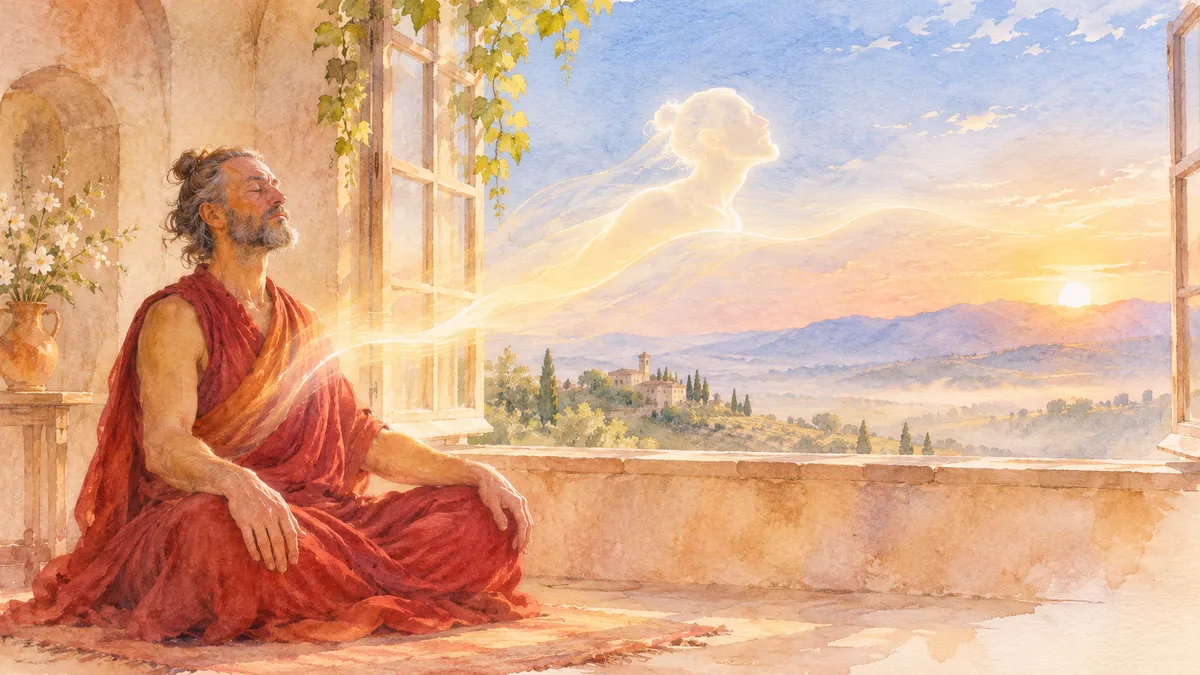
On the third ground of wisdom, a person can experience samadhi; this stage is called “the refined mind.” They can separate the subtle body and project it over great distances, remain aware of themselves in dreamless sleep, and experience light. On the third ground of wisdom, they possess inner wisdom and clarity, perhaps a certain degree of clairvoyance, as well as developed intuition and clear knowledge. They already differ from most people, although they are still human—yet no longer entirely so. They are now a strong sadhu whose mind has become so refined and developed that the patterns and stereotypes of karma have begun to dissolve. They are on the right path, and whether or not they attain liberation in this lifetime is solely a matter of their efforts.
This is the third stage of enlightenment. Such people usually stand out: they are strong, charismatic, wise, and clear-minded; they control the mind, think quickly, are capable of performing ascetic practices, and possess strong faith. But they may periodically experience states of despondency after accumulating karma, as well as states caused by a powerful influx of pranas and karmas. On the whole, however, they do not lose their inner essence. Whatever happens, they easily restore their consciousness, and they are already self-sufficient. They do not look at others or outward; they look toward God within themselves, seeing the Guru and God as inseparable, and they have considerable control over their mind. The ability to control the mind is their defining quality. Always and everywhere, their mind is subdued.
Sattvapatti, Self-Realization
Finally, as they perform tapasya and advance further, they may attain the fourth stage of enlightenment, the fourth ground of wisdom, and attain Self-realization (sattvapatti). They transcend the gunas and attain Purusha-tattva. Attaining Purusha-tattva is the state of the fourth stage of enlightenment. This is the first ground of wisdom upon which liberation (moksha) is attained, and at this stage the yogi bears the title of brahmavid.
Thus, the whole point is that when we experience confusion, suffering, and problems, it simply means that we are not on the right ground of wisdom. As they say, “It is impossible to find a cool place in a boiling cauldron.” Perhaps we are not on any ground of wisdom at all, but below all the grounds of wisdom—and that also happens; that is, we are in the dimension of samsara. Therefore, it is said, “There is no cool place in a boiling cauldron.” The boiling cauldron is samsara itself.
The Path of Renunciation as a Remedy for Suffering
When we feel that we are experiencing confusion, suffering, and doubt due to our perception of the world’s energy and our contact with it, the saints recommend: “Practice renunciation, practice detachment. Give up hope in this world, give up hope in relationships. Give up the desire for praise, give up pride—give up everything you can. Whatever you can give up, give it up; practice renunciation. Give up the desire for power. Simply give up everything you can. You cannot give up food, so you must eat. You cannot give up sleep, so you must sleep. Nor can you leave the body uncared for—you must take care of it. You also need a roof over your head, and some supportive community, such as a monastic sangha—that is all. Everything else is none of your concern.”
This is what the saints say, especially in retreat: “Follow the path of renunciation. If you feel that your ground of wisdom is insufficient and that you still experience suffering and doubt, it means that your power to dissolve the signals of the external world entering your mind is insufficient. You need greater distance in order to become established in this state of detachment.” Traditionally, the principle of sutra, the principle of Raja Yoga, is the path of relinquishment, the path of renunciation.
Renunciation is very important, especially at the initial stage. External renunciation must cultivate the habit of internal renunciation; this is precisely why one becomes a sannyasi. Much of the discussion about Advaita, Neo-Advaita, and Anuttara Tantra in the style of superficial populism overlooks one small detail—renunciation (vairagya), uparati, what the saints taught; this is what they quietly overlook. A new Western style of practice has emerged: one can practice anywhere, one can practice while living in the world, one can practice without renouncing anything. Yes, one can—I confirm it—but only if one has attained the fourth ground of wisdom. As for someone who is on the first or the zeroth ground of wisdom, I strongly doubt that it is possible. One can try—no one forbids it; there is no prohibition, no decrees of the monastic council that forbid it, nor any shastras that forbid it. The question is how effective it can be.
But the saints say unequivocally: “Vairagya (renunciation), mauna—or at least inner mauna—and uparati (withdrawal) from all the concerns and affairs of the external world, from all connections: this is the path of the sannyasi.” Through renunciation, we must develop our own self-sufficiency, our own independence from the world, the rejection of material relationships, the rejection of property ownership, the rejection of power, wealth, claims, and desires, and the readiness to follow this path throughout our lives. This is not merely something external—it is a way of life. I myself have always followed it.
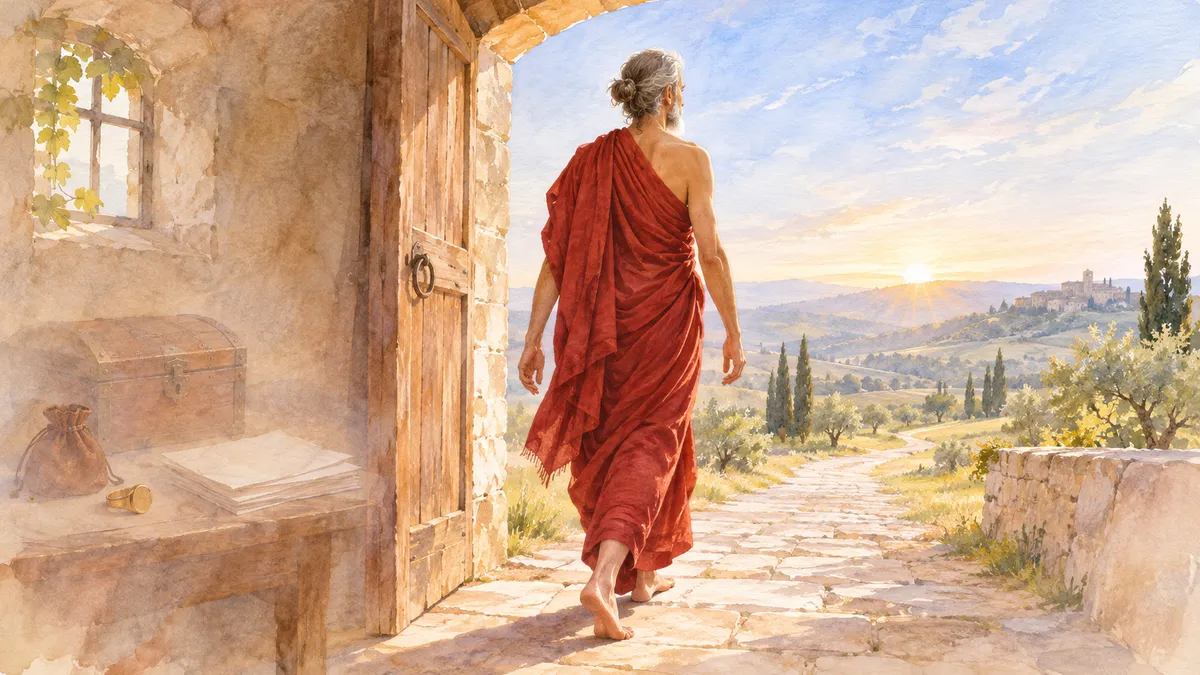
When we possess such renunciation, we suddenly feel our spiritual power begin to grow and our spiritual joy begin to increase. The innate joy of one’s own mind is called manasa-kalpita-sahaja-anandam. Manasa-kalpita-sahaja-anandam begins to increase because we have simply withdrawn properly and thoroughly, and monasticism (sannyasa) is the art of proper renunciation.
Right and Wrong Renunciation
There can be wrong renunciation; one can renounce incorrectly, and then it will bring no benefit. The art of correct renunciation is the art of sannyasa, and we must understand what correct renunciation means. Wrong renunciation is sometimes called an escape from life, and so on. But correct renunciation is the path prescribed by the saints for attaining liberation, and this path can be practiced by both sannyasis and karma-sannyasis, although it is somewhat more difficult for karma-sannyasis. It is not merely that it needs to be practiced—it needs to be practiced correctly.
Correct renunciation means that we change our relationship with the world, with other beings, with people, with the universe, and change our attitude toward our desires and ego. One who follows the path of a sannyasi does not follow the path of the pitris (ancestors), nor does he follow the path of the devas—these are called pitriyana and devayana (the path of ancestral karma and the path of samsaric gods). He follows the path of the Brahmanas—this is the result of correct renunciation.
If his renunciation is insufficient, he follows either the path of the ancestors and is reborn in the world of the pitris, or the path of the devas, if he has sufficient merit, and is reborn in the world of the devas. Amaya means illness in Sanskrit; an-amaya means free from illness. One who is free from illness is Shiva, as is one who follows this path—the path of renunciation.
What is the result of the path of renunciation? It is Brahma-nirvana: the dissolution of all karma, the extinction of all karma in Brahman, the extinction of karma in one’s own nature. On the path of renunciation, the yogin approaches the ineffable (anirvachaniya). He transcends dvandva—all pairs of opposites—and drinks tyaga-amrita (the nectar of renunciation). When he attains tyaga-amrita (the nectar of renunciation), he experiences sarvasama, that is, he becomes identical with all things, equal to everything and equanimous toward everything.
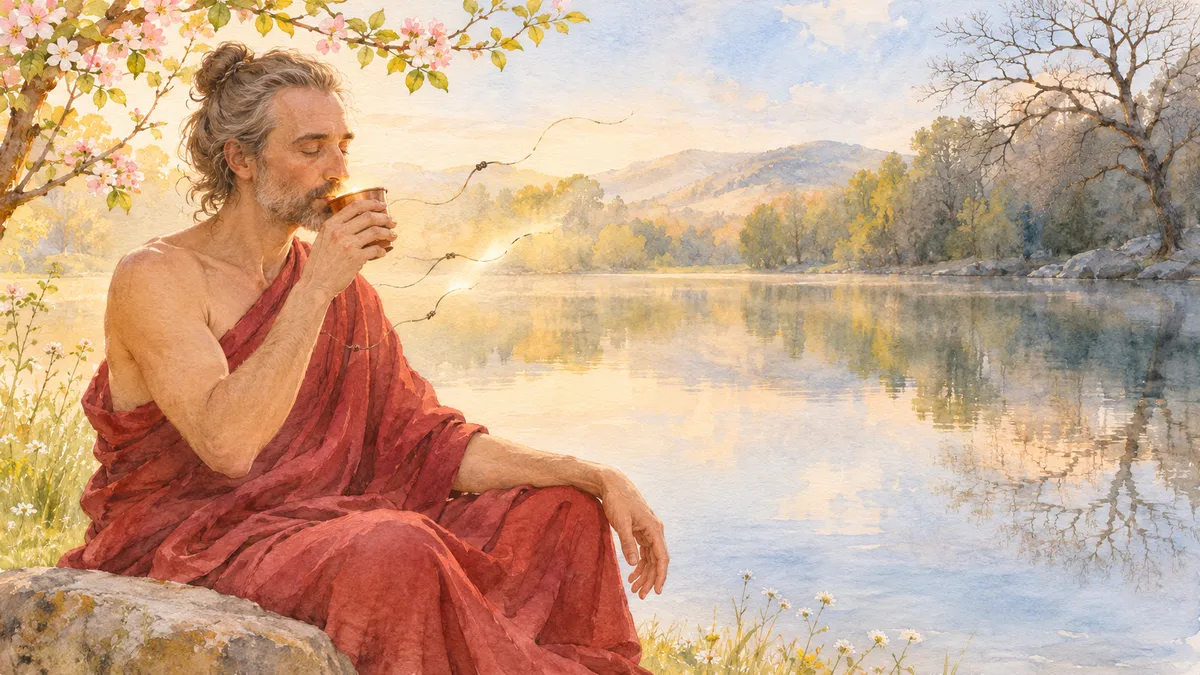
He attains flawless, stainless consciousness (niranjan). Niranjan is a synonym for Nirguna Brahman (Shiva). He attains jnana-niranjan (pure jnana—pure knowledge of God), sahaja (natural awareness of God), and paramapada (the supreme abode). Ultimately, through such renunciation, he reaches the state of liberation (moksha-padam). There are two states: bandha-padam—the state of bondage and enslavement—and moksha-padam (the state of liberation).
The Sequence: First Renunciation, Then All-Acceptance
When we enter sannyasa, it is very important to understand that we are entering the path of renunciation. Sometimes people may ask: “But we are entering the teachings of Anuttara Tantra, Sahajayana—isn’t this the path of all-acceptance?” Yes, it is the path of all-acceptance, but only after renunciation. First renunciation, then all-acceptance—do not confuse the two under any circumstances.
In other words, first we must renounce the ego, the world, and desires, and something must remain that cannot be renounced. That which cannot be renounced is primordial awareness, and we must become established in this primordial awareness. Once we have become established in primordial awareness and have shifted our identity away from the ego and the body—that is, transcended dehatma-buddhi, transcended ahamkara-buddhi, transcended kartritva-buddhi, namely, “I am the body,” “I am the ego,” “I am the doer”—and reunited with primordial, pure awareness, only then does the period of all-acceptance begin, not before. Therefore, the first stage of spiritual life is renunciation.
Moreover, as usual, the word “renunciation” is misleading, suggesting that everything comes down solely to external renunciation. The matter is much deeper. Renunciation (vairagya) is first and foremost inner renunciation.
Inner Renunciation
For example, if one day you stopped eating meat and became firmly established in a vegetarian diet, it may simply be because you do not like meat, find it unpleasant to eat, and feel that it makes your body heavy. It may seem that you have renounced meat, but this is inner renunciation—you simply feel no attraction to meat and have no such desire. In the same way, inner renunciation means that wealth, power, ambitions, desires, and ego are matters of complete indifference to you. You do not perform any special actions in order to renounce them; you simply look in another direction.

Inner renunciation begins when you cease to be interested in many of the things that usually interested you. Until this feeling arises within you, you will not become truly renounced: “What did that person say? What did he do? What did the Guru transmit to him? This person received such a status, but why did he receive it?” Where is vairagya? Why are you looking at others? What do you need others for? Who is your ishta-devata—someone else or Dattatreya? Why do you not think this way about Dattatreya, about Shiva? What kind of vairagya is this? How do you hope to practice renunciation if your mind is like this? It is impossible.
You must say, “Nothing in the entire universe interests me until I attain liberation. Until I have reached the fourth level of wisdom, I will practice vairagya; then the Guru will give instructions, and by then I myself will have grown wiser and will understand,” because the fourth level of wisdom opens one’s eyes. An attitude of renunciation is essential, because if we do not escape these endless judgments, endless identifications, and endless emotional reactions, whether there is a reason for them or not, we will never take even a single step from the first level to the second. Practicing vairagya in this way requires tremendous faith, tremendous determination, and tremendous humility, because you will have to change a great deal within yourself, and you must be prepared for your stereotypes and the ego’s karmic patterns simply to rebel. But if you have faith, fearlessness, and readiness for transformation, you will be able to do it.
Renunciation must be real, and it must not be external—it must be internal. The entire matter lies in inner renunciation. You can even put on the orange robes of a sannyasi and still be filled with judgments, ambitions, and assessments—that will not help. The mind must put on orange robes. As soon as the mind puts on orange robes, you must forbid it to condemn anyone—anyone at all. You must forbid yourself from taking excessive interest in the lives of others or watching them at all. How can you watch others when you do not watch your own mind? This is no laughing matter, because the moment you watch others, you have lost atma-vichara, you have lost sankalpa, you have lost the four foundations of mindfulness—you have lost everything altogether. Naturally, you will then be caught up in emotions, tendencies, attachment, pride, envy, rivalry, or any other karmic tendencies.
Vairagya means that you have renounced material possessions and no longer make plans or dream of anything for yourself. You have renounced tendencies toward power, influence, authority, demands for respect, and so on. When you are not respected, it is actually a healing balm for your obscured ego. You must say, “Ego, that is exactly where you belong; you are getting what you deserve. Let all your hopes collapse, and the sooner the better,” because if you are respected and shown signs of attention, your ego may flourish and rise again. Even if you have cast it aside, dissolved it, or freed yourself from it in some way, it is easy to fall under its spell. Inner renunciation means that we renounce many inwardly selfish things within ourselves, many tendencies and attachments within ourselves, and then it will begin to work.
Awakening to a New Life Through Renunciation
Then a powerful spiritual life begins, and such a yogi begins to experience anirvachaniya—the infinite consciousness that is inexpressible in words. This infinite consciousness, inexpressible in words, transforms his vision and his life; he truly awakens to a new life. He leaves behind bondage, the state of being bound and enslaved (bandhana-padam).
What was previously important to him ceases to be important. He begins to see and feel Shiva everywhere and in everything, everywhere and always, never forgetting Him. His mind begins to dissolve and resemble gagana-akara, that which has the form of the sky. He begins to experience natural bliss (sahaja-ananda). Yoga begins as union with the Atman, and then yoga disappears. He renounces all enjoyment and all pleasures and begins to experience the great enjoyer (maha-bhogi). He begins to experience kevalah-shivam—the realization that Shiva alone exists—and he realizes the consciousness that possesses nothing and has never possessed anything. He relinquishes any claim to possessing anything or anyone and becomes akinchanya, one who possesses nothing.

Akinchanya is the highest degree of devotion to God, akin to the Russian word “okonchaniye,” meaning the completion of everything, the highest degree. Akinchanya is the complete degree of surrender to God. When one becomes established in such a detached state of vairagya, one suddenly acquires a very fluid, very clear, profound, luminous divine mind permeated by divya-bhava, and this divine mind is established in the state of pure consciousness, and one becomes what is called an avadhuta.
The State of an Avadhuta
Avadhuta—ours is the tradition of avadhutas. An avadhuta represents the highest stage of sannyasa; for example, Dattatreya was the supreme sannyasi. The highest and most revered degree of sannyasa is that of an avadhuta, when the avadhuta transcends all boundaries and definitions. How does Dattatreya describe the state of an avadhuta?
“A”—one is free from the snares of desire, pure in the beginning, middle, and end, and always abides in happiness—this is the syllable “a” in the word avadhuta
“Va”—one who has rejected all aspirations, whose speech is benevolent, and who lives in all living beings
“Dhu”—one whose limbs are covered with ashes, whose mind is dissolved, who is pure and free from the methods of concentration and meditation—dharana, dhyana, nirmukta—that is, one who continuously abides in sahaja-tattva
“Ta”—one who is steadfast in contemplation of divine reality (tattva-chinta), who is devoid of all other thoughts and efforts, and free from tamas and ego

When you attain such vairagya, you approach the state of an avadhuta, because the experience beginning with the fourth ground of wisdom is the birth within oneself of the state of a free avadhuta. The first three stages of a sannyasi and karma-sannyasi involve cultivating inner renunciation. According to the Upanishads, an avadhuta is one who is immortal (akshara), the greatest and most desirable (varenyam), and who has renounced worldly bonds (dhuta-samsara-bandhana).
Such a state of an avadhuta means that the yogin has completely separated himself from this life—from worldly life, from samsaric life—and has separated himself from this world, yet remains in it. He is integrated into it, but being completely detached, he lives in happiness. Such an avadhuta recognizes the emptiness of all phenomena, and these are not mere words—it is his natural, everyday experience. He recognizes the illusory nature of all phenomena; he recognizes the pure, playful, divine nature of all the energies and phenomena in this world. He recognizes the nonexistence of his personal ego, and he is established in the view of himself as Dattatreya. Such an avadhuta is like Dattatreya playing within Shiva’s dream; therefore, if you are Dattatreya and are playing within Shiva’s dream, what suffering can there be? What problems can there be? Through renunciation, such a yogin sees the world purely as the mandala of his chosen deity.
Question: Om, Guruji, please tell us: in such a state, how does an avadhuta regard the duties that arise from living in samsara?
Suppose you are in a dream and you know that it is a dream—what duties do you have in the dream? Name even one. None—you have already awakened within the dream, within a lucid dream; you entered it to stroll around and play. An avadhuta has no duties.
Question: Then here is the next question. Shankaracharya concluded that maya is an error and that one should escape from it as quickly as possible; nevertheless, when his mother was dying, he came and performed the rites, contrary to what was required for him to remain a sannyasi. That is, did he, as it were, fulfill his duties as a teacher?
If the whole world was maya for Shankara, then what could he have come into conflict with? Here Shankara acted as an avadhuta; samsaric patterns no longer applied to him: he wished to do so, so he came, performed the rite for his mother, and sent her consciousness to the heavens. He acted here not as an attached son, but as a compassionate soul who, responding through the channel of kinship, transferred her consciousness. An avadhuta has no obligations because he is detached. Obligations (dharma) are established according to states of attachment; attachment arises from identification. Each identity and attachment has its own dharma, which determines how to act correctly within that attachment, but when there is no attachment, there is no dharma and there are no obligations either.
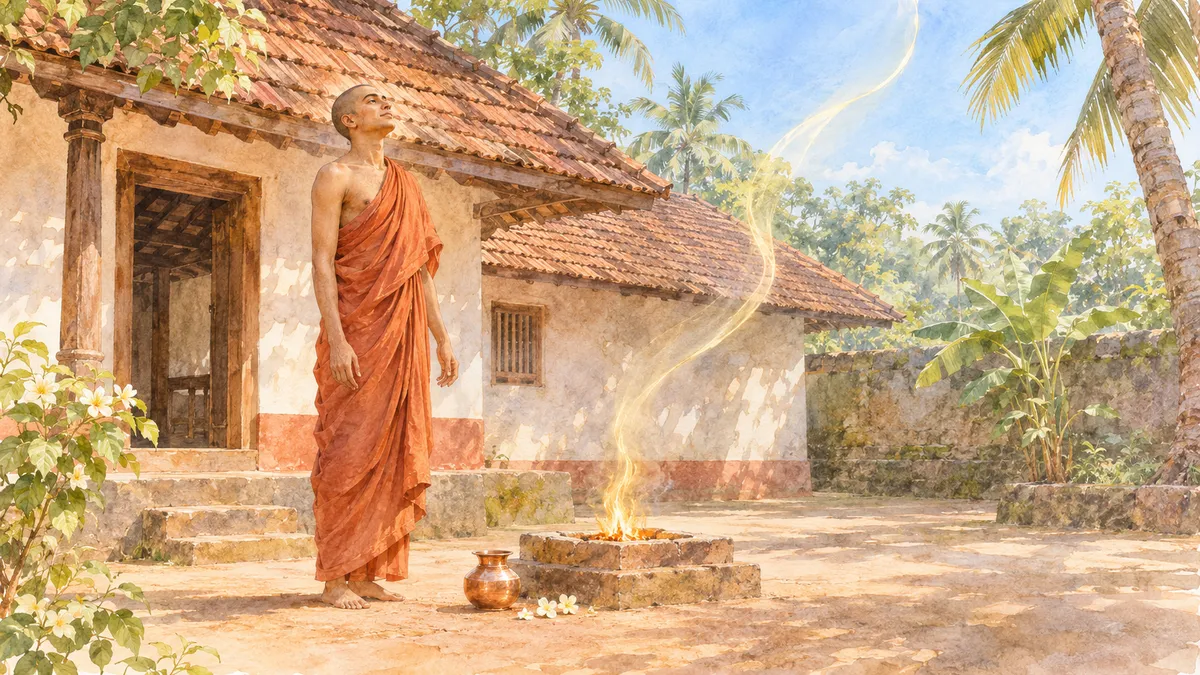
In other words, if you have a tendency to be a warrior, if you are attached to martial arts and so on, your dharma is that of a kshatriya. The duties of a kshatriya immediately come into effect, determining how to act correctly in the kshatriya bhava. But if you are not attached, they do not concern you.
If you have a tendency to be a family person, you marry and become a grihastha—the family code immediately comes into effect, determining how to be a proper grihastha, how to accumulate merit and avoid accumulating sins, and how to practice. But if you are not attached to grihastha ashrama, the duties of grihastha ashrama do not concern you. If you are something else—take an avadhuta, for instance—which ashrama does he belong to? None. Accordingly, there are no duties for avadhutas.
The Divine Play of Energy
But how, then, does an avadhuta act? He does not act, because there is no doer in him. His energy responds naturally and spontaneously from the natural state, but the response of energy from the natural state is entirely different from obligations. It is a divine play that manifests through his body, speech, and mind—it is something completely different, something no longer human, as it were.
Question: A response to what?
This cannot be explained in words.
Question: I recalled the words of Vasishtha, about Chudala—she attained enlightenment and seemingly had no desires, but then she had a desire to accumulate a great deal of energy and fly through the air. That is strange: where did it come from? There were no desires, yet somehow it appeared.

It arises from niyati, from Ishvara's sankalpa, yet at the same time it arises naturally from the yogin's consciousness as a result of the interaction of secondary causes. Ishvara's sankalpa establishes the overall reality, while the yogin's consciousness responds spontaneously to secondary causes—that is how it works. This is what it resembles. If a crystal is illuminated with a flashlight in a dark room, the crystal has many facets, and the flashlight will cast a glint on the wall depending on which facet is turned toward it. This glint is the principle by which energy manifests. Our awakened and purified consciousness is the crystal principle, while the Supreme Source is the flashlight that illuminates it. Depending on the angle at which it shines, a particular energy will manifest.
Question: So, if there is some kind of play, does it shine on the crystal, causing certain desires or tendencies to arise in that crystal?
Neither desires nor tendencies arise, but a compassionate resonance of energy does. Energy resonates with certain other energies, and something manifests on the relative level. From the outside, it seems that the avadhuta is doing something, but he himself does nothing—it is the play of the energy of compassionate resonance, while he himself is an absolutely transparent medium.
Question: Then if all these beings were enlightened, would there be resonance or not?
There would be, for there are pure lands where everyone is enlightened, worlds of gods, and there this resonance is very beautiful. Vishnu and Lakshmi are seated on a great throne, surrounded by many goddesses and gods and holy sages; their resonance creates a truly wondrous symphony, the mandala of a pure land. This is precisely how many saints act. Their compassionate resonance creates pure lands, entire worlds, entire heavenly dimensions.
Question: But they also resonate with other dimensions that are not enlightened, do they not?
Yes, and as a result of such resonance, wrathful mandalas and worldly mandalas arise, but a person may not even be able to recognize them. Yet they, too, are created by deities and saints through such pure, compassionate resonance. For saints and awakened beings, there are no duties and no actions; there is only the perception of nonduality, emptiness, and the play of divine energies, and there is no karma. But there are universal principles according to which these karmas are directed.
The True Nature of Vairagya
Vairagya (renunciation) is the foundation of sadhana; love for God comes from vairagya. When there is vairagya in the soul, it does not mean that your soul is a scorched wasteland or that you feel nothing. Sometimes a person shrivels up so much in vairagya, constricting their consciousness to such an extent, that they are afraid even to look at anything, constantly control themselves, and can barely hear because they have renounced everything. Such a state can arise. No, that is not it—it is the freezing of the senses. This is a classic mistake both in contemplation and in renunciation.
Vairagya is an infinitely expansive state of consciousness, one that is completely open, and it is the discovery of this boundless openness through renunciation. If you have not renounced, you will never discover this boundless openness. Why? Because you are looking at something else. Right here and now there is the boundless openness of Shiva, of the Absolute, but because you lack vairagya, you are looking elsewhere. You attach importance to other things, and the entire picture of the world becomes distorted for you; you cannot see.
Vairagya is the discovery of divine love in the pure mind. It is the discovery of the ability to feel the world in a new way, to see the world in a new way, to perceive it in a new way; but it is not a frozen or constricted state. It is utterly pure, open, full of love, and filled with energy—it is also the discovery of new energy, a new source of energy and strength. It is not a state of weakness. Those who do not understand this and enter vairagya by freezing their feelings and simply cutting off energy deprive themselves of a source of strength. They artificially create distances, establish certain rules and connections, but fail to understand the essence.
Vairagya enables you to acquire immense inner strength. This Source sends you this strength; when you are detached from the world, you always have the opportunity to look toward the Supreme Source, to contemplate the Mahalinga. Vairagya does not mean renouncing perception itself or the experience of energy itself, but renouncing the samsaric way of experiencing the world—that is vairagya.
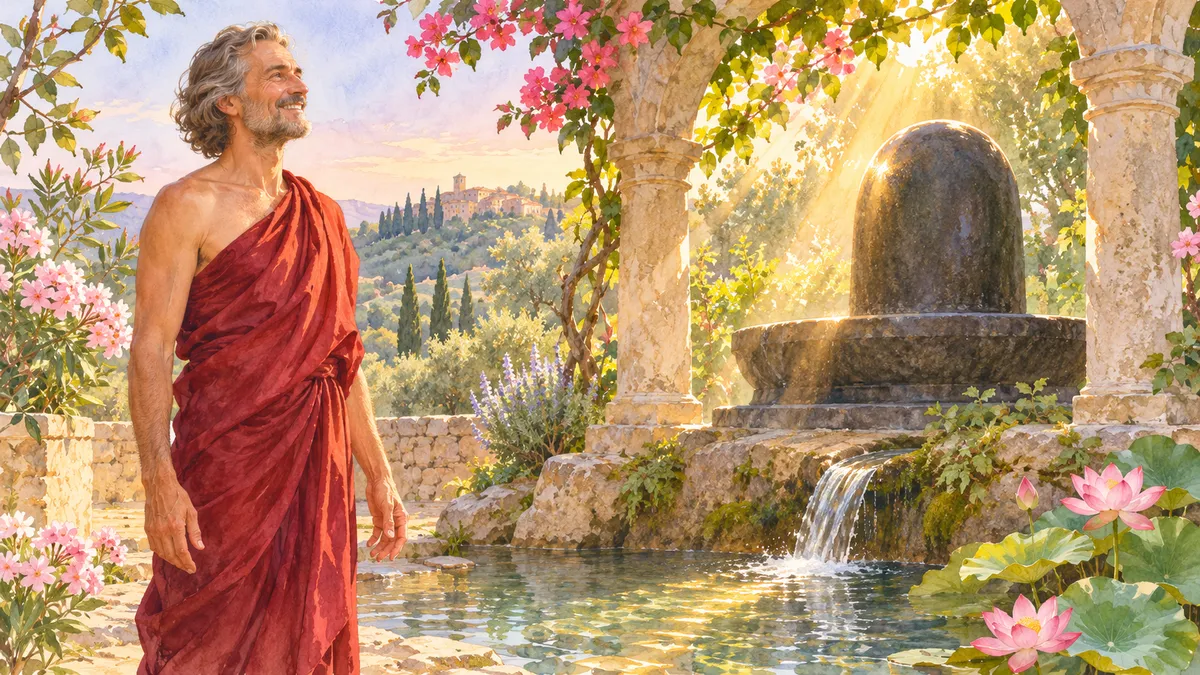
For example, when I see a person, I can judge them in a worldly way, or I can practice vairagya. If I practice vairagya, I refrain from judging them in worldly terms, and my consciousness remains detached—regardless of what they look like, whether they are young or old, male or female, intellectual or not particularly so, or how they practice. If I am in a state of vairagya, I see them as Shiva; I manage to perceive their very essence, and that is enough. If I see them as Shiva, I can help them in their practice and help awaken that aspect within them. This becomes possible: I can see them as Shiva because I have vairagya toward their secondary characteristics. Of course, I see the rest as well, but I know that first and foremost they are Shiva; whether they are an intellectual, a man or a woman, beautiful or not, what family they come from, what their past and karmas are—all this is secondary and does not matter very much. This is vairagya.
