

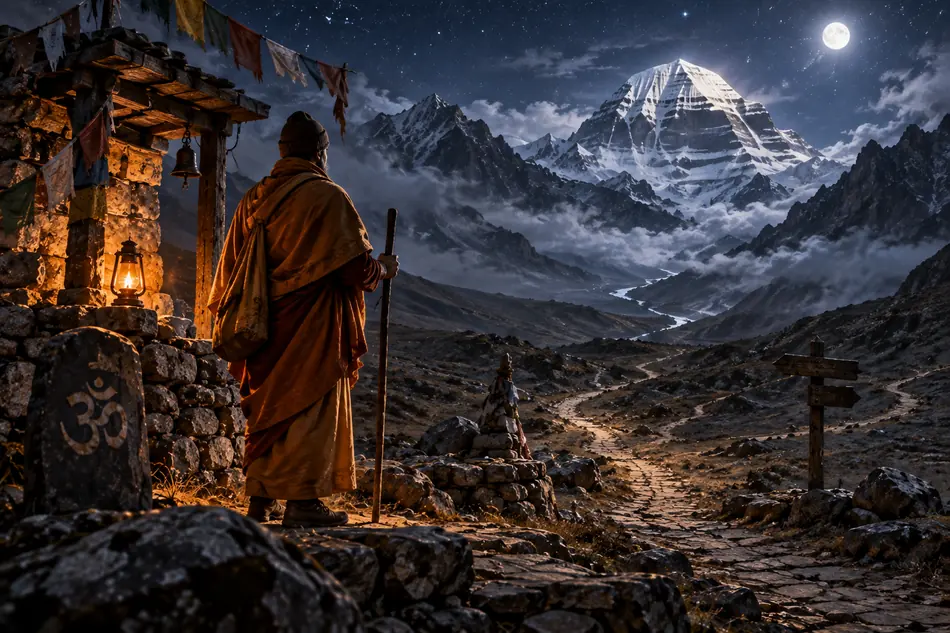
The limitations of Kali Yuga are such that during Kali Yuga, people have weak powers of consciousness. Therefore, even when they plan something, their sankalpas do not come to fruition. They are fulfilled only halfway or by seventy percent. Therefore, if we want to accomplish something, we must bear in mind that this is not Satya Yuga, when intentions are fulfilled by a mere wish, nor Dvapara Yuga, nor Treta Yuga, but Kali Yuga, when sankalpas do come to fruition, though with difficulty. And we must make an effort and exercise double or even triple control if we want our sankalpas to be fulfilled flawlessly.
When someone is in charge of something, I often tell them: “If you have not checked it three times, made an effort, and personally verified it yourself, but instead relied on someone else, then there is a seventy percent chance that your sankalpa will not be realized. Why? Because the heavens are a realm where a sankalpa is realized by a mere wish, where desires are fulfilled, while the human world is a realm where they are constantly opposed by a certain force—the force of karma. And we must be attentive to every detail, to everything. As soon as the power of our consciousness wanes and our attention drifts, our sankalpas begin to lose their shape: equipment refuses to work, the bus arrives late, and so on. For one who possesses the power of consciousness, their natural sankalpa is realized, they achieve their goal, and events then fall into the proper sequences, and their desires are fulfilled. Such is the power of the mind, the power of consciousness.
The Source of the Power of Consciousness
Where can such power of consciousness come from? It can come only from a state of meditation, from awareness. The power of consciousness cannot come from the ego. In other words, a person may manifest ego, become attached, and harbor ambitions, but all of this is useless because there is no power of consciousness. You try to prove that you are special, but there is no power of consciousness behind it. And it is absent precisely because you are trying to prove something instead of surrendering to God. Stop trying to prove anything, surrender everything to God, and the power of consciousness will arise. If you react emotionally to something, that also means there is no power of consciousness behind it. Remove the emotions, self-liberate them, and then the necessary power of consciousness will arise, and everything will be realized. In other words, the power of consciousness lies precisely in an egoless state, in a state of devotion, in self-surrender, love, compassion, and empty self-liberation. If there is self-liberation, there is power of consciousness; if there is no self-liberation, there is no power of consciousness either. Everything is determined by the power of consciousness.
Tapasya as the Foundation of Realization
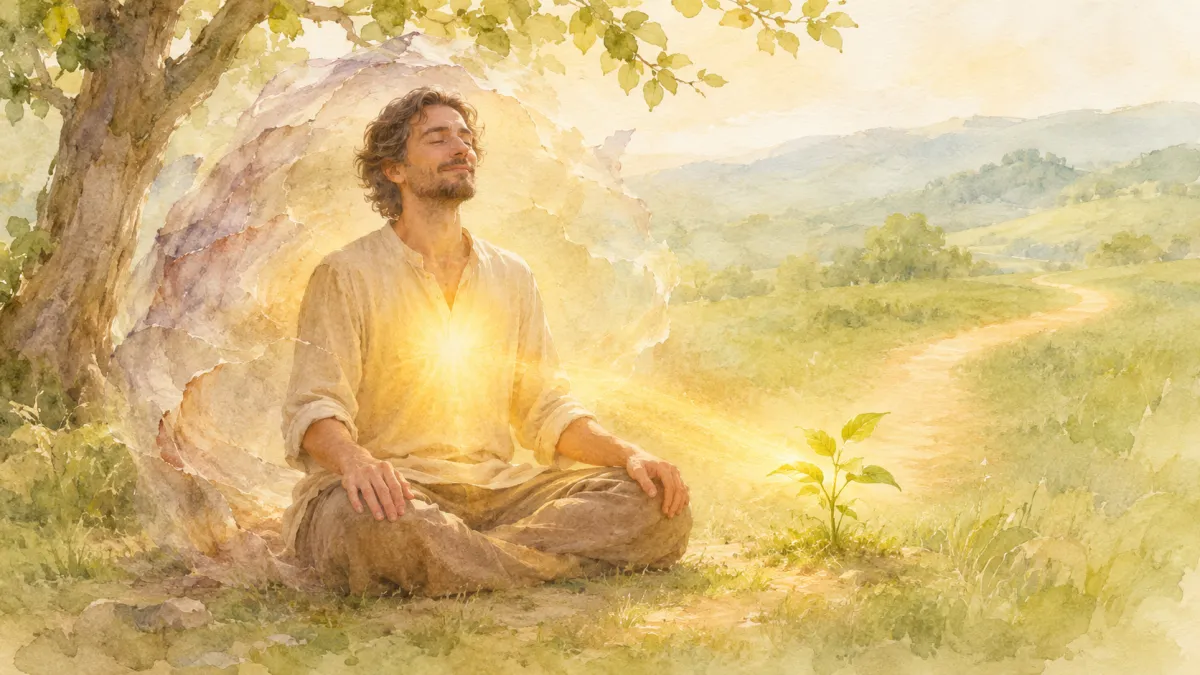
We need immense power of consciousness. Not for the ego, but for the goal we have set for ourselves—for Liberation, for God. One who complains, “I have been in the monastery for so many years, yet I still have no realization,” has no power of consciousness whatsoever; therefore, they will never attain realization and will have no success. Because where does the power of consciousness come from? It comes from our performing tapasya right now, at this very moment. In other words, the power of consciousness comes from ascetic practice. If you aspire to God, you need tapasya; if you want realization, you need tapasya. Practice tapasya, and everything will come. The secret lies in tapasya. That is, if there is no realization, if you are dissatisfied with something, it means there is no tapasya—you are not practicing tapasya.
Tapasya does not require any special conditions. The notion that tapasya requires certain special conditions is illusory. Tapasya requires neither mountains nor a separate room, nor even a separate time. All of that is an illusion. For tapasya, especially antar-tapasya, you already have everything you need right now. What do you have? A head, two arms, two legs, prasad, and a mat—this is quite enough for tapasya, because tapasya depends on nothing else; you can practice it right now. The only thing that can hinder tapasya is karma. That is beyond your control. Karma is karma. You simply have to accept it with humility and offer it to God. But in every other respect, whether or not you practice tapasya depends solely on you.
Tapasya is not only Atma-vichara and contemplation. Tapasya also includes the practice of humility. For example, you have removed the ego—this is tapasya. It is not easy, but as a result, you have grown, and the power of your consciousness has also grown. Tapasya is self-liberation and contemplative presence. Tapasya is listening not to the desires of your ego, but obeying the Divine Will. All of these are different forms of tapasya. And the most important tapasya is awareness, Atma-vichara and Brahma-vichara, and the spirit of devotion.
When we abide in such tapasya, we do not even have time to get carried away by anything, to regret anything, or to feel dissatisfied. What dissatisfaction can there be when you are riding a motorcycle at 120–140 km/h with the wind blowing in your face? How can there be any dissatisfaction? You are flying as if under full sail. And if you practice tapasya, you begin to hear a whistling in your ears, and divine melodies arise within you. There is no time to think about anything. You are flying toward God under full sail—what dissatisfaction could there be? You are right here and now. This is what tapasya gives you. You do not even have time to think; it takes your breath away. Every day you fly toward God under full sail, on every wing—this is a sign that tapasya is present. There is no time to rummage through your mind, no time to sort out trivial matters, no time to argue about relationships and decide who is right and who is to blame, who is more important, or whose turban is bigger—all of that is unimportant; it is all just games. Your tapasya is for God, and everything else you do naturally.
Subtle Forms of Tapasya
But sometimes it is impossible to perform serious external tapasya. Then it can be practiced at the subtlest level: one can cultivate faith and devotion because karmic limitations do not allow it to be practiced on grosser levels, such as meditation and pranayama; that is, certain channels in the subtle body are blocked. And this requires great humility. Great faith and complete self-surrender are needed. One must rely solely on faith and devotion, patience and humility. These, too, will become a lofty form of tapasya on the inner level, when you have let go of everything and entrusted yourself to God’s grace. But the one thing you have not let go of is God. The spirit of vichara, the spirit of awareness and self-surrender, has not left you. And then, even if you are unable to practice tapasya—for example, because of Saturn in your horoscope or some other unfavorable tendencies manifesting in it—you still perform your inner tapasya because you have faith, devotion, awareness, and vichara. You are guided by them in life, even if you do not recite mantras, do not perform Mahashanti, do not experience dhyana, and have no great success in controlling the pranas. This subtlest inner layer of your consciousness is open and functioning. The spirit of faith, devotion, awareness, and self-surrender continues to grow within you. This means that the power of consciousness is growing as well.

Accepting the Distinctive Features of Kali Yuga
We live in Kali Yuga, and this must be accepted with humility. We do not live in Satya Yuga, where everyone is enlightened. We do not live in Treta or Dvapara Yuga, where everyone is spiritually elevated and almost everyone is a siddha. Such is the distinctive nature of Kali Yuga. And we must always thank God and thank fate for the fact that we are following the spiritual path. Yet millions of other beings just like us do not follow the spiritual path at all. What, then, are they to do? All that remains is to have compassion for them. In other words, we possess great merit, we have a precious human birth, we have a unique opportunity, all paths are open before us, and we hold all the cards. The very realization that, in Kali Yuga, we have enough merit to follow the spiritual path, the path of Liberation and Enlightenment, is already a source of joy. It is precisely from this that joy is born.
God has not turned His back on us. Beings in the hell realm and beings of the lower worlds, for example, may feel that God has turned His back on them. But God turns His face toward us every day. We see Shiva, we see Dattatreya, Lakshmi, Saraswati, and the Refuge Tree. God is always and everywhere looking at us. The question is that we do not always look at God: He looks at us, but we do not look at Him. We need to turn toward Him. And antar-tapasya (inner ascetic practice) is when we constantly strive to turn our faces toward God, because the distinctive feature of people in Kali Yuga is that the age itself, the very spirit of Kali Yuga, turns people away from God.
Inner Ascetic Practice and Control of the Mind
I am strongly inclined always to practice inner asceticism, no matter what I am doing. In my youth, I performed certain external ascetic practices, but my style, my forte, is inner tapasya. Whatever I may be doing, I know what I need to do and why I am doing it. Therefore, whenever someone says or does something, a question immediately arises in me: “Is he practicing inner tapasya or not? How can one test whether he is distracted or not? To what extent does he direct his mind toward the divine?” In the past, in my youth, I constantly tested my mind in this way. But I have not done that for a long time now, because distraction and overcoming distraction are no longer an issue. Now, instead, I am constantly exploring God.
If you adopt this attitude toward your mind, if you constantly test your mind and continually check yourself: “Am I practicing inner tapasya, am I directing my mind toward God, or is my mind occupied with something else? And if it is occupied with something else, why is it occupied with that? And if I do not see why, why do I not see it? And if I do see it, why am I doing nothing about it? And if I see it and take action, how correctly and deeply am I acting?” If you work with your mind in this way, you will give it no chance to act wrongly; you will constantly and gently correct it. You will have no chance to become distracted; you will have no chance to lose God. In other words, you will give the mind no chance to lose God. But the mind has many opportunities to lose God when we do not perform checks and controls, when we do not establish multiple checkpoints.
Have you seen how the Chinese conduct checks at the border? All the way to Mount Kailash. There is no chance of straying to the right or left. Even if you decide to climb Mount Kailash, they will catch up with you and apprehend you. There was a checkpoint where we stayed as well. I went outside at three in the morning and saw a soldier standing there, not sleeping at night but performing his tapas. All the monks were asleep, all the laypeople were asleep, while a Chinese layman stood guard with a rifle, keeping watch. He was performing his tapasya, making sure that no one escaped to Mount Kailash or deviated from the route. I immediately remembered the two friends—vigilance and attentiveness. Because whenever there is a soldier, there is always a Chinese officer supervising him, who will come by during those two hours and check a couple more times whether the soldier is at his post. In other words, the soldier is attentiveness, and the officer is vigilance.
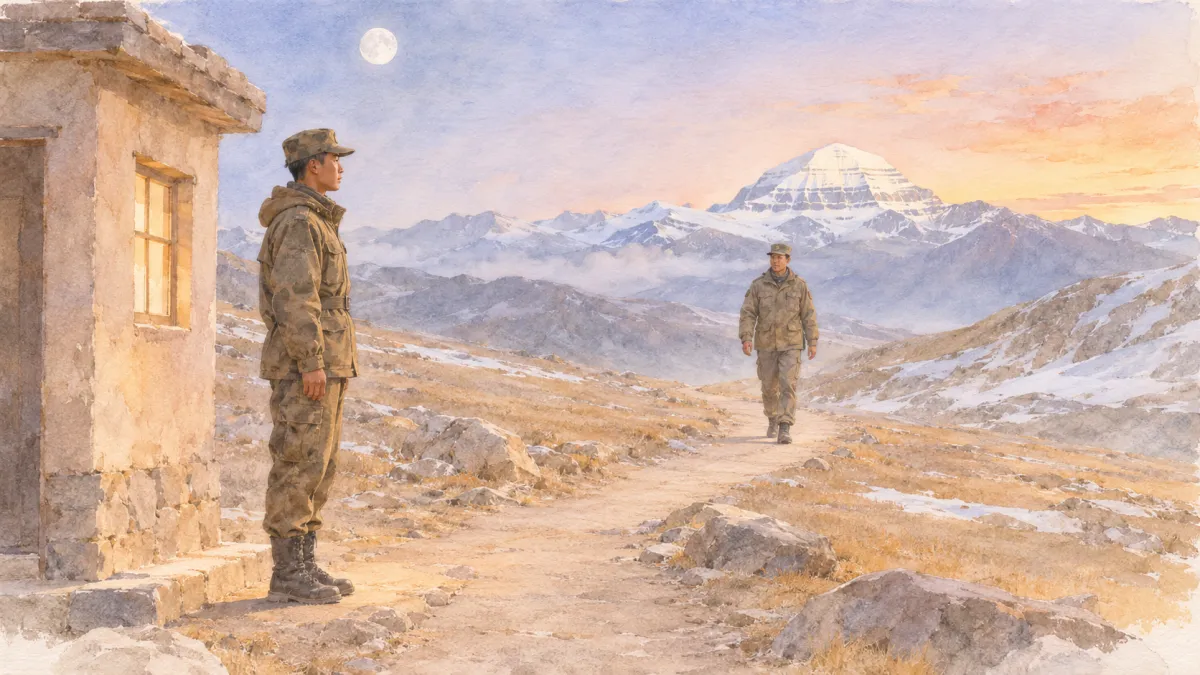
In the same way, you must set up a checkpoint for your mind, like the one at the Chinese border. Then your mind will be encouraged and directed toward inner tapasya. However, this does not mean that you should strain or constrain your mind. If you do that, it will be a deviation, and there is nothing good in it. Inner tapasya is gentle; it does not bind you or discipline you through artificial constraints—it works very subtly. It requires a little effort and a little attention, but continuously. You need to develop a habit of it. And when you develop this habit through such gentle influence, you will discover that you are beginning to win inner victories: by applying this gentle attention, you overcome the mind once, then overcome it a second time, overcome an emotion, overcome your ego. And this habit of inner victories will give you confidence and inner strength; you will understand: “I can overcome both the mind and karma. I can overcome anything through God’s grace and blessing.” Then this habit will become permanent: you will constantly overcome the ego, the mind, and distractions. The mind will truly begin to grow calm. Contemplation and awareness will never be lost. You will feel: “Yes, I am truly following the path of inner asceticism.” And then blessings will begin to flow; that is, you will forget about dissatisfaction—you will not even know such a word.
