


The Sanatana Dharma World Community announces a specialized online seminar dedicated to the issues of spiritual development after receiving initiation.
Topic: "Diksha-initiation and life after it: from ritual to realization."
Speaker: Nun Aravindini Giri, an authorized representative of the tradition, who has dedicated years to the study of the Shastras and practical service.
Diksha (Sanskrit: dīkṣā) is a fundamental concept in the Sanatana Dharma tradition, signifying the process of spiritual initiation and formal acceptance of a student into a lineage (parampara). According to classical etymology provided in Tantric and Agamic sources (specifically in the "Kularnava Tantra"), the term is formed from the roots "da" (dā — to give, to bestow) and "kshi" (kṣi — to destroy, to purify).
Thus, Diksha is defined as a sacred act through which divine knowledge (divya-jnana) is transmitted and the bonds of karmic ignorance (anava-mala) are destroyed.
Within the framework of the Sanatana Dharma tradition, an adept's development begins with passing the first level of initiation — Ashta-avarana-diksha.
Ashta-avarana (Sanskrit: aṣṭāvaraṇa — "eight protections" or "eight veils") represents a system of metaphysical supports that protect the practitioner's consciousness from external and internal obstacles.
These include: Guru, Linga, Jangama (Saint), Padodaka (sacred water), Prasad, Bhasma (sacred ash), Rudraksha, and Mantra.
"Without diksha, it is impossible to achieve success in yoga. Therefore, a wise student must receive initiation from a true Guru to obtain the fruits of their practice."
“Shiva Samhita”
According to the Shastras, receiving Diksha and a new name (nama-karana) is not the ultimate goal but marks the moment of "second birth" (dvija). A spiritual name in the tradition is not arbitrary: it manifests a specific aspect of the Divine (Ishta-devata) that is awakened by the Master in the student's consciousness at the moment of initiation.
Over the past year, more than 100 followers of the community have realized their right to receive Ashta-avarana-diksha, testifying to the steady expansion of the tradition.
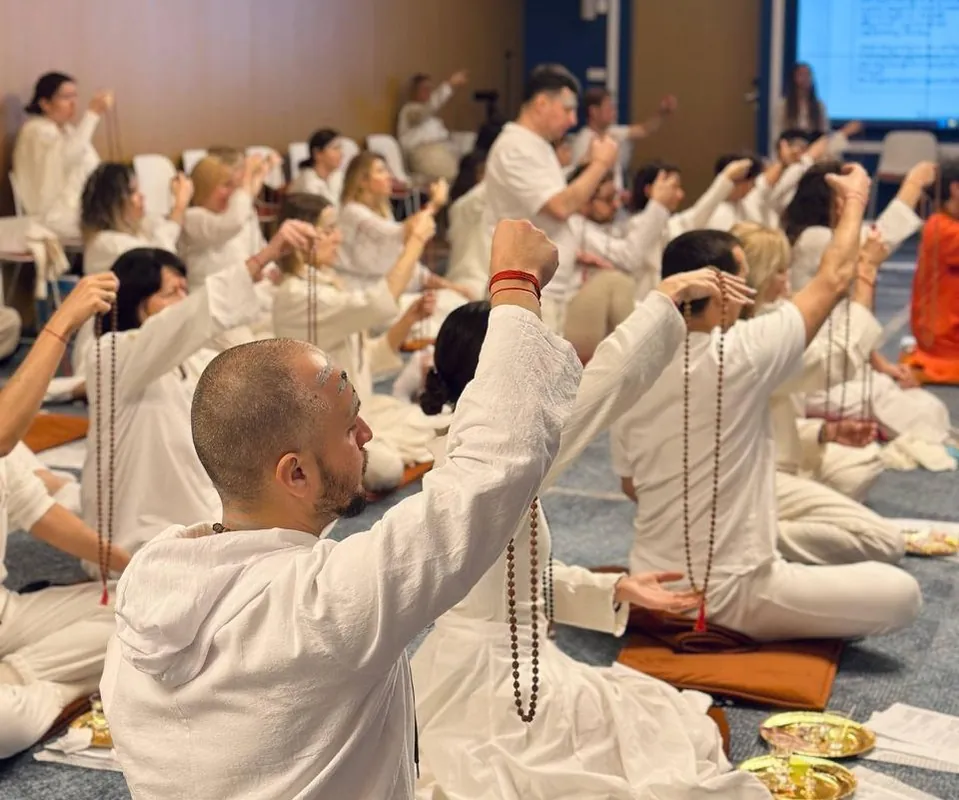
However, according to the instructions of the great acharyas, Diksha is like sowing a seed: for it to sprout, systematic discipline (sadhana) is necessary.
Without a correctly structured practice methodology, the received impulse remains in a potential state. Further life after initiation requires the integration of traditional principles into daily existence and strict adherence to the discipline prescribed by the lineage.
Seminar Program
Metaphysics of the Name: Revealing the nature of the Deity initiated through the student's name.
Sadhana Technology: Instructions for building a daily practice after receiving the eight protections of Shiva.
Stages of Transformation: Analysis of typical obstacles at the initial stage of the path and methods for overcoming them.
Questions and Answers: Academic and practical explanations of the tradition's tenets.
Date and Time: March 1, 12:00 – 15:00 (Rome time).
Participation Format:
Live online broadcast.
Access to the video protocol (recording) of the seminar for subsequent study.
Registration
To participate, you must submit an application to the coordinator Tejomayi
Questions for consideration during the seminar may be sent in advance through the specified contact.
This seminar is a mandatory stage for deepening knowledge for those who have already taken Diksha, and also serves as an authoritative introduction for seekers planning to enter the tradition in the future.
Adherence to the parampara and reliance on sacred texts is the key to steady spiritual progress.
