

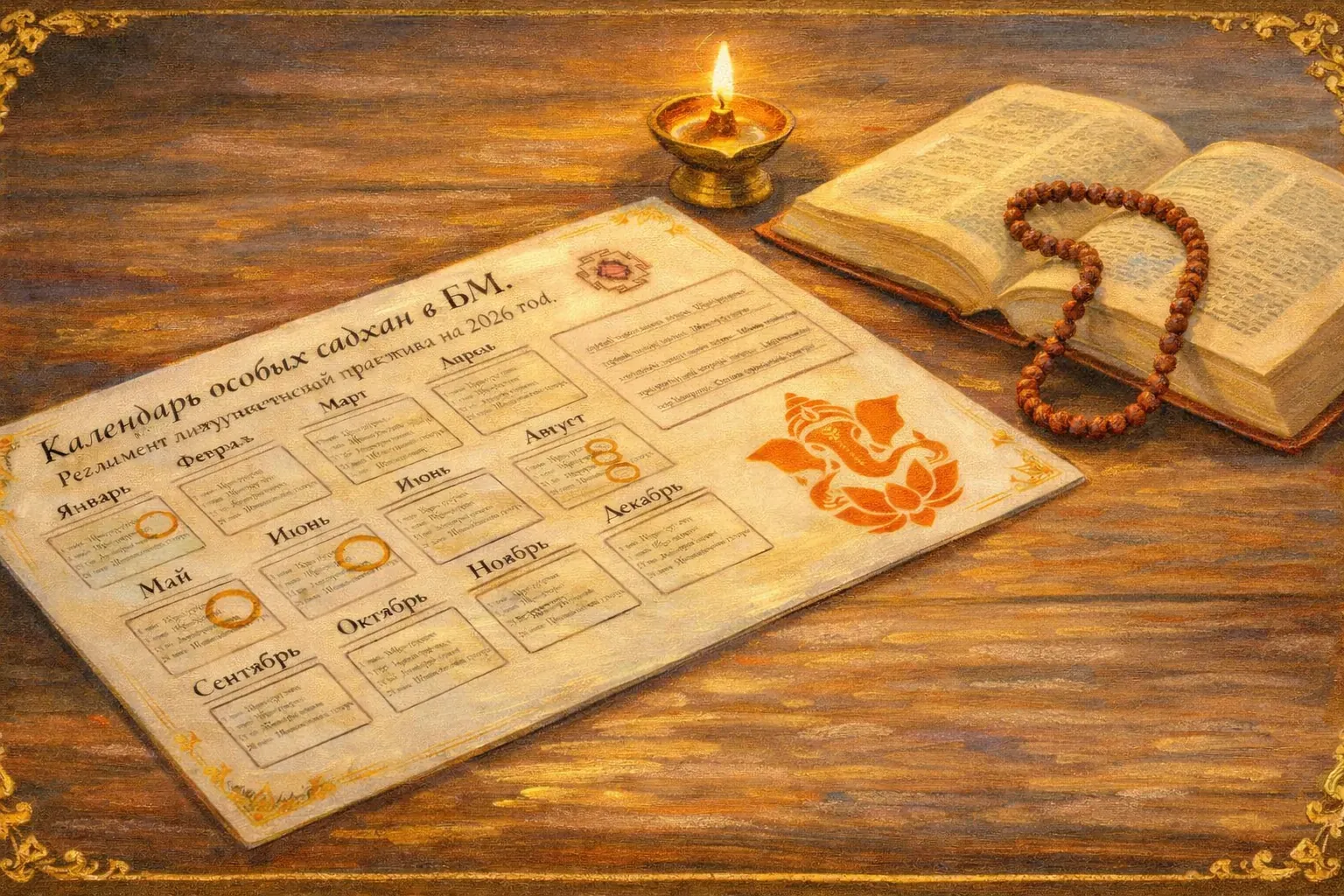
In the Sanatana Dharma tradition, the regular chanting of sacred hymns and stotras is the foundation of spiritual discipline (sadhana), ensuring the alignment of individual consciousness with cosmic rhythms.
This regulation establishes the procedure for conducting special liturgical readings within the activities of the World Community of Sanatana Dharma for the year 2026.
Sadhana (Skt. sādhana). Derived from the root sādh*, meaning "to go straight to the goal," "to achieve success." It is a systematic practice aimed at realizing the supreme goal of life — moksha (liberation).
Stotra (Skt. stotra). Etymologically traces back to the root stu* ("to praise"). In the Vedic and Puranic tradition, it is a hymn of glorification possessing a specific meter (chandas) and semantic power capable of transforming the practitioner's inner structure.
The discipline of the Bhajan Mandala relies on the authority of canonical texts prescribing the regular glorification of aspects of Ishvara (the Lord).
List of Sacred Hymns and Their Sources:
1. Śrī Rudram
An ancient Vedic hymn contained in the fourth kanda of the "Taittiriya Samhita" of the Krishna Yajurveda. The text is divided into Namakam (glorification of names) and Chamakam (prayer for blessings).

2. Śrī Guru Gītā
Is a part of the "Skanda Purana," representing a dialogue between Lord Shiva and Goddess Parvati about the nature of the spiritual teacher.
"The Guru Gita is the supreme dharma, surpassing all other rites" (Skanda Purana).
3. Śiva-mahimna stotra
Composed by the great gandharva Pushpadanta. The text is recognized as a classic example of philosophical poetry of Kashmiri and Southern Shaivism.
4. Dattātreya Kavaca
A protective hymn ("armor") addressed to Lord Dattatreya — the avatar of the Trimurti and the primordial teacher of the Avadhuta tradition.
5. Siddha Kuñjikā Stotra
A powerful tantric hymn from the "Rudra Yamala Tantra," containing the essence of the "Devi Mahatmyam."
Calendar for 2026
The schedule is compiled in accordance with lunar-solar cycles and the recommendations of Guru Swami Vishnudevananda Giri.
Month and Date | Shri Guru Gita (1st Thursday) | Shri Rudram (1st Monday) | Dattatreya Kavacha (penultimate Tuesday) | Shivamahimna Stotra (last Monday) | Siddha Kunjika (Navaratri days) |
|---|---|---|---|---|---|
January | 1 | 5 | 20 | 26 | — |
February | 5 | 2 | 17 | 23 | — |
March | 5 | 2 | 24 | 30 | 19–27 |
April | 2 | 6 | 21 | 27 | — |
May | 7 | 4 | 19 | 25 | — |
June | 4 | 1 | 23 | 29 | — |
July | 2 | 6 | 21 | 31 | — |
August | 6 | 3 | 18 | 31 | — |
September | 3 | 7 | 22 | 28 | — |
October | 1 | 5 | 20 | 26 | 11–20 |
November | 5 | 2 | 17 | 30 | — |
December | 3 | 7 | 22 | 28 | — |
Adherence to this calendar allows the student to enter the rhythm of the parampara (lineage). Joint sadhana conducted in ashrams or through modern means of communication (online broadcasts) enhances the fruit (phala) of the practice.
Preparation Instructions:
- Ensure outer and inner purity (shaucha).
- Use traditional texts (download links below).
- Focus your attention on the meaning and the sound vibration of the mantras.
