

16 Stages of the Waxing Moon of Inner Awareness
Now we can speak about the teaching of the sixteen stages of liberation.
When we approach any teaching, it is important from the very beginning to establish the spirit of samaya. The spirit of samaya means the principle of pure vision. You establish a sacred connection with the teacher, with the teaching, and with your brothers and sisters in the Dharma (with the sangha). When these three sacred connections are established, it is said that you have samaya. Until the sacred connection is established, spiritual practice will bring no benefit.
Transmission is always connected with sacred relationships; it is not something that can be transmitted simply as some technique. In certain tantras, the following expression is used: “Do not treat the spiritual teacher as a greedy hunter treats a musk deer.” Here the musk deer represents an animal whose horns and substances are highly valued on the market, and therefore the hunter wants to catch it in order to extract musk and horns from it and profit well from this. In this case, the tantras give a warning to the disciple so that he has a different vision of the spiritual path and of the relationship with the spiritual teacher. In other words, the relationship with the spiritual teacher cannot develop according to the scenario: “The spiritual teacher will transmit a technique to me, I will make offerings to him for it, and our relationship will end there. Then I will practice on my own and attain liberation.” Everything here is connected with a mystical bond, because the process of transmissions and spiritual training is a sacred rite, it is magic, where subtle laws and relationships are at work. One of these laws is connected with pure vision.
Pure vision means that we strive to perceive the teaching, the process of practice, and the brothers and sisters in the Dharma practicing alongside us with elevated eyes. If we manage to maintain pure vision, the signs of spiritual growth are evident: our harmony, love, and compassion increase, our understanding of higher worlds increases, and our consciousness is spiritually purified.
In texts such as the Mahabharata, it is said that pure vision is not some invented or artificial process. If we try to create something artificially at the level of the mind, thinking: “All this is a mandala, all these are deities, all these are lilas,” then this is not pure vision. Primordially, pure vision is a deeper view of reality. In the Mahabharata it is said that all living beings are projections of certain divine energies; therefore, there is nothing unusual in pure vision itself—it is naturally inherent in reality.
Divine Projections in Everyday Life
In the Moksha Dharma, it is said that the spiritual teacher is a projection of the Absolute, of Brahma himself, and the question is whether you will see in him a human being, a projection of Brahma, the siddhas, Dattatreya, or simply an ordinary being—everything depends on your perception. Even worldly people are necessarily projections of certain divine energies.
For example, the father is a projection of the deity in the world of Prajapati, that is, the deity responsible for the increase of the lineage. If you are able to see your father in this way, all obscurations connected with familial relationships are purified.
A guest who enters the house is a projection of a deity connected with the world of Indra. In other words, on the physical level this is a person, but on a subtler level the divine energies of the world of Indra act through him; he is simply a projection of these divine energies.
A learned monk, a knower of rituals or of the Dharma-shastras, is a projection of a deity from the world of the gods.
Of course, our capacity for pure vision depends on our clarity. What will we see in an old woman passing by on the street? Will we see in her an unhappy human being or a deity (for example, a dakini of the Dhumavati level)—everything depends on our vision. What will we see when looking at a person passing by who behaves somehow strangely? Will we see in him merely an underdeveloped being, or Dattatreya who is trying to awaken our consciousness by giving us darshan in this way? The principle of pure vision consists precisely in our attempt to recognize the subtler energies that act through various beings.
An acquaintance whom we meet is a projection of deities connected with other universes, connected with universal forces.
In the family, the daughter-in-law is a projection of a deity of the apsara level. Apsaras are deities connected with the element of water, with the svadhisthana chakra; they are extraordinarily creative deities with a feminine nature and possessing prabhava-siddhi (the ability of attraction, sexual magic).
Household members and relatives are projections of the lords of the directions of the world. If you see narrow-minded people in your relatives and household members, generating criticism, slander, and the like toward them, then this, of course, cannot be called pure vision. But if you try to discern their very best qualities and see that these qualities are divine, you can in fact discover in them projections of certain divine qualities.
The mother and her brothers, that is, maternal uncles, are projections of the deity of the earth (Prithivi Devi).
The elderly, children, the sick, and the emaciated are connected with the deities of the element of space, since the five elements within them function weakly or almost do not function. Will you be able to recognize the darshan of the deity of the element of space, connected with detachment, renunciation, asceticism, and contemplation? The spontaneity of children is often cited as an example of the spontaneous consciousness of a yogi immersed in nondual contemplation, while the detachment of the elderly is cited as an example of observing consciousness engaged in contemplative presence.
It is further said that the elder brother continues the projection of the father.
The wife and son are energies connected with projections of one’s own body.
Those around you who are dependent on you are projections (manifestations) of your own energies.
The daughter is a projection of supreme compassion, the energy of bodhichitta.
I quote this from the text “Moksha Dharma,” chapter 243.

The principle of pure vision makes it possible to understand that the world around us is originally perfect, that various divine energies act through any living beings. The question is to what extent we can open to and recognize these divine energies. When we adopt this principle of pure vision in relation to the teaching, it is the best way to communicate with and benefit from spiritual teaching.
Karmic Debts and Creditors
Through spiritual teaching, we free our consciousness from various karmic debts. Often a person says: “With my mind I understand everything, but something prevents me from engaging in spiritual practice. And what exactly it is, I myself do not understand.” I can say with certainty that it is karmic debts and creditors that prevent one from engaging in spiritual practice.
It is believed that we came into this life precisely because we had certain karmic debts. We entered the female womb of the mother and were born from it as an ordinary mortal human being because of the existence of many different debts that we did not manage to repay in the past. It is believed that one who remains a debtor, that is, owes something to oneself, to the gods, to guests, to servants, to ancestors, is obliged to be born again; therefore a yogi striving for liberation tries to get rid of karmic debts and creditors in this life, because without settling these debts it is impossible to attain liberation. Even if a person dies, this will not free him from the debt, and therefore he will be reborn in order to continue repaying his karmic debt. This is stated in the sacred texts.
What are these debts? For example, the debt to the gods, connected with the performance of ritual offerings. The gods personify the subtle creative energies that are within our body, and these subtle creative energies are nourished either by offerings or by intuitive consciousness. The debt to the rishis, to the saints, is the study of dharma. The debt to the ancestors is the performance of posthumous rituals or offerings. The debt to subordinates and servants is connected with respect and assistance in revealing their own potential.
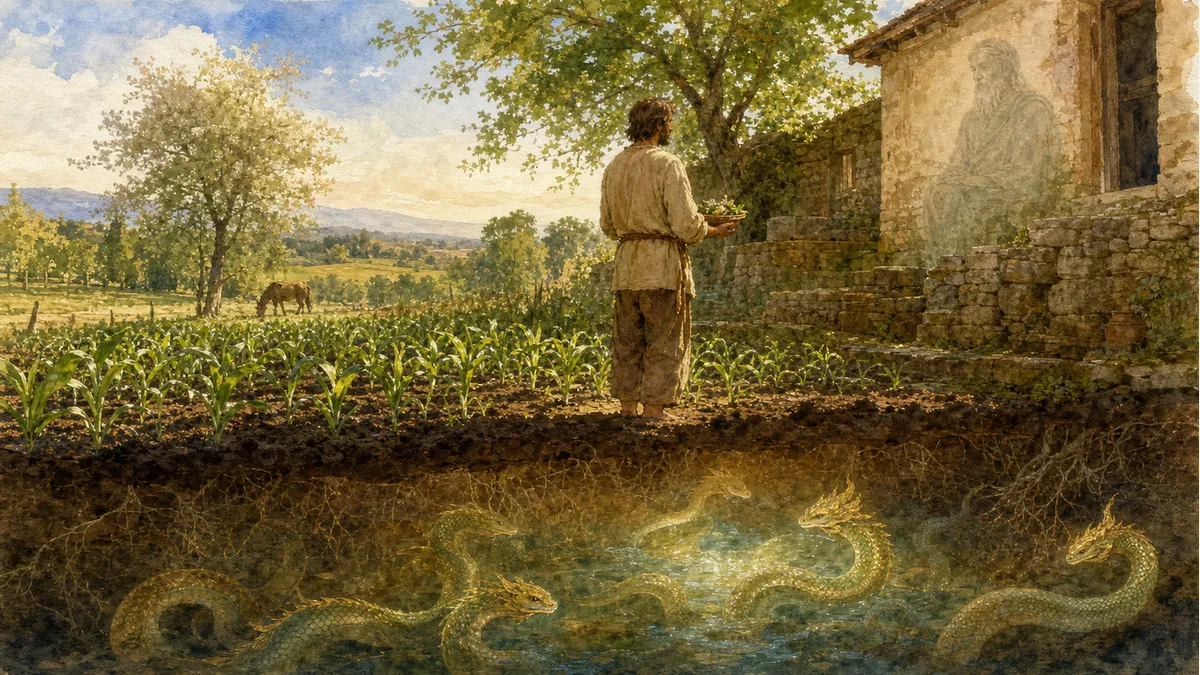
There is also such an unpleasant aspect of spiritual life as karmic creditors. Karmic creditors are certain living beings to whom we became indebted in past lives. For example, in a past life you killed an animal, and this means that in this way you gave the animal the right to kill you as well. Since in the universe all are equal, animals have the right to claim the same be done to you. This is one of the varieties of karmic creditors. Or you accidentally offended some spirit, for example, through ignorance you destroyed some house in order to build a new one. A spirit had lived in that old house for five hundred years, and you bought the plot and simply destroyed it. Do you think the spirit will like that? It will be offended, and until you appease it, it may come to you in dreams and express its grievances. Or you plowed up a vegetable garden and thereby disturbed the nagas (underground inhabitants). They did not like it; they considered that you had treated them disrespectfully, and therefore they began to send either illnesses, bad weather, or crop failure upon you.
The fact is that the human being, as a living creature, is part of the universe. As long as he does not possess spiritual knowledge, he does not know how to live in harmony with the universe and, out of ignorance, commits many rash actions, disturbing this harmony. And when this happens, naturally, other living beings quite logically and lawfully make claims against him. In our past incarnations, we have committed quite a lot of different thoughtless actions. And there is a group of beings who are commonly called “karmic creditors.” Since our human life is very short in duration compared with the life of these beings and spirits, they do not forget our debts to them even after three hundred years, or after five hundred years. As soon as we begin to engage in spiritual practice, the level of our energy rises, and we become a figure of some significance; they come and say: “You see, you have advanced in your practice (that is, you have become rich in a spiritual sense). Why don’t you repay us our debts?” There is nothing surprising in the fact that practitioners encounter various difficulties and problems during meditation practice. The reason for this is that at that moment their karmic creditors become active. It happens that such a person wants to go on a long retreat, but suddenly something occurs, and therefore he is unable to do it. This may well be a manifestation of the activity of karmic creditors.
Pacifying Karmic Creditors Through Spiritual Practice
The saints say that karmic debts are paid off when we diligently engage in contemplation and accumulate merit. For example, when you recite the Brahma mantra, many living beings forgive you your karmic debts, receiving a portion of your merit from reciting the Brahma mantra. In fact, living beings do not need any specific offerings or apologies; they simply need to change their situation, stop suffering, and improve their lives a little. It turns out that in order to improve our own destiny, we must be able to help others. When we accumulate enough light of awareness, prana, and sattva, and can transmit the light of our awareness to other living beings in the subtle world, we pacify and nourish them. In this way we repay all our karmic debts.
In ancient times, siddhas were described as those who pacified living beings. For example, it is said that Padmasambhava pacified all the evil spirits and demons of Tibet by bringing Buddhism there. The monk who was there before him could not do this; he said that he could not cope with it. However, when Padmasambhava came to Tibet, by the power of his spiritual practice he not only pacified all the demons, but also bound them by a vow to serve the Dharma and not to obstruct the construction of temples.
How does pacification occur? Pacification occurs through the power of the yogin’s consciousness, when the spirits entering his field experience pleasure and bliss, receiving from him a transmission of light or instruction in the Dharma. In other words, they are inspired by the awakened consciousness of the yogin and leave him in peace.
One example of karmic creditors is Milarepa’s encounter with the spirit of a woman who had been reborn as a demon that pushed people toward sinful actions. When this demon grabbed Milarepa by the leg, causing a disturbance of the wind, Milarepa pacified it by singing it a song about self-liberation, about the nature of Mind, the emptiness and illusory nature of all phenomena, and about the Dharma. Since this demon-woman had also been a practitioner in past incarnations, she answered him: “Milarepa, I know all this myself. All those whom I torment have their own karma, and I am following my duty.” To this Milarepa responded with an even deeper song, which delighted the demoness, and she left him in peace. Moreover, she took refuge in him, became his disciple, and pledged to serve him. This is precisely how we settle our accounts with karmic creditors.
The saints say that the best way to settle all karmic debts is to realize the nature of Mind and enter natural samadhi. If we try to pay off karmic debts little by little, performing rituals, doing this and that, it will take an enormous amount of time; one lifetime will not be enough for it. The simplest way is to realize the supreme state of natural contemplation, which will purify our karma and help other living beings—this is exactly what the teaching on the 16 stages of the waxing moon of inner awareness speaks about.
The First Stages of the Spiritual Path
So, at the first stage, which is called “dissatisfaction,” while reflecting on the meaning of life, we become aware of our limitations. For example, we come to the conclusion that we are mortal beings and have a limitation connected with impermanence. This means that our life is not infinite, that from the moment of birth the duration of our life is constantly decreasing, not increasing. It never happens that several years have passed and we have become younger; several more years have passed and we have become even younger. The laws are such that our life diminishes over time until it ends completely; we live only until we encounter the circumstances of death.
From the point of view of the awareness of impermanence, the only thing worth doing in this life is seeking immortality. Power, wealth, family, work—all of this is meaningless from the point of view of death. For example, if you ask a person, “Will you be able to celebrate the New Year in 2080?”, he may think very hard. Nevertheless, without being aware of impermanence, people are so busy with everyday concerns that they have no time for spiritual practice. This happens because their minds are shortsighted; they do not penetrate even a little into the future. But if you have passed through this stage and become aware of your limitations, you naturally enter a state of dissatisfaction.
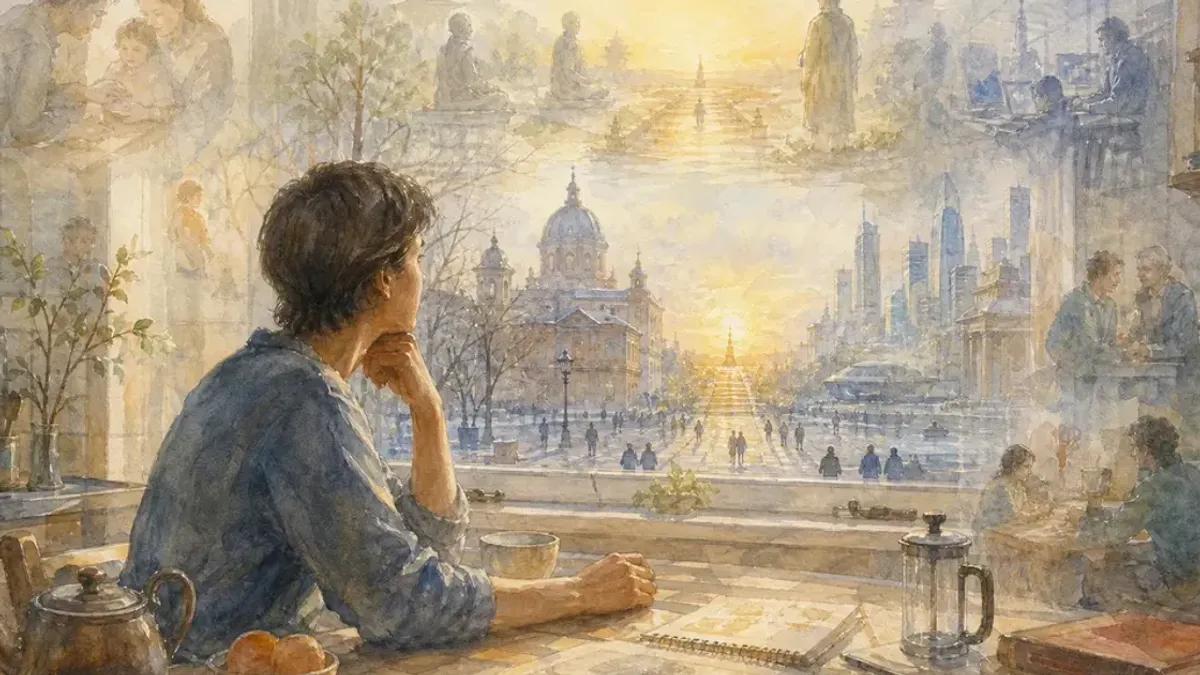
Dissatisfaction means that you come to the conclusion that such an option does not suit you. Someone once said to me:
“I am not afraid of death. What is there to it? It is a law of nature.”
I asked him:
“And if you were forcibly deported to China for the rest of your life, with everything you currently have taken away from you? Would you like that? Would that not disturb you?”
He thought for a while and then answered:
“Yes, that would disturb me greatly.”
I said:
“So now imagine that death is the same thing, only even more is taken from you. Is it then worth treating it so lightly or not? After all, it is something that contradicts your will, opposes your freedom, and takes it away.”
When we think about this and understand that it does not satisfy us, the stage of dissatisfaction begins. That is, we are, as it were, saying: “This does not suit us; we are not satisfied with it.”
At the next stage, which is called “search,” we engage in seeking; that is, we try somehow to solve this problem, to find a way out. For example, we either look for a spiritual practice that we could engage in, or we try to develop new technologies in order to learn how to be immortal in the physical body.
The next stage is an encounter with the manifestation of higher energies, for example, a meeting with a teaching and a teacher. It is called “meeting the light,” or shaktipatha. Such a meeting is not something ordinary; this meeting always means a very specific thing: higher energies enter your life, and your further destiny depends on how you conduct yourself. A meeting with the teaching, with the dharma, is always a manifestation of the energies of the Absolute entering your destiny. Having established a connection with a spiritual teacher, you try to study the teaching, work with the winds and channels, and practice concentration and meditation.
The next stage is called “transmission.” Transmission consists in these energies exerting a certain positive influence on you; your mind synchronizes with them, and you enter into the vision of these energies. Usually, transmission consists in the spiritual teacher explaining the principle of contemplation to the disciple, giving instructions until the disciple learns to remain autonomously in presence. This usually takes many years.
The next stage is called “conception.” When transmission takes place, then, just as a child is conceived as a result of love between the parents, the conception of our natural state occurs. This is called rasa (taste). And once the conception of our capacity for contemplation has taken place, we must then reflect on it. Even if such conception has occurred, but we have not thought it through, it may not bring us much benefit.
Therefore, after this, we gestate it. This stage is called precisely “gestation.” Just as a woman carries a child for nine months, we likewise must carry this state within ourselves so that it matures; we must think it through well. For some, such gestation lasts a short time (only a few months), while for others it may last several years.
The Stage of Birth
When the stage of gestation comes to an end, the stage called “birth” begins. Birth means that we truly discover the principle of nonduality and enter the state of sahaja. It is like a child finally emerging from the womb. Birth is, in a certain sense, a complete rebirth of us as a person. Before birth, we seemed to be asleep, but at the moment the natural state is born, our entire life, perception, feeling, and worldview change radically. This cannot yet be called complete enlightenment; rather, it is a state very similar to Zen satori.
There is an ancient story about the brahmin Jajali, who greatly aspired to enlightenment. He went to the bank of the sacred river Ganges and, sustaining himself only on roots and air, performed ascetic practices: in winter he bathed in icy water, and in summer he sat scorched by four fires and the sun. He led a very rigorous spiritual practice, engaging in fasting, yoga, and meditation. One day, while sitting underwater, he entered samadhi; his subtle body left the physical one and flew above the water. Pride arose in him: “Well! I have reached such a high level! This must indeed be the highest path. I am truly great!” Such self-satisfaction appeared in him. As soon as he thought this, spirits came and said: “Brahmin, do not think too highly of yourself. Even the merchant Tuladhara does not say such things about himself, and he is certainly higher than you.”
In fact, Jajali was a very advanced yogin, engaged in very ascetic practices. For example, once, when he had been in meditation and samadhi for a long time, birds built a nest on his head and began to hatch their eggs; afraid of frightening them away, he decided to remain in the state of samadhi without moving. A long time passed in this way. The chicks hatched, grew up, and had already begun to fly away for a while. At first they flew away for one day, then for a week, but the brahmin still did not move, so as not to destroy the nest, knowing that the chicks would return. And only when the chicks flew away for a month did he understand that they had grown enough, and he moved. As a result of such ascetic feats, great self-satisfaction arose in him.
When Jajali learned from the spirits that a simple merchant was higher than he himself, this greatly interested him. He was consumed by envy and even anger because of it. After some time he managed to find the merchant Tuladhara, who traded incense in his shop. When he came there, Tuladhara said to him: “Brahmin, you learned to sit underwater and grow birds on your head, imagining that this was dharma. And now you have come to me with great conceit. What do you want from me?” Suddenly Jajali felt ashamed that Tuladhara had read his thoughts. He humbly approached him and asked him to give him instruction. Tuladhara transmitted to Jajali the teaching on the path of awareness and the path of the single “taste” of all phenomena, through which he himself had realized genuine enlightenment.
Thus, at the stage of birth we realize this state. Birth means that now our mind perceives pure and impure, good and evil, right and wrong, inner and outer, past and future, with equanimity.
The Great Decision and the Stage of Nurturing
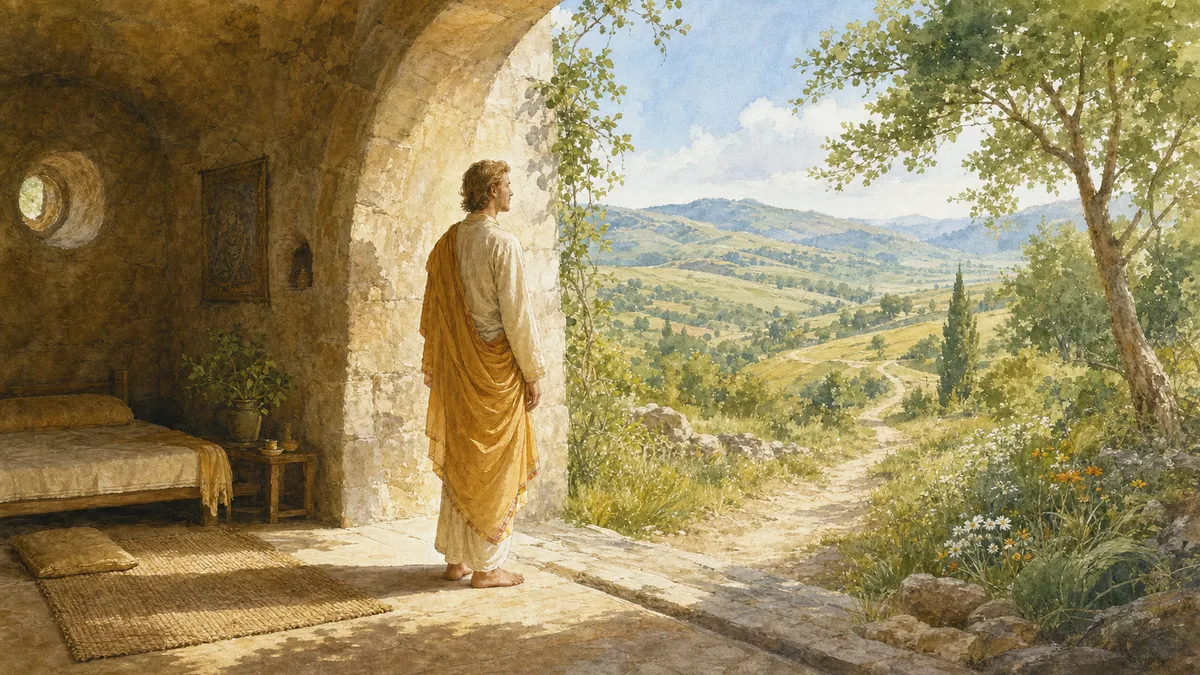
When such a birth has occurred, the yogin makes the “great decision” to enter contemplative non-action and to remain in it, not leaving it throughout his entire life. Now he acts without acting, speaks without speaking, thinks without thinking. It seems that he acts, speaks, and thinks, but in reality within him there is an inner center that does nothing, says nothing, thinks of nothing, but remains in place. Such a person acts without attachment, without setting goals and without clinging to any results. His actions simply resemble play. However, it is not enough simply to remain in this state, since it must be nurtured.
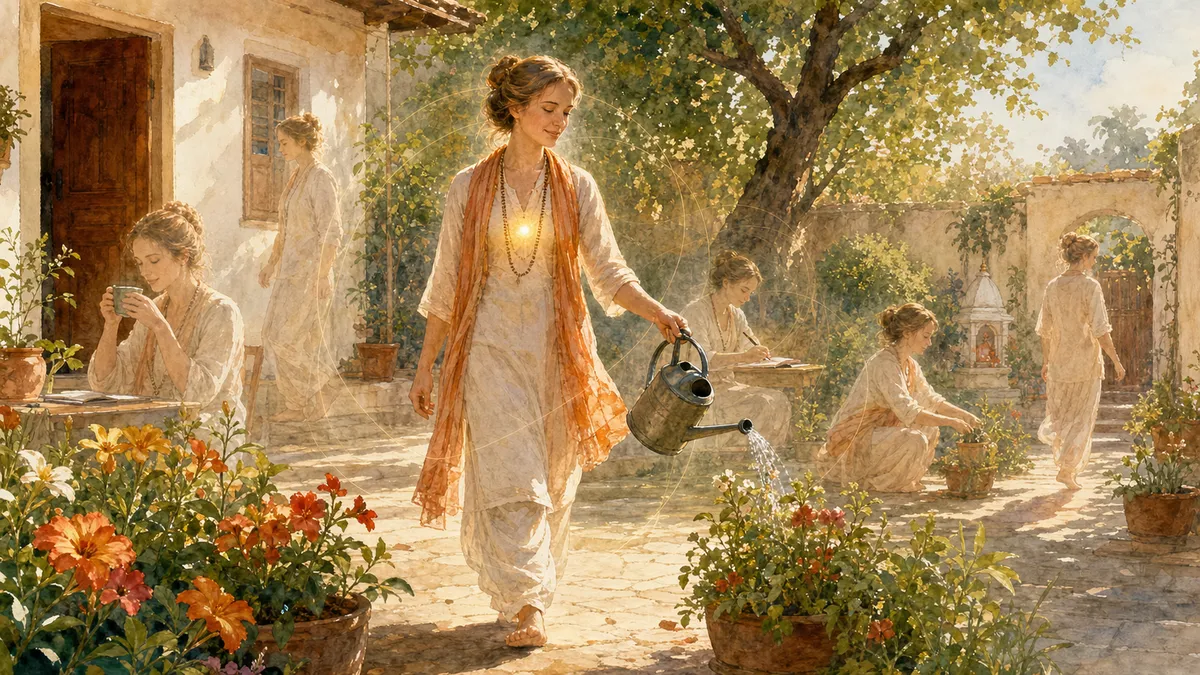
Next comes the stage called “nurturing,” when we learn to maintain this state one-pointedly and continuously. The fact that it has opened does not yet mean that this is the final stage. Here the yogin applies a method called the “iron chain.” The “iron chain” means that, while in one-pointed contemplative presence, he constantly maintains it while standing, sitting, walking, speaking, working, or lying down. When he succeeds in maintaining this state continuously, it is considered that the ninth stage of the waxing moon has been passed. The moon of inner awareness is our awareness itself, which is born as a result of contemplative practice. Just as the physical Moon has phases of waxing, so our inner awareness gradually increases as a result of our practice.
The Stage of Cultivation
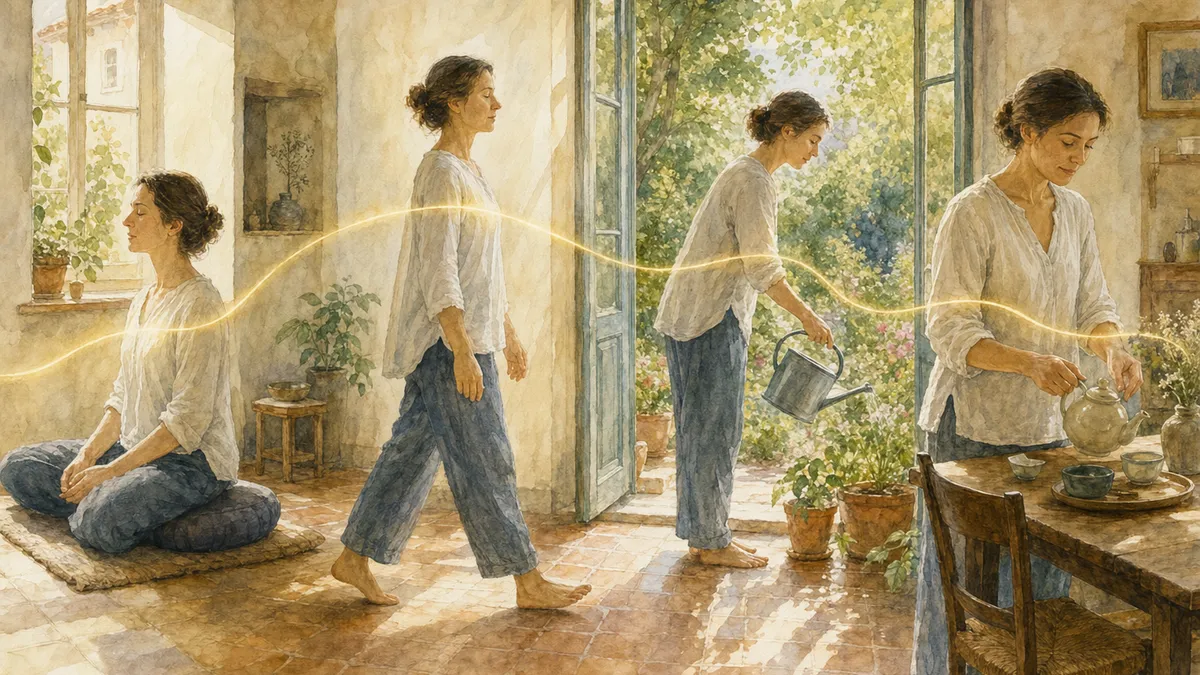
The next stage, the tenth, is called “cultivation.” Cultivation consists in making this state flexible and learning to connect it with everyday life. That is, it is not enough simply to maintain it while moving or during certain actions; it is important to make it continuous and to learn to connect it with all actions. It happens that a person, while sitting in meditation or while walking in retreat, has learned to maintain a certain level of presence, but as soon as he transitions into ordinary life, all of this is lost — this means that he lacks the capacity for integration. He needs to continue deliberately engaging in cultivation.
This is similar to a person having a child. You have fed him, he is no longer an infant, but that is not enough — he needs to be given a good upbringing. If you do not give him an upbringing, he will still remain an ordinary child.
As a rule, at the stage of cultivation, many masters recommend that the student not practice meditation, leave retreat, and engage in something that could manifest him in everyday life (for example, service or some everyday tasks), so that he can learn to maintain contemplative presence not in the favorable conditions of retreat, but while experiencing the influence of distracting factors.
There is such a story. One monk learned to meditate well in retreat while in a mountain seclusion. When the teacher asked how things were going in his spiritual practice, he said proudly:
— I see the future three days ahead, and sometimes even a month ahead. My mind is very clear. In meditation, I do not leave the second and third dhyanas. I feel very happy.
But the teacher, after listening to him, said:
— What a pity.
The monk thought, “What is he saying?”
After some time, he again told the teacher about his experiences:
— I do not feel the body during meditation, my dreams are very clear, I can predict the future, my mind is motionless. I have attained very stable contemplation.
The teacher listened to him and again said:
— What a pity.
The monk became angry and thought, “Perhaps he does not have the same attainments? Perhaps he is simply jealous of me?”
But then he came to his senses, went to another monk, and asked:
— What did the teacher mean? Why does he speak this way?
The monk answered:
— I do not know. But this teacher is very experienced; he would not say anything without reason. You should listen very carefully to his words if you want to benefit from communicating with him.
Then this monk began asking the teacher for instructions, and the teacher told him this:
— Do not meditate at all. Stop meditating, and simply live and do what you want, but at the same time engage in contemplation.
Since the monk was very accustomed to meditation, this was a real torment for him; that is, he did not even know how one could contemplate without meditating. The teacher assigned him to gather brushwood, cook food, simply sit while looking at the sky, and so on. Only after two years did the monk understand what it means not to meditate and enter the state of the yoga of non-meditation.
True laya yoga begins precisely from this stage, that is, approximately from the tenth level. Everything else is only preparation for engaging in laya yoga. Jnana yoga, hatha yoga, raja yoga, kundalini yoga — all of this is not yet laya yoga. We truly practice laya yoga beginning with the “yoga of non-meditation,” when we can maintain contemplative presence regardless of whether we stop our thoughts or not, whether we are in the correct posture or not.
The Stage of Tempering
Finally, there comes a moment when we have already raised our inner child of awareness, but we still need to temper it. This stage is called “tempering.” To temper means that our presence is one-pointed and always maintained; nevertheless, we know that in special situations (for example: at a moment of stress, pain, certain harsh energies, etc.) we may lose it, that it is not yet strong enough. Tempering consists in cutting off our last hopes, fears, and clinging by coming face to face with some of our subconscious demons, withstanding this opposition, and preserving our contemplative presence. At this stage the student is given very unusual tasks and spiritual practices. For example, to go to a place of power in the mountains and engage in the pacification of the spirits of the locality. Or sometimes the teacher provokes certain worldly desires of the student contained in his subtle body, helping to bring his contemplative presence into confrontation with these desires.
For example, Tilopa gave Naropa the task of getting married at this stage. Naropa followed the spiritual teacher’s instructions; he really did get married. But the wife he ended up with was such that she was worse than hell. And then he understood that the guru had given him this task not so that he could experience amorous pleasures, but so that he would pass through this hell. When Naropa passed this test, he was able to change himself; something within him dissolved.
At the stage of tempering we must truly work with certain emotions of our own, with inner fears, with subconscious hidden desires and obscurations, until they are all pacified. When we have done this, it can be said that we have completely purified our mind of all dualistic, obscured states. And then we can truly relax and let our consciousness go free.
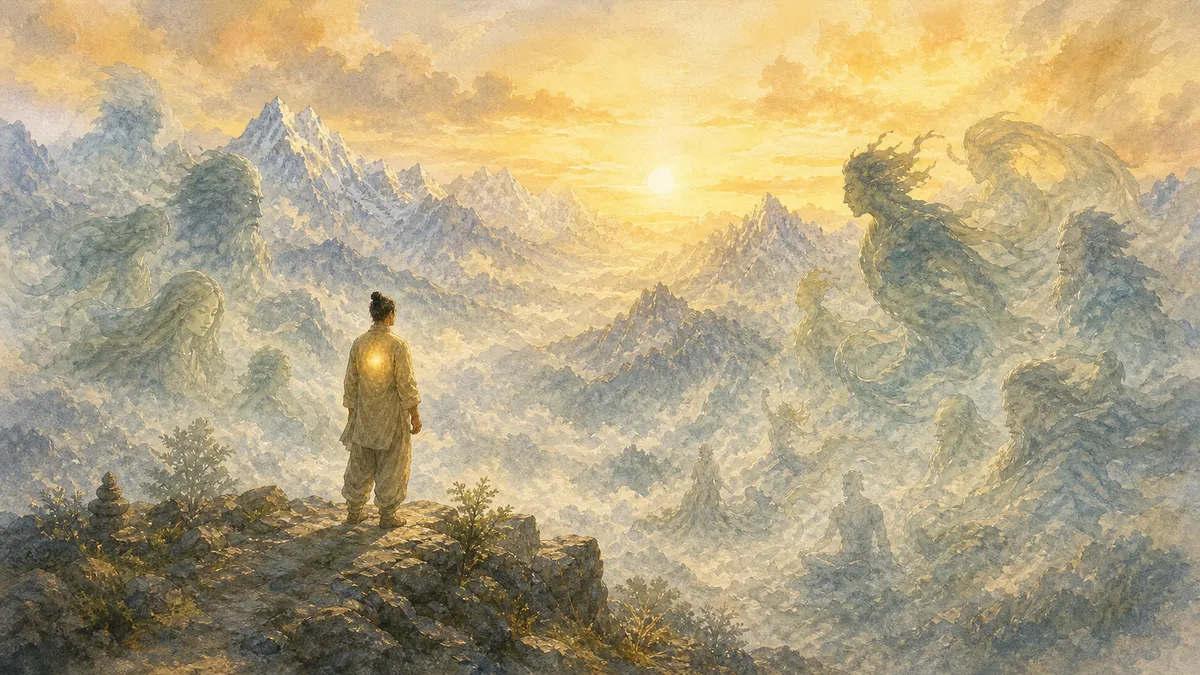
Letting Go into Freedom and the Stage of Play
The twelfth stage is called precisely that — “letting go into freedom.” This means that there is no longer any need to perform spiritual practice with effort, that all spiritual life now consists in maintaining effortless presence. Instead of engaging in a method, the yogin at this time practices the yoga of non-method. That is, all practices connected with method are no longer needed; what is needed is only to relax, let oneself go, and remain in an effortless state. Letting go into freedom is also called “the samadhi of the flowing river.” At this stage the yogin lives simply by responding to things and events. His practice is no longer formal, but is rather spontaneous or playful in nature.
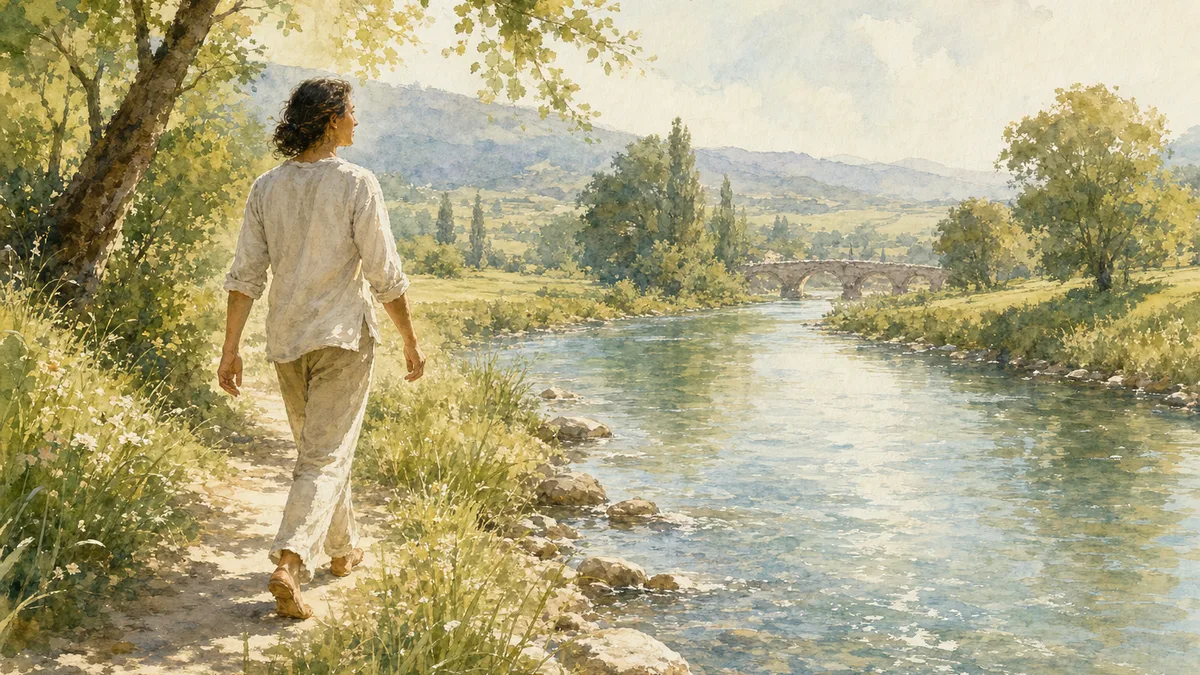
When letting go into freedom has occurred, the yogin enters the state of play. The next stage, the thirteenth, is called “play.” Play, if translated into Sanskrit, is lila. The term lila, mentioned in the Puranas and Upanishads, refers not to a human being, but to Brahman, the Absolute. Lila is the spontaneous creative manifestation of the Absolute, which appears as the universe, living beings, and so on. But here the term “lila” is applied specifically to the yogin, to the practitioner; that is, it is said that the yogin reaches the stage of play when his own state of consciousness has merged with Brahman, and Brahman plays through his body, the Absolute plays by means of his energy. This is an extraordinarily high stage of attainment. It is usually said that saints and mahasiddhas abide in the state of lila—for example, Avadhuta Dattatreya, who especially loved this very principle and through play gave darshan to his disciples.
For example, one of the adherents of Advaita Vedanta came to a Vedic ritual where many Brahmins were showing reverence to Dattatreya, while Dattatreya himself was behaving in a way that was not at all saintly: he was petting a dog, joking, and acting completely unseriously. This even irritated the Brahmin, and he thought: “He is so young, yet many venerable elders bow to him! What is this all about?” But when he understood the greatness of Dattatreya’s mind, all his confusion disappeared. He asked:
“What stage are you at? There are four stages: brahmacharya (students), grihastha (householder), vanaprastha (those who have withdrawn from affairs), and sannyasi (hermits, ascetics); which stage are you at?”
Dattatreya smiled and answered:
“I am at the fifth stage, which is beyond all of these.”
The Brahmin was surprised:
“But neither the Vedas nor the Upanishads speak of a fifth stage.”
Dattatreya said:
— Texts do not speak of it. This is a stage beyond conceptual dharmas. It arises from inner realization. I am in a state of play. Now I am playing with a dog; tomorrow I am drinking molten metal. Today I am joking with women, and tomorrow I am traveling to other planets. For me there are no human limitations.
Such, approximately, is the stage of play. The yogin manifests inner spontaneity as a manifestation of the Absolute itself. However, the stage of play does not exhaust everything.
Creation of the Mandala and Transition into the Dimension of the Mandala
The next, fourteenth stage, is called “creation of the mandala.” When a yogin, immersed in contemplative presence, deepens his energy to such an extent that it begins to produce emanations separate from him, this energy creates a mandala. A mandala is a transformation of the space of the surrounding reality, its purification and the creation of a new space.
What example can be given? For instance, when a musician creates musical works, one can say that they are emanated (come forth) from him. When a musician creates many beautiful melodies, records them, and then they are played at a concert, this beautiful environment itself is an example of a mandala, while the musician is an example of the deity at the center of such a mandala. In other words, the musician’s creative energies emanated from him and changed the space around him; by the power of his talent he created another dimension. This is an example of creating a pure reality—a mandala.
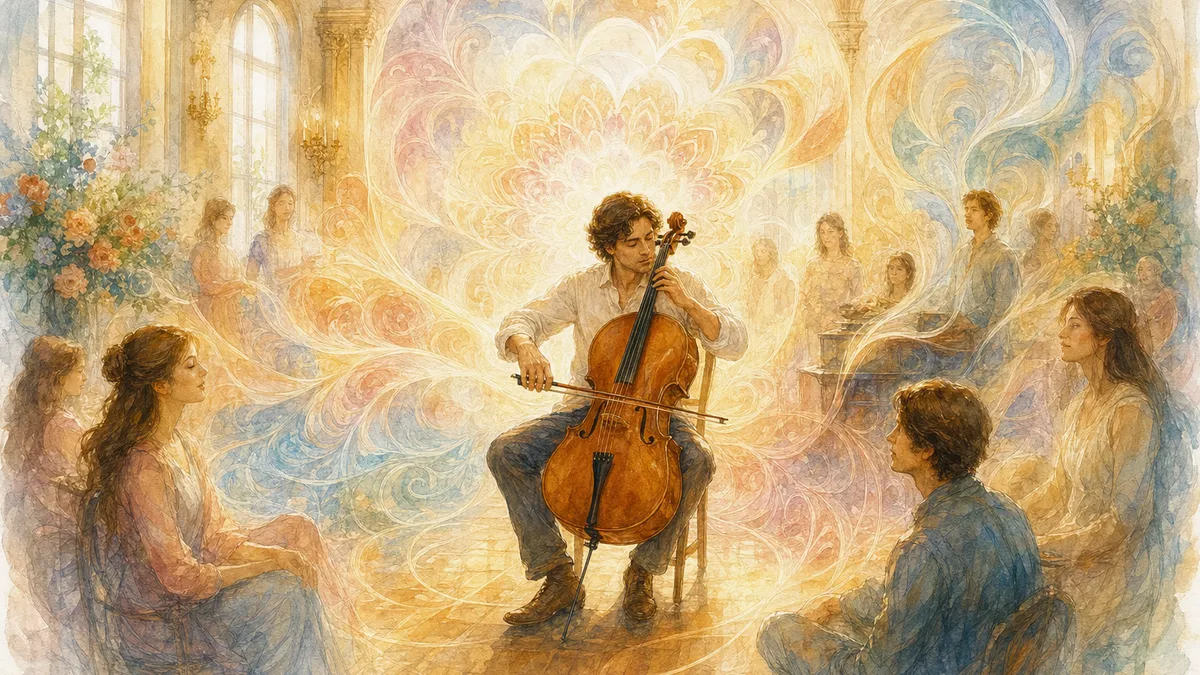
At this stage, the yogin creates around himself a completely pure reality, and he himself is the deity at the center of this reality. This new reality proceeds only from the yogin, from no one else. Even a spiritual teacher cannot create such a mandala on behalf of a disciple. The mandala is created by the disciple himself from his own consciousness.
The state of the mandala is a world in which reality emanates from consciousness and is therefore fully controllable. The yogin is, as it were, at the center of this world, this universe, and his energies form (create, manifest) this very universe. He is the lord, the ruler of this mandala created by the power of consciousness, that is, its mandaleshvara.
For example, all saints and siddhas are depicted surrounded by very beautiful patterns and rainbow-colored radiances. This is not merely a tribute to iconographic tradition; it is an indication of their unfolding potential, of their creative energy, which emanates from their deep consciousness. They are always at the center of this energy as the central deity (mandaleshvara). And the energy depicted here in the form of beautiful patterns is precisely the principle of the mandala. They are the rulers or lords of their own mandalas. All saints and mahasiddhas (Dattatreya, Rishi Tirumular, Boganathar, Matsyendranath, Gorakshanath, and others) have their own mandala—a realm in which they are the creator, ruler, sustainer, and so on. Disciples karmically connected with them can enter these realms (mandalas).
The next stage is called “transition into the dimension of the mandala.” When such a mandala has been created by the power of consciousness, even the physical body passes into this world, created entirely from creative energies alone. The yogin no longer has any connection with the impure karmic dimension (samsara), that is, with the world of human beings. He finds himself surrounded on all sides only by pure manifestations. Such is the fifteenth stage.
There is a story about a weaver who, having received initiation at about the age of seventy, engaged in spiritual practice with great diligence. After some time his children saw that at night a light would appear in the garden where the weaver lived, and many beautiful women would appear around the weaver, serving him by offering delicacies, drinks, and so forth. The son, seeing this, thought it was something demonic, not of human nature. But later it became clear that the weaver had attained high spiritual realization. Both the light and the girls who served him were manifestations of his own consciousness. This is one example of how a mandala can manifest.
When this mandala gains strength, the yogin, if he no longer has the intention to remain in the impure karmic dimension of samsara, makes the transition into this dimension, disappearing from the world of human beings and fully moving to live in the pure dimension created by the power of his own consciousness alone. In this mandala he becomes the lord of reality—the mandaleshvara.
The Great Limit
When the mandala gains even greater power and the yogin, who is its central deity, also accumulates significant potential of spiritual power, the mandala expands to the size of the universe. This is an entirely separate tunnel of reality, an entire world created by the power of the yogin. This is the final, highest, sixteenth stage, which is called shodashanta (“the great limit”). When the “great limit” has been reached, the practice of the teaching is, in fact, exhausted. In other words, the yogin carries out the path of transformation from an ordinary deluded person into a god-creator of the universe, occupying approximately the same level as the great gods Brahma, Vishnu, Shiva, and so on.
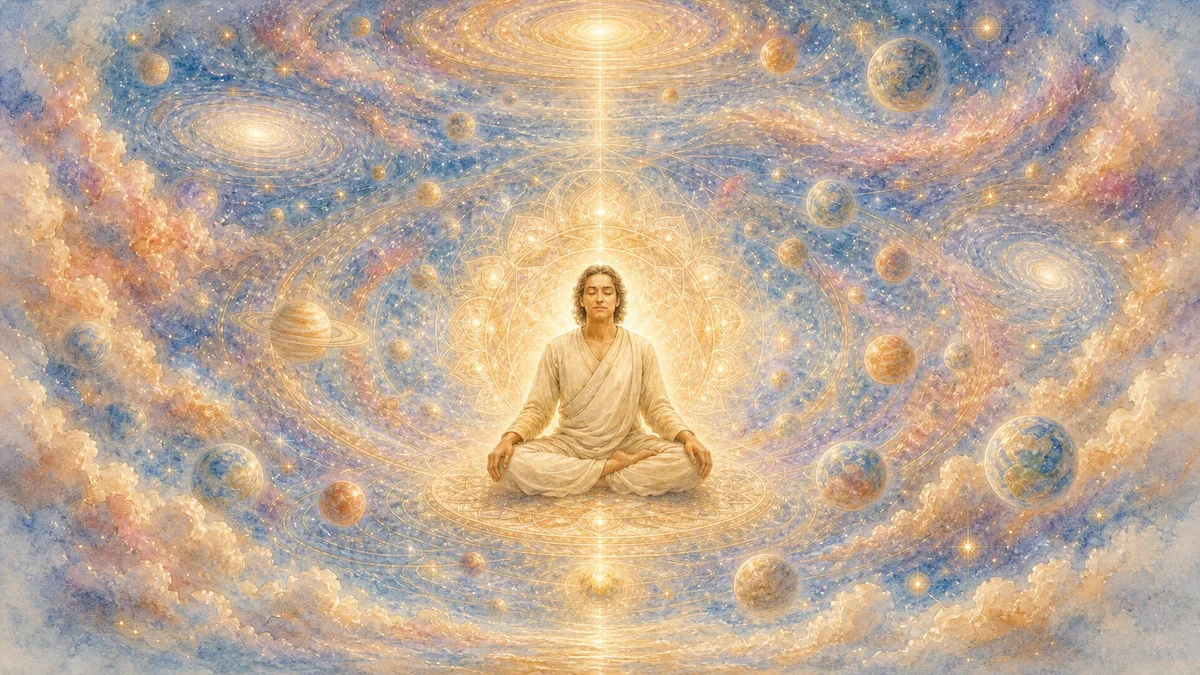
The teaching on the 16 stages of the waxing moon of inner awareness is a fundamental way to set the direction of one’s spiritual life and to determine the stage at which one currently stands.
If you practice in accordance with the way the teaching is presented here, then, undoubtedly, from an ordinary limited person you become a yogin, a sadhu—one who practices sadhana (spiritual practice).
From a sadhu, that is, an experienced practitioner, you become a master—one who has gained certain experience and is very experienced in spiritual life.
From a master you turn into a saint (siddha)—one who not only knows how to practice or contemplate, but who has brought all this to perfection.
From a siddha you turn into a mahasiddha—one who has brought himself, his energy, and his mind to great perfection.
From a mahasiddha you turn into a deity—one who has completely moved to the level of the subtlest creative energies and is no longer bound by the bonds of samsara.
From a deity you turn into a great deity who creates universes. Not a simple deity patronizing some teaching, science, or country, but a great deity who operates on the scale of galaxies or universes. When you pass through this stage, you realize the state of the ancient rishis described in the Vedas and Upanishads:
“The yogin is completely freed from all limitations, transcends suffering, old age, illness and death, illusions, ignorance associated with the laws of samsara. Now he is no longer subject to the laws of samsara; he himself establishes these laws, based on his own awareness.”
