

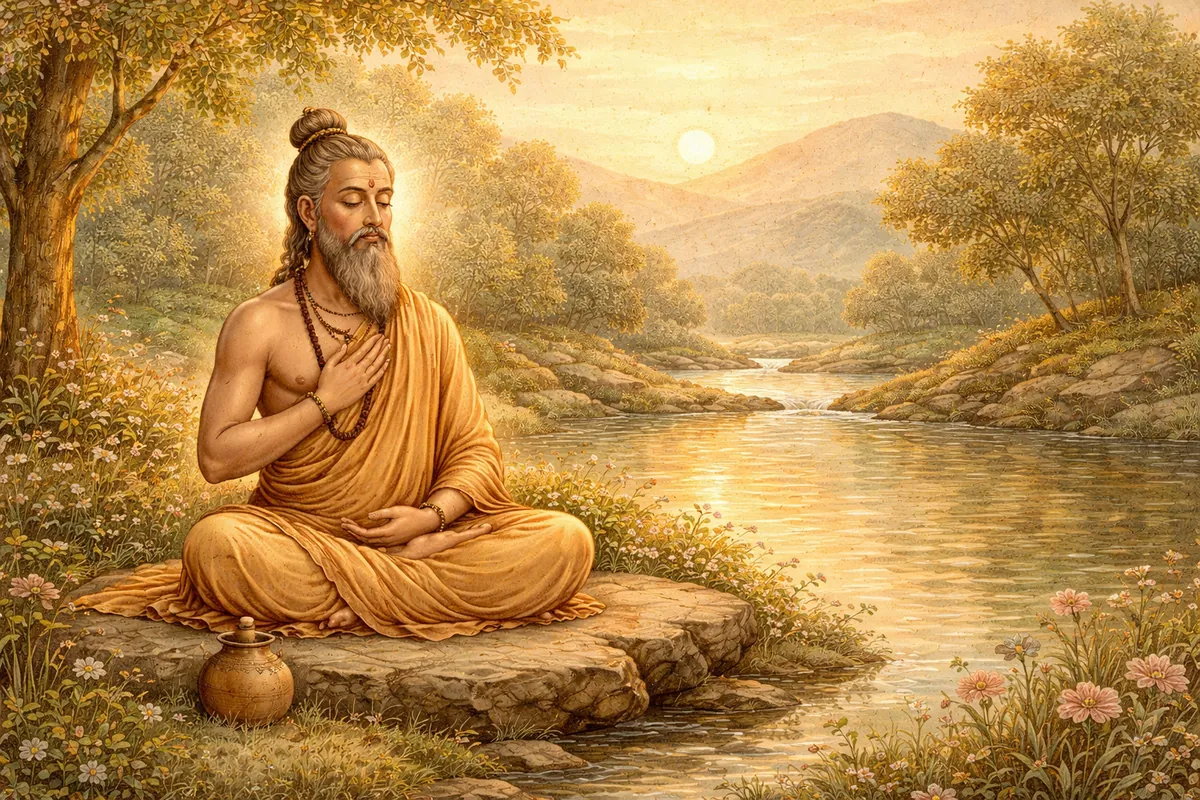
Questions and Answers. Atma-vichara. Simply About the Complex
PART 1
Question: Guru, what is the tradition of Atma-vichara?
All of Sanatana Dharma is permeated with Atma-vichara. It cannot be said that there is only one tradition. There are many such traditions. The one in which we practice is the tradition of Vasistha, Dattatreya, the tradition descending from Shiva; it is the tradition of Shri Adi Shankaracharya; the tradition of Guru Brahmananda. All of Hinduism, all of Sanatana Dharma, is permeated with Atma-vichara to one degree or another. In essence, to practice Sanatana Dharma means to practice Atma-vichara. The entire culture of Sanatana Dharma, its religious and ritual aspect, mantras—in the end, they all revolve around Atma-vichara as the center of awareness.
Question: And why practice Atma-vichara?
A good question. In order to awaken. If you want to sleep, you do not need Atma-vichara. But if you want to awaken, know the Absolute, know God, transcend the cycle of birth and death, then you cannot do without Atma-vichara. After all, this precious human birth has not been given to us for no reason. It has been given to us so that we may realize divine wisdom, transcend karma, and finally free ourselves from our limitations.
Everyone who seeks liberation, enlightenment, samadhi, everyone who wishes to become a saint, practices Atma-vichara. All the saints of the past follow this path, all the saints of the future follow this path, as do all the saints of the present. Without following this path, it is impossible to attain liberation.
Another question is that we must understand for ourselves whether we seek liberation or whether we seek samsara, whether we seek illusion or whether we seek awakening and enlightenment. As soon as we answer these questions affirmatively, we can immediately say: we need Atma-vichara.
Atma-vichara is not something people talk about. Atma-vichara is something people practice. And all people in the world fall into two categories: those who practice Atma-vichara and those who do not, regardless of tradition or religious affiliation.
Question: And who can practice this method?
This method can be practiced by anyone who possesses the ability for self-discipline and yogic self-control of the mind and energy, who is a disciple of their Guru, and who is somewhat familiar with Vedic culture. Atma-vichara itself is non-national and international; it has no specific ties to any culture or religion. That is, it is something elusive and very subtle, as we investigate the nature of our own consciousness. But it itself originates precisely from Vedic culture. Atma-vichara does not exist in Celtic culture, Egyptian culture, ancient Slavic culture, and perhaps not in Anglo-Saxon culture, or in Mayan or Aztec culture.
Atma-vichara is a unique tradition belonging specifically to Vedic culture. This means that we should become connected with this culture so that it will be easier for us to practice Atma-vichara. Of course, a Western person who is not connected with Vedic culture can also practice it, but it will be more difficult for them. This is because Atma-vichara exposes such depths that we need sources of support.
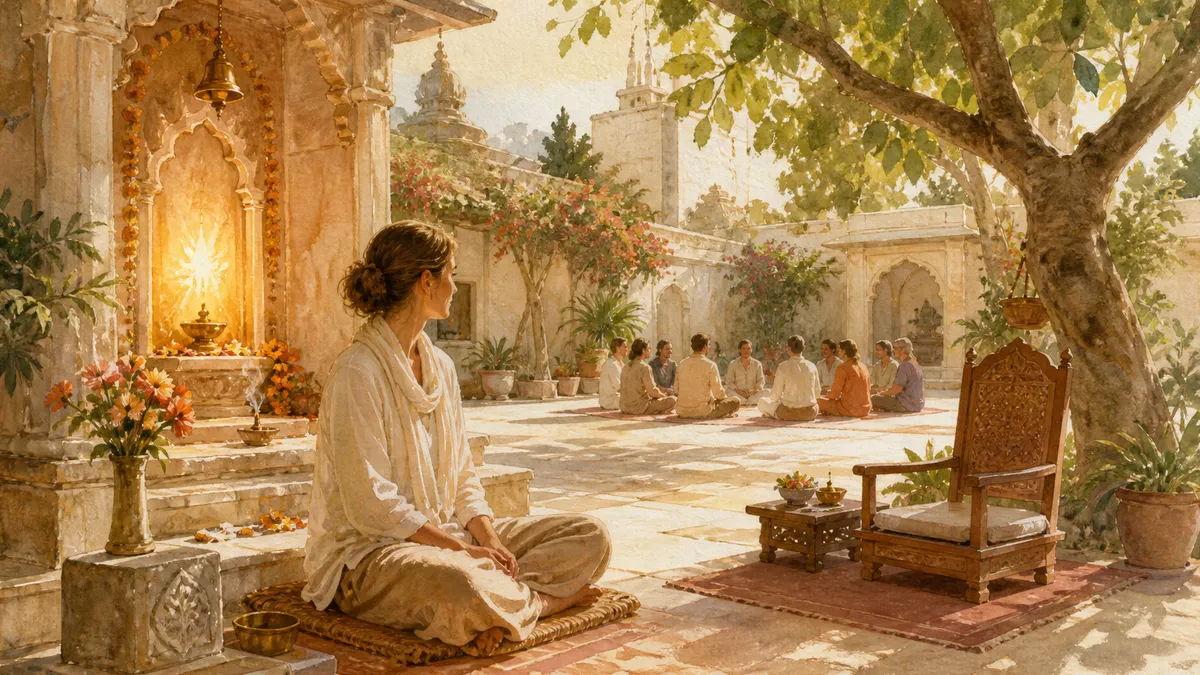
These sources of support are the Master, the Chosen Deity, ethics and culture as a special fragrance, a special blossoming within Sanatana Dharma, the spirit of samaya, gurubhais—spiritual brothers and sisters, sangha—the community of practitioners, the powerful support of the saints, the tree of refuge, that is, the entire pantheon of deities and saints. It is very important to have such support. Therefore, anyone can practice Atma-vichara. But in order to be happy and successful on the path of Atma-vichara, they need to establish a connection with Vedic culture.
The Essence of the Atma-vichara Method
Question: And what is the basic essence of this method?
The basic essence of this method is simple. You need to concentrate on the feeling of “I” and hold on to this feeling within yourself. You need to cut off any thoughts and tendencies of the mind that arise if they prevent you from holding on to the feeling of “I.” In other words, it is like self-remembering.
Gurdjieff once gave this technique to his students, calling it the technique of “self-remembering.” In the Vedic tradition, it is Atma-vichara.
“Atma” means the supreme soul, the absolute essence. “Vichara” means inquiry. We need to penetrate deeply into the nature of our own “I,” and then go beyond the boundaries of this own “I” and discover transcendent consciousness—Brahman.
And so our entire life is, as it were, divided by the practice of Atma-vichara. There was a time when we were unconscious, and there is a time when we heard about it and began to practice, just as Shri Ramana Maharshi did.
The moment we remembered ourselves, became aware of ourselves, focused on the feeling of “I” deep within ourselves, and began to hold on to it—that was the beginning of our practice of Atma-vichara.
There is a wonderful book by Sri Ramana Maharshi, “Be As You Are,” which I recommend to all beginners as a primer on Atma-vichara. And, of course, Atma-vichara should begin with the study of Advaita Vedanta, because Atma-vichara is practiced precisely within the context of the Vedic tradition, specifically Advaita Vedanta. But once you have studied Advaita Vedanta, we then begin the practice.
And here you must try to look within, closing your eyes or keeping them open (it does not matter that much), and discover “Aham-vritti”—the “I-thought.” Having discovered it, you need to isolate it as the most important one. There are other thoughts, but “Aham-vritti”—the “I-thought”—is the most important. This thought will lead you into the very center of the cyclone, into the very essence of being; it will lead you to the Absolute. Just as a dog recognizes its master by scent, so, by following “Aham-vritti,” you will penetrate into your immortal, godlike essence.
However, this must be done under the guidance of a spiritual Teacher. Cultivating the subtle contours of consciousness and opening divine levels of cons
