

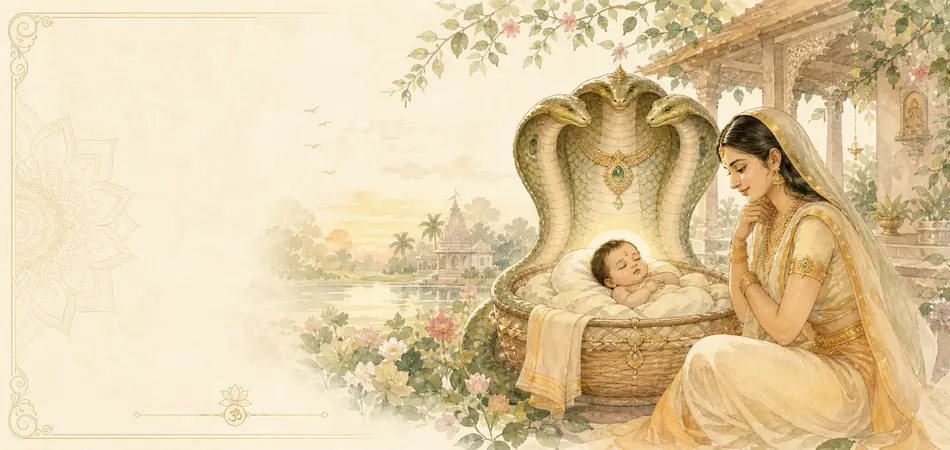
The next day, after completing his meditation and worship, Tirumala Das began to speak:
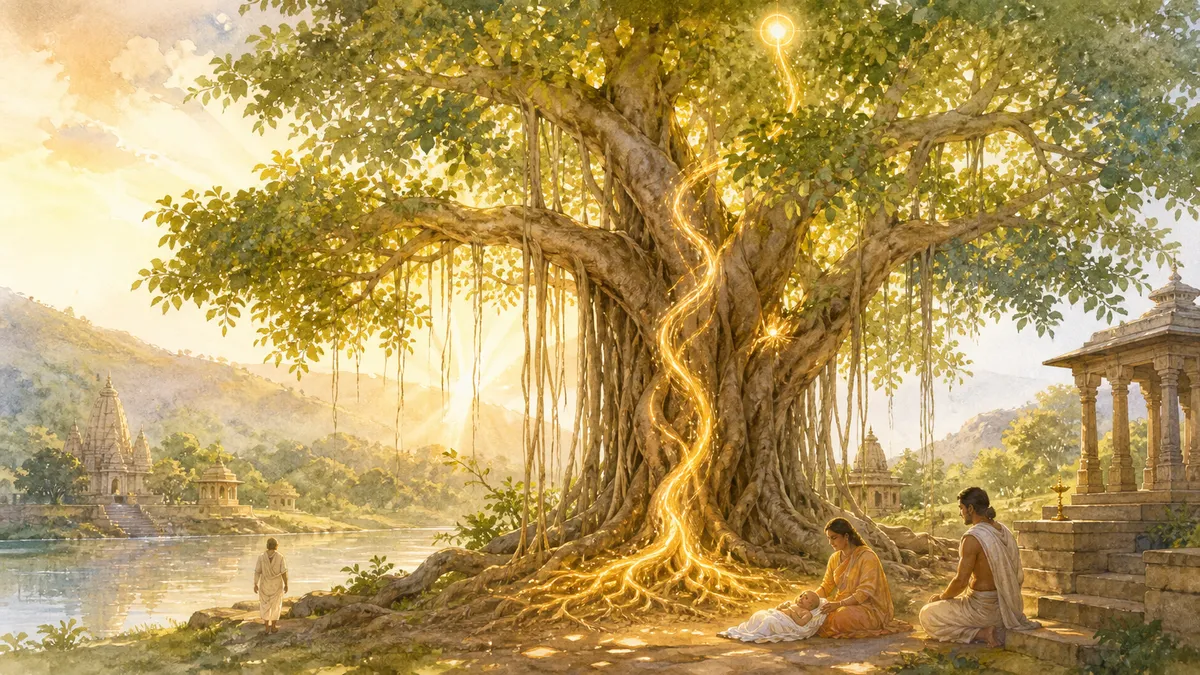
“Sir, Shripada Shri Vallabha is the source of everything moving and unmoving in Creation. He is like a banyan tree. His partial incarnations are like its hanging roots. The roots grow from the branches of the banyan tree; although they appear independent, their sole foundation is the banyan tree itself. He is the source and Refuge of all, from gods and demons to every living being. All powers emanate from Him and dissolve back into Him. To a person who reaches the summit of a mountain, all paths appear the same. Likewise, people of different traditions find unity in the philosophy of Datta.
All beings are surrounded by an aura. When I was in Pithikapuram, a yogi came there. He could determine the strength of the aura around a particular statue, or how large a particular person’s aura was and what colour it had. He visited the temple of Shri Kukkuteshwara and wanted to examine the extent and colour of the aura of the self-manifested Datta. In the place of Swayambhu Datta, he had a vision of Shripada Shri Vallabha. An intense white light resembling lightning radiated around Him.
What can be seen within an aura? The energy body (pranamaya kosha) may be seen, as well as which vital airs predominate: samana, prana, or udana. In addition, there is the astral body (manomaya kosha)—the subtle body. The mental body (vijnanamaya) and the causal body (anandamaya) may also be seen. At various levels, every person constitutes an aura. The energy body extends beyond the physical body and envelops it. The subtle body resembles a transparent cloud with images inside it, vibrating and suffused with colours associated with particular emotions. The mental body contains a person’s ideal conceptions. The causal body contains the deep seeds of their karma and consists of light. Furthermore, there is the memory of a place, the memory of an object, the memory of sacred sites and temples, and the memory present in places where important events occur; this memory influences those who come to that place.
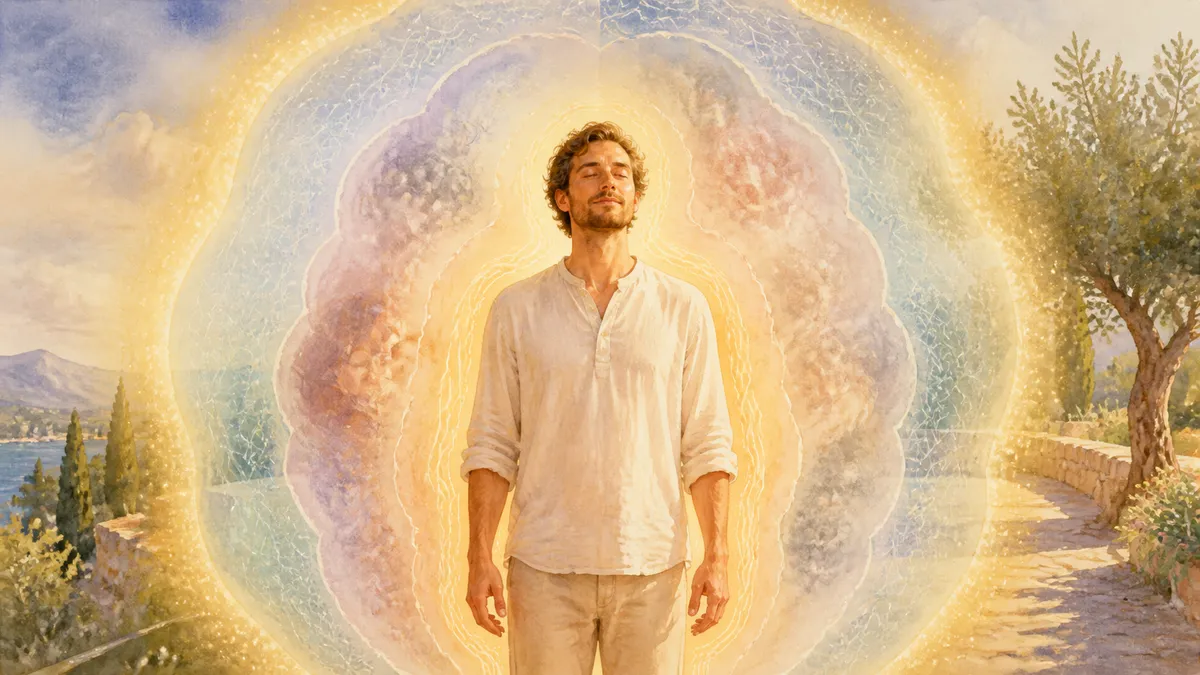
If you come to a sacred place, the memory of that place greets you, and peaceful deities greet you with lotuses, crowns, caskets, and offerings, bestowing their blessings. Wrathful deities greet you if the memory is connected with wrathful divine energies; they appear with hatchets and skull-cups and bestow blessings primarily associated with severance, pure vision, and other things. Places where divine memory is very strong—whether that of peaceful, joyful, or wrathful deities—bestow shaktipat and awaken consciousness. In time, through contemplation, invoking deities, practising sadhana, and mantra yoga, a sadhu creates such memory within the cells of his own body. All of this is encompassed by the concept of the aura.
The divine being said to the yogi: “My dear one, you are wasting precious time on foolish pursuits, calculating the extent of other people’s subtle bodies. Think of yourself. Death will inevitably come to you in a few days, so consider how to attain salvation. Truly, I am Datta, the source of all teachings and all truths. When the great siddhas, great sages, and great devotees called upon Me with love, I incarnated in this Kali Yuga in the Padagaya Kshetra.”
Upon hearing the Lord’s teachings, the yogi’s former mental tendencies were extinguished. His ability to see the aura of the subtle body dissolved completely into Shri Vallabha. Later, he received the darshan and blessing of Shripada Shri Vallabha in His home. The yogi said: “The pure white light radiating around Shripada indicates that Shri Vallabha is utterly pure and is a complete yogavatar. The blue light signifies that He is filled with infinite love and grace.”
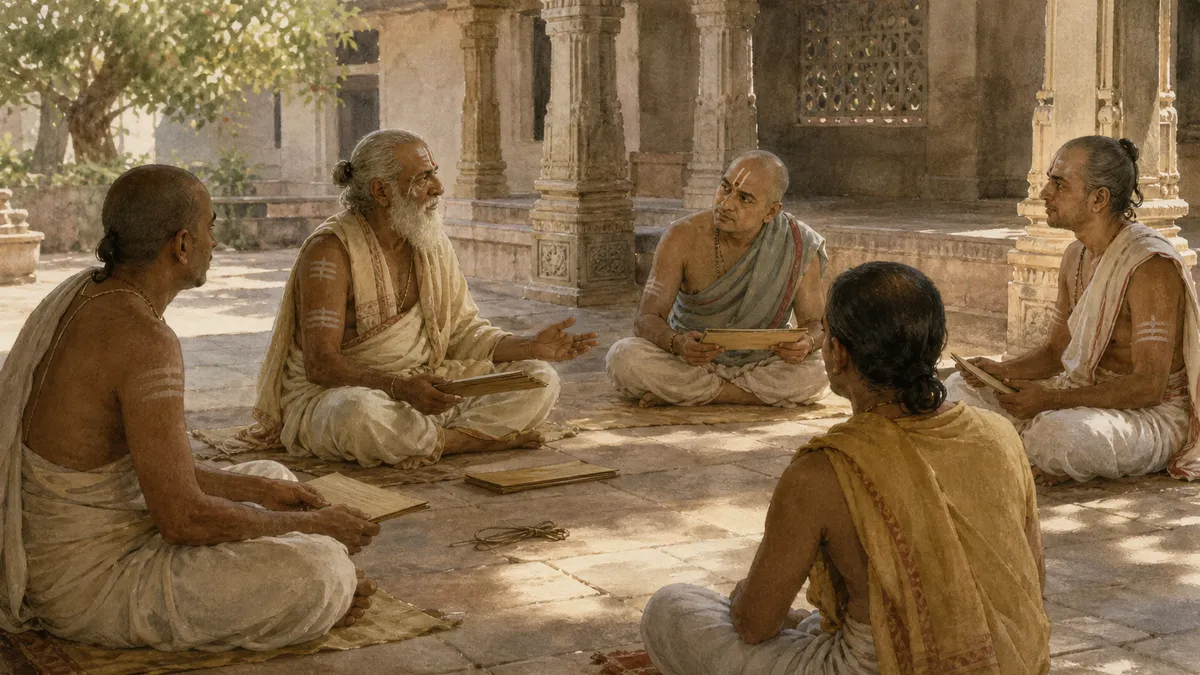
After the yogi’s departure, an interesting discussion took place. “How should the question of division into the four castes be resolved? Does it correspond to differences in the auras of the subtle bodies, or does it correspond to castes and gotras? Which caste is entitled to the upanayanam ritual according to the method described in the Vedas?
Who knows what upanayanam is? It is mainly performed for Brahmins and Kshatriyas, but sometimes the question of Vaishyas arises, and this issue was raised.
Which caste is entitled to upanayanam according to the method described in the Puranas? Is upanayana connected with the third eye located between the eyebrows, or is it something else? Who are the medhajnanam?” A heated discussion of this kind continued. The pandits could not reach a unanimous opinion.
The Story of Sri Bapanaryulu and Sripada's Ancestors
Sri Malladi Bapannavadhanulu, known as a true saint, was the head of the Brahmin Society in Pithikapuram. He was also called Bapanaryulu. He primarily worshipped the Sun and Fire. He was invited to conduct a sacrificial rite in Pithikapuram. After the sacrifice, torrential rain fell. Everyone was delighted. Sri Vatsavayi Narasimha Varma, who was a Kshatriya, asked Sri Bapannavadhanulu to reside in their village. He declined Sri Varma's offer. Sri Bapanaryulu usually accepted only the honorariums given during sacrificial rites. If the money was impure, he would not accept it.
Sri Varma had a Kapila cow. He loved her very much. Her name was Gayatri. This cow gave plenty of milk and was very docile by nature. Sri Varma discovered that Gayatri was missing. He asked Bapanaryulu, who was a learned astrologer, about the cow. Sri Bapanaryulu told him that the cow was with Khan Saheb, a butcher from a neighboring town. He also said that they had to go there immediately and bring back the missing cow, as she would otherwise be killed. When sending a man to the neighboring village, Sri Varma stipulated to Bapanaryulu that if Gayatri returned as Sri Bapannavadhanulu had said, he must accept three putlus of land and a good house as a gift to the pandit. The Brahmin faced a dilemma. If he did not accept the gift, Sri Varma would allow the cow to be killed. Then the sin of killing the cow would fall upon him. He thought it was better to accept the gift than to bear the sin of killing a cow. Gayatri was saved. The residents of Pithikapuram were happy. Sri Bapannavadhanulu became a landowner and also received a house as a gift.
The Brahmin had a son named Venkavadhani and a daughter named Sumati. Sumati's horoscope possessed every auspicious feature, and her gait resembled the regal stride of an empress. She was therefore called Sumati Maharani. Sri Bapanaryulu's name and fame spread far and wide.
A Brahmin boy named Appala Lakshmi Narasimha Raja Sharma, whose family name was Gandikota, came to Pithikapuram from the village of Ainavilli in the Godavari district. He belonged to the lineage of Sage Bharadwaja, followed the Apastamba Sutra, and belonged to the Velanati Vaidika school. In his home was the murti of Kalagni Shamana Datta. During worship, this murti spoke to Raja Sharma and gave him instructions. Appalaraja Sharma had lost his parents in childhood.
One day during worship, Kalagni Shamana instructed Raja Sharma to complete his education under the guidance of the Brahmin who belonged to the Haritasa Gotra, followed the Apastamba Sutra, and belonged to the Velanati Vaidika school, and so Raja Sharma came to Pithikapuram. In accordance with Datta's instruction, Sri Bapanaryulu provided accommodation in his own home for Raja Sharma, who had come to him as a disciple. He did not allow Raja Sharma to beg for food from different households.
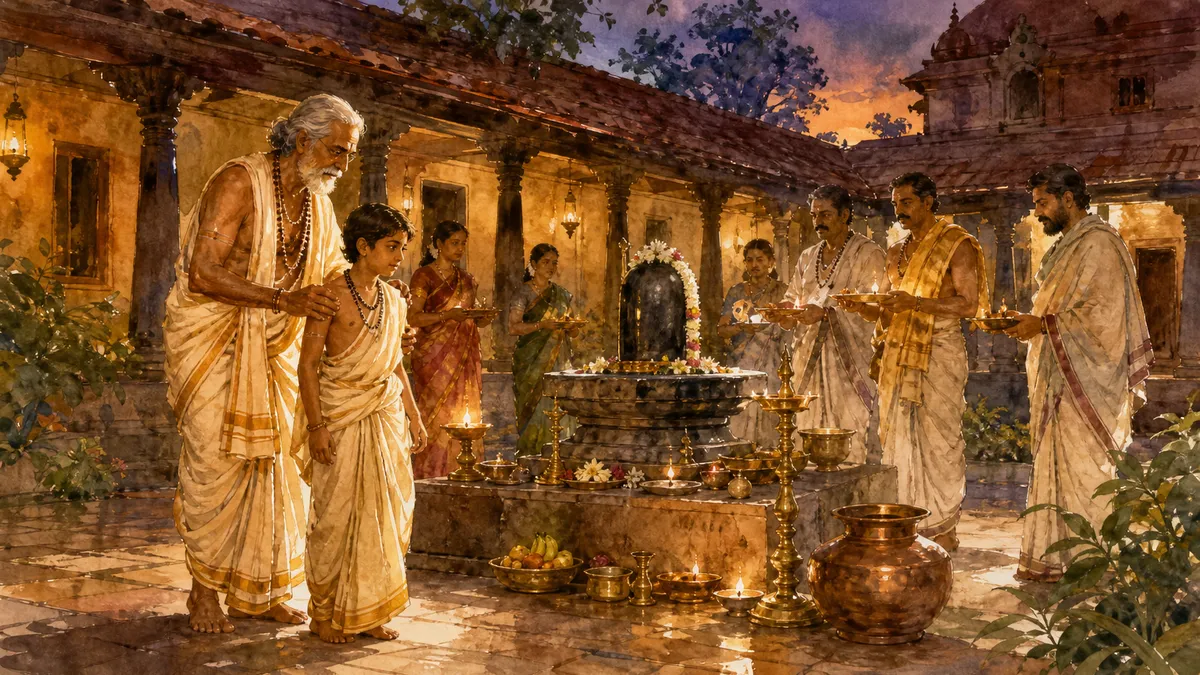
Sri Bapanaryulu worshipped Lord Shiva during Shani Pradosha. The women of the household performed religious rituals in worship of Lord Shiva during Shani Pradosha. In ancient times, Nanda and Yashoda worshipped Shiva during Shani Pradosha. As a result, they were blessed with the joy of raising Sri Krishna. Sri Narasimha Varma, Sri Pinda Venkatappaya Sreshti, and several other distinguished Vaishyas invariably participated in the worship of Shiva together with that Brahmin.
The Voice from the Shivalingam and Sumati's Marriage
One day during Shani Pradosha, after the worship of Lord Shiva, a brilliant, radiant light emanated from the Sri Kukkuteshwara Shivalingam. Then a powerful voice resounded:
“My dear Bapanarya. Give your daughter Sumati Maharani in marriage to Appalaraja Sharma without any hesitation. This will bring good to the entire universe. No living or non-living being in this Creation has the right to violate this momentous decision. This is the decision of Lord Datta.”
Pinda Venkatappaya Sreshti, Narasimha Varma, and everyone present heard this voice. They were all astonished. A message was sent to Raja Sharma's relatives, kinsmen, and loved ones in Ainavilli. The marriage of Raja Sharma to Sumati Maharani was arranged. Regrettably, Raja Sharma did not even have a house.
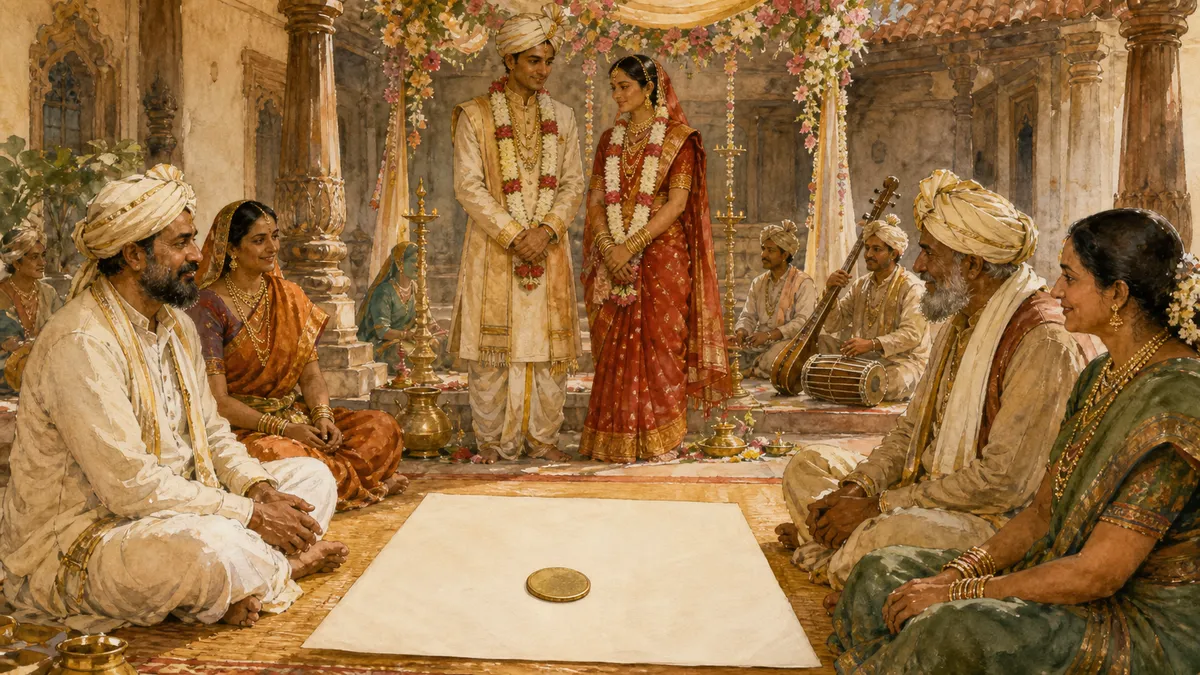
Sri Pinda Venkatappayya Sreshti said that he owned many houses and would gift one of them to Raja Sharma. However, Raja Sharma did not accept any offerings. Sreshti spoke with Raja Sharma’s relatives and arranged for an appraisal of the value of the portion of the house in Ainavilli that Raja Sharma would inherit. It was valued at 1 varaha. Sreshti’s house was valued at no less than 12 varahas. Raja Sharma indicated that he was unable to pay the difference of 11 varahas. Sreshti then declared that he would sell his house to Raja Sharma for only 1 varaha. Sreshti said, “If you object to accepting the house as a gift, you may buy it by paying 1 varaha.” They all agreed that what Sreshti had said was in accordance with dharma. The marriage of Sumati Maharani and Appala Lakshmi Narasimha Raja Sharma took place amid the chanting of the Vedas by great Vedic scholars. A magnificent wedding ceremony was held to the accompaniment of auspicious melodies played on musical instruments.
Divine Signs and Prophecies
Sripada Srivallabha incarnated to dispel the darkness of ignorance. He came to remove the impediments to people’s progress in material and spiritual matters. Lord Datta gave instructions to the deity of time and the deity of action (kala and karma). In accordance with His command, a blind boy, personifying dark ignorance, and a lame boy, personifying the slowing of progress in worldly and spiritual spheres, were born to Raja Sharma. Sumati and Raja Sharma were deeply distressed that their two children were disabled.
In Ainavilli there is a famous temple of Vighneshwara. One day, their relatives brought maha-prasad from Lord Vighneshwara to Pithikapuram. Sumati and Raja Sharma received the maha-prasad. That night, Sumati Maharani had a darshan of Airavata in a dream.
Airavata is Indra’s elephant.
Over the next several days, a conch, chakra, mace, lotus, trident, various deities, sages, siddhas, yogis, and other saints appeared in her dreams.
A few days later, she began to experience divine revelations while awake. When she closed her eyes, she saw yogis in samadhi and munis with a divine radiance and various lights granting darshan like images on a screen. When Sumati Maharani consulted her father Bapanarya, he said that all these signs pointed to the birth of a great person endowed with perfectly auspicious qualities.
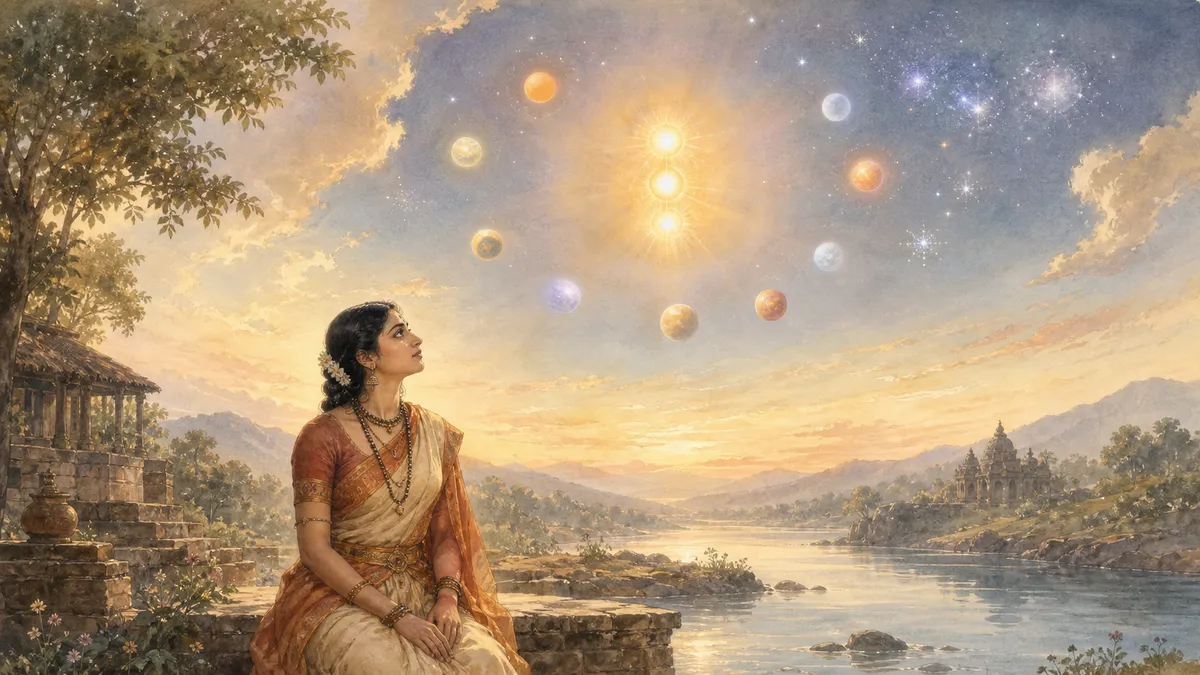
Sumati Maharani’s uncle Sridhar said, “Sumati, there is a connection between Vishakha—the star under which Ravi (the Sun) was born—and the incarnation of Sri Rama; similarly, there is a connection between Krittika—the birth star of Chandra (the Moon)—and the incarnation of Sri Krishna; there is a connection between the planet Mars, born under the star Purvashada, and the incarnation of Sri Lakshmi Narasimha; there is a connection between the planet Mercury, born under the star Shravana, and the incarnation of Buddha; there is a connection between the planet Jupiter, born under the star Purvaphalguni, and the incarnation of Vishnu; there is a connection between the planet Venus, born under the star Pushyami, and the incarnation of Bhargava Rama; there is a connection between the planet Saturn, born under the star Revati, and the incarnation of Kurma; there is a connection between the planet Rahu, born under the star Bharani, and the incarnation of Varaha; there is a connection between the planet Ketu, born under the star Ashlesha, and the incarnation of Matsya. The time you asked me about was a time of divine mystery. I suppose that Lord Dattatreya Himself, who controls the existence and destiny of crores upon crores of planets, stars, and vast universes, may be born to you.”
Revelations of Kalagni Shamana Datta
Sumati Maharani told Raja Sharma about this. Raja Sharma said that during worship he would ask Kalagni Shamana Datta Himself. There was a rule that no one should be present during the worship of Kalagni Shamana. At the end of the worship, Datta would come in human form, sit before Raja Sharma, and speak with him. Afterwards, Datta would dissolve into the murti. This happened every day. Raja Sharma did not speak to Datta about minor or personal problems. That day, during the worship, Datta looked very pleased.
After the worship, Datta sat before Raja Sharma. He called out, “Come out, Sridhara,” and a certain form emerged from Datta and entered meditation before Him. Datta gestured with His finger again and called, “Come, Sridhara.” At once, that form dissolved into Datta. Raja Sharma was astonished by this.
Lord Datta said to Raja Sharma, “The form you have just seen is one of My partial manifestations that will appear in the years to come. Whenever I call, even liberated souls that have dissolved into Me must emerge immediately. When I command them to leave, they must disappear at once. My divine plays are not confined to the earth. All the planets in the universe are playthings in My hands. If I strike one of them, it will fly billions of miles away. I am beyond birth and death.”
Having said this, He touched the center between Raja Sharma’s eyebrows. Raja Sharma immediately realized that he had been born as Vishnu Datta in one of the yugas, while his wife had been born as Somidevamma, who was also called Sushila. He remembered everything from the past.
Shri Datta said, “When I appeared before you in that yuga, I allowed you to ask for any boon. You were unable to ask for the proper boon. You invited Me to your home to partake of a meal on the day of the ceremony for your ancestors. I ate together with the gods of the Sun and Fire, thereby granting your ancestors permanent residence in Brahma-loka. I wish to incarnate as Shripada Shri Vallabha. For the past hundred years, I have been granting My darshan as Shripada Shri Vallabha to yogis and great souls on this earth.
In the Treta Yuga, the sage Bharadvaja performed the Savitra Kathaka Chayanam sacrifice in Pithikapuram. The sacred ash from that sacrificial fire turned into enormous mountains. Hanuman carried this ash to the heavens, the earth, and the worlds of Patala. In Martya-loka, this ash was cast upon Dronagiri in the Himalayan region and in several other places. While Hanuman was carrying this ash, a small piece fell in Gandharvanagara. Gandharvanagara is the sacred confluence of the Bhima and Amaraja rivers. After the completion of My incarnation as Shripada Shri Vallabha, I will be born as Shri Narasimha Saraswati in Minalagna. I will perform many miracles in Gandharvanagara and will remain in tapo-samadhi (one of the deepest stages of meditation, in which the external sensory world is not perceived) for 300 years in Kadali Vana of Shri Shaila. After that, I will live in Prajnyapura under the name of Swami Samartha and will leave My mortal body when Saturn enters Manirasi.”
Raja Sharma told his wife about Lord Datta’s prophecies. Bapanaryulu, Satya Rishishvara, said, “My dear Raja Sharma, you are the meritorious man who, in ancient times, offered food during the annual ritual dedicated to the ancestors to Lord Datta, the Sun god, and the Fire god. Datta, in any form, may ask for food during this lifetime. Even if it is the day of the ceremony commemorating the souls of your ancestors, and even if the honored guests have not yet eaten, offer food to Datta without any hesitation when He asks for it. My dear Sumati, please remember all this carefully.” Shankar Bhatt, the divine plays of Lord Datta remain unprecedented, inconceivable, and unheard of to this day.
The Birth of Shripada Shri Vallabha
On the day of Mahalaya Amavasya, Raja Sharma was arranging a ceremony for his ancestors. Then a pleading cry was heard near the house.
Why is Shraddha, the ceremony for the ancestors, performed? Who knows? So that they may either acquire a suitable subtle body or receive nourishment. If an ancestral soul is not in a very good condition, its subtle body suffers and needs energy. It may appear tired, ill, hungry, emaciated, and dressed in unsuitable clothing. When an offering is made during such a ceremony, the soul is nourished. What nourishes it? Subtle prana. The offerings reach such a soul in the form of copies—copies of the offerings physically presented. Through interaction with the consciousness of the person making the offering, such a mental copy is created; and through sankalpa—the intention and dedication of the fruit of the sacrificial offering to a specific individual—this subtle copy is sent forth and received by the subtle body of that ancestral soul.
For some, such a ceremony is performed so that they may acquire suitable subtle bodies capable of incarnating in the human world. If the subtle body has not accumulated enough sattva and strength, it cannot enter the human world—the human world is closed to it. It may enter a lower womb, while the human world remains closed, or certain forces, such as spirits, may obstruct its rebirth.
In ancient times, the caste system was arranged in such a way that a person, with their karmas, could reincarnate within the same caste if they had not advanced to a new level, so that they were guaranteed a human birth, bypassing birth in the lower worlds, and so that they could progress, ascending to the worlds of the gods and developing ever greater awareness. But then it began to intermingle and lose its power, and therefore, due to the influence of Kali Yuga, it no longer works as it once did. In the past, however, such souls awaited incarnation in their own gotra; and if there were no sons in the family, they waited until sons capable of performing such a ceremony were born.
The Revelation of Shripada Shri Vallabha
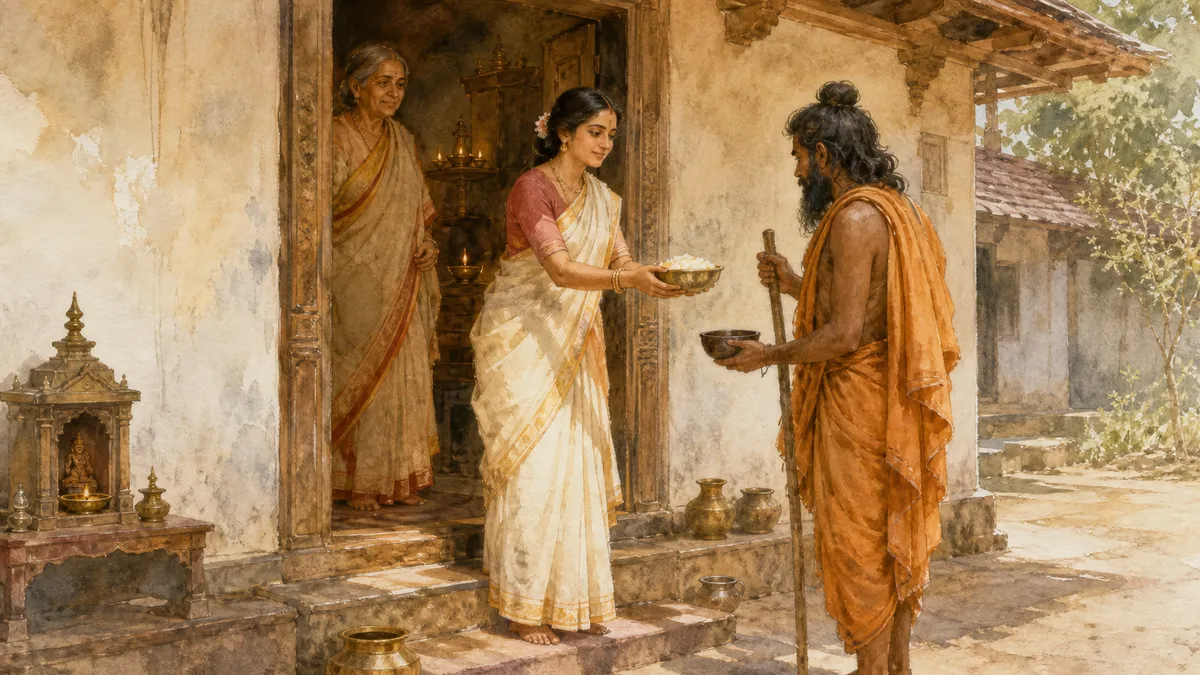
Sumati Maharani gave alms to the avadhuta. He told her that she could ask for any blessing. Sumati replied to the avadhuta:
“Master! You are an avadhuta. Your words have the power to come true. The elders say that the incarnation of Shripada Shri Vallabha will appear on earth very soon. What form has Lord Datta assumed now? It is said that Lord Datta has been walking upon this earth for the past hundred years. You said that I could ask for any wish to be fulfilled. I wish to see the form of Shripada Shri Vallabha.”
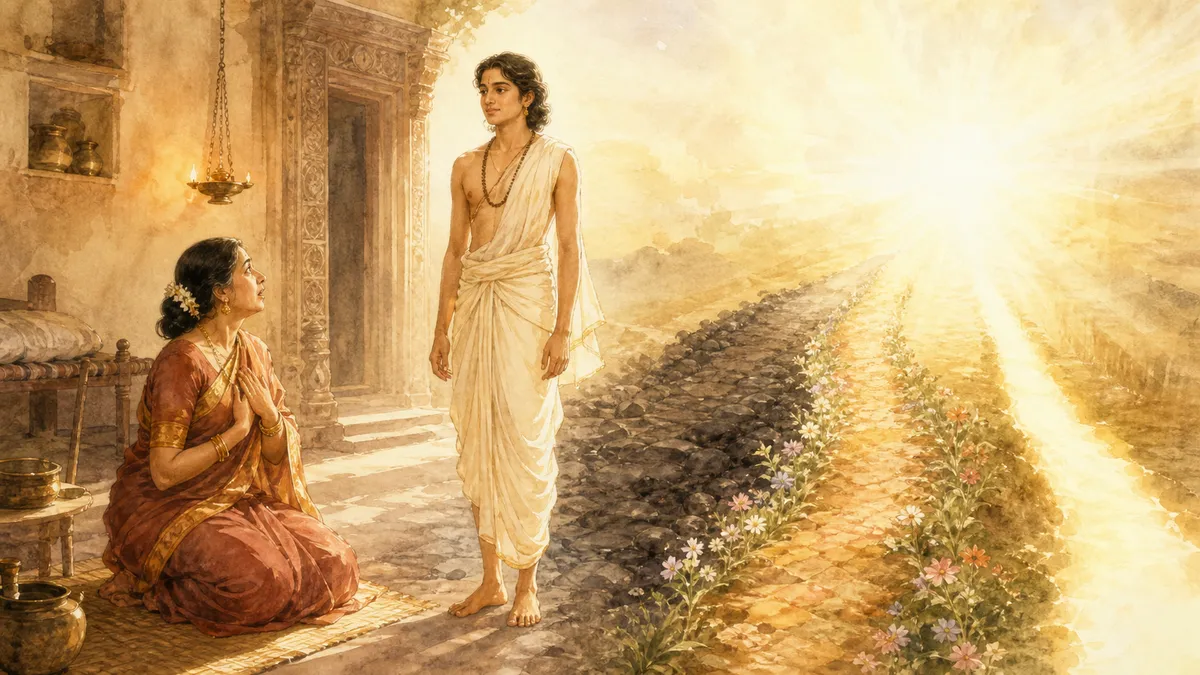
Upon hearing these words, the avadhuta burst into thunderous laughter that shook all the worlds. Sumati Maharani felt that the entire universe around her vanished in an instant. A handsome sixteen-year-old boy dressed as a sage appeared before her and said:
“Mother, I am Shripada Shri Vallabha. I am Datta. You wanted Me to show you Shri Vallabha in the form of an avadhuta. To fulfill your wish, I am allowing you to behold Shri Vallabha. In this form of Mine as Shri Vallabha, you may ask Me for anything. You gave Me food. In return, I wish to grant you a blessing. The people of this world who deliberately commit sinful acts will receive bad results. If good deeds are performed intentionally, they will lead to good results. Performing good deeds without any desire is called akarma. Akarma gives a person a result irrespective of their merits or sins.”
Three Types of Karma
Thus, karma, in another sense, refers to dharmic deeds performed with a particular aim, when good actions are undertaken with the desire to obtain some fruit or result—and this works. If you create a sankalpa (intention) and perform certain sattvic actions, this strengthens your sankalpa and imbues it with the power of the images copied during the action; the action itself is a kind of improvised sacrificial offering, a ritual, and the sankalpa then materializes and manifests.
The next type is akarma, when actions are performed without sankalpa, without any desire to manifest a result, and with detachment. In this case, copies of the actions are not imprinted in the stream of a person’s consciousness, and no vasanas or samskaras arise. Provided that such a person has mastered self-liberation, the perception of emptiness and the illusory nature of the world, and many other things, this is called akarma.
At the next stage, actions are performed not for the sake of their fruits or results, nor are they performed simply without attachment, as in akarma—they are performed solely to serve the divine will. They are carried out as divine providence, when a person becomes a conduit of the divine will and simply gives their body to God to use. This is no longer nishkama karma yoga or akarma—this is already bhakti yoga. Bhakti yoga means performing various actions not for the sake of the ego, not for the sake of sankalpas or achieving a goal, which is essentially thaumaturgical magic, and not for the sake of attachments or exhausting one’s karma, as in nishkama karma yoga or akarma, but for the sake of conducting Anugraha Shakti (divine will), or other expressions of God’s will.
Chosen by the Divine Will
The divine will can be known directly only by those chosen by that will. No one can say, “I have decided this, so it will be the divine will.” No one can say, “I am an instrument of the divine will,” without being authorized to do so—such a person would be an impostor, and it would be a fantasy. It would be an illusion, a delusion.
To be an instrument of the divine will, one must be chosen by it—that is all; there is no other way. No one can appoint you by saying, “You are an instrument of the divine will,” or issue you a government certificate stating, “So-and-so is an instrument of the divine will,” notarized and certified. But one can be chosen by the divine will itself. It is like the fact that no one but the king can appoint the king’s adviser or envoy—only the king himself, by royal decree, and no one else. For example, a guard in the palace cannot say, “You are a minister. You are the king’s envoy,” because he has no such authority; if he does so, he will even be punished. In other words, those whom the divine will itself chooses become instruments of the divine will. Neither another person nor the person himself can do this.
When the divine will chooses someone, this is accompanied by various signs and phenomena. Divine beings confirm it, saints confirm it, and they assign a mission to such a person; it is not that person who decides. But the divine will can manifest as a transmission lineage, as a lineage of saints, as the Guru-shishya-parampara. The Guru-shishya-parampara and the transmission lineage, the mission of that lineage—this is the materialized manifestation of the divine will.
When, for example, a Guru in this lineage gives a disciple a mission or instructions, one can likewise say that the disciple is chosen by the divine will through his root Guru, since within the transmission lineage the Guru is a representative of that divine will. Moreover, such a Guru may be chosen by the divine will directly and immediately as a result of mystical experience, spiritually, in the spirit; or, even if this does not occur, he may be chosen externally, through his belonging to the transmission lineage, by the saints of that lineage who embody it. Both are manifestations of the divine will, either on the physical plane or on the subtle plane.
It is best when both coincide. When, in the chain of the transmission lineage, such a master, Guru, or saint is chosen by the divine will on the subtle level, and this also occurs on the physical level, being repeated and confirmed, then he can empower a disciple, choose the disciple as a manifestation of the divine will, and grant the disciple the right to carry out the divine will. This also means that the disciple is chosen by the divine will through his Guru. If the disciple is sufficiently open and capable, the divine will also acts through him; this is precisely the transmission lineage in the aspect of the divine will. One must be chosen by the divine will, either directly and immediately or through the transmission lineage; and when the divine will chooses someone, one must follow it, carry it out, be worthy of it, open oneself to it, and purify oneself in order to convey it properly. Overall, this is a great responsibility, a great honor, and a great merit.
The Example of Arjuna
“Akarma gives a person a result irrespective of their merits or sins—it is under God’s control. Sri Krishna told Arjuna to kill the Kauravas because they were committing akarma. Arjuna incurred no sin for such killings. The killing of the Kauravas was a divine decision. You and your husband have accumulated it.”
Why did Arjuna incur no sin in the battle of Kurukshetra? Because he had devotion to Krishna, acted in a state of self-surrender, surrendered to him completely, and became his instrument. Accordingly, his mind did not create copies of what he was doing; no imprints were formed. The eyes saw, but the mind did not copy, and nothing was stored in memory—it was all sent into the nondual state of pure light and dissolved; that is, self-surrender and self-liberation took place. This was due to his strong connection with Krishna. If another person had acted in this way, he would have ended up in the place of those he killed—in the vajra hells—because while participating in battles, killing, fighting, and manifesting wrathful energies, the mind of an ordinary person cannot avoid identification or creating copies. This is the subconscious; it cannot be deceived. Consciousness integrates and absorbs everything. Moreover, Arjuna was not a saint—he was a Kshatriya, practiced yoga, and possessed certain abilities. He was simply deeply devoted due to his strong connection, and therefore, even while fighting, he did not accumulate much negative karma because of his self-surrender.
Question: Om, Guruji. If an ordinary person also fights in a war, does he not likewise act not on his own behalf but under orders, with an entire parampara behind him?
Yes—this is where many questions arise: first, how pure and powerful this parampara is; what his connections are, what his motives are, whether the orders are righteous; his own assessment of the war—that is, one can defend one’s country or one can attack; the degree of his patriotism, or whether he is acting simply out of fear of being held accountable for desertion. There are many conflicting motives, and these motives are laid out very clearly and in detail in the subconscious. If he is devoted to his commander, and the commander is in a state of pure light and nonduality, then perhaps he too will not accumulate karma, and if he acts without doubt, he may enter a heavenly realm.
There were warriors who worshipped Odin—the Vikings—whose tradition held that if they fought and died, they had to do so with weapons in their hands. Dying with a weapon in hand meant that one had displayed honor and courage, and the soul would go to Odin to feast among the Valkyries. What matters is how strong this connection is, and it must involve very strong devotion, very strong faith in one’s ideals, one’s God, or one’s mission. Only then does consciousness, guided by this mission, create no imprints or copies, so they do not become samskaras in the next life and do not obscure consciousness.
Shripada’s Promise
“You and your husband have accumulated a great deal of akarma, so you will receive something for the welfare of the whole world. Voice your wish without any hesitation, and I will certainly fulfill it.”
Sumati Maharani saw the supremely auspicious form of Shripada Shri Vallabha, fell at His feet, and bowed down. Shripada Shri Vallabha raised Sumati Maharani from the ground and said:
“Mother, it is absurd for a mother to fall at the feet of her child. It shortens the child’s lifespan.”
Then Sumati said:
“Lord Shripada Shri Vallabha, You called me Mother. This means You acknowledge that I am Your mother and You are my child. Your words come true, so make these words true. You must be born as our son.”
Then Shri Charana said:
“So be it. I will be born in the same form of Shripada Shri Vallabha that you have just seen. When a mother falls at the feet of her child, it shortens his lifespan. I will not violate the principles of righteous conduct and destiny, so as your child I will live for only 16 years.”
Hearing this, Sumati began to weep: “Oh, what a transgression has occurred! Will his life last only 16 years?” Then Shripada said:
“Mother, for 16 years, as your son, I will do everything you say. After the age of 16, a boy should be regarded as a friend, and there should be no restrictions. You must not force Me to marry. You must allow Me to become an ascetic and wander freely. If you try to compel Me against My will, I will not remain in your home.”
Having said this, Shripada quickly left that place. Sumati Maharani remained speechless for some time. Then she explained everything that had happened to her husband. Appalaraja Sharma said:
“Sumati, do not grieve. Your father already hinted that Shri Datta would visit our home seeking alms. Shri Datta is an ocean of mercy. Let Shripada Shri Vallabha be born. After that, we will think about other matters.”
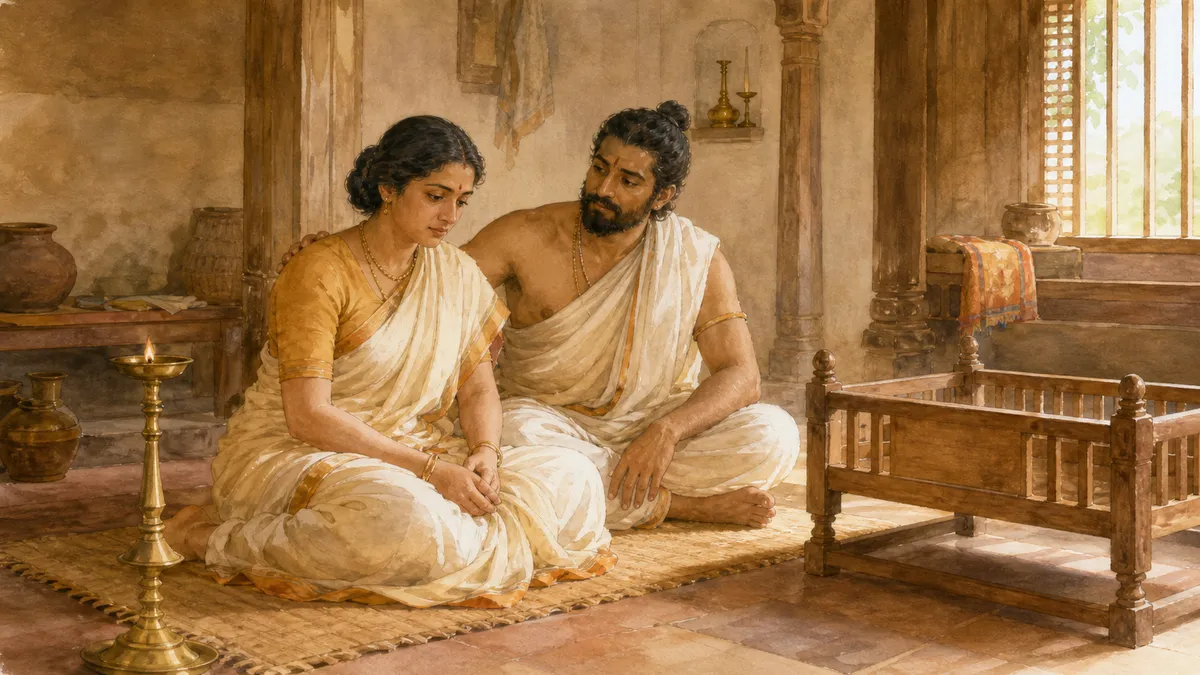
The Council of Brahmins and the Caste Dispute
News spread throughout the city that the avadhuta had visited Appalaraja Sharma’s home. It was said that alms had been offered to the avadhuta even before the Brahmins had eaten on the day of Mahalaya Amavasya, which was of immense importance for the souls of the ancestors. Shri Bapannavadhanulu said:
“The birth of Shripada Shri Vallabha is known to everyone. It is also right to bow down to an avadhuta, so Sumati did nothing wrong. Prostrating before a child may shorten his life, but there is nothing wrong with prostrating before an avadhuta.”
The Brahmins of Pithikapuram were very envious of this. One of them, known as Narasavadhanulu, was particularly jealous. On the day of Amavasya, everyone was busy performing memorial rites for their ancestors. It was difficult to find Brahmins for the ritual feeding. However, Bapanaryulu said that there would be no difficulties at the home of Appalaraja Sharma.
Sri Raja Sharma was meditating on Kalagni Shamana. Meanwhile, three guests arrived. The ceremony commemorating the ancestors proceeded without any obstacles. My dear Shankar Bhatt, it was on that very day that a controversial question arose as to whether Vaishyas were entitled to undergo the Vedic sacred-thread ceremony. A council of Brahmins was convened. A scholar named Ashutosh from Navadvipa in Bengal had come to the Padagaya Kshetra. He had old Nadi books with him. He too was invited to the council of pandits.
Sri Bapanarya said:
“In spiritual discipline, Brahmins, Vaishyas, and Kshatriyas stand on equal footing. Therefore, according to ancient dharma, the Vedic Upanayanam ritual was acceptable for these castes. For others, Upanayanam could be performed according to the Puranic tradition if they so desired. Caste, gender, and age are not obstacles to attaining wisdom. Among the Siddhas there were Vaishya sages, and by the grace of Lord Datta, a Vaishya sage named Labhada became a Siddha. A person will attain success in all endeavors if the grace of Labhada Maharshi is available to them.”
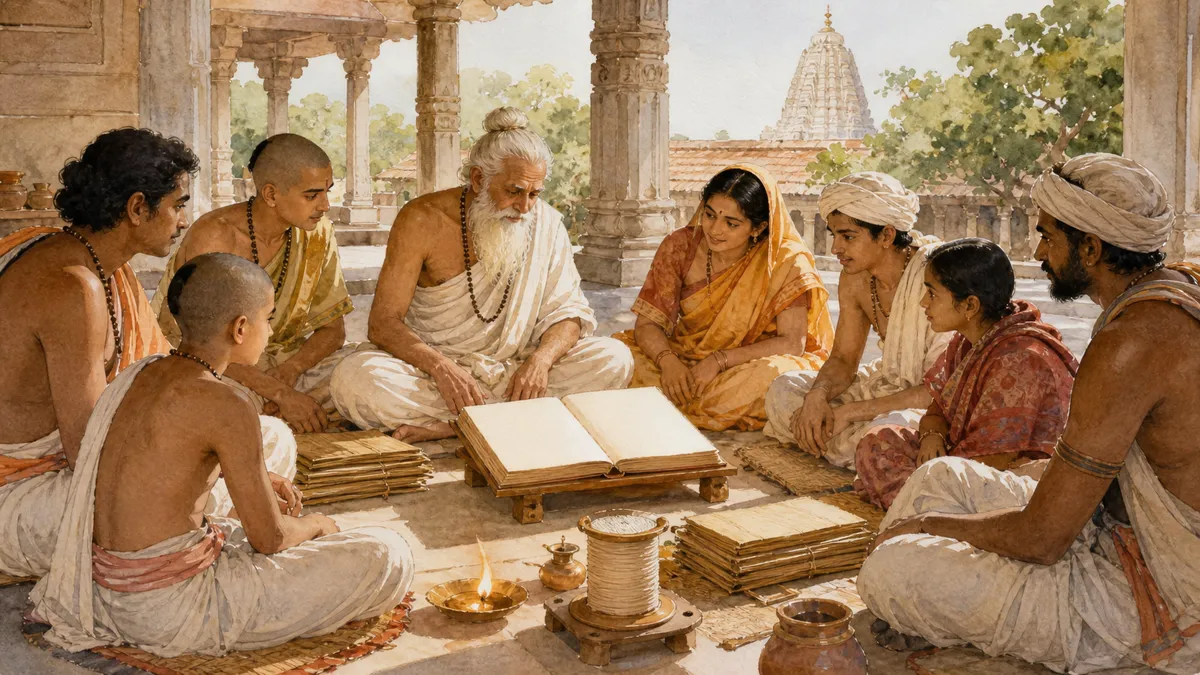
Confrontation with Narasavadhani
Sri Bapanarya’s decision was welcomed by everyone. However, this decision was painful for the pandit known as Narasavadhani. He was an expert in doctrinal debates and a devotee of Goddess Bagalamukhi. Every day he worshiped this goddess. Before beginning a debate, he would wash, recite the Bagalamukhi mantras, and then commence the debate. It was difficult to defeat him then. Sri Bapanaryulu was a pious man who had repeated the Gayatri Mantra many crores of times. Neither of them had ever suffered defeat in debates.
Narasavadhani washed and began meditating on the mantra. From a very early age, Sripada Sri Vallabha had a very close relationship with His maternal grandfather, so He accompanied His grandfather to the assembly of Brahmins. No one objected to the charming boy.
That day, Narasavadhani felt uneasy about Sri Vallabha’s presence at the assembly. Narasavadhani believed that it was improper for a boy to attend a conference of great scholars. Before proceeding with the debate, after reciting the Bagalamukhi mantra, he asked Sripada why He had come there. Sripada replied:
“Grandfather, one should not go where one has not been invited. Since you called Me, I came. I will leave if you ask Me to leave. What does it matter to Me? I do not care. I am a little boy and am free to do as I please.”
Narasavadhani roared that Sripada must leave. Sri Raja Sharma took his son away. Narasavadhani, who was about to begin the debate, was unable to speak. Despite his great efforts, not a single word came from his mouth. Ashutosh, who was watching all this, laughed merrily. The assembly ruled in favor of Bapanaryulu. Vedic Upanayanam was prescribed for Vaishyas.
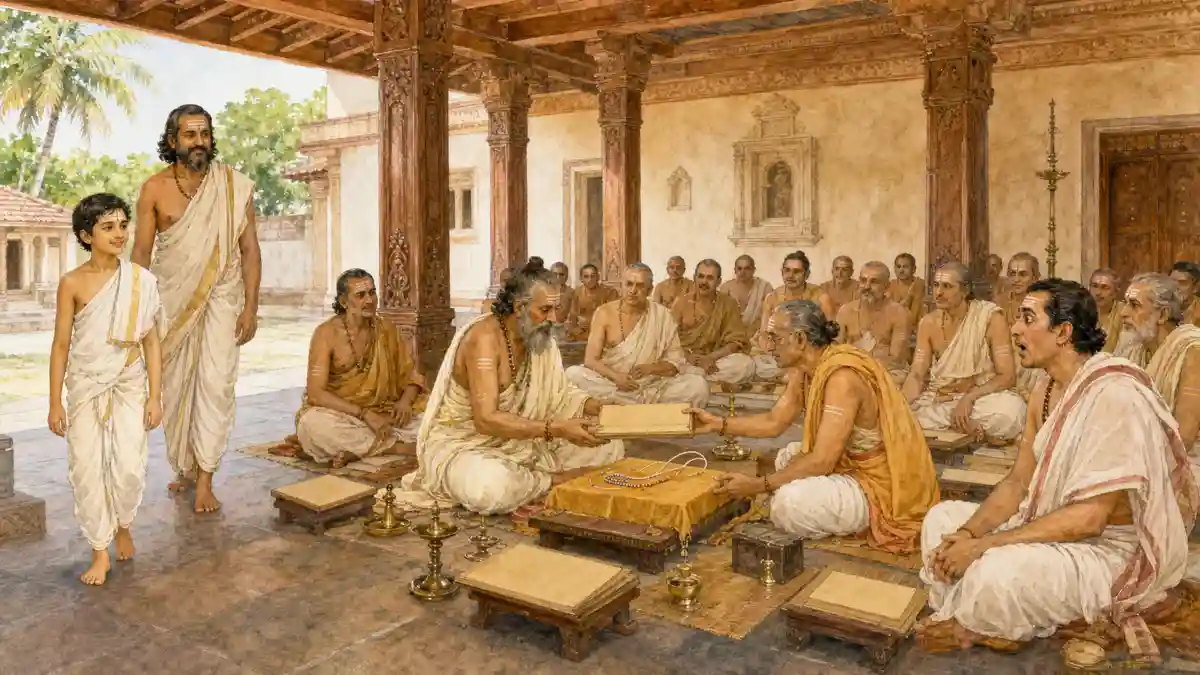
Predictions from the Nadi Books
There was a discussion about the Nadi books that Ashutosh had brought. The Nadi books instructed them to calculate the time of Sripada Sri Vallabha’s birth according to the mathematical formulas given in the “Sandra Sindhu Veda.” It was established that Sripada was born in the early hours of Ganesha Chaturthi under the Chitra star, with Simha Lagna and Tula Rashi. It was mentioned that Sripada was an incarnation of Sri Datta and that, because His feet bore all auspicious signs, He bears the worthy name Sripada Sri Vallabha.
It was further stated that His horoscope should not be given to anyone and that, in due course, it would be brought from Tripura by Akshaya Kumar, who belonged to the Jain religion. All this would take place according to the divine plan and would reach Pithapuram as part of the divine lila.
Ambika’s Revelation
Ashutosh went to the home of Sripada Sri Vallabha to see Him. Sri Vallabha said:
“Today’s star is Chitra. I am very pleased whenever anyone worships Me on the day of the star under which I was born. You have come with pure devotion, so I bless you. Ask for whatever you desire.”
Then Ashutosh said:
“Lord, I learned that Narasavadhani is a devotee of Bagalamukhi. I hoped to have a vision of Ambika with his help. My hopes were in vain. I realized that Ambika was greatly angered with him.”
Sripada immediately said:
“I am that Ambika whom he worships. Ambika, who had previously been with Narasavadhani’s subtle body, merged into Me the moment he asked Me to leave. I am the embodiment of all gods and goddesses. It is your good fortune to receive Ambika’s darshan.”
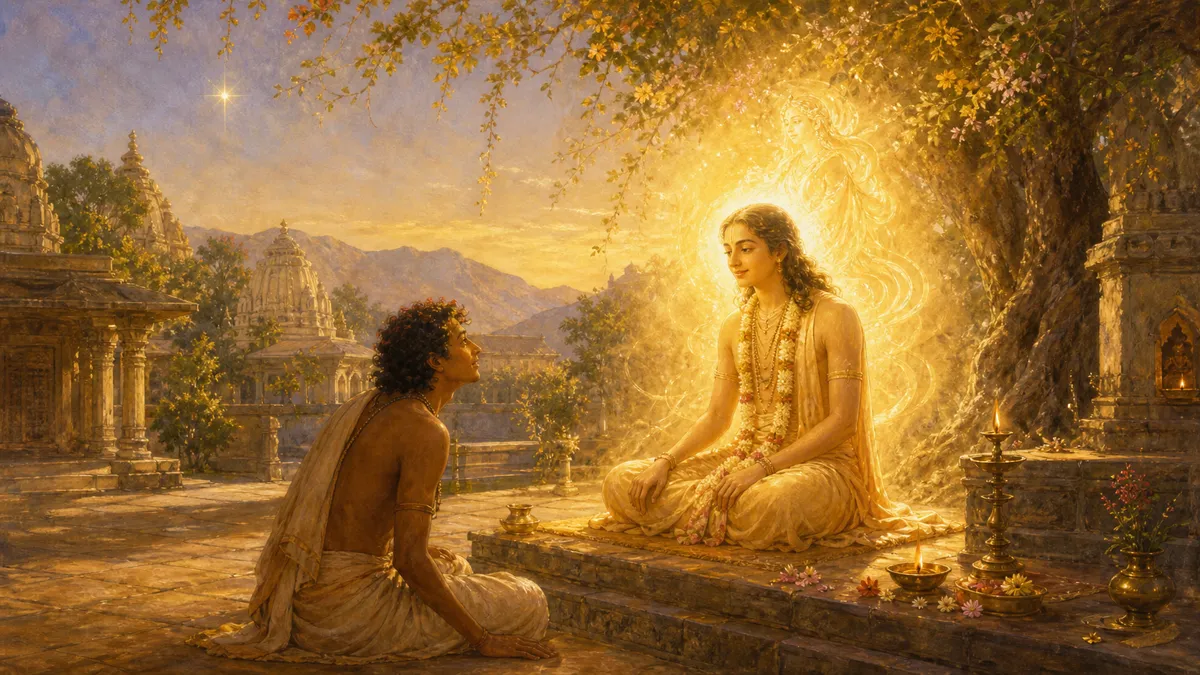
Ambika’s Merger with Dattatreya
The Brahmin worshipped Ambika, and she dwelt in his subtle body. But when he interacted with the boy Sripada Sri Vallabha, this Ambika entered and merged with Dattatreya’s subtle body, acquired Dattatreya’s mind, and took refuge in Him as Brahman. Since Ambika is a form of Shiva’s consort, the Ambika he worshipped, the Bagalamukhi he worshipped, had now become Dattatreya. Dattatreya, in the form of Sripada Sri Vallabha, rendered him unable to utter a single word in the debate.
Having said this, He appeared before Ashutosh as Bagalamukhi. Completely satisfied, Ashutosh left for Penushila Kona.
Bagalamukhi is worshipped specifically for victory in debates. She is depicted with a mace striking the tongue of an asura, and mantras are recited and offerings made to control speech. She embodies speech and control over speech. It is believed that anyone who worships Bagalamukhi before a debate will win it—but not this time.
In accordance with Sripada’s instructions, he reached the land where Kanva Maharshi had performed penance in the forest of Penchala Kona. Sripada told him that he would be born in Maharashtra into the Vajasaneyi lineage of Sage Kanva. He added that He would bless him when He incarnated again, and that he would be one of His chief disciples, fortunate enough to witness all His extraordinary miracles. Sripada asked him to set out on his journey immediately.
Narasavadhanulu’s Doubts and the Nature of Aveshakara
Then I said, “Sir, please tell me of a few more miracles performed by Sripada that you witnessed, and bless me.” Tirumala Das then continued: “Shankar Bhatt, Narasavadhanulu was infuriated by Bapanaryulu’s conduct. He wanted to insult him one way or another. He believed that Bapanarya was responsible for his loss of Bagalamukhi’s grace. He spread a rumor that Bapanaryulu had nullified the power of his mantra through tantric influence. He was far more troubled by the details concerning Sri Vallabha’s incarnation. He claimed that the Nadi texts were unreliable and that it was sacrilegious of Bapanaryulu to offer food to a fish-eating Bengali Brahmin.
He further claimed that no human being could be an incarnation of Purna Brahman (the Absolute God), and that a child like Sripada could not be Lord Dattatreya, who is omnipotent, omnipresent, and omniscient. He misrepresented the supernatural deeds of Sripada, who had uttered the pranava (Om) from infancy; spoken about the sacred scriptures in Sanskrit even while he was still being rocked in his cradle; and displayed intelligence extraordinary for his age. Narasavadhanulu spread rumors that a deceased Vedic Brahmin scholar had taken refuge in the boy’s body, which was why he spoke in such an unnatural manner. He claimed that the self-manifested Datta in the temple of Sri Kukkuteshwara was the true benefactor and that it was wrong to regard the boy as Dattatreya.
That is, he said that a Brahmin had simply entered his body. This happens when another being enters someone’s body temporarily or for a prolonged period. If a deva (deity) enters a person, that person may possess mystical powers, speak very poetically and artistically, heal, and manifest various things, perhaps even miracles. But this is not his own power—it is the power of the deity that has entered him: the power to make prophecies, possess clairvoyance, manifest siddhis of invulnerability, and act supernaturally. But this is not his power; rather, it is called aveshkara. Aveshkara means that for a time a person becomes the avesha of someone else, and a deity, an ordinary spirit from the subtle world, or some historical figure may enter him.
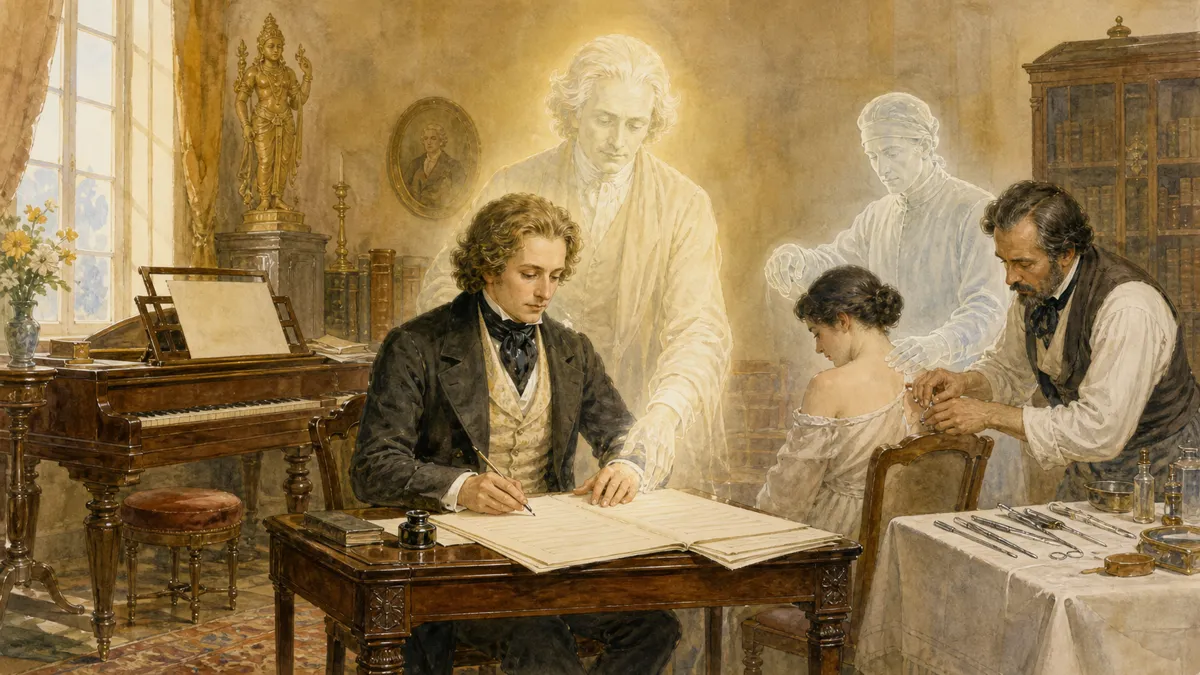
For example, in Peru there is a healer who heals without any knowledge of surgery, like a psychic surgeon. During that time, the spirit of a surgeon from the subtle world enters him, and although he understands nothing about surgery or anatomy, he even performs operations—healing operations, surgical operations. This is aveshkara. Or when the spirit of a musician enters a person, that person can compose music at the level of a classical master. There was a case of a woman who communicated with various musicians—Mozart, Bach, Beethoven—and through her they completed their works. An analysis by the world’s most serious music critics confirmed that an ordinary person could not have written works so fully identical, with similarities in the various harmonics, musical sequences, and style of each great musician.
But in these cases, it is not the realization of the person himself—it is aveshkara. If it is an evil spirit, then it is possession; if it is a normal spirit, then it is aveshkara. But at such times, a person sometimes remembers nothing and does not even belong to himself. For example, there is an oracle of His Holiness the Dalai Lama in Tibet, and this is a long-standing tradition. Systematically, at certain intervals, he predicts the future, and during this time he enters a trance—it is a form of mediumship. The spirit that enters him, which he has invoked, delivers a prophecy, but such a person is not aware of himself at that time: his soul is switched off for a while, and the spirit enters his body. Sometimes such a person remains conscious and acts together with another spirit while his soul is still present, but the spirit suppresses the soul, and he cannot say anything. The soul is aware of everything, but cannot speak or act, as though a second being had entered him.
But sometimes higher souls, divine souls, are very delicate: they do not suppress, they observe ahimsa, and they respect another’s will. If they enter, they do so slightly, unobtrusively, imperceptibly, yet they too bestow inspiration, eloquence, and certain magical powers. A person may express himself poetically, sing, paint, create mantras and yantras, and perform certain practices. But in general, if there is no jnana, no true darshan of the deity, all such people represent various forms of spiritual delusion—forms in which the soul itself is undeveloped, and something or someone acts through it, with someone or something controlling it. The exception is self-realized jnana yogis who perform the highest type of aveshkara. The highest type of aveshkara is samavesha, Shiva-samavesha. Such aveshkara is not the entry of a spirit, a demon, or the soul of a deity—it is the awakening of the Atman and the entry, if one may put it that way, of the highest tattva; this is the descent of Anugraha. Shiva-samavesha is the descent of the five highest tattvas into an ordinary soul, and such a descent is not something external—it is the unfolding of one’s own inner potential, which unties the knots of karma, the kanchukas, and dualistic conceptions. All other types of aveshkara are merely forms of entry and are not entirely desirable, and sometimes completely undesirable.
Amazing Signs at Shripada’s Birth
When Shripada Shri Vallabha was born, a three-hooded cobra hovered above Him like an umbrella for 18 days, wherever He was. He emerged from His mother’s womb as a dazzling radiance. Sumati Maharani lost consciousness immediately after He was born. Auspicious melodies from musical instruments could be heard from the room where the birth took place. After some time, an invisible voice warned everyone to leave the room. The four Vedas, the 18 Puranas, and great beings arrived in the form of bright lights to welcome Shripada.
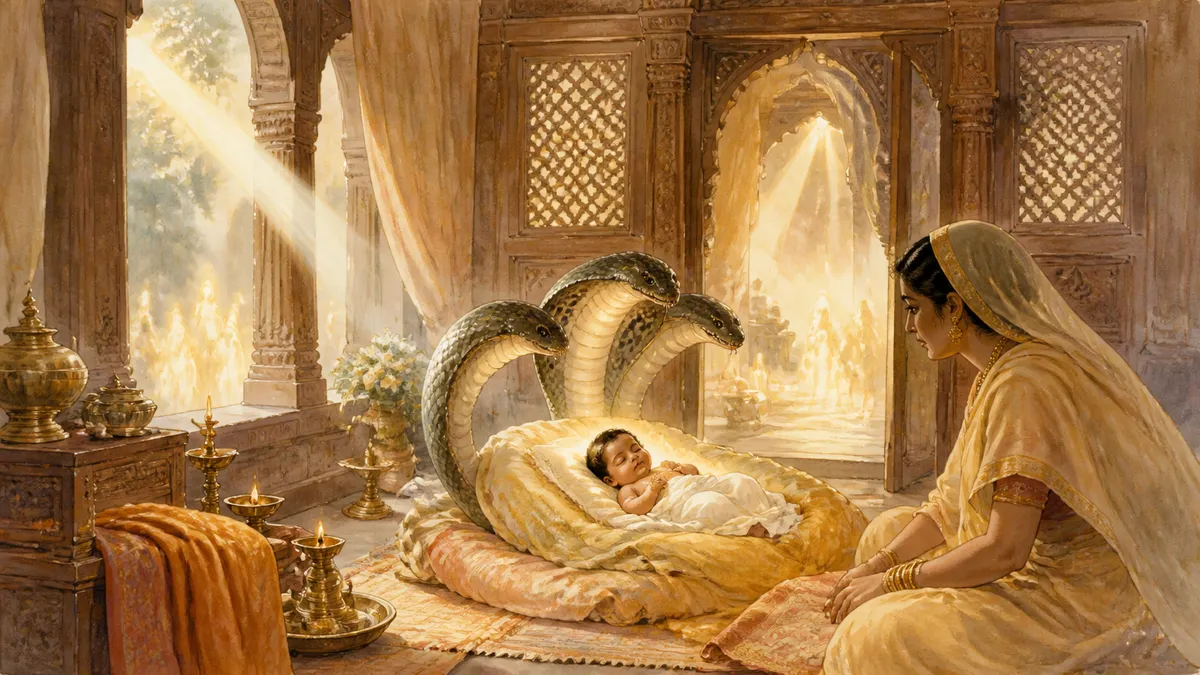
The Vedas and the Puranas are not books but living beings, deities—that is, they are knowledge. The knowledge of saints, the consciousness of saints, the Upanishads, and the Tantras also live in subtle dimensions and subtle bodies, while books are their emanations on the physical plane. Therefore, they can appear in some subtle form and greet saints or avatars.
Sacred Vedic mantras resounded outside the room. After some time, silence descended. This astonishing event puzzled even Bapanaryulu and was beyond his understanding.
The Divine Childhood Plays of Shripada
A year had passed since the birth of Shripada Shri Vallabha. He began attending conferences of scholars with his grandfather, Shri Bapanarya, even though he was only a few months old. Shri Charana used to walk about freely, expound the Sacred Scriptures, and perform miracles while still a very young boy. The residents of Pithikapuram thought that a great scholar who had died had entered the boy and was performing all these miracles. They also thought that Bapanarya and Raja Sharma were mistaken in considering Him an incarnation of Dattatreya instead of providing the boy with proper medical treatment, and that all of this was unacceptable.
Since Pithikapuram is the Padagaya Kshetra, an important sacred site for departed ancestors, and since tantrics who could speak with the souls of the dead lived there, such arguments gained strength. When I arrived from Malayadripuram, I washed clothes in the homes of Shri Bapanarya and Shri Raja Sharma. The washerman who washed clothes in Narasavadhani’s house died of old age. He had one son who moved to Kokanadam, known as Vayasapura Agraharam, so I was appointed to wash clothes in Narasavadhani’s house. Since I had been associated with Shri Bapanarya’s family since childhood, I gradually became a person of auspicious disposition. The flame of spirituality blazed within me. Instead of washing Shri Narasavadhani’s clothes myself, I entrusted the work to my elder son Ravidas. If I happened to see Narasavadhani on any given day, I would suffer an upset stomach and could not even eat that day. I could wash clothes only for families whose intentions were auspicious.
Shripada’s Divine Grace Is Showered upon Tirumala Dasa
Ravidas is my elder son, born to my first wife. Instead of washing Narasavadhani’s clothes myself, I gave them to Ravidas to wash. One day, Narasavadhani somehow found out about this. He ordered me to wash his clothes. The commands of elders must be obeyed. As I washed the clothes, I remembered the name of Shripada. Ravidas took them to Narasavadhani’s house. Strangely, when Narasavadhani put on the washed clothes, he felt as though scorpions and poisonous caterpillars were crawling all over his body. Yet the other members of his family were perfectly fine, and the clothes had no effect on them. Narasavadhani felt as though his body were burning. The clothes felt as though they were made of fire. He sent me a message. He said that through witchcraft I had imprisoned some evil spirit in his clothes and that I would be punished for this terrible deed.
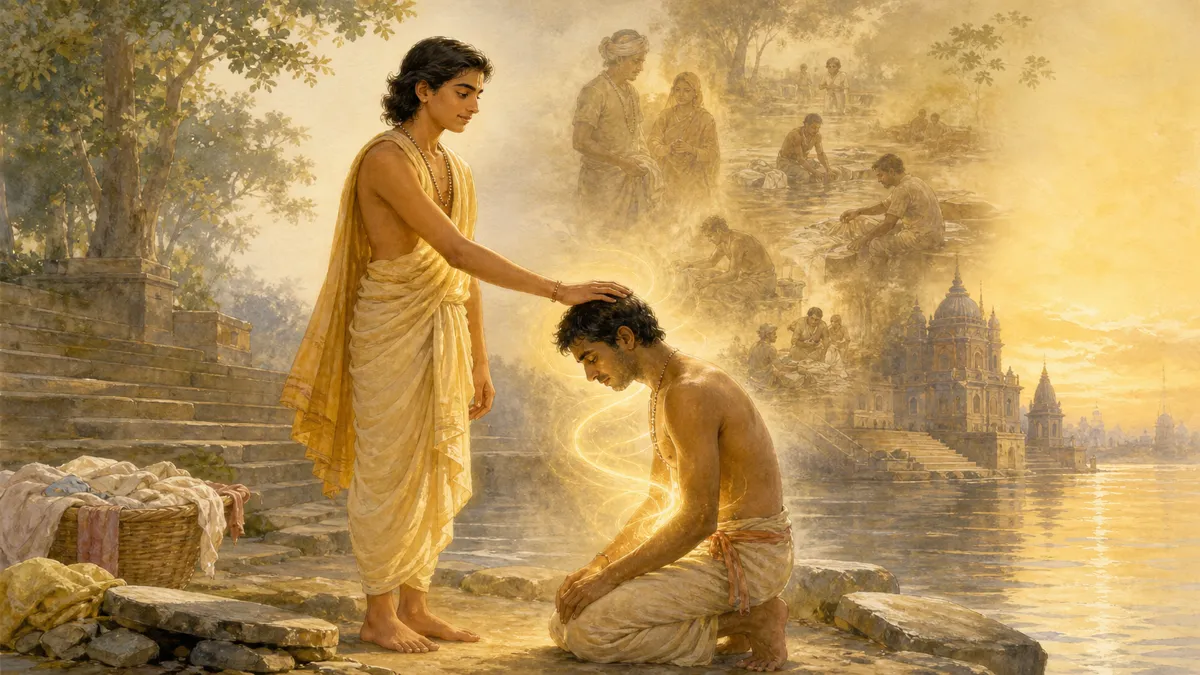
I lodged a complaint with a judicial officer. The judge ruled that I was innocent. My dear Shankar Bhatt, Shripada’s lilas are inconceivable. After I returned home from the judicial officer, Shripada came to our house in the form of a sixteen-year-old youth. From the moment of His birth, Shripada appeared before His devotees at whatever age He Himself chose. All this seems entirely natural to those familiar with Shripada’s divine plays. With immense admiration and astonishment, I said, “Master, You were born into the highest Brahmin caste. You should not come into the community of washermen and washerwomen.” To this Shripada replied, “Who do you think Narasavadhani is? He is a Brahmin carrying a burden of sin comparable to a washerman’s bundle, whereas you are a washerman yearning for knowledge of the Absolute. Therefore, you are an excellent Brahmin, so there is nothing improper about My coming here.”
Then I fell at Shripada’s feet and wept. Looking at me with His nectar-filled eyes, He raised me from the ground with His divine hands. He placed His divine hands upon my head. Then my entire past life returned to my memory. The yogic powers within me were set in motion. Kundalini Shakti awakened. Shripada quietly departed with slow steps.
The Story of Totakura and the Falling of the Shikha
Narasavadhani grew totakura (amaranth). The totakura grown at his home was very tasty. He would not give the vegetable to anyone, no matter how much they asked. Only when he thought that he might gain some great benefit from someone would he give that person some totakura. Shripada asked his mother to prepare totakura curry for him. He asked her to obtain the vegetable specifically from Narasavadhani’s house. This seemed impossible. His grandfather Bapanaryulu said, “Dear Shripada, tomorrow morning you had better ask Narasavadhani yourself to give you some totakura. I will carry you to his house. If Narasavadhani does not agree, you should not insist.” Shripada agreed.
The next morning, Bapanaryulu carried Shripada to Narasavadhani’s house. Bapanaryulu told Shripada that children should respect their elders and ask for their blessings. Shripada agreed. Narasavadhani was sitting on the veranda of his house. He had a shikha on his head. Just then, a barber came there to shave Narasavadhani. Shripada, who was sitting on his grandfather’s shoulders, saw Narasavadhani and greeted him with folded hands. Narasavadhani was bewildered by this unexpected situation. Shripada’s piercing gaze fell upon Narasavadhani’s shikha. Narasavadhani’s shikha fell off by itself.
He was confused and could not understand how this could have happened. Then Shripada said to his grandfather, “Grandfather, the shikha on the crown of Narasavadhani’s head was very dear to him. Now it has fallen off by itself. It would not be very proper for me to ask him for the totakura that he loves so much. Why should I subject him to even more suffering when he is already experiencing great sorrow? Let us go home!” After that, Shripada never asked for totakura again.
The Vision of the Punya Sharira and the Loss of Merit
Narasavadhani decided that Shripada had merely been pretending when he joined his hands as a sign of respect toward him. While Narasavadhani was sitting in meditation, a luminous man who closely resembled him emerged from his body. Narasavadhani asked him who he was and where he was going.
The luminous man said, “I am the punya sharira (body of merit) within your body. You have recited the Vedas many times. You worshipped the self-manifested Datta. When that very Datta incarnated as Shripada, you insulted Him. If you had even one ten-thousandth of the love and attachment for Shripada that you feel for your totakura and shikha, your birth would have been redeemed. The destruction of attachment is liberation. You are bound by the fetters of attachment. Soon you will face poverty. To prevent this, Shripada wanted to accept a donation of vegetables from you. If you had offered Him totakura as requested, the impending poverty would have been neutralized. Moreover, you would have attained wealth. You yourself destroyed such an opportunity. Even so, Sri Datta is an ocean of grace. He is going to conceal His present incarnation and assume another. At that time, you will be born as a poor Brahmin, and even then you will grow totakura at your home. At the appropriate time, I will re-enter your body. After that, Shripada will visit your home and eat the totakura curry prepared and served with love. He will grant you wealth. For now, however, I am leaving you.
Thus, this was the prototype of the divine illusory body that Narasavadhani had obtained as a result of his upasana, practices, and mantras. But at that moment, because of a violation of samaya, his divine body departed from his perception; one might say that it left him. “Left” means that his connection with this divine body was severed, and this divine body ascended higher, while Narasavadhani’s mind remained disconnected from it. It was not destroyed but remained waiting for the next incarnation; that is, Narasavadhani’s realization departed, his liberation—sarupya mukti, salokya mukti, or samipya mukti—departed because he made a mistake in relation to Dattatreya in the form of a boy, failing to recognize Him. In the same way, we must be very attentive with regard to our own life, samaya, pure vision, and connections, so that our own realization may never leave us.
Shripada’s greeting was not meant for you. It was a sign for me, the embodiment of your merit, to leave you and merge with Him. By accepting Shripada’s greeting, you lost the merit embodied in my form that dwelt within you. Only the personification of sin remains within you.” Having said this, the punya purusha merged with Shripada.
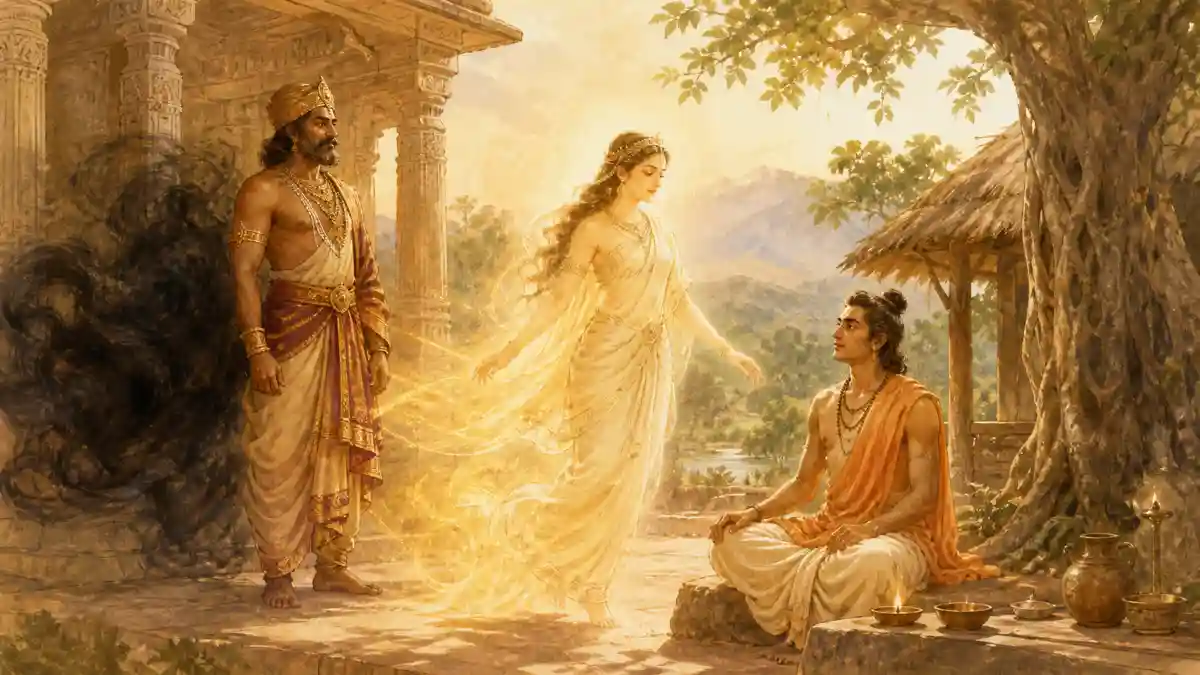
It is believed that if a younger person accepts respect or signs of attention from an elder of a higher spiritual level, the younger person's merit is lost, and therefore this is considered a mistake. Narasavadhani's merit passed to Dattatreya at the moment when he received Dattatreya's greeting with impure thoughts. If his thoughts had been pure, this would not have happened when he received Dattatreya's greeting as one coming from a younger person.
The Cholera Epidemic and Spiritual Insight
From then on, Narasavadhani's living conditions deteriorated. No one paid attention to his words. The radiance that had once characterized his body disappeared. Cholera spread through Pithikapuram. Many people were dying. The doctors concluded that bacteria were multiplying due to water contamination and that this was the cause of the epidemic's spread. Overcome with fear, the people prayed to Bapanarya to save them from the terrible affliction and to find measures prescribed by the Holy Scriptures for the people's welfare. They asked him to take appropriate action immediately. Sri Bapanarya examined the problem with his inner vision. He discovered that the disease had been caused by air pollution, not water contamination. The doctors responded sharply that Bapanarya's statement contradicted the principles of medicine and was therefore unacceptable. The people performed various pujas to the village goddess and made numerous animal sacrifices to appease her.
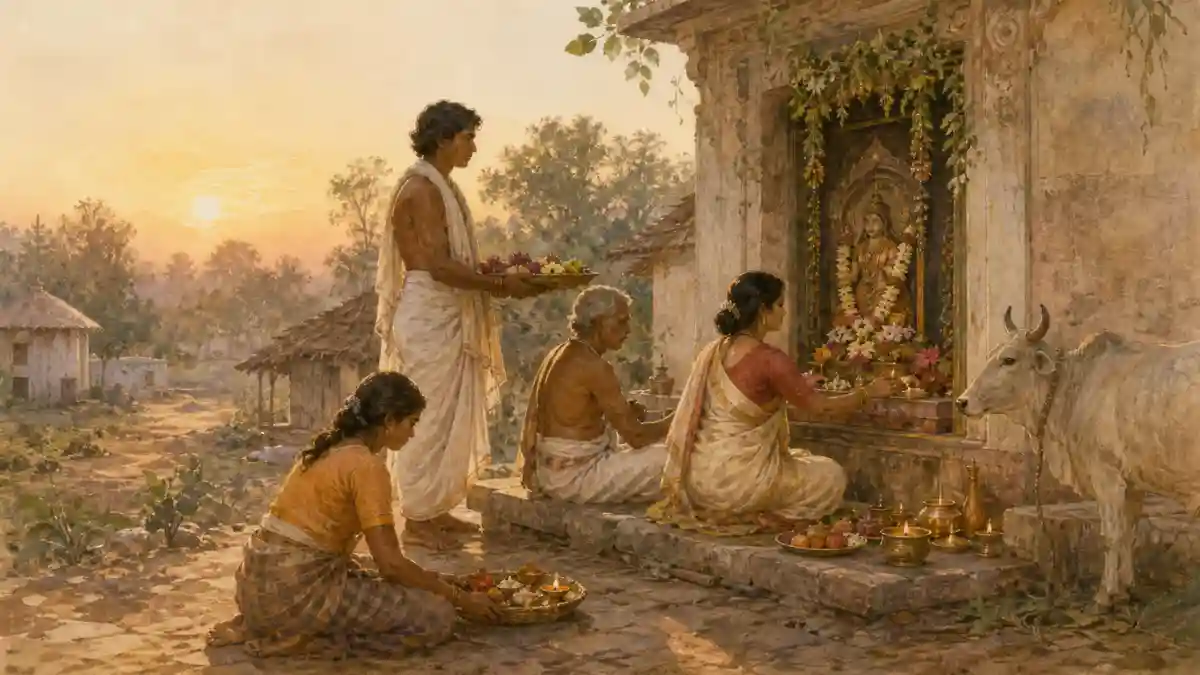
Bapanarya explained that Gramya-devata is the village goddess. Every locality has its own presiding deity. The deity of a locality is responsible for its forests, mountains, and rivers; it maintains the balance of forces and energies and controls the spirits in those places. Therefore, offerings are sometimes made to such deities, or they are worshiped so that the locality may prosper. If the village deity leaves, drought and devastation befall the area, evil spirits begin to inhabit it and torment people's souls, and diseases appear.
Sacrifices and Alternative Methods of Worship
When an animal is killed, its life force is forcibly released. Through the recitation of mantras, this life force is brought under the control of the person offering the sacrifice. Bapanarya stated that there are many yogic practices for increasing pranic power and that there are many sattvic forms of worship. Sattvic methods of worship were to be used to appease the village goddess.
