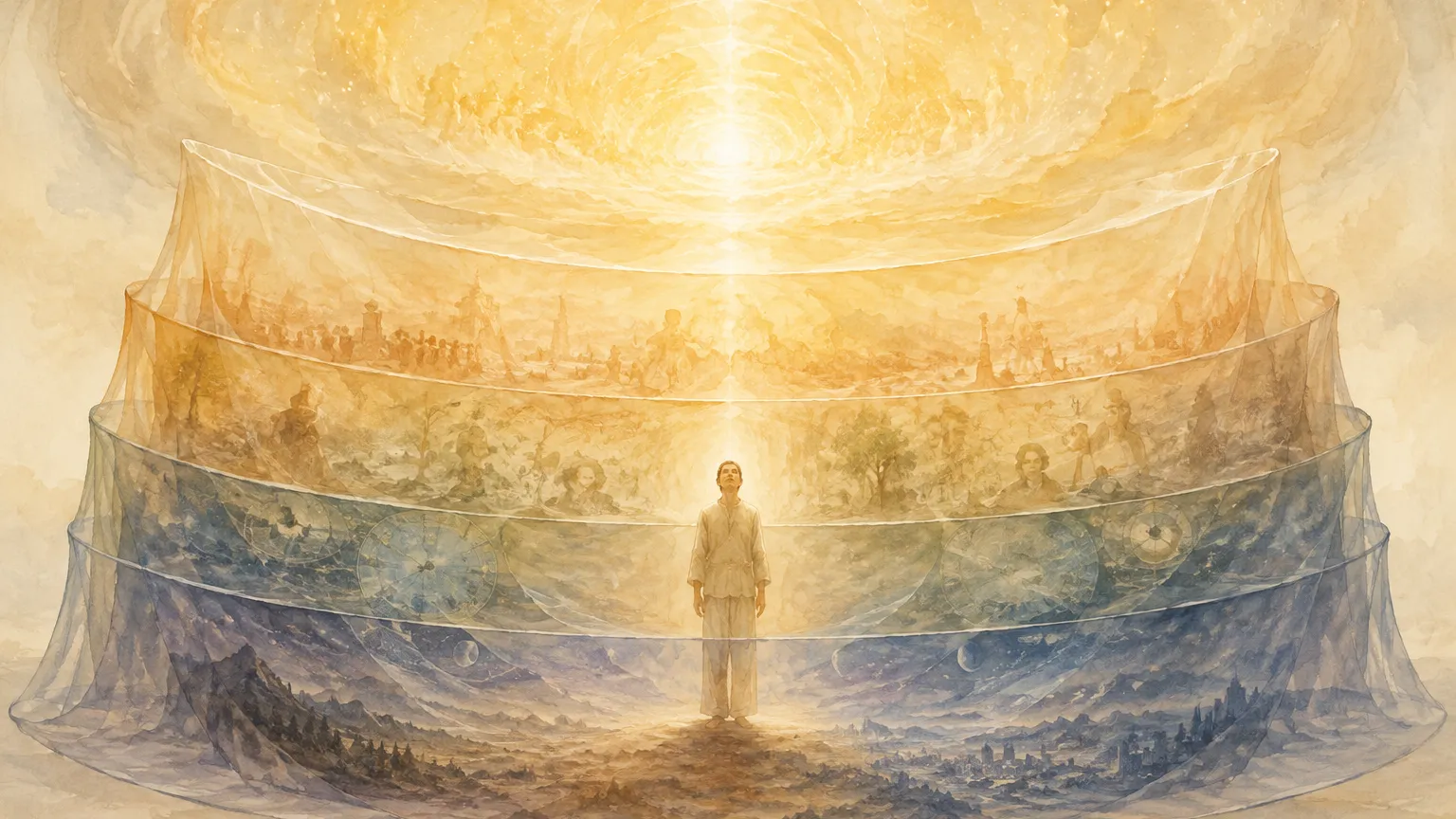
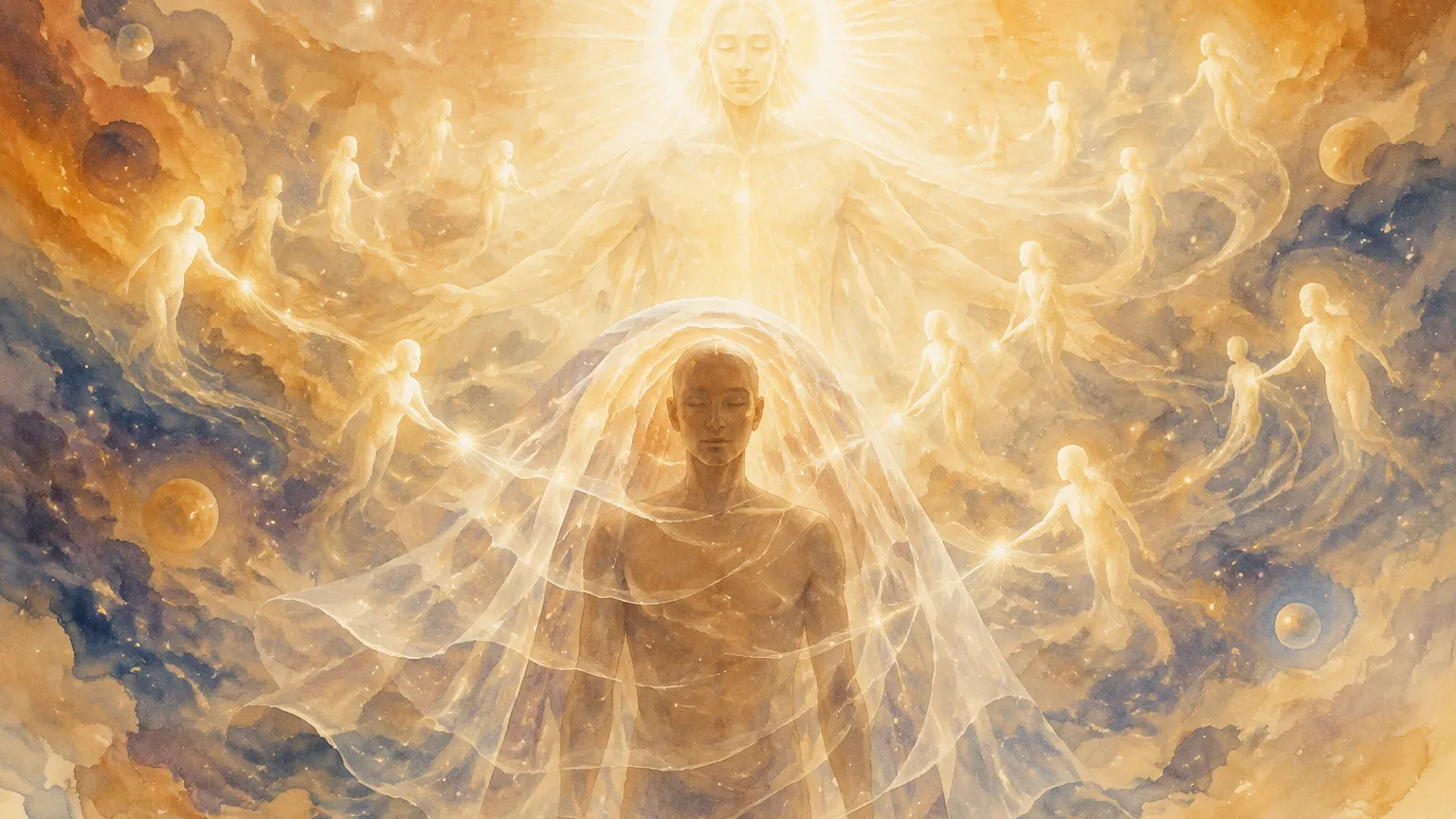
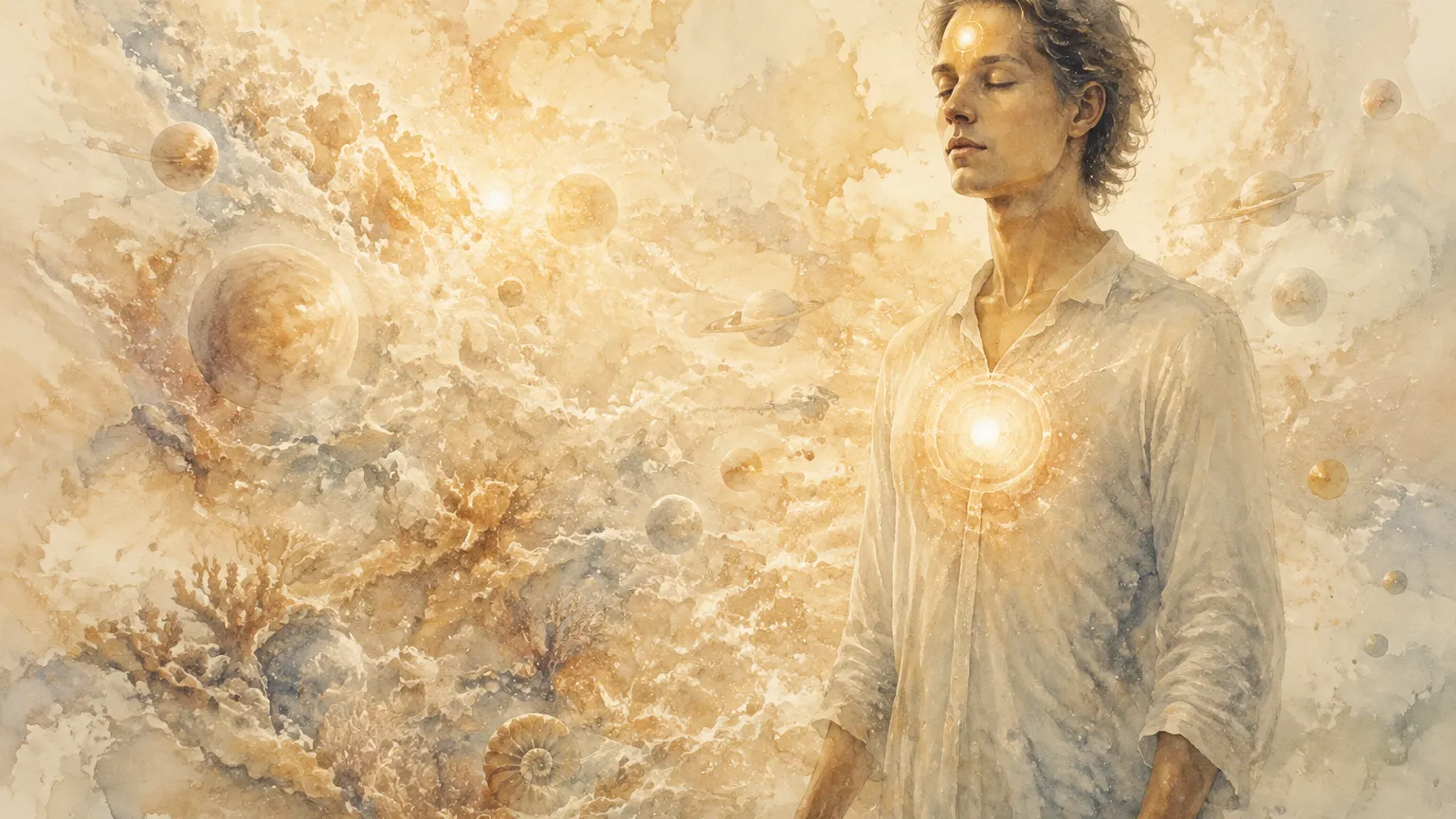
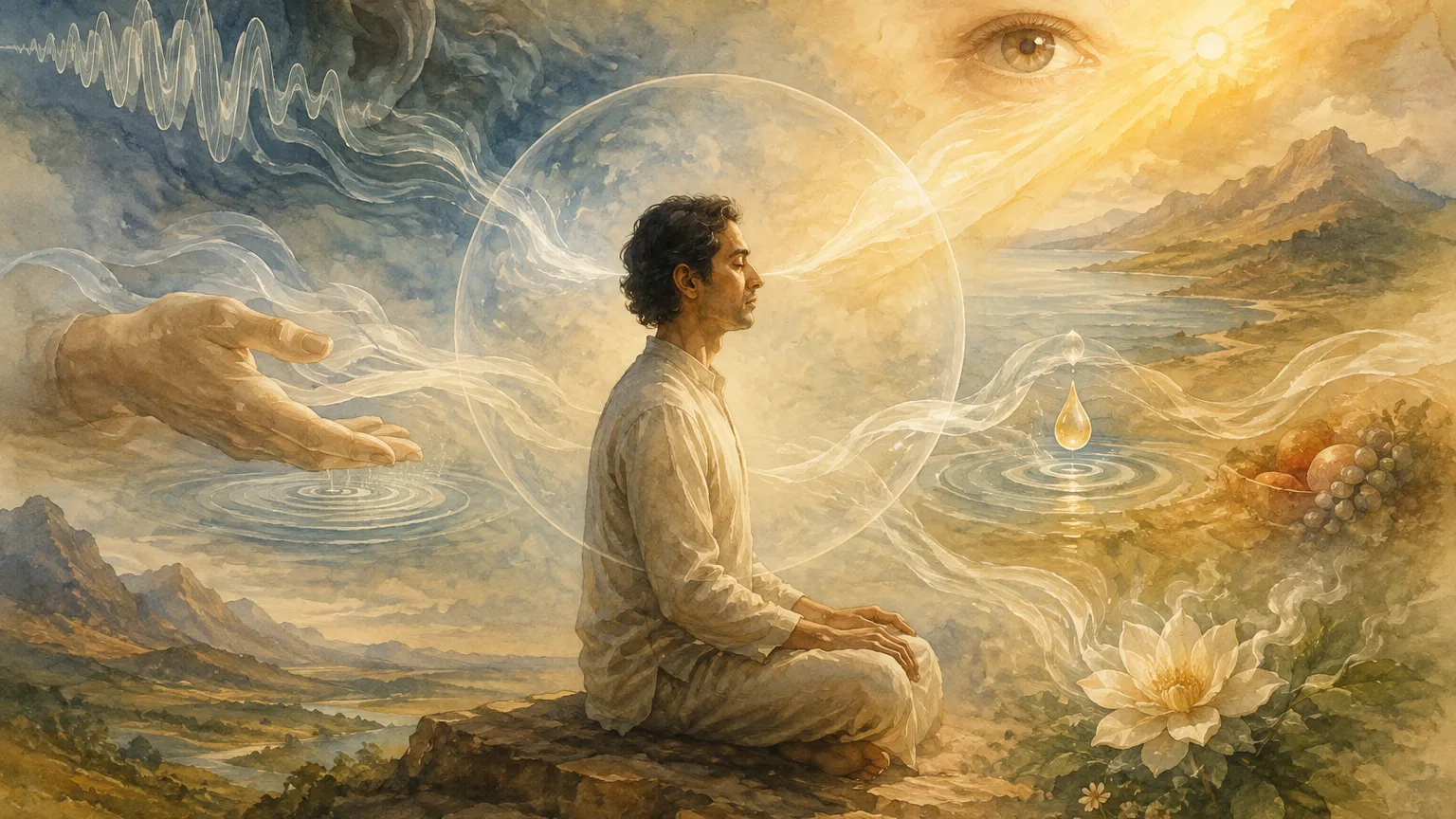
Divine Technologies and the 36 Tattvas of Consciousness
03.09.2026
0 мин. чтения
0
Share
copy
search
add
share
When we perform pranam, dandavat, padanamaskar, or namaskar, the purpose is to synchronize with the consciousness of the one to whom we are showing respect: a guru, sadhu, deity, or saint. It is the synchronization of consciousness, attunement. If you have a phone and a laptop, a message pops up: synchronize data? If you agree, you confirm, synchronization takes place, and the laptop and the phone contain the same data. The same applies if you have a guru or an ishta-devata: a prompt appears—synchronize data? Yes, and then everything the Guru possesses flows to the disciple; everything the ishta-devata possesses gradually, not immediately, flows to the upasaka—the worshipper. It is the same principle.
A Sadhu Is a Programmer of Divine Reality
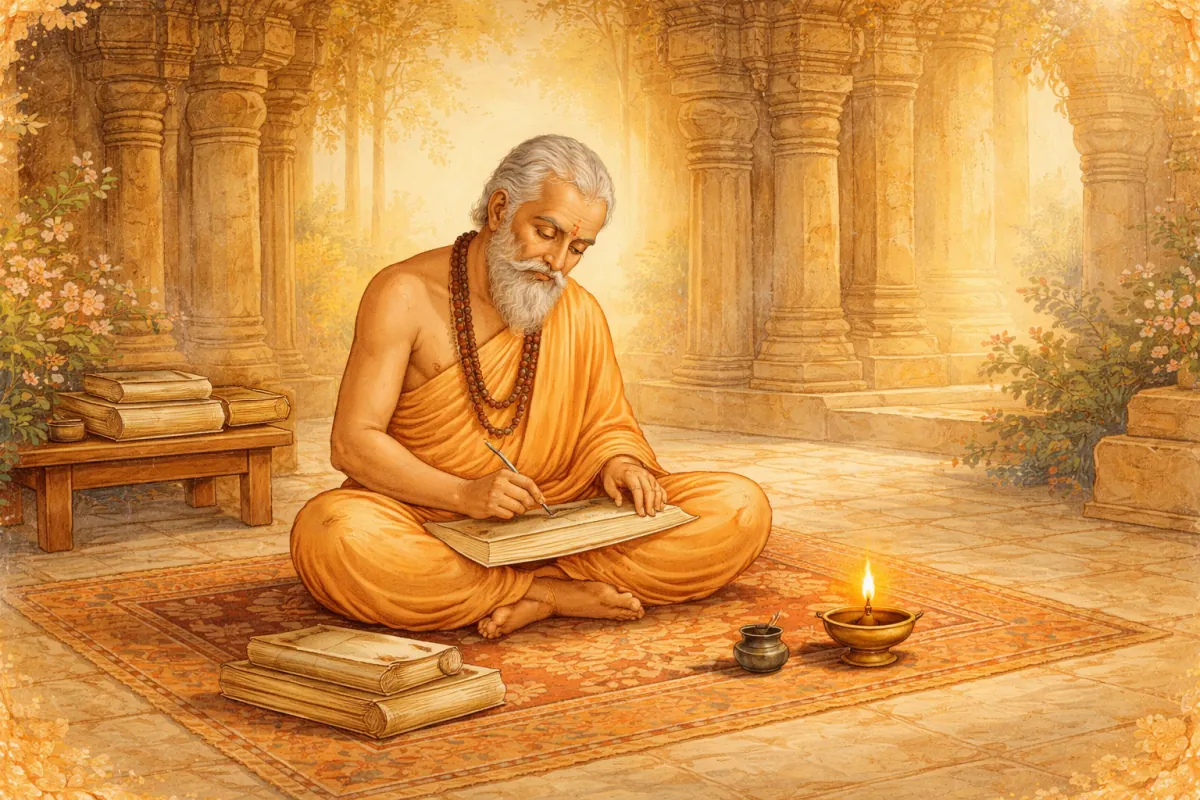
The Vedic tradition mastered advanced spiritual information technologies many thousands of years ago and has never parted with them. It is only now that humanity is beginning to approach these information technologies at a rudimentary level. Guru yoga, upasana, and bhakti yoga are all ways of synchronizing with God. The same happens when we read and comment on texts—it is synchronization with the deity of the text. Sometimes, before certain texts are read, kara-anga-nyasa is performed, the rishi of the text is visualized, and mental contact is established with him in order to deepen one’s understanding and receive shastra-kripa. Then reading the text is no longer merely reading, commentary, or the study of philosophy, but contact with the consciousness of the rishi who wrote it, resulting in kripa—the descent of grace and blessings. These, too, are divine, subtle informational methods of establishing a connection and transmitting divine data into the stream of our consciousness. This is what we are engaged in.
In fact, a sadhu is a specialist in divine information technology, a programmer and expert. What are earthly programmers who write earthly computer programs like? They are like workers with sledgehammers. That is how subtle divine technologies are compared with earthly programming technologies.
We must continue studying this art, perfecting our mastery more and more, and become programmers of divine reality. Whom or what should we program? Ourselves, our destiny. We must log into our account, access our profile and database, and write a new divine program—not by ourselves, but with the help of the deities, with the help of the ishta-devata—and cancel our old karmic program, erase our entire browsing history of hells, hungry spirits, and negative places, our entire history—all our samskaras. Our samskaras are our history.
If you visit a website, various traces remain, and any specialist can access and examine them, even determining the direction and angle at which the cursor moved across the screen, which aspects of a particular website you interacted with most frequently, and even the trajectory of the mouse—how you moved it. All of this remains; every trace remains.
In the same way, when we visit certain realms with our mind—and with our mind we do the same thing: we browse the vast internet of the universe, the subtle world. The entire subtle world is a vast global network, only much subtler, and there is a history of our visits not only in this life, but also in past lives. All of this is preserved. We logged in again, created a new account, were reborn, but the history remained. Divine information technologies are so profound and powerful that no one can deceive them: we received a new body, a new appearance, and a new name, but the history remained. The entire history of our visits to other worlds remains; all our thoughts remain, our mental visits, physical visits, contacts—everything we have done and said, everything we have uploaded into the subtle world. All our actions, all our mental records, our emotional records in the form of samskaras and vasanas—all of this remains; all of this is our history.
The deities—the officers of karma from the divine “Ka” department—review all of this and, accordingly, assign us a rating and an assessment and prepare the places of our future birth. But we must become such skilled programmers of our own reality that we erase this entire history—everything, leaving nothing, an empty account, no traces whatsoever. We must have nothing at all to do with this network. It is a gigantic global network of illusions called “Indrajala”—the web of illusions created by Indra, the lord of the universe. We must separate ourselves from this network and say: that is it; I am no longer bound by these laws and these rules; I exist according to the principle of turiya. These are the advanced Vedic technologies, and our task is to perfect the art of purifying our karma—Brahma-jnana.
Commentary on the text “Yoga Vasistha.” Chapter 6. “The Story of Ikshvaku”
Vasistha continued: “Your ancestor Ikshvaku, while ruling the kingdom, once reflected: ‘What could be the source of this world, filled with various forms of suffering—old age, death, pain—as well as pleasures and ignorance?’—but could find no answer. After offering the customary salutations, he approached his father Manu, the son of Brahma himself, and asked him: ‘Your wish prompts me to ask you a question. What is the origin of this world? How can I free myself from the succession of deaths and births?’
Manu replied: ‘Nothing that you see here exists, my son, nothing! Nor is there anything invisible or beyond the perception of the mind and senses. There is only self-awareness, infinite and eternal. Because of the energy inherent in cosmic Consciousness, this reflection is seen here as the cosmos, and everywhere as living beings.’
All the physical matter surrounding us is, in fact, not entirely physical—it is permeated by the emanations of Ishvara, infinite self-awareness. These emanations are the three gunas: tamas, rajas, and sattva. Depending on our abilities, we may be better able to discern either sattva-guna, rajas-guna, tamas-guna, or a combination of them. The purer our mind, the greater our ability to discern sattva-guna and the less susceptible we are to the influence of rajas-guna and tamas-guna. The classification of living beings along the hierarchical ladder of the universe is directly related to the proportions of the gunas and to viveka—the ability to discern a particular guna and act in accordance with it.
Sattva and Pure Vision: From Purification of the Mind to Recognition of Ishvara
The discernment of sattva-guna bestows great advantages, such as willpower, awareness of nonduality, awareness of emptiness, supernatural abilities, and many other things. Therefore, we should purify the mind as much as possible in order to learn to discern sattva-guna clearly within ourselves and in the external world. When we discern sattva-guna, this is called pure vision—the capacity for pure vision. The discernment of sattva-guna gives us control over the mechanisms of our own karma and our own mind, and is called the taming of the mind. This prepares us to discern even deeper essences, such as Brahman, Brahma-tattva—the transcendent reality—because sattva-guna is the closest to transcendent reality. Transcendent reality is visible through sattva-guna. It is as though your mind has become clear, transparent, and pure, and minor impurities no longer distort your perception of the world.
In a state of rajas-guna or tamas-guna, cognitive distortions are strong—the perception of reality is severely distorted. The more sattva-guna there is within us, the fewer such distortions there are.
For example, animal consciousness is more distorted than human consciousness—there is much rajas-guna and tamas-guna, and perception is distorted. Distorted perception is extremely narrow, clouded, undeveloped, and subject to instincts. In such a state, animals assess reality incorrectly and make erroneous decisions, but beings whose consciousness is close to that of animals do not realize that they assess reality incorrectly and misjudge their place in the universe. Among animals, too, some are more intelligent and others more foolish, but for the most part, being intelligent among animals means being strong. Mental strength manifests as physical strength, because animals live not so much by the law of reason as by the law of power—shakti. But the more advanced beings discern sattva, the more consciousness begins to dominate.
Humans have fewer cognitive distortions than animals, and therefore animals obey humans, whether they want to or not—no one asks them. Humans can easily impose their will on animals thanks to their wisdom. For example, when a cat opens a door by pressing the handle with its paw, everyone is delighted: imagine that, the cat opened the door! But when a person opens a door, no one is delighted, because human consciousness is much more powerful, and opening a door by hand is not at the level of its true capabilities.
But the consciousness of the gods is even more powerful, and it contains even fewer distortions—cognitive distortions in terms of knowing the world, their place in the universe, and understanding its energies. Human consciousness, by comparison with that of the gods, is distorted, so humans do not perceive reality as deeply—they have less sattva. Therefore, when people practice tapasya and realize something, the gods are also touched. They look and think: just imagine, what a human being! Much as we are touched by a cat that... Sometimes a crow manages to turn a jar over and get the grains, and everyone marvels at how clever the crow is to be able to do that. It is the same with people—the gods are touched by humans: just imagine, they recite mantras and practice tapas. Because they know that people are ordinarily prone to strong cognitive distortions, to rajas and tamas.
The great gods are free from all cognitive distortions, which is why they hold dominion and are worshiped by the lesser gods. The lesser gods deify them, serve them, and seek refuge and protection in them; they cannot imagine their lives without them. They know that their entire life is in the great gods, such as Shiva, Vishnu, Lakshmi, Saraswati, and Ganesha. All lesser gods are subordinate to the great gods precisely because the great gods have no distortions—they are fully established in sattva. The lesser gods, although they possess sattvic vision, still have certain impurities and do not fully recognize Shakti. This is precisely what determines their place in the universe.
Finally, all the great gods deify Ishvara; they all revere Ishvara and cannot imagine their lives without serving, worshiping, and venerating Ishvara—this is their way of life; it is natural to them. They know that they depend entirely on Ishvara. They do not take a single step without praising, venerating, and worshiping Ishvara, meditating on Ishvara, and abiding in the samadhi of unity with Ishvara, because they are parts of him. They know this—they have no ignorance.
We humans, for example, do not understand that we are parts of Ishvara. Even a sadhu has to practice a great deal to understand this, and as for those who are not sadhus, that is entirely out of the question.
Four Types of Calluses
For a sadhu to understand unity with Ishvara, he must earn four types of calluses. What are these four types of calluses?
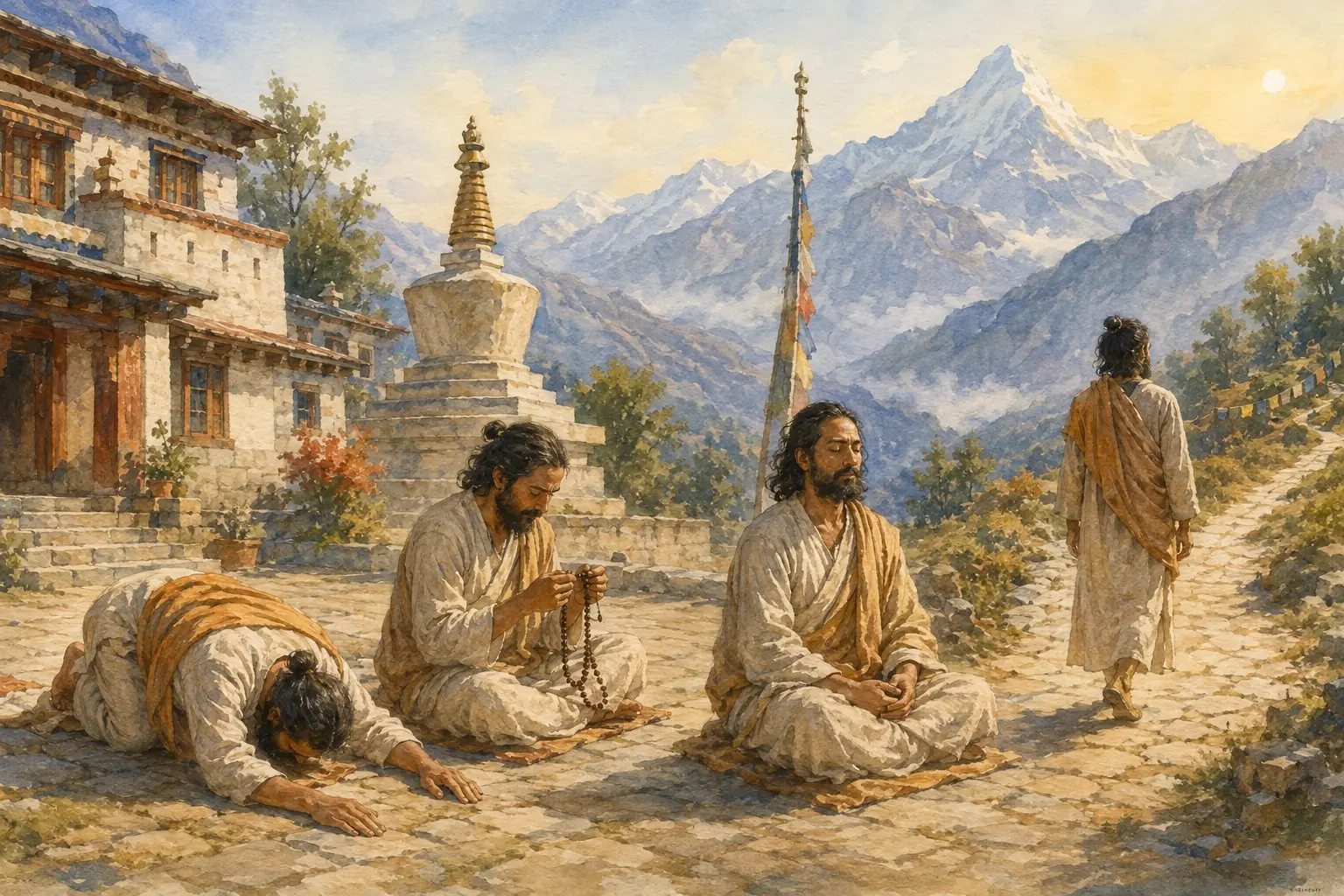
In charya-pada, these are calluses from bowing and prostrating, from touching the ground with eight parts of the body: on the knees and elbows while performing prostrations.
In kriya-pada, these are calluses on the thumb and middle finger from reciting japa: “Om Namah Shivaya, Om Namah Shivaya... Om Sat-Chit-Ekam Brahma, Om Sat-Chit-Ekam Brahma...”
In yoga-pada, these are calluses on the buttocks from sitting in mahashanti. Milarepa once said to his disciple Rechungpa in a cave while transmitting the teaching: “Now I will reveal to you the most important secrets of the teaching.” He took off his trousers, lifted his skirt, and showed him his buttocks—they were covered in calluses. He said: “Do you see these calluses? This is the main secret of my teaching—tapas and meditation.” When we sit in seated meditation—mahashanti, shambhavi mudra—we put this secret into practice.
Finally, the fourth type of calluses, in jnana-pada, are on the feet, from walking kilometers and tens of kilometers in deep contemplation, practicing chankramanam—contemplative walking.
The first type is characteristic of charya-pada, the second of kriya-pada, the third of yoga-pada, and the fourth of jnana-pada. This is the key to realization—the four types of calluses.
“There is neither bondage nor Liberation. There is only the one infinite Consciousness, which is neither one nor many. Cast aside all thoughts of bondage and freedom, and be at peace.”
Manu continued: “When concepts and definitions arise from pure Awareness within that very Awareness, it begins to consider itself an individual. Such individuals wander through this illusory world. In a moment of insight, that which is ordinarily unseen becomes visible; likewise, in individual experience, it is possible to behold the pure experience of infinite Awareness. But this knowledge cannot be read in books, nor can the help of a guru provide it; it can only be attained by oneself, for oneself.
Regard your body and sense organs as instruments for gaining experience, not as yourself.”
This means that there is a part of the work done by God, a part done by the ishta-devata, and a part done by the guru, but there is also our part of the work—and no one can do it for us. The help of God, the ishta-devata, and the guru concerns precisely the part related to their work—it is grace, blessing, transmission. But there is also a part of the work that we ourselves must necessarily do, where the shakti of the guru, the ishta-devata, or God will not intervene. We must exert as much effort as possible in doing our part, and we must open ourselves to the shakti that blesses us. When our efforts and this openness come together, realization occurs.
“The belief ‘I am the body’ is a delusion, and the seeker must avoid delusions. ‘I am nothing but pure Awareness’—such an understanding, if one succeeds in sustaining it, facilitates Liberation and Enlightenment.”
Divine Nourishment and Nitya-dita
The term nitya-dita is used in reference to the Supreme Consciousness, Bhagavan, Ishvara, Lord Dattatreya. Nitya-dita means eternally ascending, that which is always rising, always abiding in an exalted state. The consciousness of an ordinary person or ordinary beings sometimes rises and sometimes falls, but this Consciousness is that which is eternally ascending.
Another term is phata or phatara, phatara-phatarika—that which nourishes all living beings, the Lord who nourishes all living beings. We live by virtue of God’s nourishment. Someone may think that they have never considered this—normally, the head cook in the kitchen provides the food. In fact, nourishing the physical body concerns only the gross aspect of food, while true nourishment occurs through the Atman, through the light of the Atman.
The light of the Atman nourishes the subtle structures of the causal body; buddhi absorbs this light; the causal body nourishes our subtle body; the antahkarana and manas absorb this light—and through this, the subtle body is sustained and enlivened. Finally, the subtle body nourishes the pranic body—the pranamaya kosha—and the pranic body sustains the physical body. Physical food also nourishes the physical body, but it is not the primary source—it serves as supplementary, balancing nourishment.
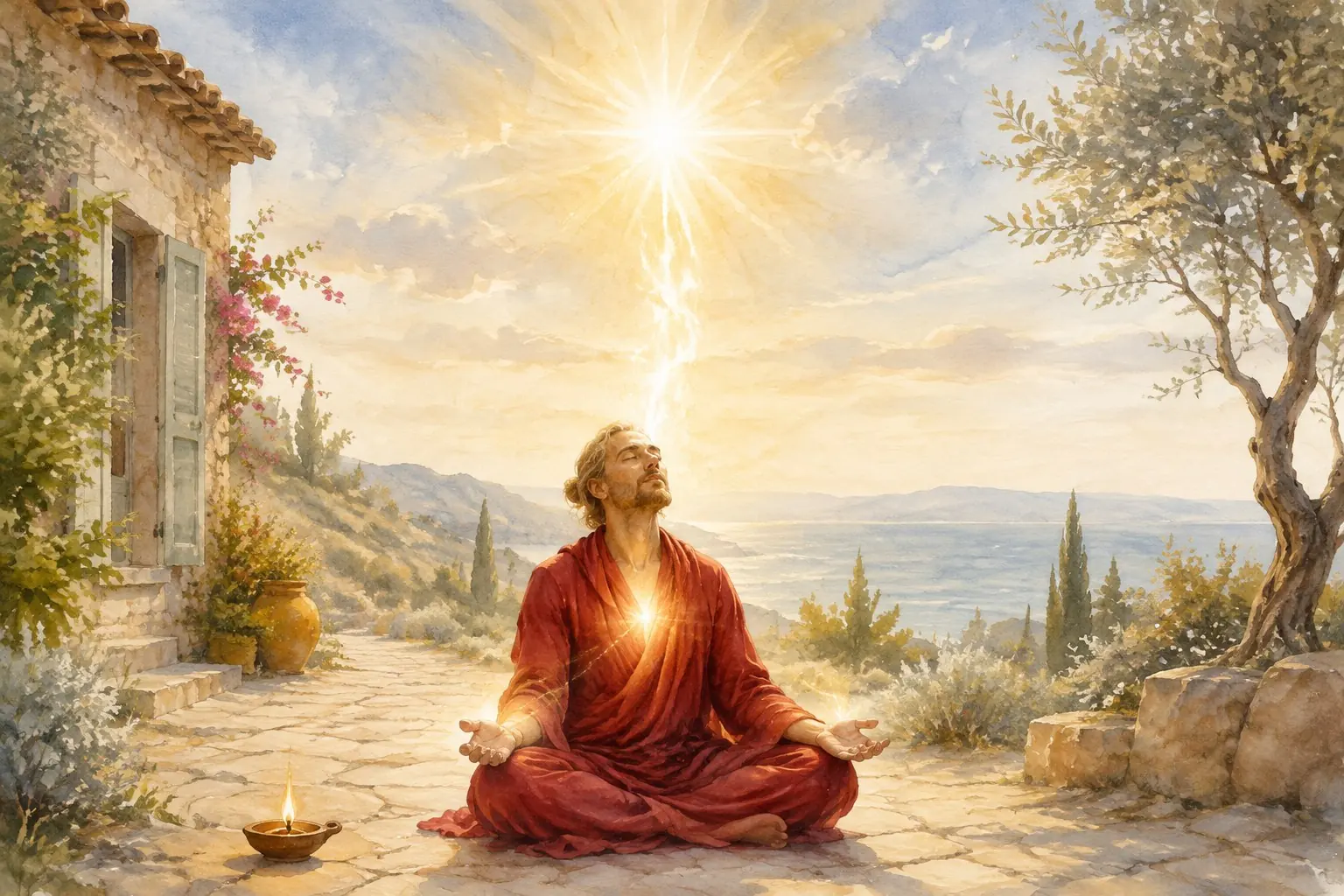
For example, there are people who can go without food altogether for a long time—there are few of them, but such people do exist. This means that if one’s pranas are pure and the subtle body is properly regulated, a person can live without food, but they cannot live without nourishment from divine light. Such nourishment by divine light occurs in people mainly during dreaming, or rather, in the phase of deep sleep, when all living beings enter sushupti. Alternatively, if you contemplate well and realize the state of jagrat-svapna and then jagrat-sushupti, such nourishment can occur while awake, in the waking state.
Shiva and Shakti—the Source of All Manifestations
“Until you understand that you are Consciousness, free from birth, old age, and death, you will moan: ‘Alas, I am dying,’ or ‘Woe is me, my situation is hopeless!’ Such thoughts only strengthen ignorance. Free your mind from impure thoughts and concepts. Remain as yourself, without such concepts. While engaged in various activities, abide in a state of equanimity and govern your kingdom in peace and happiness.
Consciousness amuses itself by creating the appearances of worlds and then absorbing them back into itself. The power or energy that binds one to this world is the very same power and energy that dissolves what has been created and liberates. Just as a tree comprises all its parts and leaves, so infinite Awareness pervades the entire Universe. Alas, an ignorant person does not understand this, although Awareness is present in every cell of their body. One who sees that Awareness is everything enjoys infinite bliss.”
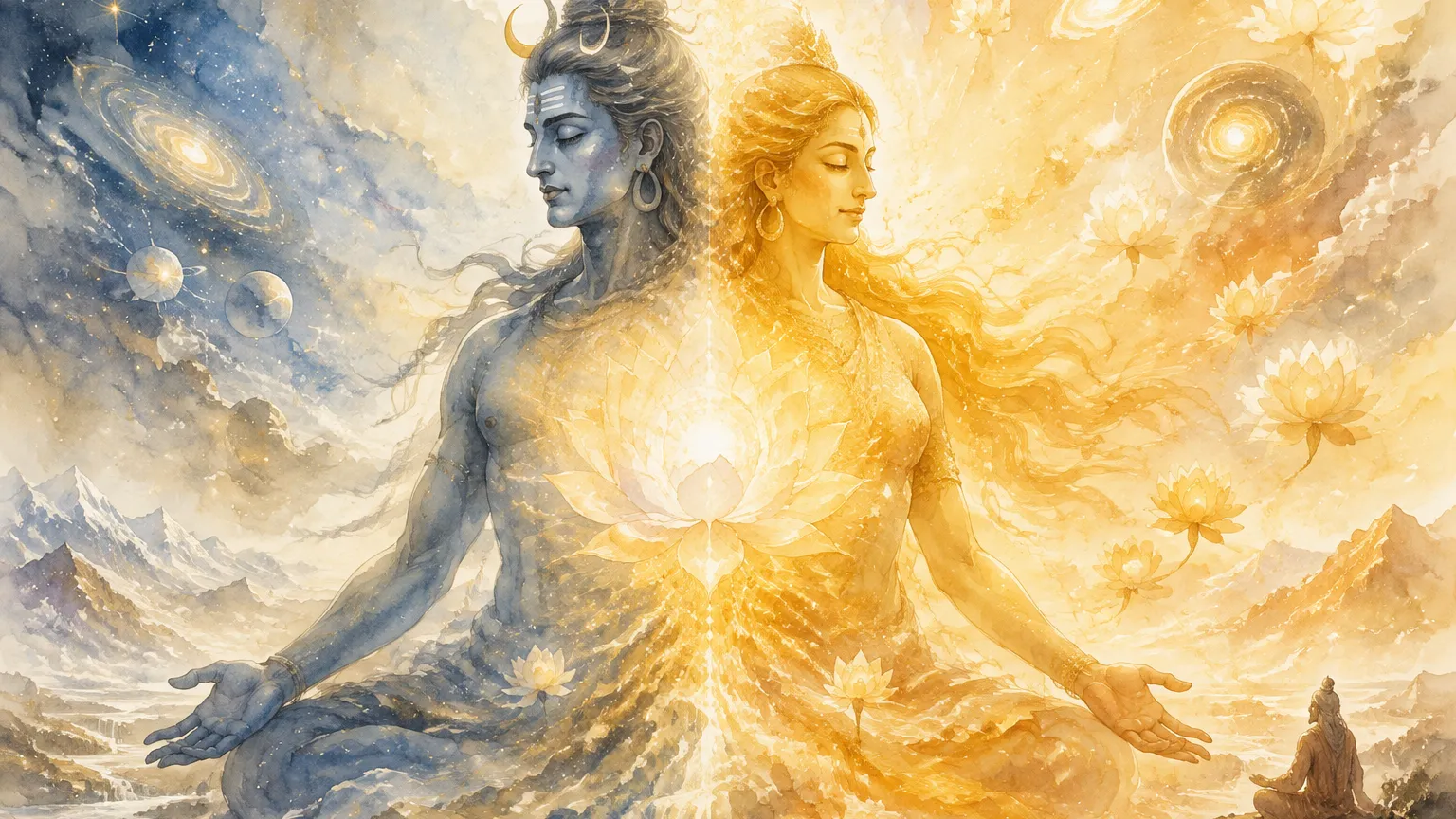
This Consciousness that pervades the entire universe is Shiva. Shiva is the supreme principle, universal consciousness, in which chit predominates. Chit is consciousness itself. Shakti is conscious energy, inseparable from Shiva. In Shakti, ananda—bliss—predominates. These two tattvas are the source of all other manifestations.
Meditation on the first five pure tattvas is very important for a sadhu when we consider the philosophical tradition of the Southern lineage. Liberation is concealed within the five pure tattvas, and our task is to recognize these five pure tattvas in our lives and realize them.
Sadashiva Tattva—the Beginning of the Experience of the World
“The supramundane manifestations are the shuddha tattvas. Sadashiva means the Ever-Benevolent One. In this tattva, ahanta, or ‘I-consciousness,’ and iccha, or will, predominate. Idamta, or ‘This-consciousness,’ is insignificant here. It is also called sadakhya tattva because this is the state in which the first notion of being appears. This is the beginning of the experience of the world. At this stage, the world appears indistinct; the consciousness of this stage is Aham Idam—‘I am This.’ Here there is no distinction between ‘I’ and ‘This.’ This is the stage of perfect identity.”
Thus, the third tattva after Shiva and Shakti is Sadashiva Tattva, where there is “I am” consciousness and iccha—will. These cosmic tattvas reflect the cosmic processes of global consciousness and the way the universe unfolds. However, they are connected with each of us, since every moment we experience all the tattvas within our own consciousness.
For example, when we wake up in the morning, the phase of deep sleep corresponds to certain deep tattvas, certain higher tattvas, all the way up to Shiva Tattva, but we are not aware of ourselves within them. We enter Ishvara Tattva, Sadashiva Tattva, Shakti Tattva, and Shiva Tattva unconsciously, but we become completely lost there. They are so subtle that our buddhi is incapable of either remembering or understanding where it is, and it simply switches off; therefore, we sleep and remember nothing.
But as our awareness grows, our mind is purified, and our mechanism of perception becomes more refined, we can perceive these subtle pure tattvas. It is these subtle pure tattvas that give us the experience of light, the yoga of light, and conscious dreamless sleep. It is they that carry the liberating powers: jnana, iccha, and kriya. It is they that bring about the opening of the mind and all the beneficial qualities that grant us liberation, enlightenment, and immortality.
These five pure tattvas contain:
svatantrya—divine freedom of will
nityatva—eternity, infinity, immortality
vyapakatva—omnipresence
sarvajnatva—omniscience
aishvarya—omnipotence
As the mind becomes saturated with the energy of these five pure tattvas, consciousness changes its identification. It ceases to be conditioned by the physical and subtle bodies and identifies itself completely with these five tattvas, becoming accustomed to living in the dimension of these five tattvas.
Ishvara Tattva—the Realization of Nondual Consciousness
“Ishvara means the Lord. Here, ‘I-consciousness’ and consciousness of the world are distinctly manifest, while jnana, or knowledge, predominates. The consciousness of this stage is Idam Aham—‘This is I.’ The world is clearly manifested in consciousness but is still identical with the divine Self. This is the state of abheda, that is, non-difference between ‘I,’ or the self, and ‘This,’ or the universe.”
When we meditate on Aham Brahmasmi, recite the guru mantra, or chant the mantra Om Namah Shivaya, we are all meditating on this Ishvara Tattva. Ishvara Tattva means pure jnana, the realization of nondual consciousness that permeates the entire universe and alone exists. This consciousness is alive, active, self-aware, and endowed with the fullness of various qualities and shaktis. This consciousness is incomprehensible, transcendent, and one—such is the fourth tattva.
When you realize it—whether in meditation, in samadhi, while awake, or in contemplation—the veil falls from your eyes, and a realization arises in you that is roughly like this: “Ah... there is only one being—everything!” That is all; there is nothing else besides it, only one being, and you do not even wonder, “And where am I within this being?” For this being, you do not exist as something separate from it, as a separate person. You exist, but you no longer identify yourself with a person; you identify yourself with this being. Then the question arises in you: “And what relation do this body and this mind have to it?” They belong to it; they are a remote device.
Ishvara-tattva gives absolute certainty in the experience that only the One Divine Consciousness, the Divine supramental Being, exists, and this Consciousness is alive; it represents subjecthood—subjectivity. It is not some kind of emptiness in which there is no... the emptiness of the material tattvas—without God.
When you look at the sky, into space, it is simply the emptiness of the space element without God; there you do not see God, you simply see the sky, simply something empty extending in all directions, but there is nothing alive there. It is a kind of physical emptiness, and there is no inspiring shakti behind it. But when you experience Ishvara-tattva, you experience Consciousness, and this Consciousness is “more alive than all living beings”; it is supramental. It is more intelligent than you and more intelligent than all the gods; it encompasses everything, yet this Consciousness is one throughout the entire universe and fills all of space.
This is Ishvara-tattva, and you understand: “I” and this tattva are not two; they are one, which is why we say Shivoham. And then the question “What should I do?” no longer arises. The question does not arise; you simply understand that this physical body can do nothing except serve this One Divine Consciousness and carry out its will; it was neither created nor intended for anything else.
Satvidya-tattva—Identity in Difference
“The fifth is vidya, or shuddha-vidya, or sat-vidya—pure, unlimited knowledge. In this state, there is the consciousness of Aham Idam Cha—‘I am,’ and this world also exists. This is a state of the bheda-abheda type, that is, the world appears as an object distinct from consciousness, but these distinctions are transcended in self-awareness. It manifests only as an aspect of the self. This is a state of identity in difference. Here, kriya, or action, predominates.”
This tattva—Satvidya-tattva—is the auspicious state of a sadhu who is immersed in sahaja samadhi but still has impurities. For example, he practices the highest sankalpas, shambhavi mudra, bhairavi mudra, and the sankalpa “everything is one with the mind”; for him, his mind is pure and infinitely open, but the material world also exists. And his consciousness and the material world are somewhat different things, so there is a mood of bheda-abheda—there are differences!
The Nature of the Five Pure Tattvas
“The first five, from Shiva to Satvidya, are called shuddha-tattvas because, throughout all these stages, the relationship between subject and object appears as their unity; that is, the object is perceived as an integral part of the subject.”
It is very important to understand that throughout all five tattvas, duality is absent; throughout all five tattvas, the world is seen as a portion and part of oneself, and there is no difference between subject and object. But as the tattvas descend, this subject-object division grows increasingly pronounced, although up to and including the fifth tattva, the external world of objects is still incorporated into subjective consciousness.
Whereas in the highest tattvas—the first and second—the external world of material objects is fully included in “I am,” at the stage of Ishvara-tattva or Satvidya-tattva, objects are already separate: although they are one, they are also already divided, but the “I am” awareness predominates. That is, the five pure tattvas are always the “I am” awareness, one with Divine Consciousness, but Divine Consciousness predominates; there is nothing separate from Consciousness.
Everything is always one with the mind—this is the ideal of sahaja samadhi, Anuttara Tantra, and Laya Yoga. In Laya Yoga, you meditate as though you are always the center of the universe, where outer and inner space are one, where the subject is completely reunited with the object. And these tattvas reflect different levels of depth of immersion in these states, but there is no duality here. All of this is Advaita.
But in the last tattva, Vishishtadvaita already begins to increase, differences begin to grow, and the perception of objects begins to intensify; and although it has not yet separated from the sense of “I,” objects already begin to manifest with self-sufficient energy. Everything that follows the five pure tattvas is already Vishishtadvaita and Dvaita.
Therefore, I often think that the religions that were unable to reach the five pure tattvas probably described the world as dvaita or vishishta-dvaita; they did not understand Advaita. For operating with or mastering a particular philosophy is merely your ability to reach a particular tattva. For example, someone reached the sixth tattva and created a teaching of dualistic worship because their ceiling, the limit of their perception, was the sixth tattva: a personal God and an eternal soul. Someone else, in their perception, reached the first tattva, received it as a revelation, and transmitted the teaching of Advaita, Tantric Advaita, or Shankaracharya’s Advaita. But someone did not even reach the sixth tattva, reaching only the fourteenth or thirteenth tattva.
There are teachings, and each teaching corresponds to a particular tattva; it can be identified by the extent to which duality increases and nonduality deepens. All the highest teachings are associated with the five highest tattvas, where the subject is reunited with the object, and different moods and bhavas correspond to them. Below the five tattvas, duality increases.
“Here, the Self is not concealed beneath a veil, and these five tattvas represent the universal aspect of Consciousness.”
Pure Vision Through Contemplative Penetration
These five tattvas are called shuddha-tattvas. “Pure” means that they are not separate from Consciousness and that perception apprehends them without contamination. Likewise, our pure vision depends on how well we contemplate and are able to incorporate what is perceived into our contemplation; this is precisely what we mean by the pure vision of Anuttara Tantra.
Dualistic Tantric systems also have their own path to pure vision. It is more closely associated with purification, ritual worship, various practices, ethics, and so on, but this pure vision is based on dualistic upasana, on dualistic methods of Tantric purification. Yet the truest and deepest pure vision, which arises through contemplative penetration into the pure tattvas, requires no additional upayas beyond contemplative penetration itself.
In other words, if you contemplate well and penetrate the higher tattvas, pure vision will arise by itself, without mantras, rituals, or worship.
For example, you abide in shambhavi mudra; as shambhavi mudra deepens, it smoothly develops into krama mudra; krama mudra then smoothly develops into bhairavi mudra, and deities appear spontaneously: you did not recite mantras or invoke them, yet they appear. This is a sign that your contemplative practice is progressing well: without upasana, the deities grant darshan; the deities manifest in the chakras and channels of your consciousness without mantras or anything else at all.
Maya and the Five Kanchukas—the Distorted Reflection of the Pure Tattvas
“Ashuddha-tattvas, or worldly manifestations. The sixth is Maya, the universal formative or limiting principle. It is sometimes not included among the kanchukas, since it is the higher principle in relation to the kanchukas and gives rise to them. It is that which conceals the true Self beneath a veil and generates the consciousness of distinctions and multiplicity.
The five kanchukas are the veils of Maya. Kala, that is, limitation with respect to agency or the capacity to act. The eighth is Vidya—knowledge, that is, limitation with respect to knowledge. The ninth is Raga—inclination, the limitation of fullness that generates desire for various objects, for example: ‘I could enjoy this or that; I could possess this or that.’ The tenth is Kala, that is, the limitation of eternity that gives rise to the past, present, and future. The eleventh is Niyati—the limitation of freedom that gives rise to limitation with respect to space and causality. The twelfth is Purusha.”
Where do the five kanchukas come from?
Student’s answer: From duality, Maya...
More precisely?
Student’s answer: Lack of understanding, lack of perception...
Lack of understanding, lack of perception... But what exactly is their source, apart from Maya?
Student’s answer: Ishvara.
So, Ishvara generates them... warmer... Thus, the five kanchukas are nothing other than reflections of the five pure tattvas, their mirror image in maya. That is, all these pure tattvas we have discussed, when refracted through maya and reflected in maya, become the five kanchukas. They are the same Shiva-tattva, Shakti-tattva, Sadashiva-tattva, Ishvara-tattva, and up to Satvidya-tattva, but now perceived through maya.
The layer of maya produces such a reflection. For example, if there is a layer of water and the sun is shining, then if you look at the sun from beneath the water, it appears entirely different through the body of water. Likewise, the kanchukas are a distorted perception of the five pure tattvas.
Purusha — a limited being under the veil of maya
“The twelfth is Purusha. When the Divine, under the veil of his maya, conceals his true Self and assumes the state of a limited being undergoing his own experience, he is known as purusha. At this stage, the Divine’s sarva-kartritva, or omnipotence, is reduced to kala, or limited agency; his sarvajnatva, or omniscience, is reduced to vidya, or limited knowledge. His purnatva, or fullness, is reduced to raga, or lack and desire; his nityatva, or eternity, is reduced to kala, or the division of time; his vyapakatva, or omnipresence and pervasion of everything, is reduced to niyati, or spatial limitations; and his svatantrya is reduced to cause-and-effect relationships. The principles from kala through niyati are collectively known as the five kanchukas, or coverings—the veils of maya placed upon the Divine.”
Thus, purusha is already a being limited by the kanchukas, yet possessing its own separate consciousness created from these kanchukas. But deep within these kanchukas are maya-tattva and the five pure tattvas as potential, though they are not revealed. What is revealed and manifested are these five kanchukas.
What is this purusha? It can be anything; purusha is any being, and first and foremost it may refer to divine beings, since divine beings that are not of the highest category are all purushas. For example, Vishnu and Shiva, the supreme divine beings, are called uttama-purusha. The supreme divine beings are not limited by the kanchukas; they belong to the five pure tattvas, and their essence is the Absolute, Brahman, Paramashiva. Yet they can emanate any number of different emanations, amshas, and avatars from themselves, which may well contain kanchukas depending on their intention. All this belongs to the categories of purusha and uttama-purusha. Uttama means the highest: the Supreme Soul, superintelligences; and Shiva, Vishnu, and Dattatreya are uttama-purushas—cosmic divine superbeings free from the kanchukas, yet able to operate these energies with ease and also manifest something created from the kanchukas.
Other, lower divine beings no longer belong to the category of uttama-purusha, but they belong to the category of mahapurusha—great souls, great spirits, cosmic spirits. Indra, Vayu, and Varuna are also very great souls. Both pure tattvas and mixed tattvas—the kanchukas—exist within them; they are already subject to the laws of the universe and obey the laws established by the supreme gods, the uttama-purushas. All the gods of the thirty-three heavens, including Indra, faithfully observe the laws given by Vishnu, Shiva, and Ishvara.
Finally, besides mahapurushas, there are also ordinary purushas. Ordinary purushas are any living beings. For example, we are sitting here—how many purushas are here? Fourteen purushas. Every living being here consists of various mixed energies and has its own karmic vision, its own will, and its own sense of individuality. But these purushas are also divided into categories: there are siddha-purushas—perfect souls; nitya-siddha-purushas—eternally perfect souls; and karma-bandha-purushas—purushas bound by karma, because gross tattvas predominate in them, and the body created from the gross tattvas influences their soul.
The evolution of all living beings consists in progressing from ordinary karma-bandha-purushas to siddha-purushas, then to nitya-siddha-purushas, from them to mahapurushas, and then to uttama-purushas such as Brahma, Vishnu, Shiva, and Dattatreya. This is the true spiritual career of every living being.
Prakriti and buddhi — material energy and the discerning mind
“The thirteenth is Prakriti, the root or matrix of objectivity, from buddhi down to earth. The fourteenth is Buddhi.”
Thus, prakriti is material energy in its unmanifest state. Many people think that prakriti is literally gross earth or gross water, but no—those are much lower tattvas. Prakriti itself is energy, so to speak, in its plasma state, in a conscious plasma state. Sometimes UFO researchers say they have seen flying spheres... Such life forms are also manifestations of certain higher tattvas. In other words, prakriti itself is tamas, rajas, and sattva in their unmanifest state. To put it in more scientific terms, it is the “quantum foam of the universe,” from which stars and planets are born, where there are as yet no dimensions, no metric, no linearity, no laws of physics, and no dimensionality—that is what prakriti is.
The matrix of life from which all living beings subsequently emerge, an “undifferentiated broth of material energy”—that is prakriti.
“The fourteenth is Buddhi, the discerning mind.”
And below prakriti is buddhi; that is, prakriti is conscious. Some people think it is inanimate matter, but nothing could be further from the truth! It is conscious matter, matter endowed with intelligence, while buddhi is already a part of this prakriti on a lower level. For example, each of us has buddhi—the faculty, the instrument of decision-making and conscience. Incidentally, the Sanskrit root of the word “conscience” comes from “su vasti”: vasti, vastu is the foundation, while su is something luminous and beautiful. Conscience means that you have a beautiful inner foundation, and buddhi plays the role of such a beautiful foundation in a person: decision-making, evaluation, inner spiritual intelligence, awareness, observation—all these are qualities of buddhi.
“The fifteenth is Ahamkara, the principle that constructs the ego.”
At a still lower level, a subtle instrument is created. Ahamkara is the mental force that binds all our inner parts together into a single sense of individuality: when we say “I,” when we are attached to the sense of “I,” or when we say, “That is just my personality; yes, that is the way I am”—this is ahamkara at work.
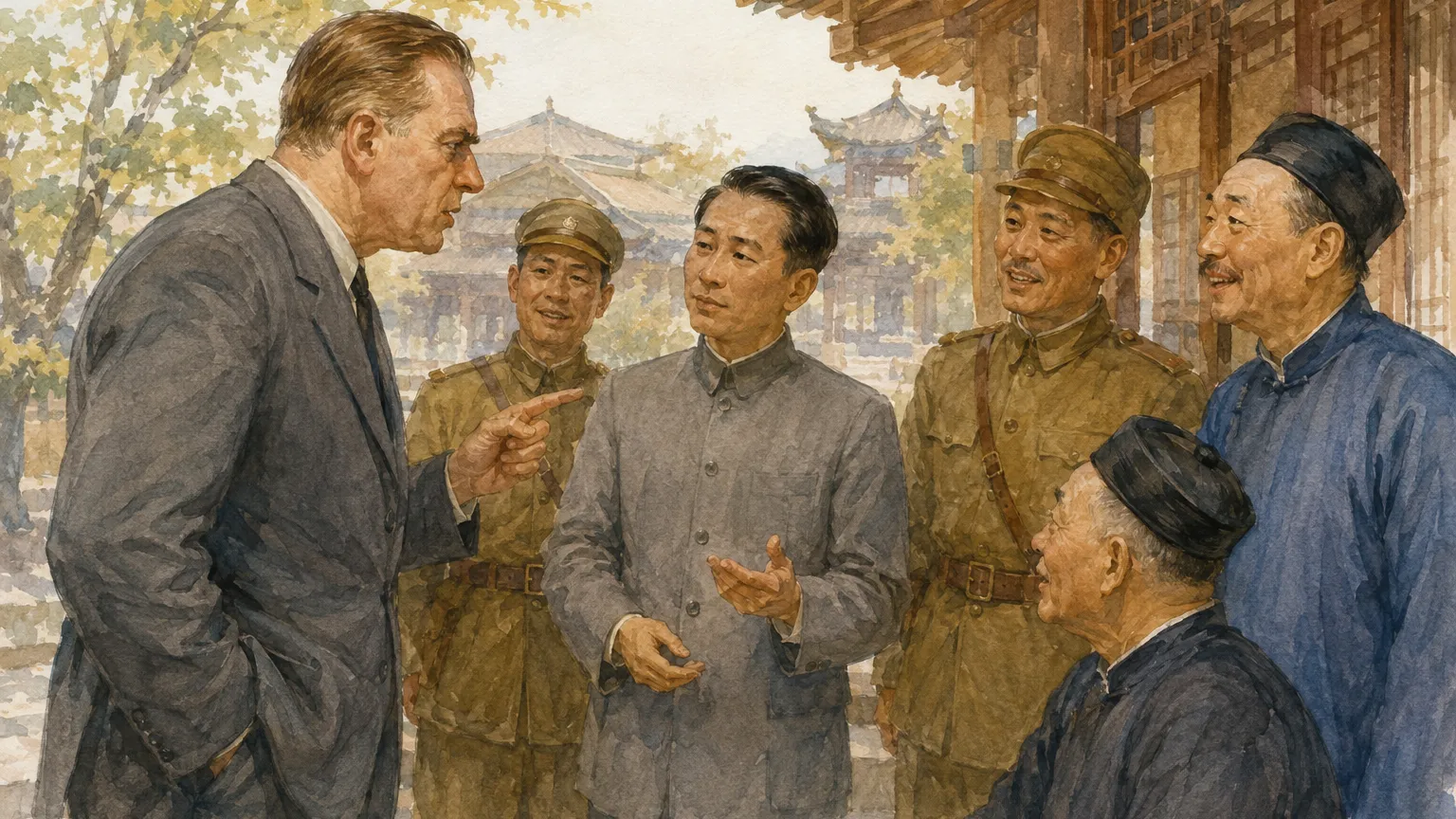
Once, an official from the Soviet Union flew to one of the countries as an adviser. Everyone there welcomed him, and he began to address them, giving some kind of speech; he scolded them all for what they had done... Speaking before the military personnel and soldiers, he addressed them in the Russian manner, like a superior reprimanding everyone. They were surprised, because no one there had ever treated them that way, and they asked, “Why did he get so worked up?” The interpreter translated this for him, and he said, “That is just my personality.” They laughed... This happened in one of the Eastern countries, because relationships are structured differently in Eastern countries.
Thus, personality is ahamkara. Ahamkara gives one a sense of self-sufficiency, completeness, wholeness, and separateness as an individual. At the same time, although it is a useful instrument, it separates us from Ishvara, obscures our sense of unity with Ishvara, and gives rise to clinging and attachment.
Working with Ahamkara in Sadhana
The task of a sadhu is to track down this attachment and clinging and free oneself from it. That is, prapatti yoga and atma-nivedana consist in constantly detecting one’s attachment to ahamkara, and whenever ahamkara urges one to do something for its sake, one must do the exact opposite.
When a sadhu sees that his ahamkara is saying, “Be proud, appropriate the fruits and results, demand recognition, demand to be appreciated, or show him that he is beneath you; put him in his place so that he does not get too full of himself around you,” or when ahamkara says something else, you must say, “Ah, there you are, ahamkara—now I’ll show you!” and do the exact opposite. In other words, you must track down this ahamkara like a beast, as a hunter tracks a beast, because this beast prevents you from perceiving God; you must work with it strategically.
Question: Om, Guruji, but what tattva is ahamkara? It is a lower tattva, is it not? Where are the five tattvas, and where is ahamkara? So does eliminating ahamkara mean that ahamkara prevents the five tattvas—the perception of the five tattvas?
Of course. Eliminating ahamkara enables the perception of buddhi; at the very least, you will be at the level of the observer. But if it is not eliminated, there is no chance at all; you have no buddhi then—neither conscience nor observer. That is why people with a strong ahamkara are often unscrupulous, inattentive, and unaware, capable of doing all sorts of things for the sake of their ego. This is because ahamkara obstructs the realization of buddhi. From buddhi one can rise at least a little higher; the five pure tattvas are still far away, of course, but this is the beginning. We must start from here, from the level at which we currently find ourselves.
Manas and the Organs of Perception
“Manas is the sixteenth, the conceptualizing mind. The seventeenth through the twenty-first are the five jnana-indriyas, or organs of perception: hearing, touch, sight, taste, and smell. The twenty-second through the twenty-sixth are the five organs of action—the karma-indriyas. The twenty-seventh through the thirty-first tattvas are the five tanmatras, or undifferentiated sources of the five types of perception.”
The tanmatras signify consciousness transitioning into matter; they signify the essence of the material elements, the subtle elements. They are not yet material, but neither are they spiritual any longer. For example, the sutras describe ways to perceive the tanmatra of taste, the tanmatra of sound, and the tanmatra of smell.
One who concentrates on the tip of the nose can perceive an exquisite subtle fragrance—the essence of all fragrances—and enjoy it: the tanmatra of smell. One who concentrates on the tip of the tongue can perceive subtle tastes or sense tastes at a distance, the taste of all tastes—the tanmatra of water. One who practices nada yoga can hear sounds—the tanmatra of the element of space.
The Five Mahabhutas—the Great Elements
“The thirty-second through the thirty-sixth are the final tattvas. The five mahabhutas are the gross elements, namely: akasha, vayu, agni, apas, and bhumi—ether, air, fire, water, and earth.”
Maha means “great,” and bhuta means “element.” We live in a universe composed of these great elements; every day we come into contact with earth, water, fire, wind, and space—these are the last of the thirty-six tattvas.
There is a teaching within Shakti Yantra called “Tattva Vidya.” It teaches how to connect with earth, water, fire, and wind; how to recognize the elements, rely on them, and make them your allies in spiritual life; how to connect with them and develop your ability to perform dharana, dhyana, and samadhi upon them.
Connecting with the Tattvas and Encountering Deities
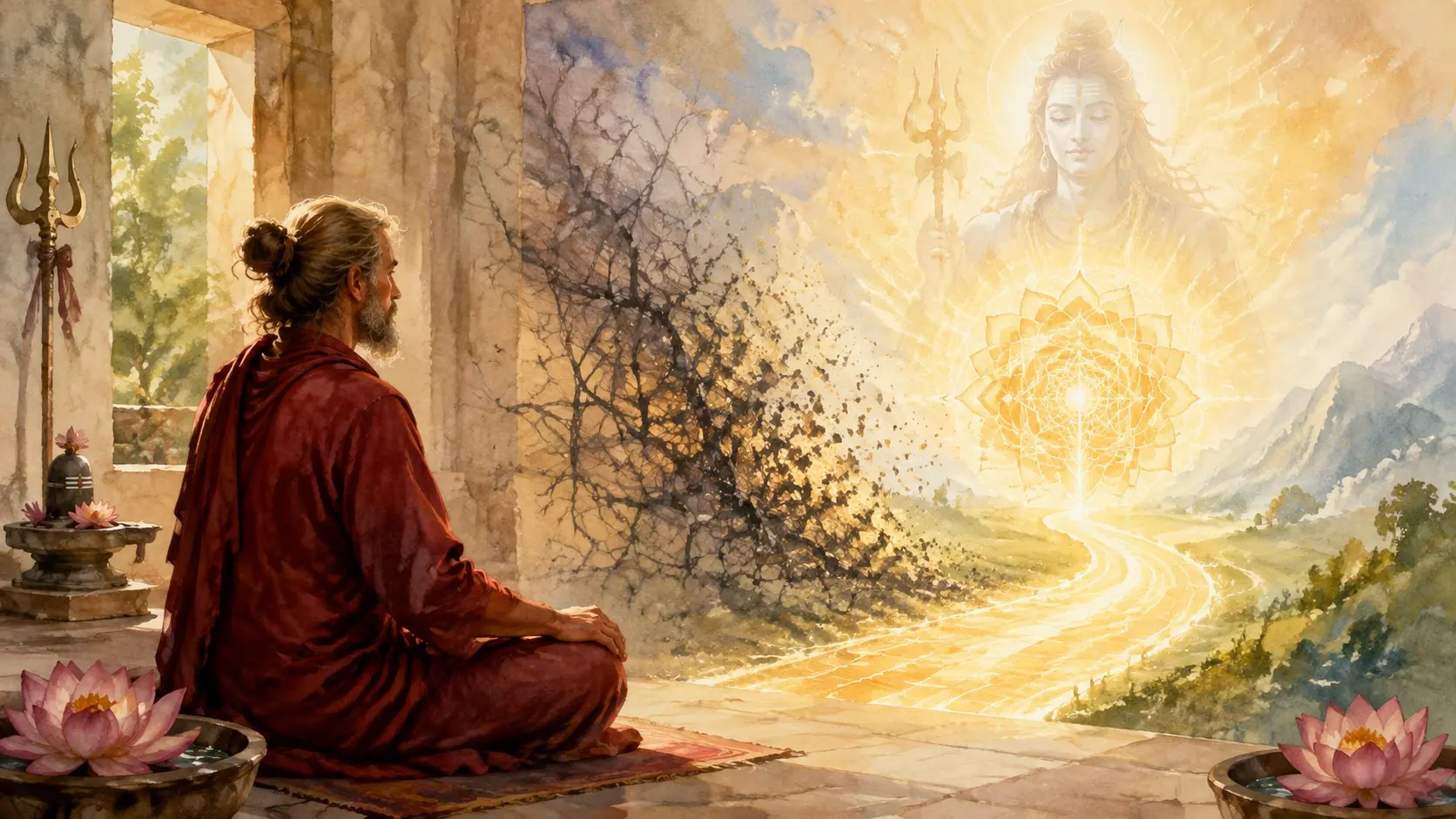
When you connect with the tattvas, a tattva begins to grant you darshan and blessings; you can receive shaktipat from the tattva. The five physical tattvas were the teachers of Guru Dattatreya, and he explained how earth, water, fire, wind, and space became his gurus. In other words, he received shaktipat from the tattvas, and that is why he is a master of Tattva Vidya.
Each tattva has its own devata—a deity. Therefore, when you connect with a tattva and deeply penetrate its essence, sooner or later you encounter a deity. At first, you may encounter the spirits of the deity. With the earth tattva, for example, you first encounter the spirits of the earth; then the earth spirits may allow you to approach the deities of the retinue; and then you encounter the deity of the earth herself—Bhumi Devi—and receive her darshan.
Likewise, if you meditate on water, you first become acquainted with the spirits of water, such as apsaras or other beings, then with the deities of the retinue of water, and finally you receive the darshan of Varuna.
When you receive the darshan of a deity, you simultaneously reveal the empty, nondual essence of the tattva—its wisdom. Then you understand what the five physical, material tattvas are, and that on the subtle level, in pure vision, these five tattvas are actually five deities.
Therefore, we live in the mandala of these five deities, but these five deities appear to us as physically dense; we do not recognize their subtle structure, while the five deities themselves are five pure spaces of wisdom. In fact, they are nothing other than the same five pure tattvas, distorted in our perception, which we discussed at the beginning. In other words, we live and walk directly upon Shiva’s pure tattvas, but we do not recognize them; they appear to us as earth, water, fire, wind, and space.
Shaivism
Pure vision
Maya
Ahamkara
Tattva
Purusha and Prakriti
Ishvara
Yoga Vasistha
Kanchukas
Author Гуру
Read 10 times
Articles
Vidya AI
Search
Lectures
November 2, 2026
Mantra of the day
ОМ САХАДЖАЙА НАМАХ ОМ Естественному – поклонение!
Auspicious Times(Rome)
Brahma Muhurta:
04:53 - 05:48
Abhijit Muhurta:
11:33 - 12:14
Sayam Sandhya:
16:44 - 17:25
Mokshada Ekadashi (6 November)
Ekadashi of liberation. Helps to achieve spiritual enlightenment.