

We continue the teaching of Brahma-vichara, Jnana Yoga.
One who practices Brahma-vichara is a yogi, a sadhu who investigates the Absolute. Brahma means the Absolute; vichara means investigation, penetration.
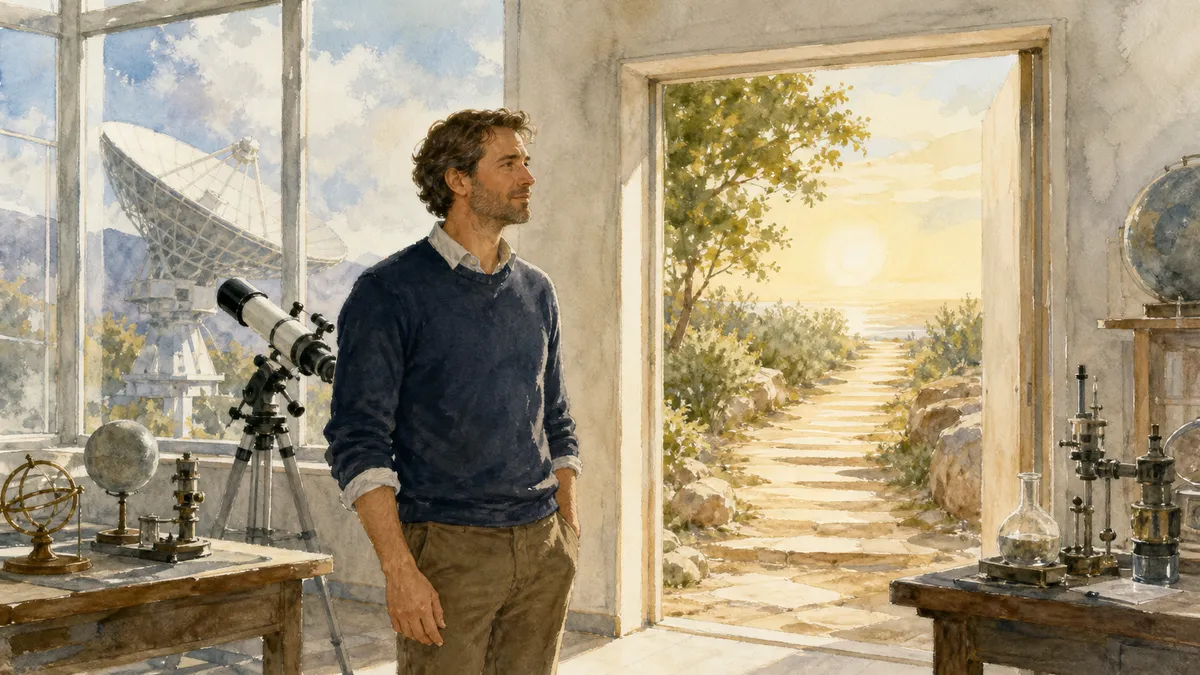
There are two kinds of vichara: Bahir-vichara and Antar-vichara. Bahir-vichara is concerned with investigating the phenomena of the external world. For example, an intelligent scientist may be curious about how the planets move, the phases of the moon, and how the tides are related to the phases of the moon, the constellations, and human states. He becomes an astronomer or astrologer and acquires extensive knowledge of how to act in accordance with cosmic rhythms and lunar cycles.
For example, this knowledge is useful in the relative world, because when the moon is waxing, you can perform various magical practices and worldly actions related to increasing wealth, certain powers, and bringing certain undertakings to fruition. And when the moon is waning, on the contrary, it is beneficial to perform purification and practices associated with waning and reduction.
Black sorcerers harm someone during the waning moon, while white magicians pray for the wealth or health of others during the waxing moon.
This is knowledge concerning the external world. Or if someone studies the laws of physics and penetrates deeply into them, he is also engaged in vichara, in investigation. He determines the relationship of body mass and the force of acceleration and derives a formula showing how energy is related to them: E=mc2
All these are forms of so-called worldly vichara (Bahir-vichara). However, there is a higher vichara spoken of by the saints; it is called Antar-vichara—inner self-inquiry.
The Limitations of External Investigation
Bahir-vichara provides some understanding of the phenomena of this world, but it does not eliminate the fundamental delusion; it merely helps one settle a little more comfortably in samsara. For example, mobile communications, the internet, GPS navigation, satellites, space travel, telemedicine, and nanotechnology are the results of Bahir-vichara, of investigating the phenomena of this world. If human beings had not done this and had not applied the power of reason, they would still be living at an animalistic, cave-dwelling level.
However, as we can see, external vichara has done nothing to help human beings attain happiness or find the meaning of life. Even after many thousands of years, no contrivances of the material world, new technologies, or knowledge of the laws of physics, mathematics, and biology help a person in any way in terms of spiritual development. This is because they do not undertake the inner search, Atma-vichara.
Inner Investigation
The inner practice of Antar-vichara is divided into two parts: Atma-vichara and Brahma-vichara. Through this vichara, we will not gain many material benefits, although if a person endowed with wisdom wishes to obtain them, he will always do so. However, this is not his priority. Through these two forms of vichara, we discover the meaning of our lives and our true essence, and we understand that our goal is to know God and attain jnana.
In Atma-vichara, we concentrate on the sense of “I” and investigate ourselves, our natural essence, and the nature of Mind. In Brahma-vichara, we concentrate on the Absolute and contemplate God.
A jnani is one who thinks of God at all times and continuously concentrates on Him. The bodies or complexions of jnanis may differ, but the qualities of all jnanis are the same in America, Russia, India, and the heavens of Indra: they are always immersed in contemplation of the Absolute.
The Practice of Contemplating the Absolute
To practice Laya Yoga means always being immersed in contemplation of the Absolute. Until we have learned to contemplate, we reflect on the Absolute as best we can: with the help of the intellect and analytical meditation. This is called manana; that is, it takes place at the level of the mind. We try to concentrate deeply on Brahman, reflecting on what He is and what His qualities are. He is eternal, infinite, omniscient, and all-pervading; He is the Supreme Essence, He is Emptiness without any qualities, He is the Source of everything—time, space, and all causes; He is the highest cause.
When we contemplate in this way, it is called manana, reflection on the Absolute. It is very important to continue such practices until you are truly established in contemplation.
One should not think that the mind is entirely unnecessary. Of course, a highly accomplished jnani dispenses with the intellect and all concepts, relying solely on direct realization of reality and contemplation. But perhaps this does not yet apply to us. That is, we must understand that the mind is a great power, so why not use it? We must teach it to serve our spiritual practice. When the mind dwells on worldly desires, we see how powerful it is. When it becomes distracted, we see this as well. Therefore, we must try to use it for the sake of spiritual Liberation.
The preliminary practice of vichara consists in reflecting on the Absolute, on Brahman. When we reflect on the Absolute, bhava arises. If this bhava is stable and you can remain in it for a long time without effort or reliance on concepts, then you can leave behind analytical, intellectual meditation and move on to simple contemplation with naked awareness.
Sometimes people try only to contemplate without engaging their mind, and then their contemplation is weak. Their mind thinks about politics, family, absorbs the news—an enormous mass of information—as well as personal problems, and for just twenty or thirty minutes a day it contemplates or tries to contemplate. Of course, these forces are not equal at all. Or even if one tries to contemplate all the time, the barrage of information is such that there is nothing to counter it with. Then the mind must be used. Otherwise, a mistake is being made—the failure to use the mind.

The Parable of the Spirit and the Dog’s Tail
The mind is such a creature: it constantly demands some kind of information, always wants to “feed” on it and chew it over; it is like a genie that cannot be left without work.
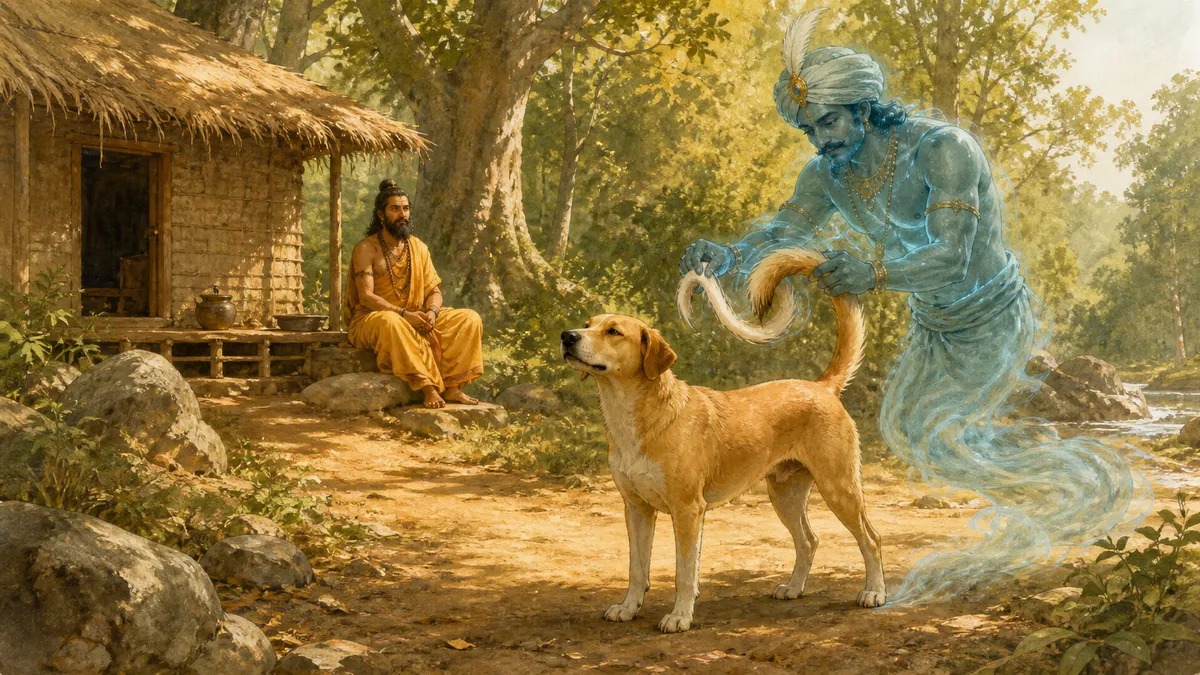
A yogi summoned a spirit. The spirit said, “Give me some work, and if you do not, I will kill you.” The yogi came up with a task and said, “Build a fence.” The spirit quickly built it and asked, “What else should I do?” The yogi kept inventing tasks for him, but eventually became exhausted. And since the spirit’s threat was constant, it said, “If you have summoned me, you must keep me busy.” The yogi went to his Guru. The Guru told him, “Give him this task: let him straighten a dog’s tail.” And every time he straightened it, the tail curled again; the spirit had constant work, and the sadhu breathed a sigh of relief.
The mind is like such a spirit: if it is not given the right work, it will find work anyway. It will continue to move and think. Such is the nature of the energy of thought. Thought, the mind, is manas-shakti; that is, it is a manifestation of the Absolute, and it is its nature to move and play. We cannot block it completely; we will not succeed. Therefore, it must be given work. That is why it is said:
Reflections of a True Jnani
A true jnani always reflects on that Brahman
who has no boundaries whatsoever,
who is beyond the reach of thought, logic, speech, and mind,
on that all-pervading, all-knowing, all-filling One,
full of glory, renunciation, power, and the wealth of manifestations,
unchanging, indestructible,
continuous, indivisible, and inseparable,
who fills the hosts of great gods with wonder, rapture,
joy, and awe.
On Him, the Lord of all beings,
who Himself is all these beings,
who sees no beings within Himself,
always abiding solely as the one Supreme Being.
On Him who is the support and foundation of everything,
the hidden, invisible background of all Existence,
who is the support of all,
the source of all life,
the primal origin, the first cause,
the source of all causes,
on Him who is Himself beyond chaos and order, being their source,
who is Himself beyond Time, being its source,
who is beyond space,
being the Creator of space,
who is beyond the universe, being the creator of the universe.
A jnani always thinks very abstractly, to the utmost degree of abstraction. His thought is directed toward the greatest, the most universal. For God is the most abstract reality, beyond the reach of thought, feelings, and reason. One can only believe in Him. He cannot be logically substantiated. And wherever he may be, the jnani directs his consciousness and thought toward this state.
He is asked, “Who do you think will win the election?” He thinks, “I know who—Brahman.” He is asked, “Why is this happening?” He says, “Of course I know—Brahman is playing.” He is asked, “And who is this person? Do you know him?” He says, “Of course I do; his essence is Brahman.”
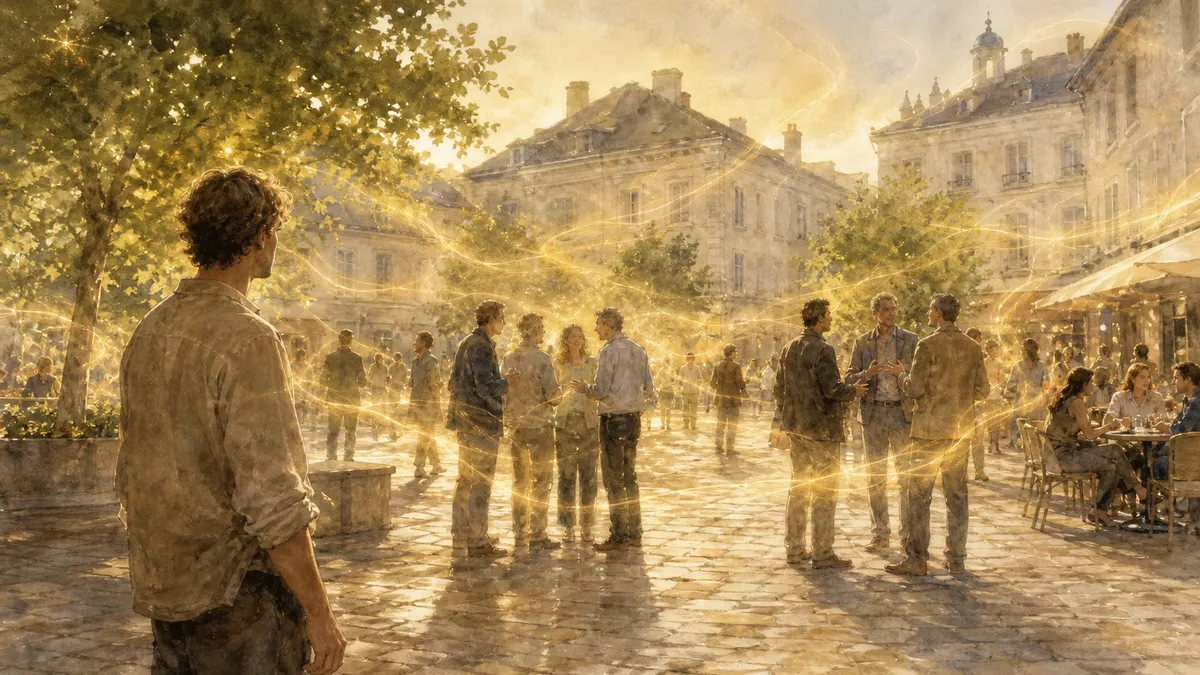
He has one answer to every question. Because this answer answers all questions. It is an answer born of knowledge of the essence. For a true jnani does not see multiplicity. Or rather, he sees it, but pays no attention to it; this multiplicity is of no importance whatsoever. None of it matters.
This multiplicity is like the multiplicity within a dream. Why know what is happening in dreams if one can possess the one great knowledge that all of it is a dream?
If you are told, “There are such and such things in a dream, and such and such other things—would you like to learn about them?” you say, “No, thank you. I know only that all of it is a dream, and that knowledge is enough for me. It encompasses everything.”
In the same way, samsara contains a vast, countless multitude of kinds of knowledge, but the most important knowledge is the knowledge of Brahman. And if you become established in this knowledge, it is the highest knowledge. Nothing else in samsara can bewitch, confuse, unsettle, or captivate you. This knowledge itself will imbue you with the highest transcendental insights, arising from within, and you will no longer need to turn to books or to the thoughts and words of others. This knowledge will arise from within as clarity, inner clarity or direct knowing, enabling you to understand flawlessly all phenomena of both samsara and the transcendental world.
The jnani always contemplates the primordial law of Being,
the source of all laws,
the One who is a law unto Himself,
above whom there are no other laws,
who freely establishes laws or abolishes them.
He contemplates the One who is always impersonal,
while being the source of every person,
imageless, while being the source of all images,
nameless, while being the source of all names,
formless, while being the source of all forms.
A true jnani will never allow himself to be carried away by anything fleeting, temporary, samsaric, or identified with name and form. For he knows that all of it amounts to illusion, and that if you become attached to it, you lose the highest, you lose the knowledge of the eternal, the absolute. Even when he speaks, walks, eats, or engages with relative things, the principal part of his soul remains focused on the absolute. This is the fundamental difference between a jnani and an ajnani.
The principal part of an ajnani’s soul is focused on the realities of the relative world, and therefore the things of the relative world deeply disturb the ajnani’s soul. He constantly abides in various delusions and states, because samsara itself is constantly changing. But the jnani has established himself in a center that is unchanging. Neither time has power over him, nor do events in space.

The jnani contemplates the primordial Spirit, free from Maya,
free from the impurity of illusion,
the eternally pure, stainless
Source, foundation, and cause of all purity,
that which is not divided into pure and impure
even to the slightest degree,
being their primordial, purest essence.The jnani contemplates that Supreme, universal, natural,
spontaneous Perfection,
which is the foundation and root cause of all Perfection,
which is always and everywhere absolutely perfect
and bestows divine perfection
upon all who come into contact with it.
The Nature of Divine Perfection
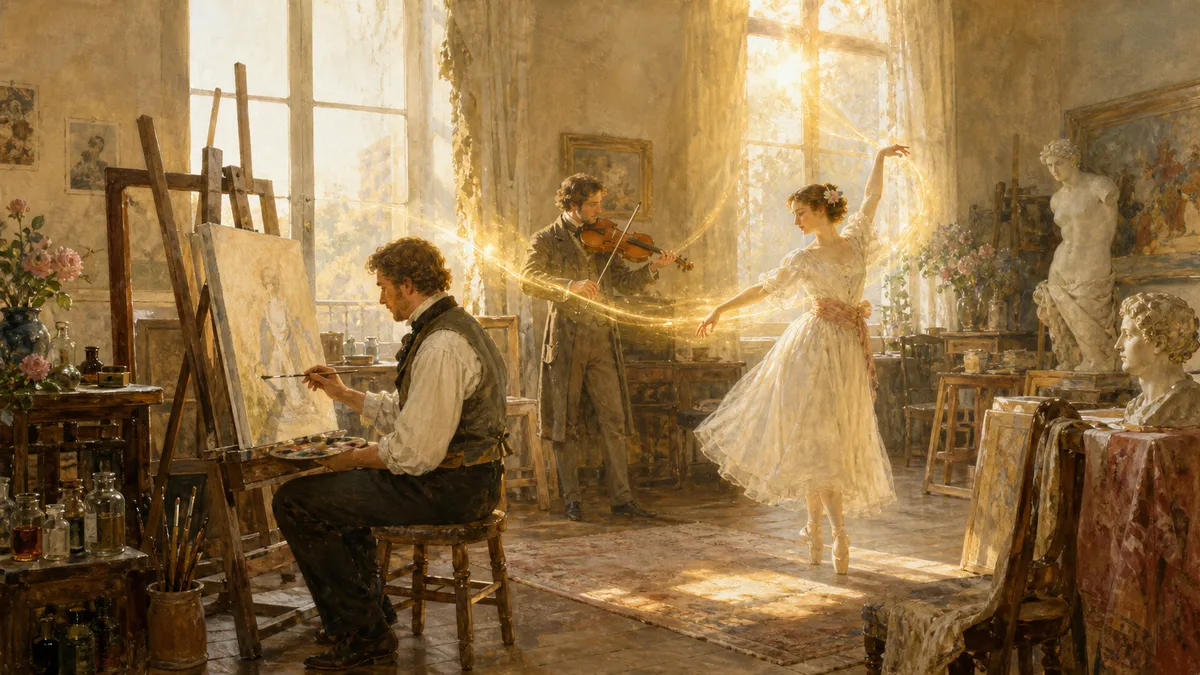
There are many perfect things in the world. For example, when you see a beautiful dance and the dancer’s mastery, it inspires respect. You may think, “I could never do that in my life.” When you see a world champion in rhythmic gymnastics performing a vertical split, or a figure skater executing a triple toe loop, you realize that this is something that already comes from God. A person has devoted their entire life to things beyond the reach of ordinary people. When you see a martial arts master who has attained virtuoso control of their body, it also inspires admiration. When you hear beautiful music or a work of art, or see beautiful paintings or jewelry, all these are different manifestations of divine perfection. They are not from the human world, not from this world, and that is why all masterpieces are so highly valued. An artist, musician, dancer, writer, or poet first receives a portion of Anugraha, inspiration from the higher dimensions—sometimes from apsaras, sometimes from gandharvas, sometimes from Indra-loka—and then conveys it into this world. All this is a manifestation of divine perfection.
When we see something perfect, it means that it contains a balance of universal energies and principles, samyoga. This balance is brought into the human world, and it has the power to transform consciousness and grant darshan.
But all these kinds of perfection are expressions of a certain great perfection, a universal, primordial principle. The primordial principle of perfection is Brahman, because Brahman itself embodies every kind of perfection. When a jnani sees manifestations of perfection in this world, they are not enchanted by these relative perfections; they immediately penetrate their essence and see absolute perfection.
A jnani always contemplates the Supreme summit,
the peak and apogee of Everything, which is higher than all gods, sages, and kings,
being their goal, which is the heart of the universe,
beyond which there is nothing, which is the foundation,
the essence and cause of every elevation,
the One, immutable, undivided consciousness
that appears as this entire world,
the One in whom there is no division or multiplicity,
who alone exists in all the Light,
who has no one and nothing else,
distinct from itself, as a friend, relative, or rival.
The Power of Analytical Meditation
If you undertake even a three-day retreat in analytical meditation on the themes of Brahma-vichara, you can come into contact with the power bestowed by manana, contemplation of the Absolute. You will gain a great deal of knowledge, as though a new vision of the world had opened up, and you will see how little attention you have paid to that which deserves a great deal of attention. The Absolute deserves a great deal of attention; Brahman deserves a great deal of attention. Ideally, it should receive all the attention you have.
Saints give the Absolute all the attention they have, leaving only a portion of their consciousness for this world, enabling them to function adequately. Since the minds of saints are very powerful, this portion of consciousness is sufficient for them to successfully accomplish the tasks of this world. But ninety-five percent of a saint’s attention is devoted to the Absolute.
An ordinary person gives the Absolute zero percent, one percent, three percent, or five percent of their attention, while someone who considers themselves advanced may give it ten percent; all the remaining time is devoted to illusion, to samsara—eighty or ninety percent.
If we want to move toward Enlightenment, toward jnana, we must change this ratio. And when we practice manana, this ratio begins to change rapidly.
A true contemplative, of course, lives by contemplating absolute Consciousness through the practice of naked awareness. However, much time will still pass before naked awareness opens up and truly begins to save you. At first, the mind is very uncertain; it often strays and wavers, and it must always be encouraged and supported by the practice of manana, contemplation of the Absolute, and inquiry (Brahma-vichara). If any of you writes a treatise dedicated to the Absolute, it will be auspicious for your destiny and life. New energies will enter your destiny, and a new tunnel of reality will open, because this is an offering to the goddess Saraswati.

Reflections on Eternity and Time
The jnani always contemplates
who is Eternity itself,
beginningless Time,
who, being beyond Time,
is the source of the past, future, and present,
to whom all beings in the Universe conform.
All living beings in samsara are enchanted and seized by the power of Kala, or Maha-Kala, the god of time. The god of time is what appears to us as a succession of changes that comes in the form of the past, present, and future. Moreover, most living beings are not even aware of this succession of changes. They simply exist within it; they live in it as fish live in water without being aware of the water. Time moves, and people say, “Time is flying,” while Time thinks, “Could it be that people are the ones moving?”
But Brahman itself is the source of time; it is untainted by the fluctuations of time. Time emanates from Brahman as a concept, a function. This function is called kala-spanda. That is, when a creative vibration arises in the Absolute and the concepts of birth, becoming, creation, preservation, and destruction emerge, and the vector of these changes (parinama) is set, kala-spanda arises. Thus, kala-spanda is the factor of time, the vibration of time that determines how the order of time will be established.
We know that creation is followed by preservation, and preservation is followed by destruction. This is how the vector of time moves in our world. But there are worlds where time flows differently, where one second of our life may appear as a thousand years of the gods. This means that each world has its own particular type of time vibration, its own kala-spanda.
But the Absolute itself is beyond time. It can create time, make it move in a circle, make it move backward from the future into the past, stop or block it, or turn an instant into eternity, when everything is halted and no movement exists. For it is the source of kala-spanda, yet it is independent of it. Only created living beings, such as you and I, are subject to Kala, the god of time.

The jnani strives to immerse his mind in the point where kala-spanda does not operate; therefore, Brahman is called Kala-Tita, meaning the one who is beyond time.
Brahman as the Space of Life
The jnani always contemplates
who is the space of life,
the dwelling place of all beings—Brahmas, Kumaras,
rishis, Manus, siddhas,
gods, yakshas, vidyadharas, kinnaras,
gandharvas, pitris, nagas,
spirits, asuras, rakshasas, demons, pretas—
and in whom there are no anxieties,
suffering, or disease.
When Brahman manifests as space, it becomes a loka, a dwelling place for the lives of various beings. Every living being lives in its own loka. A loka is conditioned by a particular karmic vision of beings, called loka-drishti; each being has its own vision. When many beings possessing a shared vision come together, this is called a loka. Thus, a loka is originally not a geographical concept, but a concept of consciousness.
For example, when many people inclined toward discord, war, and conflict come together, Asura-loka arises. Its own principles, code of honor, culture, and asuric ethics are established there, and the world of the asuras appears. But it appears because there are bearers of this consciousness—asura-bhava. And when many people with divine consciousness appear, the culture of the gods, the ethics of the gods, the laws of the gods, the relationships among the gods, their art, magic, and way of life arise. And it is said that Deva-loka, or Divya-loka, has appeared.
Thus, various worlds manifest as lokas through the bearers of those lokas. Many lokas are usually created by gods who possess a particular bhava. Such gods are called Lokeshvaras, those who create particular abodes through the power of their consciousness. For example, Varuna, Surya, Indra, and Soma—all these gods are called Lokeshvaras as possessors of the loka’s primordial consciousness. But Brahman itself lies beyond the concepts of space, beyond the concepts of loka. It is the source of this consciousness. It has no specific location, no particular bhava that forms and organizes space. Space arises from the Absolute as its loka-spanda; this is the second kind of vibration that emanates from the Absolute. That is, it is the very organizing power of the Absolute that creates various spaces.
For example, in order to fulfill his promises to his disciple, the rishi Vishvamitra created another Heaven through the power of his consciousness. There was Indra’s Heaven, and a certain king who had been cursed and had little merit asked Vishvamitra for a favor: to give him the opportunity to be reborn in Heaven. Vishvamitra promised him this, but because the king was cursed, Vishvamitra’s ritual and offerings were not accepted by the gods; they were rejected. The gods said, “How can the accursed King Trishanku come to us in Heaven? We do not accept him; he is unworthy.” Vishvamitra then decided to create a new Heaven through the power of his mind and sent the king there anyway, just as he had promised. He fulfilled his promise.
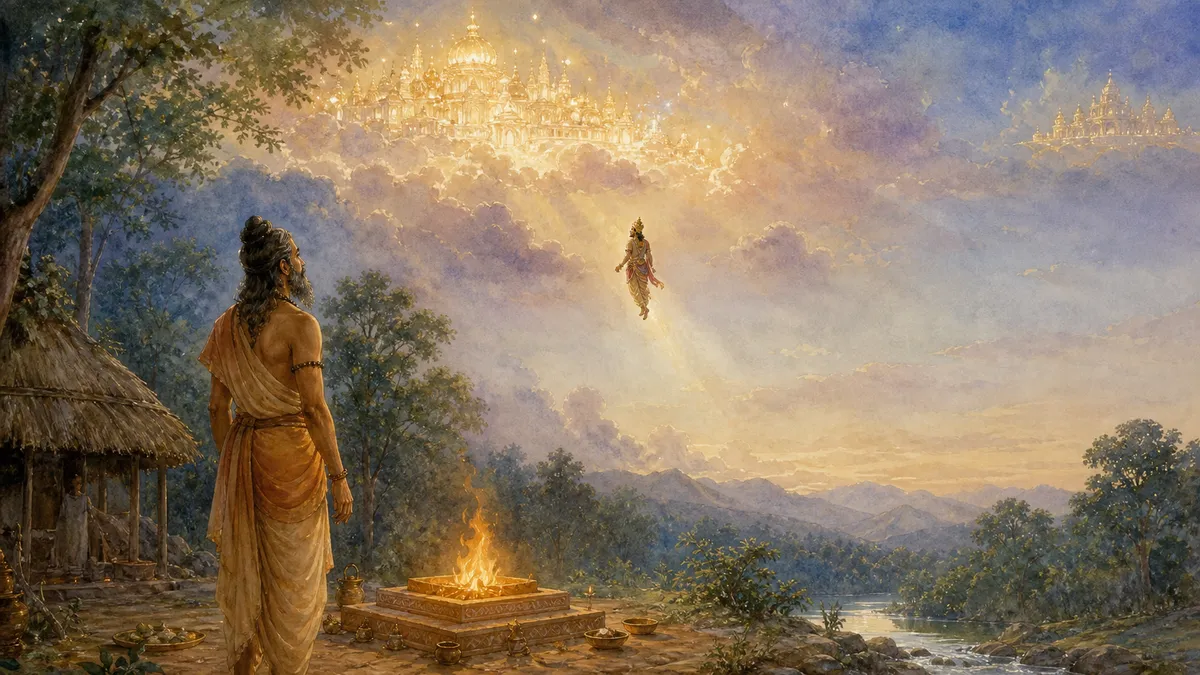
This power to create particular regions of space through the power of intention is called loka-shakti or loka-spanda, while the force that gathers all people together in one realm is called loka-drishti, that is, the karmic vision inherent in beings who share a common vision.
For example, we share a particular vision—to practice the Dharma—and that is why we have gathered here, in this space of the Teaching, of the seminar. If someone comes and tries to talk about football here or offers everyone alcoholic drinks, they will be told, “You know, you have come to completely the wrong place. This is not that kind of space; it has its own principles. You have the wrong address; you need to go somewhere else.” This is because such beings are from another loka, with different laws, ethics, and intentions.
Thus, all beings are formed according to the principle of loka-drishti. What is suitable in the world of the gods is not suitable for the world of the asuras; what works in the world of the asuras is unacceptable in the human world, while what is considered right in the human world is not considered important in the world of spirits and pretas. Different lokas embody particular bhavas. Bhavas are determined by vision; in other words, drishti determines bhava, vision determines one’s perception of the world, and that perception establishes the basic ethics, morals, principles and laws, geography, and topoi of each world. Then the bearers of consciousness and the basic elements arise, and the world manifests.
But Brahman itself is beyond all this, beyond all abodes, lokas, dimensions, and all visions. It is the source of all vision, but it is not vision itself.
Therefore, when someone asks, “What is Brahman’s vision?” it can only be spoken of as the source of every other vision.
The Unity of All Beings in the Absolute
A jnani always contemplates
who the Supreme Essence is,
the One who abides in every creation
and governs all creations,
the One who Himself is all these beings.
There are many different beings in the world. Besides humans, there are gods and asuras, and among the gods there are many other beings: celestial musicians (gandharvas), dancers (apsaras), magical beings from Indra-loka who possess prabhava-siddhis, kinnaras, half-serpent, half-animal beings (nagas), ancestral spirits living in Pitri-loka—our great-grandfathers and great-grandmothers in astral dimensions, in astral houses and cities (pitris), beings of the lower worlds, lesser spirits, denizens of hell, pretas, hungry ghosts and apparitions, gods of the higher dimensions of Mahar-loka and Svarga-loka, such as Vayu, Agni Deva, Soma Deva, Indra, Varuna, and others, higher gods such as Brahma, Vishnu, and Shiva, gods of the causal dimension, infinite cosmic spirits immersed in one of the dhyanas and having no body, and many other beings.
Humans are not the highest class of beings and certainly not the crown of nature or the pinnacle of evolution. If you told the gods that humans are the pinnacle of evolution, they would laugh for a long time. It would be like telling humans that some little chipmunk is the pinnacle of evolution, the summit of everything.
The gods possess transcendental knowledge, and they know that even they themselves are not the pinnacle of evolution. The pinnacle of evolution is Parabrahman. Darwin was wrong. Darwin’s theory is merely a particular classification and systematization of the thoughts and ideas of one intelligent researcher, but of course it cannot claim to provide exhaustive knowledge of the entire Universe. What can one person know by collecting certain data, classifying it, and comparing it? And to think that such a person could chart the development of humankind and define it in the form of Darwin’s theory is, of course, absurd.
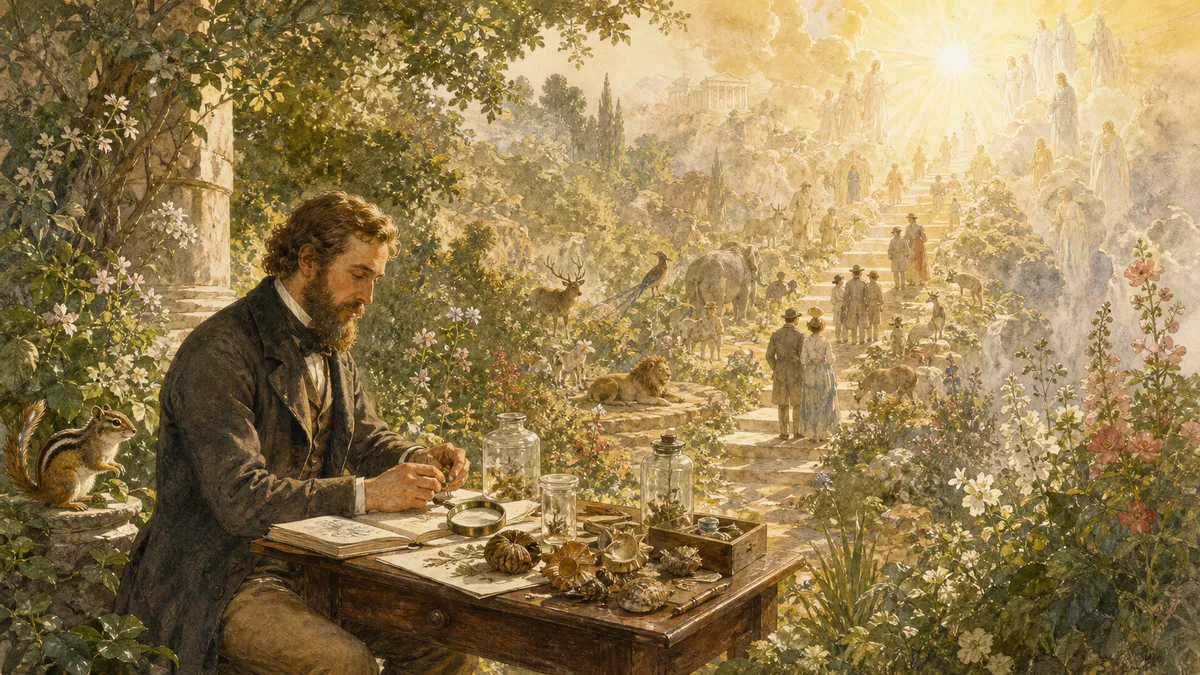
The source of all beings, and the crown of all, is the Absolute itself: of gods, lower beings, and higher beings alike. And when a jnani looks at them, he pays no attention to their relative manifestations. Humans, gods, asuras, pitris, gandharvas—for him, they are all one. It is like a single essence manifesting in diverse ways, because through contemplation he is able to see everything as the manifestation of one essence alone, without paying attention to the diversity.
The diversity of the phenomena of this world confuses living beings, including us. We think: “This is a devata, a deity; this is a human; this is some spirit, a hideous ghost that bothers everyone; this is an animal; this is a celestial dancer; and this is the great god Brahma, the Creator of the Universe.” But from the jnani’s point of view, all this is one and the same system. There is no diversity; it is the one Brahman assuming different forms, the one Supreme Being.
The jnani is not bewitched by diversity; he sees that these are simply lilas. It is as though there were one being that created such illusory bodies with artificial intelligence out of itself, endowed them with a will of their own, and allowed them to play. But all this is one being. And when a jnani reflects on such beings, he immediately perceives their source, without being bewitched by the principle of diversity. An experienced jnani, while observing all beings, practices naked awareness and immerses himself in Sahaja-tattva, the natural state.
A considerable amount of time will pass before we truly discover the principle of the natural state, and then everything happens beyond the intellect. A jnani need only concentrate and immerse himself in the natural state, and then reunite everything seen and experienced—gods, humans, asuras, animals—into one. Then he sees them all as one, yet this one is always at play and taking its appointed places. It is then said that the jnani integrates all experiences into natural contemplation. But one who says, “This is a spirit, this is a god, this is a human,” while ignoring that, first and foremost, it is Brahman, is called an ajnani, that is, one who is bewitched by diversity. Diversity makes an extremely strong impression on us—and not only on us humans; it impresses even the gods of samsara. Everyone is bewitched by diversity. But to attain Jnana, to move toward Jnana, means to leave behind the vision of diversity and arrive at the vision of absoluteness. This is the ultimate knowledge.
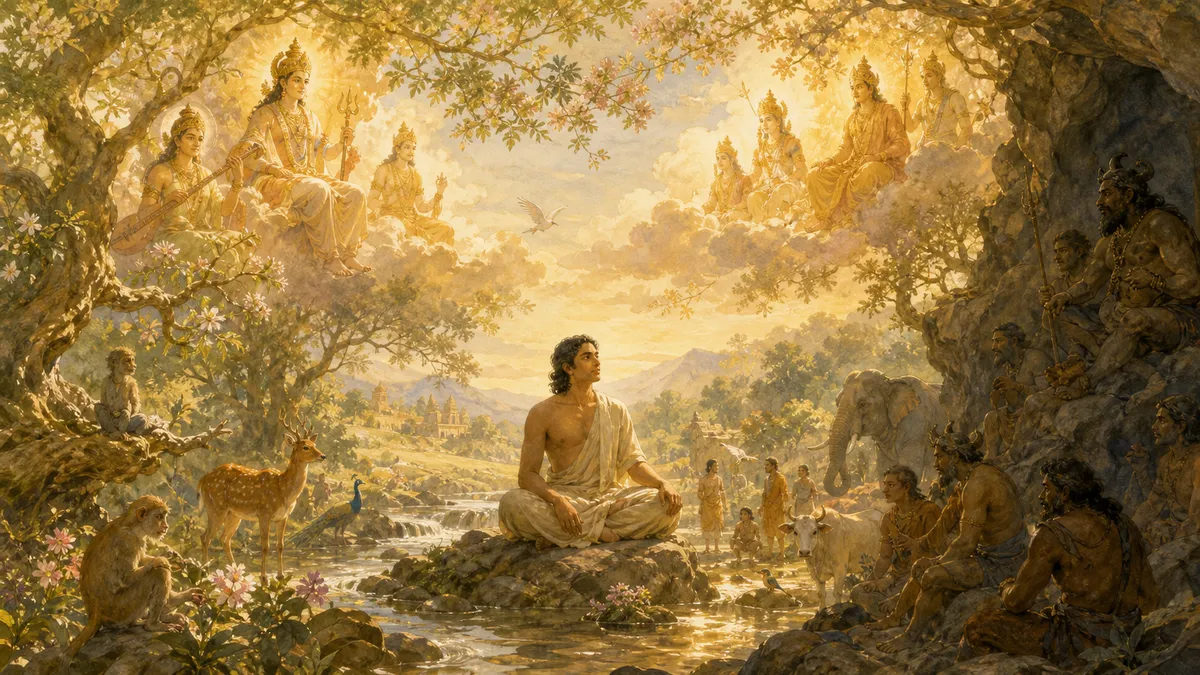
At the same time, the depth of experience arising from all this diversity will not be lost, because the jnani, while contemplating the Supreme Essence, is able to perceive the play of diversity with a part of his consciousness. But he perceives this play of diversity as a manifestation of the Absolute’s energies, and it never leads him into delusion, unlike ordinary beings.
The Divine Authority and Power of the Absolute
The jnani always reflects on That, the Omnipotent One, who is Absolute authority,
who alone bestows Divine Authority,
whose authority is accepted even by the greatest and most powerful Creator Gods of worlds,
whose authority inspires awe even in divine kings and rulers,
and whose authority no one can challenge or overcome,
who is the very essence, foundation, and basis of all authority.
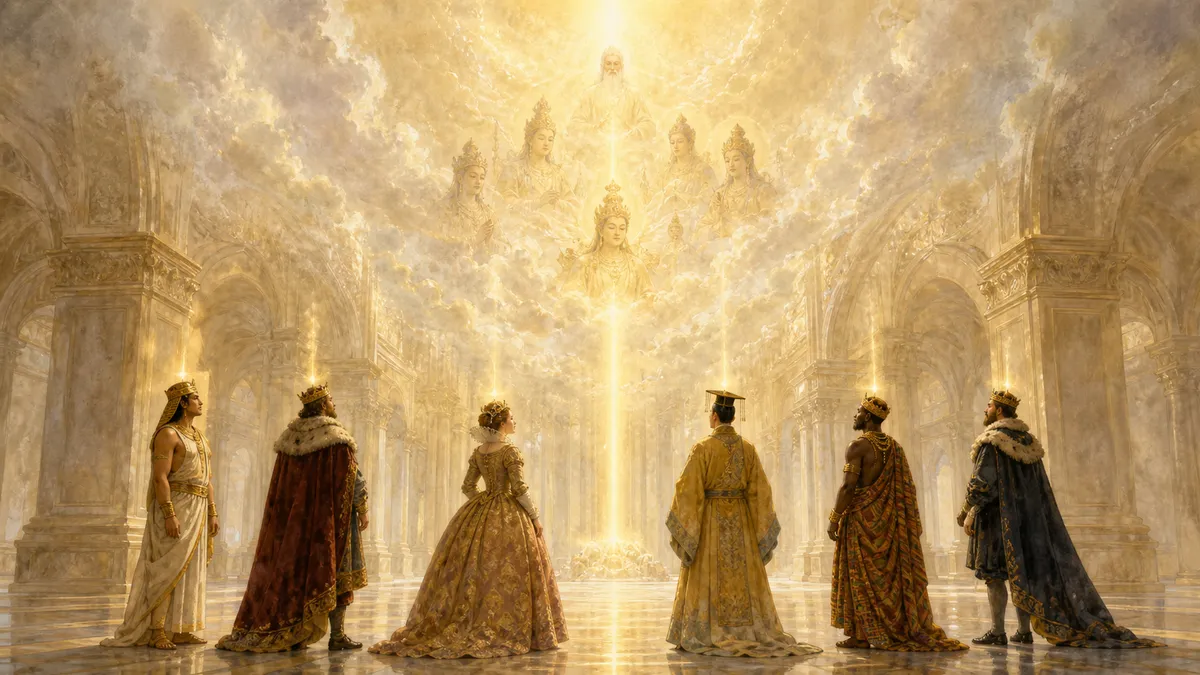
There is an energy of the Absolute in the world called Aishvarya-shakti. Aishvarya-shakti is the energy of divine authority, the ability to manifest an intention and change the Universe through the power of that intention. And when Aishvarya penetrates into lower dimensions, it manifests as lokeshvaras, as Ishvara—the lord of our Universe, that is, Brahma the Creator—and as lokeshvaras, the lords of lokas, such as Indra, Varuna, Agni Dev, Soma Dev, Yama, Dharmaraj, and others. That is, those who, through the power of intention, created a particular loka and control it. Worldly lokeshvaras—for example, any king or ruler, such as Nicholas II, Louis XVI, Napoleon, Mark Antony, or the Queen of Sheba—are all manifestations of Aishvarya-shakti through various illusory bodies in this world.
But wherever Aishvarya-shakti manifests, and whoever its bearer may be, that bearer is merely an illusory body through which it is transmitted, while the original source of all authoritative energy and the power of authority is the Absolute, Brahman.
A jnani always contemplates who is the infinite Divine Power,
whose power no one can overcome,
whose power confounds and strikes awe even into the mightiest,
who is Himself the source, cause, and foundation of all power,
to whom all mighty gods and beings turn for protection.
Power in this case is Kriya Shakti, the ability to create, sustain, destroy, conceal, and manifest divinity. The Absolute is the source of this fivefold Kriya Shakti. The three principal powers of the Absolute are the power of knowledge, the power of will, and the power of action: Jnana Shakti, Iccha Shakti, and Kriya Shakti. The power of action manifests in five ways as creation, sustenance, destruction, and so forth.
Whenever we see any power, we should always meditate on the fact that this power has a source, and that source is the Absolute. Every power in this world manifests as Kriya Shakti—the volition, the will of the Absolute to perform and do something.
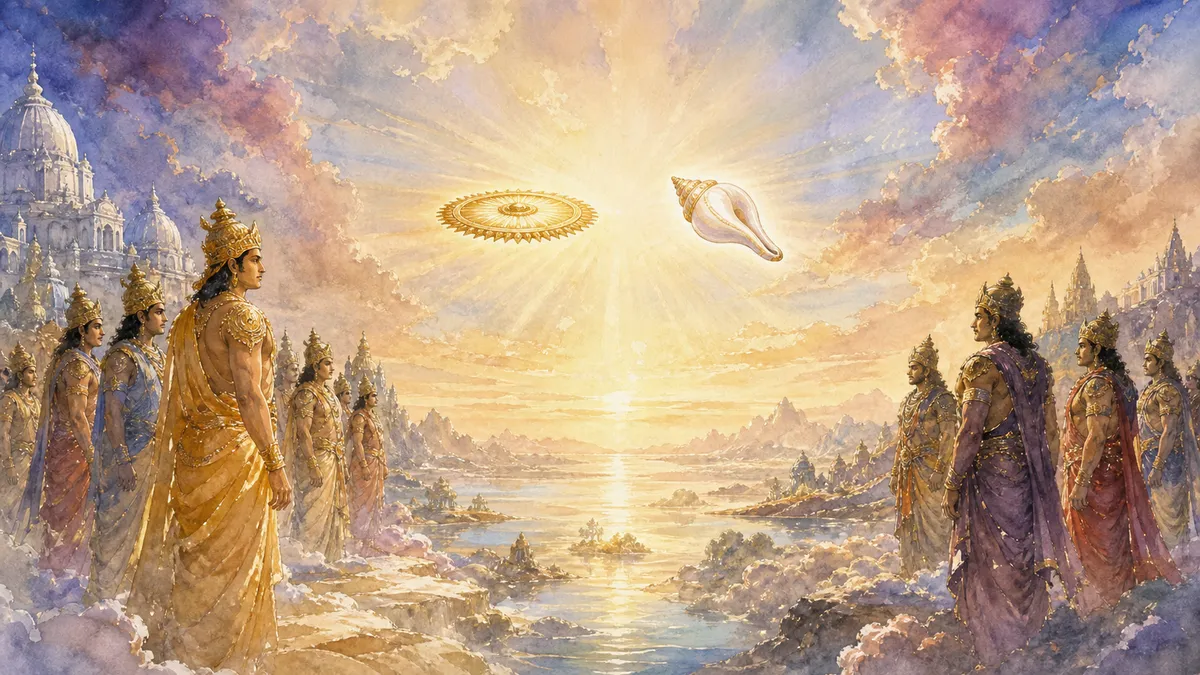
Sometimes, when Indra is fighting the asuras and cannot overcome them, he turns to the source of power, Vishnu. Vishnu gives him some advice or sometimes intervenes Himself. This is because Indra understands and knows that his power is nothing compared with Vishnu’s power. Vishnu could have ended this entire play long ago and stopped everything altogether with a mere blink of His eyes or movement of His finger—all the asuras would have been destroyed. But Vishnu has His own vision of reality. He thinks: “If the asuras do not trouble the gods, the gods will grow complacent. They will remain idle in their loka, and then the world will lose its balance. The gods will remain idle, their power will be exhausted, and then people will also cease making sacrifices and offerings to them. The balance of the world will be disrupted, and this Universe will be unable to exist.” Therefore, He thinks: “Let the asuras also exist, and let them keep the gods under a little mild pressure, so that the gods reflect that they should not thoughtlessly squander their merits and merely amuse themselves, but must constantly perfect themselves.” That is why Vishnu does not destroy the asuras; He intervenes only when critical times come for the gods, and then He effortlessly puts an end to their interference.
Why can Vishnu do this? Because He is the source of all power.
The Unity of Divine Manifestations
Vishnu and Dattatreya are one; Brahman and Dattatreya are one. Brahman can manifest as Shiva, Brahma, or Vishnu—all of this is Dattatreya. And when we invoke different names, we should identify them with one another rather than separating them. For example, an ajnani thinks: “Vishnu is one thing, Shiva is another, and Brahma is a third.” In reality, all of them are a single essence that has assumed three forms. It is like a Guru who manifests through three disciples and gives them an assignment—they are all one. And Krishna as well. There is a saying: “Vishnocha Hridayam Shivah, Shivocha Hridayam Vishnoh”—“Vishnu is in the heart of Shiva, and Shiva is in the heart of Vishnu”—and the tantras say: “He who distinguishes between them will not attain Liberation.” All of them are one essence, and a jnani always contemplates the unity of all divine beings.
For example, when we offer praise to Dattatreya, we regard Dattatreya as one with Shiva and one with Lakshmi. Through one deity, we can venerate and worship all other deities. That is, they are a single essence; it is simply that each manifestation has certain specific functions. Lakshmi can bestow wealth; she is a particular aspect of the Absolute that bestows health, good fortune, luxury, wealth, and success, including success in practice. Shiva can bestow siddhis and renunciation. Dattatreya can bestow the single “taste,” pure vision, and complete realization. These are all different aspects of one and the same essence. But there is no difficulty in worshipping one manifestation through another.
Once, Lakshmi manifested in a way entirely unlike herself. She took it upon herself to protect a child, Prince Dhruva, who was practicing austerities while reciting a mantra. When bandits from some wild tribe decided to destroy him and wanted to sacrifice him, she summoned snakes, and those snakes began spitting venom at everyone. All five bandits were destroyed, while Lakshmi stood there smiling. Vishnu said, “Even I, who am not easily bewildered, was surprised that today you, who usually bestow wealth and prosperity, spat venom at those bandits.” She replied, “What else could I do? I had to protect Dhruva, otherwise they would have killed him. Besides, they deserved everything according to their karma; they had committed so many sins.” In other words, Lakshmi assumed the uncharacteristic function of destruction instead of preservation.
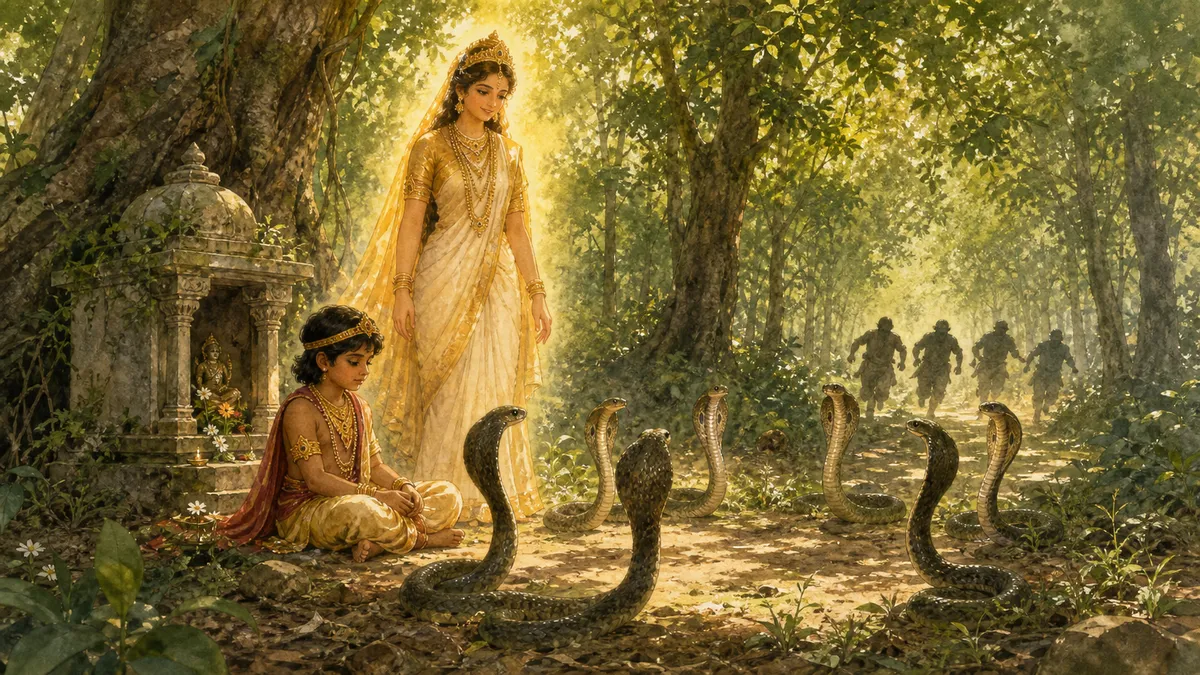
Why was she able to do this? Because in reality she was also the Absolute, and although she had such partial functions, at that time she manifested as a wrathful deity.
When a jnani meditates on the Source of all divine powers and manifestations, he integrates them and does not separate them from himself. He does not think, “I am one thing, and the deities are another”; he thinks, “Everything is one Essence, and I too am that very same Essence.” This principle is called unification: everything is nondual.
Another saying goes: “Shivam putkhva, Shivam yajet”—“You can worship Shiva only when you yourself can become Shiva”; only Shiva can worship Shiva.
To truly revere deities, one must unite with them in that very same state in order to truly understand them. Only Brahman can know Brahman. Neither a jiva nor an individual being or devata can know the Absolute; only the Absolute can know itself. Therefore, to know the Absolute, one must become it. This is the essence of the practice of contemplation, the natural state.
The Pure Vision of a Jnani
When a jnani contemplates in this way, the world is transformed for him. For him, the world ceases to be the chaotic, fragmented world of various impure objects that we are accustomed to perceiving. For him, the world becomes a pure dimension, a pure land. This is because, unlike an ajnani, a jnani possesses pure vision; pure vision is naturally inherent in a jnani. We live in samsara because we have no pure vision, or very little of it; a jnani lives in a state of Liberation because he has nothing but pure vision.
What, then, is pure vision? A jnani always sees the world, the Universe, and all beings as pure; he sees everything as a sacred dimension. For a jnani, there is not even the tiniest particle, speck of dust, or atom in the Universe that he would regard as impure or undivine. A jnani sees this way because, through his contemplative presence, he lives and plays in the dimension of pure vision, in the mandala of the Supreme, the Absolute. From within this dimension, all phenomena appear to him as sacred, pure, perfect, and entirely divine in their essence. This is not philosophical pathos; it is a real experience that you undergo within your own vision.
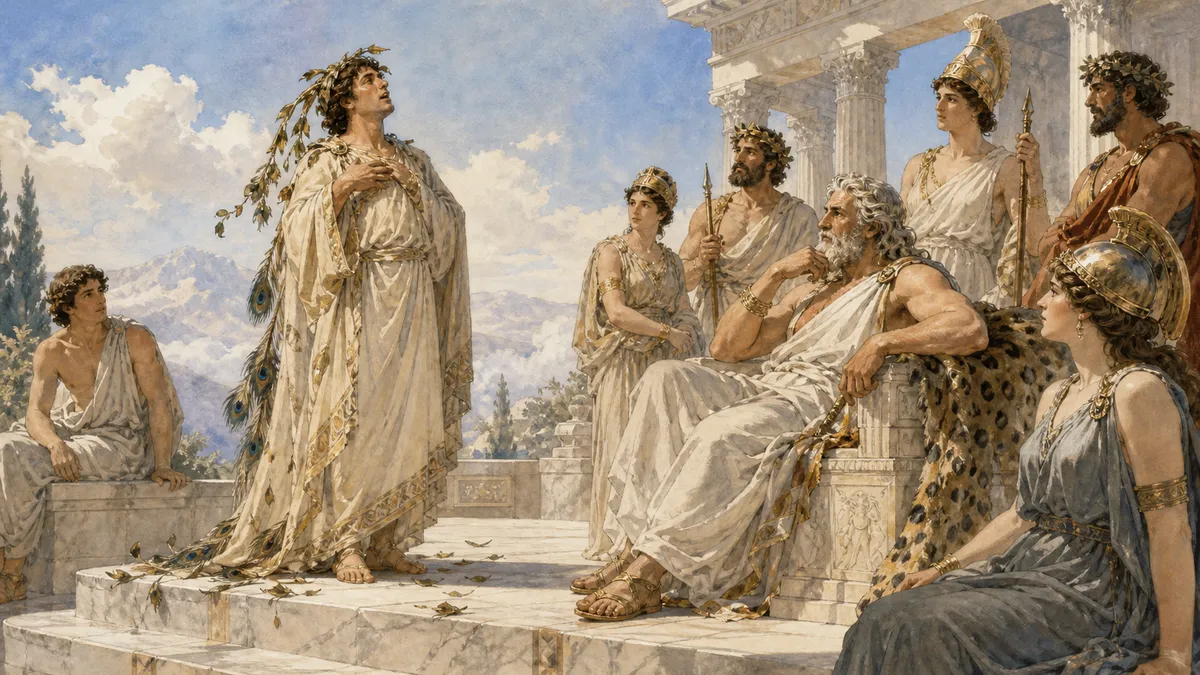
There is such a legend. Among the Greek gods there was a god named Pathos. He came into being because Zeus granted him a special boon: whenever anyone made grandiloquent speeches without real, true content, Pathos would have the siddhi to deprive that person of sexual power. Without thinking it through, Zeus granted this boon and extended it to everyone, including himself. Then many gods on Olympus began to experience the consequences and started thinking before speaking. In other words, if someone spoke with excessive pathos but there was no real substance behind it, he would immediately lose that power.
But a jnani does not live in a state of pathos. For him, all of this is filled with reality; this is how he actually sees the world. For him, this is seeing the world as it truly is; there is nothing artificial or invented in it. In the vision of the world through a jnani’s eyes, there is no ugliness, flaw, filth, or imperfection anywhere; everything is primordially sacred, pure, spontaneous, natural, and holy by its very nature. Of course, a jnani’s physical eyes may see the flaws, filth, imperfection, and ugliness around him, but even all of this the jnani sees as wholly perfect.
When one master was explaining this, another man approached him and said, “Look, there is a hunchback—do you see him? That is a deformity; how can he be perfect?” But the jnani said, “You do not understand: this hunchback is perfect. He is a perfect hunchback. He is the embodiment of everything most hunchbacked in the world.” The man had ideas that this was bad, but the jnani had no ideas that it was bad. It exists because it exists, and in what way is it imperfect if Brahman has chosen to manifest in this way?
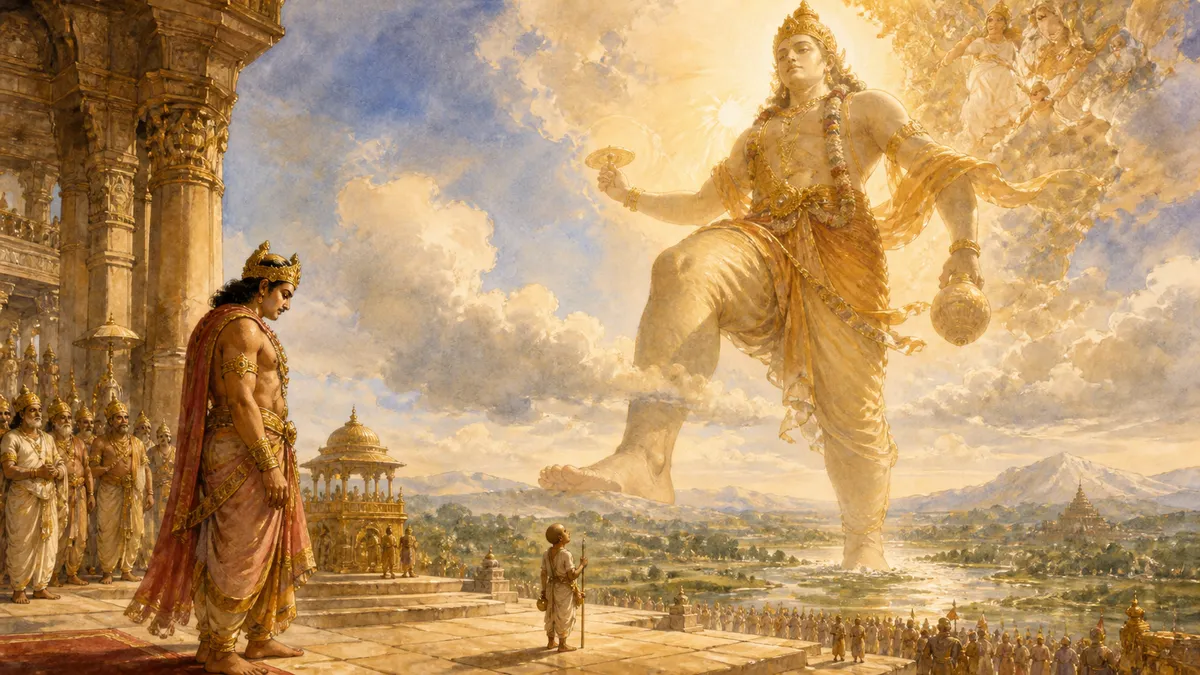
Sometimes Vishnu became a dwarf, a brahmin, but this did not cause him to lose his perfect qualities: he was the perfect dwarf Vamana. And Bali Maharaja was unable to offer him even three paces of land when Vamana asked him to give him a plot of land measuring three paces. Since Bali Maharaja considered making offerings to brahmins a matter of honor, he decided to give him that much land. He thought, “He could have asked for more, even a hectare. What are three paces of a dwarf?” But when this dwarf took three steps, he traversed all three worlds, and there was nowhere even to place his third foot. Then Bali had to offer his own head.
The World as a Sacred Mandala
A jnani is as though living on an island that has not even a speck of dirt and is made entirely of gold. In the dimension of the jnani, there is nothing impure. Even here on earth, in an ordinary body of flesh and blood, the jnani lives as though in Heaven. In other words, the world appears different to a jnani than it does to ordinary people. For him, the world is a mandala, a sacred divine space, and in this mandala there is nothing ordinary or mundane; only liturgies, mysteries, and the plays of the Absolute take place within it. Every action here is a play of the deities, a darshan, an initiation, a ritual invocation and offering. Every sound, word, breath, knock, and creak is a sacred syllable, a mantra, a ritual song dedicated to the Divine, praising its glory and majesty.
Once, while returning from a retreat, I saw three people playing cards on a bench. One of them said, “I have discarded all the sixes; now I have the ace—the highest card.” I thought, “There, that is a direct teaching: one must discard everything superfluous, all the kleshas, and abide only in the highest.” This inspired me greatly. Then I walked on, and at that moment “The Internationale” was playing, with these words: “We shall win liberation with our own hands! No one will grant us deliverance: neither God, nor king, nor hero.” “Incredible!” I thought. “How can people fail to see it? This was obviously written by some Guru. It is like a doha (Tantric song), a direct teaching.” And there were many other such things as well.

When you abide in pure vision, nothing is ordinary for you. When someone sings about love, you know that it is Sita singing of Rama or Radha singing of Krishna, and a feeling of devotion naturally arises within you. A jnani constantly sees the world in this way.
Divine Manifestations in Every Being
In the mandala, there are no ordinary beings, people, or animals. There are only deities of various families, each with their unique attributes and plays. In the dimension of pure vision, everything is magical, even stones. Every action has a sacred meaning; every glance, smile, and word is a darshan, an initiation. Every raindrop, gust of wind, rustle of leaves, ray of sunlight, and touch is a blessing, a transmission of the Teaching, a secret initiation.
When seeing the Teacher, the jnani sees Vishnu himself acting through him, or Brihaspati, the Guru of the gods, or Dattatreya.
When seeing a detached ascetic, the jnani sees Shiva himself in meditation.
In the body of a worker, he sees the builder of a temple and perceives Vishvakarman himself; and when seeing a king or local ruler, he perceives Indra himself, the king of the gods.
When seeing a young man and woman in love holding hands, he sees Radha and Krishna, Rama and Sita in them.
When seeing a warrior, he perceives Skanda himself, Kartikeya—the god of war.
When seeing a courtesan seducing others with her body, he perceives Menaka in her, the celestial apsara, a dancer from Indra’s palace, or the great Mother herself—Adi Shakti, the beautiful Lalita—although he prefers to keep his distance from such energies.
Seeing a mother caring for her children, he sees the compassionate Tara thus granting darshan to her devotees.
Seeing a battlefield, he perceives it as an altar for offerings, with Kali’s astounding power at play—the play of wrathful deities and her companions.
Seeing warriors who fight heroically, overcome suffering, and bravely sacrifice themselves, he sees the enlightened heroes of the Mahabharata playing within their bodies and channels: Arjuna, Drona, Bhima, and Karna. The epic itself is not what matters here; what matters is the vision itself.
Seeing a musician playing in an underpass, he perceives a gandharva in him and contemplates a ritual offering to Saraswati.
Seeing an old beggar woman, he perceives in her the goddess Dhumavati, imparting the Teaching on cutting off ego, attachments, and hopes, while understanding that not everyone is ready to receive her abyss-like darshan.
Seeing a successful businessman hosting a reception, a gifted leader, a popular performer, a star, a king, or a queen, he perceives the radiant Lakshmi in them.
Seeing a schoolteacher, he perceives the beautiful Saraswati herself enlightening people through the teacher’s body.
Seeing a wealthy person or a bank employee, he venerates in them Kubera the guardian, lord of all riches.
Seeing a security guard or watchman, he sees in them the lokapalas, guardians of the cardinal directions and the surrounding area.
Seeing a doctor or healer, he observes how the twin healer deities, the Ashvins, and the rishi Dhanvantari act through their body, sending their healing powers to the sick.
Seeing a jackdaw or seagull, the jnani perceives in it the mighty Garuda—the king of all birds.
Seeing a snake or grass snake, he perceives in them the king of the Nagas.
Seeing a solitary tree standing in a field, he sees in it Kalpa-vriksha, the mystical wish-fulfilling tree of the gods.
Seeing a vendor selling bread, he venerates in them the goddess Annapurna—the giver of food.
For him, every cow is the wish-fulfilling mystical Surabhi and Kamadhenu, and every bull is the sacred Nandi. Every elephant is Ganesha, and every monkey is the devoted Hanuman. Every person—man, woman, old woman, or child—is a deity engaged in its own unfathomable play. Every stone is a mystical Chintamani to him. Every ocean is filled with nectar, every mountain is the golden Meru, and every house, mountain, hut, and forest is the palace of a deity.
There is nothing imagined, artificial, or fabricated in such a vision; it is natural to the jnani because this is how things are in their true nature, since the world is originally composed of divine energies.

Developing Pure Vision
At times, our pure vision is often hindered by malicious words, malicious thoughts, impure words, impure thoughts, and our tendency to gossip, judge, and condemn. We should always notice this within ourselves. An experienced practitioner notices it within, repents, and purifies themselves. They train themselves to change their vision and accustom their mind to pure vision.
Pure vision grows through faith and devotion. Therefore, jnana always rests upon them. It is not difficult for one who has faith and devotion to abide in pure vision.
