

Greetings to everyone. I am here because you are here, and you are here because I am here—everything is interconnected; this is the Guru-disciple connection. Sometimes this connection is very clear and well understood; at other times it is not very clear, not fully understood, or mystical—it can take different forms. Sometimes a disciple says, “The Guru called me in a dream.”
But we are all here for a reason: because we strive toward God, and we have a certain love for God and a desire for liberation, a love of truth. We have faith and devotion, and when they all come together—faith, devotion, love for God, and the desire for liberation—an ineffable longing arises to deepen our love for God, strengthen our faith, deepen our knowledge, and become ever freer. When this irresistible longing becomes so strong that it eclipses our desires, our attachments, social myths, and fixed ideas, we become sadhus.
Obstacles on the Path and the Need for Effort
There are many things that work against us on this path, and that is normal. After all, we are not gods from the formless realms, nor even gods from the realms of form, dwelling in radiant bodies and transparent crystal palaces; we are not immortal. We are human beings carrying a substantial burden of karma, living in dense bodies, which means that firm laws of their own apply here. Therefore, when we strive for liberation, there are many other opposing forces—the forces of karma, the forces of Prakriti (material nature), the forces imposed by social ideas, and karmic debts.
All this must be overcome; we must make an effort, gather all the strength of our soul, all our faith, all our love, all our devotion, and use this opportunity. It is a lottery ticket, but it can be turned into a one-hundred-percent certainty. We must gather all our spiritual strength to increase our faith, deepen our love for God, increase our knowledge, and become free in God.
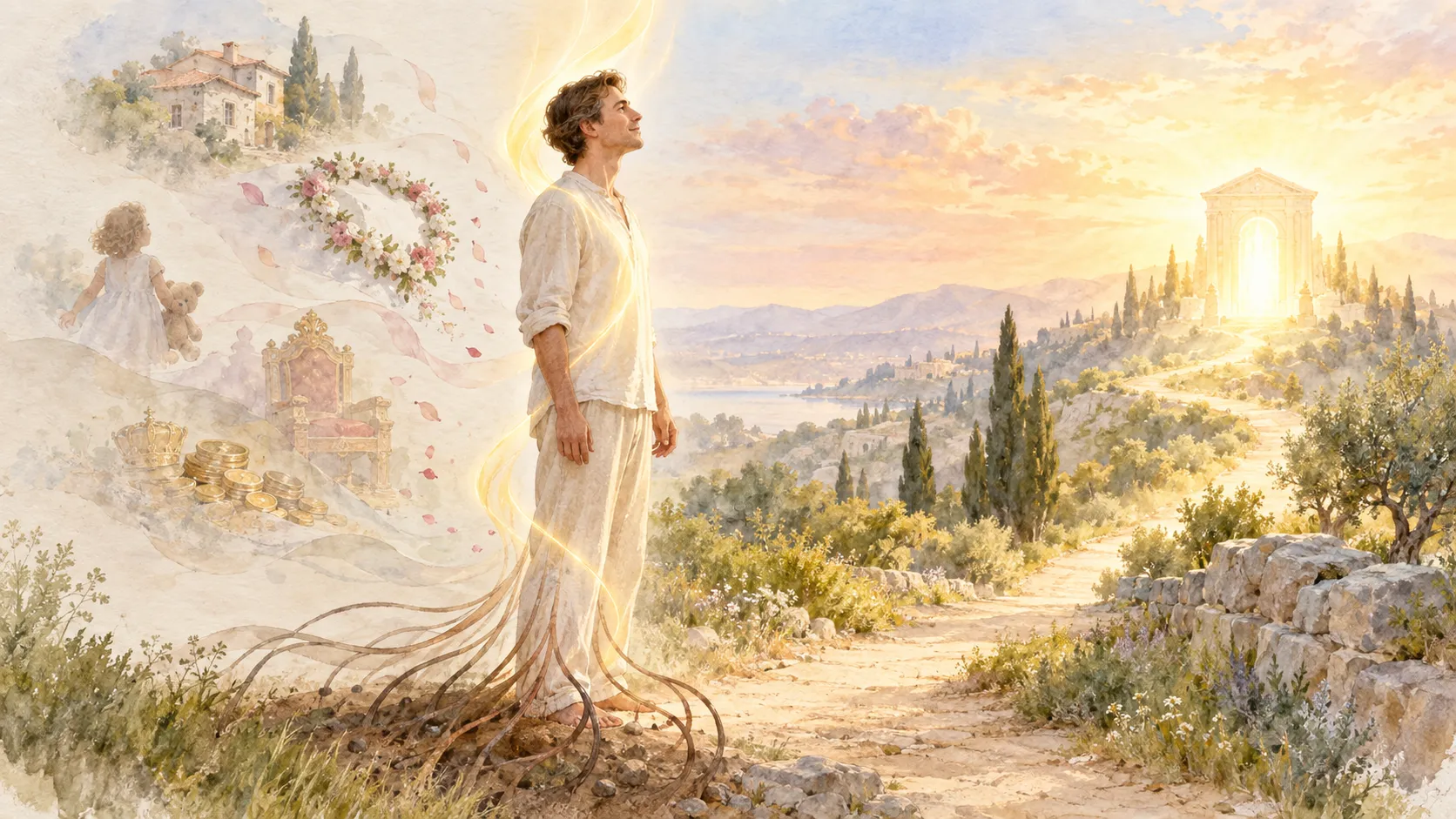
One can become free only in God. One cannot become free through work; through work one can become enslaved. One cannot become free in marriage; one can become temporarily happy in marriage, though some do not even manage that—temporarily for twenty years, fifty years; there may be golden and silver wedding anniversaries, but nothing permanent. One can be happy in motherhood for a time, but not permanently. In possessing power and wealth—yes, temporarily. Someone revels in power, but then has to flee somewhere—karma, because power or no power, it finds its intended recipient.
We can find happiness in temporary things and in our ego, but happiness in God is eternal liberation. When such love for God, faith, devotion, and desire for liberation arise within us, the question is how much we can strengthen them so that they overcome the gravity of our karma. This gravity is very strong, but our capabilities are not weak either. We can strengthen our faith, strengthen our love for God, strengthen our knowledge, and strengthen our devotion through sadhana, tapasya, and self-surrender.
Accepting Human Limitations and Divine Potential
We should not be ashamed to acknowledge our weaknesses. We are human beings, not gods in luminous bodies, spinning galaxies on our fingers. We are only human—there is nothing wrong with that; we are meant to be weak. We have short-lived bodies made of the five elements, which live for a hundred years at best. If you live to be a hundred, you will become a celebrity, and people will come to ask you, “How did you manage it? What did you eat? What kind of lifestyle did you lead?”—while the gods live for billions of years.
Human beings are very limited in their knowledge: we possess neither omniscience nor clairvoyance; the past is unclear—we do not know who we were or what we did and can only speculate, unless we have clairvoyant vision. The gods know everything from the moment the universe was created and remember it all. The future is unclear as well: what awaits us, where we will be born in the next life—even the immediate future is so vague. But intelligent people, of course, understand that the future must be taken into their own hands, that if we do not direct our future, the planets take over this function and provide us, so to speak, with the standard package.
As human beings, we are weak because we are only human—not titans, gods, siddhas, maha-siddhas, rishis, vidyadharas, or gandharvas—we have limitations. We begin by understanding these limitations without harboring illusions, but we have potential, and this potential gives us great hope.
We can rise to the level of the gods; we can even become those from whom the gods seek wisdom; we can free ourselves from the limitations of this world and develop our omniscience. We can overcome all the flaws of our karma, all our imperfections and weaknesses, and become a great divine being—a maha-purusha, an uttama-purusha, a great, divine, cosmic spirit, one with God, embodying one of His energies, one of His powers. But a great goal requires great sacrifices; it comes at a high price, at a great cost.
The Price of Spiritual Attainment
Here we always wonder: “How high a price am I willing to pay, and how much effort is required, how many pranayamas, how much concentration, how many mantras, how many thousands of rounds must be counted? How long must one sit in Mahashanti meditation?”
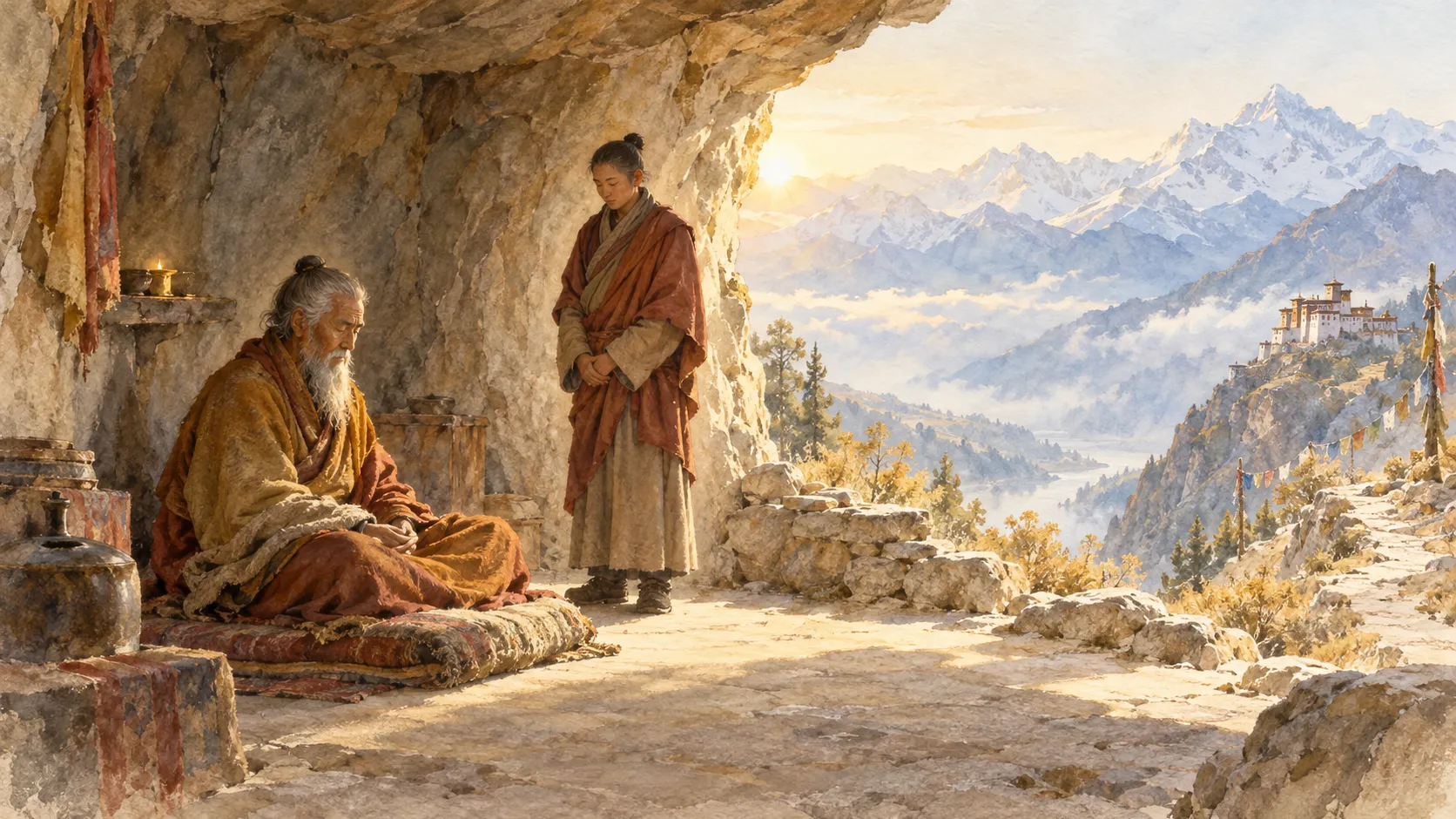
There is a story about Milarepa giving his disciple Rechungpa his final instructions before they parted, as Rechungpa was setting off on a long journey and they might never meet again. Milarepa said, “And now, my son, my final instruction.” He turned his back to him, pulled down his trousers, and showed him the calluses on his buttocks: “Do you see these calluses? All my attainments are thanks to them”—that is, he had developed calluses on his buttocks from sitting in meditation. That was his final instruction to his disciple. This is a certain price one pays in spiritual life.
But even this is not the most important price. The most important price is our renunciation of selfishness and our endless self-surrender to God in love. If there is love for God, if there is devotion, it is not difficult to do this; it is not difficult to pay this price—it is paid effortlessly, as if in play.
My blessings to all of you, so that you may abide in this love and devotion.
