Four dangers on the monk’s path and the importance of discipline
20.06.2026
0 мин. чтения
0
Share
copy
search
add
share
Commentary on the text “The Questions of Milinda”
This sutra from the collection “The Questions of Milinda” is called “The Chātumā Sutta.” It is so called because at that time the Buddha was staying in Chātumā, in a myrobalan grove. The myrobalan is a fruit that grows in India and somewhat resembles an apple. At that time, 500 monks, led by the Buddha’s two foremost disciples (Śāriputra and Maudgalyāyana), reached this place in order to meet with the Buddha and the other monks. The meeting was very lively, because they had not seen one another for a long time. Some were pointing out places to spend the night, others were saying where to put outer robes and their bowls, and all the monks were making noise and clamor.
Then the Buddha called Ānanda and asked:
“What is this noise, Ānanda? What is this clamor? Have fishermen perhaps hauled in a net with a big fish?”
Ānanda told him what was the matter. And then the Buddha said:
“Please call all the monks to me, Ānanda.”
When the monks had gathered, the Buddha asked again:
“What is this noise? What is this clamor? Have fishermen perhaps hauled in a net with a big fish?”
And the monks explained what was the matter. Then the Buddha said:
“Go, monks; I dismiss you. You can no longer live in my presence.”
The monks were shocked, but they replied:
“Yes, venerable sir.”
Not daring to disobey, they circumambulated the Buddha, thus paying him respect, rolled up their bedding, took their outer robes and bowls, and left.
That is, they decided to go back home. Their meeting did not take place because of the noise and clamor.
At that time the Śākyas (people of the Śākya clan) were in the Assembly Hall attending to their affairs. The Śākyas were the clan to which the Buddha himself belonged.
These people of the Śākya clan in Chātumā saw the monks from afar, approached them, and asked:
“Where are you going, venerable ones?”
They said that the Buddha had dismissed them, and therefore they were returning. Then the people of the Śākya clan, who were related to the Buddha, said:
“Sit here for half an hour; perhaps we will be able to appease the Buddha.”
The people of the Śākya clan went to the Buddha, greeted him, and said:
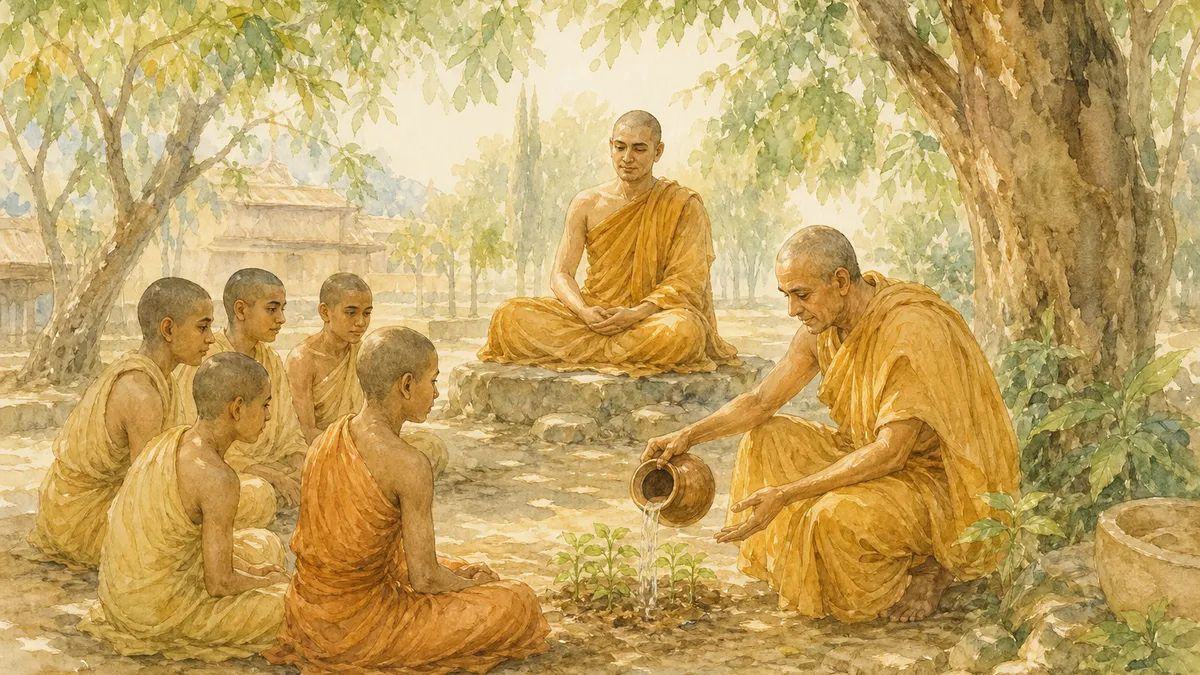
“Venerable sir, be gracious to the community of monks. Please give them instruction. There are monks there who have only recently taken ordination; they have only just come to the teaching. If they do not see you or receive your instructions, their minds will change and grow coarse. Just as young shoots, not receiving water, will wither, so too will the monks, not receiving your instructions, lose their chance for liberation. Therefore, venerable sir, just as before you were kindly disposed toward the community of monks, so now too be kindly disposed toward them.”
Brahmā recognized the Buddha’s thoughts and sent his magical emanation into the world of humans, that is, he appeared in the human world. He took the form of a monk, respectfully joined his palms, and also addressed the Buddha with these words:
“Venerable sir, just as before you were kindly disposed toward the community of monks, so now too be kindly disposed toward them.”
In this way the people of the Śākya clan, together with Brahmā, managed to persuade the Buddha with these words. Then the teacher Maudgalyāyana called the monks. He said to them:
“Friends, rise, take your outer robes and bowls. The Awakened One has been persuaded by the people of the Chātumā Śākya clan and by Brahmā, the Lord of Power.”
The monks said:
“Yes, friend,” and came to the Buddha.
Then the Awakened One asked Śāriputra, who was sitting near him:
“What were you thinking, Śāriputra, when I dismissed the community?”
He said:
“I thought then, venerable sir: now the Awakened One will abide carefree in a happy state already in this very life, and so will we.”
That is, Śāriputra thought that now the Buddha would have no worries and would enjoy his absolute state. He also thought that they too would have no worries, since they would have no need to deal with these novices—noisy and fussy monks who do not control their minds. In other words, he was glad. One could say that he clearly had inclinations toward the practice of Hīnayāna negation.
But the Buddha said:
“Beware, Shariputra, of such thoughts. You should not think this way in the future.”
Then the Buddha called Maudgalyayana and asked:
“And what were you thinking, Maudgalyayana, when I dismissed the community?”
He said:
“I thought that now the Buddha would dwell carefree in blissful samadhi already in this very life, while Shariputra and I would look after the community.”
The Buddha said:
“Good. Either I can look after the community, or you—Shariputra and Maudgalyayana—can.”
Four Dangers for a Monk
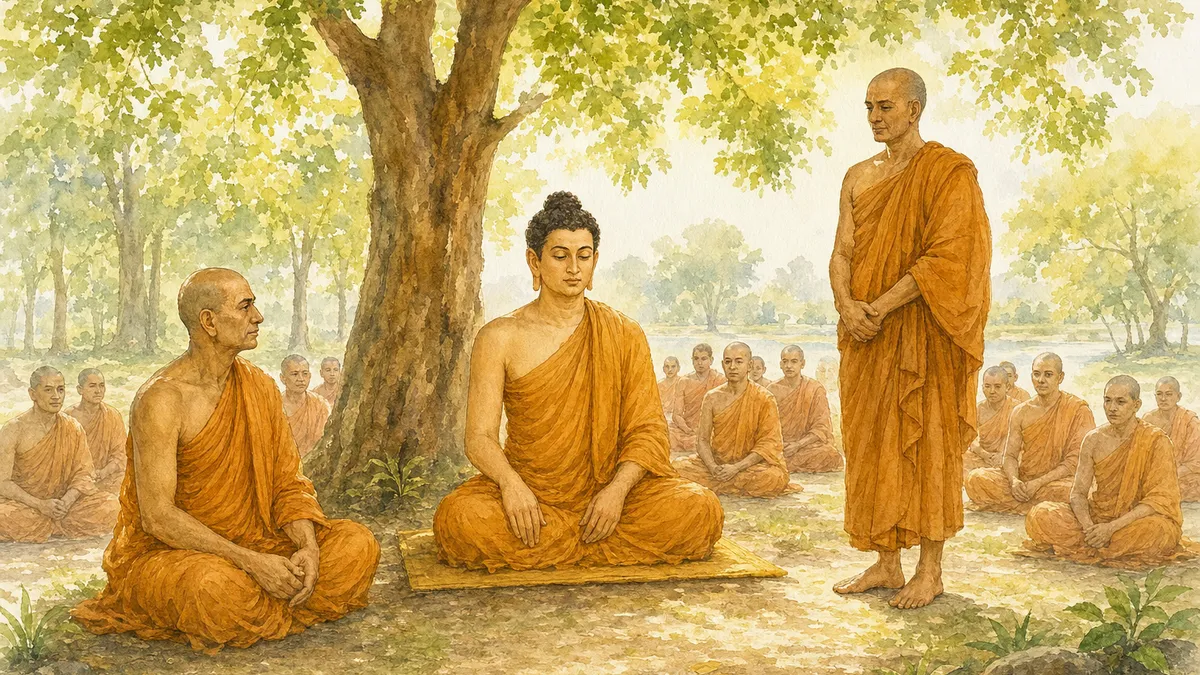
Then the Buddha addressed the monks. He said:
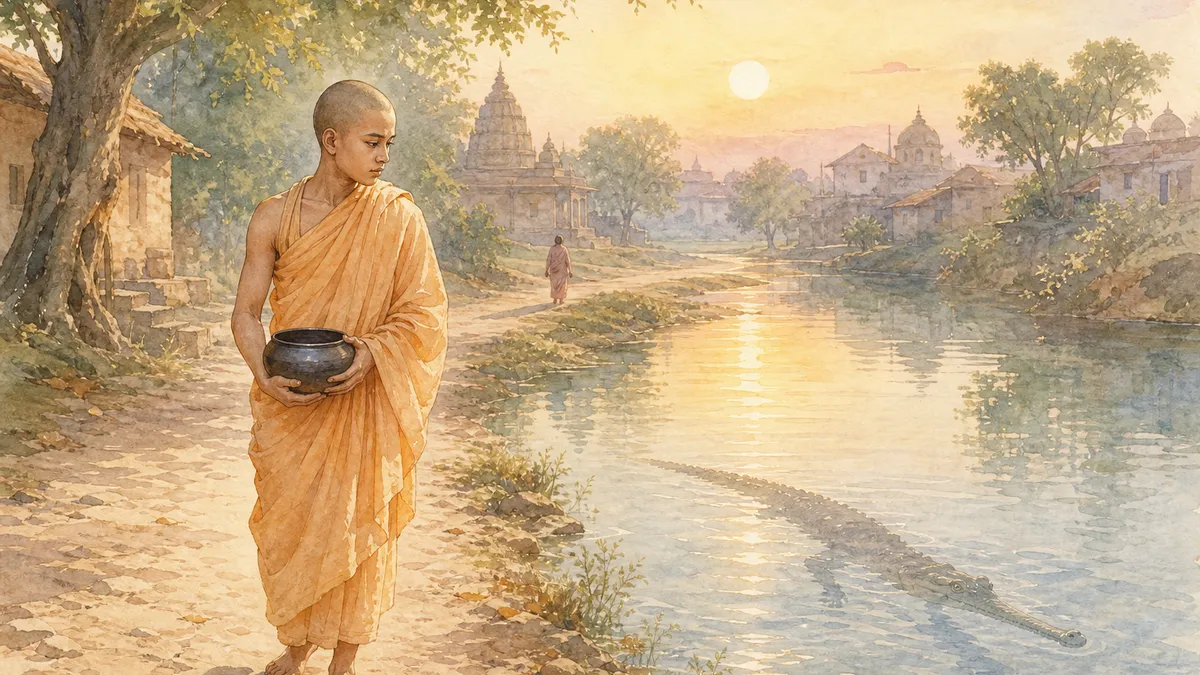
“There are, O monks, four dangers that should be guarded against by one who enters the water. These are the danger from waves, from crocodiles, from whirlpools, and from gharials. Likewise, O monks, there are four dangers that should be guarded against by one who, having followed the teaching and instruction, has taken ordination and gone forth from home into homelessness. They are: the danger from waves, from crocodiles, from whirlpools, and from gharials.”
Danger from Waves
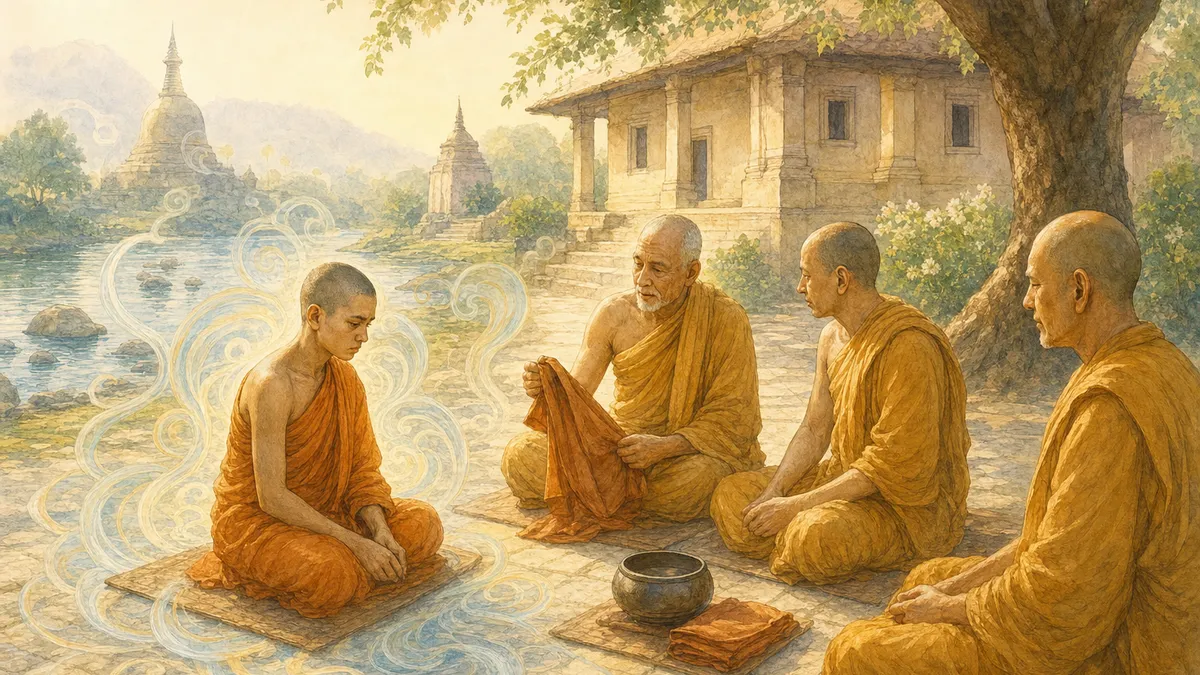
A certain scion of a well-known family, from a devout household, leaves home for the monastic life, takes ordination, and thinks: “Now I have escaped, afflicted by karmic burdens, from the wheel of birth and death, sorrow, suffering, pain, dejection, despair, and old age; I have escaped, and the end of this whole mass of burdens is already in sight.” And such a newly made monk begins to be taught and instructed by his companions in the brahmanic life: one should approach in this way, depart in this way, look in this way, bend in this way, straighten up in this way, and keep one’s bed, outer robe, and bowl in this way. This person thinks: “While I lived at home, I myself taught and instructed others. They are fit to be my sons and even my grandsons, yet they think they can teach me.” And then he abandons the training and returns to what is worse. The danger from waves, O monks, is what anger and indignation are called.
Danger from Crocodiles
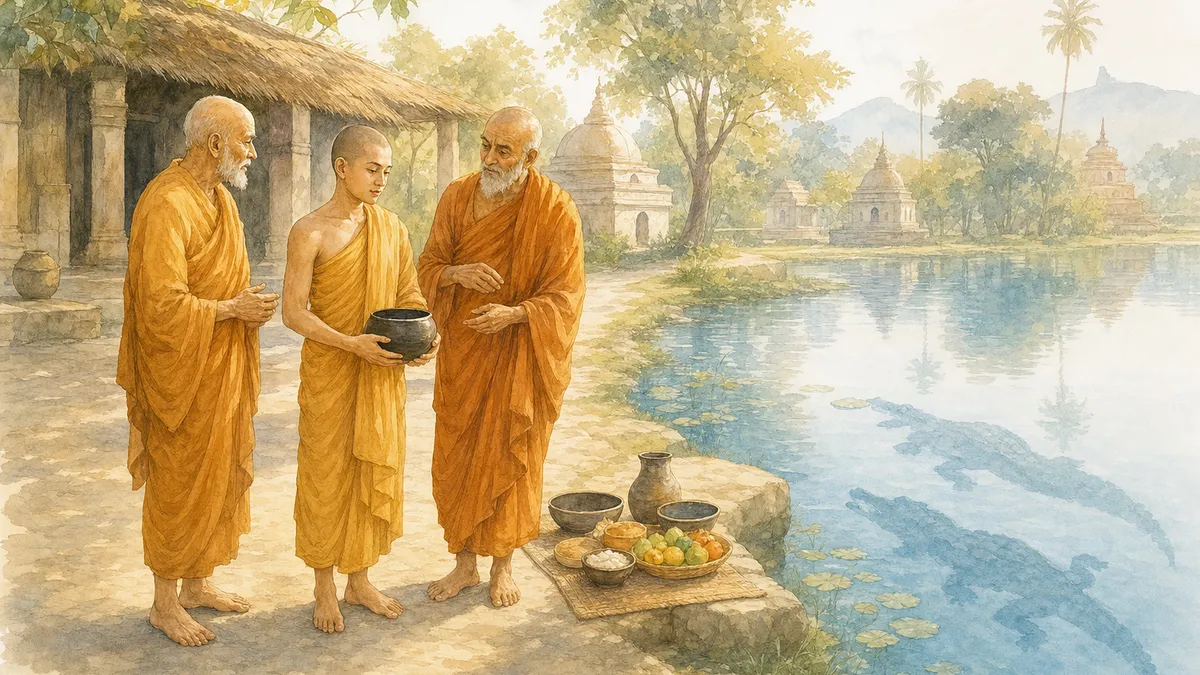
A certain scion of a well-known family, from a devout household, leaves home for homelessness and monastic life, takes ordination, and thinks: “Now I have escaped from births, old age, death, suffering, pain, dejection, and despair—samsara; I have overcome the burdens, and the swift end of all my sufferings is already in sight. Liberation, too, will soon come.” And such a monk begins to be taught and instructed by his companions in the brahmanic life: this solid food may be eaten, this solid food may not be eaten; this drink you may drink, and this drink you may not drink; permitted food and drink may be consumed, but this may not; at such and such a time one may eat such and such food, and so on. And he begins to think: “While I lived at home, I ate and drank what I wanted and when I wanted. I ate both what was permitted and what was not. Faithful laypeople offer me excellent food during the day, not at a fixed time, while these monks, it seems, are gagging me.” And then he abandons the training and returns to what is worse. This, monks, is called: a person was frightened by crocodiles, abandoned the training, and returned to what is worse. The danger from crocodiles, monks, is what attachment to gluttony is called.
Danger of Whirlpools
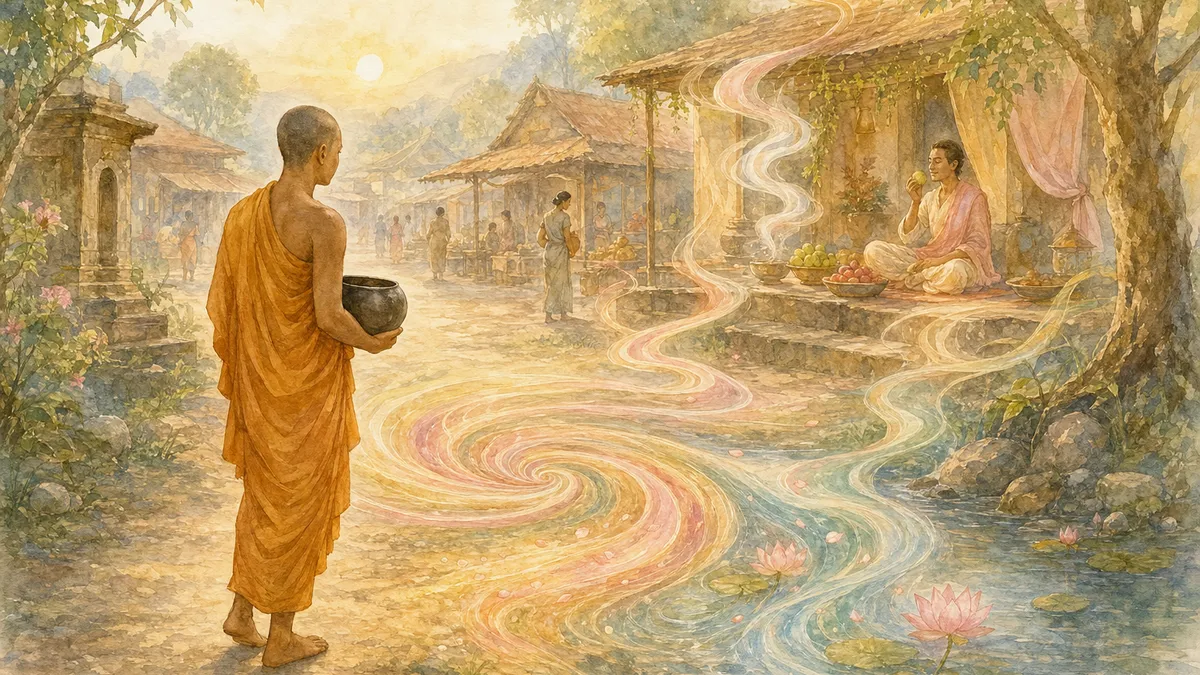
A certain offspring from a devout family leaves and thinks: “I have become a monk, and now I have escaped from the wheel of birth and death, suffering, sorrow, samsara, and liberation already seems near.” Such a monk rises early in the morning, puts on his outer robe, takes his bowl in his hand, and goes for alms to a village or to the market, not guarding his body, not guarding his speech, not established in mindfulness, not restraining the sense faculties. There he sees a householder or a householder’s son satisfying and delighting his senses with the five pleasures. And then he begins to think: “While I lived at home, I too satisfied and delighted all my senses with the five kinds of pleasures. One can both enjoy oneself and perform good deeds.” He abandons the training and returns to what is worse. This, monks, is called: a man became frightened of whirlpools, abandoned the training, and returned to what is worse. Whirlpools, monks, are what sensual pleasures are called.
Danger from gharials
A certain offspring from a devout family leaves and likewise thinks: “I have escaped from births, old age, death, pain, despair, and liberation from samsara already seems near.” And he likewise rises early in the morning, puts on his robe, takes his bowl, and goes for alms, not restraining the sense faculties, not guarding his speech, not established in mindfulness. There he sees a woman poorly covered. At the sight of this half-clothed woman, passion shakes his thoughts, and he abandons the training and returns to what is worse. This, monks, is called: a man became frightened, abandoned the training, and returned to what is worse. This is called “danger from a gharial.”
Such, monks, are the four dangers that one who has followed this instruction, accepted the tonsure, and left home for the monastery should beware of.
Thus spoke the Blessed One. The monks received what he said with delight.
Principles of monastic life
Thus, this “Chatuma” sutra was read precisely in relation to awareness.
The life of a monk is guarding the body, guarding speech, establishing oneself in mindfulness, and restraining the sense faculties. You must know all the rules of etiquette and the principles of relationships accepted in the monastery in order to be constantly guided by them, and not act according to your own desires. For example, if etiquette says that a monk acts in such-and-such a way in a particular situation, then that is how one should act. If, however, you see that the rules are interpreted contradictorily and therefore difficulties may arise, you need to clarify this matter with the senior monks. However, you must know: we live by rules. At the level of behavior, the rule is higher than you. A rule is tapas, a rule is a vow, a rule is discipline.
There are different categories of practitioners: laypeople, hermits, monks, avadhutas. Laypeople live at home, hermits live separately from others (in a monastery or somewhere in their own cells), monks live in a monastery, and avadhutas live wherever the wind may lead. Among monks there are also different categories: brahmacharis, novices, sutra monks, tantra monks, and anuttara-tantra monks (the latter belong to the avadhutas). Everyone must know their duties, vows, rules, and prescriptions, respect them, and follow them. This is the principle of monasticism.
When you have discipline outwardly, the habit of inner self-discipline also begins to arise. To follow rules does not mean to be bound by them, to be under limitations. On the contrary, it is a conscious state beyond limitations, when you practice a certain tapas or austerity as a practice. It is precisely in this sense that we speak of respecting the rules.
Thanks to the rules, you can constantly remain in awareness. The rules of monastic etiquette, Vinaya, or samaya are like a challenge to our conditioning. You want to act one way, but you are told that according to the rules you must act differently! And then a choice immediately arises for you: either to do it your own way or according to the rules. And in the process of this choice, detachment from what is your own arises, because until you detach yourself from everything that is your own, you will never come to true understanding.
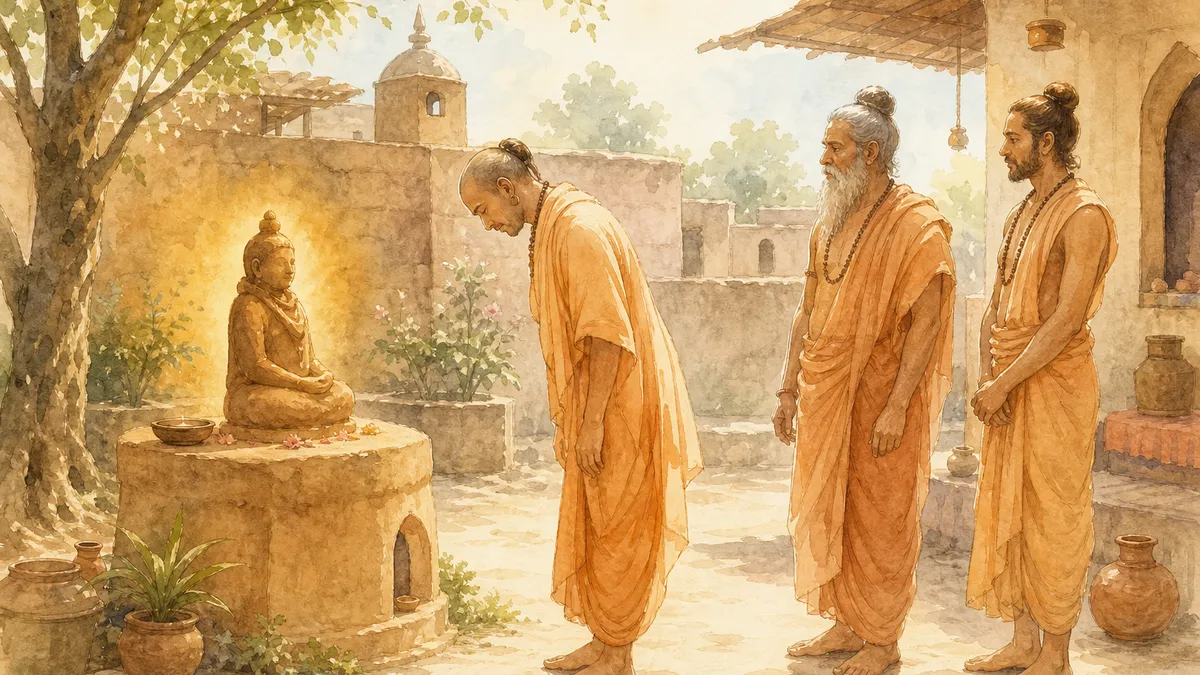
One should not be captured by rules, but if one lives in a monastery, they must be respected unconditionally. If the rule prescribes that this monk be regarded as senior, then regard him that way, without thinking: “But he is three times younger than me,” or “Perhaps my kumbhaka is greater.” What difference does it make? Accept it as a practice, as tapas. For example, when looking at a clay image of Matsyendranath, you do not think: “But this is just a piece of clay.” You bow to it, and this evokes reverence in you. And when you have such an attitude, this piece of clay becomes something more — it becomes a murti, that is, an image of a deity, a secondary cause that reveals a deeper state. The same should be done with regard to monastic principles. While in a monastery, one must not neglect monastic principles, because then you will come into contradiction with the entire mandala, and therefore it will be difficult for you to engage in practice.
From External Rules to Inner Impeccability
At the level of vision, rules do not exist; there is only awareness. In meditation, the rule is presence and the maintenance of awareness. In vision, the rule is Brahman. In behavior, however, there are rules for laypeople, rules for novices and monks, and rules for other categories (hermits and avadhutas). In the beginning, rules seem external; then we see that rules are a way to live impeccably. For a genuine practitioner, any rules cease to be external; they arise from within as his own impeccability. A self-respecting monk observes the rules out of his own impeccability, not because they are written down or because they must be followed for the sake of others. This is something natural for him. To one who does not know impeccability in controlling sexual energy, it is said: “Observe the rules of brahmacharya, and if you commit a violation, repent and take on penance.” But one who has pure nadis and deep awareness understands that preserving the channels and prana is natural. One who controls his mind and abides in presence will naturally be harmonious; he will understand those who are above and below him and observe the rules of speech. Only when there is no awareness are external prescriptions needed, which must be memorized.
Thus, from the external rule (vinaya), we move further, inward, toward samaya. Samaya is, one might say, the rule of the inner Spirit. Monasticism is built on observing the principle of samaya and the rules of vinaya. Without observing them, it is difficult to remain in monasticism. To be in monasticism, to go toward liberation, is like riding an unbroken stallion: the moment you lose focus, it bucks and throws you out of the saddle. One could say that our pranas and our karmas are an unbroken stallion. But it is not enough to stay in the saddle; one must also direct it properly and ride to the finish.
If you understand this, your monastic life from the first day and throughout all subsequent years of practice will be harmonious and happy. All attainments will come in due course.
Read 16 times
Articles
Vidya AI
Search
Lectures
November 4, 2026
Mantra of the day
ОМ СИДДХАЙА НАМАХ ОМ Совершенному – поклонение!
Auspicious Times(Rome)
Brahma Muhurta:
04:55 - 05:50
Abhijit Muhurta:
11:33 - 12:14
Sayam Sandhya:
16:41 - 17:23
Mokshada Ekadashi (6 November)
Ekadashi of liberation. Helps to achieve spiritual enlightenment.