

When we bow, we remember Dattatreya; when we sing a bhajan—therefore, if a day has passed without bowing even once, without singing a bhajan, then the day has been wasted. A pure, devoted heart is capable of bowing to God; then all the glorified qualities awaken within it.
“I greet Guruji in the form of Dattatreya, in the form of a sannyasi of the highest rank, the one who is protected by all the gods. I greet Guruji Dattatreya, who plays the divine game on the holy land of Bharata, whom everyone respects and praises.”
“Offer praise to Gurudeva Datta, who has blessed us with fearlessness; where God is, there is truth; God is filled with universal compassion; he is the embodiment of purity—may he bestow blessings upon us all. Praise Gurudeva Datta, the greatest Lord among all.”
The Destiny of a Sadhu
The destiny of a sadhu is to constantly think of God, constantly investigate God, constantly remember God, constantly listen about God, glorify God, praise him, constantly offer prayers, constantly serve God, constantly carry out the divine will, and to make everything he does in his life a maha-yajna (a great sacrifice to God), to act in the name of God, to carry out the divine will, to know divine wisdom, and to manifest divine deeds.
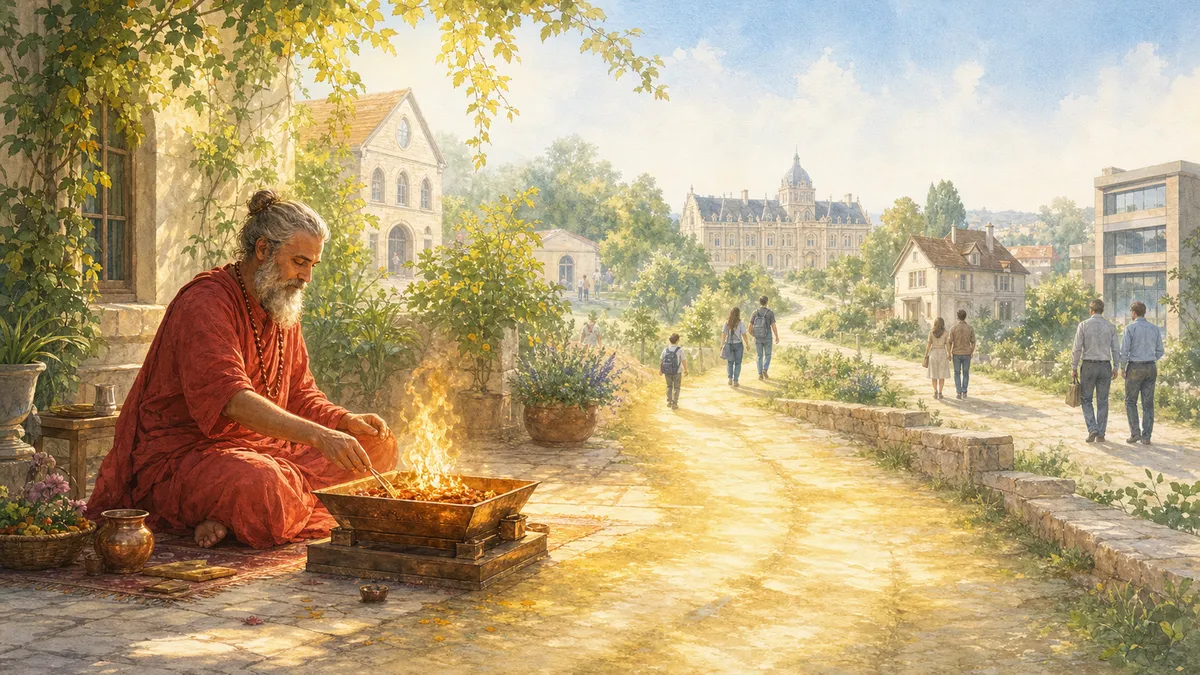
Usually, in society, in the culture of materialistic, atheistic people, destiny is usually conceived differently, and society gives us a certain template: you are born, you go to kindergarten, you go to school, after school you go to university, you graduate, you receive higher education, then they say: “You need to get married.” Parents say: “We need grandchildren—how can we do without grandchildren?”—the program of material energy is already beginning to act, to program. This is Prakriti; Prakriti itself is already speaking to you at this moment, what is said in the Bible: “Be fruitful and multiply.”
The Battle Between Maya and Anugraha
The task of Maya, of Prakriti, is to maintain this material world through you; you are its conductors. For example, when a preacher appears and says: “You are not maya, you are not Prakriti; your path is different, you are divine souls entangled in Maya; your path is the path of self-realization, the path of liberation, and the path of God—wake up.” Maya does not always like this; that is, a preacher, a missionary, a spiritual Master, a Teacher is always a competitor of Maya, because maya has certain plans for the soul.
It says: “You are my servant, you are my slave, serve me all your life. You served in this life, you served in the past one, and serve in the next ones; accumulate as much karma as possible, accumulate as many worldly desires as possible, constantly awaken one desire, then another, then a third, and I will help you. If you serve me well, I will give you the opportunity to fulfill these desires, and there will be no end to it: you will be reborn, and die, and be reborn again, and die again. Thus you and I will play happily until the end of the kalpa, until the end of the creation of this entire material Universe”—this is its arrangement.
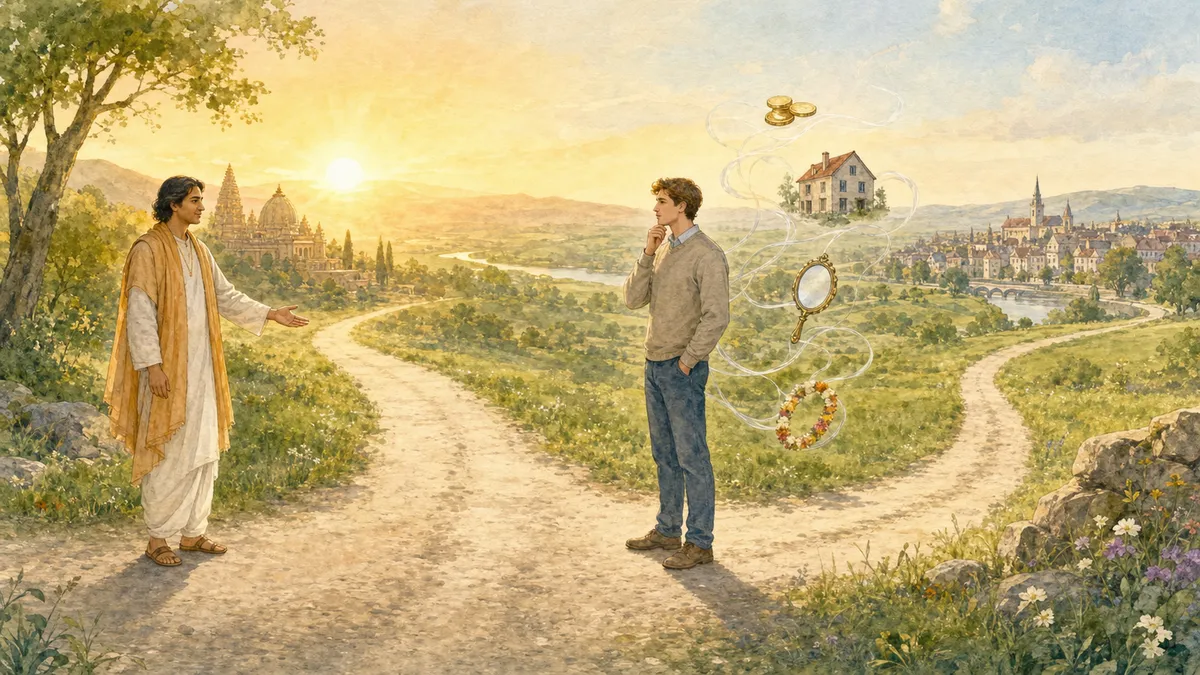
Maya performs this service of maintaining the Universe, acts perfectly, and influences all living beings. But there is another energy: maya is the energy of God, but there is another energy of God—Anugraha, whose servants we are, precisely of Anugraha. It says: “Awaken, awaken, you are a divine soul, you are not this body; your task is to realize your divine Atman, to realize God, to establish a connection with the divine reality, and to attain liberation.”
Anugraha sends the soul the sacred scriptures of the gods, saints, teachers, sacred texts, ashrams, temples, and these are always two such competing energies. Anugraha helps people to become liberated—it is the power of Shiva, awakening the soul from the sleep of samsaric existence. Dattatreya is the messenger of Anugraha, therefore there is always such transcendental competition between Maya and Dattatreya.
There is also a transcendental competition between the Guru and the influence of the material world, because the material world says: “You must all live according to this pattern: you were born, went to kindergarten, went to university, went to work, got married, retired, worked your time, that’s it, received a pension, lived a couple of decades after retirement, and then on to a new round of reincarnation, that’s it” — this is the ideal life offered by society.
But the messengers of Anugraha, the messengers of God, say: “This is completely the wrong path; you are going the wrong way. You need to realize yourself, you need to practice sadhana, establish a relationship with God; you were born here precisely for this — this is your goal. You were born here precisely because in the past you did not realize this goal. Try; you have been given one more chance, come to your senses” — this is what the messengers of Anugraha say. “Do not seek Maya” — and when Maya hears this, she does not like it very much.
Maya thinks: “All these souls belong to me; they are my obedient servants. They must embody the desires that I transmit. They must embody the goals of the material world that I transmit.”
The Gurus, masters, preachers, they say: “You are spiritual souls; you do not need to embody these goals, you need to awaken.” Maya thinks: “My souls are being taken away from me; they have no right to follow the path of liberation, they have many desires, they are not sannyasis, not renunciates. Renunciate monks are only a few. Let them go; I can no longer collect any karmic credits from them. But these are worldly people, they have many desires, they live among cities, they live in families, which means I have rights over them. They must work off all my karma; they have no qualities” — this is the course of her thoughts.
Spiritual Masters come and say: “Not at all; there are skillful means. They can very well follow the path of liberation,” and they say that these souls are not obliged to serve this Maya, they are not obliged to remain in ignorance. They have the right to choose; they can choose God. Such is the spiritual competition. When Spiritual Masters and spiritual teachings acquire great influence, Maya does not like it. She may even resist this, because she feels that these souls have strayed from the path of devotional service to her and have entered the path of serving God. The path of liberation from her; she does not want to let souls go just like that. Such competition, a battle for souls, is always there, and it takes place within every sadhu.
Dattatreya — Protector and Liberator
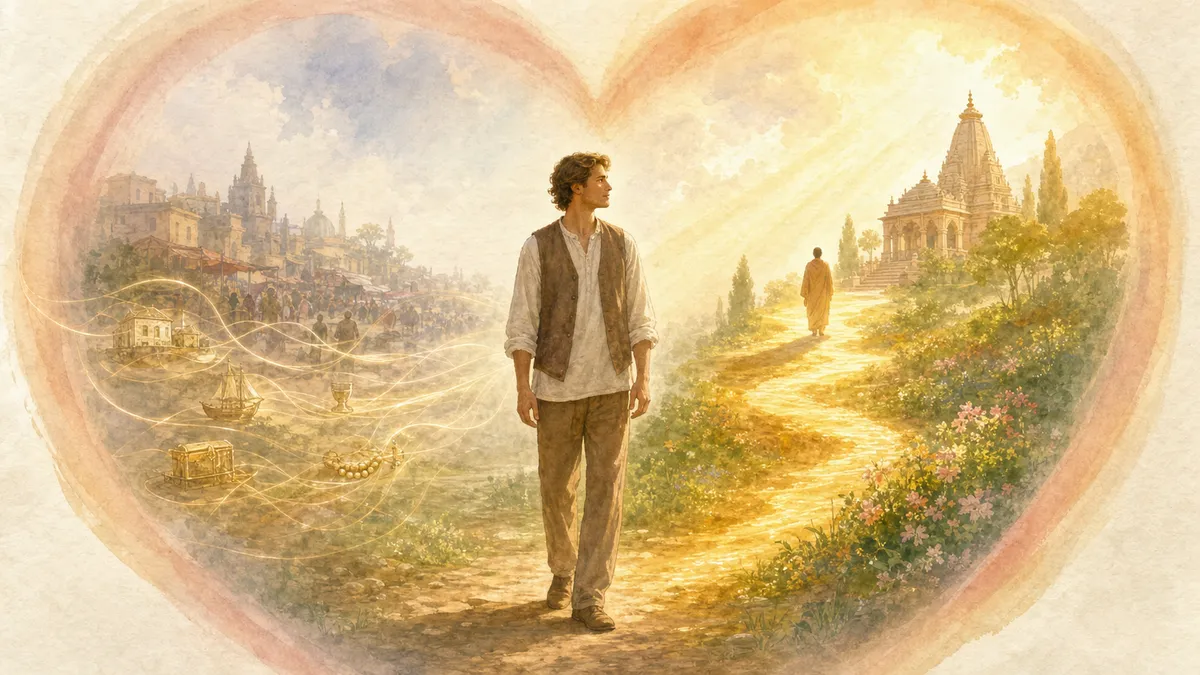
Dattatreya is the one who goes forth playing on our side; Dattatreya is the one who helps us become free in this battle, and therefore we invoke him as the principal deity in our tradition. Dattatreya vowed always to save conditioned souls who turn to him.
What are the qualities and attributes of Dattatreya? If we open “The Thousand Names of Dattatreya,” the first one sounds: “Om Dattatreyaya Namaha” (to Dattatreya — obeisance), then “Mahayogine Namaha” (to the Great Yogi — obeisance). Dattatreya is a great yogi, the king of yogis, the lord of all yogis. He is the primordial ancient Guru of all Gurus; he is immortal, he has never died or departed from this Earth, that is, in his invisible form he always exists on Earth.
“Om Yogishaya Namaha” (to the Lord of Yoga — obeisance), Dattatreya possesses all methods of yoga, all methods of tantra, the knowledge of all asanas, all pranayamas, all techniques of kundalini yoga, all secret magical teachings, all means of liberation. Dattatreya especially possesses the methods of nondual contemplation; this parampara comes from Mount Kailash, from Shiva, when Shiva transmitted to the pramathas (leaders of the ganas), the spirits living on Kailash, the sankalpas and sanketas of the teachings of laya yoga and other yogas; Dattatreya himself speaks of this in a conversation with his disciple in one of the texts.
“Om Amare Prabhave Namaha” (to the Lord of the immortals — obeisance), there is a class of beings who have surpassed the human level: sadhus, jnanis, siddhas (immortals) — they always invisibly exist on our earth; some of them live for five thousand years in one body. Others carry out transference from the subtle body, from body to body, and also live on earth for many thousands or hundreds of years, and Dattatreya is the lord of these immortals.
For example, if at the Kumbh Mela you see some young sadhu, perhaps even sixteen years old, in orange robes, smoking a chillum, do not hurry to think that this is a sixteen-year-old boy; he may have the body of a sixteen-year-old, but the soul has entered it using the method of parakaya-praveshana; perhaps it is three thousand years old, perhaps five hundred years old, having chosen a suitable body, as Brahmananda did.
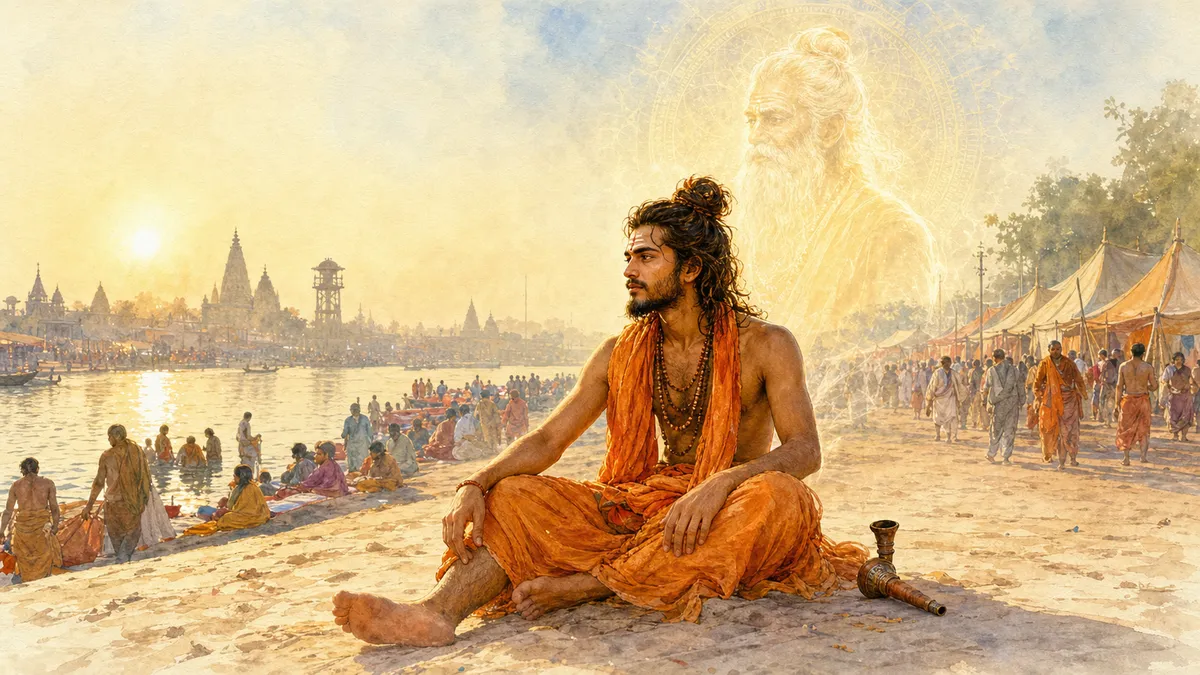
Mauna — the Silence of Dattatreya
“Om Munaye Namaha” (Homage to the Silent One), Dattatreya is one who loves mauna (silence). The silence of Dattatreya consists in the fact that Dattatreya does not abide on the plane of the mind, since he abides beyond the mind (amanaska); he can perfectly control speech. For us it is very difficult to control speech; sometimes we talk, talk, talk, wasting energy. When we waste energy, our energy decreases, desires arise; for example, we want to eat more than necessary, and we eat. When we eat more than necessary, sexual desires arise more than necessary; if it is less than necessary, it can be controlled, raised through the sushumna, and it will become energy. When it arises more than necessary, this energy becomes sexual desire (lust) — all of this is a consequence of the absence of control over speech.
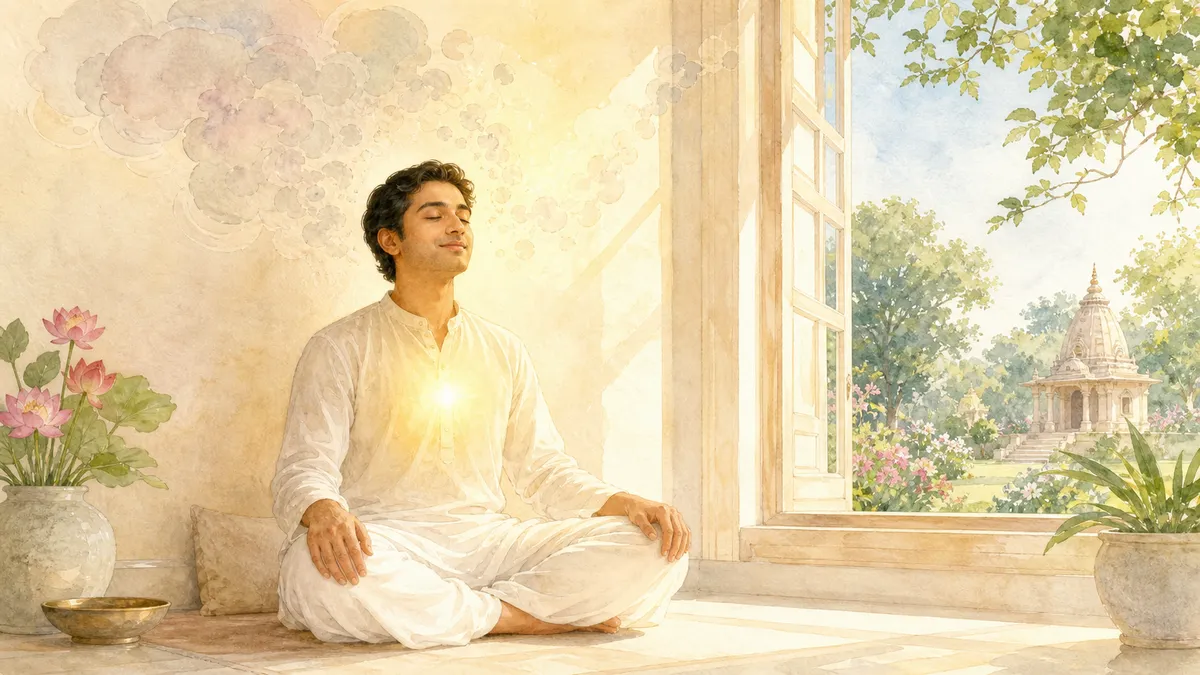
But control of speech itself means abiding in a state of awareness beyond the mind, and Dattatreya is the Master of amanaska yoga. Amanaska yoga does not mean that we block the mind or remain constantly silent; it means that we have mastered that level and that state of awareness which allows us inwardly to abide beyond thoughts, beyond speech, beyond words, and beyond the mind. When perfect control over speech, thoughts, and the mind is attained, this is called antar-mauna (inner silence).
Inner silence is a synonym for contemplative presence. When we can abide in inner silence, contemplative presence develops naturally, and in contemplative presence one can align oneself with God, abide in God, abide in continuous happiness, bliss, and rapture from unity with God. When there is no contemplative presence, when the mind constantly weighs upon us, we cannot be happy. Because we are always preoccupied with something; contemplative presence beyond the mind is a synonym for happiness, because happiness abides where the mind is silent.
Freedom from Maya and the Dimension of Turiya
“Om Digambaraya Namaha” (Homage to the One clothed in the directions of space), Dattatreya is clothed in the directions of space, which means that he represents infinite consciousness, infinite space, our own non-dual essence.
“Om Mayamuktaya Namaha” (Homage to the One free from Maya), we are in some sense subordinate to Maya. Maya dominates us because maya is everything we know. We live in a global universal illusion: karma, causes, effects, time, space, the five elements — all of this is maya. Rhythms, cycles of life, culture, society, connections, relationships — all of these are diverse forms of Maya. Dattatreya is free from this; therefore, if we want to meet Dattatreya, we need to seek him beyond Maya. What does it mean — beyond Maya?
Maya is the physical world, maya is sleep with dreams, and maya is even dreamless sleep, but Dattatreya abides in the dimension of turiya. Turiya is beyond the three dimensions; the so-called expression “trailokya” (three worlds) is all a symbol of our maya. Our material Universe consists of the physical world, the astral world (antar-loka), and the causal world (karana-loka); beyond these three worlds of maya lies the transcendental dimension — this is the dimension of turiya, and Dattatreya is the one who lives in the dimension of turiya.
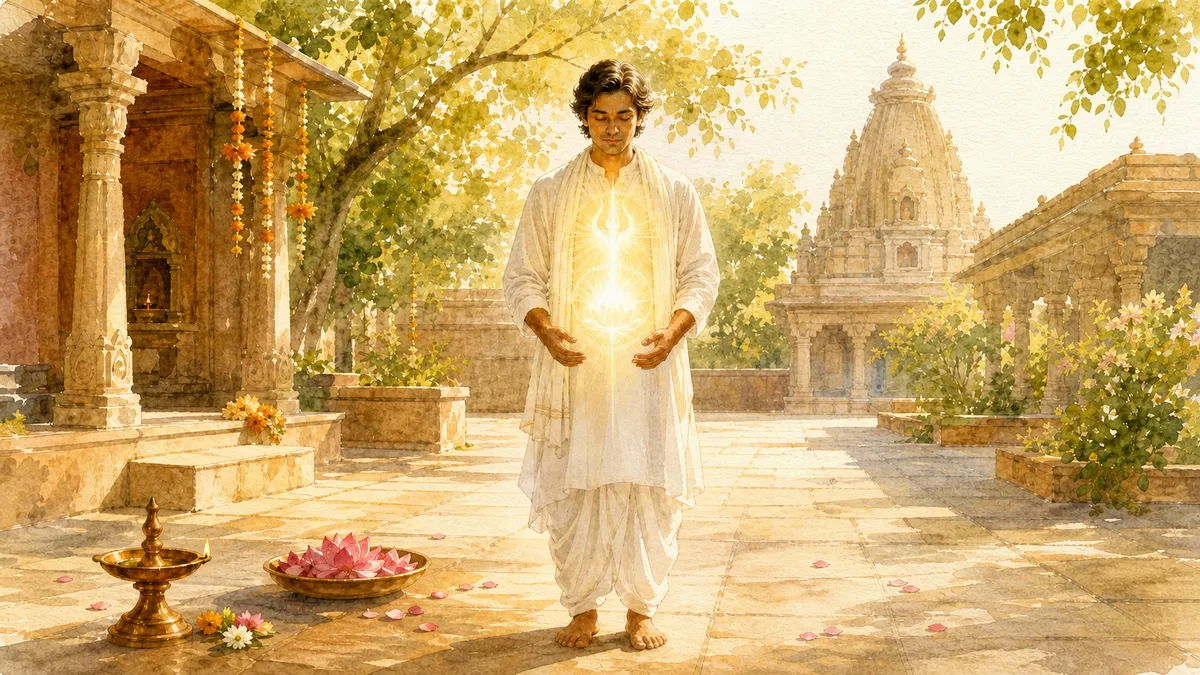
Someone may say: “How, then, can we unite with, meet Dattatreya, if we live in the material world, and Dattatreya is in the transcendental, with a huge abyss between us?” — but this is possible if we have faith, a devoted heart. Through devotion we can establish a connection with the dimension of Dattatreya, and this dimension of Dattatreya is not outside; it is the Atman within us.
Within us there is the radiant form of Dattatreya, the radiant, formless, pure consciousness of Dattatreya; if we purify the heart through devotion, faith, and worship, then the inner Dattatreya begins to awaken.
The Story of the Crow Kakasura and the Power of Surrender
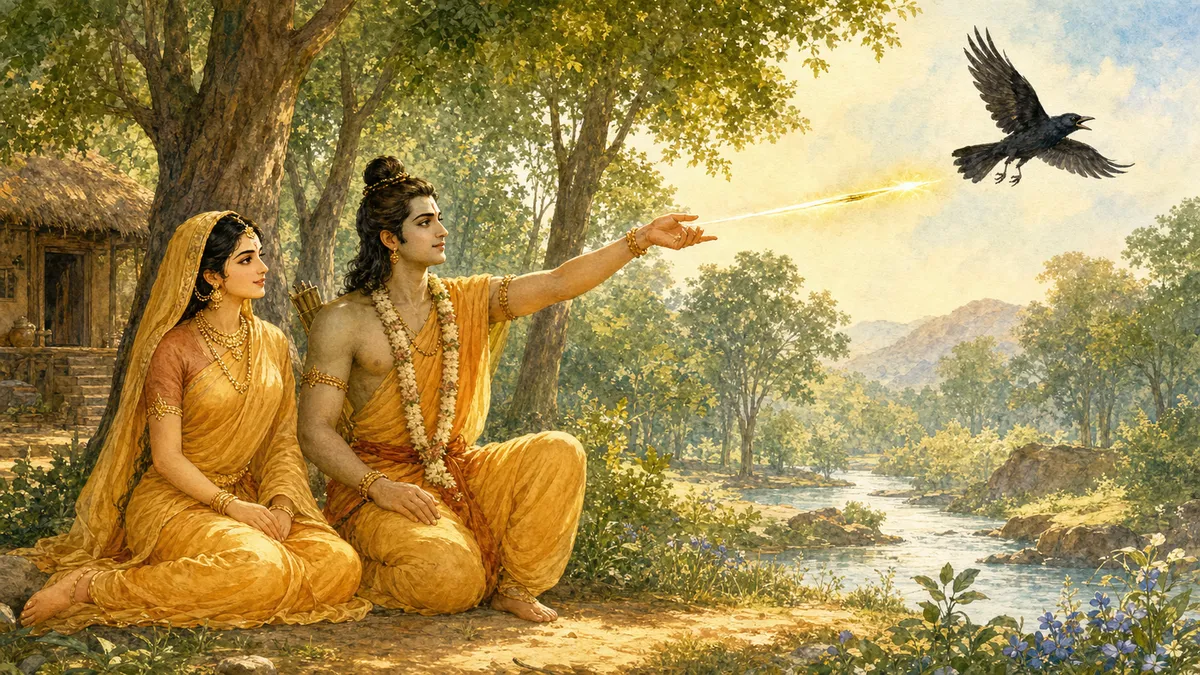
Once, the crow Kakasura, who was actually the son of Indra, decided to attack Rama and Sita. At that time Rama and Sita were in the jungle, in the forest, and Rama was sleeping, while the crow Kakasura decided to attack Sita; and when he attacked her, he scratched her a little, and Rama woke up and asked: “What is the matter?” Sita said: “Everything is fine” — she had simply driven him away and did not want to trouble Rama.
But he saw that a drop of blood had fallen from her scratch. He decided to catch this crow and punish him; it was unclear what kind of demonic crow he was. He took a blade of kusha grass, recited a mantra over it, and breathed into it the power of the brahmastra. The next time this crow approached and wanted to attack Sita, he released the blade of grass at the crow; this blade of grass was charged with Rama’s magical power.
But the crow was no ordinary one either; he could make cyber-leaps through space and time, so to speak, flying at the speed of light through all three worlds, because he was the son of Indra, who had simply taken the form of a demonic crow, and this blade of grass, charged with Rama’s magical power, began to pursue him.
It pursued him in the physical world; then he changed dimension and moved into the astral plane, that is, he became a clot of plasma, but this blade of grass followed him into the subtle world as well, since the blade of kusha grass was charged with Rama’s mantra and pursued him there. Then the crow moved into the causal body, decided to save himself there, and this blade of grass reached him there too, pursuing him in the form of a causal bija (sound vibration).
The crow no longer knew how to save himself; he could not go higher than the causal world, he was not such a liberated soul, he was merely the son of Indra, and he could not enter the dimension of turiya, and he wondered what to do, because the brahmastra, the magical power in this blade of grass, was pursuing him through all three worlds.
He began asking various gods for advice; I think he asked Shiva for advice, as well as Vishnu and Brahma, about what to do. They told him: “Well, this is Rama, the avatar himself, so only he can save you. Seek out Rama himself and somehow ask him for forgiveness” — and as the crow was trying to save himself, he began to search for Rama.
He returned again to the physical world, and when he approached the physical world, he began circling around Rama. He noticed that when he came close to Rama, this magical blade of grass slowed its action, but when he moved away, when he wanted to fly somewhere, it again began pursuing him with tremendous force. He made such circles above Rama. He circled and circled, and he felt ashamed. He was afraid that Rama would punish him, since, after all, he had attacked his wife.
But there was nothing to be done: this magical grass, this little stalk charged with Rama’s radiance, the brahmastra (magical weapon), had already exhausted him; he was completely spent and simply dove down, falling at Rama’s feet. He fell, as it were, with his back toward Rama’s feet, simply without any strength left, and he wanted to express some reverence to him, but he could not even manage it. Then Sita came up, turned him over and said: “Not that way; this is how it should be, with your head toward Rama’s feet.” Then he prostrated himself in this way and said: “Rama, forgive me, I was a fool; out of ignorance I decided to attack you because of my envy, because of my asuric nature” — and as soon as he did this, the brahmastra ceased its magical action, and Rama blessed him.
In the same way one can be saved from the action of samsara, from old age, disease, and death, when the soul surrenders to God, when it surrenders to God in the form in which He is accessible to it; for example, if the ishta-devata is accessible, then in the form of the ishta-devata; if jnana yoga is accessible, then in the form of jnana.
Dattatreya — the Remover of Madness
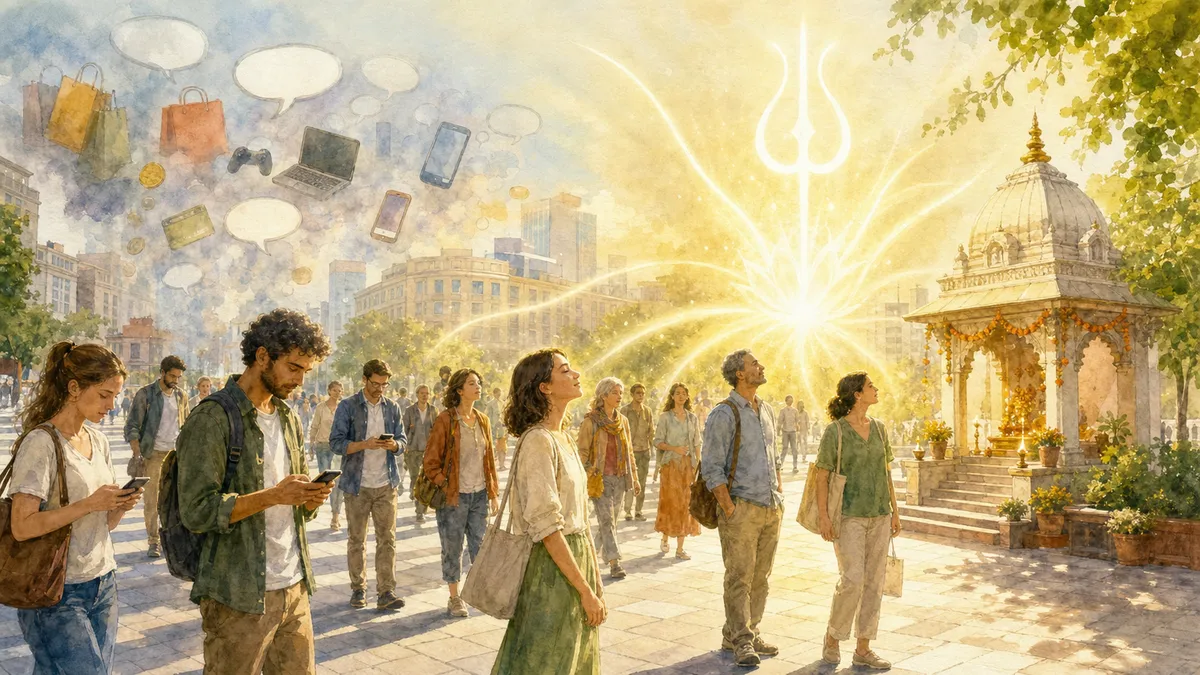
“Om Madapahaya namaha” (obeisance to Dattatreya, who removes madness); the madness of the material world overwhelms all souls when souls begin to live by a consumer culture, when they stop thinking about the meaning of life. For example, in the eighties I heard a prophecy that in the future people would start becoming stupid; even then I thought, being much younger at the time: “How can they become more stupid, they are not especially smart as it is.”
However, observing that thirty years or twenty years had passed—indeed, this prophecy came true: that is, the quality of broadcasts became worse, people’s speech became polluted, slang and jargon appeared, the level of political culture fell, the level of discussion of culture fell, people developed stereotyped thinking, very low goals, very stereotyped goals—this really did happen. Dattatreya is the one who removes the foolishness and delusion of the material world when we turn to him, through the power of his blessings and awareness, if we appeal with devotion.
Avadhuta — a Transcendent Divine Essence
“Om Avadhutaya Namaha” (Homage to the Avadhuta). Dattatreya is the one who abides beyond frameworks, rules, prescriptions, beyond castes, beyond religion, beyond classes, beyond definitions, beyond norms. He is a transcendent divine essence that abides in our heart, the divine meta-mind.
Our deepest “I” is free from all limitations, but this is like the nature of our soul—love for God, happiness, awareness. It slumbers in the heart of every being, but it must be awakened. Purity, love for God, faith, and devotion originally slumber in the heart of everyone. Awareness, happiness, bliss—all of this is slumbering within us right now, but it must be awakened. The soul must be purified so that the natural depths of the soul, the nature of Mind, may manifest.
As long as there are three kinds of vasanas in the heart: deha-vasana (identification with the body), shastra-vasana (identification with thoughts, with stated concepts), loka-vasana (identification with culture, with civilization, with the material world in which we live)—this primordial love of the soul, primordial purity, primordial faith, primordial awareness, primordial happiness are, as it were, hidden by the energy of concealment (tirodhana-shakti). Dattatreya, in the aspect of the avadhuta, helps the soul realize this pure, free nature of its own.
The Power of Devotion — the Story of Saint Sundarar
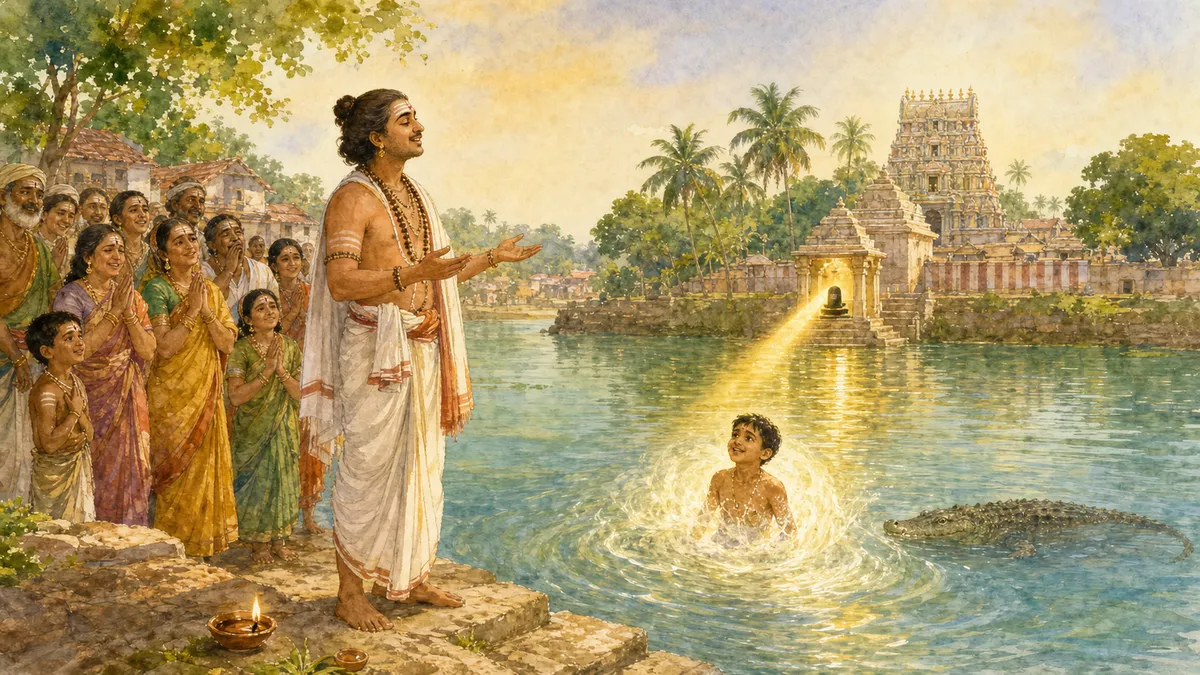
There was such a saint, Sundarar (a Shaivite saint). Once, when he came to a village, he saw that people in one house were weeping bitterly, and he learned that preparations were being made there for the initiation of the Brahminical thread. Two boys were supposed to perform ablution, and when they entered the water, a crocodile seized one of them and dragged him into the Ganges. One boy was to undergo initiation; he was alive, while the second boy had been seized by a crocodile and dragged into the Ganges.
Sundarar went to the river and sang a song of devotion to Shiva. In the crocodile’s stomach, matter began to grow back together; the crocodile burst open, and the boy came out with a radiant body, even more beautiful than he had been—the son of those parents whom the crocodile had dragged away.
The power of Sundarar’s devotion worked a miracle. Sundarar was very devoted to Shiva; when he asked Shiva for something, singing prayers to Shiva as an avadhuta, Shiva fulfilled his wishes; Shiva was his close friend. Sometimes he was in a friendly relationship with Shiva (satya-bhava). A friendly relationship with God means that you are in unity with God, as if on familiar terms, when there is not so much difference between you and God. Therefore Sundarar could jokingly ask Shiva for gold, spectacles, a palanquin, or something of that sort. Shiva gave it to him, but he was jealous as well.
Once, devoted admirers from among the rulers of the locality presented him with various great gifts. Shiva did not like that strangers were presenting him with gifts, and when these gifts were being carried to his house, a group of hunters attacked in the jungle and took everything. Sundarar began to complain to Shiva, singing songs, and Shiva liked his songs. He said: “Go to that temple.” He came to a certain temple on a mountain, and all those things that had been stolen fell from the sky and manifested. Now he had received them from Shiva’s own hands—such were the transcendent relations between Sundarar and Shiva.
Once, Shiva even acted as a messenger between Sundarar and his wife when he and his wife had quarreled. Sundarar began to sing devotional songs and pray to Shiva: “Shiva, only you can save me.” Such were the divine games: “Go, talk to her, she will forgive me.” Shiva took the form of a Brahmin and acted as a negotiator, and the wife did not recognize that it was Shiva. She thought it was an ordinary Brahmin, drove him away, and said: “I don’t want to see either you or him.” Shiva came back and said: “It isn’t working.” Then Sundarar began to beg him again: “Go, ask her a second time; are you a friend or not? True friends help.” Shiva had to go and sort it out. In the end, the woman saw the radiance coming from this Brahmin and realized that something was not right, that the matter was not about that at all. Lord Shiva himself had come to her, and she surrendered completely. Such is the greatness of Sundarar, the greatness of Shiva.
When we have devotion, when we have a pure heart, God becomes our friend. God becomes so close to us that He bestows everything, if our heart is pure and free from ego.
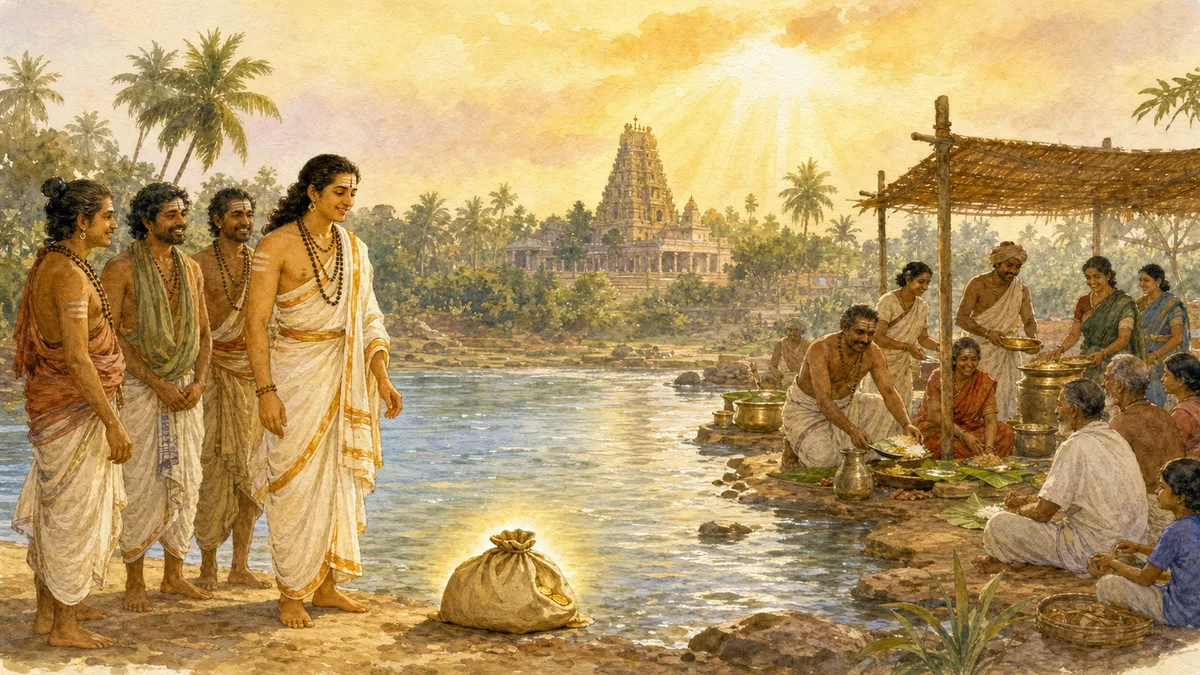
Once Sundarar prayed, since Shiva liked his songs, and he prayed that people in a certain locality could be fed, and a bag of gold appeared. He thought about it, tested whether the gold was real, and thought: “How can this bag be delivered to that place now?” Shiva appeared to him and said: “Throw this bag of gold into the river, and the water will carry it down the river.” He threw in this bag of gold, then himself reached another place, came with his disciples, and began to look for the gold, began diving, and found it in the place where Shiva had said. Then he tested a coin for quality, as a sample, and the coin turned out to be of not very high quality. He began to say: “Shiva, what is this, why is the coin not of such quality?” — he began praying and singing again, and the coins became of the required quality. He took out all this gold and used it, distributing it for service — this is the power of devotion.
Brahma-vichara — the inquiry into the Divine Source
“Om Mahanathaya Namaha” (Salutations to the Great Lord). Dattatreya as Ishvara, as the divine, transcendent Consciousness, is the great lord of all living beings.
Brahma-vichara means always reflecting on God, on His qualities, in this way. The four practices of brahma-vichara that a sadhu should carry out are:
First — asking the question: what is God?
Second — what are His qualities?
Third — where does He abide?
Fourth — what is my connection with Him?
These are the four great questions of analytical meditations that prepare us for the practice of brahma-vichara. Brahma-vichara means the inquiry into the Divine Source.
Usually living beings think very little about the nature of the source from which everything has arisen; they think very little about it, and yet everything depends on understanding this source. For example, we do not know why we were born, why this world arose, until we investigate the nature of the divine source.
If you ask your parents: “Mom, Dad, how was I actually born?” They will say: “Well, what do you mean, don’t you know?” But if you ask: “And what did you do so that I would have a stomach, bones, such a structure, such genetics, such blood vessels?” They will say: “We don’t know that; in general everything was very simple, the union of female and male energies — that was enough, and beyond that we have no idea how it all happened.” That is, it was not our parents who made us. Our parents simply took part in a small alchemical experiment, but what force lies behind the fact that we were born, that we received such a body, what intention exists behind this, that every living being is born — this is the power of Ishvara, the power of Ishvara and of the deities who govern this process.
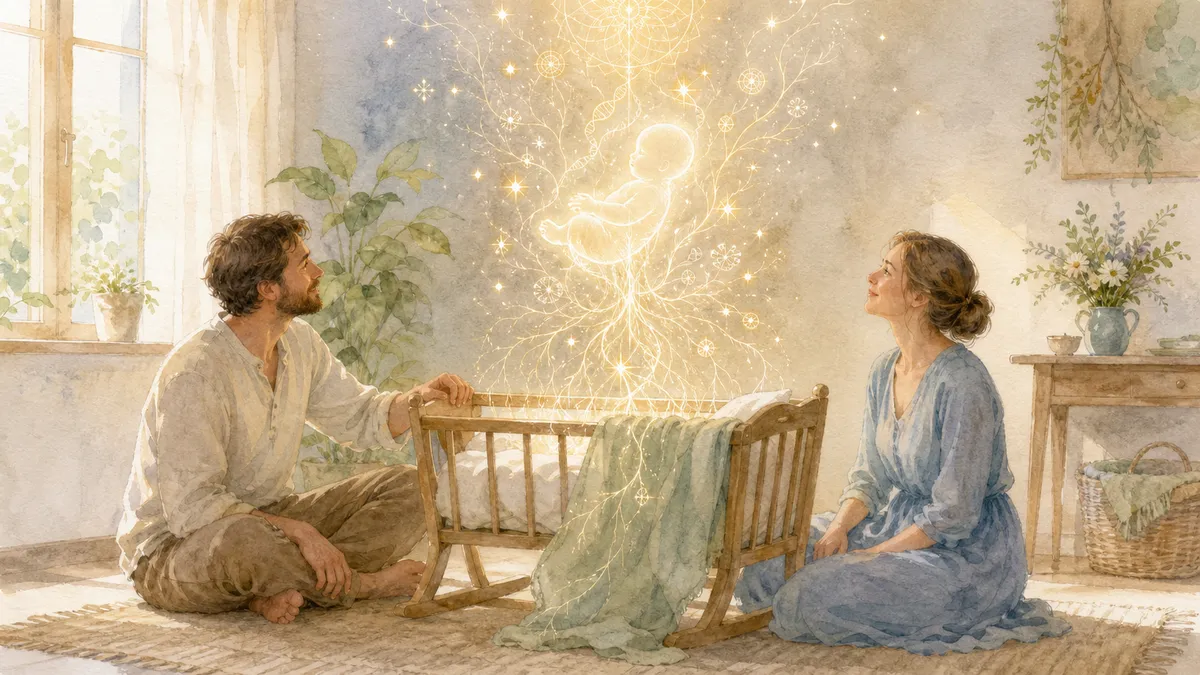
The power of Ishvara, the authority of Ishvara, permeates all living things that exist in the material world, in nature, all that is inanimate, time, the dimensionality of space, the stars and planets, the creative power in all living beings — this is the power of Ishvara. A vast army of divine beings helps in this. Each sense organ, each karma-indriya (organ of action), has a divine being that, moved by the intention of Ishvara, performs its functions.
The Qualities of Ishvara — the Six Perfections
“Om Shankaraya Namaha” (Salutations to the One who creates auspiciousness). Dattatreya in the soul of every living being, Shiva in the soul of every living being — this is inner goodness, inner purity, inner beauty, harmony, love, light, greatness, happiness, the most beautiful, the most sacred, the purest thing that exists.
The qualities of Ishvara are usually described in such a way that Ishvara possesses six perfections:
The perfection of wisdom
The perfection of energetic wealth
The perfection of glory
The perfection of strength (bala)
The perfection of renunciation (vairagya)
The perfection of flowering, beauty, and purity (shri)
These are the six perfections of Bhagavan Ishvara, which are inherent in Shiva, in Dattatreya in the aspect of Ishvara.
The tantras also speak of the qualities of God, such as svatantrya (infinite freedom) — the freedom that every living being seeks; it is inherent in God. Nityatva (eternity) — everyone, for example, wants to live a long time, preferably forever, but not everyone succeeds. That is why very many people think about how to rejuvenate themselves, how to preserve their age, how to heal, how to be cured, because everyone thinks that he is an immortal soul, that by his nature he should seemingly live forever. But there is something unclear about this reincarnation — this is nityatva, the property of Ishvara existing in the soul of every living being.
The next quality is sarvajnatva (omniscience). Omniscience means that divine consciousness possesses the very essence and fullness of all knowledge.
When we know Dattatreya, when we know Shiva, we know all the knowledge of the world that exists; we know the seed of this knowledge and can produce this knowledge. There is no need to acquire additional knowledge; we can become the very embodiment of any knowledge, generate any knowledge.
For example, there are people who consume information, and there are people who generate information. Those who consume are many; those who generate are fewer by orders of magnitude. For example, those who watch television and read books consume information, but there is someone who writes them, there is someone who films these programs — these are generators of information, they possess the ability to operate with information at an order of magnitude higher level. And there is the consciousness that inspires these generators of information — that is the unified consciousness of Ishvara.
About eighteen years ago, I was once traveling by train to Divya Loka in Russia, met a man, and this man was interested in mysticism, yoga, and esotericism, and we got to talking. I did not say who I was, and he said: “You know, have you read, there is such a book, The Radiance of the Precious Secrets of Laya Yoga, volume one?” I said: “Actually, I have heard of it, but I have not read it myself, personally.” He said: “You should read it, otherwise there is much you do not know.” I said: “I was simply busy.” He said: “And what were you doing?” I said: “I was simply writing it; I had no time to read it.”
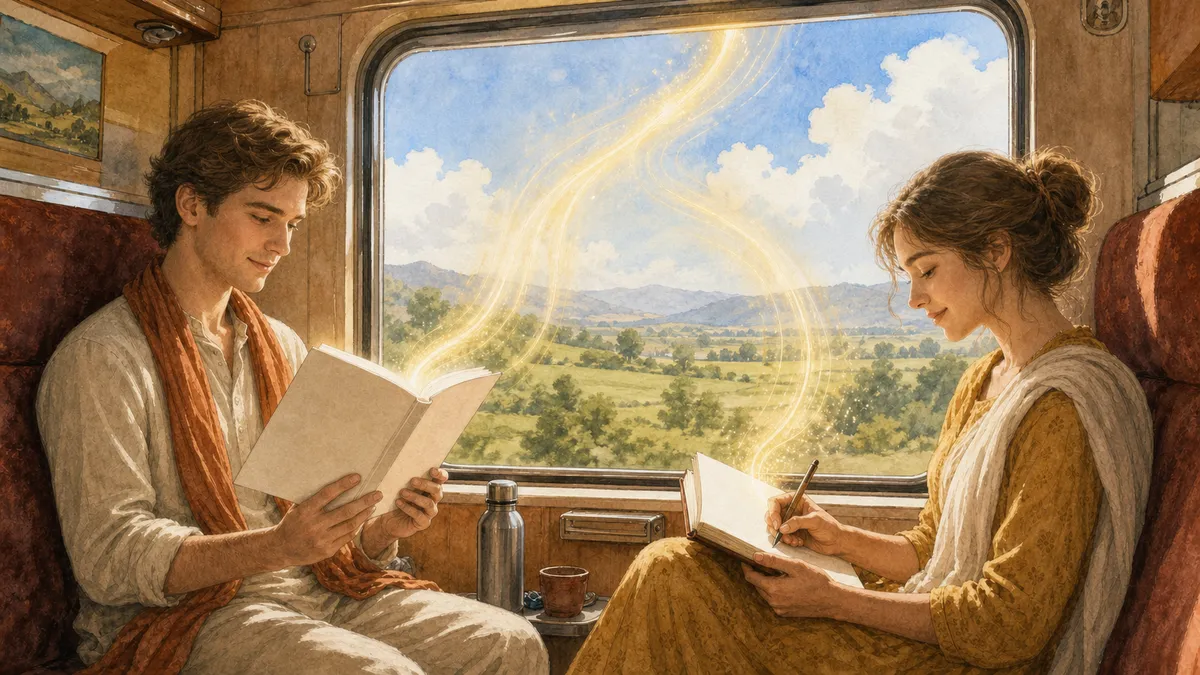
Ishvara is the one who is the source of information, the one who creates all sciences, all culture, all arts, all sacred scriptures, all the Vedas, all the tantras.
Purnatva — divine fullness and wholeness
The next quality is purnatva (divine fullness and wholeness). Every living being seeks completion, wholeness, self-sufficiency, because independence is always associated with happiness. Dattatreya is the embodiment of this divine wholeness and fullness.
Usually we all believe that we lack something. Someone lacks money — everyone lacks money, people think so. Someone lacks health, someone lacks relationships, communication, a husband, a wife, children. Perhaps someone lacks fame, someone lacks power. This dissatisfaction is the normal state of all living beings. Someone lacks political influence; someone may even lack fame on stage, like some stars who compete with one another because they are afraid that they will not have enough fame.
Spiritual people, too, often lack many things; in fact, it is spiritual people who lack the most. Not only in the material sense — they have already become disillusioned with the material sense — but in the spiritual sense they have not yet become disillusioned, and so they feel that they lack dhyana, meditation, awakened kundalini, opened chakras, pure channels. They lack fasting, diets, the cleansing of various organs; they lack pranic nourishment, knowledge of astrology, Vastu, Jyotisha, knowledge of various texts, and retreats. Monks often have this — a chronic lack of retreats; even if they spend a quarter of their life in them, it is still not enough. I think even if they spent half their life in them, it would still not be enough.
Those inclined toward karma yoga lack time for service — there is much service to be done, but little time; there is a schedule. Even spiritual people constantly lack something; they hope that someday it will be enough if they change these conditions — such a hope exists.
But I will tell you that as long as we are in samsara, it will never be enough, because it is not a matter of receiving something; it is a state of mind, a state of consciousness. Purnatva is a quality of Dattatreya, a quality of Shiva. All the saints of our parampara, all the saints from the altar — they are one single consciousness, embodying divine fullness (purnatva).
Wholeness is when everything is there, everything is done; when everything is always done, when everything is always present, when nothing extra is needed, when everything is perfect, absolutely whole and perfect. Purnatva means that we have learned to abide in unity with God, in the nature of God, and do not strive to obtain anything else. Then we can live, simply live, without creating ambitions; live without greed, live without jealousy, without envy; live without wanting something more, without leaving inner equilibrium, in a state of happiness, because purnatva (wholeness) inevitably leads to contentment, and contentment, as it grows, gives rise to happiness.
That is, one may not wear designer clothes, not drive luxury cars, live in simple conditions, and yet be happy, because purnatva is present. Or, conversely, one may have all of this and be unhappy, because if wholeness is absent, then it is absent.
The quality of purnatva is the quality of Ishvara, the quality of God within us, the quality of Dattatreya. When we invoke Dattatreya, we come into contact with the dimension of Dattatreya; then purnatva (wholeness) increases, contentment increases, happiness increases. True spiritual life, liberation, enlightenment, service, devotion — they can be born only from contentment; from a state of dissatisfaction, it is impossible. Therefore we turn to Dattatreya, who blesses with purnatva the one who turns to him. When you recite: “Shri Guru Datta Namaha,” the Gayatri mantra of Dattatreya, the seed mantra, the Datta Stotra, then purnatva gradually becomes the essence of your life.
Qualities of the Primordial God
“Om Amavarabhala Namaha” (Obeisance to the Beloved of the immortals) — all immortal siddhas love Dattatreya for his unsurpassed qualities. “Om Mahadevaya Namaha” (Obeisance to the Great God), “Om Adidevaya Namaha” (Obeisance to the Primordial God), “Om Puranaprabhava Namaha” (Obeisance to the Ancient Lord), “Om Ishvaraya Namaha” (Obeisance to Ishvara).
Dattatreya is the primordial divine power, the primordial divine wisdom that lies at the foundation of the entire universe. Omniscience (sarvajnatva), all-pervasiveness (vyapakatva), svatantrya (infinite freedom), purnatva (infinite fullness), nityatva (divine eternity), aishvarya (omnipotence), ananda (bliss and happiness) — these are the qualities of Dattatreya.
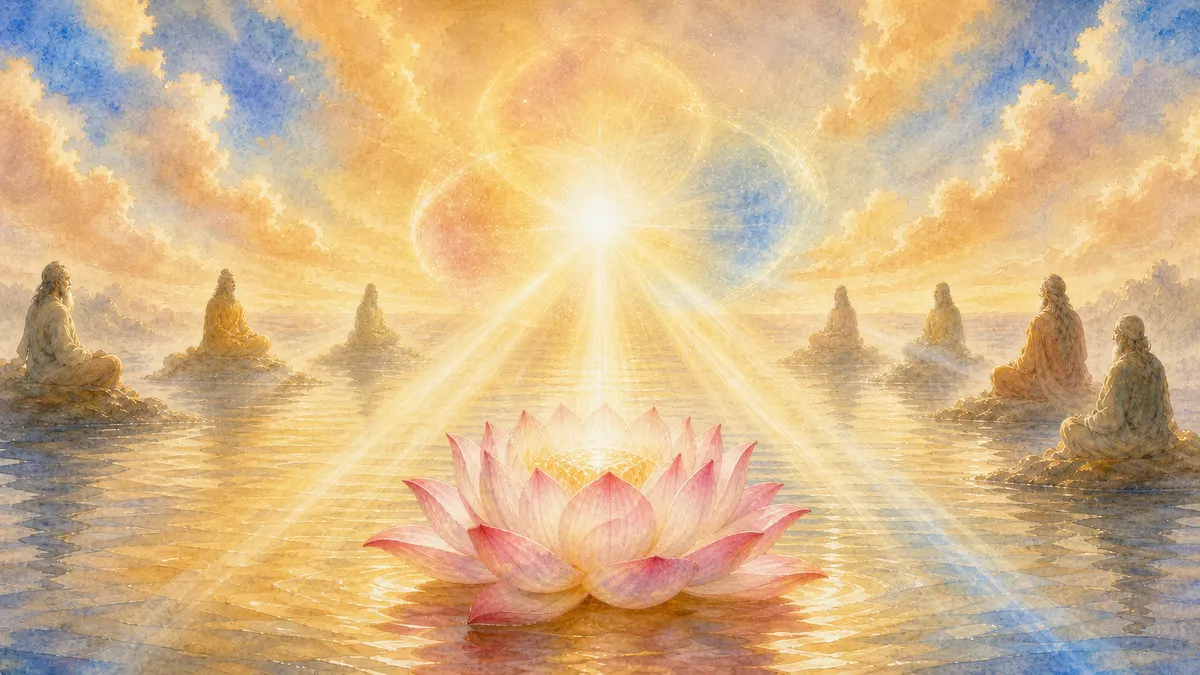
Complete Devotion and Its Obstacles
The question of how to surrender to Dattatreya, how to make Dattatreya number one in one’s life, how to subordinate all one’s thoughts and feelings to Dattatreya so that he awakens within our own heart — this is a difficult question.
One way or another, we all surrender ourselves to something; every person is devoted to someone or something. All people surrender themselves to something. For example, someone surrenders himself to money, someone to power, someone to relatives, someone to a beloved occupation. But the issue is that living beings surrender themselves to something partial.
Dattatreya possesses fullness, so why is it difficult for the soul to surrender to such great, divine fullness? Shiva is fullness, so why do we surrender only partially? Because if we begin to surrender to fullness, then fullness requires complete surrender, while the partial requires partial surrender — one can surrender to it partially and partially not surrender. But when we come into contact with such fullness as Dattatreya, as Shiva, then complete surrender is also required — this is not simple for the soul, because there are very many karmic programs, very many desires in the soul. Such complete surrender is not easy, therefore one must first perform sadhana, gradually, step by step, increasing the power of faith and devotion, gradually, until it gains its strength and begins to liberate us.
In the time of the Buddha, the Buddha issued many rules for monks, and one man became a monk, took monastic vows, but he still had
a wife in the world, and he would come to visit his wife, sit with her, and speak with her in private. The other monks did not like this; they complained to the Buddha that they were leading a renounced life. Then the Buddha issued a rule: “Do not sit alone with women,” and everyone accepted it. Then this monk came, but he did not sit alone with his wife; he stood. The rule was fulfilled, he was pure in his soul, and when they asked him:
— Did you break the rule?
— No, I stood.
The monks dissatisfied with this behavior told the Buddha again; the Buddha thought and wrote: “Do not sit alone with women and do not stand.” He added that, and that was all. The monk came to his wife, thought about it, began walking in circles and talking. They asked him:
— Were you standing?
— No.
— Were you sitting?
— No, I was walking in circles.
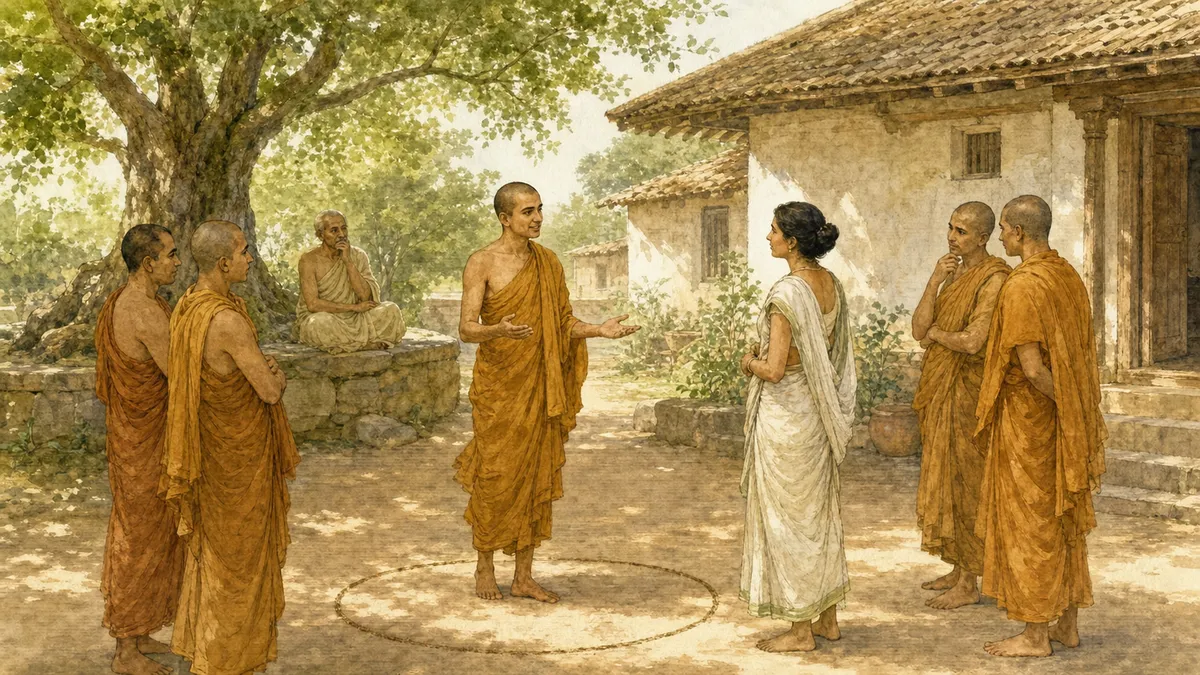
This is the mind that looks for various loopholes, so the rule was again supplemented: “Do not walk in circles around a woman.” The mind looks for various loopholes because it has many unspent desires. But when we turn to Dattatreya, Dattatreya is able to free us from these unspent desires.
The Creator of Sattva
“Om Satvakartaya Namaha” (Worship to the One who creates sattva). Dattatreya is the primordial Brahman itself, which creates everything pure, divine, and beautiful in this world — sattva, everything radiant. Sattva means radiance. The three gunas — sattva, rajas, and tamas — gradually emanate from absolute consciousness.
Ishvara is the reflection of Brahman in the sattvic part of the universe. When Brahman is reflected in the sattvic part of the universe, Ishvara is born, the Lord of the Universe. He has a pure, sattvic body consisting of pure light. Therefore, when we offer prayers to Dattatreya, we address Dattatreya as the immortal, universal, pure intelligence consisting of the purest light, of radiance.
“Om Satvaphartaya Namaha” (Worship to the One who sustains sattva). Dattatreya allows us to protect our inner goodness, inner light, and inner sattva; he acts as the god Vishnu, the preserver and sustainer. When your mind goes out of balance, you can pray with this name, appealing for Dattatreya to help return the mind to a sattvic state.
Ideally, a sadhu should cultivate a sattvic state within himself, never enter rajas and never enter tamas, but this does not always happen. For example, you become angry, or a sleepy state arises and sattva goes somewhere, but only from sattva is faith possible, only from sattva is the practice of liberation possible; neither rajas nor tamas helps here. At such a time, one should simply pray to Dattatreya: “Lord Dattatreya, send me a sattvic state, support me, my mind, in a pure, sattvic state.”
“Om Bhavaya Namaha” (Worship to the Existing One), “Om Satvatmane Namaha” (Worship to the Essence of sattva), “Om Satvasagaraya Namaha” (Worship to the Ocean of sattva), “Om Satvavid Namaha” (Worship to the Knower of sattva), “Om Satvasakshine Namaha” (Worship to the Witness of sattva), “Om Satvasadhyaya Namaha” (Worship to the One attained through sattva).
The Ocean of Pure Light
Dattatreya is an immortal ocean of pure light, conscious, wise, divine light of sattva. We see the form of Dattatreya; this form may have one head, four arms, three heads, six arms, but it is only a reflection of this pure ocean of sattva in our minds and karma. Dattatreya, reflecting in the minds of people, assumes the form that can be perceived, so that contact may be established.
If Dattatreya is reflected in the minds of asuras, he appears as a radiant asura; if Dattatreya is reflected in the minds of hungry spirits, he appears as the great king of pretas (maha-preta). If Dattatreya is reflected in the minds of some wrathful beings, he appears as a wrathful being; if Dattatreya is reflected in the minds of samsaric gods, he appears as Indra (the king of divine beings). In reality, Dattatreya is the pure space of non-dual consciousness.
There is such a story, and a film was made based on it. During the Great Patriotic War, one tank driver came under fire; his tank was set ablaze, and he was badly burned — ninety percent of his body was burned, and the doctors thought he would not survive, but he did survive and quickly recovered. But from the time he recovered, he asked to be allowed to fight at the front again, though he remembered neither his first name nor his surname; he simply remembered nothing. They gave him some name, Ivanov Ivan, but he did remember how to operate a tank and how to fight.
When he began fighting again, he became a very powerful tank driver, won all the tank duels, and everyone began to wonder that he had survived and recovered so quickly, even though he had no memory at all, yet fought excellently.
A man was assigned to observe him and see how he managed to keep winning. Where other tanks were burned, he won, and he asked: “What is your secret? They call you lucky.” He said: “It’s just that the tanks tell me when a shot will come and where I should go.” He said: “What, tanks talk?” He answered: “Yes, I talk with tanks; they tell me where the next shot will be, so a couple of seconds beforehand I stop and manage to act ahead of time.” That is how tank battles are won.
The NKVD man who interrogated him and talked with him could not believe it; he thought the man was insane, but on the other hand, he had the best statistics in the regiment, the most effective tank driver. Once, when he came and reported to his superiors that such and such was the case, that he talked with tanks, the superiors told him to take a closer look; perhaps some other secret information would come to light. One day he came and saw this tank driver kneeling, raising his hands to the sky, saying something, and he said:
“Excuse me, what are you doing? Come to your senses, are you praying to your tank God?”
He said:
“Yes.”
“And what does he look like?”
“He is among the clouds in the heavens, on a throne, wearing a tank helmet, in splendor and radiance, and around him are many tanks, and he tells me how to fight, how to win in the most difficult and complex situations.”
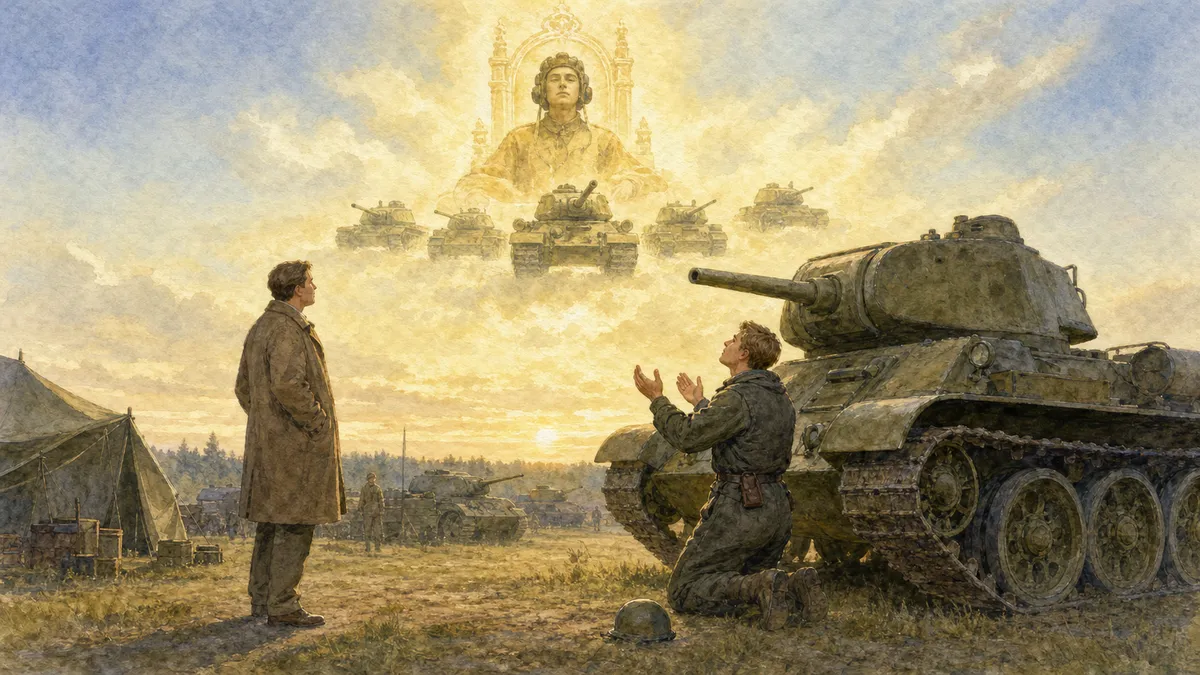
That is, God can take the form that corresponds to the karmic conditioning of the devotee. If a person is a tank driver, why can Dattatreya not take the form of a tank god — without any problem, he can take any form, because he is a reflection in the karmas, channels, and minds of conditioned beings. When he was seen five thousand years ago, he took the form of a sadhu of that time, with a trident, earrings, and rudraksha. Perhaps now, if you were to see Dattatreya, he might take a different form; perhaps he would drive a luxurious car or wear a suit and tie, or perhaps he would be like a sadhu, like a teacher, a preacher. Everything depends on place, time, and circumstances, because Dattatreya is immortal consciousness that helps living beings free themselves from conditioning.
The Path of Yoga and the Connection with Dattatreya
“Om Narathipaya Namaha” (Homage to the King of the Immortals), “Om Bhutatrite Namaha” (Homage to the Creator of beings).
Thus, to follow the spiritual path of yoga means to establish a connection with Dattatreya outwardly and inwardly, to know and unravel the mystery of Dattatreya as Ishvara, as the chosen deity, to direct one’s faith, devotion, and love toward Ishvara. A sadhu is one who directs his faith, devotion, and love toward several objects:
toward God as Ishvara
toward the chosen deity
toward one’s inner Atman
toward the Guru-tattva, the Guru-shishya-parampara
toward the beings around him, beginning with samaya brothers and sisters, those who are nearby
In the end, all these kinds of love and devotion must merge into a single pure space in which realization will be attained.
Once, as several sages were moving through the space of the Universe, they saw Garuda. Garuda appeared before them very beautiful, with golden feathers; a rainbow halo of radiance blazed around him, and he was alone, without Vishnu. They were rishis, various rishis, and they were delighted by his appearance. They paid homage to him, then praised him and said, “Garuda, you are very great; you carry Vishnu himself; you can pierce all three worlds; your flight is very swift; you move through space and time.”
Pride arose in Garuda; he listened to all these praises and said, “Yes, yes, that is so, I am great.” The saints saw that pride had arisen in him, and he began to say, “Actually, Vishnu is nothing without me. When we have to fly somewhere, to attack the asuras or protect the gods, Vishnu can do nothing without me; I do everything.”
The saints listened, looked at him, and thought, “It seems pride has somehow manifested in him; we praised him in vain.” At that moment Vishnu appeared and called him: “Garuda, let us fly.” Garuda came, and Vishnu raised only one foot and placed it on him in order to sit down; and because of his pride Garuda had become very heavy, so as soon as Vishnu placed his foot on him to mount him with that foot, it happened that he pressed Garuda down into the very lowest worlds, as far as Patala-loka, because pride had made him heavy.
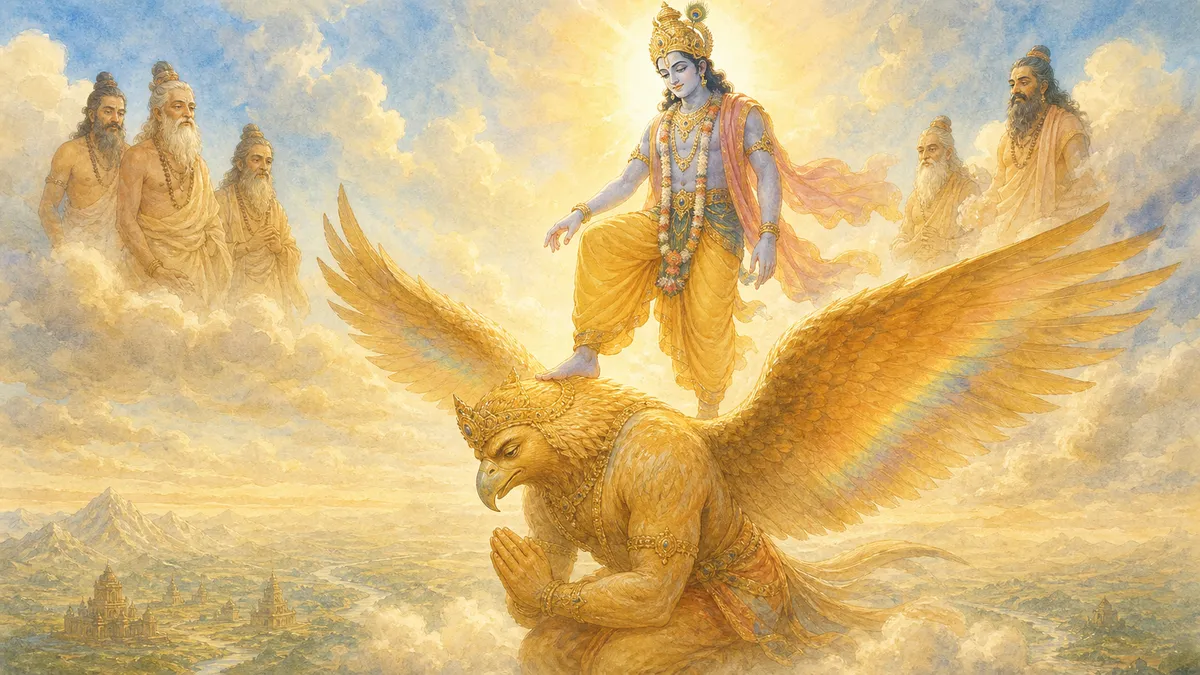
Then Garuda humbly implored Vishnu and said, “I am only a bird; forgive me for my pride, something carried me away today.” Vishnu humbly extended his hand to him through the three worlds, pulled him out of the lower worlds, and Garuda received a lesson.
Humility and Reverence for Devotees
In the same way, when we follow the path of Dattatreya, the path of Shiva, we must always make sure that our path is accompanied by pure faith, devotion, and humility without ego, because ego and pride make us very heavy. The grace of Dattatreya lifts up all living beings, but pride makes the living soul very heavy for that grace to be able to lift it; therefore, a sadhu is one who cultivates humility.
How should such humility manifest? It should manifest in our learning to see samaya brothers and sisters purely, in our learning to serve the devotees of Shiva and Dattatreya. No one can receive the grace of Shiva, the grace of Dattatreya, without revering his devotees. Even one who reveres the lingam, who personally reveres the murti of Shiva, will not attain liberation if, for example, he neglects the devotees of Shiva, Dattatreya, or offends them, giving rise to impure vision.
Therefore, it is very important not only to revere Dattatreya in an image, but also to revere Dattatreya in the form of samaya brothers and sisters, in the form of sadhus. If you can do this, the blessing of Dattatreya will always be with you.
