

Commentaries on the text “The Yoga Sutras of Patanjali”
In the “Yoga Sutras,” Shri Patanjali describes various kinds of obstacles that arise in the process of yoga:
illness
apathy
doubts
inattention
laziness
distraction
false vision
lack of attainment at the stages of yoga
instability at these stages
This is what distracts consciousness. These are obstacles. Here the term “antaraya” is used, which is translated as “interval” or “break in natural awareness.” Obstacles (antaraya) are those times when God, as it were, leaves the yogin, when his higher circuits of consciousness are switched off due to external causes: inattention, the position of the planets, certain violated principles of practice, and so on. That is, when the channel of connection with the Divine (dhyana-vahini) is blocked.
Then the yogin says: “Lord, why have You forsaken me? How could You? After all, I practice, I have renounced, I do everything.” It is as if you feel that a tight, dusty sack has been placed over the crown of your head and you have been deprived of inspiration, faith, clarity, will, and determination. You look at the intentions you had before and are amazed that they have all disappeared somewhere.
Then, if the yogin’s faith is weak or he is not thoroughly grounded in the teaching, he begins to “drift” in consciousness. A “little worm” of doubt creeps into his mind, the “crocodile” of desires crawls out, and he begins to be “pulled in different directions.” But for an experienced practitioner, all this is familiar and has been experienced hundreds of times. And an experienced yogin differs from an inexperienced one precisely in his attitude toward such things. An experienced yogin is completely calm about such things, because he has faith, knowledge of the teaching, and witnessing awareness, which is not subject to obstacles. He does not panic, treats this with humility, and stubbornly continues moving forward.
Spiritual Practice as the Path of a Hunter
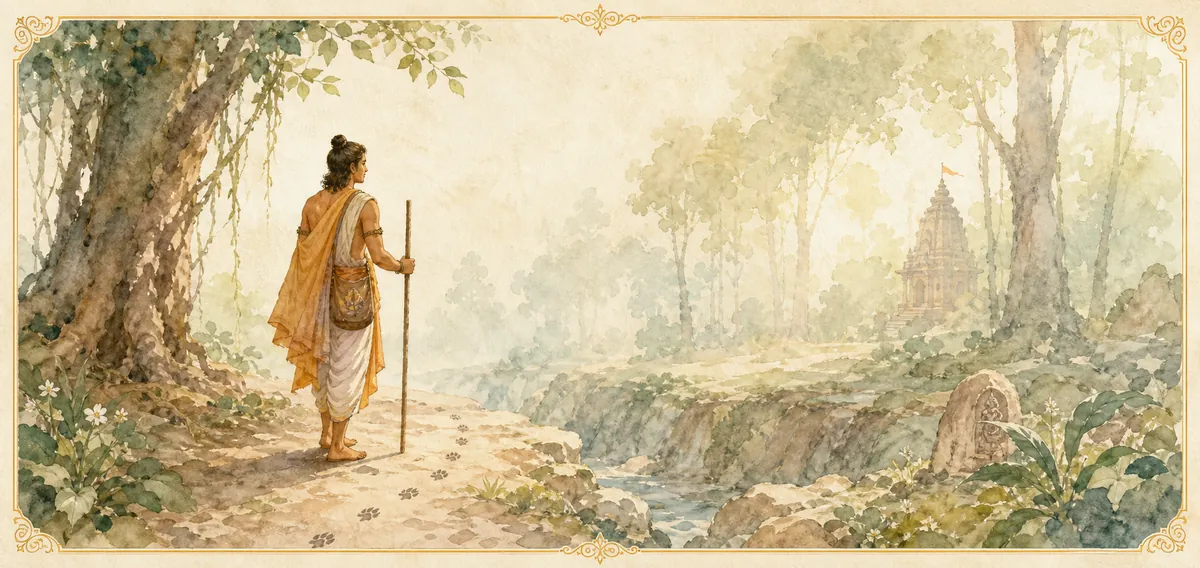
Spiritual practice resembles the state of a hunter walking through the forest when a bear jumps out to meet him. No sooner has he dealt with the bear, skinned it, and calmed down than a tiger jumps out. With great difficulty he subdues this tiger, skins it, and is just about to relax when two robbers come out to meet him and say, “Your money or your life.” If he gives in, they will strip him bare, drain all his prana, and leave him completely emptied; therefore he has to fight again, applying every effort. And he cannot refuse to fight, since that would mean betraying his path and suffering defeat.
Superficial Sahajayana, superficial Advaita, has nothing in common with the teaching of the Advaita of the rishis, because the Advaita of the rishis is always tapas, surpassing oneself and attaining profound results. One who has never practiced does not know about these things, but an experienced practitioner knows this perfectly well.
No sooner has this hunter overcome these robbers, gone farther, and come out onto a wide road in the hope of relaxing than suddenly he sees a great precipice. The robbers are no longer there, but a precipice has appeared before him, so once again he must devise a means of leaping over this precipice, of overcoming yet another obstacle. Spiritual practice develops in roughly the same way.

In the process of spiritual practice, the yogin resembles a hunter pursuing a magical beast—the nature of his own Mind. This beast is very cunning; it is not afraid of the yogin, but simply plays with him: it winds about, confuses its tracks, sometimes shows itself and then disappears again. A good hunter constantly pursues it, never taking his eyes off it. On this path he encounters various ravines, traps, and pits, some of which he does not even know about. Sometimes obvious obstacles appear before him—bears, wolves, and the like—and sometimes unobvious ones: he has passed by but has not noticed that he has picked up some kind of “infection,” for example, a weakening of samaya. He did not notice it, but this “infection” constantly subtracts some “health” points from him; that is, he is already walking the path burdened.
Such a hunter must be very vigilant. He must maneuver and fight so skillfully as to win at every stage and constantly, step by step, reduce the distance between himself and this beast he is tracking. And if he is a proper and skillful hunter, then someday he will inevitably catch up with this beast. But if he is a lazy, undiligent, cowardly hunter who does not believe in his own strength, then this beast, from afar, seems to wave its hand at him: “Bye, bye,” and leaves. And then the hunter is again forced to search at least for its tracks in order to understand where it is at all; that is, he no longer sees it and must look for its tracks.
What does it mean to “look for tracks”? It means that you have lost the natural presence. And what does it mean to “see the beast”? It means that it is close, nearby, you are working with it, you abide in it. Perhaps you have not yet saddled it, but you are constantly nearby, you do not fall behind it, you constantly pursue it.
If he is a proper hunter, then in the end he has bypassed all the traps, defeated all the tigers, bears, and boars that try to attack him, overcome all the inner bandits, and draws closer to this beast of awareness. This beast is divine, very wild; it does not simply give itself into one’s hands. But somehow the hunter understands that this beast and he himself are one. And he, as it were, learns to saddle it. When he saddles it, this beast becomes the divine Garuda — an eagle that carries him into the heavens.
Spiritual practice resembles such a continuous effort performed by the yogin.
Risks and Obstacles of Deep Practice

Because of the extraordinary depth of the teaching you receive, you, as experienced practitioners, must be prepared for various obstacles, which should be understood as a great risk accompanying great profit. Usually in worldly life, we are not expected to gain very great profit; we ourselves know that we will not grasp the “stars in the sky” while living a worldly life and not practicing; even if we become a super-billionaire, we will still be an ordinary limited human being.
In the process of spiritual practice, our possibilities of choice are much greater. We aspire to become saints, deities, siddhas, enlightened ones; that is, we set very great goals for ourselves. Accordingly, the greater the profit, the greater the risk.
How is this risk explained? It is explained by the fact that all the negative karma accumulated by us in the past is activated by the power of profound instructions and the power of clarity. At the same time, those who have sattva and favorable karma, as a rule, pass through this beginning of the spiritual path without particular problems. Those who have a lot of rajas or tamas experience difficulties; various external demonic obstacles arise before them. Especially if you have not yet become established in natural self-liberation, while at the same time practicing for a long time and intensively in retreat.
In some texts, the saints describe the following:
“Spirits and samsaric gods will appear at the place of your practice. They may call you by name. They will assume the forms of gurus and saints and give you prophecies. Various terrifying visions will occur in your dreams and experiences. On the external level, you may be attacked, robbed, or burgled by other people (of course, if you are traveling somewhere among people who do not keep samaya). You may fall ill or get into all sorts of adventures. In your mind you may grieve without any particular reason, falling into depression to the point of tears. Turbulent emotions will overwhelm you. Your devotion, compassion, and desire to serve other beings may diminish. Your thoughts will rebel against you, driving you almost to madness. You will misunderstand helpful advice. You will become tired of staying in retreat and will want to break your vow.”

Usually this instruction is given to those who sit in retreats for one, two, or three years. But for beginners this time is reduced to two weeks. Sometimes I have noticed that a person, even after a week-long retreat, jumps out of it as if “scalded.” This once again confirms the fact that one must prepare in advance for long retreats. First one should practice for three days, then for a week, then for two, then for a month, then for three months, then for half a year, then for a year, and so on.
“You will have mistaken thoughts about the spiritual teacher. You will be beset by doubts concerning the Dharma. You may be accused of others’ sins. You may be slandered. Your friends may turn into enemies. You may encounter various undesirable circumstances, both external and internal. These obstacles should be perceived as a kind of test for yourself. This is the boundary at which you either win or lose.”
Some experience this boundary over a short, compressed period of time, when sattva, activated by the process of spiritual practice, begins to wash away all the karmas that had been laid down. For others, this occurs in a prolonged way, in a more hidden, latent form.
“If you cope with these obstacles by means of the key points of practice, they will turn into your accomplishments.”
That is, through the practice of self-liberation, contemplation, and pure vision, the yogin learns not only to overcome obstacles, but also to transform them into signs of realization, into ornaments, like the snakes around Shiva’s neck.
“But if you fall under their influence, they will become an insurmountable barrier to progress in your practice. In all these situations, impeccably observe your samayas and direct all your faith and thoughts toward your Teacher, praying to him with complete dedication from the depths of your heart and believing that he knows all your trials. If you treat adverse circumstances as desirable and practice with full diligence, then after some time these circumstances will spontaneously lose their force.”
They will loosen their grip, and you will feel that you have gained new strength, a new degree of freedom. That is, every obstacle and circumstance overcome, if it is tamed by you and loosens its grip, bestows a certain blessing, because in pure vision any obstacle is the darshan of a deity, for example, a wrathful deity. And when you have recognized and tamed it, then, like any deity, it grants you its blessing, a certain darshan. For example, if you have overcome some obstacle, it grants you a blessing in the form of willpower and steadfastness, the power of your self-liberation increases, your pranas are purified, and you draw new strength from it.
“Then your practice will improve significantly. Phenomena will seem scattered and disjointed, and you will develop even greater confidence in your teacher and his instructions. Even if such trials befall you in the future, you will maintain confidence and peace of mind, thinking: ‘What problems? Everything is fine.’”

When a yogin accepts such obstacles and trials, he perceives them with excitement; he relates to them roughly as a good warrior does when he sees an opportunity to demonstrate his skill. He thinks: “Well, now we’ll see who prevails.” When a weak, weak-willed person, or one who does not believe in his own strength, encounters obstacles, he begins to panic, falls into despondency and stupor, and then abandons the practice altogether. A true yogin is always like a good warrior, for whom such obstacles are only a way to train his awareness once again.
The only way out of all situations is to abide in natural awareness. And a yogin of the highest qualification relies so much on the principle of natural awareness that he does not even perform any additional practices (purification, invocation, counteraction), but allows obstacles to disperse, simply abiding in natural awareness and leaving everything as it is.
Thus, if you can use such experiences on the path, you know the secret of how to emerge from all dead-end and confused states. And this is truly marvelous, since it is like finding a certain precious jewel that always and everywhere patronizes you, blesses you, and protects you.
In order to counteract such obstacles, one must establish deep renunciation in the mind, consciously blend one’s life with spiritual practice, and constantly keep the Three Jewels in mind.
Vyasa, in the “Yoga Bhashya,” speaks of these obstacles as adversaries or opponents of yoga, calling them yoga-pratipaksha, and of the corruption of yoga (yoga-mala).
The Main Obstacles According to Patanjali
So, let us consider in more detail the main obstacles that Patanjali describes in his texts.
1. Illness (vyadhi)
Commentators describe it as an imbalance of wind (vaishamya), a loss of essence (svabhava-prakyava), a state of disequilibrium (vishama-bhava) due to the elements ceasing to be in harmony with one another, either because of the feverish activity of the mind, or because of obstacles caused by spirits, or because of incorrect practice, or because of excessive concentration and tension.
The imbalance of the five elements is expressed in the fact that the yogin’s circulation of wind in the lower part weakens and mental agitation in the upper part increases. He has difficulty sitting in one place, his mind is restless, he has trouble falling asleep, cannot concentrate during meditation, and does not feel rooted. All this indicates that he lacks the elements of earth and water, that is, the white drop outweighs the red one.
Such a yogin may be very suspicious, begin to look for various non-existent illnesses in himself, and check his health. He is told, “Everything is fine with you,” but he still thinks that he is ill with some serious and incurable disease, and that nothing can help him anymore. But in reality all this is very easily and simply eliminated by grounding, by uniting with earth and water, if you know how to do it.

Earth and water are two very important and native elements for our body, therefore it is beneficial to perform such integration practices. The essence of most disorders and imbalances of prana lies precisely in the imbalance of the elements. All secondary branches—disturbances of the doshas, disturbances connected with the functional organs and their functioning—are a consequence of such an imbalance, because if the two drops become imbalanced, the amount of prana saturating the sushumna decreases sharply.
If we take a saint, a siddha, his sushumna may be filled with energy by 100%; in a person with a good balance of the elements, by 60–70%; and with an imbalance of the elements, by 30–40%. Accordingly, the chakras transmit prana from the sushumna much more weakly, the five winds circulate in a weakened way, they do not saturate the organs, and then the organs, receiving insufficient prana from the central channel, begin to malfunction, and the immune system cannot cope.
But if the balance of the two drops is restored and the winds fill the sushumna, then all functional disorders disappear and the winds are balanced. And all this happens thanks to the art of proper relaxation and proper letting go, thanks to the liberation of consciousness and the ability to unite contemplative presence with earth and water in the body.
For this, many special regulatory practices are not needed. Of course, they are needed for those who do not know how to do this, but for an experienced practitioner the best medicinal state is abiding in the natural state, which is the best harmonizer and healer. One only has to do this correctly, that is, to be able to unite it with the tattvas of the body. For example, as was explained in the description of shambhavi mudra.
Thus, a yogin who has learned to unite the natural state with the red drop never experiences imbalance, his sushumna is always filled, and he easily withstands obstacles.
2. Apathy (styana)

Mental apathy is defined as the inactivity of thought. Inactivity is the inability to practice yoga. Even if there is inactivity of the body, there is no reason for inactivity of thought. And apathy (styana) means the inertia of the mind, which is too lazy to meditate, concentrate, and be aware.
This is when we abide in a tamasic, frozen state, when our mind does not develop but acts unconsciously, when it has no inspiration, brilliance, flight, creative ecstasy, or drive, when it drags out a gray life (no matter where—it may successfully drag it out both in a Moscow apartment and in a three-year retreat). That is, the yogin seems to be doing everything outwardly, but inside he has apathy, there is no movement forward, no breakthrough, love, flight, or inspiration; he does everything mechanically.
All of this happens because the natural state is not recognized. For some reason, the channel of communication with the divine becomes blocked, the higher circuits of consciousness are switched off, and therefore the yogin lives using the lower circuits, that is, manas (the conceptual mind) and the body, while buddhi is not activated in him.
Other sutras say: “Laziness is the inability to act, even when there are mental aspirations.” Some identify apathy with laziness: “Laziness is the inactivity of thought.”
And where is the principle of laziness hidden? Of course, it is hidden not in the body, but in the mind. Why? Because the gross layers of the mind, manas, are being used. And as soon as manas (the surface mind) is subjected to certain influences, it becomes apathetic, since it has no possibility of drawing its strength from the subtler layers of consciousness, while manas itself is a fragile instrument that is easily influenced. For example, the astrological position of the planets changes, the arrangement of the doshas changes, and manas loses its active function.
If a yogin is immersed in buddhi and abides in the state of presence, he does not fall into an apathetic state, because buddhi always fills him with inspiring clarity. But when you are “in the mind” and do a lot of service in rajas, or when you meditate a lot and do not irritate your mind with external impressions, yet at the same time do not penetrate into buddhi, then at some stage such apathy arises in you.
The key to overcoming apathy is the unfolding of bhava, divine pride, the power of inspiration that exists beyond the mind. One who unfolds divine pride, the power of inspiration, never experiences apathy. In twelve years of teaching others, for example, I have never once experienced such a state of soul, because I know the secret of how to draw inspiration from deeper states of the mind.
When such apathy lasts for a long time, the next obstacle arises—doubt (samshaya).
3. Doubt (samshaya)

Doubt is considered one of the main obstacles to spiritual realization, because its influence can devastate and inevitably leads to self-destruction. The Bhagavad Gita says that doubt afflicts a person who lacks faith (shraddha).
What, then, is doubt? Doubt is when disbelief arises in you toward the fundamental meanings that define your spiritual practice. It is when some initial settings, the source codes of your consciousness, begin to become distorted or are no longer trusted.
The antidote to this is studying the teaching, maintaining and purifying samaya. There is a saying:
“If you believe in your guru as in the Buddha himself, you yourself will attain complete awakening. But a second of doubt in the spiritual teacher may cost you ten years of ascetic practice.”
That is, you may lose these attainments.
Guru yoga is the key to overcoming doubts if you know how to practice it correctly. By practicing guru yoga, if you can unite your consciousness with the guru’s wisdom body, you can disperse even tons of doubts.
Maintaining and purifying samaya is the second way to overcome doubts.
Studying the teaching, a clear philosophical mind that can distinctly distinguish illusion from reality—this is the third way to overcome doubts.
Atma-vichara—self-inquiry and knowledge of one’s own nature—is the best, the highest way to overcome any doubts, since if you know your own nature, you cannot doubt it. When it is revealed, it itself is the greatest remover of doubts. Even if you doubt this very nature, you only affirm it. After all, who will doubt? This very same nature.
4. Inattentiveness (pramada)

The next obstacle according to Patanjali is inattention (pramada). Inattention is the main scourge of the yogin on the path of contemplation. It can be said that all problems and difficulties arise because we become distracted and are in an inattentive state.
Inattention is the path to new births. Mindfulness is the path of nirvana and the path of liberation. Through inattention in the intermediate state preceding our birth, we chose a mother's womb in the human world. And this led to the fact that we are now trying to free ourselves from this human world. But why was it necessary to get here? After all, it would have been possible not to come here.
It happens that gods, apsaras, vidyadharas, and other divine beings live for a long time in the heavens of the desire realm and in the region of kama-loka, enjoying life in beautiful illusory bodies. But sooner or later they make a mistake, and since they are not fully liberated, their consciousness becomes obscured when they make the mistake and is drawn into the world in which they are to be reborn, that is, into the womb of a future mother on Earth or even into still lower worlds, if their karmas have not been fully worked out.
Many of the practitioners living here were inhabitants of higher worlds. And those of you who, upon coming into the human world, acutely feel its limitation and reflect on how to overcome this limitation are precisely those who spent their previous lives in higher worlds. But because your karma has not been exhausted and your mind is immature, you made such a mistake somewhere, and therefore you had to be reborn—this is the result of inattention.
Inattention in the practice of contemplation leads to the channel of connection with the divine “I” being severed, the signal coming from our Atman and the higher subtle bodies being interrupted, and therefore we cease to perceive them. And then they say: “The person has stopped hearing the voice of God.” And if the voice of God is not heard, then whom do they begin to listen to? The voice of their ego, mind, inner demons, and so on.
Inattention is the disconnection of the higher subtle bodies and the higher circuits of consciousness. This can be seen directly during a lecture. A person listens, and then it is as if something happens to him, as if Mara enters the heart and switches something off in him. This happens to everyone. And when we meditate, the same thing happens.
The yogin strives with all his might to fight for attentiveness. Our entire struggle is precisely for attentiveness in meditation, in contemplation, and ultimately in dreamless sleep. After all, our struggle is for us to attain continuous awareness, and continuous awareness means that your attentiveness is not lost in meditation, during concentration, during various actions; it is not lost in sleep with dreams and even in dreamless sleep.
Ultimately, we strive to attain complete control over consciousness, to close the circle of day and night, that is, to be in a state of attentiveness twenty-four hours a day.
Why is attentiveness lost? Because the focus of consciousness is concentrated on the peripheral layers of consciousness, and in the process of holding the object of attention, energy is lost. When such a loss of energy occurs, the mind simply switches off; it can no longer function. But attentiveness is not lost if you recognize the subtle, luminous layer of the clear mind, because this layer itself constantly activates your attentiveness.
Inattention while working with sankalpa is overcome by vigilance and attentiveness, when, in maintaining the sankalpa, vigilance regularly reminds you: “Check where your mind is. Be attentive.” You constantly check yourself and analyze: “Oh, my mind is somewhere else,” and then, if necessary, simply return to maintaining the sankalpa.
For example, you are sitting in the practice of shambhavi mudra, looking into space, maintaining divine pride, but then a thought arises in you: “I wonder what is for lunch today?” And corresponding images immediately begin to arise in you, the bhava of divine pride is lost, shambhavi mudra is in fact not being performed, that is, you are simply wasting your time. And then vigilance must urgently arise in you, one that could sound the alarm and signal to you: “Violation. Violation. Violation. Return to the initial state immediately.” And if you hear the voice of your vigilance, then you must immediately cut off thoughts about lunch, defocus your gaze again, and attune yourself to divine pride.
Such vigilance must also be present while walking and during all other activities. For example, if during eating you become absorbed in the taste or in the process itself, and you feel that awareness has diminished, that the expanded state has disappeared, then your vigilance must again give you the command: “Violation. You have been distracted from contemplation. You have lost your attentiveness in the process of consuming food. Return immediately. I repeat—return immediately. If measures are not taken, you will be deprived of prasada altogether.”
Your attentiveness must not sleep; it must not react passively: “Yes, I got distracted. Well, that is just how I am.” No. Your attentiveness must very actively shake you up and return you to the proper state. That is, it is your inner guard, your inner censor, which does not allow you to fall into prostration, distraction, and so on.
Attentiveness is like a sentry guarding the entrance to the cave of your heart. Imagine that in this cave there is a precious diamond that could be stolen if it is not guarded. And this sentry stands guard constantly, but sometimes he may fall asleep; therefore, alongside attentiveness there is vigilance. Vigilance is the one who comes and checks on the sentry. That is, if the sentry at the entrance to the cave has fallen asleep, vigilance will come and wake him.
5. Laziness (alasya)

The next obstacle is laziness (alasya). If styana is mental apathy, then alasya is laziness caused by physical heaviness in the body due to an excess of the kapha dosha, that is, the mucous constitution of the body—for example, from overeating. If you engaged in service incorrectly, fell into a state of rajas, and then overate, it becomes difficult for you to meditate; you feel too lazy to make effort and concentrate the mind, and a tendency toward compromise appears: it is better to lie down, daydream, or even fall asleep, instead of meditating.
Such laziness sometimes arises purely for physiological reasons. If you control the winds and try to eliminate these physiological causes, you will see that there is no laziness in the body, that the body is obedient and carries out the commands of the mind. That is, laziness is a state in which the body does not want to carry out the commands coming from the mind.
There are two types of people. One type is people in whom apathy dominates the mind, but the body feels vigorous. Such people contemplate reluctantly, but they perform service better, because their body is more oriented toward it. They are active in their movements, but may experience various desires.
The other type is people who have laziness in the body. They may have a clear mind and may meditate well, but when it comes to technical practices and certain active kinds of action or service, it is difficult for them to force themselves. In this case, one must reconsider one’s technical practice, harmonize the winds, and cleanse the body of kapha.
6. Distraction (avirati)
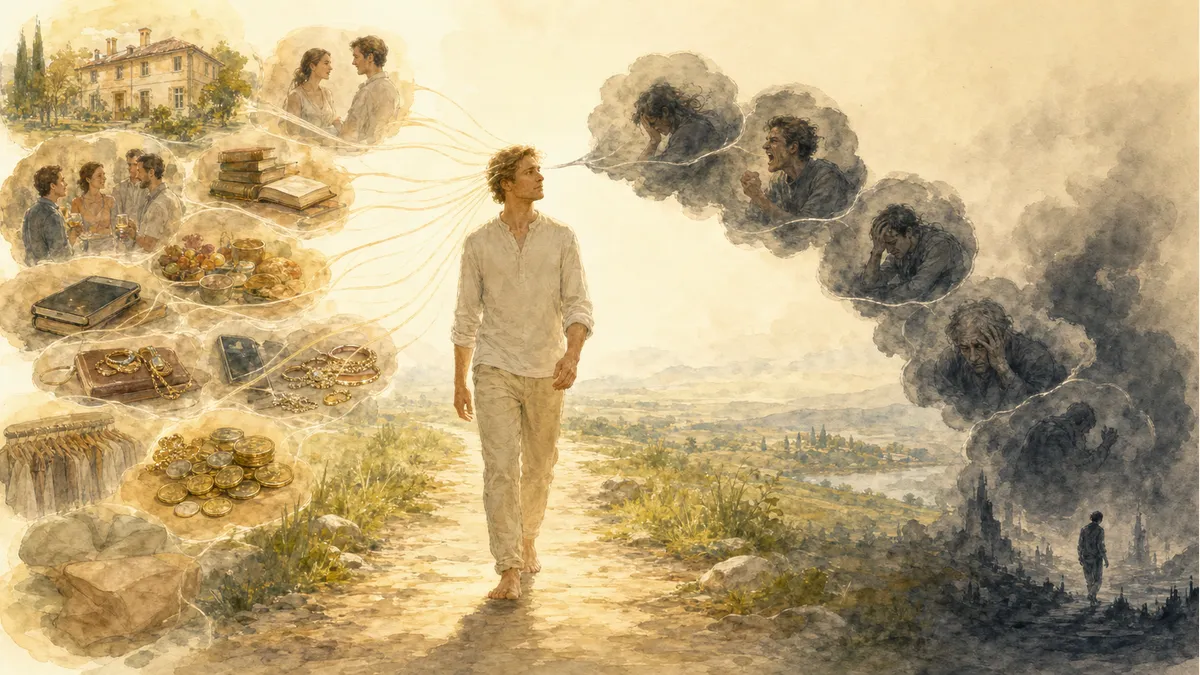
The next obstacle is distraction (avirati). Distraction is also sometimes translated as “worldly vanity,” and in the “Yoga Bhashya” it is defined as “greed of thought in the form of attachment to things.” That is, distraction is caused by the greed of our mind, which becomes attached to various things instead of abiding in natural contemplation.
The “Bhagavad Gita” says:
“When a person contemplates objects, attachment arises. From attachment comes desire. Desire leads to anger. From anger arises confusion. From confusion—a lack of memory. Lack of memory destroys wisdom. Because of the loss of wisdom, he perishes.”
What medicine is there for distraction? There is only one medicine here: to learn to swim among the objects of the senses and perception while controlling those very senses. If we speak in the terms of Laya Yoga, this means learning to self-liberate all perceptions that arise in the stream of consciousness, learning to integrate with them, and then you will not be distracted.
For example, if during a conversation you become drawn into the conversation, then you become distracted. But if you are speaking while at the same time not being distracted from basic consciousness, merging with the process of speaking, your sense organs are controlled, and speech for you is a play of your natural contemplation, then you do not fall into attachment to the process of communication.
7. False Vision (bhranti-darshana)

The next obstacle is called false vision (bhranti-darshana). “Bhranti” means error. It is like receiving darshan from an error or a blessing from an illusion. This is a serious obstacle. Bhranti-darshana is even more serious than doubts.
Doubts are something you are not sure about. For example, you doubt: “Am I practicing correctly or not? Have I chosen the right path or not? Does God exist or not?” For example, there was once a novice who had been in the monastery for half a year, and then asked: “Swami, so does God exist or not?” This is an example of doubt.
But bhranti is a fundamental error in which you are confident. Bhranti-darshana is a false delusion, the acceptance of a false point of view or falling into a certain certainty regarding an incorrect, false state. In Christian terms, these are spiritual delusions, prelest.
Doubts are easy to dispel; they can be replaced with inspiration, whereas prelest is very difficult to dispel, because a person in prelest is convinced of his false vision, that is, he strongly believes in it. Only someone who significantly surpasses him and whom he trusts can persuade a person in prelest or open him to a higher state. He cannot get out of the deluded state on his own. Why? Because he strongly believes in it.
There have been cases when yogis-hermits, ascetics, and mystics fell into bhranti-darshana. They saw spirits who had assumed the appearance of gods and who gave them prophecies. These prophecies came true, so they began to believe them and to heal through their power. Nevertheless, in this way they were caught on the “hook” of duality and considered themselves infallible. Such an ascetic was confident in his supernatural powers, in his supernatural realization, and only a saint who surpassed him in realization could, through his instructions, tear his mind out of such prelest.
False vision is based on the error of false knowledge (viparaya). What kind of error is this? The error of duality, the error of eternalism, for example, when visions of spirits who have assumed the forms of gods seem to be something real, when any images and visions are considered something important and greater emphasis is placed on them than on self-liberation.
I have personally witnessed such things. When a yogin begins to receive darshan from some spirit or simply a vision, he begins to believe it so strongly that the words of the scriptures and the guru begin to recede into the background and be eclipsed. And when any of the yogins or gurus begin to say anything that contradicts this, then in the soul of such a practitioner there even arises a feeling of defensiveness and indignation: “But this is my experience. It is so close to me. How can they say that?”
If the saint who patronizes such a disciple is compassionate, he will help to tear his mind away from this prelest, since a yogin who has fallen into a dualistic eternalist state has no chance of liberation.
For example, after a retreat, one of the practitioners began to have a vision of Babaji-avatar, who in reality was not Babaji-avatar at all, but a spirit assuming the form of Babaji-avatar. But this yogini very much enjoyed talking with him, receiving various predictions, asking questions and receiving answers to them. Over time, this became much more important to her than all the teaching and yoga that the guru had taught her. In the end, it was necessary to part with such a yogini, because for her the spirit of samaya became less important than her own visions. But a yogin who allows such experiences to seize his consciousness ultimately ends up with nothing. This is called eternalism, bhranti-darshana.
There is an even subtler trap—the trap of nihilism, when a yogin falls into the experience of emptiness. This experience impresses him so deeply that he cannot integrate with the relative dimension at all; he does not even have the desire to integrate. Instead, he simply begins to avoid and reject the relative. He thinks: “Now my main task is to hold on to emptiness, not to lose emptiness. I have caught this bird of happiness; now it is mine. Everything else no longer concerns me, because it simply does not exist in emptiness.”
Nihilism is also a subtle trap about which the siddhas warn. Nihilism is the “breath of the abyss,” which confuses the minds even of experienced yogins. Inexperienced yogins do not understand at all what is meant: “What kind of nihilism? What is this even about? If only one could experience at least a little of this nihilism, since such strong eternalism is surging forth.”
But years pass, the yogin engages in meditation, goes through retreats, and eventually comes to the experience of emptiness. When he experiences emptiness for a long time, he begins to understand what nihilism is. Nihilism is a very vivid and powerful understanding of the illusory nature of everything. You no longer have desires, relationships, connections, your own identification as a person; there is only emptiness. In emptiness you are free and happy, you feel very good, but as soon as you imagine that you need to come out of emptiness, think, speak, begin to act, it seems to you simply a nightmare.
A yogin who falls into the error of nihilism does not know how to unite, does not know how to self-liberate actions and energies. He only knows how to abide in emptiness by means of dhyana. On the one hand, this is already an attainment, since he is by no means an ordinary person; for an ordinary person it would be happiness to reach such a level. On the other hand, for an experienced practitioner, this is a very subtle trap in which he can remain for a long time and stop his own development.
8. Lack of attainment at the stages of yoga (alabdha-bhumikatva)

The next error is the lack of attainment at the stages (alabdha-bhumikatva). Lack of attainment at the stages may manifest in such a way that the yogin practices for years, yet he is still at the first stage. Twelve years have passed, and he is only at the second stage. Lack of progress means that there are no signs of realization, the desired qualities do not unfold, and the desired attainments do not come.
This can plunge the yogin into doubts; he may suffer greatly over it, lose faith in his path and in himself, and lose self-respect and divine pride. However, it should be understood that each of us possesses certain karmas that unfold individually and subjectively. And it is not a fact that the lessons one person has passed through have already been passed through by another.
The process of spiritual practice should not depend on signs of realization. Whether there are signs of realization or not, faith and self-liberation are higher than this. If you practice steadily, not paying attention to the absence of signs of realization, and your enthusiasm does not decline, then in the end you will receive such signs.
9. Instability of attainments (anavasthi-tattva)

The last obstacle according to Patanjali’s yoga is instability (anavasthi-tattva). Instability means that you have nevertheless reached some level—that is, you have passed through the previous obstacles and acquired some attainment—but you are unable to maintain it steadily. The higher the level of attainment, the more difficult it is to maintain.
History describes many siddhas and rishis who reached great heights as a result of ascetic practice. But it is also described how they fell as a result of some curse, temptation, distraction of the mind, or obstacles.
Such ascetics, having reached great heights, unexpectedly fell from them because of attachment or pride. Instability in maintaining the attained state is not a problem of beginners, but of experienced practitioners who, in retreat, reach a certain level, but after coming out of retreat lose it. They approach a certain point of the state of awareness, and then this state leaves, dissipates, and they have to start again from the beginning.
The texts say that until complete liberation has been attained, none of the levels guarantees protection from a sudden fall precisely because such an obstacle as instability exists. Therefore, the yogin is always cautious about his spiritual attainments, knowing that they are impermanent, that even after obtaining something it is not so easy to hold on to it, while losing it, on the contrary, is very simple.
Ways to Overcome Obstacles
What, then, are the ways to overcome these obstacles?
Deep guru yoga is the best medicine for all obstacles. Continuous mindfulness and rootedness in natural contemplation are a powerful shield that significantly weakens the force of any obstacles.
Impeccable rootedness in the View through studying texts and comparing them with one’s own experience, analytical meditation (manana), is a powerful sword that strikes obstacles even before they touch you.
Faith that continuously “burns” in your heart, always pure and directed toward the objects of Refuge, is armor that protects you from any obstacles.
The skillful, masterful use of the method, for example sankalpa, when you merge with the method and yourself become a walking method, is an antidote that greatly weakens any obstacles and renders them ineffective. It is like pulling out a snake’s fangs and depriving it of its venom: it will not be able to cause trouble, no matter how much it bites.
Control of the winds and channels, the ability to ground oneself properly, is what significantly weakens any obstacles.
Strong will, based on immersion in the natural state, the ability to distribute sankalpa correctly and positively project one’s future, directing the mind into the necessary tunnels of reality, is what makes you unreachable to these obstacles.
Transforming Obstacles into Ornaments

If you have such things, then samaya is also needed. If your samaya is pure, then day by day you deepen in pure vision. And if your pure vision grows, then divine pride and the single “taste” arise of themselves, and what was an obstacle will cease to be one; it will become your virtue, a sign of realization, or an ornament.
The inertia of the mind will become conscious thoughtlessness. The laziness of the body will become the self-liberated play of tamas. Doubts will become the darshan of nondual wisdom, which self-liberates any fluctuations of the mind by doubting the material suchness of this world.
False vision will disappear as such, dispersed by the light of your clarity. Nihilism will become the wisdom of knowing the unmanifest, which will constantly exist as the experience of the emptiness of all phenomena without deviation.
Illnesses will disappear, becoming the experience of bliss in the body and ecstasy through technical practices and contemplation. Distraction will disappear, turning into discriminating wisdom and clarity that integrate with any objects.
Thus, in the process of purifying the mind, the nine obstacles become the nine nectars or nine ornaments that accompany you, as a retinue accompanies its deity.
