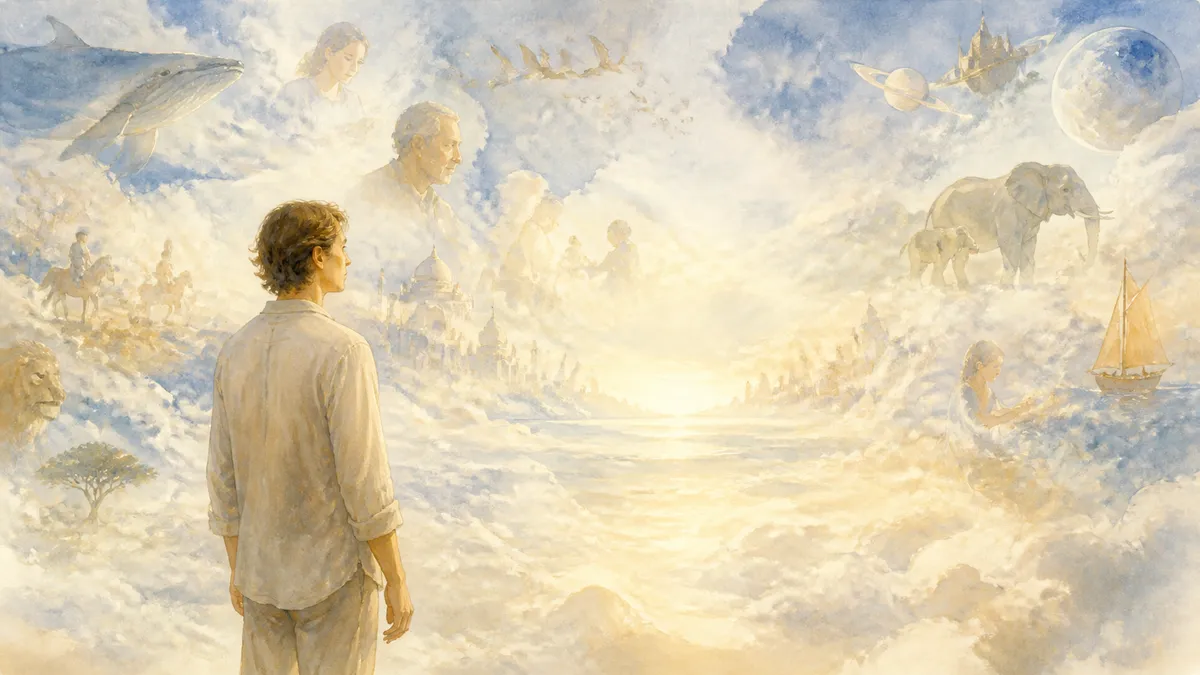
Dharma is a reliable Refuge, and there is none more reliable. It is something unchanging, eternal, and unwavering, though very subtle. When we take Refuge in Dharma as immutability, eternity, and steadfastness, all events of the material world are perceived much more simply, easily, and purely, and the material world gradually loses its power over us. It has always sought to wield power over us; unconscious nature is unconscious, while conscious energies are aware, but we deprive material samsara of its power over our consciousness when we practice Dharma, take Refuge, and establish ourselves in the View and contemplation.
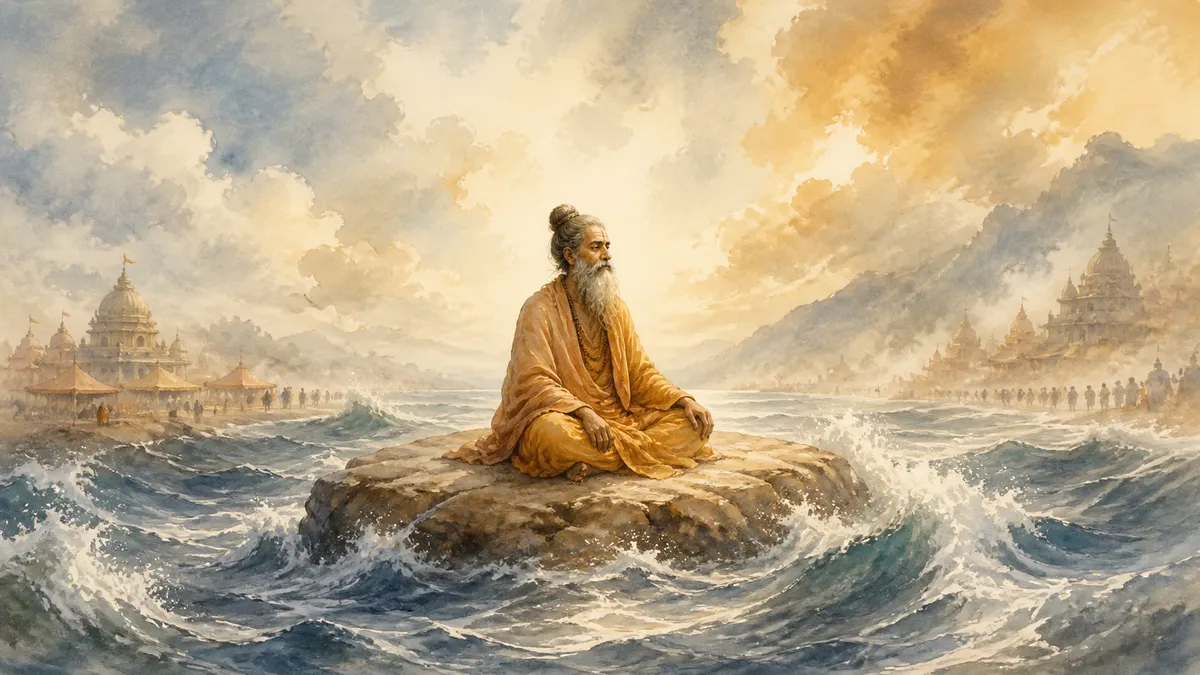
Dharma Is an Island of Safety in the Raging Sea of Samsara
First, we deprive samsara of its power over our consciousness. Once we have deprived it of power over our consciousness, half the work is already done. We do not change; the world around us changes—ideologies come and go: socialism, communism, liberal democracy, national patriotism, consumer culture, or something else—it does not matter what, because we do not care what ideology prevails. We do not change along with it; we do not build our lives on ideologies.
Various perceptions are experienced, while our mind remains unchanged. For example, I began preaching in 1995, and many events have taken place since then. I came out of retreat around the beginning of 1995; people came and went, ashrams appeared and disappeared, monasteries opened, temples were built, some remained, some were demolished—a great deal happened. I simply preached while all this was taking place; people came and changed, some left, some stayed, in some places I was praised, in others I was called a cultist, some kind of terrible person; some bowed, while others thought very badly of me, but my mind did not change. I practiced Dharma then, and I continue to preach it—no problems; samsara plays its games, while a sadhu performs his seva—this is immutability.
An unchanging mind is a sign of independence, a sign of freedom. At times my parents were openly hostile toward my pursuits, at times they were neutral, and later they became proud of me, as they are now, but I remained the same. Some people engaged in discussions and opposed me, then took Refuge and became disciples; in other words, there were changes, but ultimately you reach a stage where all these changes are illusory, empty, insignificant, and akin to a game. This is the power of Dharma. Dharma is an island of safety in the raging sea of samsara, if you understand Dharma.
The Four Levels of Dharma
Dharma has different levels: outer, inner, and secret.
Outer—Sanatana Dharma in general. At the outer level, we first take Refuge and establish a connection with the Refuge Tree, the Guru and the siddhas, and the ishta-devata. This is very important: we form a foundation and awaken faith.
Inner—Advaita Vedanta. We form the nondual View; we comprehend the philosophy of Advaita once and for all—for life. That is it: it is always with us and does not change. We must understand it, become convinced of its truth, and be guided by it in our lives, for example, by the mahavakyas: “Brahman Sat Jagat Mithya,” “Aham Brahmasmi,” and “Sarva Eva Brahman.” These three mahavakyas are sufficient to describe the entire philosophy of Advaita Vedanta. This is the inner level, where we form the View.
Secret level—we go deeper into Shaivism, considering not only Brahman but also Ishvara as he manifests, his energies (shaktis), powers, interconnections, and details. We examine in somewhat greater detail where this world comes from and what happens to it; we perceive the energies of Brahman, Shiva, and Shakti and the interplay of grace, penetrating into the dimension where purity and grace manifest.
Transcendent level—Anuttara Tantra, Laya Yoga. We form the consciousness of the Atman (the third aspect) of our own “I.” We have taken Refuge, formed the View of Brahman, developed the perception of Ishvara and devotion, and established a connection with grace; now, through our own naked awareness, we cultivate contemplation of the Atman within ourselves. We learn to erect the vajra fortress of the wisdom body—this is the transcendent level.
These are the four levels, which can also be correlated with the four padas in Shaivism. By forming these four levels within ourselves—the outer, inner, secret, and transcendent—and erecting the indestructible vajra fortress of wisdom, we create an unchanging consciousness that is independent of all manifestations.
Analogies Between Natural Awareness and the Five Elements
We continue studying the text “The Radiance of the Precious Mysteries of Laya Yoga.” Shravana, manana, nididhyasana—an in-depth understanding of these processes. Analogies of natural awareness associated with the five elements. These analogies, like the examples we examined last time, should be contemplated so that we can rely on them in everyday life.
The teacher then gives analogies related to the five elements:
Earth (prithivi)
Just as the earth is the unshakable foundation of everything, so the natural mind (sahaja) is the unshakable foundation of all manifestations, visions, material names and forms (nama and rupa).
The nature of Mind in its naked (anashrita) state is the basis of all phenomena perceived externally and of all internal sensory data, such as emotions, thoughts, and so on. It is the one great foundation, and when it is investigated, the supreme Source of all phenomena (Ishvara), Lord Shiva, Brahman, is discovered. But when we engage in contemplation, we first discover this foundation within ourselves as non-conceptual awareness, and it is not immediately recognized as the foundation. We recognize that it is the foundation much later.
At first, we abide in what is called the experience of deluded perception, that is, dosha-drishti (imperfect view), or an obscured view—a flawed vision. This is no reason to be upset, discouraged, fall into low self-esteem or despondency; rather, it is a reason to develop a critical attitude toward one’s own mind and perception. A sadhu ceases to believe as blindly in his perception and mind as an ordinary person does; he distances himself and adopts a more observant stance toward his own judgments.
Once a worldly person’s outlook has taken shape, he tends to attach labels and is very easily inclined to adopt an extreme position—usually eternalism or nihilism—and to express his own illusions with great confidence. A sadhu, by contrast, is someone who observes his own manifestations and regards them critically. He tries to take Refuge and establish himself in a deeper awareness beyond judgments and extreme views.
Once, a nun was traveling by train with worldly people, and afterward she complained to me. She had traveled with them for twenty-four hours and said, “Guru, how can one communicate with worldly people at all? They are so certain of their judgments, so certain of their illusion; they believe more strongly than we believe in the Dharma.” I said, “There is nothing surprising about that, for they devotedly serve their illusions, devotedly serve their samsara, and make great offerings to them; they are good upasakas. They are excellent worshipers and servants of samsara, and their faith is strong, but it is ignorance. In other words, they are rooted in their ignorance much more firmly than monks are rooted in the View and contemplation—if the monks are inexperienced; if they are experienced, then of course not.”
There are worldly people who are very confident about how to make money, or about how to uphold family values, or about their political views; they may kill for their political views or go to the barricades themselves. Which sadhu is ready to go to the barricades for the View? Who has such strong faith? Although this is not required, one must give them credit—they are very deeply rooted in their faith. All this is called the experience of deluded perception, but gradually we discover that everything visible has its foundation, and this foundation is the nature of Mind.
Water (apas)
Water is all-pervading and assumes any form; in the same way, the natural state is all-pervading and permeates this existence. Everything that is seen is an upadhi (vessel) containing the natural state—the Atman—a vessel within which boundless awareness exists.
When you experience the analogy of earth and the earth aspect, your nature of Mind is like an indestructible mountain; it is unchanging, as though you were abiding like a mighty mountain that cannot be moved—utterly stable. Experiencing the analogy associated with water and the water aspect in the natural state gives you a different sensation: you are flexible, fluid, all-pervading, and readily assume any form; you easily adapt to the situation—this is mirror-like wisdom. If you abide in the natural state of the nature of Mind and apply it in everyday life, you can act like water.
Water is not in conflict with anything: if there is a pebble, it simply flows around it and continues on its way; if there is a dam or an obstacle, it fills up and simply continues flowing; it can penetrate anywhere, just as natural awareness encounters no contradictions or obstacles anywhere—it simply penetrates gently. This property of water is called soft power. In the same way, natural awareness possesses this soft power. Water is always a soft power, unlike earth or fire, yet nothing can compare with this soft power; nothing can match it. It can move enormous objects. Likewise, natural awareness, like a soft power, envelops everything and regulates the situation, harmonizing and balancing the natural state, the outer world, and the inner world.
Fire (Agni)
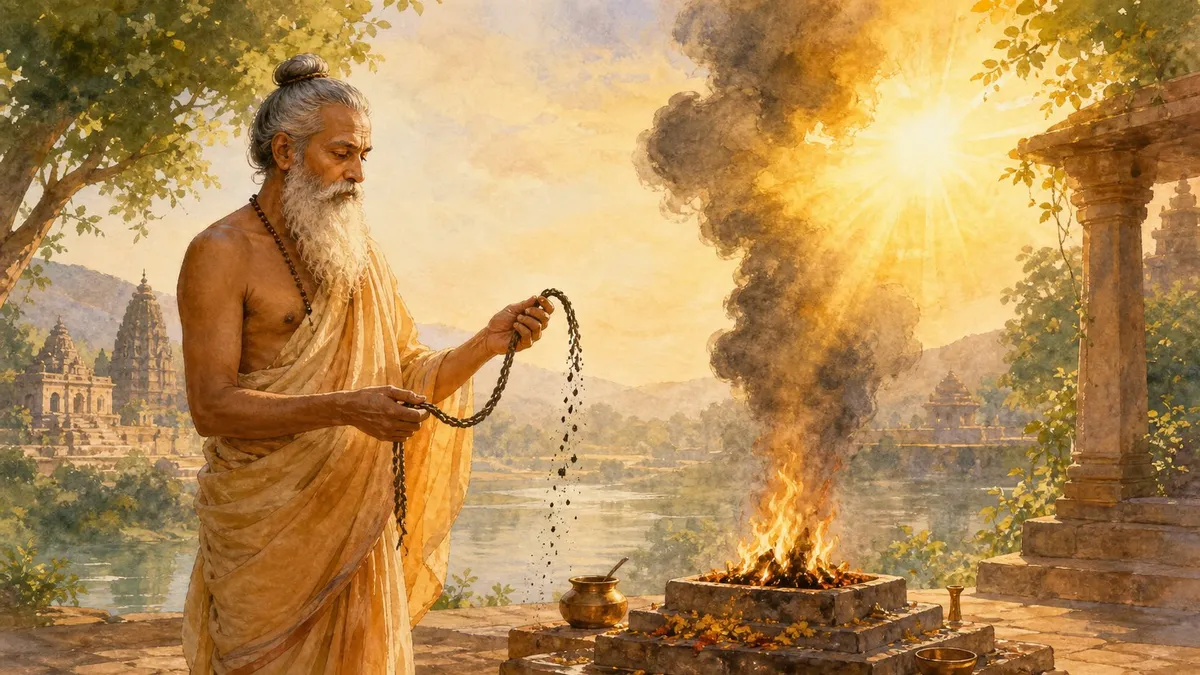
Fire, coming into contact with anything, dissolves it with its heat; in the same way, the natural state is capable of dissolving everything that comes into contact with it, while itself remaining unchanged.
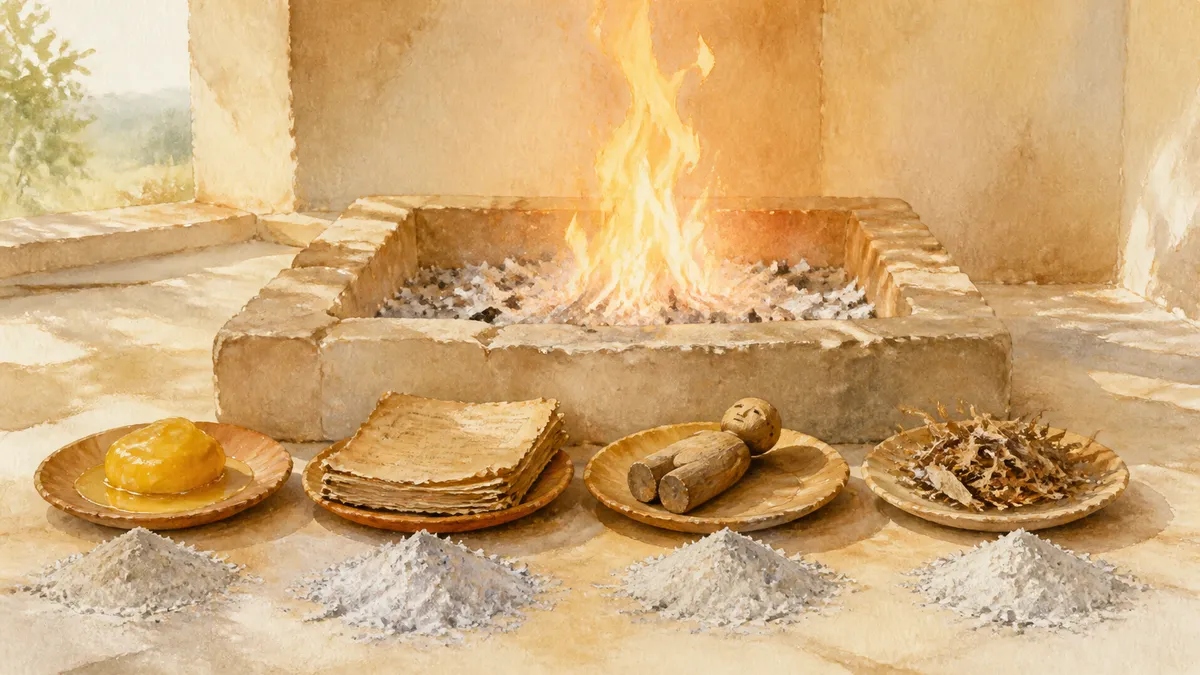
Fire is an element that transforms everything, changes qualities, and purifies everything. For example, if you throw ghee into a fire and then throw in some rubbish, or some decayed sacred text, or a wooden figurine, ultimately the same ash will remain; fire transforms everything, and the ash is pure. In the same way, natural awareness in the aspect of fire endows everything with purity and transforms everything from impure into pure.
The impure is the coarse level of the elements, where rajasic and tamasic inert qualities increase. For example, sattva is luminous serenity, rajas is turbulent passion, and tamas is dark inertia, dullness, and ignorance. Impure objects are those in which rajas and tamas are excessive and sattva is deficient. Pure objects are those in which sattva is abundant, while rajas and tamas are almost absent. The proportion of the three gunas distinguishes pure worlds from impure ones, the worlds of the gods from the worlds of humans, and higher dimensions from lower ones.
Natural awareness, when it comes into contact with anything tamasic or even rajasic, naturally purifies it. How does it purify? First, it increases sattva, changing the proportion. Second, it reveals the empty nature of rajas and tamas, thereby making them pure as well; that is, they are purified through the discovery of the empty nature of the gunas when natural awareness comes into contact with something.
Natural awareness, when it comes into contact with food, can extract from it the vibration of God (spanda), samanya-spanda (the divine pure vibration). This occurs when food is illuminated simply through the union of natural awareness with the food. When we abide in the natural state and look at someone or something, we can change our perception and see everything in pure vision.
We can see God because abiding in the natural state is characterized by naked awareness. In naked awareness, one can see God, but in awareness that is not naked—with perceptions and assessments, judgments and projections—one cannot. Such is the property of consciousness in the presence of fire: to purify everything. Therefore, if you feel obscured anywhere, if you have become obscured, you can enter a state of awareness. If it is deep enough, you can purify yourself simply by abiding in natural awareness. You can purify samayas, purify vows, and even purify prana, provided that you possess the ability to sustain and unite natural awareness with prana. You can purify the channels or purify some unfavorable external situation, although this is not easy; one must possess great mastery to project natural awareness outward, especially when other people or coarse elements are involved.
Wind (Vayu)
Air is attached to nothing, is omnipresent, and travels without clinging to anything; in the same way, the natural state is an unsupported, objectless, omnipresent presence.
The air aspect of natural awareness gives us the understanding that it is unsupported, volatile, immaterial, airy, unattached to anything, and clings to nothing. It imparts a distinctive sense of lightness, a feeling of ease in life. Air is not heavy and does not cling to anything; it is the utterly free wind. The feeling of freedom is always associated with the wind; people say, “Free as the wind.” A sadhu abiding in natural awareness is unconstrained, unbound, free as the wind; he does not cling, does not become attached, and is not bound by patterns. The wind blows here, there, and elsewhere, never lingering anywhere for long and never clinging to anything in particular. Yet it possesses great power: if necessary, it can bring down walls and uproot trees.
Likewise, natural awareness in its wind aspect is the same: it does not cling and is free from attachment, yet it possesses great strength and force when necessary. It conveys a sense of freedom while being highly flexible, and it can perform magical operations—this is the activity of all-accomplishing wisdom. It can influence the subtle world and direct events.
Space (Akasha)
“Understand that the mind is like space. Understand that the mind is spatial in nature!”
Mahasiddha Saraha
All living beings, objects, and material universes exist in the space of Akasha; likewise, everything that is perceived abides in the natural state (sahaja). The natural state is as vast as infinite space.
Space is the very wisdom body of Bhagavan Dattatreya. Space is the closest analogy to the experience of natural awareness and the most important tattva for contemplative practice. We must befriend space, understand its distinctive nature, learn to abide in it at all times, and use the power of the other tattvas; nevertheless, space is the dominant tattva upon which we rely during contemplation.
The Seven Great Principles of the View
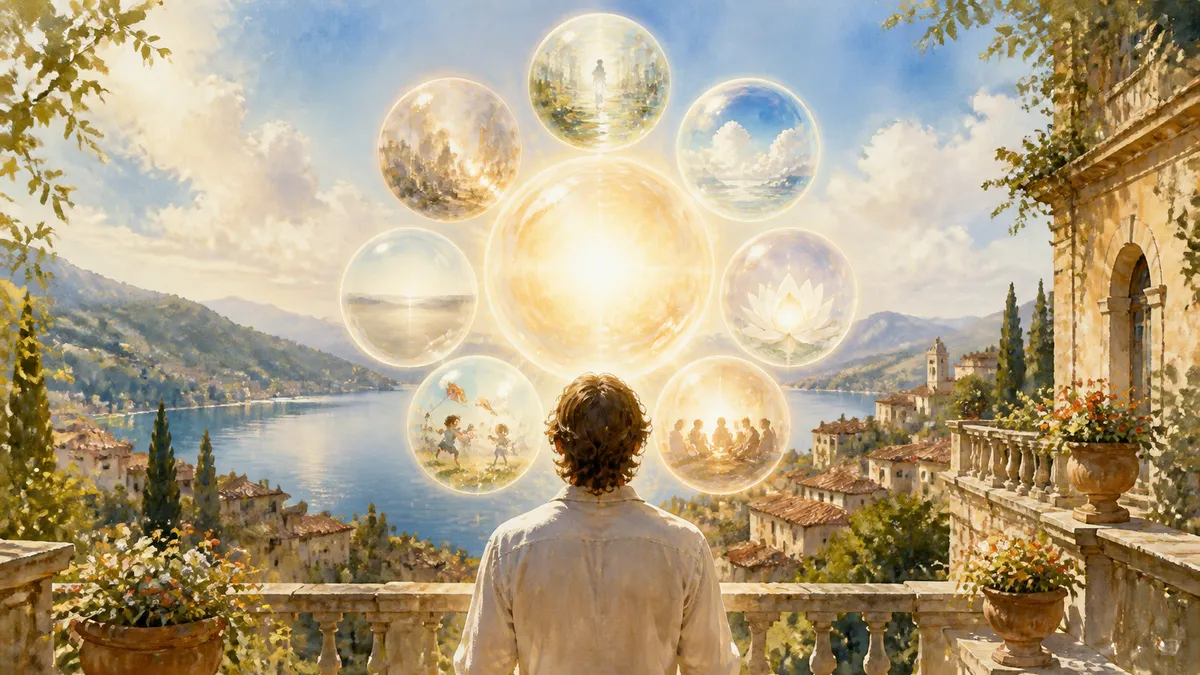
There are seven great principles of the view that arise when we master natural awareness as space, as well as the other aspects of the five elements and five wisdoms. These great principles are our seven capacities for recognizing reality while abiding in the view.
When we have realized the principle of natural awareness, we can recognize the illusory nature of all phenomena and events. This is the first sign: wherever you may be, you recognize their illusory nature; you recognize all phenomena as occurring within the flow of illusion, just as in a dream. A person dreams of a city or a mountain, yet the entire mountain in the dream is contained within their small body while they are simply lying in bed.
You recognize emptiness, the absence of inherent existence. Every object you see does not truly exist and is devoid of inherent existence; you recognize this clearly and are not captivated by the object's characteristics. For example, whereas you might previously have been captivated by an object's characteristics—a man sees a beautiful woman, and his mind immediately begins working in a certain direction—a sadhu looks at her and then says, “But she is empty; what is there to be captivated by? No problem.” Some disturbing object appears, and once again you contemplate: “But it is empty and has no inherent existence”—even if only at the level of logic and intellectual understanding—and the object no longer has a disturbing effect on you. This is the recognition of emptiness.
The third principle is being like a single space. You recognize space, the basis of this object, and see that there is space within the object. There is a famous example given by Sri Shankaracharya called avaccheda-vada (Shankara’s doctrine of apparent separation). In his texts, Shankara repeatedly uses the example and analogy of two vessels, two pots, with space inside them. This space appears to be divided as long as the walls of the pots remain separate, but in reality it is one and the same space. When the walls of the pots break, the space seems to reunite, but was there ever any separation in the first place? Space cannot be confined, yet the illusion arises that the space in one pot is one thing and the space in another pot is something else, that they are two different spaces. As long as the pots exist, there seem to be two different spaces, but when the pots break, the two spaces merge into one. Avaccheda-vada is the doctrine concerning the illusion of this separation. Shankara says, “This separation is an illusion.”
For example, one pot is your body and the other pot is another person’s body. They can also be likened to pitchers: it seems that the basis of your consciousness is one thing, while the basis of the other person’s consciousness is something else. But if you look at the essence and separate yourself from the five sheaths, the essence of consciousness is one and the same. It is a single space of consciousness. When you see another person, from the perspective of nonduality you are in fact speaking to yourself; you are seeing yourself. So whom do you then wish to speak to? With whom do you wish to sort things out? To whom do you wish to become attached? Of course, the mental apparatus and subtle bodies are different, but the basis of consciousness is one, like space.
Recognizing the Purity and Playful Nature of Phenomena
The next aspect is recognizing the purity of all objects and phenomena. When we see the basis, which is like space, see emptiness, and see illusoriness, our perception becomes subtler and we perceive the pure tattvas. Therefore, all phenomena and objects begin to be perceived in their true light—as pure manifestations.
The next principle is that we possess the ability to perceive the playful nature of the diversity of all phenomena. “Playful” means spontaneous, unbound, unconditioned by anything, and emanating from the supreme Source. Ordinarily, we perceive the causal nature of all phenomena, that is, the law of karma, karana-vikara (cause and effect), and there is no escaping it.
The playful nature of all phenomena means that we transcend causality and begin to perceive things as in the example Vasishtha gave in the “Yoga Vasishtha”: a crow lands on a coconut tree, and a coconut falls. The coconut falls on its own, and the crow lands on its own, but it seems that our mind establishes a connection, as though the coconut fell because of the crow.
The playful nature of all phenomena means the spontaneous, unconditioned, free manifestation of all energies and phenomena emanating from the Absolute. For example, there is the dimension of play and there is the dimension of reality. We are all adults and distinguish between them—everyone understands: this is a game, and this is reality. No one confuses the two.
For example, when someone is being pranked, they take the situation seriously, but if they are told, “It’s all a prank, it was all a joke,” they relax and immediately laugh, realizing that none of it was serious.
Suppose you have a lot of money—perhaps it was given to you for service, or perhaps a karma sannyasin earned it—and someone takes the money out of your bag, as well as your bank card, tickets, passport, and residence permit—they take everything. You search everywhere; it is a complete nightmare, a very serious situation, because your fate can change literally in a matter of seconds. But it turns out that one of your samaya brothers was simply playing a joke on you and decided to give you an adrenaline rush. Then he shows you: “All right, don’t worry, here it is,” and you immediately relax. It all turns out to have been a game; it was not real. This is the difference between real things and things that are part of a game.
Things that are part of a game are not real; nothing is constrained, nothing is serious, nothing binds, everything is free, everything is joyful, everything is self-liberated. Perceiving the playful nature of all phenomena means that there is nothing serious in this samsara. Therefore, saints never worry and are never clouded by afflictions; they chuckle at this entire samsara.
Often, when one of my students comes to me with such serious problems, I say, “Just laugh at it—that is, recognize the illusory nature of these phenomena, if only so that you can begin to manage the situation.” Because if we do not recognize the illusory nature of all phenomena, it is difficult to manage the situation. If the situation is so rigidly serious and conditioned, it is uncontrollable; you cannot do anything with it at all, because you do not perceive objects at the level of quantum uncertainty, where the observer’s consciousness can exert at least some influence. Instead, you perceive objects at the level of local materiality, and how can you change dense local materiality? It is very difficult to change.
Avadhuta—the Divine Player
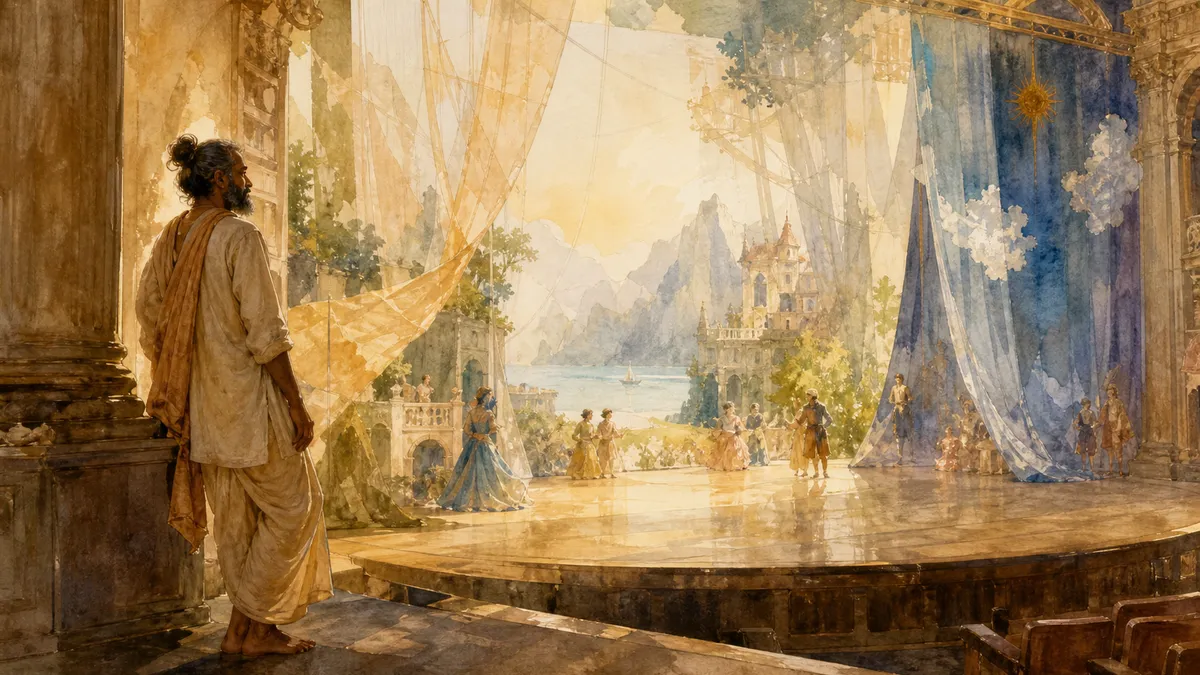
Perceiving the playful nature of all phenomena places us on the same level as saints, mahasiddhas, and avadhutas. And what is an avadhuta? An avadhuta is one who always lives in the dimension of divine play. This is a divine player for whom nothing exists apart from play; that is, the entire universe is a divine practical joke, a divine prank. It is a divine vaudeville, a divine performance. “All living beings have been tricked into birth and death, tricked into this life; look how all the souls rushed to be born, how they live”—it is all one total prank.
Saints perceive the world of phenomena as one total prank; they do not take human feelings, human thoughts, fantasies, ambitions, or attachments seriously—they cannot. None of this can be believed, yet human beings have believed in it all, and this is their great problem, because once they have believed, they have to live by these laws—what else can they do?
It is like an uninformed villager who was invited onto the stage of a large theater during a performance to help move a grand piano. There is a king on a throne, soldiers, and a rehearsal going on, and he believes it all and becomes thoroughly frightened. He takes it very seriously; the director watches and the audience laughs, but he completely fails to understand his role—that is what it is like.
All saints abide in the dimension of play, perceiving the playful nature of all phenomena, absolutely all of them, including even harsh phenomena, which are the most difficult to perceive in this way.
Inseparability from Consciousness and Brahman
The next principle is the inseparability of consciousness, atma-bhava—the feeling that everything is the true Self, that everything is inseparable from the mind. A magical universe in which consciousness acts as a commanding, volitional operator, as something capable of influencing reality. When the entire world is a manifestation of oneself, a magical universe means that my consciousness as the observer is included in the picture of the world—a quantum view of reality that science is only beginning to approach. Everything is inseparable from consciousness and from me as the observer, the one who perceives.
The next principle is the inseparability of everything from Ishvara (Brahman), brahma-bhava—the feeling that everything is God, everything is the Absolute.
Seven Powers of Recognition
Such are the seven powers of recognition that arise when we master the View. These seven powers, or seven great principles, are signs that you have mastered the View. In other words, the View is not merely about learning Shankara’s philosophy and passing the second-level examination. Truly mastering the View means that you are able, always and everywhere, to:
Recognize illusoriness
Recognize emptiness
Recognize the single space
Recognize the purity of all phenomena—that all phenomena are pure in their essence
Recognize the playful nature of the diversity of all phenomena
Recognize inseparability from consciousness—that all of this is your consciousness
Recognize inseparability from Brahman (Shiva), from Ishvara
These seven recognitions are a sign that you have mastered the View of Advaita Vedanta.
As soon as you have mastered this view (jnana-drishti), you free yourself from dosha-drishti (flaws in the view), from ignorance; you destroy dosha-drishti, destroy your ignorance, and the Guru's task is to help the disciple destroy their ignorance. You cease to be dependent on loka-drishti, the limited karmic vision of this earthly reality. Our present earthly reality is actually just one of many worlds; we have fallen under the influence of its energy, and this is called loka-drishti (the karmic vision of this earthly world). You free yourself from it; you destroy your own ignorance (avidya).
It takes some time for this destruction to occur and for you to become firmly established in the view. After that, the task is simply to always remember the view and always maintain it. Remembering the view and maintaining it is contemplation.
Contemplation as Maintaining the View
Without mastering the view, these seven faculties, genuine contemplation is impossible. This means that when you contemplate, there may be something contrived or something observing, and you must check: perhaps I lack discernment of illusoriness, or I lack discernment of emptiness, or I lack discernment of space, or perhaps I lack purity, or perhaps I do not discern the playful nature of all phenomena, or perhaps I do not understand the inseparability of the consciousness of the external world from my own consciousness, or the inseparability of the external world from God, from Ishvara.
To eliminate flaws in contemplation, you must become firmly established in the view, because contemplation is nothing other than continuously maintaining the view from second to second, from minute to minute.
Suppose you get up at night to drink some water; it is two thirty. As soon as you open your eyes, you see a playful reality: it is empty, it is illusory, everything is like space, everything is primordially pure, everything is like a play, inseparable from my consciousness and the consciousness of Shiva. With this awareness, you go to drink water at night; you do not forget it. If someone asks you, “What kind of reality is this?” you will describe it easily; you will not even have to think, because this is how you perceive it immediately. Why? Because you remembered it in your sleep as well, and once awake, you remember it even better.
This means that you remember the view; therefore, to contemplate means to remember all these truths. It is not necessary to articulate them, because contemplation is beyond thought—to remember them at a level beyond the mind, intuitively, already without thoughts. In other words, there is no longer any need to explain: “You know, reality is empty; you know, all this is a play; you know, everything is like space and is pure.” There is no need to explain any of this; you know it by default and abide beyond the mind, and you only laugh, you are only in ananda, only in bliss: “You know, all this is a manifestation of consciousness?”—you feel this intuitively.
When you contemplate, even experienced practitioners, siddhas, or contemplatives may remain unnoticed by others and look entirely like ordinary people. In some traditions, they were specifically given such assignments—to behave exactly like perfectly ordinary people and keep the qualities of their view and contemplation secret. Therefore, many siddhas were potters, swineherds, laundrymen; some were bow hunters. In other words, you have become firmly established in the view, you constantly abide in contemplation, and yet, simply on the Guru’s instructions, you behave like some ordinary person, or a monk, or a missionary, while inwardly you perceive reality in a completely different way.
Question:Is the next step to change reality, that is, to create this reality?
You still have to reach that point. These are advanced stages of mastering the view and contemplation. Until you are deeply established in them, you will not be able to change reality. Perhaps in small ways, yes, but not in any serious way. These are already siddhis, the domain of jnana-siddhi and laya-siddhi. When the cycle of day and night has been completed and the single “taste” has been realized, then we can speak about this, because we perceive the external world not only as illusoriness, as the emptiness of energy and its playful nature, but we change our relationship to energy and our vision of energy at the level of our body. The external elements, or the elements of our body, and consciousness are all revealed as one, and therefore at this level... Until this level has been attained, we do not seek to change reality.
Why? Because at this level it is impossible to change reality through the power of consciousness—it is not deep enough—but reality can be changed through thaumaturgy (magical means), also known as gupta-vidya, through rituals and mantras. All this is possible, but the task is not to change reality—the task is to purify the mind, because no matter how much you alter material reality through the power of magic, what do you need these changes for?
For example, there are magicians and sorcerers who can cast a love spell on someone. If you want to bewitch someone or attract wealth, they can be quite helpful in everyday matters. A village wise woman can do a great deal at her level: heal someone a little, spoil someone’s fate a little; if it is an enemy, some can even be driven to their grave—black magic has always existed; she can protect someone or undo something—this is called shat-karma (the six tantric actions).
I explained four actions briefly; do you remember which ones? Pacification—they are performed at different times of day and involve different visualizations. Enrichment, subjugation, and wrathful action—the latter is expulsion or destruction. In other words, through tantric methods of transformation, recitation of mantras, and visualization, you can exert some control over reality, but these are lower methods.
In essence, what we need now is not to learn how to control reality, but to establish ourselves deeply in the View and thereby purify all the elements so that, at the very least, reality does not control us. Later, the abilities to control reality will come—this is called akalpita-siddhi. That is, when we control reality by lower means, this is called kalpita-siddhi: magic, mantras, tantric methods, potions, elixirs, and rituals—artificial means. But akalpita-siddhi is the siddhi of the natural state, the siddhi of sahaja; the siddhis of Laya Yoga arise naturally from abiding in the nature of Mind, without additional effort.
Overcoming Deviations
“From beginningless time, the natural state has been the unborn state. Today, this truth is revealed through the Teacher’s pointing-out. Meditate in accordance with what has been said.”
Mahasiddha Saraha
Then the disciple may ask: “Very well, O Teacher, I understand: in the primordial, spontaneous nature of Mind, everything is already perfect. There is neither ‘you’ nor ‘I,’ neither pure nor impure—everything is an illusion generated by the ‘I,’ while the ‘I’ is primordially pure.
The disciple has grasped the View and gained faith in it, and questions arise: how should one act from this View in the relative dimension? Because here one may fall into certain extremes or deviations. Eternalism is one deviation; nihilism is another. The six errors are also deviations:
Losing action in awareness
Losing awareness in action
Losing the View in action
Losing action in the View
Losing awareness in the View
Losing the View in awareness
We must know these six errors and test our consciousness. Am I free from the extremes of eternalism and nihilism? Am I free from the six errors? You can always test yourself; you do not even necessarily need to go to the Guru—simply reflect.
For example, losing action in the View is a drift toward nihilism, when you think: “Well, everything is empty, everything is illusory, everything is pure,” and then, for instance, drink alcohol or eat meat, without understanding how to observe the principles of the Vinaya or follow certain vows of purity on the relative level, since it all has the nature of a game. Applying contemplation and applying the View means that, on the relative level, we understand all the details of the relative dimension and take this energy into account. Until our consciousness is sufficiently realized, the five elements affect us.
For example, to realize the View perfectly means that the tattvas (the five elements) have no effect on you. For instance, you put your hand into a fire—the hand does not burn and you feel no pain; this means that you have perfectly united with the fire element, eliminated subject and object, and abide in the perfect perception of fire in its purity. For you, fire is the discriminating wisdom of the color red, and it does not burn your body. You recognize its emptiness and illusory nature. If such perfection has not been attained, however, we must take into account, on the relative level, the laws governing the operation of energy so that they do not cause us problems.
“For me there is neither birth nor death, for I am the Atman, and for me there is neither samsara nor nirvana; liberation and bondage are merely illusions of my mind. Without effort, I am already pure, eternal, and boundless. Does this mean that I should no longer do anything and simply abandon sadhana?”
The Teacher replies: “O dear son. For now, these are merely beautiful words for you. You are mistaken in thinking that you no longer need to practice; your understanding is superficial. Understand now how to practice without practice; enter the path of contemplation without effort or hope; abide in awareness without generating the dualistic concepts of ‘I’ and ‘others,’ ‘liberation’ and ‘bondage,’ ‘this’ or ‘that,’ ‘samsara’ and ‘nirvana,’ ‘good’ and ‘evil,’ ‘pure’ and ‘impure.’
The Need for Spiritual Work After Comprehending the View
When we have penetrated the essence of the View, spiritual work is only beginning, because we must transform the View into contemplation, and we must stabilize that contemplation. To stabilize it means to become firmly established in it and contemplate from second to second, minute to minute, hour to hour, day to day, and week to week, so as to complete the cycle of the day first, and then the cycle of the night. All the work is done precisely at this level; therefore, anyone who stops at the level of the View and makes any claims is making a mistake. This is the error of nihilism; it is the loss of action within awareness. Many neo-Advaitins are prone to making such mistakes because they lack the guidance of a spiritual Teacher.
Why? Because karma exists and must be purified, and the three exhaustions must occur. There are malas—the three malas must be purified, the three kinds of karma must be purified, and the three exhaustions must be undergone:
Bhava-nishpatti (the exhaustion of the inner state)
Jnana-nishpatti (the exhaustion of identity and cognitive activity)
Kriya-nishpatti (the exhaustion of actions)
This takes up an enormous span of a yogi’s time.
Vikalpaka—the Inner Fabricator
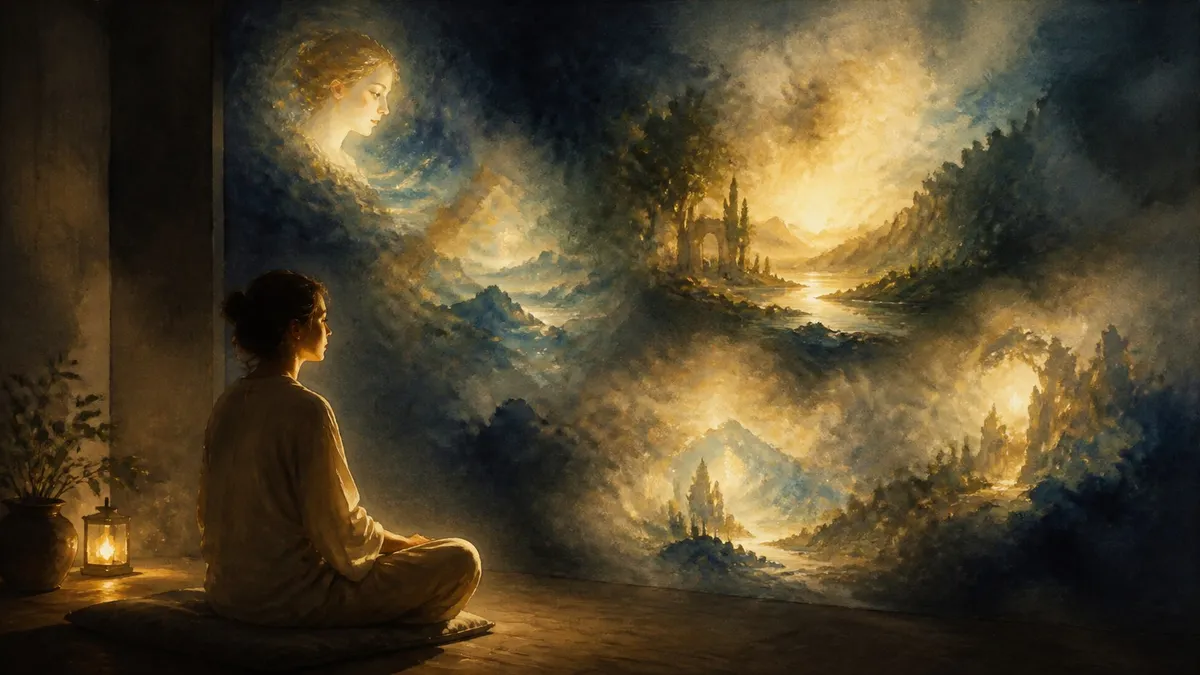
There is vikalpaka. Vikalpaka is the fabricator, that is, the creator who brings entities into being through the power of its fabrication. This inner creator (vikalpaka) is our consciousness, which has not yet been purified. Consciousness has the ability to generate things constantly; for example, when we sleep, dreams are generated. You see people and cities—this is the inherent ability to fabricate, and this fabricator must be purified and dissolved. It is precisely this fabricator that contains tendencies—that is, inner imprints: vasanas, predispositions, and samskaras—and constantly fabricates reality.
Approach any monk who has been in a dark retreat and ask him, “What kinds of experiences are there in a dark retreat?” He will tell you that if you are not vigilant, this fabricator (vikalpaka) can sweep you up so completely that you will simply be astonished by its ability to fabricate; it is constantly inventing something.
It is a creator that brings entities into being through the power of its fabrication and invention; that is, vikalpa is fantasy, a mental construct, and the mind constantly constructs thoughts. In ordinary waking life, we are still constrained by the waking state and remain vigilant, but in a dark retreat the boundary between waking consciousness and the subconscious disappears. This ability of the mind to generate thoughts is not perceived critically; that is, we often forget ourselves, and then inner reality is projected outward.
In a dark retreat, we see outside everything that is normally hidden within—latent visualizations, experiences; all of it emerges and is projected directly before us. We see all of this as though with inner vision, yet as if it were outside. If we have not managed to dissolve it through the power of presence and exhaust it, then it appears, influences us, and carries our mind away. We lose ourselves and may follow it—this is the same thing a person experiences in the bardo (antar-bhava).
Question: Om, I have a question. Why did Brahma have to practice tapas for this to happen, whereas we, on the contrary, have to practice tapas in order to eliminate it?
Brahma had to awaken sva-maya. Sva-maya is one’s own maya, the creative power of the Atman, the power of the universal illusion that creates everything. It is also called chitta-spanda (the vibration of consciousness). Since Brahma emerged from Ishvara (Shiva), while Ishvara himself is very pure and does not generate worldly vrittis, Brahma had to use the power of attention to draw this spanda from the depths of Ishvara (he, too, is Ishvara with the special function of creating), to draw it out of himself.
Since we are Brahma’s creation, chitta-spanda is already inherent in us, it is already embedded within us, and therefore manifests uncontrollably; thus, we must rediscover within ourselves this pure, controlling consciousness. We must transform from a vikalpaka (one who fabricates), a creator who brings entities into being through the power of imagination, an inventor, into nirvikalpa—that is, through nirvikalpa samadhi or sahaja nirvikalpa, become one who is free from mental fabrication.
Self-Liberation and Naked Awareness
Self-liberation, contemplation, is when we learn to be free from mental fabrication. For example, you abide in naked awareness; naked awareness is free from all fabrications, and you arrive and see, for instance, that someone has broken a tree or pulled some produce out of a garden bed. But since you are in naked awareness, you make no judgments about it and continue to remain in naked awareness. You accept it as it is; if you do not accept it, anger arises.
You begin to fabricate and think: “Who did this?! How could they? What kind of people are they, anyway? How can such people even be in the ashram? Don’t they pay any attention at all?” You begin to get angry, the mind winds itself up—that is, the vikalpaka has gone into action. But if you abide in awareness, your mind is like the sky, nothing is mentally fabricated, yet there is an extremely subtle clarity at the periphery of consciousness. “So, someone broke it; some measures must be taken to prevent this from happening again.” That is all: no anger, no value judgments, simply a sankalpa at the periphery of consciousness about how to harmonize the situation; yet you have lost neither the subconscious that is like the sky, nor the pure, playful quality, nor the perception of emptiness—you have lost nothing.
This means that you abide in nirvikalpa; you have stopped the inner fabricator, you experience transparent clarity, you experience the great principle of the complete purity of consciousness without cognition or support. The four aspects of equality apply to you: all phenomena do not exist; all phenomena are equally pure; they do not disappear but manifest creatively, simply arising naturally within the nature of awareness; they are able to function properly by connecting with perception. They arise through chitta-spanda (the vibration of the source consciousness) and interdependence within consciousness. They cannot be defined as anything specific—that is, everything perceived always manifests clearly without actually existing. This means that your fabricator has been stopped through self-liberation, and you abide in the dimension of nirvikalpa.
“Simply sustain the presence of awareness continuously, rise above all rational judgments, and preserve this understanding every moment, whatever you may be doing: working, eating, talking, walking, sitting, or lying down. Do this for days, weeks, months, years—for your entire life. This is practice without practice, O disciple. It has no specific method or posture; it requires no particular conditions or special time, no mantras or yantras.”
Great Non-Action and the Single Samaya
When we understand the View, we understand that the View is originally perfect, that Brahman is originally perfect, requires no effort, and needs no methods; it is grace itself—that is, Brahman is grace, profound happiness, profound goodness that already exists spontaneously and is spontaneously perfect. By relaxing into the View and letting go of effort, we can open ourselves to this grace, and so we resolve to abide in great non-doing. Great non-doing is precisely kriya-nishpatti (the exhaustion of all actions), and we undertake the single samaya. The single samaya of contemplation means always abiding in the View, always abiding in awareness, or at least striving to do so; even if we do not succeed, there is nothing wrong with that, but we express our intention to strive and eventually master it—this is our vow and our pledge.
In this sense, no other vows are needed in Anuttara Tantra; that is, there is only one vow—to always abide in awareness, in the View and contemplation. If you abide in them, then you are truly a practitioner of Anuttara Tantra. Naturally, other vows must also be observed, but they do not belong to Anuttara Tantra; they are, for example, tantric samayas or Vinaya vows. They operate on their own level, yet they are based on the principle of your vow of the single samaya. If, for example, you observe the principles of the Vinaya and the Vinaya vows, and observe the fourteen root samaya vows, but for some reason do not observe the single samaya, then you may be called a practitioner of Sutra or a practitioner of Tantra, but not of Anuttara Tantra; that is, you practice one-third or two-thirds of the path, but you do not practice the supreme teaching, and this distinction must be understood with subtlety. We follow all three kinds of vows—the single samaya, the tantric vows, and the Vinaya vows, each on its own level.
The principle of the single samaya means only one thing: always maintaining the View, always maintaining contemplation, and integrating all experiences with your single vow. It is considered the most important vow, one that must never be abandoned, because it is precisely through it that the highest realization occurs. Of course, the five maha-vratas, the eight vows of a karma-sannyasin, or the eleven vows of monks are important, but they create the conditions for realization. The fourteen samaya vows, the tantric samayas, are also very important: they protect you and bestow the purity of Refuge and grace. Nevertheless, the essential core of the vow of the single samaya is the most important thing, and we must be skillful in observing this vow, understand how to observe it, or at least strive to do so. It is not so easy to begin observing it.
For example, I sometimes tell lay disciples: “Even if someone has not taken the vows of a karma-sannyasin or a grihastha, and knows nothing about the tantric samaya vows, yet nevertheless unfailingly abides, without distraction, in the single samaya, the View, and contemplation.” For example, they may go somewhere, eat meat, or watch something, but if they unfailingly abide in the single samaya, they should still be recognized as a practitioner of Anuttara Tantra. Perhaps they cannot be recognized as a practitioner of Tantra, a practitioner of Sutra, or a karma-sannyasin, but they are still a practitioner of Anuttara Tantra—such is the importance of this vow.
“Having reflected on what was said, the disciple again asks the Teacher: ‘How wondrous, O Teacher, to follow continuously this invisible, ineffable yoga of dissolution, hidden from all, transcending concepts—this yoga of non-following, non-meditation, non-‘I,’ non-method, and non-conceptuality.’
Then doubts arise once more, and the disciple addresses the Teacher: ‘O Teacher, if the self-born nature, the true ‘I,’ is beyond effort, needs no purification, and is beyond pure and impure, does this mean that I may behave however I wish and indulge my passions and kleshas?’
‘O disciple, you are mistaken. To act in this way means failing to understand the difference between the absolute and the relative. Although in the primordial suchness of being, the ‘I,’ everything is self-perfect and pure, you do not yet possess complete realization in the relative sense. Until the highest attainment is realized, you must purify the kleshas and eliminate desires, purifying the relative ‘I’ through the methods of yoga. If you indulge your passions, you will accumulate mountains of negative karma, for your vision as yet has no power.’
“Hey, yogin, do not pursue sensual pleasures. This great disease will disrupt the state of supreme bliss. By lusting after an object of passion, you defile the purity of the unborn with the arrows of desire.”
Mahasiddha Saraha
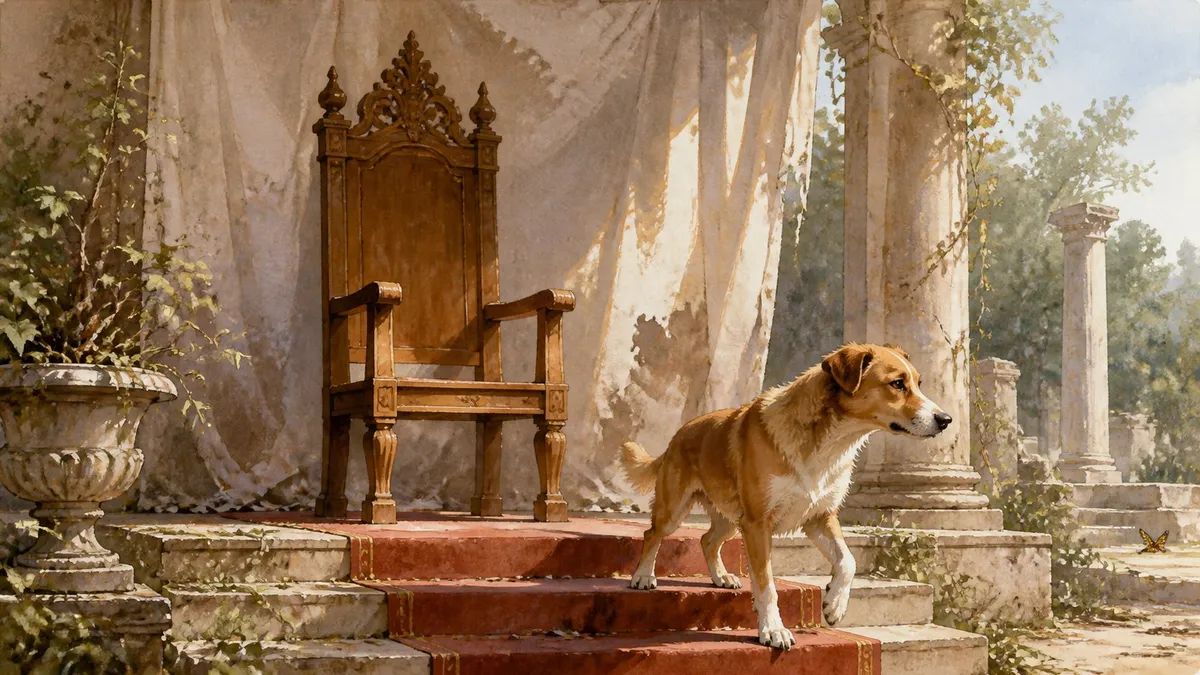
There is a saying: “You can place a dog on a throne before a large gathering, and it will sit there looking important, but when you approach it and call it, it will jump down and sniff your feet.” It will not remain there; such is a dog’s nature—it cannot maintain the proper position. This illustrates how the dog-like ego may seat itself upon the throne of the View, but at the slightest trial, the dog will fail the test; it will quickly abandon the throne, the View, and the awareness of the single samaya.
Questions About Practice
Question: You said that when one practices contemplation, breathing slows down, so the question is: at what breath length does contemplation arise? After all, these processes are reciprocal.
Fullness of attention can also be present with a normal breath length, but when you have nine inhalations and exhalations, it is already arising; at around six minutes, it deepens. Or, if the breathing rate decreases, the breath length decreases as well. For example, while walking it is shorter, and when you sit down, it may shorten to three or four, or even one or two. In “Radiance, Volume 2,” there is a table showing the stages, breathing rate, and breath length. You can sit down with a stopwatch, measure your breathing rate, and then measure the number of finger-widths the breath travels in and out. This can also vary from person to person, because one person may be able to contemplate even while breathing normally, whereas another may require a change in prana.
Question: Om, Guruji. What is the difference between indulging the kleshas and self-liberation?
The difference is fundamental. The self-liberation of the kleshas means that the kleshas disappear through the unification of natural awareness with them. Karmic prana (kama-shakti) is drawn into the sushumna nadi and becomes prana-shakti, a form of kundalini; that is, a transformation occurs both in consciousness and in prana. In consciousness, the klesha itself is transformed either into purity in tantra, or into emptiness and space in anuttara tantra. With indulgence, however, the klesha is not transformed; it remains unchanged. In other words, a person tries to maintain the View, as it were, but the power of their View and contemplation is insufficient, and the klesha remains. The winds do not enter the sushumna, and kama-shakti is not transformed into prana-shakti; it remains as it is. Thus, no transformation occurs either at the level of energy or at the level of consciousness.
Question: So can we say that we keep stumbling where we stumbled before? But if transformation has occurred, then we do not really notice it.
Yes, a klesha does not affect your consciousness if it has been self-liberated and transformed. What is harmful about a klesha? It has an obscuring effect on the mind; under certain circumstances, the mind becomes obscured. But when the klesha has been liberated and released into emptiness and the nature of natural awareness, it no longer has any obscuring effect on the mind, nor does it have any negative effect on energy. It becomes something like an ornament, a playful addition to natural awareness: the snake on Shiva’s chest, Dattatreya’s garland, the skulls worn by deities such as Kali—these are not kleshas; they are their ornaments. “Ornaments” means a certain piquant feature, a certain manifested energy, yet this energy is not different from the nature of consciousness and is completely inseparable from it; it simply manifests as a visible image.
It is like a rope that cannot bind, though it looks like a rope: the rope has been burned, and a burned rope cannot bind. In other words, the klesha cannot bind or obscure. For example, when the gods approached Bhagavan Dattatreya and asked him to help defeat the asuras, he appeared before them in some luxurious chambers, with a bottle of wine here and some half-dressed woman walking about there. The gods asked Dattatreya to help them defeat the asuras, but Dattatreya said, “Oh, come now, look at me. I squandered my yogic power long ago, as you can see, on women and wine.” The gods were embarrassed, but Vishnu had told them, “Ask Dattatreya, otherwise no one will help you,” and they remembered these instructions, continued to prostrate themselves, and asked Dattatreya for help. It was simply yoga-maya—an illusion, a delusion conjured by Dattatreya so that those who were not ready to perceive him would not come to him unnecessarily. When they demonstrated their devotion, Dattatreya agreed, and Dattatreya is one of the masters of transforming the kleshas into wisdom.
Sometimes he appeared as some kind of local bum, begging for meat or wine, dressed in strange garments, some deluded person; but to one who possessed faith and devotion, he revealed his pure nature.
His method is precisely to provoke certain kleshas in a person and bring them into confrontation with devotion, so that devotion may prevail. If devotion, purity, and self-surrender prevail, he appears in his pure form and bestows blessings. Why does Dattatreya do this? Because he knows that in order to bestow a blessing, the mind must be freed and karma must be cleared away so that the person becomes like an empty vessel; karma must be pushed aside and purified, and space must be made for the blessing. Blessings cannot be bestowed on everyone: for a blessing to pass through, room must be made in the soul. But how can it be made? It is not that simple. What is within the soul must be brought forth—or, as they say, the vessel must be shaken. Hence the Indian proverb: “To find out what is in a vessel, you have to shake it.” Dattatreya shakes the vessel by appearing in unexpected forms and provoking the karmas hidden in the soul. These karmas become active and emerge, while Dattatreya simultaneously helps devotion arise. Devotion must dissolve the stirred-up karma. If a person can sustain it, then he is ready for the blessing. If devotion has prevailed, the karmas have emerged, the vessel is empty, and room has been made, he can transmit grace.
Question: Suppose a sadhu approaches a garden bed, and he is aware and sees that something there is broken. He does not evaluate it; no assessments or judgments arise. Accordingly, the thought arises that some kind of protection should be put in place, that it needs to be protected. But there is no fabricating mind, so the thought will not arise; only an intuitive impulse can arise, if the buddhi is purified, that something needs to be done. This impulse is directed toward... that is, this thought arises—not even a thought, but simply an intuitive clarity that a fence needs to be built. Yet the thought “build a fence” will not arise; there are no assessments or judgments. Does a thought arise or not? Does it arise and not arise?
However you like, however you decide. The point is that the issue is not whether a thought should or should not arise. A thought may arise and dissolve as play; thoughts, emotions, and volitional impulses may arise as self-liberated play, but they must all arise not at the center but at the periphery of consciousness, while at the center there must be choiceless naked awareness, and it must remain there. Abiding in choiceless naked awareness does not prohibit you from having thoughts, but they must be playful and empty in nature and remain on the periphery. It does not prohibit you from generating even minor emotions, but they must be attenuated, remain on the periphery, and be playful in nature. It does not even prohibit you from making judgments, but you must recognize these judgments as illusory and empty and not become attached to them. As one siddha sang: “The words of an avadhuta are like the babbling of a madman.” They have no significance; you are not attached to them, and at the periphery there is nothing of the sort. At the periphery there is total amanaska. But if you are completely unable to assess reality and have entered such a space-like state—“I understand nothing, I see nothing”—then what would that be, who knows? Of course, it would be a loss of action, or a loss of awareness in the View, or a loss of action. We can assess reality; moreover, we assess reality even better than an ordinary person. We should be better integrated, but the processes are different—that is the point.
Question: But “better” means there is a clear buddhi that gives an impulse of awareness faster than thought, and accordingly thought is, as it were...
Subordinate, yes. A sadhu does not think; he perceives intuitively and acts immediately. He may use thoughts, but not very often.
Question: Well, to subordinate an assessment...
To write a poem. Yes, exactly. If your buddhi channel is open, you do everything very quickly; you can rapidly materialize an intention or phenomenon, you quickly calculate everything at an intuitive level, and there is almost no gap between your head and your hands. You do not spend a long time discussing things; you act quickly, you become effective, and you live in the dimension of an exhilarating game. Your effectiveness increases manyfold. Why can experienced practitioners often do what ten inexperienced ones cannot? It is the power of consciousness.
Question: Om, Guru. Regarding the previous answer, please dispel my doubts. Still, indulging the kleshas and self-liberation, using such a mundane example as consuming sweets or being addicted to sugar—if you constantly put it in your tea and crave sweets—is that a klesha?
Well, that is not such a terrible klesha. In fact, many saints ate sugar; one should simply avoid overindulging so as not to develop diabetes.
Question: Viewed in this light, it simply ceases to be a question of whether it is good or bad.
Yes, if it does not harm your health, it is not a klesha. A klesha is when something clouds your mind and troubles you—an addiction, when you are not free. It is like an energy that constantly pulls you in one direction, and you cannot do anything about it; you are helpless. That is when you need to take a vow. A vow works: you make an oath, reinforce it with offerings, and simply forbid yourself from going in that direction because you know that without the vow, it will drag you off somewhere again.
Question: So, if this craving does not arise when consuming sugar.
Yes, you do not even think about it.
Question: Does this also apply to everything else?
Yes, it is the same with everything else.
Advaita
Laya-yoga
Contemplation
Dharma
Kleshas
Self-liberation
View
Five Elements
Guru's Answers
Author Гуру
Read 16 times
Articles
Vidya AI
Search
Lectures
November 2, 2026
Mantra of the day
ОМ САХАДЖАЙА НАМАХ ОМ Естественному – поклонение!
Auspicious Times(Rome)
Brahma Muhurta:
04:53 - 05:48
Abhijit Muhurta:
11:33 - 12:14
Sayam Sandhya:
16:44 - 17:25
Mokshada Ekadashi (6 November)
Ekadashi of liberation. Helps to achieve spiritual enlightenment.