

Commentary on the text “The Story of the Monk Yongjia, Who Came to Huineng for Confirmation of Enlightenment”
Xia Yin Jie drew Yongjia’s attention to the fact that enlightenment attained naturally is limited. He advised Yongjia to seek help from a teacher. Yongjia asked whether Xia Yin Jie could confirm his understanding, but the monk referred to his own teacher, Huineng, and undertook to take him to Caozi. When they arrived, Yongjia did not prostrate before the Sixth Patriarch, as the ritual required; instead, he walked around Huineng three times, holding a staff in one hand and a bowl in the other. Huineng said:
“A monk should conduct himself with dignity. Where are you from, and why are you so arrogant?”
Yongjia replied:
“The most important thing is to solve the problem of life and death; since death will come soon, I have no time to worry about manners. My only concern is to free myself from birth and death.”
Huineng countered:
“Why do you not try to know the absence of birth and death? Then you would understand that there are no such things as earlier or later.”
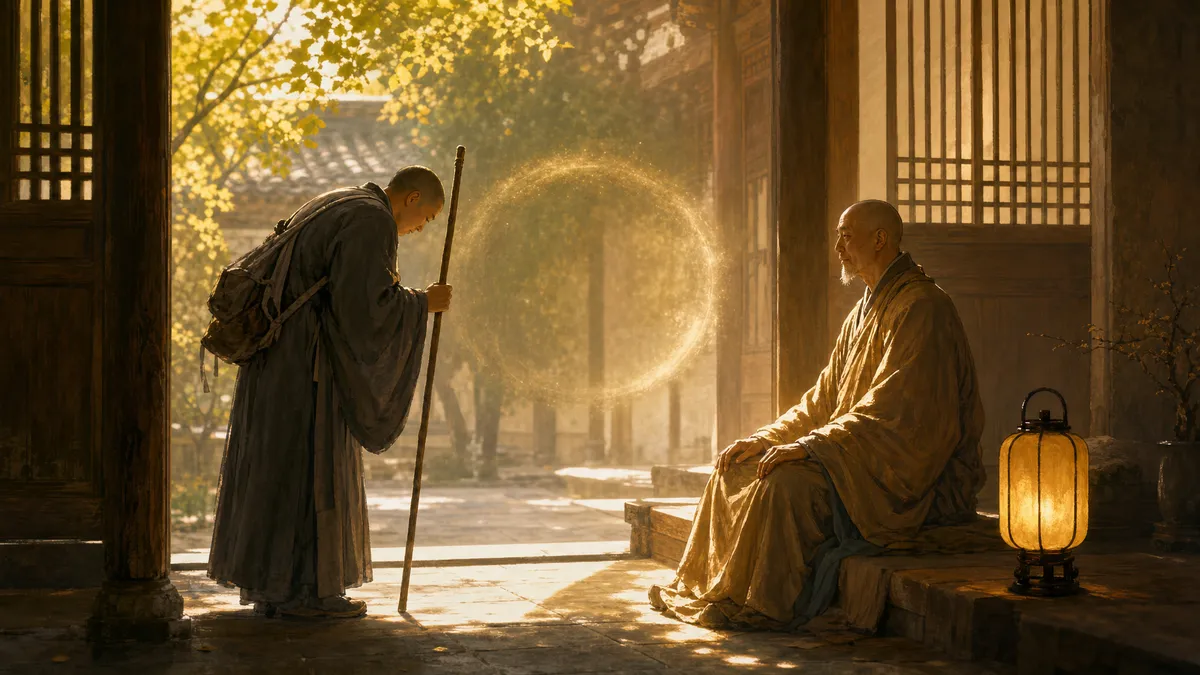
Yongjia came to him demonstrating his lofty understanding, not adhering to the usual rules of conduct, saying that his entire spirit was directed toward realization. But when the spirit is directed toward realization, the external ceases to have meaning. Huineng said to him: “Although your spirit is directed toward realization, why do you not find that which is beyond birth and death, if you fear death and practice the Dharma in order to transcend it?”
Yongjia replied:
“If we know the principle of the dharma body and know that the dharma body is devoid of birth and death, we understand that there are no such things as earlier or later.”
Huineng replied:
“That is indeed so.”
Those present were astonished by this dialogue, but they were even more astonished by what happened next. Yongjia prostrated before Huineng and said:
“It is time for me to go.”
Huineng asked:
“Isn’t it too early to leave?”
Yongjia replied:
“Since from the very beginning no such thing as movement exists, there is no point in saying too early or too late.”
Huineng asked:
“Then who knows that there is no movement?”
Yongjia said:
“It is you who are making a distinction.”
Huineng praised him:
“You truly understand the meaning of non-birth.”
Yongjia countered:
“How can non-birth have any meaning?”
Huineng dug even deeper:
“If there is no meaning, who is making the distinction?”
Yongjia replied:
“Even distinction is still not meaning.”
Huineng again praised Yongjia:
“Wonderful, you have done well; please stay the night.”
Yongjia stayed the night, and the next day returned to Longxing Temple. In the remaining years of Yongjia’s life, many followers studied with him, and his fame grew even greater. He was held in such respect that after his passing in 713, the Chinese emperor bestowed upon him the posthumous title Wuxiang, which means “having no manifestation.”
This monk said that if we know the principle of the dharma body, that the dharma body is devoid of birth and death, then we understand that there are no such things as earlier or later. The dharma body is another name for the nature of Mind, emptiness as such.
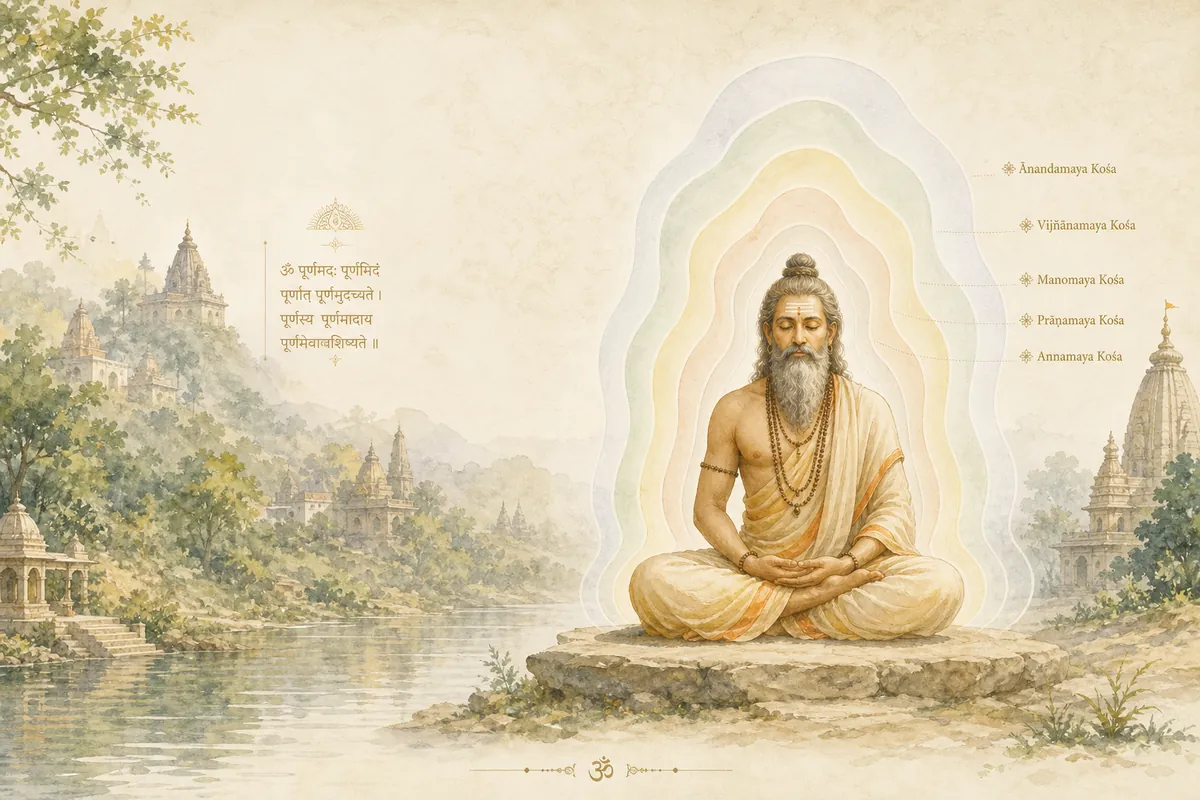
Within the physical body there is an energetic, etheric body, or pranamaya kosha. It can be felt if you purify the channels and feel the flow of prana, since it consists of pranas.
Even subtler than the energy body is the astral body. One who meditates well can easily separate the astral body from the physical one. The ability to separate it is a sign of a certain attainment in the practice of concentration, in dream yoga, or in kundalini yoga. The astral body is difficult to describe in words, since it is immaterial. However, within it you know that you are you; that is, by the power of the mind it can take the form of the physical body, or any other form. It can travel at tremendous speed—as soon as you wish to be somewhere, you immediately find yourself there. It can pass through walls and ceilings, penetrate through the earth, hear and see at a distance. However, none of this can be called the dharma body, because all these are merely further sheaths that are part of samsara. And even if you learn to fly superbly in the astral body, you may be just as blind as an ordinary person; only your blindness will be freer. But the dharma body is much further beyond.
Following the astral body is the causal body, or vijnanamaya kosha. Some imagine it as a golden luminous body, others as a sphere. In our teaching, it is considered to have no form. This is the body of cosmic consciousness, without limits, in which one can dwell in the world without forms (Arupa-loka). This is an entirely different level, because it is a body for which there are no concerns connected with size or time in the human sense, no limitations of form (square, round, angular, curved, long, short, and so on), no limitations of space (millimeters, centimeters, kilometers, and so on), and everything is infinite. It is even difficult to imagine. It is simply a state in which there is consciousness, but no form, no designations, names, labels, concepts; it is like an infinite empty abyss. Nevertheless, even there there is consciousness, will, and a sense of being.
When a yogin first comes into contact with this body, he may think: “Here it is, liberation!” For this infinite cosmic consciousness is very exalted; compared to it, all the concerns of people are like the crawling of dung worms, so insignificant and petty do they seem. One who experiences this body is continuously in a completely incomprehensible, cosmic, transcendent state, and therefore form seems to him something very limited, inert, and foolish. Perhaps the gods of the formless world look at people in just this way.
Nevertheless, even this body cannot be called the dharma body, because, although it is very majestic, it too is a limitation, it too is samsara. The saints warn that a yogin should not linger in this body, hang suspended in it, or cling to it. One can live in this body for a very long time; it seems immortal. One can enter it only through samadhi, not through the human mind, since human reason is very limited. If you pass into the fifth dhyana, when infinite space is experienced, you will penetrate this body.
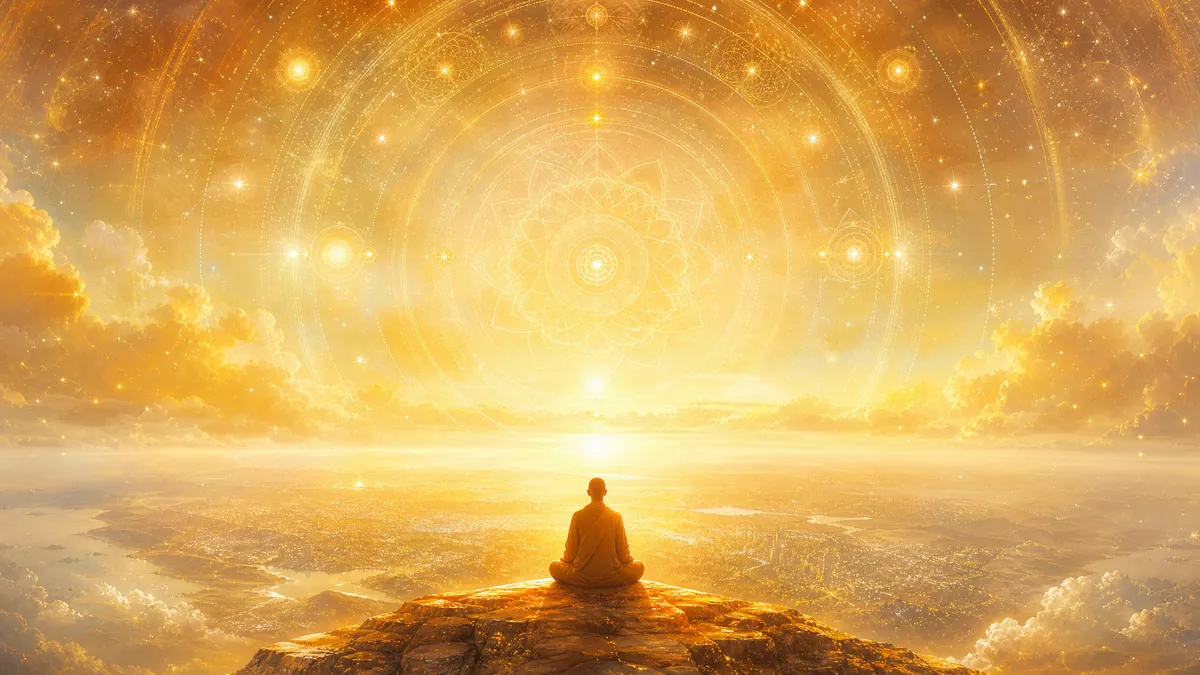
At one time, entering the fifth dhyana was one of my favorite kinds of samadhi. You can enjoy this experience for an endlessly long time. And when you open your eyes, your consciousness is something like this: “What? This world is still here? All these forms have not yet disappeared? How strange! I need to eat and enter samadhi again so as not to see this repulsive world.” You think that it is very wonderful to be in this state, that now the only thing you need is to support the body a little and constantly abide in this experience of infinite space.
When you are in it, there is no clearly defined subject or object there; there is neither earth, nor sun, nor planets, nor life, nor death as such. You are alone there; you are Bhagavan and God, but there is a sense of “I.” There are no problems, but there is consciousness that expands more and more every second, revealing new realms to you. And in this expansion you find infinite ecstasy, the subtlest pleasure. Nowhere is there even the slightest obstacle or hindrance; you are steadily abiding in the samadhi of the fifth dhyana. With each meditation you encompass ever new regions of infinite space, and you are filled with an ever subtler rapture. You become so overflowing with this sense of infinity, grandeur, expansion, with the feeling that you are a solitary spirit, the cosmic Logos of which this entire Universe consists, and nothing else concerns you anymore. You understand that this is precisely true being, and everything else is so small and insignificant that it is not even worth remembering. Before, there were some relationships, meetings, partings, problems, tears, searches for the Dharma, but all of this was sought by a little human being who thought that he had been born and had grown up, considered himself a man or a woman, a monk or a layperson, and so on. But when you enter this state, there is no longer you; there is only infinity, for which all these standards simply do not work, since they are insignificant in comparison with it.
However, even this majestic state is not enlightenment. The saints say that to stop at this stage is also samsara. That is, no matter how majestic this state may be, it too is samsaric. By the standards of other beings it is very exalted, but a subtle individuality, a subtle “I”-consciousness, still remains.
Finally, when the yogin understands this and makes the breakthrough from infinite space to infinite consciousness, from consciousness to nothingness, he suddenly destroys this last connection with subtle “I”-consciousness. And then he understands that I do not exist as a cosmic spirit, that even this feeling of being a cosmic spirit, of infinity, is the last subtle veil of ignorance. He understands that there is nothing at all, that there has never been anything, that there is not even one who could understand this, and that there is only deep awareness. He no longer needs to be aware of himself by means of any consciousness. This awareness exists in itself; it is so overwhelming and paradoxical that it is incomprehensible to the ordinary mind.
When someone asks mahasiddhas to explain the state they are in, they cannot do so in human language, especially if they have not given lectures for a long time. They understand that this state is so paradoxical that they can simply astound a person, shock him, and say: “There, you see the state in which I constantly abide.” They are constantly in such a paradoxical state, beyond the ordinary person. And when the yogin understands this, he understands that he has realized the great limit, where his personality no longer exists, and this means that samsara does not exist either.
However, the saints say that if one stops in this great limit, then it is a one-sided realization. No one denies that this is genuine realization; however, saints of a higher category say that to get stuck even in such a realized state means to block one’s potential, to block one’s path to further progress. One may say that you do not suffer, that you have freed yourself from samsara, but at the same time you have also cut off the road for further growth. They say that now you must transpose this state of emptiness onto form, merge form and emptiness, and experience this transcendent state in everyday life, when you see, hear, touch, and so on, and not only in samadhi.
Thus, the dharma body is the final body of absolute emptiness, which permeates all external and internal objects. It is devoid of birth and death, and in it there are no such things as earlier or later. Yongjia realized this body through his own experience, and he said this directly to Huineng. Huineng confirmed: “Yes, that is so. You have realized it clearly.” When two people who have realized this meet, they understand each other without words.
Dialogue on Movement and Distinctions
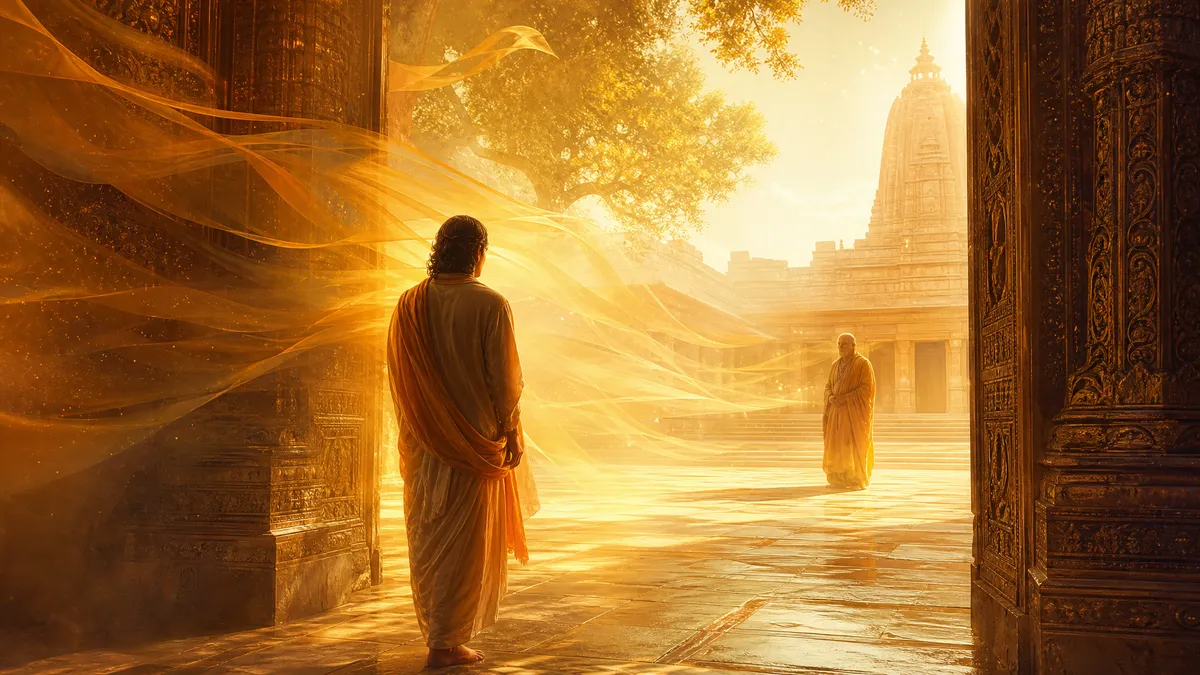
Then Huineng asked: “Is it not too early to leave?” Yongjia replied: “Early or late are conditional categories, and if you have realized the timeless state, all of this has no significance.”
Huineng wanted to check whether any subtle clinging remained in him, any subtle discrimination from which he judged, whether he still had subtle egoism and subtle ignorance, and therefore asked: “Then who knows that there is no movement? Who is this clever one inside you who judges in this way?”
Yun Jia replied, “It is you who are making distinctions.” In fact, it was as if he were saying, “You want to see this because you want to catch me out. But there is nothing to catch, since there is only emptiness.”
Huineng praised him: “So you truly understand the meaning of that great state where there is no birth and death.” Yun Jia replied, “Can it have any meaning at all?” That is, Huineng speaks of the meaning of this state, but it is beyond logic, it is absurd; it has no human meaning whatsoever.
Then Huineng tried to catch him again, and so he said, “If there is no meaning at all, who is making distinctions?” What he meant was: “If there is no meaning in this state, then why are you asking this question, why are you dividing, why are you asserting that it has no meaning?” After all, to say that the unborn has no meaning, or to say that it has meaning, are different statements. Statements imply some kind of fixation, and fixation implies a certain subtle clinging, duality. That is why Huineng asked, “If you have realized that there is no meaning in it, then why do you assert this, why do you insist on some point of view? Who is making distinctions? If you insist on any point of view, it means that there is still some undissolved part of the false ego in you. You are asserting something, and that means you are still clinging to something.”
But Yun Jia replied, “Even the kind of distinction I am speaking of has no significance in this state, because words are merely an echo, merely a response to questions. There were questions, and the echo responded with words. In reality, I do not hold any point of view.”
Then Huineng praised him: “Wonderful. You have done well.” That is, in the end Huineng gave him confirmation.
The Importance of the Teacher’s Confirmation
When we practice, our experiences may be very deep and transcendent, but we must always maintain balance. It is considered essential for a disciple to receive confirmation from the Teacher. On the spiritual path there may be various deviations, and therefore without such confirmation the disciple’s realization is not recognized; he is advised to continue meditating and practicing. Perhaps he has not fully realized the Dharma body; perhaps he lacks balance between the relative and the absolute; perhaps he has fully realized the Dharma body, but his mind is still inflexible, and therefore he is unable to manifest himself appropriately in ordinary states; perhaps he exalts the absolute; perhaps he underestimates the relative.
Single “Taste” and Distinction
Buddha-nature is in your body and in mine, in a dog, in a pig, in grass. Buddha-nature is the same everywhere. Dog shit has the same Buddha-nature as Shakyamuni Buddha. There is no difference; if you look closely enough, you will see the same thing and all things in all things. There is no distinction between a grain of sand and King Solomon’s treasure. Of course, if you started preaching this in the street, people would think you had gone mad. These verses explain the highest principle, not everyday phenomena. If you think you can go to the bathroom and bow down to the toilet instead of the Buddha, think again.
A disciple of Master Hsuan Hua in California heard the Master make a similar remark, and during lunch he placed a piece of shit on the dining table. Master Hsuan Hua asked:
“What are you doing?”
Then the disciple reproached him:
“Look, this is distinction. You have discriminating consciousness.”
After this incident, Master Hsuan Hua told him to leave. This particular monk had a high opinion of himself and insisted on acting independently instead of listening to his teacher’s instructions. He was not interested in learning; he simply wanted to challenge the Master in this case. He failed to understand that the principle, or the realm of the nominal, differs from the realm of the phenomenal.
Master Hsuan Hua explained: “Do not put shit on the dining table. Shakyamuni never ate shit. When I say that shit and Shakyamuni are identical, I am speaking of realization that comes through practice. I am not speaking about the concrete world. In the manifested world, phenomena still remain phenomena: Shakyamuni is still Shakyamuni, shit is still shit.” An enlightened person understands and acknowledges that the world of phenomena is not the same as the world of Dharma. This monk, having gained a certain experience of clarity, simply confused the absolute and the relative.
When it is said that the pure and the impure have one “taste,” this refers to the dharma body, that is, to the body that follows the fifth dhyāna. It is precisely at this level that the pure and the impure truly have one “taste.”
However, in the relative sense, realizing the single “taste” does not mean failing to distinguish. The dharma body manifests in the relative world as the five wisdoms: the wisdom of equality, mirror-like wisdom, all-encompassing wisdom, all-accomplishing wisdom, and discriminating wisdom. Therefore, to realize the dharma body in the relative world means not only seeing that everything (pure and impure) has one “taste,” but also discerning what place each thing occupies.
In other words, we must know that everything possesses Buddha nature. Nevertheless, relative truth differs from absolute truth, and therefore excrement is not placed on the table on the pretext that everything possesses Buddha nature, that everything is pure.
The State of Realization and the Single “Taste”
The state of realization is the overcoming of distinctions between pure and impure, subject and object, inner and outer, bad and good. When such distinctions are overcome, it means that a person has realized the dharma body. Nevertheless, in the relative sense, these distinctions remain. The law of Dharma applies both to those who have realized the dharma body and to those who have not realized it. Therefore, when we choose to be in the relative dimension, we still have to take into account that there are conventionally pure and impure, inner and outer, subject and object, high and low, and so on. If one does not adhere to this, the material world will still operate precisely according to the laws of karma. Having understood all this, the yogin understands how to combine the relative and the absolute, and confusion no longer arises in him.
There was a modern Chan master named the Living Buddha of Gold Mountain. A wealthy man asked him to help his daughter, who was dying of tuberculosis. The doctors had given up on her. When the master approached her bed, he lifted her in his arms and kissed her strongly on the lips. She tried to break free. Others also tried to stop him, but he did not let her go for ten minutes. Then he released her, turned away, and vomited up a large amount of disgusting black mucus. People were shocked and filled with revulsion. They asked how he could endure it and suck all of that out of her. He said, “What is so terrible about it? In fact, it is quite tasty.” He gathered the mucus, fried it, and ate it. In this way the girl was healed.
I do not think you would have taken him for an ordinary person. What he says and does may seem absurd, but ordinary people do not possess the power of practice to understand him. His actions are based on the experience of long years of practice. You cannot understand him, let alone imitate him.
Since in the sutra tradition not much attention is paid to tantric methods such as the length of the breath, kundalini, and so forth, there the state of the mind abiding in nirvana is determined in more roundabout ways. However, we must know that even when we have realized the dharma body, there are criteria for recognizing enlightenment. And one of the criteria is the state of the single “taste.” The criterion of the single “taste” means that everything that was differentiated and dualistic now appears as nondual, pure, and perfect.
Such a practice could be performed only by a true Master who has realized the state of the single “taste.” The single “taste” concerns both the external and the internal. The single “taste” means that the same feeling of joy and absoluteness arises in you when you hear both unpleasant words and words of praise. If you are given service that you like and are gladly ready to perform, or service that you dislike and that arouses revulsion, in both cases the same feeling of joy, enthusiasm, or excitement arises in you. When you practice in retreat or when you do not practice in retreat, the same meditative state arises in you. When, during the practice of the “mandala of speech,” you are praised or, on the contrary, scolded, your mind perceives it as a manifestation of the Absolute.
Scientific Methods for Testing the Natural State
I think that in the near future we will have a device that will register brain waves, heartbeat, and an increased pulse rate. That is, with its help it will be possible to check changes in external data. Of course, no device will register enlightenment; that is absurd, since devices pertain to the external, while the dharma body is very subtle. Nevertheless, an increased pulse rate and dilation of the pupils can be recorded by the most elementary means. With the help of such a device, it will be possible to check whether a person is in the dharma body, in the natural state, or whether he is on the periphery. For example, if he is in the dharma body, he may be asked any questions or told any words with any meaning, but his reaction will always be the same.
There are questions by means of which one can hook the subconscious, capture past experience, certain experiences. If a person is in the natural state and his samskaras have already been purified, then such hooks will not be registered; the recorder will not produce a curve. His pulse will not quicken, and his brain waves will not change. But if a person’s samskaras have not been exhausted, then the recorder will show an increase in the curve, and therefore it will be possible to notice that the person has been knocked out of the natural state. In the same way, this can be observed while eating, during a test of physical pain, while observing any images and anything whatsoever. I think that over time everyone will be able to check whether he is in the natural state and how well he self-liberates. The simplest of the methods available to us is to check the frequency of breathing.
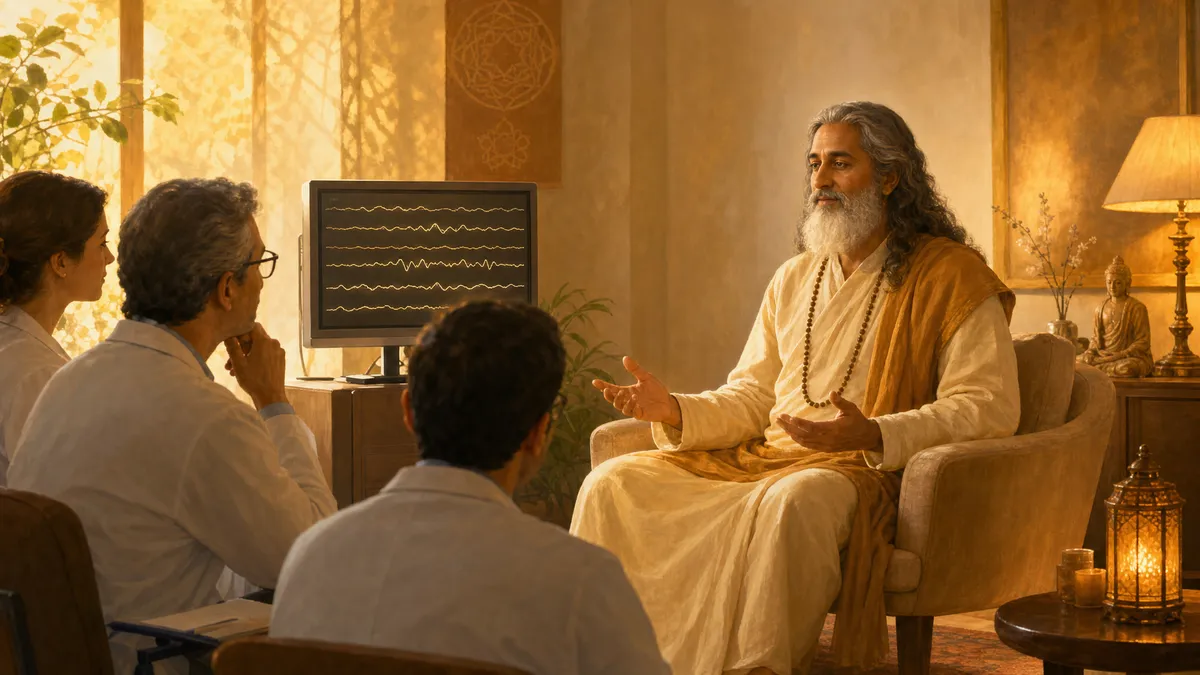
Once, a Master was with his friends who were doctors, and they decided to measure his brain waves. When they did this, they were surprised: “Oh, the Master is asleep and at the same time talking with us! How can that be?” His brain waves corresponded to the deep-sleep phase of an ordinary person. That is, when he communicated with them, he was communicating from the state of deep dreamless sleep.
When we are in the natural state, we abide in the phase of deep dreamless sleep; when we are not in the natural state, but in a light state of presence and awareness, our brain waves correspond to the phase of sleep with dreams. All of this is much deeper than ordinary superficial consciousness. Such a phase of consciousness means, in comparison with the usual sinusoid, a softer sinusoid or an almost straight line. When they tried to measure the brain waves of another saint, they looked and said: “This is the brain activity of a non-living person.”
The Living Corpse and Empty Awareness
When our consciousness abides in the natural state, the fluctuation of the pranas is minimized; that is, the pranas in the body move mainly through the central channel (sushumna), and this is not reflected in any external things. One Master put it this way: “You must become a living corpse, and then do whatever you want, because everything will be right for you.” By “corpse” the ego is meant; “living” means that consciousness is present, but everything that would bind one to illusion has died off. Consciousness is there, but you do not see women when looking at women; you do not see men when looking at men; you do not see monks when looking at monks; you do not see laypeople when looking at laypeople; you do not see dogs when looking at dogs. Why do you not see them? Because there is no you who would possess experience and occupy a particular point of view in order to see all of this. You simply perceive. Thanks to the fact that you have old experience and discriminating wisdom, you do not confuse men with women, or dogs and monks with laypeople. You clearly know that laypeople are not monks, dogs are not cats, and men are not women, and you can easily orient yourself as to how and where to act.
However, this is not your vision; it is merely pragmatic, utilitarian, external knowledge that is needed only for convenience. Inside, however, you have no such concepts. You do not see any of this, because there is no you as a seer who would express his own position. There is only empty awareness, which is boundless and splashes equally in cats and in dogs, in laypeople and in monks. Since you possess the vision of only the single consciousness, you no longer have artificial personal divisions and preferences, and this means that you have no possibility of becoming attached to anything or, conversely, of hating anything.
Such a monk, whether he finds himself in a densely populated monastery or among trees, will have one and the same consciousness, because he will understand that trees are somewhat monks, and monks are somewhat trees, that there is no great difference between them. Of course, there is some difference, but in the deepest sense they are one and the same.
All our judgments are based on the fact that within us there is one who judges, one who sees. With the opening of the dharma body, this judging subject disappears by itself, although the capacity for judgment remains.
