

Commentary on the “Yoga Vasistha”
We continue our seminar. The fact that we can engage in spiritual practice means that we have obtained a favorable human birth—or, as it is said, a unique human birth.
Signs of a Precious Human Birth
A unique human birth consists in possessing a combination of various conditions that enable us to move toward Liberation. We are fortunate in this regard, while many are not as fortunate as we are. A unique human birth means having a favorable physical body that does not carry too much negative karma. If you had a great deal of negative karma, you would hardly be able to sit and listen to lectures like these, and even if you did listen, you would not understand anything. Since your bodies and karma are sufficiently pure, you are fully able to practice, accumulate merit, listen to the Teaching, understand it, and benefit from it. This is one of the signs of a precious human birth.
Another sign of a precious human birth is being born in a country where there is Dharma that leads to Liberation and where it is possible to practice the Dharma. That is, even though this country may be materialistic, you nevertheless encounter no difficulty in coming here and practicing; no one drives you away, and you do not experience any kind of oppression—it is entirely normal. But many of those born into this world do not have such an opportunity.
The third sign of a human birth is possessing the appropriate level of intelligence and understanding required to comprehend spiritual philosophy. Sometimes, when a person lacks a sufficient level of understanding, clarity, and intelligence, they hear but do not understand, or they understand, but in a completely different way—that is, their abilities are insufficient. It is as if, for example, you were to sit a cat down and read something to it: it would not be able to understand, because it lacks the necessary capacities—its chakras are undeveloped, its channels are not adapted, and its worldview has not been formed. But all of you have this opportunity, and this too is a favorable human birth.
Another factor is that your karma is such that you possess the conditions and health necessary for spiritual practice. According to statistics, many people do not have such conditions. If you look at the statistics, an enormous number of people on the planet die every day, every second; people are born and die. Meanwhile, we are practicing the Dharma. Sometimes it is useful to examine the statistics; then we discover that many people on the planet live in conditions unsuitable for spiritual practice, and we begin to appreciate our opportunity to engage in spiritual practice.
The next sign is encountering the Teaching. One can be born in a wonderful, prosperous country, into a family with excellent merit and karma, yet never encounter the Dharma. For example, one may live in Europe under excellent conditions and possess every favorable condition except the Dharma. This means that one does not have a precious human birth.
Another condition is encountering a spiritual Teacher from whom one can receive the Teaching and put it into practice.
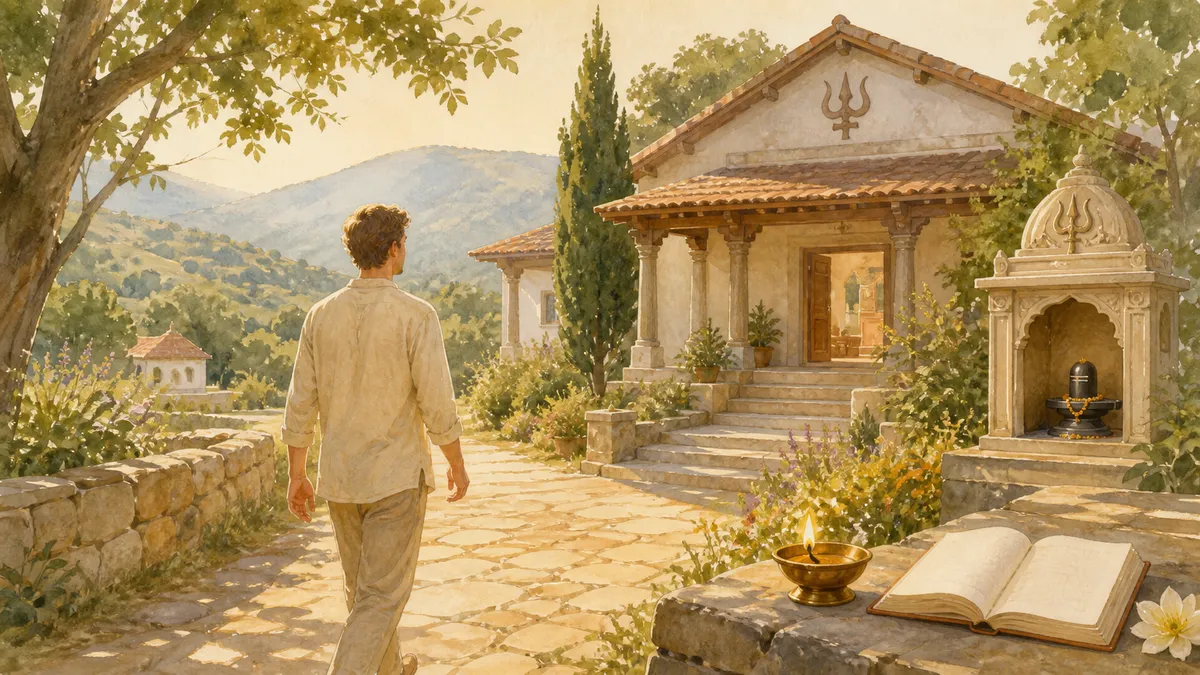
The combination of all these conditions is considered extremely rare. The sutras say that it is as rare as a turtle surfacing from the bottom of the ocean once every three hundred years while a yoke is floating on the ocean, and the turtle happens to put its head through that yoke. In other words, it is an entirely chance combination of circumstances. Once every three hundred years, the turtle decides to surface from the ocean floor; at that very moment, a yoke is floating in the vast ocean, and at that exact moment the turtle surfaces and puts its head through the yoke. Such is the rarity and the chance of good fortune involved in obtaining a precious human birth.
The Realms of Spirits and Pretas
Perhaps we do not fully realize this because we do not see other worlds. For example, there are worlds of spirits and ghosts. After death, such beings experience various forms of suffering and limitations. Sometimes they may appear to a person in meditation and say, “I died from such-and-such a cause, and this is my fate,” or they may become attached to a particular place in the subtle world or on the physical plane. There are many pretas, beings with thick bodies, short arms, and narrow necks. They are always insatiable, and their number is immense. The cities in which they live are not even cities, but semi-ruins. They are constantly forced to fight for food and water, but even when they find them, their karmic vision is such that it ruins everything. Their state of consciousness is so degraded, their karmic vision is distorted, and inwardly they are pessimists—this is the state of a preta.
Sometimes a person can also be in such a state. For example, there is a category of people who are called losers; such a person is always in a pessimistic state of mind. Whatever project you propose to him, he will doom it to failure in advance because deep down there is rejection, a consciousness of failure. You suggest some kind of activity, and his bhava is: “Ah, it won’t work.” He does not believe in himself, lacks self-confidence, does not believe in others, and does not believe in the world. He has a diminished state of consciousness—this is the state of pretas. In pretas, this state is taken to the point of absurdity, to the point of degeneration. They see negativity and failure in everything. Even if they are given divine nectar, they will merely look at it and poison it; it will turn into poison and become undrinkable. They will say, “But this is poison—what are you giving me?” And even if you want to help such a being, your help may be of no use. In other words, your help may become so distorted in the preta’s karmic vision that he will perceive it as harm. This is because impressions accumulated in the subconscious of such beings over a long period of time: they accumulated the karma of theft, greed, and creating obstacles for others. This is an entry into a wrong, destructive tunnel of the Universe’s reality. There are very many such beings. There they cannot practice the Dharma; they can only wait until their karma is exhausted, their bodies disintegrate, and they receive more favorable bodies.
There are also hellish dimensions. In the hellish dimensions, a person encounters all of his negative karmas. For example, if a person often spoke ill of others, he will encounter the hellish dimension of slander. If a person caused harm, he will see various negative beings that will harm him. This happens because he has such imprints in his subconscious. He, too, cannot practice the Dharma in hell. Living beings in hell merely wait until their bodies disintegrate and they can be reborn in higher dimensions.
Formation of the Subtle Body After Death
When the spirit leaves the body, after some time its subtle body begins to acquire the traits of its subconscious, the traits it had during life. This process lasts for approximately a year, and all the tendencies of that spirit’s consciousness manifest themselves. If a person harbored anger toward someone or had a desire for violence, then in the subtle body he will appear holding an axe, a whip, or a stick. And even if he wants to throw the stick away, it will still reappear in his hand. In other words, it is like a tendency of consciousness that he has not overcome. Other spirits will also see him in this state. Or his appearance will be like this: disheveled hair, a distorted face contorted into a grimace, if there is much violence and anger within him. Other, more elevated and pure spirits will shun him, refuse to accept him into their company, and drive him away. Conversely, upon seeing his appearance, impure spirits will approach him and regard him as one of their own. He will constantly find himself in the company of evil, angry spirits, while spirits serving as punishers or executors of punishment, various dharmapalas and others, upon seeing him in such a state, will punish him, beat him, and drive him away from the higher realms until he throws away the stick or axe. But when he tries to throw it away, he will see that the stick or axe returns to his astral hand, because it is not a real stick or axe but an astral one; it expresses the tendency of his consciousness. Until he changes the tendency of his consciousness, he will retain this appearance. After experiencing various forms of suffering, he can change his appearance only when he changes the tendencies of his consciousness.
Conversely, if a person possessed favorable, pure spiritual qualities and pure memories, he will appear in a beautiful, radiant, semi-divine form.
There are usually two levels of body formation during rebirth, when a person becomes a spirit. The first level is when such a body forms immediately, but the person has not yet been reborn. Such a body may take on the appearance of the subconscious mind’s superficial tendencies. At this time, after death, when a person becomes a spirit, they may meet relatives who have also died, encounter the spirits of their relatives, communicate with them, and learn where and how they live. They will then seek out the community of beings they are destined to join. But as time passes, if they are not quickly reborn within forty-nine days, penetration into the deeper layers of consciousness takes place over the course of about a year. The tendencies that constitute the deepest essence of this spirit begin to emerge. At this time, some spirits go insane and lose all sense of reason; in other words, they become completely unconscious. All their deepest tendencies, if impure, manifest themselves, and they are unable to control themselves. It is this deepest state that determines where one spirit will go and where another will go. Impure spirits that are unconscious and unable to control themselves are forbidden to cross the boundary beyond which pure spirits dwell.
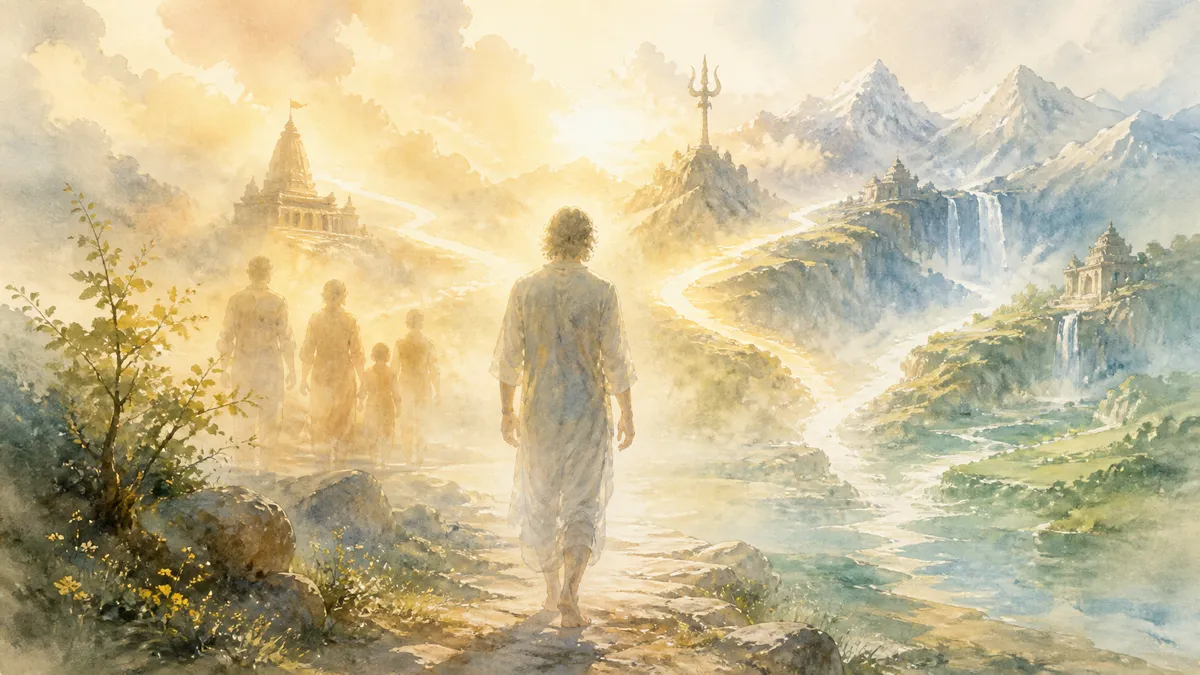
Pure spirits gather beyond this boundary. They are instructed by a mentor, teacher, or deity. They prepare to be reborn either in the Pure Land or in the Heavens, in a more exalted dimension, in Svarga-loka or Mahar-loka. They receive instruction, attend lectures, are given mental transmissions, and prepare to become angels or devatas, since their radiance is sufficient for this.
But those whose deep, impure tendencies of consciousness have been laid bare and who, even after so much time, have been unable to control themselves are not admitted to this group; in other words, there is a strict separation there. While in the human world it is not apparent who will become an angel, who will become an asura demon, and who will become a human being, in the subtle dimension everything is clearly visible, and one’s inner state is taken fully into account. All the tendencies of the soul determine a person’s future, their place of residence, and their future rebirth.
Spirits that have been unable to remain conscious and control themselves gravitate toward some group of other spirits like themselves. Gradually, they visit this group more and more often and thus become accustomed to a particular world. Some go to hellish dimensions, while others go to other lower realms. In fact, no one particularly pushes them there; rather, their own tendencies drive them. In these lower dimensions, they then undergo various trials and karmic consequences in order to purify themselves. In the lower hellish dimensions, there are also various groups and factions, as well as senior spirits who seek to be in charge and struggle for power. Whoever is the strongest and fiercest becomes the leader there. It is something akin to the criminal underworld.
There are other groups of spirits who cannot become devas or angels and cannot go to the hell realms, who have certain merits and possessed certain abilities in this life. But they demand to be honored or to rule over someone; they have a large ego. When they lay claim to this, some of the angels or devas give them such an opportunity, but because they act selfishly, they fail in their role as mandaleshwaras. They are then told, “It would be better for you simply to purify yourselves.”
Pitri-loka—the world of the ancestors
All this takes place in Pitri-loka. If a person has not been reborn in one of the worlds, in the world of the gods, and has not gone to the lower worlds, they enter Pitri-loka, the world of the ancestors. Pitri-loka is the lower astral plane; it is lower than, for example, the pure land of Divya Loka. It is a world inhabited by pitris, or spirits. They gather in various communities according to their inclinations. They live in astral cities created by the power of the mind. Just as we humans live and have houses, palaces, halls, and means of transportation, spirits likewise live in Pitri-loka. The only difference is that these cities are not material; they are created by the power of the mind and are like certain virtual spaces.
For example, if such a person enjoyed riding a motorcycle during their lifetime, then in the astral world they will ride one there as well. And if a singer performed in a bar, restaurant, or theater, her subconscious will recreate such a setting, and she will sing there as well. The subconscious of every spirit in Pitri-loka recreates the setting that was familiar to them during their lifetime. They are confined by this setting but do not understand it, just as we humans are confined by the physical world.
When similar spirits gather and create such an environment, entire astral cities and countries come into being. There are various kinds of services there and various kinds of spirits responsible for receiving newcomers. When someone dies, they are met by spirits responsible for receiving such souls, showing them the structure of this world, and preparing them to determine which group of spirits they will belong to.
For example, there are also evacuation spirits called the servants of Yama, who escort the soul to one of the worlds. They initially accompany the soul and then hand it over to spirit guides. The spirit guides show it the world and introduce it to the local lokapalas or deities. Depending on the tendencies and inclinations of such a being, it travels extensively and eventually finds a place of its own, its own group, its own social niche that it can join. If its sins are not too numerous, it does not fall into the lower worlds, into hell. In hell, one is reborn immediately and quickly; when a person is reborn there, they are seen falling headfirst. This is because their state is very different from the ordinary one. If they do not quickly fall into the lower worlds and do not possess the power of the saints to ascend to the higher dimensions, or if they do not enter Nirvana, they remain in a prolonged intermediate state in Pitri-loka. Their subsequent fate unfolds there.
Some describe Pitri-loka as a realm with mountains, plains, and valleys, similar to our human world; there may be vegetation and so on. However, all of this is a product of the minds of the beings who inhabit it. Pitri-loka may contain entrances to the lower worlds, to the hellish dimensions. They look like passageways, tunnels, or shafts from which wrathful spirits or monster-like beings may occasionally emerge. These entrances are guarded by guardians (lokapalas), that is, local spirits who ensure that these monster-like demons do not enter Pitri-loka, disrupt the balance of power, or harm anyone.
In Pitri-loka, such a person may meet relatives from their ancestral lineage, see others, communicate with angels who sometimes visit, hold conversations with them on spiritual matters, and clarify their own state. Spiritual self-awareness awakens in everyone there, because everyone realizes that the world is not as they thought it was. Even those who were atheists and did not believe in life after death become convinced that life after death exists. For some time, those who were atheists and materialists remain in a state of great shock, because throughout their lives they believed that everything ended with earthly life, but it turns out that after the death of the physical body, life continues in the subtle body. They then begin to take an interest in spiritual matters and ask questions; some remember Heaven and ask, “Why isn’t Christ here? Then where is the Lord?” Some think this is paradise. Complete chaos and confusion reign in people’s minds; everyone thinks whatever comes into their head. This is because during their lifetimes they all had such fanciful, fantastic notions about dharma and spiritual life, and little spiritual experience. Those who practiced during their lifetime and have some spiritual experience give brief instructions there. Many spirits set out on journeys; some seek God and Christ, while others seek paradise. They embark on what is essentially a geographical journey, unaware that all of this is taking place at the level of consciousness and that it is their consciousness that must be changed.
Those who have sufficient merit and spiritual inclinations seek to perform certain spiritual practices and find spirit mentors who will enlighten them and show them the way forward. During such encounters, they experience various images and visions; sometimes their consciousness becomes clouded, and sometimes it is clearer. They find their path, which is to say that it is not so simple.
The Process of Transformation in the Intermediate State
All of this lasts for approximately a year. During the first half of this period, they acquire the appearance they had around middle age in their previous life. That is, even if a person left the body at the age of eighty, they may take on the appearance of a sixty-year-old and even grow younger until they look forty; their appearance will change. If they had accumulated a great deal of merit, during this initial period they will increasingly acquire a pure and beautiful appearance.
But later, as time goes on, the deeper layers of consciousness will be laid bare, and this is a time of crisis for such a spirit. If he had little awareness and merit, his deepest imprints, stored in the repository of chitta, will manifest. All the old complexes, phobias, fears, and accumulated impressions from childhood, past lives, and this life will surface and change his state of consciousness; his consciousness will be unstable: one day it will be one way, and the next day another. And if he is not a contemplative, does not know how to self-liberate or meditate on emptiness, and his faith is weak, his mind will be in great turmoil during this time.
At this time, everyone's true nature is revealed. In other words, in this astral world, in Bhuvar-loka (I am describing the level of Bhuvar-loka), no one can deceive anyone else. This is because everyone's spiritual state is outwardly expressed: if you are beautiful within, you look beautiful; if you are gloomy within, your appearance is gloomy as well. It cannot be falsified, but it is easy to recognize.
At this time, a division takes place between those who will go to the higher worlds of Heaven or to the Pure Lands, those who will remain in Pitri-loka, and those who will go to the lower, hellish dimensions or to the worlds of pretas. Some, however, are reborn as humans. Nothing can be stated unequivocally; it is all highly individual, since everyone has their own destiny.
Meeting Yama's Servants and Reviewing One's Life
After death, when a person reaches one of the levels, he meets Yama's servants. Yama is the ruler of Pitri-loka, the world of the ancestors; he is its lord, and his projections can be everywhere. Who are these servants? They may be helper spirits or attendants. It is commonly said that Yama has a secretary, Chitragupta, who possesses records of all the subconscious impressions from your life—your entire karma. His duty is to show it to you. He is assisted in this by the shravanas and shravanis. The shravanas are watcher spirits, observers; the shravanis are their spouses. That is, they are the ones who constantly watch you and register everything you do and think, all your actions; they know everything. Chitragupta turns to them when he wants to clarify some point in your life. Your life is examined in great detail, down to the smallest particulars.
What might this look like? It is as though you are shown a large screen, like a computer screen, except that this screen is the size of a hall. On this screen, a film of sorts is projected for you, beginning from the very moment of your birth. You review everything, down to the smallest details; all the unpleasant and all the pleasant moments of your life are shown as well. Someone may see it as a movie theater where a film of their life is being shown. All of this is individual and depends on each person's inclinations and how they perceive it.
In the course of this review, a person's consciousness changes. The negative impressions he reviews will change his bhava and lower his consciousness, while the sublime impressions will elevate and spiritualize his consciousness, filling him with faith and rapture. When he has reviewed all of this, the outcome will be a certain bhava, a state of consciousness. Based on this bhava, he will be advised to go to one world or another.
Life in Different Worlds
Those who have realized the precious human birth go to the higher dimension of the gods. Those who neglected spiritual practice during their lifetime are subjected to the law of karma and experience various limitations; they are reborn either in the lower worlds or become pitris and continue to live in Pitri-loka.
Life in Pitri-loka can last a long time; that is, spirits in the world of the ancestors live longer than in the human world—for example, a thousand years or more. But this life resembles our earthly life, with the difference that they live there in an astral body, and spirits feed on images and scents and can move freely from place to place. They also have limitations, their own interests, and their own affairs, just as in earthly life; but since their earthly life is over and they have a new life, they continue to pursue and fulfill their interests. Sometimes they help their relatives in this earthly life, remembering them; at other times, this connection is lost.
Signs of Future Rebirth
How can one know during rebirth who is being reborn in which realm? If a being is destined to be born as a god, it will feel as though it has found itself on the roof of a multi-story building or a multi-tiered palace. But if it is destined to be born as an asura, it will feel as though it is in the midst of a torrential downpour or at the center of a spinning wheel of fire.
If it is destined to be reborn in the human realm, then upon entering the womb it will feel an intense chill; if it is destined to attain a pure human birth, it will see as though it has found itself amid a haze; and if it is to attain a precious human birth, then upon entering the womb it will see a multitude of noisy people.
If someone is destined to enter the body of an animal, they will have a vision of a grass hut, mist, a hollow in a tree, or something else connected with the forest. If someone is destined to be reborn in hell, they will have visions in which they see black, charred trees, red or black iron houses that they enter, and dark abysses.
All these visions possess the magical power to draw in consciousness. If a person's consciousness is weak and they have many corresponding tendencies, they cannot resist it. Upon approaching such a place, they are seemingly sucked into it. If a person is destined to be reborn in the human realm, they see a couple copulating and are unable to resist this vision. The power of the energy of the red drop at that moment is so great that the vision draws them in, and they develop either a strong attachment, jealousy toward the man, or attachment to the woman. If a person is destined to be born as a preta, a vision of a mountain crevice or an empty mountain gorge appears. Those who are reborn in hell experience virtually no Bardo of Becoming; their birth occurs instantly when breathing ceases.
The cause of all these experiences is a lack of understanding, a lack of contemplation, and a failure to recognize the empty essence.
External Signs of Beings in the Intermediate State
The bodies of beings with pure karma are the size of a sixteen-year-old child, while beings with impure karma appear in the Bardo of Becoming—that is, in the final intermediate state before rebirth—as eight-year-old children.
Those destined to be born as humans or samsaric gods radiate white light; asuras and animals radiate yellow; hell beings radiate dark brown; and hungry ghosts radiate blue with impure admixtures.
When a person is preparing to become a god or a human, they are in a normal upright position in the astral dimension, with their head upward. If they are destined to be born as an asura or an animal, they are in a horizontal position, and this can be seen with spiritual vision. But if they are heading toward becoming a hungry ghost or a hell being, they are upside down. Being inverted in this way means that their subtle body does not correspond to this world; it is too heavy. All their perceptions are inverted; they are completely out of alignment with the vision of this world from which we humans observe them.
Those who go to fortunate realms and have good karma possess clarity of consciousness in the intermediate state. Those whose karma is negative lack clarity; their consciousness is obscured, and they are unconscious, as if in a dream. They see frightening visions, fleeing from some and becoming attached to others.
The Power of Memory and Samskaras
Throughout this time, the spirits in the intermediate state are also called gandharvas (not to be confused with the gandharvas who dwell in the Heavens and are musicians). This is a specific term used primarily in Mahayana and Vajrayana Buddhism to denote a being in the intermediate state. They experience the tendencies of memory (samskaras). Since the storehouse of memory tendencies is released and the channels of the physical body no longer hold anything, memory tendencies unfold, and all recollections exert great power over such beings. Many of these beings spend most of their existence contemplating such memories.
What they accumulated during their earthly life remains with them, as do all their sins and all their virtues. Every malicious word, every wrongful glance, every wrongful deed, every insult is relived there and causes pangs of conscience. A person sees how wrongly they lived, what they did wrong, why they did not love those people, how foolish, dull, and selfish they were, how they were told about the Dharma but ignored it. They see many things; all the unsightly things are shown to them. But since their consciousness there is heightened and they are in a state of clarity, all this evokes a sense of remorse and pangs of conscience. If there are many such visions, this causes their consciousness to change for the worse. They fall into self-abasement and a clouded state; all this is the effect of memory. Many punish themselves in this way; their memory punishes them.
Conversely, if a person had many sublime and beautiful memories, then, contemplating them, they constantly remain in a blissful, joyful state. But the task is to free oneself from all these memories.
Those whose awareness is weak, who did not train in meditation, contemplation, and liberation from all this during their lifetime, become attached to this memory, are completely absorbed by it, and cannot move forward. Memory controls them and leads them into one world or another.
If during your lifetime you know how to practice self-liberation, freeing yourself from inner data through contemplation and establishing yourself in a subtle state of awareness, memory will have no power over you; you will remain in the state of the single “taste,” of pure vision. To achieve this, you must practice the Samskara Shuddhi technique and contemplation.
Transformation of the Body and Manifestation of Signs
As this memory is laid bare, it changes a person’s body more and more deeply over the course of a year. Their body then acquires the features of their future birth, and the appearance of their body changes once again. Those with pure karma emit light; this light may extend up to one yojana. One yojana is approximately eleven kilometers, meaning that souls can emit a great deal of light. Those with impure karma will have dim bodies and emit almost no light, while those destined to be born in the world of the gods will shine brightly.
Auspicious and inauspicious signs arise in the intermediate state. Those who purified themselves, accumulated merit, cultivated sattva and pure qualities within themselves, engaged in spiritual practice, and controlled their desires and selfishness will encounter various signs, which may be extremely diverse. They will be accompanied by deities, lotuses, beautiful landscapes, the sounds of beautiful music, mantras, resounding bhajans, blessings appearing in the air, OM signs, precious stones, beautiful garments, palaces, and various vessels containing elixirs. People with impure karma, however, will have vile visions and ominous signs in the intermediate state.
Ultimately, the bhava that will constitute the soul of this spirit will be determined, and it is this bhava that will determine the world in which they are to be reborn.
Methods for Closing the Entrance to the Womb
During rebirth, there are various methods for preventing rebirth in a human womb. If you do not wish to be reborn in a human womb, you must practice contemplation if you want to maintain your consciousness in such a state—that is, to close off the human world and the lower worlds. The most important thing in this instruction is to remember your root Guru well, always maintain pure samaya, remember your Ishta-devata, always visualize them above the crown of your head, and maintain presence—that is, remain in a state of awareness.
One way to close the entrance to the womb is to perform the practice of Illusory Body Yoga, practicing transformation into an illusory body and visualization of the Pure Land. Such beings then do not linger for long; they immediately and swiftly transfer their consciousness to pure lokas, dimensions. But if this cannot be accomplished, there are other methods.
For example, when a being sees a couple from the human world having intercourse and feels a passionate desire to incarnate, it should visualize the couple in the form of the Ishta-devata instead of yielding to lust and jealousy. It will then close the entrance to the womb. For example, upon seeing a couple having intercourse, one should visualize them in the form of Dattatreya with his consort Anaghadevi. In this way, one should evoke a feeling of worship and reverence, elevate one’s consciousness, and change one’s bhava so that nothing impure arises in the mind. If this can be stopped in this way, the entrance to the womb will be closed.
Another method, when a surge of passionate desire arises during life, is to make the following sankalpa: “I am in a state of illusion; this world is illusory.” If a person sees a couple having intercourse, they should perceive them as deities in union bestowing initiation, as Dattatreya and Anaghadevi. If one succeeds in generating bhava, divine pride, and pure vision without yielding to lust, jealousy, or attachment, this will be a sign that one will succeed in closing the entrance to the womb.
There is also a similar method in which the root Guru is visualized in union with his tantric consort, his Shakti. If strong passion arises while observing sexual intercourse, one visualizes the person as a devata in union with a consort, generates faith and devotion, imagines receiving initiation, develops pure vision, and perceives it as darshan. The entrance to the womb is then closed.
The next method is to practice the union of bliss and emptiness, that is, to enter contemplative presence and unite it with the energy of the red drop in the body, abiding in the meditation known as Sukha-shunya without yielding to dualistic judgments and impressions. The entrance to the womb is then closed.
Another method is connected with renunciation. At that moment, one simply needs to practice meditation on the world and all visions as illusions, and then turn away from that vision, renounce it within one’s soul, and not allow any vikalpas whatsoever to arise in the mind. This is the sixth method.
The seventh method is more profound; it consists of meditation on Light. At this time, one should visualize a vast expanse of light and, concentrating on it, enter into the experience of space. Through this experience, all visions will be dispelled and the entrance to the womb will be closed.
Finally, the eighth method is the illusory body. The illusory body means that one must perform a transformation, begin reciting the mantra of the devata with whom one is uniting, generate the key points, and fully reconstitute oneself in the form of the devata.
Controlled Rebirth
All these methods of closing the entrance to the mother’s womb imply that you are sufficiently able to control yourself in dreams and will also be able to control yourself in the intermediate state. You will not succumb to the tricks of your own mind and will be able to choose your birth in a controlled manner. These methods are useful for preventing unfavorable births and choosing a favorable womb. That is, if someone wishes to be born in the human world of their own accord, they will enter the body of the mother whom they themselves choose, whom they want: in a good family with sufficient material means to practice the Dharma, where they will receive a proper upbringing and have a favorable destiny—this is controlled entry. Or, if such a person does not wish to be reborn in the human world and take on a body, they will close all entrances, detach themselves from the perception of the human world, and seek a path to the world of the gods.
All these are examples of what precious and non-precious human birth lead to. In the case of a non-precious human birth, there is, of course, no control over rebirth: a person surrenders to the power of astral forces and their own mind, and is then drawn into one of the places where they are reborn.
The Importance of Proper Motivation
I read this so that we could cultivate the right motivation before the lecture. Before receiving any teaching, one should cultivate the right motivation by reflecting on the preciousness of the Teaching and of precious human birth. Whenever our motivation falters and we are overcome by various inner demons and distractions, this always helps. You remind yourself: “Oh, I have attained a precious human birth; I am able to practice. How precious, how valuable, how excellent, how important this is for me.” And then we can continue along the spiritual path once again.
When we embark on the spiritual path, it is important to reflect on the four contemplations. I have spoken about one of them—precious human birth.
The Four Contemplations That Transform One’s Life
The other contemplations are impermanence, the law of karma, and suffering. I recommend that everyone who has not yet undertaken these practices spend at least three days in retreat reflecting on these subjects: impermanence, precious human birth, the law of karma, and suffering in samsara, in conditioned existence. These four subjects are very important; they are even called “The Four Contemplations That Transform One’s Life.” This is because they enable us to free ourselves from false values, mistaken attitudes, uncertainty, and doubt, and to become true practitioners of the Dharma.
Samsara has enveloped us everywhere, hypnotizing and bewitching us with its maya. And if we do not support ourselves and attune ourselves to faith, genuine practice, and the accumulation of merit, then once the seminar is over, we will once again fall under the sway of samsaric meanings and values and wonder, “When will there be another seminar next year?” We will never find the time to go on retreat; regarding the morning sadhana, we will think, “Oh, I don’t feel like getting up,” or regarding meditation, “I’d rather watch television,” and regarding eating meat, “What’s the big deal? I’ll eat it.” And this kind of compromising consciousness prevents you from becoming a sadhu.
But if you reflect on the four contemplations, if you have faith, spiritual zeal, and determination, you become a true vira yogi. You joyfully perform service, understanding that it is important because service establishes a connection with the higher worlds.
The Importance of Accumulating Merit and Memories
Those who build temples, print sutras, and engage in service have many good memories and recollections. When these memories unfold, they will show them the way, attract divine beings, and guide them. Those who have no such memories will remain unconscious and lose themselves. But if you have accumulated much merit, even if you are not a particularly good meditator and do not have much meditative experience or awareness, the power of memory and the power of samskaras alone will still lead you to the higher worlds, to the heavenly realms.
Because memory is the only thing we can take with us—memory and awareness, meditative experience. We cannot take money, a bank account—no, the physical body—no, relatives—no, a house—no, a car—no, a refrigerator or television—no; nothing, not even jewels or ornaments. But the subtle body contains memory and meditative experience; we can take them with us, they are ours. Everything we have cultivated during our lifetime will always remain with us. It is very important to understand this and to accumulate good memories, positive imprints, together with awareness.
Vasishtha’s Teaching on the Nature of the Mind
Vasishtha says:
“Truly, it is only the mind that, because of recurring thoughts, believes that it is born or dies. Having no form, it believes itself to be an individual consciousness with form. It is only through its own thoughts that it finds a nationality within itself and enjoys or suffers from pleasure or pain. And all of this is contained within it, like oil within a seed.”
Vasishtha says: “You must understand that all of this is only the mind; it is all within you.” All external objects, hells and heavens, bad and good impressions—everything arises from within you; all of it comes solely from you. Every situation, destiny, karma, and body is a projection of your mind. Whatever you allow to manifest is what will be. Therefore, you must learn to control the mind.
“One who does not allow the mind to wander among objects of pleasure is capable of conquering it.”
Here the mind acts as an adversary, or rather, it can be likened to an unbroken horse. A horse’s function is to rush off somewhere, to run. One cannot say that a horse is bad or good; that is simply its function. Someone may ride a horse over a precipice or break their neck, while someone else may become an excellent rider and reach the desired destination on it; everything depends on the level of skill, on how well the horse has been tamed.
“Just as one who is chained to a post cannot move away from it, so the mind of a noble person does not depart from reality. Only such a one is truly human; the rest are more like worms. Through constant meditation, he attains the highest state.”
“Noble” is a translation of the word “arya,” meaning noble or holy. “Does not depart from the reality of Brahman, does not become detached from it”; that is, a jnani, a sage, always abides in Brahma-vichara, always thinks of God, and remains in a state of awareness and contemplation.
Controlling the Mind Through Detachment
Vasishtha continued:
“Victory over the goblin of the mind is possible only when self-knowledge is attained through one’s own efforts and the pursuit of what the mind regards as pleasure is abandoned. This can easily be achieved without any effort at all by putting the mind in its proper place. Alas for one who cannot renounce such pursuits, for renunciation is the only path to one’s own good.”
Here Vasishtha says that in order to control the mind, we must subdue it. Our mind must be tamed, and it can be tamed only when we detach ourselves from all the mind’s tendencies, from vikalpas. In other words, we must not allow ourselves to be carried away by the mind’s fantasies (vikalpas), because when the mind becomes engrossed in vikalpas, it creates numerous desires. When we follow the mind and do not know how to control it, this leads to suffering, to an improper way of life, and to choosing false meanings.
Vasishtha says that the mind should not control us; rather, we should control the mind, because the mind is an unreliable companion: it will let us down, and does let us down, if we do not govern it. Most people are governed by their minds; that is, they do what their mind tells them. And what does the mind say? The mind says only what it contains in its subconscious, in the storehouse of memory, as well as what others have told it. And who knows whether they will tell it good things or not? Some may say, “Look, this nation is your enemy; you must fight them,” and if the mind believes this, it issues the command, and the person, identifying with it, goes off to fight.
But Vasishtha actually says, “The mind cannot be trusted.” The mind is not a true partner; it lets us down, like a merchant (vaishya). One must trust buddhi, the intellect. Intuitive consciousness, buddhi, is what should govern the mind. We can learn to govern the mind only when we abide in the state of buddhi.
The Transition from Manas to Buddhi
“Through intense effort, the mind can be conquered; then individual consciousness dissolves into infinite Consciousness, and individuality ceases. This is easily attained.”
As soon as we enter the non-conceptual state beyond thoughts, understand the principle of Atma-vichara and natural awareness, and are able to hold awareness at the point where thoughts cannot move, the inner center, witnessing awareness (drashta), awakens within us, and we can practice Drashta Yoga—that is, abide in this world as a witness. We then gain control over the mind and become established in the experience of buddhi.
A person established in the experience of buddhi differs from one who remains bound by their mind. Why? Because their main occupation is to observe, to contemplate, rather than to act. Do you understand? For everyone else, the main thing is to do, do, do—rajas—this must be done, that must be done. But for a person of buddhi, the main thing is to contemplate, to observe; that is, their entire life is a detached perception of all reality. They say, “This must be contemplated, this must be observed, and everything will be excellent. Nothing needs to be done; one must observe.” And at that moment, when we understand that we must move from manas to buddhi, from action to non-action, we enter the natural state.
Natural contemplation is possible only in the state of non-action. We must undertake great spiritual work in order to make such a momentous decision—to enter great non-action.
Action is always caused by manas; it is brought about by its feverish, rajasic activity. When there is no contemplation, it always urges us to act, and it always urges us to act in the name of karma, in the name of tendencies. To put an end to action driven by tendencies and begin to contemplate without encouraging any tendencies is a great achievement. Your destiny changes: you leave behind the doer, the agent, the state of doing (karta and kartritva), and become a non-doer, entering non-action. When you enter it, your life in the state of contemplation, in Sahaja-tattva, truly begins.
I can say that life only begins when you enter this state; your entire old, former life seems dreary, illusory, wrong, and misguided. You look at it only with irony, because you attain a deeper, more proper dimension of life. It is based on buddhi, with the mind under control. Now you say to the mind, “Mind, you will do what I tell you, while what you tell me is irrelevant. Because a fundamentally new relationship has been established between us: you are the servant, and I am the master.” How pleasant it is to be the master of the mind. But until that happens, you and the mind are equals. The mind says, “Do that, do this, and why is that?” and you obey. This is not very good; it is entirely wrong.
When we become the master of the mind, we explain this and clarify this relationship within ourselves. We say, “I am the king, I am the master. You are my servant, mind; do what I say. I will not do what you tell me, or I will think further about what you propose to me.”
As things stand, if we do not contemplate successfully or have not understood this, we do not distinguish between ourselves and the mind, between buddhi and manas. We think that we are the mind itself. That is precisely why the mind has power over us: it seems to us that we are one. And our task is to develop discriminating wisdom (viveka) and gradually separate the two. This is us—buddhi, the intelligence founded on the light of the Atman, the Higher Self. This is the mind—the ego, founded on old impressions. They are two different beings. And one must become the master, while the other becomes subordinate.
The Only Path to Salvation
“There is no other path to salvation except control over one’s own mind.”
This means making a firm decision to abandon all the mind’s strivings.
“Firmly resolve to kill the mind, which is easy to do, without any doubt.”
“Until you have renounced the mind’s desires, all the Teacher’s instructions, the study of books, the repetition of mantras, and other practices are as useful as straw.”
Question: Guru, please tell us, can magical actions be performed?
Magical actions to control the mind? I think they can; the main thing is to remain in a state of awareness. For example, when we practice the Yoga of the Illusory Body, these are purely magical actions. The entire Yoga of the Illusory Body is magic based on visualization and sankalpa, in which we work with two forces: sankalpa and vikalpa.
Vasishtha says that there is no other way and that one must make a firm decision to subdue this mind somehow, because until its desires have been renounced, all practice is useless. Thus, first comes the subduing of the mind.
Sometimes, in ancient times, when a disciple came to a spiritual Master and said, “Master, teach me to levitate, pass the mantras on to me,” the Master would say, “Very well, there is a cow over there; go and clean up after it first,” and the disciple would be deeply disappointed. He would think, “Why should I do that? That is not what I came for.” But there was a profound meaning in this. The Master was saying, “You must begin by taming the mind, by disciplining the mind, because what you want is still merely your imagination arising from the ego, from the mind—the inventions of an uncontrolled mind. You must learn detachment, learn to be empty, learn self-discipline, do what you do not like, overcome yourself, and control your desires.” Or sometimes he would say, “Just stay here, remain here for a few years, and then we shall see.” And simply remaining here means not following anything, because many vikalpas, tendencies of the mind, arise, while remaining here means ignoring them. This is also a process of purification.

Our path is different: we immediately try to enter the nature of Mind, and we say that control of the mind is possible only from that which is above it. From the nature of Mind, one can control the mind; from Sahaja-tattva, one can control manas and all the lower parts. We need to understand what the nature of Mind is, how to abide in it, and where that point of consciousness is in which we should remain.
Abandoning Concepts and the “Conception” Stage
“Only by severing the root of the intellect with the axe of abandoning concepts can one attain the absolute Brahman, which is all-pervading peace.”
Vasishtha then points out the way to gain control over the mind. He says that the root of the intellect can be severed if you abandon concepts, that is, if you train yourself to abide in non-conceptual consciousness.
“Conceptualization or imagination (vikalpa) leads to error and suffering, yet it is so easy to get rid of through Self-knowledge; once it is gone, peace arises. Why, then, is this considered so difficult?”
When we manage to break through vikalpas and concepts and establish ourselves in the space of no-mind, we must fully appreciate this experience and learn to be guided by it in our everyday lives. From this moment, true contemplation begins. According to the Teaching of the Sixteen Kalas, this state of breaking beyond vikalpas and all concepts of the mind is called the “conception” stage. This is a very important stage, when a person completes an entire layer of life; a whole segment of their life, karma, and destiny comes to an end, and they move to a new level of being.
True spiritual work becomes possible from the “conception” stage onward. Before the “conception” stage, we are only preparing for true spiritual work; we have a great deal of work to do: concentration, meditation, philosophy, and the accumulation of merit.
But the “conception” stage is our first attainment, a fruit for which your spiritual Master can congratulate you. This means that we can now abide in true contemplation and sustain this contemplation so that it develops into the “gestation” stage, as we move toward Enlightenment, toward the “birth” stage.
