

Spiritual Evolution (People, Sadhus, Jnanis, Siddhas, Gods)
The meaning of life lies in understanding the divine will and carrying out the divine will, not in serving one’s ego, one’s family, country, or nation. All of that is good and should be done at one’s own level, but it cannot be made the meaning of life. The meaning of life is to understand God, to understand the divine will, and to carry out the divine will. The meaning of life is to allow the divine to manifest through this body, through various actions.
In the Vedic tradition, in the tradition of Sanatana Dharma, these are called jnana-shakti (divine wisdom), iccha-shakti (divine will), and kriya-shakti (divine actions). They are represented by three goddesses: Saraswati, Lakshmi, and Parvati. The power of divine wisdom (jnana-shakti) is Saraswati. Its counterpart in the European tradition is Sophia. The power of divine will (iccha-shakti) is Lakshmi. Its counterpart in the European tradition is Fortuna, the goddess of good fortune, because will always brings good fortune. The power of divine action (kriya-shakti) is Parvati, or Durga, the consort of Shiva.
These three powers grow within us and develop over the course of the spiritual path when we practice yoga. They allow us to free ourselves from the law of karma, free ourselves from our limitations, become infinite immortal beings, reveal our divine potential, and understand it. These powers emanate from a single source. There is a source that unites them all, and we call this source Bhagavan Dattatreya or Lord Shiva; in Advaita Vedanta, it is called Brahman. It is the purest Consciousness, beyond name and beyond form; there is neither subject nor object in it. It is precisely this purest Consciousness that Advaita Vedanta is concerned with.
For Advaita Vedanta, it is extremely important to understand this pure Consciousness, to reveal the Atman within oneself, to reveal the Absolute, because if we do not understand our divinity, our absolute nature, then we live as though in ignorance, in a dream.
Turning Consciousness Inward
Why are we not yet able to understand and realize our divine nature? Because our mind is turned outward, toward the external world, and this is called bahir-mukhi-drishti. Drishti means vision, while bahir-mukhi means that the face is turned outward, everything is directed outward. But if we turn inward—this is called antar-mukhi-drishti—we will gradually begin to realize our divine nature.
But it is not easy to do this right away, so explanations, conversations, a master, and practice are needed. We must master this art, understand the way holy sages think, master this philosophy, and this will help us turn our mind inward and enter the realm of mystical experience.
Advaita Vedanta is not about philosophy, because Advaita is first and foremost a mystical experience, your personal mystical experience. It is impossible to understand Advaita at the level of philosophy, but one can personally experience the state of Advaita. When we meditate and realize, “I am the Absolute” (“Aham Brahmasmi”), and this gradually becomes our own experience, then we can know Advaita.
Shankara’s Instructions from the “Viveka Chudamani”
What do the text “Viveka Chudamani” and Shankara say about this? Shankara says:
“You must realize through your own intellect that Brahman, the Absolute, is your true nature. This nature is self-existent. It is subtle like space and eternally radiant. It is truth, awareness, and bliss, indivisible and unharmed by anything.”
Shankara says:
“Truly understand: you are the Atman, the divine ‘I’; you are not the body, you are not energy, you are not the mind, you are not thoughts and images; you are the divine ‘I.’ Your divine ‘I’ is nondual Brahman, the Absolute. It is pure and serene; it is the truth apart from which nothing exists. You are that divine ‘I.’
In the dream state, various objects such as time, space, and the one who perceives them are all created by the dream produced by the mind, and all of this is an illusion. You must understand that the external world is the same kind of illusion, but there is always one who observes this illusion. This entire world arises from the Absolute. The Absolute alone exists.”
How can this be understood? It seems very difficult. For example, we came here, we came to a lecture, we came here as subjects in a subjective state, as individuals. We came to look at objects, at this hall, at other people, to listen to what this person would say, and there is a relationship of duality between us. It is clear to everyone: we are individuals, subjects, and I am an object; from my perspective, it is the other way around. This is the state of duality.
But from the perspective of Advaita, in reality, you and I are all one. It is one consciousness, but it has many bodies. This is how it plays: it plays at giving a lecture, it plays as you, as me, and as this conversation, but all of this is one Brahman, one God. Brahman is now speaking to Himself; He is speaking to Himself about Himself. He is now telling Himself that He is speaking to Himself about Himself, and He is laughing at Himself. It is one consciousness playing through many bodies; it created many bodies in order to amuse itself. When we experience joy, it means that something opens up within us and we understand this, if only slightly. A moment of joy is when our consciousness opens up a little, duality recedes, and we understand and experience this non-duality.
The Creation of the Universe and the Three Aspects of God
When God the Creator created the universe—and the universe has a Creator, or so it is believed, at least in the Vedic tradition—just as every painting bears the artist’s signature, every piece of music has an author, and copyright is even an issue, so now you cannot download anything from the Internet without paying, so too does the universe have an author. It is a mighty Consciousness. We call it Brahman.
But there is another god, called Vishnu, whose task is not to create but to sustain, preserve, and protect. There is a third god, called Shiva, whose task is to destroy when the time has come. But in reality, all these gods are one being; they are not three different beings, but one. There is simply the guna of rajas, and when the quality of movement and activity predominates, that is Brahma, the Creator. And when the guna of sattva predominates—that is purity, luminosity, and sustenance—we refer to it as Vishnu. But when darkness, gloom, inertia, and immobility predominate, we call it Shiva. Yet all of this is one being; they arise from one unified consciousness.
When Brahma created the universe, he created all the bodies in the physical world—our bodies, the bodies of animals, birds, fish, and so on—the entire material dimension; this is called vishva. And all the subtle astral bodies in the subtle world—the bodies of spirits, ghosts, and ancestral spirits—are called the taijasa dimension. This is another subtle body of Brahma, the Creator. The totality of all causal bodies in the causal world is called prajna.
It seems that there are a great many beings: gods, yogis, asuras, demons, rakshasas, spirits, pitris, gandharvas, vidyadharas, and so on. There are very many different classes of beings throughout the world, but in reality, all of them are bodies of the same Brahma the Creator. We are all particles of this God, but the nature of both Brahma and ourselves is non-dual; it is the nature of the Absolute. All these bodies are merely coverings. At the deepest level, we are all one; at the deepest level, we are one pure consciousness.
The Nature of the Absolute
Thus, Shankara said:
“This entire world arises from the Absolute, from Brahman, and He alone exists. Just as pots are made of clay, and all of it is nothing but clay. This Absolute, Brahman, is unaffected by birth, youth, development, old age, illness, and death. He has no caste or custom, family, lineage, name, or form. He is without attributes. He has neither virtues nor defects, neither mental nor physical afflictions. He is free from hunger, thirst, sorrow, illusion, old age, and death. He has no time, space, or objects of any kind. He cannot be described in words. The coarse mind is incapable of comprehending or attaining Him. He can be grasped only by the eye of wisdom and experienced in the heart of the yogi without the use of any sense organs.
This Absolute is the foundation of this world, while the external world is, as it were, superimposed upon Him. He is the cause of the world’s origin, preservation, and destruction, and the highest cause, which itself has no causes. All worlds in which there are names and forms are His effects. Yet the Absolute Himself is free from causes and effects, from the law of karma; He is distinct from being and non-being. He has neither name nor form, neither attributes nor changes. He is eternal, formless, ever pure, free, indestructible, and beginningless.”
Shankara says:
“And know this Absolute through wisdom. Regard all objects, all things, as absolute being.”
Overcoming Obstacles and Working with the Three Gunas

Although a person hears this truth, it is very difficult for them to understand it because karma and innate tendencies (vasanas) exist in the subtle body, and they obstruct such wisdom. These tendencies must be brought under control. When these tendencies (vasanas) wither and dissolve, understanding of the Absolute and Liberation will arise. Spiritual seekers must strive for liberation from samsara. To achieve this, attachment to the world, the body, and concepts must be cast aside, because the body is sustained by karma.
Shankara says to his disciple—and the “Viveka Chudamani” is Shankara’s instruction to his close disciple:
“You should boldly reject these attachments and strive vigorously to overcome the darkness within you, tamas, through the power of inner light and activity (sattva and rajas). Then you must overcome rajas (activity) within yourself by blending it with sattva. Then you must conquer this mixed sattva with pure sattva.”
What, then, are sattva, rajas, and tamas? Within us there are three types of disposition, three energies. For example, when we sit down to meditate but fall asleep instead, that is tamas at work. When we think, “Of course, it is good to practice yoga, but sleeping in during the morning is also nice.” We have this lazy disposition—tamas. But when we are very active, striving to do many things and filled with drive, rajas is acting through us. Tamas acts through the Ida channel, the left channel, while rajas acts through Pingala, the right channel. But when our mind is peaceful and calm, when we are in a very serene frame of mind and filled with inner light, that is sattva. Sattva is believed to act through the spine, the central channel, Sushumna. All three of these energies constantly accompany our lives.
A yogi on the spiritual path strives to overcome inner darkness, inner dullness, inner obscuration—tamas. The yogi becomes disciplined and strives to discipline and work on themselves. But the yogi also strives to overcome rajas—the desire to be constantly rushing somewhere, running somewhere, doing eight things at once, the restlessness of the mind. Rajas is when you sit down to meditate and think, “I forgot to do that. Oh, I need to do this.” Instead of stopping your thoughts, they flow very rapidly. After ten minutes of meditation, you want to jump up and start doing something. That is rajas.
Finally, when a yogi brings inner darkness, tamas, under control and subdues inner rajas, the urge toward uncontrolled activity, they become established in a pure, elevated, balanced, luminous state. They have few attachments, their mind functions very well, and they are calm—this is sattva. At first, this sattva contains impurities; it is mixed. It takes a great deal of meditation, many pranayamas, many mantras, and much contemplation to purify this mixed sattva and attain pure sattva. When a yogi attains pure sattva, they can meditate for a very long time. They remain aware of themselves in dreams and even in dreamless sleep. Then, through this pure sattva, as through a transparent film, they can make a transcendental leap. They can go beyond the three gunas into the state of trigunatita, freedom from the three gunas. This is called Moksha (Liberation).
The Necessity of Mystical Experience
I can speak at great length about philosophy and spiritual practice—I could even speak about them endlessly—but ultimately, the whole of spiritual life comes down to attaining mystical experience. All the Teacher’s words are intended to prompt us to begin practicing, and practice must lead to the experience of personal mystical realization, and that experience must be genuine. No matter how beautiful a philosophy may be, and no matter how much we discuss or contemplate it, these are still actions of the mind; they are not the truth. No matter how realized a master may be, if it does not become your own experience, you will still remain hungry.

When masters give lectures, instructions, and transmissions, it is as though they are showing you a menu: there are these dishes and those dishes, and you can eat them all. But then you must begin eating the food; only then will you be satisfied. Practice is necessary. Practice inevitably gives rise to mystical experience. When we attain genuine mystical experience and the mind does not mislead us but instead enlightens us, then we can truly realize the essence of the teachings of Sanatana Dharma, the essence of Vedic culture.
Every master speaks from the realm of mystical experience, and all holy sages also live in the realm of mystical experience. In this realm lie the answers to all our questions and the solutions to all our life’s problems. All our dreams and all our desires are there, because this realm of mystical experience, if properly realized, leads to God, Brahman, the Absolute, the Supreme Source. Then what we have been seeking outside is found within our own experience. The Supreme Source is all our pleasures; it is husband and wife, brother and sister, mother and father, the fulfillment of all desires, all the wealth of the world, all the technologies of the world, all the religions of the world, and all the knowledge and concepts of the world. It is everything our soul seeks outside itself in this life.
Right and Wrong Experience
How can one attain the right experience? This must be learned from masters, because it is easy to obtain an ordinary experience. Lock yourself in a room for a month, hang up a “Do not disturb” sign, switch off your phone, and simply remain silent; do whatever you like, but do not leave the room. Your mind will become sharper, and naturally, even without meditating, you will begin to have experiences. As a child, I read a saying by a Christian saint named Theophan the Recluse, a Russian saint. He said: “Sit in your cell and do nothing; the cell itself will teach you everything. Just sit in it and do not go anywhere.” If we practice like this for a while, experience will come—it will definitely come. The mind will become sharper and more refined, and we will begin to perceive the world more subtly.
Another question is: “Will it be the right experience?” For experience can be enlightenment, but it can also be captivity, a trap, an illusion, a temptation, or a delusion. This can become a major problem. If you do not have a spiritual master or the right view, and you have not become emptiness, your experience will inevitably lead you into illusion. If you live and practice for yourself rather than for God or for others, experience will become your prison, your trap, your temptation.
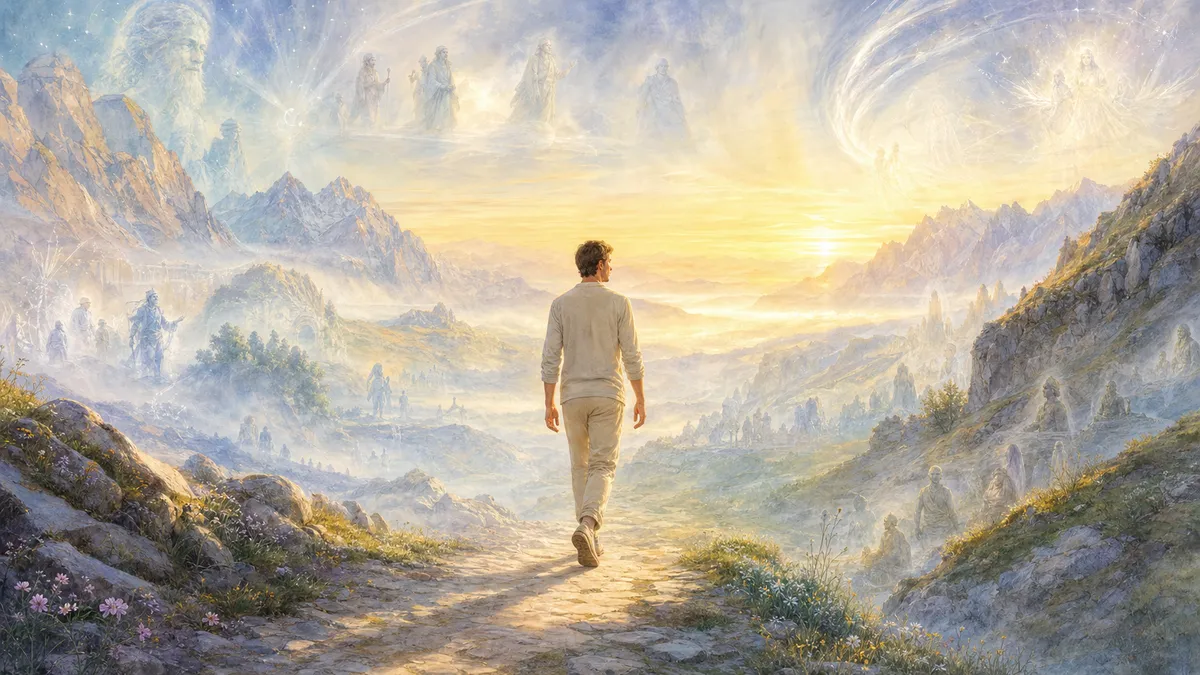
Experiences of a lower order—for example, seeing spirits, clairvoyance, memories of past lives, or astral visions of the subtle body—can become either a revelation or a temptation. If you pass through lower-order experiences correctly, they will not become a temptation for you, and you will rise higher to intermediate-level experiences. These may include experiences of light, experiences of divine worlds, communication with luminous spirits and divine beings. This can become your awakening, but it can also become your delusion, a great temptation, if you do not understand how to relate to these experiences.
If you do not have a master and do not rely on sages and the instructions of sacred scriptures, you may become deeply confused. But if you properly rely on the saints and their instructions, this will become a moment of awakening for you; it will be your blessing, not your trap. Then you will receive a pass, the right to higher-order experiences. These will no longer be experiences associated with duality; they will be experiences of nonduality, emptiness, the Absolute—experience beyond name and form. Experiences of faith, devotion, self-surrender to God, and the single taste; experience beyond subject and object; complete disidentification from the five sheaths—from the body, energy, mind, and will. This is how holy sages and sadhus practice, and this is what the teaching of Advaita speaks about.
Questions and Answers
Shankara’s Teaching on Nondual Experience
In his text “Viveka Chudamani,” Shankara explains how to attain the highest nondual experience, the experience of God. “Viveka Chudamani” translates as “The Crest Jewel of Discrimination.” The key point here is mastering the three Vs:
- Vichara (self-inquiry)
- Viveka (discrimination, the ability to distinguish pure consciousness from the sheaths)
- Vairagya (detachment, separating oneself from that which is not the Absolute)
One who practices these three—vichara, viveka, and vairagya—correctly, in accordance with the instructions of their Guru and the scriptures, is called a sadhu in the Vedic tradition. My good wishes to all of you: if you aspire to Liberation, enlightenment, and knowledge of God, may you become good sadhus. For our life becomes meaningful, gains purpose, and becomes valuable only when we live as sadhus. If we do not live as sadhus, we are simply passing through this life.
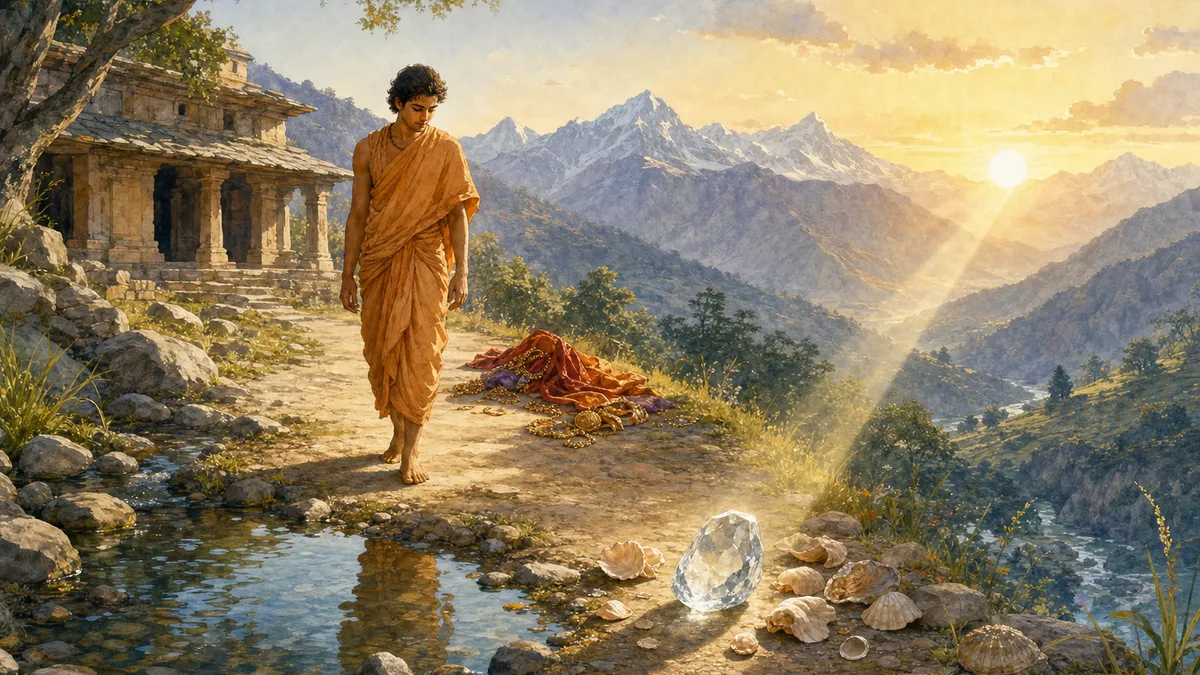
There is a saying: “Some people grow wiser with age, while others merely grow older.” Life is a unique gift, a great treasure, and we must respect ourselves enough to use this unique and precious birth for enlightenment, realization of God, and Liberation; otherwise, the years will pass, we will simply grow older, nothing will change, and everything will remain exactly the same. Living by going with the flow is easy, but following the spiritual path is difficult; it is like swimming against the current. Yet this is precisely the task God set before us when He sent us here; this is exactly why we were born and received this body, and this is the task we now face in this life. It is through this task that we evolve and grow.
The Path of Spiritual Evolution
As we progress from being an ordinary human being to becoming a spiritual person, a person of the spiritual path, we become sadhus. Sadhus are people too, but they are different people—people with different values, different goals and meanings in life, and a different worldview. Sadhus do not seek wealth, fame, or worldly happiness; they seek God, divine truth, enlightenment, and Liberation.
And what is above a sadhu? Above sadhus are jnanis—enlightened sages. While sadhus seek this magical jewel, jnanis have already found it. They may perform lila or they may not, but they already possess this jewel; they play, they live playfully. Their consciousness is constantly immersed in God, and they have no concept of “I,” of “I am doing.” For them, there is no karma; there is only lila (divine play). In the Vedic tradition, such people are called those who have realized divine wisdom—jnanis, or gyans. Jnanis live their final life in this body; they will not be born again because their souls are strongly drawn to the Absolute. Only certain karmas remain, such as living for the benefit of others and acting in this world, but as soon as these karmas are exhausted, the jnani reunites with the Absolute.
Is there anything above a jnani? Of course there is: siddhas (perfected beings). Siddhas know divine wisdom just as jnanis do, but their power is far greater: they can control time, space, and the five elements. They have left the human world; they do not live among people or reveal themselves to them. Even if you wished to find them, you would not encounter them. They live in great secrecy in the Himalayas, perhaps unrecognized among people, but you will not be able to obtain an audience with them. If your soul is sufficiently pure, you may meet them, perhaps in the subtle body. Siddhas are immortal; they are not human beings but supernatural beings. Yet they were once human, and they have a form similar to that of humans, although they can assume other forms. Their energy has grown so immensely that they have distanced themselves from humanity and can live for five thousand years. Guru Brahmananda is one of them, as are Ramalinga Swamigal and many others.
And is there anything above siddhas? There are gods, devas. Gods are the architects of star systems, the creators and makers of worlds, players beyond time and space. Everything in this world is governed by the gods: the destiny of the planet, the destiny of humanity and civilizations, and the development of science and culture. The gods underlie everything in this universe. Our task is to someday follow the path of evolution from human being to sadhu, from sadhu to jnani, from jnani to siddha, and from siddha to god, to devata—this is our ultimate task.
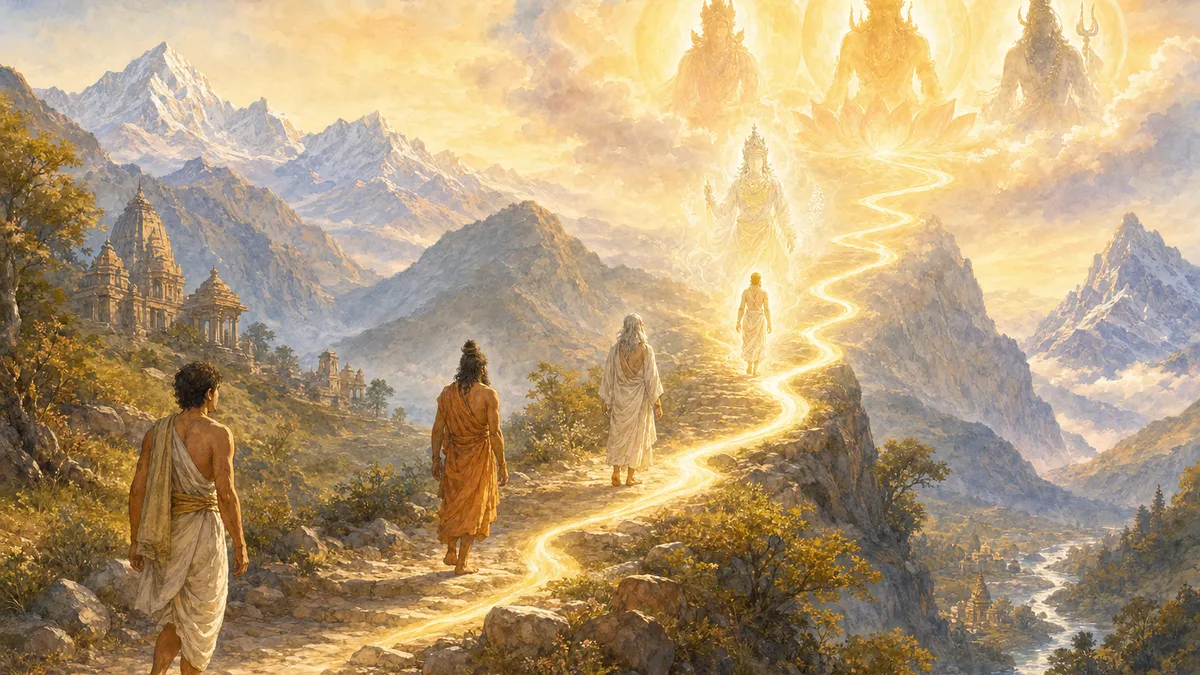
And is there anything above the gods? There are the great gods, such as Brahma, Vishnu, and Shiva. Even the gods find it difficult to comprehend the great gods, because the great gods stand at the very center and foundation of creation. For example, there are gods such as Indra, Vayu, and Varuna, and they possess enlightenment, immense powers, and might. They are immortal, have many bodies, and know the past, present, and future. They can tell you every thought you have had and every word you have spoken or thought since the beginning of the universe. They can extract your soul and transfer it to any world, and it will seem to you that a million years have passed, during which you will live entire lifetimes; then they will return it, and you will see that only enough time has passed to raise a cup to your lips. Yet even they cannot know or comprehend the great gods such as Brahma, Vishnu, and Shiva.
Someday this will become our path as well; someday we will become just as infinitely omnipotent as Brahma or perhaps Vishnu, and we too will attain their divine level. But this will happen when we completely free ourselves from karma, unleash our divine potential, and develop the fullness of all powers. Of course, we will no longer be concerned with human problems, human karma, or the problems of this body, and we will live neither in America nor in Russia, because the gods exist beyond time and space.
Choosing a Spiritual Path
This Refuge Tree shows this path of evolution. Will you want to remain ordinary people, or will you decide to become sadhus, or will you choose the path of becoming jnanis and attaining enlightenment? Will you seek the values of this world, or will you seek divine wisdom? What choice will you make? Are you interested in this world, the world of external objects; do you desire happiness in this world of external objects, or will you decide to become a hermit monk, meditate in retreat, practice karma yoga, serve the Dharma, and study Advaita and the teachings of yoga? All of this is your choice. Whether you wish to become a brahmachari or a karma sannyasin—it is all your choice. There are a great many possibilities, paths, and statuses in the spiritual world—all of this lies before you right here and right now, in the palm of your hand, and you may choose any of them. But you must always remember that every choice has its consequences. Think carefully and make the right choice.

When you arrive at an airport, there are many destinations: New York, Mexico City, Moscow, Delhi, but every choice has its consequences. If you bought a ticket to Moscow, you will fly there and live in Russia. If you choose Delhi, you will arrive in Delhi. If you choose New York, you will arrive in New York. It is your choice, but you will bear all the consequences of your choice. The teachings of Sanatana Dharma help us acquire discernment so that we can make the right choice in life. I will not tell you exactly what choice to make; I never choose for others, suggest that they make a particular choice, or try to persuade them of anything, because the soul is free in its choice. But I say: “Look, there are these paths, those paths, and others, and there is a choice; the choice is yours.” You have a choice. I came to tell you about it. I will be happy if you make the right choice. But if you make the wrong choice, I will be happy too. Because if I tied my happiness to other people’s choices, I would do nothing but cry from morning until night. Nevertheless, the right choice will probably bring more happiness. This is precisely the function of the Guru, the master—to help another person make the right choice in life. This is not a matter of philosophies, scriptures, or theories; it is a matter of life, our life, our destiny. I give many lectures on philosophy, but, to tell the truth, I do not enjoy it very much. I do it simply because it has to be done. But rather than lecturing on philosophy, sometimes one simply needs to offer advice in plain words. Sometimes that will work too. Om.
Questions and Answers
Question: I have several questions. First, you spoke about the five sheaths; could you explain them in more detail? The second question is: what is the purpose of women on the path of Dharma and karma—that is, what should a woman do, since she may have a different function, or perhaps the same one?
The five sheaths: the first is the physical sheath, annamaya kosha; the second sheath is the energy body (pranamaya kosha). The energy you feel flowing through the channels when performing asanas and pranayamas is pranamaya, the sheath of energies. The third sheath is the astral body (manomaya kosha), the sheath of the mind. During dreaming sleep, the subtle astral body, your subconscious, is active within you—that is what it is. The fourth sheath is vijnanamaya; it is your subtle mind, in which a great many different ideologies operate, the mental body, the intellect. The fifth sheath is anandamaya; it is closest to the Atman, and it is the sheath of bliss, your causal body. These five sheaths conceal your divine spirit just as clouds conceal the sun. When we are able to purify them, we can perceive our divine Self. We are not these five sheaths. Shankara says:
“Through discernment (viveka), separate your spirit from the five sheaths. Do not become attached to them; they are not you. You are not the body, you are not prana, you are not the subtle body, you are not the mental body, and you are not even the causal body; you are beyond all of this. You are the transcendent spirit.”
As for women, a woman is just as much a human being. Her path is the same as a man’s; there is complete gender equality here. America is a tolerant country, women and men have equal rights, so I would not distinguish between a woman’s path and a man’s path. The tasks are the same: to rid oneself of the ego, attain divine wisdom, free oneself from ignorance, and achieve enlightenment. But the paths of men and women differ because their energies differ. Devotion and self-surrender come more easily to women, while analysis and jnana yoga come more easily to men. In fact, the soul is neither male nor female. The soul is immortal, and it is pure consciousness. You have been a woman and a man many times; you must try to free yourself from these dualistic concepts and find the pure consciousness that is neither male nor female.
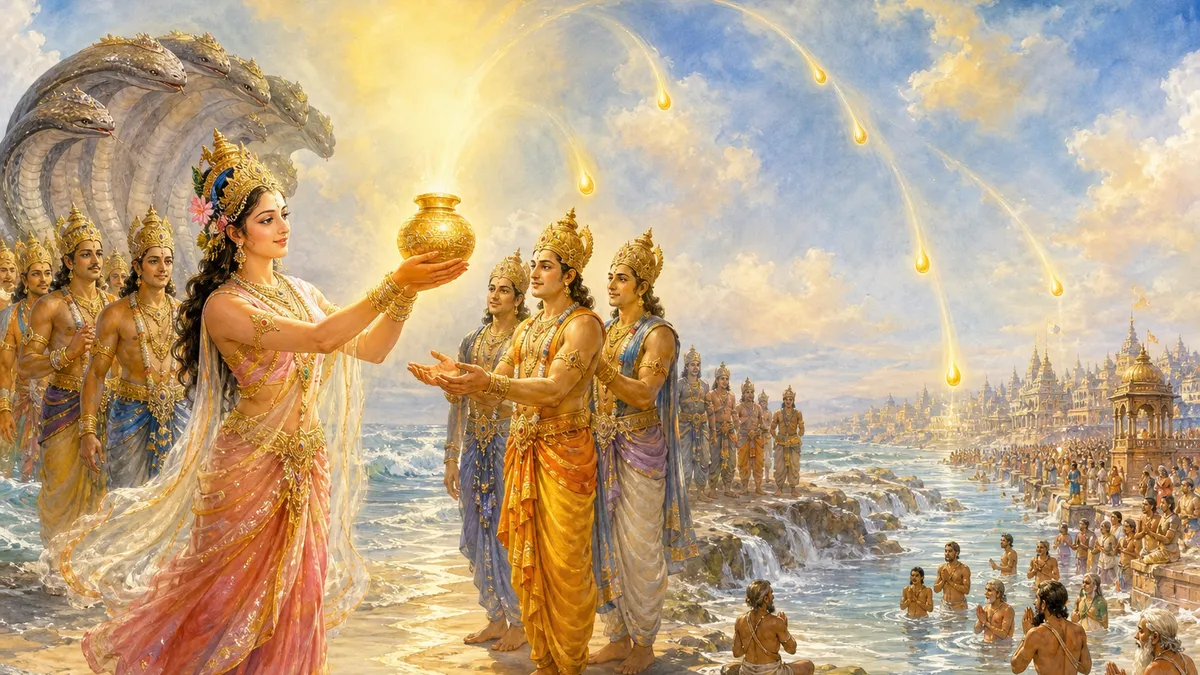
Once Vishnu assumed the form of a very beautiful woman, the apsara Mohini. He did so for a reason: to seduce the asuras, demonic beings who opposed the gods. This is the well-known story of how the gods and asuras churned the cosmic ocean and extracted the nectar of immortality from the center of the universe. It so happened that the nectar of immortality fell into the hands of the asuras, while the gods received nothing. The gods implored Vishnu, saying, “The asuras will become immortal and defeat us all. We are finished. What are we to do?” Then Vishnu assumed the form of a very beautiful woman. At that time, the asuras were arguing over who would receive the nectar first. She came and said, “I will divide the nectar.” The asuras were dazzled by this woman, but in reality it was the god Vishnu. Through the power of his mind, he created this emanation in the form of a dazzlingly beautiful woman. As a result, Vishnu stole the nectar. As this nectar was carried through the sky, drops of it fell. They fell in certain places: Haridwar, Allahabad, and others. Kumbh Melas are held in the places where the nectar fell. We go there once every three years and perform ablutions at a certain time. If, according to astrology, you perform ablutions in the Ganges (the holy river) at a certain place and time, recite a mantra, set an intention (sankalpa), and appeal to your Ishta Devata, you can change your destiny, and what you have asked of God will come true. This is the meaning of the Kumbh Mela. Millions of people in India come to perform these ablutions.
Question: Could you tell us about the proper relationship between a Guru and his disciple?
There are various sacred texts that describe such relationships. For example, the “Sri Guru Gita” and the “Manu Samhita,” which also sets out rules, ethics, etiquette, and many instructions. For example, it is said that a disciple should sit lower than the teacher. When the disciple rises and respectfully greets the teacher, his life is prolonged and he gains longevity. In general, when you respectfully greet any elder, not only a teacher, it is considered beneficial for attaining longevity—at least, that is what is written in the “Manu Samhita.”
In ancient Vedic culture, the father, mother, Guru, and Ishta Devata (deity) were very important in the family. One had to treat one’s father as God, one’s mother as a goddess, one’s Guru as God, and worship one’s deity (Ishta Devata). When a woman married, her wedding was like an initiation for her, and she promised to revere her husband as God and serve him as God. Her work was considered seva, worship, and through it she could attain enlightenment. Such exalted relationships existed. Especially if the husband was like a rishi, a sage, a saint. He would sit in samadhi all the time. Of course, it was easy to worship and serve him: one could prepare something, feed him, and offer namaste. A very exalted husband, always sitting in samadhi or meditating. Naturally, the wife could also attain enlightenment through this. But nowadays such relationships probably no longer exist; there are neither such wives nor such husbands, even in India itself. However, the Guru-disciple relationship still exists. In India itself, parents are no longer revered in this way, nor do wives revere their husbands in this way, but the Guru-disciple relationship is still preserved in Vedic culture, and it will continue to be preserved in the future. This is very important.
Most importantly, the disciple must have a pure attitude toward the Guru; he must see him through sacred, holy eyes. In other words, he must not look upon him as an ordinary person. This is needed not by the Guru but, first and foremost, by the disciple, because the disciple needs a blessing. If he looks at the Guru through the eyes of an ordinary person and sees him as an ordinary person, albeit a more intelligent one, this simply will not bring him any blessing. Padmasambhava, the saint of Tibet, said:
“If you see your Guru as an ordinary person, you will receive the blessing of an ordinary person. If you see him as the Buddha, you will receive the blessing of the Buddha. And if you see him as a dog, you will receive the blessing of a dog.”
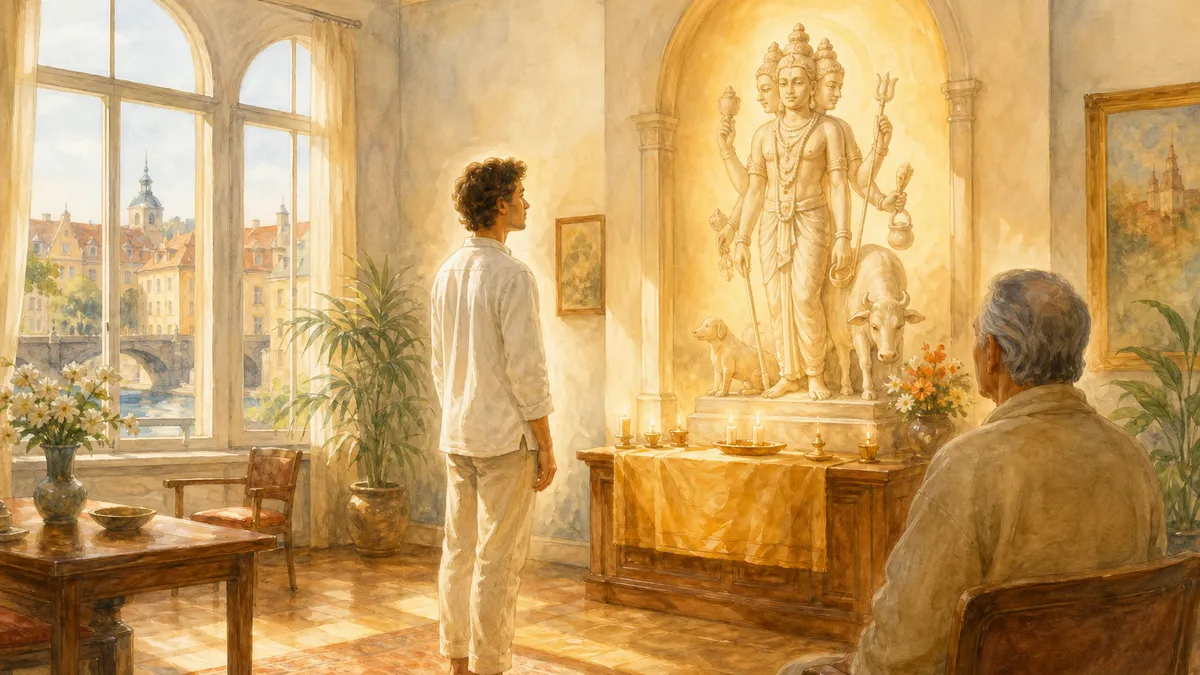
A great deal depends on you. The Guru may not even be enlightened, may even be an ordinary person, but if you call him your Guru and regard him as God, as the Absolute, respect yourself, and this will help you first and foremost. If you see him differently, then he is not a Guru to you; he may be a friend, a brother, or a lecturer, but this is precisely how a Guru is understood in the Vedic tradition. This does not mean that you must obey him in some way, and so on. It is similar to a sculpture: we commission a sculpture of Dattatreya, and it is made of plaster by an ordinary worldly person, for example, an Honored Sculptor of Russia. We all know that it is plaster and that it is made by a person in a workshop; there is no secret here. But when this sculpture is brought into the temple, we do not treat it as plaster, do we? We believe that Dattatreya himself has come here. We enter the temple and make all our prostrations before him. Yet it is merely a sculpture, plaster, but the Vedic tradition says: “Look at the sculpture and think that it is Dattatreya; then you will receive blessings,” because the blessing we receive depends on how we think and how we attune ourselves. Therefore, in the Vedic tradition, the Guru is like a father to the disciple, one who gives birth to him in the spiritual world.
Diksha and Guru Yoga
When a disciple receives diksha, a spiritual name from the Guru, the Guru also whispers a mantra, the Guru mantra, into his ear. He may recite this mantra throughout his life. We call this nama diksha or sannyasa diksha, and at that moment the seed of the deity is planted. If the relationship is established correctly, this current grows, and the current of the disciple’s consciousness grows until the disciple himself is transformed into the deity.
Until you become someone’s disciple, you may think about another person in one way or another, but if you have chosen someone as your Guru and decided to become his disciple, then after making that choice you must never criticize him; you must maintain a pure attitude and strive to please your Guru. If the Guru is pleased with your service and your practice, you receive many blessings, and your practice proceeds very well. This process is called Guru Yoga.
Ultimately, the disciple must discover the Guru within himself. He must move from the concept of the external Guru to the revelation of the Sadguru within himself. This is possible when there is complete openness, trust, faith, and devotion. It is believed that there must be complete mutual understanding between the disciple and the Guru, with no unspoken issues, no secrecy, and complete sincerity.

Sometimes a husband has secrets from his wife. He may hide money, but that is not a serious matter, although it is better to be sincere. There must be no secrets from the Guru, because you regard the Guru as your Higher Self, and what secrets can there be from the Higher Self? Then you can grow through this. The deity that was planted within you during diksha—you received a name and recite the Guru mantra—grows within you if you have the right relationship with the Guru; this is called samaya. It is very important to maintain samaya throughout your life if you are someone’s disciple.
Ultimately, you yourself must become the Guru within; you must discover the Guru principle within yourself and unite inwardly with your Guru. This happens at the moment of enlightenment. You come to your divine Self and discover that the Guru is there, that he has been waiting for you there for a long time. This became possible because of your devotion, sadhana, and samaya. If you have a Guru, are devoted to him, and feel genuine love, sincerity, and self-surrender, this will be the greatest blessing. This is what Vedic culture has preserved to this day.
Questions About the Caste System and the Nature of the Guru
Question: You spoke about Shankara. But as I understand it, Shankara lived later than the Rigveda or the Ramayana.
Yes, later.
Question: The Rigveda includes the varnas, and this is what created the caste system in India. What do you think about this?
Yes, the castes were created by Prajapati and Manu, and they are described in the Manu Samhita. This was once relevant, but now it is all outdated, both in Vedic culture and in India itself. Today, saints do not support the idea of castes. It was relevant in other times. It is now impossible to maintain caste purity; views are different now. Today, caste division simply becomes discrimination, which is why saints abandoned it long ago.
Although there are always intelligent people, foolish people, and warlike people, these are no longer castes, but qualities. Brahmins (sages), Kshatriyas (rulers, politicians), Vaishyas (merchants), and Shudras—those who have low intelligence and are able to work. Such castes did exist. But now, as humanity, we must realize our unity; we must not divide ourselves into castes, religions, genders, and so on.
Yes, America also has a caste system; it is simply not called that.
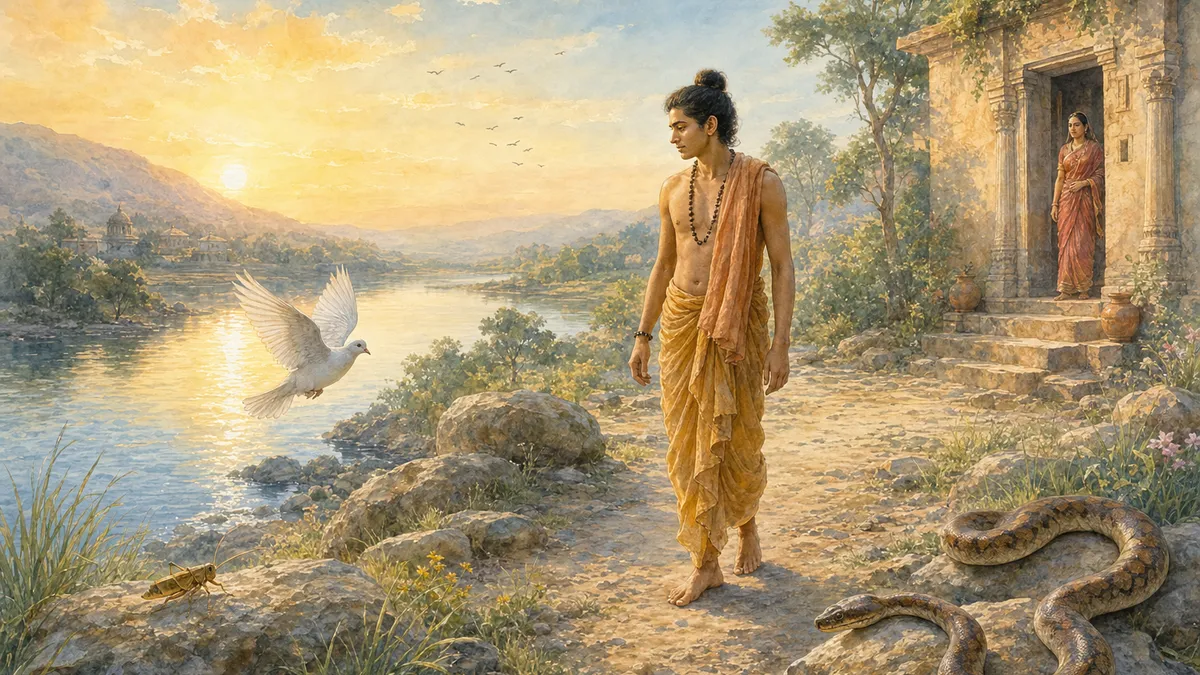
Question: If you see everyone as your Guru, do you need to have a specific Guru in human form?
Dattatreya saw a Guru everywhere. Water, earth, sky, wind, and space were his Gurus. A prostitute named Pingala and a python were his Gurus; an insect was his Guru, and a pigeon was his Guru. Dattatreya was an incarnation of Vishnu, but if we are not incarnations, then it is better for us to also have a specific Guru.
Sometimes the ego is afraid of having a Guru because this presents a great challenge to it, and it prefers to say, “I have Gurus everywhere; I see the Guru in everything.” There is a beggar standing there—he is my Guru—and you do not have to take him seriously or obey him; you can simply say, “This is my Guru.” Over there is an ice cream vendor—he is also my Guru. This is very convenient: you assume no responsibility whatsoever. But when we become disciples, that also entails responsibility. Yet the spiritual path is impossible without accepting such responsibility. It is more difficult, but it is right.
For example, if you study a martial art, you go to a coach and have to train, but this helps you progress. There are always difficulties with a Guru. Why are there difficulties? Because the ego exists. It can be difficult for the ego to accept the concept of the Guru, the Guru principle, because it will have to set itself aside, put itself in second place, and cultivate patience, humility, and respect—and that is never easy, but this is precisely the practice. This is a tradition of Vedic culture that has been preserved to this day, and it guides many sadhus along the spiritual path.
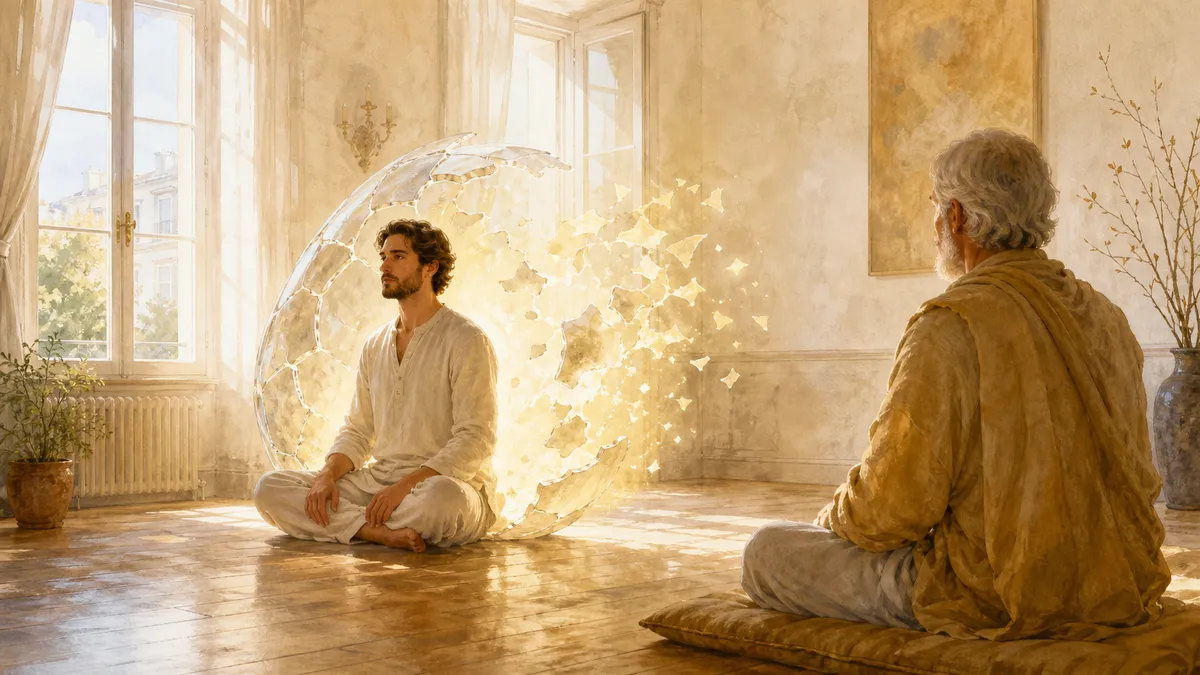
But if you are afraid of having a Guru, you can regard everyone as a Guru; that is also possible. You must remember that you are always free; it is always your choice. You can choose any path. We always have a choice, but our choices also have consequences; we have the freedom to choose.
I like your name because Vishnu balances everything, and it also represents kindness and compassion.
Yes, Pilot Baba gave it to me. Giri means mountains; it is one of the names bestowed in the Juna Akhara order upon receiving diksha.
The Ultimate Goal of the Spiritual Path
Question: I am following the path of perfection. First comes the earthly path, then the heavenly path; I become spiritual, and then perhaps I become a great god. What should my ultimate relationship with the Supreme Being be? What am I moving toward? What kind of relationship with the Supreme Being, with the Absolute, will I ultimately attain?
Ultimately, you must recognize yourself as the Supreme Being. Surrender your ego to the Supreme Being; this is called prapatti or atma-nivedana, because the ego obstructs such recognition. When self-surrender occurs, self-recognition (pratyabhijna) follows. Pratyabhijna is recognizing oneself as God, as the Absolute. Pratya means turning, abhi means face, and jna means jnana, the knowledge that arises as a result of turning—that is, you turn your face toward God and receive knowledge; this is the knowledge of identity with God, the knowledge of “Aham Brahmasmi.” This knowledge will come only after self-surrender; it cannot come before that. The ego cannot recognize itself as the Absolute; the ego is always limited.

In our tradition, this kind of relationship is called sayujya-mukti. Sayujya means complete dissolution, merging—you and God are one. Mukti means Liberation, freedom. There are lower levels called sarupya-mukti and salokya-mukti. Sarupya-mukti means having a form like God’s. There is a type of liberation in which you receive a luminous body like that of a deity—sarupya-mukti. Salokya-mukti is when you are reborn on a higher plane where the gods dwell. Sayujya—unity with God, self-recognition—is the highest.
If you say this to a representative of the Dvaita or Vishishta Dvaita school—for example, the Vaishnavas from ISKCON—they will wave their hands and say, “No, no, no, no sayujya mukti; we do not want to dissolve, we want to worship.” They have this theory: “We do not want to be sugar; we want to eat sugar,” while remaining separate. To each their own.
The Role of Faith and Practice
Question: If, for example, a person is trying to find God within themselves and in others, and is striving to attain this, but does not believe that there is life after death or that Brahma, Shiva, and Vishnu exist separately from where they exist within that person or other people, can they attain this perfection?
It does not matter exactly what you believe; what matters is that you believe. If you practice, all of this will change and become purified, and sooner or later you will attain this perfection. We do not believe that there is a world after death because we lack mystical experience, or we do not accept certain things simply because we lack experience—mystical experience. The main thing is to practice. Practice will provide mystical experience, and over time our ideas about life will change, and we will gain deeper and ever deeper experience.
But if we practice seriously, it is important that we rely on the Guru’s instructions and on sacred texts. Our faith should not rely too heavily on names or forms, since these are still objects of identification. Although Vasishtha says, “If you find it difficult to perceive God without form, you may worship a form,” that is also good. But in any case, the particular set of ideas we have now is not so important; it is temporary and conditioned by our upbringing, culture, society, and what we have read. All of this will change many times over the course of practice.
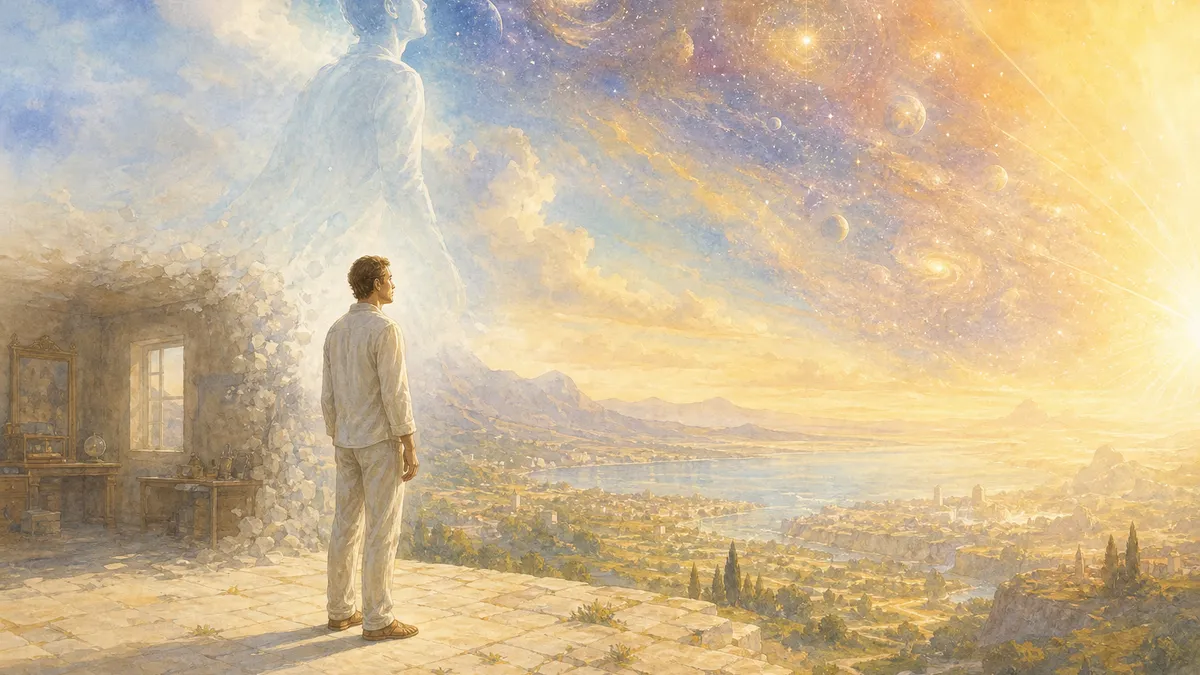
For example, you do not believe in life after death, but you keep practicing pranayama and meditation, Kundalini rises, and you leave through the crown of your head in your subtle body; your subtle body has an out-of-body experience and visits spirits, and now you believe in life after death. It is not all that difficult: a little mystical experience, and all your ideas change. This happens many, many times in spiritual life. You did not believe in gods in the heavens, but then you entered samadhi, had an experience, and saw that gods can live just as humans do. Humans live here, gods in the heavens, and siddhas in Siddha Loka. The world is boundless; it cannot be limited by anything. In the course of spiritual life, you will keep expanding your understanding, but you will never reach its limits. God cannot be limited or measured.
Karma and Liberation from It
Question: Please tell me, if I am dissatisfied with a certain situation in my life, how can I understand whether it is my karma, which I must work through because of certain sins in a previous life, or whether I have already learned my lesson and can move on?
Every situation we experience is prarabdha karma. But the point is not to follow karma; the point is to be free from it. If you want to understand how to assess a situation, try looking at it through the eyes of the saints and the sacred texts. For example, think: “What do Shankara, Vasishtha, and Dattatreya say about this?”
Advaita says that the world is a manifestation of the mind. Your mind projects these situations. Analyze this and think: “Ah, so my own tendencies create these situations. Then why should I not change the course of my thoughts?” The moment you change the course of your thoughts, those situations will also disappear, but others will arise because the mind will always be projecting something.
The Nature of Doubt
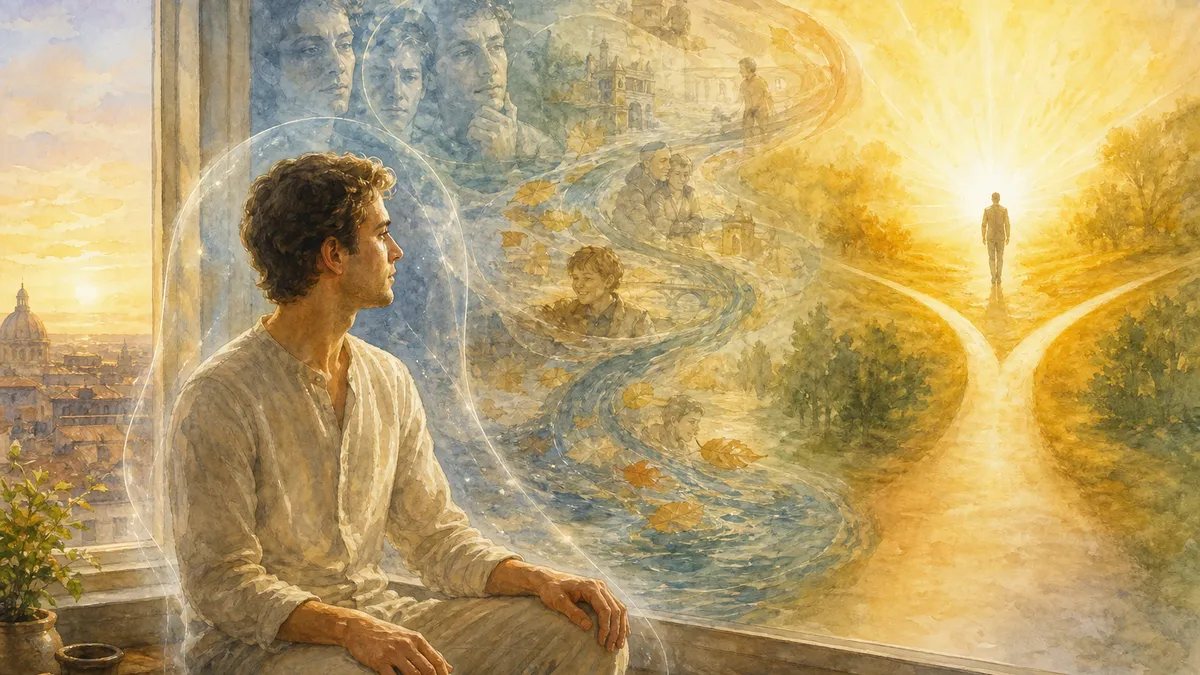
Question: Please tell me, where does doubt arise?
It all comes from ahamkara (the ego); beyond the mind, there is no doubt. Within us is an inner instrument that we call the antahkarana. It includes the mind (manas), memory (chitta), buddhi (spiritual intelligence), and ahamkara (the ego). Doubts arise either in manas, the conceptual mind, in buddhi, or in ahamkara. Each of them has its own type of doubt.
The doubts of manas are related to questions such as: “To choose or not to choose? Yes or no?”—such primitive doubts. For example, which soup to order at a restaurant: this one or that one. Doubts in buddhi concern matters of values, while doubts in ahamkara (the ego) are fundamental doubts because the ego is always uncertain. The ego itself is an illusion. All of this is our instrument; all of this is our mind.
When we go to the point beyond the mind, all doubts disappear. There is no choice, no thought, no judgment, no evaluation; there is pratyaksha (direct perception of reality). We stand before God; we simply need to keep going further, further and further.
My blessings. May the blessings of Dattatreya and all the saints be with you. Om.
