

We continue the topic “Spiritual Practice as a Game with Divine Laws. The Fundamental Laws of the Universe.” We have already examined ten such laws. It is important to understand that all living beings are subject to these laws. Of course, there are many more of them. These are the ones that are relevant to us now.
The direction of our lives depends on our understanding of these laws: what we should do in life, what we should not do, and how we should conduct ourselves properly. It is impossible to live happily in this world if we do not understand the laws by which it operates and how it is structured. We will make mistakes, choose the wrong goals in life, and we will never be happy. Understanding these laws opens up various paths before us that we can follow on the spiritual journey.
The next law is the law of the necessity of obeying existing laws established by higher beings with more highly organized, complex consciousness for beings with lower, simpler consciousness. Beings with lower, simpler consciousness cannot evade compliance with these laws. These laws exist, and less highly organized beings will obey them until they embark on the path of spiritual development and evolution, until their consciousness deepens, increases in complexity and diversity, and attains a higher degree of self-organization.
Samsara as a Semantic Black Hole
Beings with a low level of consciousness are compelled to revolve in the cyclical wheel of samsara. In science, there is such a concept as “vicious infinity,” when a sequence of numbers, a fraction, or something else becomes endlessly repetitive. It is infinite. Samsara is a form of such infinity, in which consciousness becomes trapped in a cycle within one of its states or worlds.
We must understand that the world of ignorance, the world of samsara, is truly infinite. There are endless worlds consisting of attachment, anger, lust, obsession with gambling, unclear and clouded states of consciousness, or simply preoccupation with worldly life. They never end; they are inexhaustible. They sustain themselves because energy is constantly moving, and this is immensely powerful energy.
Beings with weak consciousness, souls with immature consciousness, always fall under the influence of such forms of infinity. This kind of infinity is like a vortex that sucks everything in. If our consciousness is weak, we fall into such a vortex, and this vortex of samsara contains entire worlds, entire universes.
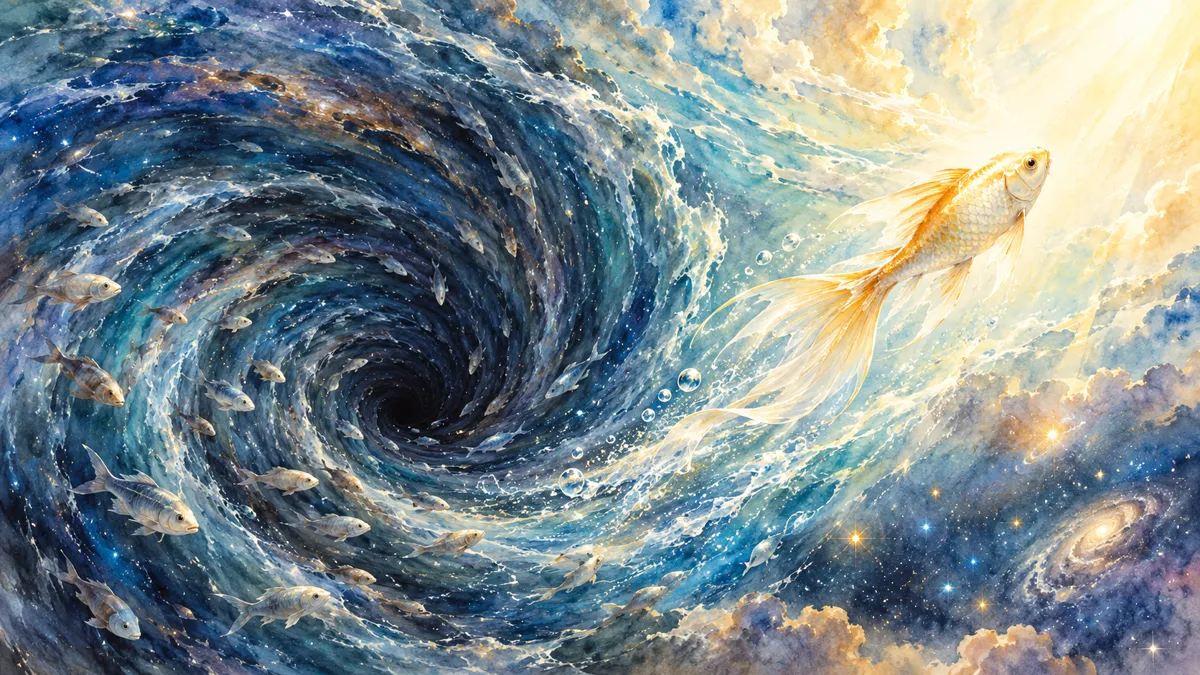
Samsara can be called a semantic black hole, a semantic space-time trap that draws living souls in. Wise and strong souls are not affected by it. It is like a strong fish that swims into a whirlpool yet still manages to swim out; the whirlpool cannot affect it. But all the small fish are sucked into the whirlpool.
Samsara is such a black hole, a hole of entropy and diminished self-organization. It is a realm of distorted meanings in the Universe, a realm of chaos. If we imagine that everywhere else the Universe is pure, perfect, and divine, then samsara is a special realm where immensely powerful energies of chaos, entropy, and diminished self-organization operate. These too are energies of the Absolute, but they possess tremendous power. They are semantic traps, space-time traps in the vast cosmos.
If the soul is likened to a shining star flying freely through the vast Universe, then samsara, like our material world, is a semantic trap, a space-time black hole. Suddenly, the soul’s trajectory is bent, it is sucked into the trap and remains there for a long time, until it acquires spiritual strength and breaks free. There is a saying: the pike exists to keep the crucian carp alert.
There are countless such semantic, entropic black holes in the Universe; all of them are worlds of samsara. They are distinguished by being a denser, more concentrated semantic environment, a realm of distorted meaning, distorted ideas, and distorted values. Therefore, the ideas and meanings of all souls that enter it also become distorted.
The Emergence of the Ego as a Survival Mechanism
Then, if the soul is weak and immature—and all who are not liberated, who are not siddhas or gods, are weak, immature souls—it is sucked into it. And in order to survive somehow, these souls form a certain environment around themselves; from within, they form the ego, the ahamkara. This is how the ego arises.
The ego is an attempt to limit the influence of this environment, to create a kind of corner of selfhood, to encapsulate oneself, to endure, and to preserve at least some rudiments of awareness and individuality within this environment. Therefore, all souls that enter this environment are compelled to form an ego. We are all divine souls; we are all inherently immortal, inherently free and playful. But once caught in such a harsh space-time vortex, we had to impose severe inner limitations on ourselves, erect rigid barriers, and shield ourselves in order to preserve our individuality somehow.
This is how the ego, ahamkara, arose. It is necessary for survival in this world. And once the ego, ahamkara, emerged, it became a very narrow, encapsulated consciousness, highly individualized and focused on certain features of itself, resulting in a strong identification with this encapsulated consciousness. This consciousness is separated from the Supreme, separated from the Universe, does not feel unity, and is intensely self-centered.
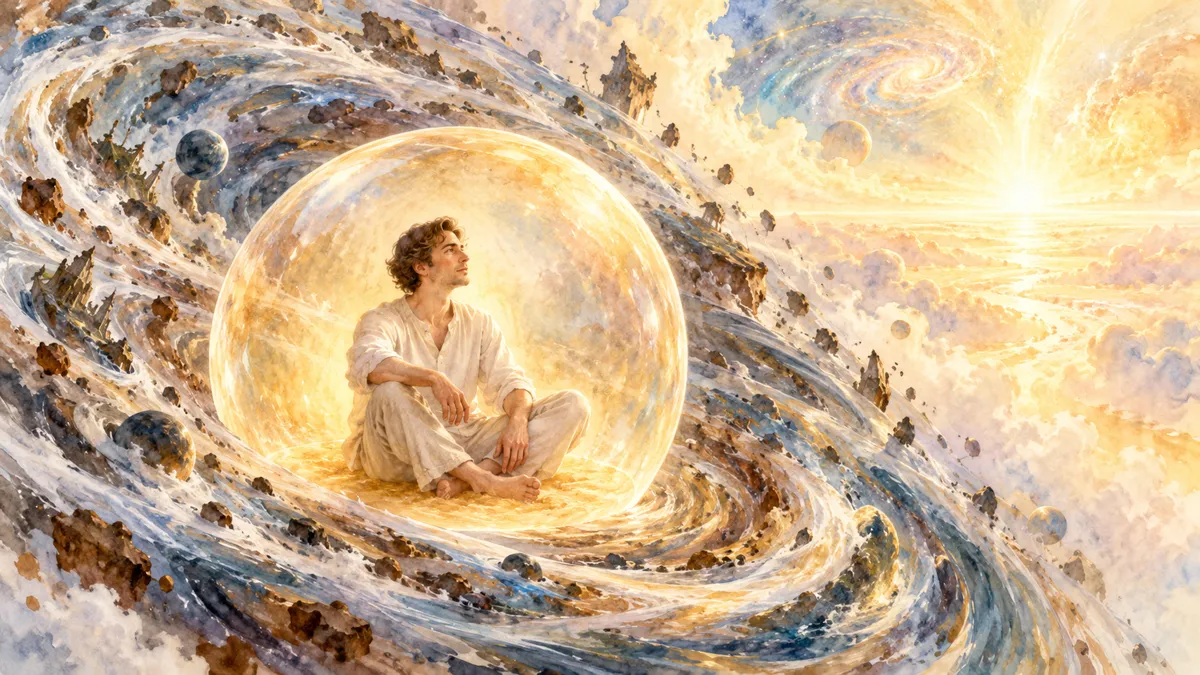
Then the ego took the next step: it began to dream and project various reality tunnels, because consciousness had ceased to be aware of itself; thus, it began to dream uncontrollably. Uncontrollably means that various reality tunnels are projected from within, and all of them materialize. Our body and the world we enter are the uncontrolled projection of various realities in accordance with the desires of this encapsulated ego. In order to continue living, the ego began to create various physical bodies. This is rebirth in samsara.
Nitya-siddhas—Eternally Free Souls
But there are other souls called nitya-siddhas—those who did not fall into this vortex, who are eternally free, eternally happy, and eternally enlightened. They soar through the boundless Universe, play, express themselves, and manifest, and these whirlpools, these black holes of samsara, do not pull them in. But we were not so fortunate. These souls, the nitya-siddhas, may be very wise and very powerful. They possess great spiritual power. When they emerge from the realm of the Absolute and create a semblance of individuality, their spiritual power enables them to play and dance in the Universe, manifesting the divine play.
But we are not so wise or spiritually powerful, which is why we are now in samsara. We are not nitya-siddhas; we are trapped in one of these space-time snares, in one of these semantic black holes, these realms of distorted meanings. These are realms where the Higher Self is not readily visible, where very harsh laws and restrictions operate, and we are compelled to obey them.
Sadhana as the Path to Liberation
Now, in order to free ourselves from this trap, we must make tremendous efforts. It cannot be done just like that. In yoga, these tremendous efforts are called sadhana and tapasya. Nitya-siddhas do not need to make any effort; they are already liberated. They are in a state of lila, of play. But as living beings, we need sadhana to escape this trap, and that is why we are here, sitting here and practicing.
We could simply lie by the sea, amuse ourselves, or watch movies. But we understand that if we do so, we will not escape this trap. We need to practice, study, detach ourselves from desires, and make an effort. We need to restrict ourselves in certain ways, gather all our energy, concentrate, and avoid distractions. If we become distracted, if we fail to gather our energy, we will not escape this space-time trap. And it will be the same in the next life, and the next.
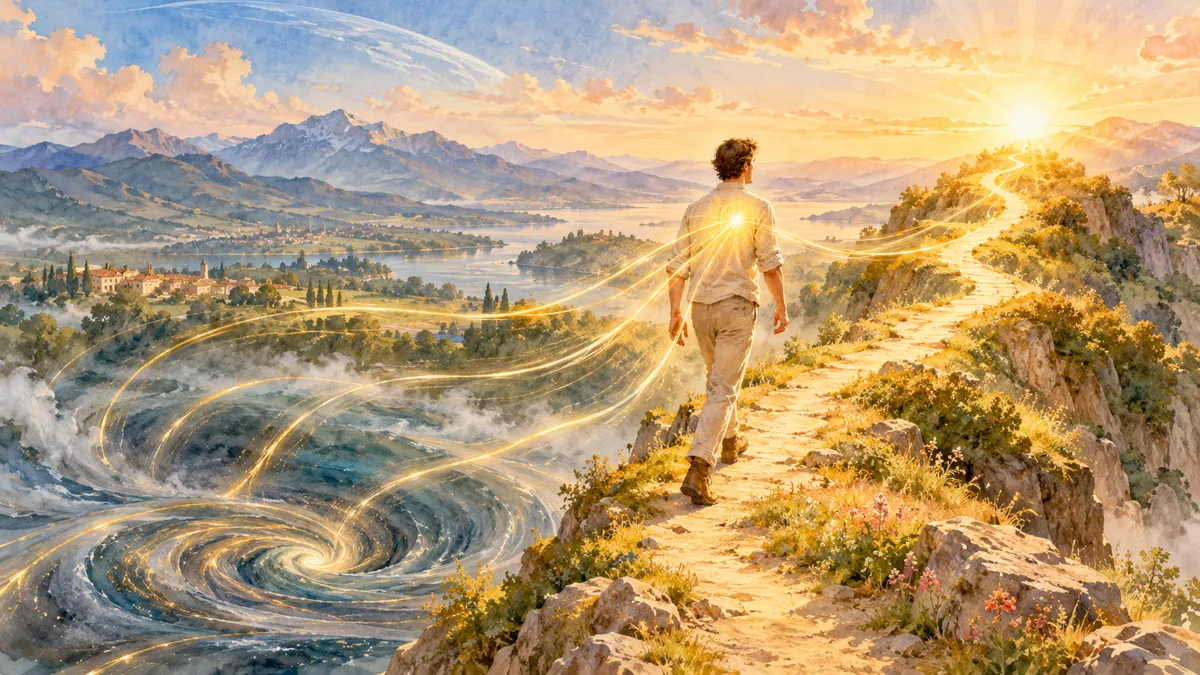
We will need all our focus, all our discipline, all our spiritual power, and all our free time—and even that may not be enough. We must gather all our energy into a single fist, both personally and in terms of self-organization, and then we can achieve success. When we gather all our energy, focus, and self-discipline into a single fist, this is called sadhana. Such focused people are called sadhus.
And people who are unable to gather all their energy into a unified whole, who have many conflicting values in life, who go first one way and then another, are not sadhus; they are people of this world. Sadhus differ from ordinary people in that they try to gather all their strength, all their energy, and all their self-discipline and follow the path of freedom in order to escape this entropy, this chaos, this realm of distorted meanings. This is a path on which one must sacrifice something. Every achievement requires great sacrifices; this must be understood.
For example, when the Soviet Union set itself the goal of defeating Nazi Germany in the Great Patriotic War, enormous sacrifices were made by civilians and military personnel, as well as enormous financial sacrifices. Victory was achieved, but at a very high cost. There was no alternative. Had these sacrifices not been made, the ethnic group would have been destroyed. Europe would have been destroyed. Most of the population would have been destroyed. This is an example of how a great nation managed to unite, pull itself together, develop self-discipline, muster all its strength, and, by making great sacrifices, achieve victory.
In the same way, when a person wants to achieve something in worldly life, they are prepared to make certain sacrifices. For example, if a businessman wants to become very wealthy, he makes sacrifices: he sees his family less often, works long and hard, and spends little time on entertainment. I have read that Bill Gates does not own a television; he does not watch it because he has no time—he works. This is an example of a person who practices tapas. There are many people who lead ascetic lives in science and business. They achieve their goals. In the same way, a sadhu who sacrifices many things of this world can gather all his energy into a unified whole and achieve his goal.
The Meaning of Incarnation in Samsara
Then we have no need to obey the laws of this Universe. The laws of this Universe are based on the principle of distorted meanings, entropy, and chaos, but we are compelled to obey them because we are spiritually weak and spiritually undeveloped; whether we want to or not, no one asks us. Gravity exists, and we are compelled to be subject to it; the passage of time exists, and we are compelled to be born, to age, and to be subject to time. These laws were established by higher divine beings. They were created specifically as a realm for educating weak souls, a training ground. In a sense, this realm of distorted meanings can be called a school for immature souls, for weak souls. By passing through such a school at the limits of endurance, through suffering and rebirth, souls gain strength and break free from it. They emerge from it stronger and more resilient. They never again fall into such traps.
When people ask, “What is the meaning of our incarnation on earth? Perhaps I have some mission? What is the meaning of my incarnation?” A person is walking through a forest; ahead there is a camouflaged pit. He falls into it and sits at the bottom of this three-meter-deep pit with a broken leg, thinking, “What is the meaning of this? Perhaps this is my mission?” The meaning is for you to learn a lesson, the harsh lesson of samsara, so that you never fall here again. That is the meaning. Other meanings are of little importance. The meaning is not to examine the patterns on the walls of this pit. The main meaning of your falling into this pit is to learn a lesson: look around, be attentive, do not become distracted, and do not fall.
The meaning of our incarnation is to develop spiritual strength, to develop spiritual wisdom, so that we never end up here again. Because everyone here dies; there are no immortals here. The medicine of the material world is a medicine with a one-hundred-percent mortality rate. It is not the case that people are treated and thirty percent become immortal while seventy percent die, or that it is fifty-fifty. No, it is one hundred percent. This world is called samsara, the world of suffering, the world of illusion, the world of ignorance. Those who believe that it is intended for happiness, for building certain values, or for satisfying desires are gravely mistaken. Because it is poison wrapped in beautiful packaging. You buy a beautiful piece of candy, unwrap it, and find poison inside. This is a hallmark of samsara. All sensual desires and pleasures turn into suffering. All plans collapse. No living being in samsara is happy. It has no happiness; it is gravely mistaken and then suffers terribly at the end of its life, seeing that all its plans have collapsed and that it has lost everything.
For example, I recently read that Yanayev had died—the Vice President of the USSR and one of those who led the State Committee on the State of Emergency. At one time, he may have been thinking about the fate of the Soviet Union and staged a coup, but now none of that matters to him or has any meaning; what matters is life and death. In the same way, millions of other great and wealthy beings have also faced the operation of inexorable laws, and everything they wanted and strove for no longer matters.
Cyclical Movement in Samsara
Beings with a low level of consciousness are compelled to revolve within the cyclical wheel of samsara. Once caught in this trap of distorted meanings, living beings constantly move within it because they continually project a certain reality from within themselves. They move from one realm of samsara to another. It seems as though they perform many different actions and achieve something, but in fact they are not going anywhere; they are moving within this trap. This concept of movement is a samsaric concept conditioned by time and space.
They simply move from one world within this trap to another, and from the second to a third. From the world of the asuras to the world of the samsaric gods, from the world of the samsaric gods to the human world, from the human world to the hellish realms, from the hellish realms to hungry spirits—the pretas—and from the world of the pretas back to the human world, and so on; but all of this takes place within this entropic trap. Yet one day, having embarked upon the path of evolution, they increase the depth and complexity of their consciousness and eventually free themselves from the cyclical laws of samsara, attain Enlightenment and Liberation, and pass into the pure dimension of the Universe to enjoy divine play while abiding in a state of nonduality.
The Pure Dimension of the Universe
Beyond samsara lies the pure dimension of the Universe. It is the world as divine play, the world as a mandala; it is the world of nonduality, where the soul is not separate from God, where there are no limiting laws, no laws of birth, death, reincarnation, or the influence of time. There, time is governed by consciousness, the course of history is governed by consciousness, and one may assume any body, any form, or any configuration at will. There is no order of things independent of consciousness; there is no karma. This is the world of nonduality. All souls abide in nonduality—some more deeply, others less deeply. All are deities capable of emanating manifestations from themselves in the form of a mandala, a retinue. All are engaged in divine play, not in karma; karma does not exist there.
The laws of the Universe are not an unambiguous given fixed once and for all. As consciousness deepens and becomes more complex, the ability to exercise free will and operate upon reality, including its laws, increases. As soon as we begin to strengthen and deepen our consciousness, increasing wisdom, jnana-shakti, and iccha-shakti, we acquire a certain power and can attain greater freedom within this trap of samsara. For example, a person may possess magical abilities or wisdom. Such a person is no longer as dependent as an ordinary person, although they are still dependent. But the further we practice, the less dependent we become on the laws of samsara. It is like a rocket: the greater its speed, the higher the orbit it can reach. To break free from samsara, we must develop an extremely great speed of consciousness, an extremely great power.
The Law of Free Will
The next law is the law of free will. The eleventh law we discussed is the law of necessity, according to which we are compelled to comply with various laws. Whatever we have done, we must work out in accordance with karma; for every wrongful, obscured action, we must receive its consequences. In accordance with karma, we must be reborn. The deity Dharmaraja, acting as an inner judge, precisely determines what kind of body one will receive: certain actions, a certain state of mind, a certain body—and nothing can be done about it. You cannot command the deity Dharmaraja; he is a higher being. You can transcend him only through the power of awareness, when he has dissolved for you. But until he has dissolved, you cannot command him.
But there is a law of free will, and this law states that every living being has free will, freedom of choice, and the right to exercise free will and choice. This ability to use the energy of freedom is called svatantrya-shakti, while free will is called iccha-shakti. But when can we use the energy of freedom and the energy of will? Only when our internal self-organization and complexity reach a certain level. The deeper and more complex the consciousness, the greater its freedom of will and choice.
The Universe as a Playground
The world of our Universe is a vast playground. Great and small players are constantly playing on this field. It is not some impersonal mechanism; it is a single living being, but this living being has different personifications that are continually engaged in play. From an insect being pursued by a hunting bird to divine spirits, great gods, planetary intelligences, guardians of places, guardians of civilizations, lords of galaxies, creators and designers of star systems. Each player exercises their free will and acts in accordance with their own system of values and goals.
Spiritual practice is also a game in which we participate, a game involving divine laws. Our task is to win this game. It is not enough simply to join it; we must win it. Many living beings join the game, but only a few prevail. For example, many people play chess, but only a few become grandmasters—those who attain great mastery.
The Hierarchy of Consciousness and Cosmic Players
Beings with elevated, enlightened consciousness have elevated goals and motivations. For example, they help other, simpler beings advance through the stages of evolution. Beings with a lower, selfish consciousness pursue exclusively their own selfish goals as they understand them. But it is precisely their selfishness that prevents them from increasing their internal complexity and self-organization so that they can operate with the deeper, broader, global laws and forces of the Universe.
Selfishness is a sign of primitive, poorly organized consciousness. As long as we remain selfish, we cannot escape this conceptual trap, because it is our selfishness that keeps us trapped in it. Conversely, any increase in the complexity and self-organization of a person's consciousness is always associated with renouncing narrow selfishness and moving to a more global scale—a universal, cosmic scale.
What kind of game is this, and who are we playing with? We are playing with certain laws. The law of time is at work, and we play with it. The law of cause and effect is at work, and we play with it as well. The law of impermanence is at work, and we play with it. The law of parinama, transformation, is at work, and we play with it. But in these universal games, the winners are those players whose consciousness is more intricately organized, who are less selfish, and whose goals are more elevated, altruistic, and global.
If our goals are modest, then we can operate with a correspondingly narrow spectrum of energies. For example, if we think only of ourselves, we can attract energies of a limited order. If we think somewhat more broadly about our family, we can attract energies of a higher order; if we think about our lineage and our nation, we can attract even more energy; if we think about all of humanity, we can attract still more energy; and if we think about all living beings in the Universe, we can attract energies of a universal order. The broader our consciousness, the greater the energies we can operate with.
Selfish players, attached to their personality and their narrow system of judgments, with a more primitive structure of consciousness, lower self-organization, and less inner self-discipline, inevitably become losers. They become vassals of the stronger and more complex systems of laws in this Universe. Because of the simplicity of their consciousness, they have no access to the powers and knowledge wielded by more complex and powerful players.
The next law is that beings with more complex, profound, highly organized consciousness, and the systems and mandalas they create, inevitably influence beings with a lower, weakly organized consciousness, transmitting their vision to them as something more complex and elevated. This is why blessings exist: more exalted beings can influence beings with weaker consciousness by bestowing their blessings upon them. Thus, one can receive blessings from more exalted beings. They constantly transmit their wisdom. Saints and siddhas continuously radiate their grace and blessings. Through this, the minds of other beings are purified.
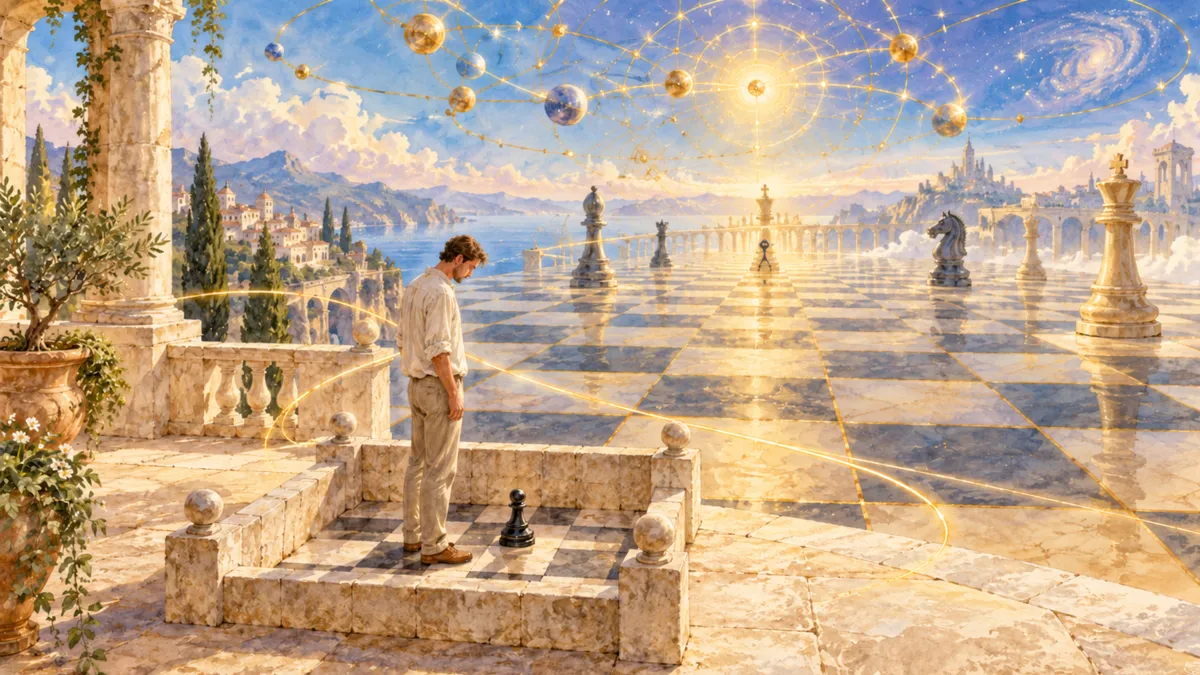
But there are also negatively oriented beings in the Universe that likewise possess powerful consciousness—various harmful forces. If a person is weak and spiritually undeveloped, they fall under the influence of such demonic forces. If a person on the spiritual path has weak samaya, weak faith, and receives few blessings, they may be tempted by these forces.
The Spiritual Path as a High-Stakes Game
The spiritual path is the soul's game with reality, in which the stakes are very high for a person. Their freedom, life, future rebirth, liberation, and the world in which they will live in the future are at stake. To follow the path of Liberation means to play with the laws of the Universe and the superintelligent beings who created these laws—to play in order to win. Liberation is a victory; Enlightenment is a victory. Our task is to cultivate within ourselves the qualities of divine players so that we can outplay the laws of samsara and break free. If our qualities are strong, we will certainly be able to do so.
As a person follows the spiritual path, they compete with great divine forces, intelligences, principles, laws, metaplayers who created the laws of this Universe, and their representatives. These metaplayers exist not only outside us but also within the consciousness of every being as internal intelligent metaprograms; they are called inner deities. As we have already said, the inner censor is Chitragupta, the inner judge is Dharmaraja, and the inner keeper of time is Mahakala.
There are deities outside us—the great deities of the Universe—but parts of them, their representations, also exist within us, within our channels. These are the deities of the five elements. The five great elements exist throughout the Universe. But parts of these elements also exist within us. Vayu is within us, Agni is within us, Varuna is within us, and Bhumi Devi, the earth, in the form of flesh, muscles, and bones, is also within us.
Using the power of reason, a person plays against the law of karma, uncontrolled history, the law of impermanence, the law of time, the law of the cyclical nature of birth and death, and others. They play not against impersonal physical laws of nature, but against various living, semi-intelligent, intelligent, and superintelligent players—megabeings that personify and embody these laws. The Universe is created in such a way that a person can use free will to liberate themselves from these laws. We do not have to live according to these laws. Free will always exists. We can leave the realm of distorted meanings and enter the realm of higher meanings. But to do this, we must develop our consciousness.
Inner Deities and the Microcosm of Consciousness
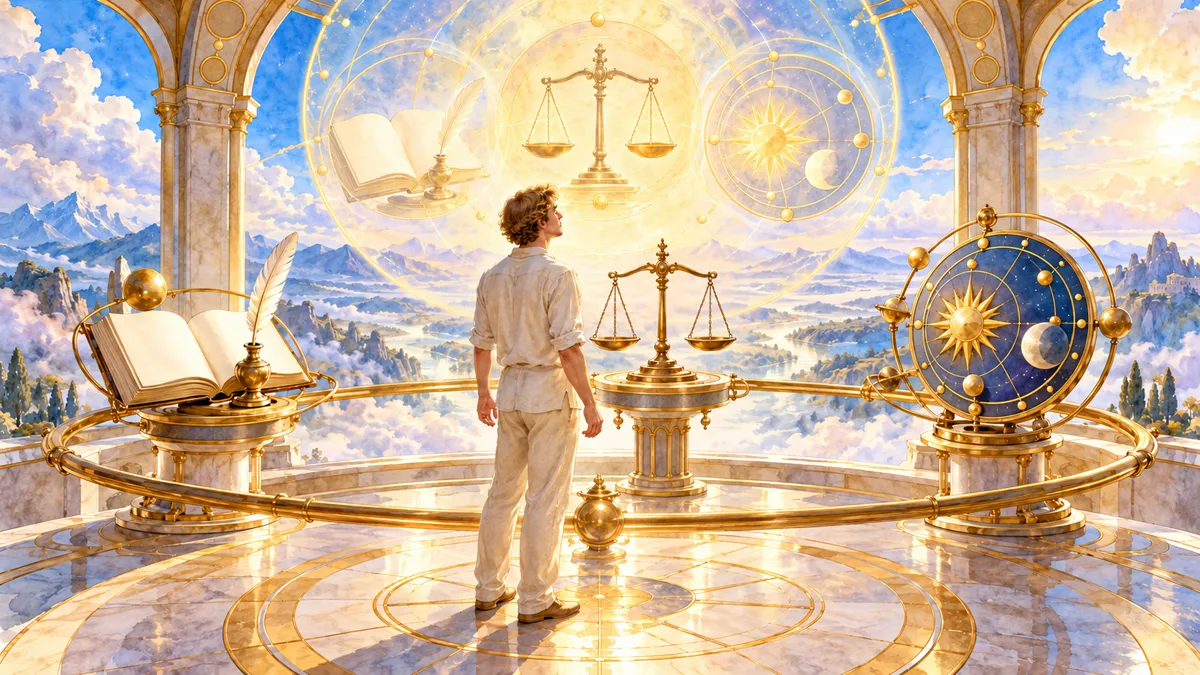
Human consciousness, as a microcosm, is filled with inner censors, inner recorders, inner observers, inner judges, inner demons, inner guardians, inner protectors, and inner patrons. Each of them has its own purpose in life, its own system of values, and its own ideas. Perhaps we do not fully understand that we are a microcosm, but that is indeed the case.
A person is like a giant supercomputer containing many programs. If a person has many conflicting programs, they are said to be unlucky and to have bad karma. Our task is to bring together all these metaprograms, all these intelligent beings possessing their own ethics, meanings, goals, and values, into a single whole. We must gather and subordinate them so that they serve our purpose, so that our consciousness is not carried away by their goals, but so that they serve a single center—the center of awareness and our sankalpa of Liberation.
These beings possess their own degree of intelligence, some of them highly complex. They are parts and representatives of the global, external cosmic laws, principles, and forces of the universe. By acting continuously, they ensure the order and course of events in the Universe, which is called niyati, as well as the destiny of every living being, which is called daiva. Our individual destiny (daiva) is inscribed in the universal course of events, niyati.
By freeing the mind from limitations in the process of yoga, purifying one’s memory and subconscious of negative recollections—that is, atoning for sins and purifying the kleshas in meditation—a person competes with the inner divine chronicler, Chitragupta, the inner censor who personifies the law of karma, the inner recorder, censor, and evaluator.
The inner censor, our evaluative thinking, is our inner Chitragupta with his numerous secretaries and assistants, whose function is to carefully observe everything a person does and to remember and record it, constantly implanting it in the memory in the form of mental imprints, karmic traces, samskaras. It is often said that when a person finds themselves in an extreme situation on the brink of life and death, their entire life flashes before their eyes. These are Chitragupta’s records, Chitragupta’s chronicles. By implanting imprints, karmic traces—karma-rekha—into the soul’s memory, the inner censor Chitragupta ensures the continuous operation and observance of the law of karma, as well as future karmic retribution, teaching a person to take responsibility for their thoughts and actions.
While undergoing postmortem experience, a person, as a subtle body or soul, competes with another deity, the lord of spirits who governs the destinies of souls and reincarnation, Yamaraja. Yamaraja is called by a different name in every religion, but that does not change anything. This inner judge has different names in Egypt, ancient Greek mythology, and China, but it is one and the same. It is the inner judge who has his own established, fully formed ideas about what is right and what is wrong. This deity, the inner judge, directs a person’s spirit toward a new birth on the basis of their pure or impure karmic traces, the imprints in the depths of consciousness, so that they may undergo the necessary new experience.
In accounts of postmortem experiences, the Chinese describe a platform before a large mirror. This is a mirror in which every person’s sins are reflected. Above this mirror is an inscription: “Among those standing on this platform, there are no good people.” Before a person sees all their sins in the mirror, they read this inscription.
These deities are simultaneously divine spirits and part of the human mind. And the mind is fundamentally a highly complex system with an incredibly high level of self-organization. This system of the mind operates not according to the laws of a person’s limited personality, but according to the laws of the Universe described above.
We have a conceptual mind; we have our personality, our ego, but this is only a small part of what we are. Our subconscious is our true essence. The subconscious, the world of the subtle body, is an entire universe. And our personality and our mind are merely a small part of it. We do not live according to the laws of the personality, the mind, or the ego; when we think that we do, it is an illusion. We live according to the laws of the universe of the subconscious.
A Strategy for Victory in the Spiritual Game
To win this game and exercise free will, a person must manifest a high degree of inner complexity and self-organization of consciousness. They must demonstrate a play of consciousness that is loftier, deeper, and more diverse than the play of the beings within the system of the mind that embody these laws. By manifesting a higher complexity of consciousness than the laws of the Universe, they will be able to actively project their own inner complexity.
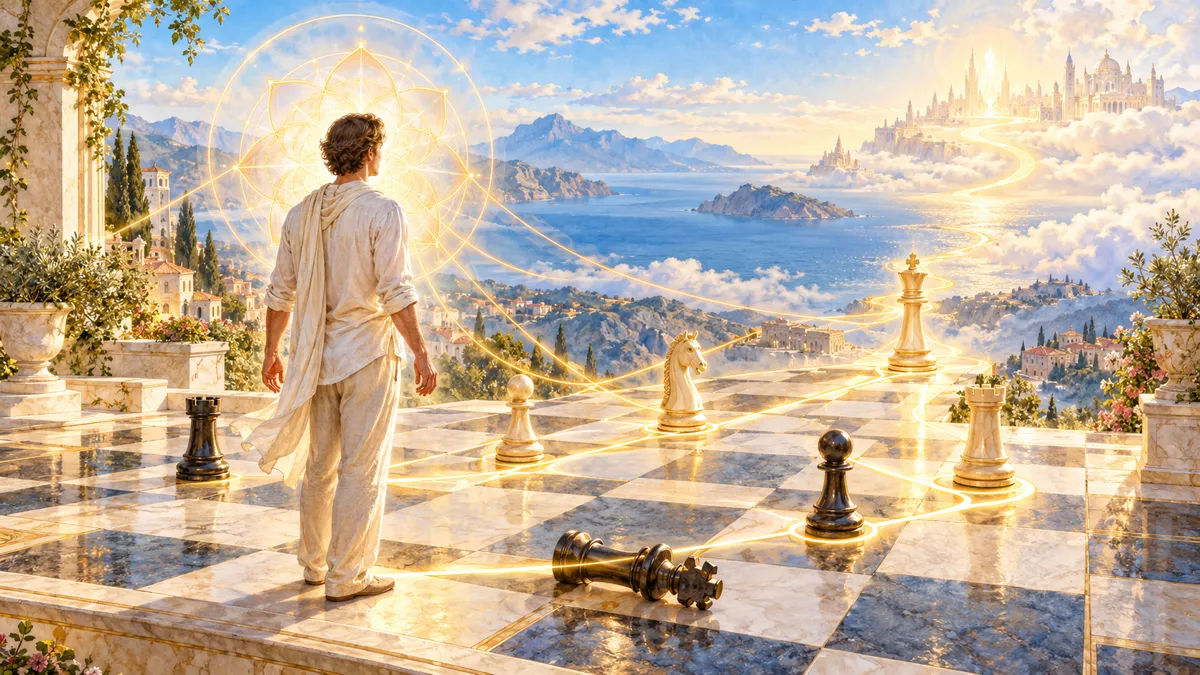
What does it mean to actively project one’s own inner complexity? When you engage in visualization and create a deity, divine signs and symbols emanate from you; or you can create a mandala; or you can manifest various divine powers. Relying on inner emptiness, you can operate with a certain energy. This energy begins to alter the laws of reality. This is how Liberation occurs. In this way, one can influence the laws and subjugate the forces that govern them. Such a person will make them controllable and dependent on their consciousness. This is similar to how a more intelligent and experienced chess player imposes their own game plan, putting pressure on a weaker player across the chessboard, forcing them to make the desired moves and then surrender.
You must force your ego to surrender, force your mind and your karma to surrender. But under what circumstances will they surrender? When will your mind surrender? It has no intention of surrendering. When will the ego surrender? It has no intention of surrendering either; it plays games and often backs you into various corners. Can you say that you have sufficiently subdued your ego? That is a big question. You must play skillfully for your mind to surrender. When the mind surrenders, we will enter samadhi. When the mind surrenders, we will abide in continuous presence, and its thought-making activity will no longer carry us away. When the ego surrenders, we will let go of all hopes and fears and become light, empty, and free. But they have not surrendered yet. A desperate battle is still raging. Whether you win this battle or are defeated depends entirely on how you practice and how you learn.
When we practice diligently, we always have the opportunity to enhance our qualities. Who wins? The one who possesses the necessary qualities, greater strength, and wisdom.
The Path to the Self-Organization of Consciousness
How can we attain a high degree of complexity and self-organize our consciousness in order to win this game against karma? To increase the self-organization and complexity of consciousness, a person must constantly purify, train, and temper the mind. They must penetrate the primordial emptiness of all that exists, that which lies beyond the mind; break through to the original source of all complexity, the primordial matrix of all meanings, the divine supermind, Brahman, which is present within them as the nature of Mind. From the nature of Mind, we draw our wisdom and strength, and it is precisely these that enable us to keep making moves and pushing back the mind, the ego, karma, and the kleshas.
Penetrating the deep nature of Mind is possible only if the surface mind and the will are strong, purified, balanced, in samyoga, and act in concert. We must muster all our will and all our life energy. We must subordinate our entire intention to a single goal—to break free from this entropic trap. We must unite all the various programs, karmas, and intentions that conflict and act separately, all the different parts of our ego and mind.
Within us, there are various intentions, values, and meanings that conflict with one another. One says, “I must practice sadhana.” Another says, “I want to enjoy myself.” A third says, “I need a distraction; I should do something else.” And each has its own interests. These are the different conflicting programs of our mind. They are personified by different divine forces, and different deities also stand behind them. We must unite them and direct them toward achieving a single goal. We must draw them together toward the nature of Mind, as a magnet attracts iron filings.
Wholeness arises from our ability to bring together the various parts of our being. The sense organs, mind, ego, desires, ahamkara, and prana—all of these must be merged into one. The teaching of Advaita is nothing other than making everything one, bringing everything together into one, and teaching everything to revolve around a single center. The ego, with its conflicting programs and motivations, prevents us from doing this. When we listen to it, we are fragmented and cannot approach this center.
Such balance and coherence are called samadhi. Abiding in samadhi, a yogi exists in total unity, connected to the divine Supermind, the source of all the laws and principles of the Universe.
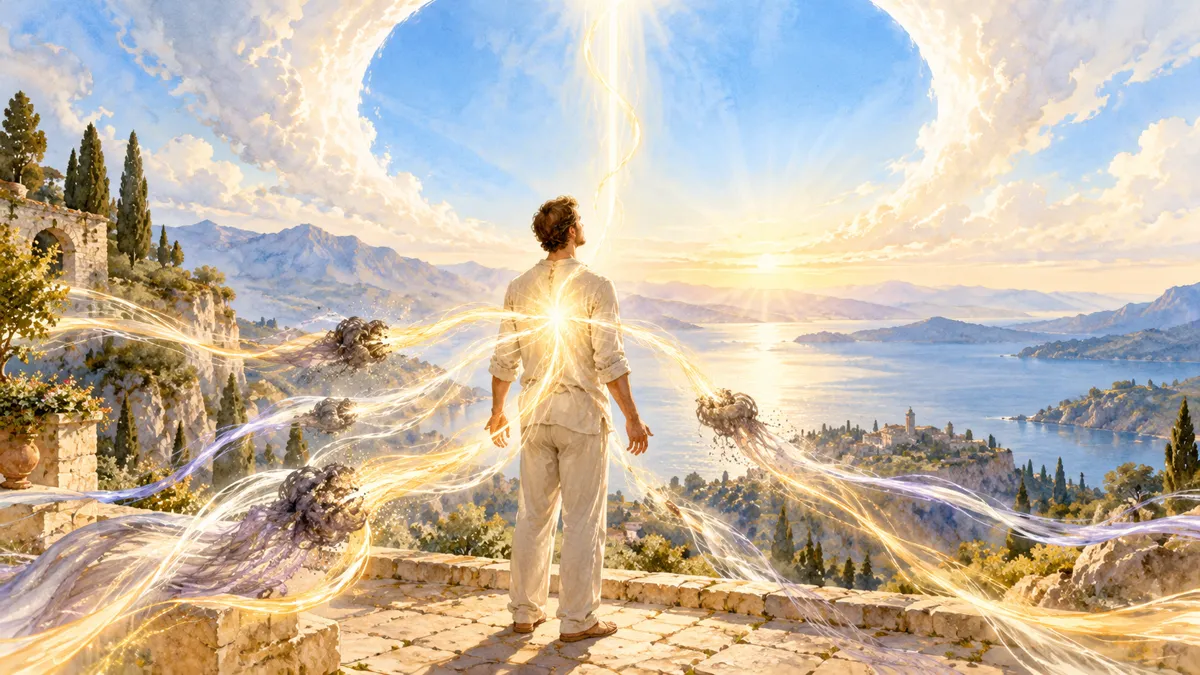
The True Nature of Samsara
When you meditate on the four contemplations, one of the topics is the flaws of samsara, or the sufferings of samsara. It is important to understand the true nature of samsara; it is important not to be deceived by it. This lecture was precisely about that. The true nature of samsara is a trap, a semantic trap, a realm of distorted meanings. In pure vision, samsara is also a divine force; it is divine lila, a game. But to us, it appears as a trap because our consciousness is weak. For example, to buddhas, siddhas, gods, and awakened beings, it appears as the wrathful mandala of the five elements.
There are certain pure lands, but you would be surprised to learn what these pure lands are like—these pure lands inhabited by ghouls, vampires, zombies, dakinis, and shamanic siddhas. There are palaces whose walls are made of bones and skin and adorned with skulls. Blood is spilled everywhere. If an ordinary person were to enter such a place, they would be unable to live there. To them, it would be a terrifying, impure place. There are various cemeteries and cremation grounds. But for certain siddhas, these are their pure lands, their dwelling places.
The siddhas themselves sit there on thrones made of human bone, in the form of wrathful deities, holding a cup full of blood and a curved knife, surrounded by wrathful spirits. For the siddhas, this is a pure land, an entirely playful reality created by their consciousness. They simply manifest such lilas as wrathful energies. But if an ordinary person enters there, they may undergo a lower rebirth and be reincarnated as a demon. Winds blow constantly, there are terrible rumbles and earthquakes. It is a very intense game. But for the siddhas, this is normal. They will tell you, “Do not worry, it is a divine game, it is all lila—beautiful and dynamic.” This is how dynamic compassion manifests. But ordinary people are forbidden from entering; for an ordinary person, it is hell.
In the same way, the whole of samsara is also a divine game. But from our point of view, from the perspective of a weak soul that has not yet realized its divinity, it is a trap of meaning. When we meditate on samsara, we must clearly understand that right now it is a genuine trap of meaning. We need to perceive its divinity and escape from it. To escape from this trap of meaning is precisely to realize its divinity.
Although in the pure dimension this is a mandala, have you ever seen gods here? You are standing in a queue, and suddenly there is one deity, then another, standing in line with you. Or have you seen gods traveling by train or car, living in a three-room apartment? Somehow, they do not particularly want to live here. They all avoid this samsara. It is not exactly that they avoid it—if necessary, they will send their emanation, their avatar, on a specific mission. But they have no desire to live here under these laws. Because this is not their world. They are not attracted to such realms, such traps of meaning. They live in their own pure dimensions, in pure realms. Just as a human being does not live in a barn or in a forest among lynxes and cougars, but lives in the human world, so too the gods have their own, freer world. For this world was created by ignorance, created by our conditioned consciousness.
When contemplating the flaws of samsara, it is very important to understand this clearly in order to generate strong motivation for spiritual practice.
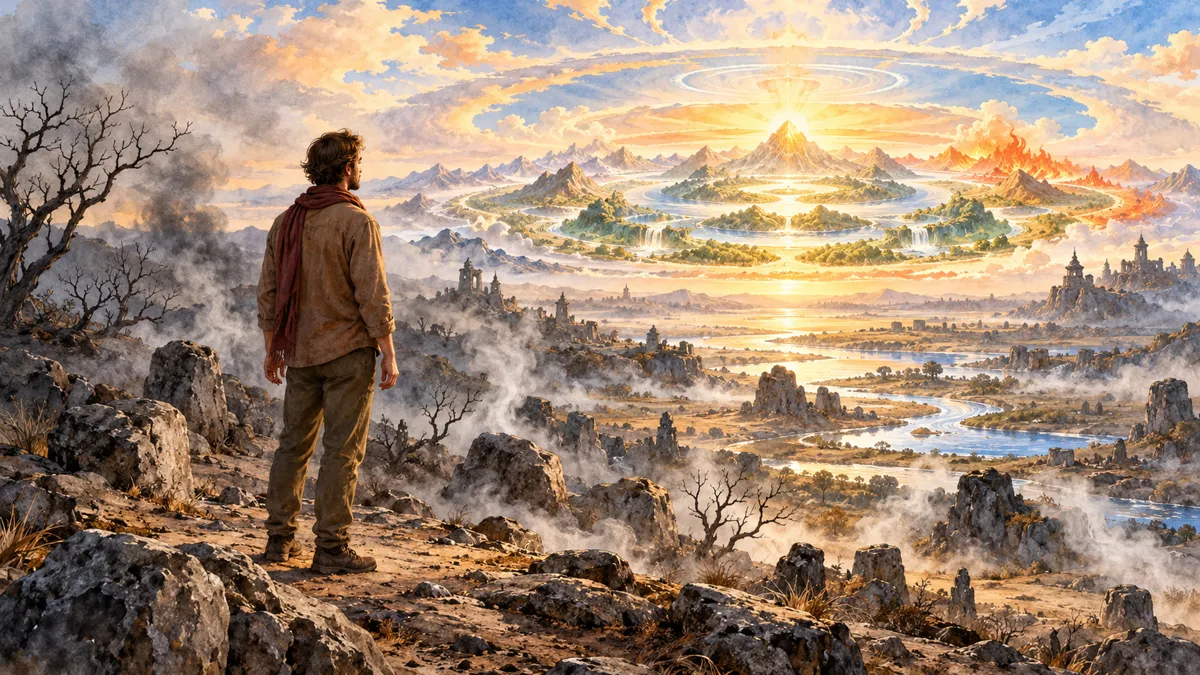
The Need for Constant Effort
Since our soul inadvertently fell into this trap and has been circling within it for a long time, taking one body after another, in this life we must gather all our energy, all our intent, all our vital force, attentiveness, and composure, and make the effort to break free from it. This will not happen at once. We should not delude ourselves into thinking that we will exert ourselves, fly off into samadhi like a comet, and that will be the end of it. No, it does not happen that way. It will happen gradually. Prana and the mind grow gradually. But it is very important to make constant efforts and gradually develop our qualities.
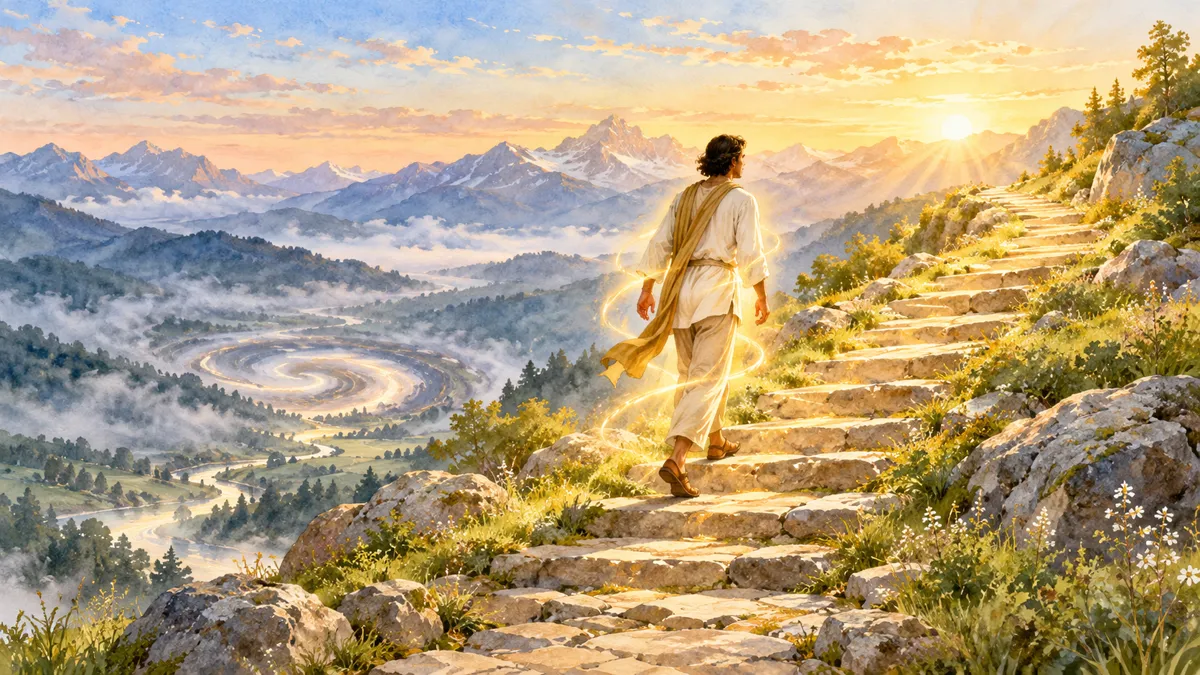
My blessings to you, that you may acquire these qualities. May you never fall into this trap again; may this be your last life in which you have fallen into it. May you be divine and free, playing and dancing in the vastness of the Universe, without falling into limitations.
