

Commentary on the text “Ramalinga Swamigal. Shiva Jyoti”
Topics: Divine Reality (transmission of God’s bhava) · Self-liberation, self-transcendence, self-recognition · Effort (tapas, purusha-kara)
Tapasya as the Foundation of the Monastic Path
To be a sadhu means to perform tapasya. For a monk, tapasya consists in adhering to monasticism; for a novice, to the novitiate. This is their duty. It is precisely this that frees a monk and a novice from various debts: debt to the family, debt to society, and other kinds of debts. This permits them to live on the donations of laypeople. Otherwise, it becomes their karma.
A monk’s tapasya consists in always and everywhere following his path, his duty, his vows, his samayas, his principles, and his daily routine. Outwardly this is not always possible, but inwardly it is certainly always possible. When we follow this inwardly, it is called the single samaya and the fourteen root vows. When we follow this outwardly, it is called vinaya.
A monk’s vigilance consists in being sober and awakened with regard to his vows, his samayas, the single samaya of contemplation, and his path as a whole. Awareness is never abstract — it must always be applied to something concrete. In the case of a monk, this awareness is applied to his path, to his behavior, to his thoughts, to his words, to his service, and to his sadhana.
It is not difficult. One simply needs to be attentive every moment, to be aware every moment. The point is that this is not a rule and not even an obligation — it is sadhana. And we must not forget about sadhana, because through sadhana we change ourselves. If we forget about it, then we do not grow spiritually. We must constantly make efforts to be aware and attentive.
What should one be attentive to? To awareness itself (this is called avadhana), to thoughts, to words, to relationships, to sadhana. Being attentive to thoughts does not mean lifting heavy things or loading boulders. It is rather a subtle art that requires constant vigilance.
One should sketch out a daily routine for each day. In the morning, as soon as one gets up, one should do practice. One needs to lead the proper lifestyle of a sadhu. This is only a matter of sankalpa and attentiveness. It does not require money, it does not require much time, it does not require physical effort. It rather requires discipline. Being aware of seva, of monastic ethics, being attentive to all these things — this is presence in action, presence in life. This is what must continue constantly, for years.
When we practice in this way, we fulfill our duty well, we fulfill our dharma. Fulfilling dharma in the status of a monk or novice is not difficult if this attentiveness is present. But as soon as this attentiveness disappears, many different energies connect to us.
Spiritual Power, Merit, and the Danger of Negligence
There are many energies in the universe — they are like tentacles, like electrodes that attach themselves to the subtle body. There are many interests, many amusements, many desires, many thoughts, many words, many values. If we do not have within us the vajra core of self-discipline and awareness, then we begin to give our attention to these attaching energies. And then our spiritual power is weakened, our awareness declines, and we as sadhus lose our qualities.
This is not a question of your being obliged to do this for others. First of all, it is your own practice, your own happiness, your own spiritual path. On the other hand, it is also our dharma as monks, our duty. And this duty should be fulfilled carefully. Through such careful fulfillment of duty and self-discipline, the spiritual power of a sadhu increases.
Why can some monks inspire laypeople, while others cannot? It is all a matter of spiritual power. Of course, merit, concentration, and karma — both bad and good — are also important here. All of this together is important, but it appears as the result of tapas. Suppose a guru once performed tapas, revealed a certain power and wisdom. Thanks to this power and wisdom, he can inspire laypeople for the rest of his life. Perhaps he has been doing this for more than one lifetime — that is another question. But at some earlier time, in any case, tapas was performed, sadhana was carried out, and spiritual discipline was practiced.
The fruits of this discipline are precisely merits. And what do we use merits for? To serve, to carry out the Divine Will, to help others. But if these merits are not maintained, if they are spent thoughtlessly and not cared for, they quickly dissipate. It is like capital: if you manage it ineptly, it is quickly used up. The point is not only to use the existing potential of merit, but also to increase it for the benefit of oneself, others, the sangha, and the Dharma. Then merit grows.
Merit is very important. Merit gives a high rebirth in the heavenly worlds, a good life. Merit is perceived superficially at the general level of presenting the teaching of Advaita, whereas the theory of merits needs to be substantiated, intellectually elaborated, and presented. The theory of merits exists, but it has not been presented within the field of Sanatana Dharma. It has been presented within the field of Buddhist Dharma. In the field of Sanatana Dharma, in Russian-language translations, it has not been fully explained.
What is merit? Merit is shakti (energy) that is at your disposal. It is a positive spiritual force. It accumulates as a result of tapas. Tapas is, above all, awareness, conscious awareness, and self-surrender. But as long as there is no awareness, self-awareness, and self-surrender, tapas comes through faith, obedience, ethics, regular sadhana, self-surrender in seva — when you place the Divine Will above your own. Through all these things, when you subdue yourself, you accumulate tapas.
A sadhu must be strong; he must not be weak. But this strength must not make him egoistic. He must use it properly; otherwise, this very strength may become his weakness. Having accumulated some energy, he may cling to it, become attached to it. It happens that power appears, money appears, some personal sankalpa, personal responsibility appears — and if we work with this shakti incorrectly, it can become our weakness. But if there is humility and attentiveness, and we perceive it as sadhana, as tapasya, then this shakti will not conquer us — on the contrary, we will conquer it. It will not change us as sadhus, will not bring us problems. On the contrary, it will be beneficial, teach us something, help others, and serve the Dharma.
The Consequences of Rejecting Tapas
One can work with any shakti if the potential of merit has been accumulated, if we remain vigilant over ourselves as monks, following the unified samaya, the root vows of samaya, vinaya, ethics, vigilance, and attentiveness.
It happens that a person first stops paying attention to small things. It has happened that a monk comes to the “Singing Reed” wearing a sailor’s striped shirt, that is, not in a sanghati. It would seem to be a trifle. What is the big deal? If one approaches this question informally, then avadhutas could have come naked altogether. But this means that the person has renounced his own monastic tapas; he has chosen an easier path. Then some other small thing will manifest: for example, he will forget to do “Namaste.” Then he will be late somewhere, will not arrive on time. Then something else will happen. He thinks that everything is fine because he supposedly practices the inner path. But if this does not manifest outwardly in key moments and he makes mistakes, then he is renouncing his tapas.
When he renounces tapas outwardly, the habit of renouncing tapas and indulging his inclinations makes its way inward as a tendency. And then such a mood arises in him: “Why not also renounce inner tapas, why not forget oneself? Why meditate, practice, recite the mantra?” When he loses his position in this way, he can no longer maintain the unified samaya of contemplation. This is tapas for masters, tapas for siddhas. This requires years of sadhana, years of self-surrender, years of meditation. It is such a subtle layer of consciousness that if the prana decreases just a little, you forget it as though it had never existed. Everything subtle is easily forgotten, but difficult to remember.
And then he lives only by the external. But if tapas is not observed outwardly, then it is difficult for him to maintain himself as a practitioner, difficult to maintain himself as a monk. And here he begins to encounter energies. These energies may be either internal (emotions, kleshas, karmas), or external (for example, planetary influences), or they may be external situations. And unfortunately, he has nothing to oppose them with. Emotions arise, external karmas arise, and there is nothing to oppose them with, because there was no tapas. But if he performs some kind of tapas, then he has this power—he simply draws it out and says: “No. I have power, therefore this is not a problem.”
The Diversity of Forms of Tapas
Tapas is seva and the reading of texts, not only practice. Tapas is multifaceted. Different things give spiritual power and merit. If you perform seva while discarding yourself, that is, in the right state, then this is also tapas, and not a weak one. When you are able to place faith and the spirit of self-surrender above your “I,” above your interests, your ambitions, the fatigue of the body, and so on, this means that the subtle has conquered the gross, that the sahasrara has conquered the other chakras. You have the memory that you can do this, that you have this ability. And when inner kleshas and certain external problems come, you have this subtle power—you can draw it out from within and present it like a document: “I have tapas. I have merit.” And it will not shake you.
For a monk, tapas should rather consist in constancy: when for years you steadily perform one and the same sadhana, one and the same discipline, without breaking it. When you invest a certain power, a certain vow, a certain ethics, a certain sadhana into it, then after some time it becomes your power. When you write treatises, when you meditate on certain philosophical themes for a long time, then through these deeply elaborated philosophical themes into which you have invested your vichara, through sacred texts, you begin to receive Anugraha. For example, you gain insight regarding the five shaktis, regarding the principle of the Absolute, sat-chit-ananda. The paths of tapas are diverse. When you perform obedience and are very attentive while doing so, it becomes your power. When you follow a certain ethics, this ethics becomes your power.
There are such things in worldly life as well. For example, the military have a military culture that becomes their strength if they observe it. They become conductors of their own kshatriya shakti. Why do they become its conductors? Because they observe warrior ethics and receive, as a blessing, kshatriya power, the higher contours of consciousness: duty, honor, courage. The same thing happens in monastic life.
It is important not to forget this and not to neglect it, because if one begins to neglect it through inattention or because of falling into a deviation called “the loss of action in the view,” then one can lose spiritual power. In what cases is it neglected? First, simply because of inattention. Second, when people overestimate their abilities for self-liberation, presence, the single samaya of contemplation—that is, for the view. They think: “The view will write everything off. The single samaya will write everything off.” In general, yes—for the siddhas it writes off many things. The single samaya is the highest samaya to which we adhere, but it presupposes real power and a realized ability for self-liberation. And many, even when they adhere to the single samaya, perform external sadhana, external tapasya—for others, for the support of the Dharma.
So, when we observe tapasya, our spiritual power unfolds. This is the path of the monk, the path of the sadhu. Thanks to this spiritual power, we can perform seva, we can undergo experiences, we fulfill our dharma, and we advance along the path of realization. In preaching, in missionary work, in service, shakti (power) is very important. If there is no shakti, you will not be able to do anything. This shakti is merit itself, which opens through tapasya. Neither ambitions, nor ego, nor fantasies play any role. Merit is the ability to serve the Dharma well.
Also, tapasya is jnana, inner wisdom, inner understanding. Jnana is possible when we have perfectly mastered self-surrender and self-liberation, when we have deeply performed dharana on philosophical concepts, on texts, and have gone beyond concepts in order to receive shastra-kripa.
Tapasya as Joy, Not a Burden
The question is how to perform one’s tapasya so that it does not become suppression, but becomes joy, ananda. The strongest tapasya is the one performed through ananda, which unites all your parts and makes tapasya devotion, self-giving, and joy. Tapasya based on will and the suppression of some parts of consciousness and energy by other circuits of consciousness is tapasya in the spirit of the sutra. This tapasya is possible and especially favorable at the initial stages; however, it does not express the essence of the practice of anuttara tantra. How can one ensure that tapasya is joyful and makes the mind liberated and free? This is a great art that presupposes maintaining the fine line between sadhana, tapasya, freedom of view, and the spiritual power of playful manifestation. When we have this samyoga, when this observance is present, it can manifest as play, as perfection, as mastery.
Many saints call all living beings “samsaric buddhas.” “Buddhas” in the sense that their nature is already open, it exists, it is awakened. And “samsaric” in the sense that their karma does not allow them to realize this. And whether a sadhu will become a truly awakened one from a samsaric buddha depends on his mastery in performing such tapasya and raising it to the level of anuttara tantra, transforming tapasya into chit-shakti-vilasa, into ananda.
First, one must come to love tapasya. First, one must understand: if I renounce tapasya, I simply will not grow myself. It is like in training: one must do push-ups, run, jump, and stretch. If one does none of this, one will not become a good athlete. That is, the logic of a monk and a novice is as follows: “I will not renounce tapasya. On the contrary, I must desire it.” But not according to one’s ego, not according to one’s whim, not at one’s own discretion—because such a desire for tapasya can become a new form of indulgence. When we desire to perform tapasya and have formed the right motivation, it is not at all difficult for us to follow ethics. We say: “Teach me how to follow ethics.” We allow our seniors to give us instructions and accept them joyfully.
It is not difficult to follow sadhana and the daily routine, it is not difficult to serve others. We think: “How else can I serve others?” We know that tapasya will benefit us, that it is good. We are not occupied with ideas about how to make things pleasant for ourselves—we are occupied with reflections on how to perform tapasya. We begin to value tapasya, understanding that it will bring us merit. A monk and a novice must always be turned toward tapasya—not turned away, but turned toward it.
When we are turned toward our ego, toward our mind, this is called mano-mukhi. And when we are turned toward the principle of the gods, the guru, tapasya—this is the principle called guru-mukhi. It is important where you are turned: toward mano-mukhi or toward guru-mukhi. If a person is turned toward his mind, it is evident that he overvalues his opinion, pays too much attention to trifles that are not characteristic of a sadhu, and his mind is unstable and restless. But if a person has the principle of guru-mukhi, brahma-mukhi, jnana-mukhi, then he is turned toward the Absolute, and therefore he always abides in joy, in happiness. He performs tapasya joyfully, and therefore it becomes his strength, his joy; it ceases to be an obligation, ceases to be a burden. It is very important not to make tapasya a burden, not to make it an obligation, not to drag the strap like a soldier.
Tapasya as Joy, Not a Burden
A soldier lives by the principle “there are this many days left until discharge.” All soldiers cross off the remaining days on the calendar, thinking: “When will this whole nightmare finally end? When will I go home, meet my relatives, go to a restaurant, and be able to enjoy life?” A soldier does not enjoy life while he is serving. He dreams and anticipates: “When will I finally break free from here?” Why? Because he is suffering. It is not his choice—he was drafted by force, against his will. He is simply paying his debt, and that is all.
But when a sadhu performs his tapasya, he desires it, he rejoices in it. It is his path; he thirsts for it because he knows that he will come one step closer to God. Even if it is hard and difficult, psychologically he does not suffer. The body may become tired, but his spirit rejoices. It is like in sports: after training, an athlete feels satisfaction and relaxation. Even if the body is tired, he feels: “I did a good job! I raised my level of fitness one more step.” In the same way, when a sadhu performs tapasya—if it is properly motivated tapasya—he feels satisfaction (santosha). The presence of such satisfaction is a sign that tapasya is being performed correctly, that the spirit of self-giving, faith, refuge, awareness, and self-liberation is deepening through it.
The difficulty with people is that some of them cannot perform tapasya, while others have not been taught to do so—they do not understand what benefit it gives. If people performed even a little tapasya, spiritual power and spiritual wisdom would open up in them. Their shakti would increase many times over and would allow them to solve their tasks in sadhana, serve the Dharma, and help others. But it is difficult for people to perform tapasya. For many, it is difficult to perform even ordinary human tapasya, because their karma is burdened.
A sadhu is one who approaches tapasya not immediately, but gradually. There is no need to try to take on a great tapasya right away, because this too can be a form of ego: “I am so great, I am so worthy, therefore I immediately need a worthy tapasya. After all, I want great power.” In one case, a sadhu truly performs tapasya, while in another, it is not tapasya but indulgence of the ego.
A sadhu’s tapasya can be simple: seva, obedience, sadhana, routine, ethics, growing into the spirit and culture. And the most glorious is the inner tapasya of awareness (antar-tapasya). This is the subtlest and most elusive tapasya in which we practice. And it begins with viveka.
Viveka and the Inner Witness
Viveka means that I have the witnessing awareness of sakshi—that I notice the subtle tendencies of the soul. This observer exists, and in a certain sense he is impartial, relentless. The mind, desires, and illusions move now here, now there, while this observer says: “And I see everything, I know what you are thinking about, what you want, where you have run off to. I see everything.” And when you feel this observer, it means that your buddhi is open.
This inner witness is what is closest to God, that relying on which you can perfect your presence and your unified samaya. This observer notices all your victories, defeats, and failures; he registers them. He constantly shows you yourselves—as if before a mirror.
The point is not to engage in reflection. Reflection is already a distorted observer; it is buddhi plus manas: buddhi looks, while manas intercepts its reflection from it, begins to spin it all out and chatter about it. This observer does not speak much; he does not spin things out, he does not reflect. He allows the mind to reflect just a little—he simply observes, he simply shows us to ourselves every moment.
If such an observer is open, we can make him our support in order to develop him further. It is important to understand that this is not an absolute support, but a temporary, relative one. He is not absolute, because buddhi flows from the Atman, and the Atman is a spark in Brahman. Therefore, self-surrender to the Supreme must also always be present in this observer. Such are the results of tapasya.
When we become established in this observer and in this self-surrender, we acquire an even consciousness. And from this even consciousness we can make a flaming consciousness. Even consciousness is not yet the result, not an attainment, and not an end in itself. It is simply a certain indicator. Next, we must turn it into awareness flaming with faith and self-surrender. This will be the result of correct tapasya. From this awareness flaming with faith and self-surrender are born pure vision, devotion, love, spiritual power, mystical experiences, samadhi, awareness—everything is born from it.
Humility as the Path to the Absolute
What should one do if one has not yet made one’s way to the level of this observer, to the level of self-surrender, if one is only still struggling for this? Regular self-discipline, regular sadhana, and a very great spirit of humility are needed. The spirit of humility pacifies what prevents one from abiding in this, because the mind is constantly producing, constantly generating certain things. And if this observer is not present, then one constantly identifies with them. But the spirit of humility dissolves all this and self-liberates it.
In reality, the spirit of humility elevates us. To an uninitiated person it seems that the spirit of humility either humiliates or prevents shakti from manifesting. If there is no true vision, such a false understanding of the spirit of humility arises. But the true spirit of humility elevates a person. How does it elevate? It immediately gives him a supramundane, transcendental, absolute view from an entirely different plane—from the absolute plane. By renouncing the small, we rise to the great.
One can give a rough example: someone spits in your face, and you accept it with humility—that is, you rise from the bodily position, from the immediate situation, to universal proportions. You have risen above the situation by manifesting the spirit of humility. On a universal scale, this is a trifle. From the point of view of infinite time, of an infinite universe—who knows what happens every day on planet Earth. This situation is not worth “a hill of beans.” You did not overvalue this situation, but manifested humility—you perceived it with peace, abided in santosha, in contentment. In humility you rose to the absolute view, that is, you became the Absolute Itself. From this Absolute you can already manifest tremendous shakti, tremendous wisdom. All strength and all wisdom lie in this—therefore humility never humiliates, but only elevates and endows one with tremendous power.
It is similar to what is sometimes shown: a true martial arts master is walking, and hooligans start harassing him. They behave insolently and brazenly, provoking him, while the master accepts all this with humility. He could beat them all, because he possesses tremendous power, but he behaves humbly, even allows himself to be insulted, and simply walks on. He restrains his power because he has been brought up in the spirit that the best fight is the one that never happened; the real enemy is not outside, but you yourself; true victory is victory over your own mind. He acts according to the ethics of a true kshatriya of the martial arts. This is the same ethic as in Zen, in Taoism, in Tantra. He demonstrates humility and, by doing so, does not spill away his power. If he had struck those hooligans, he would have won; his ego would have been satisfied, but he would have spilled away his power, spilled away his spirit, the higher circuits of consciousness would have switched off, he would have lost the absolute position and descended to the human level. Was it worth it? No, of course, it was not worth losing such high things for the sake of some trifle.
In the same way, a sadhu should not spill away his power over trifles, should not lose absolute things for the sake of trifles. Trifles meet us many times every day—life as a whole consists of trifles. If we overvalue trifles, lose the view, lose the absolute spirit of a sadhu, then this is not self-liberation.
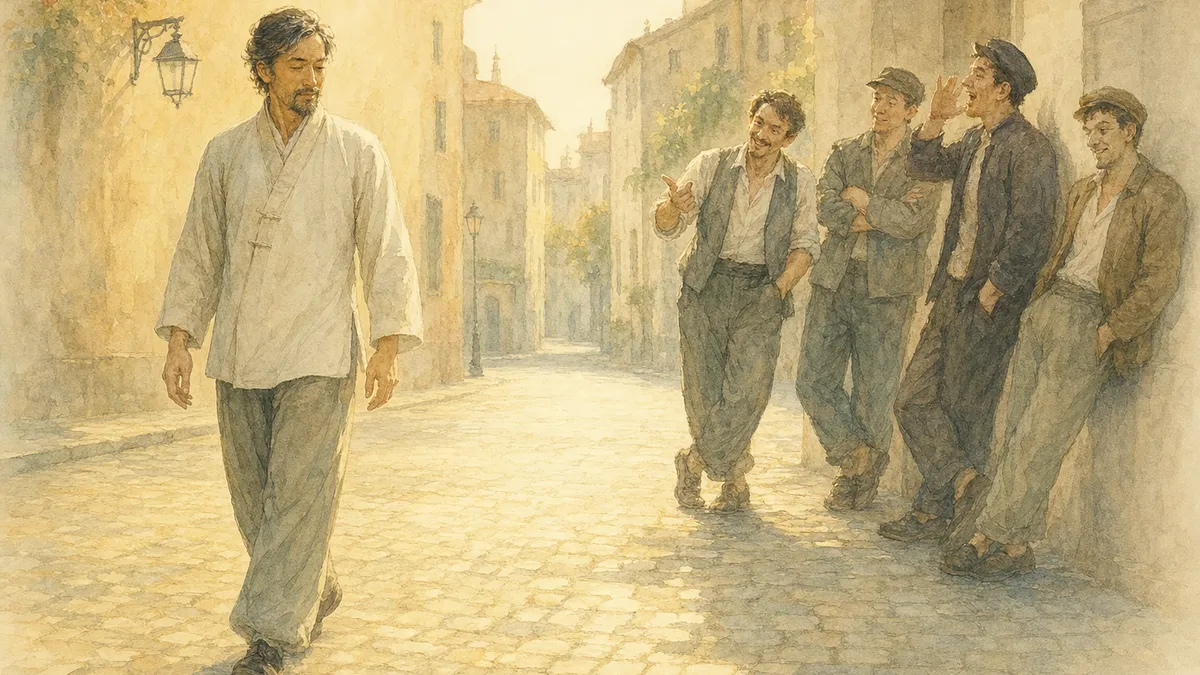
Self-liberation means that we do not lose, do not spill away our spirit, but remain in the absolute view all the time. At the same time, we do not shut ourselves off from the world. Many try to take a “frozen-out” position and shut themselves off: “I see nothing, I know nothing. I am transcendental!” But from this state they cannot do anything harmoniously, cannot interact effectively. This is another mistake—“the loss of action in the view.” The art lies in not shutting oneself off from reality, but, without losing the absolute view and transcendental vision, playing little by little, being flexible, manifesting the fullness of respect for external shakti.
Divine Reality. Self-Liberation, Self-Transcendence, Self-Recognition
“This is the Unifying Light of Unity. The Light that will not enter and unite with one whose heart is not filled with love. This is the Eternal Light of Radiance, like the light of my soul, which always fills me. The Light of Truth that has become Truth (that is, the Highest Truth or Indivisible Being-Consciousness-Bliss, which has become the Universal Truth, the triune Sat-Chit-Ananda).”
Ramalinga surpassed the level of sutra and the level of tantra. Ramalinga describes the path of the single samaya. All of Ramalinga’s songs are songs of self-surrender and self-recognition. This is the highest path of the absolute perfect view, the highest path of the single samaya, the path of chit-shakti-vilasa. When there is absolute devotion and absolute self-surrender, all other questions are resolved by themselves, naturally. The natural state means that from the spirit of self-recognition, the spirit of self-surrender, all things happen spontaneously, naturally, and in the best possible way.
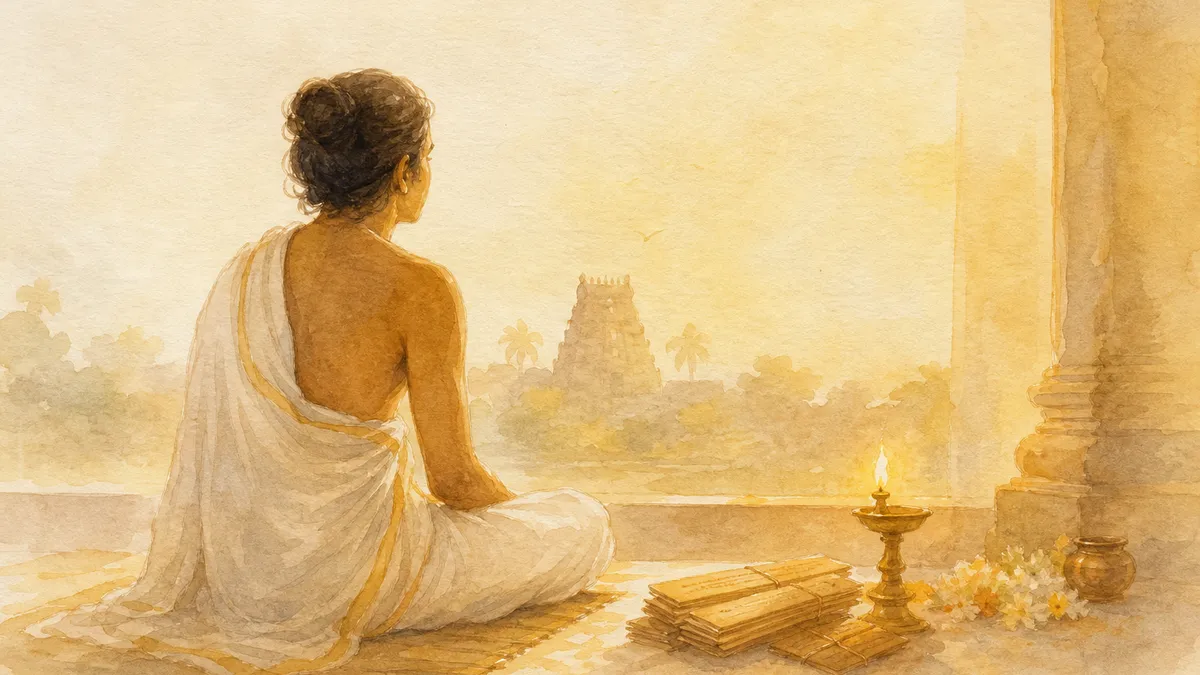
“The Light that appeared in the Sphere of the ‘Garden of Vedanta’ (the Reality of the Comprehending Supermind). This is the Pure Light of Shivananda, which is the Light of the Supreme Truth, Sat-Chit-Ananda. This is the Light that shines and is perceived as the Reality of Guru Turya (the Gate of the Supreme Transcendence of entry into the Supermind).”
Ramalinga describes this in words, lectures are also delivered in words, but the point is not in the words, but in bhava. Therefore, sooner or later one must move from a mental perception of the Dharma to the experience of the tattva itself, of bhava. For example, the guru transmits the teaching, but the teaching is not in words — it is guru-tattva. Ramalinga transmits the teaching not in words — it is Brahma aham bhava. When we move to tattva, to bhava, the perception of the teaching changes; we discover its new dimension. The discovery of this new dimension allows us to perform real tapasya, to observe the true single samaya.
“This is the Light of Perfection (Sada Jyoti), whose nature is the Highest Truth (Shivamaya Sada Jyoti). This is the Radiant Light of the Perfect Refuge of ‘Sada Siddhanta’ (the Sphere of the Comprehending Supermind). This is the Incomparable Infinite Light!”
The Sphere of the Comprehending Supermind — we also call this “ekabindu”: the sole, unique, unified sphere. When we touch it, our mind ceases to change, devalues thoughts and emotions, and external things are perceived as lila, as play. We are able to perceive everything that happens as lila. The first experience is illusoriness. The second experience is reality, but a playful one, as lila, inseparable from consciousness.
“This is the Light that filled my entire being and shone forth within me. This is the Light that created me, becoming Itself (in the Comprehending Harmony of the Supermind). This is the Light that brings back to life those who have died here on Earth. This is the Light that is benevolent like a Mother. This is the Light of Joy that took possession of me and began to govern me, saturating me with the Nectar of Bliss.”
Our task is to allow this Light to take possession of us. And the second is to allow this Light to begin to govern us. The governance of this Light is the Divine Will. It is not concrete; it is very subtle and delicate. But we must pay something for this to happen. Such a state is called samavesha. Avesha, or samavesha, is the dissolution of the helpless limited “I” in the Supreme Shiva and becoming identical with Him, who abides in unity with the primordial Shakti. Samavesha means the subordination of the limited nature of the individual and the acceptance of the nature of the Supreme.
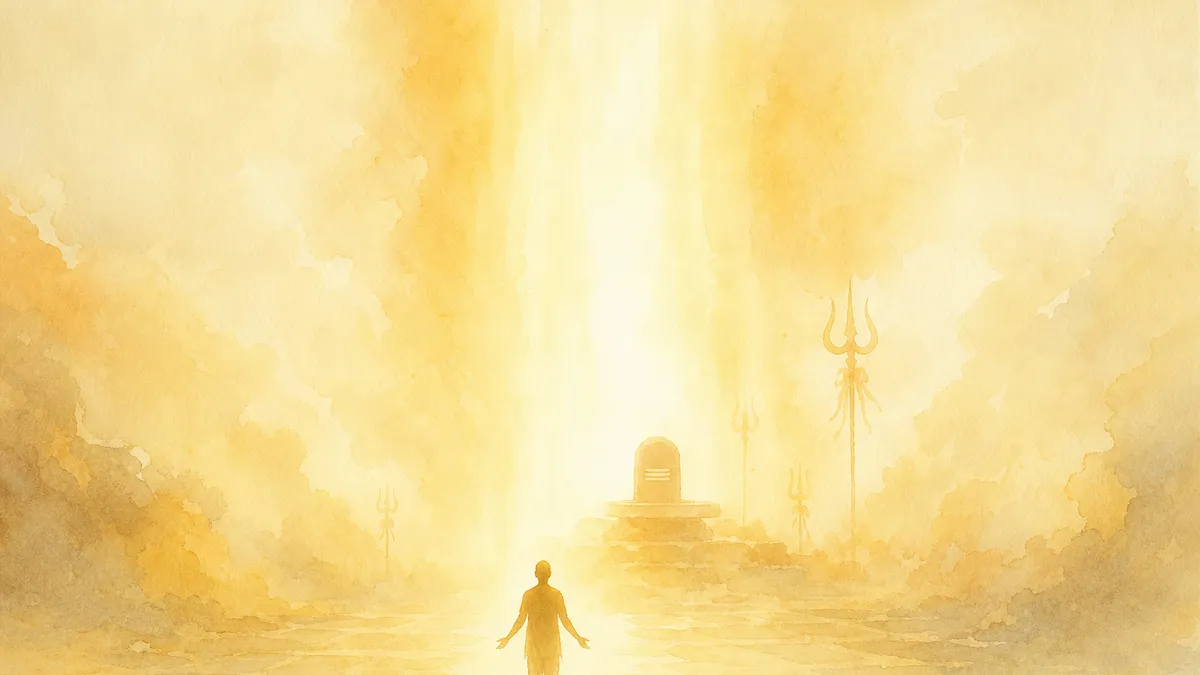
“This is the Light that transformed my consciousness into the Nature of Shiva, the Highest Divine. This is the Inner Essential Light (ut-Jyoti), which I came to know and realized through Tapas. This is the Light of refreshing Amrita. This is the Causal Light manifesting Universal Good (Sukha Puranakarana Jyoti). This is the Light that raised me to the level of the Principal Principle (mentioned as Turya Stambha, the Principle of Transcendence or the Pedestal of Light).”
Turya means the fourth transcendent state. Stambha means stability, monolithicness, fundamentality — it is like a pedestal. Ramalinga says that one must establish one’s pedestal in the state of turya. This is the pedestal upon which we must be enthroned in the natural state — as if on the summit of a mountain, and in the case of tantric practice, as the central deity in a mandala.
A sadhu has no intention of being enthroned on any other pedestals, if he is a proper sadhu, because all other pedestals are connected with the ego, with maya, with karma. Even having been enthroned upon them, the sadhu will not receive great satisfaction, because Liberation is not that, God is not there, and the soul longs for something else. All these are temporary pedestals, destructible by karma and time. But having been enthroned upon the pedestal called turya-stambha (the pedestal of Divine Light), the sadhu will never lose it again. It is like a kingdom that cannot be lost. But in order to be enthroned upon it, one must pay something — one must give up the habit of following thoughts, the mind, the ego, and desires. Such renunciation, the release of consciousness, is tapasya. Without passing through tapasya, it is impossible to be enthroned upon this pedestal.
“The Light that gently moved me onto the Diamond Foundation of Mani Medai, onto the Ledge of the Radiance of Wisdom, like a Diamond in the Triple Harmony of the Supermind. The peerless Radiance of ‘Peru Veli,’ the Space of the World of Truth. The Light that manifested the Foundation and the Path in the realm of the World of True Knowledge.”
From the point of view of jnana, this Light is comprehended through viveka and vichara. As a result of viveka and vichara, vairagya arises. Vairagya makes it possible to perceive it. From the point of view of guru yoga and bhakti yoga, the principle of devotion and ananda is very important. One must teach one’s mind to rejoice and surrender to this Light, to attune itself to it through devotion and prayer.
Ananda as the Foundation of Sadhana
“Light — which is the True Nature of Bliss (Sukhamaya Jyoti). This is the primordial inner Light of Existence, or the primordial Light within (Svarupaut Jyoti).”
When you have devotion to God, all of life becomes ananda, joy, for you. You wake up with the thought: “God exists! How joyful it is that God exists! What happiness this is.” You think: “How happy I am! Happiness simply overflows within me out of nowhere. Why? Because God exists, and I am with Him.” You fall asleep, wake up, and live with this thought. Because if God exists, what else could you strongly desire? This one thought and this one understanding nourish you with a tremendous power of inspiration. Then prasada is prepared as a game, with joy; seva is done as a game, with joy; practices are done as a game, with joy. Everything becomes playful — “at a waltz tempo.” And when you do everything as a game, everything becomes self-liberated naturally, without the application of your efforts. If you manage to enter this experience and remain aware within it, then this is the best way of tapasya.

A sadhu must learn to rejoice in God without any attitudes, without expectations, without frameworks, without claims — simply because God exists. And for a good sadhu it is enough to be nourished by this joy. This joy will transform the soul of the sadhu, dissolve his karmas, attachments, and illusions, make him completely self-sufficient, transfer him into the mode of play, lila, transfer him into the mandala.
Therefore, in the morning, when you wake up, you need to check whether you are rejoicing in God. And when you fall asleep, you need to do the same: check whether you have joy, or whether the mind is overflowing with something: concerns, thoughts, emotions. This overflowing is the very fact of ignorance and karma. It happens that the mind is overflowing, but in parallel you have joy and self-liberation — you do not pay attention to it, but live according to the principle “well, it is moving, so let it move,” because it is impossible to block the mind.
The mind is energy, and any energy loves to move. If you want to have a completely empty mind, if you want to block it, you will become tense, because it is natural for the mind to move. But the question is that you do not identify with this movement — you allow the mind to move, and it does not affect you in any way. Your ananda, your joy, does not depend on this at all. You easily let go and turn your perception away from the mind in a completely different direction. And then your ananda is not obscured. Whatever may be in your mind, ananda is not obscured. Your connectedness to the game (lila) is not obscured.
The Light of Being-Consciousness-Bliss
“The primordial Light within, which became all kinds of light. The Light that removed all divisions between ‘Aham’ and ‘Idam,’ ‘I’ and ‘something external,’ the individual soul and the world. This is the Light of Being-Consciousness-Bliss.”
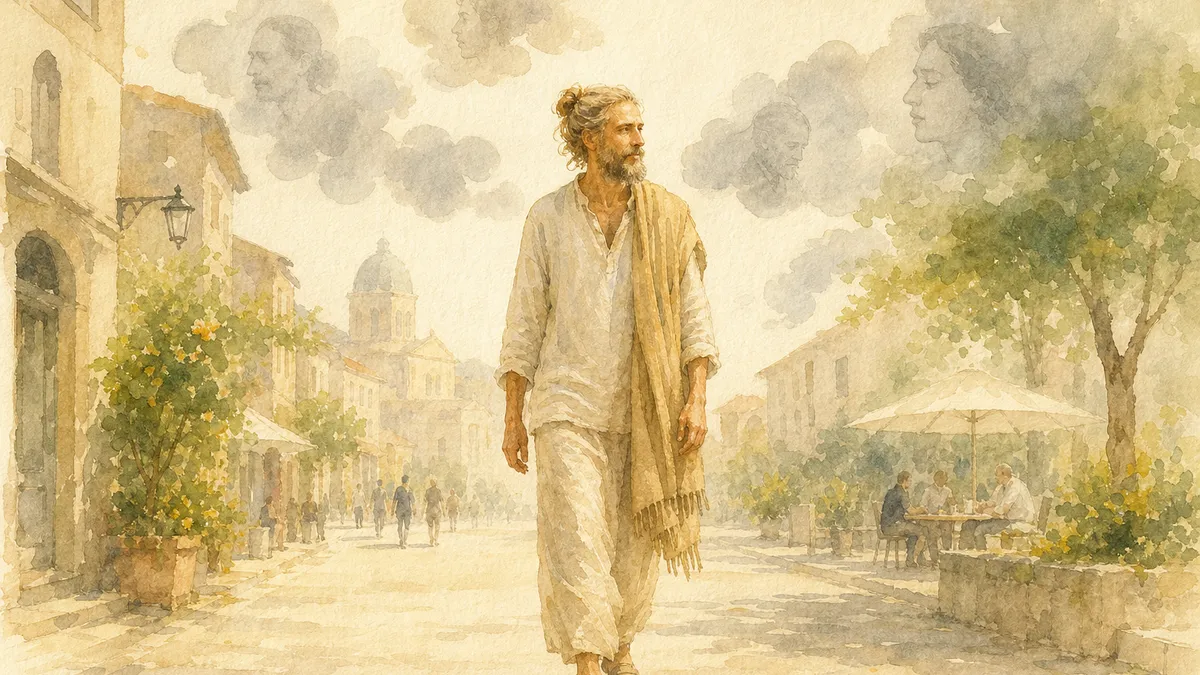
This light sometimes comes as an experience, a bhava. Sometimes as literal light in meditation, sometimes as the experience of presence. It is not necessary to have dharana and dhyana in order to experience it. Strong faith is sufficient for this. Faith itself opens the dimension of this light. And every second we must act from faith. You may not be in samadhi, may not be a great meditator — this is not possible right away, it comes gradually — but it is necessary always and everywhere to cultivate faith, to act from faith, to relate to yourself from faith, to oppose faith to the movements of the mind, the movements of the ego.
Cultivating Faith
Faith also does not come all at once; it must be cultivated. It is an irrational thing, so it is even difficult to say how to cultivate it correctly, what exercises to do for this. If you turn to the ishta-devata with a request to grant you strong faith, simply express such a sankalpa, read prayers, concentrate, investigate the principle of faith, turn to God, to the Refuge Tree, to the principle of the Guru with a request that you be given such strong faith, it will come. That is, faith, like Anugraha, has the property of responding to requests, to intentions.
For this, we must give rise to motivation. And as long as such motivation in the form of a unified samaya of awareness is not present from within, we must support it at the level of the mind. If you have prayer collections — “Datta Stotra,” “Datta Stava,” Bhajan Mandala, and Sutra — use them, read them, appeal to the ishta-devata so that this faith may come to you. Even if you do not have them, read prayers in your own words — then faith will come and work miracles. To attain it, attentiveness and intention are needed. It will come.
“This is the Light of Sadananda — the Eternally Existing Bliss of the Supreme Self. This is the Eternal Light of Supreme Bliss (Nitya Parananda Jyoti). This is the Light of Eternal Purity and Unsurpassed Supreme Happiness (Sada Niratisayananda Nitya Jyoti). This is the Light of Nondual Unity (Advaitananda Jyoti). This is the Light that becomes all forms and variations of Happiness.”
A Sadhu Whose Spirit Abides in God
When a sadhu has strong faith, what is he concerned with? God. What does he think about? God. What are his plans? To remain in God further and deepen this state. What are his memories? How he was in God yesterday, in exactly what experience. What is his present state? He is in God even now. What does he see in others? God. When thoughts arise, what are they about? They too all come down to God and dissolve. What does he do with body, speech, and mind? He serves God. Everything revolves around God.
When everything revolves only around God, the sadhu’s spirit opens and receives true spiritual wisdom and spiritual power. And when thoughts not about God, certain energies, come to him, he does not respond to them. He does not reject them, but he also does not respond to them. He sort of lets them pass through himself, saying: “All this is nonsense. All this is unimportant. God is important, and all this is nonsense.” At the same time, one cannot say that he performs service poorly or that he is inadequate, like a holy fool. Not at all. He can be quite flexible in the relative dimension, doing everything as it should be done, but his spirit always abides in God.
This means that the sadhu has truly realized the emptiness of the mind, devotion, Brahma aham bhava, and many other things spoken of in the teaching. Such a sadhu has no difficulties with the world or with others. He himself becomes one who resolves others’ problems and helps remove difficulties, because God begins to act through him — the Divine Light begins to inspire and bless others through him.
Swami Ananda Lila: Many, through everyday life and relationships, forget that God also speaks through these. This is the most difficult thing in the mandala of practitioners.
Yes, a plate rattles and speaks of God. Dishes are being washed, and the rattling of the dishes speaks of God. The chatter of people nearby speaks of God. Everything depends on your position.
I knew one Vaishnava who would walk around the ashram, grab someone, and ask him: “Well, how is it possible not to think of God?” — when they began saying something wrong. That is how fanatical he was.
The Vigilance of the Spirit Amid Everyday Life
We must think of God always. The mind may speak on various topics, but the mind is not us. And the main part of our consciousness must be in God. If it does not work out, speak with restraint. If you are in God in spirit, then the mind is unimportant. There is such an expression: “rumors of distant events, like the babbling of a madman.” It makes no difference to me what to talk about — I can speak on any topic, sing songs, tell jokes. Everything immediately self-liberates on its own, because the fundamental part of consciousness is in the spirit. It does not matter what I say. My words, my thoughts, in my case, are completely devalued — they are devalued in themselves and play no role. They come from the light and return there; I can play with them however I like.
The same applies to everyday life. In the midst of everyday life, we must learn to play with these energies, but the spirit must be in God. The same applies to any other situations. But for this, vigilance, avadhana, and sobriety are needed. One must be sober, and not become intoxicated by samsara, not become intoxicated by maya. If it is not possible to maintain such vigilance within, one must use external methods.
“This is the Light of Purity without any imprint of falsehood. The Light that brought into my ‘I’ the Harmonious Manifestation of the Nature of Truth, which exists in its countless variations and definitions (all creations of Being and principles, powers and abilities, objects and things).”
The Bhava of Devotion as a Path to Presence
And if we are incapable of being in full presence, if Nirguna Brahman is not yet an experience for us, if it is still like a closed door for us, then we must cultivate the bhava of devotion, ananda, through worship of the name and form. For example, when you worship the ishta-devata, bhava arises through name and form. When you read texts, bhava arises through name and form. Mantras, visualizations—all of these are methods for bhava to arise. When this bhava arises, you can remove the name and form, and the bhava will remain.
“The Light that increases the gifts of Its Grace, keeping nothing for Itself. This is the Light that created ‘me,’ and the ‘Self’ became one in the final Union (that is, the principle of blissful dualism in the unity of the soul and the Supreme in the Trinity of the Supermind).”
