Spiritual Warrior: The Qualities of a Kshatriya on the Path to Liberation
30.07.2026
0 мин. чтения
0
Share
copy
search
add
share
Commentary on the text “Datta Darshanam.” The Story of Kartavirya Arjuna
Deliverance.
As Emperor Kartavirya, absorbed in his thoughts, approached the city gates, he heard a call like the roar of a lion:
“Hey, kinsman, Kshatriya, stop.”
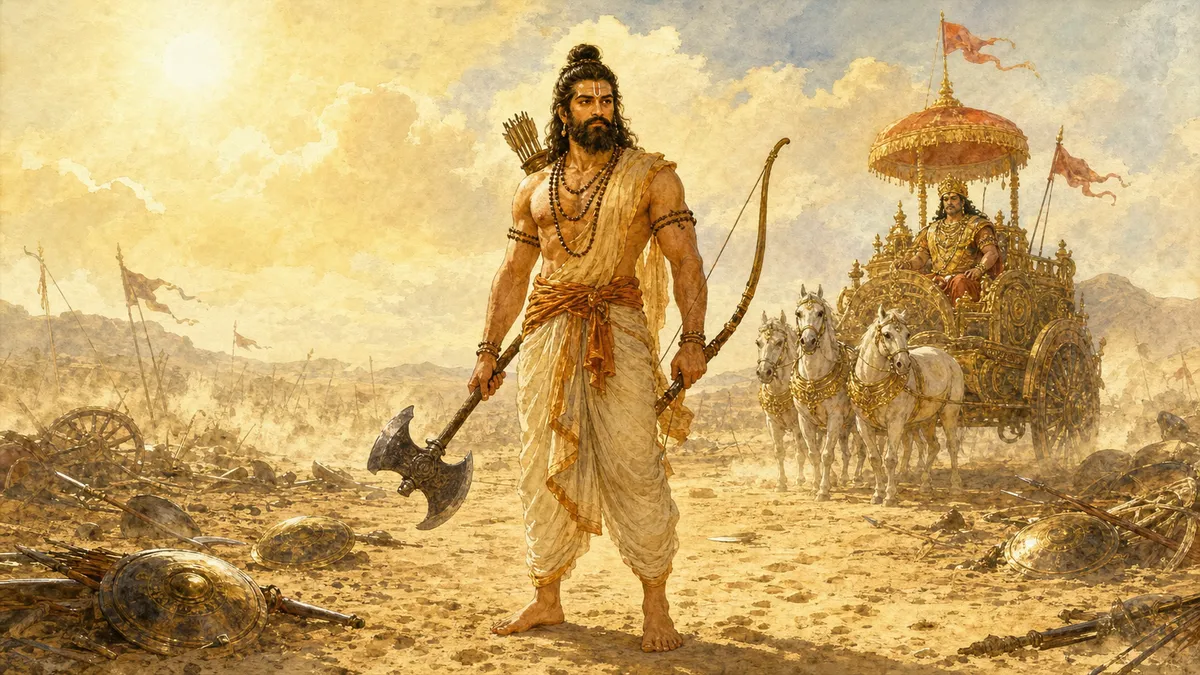
The emperor turned around instantly. Before him he saw a strange man who looked like a Kshatriya in the guise of a Brahmin. Tree bark was wrapped around his waist, a cord held his hair in place on his head, lines of vibhuti marked his forehead, and a sacred thread ran across his shoulder. He held a bow and arrows in his hands. A spear rested on one shoulder and an axe on the other. His nostrils quivered, and his gleaming eyes blazed with anger. He looked like a volcano that had just erupted. Gazing at this embodiment of wrath, even Kartavirya Arjuna felt shivers run down his spine and trembled. Before the emperor could say anything, the man roared again:
“Hey, you call yourself a Kshatriya. I am Rama, son of Jamadagni and friend of Jvaladagni. I am merely a poor Brahmin, and I have come alone. Here is my axe, and here is my bow. Are you going to release our cow, or do you want to lose your life? The choice is yours.”
The Brahmin with all the mannerisms of a Kshatriya was, in fact, none other than Parashurama, son of Rishi Jamadagni, who flew into a rage because King Kartavirya Arjuna had insulted his father and taken away the magical cow.
The emperor remained silent when he heard these words. The man before him appeared as the radiant embodiment of “idam kshatram, idam brahmyam” (the power of a Kshatriya, the energy of a Brahmin). He was like a great forest fire, with power bursting from every pore of his skin like tongues of flame. “Whoever he may be, it does not matter,” he thought. “I am a Kshatriya and must fight anyone who comes and insults me. A Kshatriya’s duty compels me to accept this challenge.”
The Qualities of a Kshatriya and a Brahmin in Spiritual Practice
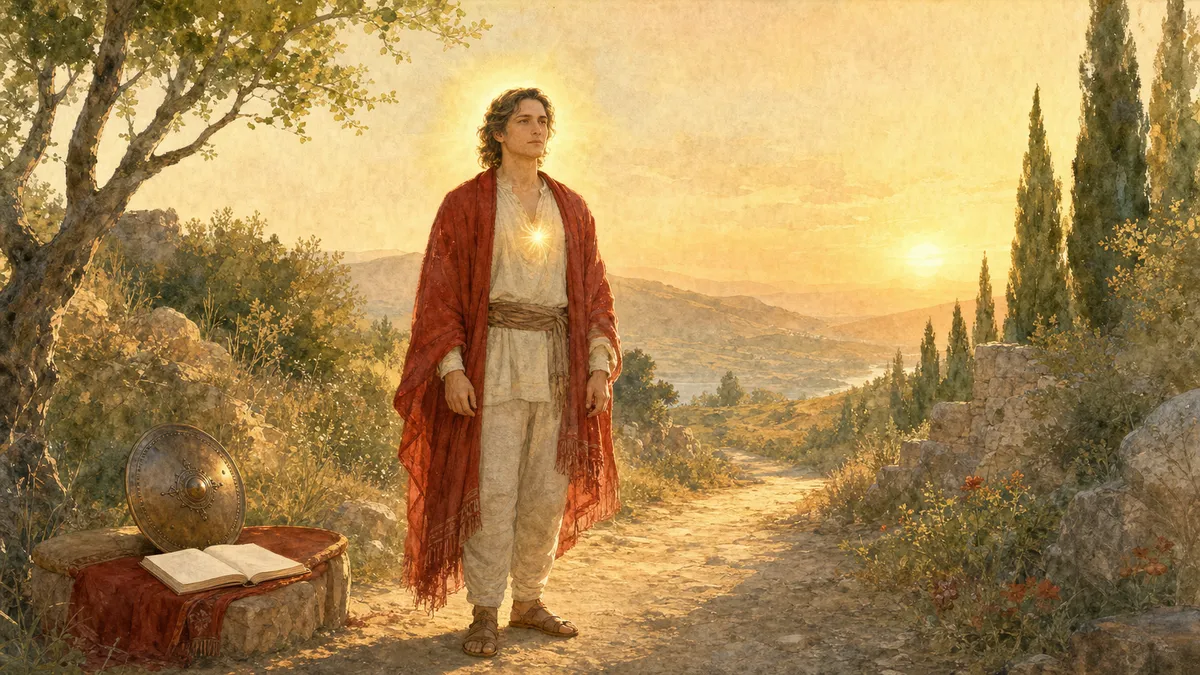
When you hear “Kshatriya,” “Brahmin,” “Vaishya,” and “Shudra” in relation to the teachings and to yourself, these terms should not be understood as Hindu castes, but rather as certain qualities, types of tantric temperament. A Kshatriya is a warrior, and in tantric language this is a vira yogi. A Brahmin is a divya, a divine or semi-divine being.
The qualities of both natures are absolutely essential for a yogi. On the one hand, if you do not possess the qualities of divya, it is difficult for you to meditate and understand philosophy; your mind is neither subtle nor skillful, but coarse, harsh, and rigid. The qualities of divya are necessary in order to follow the dharma of Advaita. On the other hand, if you do not possess the qualities of a Kshatriya, you have no spiritual strength and cannot withstand difficulties and obstacles. Even if you have some inclinations toward divya, you are spiritually weak: you can easily be confused, bewitched, tempted, led astray from your chosen path, or made to break your word—all this stems from a lack of Kshatriya qualities.
A Kshatriya is someone who persistently advances toward a chosen goal. This is a spiritual hero, a spiritual warrior, intent solely on victory. If you do not possess such qualities, you need to think seriously: “How should I live in order to develop such qualities?” Kshatriya qualities are extremely important for a spiritual yogi. Swami Sivananda once said that if there is a fainthearted scholar and a desperate robber, the robber has an even greater chance of attaining liberation, because he believes in himself and in his strength, he hopes for success, while his negative quality is merely temporary. If he purifies himself, all his qualities will be directed toward sadhana thanks to his strength and self-confidence.
The qualities of vira are an unbending will, an unwavering pursuit of one’s goal, disregard for obstacles, spiritual ambition, and spiritual pride. It means perceiving every situation as a challenge—not passively surrendering to that challenge, but accepting it and achieving victory.
Differences Between Pashu, Vira, and Divya
A person with the qualities of a pashu is always oriented toward comfort, conformity, personal desires, and compromise. This is an animal-like state: “As long as I feel good right now, nothing else matters.” A person with the inclinations of a pashu has no concept of responsibility, keeping one’s word, a vow, an oath, honor, or duty. Yesterday he said something, and today he has forgotten it. He swore an oath and then broke it because that was more convenient for him. Such things mean absolutely nothing to him; honor, duty, oaths, responsibility, vows, and spiritual ambition simply do not exist for him. If he needs something, he may humiliate himself to settle some self-serving matters, as long as his body is comfortable.
A kshatriya is a completely different kind of person. He is a person of duty, true to his word and faithful to his ideals. He is a person with a lofty ideal, ready to stand up for it and even give his life for it. If he has made a promise, he will certainly fulfill it. If he has accepted a challenge, he fights to win. His spiritual ambition is highly developed. However, this should not be confused with vanity, selfishness, or pride. I mean this in terms of pure vision—that is, the most exalted traits of a kshatriya. One could say that spiritual ambition, the ability neither to retreat nor surrender, but to fight, persevere to the end, and prevail, are the seeds of divine pride.
A person who lacks the inclinations of a kshatriya inevitably suffers spiritual defeat at first. With a weak and undeveloped spirit, sooner or later he encounters difficulties and problems, either externally or internally. His consciousness begins to falter and shift into a tunnel of reality in which he feels dissatisfied, weak, and helpless. He lacks the inner potential to change this reality and, by moving forward, to grow through it.
Thus, by combining these two qualities—those of a brahmana and a kshatriya—a yogi can truly achieve the goals of his spiritual life.
If a person with the qualities of a pashu is told, “You have exams tomorrow,” he will say, “Oh, I’m not ready; I won’t be able to pass. And why is it even necessary? Wouldn’t it be better simply to live comfortably and have plenty to eat? After all, there is prasada, there are clothes, and there is everything else as well.” But if you say this to a person with the qualities of a kshatriya, he will think, “Excellent! I will prove myself and once again show others—and first and foremost myself—what I am capable of. It is good that such a test exists, because I will grow through it.”
The difference between a pashu (a shudra or vaishya) and a vira (a kshatriya) is that the former does not view the situation as an opportunity for spiritual growth. He thinks exclusively in terms of “comfortable” and “uncomfortable.” In other words, the concept of spiritual growth is not relevant to him at all; his reasoning goes something like this: “Comfortable—excellent, I accept this situation; uncomfortable—I will not take part in it, it is not for me.” His mentality is: “I don’t reach for the stars.” In principle, he does not set himself any goals of personal or spiritual growth.
A kshatriya acts quite differently. He sees every situation as a means of spiritual growth, and if he is a true kshatriya, it does not matter to him whether the situation is bad or good. He lives by a principle that goes something like this: “Whatever does not kill me makes me stronger.” He regards even obstacles and problems as a challenge, as a way to display or cultivate his finest qualities, and he is grateful to them as training partners.
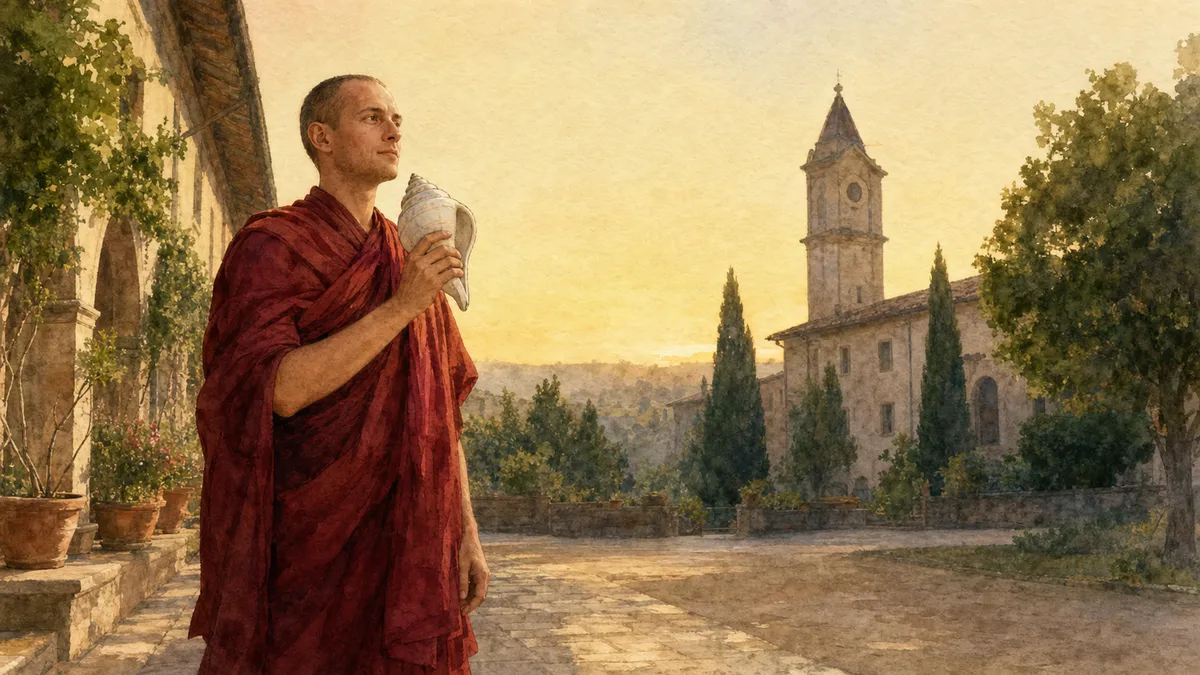
For example, I suggested to one monk:
– You need to get up at six o’clock every day and blow the conch shell.
He did not hesitate even for a moment; he said:
– Oh, that’s wonderful! It is another way to train self-discipline.
Only someone who had already developed into a kshatriya could say that. But if you tell an ordinary person something like this, he will reply, “Oh, that is such a problem! Not only do I have to wake up, but I also have to get dressed in time and be ready to arrive there at that hour—and do so for several years in a row. What a nuisance! It is very difficult!” How different the tunnels of reality are for a kshatriya and for someone who does not possess such qualities.
A kshatriya is not afraid to accept challenges, is not afraid of ascetic practice, is not afraid of restrictions (tapas), is not afraid to make an effort, and is not afraid to take on difficult tasks. In principle, he fears nothing, and if he does fear something, he regards that too as a challenge. He is not even afraid of his own fear and tries to overcome it. This is a total awareness of spiritual battle, and in this battle the kshatriya has no intention of losing; he is focused solely on victory.
And sooner or later, such potential leads the yogi to the qualities of divya. When the battle has run its course, when the very spirit of uncompromising resolve is so natural that it becomes the norm of life, transcendence occurs: one grows beyond the kshatriya, and divine qualities begin to blossom. Self-discipline, the level of self-control, the quality of consciousness, and impeccability—all of this remains, but now there is no conflict or battle, only calm naturalness. Such a person still perceives every situation as a challenge or as a means of spiritual growth, but simply integrates with it more gently. He has already merged so completely with the pairs of opposites that there is no longer any struggle, but rather natural, instantaneous acceptance, recognition, and growth through it. However, no person with the qualities of pashu has ever managed to become divya immediately, bypassing the qualities of vira.
The Battle Between Parashurama and Kartavirya
Immediately enraged, the emperor sent his army, comprising all four branches of the armed forces, against Parashurama. Like an army of moths flocking to a blazing fire, they attacked him, but it did not last long. Soon they had all fallen, as though reduced to ashes. Kartavirya was astonished: “Who is this?” he wondered. “When did he take out his arrows? When did he nock an arrow? When did he take aim? Everything happened so quickly. How could he strike down so many with such ease, as if in play? Even Indra is no match for this Rama. There is no doubt that he is my equal.”
Kartavirya was amazed and thought, “What kind of brahmin is this who has scattered my warriors? There are no brahmins like him.” Brahmins always remain apart from battles and conflicts; they always live in harmony. Unlike a kshatriya, who sees a situation as a challenge, brahmins are entirely beyond such qualities. But this was Parashurama—an avatar who possessed both sets of qualities simultaneously.
Mastery as the Foundation of Spiritual Strength
A kshatriya possesses extraordinary concentration and extraordinary willpower; that is, he already has a vast array of virtues and a set of superhuman qualities. Even in worldly life, if you look at an athlete or a professional specialist, you will see that in some respects they have far surpassed the ordinary person because they have devoted their entire life to training in a particular field. The qualities of a kshatriya are built upon tremendous willpower, concentration, and mastery. In other words, mastery is the first principle of the kshatriya. If you have mastery of something, you can be said to have reached the level of such a kshatriya. In other words, when you direct the power of your concentration toward something, you attain mastery of it, and this mastery begins to manifest in your life; you actively make use of it in various life situations. This is your yoga-shakti or atma-shakti—the inner power emanating from the higher Self.
A pashu has no such mastery. He has not exercised willpower, effort, or self-discipline, and therefore has not developed such mastery within himself. Thus, when a pashu encounters a situation, he has nothing with which to counter it: the situation shocks him, paralyzes him, takes control of him, subjugates him, and sometimes even destroys him, because he is unprepared for challenges. A kshatriya, by contrast, has accumulated sufficient spiritual or magical potential and is therefore capable of confronting a situation when it arises and playing with it so as to tip the scales in his favor. Parashurama proved to be precisely such a person.
Awareness of Sin and Karmic Retribution
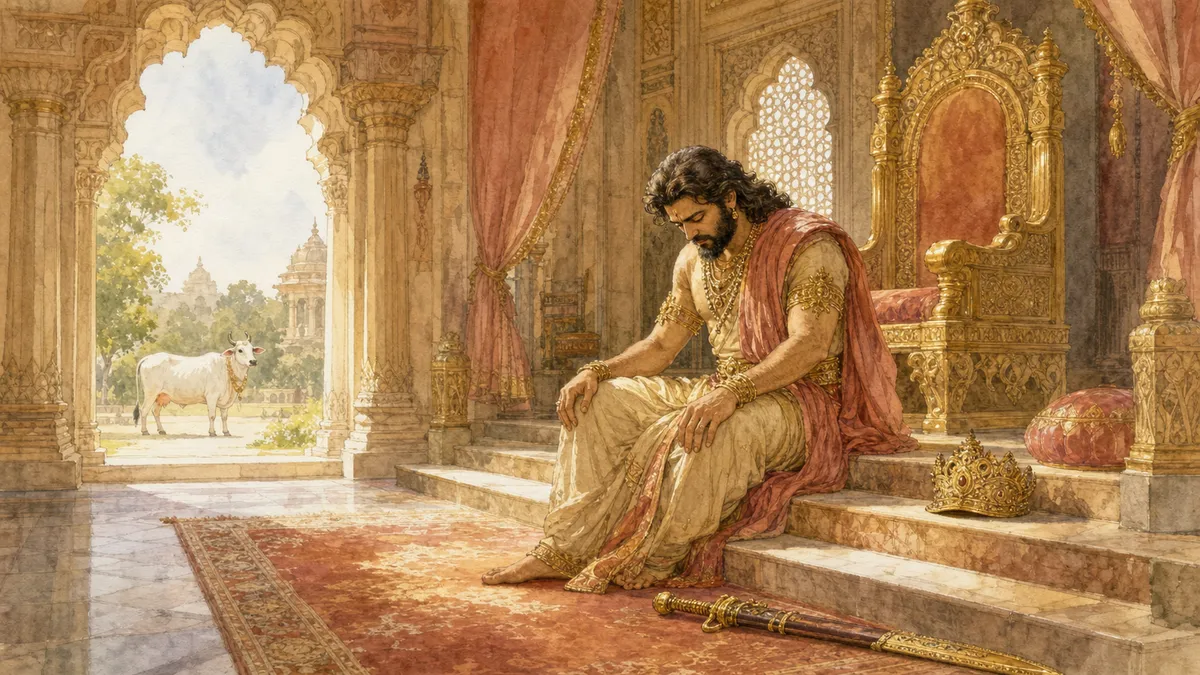
Now I understand that even a death sentence is but a minor punishment for the sin I have committed. Otherwise, how could this have happened? Am I not truly the undisputed emperor of Sapta-dvipa? Am I really that experienced ruler who would appear with a drawn sword before any inhabitant of the empire as soon as he merely thought of committing evil, and punish him? How could I, worse than a robber, take his cow from a poor Brahmin? There is no punishment for this other than death. Lord Dattatreya granted me the boon that I would not die at the hands of anyone who was not my equal. He himself blessed me with such supreme valor as even the gods and their rulers do not possess. How, then, can death come to me? If someone like me can be a disciple of the Lord, it is a violation of the devotees’ tradition. That is why I can and must die; that is why the Lord is sending this Rama, who is my equal. For many thousands of years, I have felt the Lord’s boundless compassion. Surely the Lord must feel disgust even at the thought of me, who committed this terrible sin. I know that if death does not come to me now, I will die every day, suffering from shame and grief over my sin.
Kartavirya Arjuna realized the pernicious nature of his act—that he had committed a sin. Sins (papa) and virtues (punya) exist as long as our ego, the body, and the law of karma exist. Of course, at the level of the Advaita view, they do not exist; when the single “taste” is realized, all things are regarded equally, and everything is perceived as divine play (lila). But in the relative dimension, when we act from the standpoint of the mind, the laws of cause and effect apply. As long as the mind distinguishes between good and evil, liquid and solid, right and left, upper and lower, inner and outer, male and female, old and young, causes and their effects exist accordingly. Causes and effects may be pure, wholesome, and favorable, or they may be unfavorable. And when a cause is unfavorable, it is called sinful.
“Sinful” is a Christian term, whereas in the Siddha teachings the term “klesha” is used. A klesha is not so much a sin as an obscuration. Sin is an eternalist concept, something absolute, but nothing absolute exists either in the Siddha teachings or in the teachings of Advaita; there are simply actions that may obscure consciousness. And when a certain cause obscures consciousness, various imprints are created that may manifest in subsequent incarnations as negative karmic reactions, that is, as obscuring effects.
If a person possesses a dualistic mind and creates obscuring causes, then, naturally, they must reap obscuring effects. For example, in their next life they may be born into unfavorable circumstances or as a sickly child; their paths will be closed at the karmic level. The thread of their destiny will often be broken, and they will never find a purpose in life. Or obscurations may manifest as obstacles caused by beings (karmic creditors), when all their abilities are blocked by spirits they offended in past lives and who hold grievances against them.
Spirits are highly vindictive and easily offended; they have an enormous amount of time, and they spend all of it contemplating past impressions. Memory weighs very heavily upon spirits. Many of them cannot break free from it; it becomes an obsession. And they always remember those who wronged them. Sometimes, if one of those who wronged them is accessible to them—for example, has been reborn in the human world—they place obstacles in that person’s way or block their abilities. It is then said that the person’s paths are closed in this life until they acquire enough power to subdue these spirits. These are all consequences of unfavorable karmic actions.
Out of compassion, the Lord has now condemned me to death by sending a hero capable of confronting me, and thus He will destroy my sin in this very lifetime. Therefore, I must see to it that this punishment is carried out. Even now, if I admit my mistake and return the cow, this peerless brahmin, forgetting all that I have done, will not only forgive me but will also bless me before departing. I see in him the same nobility as in his venerable father, who is like fire hidden beneath ashes. Self-control is his true power, which I have no means of bringing forth. That is why this brahmin must assume the role of a mighty warrior. My duty now is to mock him, taunt him, and enrage him even further, so that I may receive my just punishment. May my Gurudeva bless me.
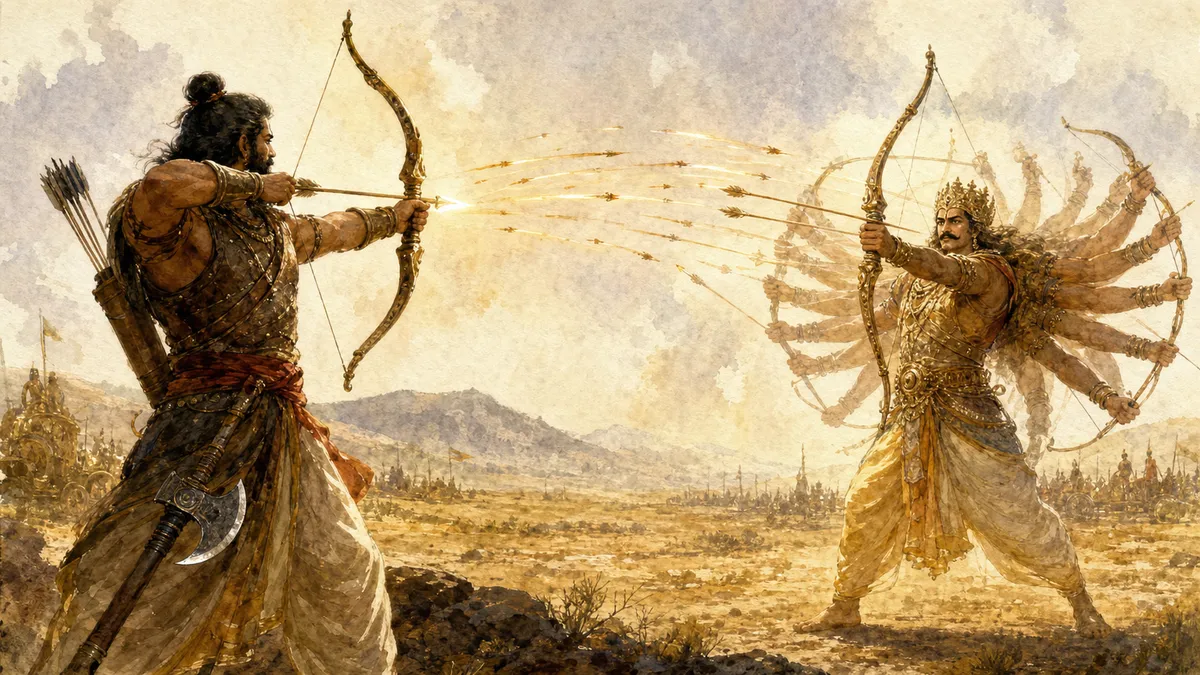
At that moment, when the emperor focused his mind, he became terrifying, like Rudra at the time of the destruction of the universe. He summoned his thousand arms and, taking up a thousand bows, began showering Parashurama with a rain of arrows. Parashurama was astonished by this sudden attack. He wondered whether the man before him was truly Kartavirya. Parashurama rained a torrent of sharp arrows upon Kartavirya, but he stood like a stone statue. The next instant, Kartavirya became like a ball of fire. The battle took a serious turn, as Parashurama was inspired by the valor of Kartavirya, whose five thousand arrows Parashurama cut down.
Parashurama and Kartavirya Arjuna were no ordinary Kshatriya warriors; they were siddhas.
Magical Abilities in Dvapara Yuga
Many people at that time possessed various magical powers. For example, enchanted arrows were used. Various sadhanas involving protective armor (kavachas) were practiced. And many warriors had the ability to manifest themselves in multiple forms, transform their appearance, and cast illusions into the enemy’s mind. Since this was not Kali Yuga but most likely Dvapara Yuga, people’s magical abilities were much stronger at that time, because the condition of the pranas, elements, chakras, and channels was different.
To defend himself against Parashurama’s attacks, Kartavirya wounded Parashurama and repeatedly caused him to freeze. But after recovering once again, Parashurama severed Kartavirya’s arms, which reappeared faster than lightning. Astonished by this incomprehensible regeneration of the arms, Parashurama raised his deadly axe, cut off Kartavirya’s arms, and returned it to its place. Kartavirya stood still, and by Datta’s grace another thousand arms appeared. This phenomenon was repeated several times. Parashurama first used the Brahmastra weapon and then, with his axe, severed the mighty arms that appeared again and again. When Kartavirya’s arms finally ceased to reappear, he still did not lose his composure. He humiliated Parashurama and wounded him with various weapons, such as a mace, swords, a trident, and so on. Parashurama shrieked in fury. Thus Kartavirya achieved his goal.
His mind was focused on the holy feet of Lord Datta, while he himself lay unconscious. Then Parashurama, remembering Parameshvara, severed Kartavirya’s head. A shower of celestial flowers poured down. Thus Kartavirya attained Liberation while still in the body. And immediately after he left the body, his vital energies merged with the Infinite. His five vital breaths returned to the elements. The elements of life of the gross and subtle bodies merged into their causes.
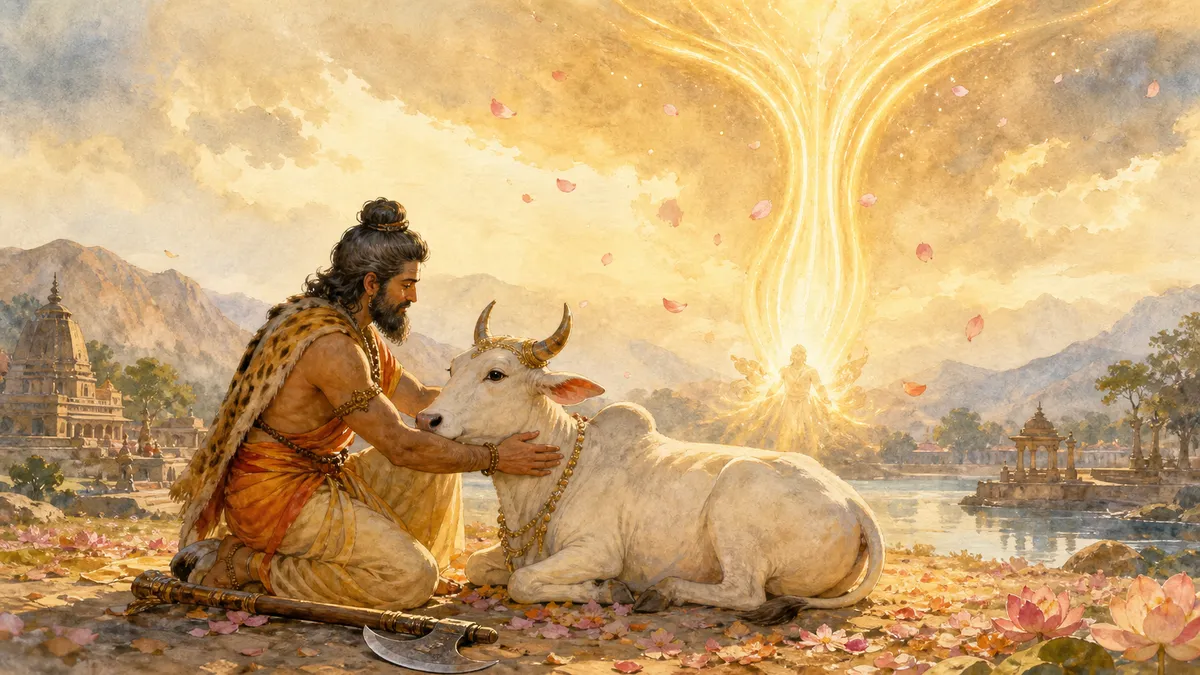
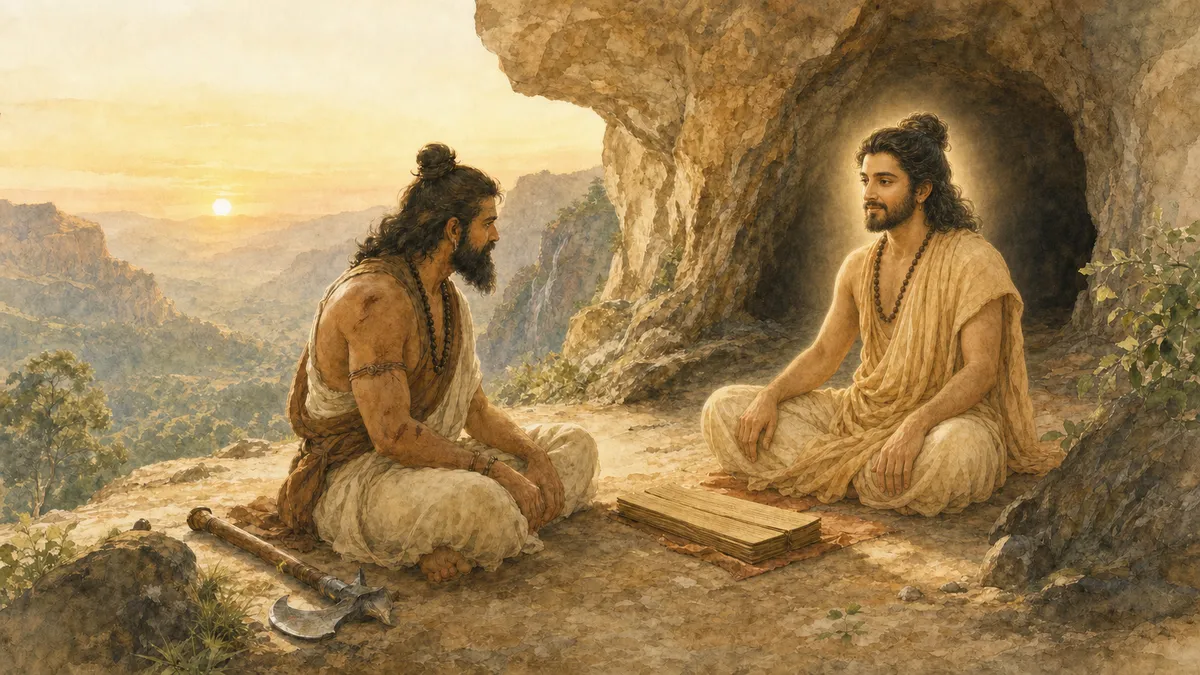
At that very time, Satguru Datta was in a deep trance in a cave in the Sahyadri Mountains. The cow Surabhi was on the battlefield. With tears in her eyes, she ran up to Parashurama, who, deeply moved and with tears of joy streaming down his cheeks, calmed the distressed cow and took her with him.
It may seem strange—magical wish-fulfilling cows, people with thousands of arms. How can that be? But you must understand that this is not the world of Kali Yuga; it is the world of Dvapara Yuga. It is a different karmic vision, a magical reality in which our ancestors lived. In this magical reality, the five gross elements (tattvas) do not exert such a strong influence, and people's willpower surpasses that of today. All people possess magical powers to some degree, and those who develop them easily achieve success. They are not all awakened, but their abilities can manifest with great power. The physical laws are somewhat different because this is a different age. Therefore, what seems unusual to us manifested quite naturally at that time.
During the Treta Yuga and Satya Yuga, people's spiritual powers manifested even more strongly. Controlling reality through the power of thought, immortality, bodily transformation, flying through the air, and subsisting on prana rather than gross food—all of this was real for the inhabitants of the Treta Yuga and Satya Yuga.
Unfortunately, we live in the age of Kali Yuga, when the material elements exert their strongest influence. The density of the world increases, and the frequency of reality's vibrations reaches its maximum (although it has not yet reached its peak). Accordingly, people's abilities and their capacity to influence reality through the power of thought are significantly weakened. Developing abilities and attaining liberation is much more difficult than before. Life expectancy is shorter. In Kali Yuga, people's subtle bodies and higher circuits of consciousness are generally deactivated. The Atman and causal body are barely active. It is mainly manas (the mind), ahamkara (the ego), and the astral, physical, and etheric bodies that function actively.
The True Nature of Kartavirya Arjuna
Thus, after eighty thousand years, the life of the mighty Kartavirya Arjuna came to an end. No other devotee ever received Datta's grace in such abundance. Through Datta's grace, Kartavirya attained the highest state. While he was alive, he shone like the sun by day. Although he made some mistakes, he corrected them himself. He never showed disrespect toward his guru, even in a dream. His faith in his guru was absolutely unshakable. That is why Lord Datta did not consider his weaknesses serious.
Why did this situation arise? Why did Dattatreya allow it to happen? It happened because Kartavirya Arjuna himself was not originally human. He was a companion of Vishnu and incarnated as a mortal to correct certain mistakes in this life and purify his negative karma.
The Lord subjected him to trials that only contributed to Kartavirya's rapid growth. Ultimately, he attained eternal glory and kaivalya. Every incident in the life of this great devotee shows how an aspirant should behave toward the Satguru. His life demonstrates the nature of an ideal devotee. It shows how the Satguru's grace pours forth in response to such devotion. Here ends the story of Kartavirya. Kartavirya was a close disciple of Dattatreya. Even though Lord Datta is considered to be beyond love and aversion, why should he not show his anger toward Parashurama, who cast aside the serenity characteristic of Brahmins? Yet it is remarkable that Parashurama voluntarily fell at the Lord's feet and became his disciple.
As is well known, after numerous battles, Parashurama himself came to Dattatreya. The great text “Tripura Rahasya” was born from Dattatreya's discourse with Parashurama. “Tripura Rahasya” was expounded after all these events.
And the Lord showed him greater favor than he had shown Kartavirya. To understand even a drop of the power and greatness of this ancient Purusha, one must know what happened after Kartavirya's death.
Parashurama returned with the cow Surabhi. News of Kartavirya’s killing spread like wildfire throughout the city, and many mourned his death. The Yuvaraja was enthroned; after all, such is the way of the world. However, the descendants of the Kshatriya lineage could not tolerate the emperor’s murder by an ordinary Brahmin. They were shocked and filled with profound grief. The descendants of Kartavirya, the clan chief, and the young men loyal to them plotted revenge and retribution. The flame of vengeance against the Brahmins raged in their hearts: “Have not the arrogant, all-knowing Brahmins committed a grave wrong?” The main cause was the sage Jamadagni, Parashurama’s father. Therefore, they resolved to put an end to the sage Jamadagni’s life. But who was to kill him? No one dared risk his life, for encountering Parashurama was like encountering a lion. The only way to kill Jamadagni was through cunning, and this was possible only when he was alone in his hermitage hut.
The origins of Jamadagni are recounted in the following stories.
Dattatreya
Pashu
Divya
Brahman
Sadhana
Vira
Parashurama
Spiritual Warrior
Kshatriya
Author Гуру
Read 15 times
Articles
Vidya AI
Search
Lectures
November 3, 2026
Mantra of the day
ОМ САДРЩАЙА НАМАХ ОМ Видящему равно – поклонение!
Auspicious Times(Rome)
Brahma Muhurta:
04:54 - 05:49
Abhijit Muhurta:
11:33 - 12:14
Sayam Sandhya:
16:43 - 17:24
Mokshada Ekadashi (6 November)
Ekadashi of liberation. Helps to achieve spiritual enlightenment.