


Comprehending the Nature of Reality
“All without exception meditative practices of the Dharma were taught with one single purpose—to lead us to a correct understanding of Reality—the fact that things are empty of inherent existence.”
This means that until we have attained awakening, we understand reality incorrectly, no matter what we may think about it. This is a fact. Therefore, everyone, upon becoming a disciple, acknowledges this fact and tries to gain a correct understanding. Correct understanding is transmitted through the Teacher, the instructions of the saints, and meditative experience realized in practice.
“If we attain an unmistakable understanding of the true mode of existence of all phenomena, then we will be able to free ourselves from the sufferings of samsara. Ignorance is the key link in that chain in the teaching which forcibly drags us through the endless cycle of births, deaths, and rebirths. Having gained wisdom, we will destroy this ignorance and thereby completely free ourselves from the fetters of karma. Moreover, if we come to this wisdom already possessing the enlightened aspiration of bodhichitta, then we will attain not only personal liberation, but also the omniscience of full awakening.”
Wisdom is possible at a high stage of mastery in practice and self-discipline. It is useless for a person to try to develop wisdom if they have not developed the basics of self-discipline and have not acquired mastery in practice. Your everyday life is the development of such self-discipline, willpower, and the improvement of mastery in practice, and this takes years. It is impossible to be born and spontaneously manifest all qualities overnight if you have not created a huge number of causes and merits for this in past incarnations.
Some of you are now fifty, and some are twenty, but in the true sense this says nothing. I hope you understand that someone who is now twenty, in a past life (already during your lifetime), could have been a wise old sadhu, while you at that time were still a green youth; perhaps he was already an eighty-year-old monk, while you were merely a twenty-year-old adolescent. There are young souls and old souls; the age of the physical body has nothing to do with it, since souls are reborn. In a monastic community it is customary to calculate age not from the moment of birth of the physical body, but from the moment of taking vows. When you have taken vows, in the monastic sense you are one, two, three, or five years old. This indicates that our true birth as a spiritual being begins only at the moment of consciously entering the path of practice. There are saints who have the appearance of sixteen-year-old youths, but they may be five hundred years old. There are people in the bodies of ancient elders with infant souls. When we look more deeply, we are concerned only with the factor of awareness, consciousness, and the maturity of the soul.
The Importance of an Unbroken Lineage of Succession
“Then we will acquire the full ability to lead all mothers, sentient beings, to the cessation of suffering so deeply desired by them. In order to realize emptiness, first of all we should thoroughly assimilate the authentic teachings. These teachings, given by Buddha Shakyamuni, have come down to our day through an unbroken lineage of succession consisting of renowned yogins and learned panditas. If we follow various teachings that do not explain, or that incorrectly explain, the absolute nature of phenomena, then no matter how much we meditate, we will never comprehend in its entirety the true nature of reality.”
It is very important to receive the teaching from an unbroken chain of succession of saints. If your teaching is based on your own conjectures, then such a teaching will not take you far, even if you have diverse meditative experience.
“Therefore, it is exceptionally important to seek the correct explanation of the interpretations, to study them, reflect on their meaning, and diligently meditate on the understanding attained.”
When you study, you should have two kinds of understanding: meditative and intellectual. Of course, the meditative is more important; however, intellectual understanding is not excluded—it should confirm meditative understanding. As a rule, those who have good meditative understanding also have good intellectual understanding, since the one does not contradict the other. As they say: “Whoever thinks clearly expresses themselves clearly.”
In the time of the Buddha there lived an elderly layman who was being taught by monks. They explained the Dharma to him, but he could not understand anything, and the monks gave up on him as hopeless. They decided there was no point in bothering with him, and the old man became very upset. One day the Buddha, seeing him, said: “You do not need to study this; here is a broom for you, sweep around the temple and think: ‘Be cleansed of defilements, be cleansed of dirt, be rid of impurities.’ Think this constantly with every movement of the broom.” The old man continually swept around the temple and turned this service into a kind of meditation, thinking as the Buddha had told him. Suddenly he had an insight: “After all, this is not about the broom or the dirt around me, but about my own mind.” At some point his mind understood the principle of purification, and he instantly attained enlightenment, becoming a saint (arya) through such a practice of devotion.
The Principle of Purifying the Mind
If you have strong devotion, then even without intellectual understanding, you can purify your mind. Then intellectual understanding will come later as an indicator of clarity. The practice consists in continuously purifying the mind of obscurations, of defilements. We understand that Mind in its primordial basis is pure, luminous, space-like, light-bearing, infinite, and incomprehensible, but in the relative sense there are defilements which, like scale, adhere to it because of past karmas; therefore, the practice comes down to the continuous purification of oneself.
The purification of the mind should also manifest in everyday life as:
- attentiveness
- humility
- compassion
- self-discipline and self-control
- veneration of saints
- meditative stability
- intellectual clarity
- the principle of awareness, which can be applied everywhere
- an increase in detachment from all samsaric affairs
- complete liberation from egoism, from the personal “I”
When this happens, people say: “The mind is being purified.” The purification of the mind also manifests in pure vision of the Guru, the Dharma, and the brothers and sisters of the sangha. If pure vision does not manifest, it means that the purification of the mind still leaves much to be desired. The purification of the mind also manifests as great correctness toward oneself: a person no longer clings to his ego, thoughts, will, and personality. He knows that this is something empty, something that is not worth clinging to at all.
The Wisdom of Realizing Emptiness
“One who is able to see the inevitability of causes and effects of all that exists in samsara and Nirvana, and has cast aside false views, has entered the path that delights the Buddhas. The wisdom of realizing Emptiness must serve as a direct antidote to our ignorance regarding the true nature of Reality. If this wisdom does not become the direct opposite of our ordinary way of perceiving the surrounding world, it is not true wisdom, since ignorance is characterized by perceiving objects in a distorted way. Our wisdom, in order to be effective, must directly contradict it. Thus, first and foremost, we should understand exactly how our ordinary consciousness functions, in order to understand what it is that we will have to struggle against. Our mind is so accustomed to a distorted perception of the world that it is difficult for us to form a clear idea of Reality.”
Our mind is so accustomed to a distorted perception of the world that it is difficult for us to form an adequate perception of Reality. This should be remembered when we become enchanted by something arising from our mind. It sometimes happens that it is difficult to self-liberate something; this means that we are strongly attracted to and enchanted by what appears in the mind. In this case, we must remember that this is yet another mistaken notion in the sense that we identify with it and do not find its empty Source. In the empty Source, any manifestation is equal: anger is equal to joy, attachment is equal to detachment, one’s own will is no better than another’s, one’s own body is the same as the bodies of others, personal preferences are the same as personal aversions; everything is equalized.
The Illusion of the Self-Existing “I”
“Lacking sufficient wisdom, we sometimes cannot recognize even our own delusions and prejudices, let alone the nature of phenomena. For example, if we ask ourselves the question: ‘What exactly is this “I” that I always speak of?’, it will not be easy for us to find a clear answer to it, despite the fact that thoughts of “I” are with us all the time, even in dreams.”
Of course, the main prejudice is fixation on the “I” or attachment to the “I,” the thought that the “I” has a real basis. Advaita says that only Brahman is real, only the Absolute is real. Nevertheless, our mind thinks differently. To realize the understanding of Advaita means to dissolve the clinging that exists in the mind and to begin to be aware in a different way.
“We are enveloped by such a dense veil of obscurations that we are not even able to clearly explain what exactly we are accustomed to seeing. From beginningless time in samsara until now, we have considered our ‘I’ to be something exceptional, unique, self-arisen, and existing absolutely independently. It does not occur to us that its existence depends on our body, mind, or anything else. Rather, it appears to us to be completely self-sufficient. We did not have to learn this false notion; we are born, live, and will leave this world with such an instinctive belief. In fact, it is precisely our consciousness’s obsession with the false idea of a self-existing ‘I’ that forces us to incarnate in a defiled body, because, striving to secure it, we generate desires and clinging. But such a perception of oneself is completely mistaken. For example, when we are frightened or angry, a strong feeling arises in us: ‘I cannot stand this,’ and everything else immediately loses significance and recedes into the background. We are no longer capable of thinking about anything except how to protect this seemingly self-existing ‘I’ that dwells in our heart.”
Sometimes, when certain problems arise, we must look at the root of the problem. As a rule, we see that the problem itself most likely does not lie where we think it does, but lies at the root, and the root of this problem is ignorance, delusion regarding the “I.” All other problems flow from this first problem. There is a lack of awareness regarding the absence of the self-existence of the “I,” and it is this that gives rise to fascination with the problem. And if we look into this root and raise the level of awareness, the problem will gradually begin to change. Perhaps it will not be resolved on the physical plane, but our attitude toward it will change completely, and that will be the solution to the problem.
“But in reality this independent ‘I’ does not exist at all; it is merely the product of a completely deluded consciousness.”
The individual existence of the “I” is the product of a deluded consciousness. However, in order to fully realize this, a yogin must go through many trials, understand how deeply this “I” is rooted in him and how deeply he must become aware in order to free himself from this individual “I.”
The Conventional “I” and the True Nature
“Undoubtedly, each of us has a conventional ‘I,’ but we perceive it in a way that is completely different from how it exists in reality, and this is the main source of all our suffering.”
To free oneself from the illusion of the “I” does not mean to become lost, to fall into prostration, to become a will-less somnambulist incapable of choosing or making decisions, as it may seem to some. On the contrary, having freed ourselves from the burden of being bound by the individual “I,” we become more flexible and efficient in making decisions, more strong-willed and stable. What takes place is not the elimination of the “I” in terms of personal qualities that manifest in the body, but the elimination of the obsessive fixation that identifies the infinite Absolute with the individual ego (ahamkara). A change of orientation or a re-subordination takes place.
Suppose there were two thrones. On one, a king was in a long sleep, and on the other sat an impostor, an escaped convict, who passed himself off as the king and gave instructions to ministers, soldiers, and servants. When the king awoke, he quickly brought the ministers, soldiers, and servants under his authority, including the impostor, since the king’s shakti surpasses the energy of the impostor. Having understood the complete futility of his claims to the throne, this impostor also acquired devotion to the king, repented, and began to serve him, carrying out his instructions, and even became his close servant. From the very beginning, both the king and the impostor existed, and in the end they also remained; only a complete re-subordination occurred: the king had remained in the shadows, but he came to the forefront, while the impostor, on the contrary, relinquished his position, fully repented, and submitted.
In the same way, at the moment of awakening, the individual ego fully repents of its illusion and resubordinates itself to the absolute Source. The mind itself sees this and thinks: “How mistaken I was! Everything I relied on was an illusion! I am only a part of the great Source.” Therefore, it voluntarily acknowledges the greatness and royal status of the Source and simply hands over all governing functions to this great king. The king has always existed, but he was seen indistinctly, unmanifestly; now, however, at the moment of awakening, he shines fully in all his completeness. Enlightenment means that when the impostor becomes devoted to this king, he completely surrenders the governing functions. This king possesses immense energy and wisdom, yet he does not interfere; he is indifferent, he is not attached to his royal manifestation or power. He possesses the fullness of all qualities, yet simply stands in the shadows and waits until the impostor leaves on his own. Perhaps he would be glad to reveal himself, but he thinks: “Let this clown play for a while, let him sit on the royal throne, let him pretend to be something.” As it later turns out, this is in fact the king’s subtle game; from the very beginning, everything was planned and arranged by this king, because this impostor (the ego) was also produced according to his script. This is what is discovered when awakening occurs.
Until we have found this king, we are dealing only with this impostor, who constantly strives to convince us that he possesses self-existence and tries to exercise governing functions over our body, mind, will, and so on. This impostor is the ego. Since he is always unsure of himself, knowing that in reality he is an impostor, he constantly tries to assert himself. The king does not need to assert himself; he is king by birth, and everyone knows this, so he sits calmly, rests, and entertains himself. But the ego is never confident in itself; knowing its empty nature, it constantly tries to maintain its status by convincing others and itself of it. In everyday life, you yourselves may have noticed how this impostor-clown asserts himself; this happens constantly: in daily life, in relationships, before oneself. As soon as you see this, it is necessary to remember that it is the impostor acting. He is very unsure of himself, so he needs to assert himself somehow. The true King does not need this, since he has been absolutely self-established from the very beginning.
Over time, the practitioner begins to discern who is who in this game. After some time, he stops paying attention to the game of this impostor and gradually hands over the governing functions to the true king.
While the practitioner is inexperienced, it is very important for him to listen to those who are senior: the Guru, the mentors. They say: “Do not listen to this one, because he is a lackey, an impostor. But serve this one.” If the practitioner has no experience, he constantly confuses them; but since the impostor is also very subtle, he is inside us, and such confusion happens to the yogi constantly.
The Source of All Problems
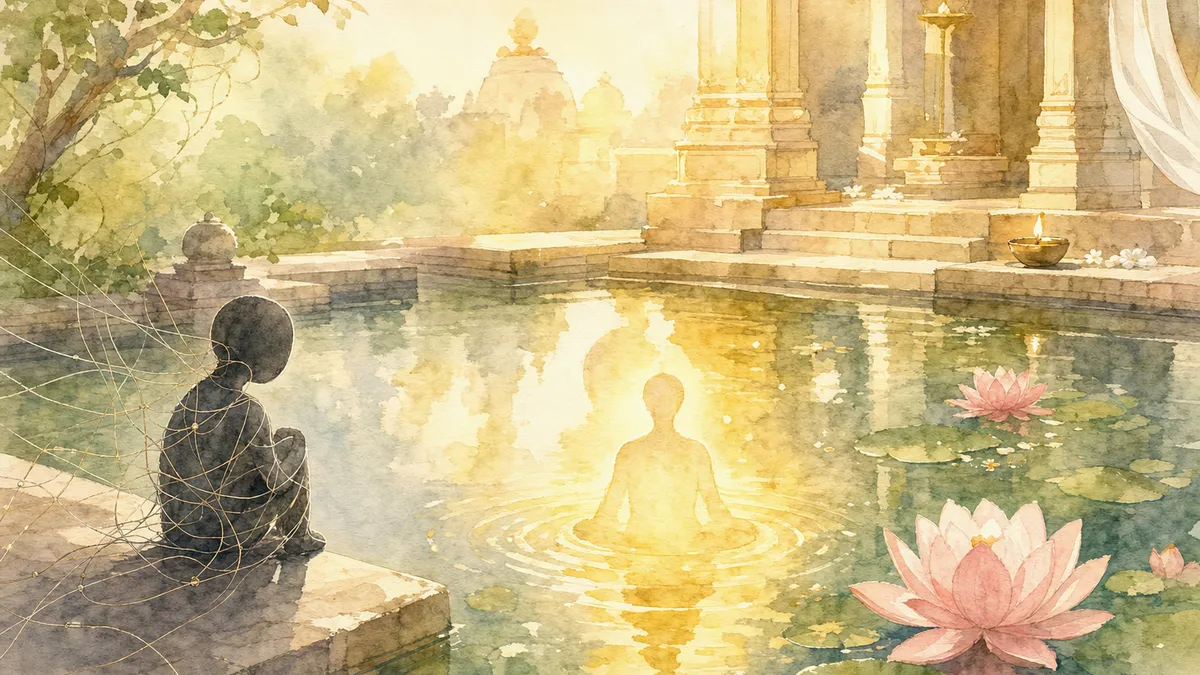
“Since all our expectations are based on an absolutely false idea of who we are, we constantly encounter problems that we ourselves create. Our judgments are mistaken, and we are unable to respond skillfully and effectively to the situations that arise. It is no wonder that we are constantly dissatisfied with the course of events and, as a result, experience great discomfort and dissatisfaction.”
You will always see an awakened person, or a true master-practitioner in whom resubordination to the king has already taken place, as satisfied, relaxed, and harmonious in all relationships. He no longer lives, but plays; he has an immense fullness of life energy, he is very self-sufficient, humble, has no need to assert himself, and is very modest because he has already found this inner king. On the contrary, the one who is connected with the ego constantly trembles, rushes about, remains in a state of dissatisfaction, in various problems that are mainly internal in nature. Problems of an internal nature spill outward into relationships; he is not yet here, not now, he is not yet creating in service, but an inner struggle is taking place within him: the impostor is trying to fight the king and does not give up power just like that, although he feels that he will have to transfer authority anyway. He is occupied with this inner struggle, which can continue for a very long time and take a great deal of energy.
“Why is the notion of the ‘I’ as some independent entity, a thing-in-itself, incorrect? Upon careful investigation of this question, the answer will reveal itself to you over time. It is utterly impossible to think of the ‘I’ while completely abstracting from thoughts of the body or the mind. If this ‘I’ truly is independent and self-sufficient, it must either be identical with the body and mind, forming with them a single organic whole, or be completely different from them and independent.”
The Period of “Universal Sorrow” in Spiritual Development
At a certain stage, a yogi enters a period called “universal sorrow.” It is the impostor who grieves, having realized that he will have to surrender his authority. He has not yet gained trust in the king, because he still does not properly see him; the king remains in the shadows, but he knows that he must get down from the throne, and therefore he becomes sad. He does not understand that if he gains trust in the king, he will only benefit. The king does not need to acquire power, does not wish to dominate, and this impostor will only benefit from the fact that the king will send him such an enormous amount of energy and authority that he will rise to a level he had not even suspected existed. But the impostor-ego does not understand this, and therefore thinks that he will lose something; he trembles at this and feels dissatisfied. If he knew that he would gain enormously, he would behave differently, but this can be understood only when the king has already shone forth in all his fullness.
“It is quite obvious, however, that the ‘I’ cannot exist separately from the body and consciousness, since it is impossible to point to the ‘I’ without at the same time pointing to one or another component of our body or mind. For example, when the body sleeps, we say: ‘I am sleeping’; when our body consumes food, we say: ‘I am eating’; when it has settled into an armchair: ‘I am sitting.’ If our ‘I’ existed precisely as we instinctively imagine it—that is, independently of our body and mind—it would be entirely meaningless to relate it to all our actions. But in that case, why would we think: ‘I am sitting’ when our body is in an armchair? The same applies to our consciousness. In a short span of time, our mind can perform many varied, and at times even contradictory, actions. Yet when our mind thinks, sleeps, meditates, gets angry, or simply dreams, we say: ‘I think,’ ‘I sleep,’ ‘I meditate,’ and so on. If there existed an ‘I’ separate from all these states of consciousness, it would make no sense for us to connect these processes occurring in the mind with our unique, independent ‘I.’
Two things should be understood here. When we sit, think, or eat, at that time there exists the subtlest space, similar to a state of mind, similar to dreamless sleep. Therefore, whatever a saint may be occupied with, he is as if in dreamless sleep. One could say that he is in this state while awake: he simultaneously has awareness of this world, adequate assessments and consideration of all its circumstances, awareness of the astral world (to the extent of contact), and awareness of the World Without Forms, or dreamless sleep. When we move, our absolute mind does not move; when we manifest activity, the absolute mind, in its pure form, is outside this activity. However, it would also be incorrect to separate the body, conceptual thoughts, the mind, and actions from this absolute Mind. The Absolute has energy that tends to manifest, and continuously so; this tendency cannot be stopped by force of will—such is the nature of this energy. Even when we eat, walk, or speak, absolute Consciousness manifests in these cases as well. Therefore, we say that we must bring contemplation into all our life activities. Then the question arises: “Where, then, is the place here for the false ego (ahamkara), which believed that it was doing everything?” It remains in the same place; only its complete resubordination takes place.
The Paradox of the True Resubordination of the Ego
“The only remaining possible option at our disposal for the existence of an independent ‘I’ is no less erroneous. The notion of the ‘I’ as some entity identical to the body, the mind, or any of their aspects likewise does not withstand critical analysis. Although the designation ‘I’ is in one way or another connected with our body and mind, among our psychophysical constituents there is no component at which one could point and say: ‘This is me.’ Such an ‘I’ is not our hands, nor our heart, nor any other part of the body. Nor can it be said that our thoughts or sensations at any given moment are our ‘I.’ To identify oneself with the body or consciousness and at the same time continue thinking: ‘This is my body, this is my mind’ is complete nonsense. One might just as well say: ‘This is the body of the body, this is the mind of the mind’—utterly meaningless statements. Moreover, our body consists of such an enormous number of elementary particles, and so many thoughts pass through consciousness, that if we were to begin calling each of them ‘I,’ we would be forced to admit that we are millions of separate persons. Nor is it any more justified to assign the name ‘I’ to one particular atom or thought, because what, then, would everything else be, and to whom would it belong? By systematically reflecting on these points and using them to investigate how we perceive ourselves, we will see that in nature there is no place for such an entity as an independent and self-sufficient ‘I.’
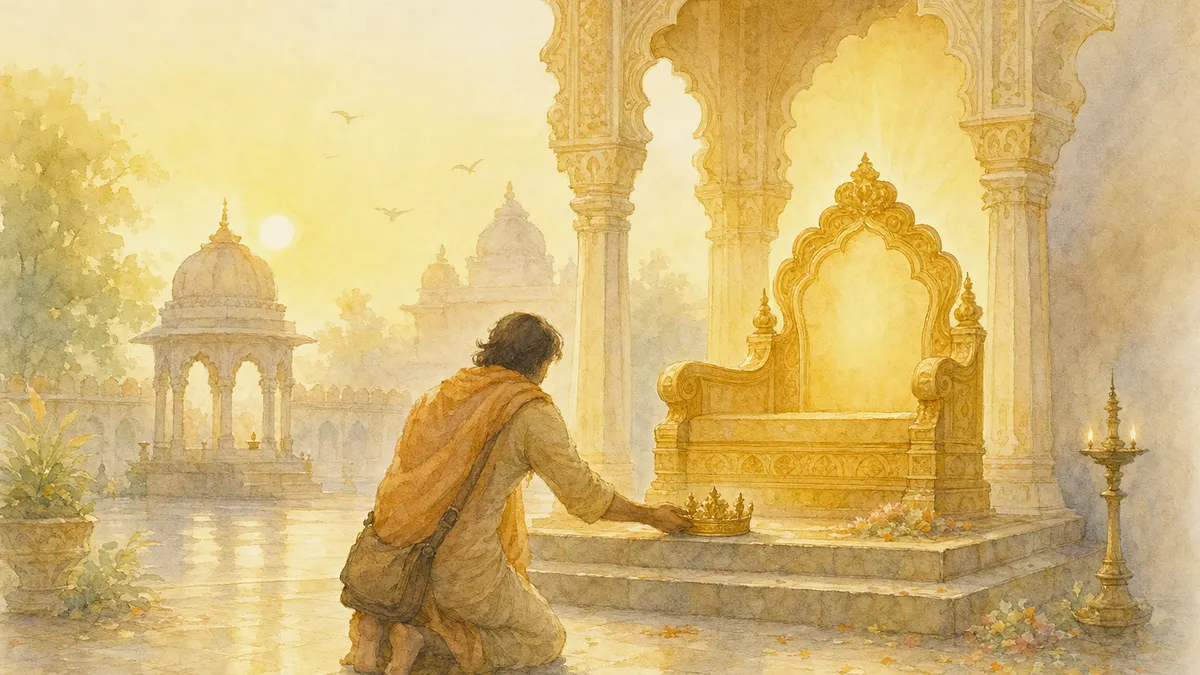
The impostor-ego does not understand the royal position of the Absolute; it thinks that when it carries out such a resubordination, it will itself lose its powers of authority and its own freedom, and therefore such resubordination is always difficult for it. In reality, however, everything is the opposite: it is precisely at the moment of resubordination that the impostor will finally attain its true royal position. The King-Absolute will hand over to it all the functions of authority in full and grant it a level or status of freedom of which the impostor could not even dream. On the contrary, the position of the present impostor-ego, which it now holds, is the most unfree state. This is the paradox, but the ego does not understand this principle. As Christ said: “Whoever wants to save his soul will lose it, but whoever loses his soul for My sake will save it.” That is, the one who completely gives his ego to the Absolute will attain the highest possible status of freedom, since the impostor-ego will connect to the supra-personal, to the transpersonal Source, and will acquire an enormous amount of energy, which will make it equal in position to the king. This is very difficult to understand, but if you reflect on it, understanding is possible. The false ego acts on its own personal individual energy. The false ego that has subordinated itself to the absolute Source acts on supra-personal, universal energy. Moreover, it completely merges with the Source of nonduality, and then it can no longer say where it is and where the Absolute is; its actions become the actions of the Absolute, or the Absolute plays through the ego, while it becomes simply an empty, perfect conduit. This is the meaning of the practice of letting go of oneself.
The Unity of Contemplation and Letting Go of Oneself
It happens that a yogin contemplates but does not know how to let go of himself. It happens that a yogin knows how to let go of himself but does not know how to contemplate. Both are mistakes. Contemplation without letting go of oneself can lead to degeneration into clarity, into emptiness, to clinging to bliss, to the development of pride and various illusory qualities. But when it is balanced by letting go of oneself, the yogin realizes correct enlightenment. Letting go of oneself without the practice of contemplation can lead to a loss of view, to a lack of clarity, to faith that is not supported by one’s own awareness. When they go hand in hand, however, it is considered that we are realizing true awakening.
“The absence of such a false ‘I’ is the meaning of Emptiness, since ignorance imagines that the ‘I’ has true, independent being, while the wisdom that realizes Emptiness clearly recognizes that such an ‘I’ never had even the slightest chance of existing. These two views are mutually exclusive and diametrically opposed. Despite all our instinctive notions of such a false ‘I,’ our relative or conventional ‘I’ is neither identical to the body, the mind, or any separate constituent of them, nor different from them.”
The Developed Ego as a Perfect Conduit
Our false “I” must be strong and protected, but not defended. A true yogin possesses qualities or parameters that surpass those of an ordinary person. If he does not possess such qualities, it is difficult for him to practice yoga. He must have stronger concentration, better reaction, attentiveness, higher intelligence, a high level of prana, developed creative abilities, and greater willpower. Without this, liberation is impossible. However, a yogin can always let go of himself; he does not cling to this beautiful and developed false ego.
A yogin must always have a very beautiful and fully developed false ego, because if the ego is unattractive and undeveloped, then practice is impossible, since there will be obstacles and a misunderstanding of the practice. Therefore, a yogin has a wonderfully developed, cultivated, refined ego, nurtured over many long years of practice; however, this ego is completely subordinated to the Absolute, there is not a single drop of its own will or self-existence in it. It knows that it develops its qualities only as an offering to the Absolute, in order to engage in service even better and to merge with the Absolute even better. If our ego is insufficient, then upon contact with the Absolute we will not withstand it, for the energy of the Absolute is immense, and it can bewilder, shake, and frighten. If you have no fearlessness and courage in practice, or if you have no understanding of the greatness of your own choice, then you will simply tremble when you begin to advance further. Nevertheless, even such a strong and developed ego is completely humble and does not put itself forward; it is fully resubordinated to the great Source and desires nothing for itself, knowing that to desire something for oneself is to harm one’s own spiritual awakening, that is, it is a minus. The ego is a perfect illusory body, like a biorobot that reads certain instructions from the central control compartment. This does not mean that in relative life a yogin becomes like a somnambulist; rather, it means the continuous connection of the body, which in itself is indeed a robot, with the absolute Source. Such a continuous connection exists when we are in correct attentiveness and correct contemplation. When we are in inattentiveness, it is like interference coming from the central control, and then such a robot-body does not receive true information about what to do and begins to do what its own experience suggests to it. But its experience is limited.
Two Levels of Truth in Practice
“There are two levels of truth: absolute, or ultimate, and relative, or conventional. The relative ‘I,’ which our ignorant mind takes to be the aforementioned false ‘I,’ independent and self-existent, is relative truth. The absolute truth of this conventional ‘I’ is the way it actually exists, which is inconceivable to a mind obscured by ignorance. Only a mind that directly realizes emptiness, that is, the absence of the true independent and self-sufficient being of all phenomena, is capable of perceiving this absolute true nature.”
In practice, we must take two factors into account: both absolute and conventional truth. If we do not understand the principle of absolute truth, it can be said that our spiritual practice is entirely superficial; we take the relative at face value, that is, we are eternalists. If, however, we ignore the relative, thinking, “Since everything is Brahman, there are no problems, and one need not do anything at all in the relative dimension,” then we are like nihilists, that is, we ignore the laws of manifestation of relative energy. But the art lies in combining two visions at the same time: conventional and absolute truth.
In the relative dimension, there is an infinite multitude of universal energies that develop according to their own laws. They are inhabited by countless living beings, and these beings are not illusory but have individual consciousnesses, just as people do. When we come into contact with them, we are forced to take all these relative laws into account. In the absolute sense, of course, they are all an illusion; in the relative sense, we take various principles into account. When we understand this, we have flexibility.
Suppose that when a driver is driving a car, he understands that he is integrated into the mandala of road traffic, and therefore, in a relative sense, he must accept road signs as the rules of the game. He knows that a sign is merely a convention invented by people; it could have been different, yet the driver knows that this convention works here, and therefore it must be taken into account in one’s life. If it is not taken into account, one may be punished according to the rules of this game, and the guardians of the mandala will demand offerings. In the same way, this principle operates in all other circumstances; therefore it is said that we must take into account the laws of the relative world, while understanding their emptiness and illusoriness and without losing the absolute vision.
The Creation of the Universe of Pure Vision
“The Supreme Mind is not obscured by delusions about relative truth, and therefore is able to see things as they actually exist on both levels. With the realization of emptiness, we will begin to look at things in a completely different way than we do now.”
Gradually we move toward absolute vision and become less and less bound by the relative, the conventional. Although energy still acts, our absolute vision manifests more and more even in the relative, in the conventional. Finally, when the yogin attains realization, he fully manifests the absolute Truth in the relative. It is said that such a yogin creates the universe of pure vision of his mind.
What is the universe of pure vision? When a yogin attains awakening, he acquires a mind that is fully realized and has no limitations whatsoever. Then he leaves the limited karmic relative world and, by the power of his consciousness, creates his own universe. This universe flows from the energies of his awakened Mind; these energies are fully awakened. It is not an ordinary material universe, but a universe of pure vision (mandala); this space is completely integrated into his contemplation. In this universe he becomes the central deity, and all the accompanying energies that manifest become peripheral deities. In other words, even the relative dimension changes completely. That is, the yogin becomes the center of the universe; even the material dimension of energies and elements becomes pure and is completely subordinated to his mind. Therefore it is said that every saint creates his own pure land, his own universe; the yogin becomes the center of the universe.
When you attain awakening, your further practice after awakening will consist in manifesting the mandalas of pure dimensions from your mind and becoming the central deity there. Awakening does not mean remaining only in emptiness, but means constant work with the relative dimension, with energy; however, now this work is carried out by the power of the clarity of empty consciousness. If energy is not integrated into the mandala of contemplation, it manifests as external, as a disruptive prana; there are many unclear, unconquered aspects in it that the yogin cannot control, even if his mind is awakened, and therefore the body is forced to take this into account.
In the universe of pure vision, even the energies are fully subdued; even the energies are inseparable from the mind, and therefore everything manifests in absolutely pure vision, inseparable from contemplation. This is a mandala, a mystical space that is included in the yogin’s mind. Then everything becomes favorable, everything benefits the yogin’s contemplating mind, everything becomes deities, subtle. Suppose that in the relative dimension we practice pure vision toward beings and may think: “They are manifestations of our mind.” But these beings have individual consciousness and may not think that way, and sometimes they may behave in a way you will not like, especially when you act in the world while traveling. Or we may think that the five elements are manifestations of our mind; however, these five elements act independently of us, and sometimes they may even bring problems, such as severe cold or heavy rain. This means that the external energy (shakti) has not yet been integrated into the mandala of contemplation. Perhaps on a subtle level we understand that they are part of our mind, but as energy it has not been subdued by us; we cannot cope with it.
In the case of pure vision and the fully awakened state, all beings that manifest in the mandala, all elements, are inseparable from the yogin’s pure Mind; they manifest in the most favorable way, divinely, they are fully pacified, subdued, and manifest in the most positive qualities. In such a universe, the yogin occupies the center of the mandala, while all energies are arranged on the periphery according to their places.
For example, our Earth is such a mandala, but not for us. It is a mandala for Brahma, the Creator of our Universe. Brahma is not the Creator God in the absolute sense; it is a status, a deity of high rank, who in the past may have been a human being, attained awakening, and now has taken such an exalted position. The Brahma Creator Gods are in the upper world of forms; they create Universes. And the power of their energy of awareness is such that the material universes they create are, even for them, a pure dimension. We are their product. In their vision, all of this is a pure mandala, and all energies are fully subdued. But for us, in an individual sense, this is not so; we are dependent in this mandala, and this mandala manifests in different ways.
Divine Hierarchy and Cosmic Service
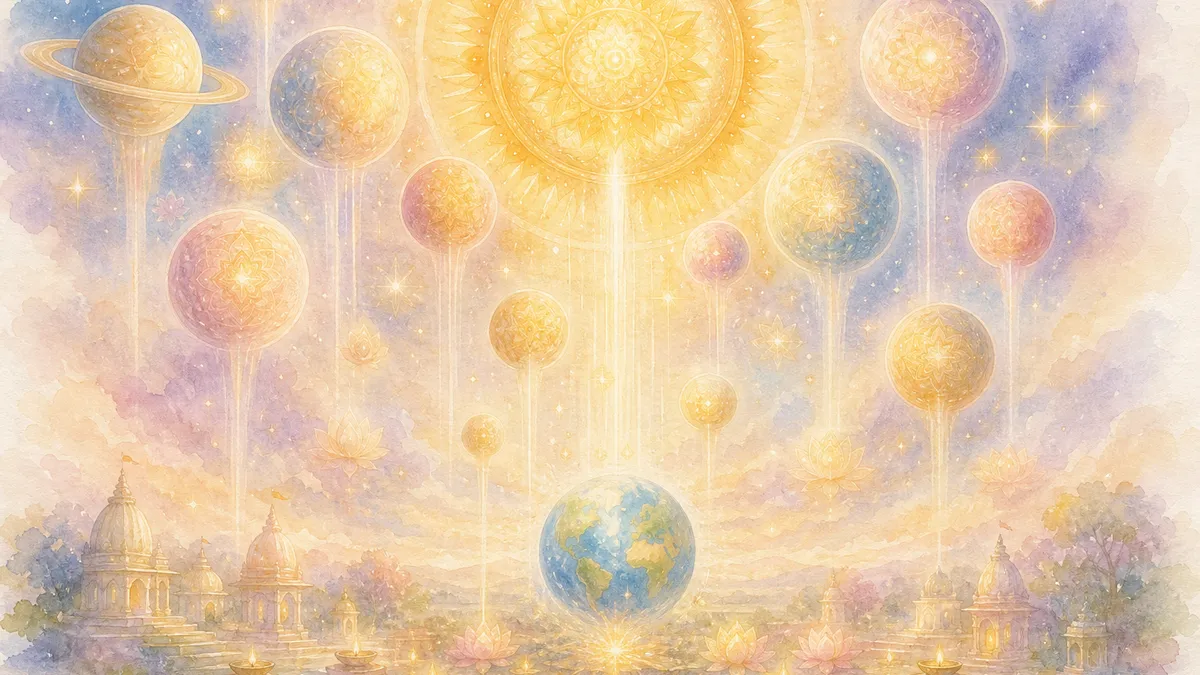
There are saints who have attained awakening and are now gods of planets, universal spirits. For example, the god of the Sun once attained awakening. The Sun and the planets are simply their physical bodies. To us they appear as planets, but in fact, in their karmic vision, they are not planets; they are pure dimensions of energy.
Every universe, galaxy, star, and planet has deities — these are souls that at some time in the past attained a high stage of development. Some of them were human beings, practiced, and attained complete awakening. Therefore, when a yogin attains complete awakening, his evolution does not end in the relative sense; on the contrary, he receives tremendous opportunities for further creativity, he receives a new status in service: he becomes a god creating universes or planets, or takes under his care some ethnic group, nation, animals, plants, and governs them from the heavens.
There are many such kinds of service in the upper world of forms among the gods. It can be said that the gods do nothing but create in some particular domain. The greatest gods encompass metagalaxies with the power of their clarity; they govern not directly, but indirectly through the law of karma and a countless multitude of subordinate spirits and helper gods.
Very rarely do they take on their own incarnations, and then it is said that an avatar has appeared. Rarely do they intervene by sending a powerful stream of the light of awareness, radically changing the situation on some planet or in some locality. Usually, however, they do not intervene. They are so exalted and refined that they have no need to enter the dense layers themselves; they act through assistants, of whom their numerous retinue consists. The retinue is not some separate beings, but their own energy, which appears in the form of various deities, spirits, and so on. This is similar to how a person who possesses power has many assistants, and therefore has no need to do everything himself.
The Nature of Illusion and Awakened Perception
“Everything around us will appear to us as something like an illusion or a mirage, but this in no way means that nothing at all exists. It is important to understand that although the ‘I’ is not identical to the body and mind and is not separate from them, this is not equivalent to its complete non-being. Such a conclusion would be completely mistaken and dangerous. Suppose a person suffering from such a widespread misconception as the concept of the ‘I’ begins to investigate this question in order to find out what this intrusive ‘I’ of his actually is.”
In the awakened state, everything around appears as an illusion or as a mirage, but this does not mean that there is nothing, that nothing manifests. It can be said that both an awakened person and an ordinary person see things with the same eyes: they see red as red, white as white, a human being as a human being, an animal as an animal. We are not now considering the experiences of jyoti yoga, where even with the physical eyes everything is seen differently.
But what is the difference? The difference is that the very understanding of everything that is seen changes qualitatively. Everything is seen as one’s own mind, as one’s own “I” and its energies, which manifest in this way, as various kinds of dreams that you enter and exit by your own will. A dream is simply the process of the creation of your thoughts.
