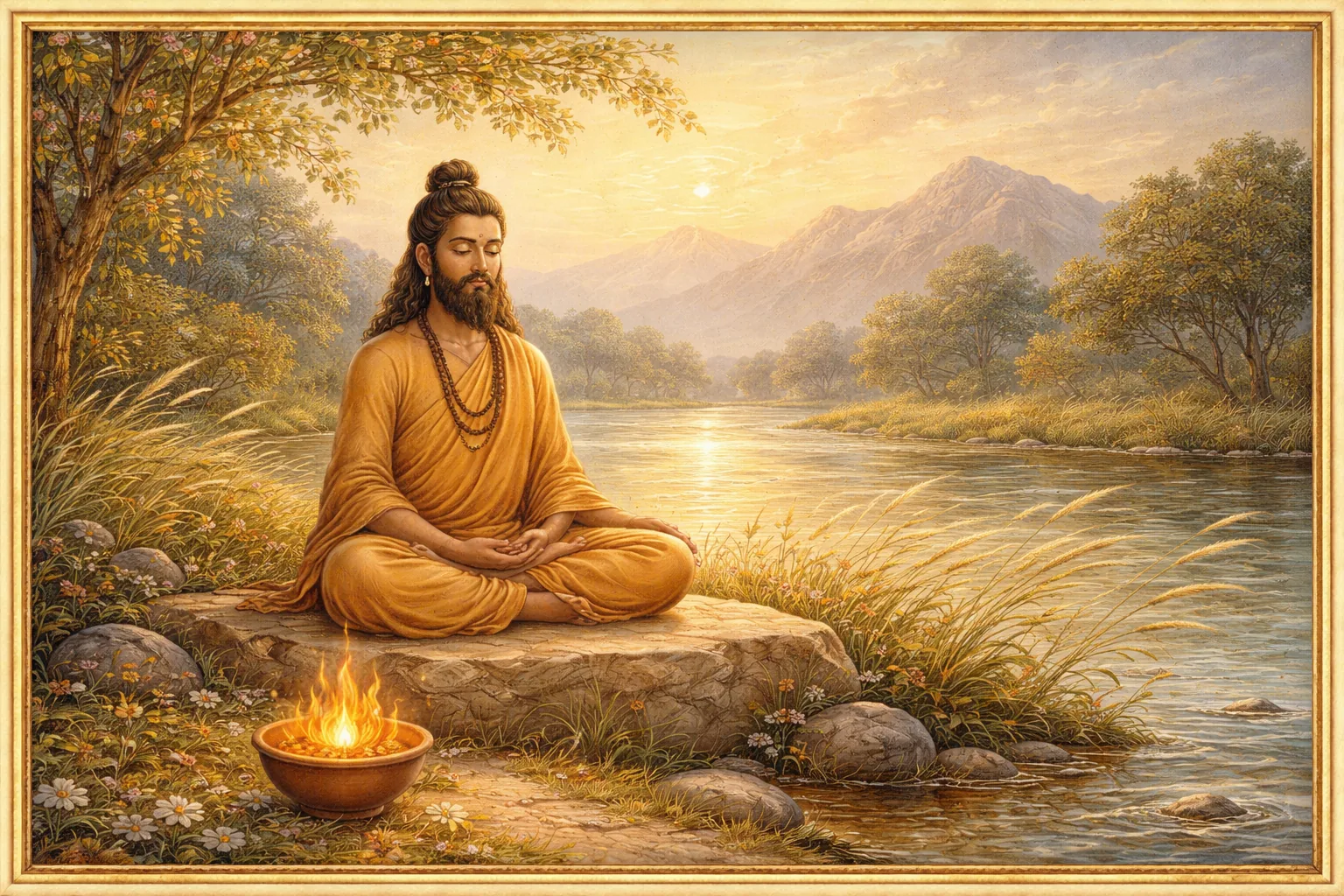
When you practice the teaching, you need to be prepared for the fact that even after twelve years of practice, you may encounter a text or hear a lecture that will so completely overturn your understanding of practice that you will think you only began practicing at that very moment.
That is, when we practice, we sometimes discover such a new vision for ourselves, such new layers of consciousness, that they can completely change our past impressions and knowledge. And when this happens, it is a normal sign of our spiritual evolution.
I read about one Master who practiced the Dharma for thirty years, and then he came across a text which, after reading it, made him realize that all his knowledge up to that point had been an illusion.
In spiritual life, we encounter very subtle states. You may listen to the same Teacher for many years or hear lectures on the same topic, but your understanding may be completely different from what is being spoken about. And over time, you will discover depth in what you have heard many times but let pass you by. This is normal.
The Evolution of the Understanding of Practice
For example, a person studied the teaching of yoga for a long time; he became a master of asanas, pranayamas, and even possessed magical powers. But then someone taught him the practice of atma-vichara. And when he began to practice awareness, he saw that all his knowledge of yoga had simply been his self-assured ego, while atma-vichara opened up to him an entirely different vision of practice. Then he began to practice atma-vichara diligently and, thanks to it, entered a deep state of clarity, compared with which all the methods of yoga began to seem like mere child’s play. And for about ten years after that, he practiced atma-vichara very deeply, believing that there was nothing higher than this practice.
Then someone told him that atma-vichara and point-like consciousness are also child’s play, that there is true presence, sahaja-sthiti, which is like space, and that atma-vichara only leads to it, but is not the summit. And then all of this person’s ideas are overturned again, despite the fact that he already considered himself a very advanced practitioner. He began to practice the natural state, similar to space. And again it took him about ten years to understand and master this. But when he became accustomed to it, he realized that all his ideas had become completely different. He once again established himself in this state, new to him, and began to believe that there was nothing higher than it.
He practiced naked awareness day and night and even had continuous awareness not only in dreams, but also in dreamless sleep. But imagine that he met a Teacher who explained that naked awareness with effort is still a childish level. That there is a practice beyond effort, the practice of self-surrender and self-transcendence, when naked awareness does not require the application of intention, but simply needs to be opened wide and accepted. And once again this person’s ideas about practice are overturned. He begins to practice effortlessness, self-surrender and openness, an expansiveness similar to space, while thinking of atma-vichara as something wretched, because he believes that the saints who taught him atma-vichara spoke only of point-like atma-vichara. But later he thought this way: “But they are saints! Probably they said one thing about atma-vichara, while I, not understanding them, thought something completely different. They spoke of atma-vichara as a means of natural presence, similar to space, and without effort, whereas I understood it as point-like concentration or as presence with effort that gives naked awareness.”
Then he returns to the old books again, completely reexamines them, and sees that the vision of the saints was entirely different, but ten years earlier he had understood them differently.

Finally, a revolution takes place within him, and he understands that subtle awareness and effortless self-surrender are balanced in some incomprehensible way, uniting inner and outer space. And this is inexpressible; it is what can be called the natural state.
This is only one example of how the evolution of consciousness can take place. And this is only in the practice of awareness; there is also energy.
Stages of Spiritual Development
It takes a yogin two years simply to begin to feel somewhat like a practitioner. It takes about three years to feel the circulation of prana in the pure channels. It takes about six years to reveal the nature of the Mind in meditation, in a calm, normal state of samadhi or dhyana. It takes another six years to learn to maintain this state in the post-meditative period, that is, to generate everyday mindfulness. Altogether, this already amounts to more than twelve years. After that, several more years are needed to strengthen control over the pranas and channels and to gain genuine experiences of kundalini yoga.
When consciousness is enlightened, energy is quite strong, and there are no longer gross desires, this is the true level of an authentic sadhaka. From this level begins the understanding of the elements in one’s own body and how one can work with them; a sacred connection is established between the elements in the physical body and the elements outside.
When we establish a sacred connection with the elements, our presence is enriched with different kinds of wisdom and energy. We can know what the samadhi of all-fire, the samadhi of all-earth, the samadhi of all-air, or all-water is. It is the same natural state, but it is colored by various states of the elements. That is why in the shakti yantra we speak about the elements.
The Element of Fire
The next element we examine is the element of fire.
The beneficial aspect of fire is the ability to create, to give impetus to processes on any level, and to complete what the creative force sets in motion.
Since fire inspires and excites, intuition is connected with it. Balanced fire moves one toward inspired deeds, gives joy in work, and completes what has been begun.
Fire is connected with bliss and joy, which differ from the bliss and joy given by the element of water and which are connected with acceptance and contentment. The joy of fire is more connected with inspiration and bodily bliss, with the joy of the awakening of experiences.
The highest experience of fire is the bliss of being. Its highest expression is the development of the wisdom of discernment.
People who have too much fire are easily excitable. Harmless things can cause them to flare up in irritation and react impulsively, when, without thinking, they become irritated with angry words and gestures. Since they lack tolerance, they are irritated by another religion, another race, another philosophy. They may even be irritated by someone’s manner of sitting or speaking.
Since fire is the opposite of earth, an excess of fire often leads to a lack of stability. In this case, there is very often a great deal of rapid movement and instability. If, in addition, there is also a lack of water, such people may experience constant dissatisfaction and anxiety. It is difficult for them to sit still for five minutes. They always need to be doing something. Silence and peace can be unbearable for them. It is difficult for them to fall asleep.
People with an excess of fire often speak too much and too quickly. Before they have finished saying one thing, another has already come to mind. All kinds of ideas arise in them incessantly.
There are different kinds of relationships with the elements. When the elements in the body are not subdued, the energies connected with these elements disrupt our awareness. They are disruptive pranas.
When the energies of the elements are balanced and subdued, the energies of the elements become manifestations of qualities, talents, and pure vision. Then they do not disrupt awareness but become an adornment to awareness.
For example, if a person’s element of fire is not subdued by awareness, this leads to strong dynamic activity of self-expression and self-manifestation, yet at the same time clashes or conflicts constantly arise. Or they may have strong intellectual activity, but there is no clarity behind it; they cannot concentrate, they take on many tasks, but cannot do anything deeply and well.
If, however, a person has a strong presence, then the element of fire simply nourishes that presence, giving various creative ideas and feeding their intellectual clarity. Their consciousness is always alive, but it is balanced.
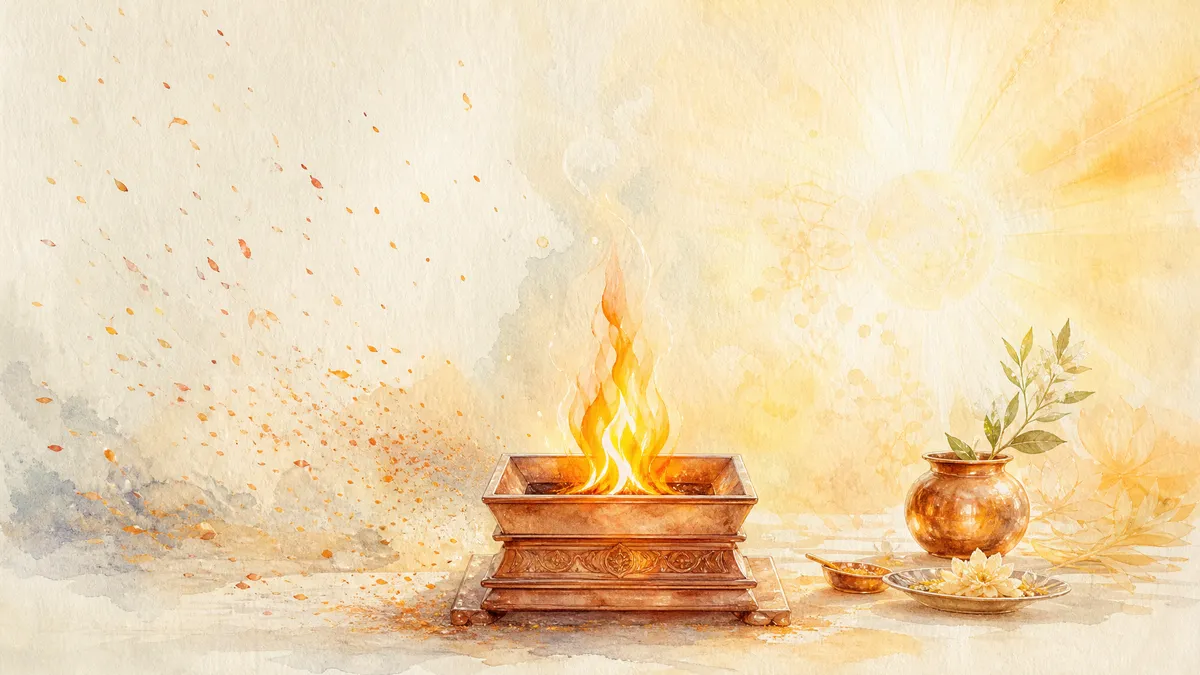
In the practice of meditation, an excess of fire entails the rapid arising of thoughts that are difficult to handle.
New thoughts constantly appear, seeming too important to ignore. The practice lacks peace and serenity; there is too much excitement and restlessness in it.
Excitement may arise from a lack of water in a relative sense, and instability from a lack of earth.
If a practitioner on the spiritual path lacks fire, they have little energy and inspiration required to carry out the practice.
If, on the contrary, there is a lack of fire, then a person experiences lethargy, a sluggish tamas. He has no liveliness of mind, no vigor of spirit, and no cheerful optimism to advance along the path of Dharma. He simply feels intellectual dullness. He tries to do something, but does it in a vague state of mind. And when he meditates, a lack of liveliness or clarity is also felt in the meditation.
If a person does not know how to control the elements, then he needs to change external circumstances somehow. For example, if a person lived in a city and then moved to a village, the village itself, because of a lack of fire, will cause him to feel boredom and dullness. But when he finds himself in dynamic external circumstances, his fire element also begins to work dynamically, and clarity awakens in him.
When the fire element is purified and brought under control, the clarity and liveliness of the mind no longer depend on external elements. You can sit in a dark room for years, and your mind will remain vigorous, lively, and clear.
The practice is performed mechanically, without impulses toward new understanding or experience. As a result, progress in the practice occurs much more slowly.
If there is a lack of fire, then there is also a lack of life force and inspiration; work brings no joy, there is no enthusiasm, and nothing new appears. Life turns into an endless circle of monotonous hard work. Or, if a lack of fire is accompanied by an excess of air, then movement occurs, but it is monotonous and not creative. Thanks to air, a person’s mental abilities may be very high, but he cannot approach the knowledge he has gained creatively.
Practices that develop fire include the practice of inner heat (tummo), known from stories about yogis who sit in the snow and dry wet towels with only the heat of their bodies. It is also the practice of external rushen, in which one gives oneself over to the experience of karmic inclinations in order to distinguish them from pure experience, and certain types of yoga connected with the physical body.
When you sufficiently control the winds, your channels are purified, and your kundalini energy is sufficiently awakened, you can then significantly strengthen the fire element. It is the fire element that is very important in the practice of kundalini yoga, because when it is strengthened, it begins to move the wind element.
The fire element, which can move the wind element, gives very rapid, leap-like growth in the practice of energy control. If your fire element is balanced, experiences can develop quickly, and you can enter deep clarity.