

I often tell students that it is very important to understand the meaning of the practice you are performing. A great deal depends on how deeply you have managed to understand the meaning of the practice. Of course, there is no point in simply mindlessly imitating any practices or chanting mantras. This is not at all the approach we cultivate in the Dharma. Understanding is essential for a student.
Many things that might seem utterly commonplace require such understanding because they are part of the practice. For example, what do the palms joined at chest level mean when you greet the teacher or chant Om? It means that you close the lunar and solar channels in your body, causing the energy at the level of the anahata chakra to circulate differently. This facilitates contemplation and allows you to enter a deeper state of presence.
So, we will begin our retreat. We will now talk about Guru Yoga, the descending power, and how to work with transmission. Then we will discuss the practice of Guru Yoga based on the syllable Om.
The Nondual Nature of Reality
The modern world is entering an era of entirely new connections and relationships. We usually do not talk about the external world, believing that we should engage in contemplation and awareness. So why have I brought this up now? The siddhas have a saying: “What appears to be external only seems so, because everything exists within.” From the perspective of nondual consciousness, there is no such rigid dualism, no division into external and internal. An event in the external world is nothing other than a manifestation of our own consciousness. Conversely, our own consciousness can actively influence an external event. Until we understand this, we will remain caught in a certain form of ignorance, in subject-object relations that rigidly divide reality into external and internal. In fact, this distinction is arbitrary and arises from a lack of awareness. Therefore, it is entirely legitimate to speak about the external world as well.
According to a saint of Dattatreya’s stature, who described his vision of the world in the text “Tripura Rahasya,” there is no such thing as a supposedly separate external world. The external world is a product of our own consciousness, a kind of collective visualization, a shared world that we create through the power of our consciousness. One could say that five billion people create a particular external world through the power of their consciousness. And you can see exactly what we are all creating together.
In “Tripura Rahasya,” Dattatreya says that the universe is a product of consciousness, that the universe is created anew every instant through the power of consciousness. Every person creates the universe by applying their conscious effort to it.
One could say that the universe outside is the result of the collective karmic vision of the five billion people inhabiting the earth, as well as animals, spirits, and other subtle beings.
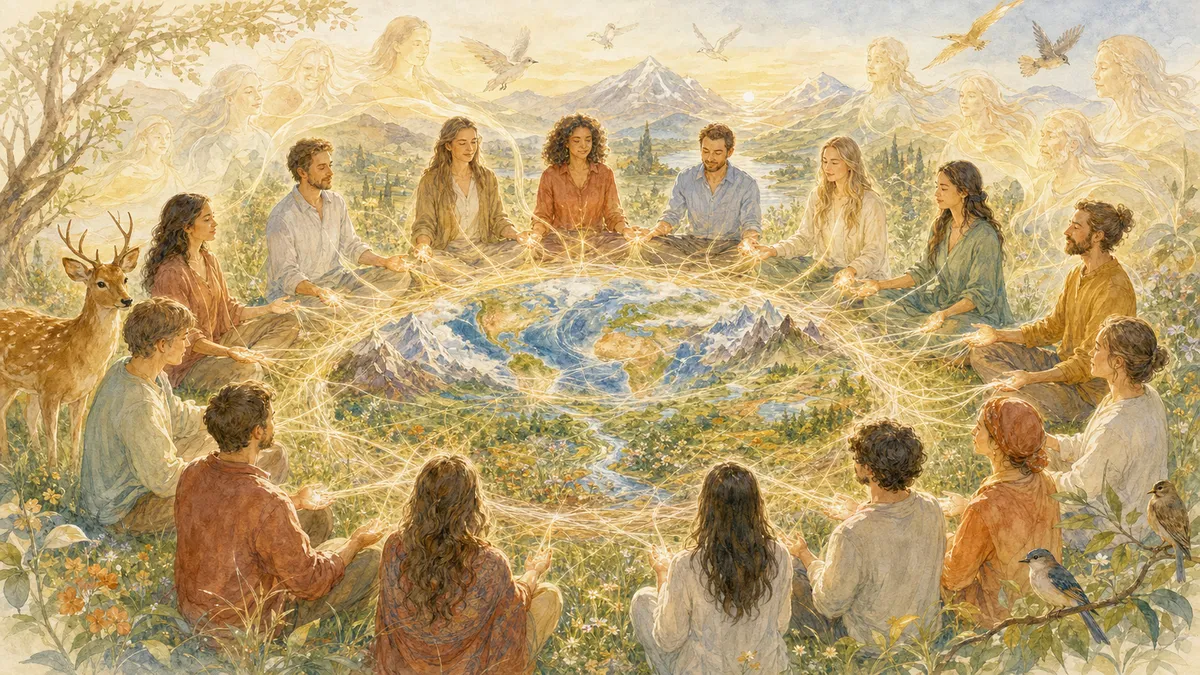
When we understand this principle, we begin to realize that we can influence this world through the power of our consciousness. I often give the following example. When you are in a hall, that hall exists only because we create it through our shared karmic vision. In reality, this hall does not exist in the external world; without you, it does not exist. This hall, with all its attributes, is merely an image in your consciousness: sights, smells, tastes, and tactile sensations. This image is reproduced in a complex way by your own consciousness. External energies are merely a secondary cause, just as an external object reflected in a mirror is a secondary cause that reveals the mirror’s reflective capacity. In the same way, external energies are a secondary cause that makes it possible to create the appearance of this hall. When you leave the hall, it will cease to exist in your subjective vision. But I would say that it will not merely cease to exist in your subjective vision; it will cease to exist altogether. Why? For it to exist, your consciousness is required, because an object cannot exist without a subject observing it; that is inconceivable. Any object can exist only in relation to a subject—this is the root of the entire world in which we live.
Someone might say, “If I leave the hall, this hall will not disappear, because others will still see it.” To this I would reply, “No, it will disappear completely for you, but others will create it through the power of their consciousness. It will exist only because others create it. But when they leave as well, it will disappear altogether. When the last person leaves this hall, the hall will cease to exist. It will remain only as a latent, hidden trace in consciousness.” It can be actualized again if secondary causes are created—that is, if one goes to a certain place and performs certain actions. If they are not created, this secondary trace will disappear. This is a very profound insight given by Dattatreya in the “Tripura Rahasya,” and it should be thoroughly understood if we want to comprehend the nature of nonduality.
The Era of New Connections and the Descending Power
Everything that happens in the world is nothing other than a reflection of the processes taking place in consciousness, including our own consciousness. Therefore, we can say that the world is now entering an era of entirely new connections and relationships. This is due to global causes related to astrology, as the Earth enters entirely new astrological cycles. It is also due to the tremendous growth of information technology, which affects consciousness. Information technology can change the world in a short period of time, and then we will find ourselves in entirely new connections and relationships, even at the level of everyday situations. This is also connected with the birth of many people with entirely new karmas and a new karmic vision. They differ greatly from those born in the 1950s, 1960s, and even the 1970s. These people possess supernatural powers and a certain level of awareness. They do not wish to live the way others lived before them, but instead want to live in accordance with their new level of awareness. This means that the karmic visions of people on the planet will become sharply divided.
All these signs indicate that a process is taking place which in ancient times was called Anugraha, or shaktipata. The term “shaktipata” is translated as grace, descent. “Anugraha” is translated as the self-illuminating, self-revealing power.
Now we will discuss the principle of Guru Yoga and how one should work with transmission.
The Nature of Limitations and the Aspiration for Freedom
Why do we turn to spiritual practice? We all naturally strive for freedom from limitations and for happiness. But unfortunately, we realize that we lack this freedom and happiness. After all, if we possessed all this in its fullness, why would we need to engage in spiritual practice? Yet we see that there can be no talk of freedom or happiness. Of course, everyone may have some degree of free will, but in the absolute sense we are very limited. For example, we are limited by time, space, physical laws, constants, the body’s biochemistry, astrological cycles, the alternation of day and night, and the need to sustain this body. We cannot, like gods, send our emanation into another world or be immortal. We cannot foresee the future, and because of this various misfortunes befall us. When we reflect on this, we see that we are severely limited. Moreover, we are limited by our own concepts, ideas, and the capabilities of the physical body. The capacity of our memory does not exceed that of even a less-than-perfect computer. We cannot perform as many mental operations as an ordinary laptop can. Our mind is much slower. We are also limited by weather conditions and a short lifespan. Anyone who denies these limitations will come into conflict with life itself, with nature.
When we understand all these limitations, when our inner freedom comes up against such a harsh reality, we experience suffering. For example, illness, old age, and death are some of these limitations. You do not walk up to the mirror in the morning and see that you have become much younger and have far more vitality than you did in your youth. That is incredible! As a rule, the opposite happens: after the age
When consciousness is obscured, its power is insufficient to control reality. Such a world, where the power of consciousness is insufficient to control reality, is called samsara, the abode of suffering and limitations. When we understand this, we naturally cannot accept it, because despite these limitations, our inner “Self” senses an enormous potential. It always senses its own perfection, purity, incomprehensibility, divinity, and infinity. Our inner “Self” is unwilling to accept such a state of affairs, and so we begin to seek a way out of this uncontrollable reality, out of samsara.
The World of the Gods as Pure Vision
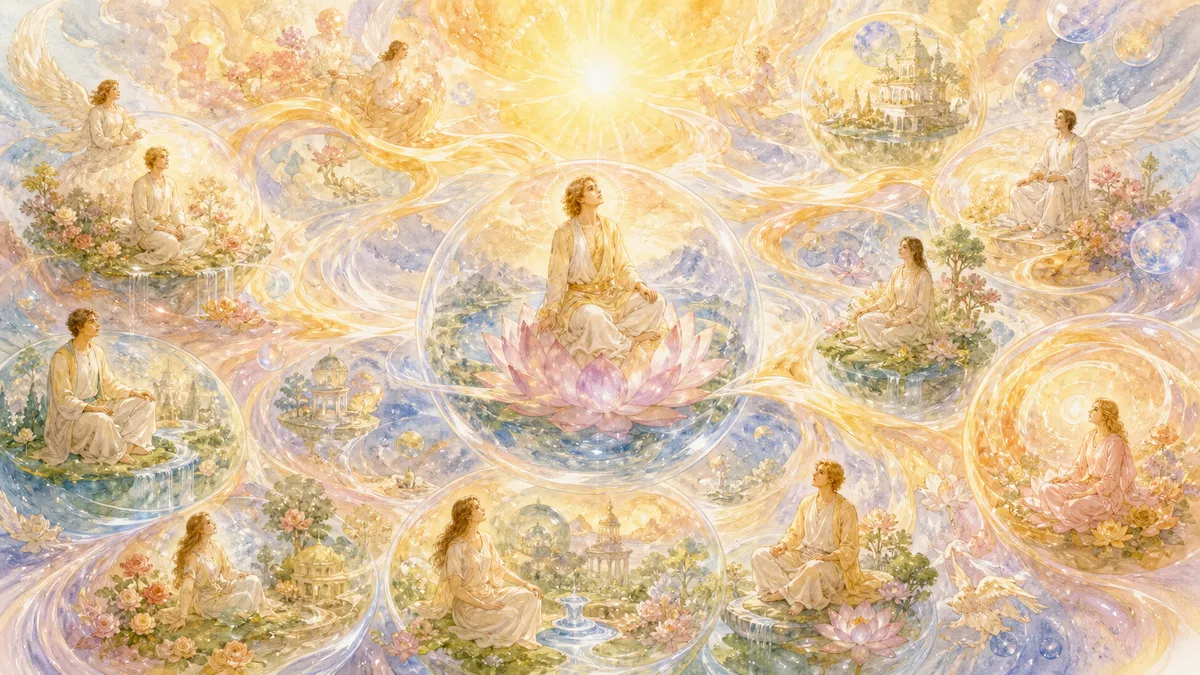
For example, gods can freely alter space and time. Unlike humans, gods are immortal. Their consciousness is organized with such complexity that they can send one of their emanations into the human world, another into the world of the gods, and a third into the world of the asuras. If their consciousness is powerful, they can manifest a great many emanations. Time flows differently for the gods because it is connected with consciousness and controlled by consciousness. They are not limited by space, since they can appear at any point in space at will. Humans, unlike gods, unfortunately cannot do this. Gods do not need to eat, as they are nourished by nectar and contemplation. They do not need to endure the torments of birth, illness, and death. All these things are absent in the world of the gods. The gods live in a completely different reality, one created by their own consciousness. Such a reality is called a mandala, a world of pure vision. Each god is the center of their own universe. They live in a reality created by their ideal conceptions and entirely subject to their consciousness. As a result, the gods live in absolute freedom and absolute happiness. This is called svatantrya-shakti—the energy of absolute freedom inherent in our absolute “Self.”
When we speak of transcending limitations, we see that these limitations always exist in the human world. Nevertheless, a human being has the opportunity to evolve and transform into the state of a deity.
The Path of Radical Transformation
Thus, when it comes to a way out of samsara, the siddhas say that there is only one way—radical transformation. This does not mean some minor transformation, but a radical one; that is, evolution must be total and complete. If we stop somewhere or limit ourselves, that is not enough.
What does such a radical transformation mean? It means that we must generate such a level of consciousness, such a karmic vision, that would enable us to make the transition into the pure dimension, into the state of the mandala. This state is also called the single “taste,” samarasa. It is a state in which the world consists of consciousness and is controlled by consciousness, where immortality, freedom, happiness, and absoluteness are realized. If we ask how to make this “great transition” and where this world is located, it is hardly worth looking for it on geographical maps or in the starry sky, since it is not found in physical reality. This world exists in inner subjective reality, which is why we speak of changing consciousness, of changing karmic vision. One could say that this world is right here, right now. The issue is that our consciousness is not attuned to it; therefore, to enter this karmic vision, we must radically transform our consciousness.
For example, the siddhas are described as those who abided completely in pure vision even while living among humans. Outwardly, they lived among humans, but subjectively, by the power of their consciousness, they abided in the mandala because they had realized the principle of the single “taste.” The principle of the single “taste” means the complete elimination of all duality (subject-object distinctions) and union with the Supreme Source, because the mandala is a karmic vision in which nonduality is realized.
The Path to Sahaja Samadhi
The question then arises: “How can this transformation be accomplished? What must be done? How can one enter this other karmic vision?” If we study the teaching, we will find a specific answer there: “The path to this is the mastery of sahaja samadhi.”
Sahaja samadhi is the cherished goal of a yogi practicing Laya Yoga. To master sahaja samadhi, one must acquire a different structure of consciousness, a different level of awareness. First, one must have at least a small experience of it. Such an experience is called a “taste.” Then one must become established in it, and after that one must live by becoming established in it again and again until it encompasses every sphere of our life. This is the practice of the principle of awareness. Then the next question arises: “How, then, can sahaja samadhi be attained? How can one enter this state of the single ‘taste,’ samarasa?” It can be attained only through persistent study and training in a particular system of practice under the guidance of an experienced master. It can hardly be attained just like that. Although, of course, such cases do occur, this happens only to very rare individuals who were already saints in past lives. For us as practitioners, the prescription is very simple: practice tirelessly and transform yourself.
The Principle of Transmission and Anugraha Shakti
When we are learning, the principle of transmission and Guru Yoga are very important, because they make such transformation possible. Then the question arises: “What is transmission?” Some say that transmission is when the Guru gives a particular method or direct introduction. But in fact, transmission is something much deeper. When we speak of transmission, the question of the principle of the descending power, Anugraha Shakti, arises.
We usually speak of the qualities of the Absolute. These qualities are described in Sanskrit as infinity (ananta), inconceivability (achintya), stainlessness (niranjana), and self-perfection (arya). This list also includes such qualities as paripurna (being filled to the brim with bliss) and svatantrya (primordial freedom). All these are qualities of the Supreme Source, qualities of our absolute Self.
We can say that our absolute Self, our higher body (Atman), possesses these qualities right now. It abides in absolute freedom, is filled to the brim with bliss, eternal, inconceivable, and infinite. It is perfect without any need for improvement; it is never obscured or stained by anything. Our absolute Self is Brahman Himself (or God in theistic religions). But why, then, are we not in contact with our absolute Self?
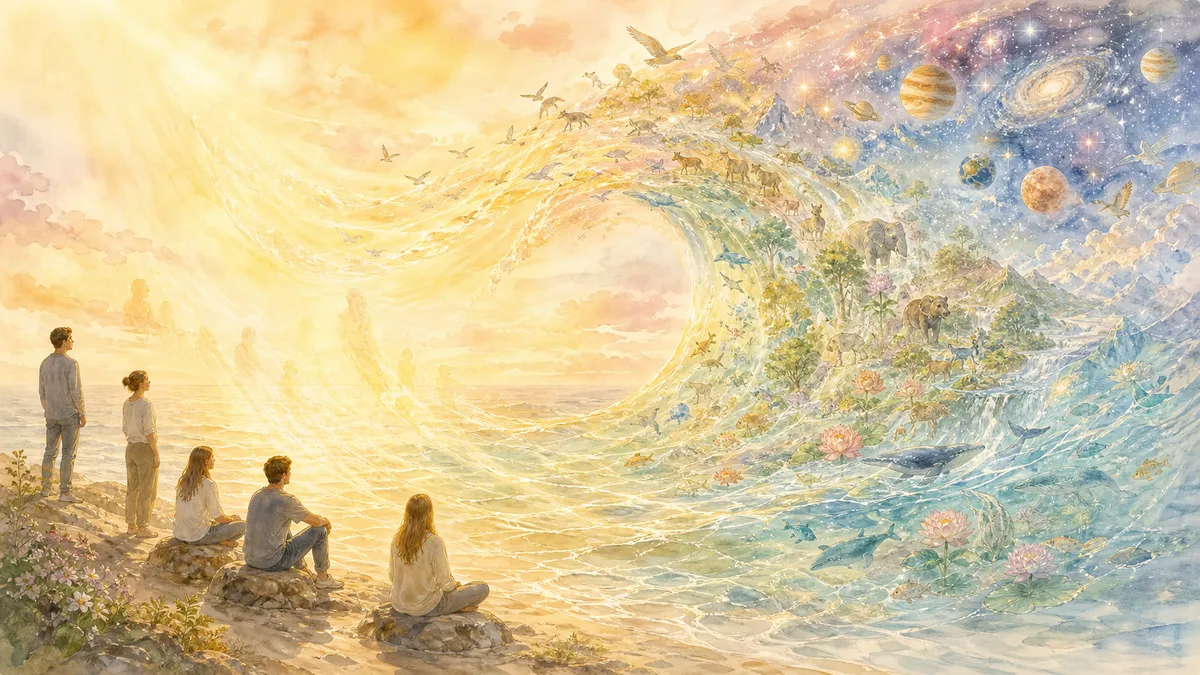
The absolute Self can be envisioned as a boundless ocean of bliss. The creation of the external universe can be envisioned as a wave in this ocean. This ocean has the capacity to radiate, create, bring forth, appear, and manifest itself endlessly in the form of energies. When such creation and manifestation occur, this world appears, while our true Self itself becomes, as it were, conditionally obscured from us. This is the first stage of lila, the divine play. In the second stage of lila, the Absolute, as it were, sends itself the energy of enlightenment, shaktipata; that is, the second stage is enlightenment, the elimination of the ignorance that arose as a result of the play. Therefore, Guru Yoga and transmission are closely connected with this principle of shaktipata, Anugraha. For example, what is this seminar? It is the descent of the divine energy of Anugraha, shaktipata, upon you.
The Katha Upanishad says the following:
“The essence of the true Self cannot be realized through discussions, by means of the intellect, or through diligent study of treatises. The Supreme Self can be realized only by the one whom It chooses for this purpose, and only to that person does It reveal Its true essence.”
When you see images of saints, meet teachers, or pick up sacred texts, all of this is a manifestation of Anugraha, shaktipata, the descending power of the Absolute. You may not realize it, but through these channels the Absolute is continually knocking at your door. It knocks and knocks until you open yourself to It. But if you do not wish to, no one compels you to open yourself to Its knocking; you may remain closed, since you have the free will to make that choice. Yet It will continue knocking until you open yourself to It. This closedness exists because there is a strong clinging to the “I,” to the ego, and an insistence on preserving one’s state of ignorance.
It can be put this way: “The sun always radiates its rays; it does not single anyone out, but shines at all times and upon everyone. Yet if we sit in a dark room and do not look outside, we shut ourselves off from the sun of our own free will. But when we go outside, we become open to its rays.” The same applies in the absolute sense. Christians say, “Rejoice! God loves you!”
I once heard someone say, “Well, He loves me. So what? It does not make me feel any better; somehow I do not feel it.” But that is precisely the point: we have free will, and we can either ignore this descending power or come into contact with it. As a rule, if our sensitivity is weak, we do not feel this descending power. We are closed to it, which is why we need years of spiritual practice, purification of the mind, and such things as the accumulation of merit in order to come into contact with our higher Self. In fact, all we do in our lives is diligently avoid contact with our higher Self. This contact could occur instantly, in a single second, because it has never been broken, but our dualistic thinking, selfishness, and limitations of consciousness prevent us from establishing it.
In the biographies of siddhas, one often encounters stories such as this: someone diligently practiced yoga for twelve years and attained liberation. But from the perspective of Advaita, from the higher viewpoint of Anugraha, one could put it this way: he evaded Anugraha for twelve years, but it finally caught up with him; he avoided God for twenty years, but eventually he was fortunate enough to come to Him.
In fact, because of our own lack of awareness, we constantly evade this descending shaktipat. But if we are sufficiently receptive, contemplative, aware, and open, it begins to happen right now. To achieve this, we simply need to abide in contemplation, in presence, and, while disregarding the movements of the lower nature, listen inwardly to our causal body in order to open the channel called atma-bhava, or brahma-aham-bhava—that is, the sense of being “I am the Absolute.” This channel is very subtle. We also sometimes call it the channel of buddhi.
Buddhi is the intuitive intellect, or intuitive consciousness. This channel instantly disappears when our selfish motivations, conceptualization, or mind (manas) become active, or when we follow the lower nature—for example, worldly desires—and become carried away by them. If our attachment to anything whatsoever becomes active, this channel is immediately blocked. As soon as we enter into deeper awareness, release our attachments, self-liberate the discriminating movements of the mind at the conceptual level, and remove selfish motivation from our actions, this channel immediately expands. It is like tuning a radio to a particular frequency. Once you have tuned it, the signal is very strong and the sound quality is excellent. But as soon as you shift the dial slightly, the connection is immediately lost.
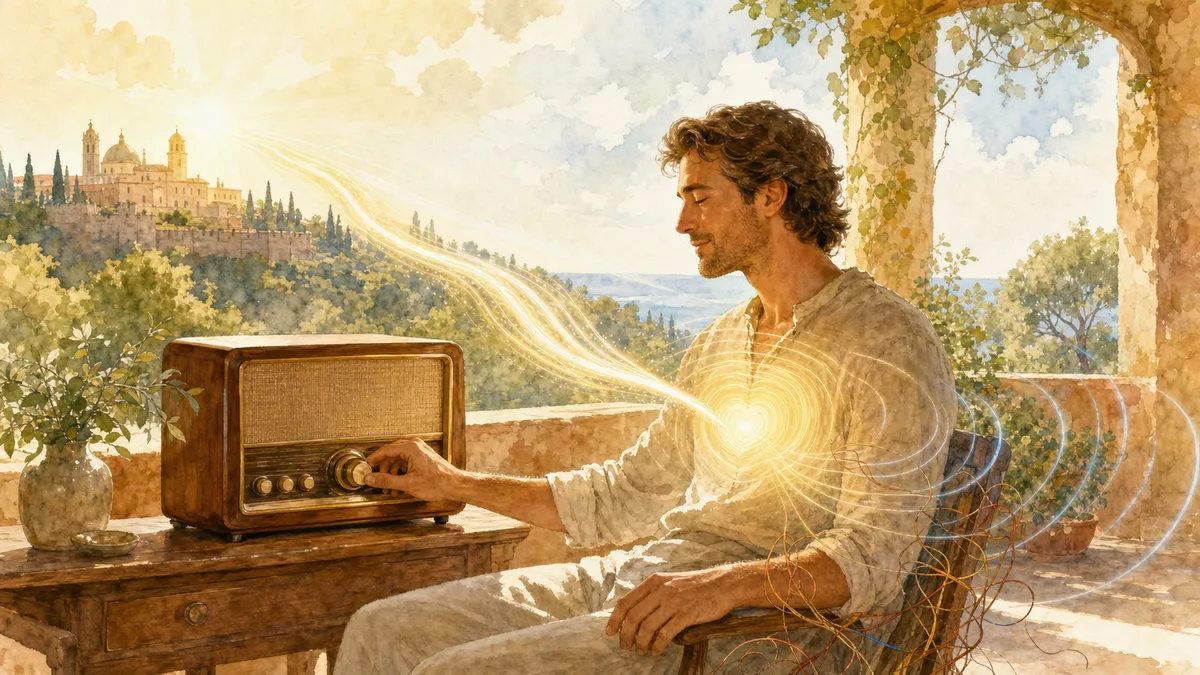
How can we enter this channel and establish such a connection? This is precisely what Guru Yoga and working with transmission in the siddha tradition are aimed at. Therefore, when you are told about Guru Yoga and transmission, you should understand that this means establishing the proper connection and opening such a channel.
The Essence of Guru Yoga
Guru Yoga is considered a very important concept in the teachings of Laya Yoga. In fact, contemplation, abiding in the natural state, and practicing Guru Yoga are inseparable concepts. Some define Guru Yoga as a telepathic connection with the teacher. But in reality, that is not quite what it is. Psychics and mediums can also establish telepathic connections with one another, since telepathic communication takes place at the level of concepts or images. Guru Yoga is something different. It can be called a connection, but not at the level of the mind or the subconscious alone; it occurs at the level of the superconscious.
Guru Yoga means that there is primordial Consciousness, the supreme Mind. Within it abide the siddhas or the master—the root guru under whom you study. In fact, this consciousness is inherent not only in siddhas or the teacher; it is inherent in all living beings. Moreover, for this consciousness, the very concept of living beings as such does not exist. From the perspective of this consciousness, all beings are one, while on the relative level we say that they are its derivatives, its manifestations.
Guru Yoga means that, through a certain practice, we try to come into contact with this consciousness of the siddhas and the consciousness of the master so that this state may become our own. Being in presence is one form of Guru Yoga. If we are in proper contemplation, we are in the state of Guru Yoga. There is a saying in Zen texts: “To contemplate is like living an ordinary life, except that you are always floating a foot above the ground.” When Guru Yoga is practiced correctly, everything changes. We may seem to be in the same conditions and circumstances, but everything changes radically because, in the state of presence, everything is seen differently.
One can often see how a disciple progresses in the practice of contemplation. If they have awareness, they are always highly flexible, skillful in practice, detached, and self-liberated. They never have problems, are always harmonious in their relationships, and clearly understand the teaching. One could say that they have mastered awareness, and awareness is beginning to bear fruit for them. But if awareness does not manifest in a person’s life, they experience conflict, disharmony, a lack of understanding of certain theoretical aspects, and difficulties with practice. This is a clear indication that they have not yet discovered or grasped presence and are not sustaining it. Such conclusions can be drawn by observing disciples in various circumstances. When we have awareness, we are constantly in this state of floating. Then we have no hopes, attachments, clinging, or fears, and our limitations gradually begin to disappear. But when we lose awareness, our limitations take over once again.

Guru Yoga and the principle of transmission are powerful methods through which we receive an additional supply of energy that enables us to sustain this very awareness. Therefore, by working with Guru Yoga, we establish deep contact with the Supreme Source through the Teacher and through the siddhas.
The Teaching of One Method
Before we begin the collective practice of contemplation, let us talk briefly about contemplation in action.
Laya Yoga is called the teaching of one method; it is also called the teaching of the three freedoms. What does the teaching of one method mean? It is said that if you want to become a master of Laya Yoga, you must become a master of the one that contains everything within itself. What does the teaching of the one mean? The teaching of the one means the nature of Mind. If you do not fully understand this principle, you may say that we have many different methods, that Laya Yoga contains five main sections, while the section on contemplation, in turn, contains three subsections. But if you have truly understood the essence of the practice, you discover that all methods are nothing more than modifications of one principal method. The principal method is meditation on the Supreme Source, that is, abiding in naked awareness. All other methods are secondary causes that help deepen meditation on the Supreme Source and deepen contemplative presence. Therefore, whatever methods we may apply, they are all intended to deepen our understanding of our natural state. They are like different clothes that we put on depending on the circumstances.
What does it mean to become a master of the one? It means striving to sustain naked awareness and self-liberation continuously. We have limitations that can be both internal and external. Internal limitations are our fixed ideas, stereotyped thinking, worldly desires, and sensual attachments. For example, our mind is limited; it cannot think the way the gods think. We understand that the past is the past and the future is the future. The gods have a different logic: they understand that the future and the past are one and that this can be changed. Such a thought would never even occur to us because our thinking is stereotyped.
The Principle of Self-Liberation
To free ourselves effectively from limitations, we strive to abide continuously in awareness. Self-liberation means that when such limitations manifest, they must be liberated. How are they liberated? Simply by abiding in presence and naked awareness. For example, if your anger or some unstable inner karmas manifest while you remain attentive, you recognize them. You do nothing; you simply observe and recognize them. Through simple recognition, they dissolve and disappear into the emptiness of consciousness. This is the principle of self-liberation.
It is believed that there are three classical approaches to working with kleshas and limitations. The first approach is characteristic of the sutra method, in which we simply block them. The second approach is characteristic of the tantra method, in which we transform them. But our method is self-liberation, meaning that we allow them to liberate themselves. What enables this self-liberation to occur? Abiding in naked awareness, in contemplative presence.
When I see that someone has difficulties or problems in their relationships, I tell them: “Please try to become more aware. Please try simply to bring forth an understanding of the teaching right now. As soon as you bring forth an understanding of the teaching right now, all of this will disappear because it will liberate itself.”

To be a master of the one method means continuously remaining in a state of self-liberation. Self-liberation means that you maintain contact with your subtlest intuitive consciousness (buddhi). You continuously keep this channel open, and when inner feelings, mental fluctuations, or emotions arise, you do not succumb to them; instead, you use the power of this transpersonal intuitive consciousness to dispel all these fluctuations. Under any circumstances, you maintain your connection with the channel of buddhi. Through Guru Yoga, this connection is transmitted to you, and then you work with it yourself, nurturing it so that it becomes very strong.
At first, your connection is very weak. It has not yet been fully developed, and you are not entirely confident in it. Therefore, it is said that, in accordance with the first principle (the principle of shravana), the teacher transmits to the disciple a connection with this state. In accordance with the second principle (the principle of manana), the disciple must eliminate all uncertainties and understand whether they are connected with this state or not. Finally, the third principle (the principle of nididhyasana) states that we must constantly maintain such a connection, that is, continuously remain in the natural state. Contemplation, sahaja-sthiti, the natural state, and connection with buddhi (the awakened, intuitive mind) are one and the same.
When we have such an uninterrupted connection with awakened consciousness, it is said that we are in contemplation and liberate ourselves through contemplation. This is a very subtle spiritual process. A person who has not mastered it will not even understand its essence. But if you are an experienced practitioner, you abide in a very subtle state that you continuously maintain. This is why it is said that Laya Yoga is the teaching of the one method. In other words, we become masters of the one method that replaces everything else. All other methods serve as support for our self-liberation.
How can you recognize someone who knows how to self-liberate? They are very light at heart. They have no suffering. They no longer live, but play, because they have understood the principle of spontaneity, self-perfection, and lila. They do not identify with their thoughts, emotions, or, of course, external situations; that is, they cannot be frightened, confused, or shocked. They can even work with shock. They can turn even a shocking situation into practice. If shock arises, they think: “Wonderful! What a remarkable state! I should work with it.” Instead of shutting down, putting up barriers, and boiling with indignation, they open themselves to the shocking situation or experience: pain, anger, indignation, bliss, and so on. They open themselves because they are attentive and aware, allowing the experience to enter them. They do not cut it off, block it, or suppress it, but let it in and trust it completely. Yet instead of being overwhelmed by this experience, they unite with it. And when they unite with the experience, they allow themselves, as it were, to move with it, plunging into its very center. But because their mind is wide open, the experience neither unsettles nor overwhelms them. At its center, they find emptiness. They discover that any experience is essentially part of their consciousness, and therefore they can work with it and transform it into something entirely positive, even without doing anything to it. When a person contemplates in this way, we say: “They unite. They integrate.” For example, you are meditating while an orchestra is playing nearby. This distracts you, and you may fall into a negative state because of it. But if you make contemplating the orchestral music part of your meditation, this way of uniting becomes genuine practice.
The degree to which a person is harmonious and easy to communicate with, and free from problems and attachments, indicates how well they have mastered the method of self-liberation.
One king decided to study under a mahasiddha. He asked:
“Tell me, how can I free myself from samsara?”
The mahasiddha looked at him and said:
“Your palace is holding you back. Leave it.”
Reluctantly, the king left the palace and freed himself from his attachment to it. He began wandering together with the mahasiddha. Then he asked:
“What else is keeping me in samsara?”
The mahasiddha replied:
“Your status is keeping you in samsara.”
The king took off his royal robes and changed into a peasant’s clothes. After that, everyone began treating him like an ordinary peasant. The mahasiddha said:
“That is better. You have freed yourself from attachment to your status.”
The king asked:
“What else is holding me back?”
The mahasiddha said:
“Inside, you are still a king. Inwardly, you have not yet freed yourself from your royal status.”
And the mahasiddha instructed the king to care for a sick peasant for a time, washing his wounds and bringing him food. This continued for about six months. After that, the mahasiddha said:
“Good. You have now rid yourself of the king within.”
Then the king said:
“What else is holding me back?”
The mahasiddha replied:
“You still have a dualistic state, so go to a cave and meditate. Seek the nature of your Mind.”
The king once again went to carry out his teacher’s instruction and meditated until he discovered the emptiness of his consciousness. When the mahasiddha was convinced that the king had truly understood the principle of contemplation and freed himself from dualistic notions, he said:
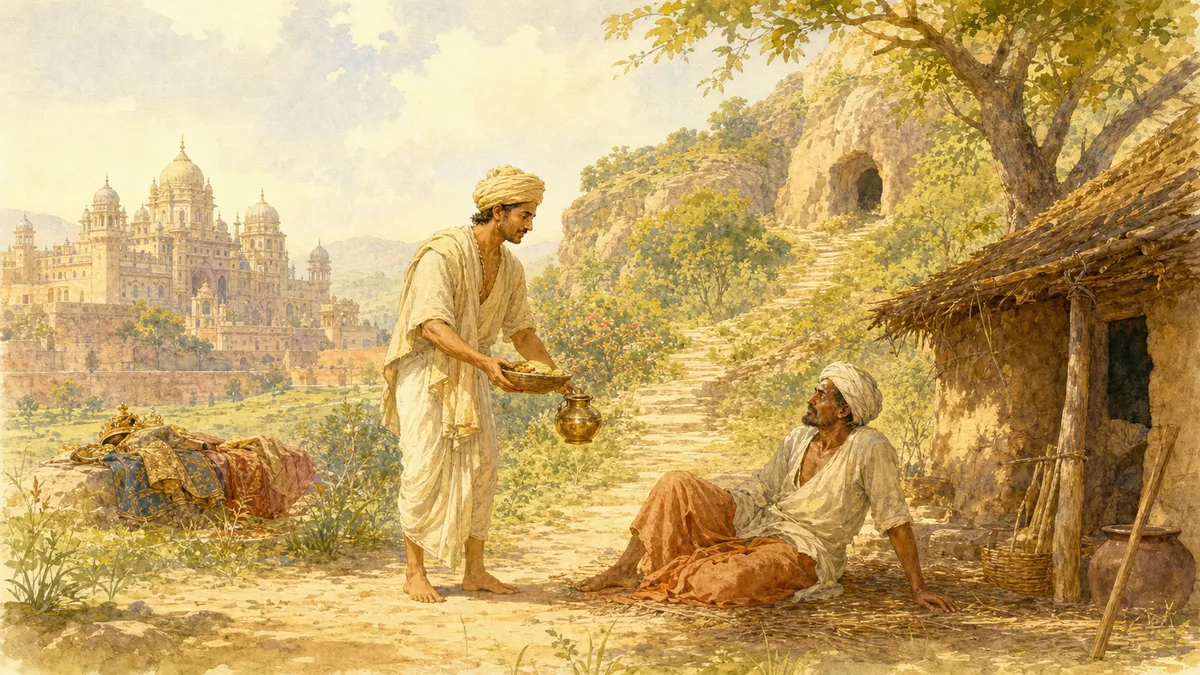
Now you have understood something. You may return to the throne and become king again. From now on, everything will be a play for you. For you, there will be neither a palace, nor royal status, nor affairs; everything will be an illusion.
This is a typical example of how a yogi dispels illusions. Once he has dispelled his illusions, nothing remains the same for him. He is no longer caught by circumstances because he self-liberates.
Contemplation in Everyday Life
How we act in everyday life reveals how aware we are. Practitioners often encounter questions, tensions, and unresolved situations. If you remain mindful and in contemplation, you unite with the situation, and therefore it does not cause you tension. To unite with a situation means to be in a state of play, to abide in pure vision. If we are not integrated with a situation, then every situation creates tension within us, while our mind, instead of abiding in contemplation and self-liberation, remains in false identification and duality.
Contemplation in action refers to how we embody the principles of the teaching in our lives. If we contemplate in action, it means that we have opened the space of non-action within our hearts and become established in it; therefore, we are no longer dependent on karmic forces. If we have inwardly become established in the space of non-action, we can act not according to the program of karma, but spontaneously, based on the vision that everything is originally pure and perfect by nature.
We often plan something, but our intentions do not come to fruition. Why does this happen? Because the intention is weak. Because we are trying to act from duality. But if we act from presence, our intention becomes very powerful, and therefore it comes to fruition.
The Principle of Avadhana
When a yogi contemplates, he continuously abides in presence and does nothing, even if he appears to be performing many different actions. When a yogi contemplates, he strives to unite his presence with every action: talking, eating, dressing, using the toilet, walking, working, and, of course, various practices.
Being in contemplation is like sitting in the cockpit of an aircraft (a starship, helicopter, or airplane) and watching the instrument panel. When operating a complex machine, you remain continuously attentive, monitoring the various instruments. You know that if you become distracted and make a mistake, serious problems may arise, so you remain as attentive as possible every second.
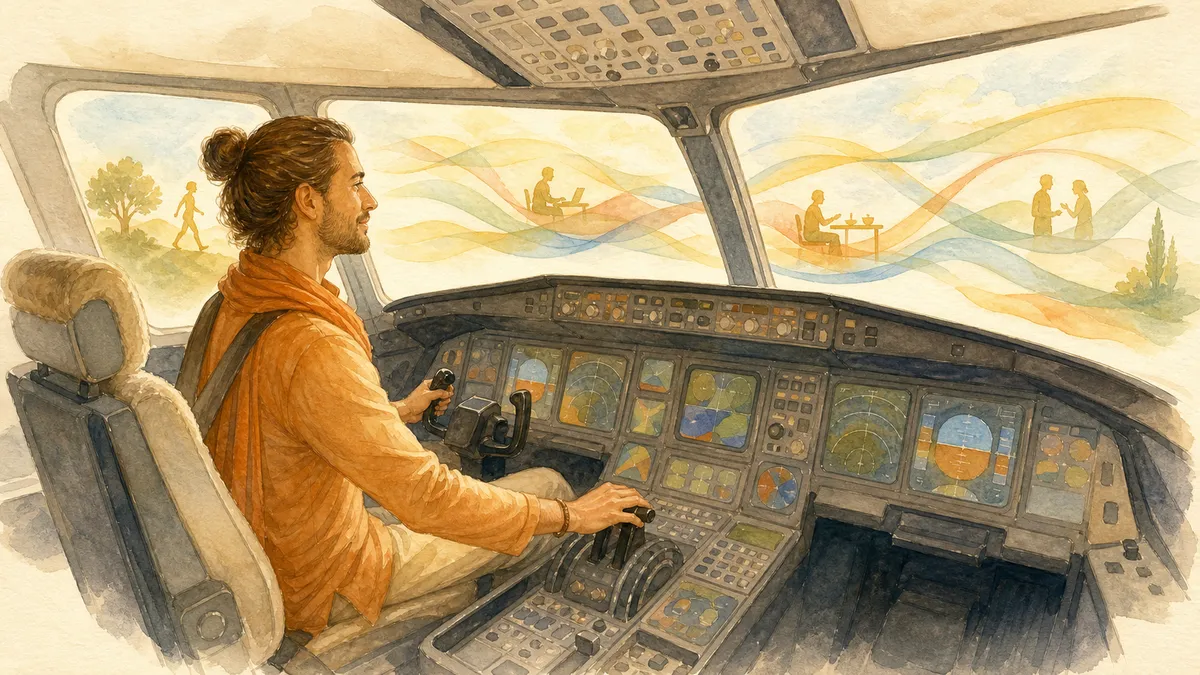
Something similar happens when a practitioner acts. His own mind, prana, and body are such a starship. He continuously monitors any changes in consciousness, his pranas, external situations, his own thoughts, and whether he is abiding in the thought-free state. This particularly vigilant state is called avadhana. The principle of this particularly vigilant state (avadhana) is one of the most fundamental principles in the practice of contemplation.
Practical Instructions for Retreat
If you understand what is being discussed, you can use the present moment as a practice right now. For example, you are tired, your legs hurt from sitting, you feel sleepy—all of these are distracting circumstances. But if you begin working with them and overcome them, you can gain a tremendous experience of awareness that will advance you to a new level.
Of course, there is no need to force yourself too much. If you become tired during the retreat, you can leave the hall to rest and then, once you have regained your strength, return here. Those who are able to practice move forward like the “horn of a rhinoceros.” The retreat rules apply only in this hall. Outside the hall, samsara is at your service.
By exercising your own free will, you decide how intensively to practice: whether to follow the full schedule or allow yourself to rest if you are not accustomed to meditating for long periods and have become tired. Perhaps you can choose a gentler form of practice for yourself. You all have svatantrya-shakti—your freedom of will. You always rely on it in spiritual practice and take responsibility for your own practice. I help you with your practice, but I do not take responsibility for you. This, too, is part of your awareness, because taking responsibility means working with awareness. You decide for yourselves how to practice.
