

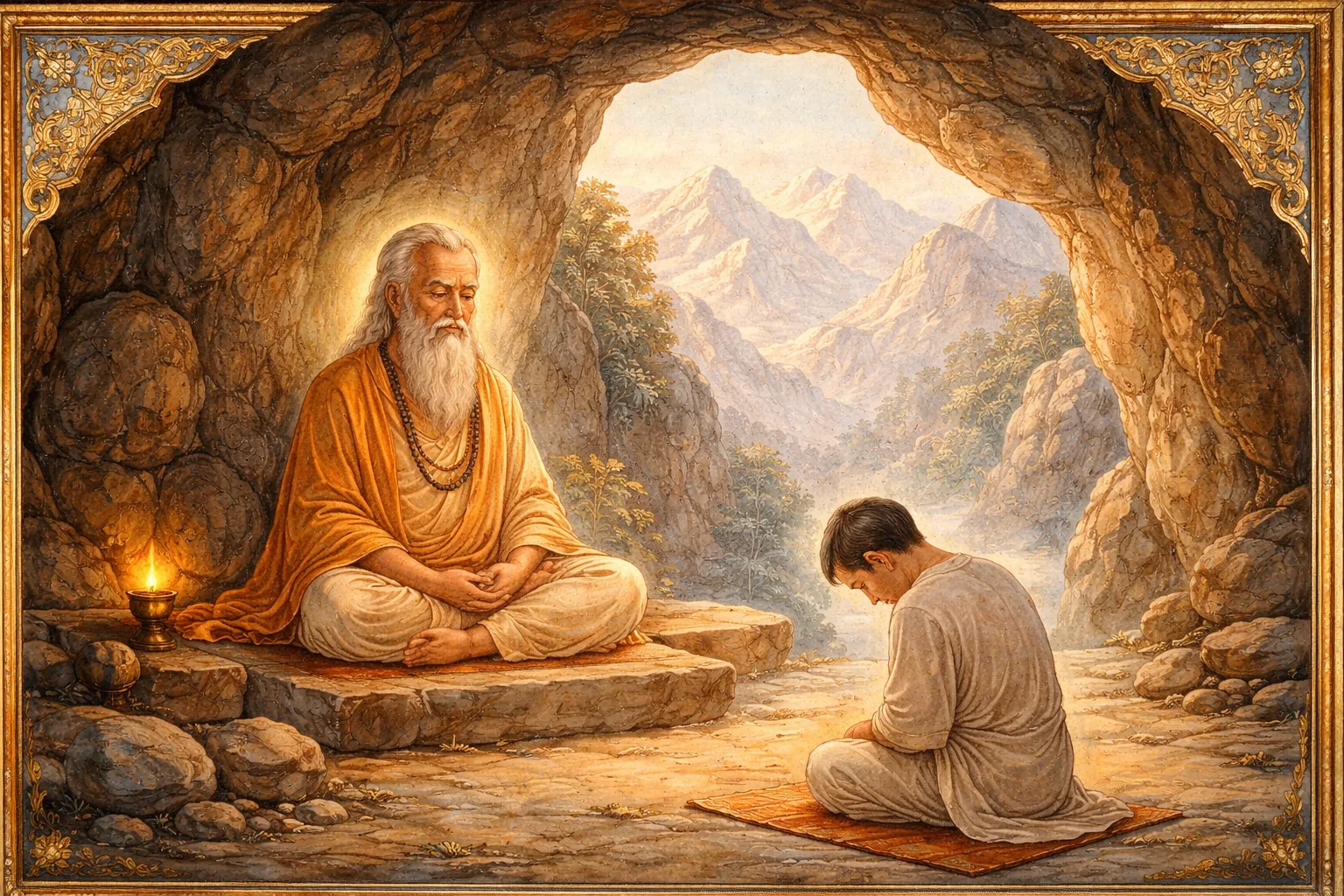
With a calm heart, not exalted, radiant, developed, attentive, freed from evil, flexible, ready for action, firm and unperturbed, he applies and directs his efforts toward the state of wondrous skill. He masters various aspects of this gift. Being one, he becomes many. Being many, he returns to one. He becomes perceptible and imperceptible; he passes through walls or hills or barriers without breaking them, like air. He moves through solid layers as through water. He walks on water without sinking, as on solid ground. In the lotus posture he travels through the sky like a bird flying on the wind. He touches even the sun and the moon, however mighty they may be.
In his human body he rises above the heavenly paradise of Brahma.
The Samana Palasutta here describes the state of a mahasiddha. Today, on the day of Shivaratri, we perform the collective practice of honoring the mahasiddhas. When we come to the teaching, to the monastery, we come into contact with a very powerful spiritual tradition, because the teaching of Tantrism is based on the spiritual experiences of the mahasiddhas, and the mahasiddhas are the most perfected beings who have ever been among humans. And when we encounter such a powerful spiritual tradition, we must receive it in order to make it part of our life, if we want to follow the path of the mahasiddhas, so that it is not something disconnected from our life.
The Essence of Guru Yoga
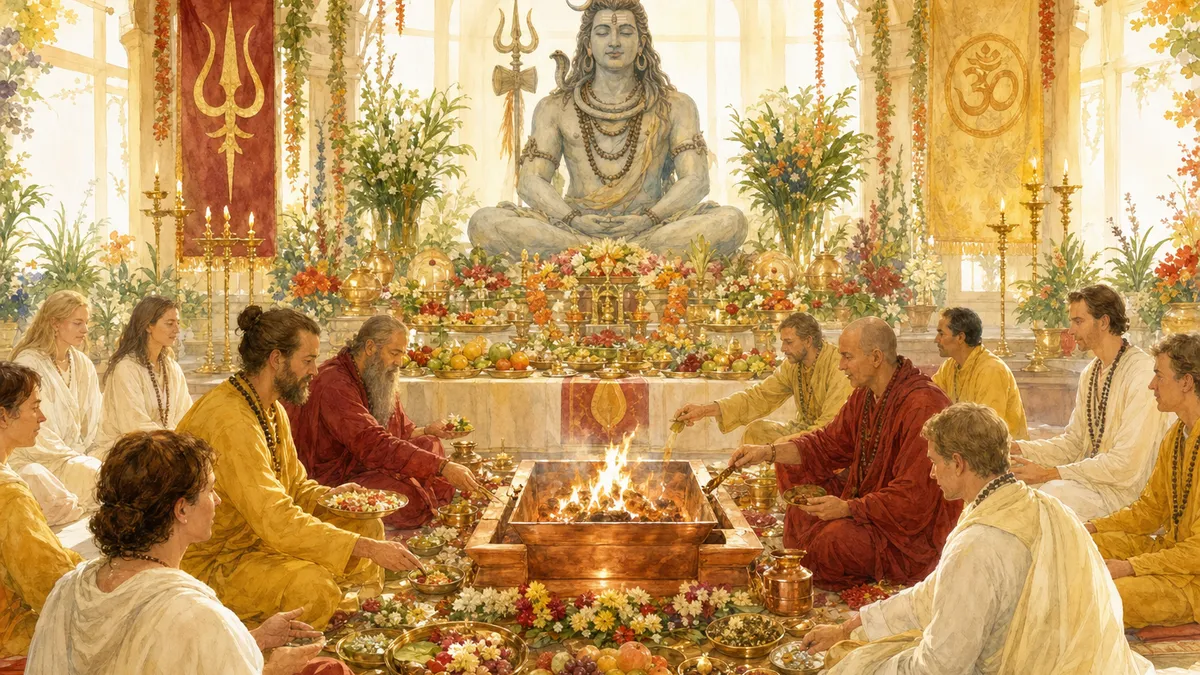
Guru Yoga is a special practice in which the disciple merges consciousness with the mind of the Guru, trying to perceive the world through the Guru’s eyes, that is, through the eyes of a fully awakened being. In collective practice, we perform such Guru Yoga, merging our mind with the consciousness of the mahasiddhas. In other words, the task of this practice is to enter into telepathic contact with the consciousness of the mahasiddhas, to receive purification of consciousness and blessing. Or one could say that the task of this practice is union with the quantum space of the mind of the mahasiddhas.
As practitioners, we are interested first and foremost not so much in images and concrete, shaped experience, but in union with the nondual consciousness of the saints and recognizing it as our own. Therefore, when we begin to perform such a collective practice on the day of Shivaratri, we must clearly understand why we are doing it.
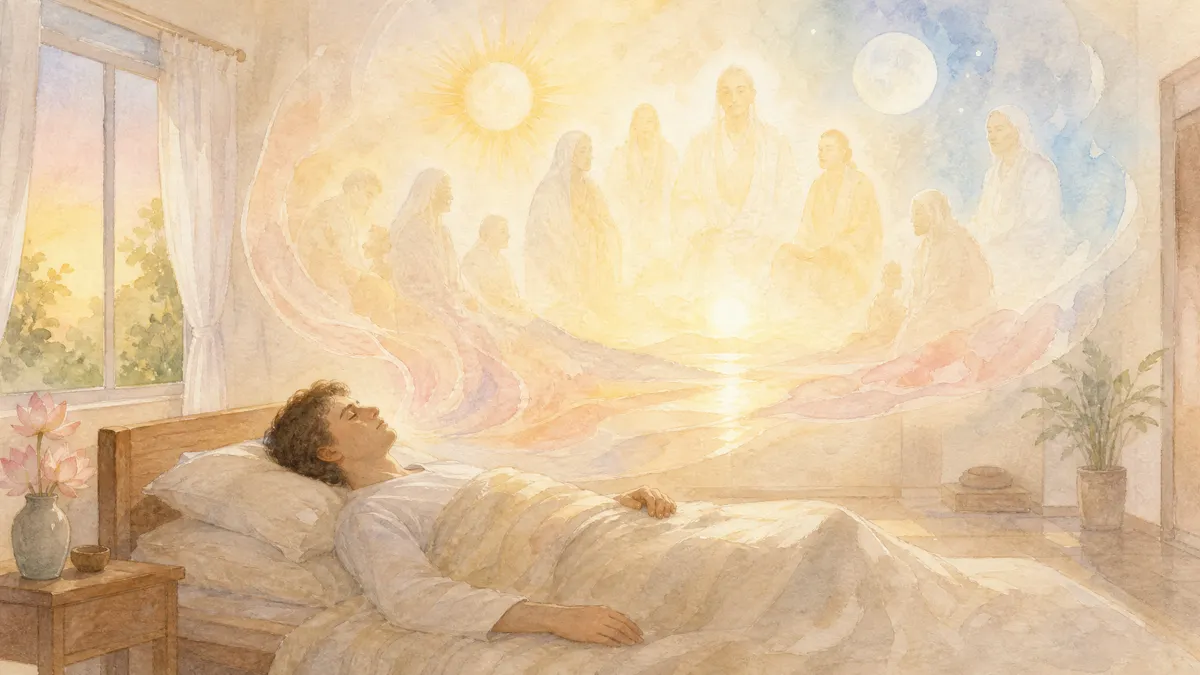
If you deeply imbue yourself with this practice, a new vision arises in the stream of your consciousness, and mystical experiences arise in dreams: for example, you may converse with saints, you may have visions of the sun, the moon, or dazzling light, and a deeper and clearer understanding of nonduality may arise in you.
The Advaitic Approach to Practice
In essence, from the point of view of Advaita, we are not seeking something from outside. To seek anything externally in dualistic relations would mean departing from the principle of Advaita. Rather, we recognize our own consciousness as the absolute Brahman. This means that, ultimately, we need to recognize ourselves as mahasiddhas. That is, we need to fully understand this identity, the inseparability of our own mind from the space of the consciousness of the saints, and become accustomed to such thinking. The consciousness of the mahasiddhas is boundless, incomprehensible; it is a vast luminous space. In the same way, when we unite our consciousness in Guru Yoga, we begin to feel ourselves as such a vast luminous space, or at least try to identify ourselves with it.
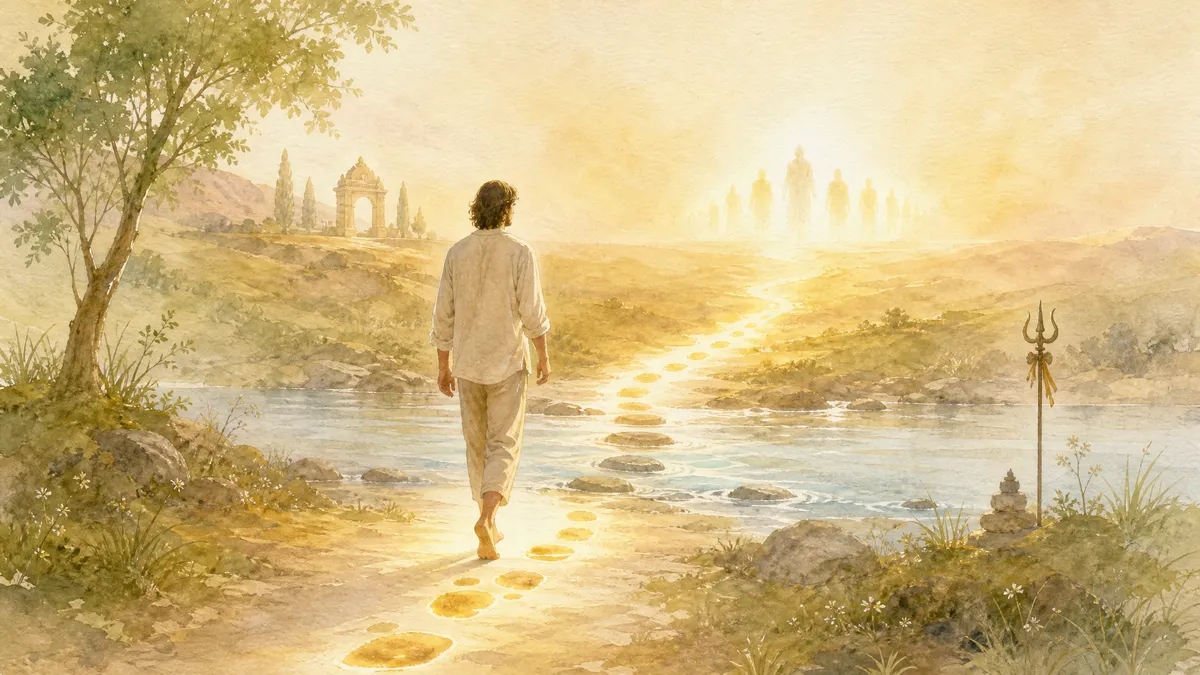
Mahasiddhas are perfected beings who have gone beyond life and death, samsara and nirvana; through their own experience they have triumphantly completed realization, proving the greatness of the sacred truths of the scriptures. Therefore, when we walk the spiritual path, we are, in essence, following in their footsteps, since the evolution of human beings proceeds approximately along the same course.
The Structure of Collective Practice
On this day we observe a short fast, keep vigil until three o’clock, and perform a practice that consists of the bhajan mandala, the recitation of the OM mantra, and, in fact, Guru Yoga, when we enumerate the names of the mahasiddhas and praise them. During the bhajan mandala, through the bhajans, we attune ourselves to their energy. During the recitation of the mantra, we enter the natural state. When we recite the OM mantra, we should concentrate on the sound “m.” The final sound “m” points to the formless essence of Brahman, the primordial Reality. The short unpronounced sound of bindu, anusvara, points to the unmanifest essence of this reality. When we attune ourselves accordingly while pronouncing the mantra, we enter a state of boundless space. Once a certain experience has been obtained, we practice Guru Yoga, praising the mahasiddhas and realizing our identity with them. This is how the collective practice is performed. During the breaks we remain awake and simply recite the mantra while moving about.
What you will see next is also a way of making an offering to the mahasiddhas. On this day you may also take commitments to enter into the rules of practice, undergo retreats, or perform three hundred, twelve hundred, or fifteen hundred good deeds for practicing laypeople.
Taking commitments on this day is always very auspicious.
