

Question: Why does one fall out of the natural state, nirvana? After all, nirvana is not so easy to enter.
If a fall occurs, it means that we were already in it, we are already in it. Our inner essence is nirvana itself. We have never left it. Even in moments of the strongest obscurations, delusions, and ignorance, our inner essence is always in nirvana.
Another matter is that some part of our inner essence separates, and this part is called ahamkara. It consists of the conceptual mind (manas), the storehouse of mental tendencies (chitta), intuitive consciousness (buddhi), and this false part of our higher essence gives rise to personal identification, the notion of one’s pseudo-separateness and pseudo-self-sufficiency. And such arising of the notion of pseudo-separateness is the fall. That is, it is not a “falling out,” it is “as if falling out,” because despite the fact that pseudo-separateness as a concept and as a sensation has arisen, nevertheless no falling out actually occurs.
In other words, right now, while being in nirvana, we have convinced ourselves so thoroughly that it completely seems to us as if we are not in it; our mind has created such a strong illusion that we have hypnotized ourselves as though we are not in it.
Reasons for falling out of the natural state
Falling out of this state occurs because consciousness has no experience of the self-liberation of dense energies. That is, it was in the pure pristine state of nirvana, but decided to expand, to deepen its manifestations, its games, its expressions, and began to encompass ever larger layers of chaos.
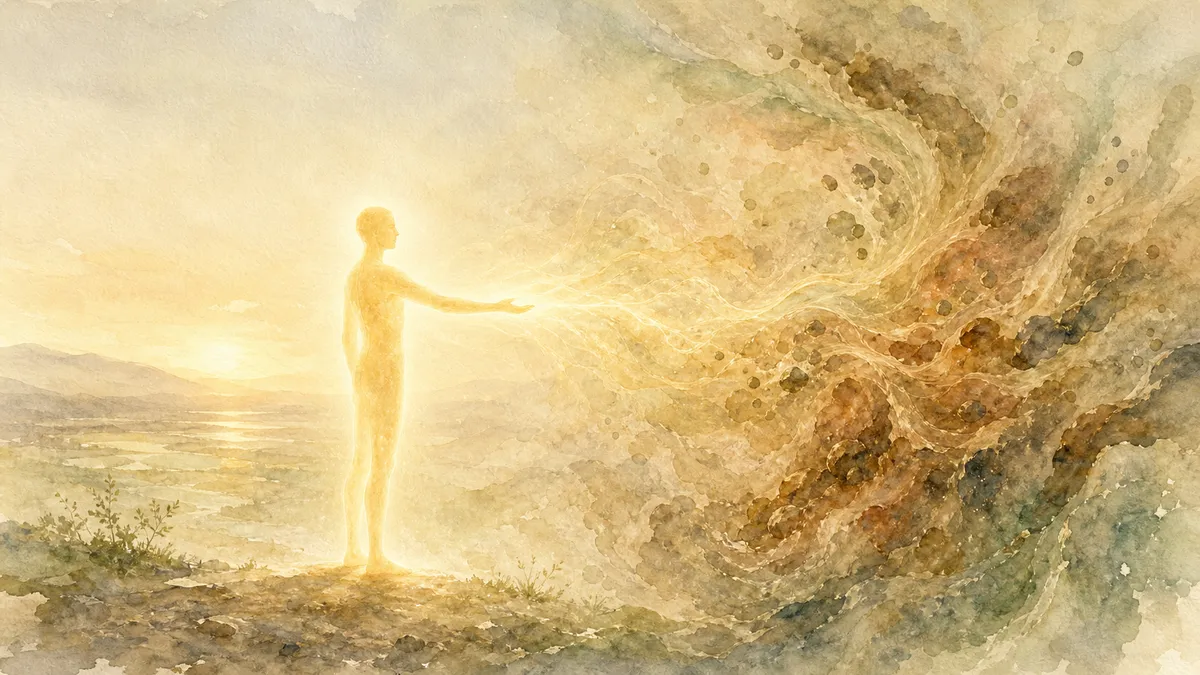
Gross, inert, unconscious matter embodies world chaos, while pure awareness embodies self-organization. And in the process of the collision of self-organization with chaos, there was an overestimation of our strengths and capabilities by us as the supreme consciousness, which localized itself, compressed itself in order to spread itself into this chaos and illuminate it with the power of its awareness, merge with it, and lead it into the mandala, into the field of its awareness.
And this localized part of the higher “I” overestimated its capabilities for structuring and self-organizing chaos. Since it did not yet possess the proper experience, it was unable to self-liberate the dense energies. Therefore, upon coming into contact with the energy of the three gunas of material nature, it began to lose its inner light, freedom, boundlessness, and understanding of its absoluteness. And thus, tempted by the dynamics, light, radiance, and various possibilities of the three fundamental energies, it lost its essential part and, as a result, began to be reborn.
Nevertheless, its deepest part, even after coming into contact with the chaos and darkness caused by dense matter and the three gunas, has not lost its higher state to this day; that is, our deepest part remains pure and self-liberated. It is already in nirvana.
And the point is that we should be able to reunite with this highest, deepest part. Everything we do is practice these three famous rules: we try to feel out this deepest part, gain trust in it, and constantly attune ourselves to it.
Devotion to God in a non-dual understanding
This deepest part is devotion to God itself. Devotion to God in the morning, devotion to God at lunch, devotion to God in the evening, devotion to God at night in sleep, devotion to God in conversation, devotion to God in relationships, devotion to God in work, devotion to God in meditation, devotion to God in love, devotion to God in hatred, devotion to God in anything whatsoever.
Since we do not practice dvaita-bhakti (dualistic), our devotion to God is something completely specific, unlike devotion to God in traditional bhakti yoga, if we are to speak in terms of the logic of the teaching. It is devotion without a devotee.
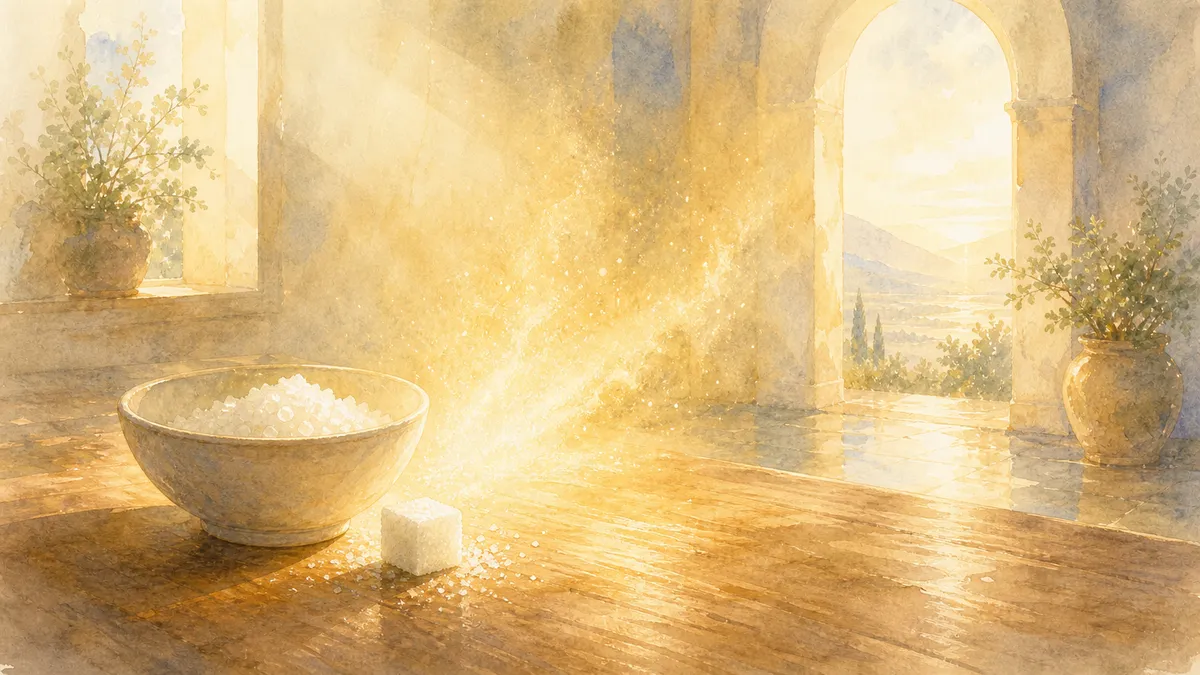
In dualistic teachings, bhaktas say that they want to “eat sugar.” That is, one can “be sugar”—merge with God—or one can “eat sugar”—worship Him, enjoy Him. A compromise of this kind is quite acceptable on the path of dvaita. It is said that for people whose minds are unable to contain the bottomless, ego-frightening truth of advaita, dvaita is prescribed. But for the fortunate ones endowed with boundless genius, subtle intuitive consciousness, high intelligence, vira-bhava or even divya-bhava, who have been indescribably lucky to encounter a nondual teaching, a nondual teacher, and to develop their own nondual awareness, only advaita is recommended as the direct and highest path to liberation.
Therefore, when we speak of devotion to God from the standpoint of advaita, we say: “Devotion without a devotee.” Devotion to God beyond the concepts of “God” and “devil.”
Self-Liberation from Concepts
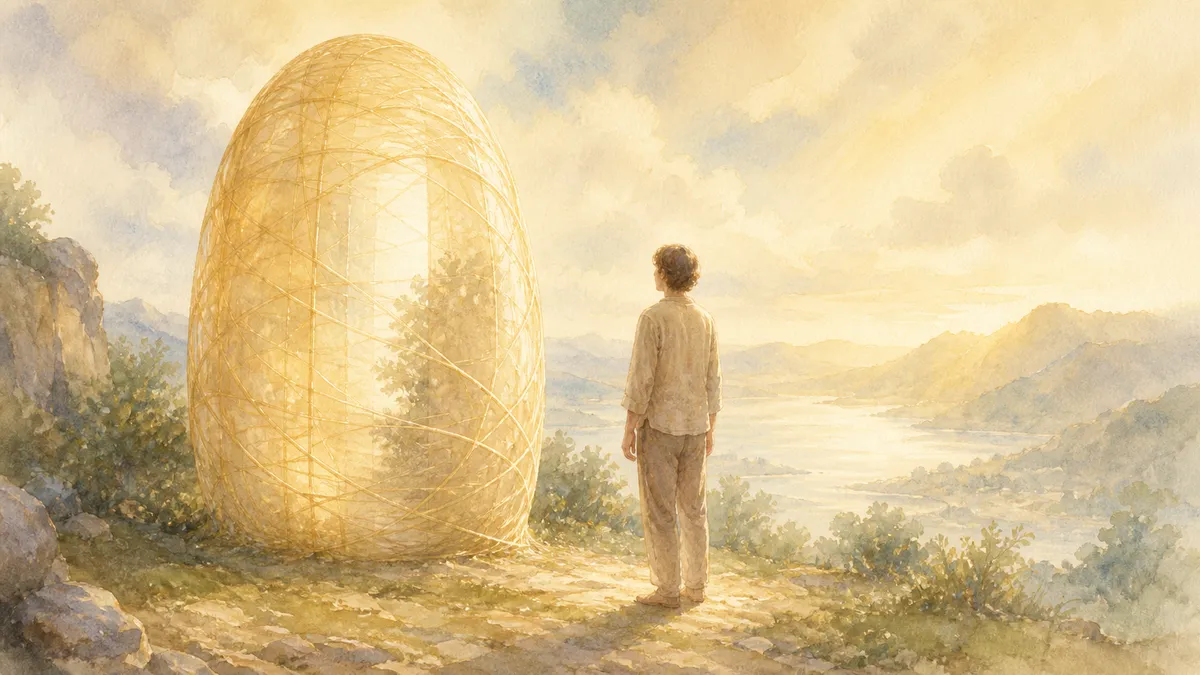
To develop such devotion, one needs abilities that are an order of magnitude higher than ordinary abilities. And first and foremost, this is the ability to remain in a state of self-liberation, in contemplative nonconceptual presence, where the notions of an external attributive God endowed with qualitative characteristics self-liberate, where the notion of attachment to form, name, ritual actions, a fixed external sadhana of worship is liberated, as is the notion of the internal—that is, the notion of “I” as a limited personality devoted to God, worshiping God, or performing the prescribed sadhana.
As soon as we create the false notion of “I,” we wrap ourselves in a cocoon, like a silkworm, and then it becomes very difficult to unwind ourselves from it. And this cocoon can be either worldly or spiritual. For example, many people very successfully wrap themselves in a cocoon of sattva—a cocoon of spiritual ideas. But this cocoon, even if it is golden, still creates limitations. It does not matter whether the limitation is worldly or religious; it is still a cocoon—limitations, dvaita (duality).
For example, a person on the path of duality, a bhakta, assumes that he exists as a certain personality, that he is an unchanging personality. He worships God, everything is clear to him: “This is me—a human being, a limited soul, and this is you—God. You are great, and I am small; I worship you in order to be freed from limitations.” Everything is very simple; the path is clear.
Transformation of the Personality on the Path to the Absolute
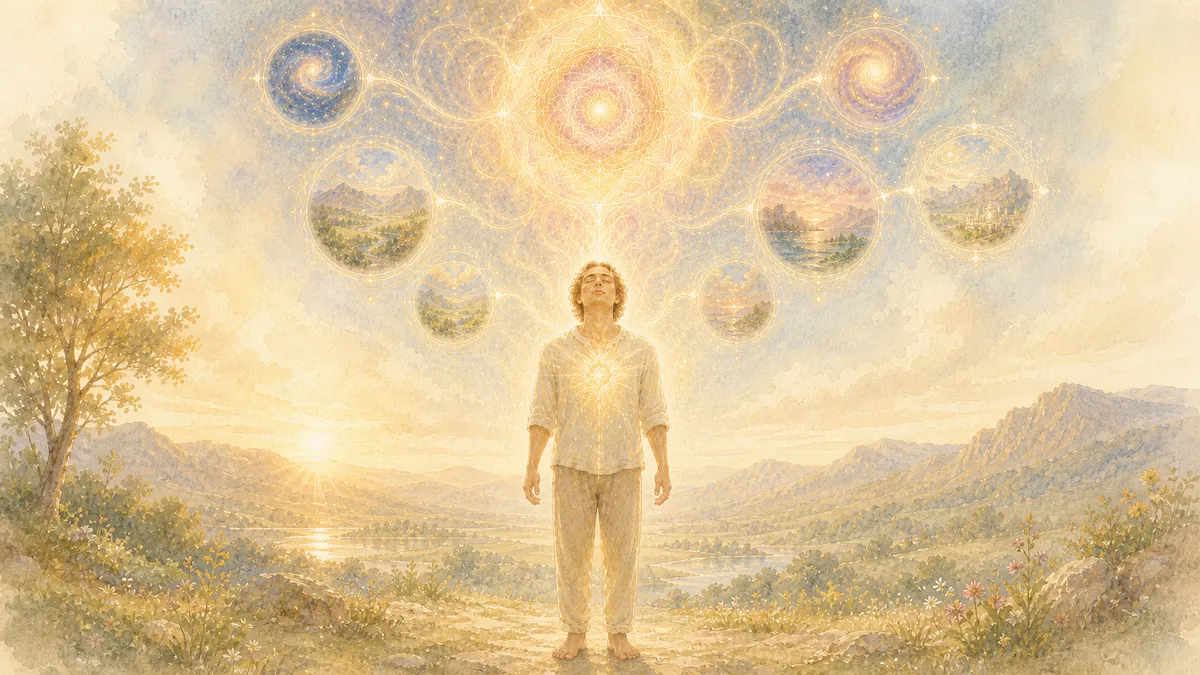
Nevertheless, the reality is that there is no permanent, unchanging personality. We are a continuously changing stream; our personality also changes. In the process of spiritual self-realization, we change our ideas about ourselves. In the end, we must radically change our ideas about ourselves from a human being to the Absolute and finally merge completely with the Absolute.
That is, the Absolute realizes itself in the body of a living being, a human being. Through such awareness, it is transformed into a master of yoga, into a siddha, into a saint, into a deity, then into a great deity—a mahamandaleshwar; then the deity reveals itself all the way up to the Creator God, begins to create its own mandalas and its own universes, and there occurs an expansion, a spread of the creative power of this deity and the budding of these new mandalas.
This is a process of spreading, self-organization, and the capture of ever-new levels of chaos—that is, unconscious, inert matter.
