

Commentary on the text “Yoga Vasistha,” “The Story of Manki”
Vasistha continues to give instructions to Prince Rama. He says:
“It is clear that only reality, or infinite consciousness, or Brahman, exists. For one who has risen above the sense of ego, the entire universe seems less significant than a blade of grass underfoot. Such a person is tempted by nothing in all the three worlds. And even the status of deities is valued by him less than a fallen hair. For him, duality and multiplicity are unreal and false.
When the entire universe is empty in the eyes of the wise, how can desire arise in his heart? For him, even life and death are the same. Upon inquiry, even the body and so on are seen as unreal and false. When even the mind has ceased along with the cessation of notions about the body and the world, then only the supreme Self remains as infinite consciousness.
The sense of ego seems to exist only in the absence of inquiry into its nature. When its nature is investigated, the sense of ego ceases, and pure infinite consciousness remains.”
An Illustration of the Nature of the Ego
There is an illustration that explains the nature of the ego. One family with a large number of relatives decided to hold a wedding. The bride’s relatives were accommodated in one house, and the groom’s family in the house opposite. The wedding was to last many days, and preparations were under way. A certain man appeared who, with a very important air, would come to the bride’s relatives and say that they should not be late, that they should properly perform everything according to the ritual. Everyone believed that this important man was a relative or friend of the bride’s family, and therefore they treated him with great respect, seated him at the table, and fed him. Then this same man would come, with an important air, to the groom’s relatives and tell them that they were behaving in such a way that, as it were, they were putting the bride’s relatives in an awkward position. He gave them advice on how much money to pay and how to cover the wedding expenses. And everyone thought that he was an important person from the bride’s entourage, that he was one of the relatives, so they also entertained him and listened to all his instructions with great attention. But then someone decided to investigate the matter and began asking what kind of person he was. And when they began to look into it, it turned out that he had no relation either to the groom’s relatives or to the bride’s relatives, that he had simply come to take part, eat well, have fun, and so on. That he did not know anyone there at all. Thus the completely illusory importance of this person was revealed. In reality, he was simply a wanderer who needed to have a bite to eat and enjoy himself by taking advantage of the moment.
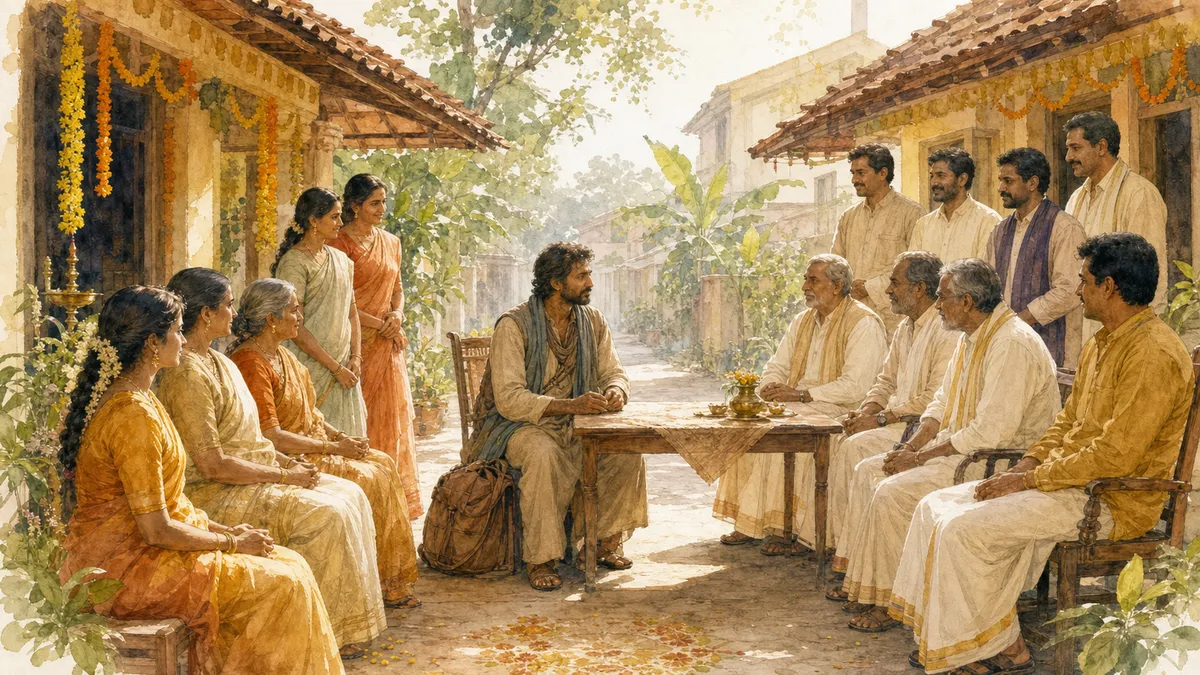
In the same way, when we discover through inquiry the nature of the ego and that what seems so important to us, it actually turns out to be completely non-existent, devoid of any significance of its own, like that person at the wedding. If, however, such inquiry is not undertaken, there is identification with it, and all the suggestions of this important person are perceived as something real. And when we perceive this as something real, we ourselves lead ourselves into delusion through this identification.
There is another story about an Indian soldier who went off to war but for a long time wrote no letters either to his father-in-law or to his wife. And then the father-in-law, angered that he was not writing letters, wrote the following letter: “How can you forget about us like this?! Even if you are fighting, you should write something. My daughter and I, your wife, have already begun to consider you dead. There has been no news from you. As a sign of mourning, she has shaved her head and considers herself a widow.”
When this soldier read the letter, he began to think: “Oh, my wife has become a widow, how terrible, how sad!” And he too became very deeply saddened, but then another man came up to him and said: “Well, you really are a simpleton! Don’t you understand that your wife cannot become a widow while you are alive?! So why are you grieving?”
In the same way, when we identify with certain concepts of the ego, these concepts make a strong impression on our consciousness, while in fact there is no reality behind them at all. Masters often teach students lessons in a very radical way in order to hint that there is no reality in any of this.
Saint Mukshaji Maharaj lived in the house of one of his devoted disciples. When lay disciples came to him with some questions, he had the habit of throwing excrement at them. Everyone would run away in horror. They could not understand such behavior from a saint at all. They had heard that saints can sometimes act without apparent motive, but something like this was utterly incomprehensible to them. But one of the senior disciples explained to them: “By this he wants to say that all your questions, like your problems, have the same nature as what he is throwing at you, that they are utterly insignificant, that all of this is complete illusion, from which one must free oneself.”
For example, a person often has a certain point of view, a formed opinion, certain experience, a value judgment, and he considers this to be something genuine, real. But in fact it is like a dream or a mirage. In reality, it is a great illusion. None of this truly exists. And in order to understand this, one must do a very great amount of spiritual work, since it has become very deeply ingrained in us and is determined from within. This is our past, which we will not simply part with.
I know this from my own experience. At about the age of 19, I decided to study with a certain teacher of magic. When I came to him, I saw that he was fat—not just fat, but huge, like an elephant. I thought: “What can this fat man teach me?” I had fixed ideas that a magician or fakir should be emaciated and thin, wearing a turban, and so on. That is, I projected my own ideas onto him and saw that he did not fit my ideas at all, so I was very disappointed. But he truly was an outstanding person, although I understood this much later, when all my ideas about how things ought to be had evaporated.
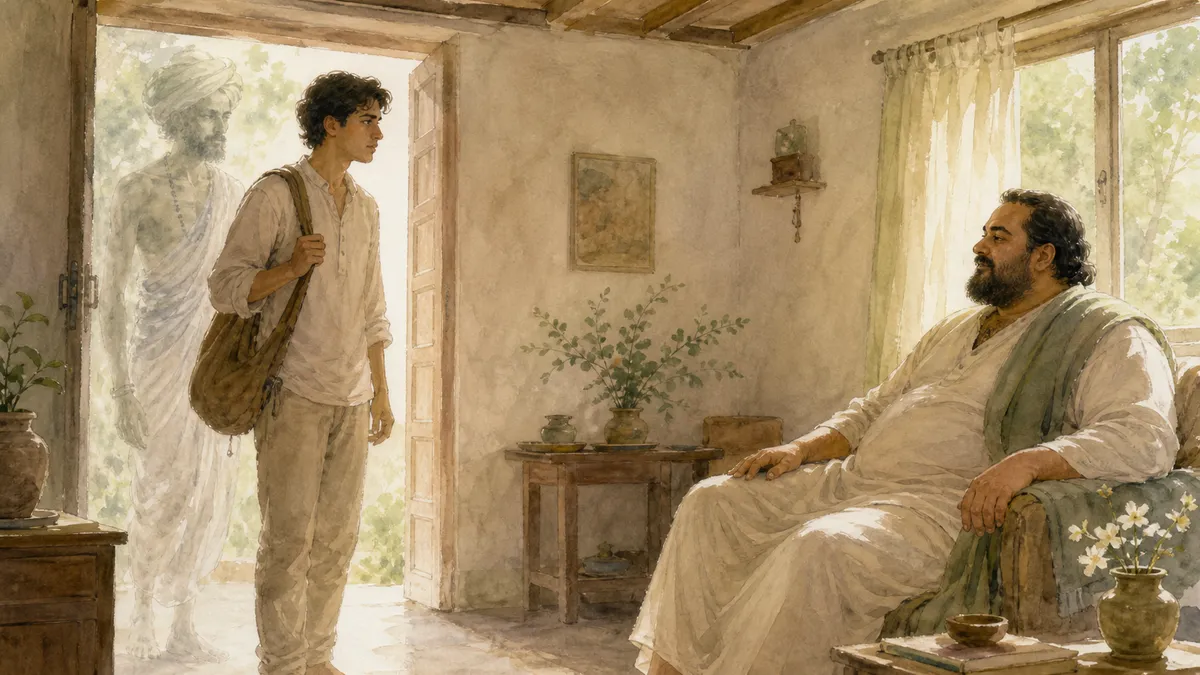
Thus, we have different sets of ideas about reality, but these sets of ideas are nothing more than ideas from a dream.
Liberation from the Ego and Divine Life
Vasishtha says this about it:
“When nature is investigated, the sense of ego ceases and pure infinite consciousness remains. The mind is freed from objectification. Everyday life turns into divine life. Whatever you do, whatever you enjoy, everything becomes divine. Without desires, free from delusions, remain in self-awareness. Since there are no other motivations, let the scriptures guide your behavior.
In the one in whom the veil of ignorance has been cast off and in whom there is no desire, that person shines with the light of pure intellect. All his doubts have ceased, and he illuminates everything around him. Whoever comes to him, who is free from doubt and independent (free from all dependencies), is himself purified and enlightened.”
In reality, there is no point of view, no stable opinion, no concepts; all of this is accepted only for the sake of instruction. Pure awareness itself contains nothing within itself.
It often takes years for us to re-evaluate our ideas. When we re-evaluate our ideas, the mind is completely purified. For this, great faith and determination are needed. Determination like that of one person from the story of Vishwamitra and Sunagita.
The Story of Vishwamitra and Sunagita
In the time of Vishwamitra, a certain king decided to perform sacrifices. The brahmins decided to offer a sacrificial animal—a cow. When the ceremony began in the great hall of the palace, the cow suddenly disappeared. The brahmins decided that this transgression could be corrected only if a human being ascended into the sacrificial fire instead of the cow. But such a condition was put forward: it had to be a little boy who would ascend into this sacrificial fire himself; no one was to force him. It was announced everywhere that the state was in danger because the ritual might be defiled by such an unforeseen incident, and therefore such a practice was required. Of course, no one came. And when news of this reached the little boy Sunagita, he joyfully decided to ascend the sacrificial pyre, thinking: “With the help of the sacrificial fire, I will go to the gods.” Other sages and Vishwamitra himself were against this. Vishwamitra, having met this boy, tried to dissuade him. He said:
“This is simply a foolish superstition. A human being cannot replace a sacrificial animal, so you must not do this.”
The boy said:
“Perhaps a human being cannot replace a sacrificial cow, but when I look at people, at their level of awareness, I do not see much difference between a human being and a cow, because a person who is not aware of himself does not surpass it by much.”
And no matter how much Vishvamitra tried to dissuade him, the boy decided to make such an offering voluntarily and on his own. And he convinced his father.
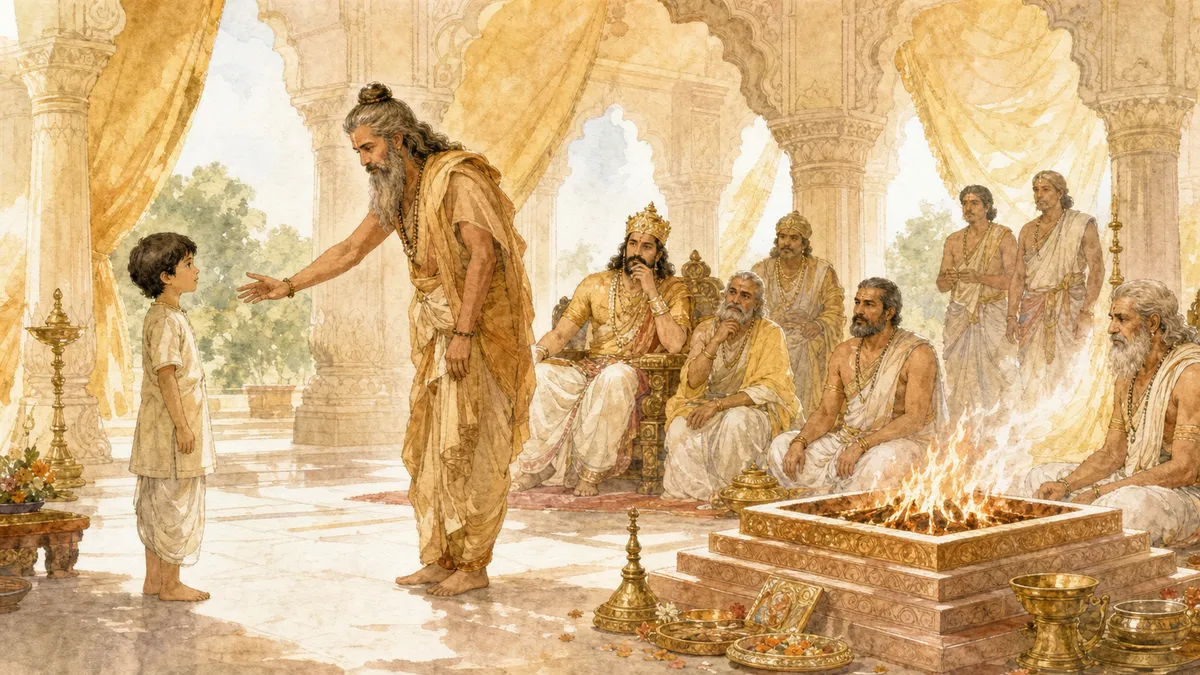
When he came to the sacrificial hall with great determination, even the sages were amazed by his faith. But at the very moment when he was already ready to offer himself to the sacrificial fire, a figure of the deity Indra appeared from that fire. This figure of the deity touched Sunagita’s forehead and gave him blessings. Everything around was illuminated, and Sunagita’s mind was also enlightened. At that time the sacrificial cow was returned.
Later it turned out that this had been a skillful means, a stratagem of Indra’s, to attract Sunagita and give him shaktipat. In other words, no one understood what kind of play this was or what it was for. But all of it had a single purpose—to draw Sunagita to the place of sacrifice and give him awakening. But if Sunagita had not had such determination, fearlessness, and self-sacrifice, he would not have been able to receive it.
In the same way, if we do not have such determination, fearlessness, and readiness to offer our ego onto the sacrificial pyre of Dharma, we will not receive blessings, because we will not come to this.
The Unreality of the World and True Peace
Vasishtha goes on to say:
“The notion of the reality of the objects of this world arises only in ignorance. If it is realized that these objects are unreal, how can desire for them arise? Even ‘creation’ and ‘liberation’ are meaningless words.
True peace is attained when a person does not comprehend the sense of ego and everything related to it, including suffering.
In the state of deep sleep there are no dreams, and this state is not experienced during dreams. Likewise, the comprehension of the sense of ego, suffering (generated by the notion of the apparent world), and peace (generated by nirvana) cannot exist simultaneously.”
That is, it is either one or the other.
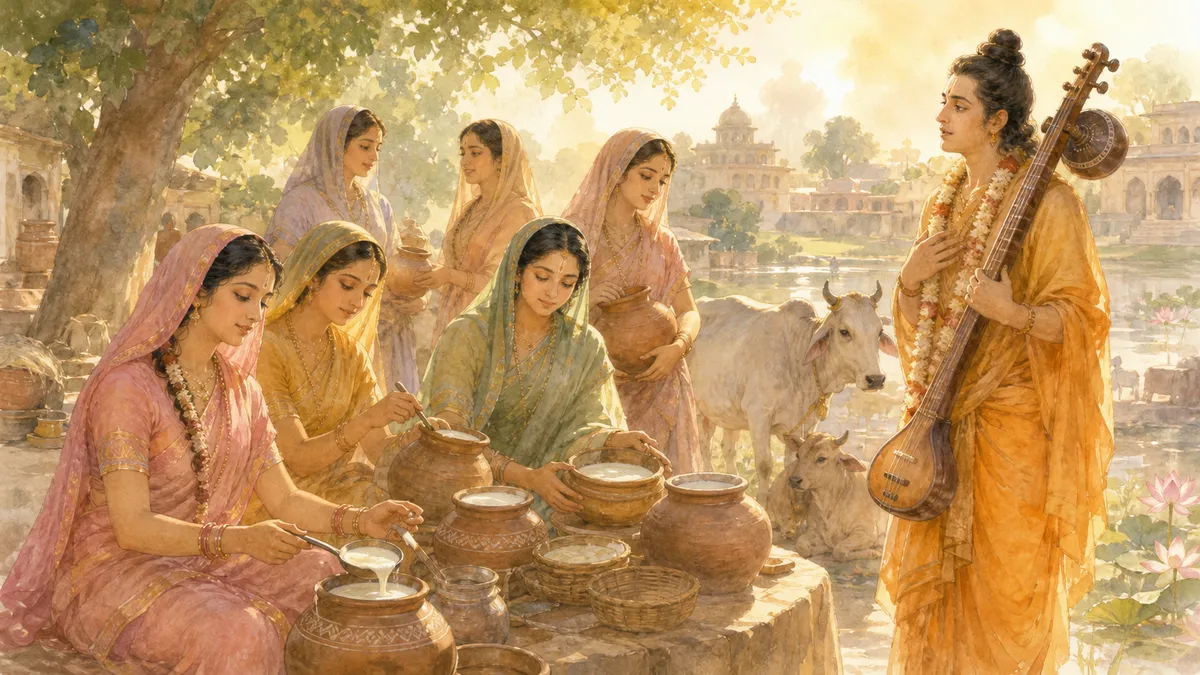
There is a story about Narada and the gopis. The gopis were cowherd girls, devotees of Krishna, who constantly abided in bhava. They were immersed in contemplation, while not being experts in Dharma on an intellectual level. Narada, seeing the cowherd girls’ illiteracy in Dharma, decided to give them instructions in jnana yoga. When he came and began to converse with them, he saw that they had realized all of jnana yoga without his instructions. He was very surprised. When the cowherd girls sold their goods, instead of shouting in the market, “milk, sour cream, cottage cheese,” they shouted, “Govinda, Narayana, Govinda, Narayana.” They even forgot to name the goods, because they were completely in a transcendental state. And then, when the sale was already over, they walked along the street immersed in bhava, in awareness, in samadhi. For them there was no day, night, or evening; whether the goods had been sold or not sold—all of this was one for them. And when Narada saw the level of sahaja samadhi of the gopis, he realized that there was no point in giving them instructions in jnana yoga, because they had already realized jnana yoga.
Abiding in the Higher Self
Vasishtha says:
“When a person departs from his own true nature, suffering pursues him, and when he remains in his higher Self, consciousness, boundless peace and self-control arise.”
Many have superficial ideas about abiding in their higher Self, while some, based on their experience and reading of the teachings, consider it to be attentiveness, a little clarity. Others consider it to be the recollection of meditative experience, which helps to self-liberate problems. Still others consider it to be a slight experience of an inner feeling of divine pride. A fourth group works with the inner observer, believing that this is the authentic experience of the “Self.” A fifth group has had an experience of emptiness; they believe that abiding in emptiness, without becoming involved with this world, without taking anything seriously, self-liberating everything, fixing consciousness only on emptiness, is the highest experience. A sixth group has never experienced anything like this at all, and does not even feel this. There are manifold illusions and misconceptions regarding the higher Self, because this topic is extraordinarily subtle. Even gods and sages who have not attained awakening are often confused by it.
However, abiding in the higher “Self” is like discovering a precious diamond in your heart. And to say that this precious diamond removes the fear of samsara or devalues all desires, evaluations, and judgments is only the very beginning. Indeed, it inherently possesses the qualities of the inner observer, clarity, awareness, emptiness, and majesty. However, all of this is only a small set of functions of this precious diamond. When we truly begin to approach it, we discover that this precious diamond has an astonishing ability—it can grant us anything we desire, it can change time and space, direct events, bestow miraculous powers, fulfill wishes, grant wisdom, healing, and attract spirits and gods. Even the ability to create the universe is contained within it, not merely the possibility of solving our small problems.
All of this depends on how correctly we are able to rotate this precious diamond. The experience of emptiness, the dissolution of the sense of ego—this is only the very beginning, while further realization consists in learning to manage this diamond, to rotate it carefully, gently, and in the right direction. Ultimately, by managing this diamond, we completely purify the energy of our existence, our outer world, our pranas, our body, our subconscious, all images, and everything that exists in general, until it all dissolves into the mandala of pure vision.
The Path to Divinity
Our future as yogins is becoming deities, such as saints, siddhas, vidyadharas, Brahma, Vishnu, and Shiva. Those who possess not one body, but many bodies. Those who live not in one reality, but in many realities, while being independent of them. Those who live not in collective history, not in karma, but in a personal, subjective history, not an external one. Those who are not subject to the external course of events, to cause-and-effect relationships.
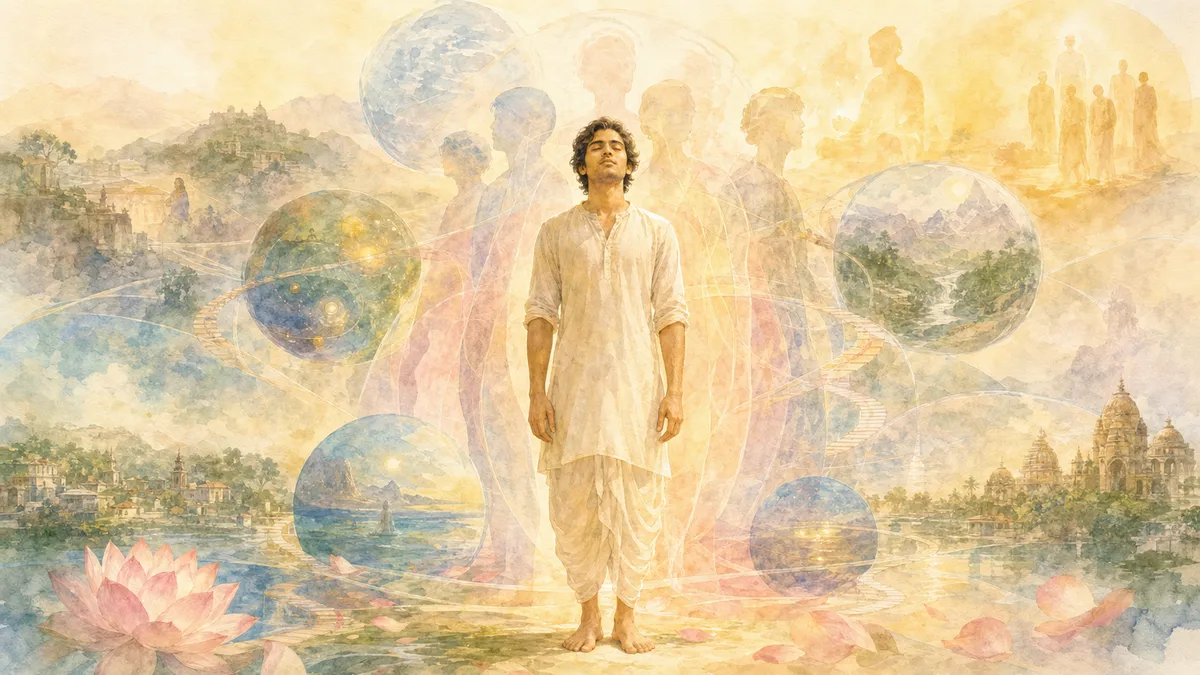
Whether we become such beings, whether we create such a reality, such a mandala, depends on how much we rotate this precious diamond, on how correctly we learn to work with it. Each of you, having discovered this diamond, will someday certainly create such a reality. He will certainly become a deity, will certainly begin to spread his “Self” in the form of many bodies, will certainly open many realities instead of one, and will certainly begin creating a mandala, an inner personal universe. This is the natural law of evolution of every living being that moves toward divinity. At present, as human beings, we are on the very first step toward this mastery.
Each of us is embarking on such an immense, great construction. The foundation of this construction is this very precious diamond—primordial awareness, which is revealed as a result of practice. This is construction beyond logic, cause-and-effect relationships, and subject-object doing, as happens in the world of humans. It is something entirely different. Therefore, when I say, “We are embarking on construction,” this should not be understood entirely on the ordinary level. But this is exactly how it all happens.
Infinite Consciousness and the Dissolution of the World
Vasistha then says:
“The higher ‘Self,’ or infinite consciousness, does nothing and is not involved in actions. Within me there exists the pure awareness of the one cosmic consciousness, and even the actions of the world seem indistinguishable from it, just as motion is not different from the wind.
Even these words arise only for you. In the heart of one who knows the truth, there is neither a desire for pleasures nor a desire for liberation. Neither liberation, nor wealth, etc., is needed by one who has realized that there is no ‘me’ and there is no ‘world.’
O Rama, that which is called ‘you’ knows external forms and inner psychological states. When that which is not you is weakened and your own nature is seen more and more clearly, in its light the world is experienced as a mere sensation. When a person is established in consciousness, this apparent world disappears like a dream in the state of deep sleep.”
In other words, the task of the practice of contemplation is to become so established in contemplation, and for it to gain such strength, that the world in which we now find ourselves completely disperses without a trace and manifests in the pure dimension, in the dimension of the mandala.
The world as such does not exist as an external physical reality. It is the dream of Brahma, the creator of this universe. And since the power of his consciousness is astonishingly great, this dream has great power for us. In this dream, we ourselves take part in a collective karmic vision. Together with other living beings, through our karmic vision, we co-create this dream by participating in it. But when we change the status of our awareness, reality, accordingly, also begins to change.
Transforming Reality through the Power of Consciousness
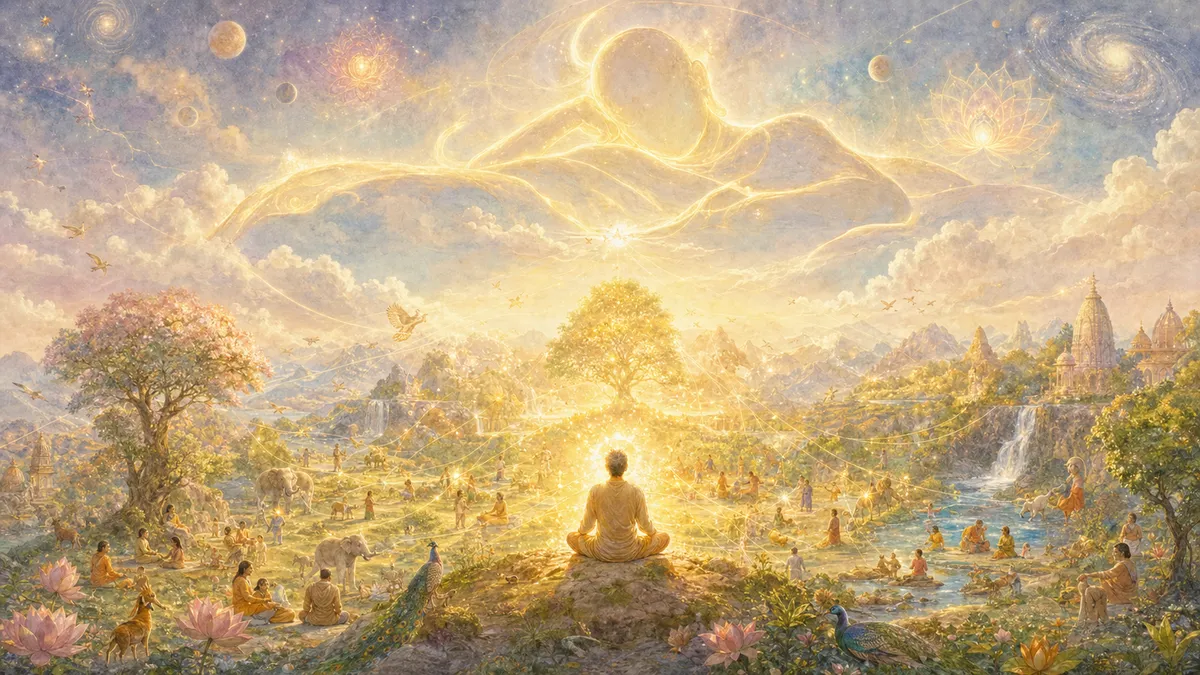
Transforming reality through the power of consciousness, turning the physical world, the impure karmic vision, into the world of a pure dimension, a mandala—this is precisely the indicator that our consciousness has gained strength and fullness. This happens naturally, spontaneously, by itself, just as the sun’s rays radiate and heat the water. It is not what you think: “All right, now I’ll roll up my sleeves and start building a mandala.” That, of course, is an illusion. Because in this state there are no cause-and-effect relationships, no doer, no planning; all of this radiates spontaneously, yet nevertheless it happens.
It is like the Sun not thinking: “I will heat the water on Earth, I will warm the people sunbathing on the beach.” It simply radiates its rays, and then all people warm themselves in its rays, all waters are heated. In the same way, when our primordial state manifests its energies, the world of external forms is transformed into a mandala.
The Nature of the Mandala
What does mandala mean? It means a world that you yourself have created from your consciousness. And since you have created it by the power of your consciousness, it is a world beyond duality, where the subjective (inner) and the objective (outer) do not differ, where inner and outer space are completely united.
For example, when you play and bring forth beautiful melodies, these melodies sound within, but when you play them, they also sound outside. At the moment of merging, of synchronizing inner sensations and the outer melody, inner and outer space are united; your inner reality is projected outward. The example of the radiance of a melody is an example that illustrates the principle of the mandala. A mandala is a reality that is like such a melody, but it encompasses all manifestations of life, all elements, and lasts 24 hours.
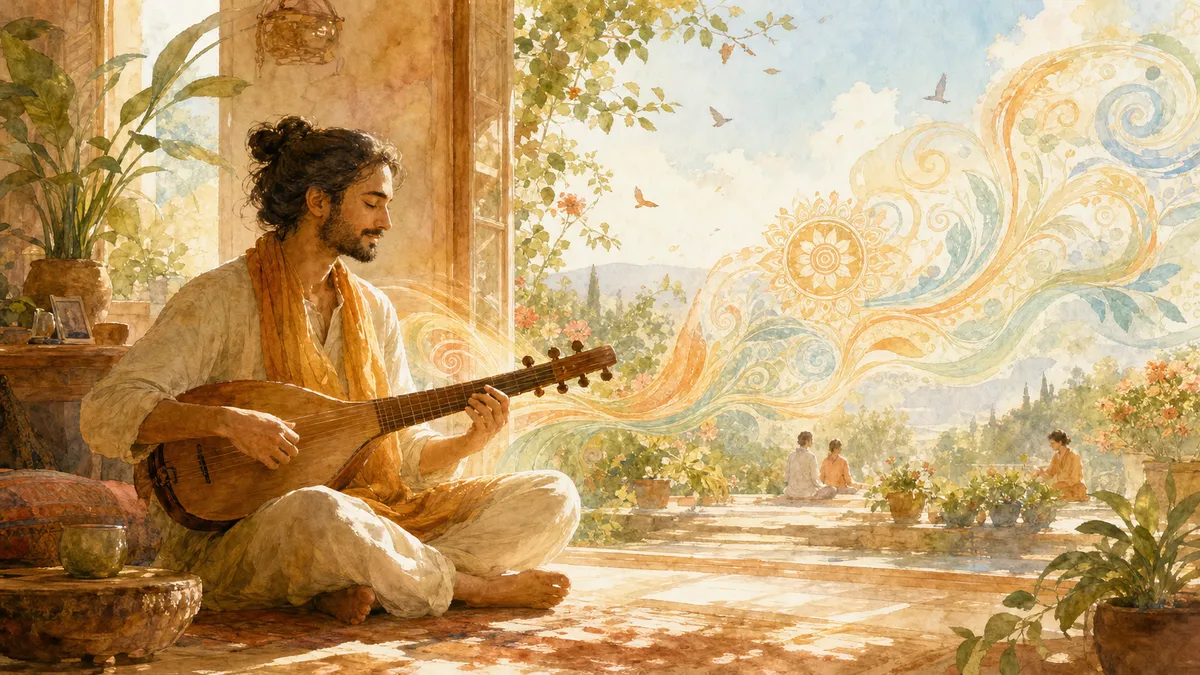
This reality can be manifested only when we are in a deep state of presence, because it comes from this inner diamond of awareness. But if we are distracted from the inner diamond of awareness, then, of course, we cannot manifest this reality.
Vasishtha says:
“When a person has become established in consciousness, this apparent world disappears, like a dream in the state of deep sleep.
Knowing that pleasures are terrible diseases, that relatives are attachments, and that wealth is a source of misfortune, one should remain with one’s higher Self. Non-awareness is samsara, while being in one’s own consciousness is a tremendous blessing. Therefore, a person should remain as oneself, like the emptiness of consciousness.”
Remaining as Oneself
Often we do not understand what it means to “remain as oneself.” We constantly want to be with someone, in something, outside; we want to forget ourselves. All a person’s actions—when he reads a book, watches a film, wants to communicate with someone, or simply look at something—are various tricks for forgetting oneself and being distracted by something, immersing oneself in something. But if we immerse ourselves in something while doing it unconsciously, then this is a form of self-forgetfulness, a form of sleep. And people abiding in samsara are constantly looking for something to immerse themselves in so as to enter such a form of self-forgetfulness. It can be anything at all: from drugs and alcohol to interesting books, interesting films, relationships with others, conversations, chatter. But when we do not strive to immerse ourselves anywhere, we are thrown back to the inner “I,” to the center, which is empty.
I knew one layperson who used to say: “I am even afraid to remain alone in a room when everyone leaves. I even feel uneasy when I am left alone at home. Such an emptiness arises in the soul that I try to rush outside and go somewhere into a crowd, to the market, to the cinema, anywhere at all, just so as not to be alone with the inner emptiness.” This inner emptiness is shocking to the ego if the ego is not prepared for it.
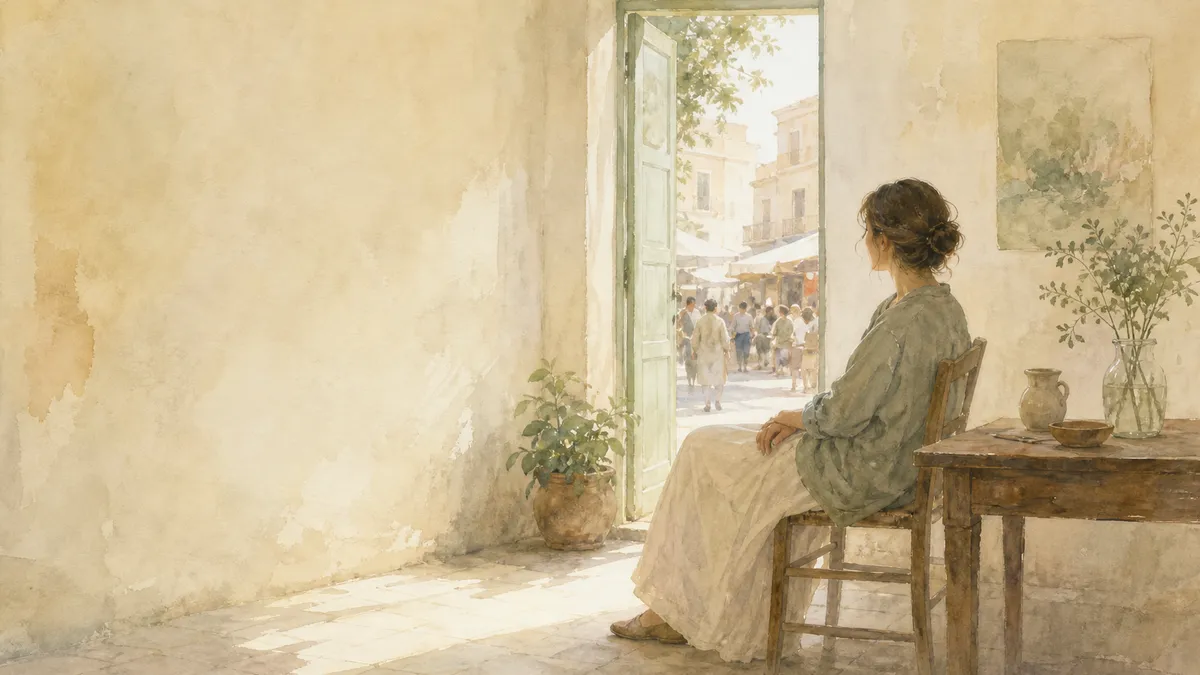
A practitioner, however, does not seek anything in which to forget himself, anything into which to immerse himself. On the contrary, he tries to immerse himself precisely in this inner emptiness, to make it dominant, to make it the main background in his life. He strives to keep away from all objects that bind him, distract him, and plunge him into sleep.
The Only Problem
When we can maintain this inner emptiness, in principle there are no problems for us anymore. We can write to ourselves somewhere in large letters: “NO PROBLEMS.” There are no problems whatsoever. There is only one problem—to lose the inner emptiness. And since it depends on nothing except our decision, then, remembering this, we can return to the inner emptiness.
Often many people do not understand this and think that problems are rooted outside. They may be in another person, in the social order, in relationships, or in something else, but in reality there are never any problems outside. Any problems consist in the fact that this inner emptiness has been lost, an act of forgetting has occurred. The act of forgetting led to identification. Identification led to a multitude of expanding illusions. The expanding illusions covered us with a cocoon of concepts, ideas, and relationships. And this cocoon created around us such an impenetrable world that we can no longer break through it.
Vasishtha says:
“Non-awareness is samsara, and being in one’s own consciousness is a great blessing. Therefore a person should remain himself, as the emptiness of consciousness.”
To be in the emptiness of consciousness does not mean denying anything external, avoiding external objects, or doing nothing. It means that one can do the same things, but at the same time everything is on another level of perception. Now objects do not vex you; there is no attachment to them. Now actions do not bind. The ego, thoughts, and judgments do not mislead. Now there are no problems at all; everything becomes a game, a performance.
Often a person who does not understand the principle of the game and the principle of the performance begins to take certain things seriously. “Seriously” means that he does this from egotistical positions. And here tensions and difficulties begin for him, because the whole situation thickens and becomes rigid. However, all this seems no more than a game as soon as one shifts one’s consciousness into emptiness.
The Cosmic Dance of Infinite Consciousness
Vasishtha says:
“I am neither I, nor objects, nor the apparent world; I am Brahman, the highest peace, into which I have entered.
Brahman-consciousness does not know creation-consciousness, and vice versa, just as the dreamer does not see the state of deep sleep and the one in deep sleep does not see dreams. The enlightened one sees both Brahman and the world as states of waking and sleep, and therefore he knows all this as it is.
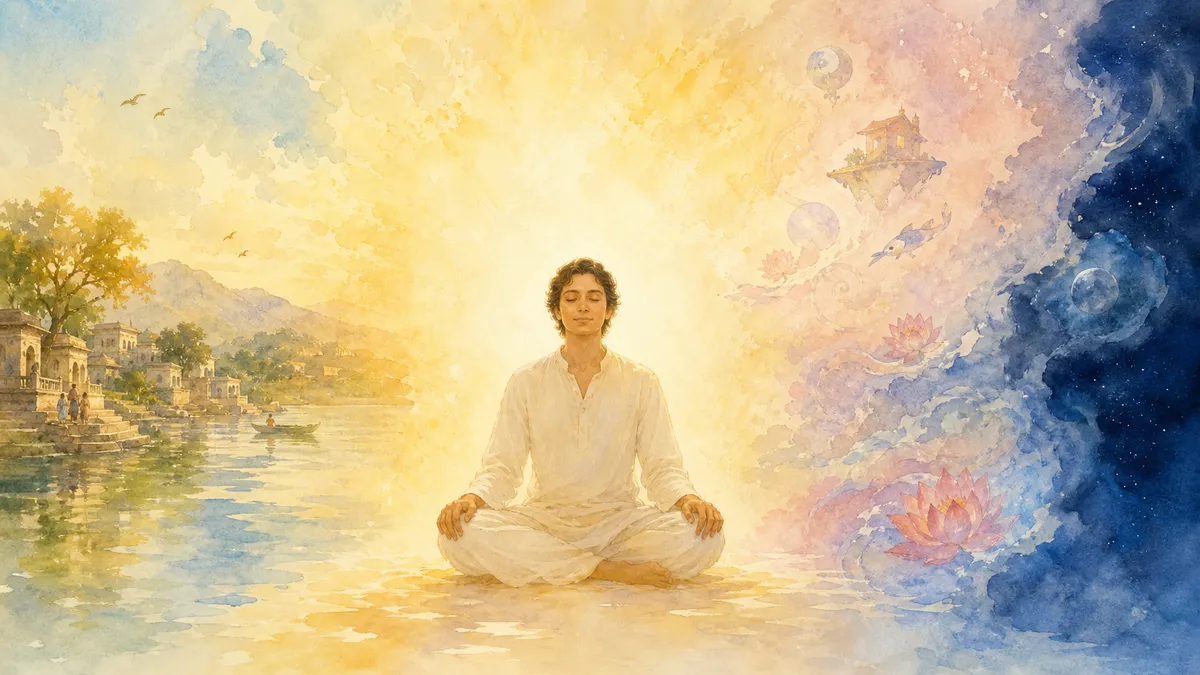
Just as where there is sunlight there is also illumination, so where there is the sense of the non-being of the objects of the world, there spiritual awakening arises. The only reality is that this supreme essence of cosmic consciousness dances in every atom of existence. Who can measure the immeasurable or count the infinite? This beautiful cosmic dance that you see before you, O Rama, is only the play of infinite consciousness.”
