

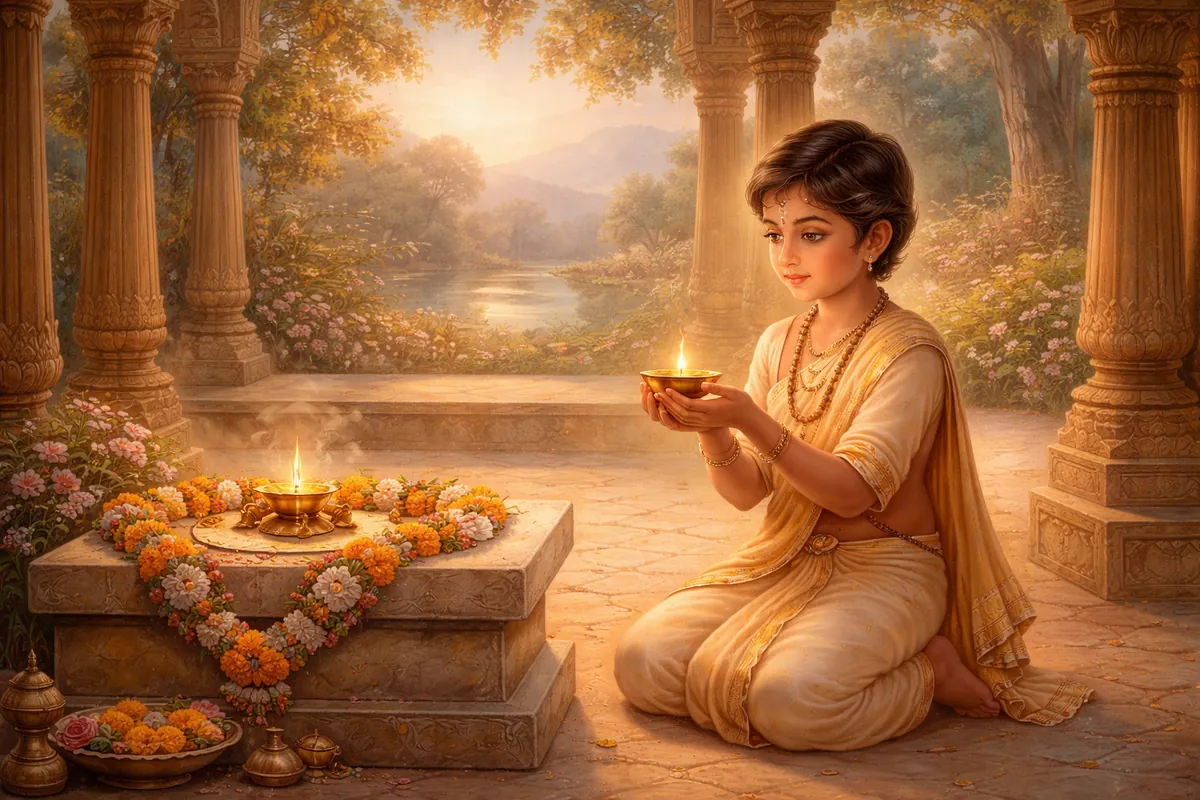
In the “Yoga Vasistha,” Vasistha instructs Prince Rama as follows:
What the mind loves most, into that it transforms; what the mind loves most, that it becomes. You become what you conceive yourself to be in your thoughts.
Our life unfolds on several planes simultaneously: part of our life unfolds on the physical plane, when we maintain the stability of our world in the physical body, for example by cooking food or clearing snow, while part of our life unfolds on the inner plane, and this inner plane is very important for the soul. On the inner plane we are constantly making certain choices, directing our soul somewhere, drawing some image of the future, evaluating ourselves and others in some way; micro-choices, micro-interactions, micro-visualizations, and micro-reliance on something are going on all the time.
Vasistha gives Rama instructions precisely regarding this inner plane. He says: be vigilant, watch yourself, watch your choices, visualizations, your preferences, what you love, what you do not love, how you evaluate things, because what your mind loves most is what you become in life.
The Art of Loving God
A sadhu is one who understands this subtle process and consciously learns to love God, the Absolute, the absolute truth. Love for God is the devotion of the mind to the absolute, infinite truth; it is directedness toward and absorption in it. And it is not something that comes all at once and immediately; it is an art in which we must perfect ourselves throughout our entire life, and in which all gods and siddhas also perfect themselves.
When we begin to study this art, we discover that our soul does not know how to love God; it does not know God or how to love Him. Instead, it loves in the way it was taught, what it became accustomed to in past lives. And it constantly loves thousands of things, anything at all except God.
It loves to invent something; for some, the soul loves constantly judging others, comparing them with itself and determining its own place, or competing; for others, the soul loves watching television; for a third group, endlessly reading news on the internet; for a fourth, the soul loves to dream: to go here or there; for a fifth, the soul simply loves prasad, eating. There are those who meditate: so, what do we have coming up tomorrow? For a sixth group, the soul is in a kind of semi-tamasic, prostrated state; it does not yet know itself what it loves. For a seventh, the soul loves women, wives, children, family, relationships, prosperity, stability. For someone else, the soul loves power, strength, influence, showing everyone what a cool soul it is, so that, if anything happens, everyone will understand what kind of character it has. And it constantly proves this, asserts itself, throws down challenges; because of this, it constantly keeps itself on edge.
For someone, the soul loves to seduce: men or women; it is occupied with certain games, intrigues—to make someone fall in love with it, to bind them, to manipulate them, to abandon them, to leave them, to play; through this the soul asserts itself, it considers itself the most attractive, charming, and cunning. And very many souls all over the world play these games. There are also souls that love their Motherland, their people, and think about how to make things better for them, so that they become wiser, so that they prosper; that is, souls no longer think about themselves, about their ego, but think on a national scale. Such souls become national leaders, outstanding politicians. There are souls that love intellectual concepts and try to understand the laws of this universe (the souls of scientists). There are many souls that love to create: to draw, to act, to sing, and to bring joy to others. There are also many souls that love bad things, that love to live at the expense of others. There are souls that love sorcery, magical practices, and increasing life force at the expense of others through these practices.
And when we look, we will see that there is a vast spectrum of what souls love, but few souls know how to love God. And since all souls love something like this, what they love is what they become. There are souls that love children, there are souls that love to wage war, there are souls that love performing in concert halls and enchanting others with their voice, with their appearance. There are souls that love money. And so everything that the soul loves, it becomes. This is such an uncontrolled area. There are souls that love drugs, cigarettes, alcoholic beverages, various pills, ecstasy, mushrooms, and cacti. Such curiosity to expand consciousness: what will be there? That is, there are countless forms of love among souls that are in delusion.
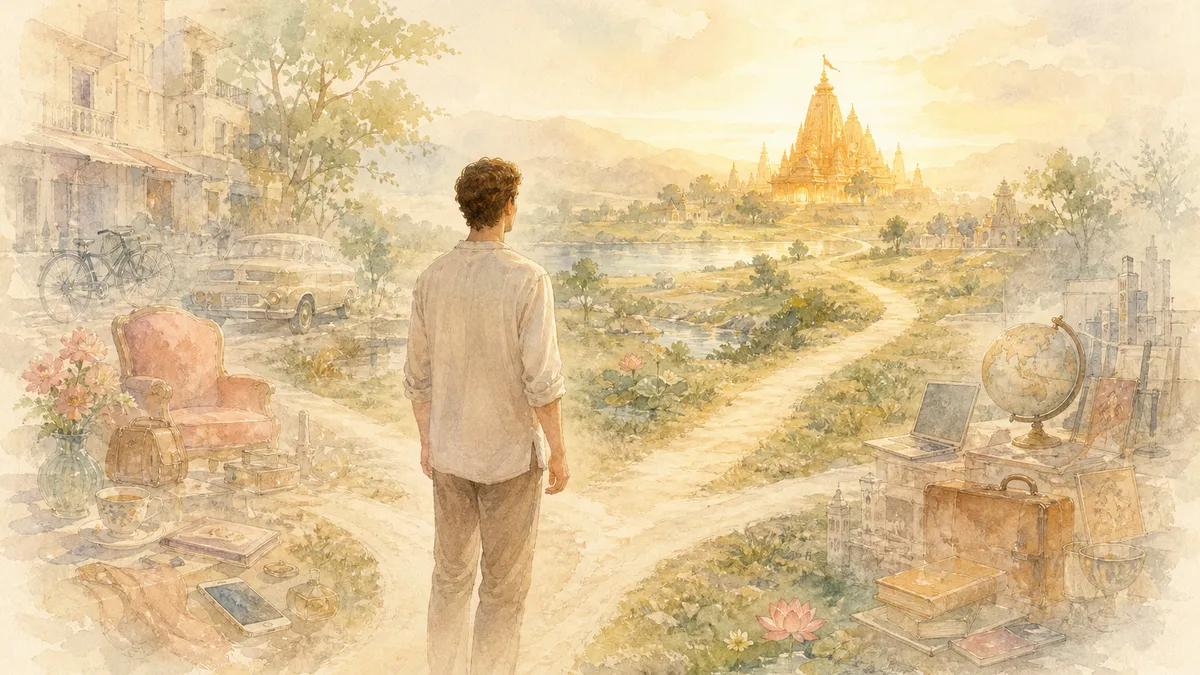
But a sadhu lives in such a way as to learn to love God consciously; he consciously directs his soul toward the Divine Source, consciously trains himself to love God and God alone. He understands that loving God is an art, and that mastery must be attained in it. At first, the soul is very unskilled in love for God; it has never seen God, knows nothing about Him, and does not understand: how is this possible at all? How can one love that which is invisible, inaudible, neither inside nor outside, that which cannot be smelled or touched? At first, God is an abstraction for it. And since the soul has a rather down-to-earth consciousness, it is always searching: what does it mean to love God?
Daily Training of the Soul
A sadhu is one who consciously trains the soul to love God. When we train ourselves to love God, we perform worship, the practices of the Bhajan Mandala, satsangs, darshans; these are very important practices that turn the soul away from its misguided love for selfish, materialistic objects. We must train the soul every day, because every day karma affects the soul, every day something tries to knock the soul off course in this love; this also happens every day. And we must likewise exercise every day in the art of love for God.
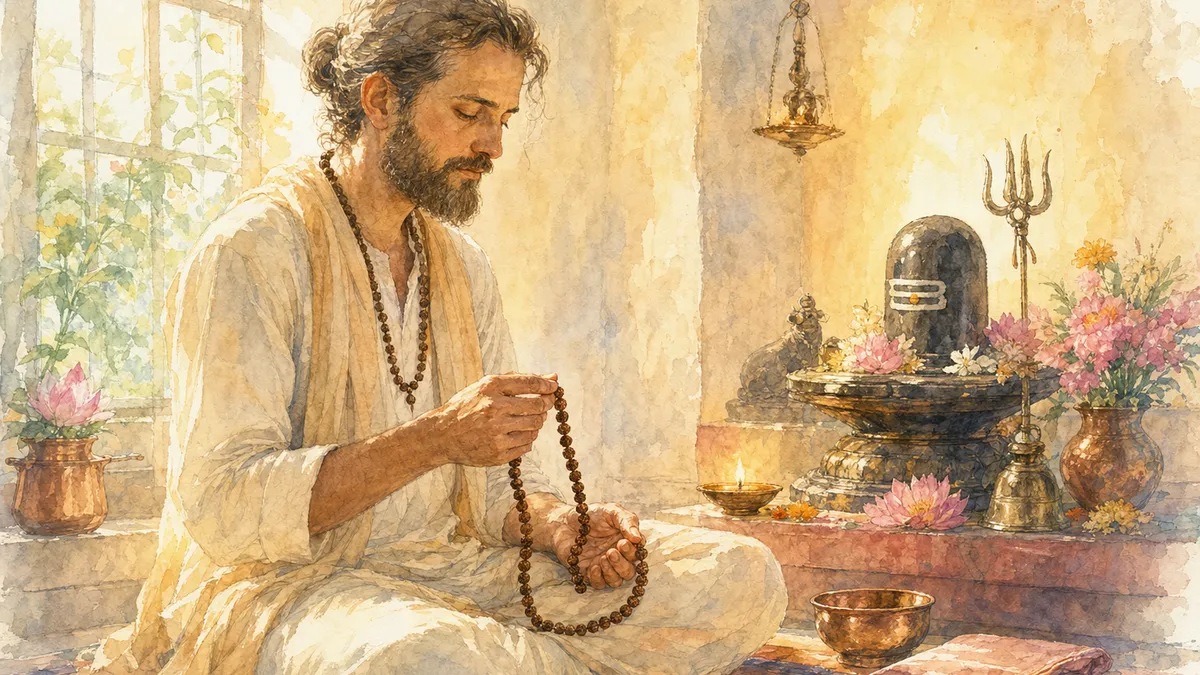
The art of love for God is nurtured by daily effort, by daily training. We must constantly overcome the desire to love something else besides God. We must constantly remind the soul of this art and say: here, if you want to love God, you need to take this position. And here you need to behave in this way, and here—in that way. We must place the soul in different circumstances, different situations, and the more difficult they are, the better. In all such situations, the soul must learn to love God.
For example, those who practice martial arts have many different methods, and the essence of these methods is to learn to fight in different circumstances. For example, they attach weights (kettlebells, dumbbells) and run with them, then stand under a waterfall while cold water pours down and practice strikes, then dive underwater and strike. This is so that they can act even in such circumstances. Then their eyes are blindfolded, and an opponent attacks them while they are blindfolded: from behind and from anywhere; they learn to react to sound, to manage without their eyes. Then the student is sleeping, and the master (the martial arts trainer) sneaks up with a stick, and wham! What is this, what for? Intuition must be developed; you have no right to sleep like a log, you must sleep like a warrior. And a warrior sleeps with one eye and keeps watch with the other; he cannot be caught off guard. Such methods existed in ancient times in the martial arts.
In the same way, we must teach our soul in any circumstances, in any situations: by day, by night, in cold, in heat, in joy, in love, during illness, while eating, working—in every situation we must be such a spiritual warrior, when we know exactly how to love God correctly, when we constantly train our soul.
The Art of Recognizing God
What does it mean to love God? It means to find one’s love against the background of any perception. It is like a man in love finding his beloved girl among thousands of people in the city; he will certainly find her among everyone. In the same way, our soul must learn to find God among thousands of objects, among hundreds of objects of perception.
When we worship Dattatreya, we must find God through His image. When we look at images of saints, we must find God through the images of saints. When we listen to a bhajan, we must find God through the bhajan. When we look at the Guru, relying on the idea of the Guru, we must see God. When we look at a dharma brother, relying on pure vision, samaya, we must see God. When we do anything, relying on the Teaching of non-doing, we must see God in action, beyond actions. When we eat prasad, we must recognize God in the prasad. When we circumambulate temples and worship statues, we must see God in the statues; we must not think: yes, this is some kind of plaster, gilding, it costs sixty thousand, it was made in Nizhny Novgorod by some worldly sculptor. If we think this way, we will never find God. We must bring forth all our concentration, all our attentiveness, remove all our secular fixed notions, and try to see God in that to which we bow; this is what our training consists of.
The statue consists of tattvas, and the tattvas were produced by Brahma, and Brahma was produced by Vishnu; Vishnu came from Shiva. Brahma, Vishnu, Shiva—this is Parabrahman, the Absolute. This means that the statue is not simply a piece of plaster; it is an essence, the play of the Absolute itself before us. We simply need to cultivate the right eyes within ourselves; this is how we should look.
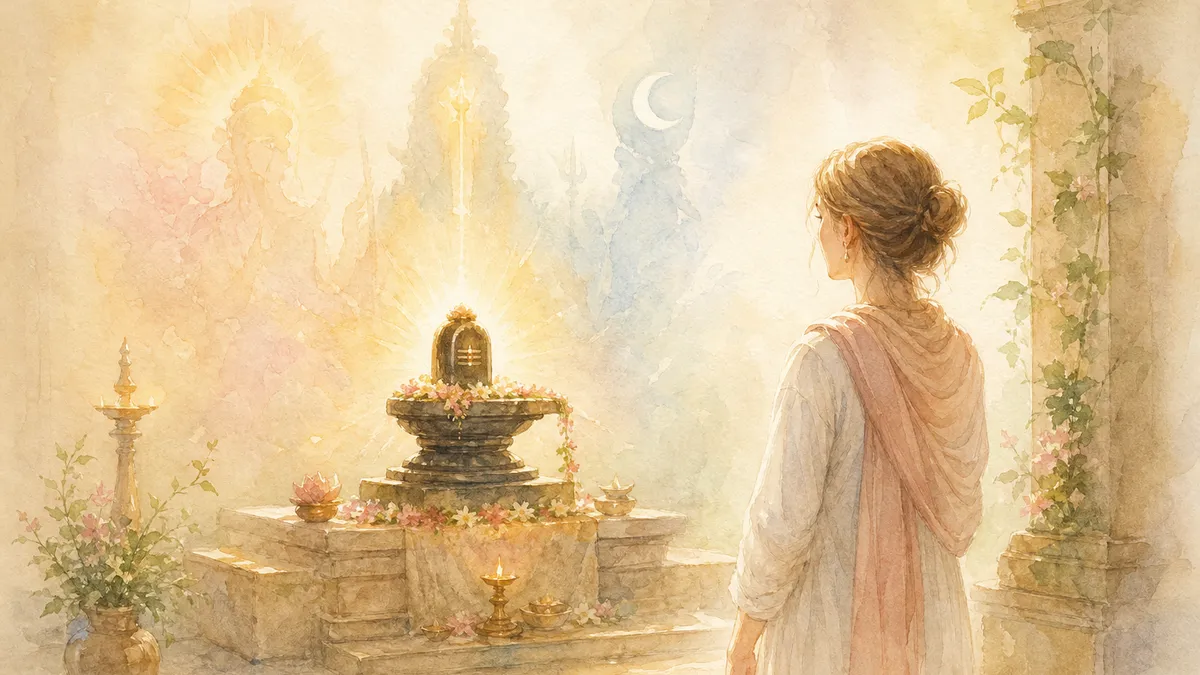
And we should not look at a person like this: ah, he is just like me, foolish, understands nothing; he simply came here, he is older than me, he has been here longer than I have. We should look in such a way as to find the Divine spark in this soul, to see it and bow to it. This is precisely the meaning of the namaste gesture: in our brother in dharma, in the same way, and in the one who is younger than us as well. We should not think like this: ah, here is a mataji walking around, collecting something, doing something in the kitchen, cooking borscht. We must give rise to such an ability that we can see God in her and in what she does, regardless of our judgments, regardless of our evaluating mind.
We must penetrate through ordinary perception, cast aside the astral world like unnecessary, old shoes, and penetrate into the very essence of non-duality in order to see God without name, without form, without attributes, without qualities, as Infinity. We must see this Infinity, express our reverence to it, and find our love. In everything we must find our love: we must find it in a column, in a dog, in a tree. This means: whatever we encounter, we must seek it.
And in the process of searching, we must discard what is not our love: a dog is running, Seva, a dog like any dog, with dog-like interests too—food, sleep, and so on. But Seva herself is simply a dog’s body, a dog’s mind, a subtle body, yet within her there is God—Divine consciousness. We must see God in the dog’s body and also express reverence to Him, but reverence not to the body, not to the dog’s mind and not to the dog’s desires, but to that which plays in this body while being transcendent. Thus we must learn to recognize God in every snowflake, in every fir tree, learn to love Him in every person, in every column.
When we are able to do this, when we learn to see that God, the Absolute, is independent of name, form, and the five elements, then we will understand that the point is not in all of this, not in the external, but in God. The whole point is to recognize this God, to find our love always and everywhere; that we should not pay too much attention to objects, names, and forms; that our task is to reveal what lies behind objects, behind names and forms. And this depends to a great extent on us; it is the training of the soul in love for God.
Establishment in the Art of Contemplation
And at first we must do this by constantly accustoming our soul, because it is not accustomed to it; its categories are too different, its experience is too different. Again and again we must direct our soul to recognize God. All of this is the art of contemplation, the art of Brahma-vichara, Atma-vichara.
Finally, when we become established in this art, in essence we will see nothing but God. Of course, this material world will not disappear, and we will continue to see everything that we saw before, but we will understand its fundamental illusoriness in comparison with God; we will understand that God is more important. It is like looking at clouds, and in the clouds different figures may sometimes seem to appear, and parents show their children: look, there is a sheep, and this is a bird. The child says: yes, exactly. But an adult understands very well that whatever figures arise in the clouds, they are first and foremost clouds, and the figures are unreal things. In the same way, the material world: whatever figures of the material world may arise, God is more important; the figures are not as important as God is.
To recognize God, to direct one’s soul toward Him—this is the art of cultivating devotion, love for God, the art of self-surrender. And when you have learned to see God always, everywhere, and in everything, the greatest aspiration, devotion, and desire to always be in this love for God arise within you; the desire to preserve it and the fear of losing Him arise. You understand: before, I was in ignorance, I did not know how to see God, I did not know how to love God, I constantly paid attention to various foolish things, like a child who thinks that a ghost is standing there, while it is a tree. But now I have understood what the essence of this world is: the essence of this world is God, who is hidden everywhere. And you develop the desire to preserve such vision, to protect it, because it is not yet stable. Then the sadhu becomes vigilant and always, everywhere tries to develop this love within himself.
It may be a powerful spiritual experience, or it may not be any mystical experience at all; it may be only an experience of understanding—everything depends on your karma. It may be an experience of devotion and love, it may be an experience of perceiving the space of the Clear Light and the unreality of the world, or it may be an experience of love and emptiness; it will be experienced individually in accordance with the structure of your inner instrument—antahkarana—but in any case you will know that you have managed to see the feet of the Divine.
Devotion and love for this state arise in you, and then what was important before ceases to be important. It becomes unimportant: as if you have grown up, and your old shoes are no longer needed; you throw them away. In childhood you wore shoes, children’s shoes were bought for you, little sandals; you walked in them, but if you were offered to put them on now, you would only laugh—they would not fit you, and besides, people do not wear such things now; they can be thrown away or given to a museum.
In the same way, what used to trouble or attract you becomes such unnecessary shoes; you simply laugh at it. What are you laughing at? At attachment, at pride, at selfishness, at material attachments, at the rejection of various things, when you say: I can’t stand this, I hate it—this too is an illusion, and you cast it aside. At attachment to the skandhas, the sheaths: the physical body, the energetic, astral, mental, causal—you overcome all this attachment; you understand that these are simply functions, they do not need to be destroyed, they simply need to be used. But this is not me; I am not going to become attached to it, love it, or give my soul to it.
In general, there are strange people sometimes. Abroad, I read, one woman married a large railway bridge—such was her desire, she formalized the marriage. In India, sometimes people formalize a marriage in order to improve their destiny; they become engaged or marry a cow, one woman married the “Bhagavad Gita,” another a tree, but they do this on the recommendation of an astrologer for mystical reasons; Indian culture does not forbid it. But when in America a secular woman marries a railway bridge, and before that she had married large objects another thirteen times.
Often, when we cling to certain things, we are like such a woman. When we attach importance to something: koshas, skandhas, sheaths. Viveka comes when we laugh at this; we see: this is foolish, this is not my essence. When we laugh, it means that our soul is maturing, growing, and it understands: yes, the true object of love is always only one—it is God, the Divine, the most important object.
And then we begin to become established in love for God, and love for God always accompanies our life; we understand: not a step without love for God, not a step without devotion to God, not a step without self-surrender. And this ceases to strain us; if before it had to be trained, watched over every second, now it becomes natural—we acquire the ability to be absorbed in love for God naturally, without tension, without effort. Whether there are rituals or not, whether there is external worship or not, whether there is external self-discipline or not—this is no longer so important. It continues naturally, whatever you are engaged in, whatever you do.

We call such steady love for God nididhyasana. Abiding in the natural state, sahaja, is abiding in steady love for the Divine. And such steady love for God changes our ideas, frees us from the stereotypes of karma, and destroys the cause of future bodies that we might receive in samsara.
Life in Bliss
And under the influence of this love the soul begins to blossom; it begins to flutter like a butterfly, all its qualities blossom, all its virtues blossom. And instead of gloomy absorption in its karma, in its worries, it begins to become very joyful. And this joy becomes a new life for the soul, where there is no karma, but only play, divine blessing, divine grace, the descent of Anugraha, pure vision that arises by itself, and all this is continuous ananda, bliss, bliss, bliss...
That is, a soul that has learned to love God goes from one bliss to another, from this bliss to an even greater bliss. It does not experience some ordinary worldly states, or if it does, they are simply on the periphery, like a game. It never experiences gloomy states; it experiences bliss, Brahma-ananda. It wakes up and thinks: how wonderful! And the next day it wakes up and thinks: today is even better than yesterday! And the next day it wakes up and thinks: wow, this is simply incredible, how wonderful it is! Ananda, maha-ananda, param-ananda, various degrees of ananda; it goes from ananda to ananda. But it does not drown in ananda, because to drown in ananda is also an obstacle; in this ananda it recognizes God in pure vision, without attributes, without objects.
Four Forms of Liberation
When it becomes accustomed to living continuously in such ananda, its life becomes a game, the soul becomes what it loves, and it loves God, and it itself becomes God. We need to practice in such a way as to learn to love God and so that we become what our mind loves most of all. When we have learned to love God in this way, we become some form of God; we become some form of unity with God.
And these four forms are traditionally called the four forms of mukti:
Sayujya-mukti — when the soul loves to be dissolved in God, it attains unity with the Absolute
Sarupya-mukti — when the soul loves to play as a form of the illusory body, loves God in a manifested form, it has a body in the form of a deity
Salokya-mukti — when the soul loves pure vision, loves the divine lokas, it is born in a divine loka. But this does not mean that during life it loves to fly away somewhere; it means that it recognizes this physical world in pure vision
Samipya-mukti — when the soul loves to live surrounded by sadhus, divine beings, and the saints, the gods whom it invokes become its friends, its environment, and in them it learns to recognize God
The art of loving God means that we must find this love within ourselves, we must find the place toward which we should direct this love, and then cultivate it and cultivate it, ignoring all the other loves of our soul, ignoring its love for kleshas, its love for the ego, ignoring all these types of love.
And how can they be ignored?
The method of sutra prescribes taking them and cutting them off firmly, as if taking an imaginary sword and severing them
The method of tantra says this: transform the preferences of your soul into divine ones; do not cut them off, but transform them
The method of anuttara tantra says: pay no attention, love only God, and everything else will be drawn up after that; the love of God itself will dissolve everything
Sometimes we use the method of sutra, sometimes the method of tantra, sometimes the method of anuttara tantra, but in the end everything dissolves in this ability to love God.
Sometimes desires intensify in our soul; these old kinds of love begin to rebel. And then we must teach our soul how, no matter what, to choose the love of God and overcome these old tendencies. We must do this as the strong defeats the weak, or as the cunning defeats the more foolish: deceive these old tendencies of the soul, overcome them, and still prevail. Sometimes egoism crawls out; we must defeat our egoism with humility and self-surrender. Sometimes a klesha crawls out: some practicing karma-sannyasi says: yes, there is stress at work, one has to relax, drink beer. One must choose: either beer or God. To love God in a state of intoxication is probably something only Dattatreya can do. Every day we need to conquer the kleshas within ourselves, every day conquer the tendencies of the impure mind within ourselves, every day conquer attachments, little by little reclaiming space for God; then we will master the art of loving God to perfection.
Cultivating Love for God
When we are engaged in something, it is very important to be in a state of love for God. Service is intended to cultivate love for God within us. Of course, through service we solve life’s practical tasks, and that is also necessary: if no one were to cook prasad or clear the snow, it would be harder to live, and it would also be harder to meditate. But still, this is not the main thing in service: if we became skilled enough and hired people, they could do all of this. Still, through service we ourselves also solve our task correctly. We solve the task of learning the art of loving God.
When we do anything, we need to remember that I am carrying out the Divine will; I am doing this not for myself, I am doing this as service to the Divine will. Why? Because I strive to learn this art of love for the Divine; then service will educate us. When we give ourselves to service, we understand this process: I am doing all of this for God, and for God I simply have no right to do it poorly, no right to do it irresponsibly. If one is working for the owner of a company, sometimes one can cut corners, right? We will get the money, and it is no big deal. If I work for myself, then I am not such an important person; I can do something for myself in a slapdash way. But for God I have no right to do things in a slapdash way, I have no right to cut corners; for God I can act with an open heart, with complete self-giving, with the complete offering of myself. Even a small, unimportant task, I try to do it well, skillfully, putting into it my faith, my devotion, my effort. If we can act in this way, then service will become the education of our soul.
Sometimes, when we perform service, we need to reflect on this: we must do it carefully, diligently, putting our whole soul into it, because through it we serve God. If we work in the world, then in the world the evaluation comes in the form of a salary or a career. You work well, you properly carry out some will, you correspond to the interests of the consumer market, you receive points, you are given a salary, you make a career, you receive signals from the universe that you are doing everything correctly here; if you do poorly, then the opposite happens: the universe sends you signals that you were wrong, that in this system of relationships you acted incorrectly. But in spiritual life we serve God, we do everything for God. Sometimes, when people do something, I assess it roughly in this way: in the world, people do not do things like that, and I say: in the world they will not pay you money for this, people do not work like that in the world, and one does not serve God like that.
The worldly criterion of evaluation is not suitable for us; we do not work for a salary, we do not work for a career, we serve God. Then we must ask ourselves the question: how should we serve God? And the answer will be: with self-giving, with faith and devotion, offering ourselves, regarding our work as service, as maha-yajna, as an offering to the Divine. This means: into what I do, I put my love; even if it is an insignificant, small thing, I put my spirit into it.
If we act in this way, then we will learn to love God through service; through what we do, the integration of the natural state with the nine actions of body, speech, and mind will take place. Often many fail to achieve integration with actions. They can contemplate, abide in contemplative love for God, but when they do something, they do not know how to unite their contemplation and action. Let us put it this way: they do not put their soul into how they walk, they do not put their soul into how they speak or eat. They separate themselves, try to be detached: as if, well, I love an abstract God, but God in movement, God in action, God in smell, God in working with a broom, God in a plate, God in conversation—I do not love Him, I do not understand how He can be there. He is God there, but He is not here; such is the position.
This is the position of sutra, but the position of anuttara tantra and the integration of the natural state is that God is everywhere. Here you move your hand, and He is present in this movement. You bring a fork to your mouth, and in this movement of the fork toward your mouth He is already present; you taste the prasad, and He is present in this taste of prasad; you draw, and He is present in your drawing; you speak, and in this very moment of speaking He is present. You look to see where to put a fence or a gazebo, and precisely in the act of your consideration, planning, and mental operations, there is God. And if you know how to bring Him in this way, this will be the art of conscious action in non-action, the art of love for God in everyday life. This is precisely what we in the Teaching of Laya Yoga call nididhyasana.
