

Commentary on the text “The Master’s Code”
Chapter 64. Self-Remembering.
Remembering oneself is the subtlest art of the Masters; the Master teaches it to the disciple once the disciple has understood the essence of things.
Unless one remembers oneself at every moment, no one can attain complete freedom, even if the essence of things has become known to them.
A true Master remembers himself day and night, in heat and cold, in joy and sorrow, while walking and speaking. There is nothing in the universe that could make the Master forget himself. For the Master is ready to give up everything except self-remembering.
Self-remembering is the key that opens the door to the Boundless for the disciple. Self-remembering is the secret entrance to the treasures of the Spirit. Only by remembering themselves did the Masters of the past attain freedom. Only by forgetting themselves did beings lose it.
One who remembers oneself becomes one with the Boundless. Therefore, self-remembering is called “listening to the voice of the Spirit.”
To remember oneself always and everywhere—such is the disciple’s rule, given by the Boundless.
You have all come to the monastery to attain enlightenment and become immortal, to attain absolute freedom. Of course, if you have come to the monastery with other aims, then it is better for you not to be here. No other aims are pursued here, so sooner or later you will come into conflict with the minds of others if you have different aims. Those who pursue other aims are usually asked to leave the monastery, since their aims do not accord with the common aim of the others. Building human relationships, satisfying personal attachments, gaining power, accumulating wealth, and so forth—these aims cannot be pursued here. Only when you follow the principles of the teaching can you attain your true goal.
Rules of Monastic Life
When you come to the monastery, you must familiarize yourself with its rules. In fact, there are a great many of these rules, and you should study them thoroughly, almost by heart, so that you can adhere to them in your life. These rules are: the Vinaya, the principles of samaya, and the single samaya of contemplation. You should understand them thoroughly so as not to make mistakes. The rules are not merely a formality, nor are they simply something that makes your life easier. The realization of your future life depends on how well you understand them and are able to follow them. Conversely, if you make a mistake in understanding the rules, in relationships, in the teaching, or in practice, it may also cost you dearly. You should clarify again and again the rules that describe how to relate to various things in the teaching, in everyday life, and in meditative experiences.
One such rule is self-remembering. This is a rule of practice that is also called “the single samaya of contemplation.” Self-remembering means that you constantly direct your consciousness toward the subtle principle of awareness and practice atma-vichara. In a broader sense, self-remembering means abiding in awareness without fixation, abiding in the proper state of contemplative presence.
I will tell you that among you there are those who remember themselves continuously, and there are those who do not remember themselves continuously. And although their bodies are in the same place, their minds abide in different universes. This is so. The difference between those who remember themselves and those who do not is immense. They are beings of different kinds, different classes, even if they have identical bodies. It is like the unfathomable difference between Australopithecus and Homo sapiens. The difference between those yogis who remember themselves continuously and those who have not yet reached this level is enormous. Billions of kalpas of evolution lie between them. And although they go to prasad at the same time and perform the same service, the difference in their consciousness is colossal. Those who remember themselves deeply and truly will no longer be born in this world, because they have ceased to dream and have freed themselves from the dreams of the mind.
From the Human to the Boundless
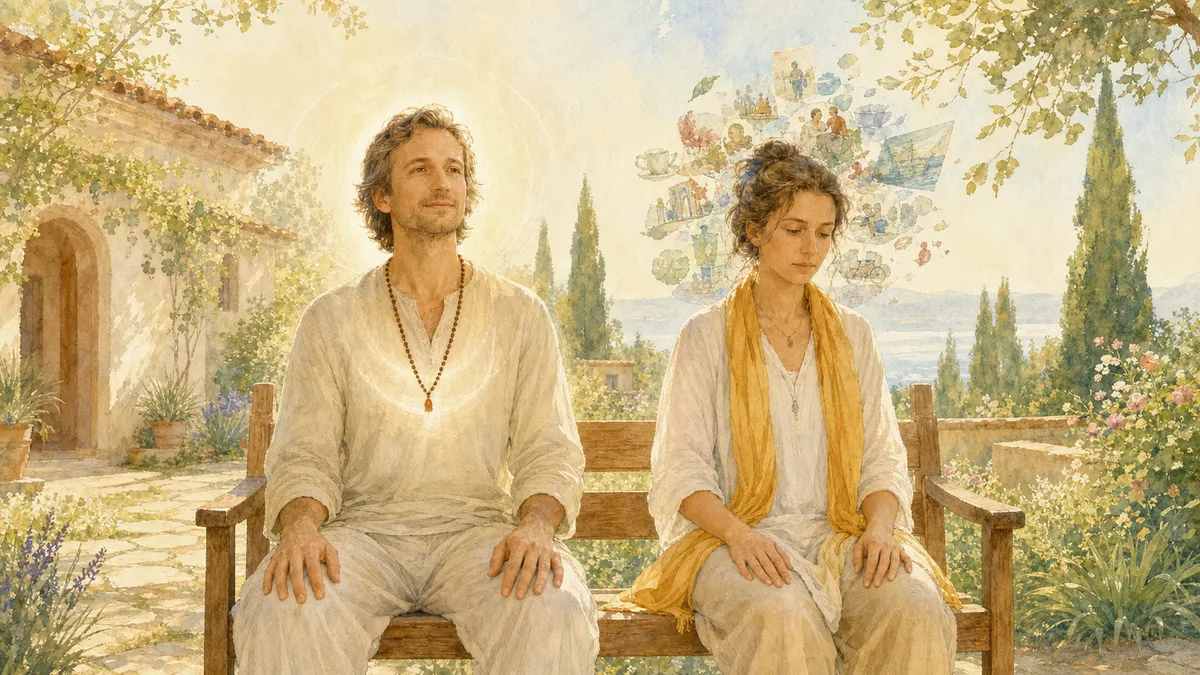
At first, the disciple does not understand, thinking that to remember oneself means to remember one’s human aspect.
Therefore, at first he remembers himself as a human being.
At first, our clarity and powers of observation are connected with our ego, with what we possess, with our “I.” We focus on our small sense of “I,” on the awareness inherent in us. However, as we practice, we begin to discover that no such individual sense of “I” exists, because it has been a fiction from the very beginning, and boundless Consciousness lies behind individual consciousness. Suddenly, we understand that it is not the small sense of “I” that we must remember, but the boundless one, and that the entire essence of practice lies precisely in remembering this boundlessness.
Self-remembering is a monk’s inner work. And this must be continually clarified. Sometimes we forget the instructions and principles of practice even while following the spiritual path. We are interested in many extraneous things: who we were to one another in a past life (wife, husband, son, and so on), what the woman next door thinks of us, what we saw in a dream yesterday, and so forth—all of this is unequivocally called “spiritual materialism” by the saints. These pseudo-spiritual experiences have no genuine value if there is no self-remembering. And if there is self-remembering, they have even less value, because the only thing that matters is your light of clarity, which arises as a result of such self-remembering.
When a disciple comes to a teacher, they must learn from the teacher the art of remembering themselves, because a teacher is someone who has mastered this art. And it is precisely then that the learning process comes into effect. When we remember ourselves, we see that some things are important and others are not. It is very important for us to clarify the following points:
- what the essence of self-liberation is;
- how self-transcendence occurs;
- how to cultivate initial mindfulness;
- how to eliminate distraction and acquire a “secret friend” on the path;
- how to cut off hope and fear;
- how to let go of oneself;
- how to integrate the principle of awareness with the chakras, channels, and elements within the channels;
- how to gain flexibility of awareness so that it can not only remain within but also manifest and blossom in everyday situations;
- how to reconcile the relative perception of reality with self-remembering, which is associated with absolute perception;
- at what point to hold the mind: where concepts have ceased or beyond concepts;
- if the mind is held beyond concepts, whether thoughts should be allowed to move.
These are all extremely important matters that form the cornerstone of the teaching. These questions are truly important for a practitioner who is genuinely learning the art of contemplation. If we grasp these key points in the teaching, our Dharma will progress every day, and we will follow the path of the saints. If we miss them, we will pay attention to whom the teacher smiled at and whom he did not, what the senior monk said wrong and what he said right, who took our slippers after lunch, and so on. We will be concerned with thousands of utterly trivial things, wretched even from a worldly point of view. There are laypeople who launch satellites into space or risk their lives for some great ideas, write literary masterpieces, and compose magnificent music, while we, even in a monastery, may become utterly and trivially immersed in banalities. But a true practitioner will never allow this. Having made their choice, they know that they came here to learn a very subtle art, with which no worldly art can even remotely compare. This is the art of awareness, which is difficult to attain even for the gods.
Attitude Toward the Human Part
When the Boundless reveals itself to him, he sees that what should be remembered continuously does not belong to the human, for it is the Boundless.
Then he remembers the Boundless within himself and treats the human with humor.
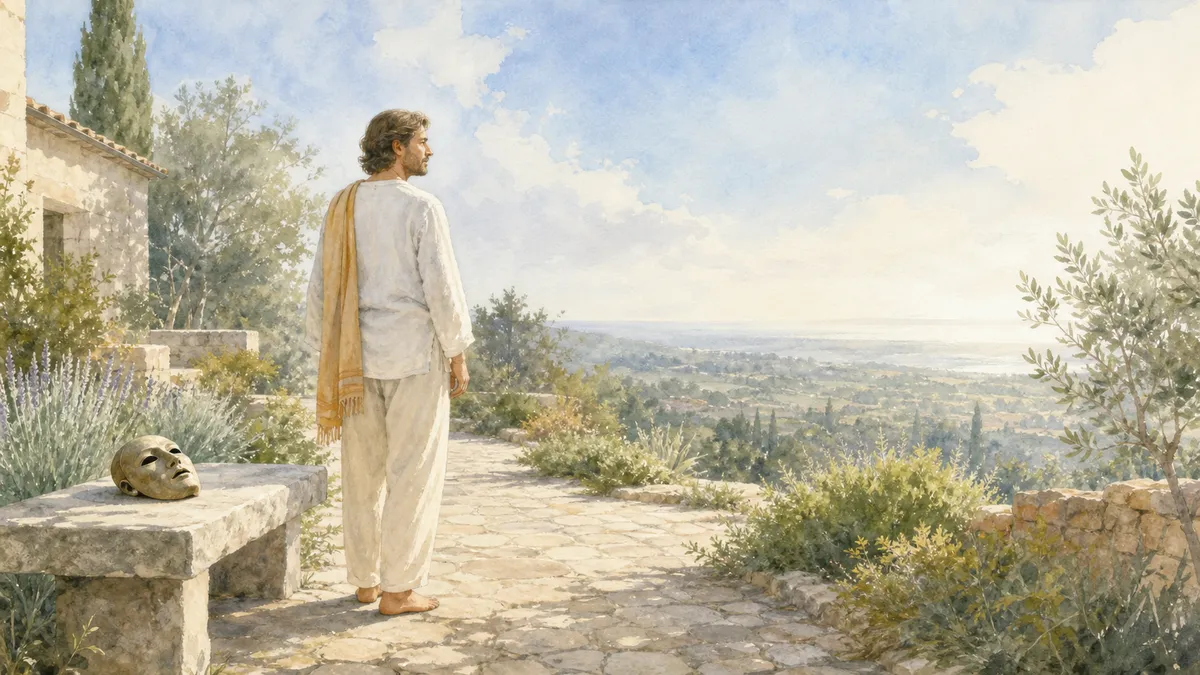
As our practice deepens, we discover that there is our human part, called “ahamkara,” and our boundless part. And it is not the human part that should be remembered, but the boundless one. We should place our hope only in the boundless part and treat the human part with humor, because in itself it is unreal. The human part, with its emotions, feelings, and thoughts, is like a showman, an actor who puts on a particular mask.
From the very beginning, the siddhas made it clear to their disciples how and toward what consciousness should be directed. They never had much regard for the human part, because it is entirely illusory. Thoughts and feelings are of no significance to the siddhas; they look directly at the root, at the Boundless, and help the disciple manifest this Boundless. For the disciple’s boundless part to manifest, their human part must stop taking itself so seriously. It must learn humility and surrender completely to the boundless part, because our emotions or thoughts pertaining to the human part are of no significance from the standpoint of nonduality.
The human is a very insignificant part of the Boundless.
And unless we also make it just as insignificant in our own eyes, we will not be able to truly imbibe the spirit of such boundlessness.
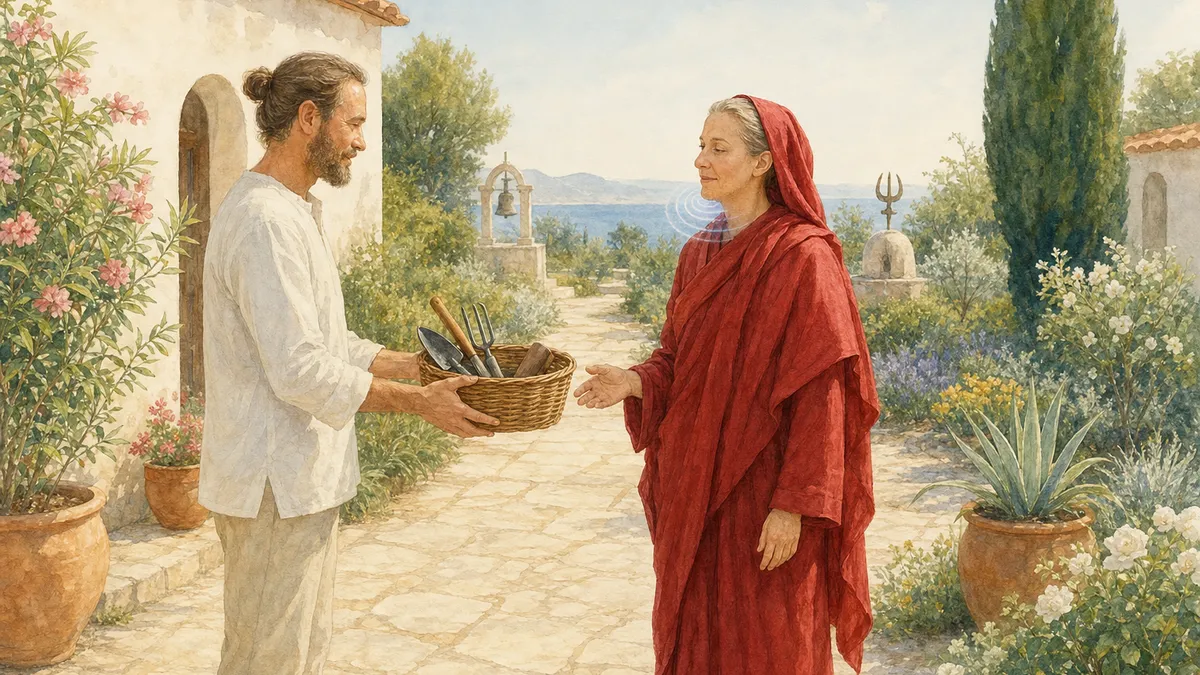
There was an incident in Crimea when an administrator gave a nun a certain task. But she did not complete it. When asked why, she said, “He said it to me from the vishuddha.” In other words, her human part did not like the tone in which he gave her the task. But when we remember ourselves, it makes no difference to us who said what to whom, or from which chakra. It does not matter to us whether our human part is treated with respect or not. What matters to us is the spirit of practice and adherence to the principles we have chosen.
The Path to Natural Contemplation
Nevertheless, the Master does not reject it, knowing that it too is a precious gift of the Boundless Spirit.
Beginning with remembering himself as a human being, the Master eventually comes to know himself and begins to remember himself as the Boundless. Then it is said that he “contemplates the natural,” “has vision,” or “knows.”
The difference between one who remembers themselves and one who does not is immense. These people may be near each other, but their minds abide in different dimensions.
When we train in self-remembering for a long time, our remembering becomes more refined and flexible, penetrating from the conceptual mind (manas) into the subtler intuitive consciousness (buddhi), and then goes even deeper—into what is called Atman, the Self, the subtlest consciousness. This self-remembering then descends again, and this descending force is called the “impulse of the enlightening power” (Anugraha). Like an avalanche, this impulse spreads into the past and the future, cutting off the yogi’s hopes and fears. When the yogi’s hopes and fears have been cut off, their self-remembering develops into abiding in the pure space of consciousness. And when such abiding arises, it is called “natural contemplative presence,” “the natural state,” or “recognizing one’s mind before birth.” The yogi’s further task is to train in such recognition.

True life begins only after we have discovered such remembering and become established in it. Of course, perception does not cease after we discover our mind before birth. On the contrary, only then does it truly begin to blossom, because at last you attain the true “I,” and your mind, feelings, and ego cease to deceive you.
Often, when analyzing yourself and your perception in retrospect, you can see how narrow your mind was, how fixated it was on itself, on its own thoughts and problems; it was as if it were blind, as if it saw nothing at all. It was so absorbed in processing its internal data that it failed to see things that were obvious: the virtues of the person beside you, the beauty of a flower, the magnificence of the sunrise, and so on. It did not see the simple miracle that exists every second. It saw none of this because it was occupied with constant self-reflection. It continually contemplated the internal lists written by the mind. It constantly reviewed and revised these lists and tried to connect something from them, yet desperately refused to see reality as it is. To it, these lists were life itself, but in fact, this was a pseudo-life. It attached importance to its own self-reflection and was therefore always detached from being, from the world. It always looked at the world through self-reflection and tried to impose its own labels, consisting of judgments, upon it. Naturally, all its judgments came from the past. But both the past and the future are dreams of the mind; they are functions of human dreaming. Only when we become rooted in such self-remembrance do we truly begin to perceive ourselves and this world.
Obstacles and Pitfalls Along the Path
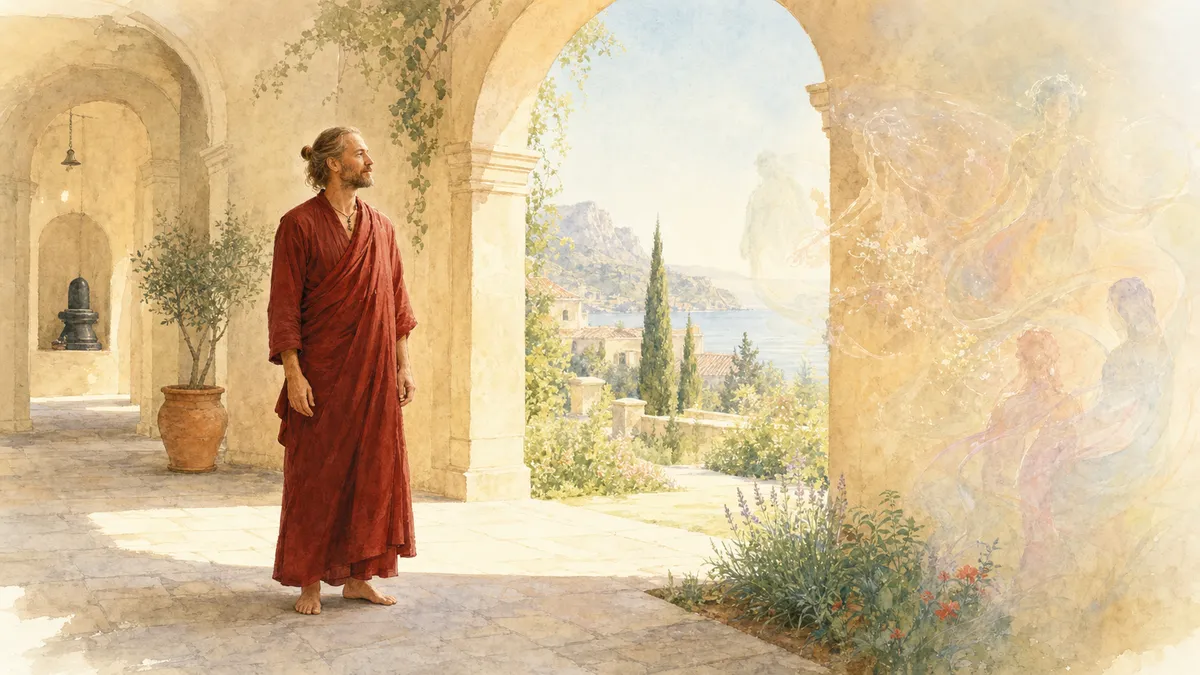
On the path of self-remembrance, the yogi encounters many pitfalls and obstacles. Sometimes it may seem to you that the teacher is deceiving you; sometimes it may seem that you are a living Buddha, that only you know the Dharma while everyone else fails to understand it at all. Sometimes you may see spirits telling you, “I have taken away the spiritual power of your samaya. I have taken all your life force, so you will not succeed.” At other times, on the contrary, you may see wondrous images of gods or saints who tell you that you are an incarnation of Matsyendranath, that you must reveal your mission, and that all the signs indicate the time has now come to do so.
An experienced monk will never take the bait. He will say, “I already have a guru, and I receive instructions from him in a physical body, so for now I do not need your instructions.” If he is an even more experienced monk, he simply looks for the one who sees all this. He asks himself, “Who sees all this?” — “I do.” — “And who is this ‘I’?” At the moment he asks the question, “Who is this ‘I’?” he is cast back into the pure space of nonduality, and all visions disappear.
Sometimes it may seem to you that you are disliked in the monastic community, that you are being treated with particular bias. Sometimes it may seem that the Dharma does not liberate. Sometimes you may simply experience ordinary despondency and disappointment. All these are common things experienced by millions of spiritual seekers. The aim of spiritual practice is not to allow your mind to become enchanted by any of these things. Whatever you are doing, always ask yourself, “Who is experiencing all this?” When you find the subject who is experiencing it, you will discover primordial emptiness. And in primordial emptiness, all experiences mean nothing. Sometimes you may have dreams in which you see that a certain nun was a queen in a past life and you were a king, or you may see something else of that sort. Sometimes you will have dreams with astonishing signs and will rack your brains trying to understand what they mean. But if you correctly practice contemplation and self-remembrance, all this will repeatedly come and go like a mirage, appear again, and then dissolve. The saints have a saying: “When your spirit is calm, the spirits are calm as well.” That is why I often tell such students, “Do not disturb the spirits.”
The Simplicity and Depth of True Consciousness
A true yogi flawlessly discerns the pure mirror of the mind. He sees that everything is primordially perfect, that there are no problems or difficulties anywhere, no confusion anywhere, and that if anything does arise, it is merely a clouding of the mirror of his mind.
Suddenly, he begins to understand the consciousness of experienced monks. He sees that this consciousness is so simple that it is almost difficult to believe. It is very light and open. It contains neither dualistic evaluations nor judgments, nor any difficulty in interpreting anything. It is genuinely light and simple, yet at the same time it possesses astonishing depth. Its simplicity arises from its connection with the Source, while its lightness arises as a result of self-surrender. As long as there is no self-surrender, our mind is very heavy; it tends to seek associations, lapse into judgments, and draw conclusions. But when self-surrender takes place, lightness arises by itself.
