


Commentary on the text “Yoga Vasishtha,” Chapter Six. The story of Sikhidhvaja and Chudala.
Testing the Depth of Enlightenment
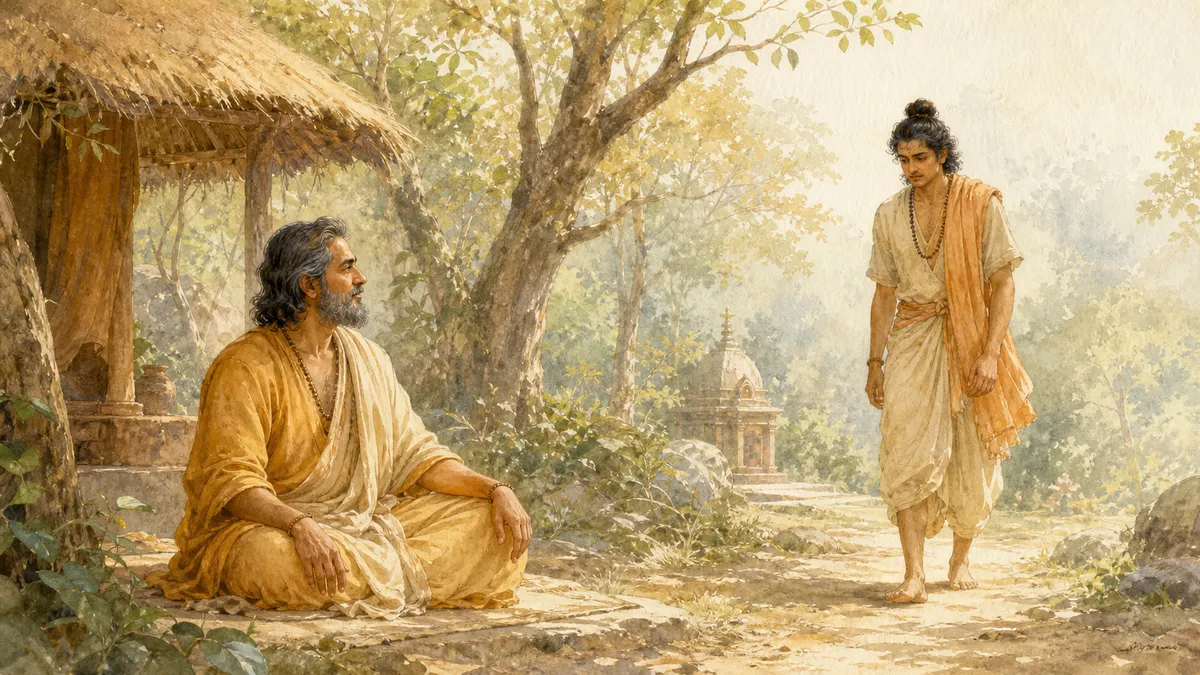
When Sikhidhvaja, with the help of the instructions of the ascetic Kumbha, attained enlightenment, Chudala, his wife, who had assumed the illusory form of Kumbha, decided to test the depth of his enlightenment.
Such tests are necessary; they exist in the siddha tradition. They are needed in order to understand one’s level and the power of self-liberation. For if one does not encounter such a testing situation, one may perhaps not understand how deep one’s awakening is. Sometimes life itself performs such tests. Sometimes this is done with the help of gods or spiritual teachers. Sometimes these tests may come in the form of obstacles, and sometimes, on the contrary, in the form of temptations or enticements.
If a person is not experienced in spiritual contemplation, he fails such an exam and has to return to something he has missed. But if he passes such trials, he is considered worthy of a deeper level.
First, Chudala tested the king’s maturity by offering him the joys of paradise and arranging a meeting with Indra. Realizing that he could not be attracted by promises of pleasures, she decided to arrange another test for him. One day the yogin Kumbha came to Sikhidhvaja, and the expression on his face was unhappy. Noticing this, Sikhidhvaja asked:
“O son of the gods, why do you look unhappy? Saints do not allow any external influences to affect their equilibrium.”
Kumbha said:
“Those who, while remaining in equilibrium, do not allow their organs to act naturally while the body is alive are stubborn and narrow-minded people. As long as there is a seed, there is oil, and as long as the body is alive, there are various moods. And since I neither accept one mood nor reject another, why should I not be unhappy?”
The Highest Point of View
This is a very high point of view. It is completely different from the view of a layperson who is obsessed with hopes and fears. It is very reminiscent of the state of which the Buddha spoke. Once, on the day when a certain king destroyed the entire Shakya clan, Ananda asked the Buddha: “Lord, how do you feel?” The Buddha said: “I am a little sad.” Someone might think: “The entire Shakya clan has been destroyed, and he is only a little sad.” But, on the other hand, one might think: “After all, this is the Buddha! So how can he be sad and remain in such dualistic categories: joy — sadness, happiness — unhappiness? In my opinion, it should make no difference to him, since he has already disappeared, having dissolved his mind in nirvana.”
But this state of being “a little sad” expresses the true state of affairs. The mind is unconditioned, and it still abides in nonduality. But relative circumstances play according to their own laws. The body and prana react according to their own laws. And if one wishes, this reaction can simply be made to disappear, transformed. This process is completely controllable. But it must be acceptance or rejection, or there must be motivation. But what is to be done if there is no acceptance and rejection, if there is no motivation? Then even sadness is not a problem. There is a joy of its own in sadness; it has its own depth, shakti, with which one can also work and integrate. Then this too is a full-fledged experience that is part of contemplation, which is not rejected and is not an obscuration. This is exactly what Kumbha is speaking about.
And Kumbha continued:
“He who rebels against the various states into which the body naturally comes is waving a sword, cutting the air. The equilibrium of yoga is for the mind, not for the organs of action and their states. As long as there is a body, the organs of action must be allowed to perform their respective functions, while the intellect and the senses should remain in a state of calm. Such is the law of nature, to which even the gods submit.”
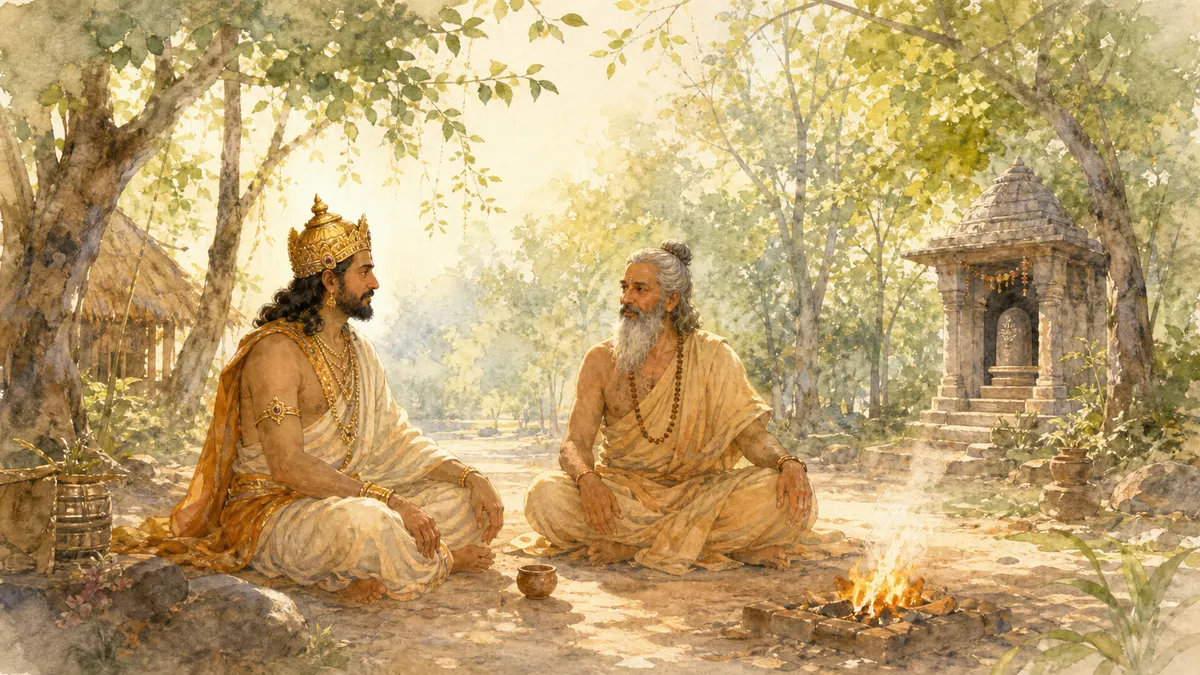
He expresses the very highest essence of the practice of the natural state. The equilibrium of yoga, emptiness beyond dualistic categories, is for consciousness. But as long as there is a body, there are sense organs and perception. And we often say “leave everything as it is.” This means that we allow perception and energy to move freely. We allow contact between the sense organs and objects to occur. But there is simply no attachment to or identification with this contact, thanks to the fact that the practice of the mind is in a completely free state.
It sometimes happens that practitioners who engage in contemplation, while making certain mistakes, look frozen. That is, in the true sense, to contemplate does not mean walking around with your eyes lowered, when you perceive nothing and think: “If only I don’t get distracted. If only I don’t get distracted.” And someone asks you something, but only on the third attempt do you understand the meaning of what is being discussed at all. You cannot connect your mind with certain circumstances and understand how to do anything, because you are contemplating.
When you work with sankalpa in retreat, this is acceptable. You will not have such problems in retreat, and you really can allow yourself this. But when it comes to everyday life, this is mistaken, because contemplation does not imply that the sense organs are frozen; they can still function as usual. Moreover, they can be integrated with different circumstances. You can make decisions, manifest will, creativity, anything at all. But at the same time, all of this is not worldly, not conditioned; all of it comes from inner emptiness, and inner emptiness in fact acts through you, while there is no action of yours here. Something happens, takes place in your awareness without attachment, acceptance, or rejection.
The Curse of the Sage Durvasa
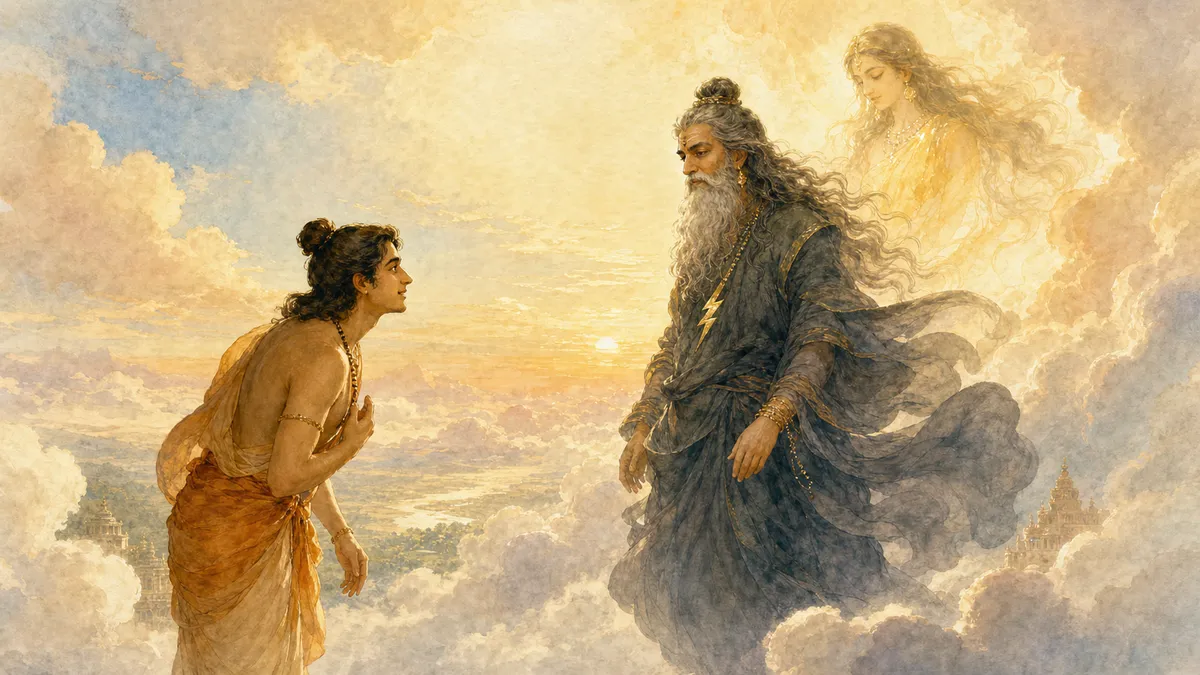
And Kumbha goes on to say why he has such an unhappy face.
In fact, his face was not unhappy; he merely assumed such an appearance. This was his subtle plan for testing Sikhidhvaja. Kumbha said:
“Now, O king, listen to what misfortune has befallen me.
Having left you, I went to heaven to fulfill my duties. As evening approached, I left heaven to return to you. On the way through space I met the sage Durvasa, hastily flying so as to be in time for the evening prayers. He was clothed in dark clouds and adorned with lightning. He looked like a woman hurrying to meet her lover. I greeted him and said this to him in jest. Angered by my insolence, he cursed me: ‘For this impudence, you will become a woman every night.’ I am distressed at the thought that every night I must become a woman. Truly it is a tragedy that the children of the gods suffer the consequences of offending the wise. But why should I grieve, since this does not affect the higher Self.
Sikhidhvaja said:
“It is useless to grieve, son of the gods. Let what will be, be, for the higher Self is not affected by the fate of the body. The joys and sufferings that fall to us trouble only the body, not the one who dwells in it. If even you are subject to sadness, what can be said of those who do not understand! Perhaps, in speaking of this, you are simply using appropriate words and expressions!”
Thus he tried to console him. But when the sun set, Kumbha’s body began little by little to change. And he, feigning tears, said to Sikhidhvaja in a faltering voice:
“Alas for me, I feel my body dissolving and going into the earth. Breasts are growing on me. The bones are expanding, taking on a form proper to a woman. Look, a dress and ornaments are growing straight out of this body. Oh, what am I to do, where can I hide, for I have truly become a woman!”
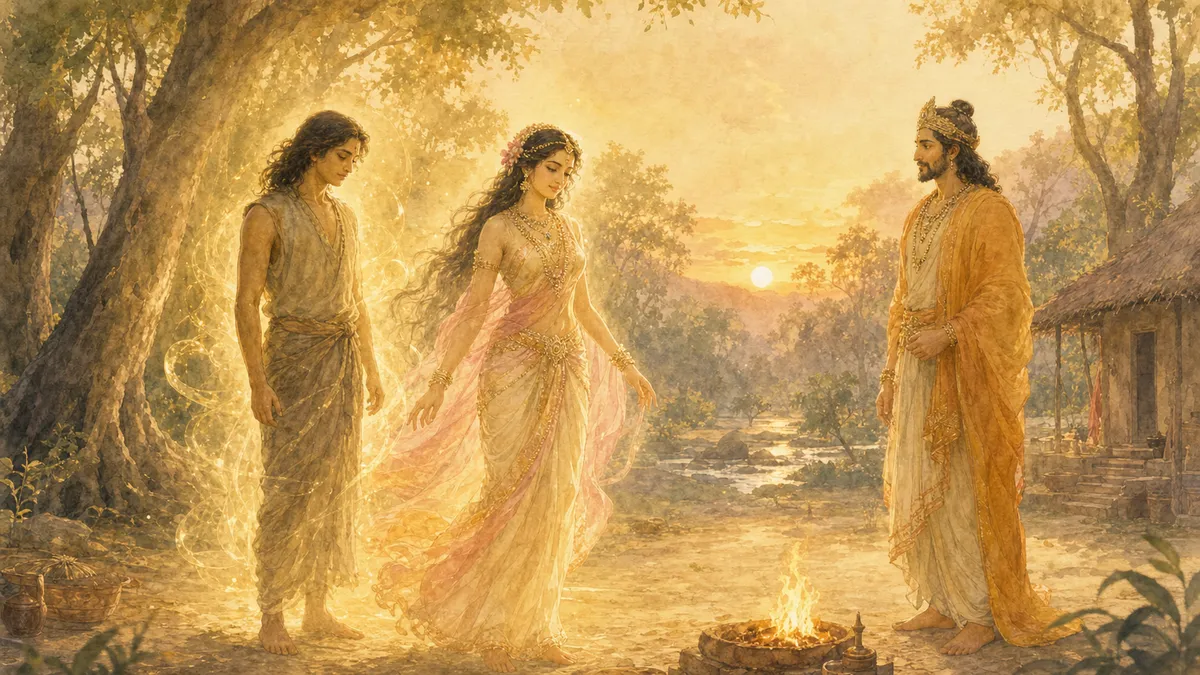
And he portrayed shame. Sikhidhvaja replied:
“O wise one, you know what is worth knowing. Do not grieve over the inevitable. Fate affects only the body, not that which is embodied in it.”
Kumbha also agreed:
“You are right. I am no longer sad. Can anyone resist the world order or nature?”
Conversing thus, they lay down in bed. Thus Chudala lived with her husband as a young ascetic by day and as a woman by night.
A Marriage Proposal
A few days later, Kumbha (Chudala) said to Sikhidhvaja:
“O king, hear my confession. For some time now I have been becoming a woman at night. I wish to fulfill the role of a woman at night. I feel that I must live as the wife of a wise husband. In all three worlds I have no one closer than you. Therefore I want to marry you and enjoy conjugal pleasures with you. This is natural, pleasant, and possible. Is there anything wrong with it? We have renounced desires, reject nothing, and look upon everything equally. Therefore let us do what is natural, without desire or denial.”
This was the beginning of his test. Since Chudala was already his wife, this was not a problem for her at all. That is, she was arranging all this with her husband. But Sikhidhvaja knew absolutely nothing about it.
But he replied:
“O my friend, I see nothing good or bad in this. Therefore, O wise one, do as you wish. My mind is in complete equilibrium; in everything I see only infinite consciousness. Therefore, do as you please.”
Kumbha replied:
“If you feel this way, O king, then today is the most suitable day. The heavenly luminaries will be witnesses at our wedding.”
They gathered everything necessary for the ritual. They bathed each other with holy water and prayed to the ancestors and the gods.
By this time night had fallen. Kumbha turned into a beautiful woman. “He” said to the king:
“Dear friend, now I am a woman. My name is Madanika. I greet you, and I am your wife.”
Sikhidhvaja adorned Madanika with garlands, flowers, and precious stones.
Delighting in her beauty, the king said:
“O Madanika, you are radiant like the goddess Lakshmi. May we live together like the sun and shadow, Lakshmi and Narayana, Shiva and Parvati. May our union be blessed.”
They lit the fire and performed the rituals in accordance with the sacred texts. They decorated the altar with multicolored flowers and precious stones. Then they circumambulated the fire and made offerings to it with hymns. They went around the fire three times and withdrew to the bridal chamber. Thus, they completed the wedding ceremony; that is, they performed the full ritual.
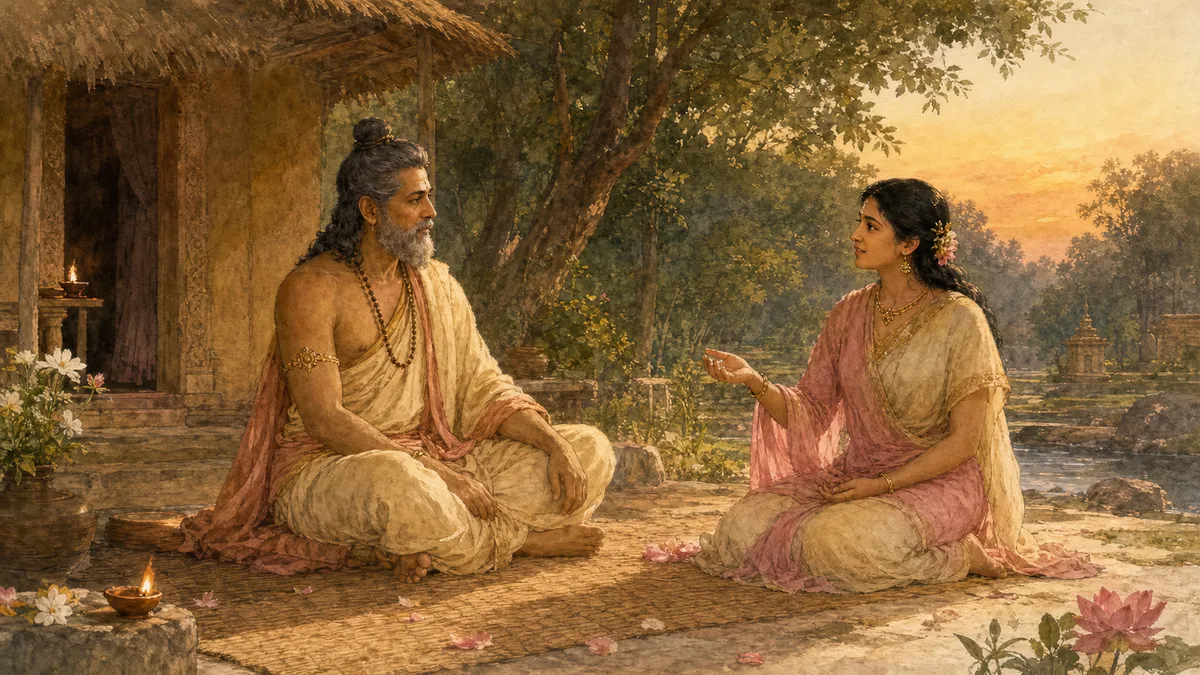
When the sun rose, Madanika became Kumbha again, because the curse was in effect only at night. So they lived: friends by day, spouses by night.
When Sikhidhvaja slept, Kumbha would go away to the palace, govern the kingdom there for a while, and then return. Since she was a siddha yogini of outstanding abilities, she succeeded in all these tricks. Thus they lived in the mountain caves for a month. Then they wandered through various forests and mountains. For some time they lived in the Parijata forest.
The Test of Jealousy
After several months, Chudala thought that now she could test her husband in another way. For the king was free from acceptance and rejection.
She thought:
“Now I will give him another test and see whether he can be shaken by the dual forces of attraction and repulsion.”
That same night, by her magic, Chudala created a beautiful garden and a marvelous bed in it. She also created a handsome young man, far more beautiful and attractive than Sikhidhvaja. It seemed as though she herself was sitting on the bed in the embrace of her lover.
Sikhidhvaja finished his evening meditations and began to look for his wife Madanika. After some time, he discovered the place where the sweet couple was hiding. He saw them completely absorbed in amorous pleasures. Her hair was loose, and she held his face in her hands. Their lips were joined in a passionate kiss. They were quite obviously expressing immense love and attraction for each other. With every movement, they expressed their love. On their faces shone the reflection of the delight of their hearts. They saw nothing around them.
Sikhidhvaja saw all this, but remained calm. He did not wish to disturb them and turned to leave. But they noticed him. He said to them:
“Please do not interrupt your pleasure.”
After some time, Madanika came out of the garden and met Sikhidhvaja. She was terribly ashamed. But the king said:
“Dear one, why did you leave so quickly? All beings live in order to enjoy happiness. It is difficult to find such a harmonious couple in this world. This did not disturb me in any way, because I know well what people in this world desire. Kumbha and I are wonderful friends, and Madanika is the result of Durvasa’s curse!”
Madanika pleaded:
“Such is the nature of women! They are inconstant. They are eight times more sensual than men. They are weak and cannot withstand lust in the presence of the one they desire. Please forgive me and do not be angry.”
Sikhidhvaja replied:
“I am not angry with you at all, dear. But it will be right if I now treat you as a good friend, rather than as a wife.”
Chudala liked the king’s words, which finally proved that he was above lust and anger. She immediately cast off her form as Madanika and appeared in her original form as Chudala.

The Power of True Non-Attachment
Sikhidhvaja was subjected to rather harsh tests as his illusions were cut through one after another. And it often happens that a person who abides in contemplation does not even know what illusions he has. That is, he may think that his contemplation is powerful, that he is not attached to anything. But this may be so only until secondary causes and circumstances have come together. One can truly know the strength of one’s non-attachment only when one finds oneself in certain circumstances or causes that test one, that initiate certain bhavas, worldviews within one. And one encounters a specific energy, a specific shakti, to which one cannot say: “This or that is all an illusion.” Of course, you can say that, but it will continue to act anyway. And here the strength of your natural contemplation is truly tested. It happens that two people seem to be at the same level, but certain energies manifest, and then the mind of one person remains unshaken, while for the other this becomes a major problem. This means that they have completely different depths of awareness.
Chudala’s Revelation
And Sikhidhvaja, when he saw that Chudala had appeared before him, began to ask:
“Who are you, beautiful lady, and how did you come to be here? How long have you been here? You look almost like my wife!”
Chudala replied:
“Indeed, I am Chudala. I myself took the form of Kumbha and others for the purpose of awakening your spirit. I also myself took the form of this small illusory world with all this garden and so on, which you have just seen. From the very day you thoughtlessly left your kingdom and came here to perform rituals, I have been trying to awaken your spirit. It was I, having taken the form of Kumbha, who taught you. The forms you perceived—Kumbha and others—are unreal. And now you are fully awakened and know everything worth knowing.”
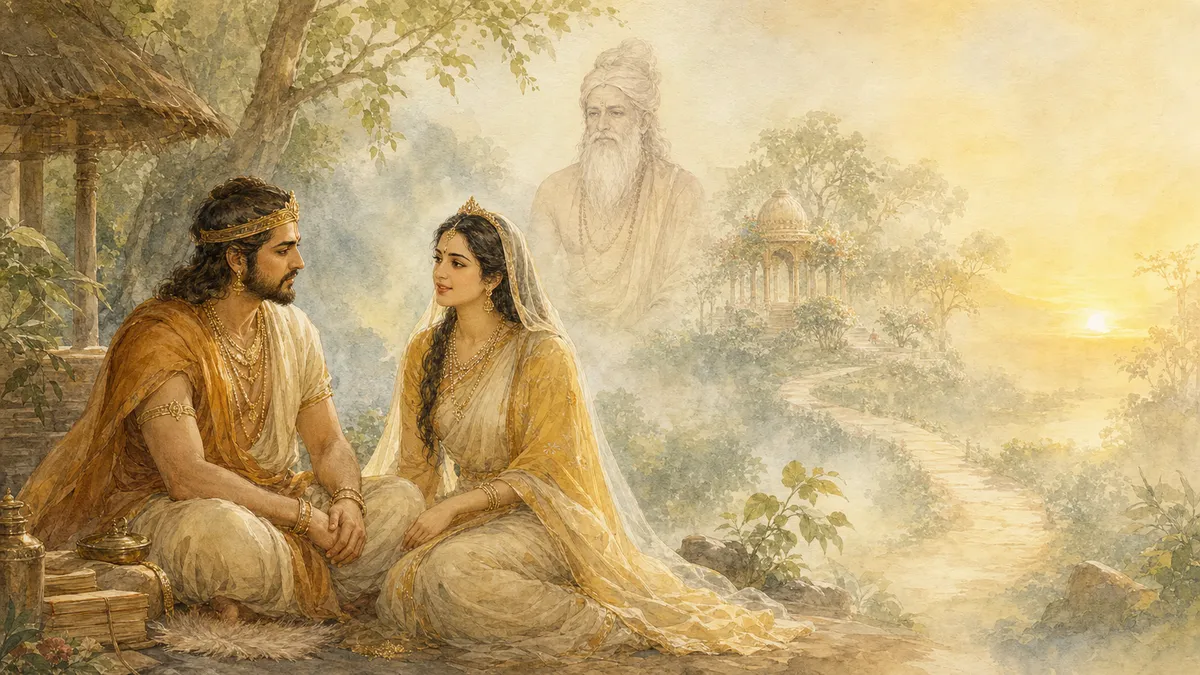
Sikhidhvaja entered deep meditation and saw everything that had happened from the moment he left the palace. He rejoiced, and his love for his wife increased many times over. Returning to this consciousness, he embraced Chudala with such love that it is difficult to describe. With hearts overflowing with love, they remained for some time in a special state.
Sikhidhvaja then said to Chudala:
“Oh, the love of a dear wife is sweeter than nectar! What hardships and pain you have endured for my sake! The method by which you pulled me out of this terrible ocean of misunderstanding is incomparable. I have heard legends about exceptional women and exemplary wives, but all of that is nothing compared to you. You surpass them in everything. You fought for my enlightenment. How can I thank you?”
Chudala said:
“When I saw that you were absorbed in performing useless rituals, my heart ached. I relieved that pain by coming here and trying to awaken you. Truly, this was for my own pleasure and enjoyment. I deserve no praise for it!”
Sikhidhvaja replied:
“Then may all wives always fulfill their selfish desires and awaken the spirit of their husbands, as you have done!”
The State of Enlightenment
Chudala said:
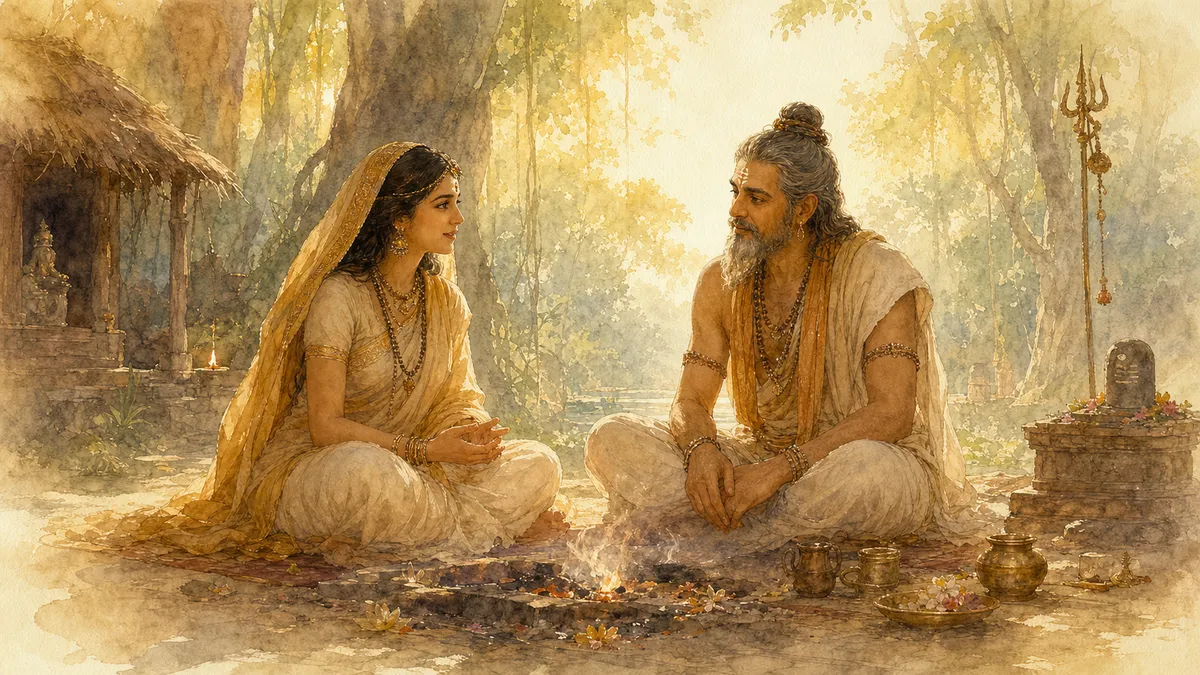
“I do not see in you those petty desires, thoughts, and feelings that tormented you several years ago. I pray you, tell me what you are now, what state you are in, and what you see.”
Sikhidhvaja replied:
“Dear one, I am in the state to which you have awakened me. I have no attachments. I am like infinite, indivisible space. I am peace. I have attained a state that is difficult even for the gods Shiva and Vishnu to reach. I am free from doubt and misunderstanding; I experience neither suffering nor ecstasy. I cannot say ‘this is’ or ‘that is.’ I am free from limitations and enjoy the state of inner bliss. I am what I am—this is difficult to express in words! You are my teacher, dear one; I greet and worship you. Thanks to you, beloved, I have crossed the ocean of samsara. I will no longer fall into this misunderstanding.”
Chudala asked:
“In that case, what do you want to do now?”
Sikhidhvaja replied:
“I know neither prohibitions nor permissions. Whatever you do, I consider it right. Do what you deem necessary, and I will follow you.”
Chudala said:
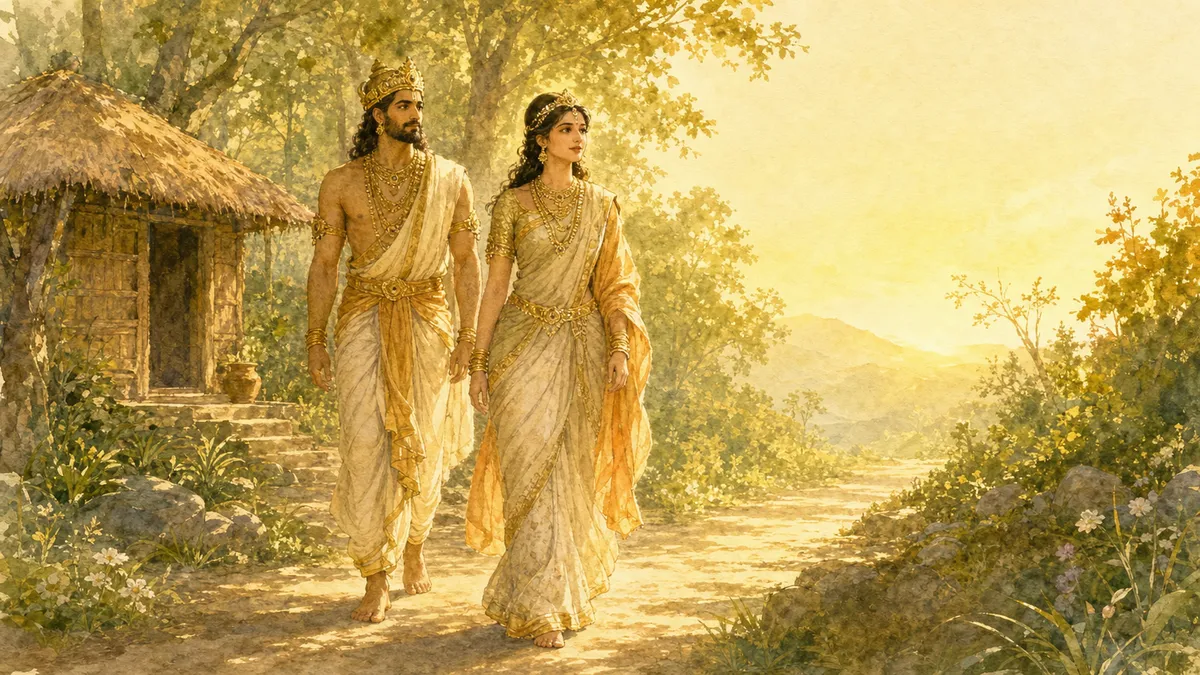
“We are both enlightened now. For us, both desire and its opposite are one and the same. We do not need breathing exercises or other practices. We are what we were in the beginning, in the middle, and in the end, and we discard everything else. We were king and queen in the beginning, middle, and end. What must be abandoned is delusion! Therefore, let us return to the kingdom and give it a wise ruler.”
Sikhidhvaja asked:
“Why, then, not accept the invitation to Indra’s heaven?”
The Three Levels of Spiritual Practice
In fact, there is the level of sutra, the level of tantra, and the level of anuttara-tantra. These levels differ greatly in their outer manifestation, although they do not differ in their inner manifestation. They differ in their relation to the world, to the sense organs, and to energies.
At the level of sutra, with which we begin, we must understand the principle of detachment, the principle of renunciation and the limitation of desires, the principle of self-control and discipline. But this does not provide true tempering of the spirit.
At the level of tantra, working with the winds and channels, we come to know the principle of transformation: how kleshas and negative emotions can be transformed, blossoming into a mandala of pure vision. This requires a filigree approach and subtlety in working with energies and winds, purity of the channels, and the ability to unite contemplative presence with pranas. What was denied at the level of sutra becomes a means of practice at the level of tantra.
Finally, the path of anuttara-tantra is integration, total all-acceptance. Total all-acceptance means the openness of the mind and union with any experiences.
Common Misconceptions About Tantra
Many do not understand the principles of tantra and interpret them mistakenly. When people in the West say “tantra,” they often mean sexual tantra: sex with exotic rituals, in exotic packaging, in a New Age style. But in India there is not even such an understanding, although there is another distorted understanding of tantra there. In India, for example, a tantrist is perceived as a black magician, a sorcerer from whom one should keep away.
Neither the one nor the other has anything to do with understanding tantra as such. These are later fantasies of people who are only weakly or superficially acquainted with the tradition. The myth of tantra as some kind of exotic sexual practice came in the seventies, during the flourishing of psychedelics, Castaneda, and the hippies in America, who were no strangers to free love and used tantric ideas as their “flag.” Drugs, negation as the basis of their attitude toward society... They had their own philosophy, and they very “harmoniously” wove tantric ideas into this philosophy. Since then, the notion of tantra as such a practice began to circulate in the West.
In India and in the countries of the East, however, tantrism was mainly identified with mysterious magical rituals and supernatural power. There was much gossip and many stories about tantrists; they were spoken of as powerful sorcerers who could summon spirits, perform magic with corpses, revive the dead, and, by the power of magic, make something materialize.
But the true principle of tantra lies in the transformation of impure energies and kleshas into the mandala of the pure dimension. This happens:
- Through contemplative presence, if it is anuttara-tantra
- Through working with the winds and channels, if it is yoga-tantra
- Through ritual practices, if it is kriya-tantra
- Through the recitation of mantras and visualizations, if it is charya-tantra
The Practice of Anuttara Tantra
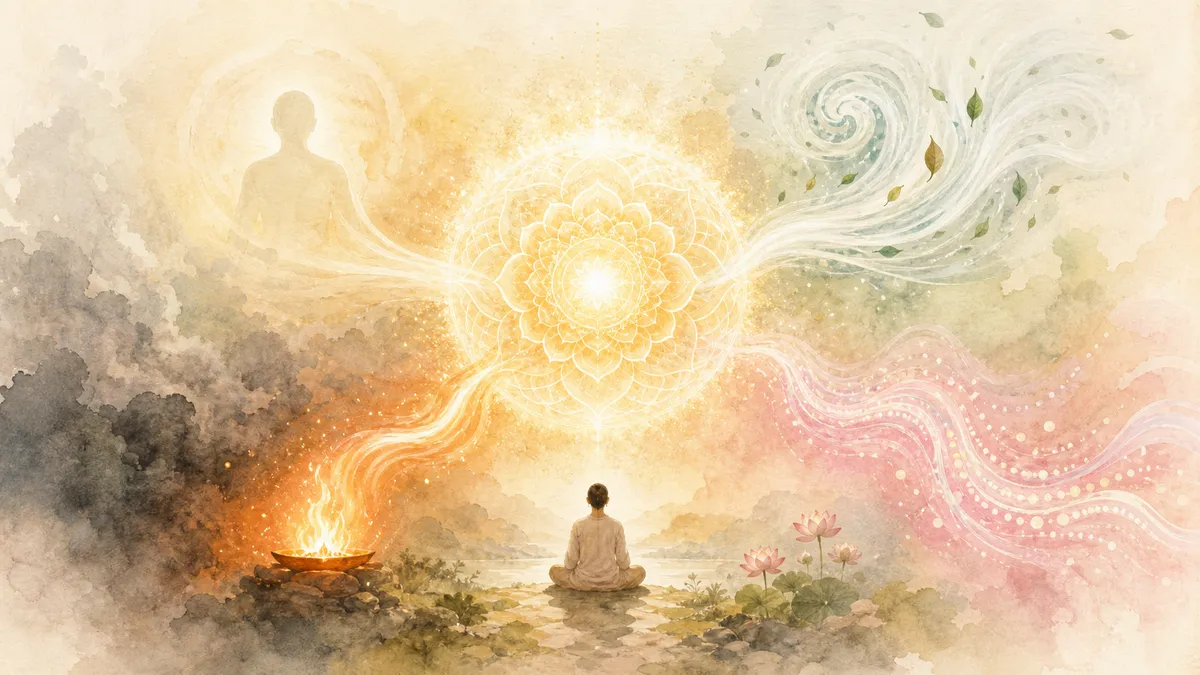
At the level of Anuttara Tantra, there is the principle of non-choosing, of life without acceptance and rejection, of unification. At this level, we finally restore complete wholeness, complete unification. A person who has acquired the ability to abide in contemplation can integrate his mind with any experiences, and at the same time his contemplation does not fade, but, on the contrary, only flares up.
There are methods or practices of the so-called “crazy wisdom” or “the mother feeds the son,” “transforming the five poisons into the five nectars,” “wandering with the clouds,” “dancing in space” — all these are different nuances of one and the same thing; they are nuances of the practice of avadhuta yoga. This practice consists in the yogin, having become established in contemplative presence, working very skillfully with secondary causes, using secondary causes to initiate certain inner subtle karmas and the self-liberation of these karmas.
For the most part, siddhas work very skillfully with inner causes. They integrate their consciousness with countless mandalas, countless games, shaktis, manifesting various kinds of creative activity. It is considered that yogins capable of practicing in this way are the highest. However, readiness to practice sadhana of such a level manifests by itself as your awareness grows. It presupposes the ability to possess a mind-boggling power of self-liberation.
Abiding precisely at this level, Chudala replied:
“O king, I desire neither pleasures nor the wealth of the kingdom. I remain in the state that was given to me naturally. When the thought ‘this is pleasure’ is opposed by the thought ‘this is not pleasure,’ they both disappear. I remain in this peace, which is beyond both.”
The Manifestation of the Mandala of the Pure Dimension
At sunrise they rose and performed their morning duties. Chudala materialized through her thought a golden vessel with the holy waters of the seven oceans. With these waters she washed the king and enthroned him as emperor.
In turn, the king again enthroned his wife Chudala. He suggested that she create an army by the power of thought, and she created it.
Following the royal couple on a beautiful elephant, the entire army marched toward the kingdom. Along the way, Sikhidhvaja showed Chudala various places where he had been an ascetic. Soon they reached the suburb of their capital, where they were greeted by the inhabitants.
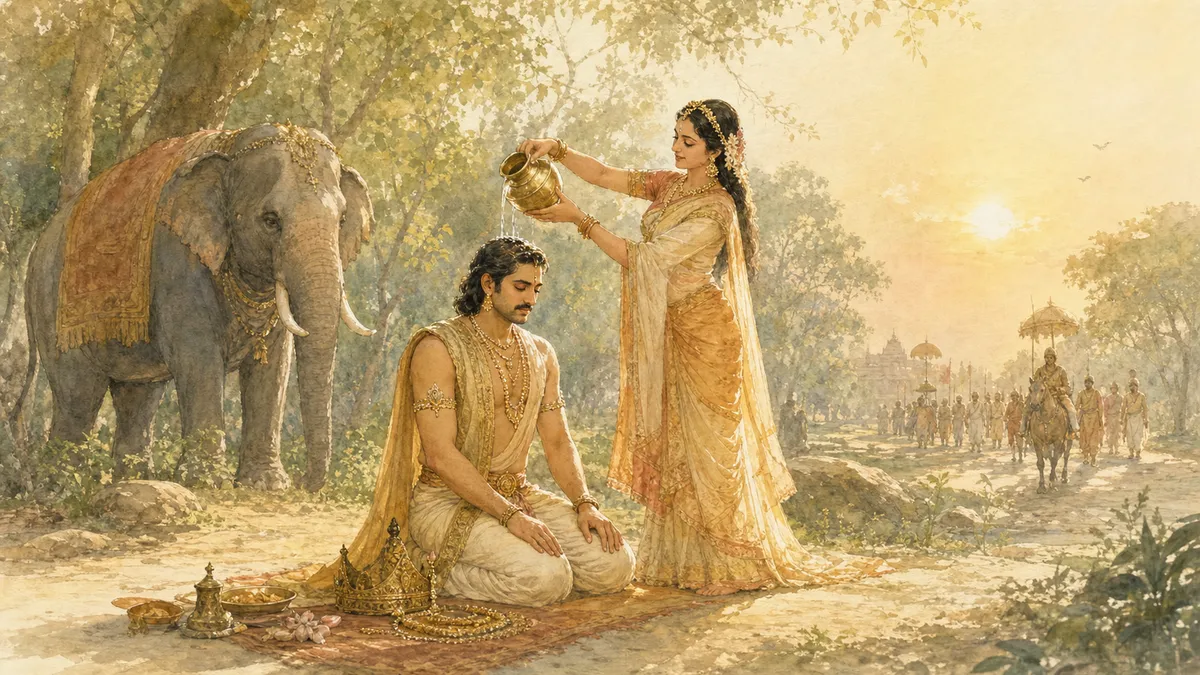
Here the next stage after realization is described — the manifestation of the mandala of the pure dimension. Now, being in a state of complete transformation, by the power of their mind they created worlds, universes, in which they began to rule as central deities. These worlds were created in accordance with their inclinations, which were natural in their karmas. Only now these were no longer obscured worlds in which they were simply laypeople, but worlds manifested in the mandala of the pure dimension, in which they became mandaleshvaras.
Sikhidhvaja, with the help of Chudala, ruled this country for ten thousand years, after which he attained nirvana, from which there is no rebirth.
By the power of their mind they created a pure land, a pure country, in which they reigned as mandaleshvaras. If you have heard the teaching on the sixteen kalas, then it is precisely such attainments that are described there as the final stages of realization.
Spontaneous Natural Actions
Thus, Vasishtha says:
“So too, Rama, engage without sorrow in spontaneous natural actions.”
What does it mean to engage in spontaneous natural actions? For a monk, it means to live as a monk. As one holy master said: “To eat prasad, to go to sleep when night comes, to come to the morning assembly when the morning assembly comes — this is the highest dharma.”
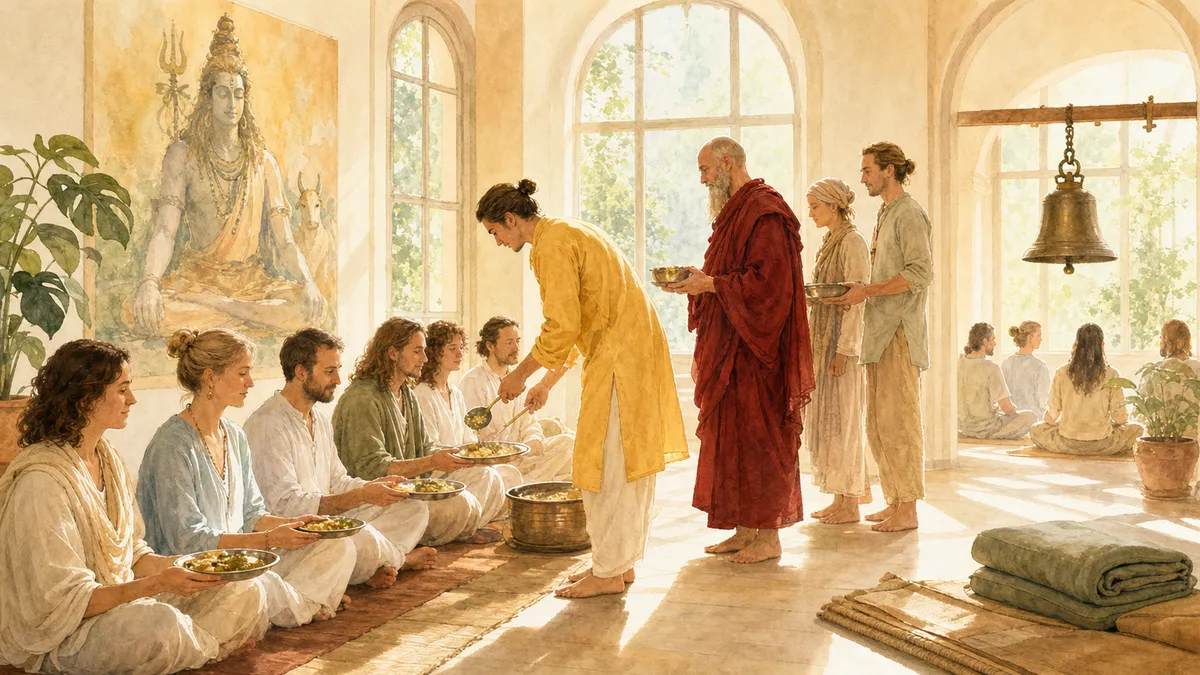
For an uninformed person, it is difficult to understand the meaning of his words. Imagine that you ask: “How can one attain awakening? What must be done for this?”, and you are answered: “Get up in the morning, eat your prasada at breakfast and lunch, come to gatherings, and in the evening, during shavasana, fall asleep well, and if you do this, you will surely realize the highest dharma.”
This is truly so, because you are in what is; you are in the present moment, apart from which there is nothing. This moment is completely whole, completely total. You are not striving anywhere; everything happens naturally, as it happens. You abide in awareness instead of chasing after any ghostly goals. This awareness takes everything that is, and it gives everything that is possible, the full completeness and wholeness of life. It grows from day to day.
All external actions are in fact unimportant, and therefore you self-liberate them. You eat, walk, work, and go to sleep when it is time to go to sleep, while all your inner work consists in abiding in this awareness, in deepening into it ever more and in self-surrender.
One saint said: “You must live like a cow: eat, sleep, go to the toilet. The rest is not your concern.” Someone may think that this is barbaric, that this is some kind of dull life. What does it mean to be like a cow? No one wants to be like a cow. But these instructions concerned retreat practice. He meant that one should not pay attention to the external, but should focus on awareness and maintaining contemplation. In other words, one must reduce all external functions to a minimum and do what one does without being distracted by anything, without striving for anything, but working with awareness until it gains strength.
