

Commentary on the text “The Platform Sutra of the Sixth Patriarch”
“If your own nature is obscured by illusions and ignorance, then the Dharma body has no merits and virtues. If virtue is practiced in a continuous stream of thoughts at every moment of being, and the mind has been brought into a state of calm, balance, and uprightness, then virtue will always be practiced not frivolously, but reverently.”
If we classify living beings, they are mainly divided into those whose will is perverted and who do not realize their absolute nature, and those whose will is not perverted and who realize their absolute nature, that is, into the awakened and the unawakened, into duratma and mahatma.
Duratma is the deluded Atman, the wicked self.
Mahatma is the great Atman, the great Soul.
In the worlds of humans and in the worlds located below the human world, the single Source of awareness is darkened and clouded by ignorance, mixed with coarse energies, and is almost invisible. In the worlds above the human world, the higher we ascend, the more enlightened it is. In these worlds, kleshas, karma, and thoughts do not obscure this Source as much, therefore ignorance is gradually displaced by various meditative states. In this context, from the point of view of contemplation, to practice merit and virtue at every moment means to constantly abide in the correct state of mind. One should understand which particular part of the mind contemplates.
The Structure of the Mind and True Contemplation
If we analyze the mind, then usually the mind, or the inner instrument, is called antahkarana. Antahkarana is, in general, everything that constitutes our consciousness. Antahkarana is divided into four main parts: manas, buddhi, chitta, ahamkara.
Manas is the logical, conceptual mind, which usually operates and perceives
Chitta is mental activity connected with memory
Buddhi is subtle intellect, intuition; it is that which is subtler than the logical mind
Ahamkara is that which unites all these things. Ahamkara is the false ego, the sense of selfhood, the sense of “I,” identified with the mind and body

All of this together is called antahkarana, or the inner instrument; it is the unified mind or relative mind. All these are different parts of one and the same thing—our surface mind.
In addition to the surface mind, there exists the fundamental Mind, which is absolute. When contemplation occurs, viveka arises in us. Viveka is subtle discriminating awareness, which gradually begins to separate the relative mind from the absolute and to understand what is what. In this way ignorance is eliminated. When awareness begins to awaken in sleep, in dreamless sleep, the subtle mental consciousness gradually begins to penetrate into the Atman, into your fundamental Mind, and to perceive from it the light of clarity; then, after some time, it itself begins to shine. Such shining is called aham-sphurana (the shining of selfhood).
What, then, participates in contemplation itself?
When we speak of true contemplation, it is not the four parts of our mind (not manas, not chitta, not buddhi, not ahamkara), not antahkarana, not viveka (discriminating awareness); it is not even aham-sphurana, because it is not eternal Being. Shankara uses the term “prajñana-khanta” for this—the primordial self-born Wisdom beyond all limitations. In other words, genuine contemplation can exist only when we penetrate into this primordial Wisdom.
True contemplation consists in placing our mind in that state where there are no thoughts, where thought activity as such is impossible. Someone may say: “How strange—so one needs to stop thoughts while sitting in meditation?” But this is not so. We are saying, after all, that thoughts may move, and we do not block them. This subtle point should be understood, because it is the key point in the practice of contemplation. Presence is located in the place where there are no thoughts, and from there this awareness observes the world, the body; comes into contact with objects; observes thoughts, which we allow to move as they move, without controlling them, without blocking them, and without following them. That is, thoughts may move, but they are not connected with contemplation; they are subordinate to it, while contemplation itself is established in the place where there are no thoughts. Only this state is what eliminates fundamental ignorance.
On Merit and Pure Lands
“Merit is created in one’s own consciousness. Practicing for the sake of attaining happiness is different from merit. Wu-di did not know the true truth, while the great teacher-patriarch was not mistaken.”
Next, the question is raised that many perform the practice of Buddha Amitabha, wishing to be reborn in paradise, in a pure land. And the answer is given:
“If people from the East have pure consciousness, then there is no sin in them. If people from the West have impure consciousness, then they are sinful. Deluded people seek to be reborn in the East (in the eastern paradise or in the western paradise). But for enlightened people, any place is completely the same. If only there is no impurity in consciousness, then the western land is not far away. If impurity arises in consciousness, then even by prayerfully repeating the name of Buddha Amitabha, it is difficult to attain rebirth in that land.
Why do you need to be reborn in the western paradise? If you have not stopped the ten sins in your consciousness, then what Buddha are you asking to come out and greet you? But if you have awakened to the sudden teaching of the unborn, you will behold the western paradise in that very moment. If, however, you have no awakening to the sudden teaching, then even if you prayerfully repeat the name of Amitabha in order to be reborn in his paradise, the road there will be far. How do you hope to reach that land?”
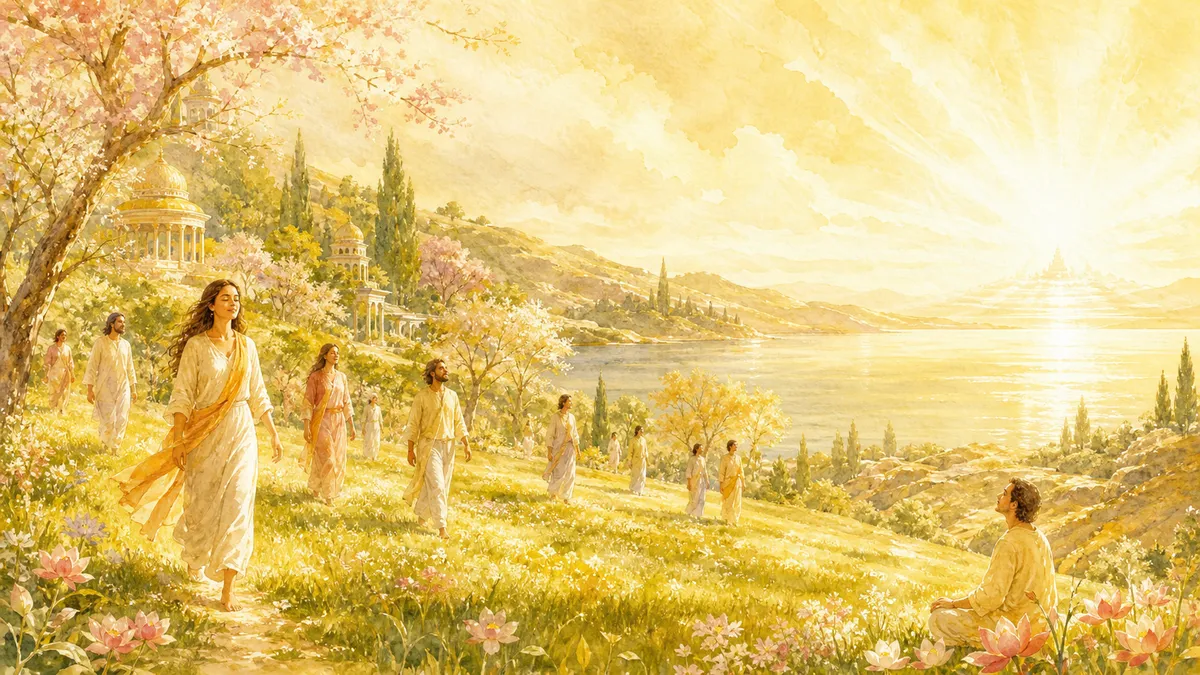
There are many pure lands in which it is easy to be reborn and continue one’s practice. In these pure lands, the span of life begins at five hundred years and more. The ground there consists of down; there is no suffering anywhere. The bodies of living beings there are physical, yet they are saturated with a great amount of energy and are more beautiful. They resemble the bodies of accomplished yogis in this world. From birth, people there possess mystical abilities and meditative states, and remember past lives. They engage only in spiritual practice. There are no problems, difficulties, or obstacles anywhere there. It is considered that one who is reborn in the pure lands can continue to practice in order to complete his practice and attain liberation. It is usually said that those who lead a pure way of life, or those who perform special practices of transference of consciousness, can without difficulty transfer their consciousness to a pure land. However, even rebirth in a pure land is not what we seek on the path to awakening. It is favorable, but true awakening does not bind itself to fixation on any of the paradises.
“Listen carefully, members of the great assembly!
The physical body of the people of this world is itself a city. The eyes, ears, nose, tongue, and body are the city gates. Outside there are five gates; inside there is the gate of vijnana (discriminating wisdom). Consciousness is the land, the domain. And one’s own nature is the ruler. When there is one’s own nature, there is a ruler; when there is no one’s own nature, there is no ruler. When there is one’s own nature, body and consciousness exist. And when one’s own nature departs, body and consciousness are destroyed. Awakening is created in your own consciousness, so do not seek it outside your body. If your own nature is obscured, then Buddha is a living being. If your own nature is enlightened, then living beings are Buddha.”
When we speak of true contemplation, we say that we have no need to direct our mind toward anything at all except contemplation itself. If our mind is purified and abides in the awakened state, then in that very instant and in that very place where you are, everything is perfect and everything is awakened.
“The individual ‘I’ is Mount Sumeru.
False consciousness is the great ocean. And passions are the waves.
Poisoned consciousness is an evil dragon.
Obscured activity is fish and sea turtles.
Illusions and false views are spirits and demons.
The three poisons—greed, anger, ignorance—are animals.
And the ten good deeds are the heavenly altar.”
The path of monasticism presupposes practice for awakening, and practice for awakening presupposes a very powerful consciousness. This means that in your consciousness you must surpass all living beings from the human world whom you have known. In the strength of consciousness, you must surpass all people who possessed greater qualities of intellect, clarity, perseverance, and concentration than you. Then you must do the same with the world of the asuras, the world of the gods of passion; that is, you must liberate all these worlds. This means that your qualities must be much stronger than those of all these beings. Einstein’s genius, the fearlessness of the most fearless warrior, the talent of the most talented person still fall short of the qualities of one who strives for awakening.
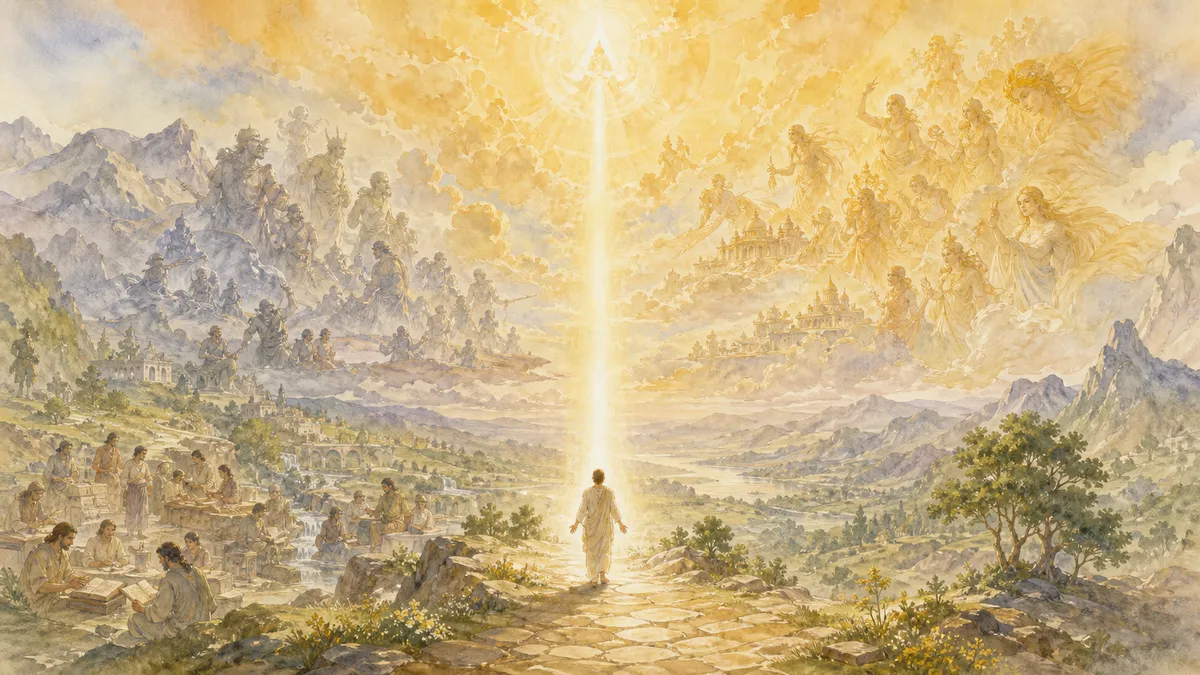
At first, we do not suspect how many worlds we need to liberate. We are too fixated on the world of humans, and therefore we see nothing else. But when our meditation experience is successful, we discover in our body and mind countless multitudes of worlds that we need to liberate.
Overcoming the False Ego
“If there is no individual ‘I,’ then Mount Sumeru will fall by itself. If false consciousness is cast aside, then the water in the ocean will dry up. If there are no guests, then the waves will disappear. If there are no poisons and vices, then the fish and dragons will disappear.”
The individual “I” here is likened to Mount Sumeru. The false ego only seems small, but in fact each person’s false ego is the size of the universe. In essence, it is indistinguishable from the universe; it includes the worlds of passion, the worlds of form, and the formless worlds. When you defeat it on one level, it successfully survives and manifests itself more subtly on another. When it seems to you that you have achieved victory here as well, it successfully mimics and manifests in a very subtle form. It can mimic very successfully, dress itself in the garments of meditative experiences, its own clarity, and everything else, but these are still various subtle parts of the ego. It can become marvelous, refined, like that of deities or gods; it can become infinite space, like that of the gods of the World of Form; nevertheless, it is a variety of such an ego. Until all clinging and fixations are completely cast aside, until the last hope and the very essence of ignorance are cast aside, this ego will exist. Therefore it is said to be Mount Sumeru.
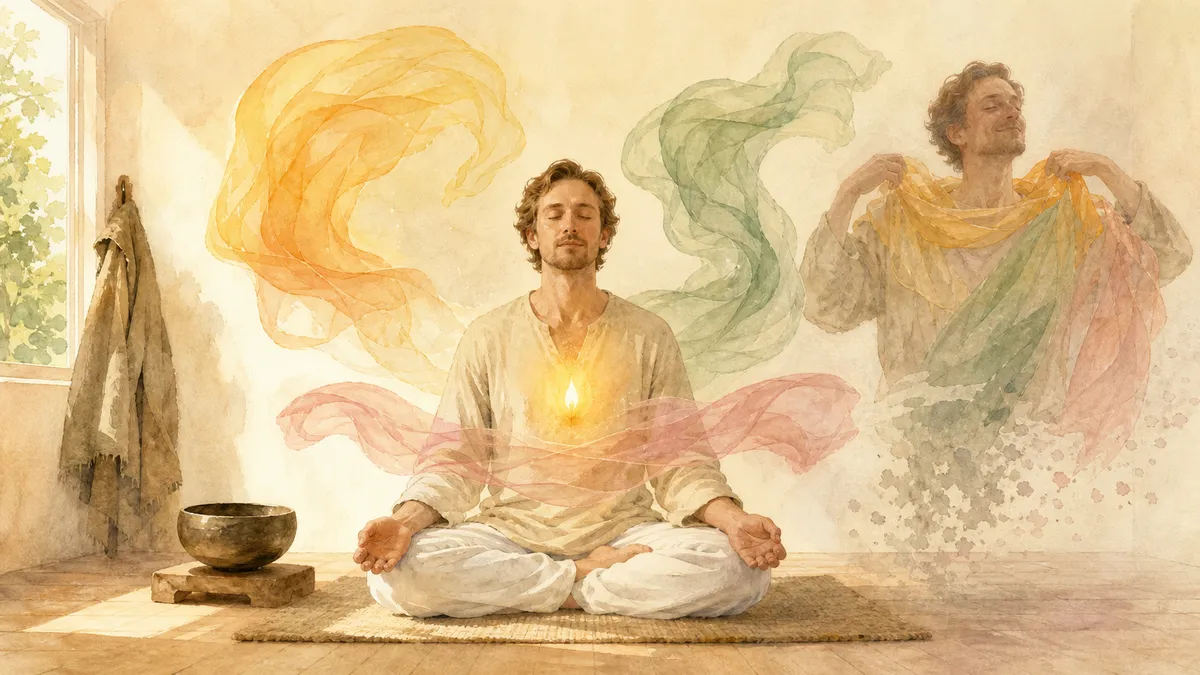
Bliss, clarity, and emptiness are various garments that our ego tries on. It is impossible to fight the ego through effort, because the ego is capable of putting even effort to its own service and making it a means of self-reinforcement and self-aggrandizement. In fact, there are many people who perform ascetic practices and torment themselves for spiritual goals, but if this is done without understanding the principle of nonduality and self-surrender, then the body will be tormented while the false ego will only be strengthened. Therefore it is very important to monitor whether awareness exists at the moment of various practices.
“False consciousness is a great ocean.”
Our ignorance is like a vast ocean that must be cleared in this lifetime. Usually people are not aware of their ignorance, and therefore they have superficial ideas about practice; they think for a long time before beginning sadhana. This is because they do not realize that their ignorance is like a vast ocean.
Usually, when an experienced practitioner becomes a monk and remembers worldly life, he has a feeling of regret that he did not become a monk from birth, that so much time was lost. He realizes the global scale of the work he needs to accomplish, and if he has not yet established himself in presence, he may regret that he began spiritual practice late. But one who does not understand the global scale of this work feels no regret.
“Poisoned consciousness is an evil dragon.”
Any distracted consciousness, colored by sensual desires and grasped by something, is like such an evil dragon.
From what does the individual “I” arise? The individual “I” arises from being grasped by the conceptual mind. The conceptual mind flows from past experience and constantly makes judgments and evaluations. This kind of interpretive activity, which makes judgments and evaluations based on past experience, prevents one from abiding in one’s primordial natural state. And this is not connected with sitting meditation, concentration, and so on, because concentration and sitting meditation only help eliminate such ignorance. Therefore, when you learn to be aware without making judgments and evaluations, and do not follow past experience, it is precisely this that best brings you closer to proper contemplation. It is said: “If there is no grasping at the individual ‘I,’ Mount Meru will fall by itself.”
Working with Karmic Obstacles
“Illusions and false views are spirits and demons.”
Those who have impure karma, if they begin to practice intensively, will inevitably encounter karmic creditors: various spirits and demons that may create obstacles. This does not mean that they deliberately create obstacles. They are present in the channels and lie dormant until a certain time, and when a yogin begins to practice very intensively, the karma in his channels is activated, and they come to remind him that they exist. Since they have their own energy and nature, different from the human one, if the practitioner’s consciousness is immature, then, when encountering spirits, it may experience obstacles or become frightened by them.
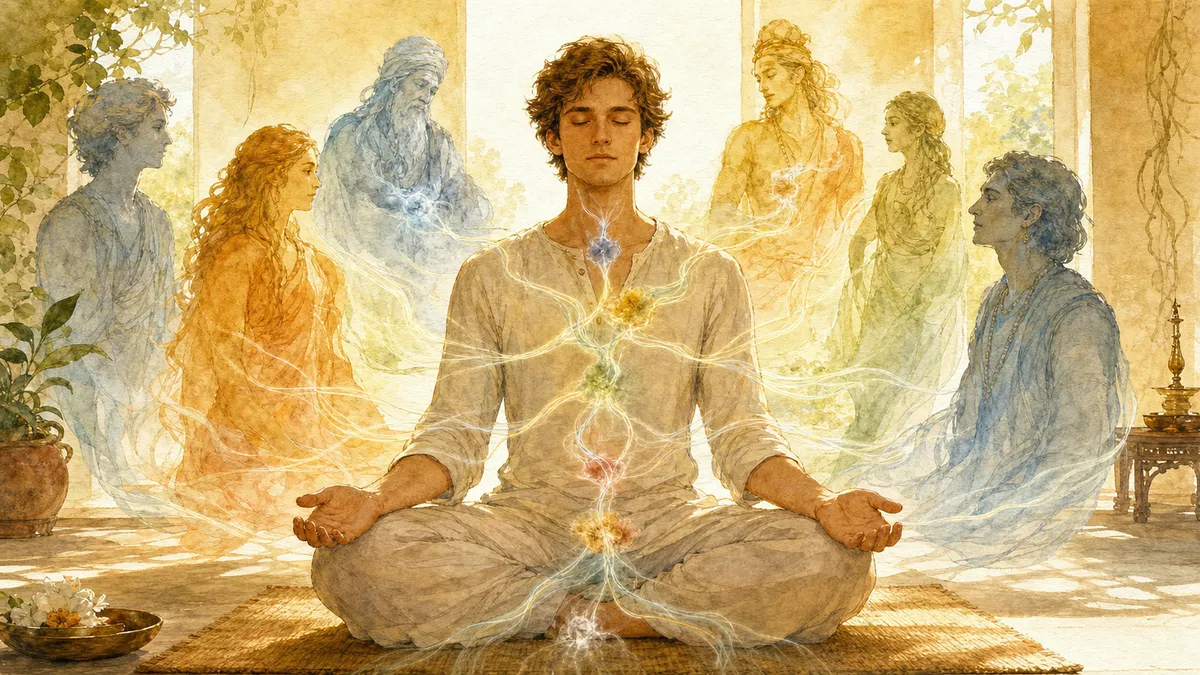
In retreats, there are always a couple of monks who periodically tell me what spirits they have seen and what those spirits said to them. These spirits usually swear with obscene words, plot various intrigues, and so on. And if a retreat lasts not one month, but three months or six months, then the monks begin a whole battle with the spirits, which exhausts them. From morning to evening they recite spells, wrathful mantras, sprinkle these spirits with holy water, and use other things. If consciousness has not opened to the principle of “leaving as it is” and contemplation, then such things become a real obstacle in practice. If you read the experiences of Christian saints, then for them the struggle with demons and the devil is the favorite occupation. It can be said that this is a practice of arousing fierce energies; this struggle with demons prevents them from being in tamas. But from the point of view of Advaita, we should not think that there is us, and there are demons as something separate from us, that we have someone to fight with. From the point of view of contemplation, we must understand that everything is our mind, and if we allow our mind to remain in its primordial nature, then demons and spirits will be satisfied and will leave the practitioner in peace.
The Light of Great Wisdom
“When, on the basis of consciousness, the Tathagata of the enlightenment of your own nature emits the light of great Wisdom, illuminates the six gates, and with the light of its purity destroys the six heavens of the world of passions (Kama-dhatu), then your own nature will be illuminated from within, the three poisons will be cast aside, and hell will be instantly destroyed. Thus, when everything inside and outside is permeated with light, there will be no differences from the Western Paradise.”
The Tathagata of your own nature is your inner light. When you reach it, it begins to emit the light of great Wisdom. This is aham-sphurana. The radiance coming from the Atman gradually saturates mental consciousness until mental consciousness begins to melt, and it is already difficult to say where mental consciousness is and where prajnana is—the primordial, innate self-born Wisdom inherent in us. When mental consciousness has melted and become one with this light, this light of great Wisdom illuminates the six gates, or our six sensory perceptions, and then the consciousness of your eye, ear, nose, tongue, and so on becomes pure.
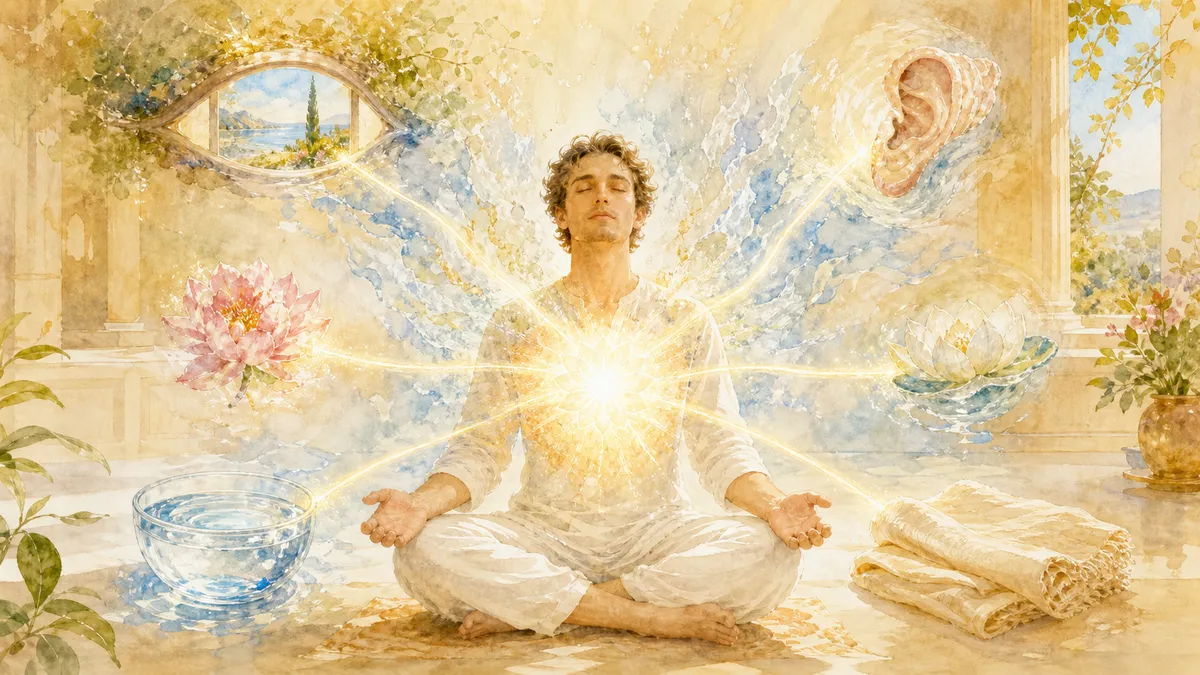
All impure karmas accumulated in this life and from the beginningless past in past lives are purified by this light of great Wisdom. When your impure karmas of the nose, ear, eye, and tongue are purified (and by impurity is meant not only the karma of the lower worlds, but also any dualistic perception), then whatever you look at, you will see only the light of great Wisdom; whatever you hear, you will connect it with the light of great Wisdom; whatever you touch, you will feel it as a reflection of contact with the Source; any smell you perceive, you will unite with the Source. All this will be a manifestation of one and the same Source. This is true purity. Then this Light will destroy the six heavens of the world of passions (kama-dhatu).
In the world of passions there are six subdivisions. For example, the heaven of the Thirty-Three gods, the Tushita heaven, the Yama heaven, the Mara heaven, the heaven of the gods who enjoy their own creations. When your sensory perceptions are purified by this light, all these heavens will be transcended in a single moment; the lower karmas will also be destroyed in a single moment. Then within you your own light will begin to shine and spread to infinity. You will discover that the idea of the body is insignificant compared with this light; you will discover that your mind is like light in boundless space. When this light of boundless space begins to expand to infinity, you will discover that your inner light begins to unite with the outer, and then there is no longer either inner or outer light.
The Union of Inner and Outer Light
Previously, you were under an illusion regarding the material world, thinking that objects exist on their own. Then you began to meditate and became yogis. You had experiences and thought that your inner experiences were contained within your consciousness. But when your inner light and the outer light unite, you discover that there is neither outer nor inner, and that you were mistaken in both the first case and the second.
Therefore, in such a consciousness, when looking at the sky, you will see the openness of your mind, you will see the deep state of presence of the bliss body, and then everything, inside and outside, will be permeated with light. When this inner light merges with the outer light, attachment to the idea of space, the body, and everything that occupies a place in space disappears. Attachment to the idea of being captured by time also disappears.
You can gain insight into countless billions of years or kalpas forward and backward, have fragmentary memories of past lives not only in this kalpa, but also in other periods of the creation and destruction of the Universe. Then all your consciousness becomes one with this Source, which is limited neither by space nor by time. Such a person cannot be called a human being. Even if he has the form of a human being, he is the Absolute itself or Brahman itself in physical form.
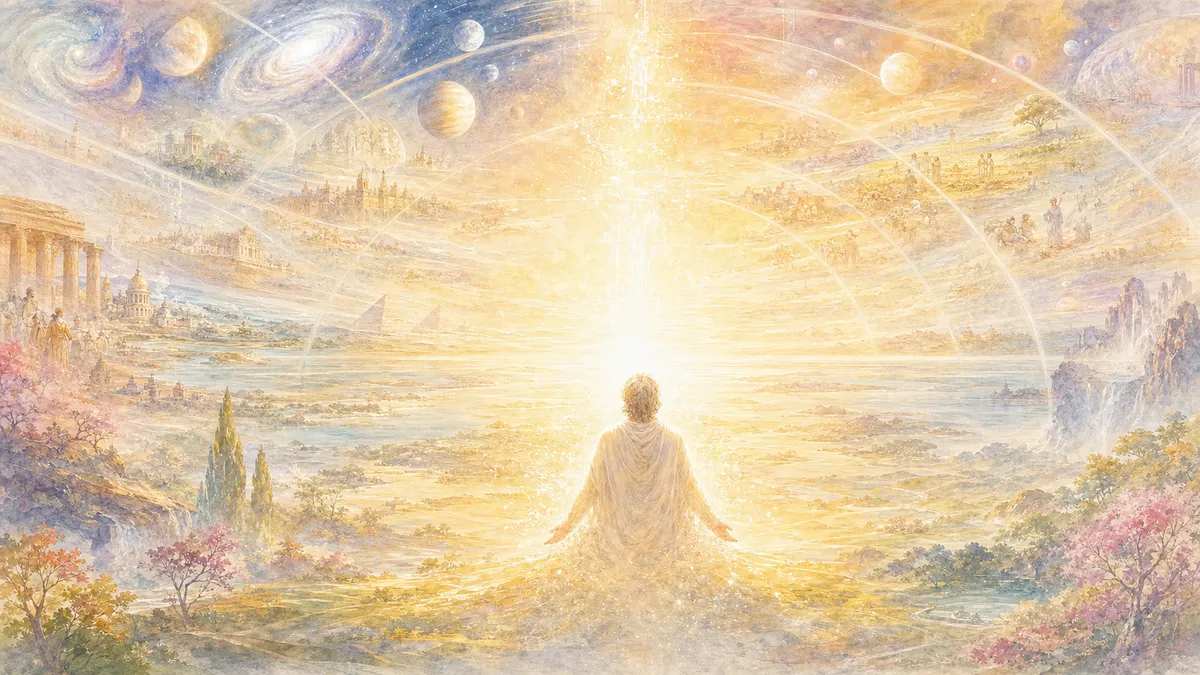
When consciousness continuously abides in the light, attachment to birth disappears, the fear of death and clinging to anything disappears. Then it is said: “There will be no differences from the western paradise.” Continuously abiding in the light, such a yogin lives in an unceasing paradise. For him, paradise is right here and right now. Even if you do not fully understand this, but remember it and rejoice in it, you are not mistaken.
I do not know whether there is a paradise for sleeping monks, but for those who meditate while awake, paradise definitely exists. Be sure of this!
