The Qualities of a Disciple and the Story of Encountering the Nondual Teaching
09.08.2026
0 мин. чтения
0
Share
copy
search
add
share
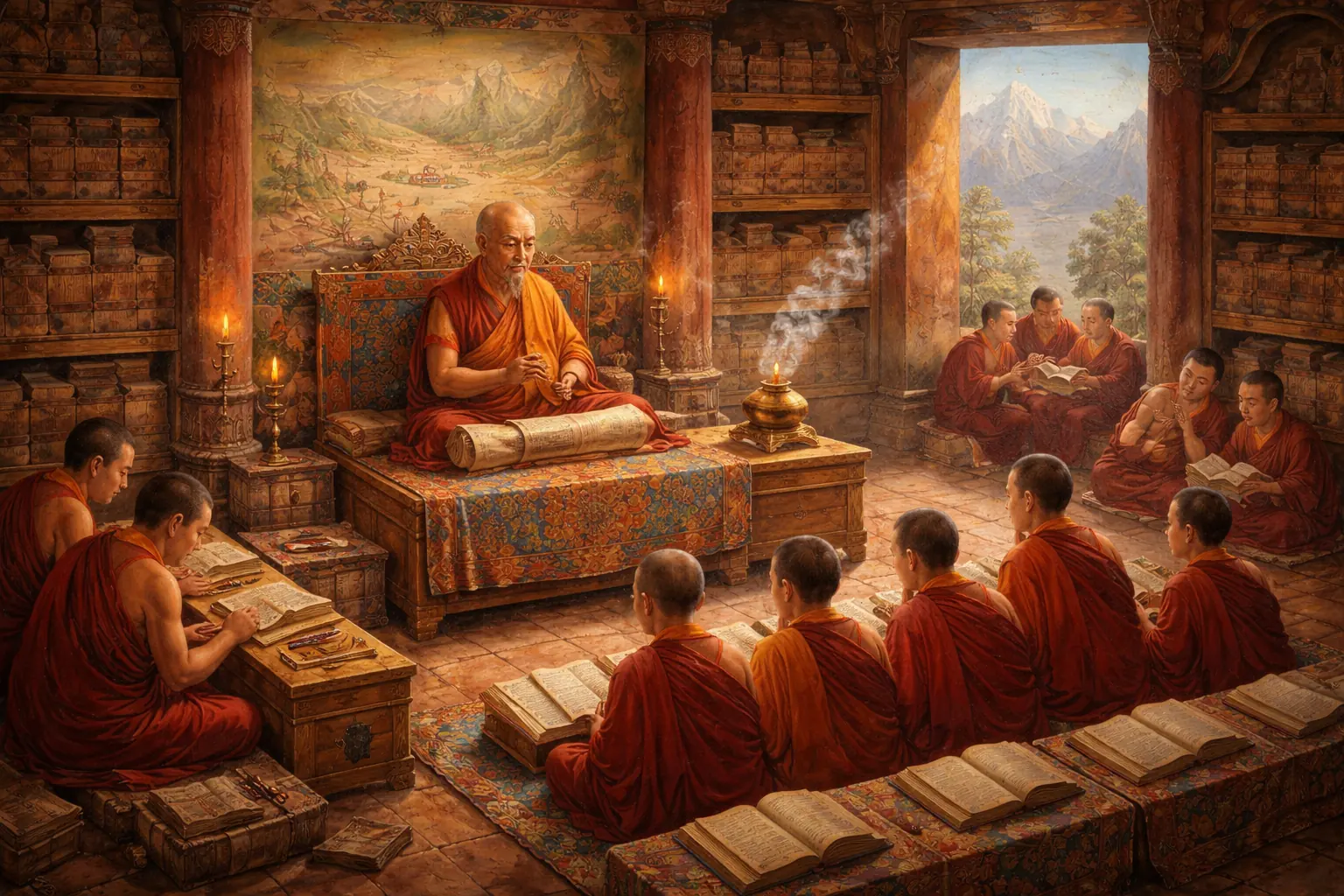
Today we will talk about our attitude toward the teachings. In our monastery, there are six main transmission lineages: the lineage of Dattatreya, the lineage of Anama Prabhu, the Shuddha Dharma lineage, the lineage of Shankara, the lineage of Matsyendranath and Gorakshanath, the lineage of Saraha, and the lineage of Uddiyana. Some of them are close and direct, while others are remote.
Because of our limited merit, we do not have a large library with an extensive collection of texts. Nevertheless, because of your great merit, you have a connection with the teachings and a Guru who conveys the quintessence of all spiritual texts and the very Dharma that you practice. However, when we practice, we must always cultivate the qualities of a “worthy vessel” in our contact with the teachings. The teachings are something profoundly mystical and deep.
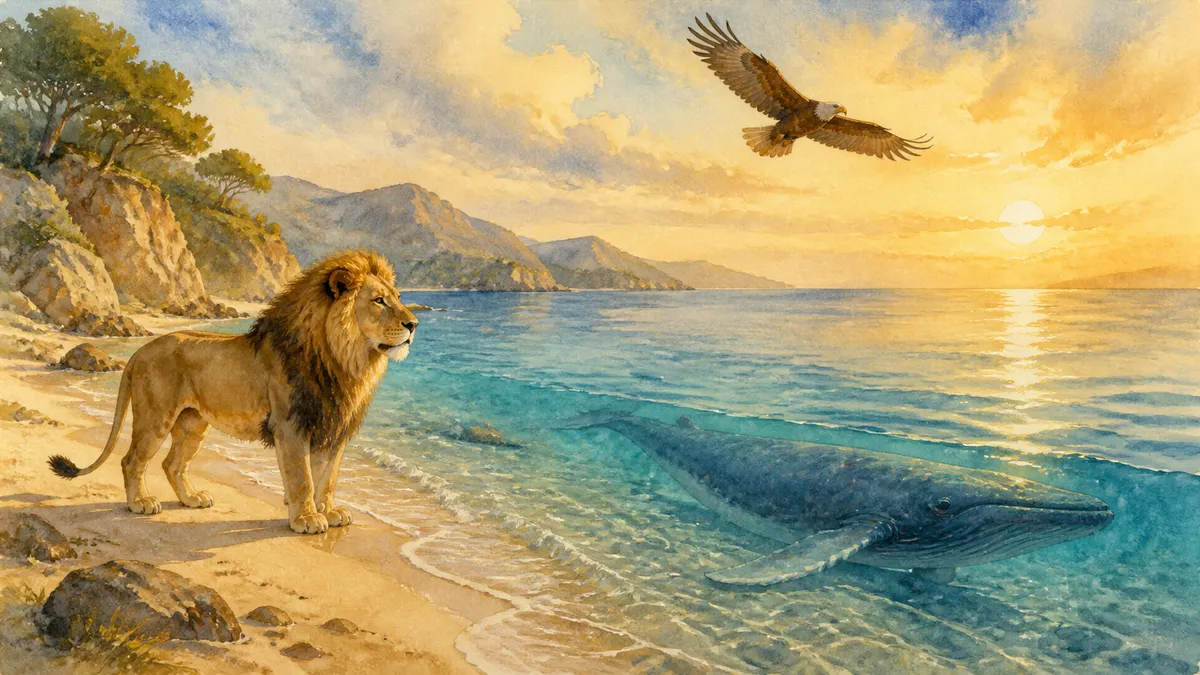
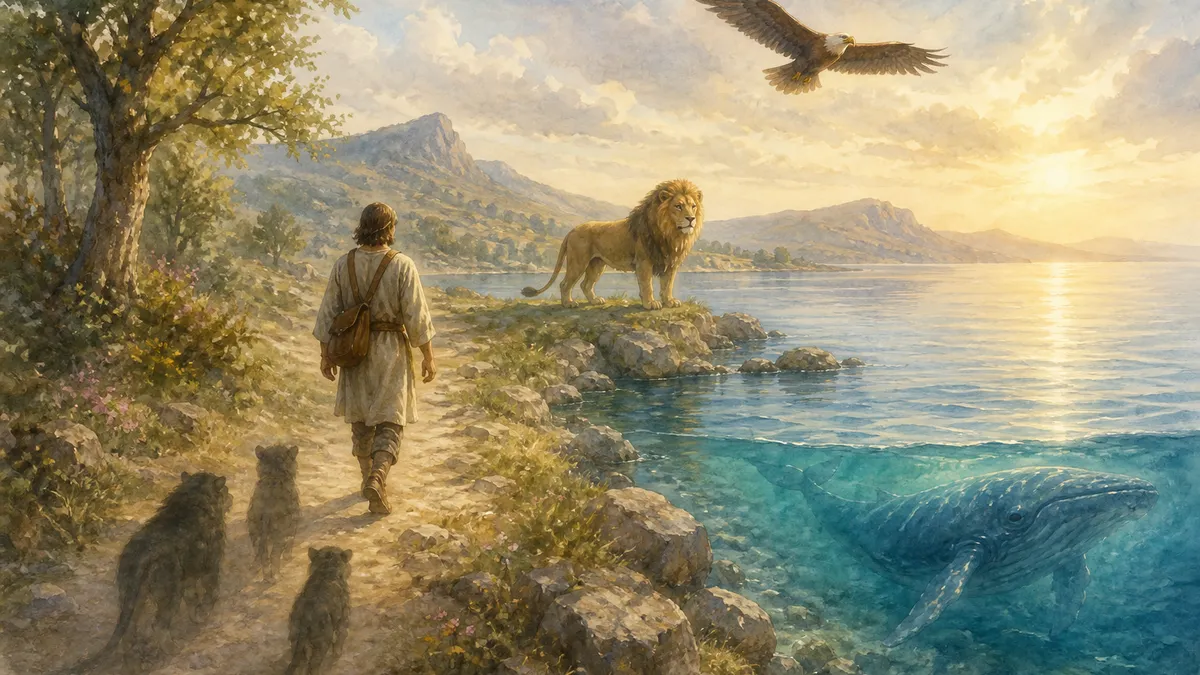
It is said that there are six types of “vessels,” or disciples, three of which are worthy and three unworthy (unprepared). The three worthy ones are: lion-like, eagle-like, and whale-like. The three unprepared ones are: monkey-like, dog-like, and pig-like.
Who is “lion-like”? It is someone who, upon hearing the teachings from the Guru’s lips, gains profound understanding and roars like a lion, manifesting their awakened nature. In other words, this is a yogi of the highest capacity who grasps the teachings immediately.
Who is “eagle-like”? It is someone who, upon seeing a jewel in a person’s hands, instantly dives down like a stone, snatches it, and then carries it in their heart while soaring among the clouds. Likewise, a worthy disciple, upon encountering the essential teachings, focuses on them completely, takes possession of them, makes them the foundation of their life, and soars freely, without fear, attachment, or hope.
Who is “whale-like”? It is someone who comes across a jewel by chance, takes it, swallows it, and then dives deep to hide it in the depths of the ocean. This is someone who, having absorbed the essential part of the instructions, immerses themselves completely in practice, applying them in everyday life, during retreats, and in both daytime and morning meditation.
These are the three best “vessels.”
Now let us examine the three immature “vessels.”
“Monkey-like.” A monkey was given some gold. It carried it around, but one of the merchants, upon seeing it, beckoned to the monkey and offered it a banana in exchange. The monkey, not understanding that gold was more valuable than a banana, traded it for the banana, thinking it had struck a good bargain. Such are monkey-like disciples.
For example, I heard that a schism occurred in the community in Yekaterinburg, even though no large, well-established community has yet formed there. A schism is a serious matter when speaking of a large organization. Nevertheless, several people there decided: “The teachings of Laya Yoga are certainly good, but there is a female medium in Turkey who lives on prana, and if we fast and nourish ourselves with prana, this will help us attain liberation more quickly.” They decided to practice these teachings. There is no objection to any particular teachings; however, it is regrettable when people who do not know the value of the teachings are unable to choose the right ones.
“Dog-like.” These are those who cannot understand the teachings right away. Because of their limited capacity, they become greatly confused. They are like a dog that, upon seeing something unusual, runs around and constantly barks in great excitement. In the same way, such people talk a great deal, become agitated, and think while holding completely distorted views, but they cannot properly apply or understand anything because of their “dog-like” mind. Their mind is simply too agitated and uncontrolled, so most of what is said goes in one ear and out the other, because the teachings can only be perceived by a very clear mind, in a state of self-surrender and emptiness.
“Pig-like.” No matter how many delicious drinks and dishes are placed before a pig, or what auspicious things it is offered, it is still constantly drawn to its favorite food: manure and excrement. Why? Because that is what it is accustomed to. This means that if the kleshas are very strong, then even when a person encounters the teachings, the kleshas override the possibility of practice and lead them back onto their old path.
All six of these “vessels” are present within us in certain proportions. Our task is to suppress the impure “vessels” and encourage as much as possible the development of the three best, pure ones—that is, to suppress the inner pig, the inner dog, and the inner monkey, and to reveal the inner eagle, the inner whale, and the inner lion.
The History of the Transmission of the Teachings on Nonduality
To accomplish this, you will now receive a lesson on how to relate to the teachings. We study many texts not from our own translations, but from translations that have come to us from afar, for example from Tibet, because our own translations are not yet ready. In other words, we study our own Dharma by taking a detour through third-hand sources. But if we engage in service, produce good translations, and create a large library, we will have many texts translated through our own efforts.
So, this is a text about how King Trisong Detsen sent monks to India to obtain the highest teachings on nonduality.
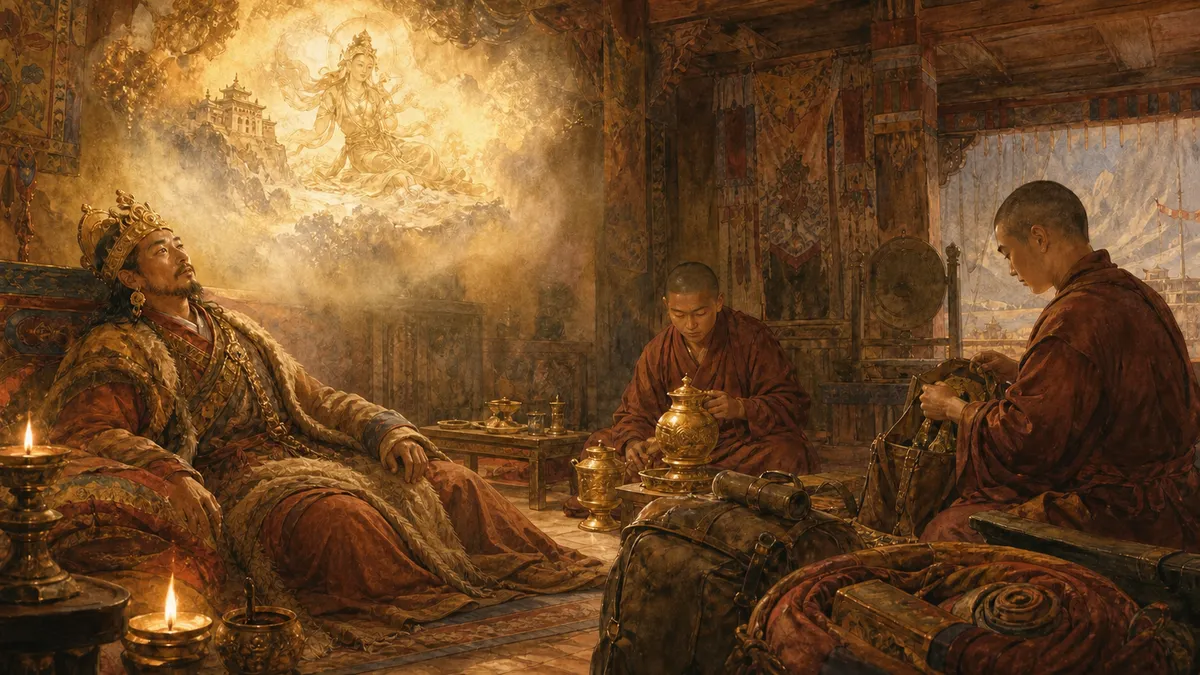
“King Trisong Detsen had a vision of a deity who said: ‘In India there is a teaching called the Sacred Great Perfection’ (that is, the teaching of nonduality). Unlike the teaching on cause, which must be studied, it grants liberation at the very moment it is realized. And you must send two Tibetan translators to obtain it.”
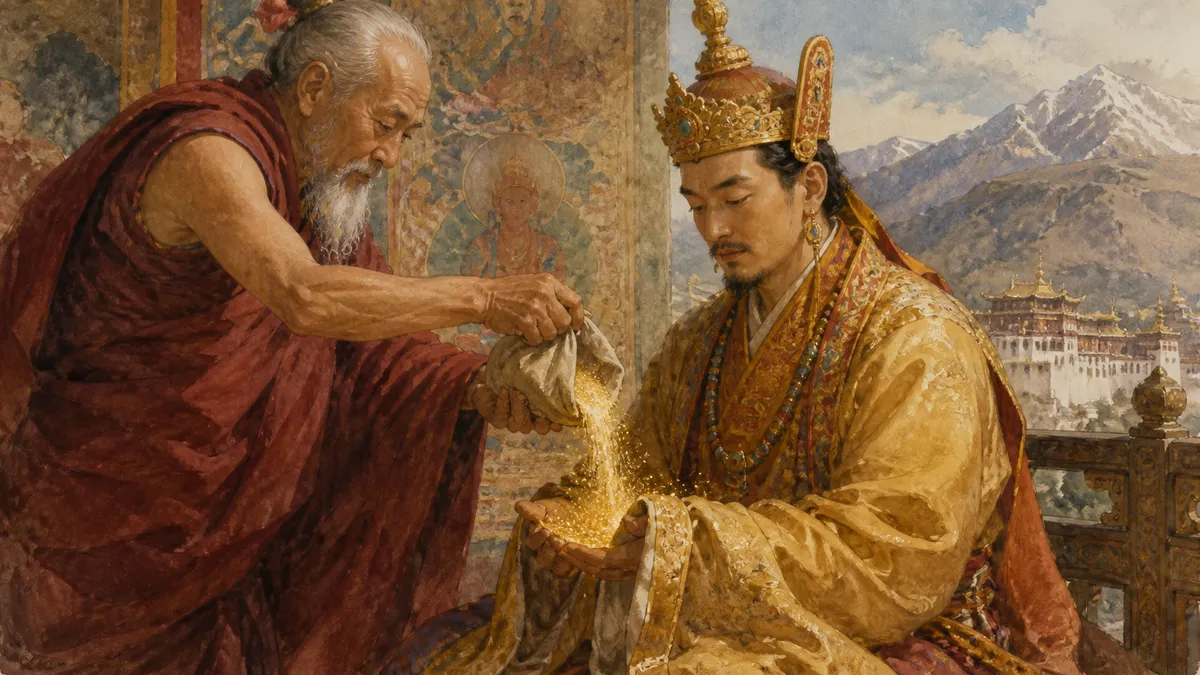
When the king consulted Padmasambhava, he said that it was an auspicious dream. He recommended that two residents of the kingdom be ordained as monks, trained in translation, and sent to India. The king chose two young men who possessed the appropriate abilities: Vairochana of Pagor and Legdrup of Tsang. He ordered them to become monks and learn translation. They took vows, became monks, and trained in translation. Padmasambhava taught them the art of swift walking so that they could quickly make the journey to India and back on foot. The king gave each of them a measure of gold dust and a golden jug and sent them to India to obtain the teachings on nonduality. In fact, he sent them to India to obtain the teachings of Advaita, which had been modified and adapted to that time.
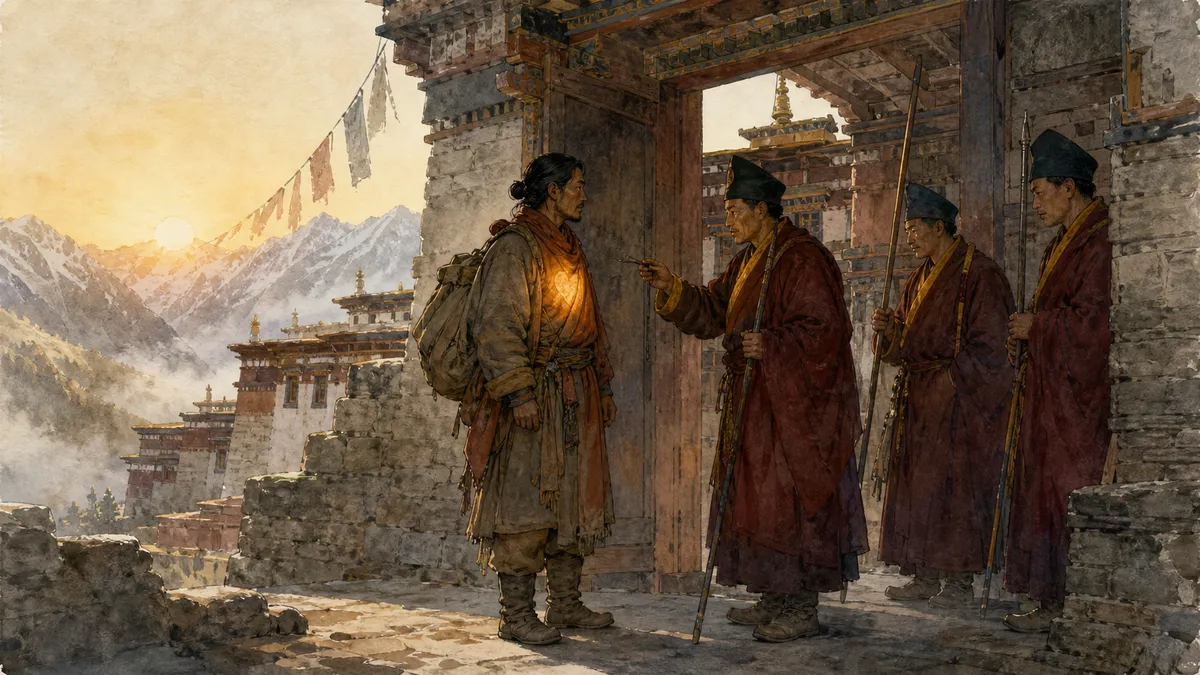
It is said that at the border the guards tried to take the monks’ gold. But through Vairochana’s magical power, they nevertheless managed to enter India. When they arrived in India, they began asking who was the foremost expert on the nondual teachings in their tradition. They were told that it was the teacher Shri Singha. They then approached Shri Singha, offered him the gold dust and the jug of gold, and said that the king of Tibet had ordered them to bring back from India the teaching on nonduality beyond cause and effect, which leads to enlightenment in a single lifetime. They wholeheartedly asked him to give them this teaching, because otherwise the king would punish them.
Guru Shri Singha then said: “The king of Tibet has great faith, and you are two very diligent monks. Since this teaching is destined to flourish in Tibet, I will transmit it. But know that the king of India guards this teaching very jealously. He will not allow it to spread, so we must be resourceful in transmitting it.” Shri Singha transmitted these teachings to the monks in secret. He led them into a house surrounded by nine walls and gave them the initiation.
The Secret Transmission of the Teaching
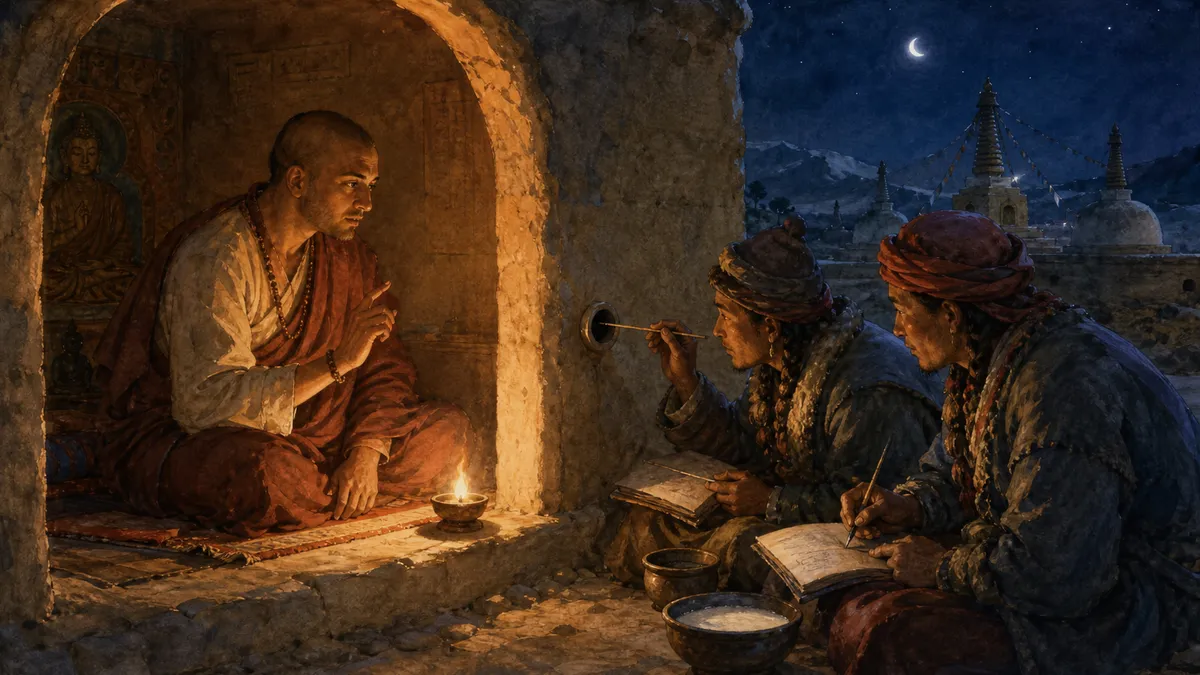
“In his room, Shri Singha placed an earthen cauldron on three large stones, surrounded it with a net, and climbed inside. There was an opening covered by a large lid, on which stood a bowl full of water. A tube passed through an opening in the cauldron and then extended outside through a crack in the wall, and it was through this tube that Shri Singha’s words were to travel.
Vairochana and Legdrup remained outside, dressed in large deerskin cloaks, with loads on their shoulders and staffs in their hands, pretending to be travelers. At midnight, they prepared to listen to the teaching. Legdrup wrote it down with goat’s milk on white cotton cloth, while Vairochana memorized it instantly, concealing it in his heart. Other sources say that he wrote with milk on palm leaves so that the writing could not be seen—that is, in invisible ink.”
This was done so that no one would hear him transmit the teaching—neither those with human ears nor those with divine ears and mystical powers. The teaching was guarded so closely that, according to the king’s decree, any teacher who transmitted it without authorization could be executed. So he put on a cotton robe, placed a copper tube in his mouth, and began to give the teaching.
“Shri Singha transmitted twenty-five tantras. To reveal the greater and lesser aspects of awakened Mind, he gave the tantra ‘The Great Boundless Space.’ Then, to reveal the meaning of awakened Mind, he gave the tantra ‘The Great Pure Space.’ To show that the nature of Mind is utterly free, he gave the tantra ‘Liberation of the Great Space.’ To explain that the nature of Mind is immutable, he gave the tantra ‘King of the Essence.’ Then he gave the tantra ‘Tigle of Awakened Mind.’ And to show that the nature of Mind is self-existing Wisdom, he gave the tantra ‘Essence of Wisdom.’ To reveal the nature of Mind through the stages of realization, he gave the tantra ‘Garland of Instructions.’ To explain the nature of Mind in the aspect of equality, he gave the tantra ‘Secret Ocean.’ To show and explain that the nature of Mind is the natural state, he transmitted the tantra ‘Wisdom of Knowledge.’ And to unite all the instructions into one, he gave the tantra ‘Pure Space.’ Thus he transmitted a vast number of tantras, twenty-five in all.
Then he transmitted eighteen other principal texts, such as:
‘The Cuckoo of the Natural State’
‘The Great Power of the Natural State’
‘The Agama of the View of the Great Garuda’
‘Pure Gold on Stone’
‘The Never-Lowering Banner of the Great Space’
‘Wondrous Wisdom’
‘Accomplishment of Meditation’
‘The Supreme King’
‘The Unborn Tilaka’
‘The Wheel of Vital Force’
‘The King of the Great Space’
‘The Self-Perfected Summit’
‘All-Encompassing Bliss’
‘Jewel-Studded Bliss’
‘The Great Variegated Treasury’
‘A Summary of the Teaching’
Then he asked the monks who had come: “Sons of noble family, are you satisfied?” The translators replied, “We are happy.”
However, it is said that when they left, Vairochana alone remained. He replied that he was not satisfied and prostrated himself face down, not rising for three days.
Thirst for True Understanding
“Seeing him in this state, Shri Singha asked, ‘Are you upset because your friend has left?’
Vairochana replied, ‘Through common karma, the two of us, friends, met like travelers at an inn and then each went our own way. Why should I be upset?’
‘Then are you ill?’ the teacher asked again.
‘Yes, I am ill,’ Vairochana replied.
‘What is the matter?’ the teacher asked.
Then Vairochana explained the cause of his illness in this song:
‘I am Vairochana, and I suffer from no illness caused by external factors. I suffer because I have heard but not understood. I suffer because I have seen but not grasped. I suffer because I have tasted but not been satisfied. The cause of my illness lies in the eighteen texts of the Sande. I am in pain because I have not yet found confidence in my own state. I ask for a sure remedy for the illness that has afflicted me.’
‘I have taught you everything,’ the teacher replied. ‘Why, then, are you in despair?’
Then Vairochana sang:
‘I am in despair and on a perilous path because the bliss of Self-Born Wisdom is caught in the dense nets of latent tendencies.
I am in despair and on a perilous path because the view beyond extremes is obstructed by karma and dualistic thoughts.
I am in despair and on a perilous path because natural, effortless contemplation is obscured by states of dullness and agitation.
I am in despair and on a dangerous path because desires and efforts obstruct conduct beyond acceptance and rejection.
I am in despair and on a dangerous path because sayings and fabrications obscure the path that knows no traversing.
I am in despair and on a dangerous path because the state of the buddhas of the three times has been concealed by doubting thoughts.
I am in despair and on a dangerous path because the state of natural perfection and non-action cannot be conveyed through signs and meanings.
I am in despair and on a dangerous path because it is so difficult to be introduced to the fruit that is self-perfected throughout the three kalpas.
I am in despair and on a dangerous path because, despite receiving empowerments of direct introduction, I have not understood the Enlightenment that I possess by nature.”
In other words, although he had received many instructions, he had not yet managed to make them his very essence. Therefore, he was confused and remained with the Teacher.
“The Teacher smiled contentedly and gave him further instructions, such as ‘The Expanse of the Ocean,’ and then asked, ‘Are you satisfied now?’ Vairochana said, ‘No.’ Then the Teacher transmitted to him the tantras and instructions on space and asked, ‘Are you satisfied now?’ Vairochana again said, ‘No.’ Then the Teacher taught him many texts and instructions, various sections of the tantras and other teachings, but Vairochana was still not satisfied. Finally, he gave him the section of the Brahmin tantras—for discerning the true meaning, the royal tantras—for going beyond concepts, and many more upadeshas, and asked, ‘Are you satisfied?’ Vairochana replied, ‘I would like to be introduced to immediate self-liberation, so that I may understand the true way to apply all the instructions I have received without relying on effort.’ Shri Singha then gave him a direct introduction and entrusted him with all the scriptures, including the five root tantras and the twenty-five secondary tantras together with the upadeshas. Only then did Vairochana understand self-liberation and realize that state. His dualistic thoughts dissolved, and he understood the state of awakened Mind with certainty.
Filled with gratitude to the Teacher, he offered him verses of thanks.
Shri Singha gave him these parting instructions:
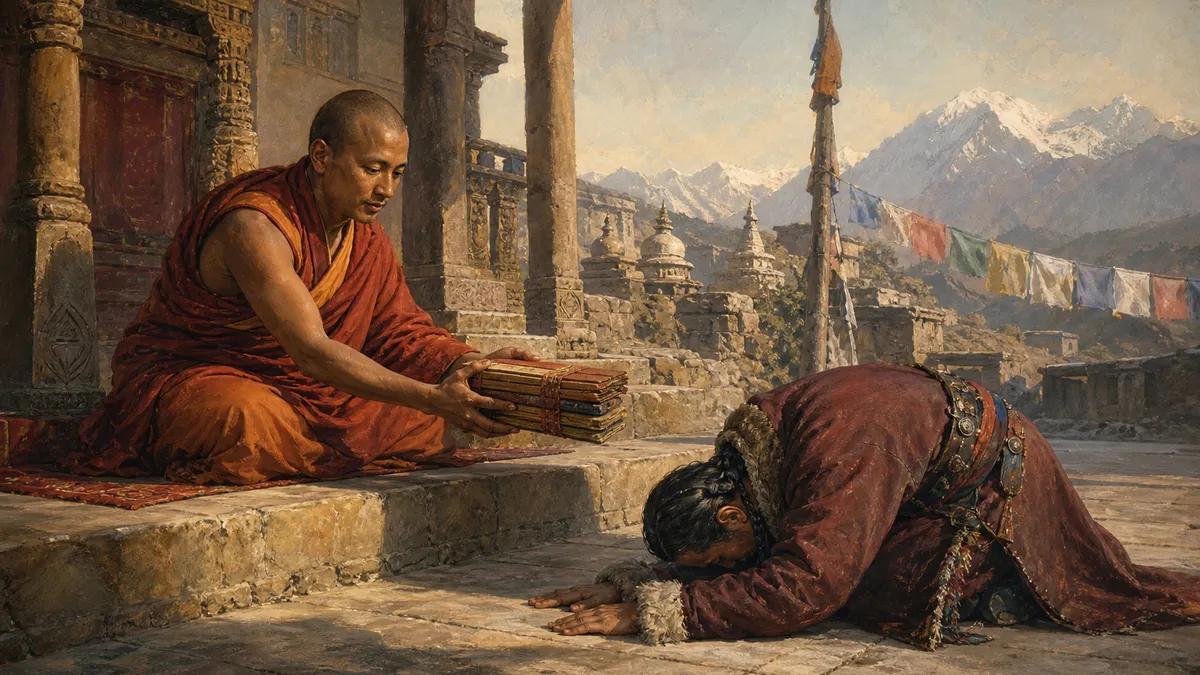
‘The instructions I have given you have the power to enable you to understand all of samsara and Nirvana and truly behold their essence, so guard them as the apple of your eye. They are the root of all teachings, the pinnacle of all vehicles, and the essence of the mind of all enlightened beings. Guard them as you would your own life and heart. Since they are the source of all siddhis, both supreme and ordinary, guard them like a wish-fulfilling jewel.
Then he transmitted to him other teachings related to tantra and medicine and advised him to return to Tibet as quickly as possible. He recommended that he master the art of swift walking and told him that his friend had died on the return journey.’
Return to Tibet
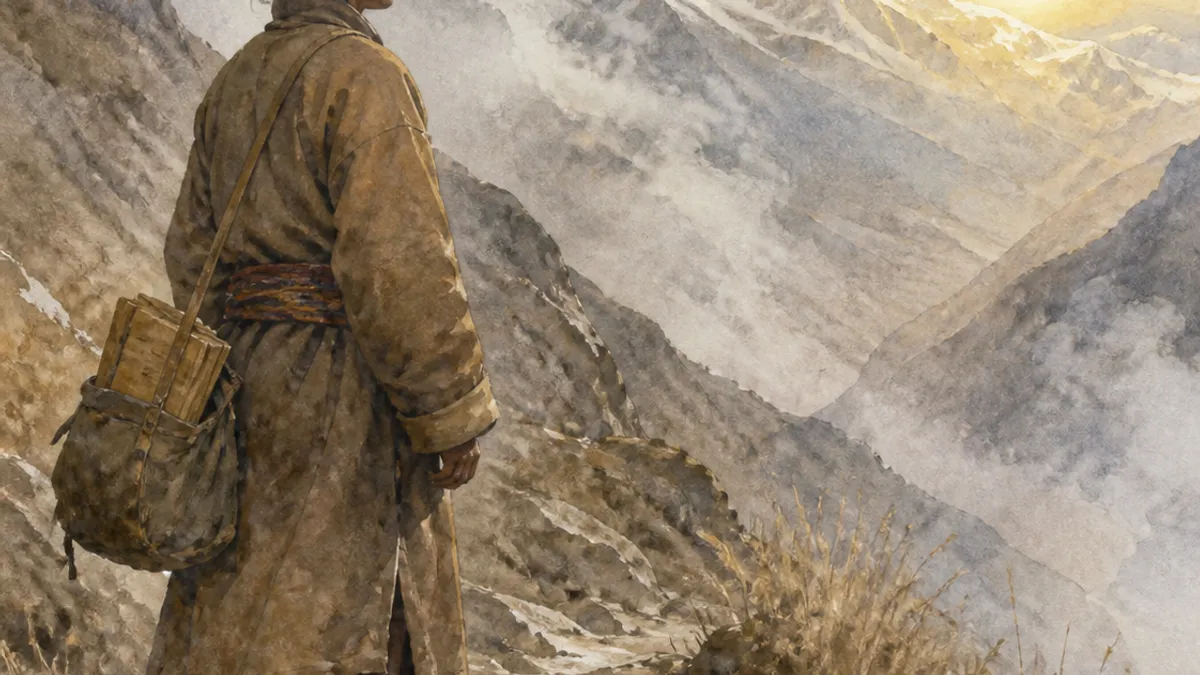
His friend, Legdrup of Tsang, wanted to impress the king and arrive before Vairochana. He had not fully mastered swift walking and went on ahead, but at the border he was caught in the mountains by specially trained border guards, warrior-runners. According to other sources, he fell into an abyss while fleeing from them. Vairochana also feared that the guards would take the teaching from him. He therefore copied all the instructions and tantras onto palm leaves using arura juice (from a special plant), which was invisible to ordinary eyes.
“The Indian panditas had ominous dreams that a Tibetan monk would carry the teaching away from their lands, so they reported this to the king, and under penalty of death the king forbade anyone to transmit the teaching if someone came from a foreign country.
When Vairochana wanted to leave the monastery where Shri Singha was staying, the locks on all the gates clinked by themselves, and the monastery guards warned the gatekeepers: ‘The Tibetan monk is going to carry the Dharma away; do not let him out.’ The gatekeepers locked all the gates and stood guard. The next morning, when Vairochana arrived, they told him, ‘Last night everyone had ominous dreams. Let us see what the Tibetan monk is carrying.’
Although Vairochana had mastered swift-footed travel, he feared that the border guards might not let him pass, so he bribed the commander of the border guard. To ensure that no one saw anything, the commander sent the other soldiers away and allowed Vairochana to cross the border. At that time, the Indian panditas dreamed that a monk had carried the sun away to Tibet and that it had vanished. It is said that the trees withered and the birdsong lost its resonance.
The king of Vajrasana gathered the scholars and asked, “What is the reason for this?” They replied, “The Tibetan monk must have carried away our teachings.” A pursuit party of skilled swift-footed warriors was then sent after him to catch up with him. The commander of the border guard said that only one shaven-headed monk had passed through, but he had been carrying nothing and had most likely already reached Tibet. Thus, the swift-footed warriors were unable to catch him.
Vairochana arrived, appeared before the king, and said that he had returned with the teachings and that the Indians guarded the Dharma very jealously. He also said that the Tibetan ministers were hostile toward the Dharma and that the great king was easily influenced, so they might begin to slander him. He asked the king to pay no attention to this.
The Teacher’s Discovery and Indian Retribution
At that time, the king of Vajrasana said that it was already too late to catch the Tibetan monk, since he had reached Tibet, but he ordered that the teacher who had transmitted these teachings be punished. Since no one knew who this teacher was, they began consulting diviners, oracles, and astrologers to determine from horoscopes who might have been giving these teachings at that time. Even with their clairvoyant powers, the oracles could not discover who the teacher was, because it was precisely for this purpose that he had transmitted the teaching magically, while sitting in a vat and speaking through a tube.
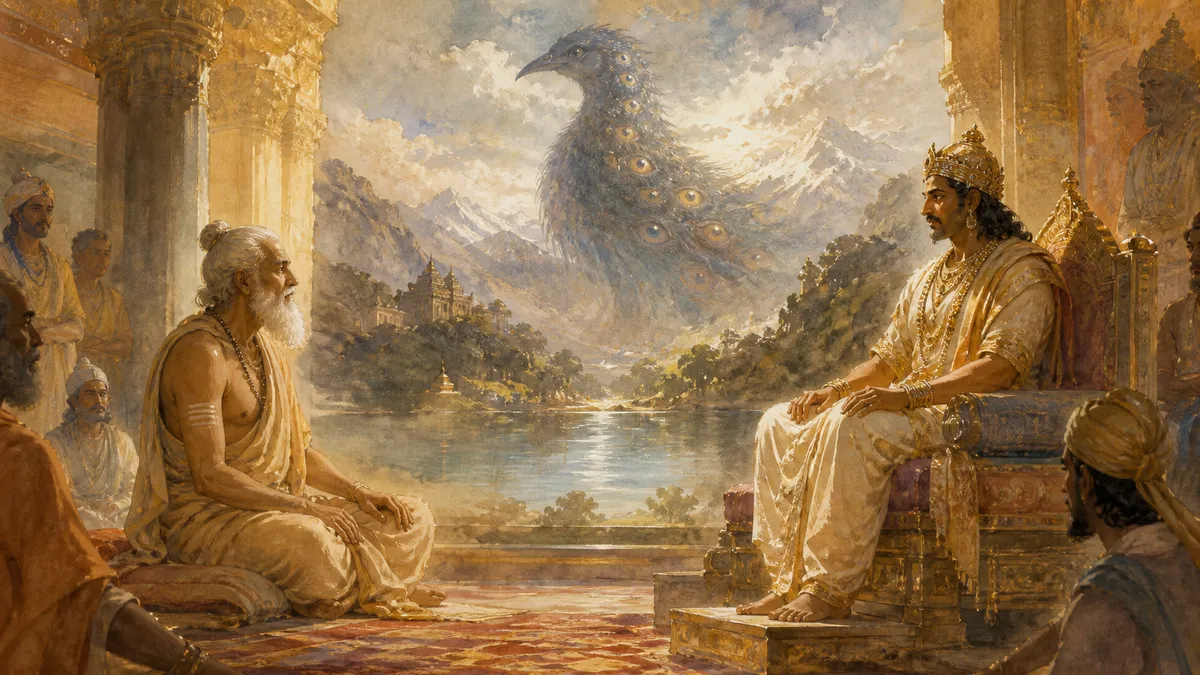
Nevertheless, an old Brahmin woman skilled in divination said that she saw something contrary to common sense but was afraid to tell the king. The king told her that she could speak without fear. She said that she had seen a lake at the summit of the mountains, and there a multicolored valley; she had seen someone whose body was covered with eyes and who had a red beak as long as an arm. He was the one who had given the teaching. In other words, the power of her clairvoyance managed to overcome Shri Singha’s magic. She saw something, yet she was still unable to identify exactly who it was. But the others did not believe that someone with eyes all over his body and a beak was transmitting the teaching.
The king then said that swift-footed warriors should be sent to Tibet to spread slander there and prevent the teaching from spreading. For this purpose, two warriors skilled in swift-footed travel—something like our special forces—were dispatched, posing as mendicant monks (bhikshus) from India. They began spreading rumors that this Tibetan monk had brought back from India not the Dharma, but numerous harmful mantras and forms of black magic, intending thereby to destroy both the king and Tibet, and that he therefore had to be killed.
The Slander and Protection of Vairochana
They sowed discord among the ministers, who began saying that he wanted to destroy Tibet and that he himself should be drowned. King Trisong Detsen began defending Vairochana, saying that these were the intrigues of the Indians, who jealously guarded the teaching. But the ministers, who exerted great influence over him, refused to listen.
The king then pretended that he wanted to punish Vairochana. He ordered that a beggar from a wild tribe be taken and dressed in Vairochana’s hat and robes. The king said, “This is Vairochana, and I am punishing him.” The beggar was placed in a copper cauldron, the lid was sealed tightly, and it was thrown into the river so that he would drift downstream.
Incidentally, this beggar eventually washed ashore somewhere. The commander of the local outpost saw a man in the cauldron and was greatly astonished. He rescued the beggar and even gave him a house, a wife, and gold. Although he had seemingly been punished, his merit manifested in such a way that he suffered for the Dharma, and those sufferings resulted not only in his remaining alive but even in an improvement in his fortunes.
For example, when we began commissioning statues from a sculptor, I told Ananda Lila that this was an immense merit and that his destiny would soon change. And when he finished the third statue, the President of Russia awarded him an order and a certificate recognizing him as an Honored Sculptor of Russia. Because it is inconceivable that you could sculpt Dattatreya, Ramalinga, and Shankara without your destiny changing afterward. In other words, this is a direct manifestation of merit. Therefore, all those who wish to succeed in worldly life should accumulate merit to the extent possible for them: sculpt statues, translate texts, paint images of saints, create sacred symbols, and build temples. I am sometimes even surprised by the lack of initiative among laypeople, because even in the worldly sense they are missing out on their fortunate destiny.
The Secret Transmission of the Teaching
And so, the beggar was saved and his fate improved, while Vairochana remained in the upper chambers of the palace. The king asked him to transmit the teaching to him after all. During the day, Vairochana sat inside a hollow column, and at night he transmitted the teaching to the king. At midnight, the king personally brought food to Vairochana and received instructions from him.
When Vairochana finished giving the teaching known as “The Eighteen Miracles of the Mind,” a royal servant and one of the female attendants noticed what was happening. They let it slip that the king had not actually punished Vairochana, but had hidden him in a column and was secretly receiving teachings from him at night.
When the royal advisers learned of this, they gathered and began to say: “You are making a grave mistake. You are wasting gold from our treasury by covering clay idols with it and telling us that you are establishing the Dharma. You deceived us by throwing a tribesman into the cauldron instead of Vairochana, while hiding in the palace a black magician who wants to destroy Tibet.” They began breaking down the door, shouting for him to open it and threatening him with an uprising. The king did not wield much power there, because it was something akin to a constitutional monarchy. The advisers told the king that if Vairochana were not punished, he would thereby violate the law of the kingdom.
The Exile of Vairochana
Trisong Detsen was saddened and asked Vairochana what he should do. Vairochana then said: “I have a karmic connection with a certain place in Tibet, so you must exile me there. You must pretend that you have banished me there. In India there is a teacher named Vimalamitra who gives simpler teachings. Invite him, and then gather all the scholars so that they may confirm and declare that this is the true teaching. After that, you and I will meet again.” The king could do nothing, since the advisers manipulated him as they pleased, and Vairochana was exiled.
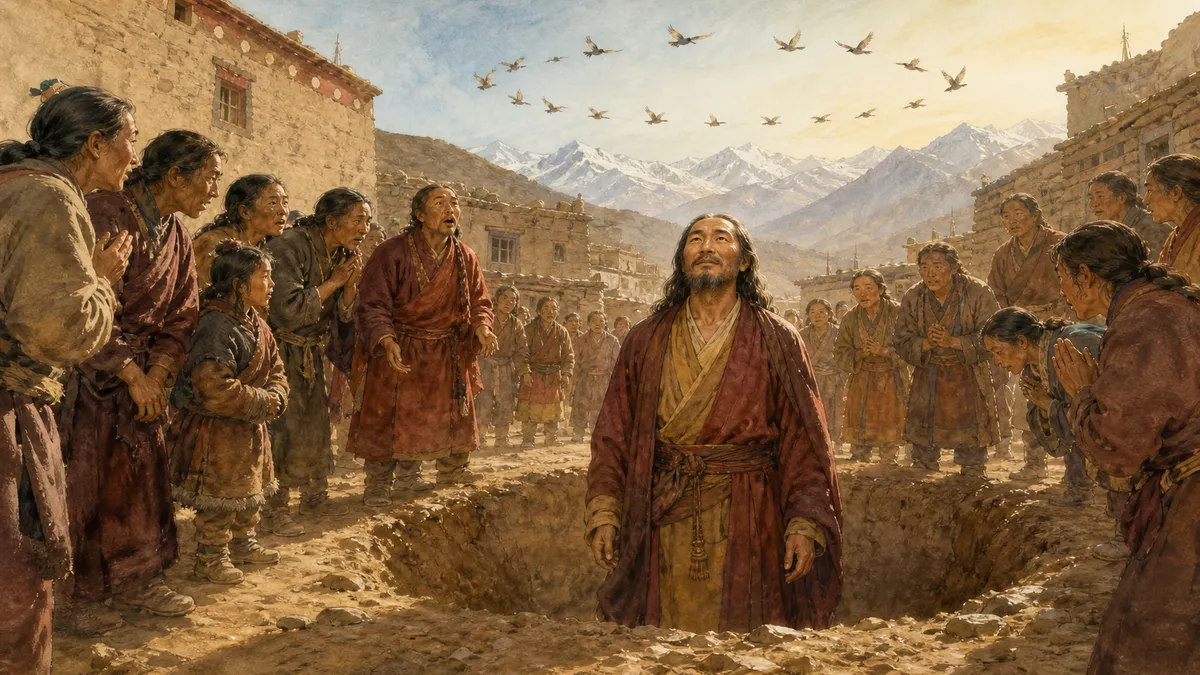
When Vairochana arrived in central Tibet, birds gathered in the air above him and circled around him. The inhabitants recognized him and said: “This is the deceiver from Tibet.” They threw him into a pit filled with frogs and lice, but he remained unharmed. Then they released him and began to regard him as a saint. After that, Vairochana began preaching in that region.
The Invitation of Vimalamitra
Meanwhile, King Trisong Detsen resolved to spread the Dharma at any cost and to invite another saint who could disseminate the teaching in Tibet. But he decided to invite a monk who would teach a more basic doctrine. For this purpose, he invited the great teacher Vimalamitra, who was the most learned of five hundred Indian scholar-pandits.
Once again, he ordered several translators to travel to India to the Indian king, deliver gold to him, and ask him to send a scholar who could transmit the teaching. The king convened a great assembly, and all the scholars at the gathering unanimously turned their eyes to Vimalamitra, saying that he was the most renowned saint versed in the teaching.
Vimalamitra then thought: “Perhaps the king of Tibet believes in the Dharma, but his advisers slander the Dharma and treat it badly. They have already driven Vairochana away, so what would be the point of my going there? They will exile me as well. I am unlikely to be able to subdue the ministers, those foolish Tibetans.” He did not want to go, but then he thought: “Still, I must not disobey the order of the king of India; I will have to go.” He replied with these words: “Bodhisattva dadhim.” The translators rendered this as: “If an arrow is released from a bow by a strong man’s hand, it will be able to hit its target.”
Vimalamitra’s Arrival and Trials
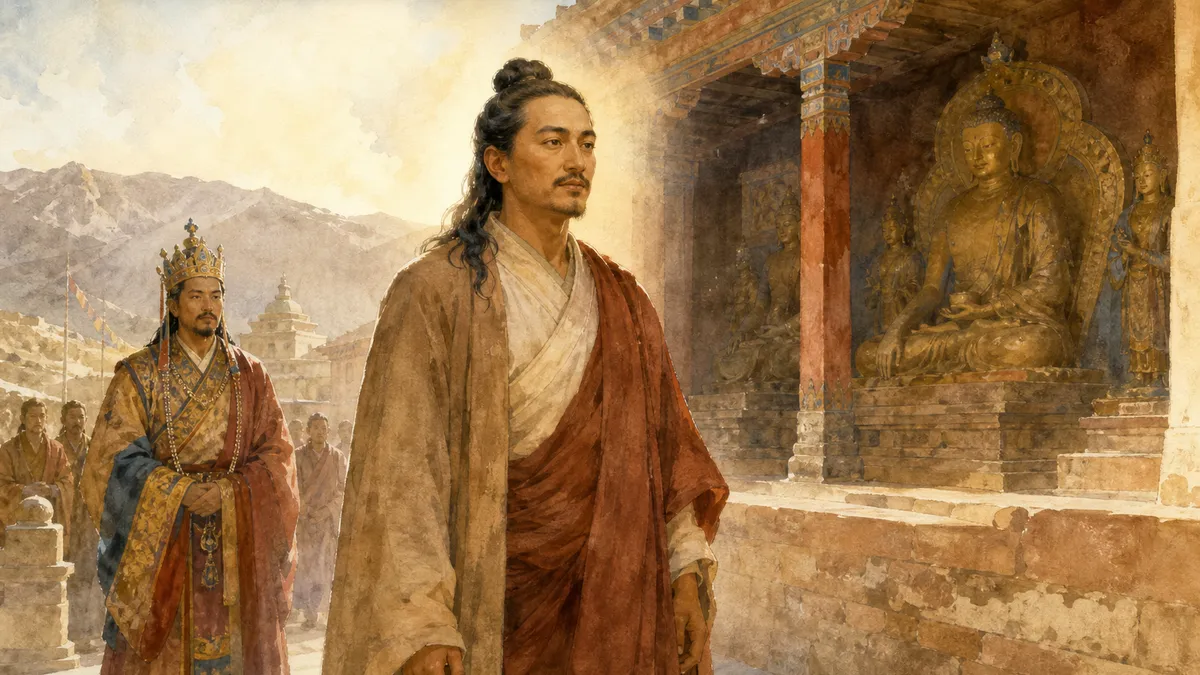
When Vimalamitra arrived in Tibet, the king received him with great honor, but Vimalamitra did not bow to the king or pay homage to the statues of deities in the temple. The advisers were indignant and said to him: “We have invited many learned men, but perhaps you are not a true saint. Why do you not pay homage?”
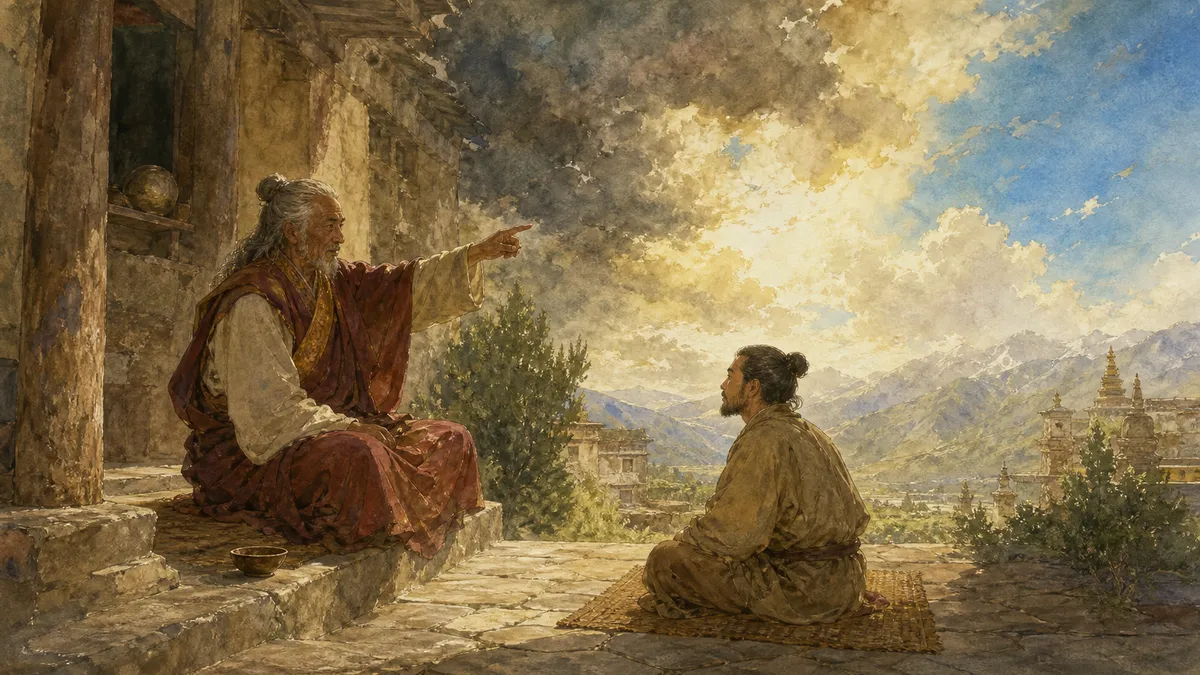
Vimalamitra asked: “Do you know what it means to pay homage?” They replied: “We do not.” He said: “I pay homage by abiding in nonduality, inseparable from the deity. Therefore, symbolic deities in the form of statues and images cannot withstand my prostrations. That is why I do not bow to statues of saints, nor do I bow to the king.” In other words, Vimalamitra said that he abided in nonduality and that his abiding was so powerful that bowing to a statue or the king would be a prostration between unequals. It was something like when Virupa said: “An elder brother should not bow to a younger one.” That is, it meant the following: “The deity within my body is greater than an external deity or the king. I pay homage by abiding in nondual presence.”
The king thought: “I cannot tell whether he is a charlatan or a true saint.” Vimalamitra asked: “So, are you still dissatisfied with my answer?” Then he put on ritual robes and bowed respectfully before the statue that the king contemplated, saying: “I, Vimalamitra, the deity of wisdom in the relative state, bow to Vairocana, the body of the supreme deity.” After these words, the statue split from the crown of its head to the throne.
The king became even more upset, thinking that he was definitely a charlatan, and remained displeased. Then Vimalamitra once again bowed respectfully to the statue and said: “I, Vimalamitra, the supreme deity of wisdom, bestow initiation upon the deity of wisdom in the statue, Vairocana.” He placed his hands on the statue’s head, after which it became whole, even more magnificent, and began to glow. The king then became devoted to Vimalamitra.
Manifestation of Siddhi and the Beginning of the Teaching
Vimalamitra began to bestow initiation upon the king. The king made offerings to him of gold and other things, and Vimalamitra praised him for the offerings. The king thought: “Perhaps, although he is a great saint, he is greedy, since he praises the offerings so much.” Vimalamitra read his thoughts, took some sand, and poured it into his sleeves, saying: “Hold this.” But the king could not hold it, and golden sand fell out of his sleeves. Vimalamitra said: “I do not need your gold; to me, everything visible is gold. I accept your offerings only so that you may accumulate merit, so your thoughts are wrong.” The king repented again.
In other words, the king constantly committed aparadhas in his heart: at one moment he listened to foolish advisers, at another he thought badly of Padmasambhava or Vimalamitra, and then he exiled Vairocana. But thanks to his wisdom, he constantly repented; that is, he broke and purified his samayas. Through purification, he eventually learned genuine spiritual practice.
The Meeting of Two Traditions
Vimalamitra was seated in a large chair, and he began to preach the Dharma. Vairocana, who was in exile at the time, heard that the learned saint Vimalamitra had arrived and was preaching a lower Dharma than he had, and thought: “When I preached the supreme Dharma, I was exiled, but now another monk has come who preaches the elementary Dharma, and they have seated him on a golden throne.”
He then sent his disciple to the king. The disciple put on a cloak and a magician’s canvas crown and took a wooden sword and scrolls in his hands. He entered the king’s chambers, where Vimalamitra was preaching, stripped naked, mounted the wooden sword as if it were a horse, and rode into the hall where the lecture was being given. He whipped himself on the buttocks, shouting: “Kakapari, kakapari.”
Vimalamitra saw him, smiled, and replied: “Dadhim, dadhim.” The king asked: “What does this performance mean?” Vimalamitra replied: “He is a messenger from Vairocana, who was outraged that you were listening to the lower Dharma. He sent his disciple to convey in this way that enlightenment cannot be attained through the immature teachings of the shravakas, just as a great distance cannot be covered with a crow’s stride. Without the higher teachings on the fruition of instantaneous enlightenment, there is no point in becoming mired solely in teachings on the laws of cause and effect.”
The king then asked: “And what did you answer him?” He said: “I replied that all teachings are pure and free from duality if you perceive them in the correct state. Therefore, even what I preach is also the higher teaching; I merely express it in the language of the lower teachings.”
The Unification of the Teachings and the Triumph of the Dharma
The king wanted to know who the yogin was who had entered the hall in such a manner. When the yogin was found, he was sitting in a tavern drinking chang. Most likely, he was already a highly realized avadhuta mahasiddha. For some reason, many mahasiddhas are often portrayed as though sitting somewhere drinking chang were their favorite pastime.
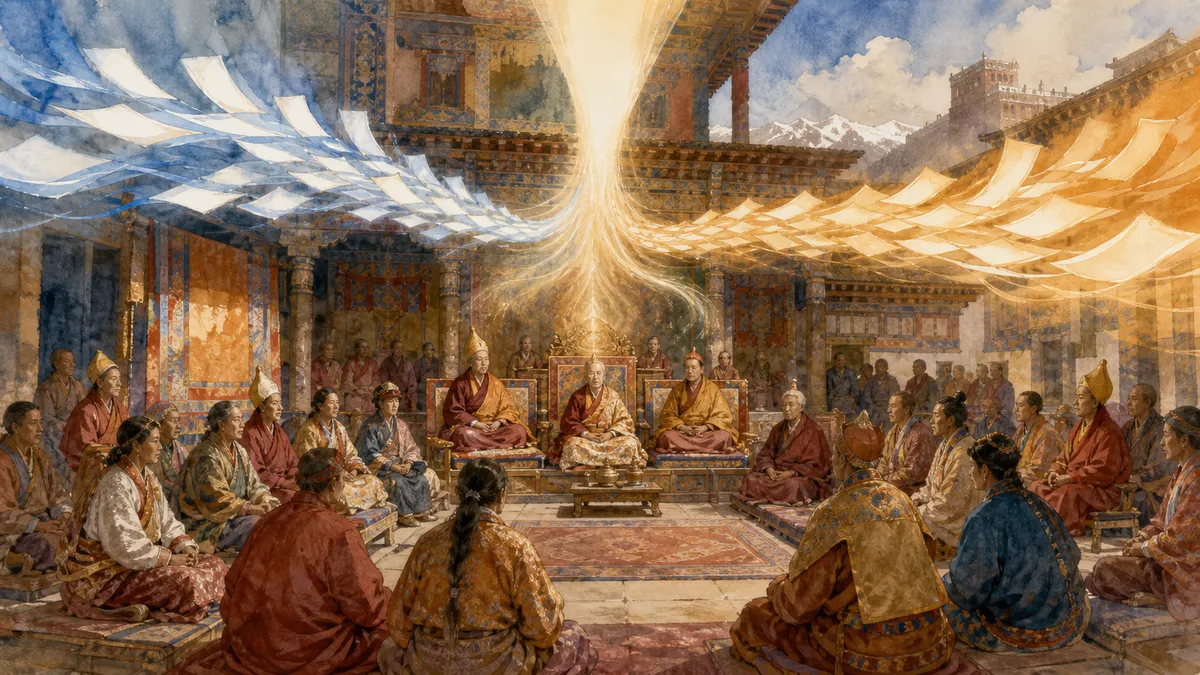
After the yogin was found, he too was invited to give teachings. He was presented with a golden mandala and seated on a throne made of precious stones. The king and his disciples then received teachings from Vimalamitra in the morning and from Vairocana’s disciple in the evening. In this way, they received all the principal translations of the teachings on nonduality.
When the Tibetan advisers saw that the teachings of these two teachers were identical, they regretted having exiled Vairocana. They sent three envoys to Vairocana with a golden vessel as a gift, in order to reconcile with him and invite him to teach them.
Thus, the Dharma of nonduality came to Tibet and spread.
Nonduality
Dharma
Guru-yoga
Author Гуру
Read 14 times
Articles
Vidya AI
Search
Lectures
November 5, 2026
Mantra of the day
ОМ ЭКАЙА НАМАХ ОМ Единому – поклонение!
Auspicious Times(Rome)
Brahma Muhurta:
04:56 - 05:51
Abhijit Muhurta:
11:33 - 12:14
Sayam Sandhya:
16:40 - 17:21
Mokshada Ekadashi (6 November)
Ekadashi of liberation. Helps to achieve spiritual enlightenment.