Mind Control as the Key to Liberation from the Illusion of Samsara
07.09.2026
0 мин. чтения
0
Share
copy
search
add
share
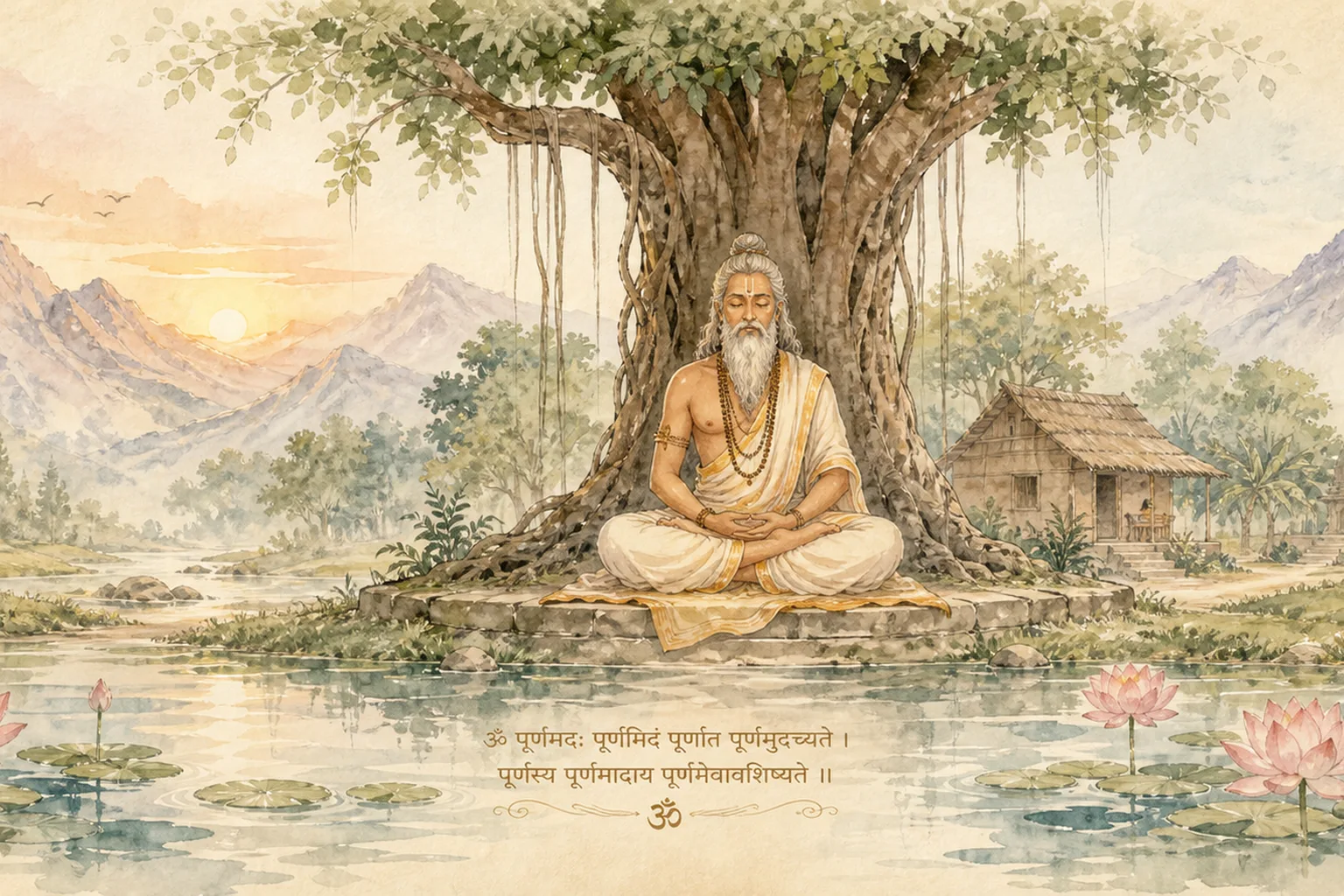
As usual, we must first develop the right motivation. When we receive teachings, motivation determines a great deal. If, through the teachings, we seek to free ourselves from the cycle of rebirth and influence our future lives, if we remember the law of karma and our highest goal, then this is the right motivation. It is not enough to form this motivation once and then simply carry it with us; it must be constantly renewed and reaffirmed, because samskaras and vasanas have alternative motivations. If we do not reinforce our fundamental motivation, alternative samsaric motivations may undermine our pure Dharmic motivation and lead us astray.
The saints of ancient times were always very strict with themselves. They were not strict with others, but they were strict with themselves. We should be the same. To be strict means to be vigilant and attentive.
In ancient times, many attained enlightenment through the method of shravana, simply by listening to the teacher’s instructions, sacred texts, and commentaries on them; that is why they were called “shravakas,” meaning listeners. They listened to a great many instructions and teachings, literally absorbing them. Right motivation is the motivation of shravana, because every teaching is a transmission. If you are in a state of receptivity to the transmission, then it takes place. To a large extent, this depends on you.
The Mind as the Axis of the Wheel of Samsara
“But how can one bring under control the wheel of cosmic illusion, spinning at tremendous speed?”
Vasishtha replied:
“O Rama, the mind is the axis around which this wheel turns.”
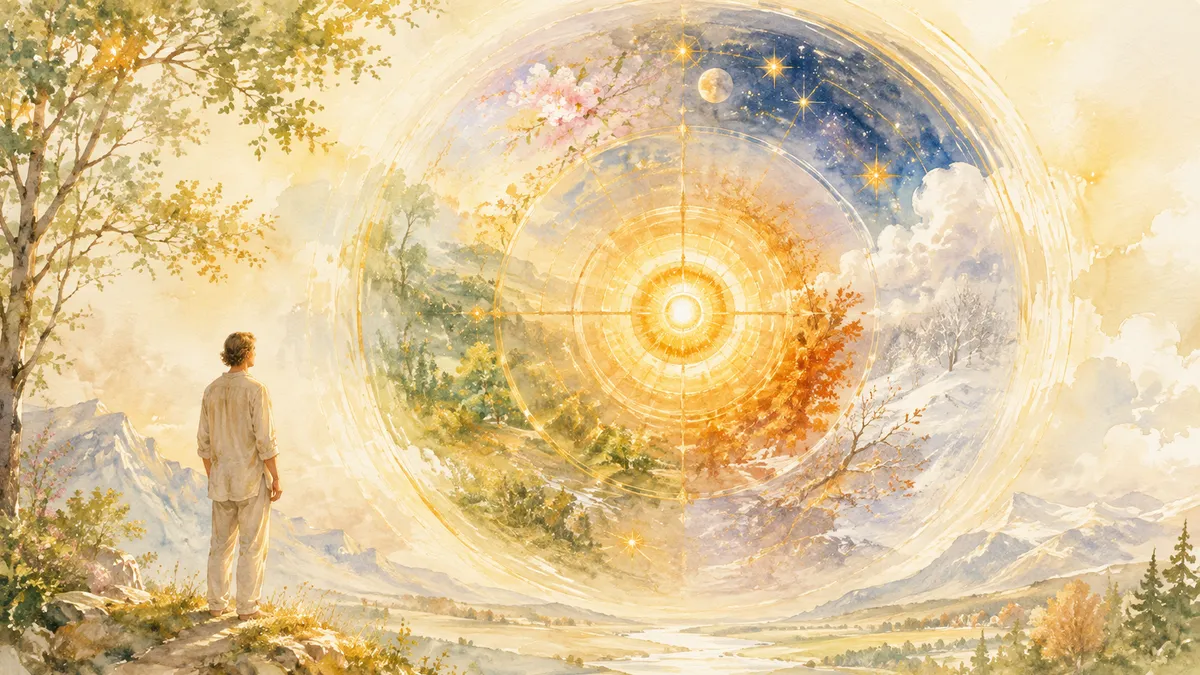
Samsara is constantly turning. We may not see this if we lack sufficient discernment and insight, but it is so. Everything is constantly changing. And if you recall people you knew in the past, you will find that significant changes have occurred in their lives, just as significant changes have occurred in your own destiny in recent years. This is the nature of samsara: nothing in it is permanent; continuous metamorphoses take place, some things transform into others, and we are immersed in this process. Irresistible forces of a higher order than ourselves act upon us: the law of karma, the law of universal cycles (rita), and the cycle of rebirth. Whether we want it or not, we are subject to these laws. If we try to control samsara, we will not succeed. Try, for example, to make the sun set in the east and rise in the west, or to stop time so that it is always December thirty-first. It is impossible. These laws operate regardless of our wishes.
We cannot govern the laws of samsara or abolish reincarnation. These laws were established by mandaleshvaras of the highest order—the gods. Attempts to exert strong control over samsara are always doomed to failure. There have been various outstanding people who sought to conquer the entire world and become universal rulers (chakravartins): great military commanders, kings, statesmen, and politicians. But they all came and went, while time, the law of karma, and universal forces continued to operate.
The teaching says that instead of trying to control samsara, we must learn to control our own mind. This is the best way to control samsara and free ourselves from its influence. All other methods are useless. To some extent, we can do certain things—for example, clear the snow in “Divya Loka” or take care of the electricity supply. But our main task as monks and practitioners is to learn to control our mind. For example, if the ground is covered with thorns, you can try to cover all of it with carpets so that it is soft to walk on; but if the soles of your shoes are made of sturdy material, you will not need to cover the entire ground with carpets, because wherever you go, you will be able to walk comfortably. Or if your face is smeared with dirt and you look into a thousand mirrors, you will see yourself as dirty; if you try to wash those dirty mirrors, you will achieve nothing, but if you wash your face, all the mirrors will show your clean reflection. In the same way, if we can control the mind, we can control samsara. The more effectively we control the mind, the more control we have over samsara. When we attain perfect control of the mind, we attain perfect control over samsara. Those who do not understand this revolve in the cycle of birth and death. They are not masters of their destiny; universal powers stand over them: the law of karma, the kleshas, demons, and so forth.
“Only by bringing this axle under control through intense effort and keen intelligence can the wheel itself be stopped. When the axle is stopped, the wheel no longer turns. When the mind is stopped, illusion ceases.”
The Transition from Collective History to Personal History
When we do not control and tame our mind, it seems as though everything is revolving around us; we live an external life, and various situations and transformations are always occurring outside, affecting us as well. Controlling the mind means stepping out of collective history, out of cause and effect, entering inner awareness, and beginning to create a personal history—not creating causes and effects, but playing, acquiring the ability to be in the game (lila). For example, if you live through external connections and think, “I built a relationship with this person, and now with this one. I created such-and-such things; family, home, and work in the external world are important to me,” then over time all of this will undergo transformation, all of it will pass away, and it will be difficult for you to control it. But if you do inner work, your life will unfold not among things or people, but among contemplation, dhyanas, sankalpas, and meditative experiences—all of these are more manageable things; they are closer to you. This indicates greater control of the mind. You will see that none of these things depend on others; they are within you. And when you understand this, you will naturally become liberated from everything external: even if you interact with it, it will not affect you. You will create a life of your own on the inner level, one that does not depend greatly on the external. You will feel very self-sufficient and free.
One who practices well always feels self-sufficient and free. If I maintain atma-vichara, then practice the descending force, pure vision, the unity of everything with the mind, shambhavi mudra, and divine pride, then I do not understand what others have to do with it. It is my personal affair. Everything I practice is always with me. Nothing external is needed to perform these practices. Everything depends solely on you inwardly. This is self-sufficiency. These practices depend neither on historical processes nor on a financial crisis, nor on which party is in power—none of this has any significance.
Our task is to gradually leave collective history behind and move to the level of personal, individual history. Collective history is called “karma,” that is, when causes and effects unfold over time, while personal history is called “lila” (if it is the history of an awakened being). What characterizes history? Events take place within it. Events are pivotal moments when causes flow into effects. For example, there was a cause such as the discontent of the masses in 1917; a flare-up, a bifurcation, a particular event occurred, and then this cause flowed into an effect—the Bolshevik Revolution, which changed the course of history and plunged Russia into a new tunnel of reality. Such events occur continuously.
Between cause and effect there is always an event, an act. And if such events are external, this is called “karma.” But when we perform sadhana, inner causes develop into inner effects; external events do not exist, they are self-liberated, and only inner events occur—not in the form of interactions between physical objects, but in the form of flashes of spiritual clarity and insights in meditation.
A liberated one (jnani) is someone who lives through inner events, while external events do not greatly affect them; they only help them deepen their awareness. If I were asked, “What significant events are taking place in your life?” I would say, “A tremendous flash of atma-vichara. And last year, there were things such as pure vision and so forth.” But all of them would concern inner experiences specifically, as though I lived not in the external world but in my own subjective world, in an inner universe, and all these events depended solely on my practice. This is the experience of a normal practitioner who has transcended karmic circumstances. But if you do not practice, do not contemplate, and are inattentive, then you have very few inner events. There are many external events; chains of events press upon consciousness, causes, effects, and events occur externally, while within you there is very little of all this—not enough. When this happens, it means that the mind is strongly turned outward; it has lost its inner center of awareness, and it must be brought back through self-inquiry (atma-vichara) and contemplation in motion.
A jnani is one who lives primarily through inner events, inner causes and effects. This does not mean that he does not participate in any activity; some activity takes place, but 30% of his attention is devoted to it, while 70% is devoted to inner work and inner events. External activity then becomes effective because every action is highly intelligent and skillful: maximum results are achieved with minimum effort.
“One who neither knows nor practices this goes through countless sufferings; the moment the truth is seen, suffering ceases.”
One who does not know this secret is forced to undergo various forms of suffering. He thinks that he will find happiness and enjoyment outside himself—in collective narratives, external relationships, and external actions—but this is a delusion.
The Only Cure for Illusion
“The disease of perceiving the apparent world cannot be cured without mastering the mind; this is the only remedy. Therefore, O Rama, abandon all other activities—pilgrimages to holy places, offerings, and physical practices—and master your mind for your own happiness.”
Again and again, Vasishtha speaks of the advantages of jnana yoga. There is a term introduced by Gaudapada, the founder of Advaita Vedanta and, in fact, Shankara’s teacher—at least in a theoretical sense. This term is set forth in the Mandukya Karika, in its fourth chapter, “The Quenching of the Burning Coals of Samsara” (Alata Shanti). It is called asparsha yoga. Gaudapada upholds the theory of ajata.
As you know, there are three theories of the creation of the universe. We have discussed the theories of instantaneous and gradual creation, but have said almost nothing about ajata. It was Gaudapada who founded and developed the theory of ajata. The theory of ajata states that if everything is Brahman and Brahman is the cause of everything, then nothing was ever born and nothing was ever created. “All theories such as the gradual and instantaneous creation of the universe are like childish babbling,” says Gaudapada. Developing his thought further, he continues: “If everything is Brahman, how can Brahman give birth to itself? And what reason would it have to give birth to itself?” The creation and birth of the universe are nothing more than illusions of deluded minds. A true Advaitin is one who uncompromisingly follows this view to its ultimate conclusion and inevitably arrives at the logical inference that the universe was never born. And since it was never born or created, this means that it was never sustained and never destroyed; therefore, the task of a jnani is to abide in the unborn. The sadhana of abiding in the unborn is called asparsha yoga.
“Asparsha” means “not touching samsara.” Asparsha yoga is mentioned in ancient texts; it primarily comprises jnana yoga (the yoga of self-inquiry), brahma yoga (the yoga of meditation on Brahman), and sannyasa yoga (the yoga of complete renunciation, the absolute abandonment of everything)—these are the three constituent parts of asparsha yoga. He says: “If you want to know the absolute truth, you must not touch samsara. You must constantly remain completely beyond illusion, beyond samsara.” What does this mean? It means placing your mind at a point where you touch nothing. Of course, on the physical level it is impossible not to touch samsara: you sit on the floor—you touch it; you eat food—you touch it; such a logical conclusion can be drawn. But when Gaudapada speaks of asparsha yoga, he is referring to spiritual non-contact. That is, you must place your mind at the point of asparsha, where there is no contact with samsara, where there is no illusion, where there is no ignorance, and remain at this point constantly.
Vasishtha explains to Rama how to place his mind at this point. This is the only possible way to attain liberation and remain untouched by the illusions of samsara.
The World as a Projection of the Mind
“The apparent world dwells in the mind just as space exists within a pot. If the pot is broken, the illusory division of space disappears. If the activity of the mind ceases, the concept of the world within the mind also ceases. Just as an insect trapped in a jar flies free when the jar is broken, you too will enjoy freedom when the mind ceases to exist, together with the illusion of the apparent world contained within it.”
It seems as though the world exists independently of us. In reality, the world is the unfolding of our vasanas and samskaras. Every jiva possesses vasanas and samskaras. You have undoubtedly noticed that every person expresses themselves and behaves in a particular way. The way a person behaves and expresses themselves is the manifestation of their vasanas—in other words, their karma. The more liberated a person is, the less conditioned their expressions are; they cannot be predicted, and they have no specific predetermined reaction. Conversely, the more conditioned a person is, the easier it is to predict their behavior, because they have habitual patterns of perception and stereotyped patterns of behavior.
As we move toward inner emptiness, we free ourselves not only from habitual reactions but also from the need to react in any way whatsoever. Our vasanas and samskaras are what fills us, and we identify with them. For example, we think, “I am such and such. Yes, this is who I am,” but this is precisely our karma. The task of practice is to ignore vasanas and samskaras, not to follow them but to disregard them—that is, to find within ourselves a point where we do not depend on them. For example, I like doing something, but I will disregard that inclination. The moment I disregard it, I become twice as strong spiritually. I like expressing myself in a certain way, but if I disregard this, I become spiritually stronger. I like indulging this tendency within myself, but if I find the point from which I can disregard it—simply observe it and not allow it to unfold—I become spiritually stronger. Whenever we practice in this way, we gain spiritual strength and learn to disregard vasanas and samskaras. And it is very important to learn how to do this. Alternatively, we may express vasanas and samskaras, but only as service: “I have no personal interest in this, but if necessary, with a blessing, I will express it for the benefit of others.” Then it is no longer a karmic unfolding of vasanas and samskaras, but a manifestation of divine play (lila).
A true jnana sadhu is one who disregards vasanas and samskaras because he has discovered a deeper point of emptiness within himself. And what happens to someone who does not disregard them? He acts according to the law of karma; vasanas and samskaras unfold through him. How are vasanas and samskaras to be disregarded? Perhaps by doing absolutely nothing, expressing nothing, remaining free of thought, and desiring only samadhi? But this should be viewed more deeply. While abiding at the point of non-action, in a mind that is like space, one must become firmly established there and, from that point, be capable of releasing any vasanas and samskaras, and then, by integrating with circumstances, manifest precisely those required by the circumstances; manifest them as service, for the benefit of others, without becoming attached to them. Then this will be true contemplation.
Abiding in the Present Moment
“Live in the present, with consciousness turning outward only momentarily and without any effort; when the mind ceases to associate its existence with the past and future, it becomes no-mind. If, moment after moment, your intelligence abides in what is and leaves it just as quickly and effortlessly, the mind becomes no-mind, filled with purity. Only while the intelligence is agitated for various reasons does it continue to experience the diversity of its own projections, just as rain falls only as long as there are clouds. Only while infinite Consciousness limits itself through the intelligence do this agitation and projection exist. If consciousness ceases to experience itself as limited by the intelligence, then the very root of the recurring cycles of birth and death is burned away, and bliss ensues.”
If you look within yourself right now, you will discover this consciousness, but you should not desire to see flashes of light or gods; simply look within with a very clear and discerning mind. Flashes of light and gods may appear, but you should not seek them. If, with a discerning and clear mind, you see what is right now and do not allow the mind to slip onto the lower tracks of concepts, label-based thinking, and value judgments, you will simply abide in what is. This will be close to what Vasishtha calls the right path. You do not need to seek happiness or satisfaction on this path; all of these are chimeras, because it is the ego that seeks satisfaction and happiness. If you seek happiness and satisfaction, rest assured that you will go astray, because all of it has been invented by the ego. Happiness and satisfaction can be found in the heavens of passion, so those who seek them should go there. But enlightenment has little to do with happiness and satisfaction.
Enlightenment and the Acceptance of Dissatisfaction
Let me put it this way: even after enlightenment, you may still be dissatisfied. But it will no longer trouble you at all; this dissatisfaction will merely be part of the play, while deep down you will be content. If your karma destines you to be dissatisfied, then dissatisfied you will remain—such is your relative karma (perhaps you have little merit). But if you step back from all of this and accept your dissatisfaction, then what difference does it make? You were dissatisfied—there is nothing terrible about that. It is like that monk: before enlightenment, I carry water and chop wood; after enlightenment, I still carry water and chop wood. But now this dissatisfaction ceases to be a problem. If before enlightenment it was a specific problem that tormented you, then after enlightenment you simply laugh at it; you merely observe it, and that is all—it cannot reach you, for it is not where you are. Even if it exists, it is just a game, like in kindergarten. You simply observe it while abiding at a point it cannot penetrate, and deep within, true contentment arises from that point. This is such transcendent contentment that, by comparison, your small karmic dissatisfaction is merely a speck of dust, absolutely nothing. This great peace (mahashanti), this natural contentment, simply sweeps away your small karmic dissatisfaction.
Even after enlightenment, you may see that certain qualities you would like to develop have not yet developed in you. For example, you may be unable to play like Mozart, lack Lobachevsky’s genius, or not have the figure and appearance of a great beauty—in other words, certain qualities will remain with you. By human standards, you have every right to be dissatisfied; you have not yet become a deity like Saraswati or Dattatreya. You still have the limitations of the body and residual karma, but you no longer identify yourself with any of it; you accept it completely and even rejoice in it.
The Transcendence of Enlightenment
Enlightenment has nothing to do with human notions of satisfaction or happiness. It is transcendent, beyond them; such concepts do not even exist there. That is the highest, true contentment. You live perfectly well with your dissatisfaction; you live perfectly well even with your shortcomings—that is the most important thing. Moreover, you can live perfectly well even with your kleshas. Perhaps what I am saying is not entirely clear, but this is precisely the tantric approach. This should not be understood as: “Oh, I live perfectly well with my kleshas.” No, if you think that way, nothing good will come of it. It means that a klesha becomes wisdom, gradually being smelted in the fire of contemplation. First, it ceases to trouble you as it did before; it evokes neither a sense of obscuration, nor a sense of blockage in the channels, nor a sense of guilt or impurity in the mind. Yet it also does not remain an ordinary worldly klesha—it is transformed. And since peace and awareness have settled deep within you, what else can it do? It is gradually transformed, losing its impurity and its conditioning influence on your mind. Then, over time, the deity is revealed within it as well; you begin to understand what it means for “kleshas to become wisdoms,” what it means for “them to become nectar.” When this deity grows out of the klesha, the impure component of the klesha itself disappears, leaving only wisdom—and this wisdom invariably serves the good.
“Vasishtha continued:
“Consciousness free from the limitations of reason is called inner intelligence. It is the intrinsic essence of no-mind, and therefore cannot be attained while dwelling in concepts and impure perception. This is reality, supreme bliss, and the state called the supreme Self, consciousness, omnipresence.”
When we strive for enlightenment, we should not make attaining happiness our goal. That is so petty, so mercenary, so human, so selfish that it certainly cannot be the path to enlightenment. Nor should we make attaining contentment our goal—it is equally petty. Enlightenment is freedom from both happiness and contentment. It is going beyond happiness and unhappiness, contentment and discontent. It is a state in which discontent and contentment become one. What difference does it make? Contentment is wonderful; discontent is excellent—there is no problem at all. Happiness is good; if there is no happiness but only gloom and monotony, that is wonderful too, for it has its own depth, and one can work with it and continually abide in it. Sometimes it is even deeper than superficial, clamorous, so-called human happiness. These are all different kinds of energy that can be worked with.
Monastic Life as Divine Asceticism
Life in a monastery is not particularly varied; for the most part, it is a uniform, somewhat monotonous way of life. A person with strong desires or kleshas will soon become bored, which is why such people do not stay here long: they lack stimulating things and experience “sensory deprivation.” But monastic life is structured this way precisely because it is divine asceticism (divya-tapas). This agitated cycle of samsara must be stopped; the senses must be given some rest and the mind turned inward; perception must be restricted, and one must simply walk and simply contemplate in order to move to the level of inner life. This is very important. It makes the practice of tapas possible.
When we feel discontent, you should think, “This is tapas.” If you work with discontent in the right state, it is tapas; it is good, something you can use as a starting point to go deeper into awareness and cut away much that is unnecessary. But if you lack the right understanding and discontent arises, you think, “Oh, apparently I am practicing the wrong thing. How can I attain contentment? I probably need to change something.” You begin rushing about; your search is misguided, and you try to look outside yourself. But if you understand that this is tapas, it is the same kind of discontent as that which comes from standing on one leg. When a rishi stands on one leg and eats rarely, his body, pranas, and mind are, of course, not content, but this is tapas: the lower layers are dissatisfied, while the soul sings; the soul is always close to God. Therefore, a true jnani never seeks contentment.
The True Spiritual Path
To seek contentment is to be very easily taken in and embark on a pseudo-spiritual path. The true spiritual path is to abide with discontent and, against its background, seek nondual awareness beyond both contentment and discontent. Seeking happiness on the spiritual path is a delusion; it is a pseudo-spiritual path, whereas true happiness lies beyond both happiness and unhappiness. It does not matter whether you find it or not; your mind is pacified, so you feel perfectly at ease in any state.
If we think, “Everything is working out for me; my life is a success,” this means that you are making an egoistic choice and clinging to specific circumstances. But the state of enlightenment is much deeper. You think, “Whether my life is a success or a failure, I contemplate and observe for whom it has succeeded or failed. And it does not matter for whom it has succeeded or failed, because I observe it, and when I observe it, I deprive it of significance. Conversely, I attach significance to my inner awareness; that is what matters most. Only when I abide in this inner awareness do I understand that my life has truly been a success. It has succeeded, but not by the standards that ordinary people tried to impose upon it.”
Advaita
Mind
Karma
Jnani
Lila
Samsara
Samskaras
Vasanas
Yoga Vasistha
Asparsha-yoga
Author Гуру
Read 11 times
Articles
Vidya AI
Search
Lectures
November 2, 2026
Mantra of the day
ОМ САХАДЖАЙА НАМАХ ОМ Естественному – поклонение!
Auspicious Times(Rome)
Brahma Muhurta:
04:53 - 05:48
Abhijit Muhurta:
11:33 - 12:14
Sayam Sandhya:
16:44 - 17:25
Mokshada Ekadashi (6 November)
Ekadashi of liberation. Helps to achieve spiritual enlightenment.