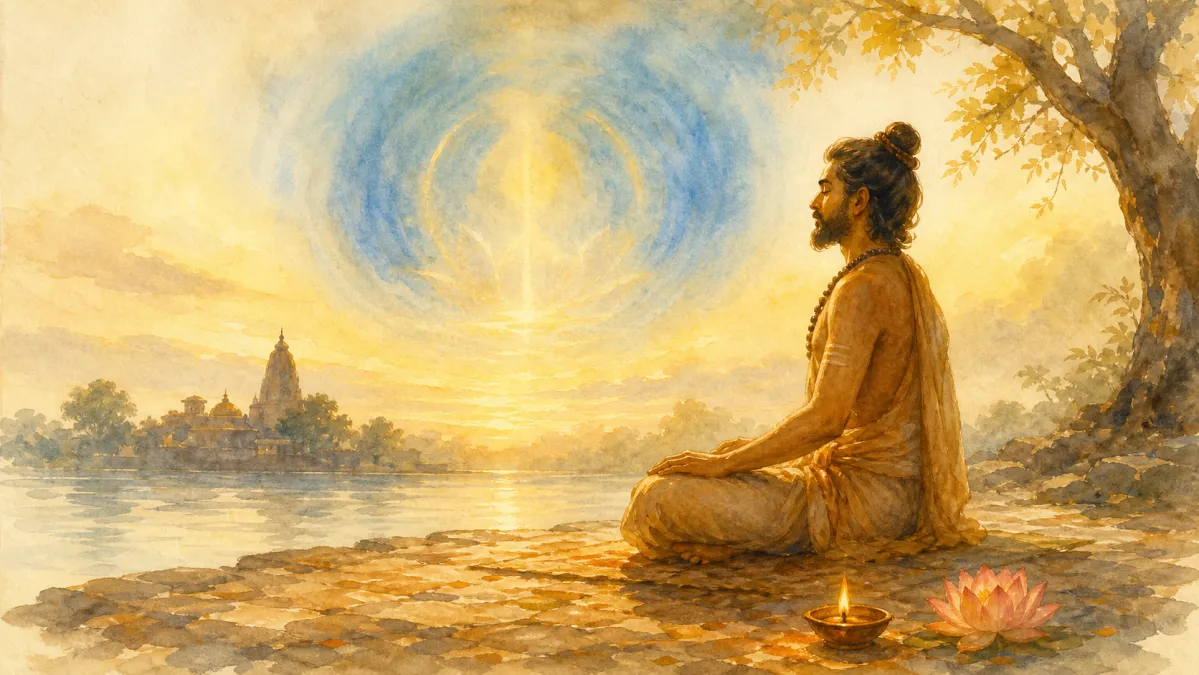
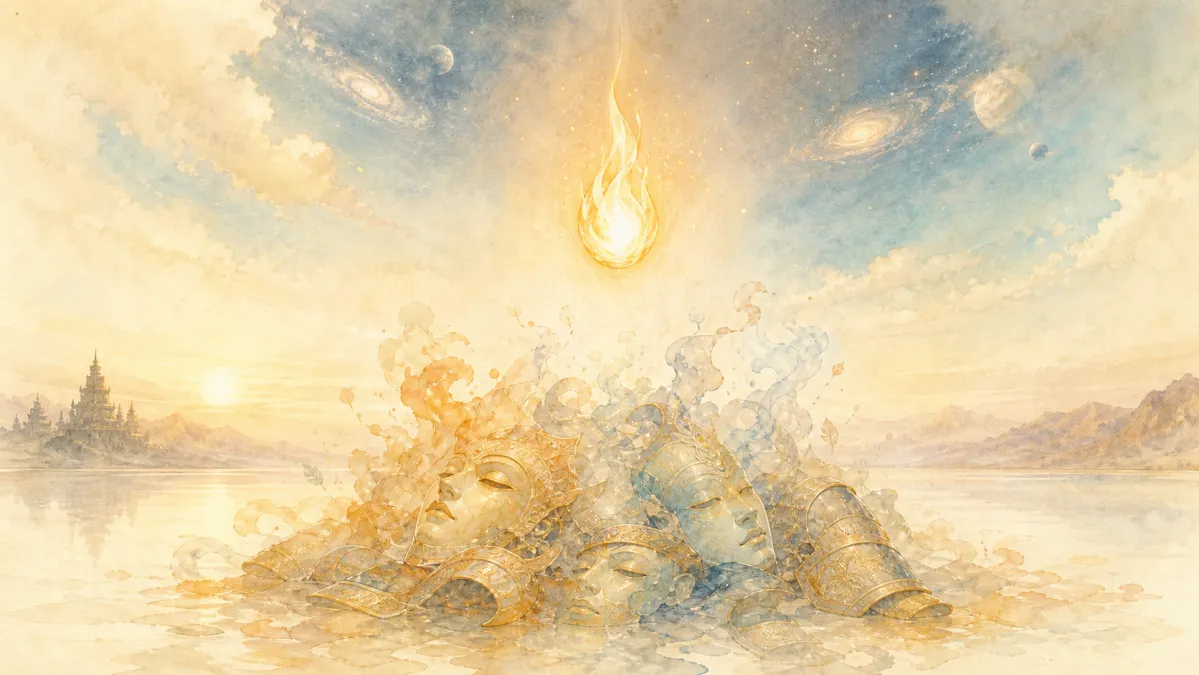
The Wisdom of the Defeated: Indra and Bali’s Dialogue on Time and Dharma
04.07.2026
0 мин. чтения
0
Share
copy
search
add
share
Commentary on the text “Moksha Dharma,” Chapter 223
Vedic Gods
Yudhishthira asked Bhishma a question about impermanence: “How is impermanence experienced by the gods who have not attained final liberation, but who possess a divine status?” And Bhishma told him the story of a conversation between the asura Bali and Shakra (Indra), the leader of the celestials.
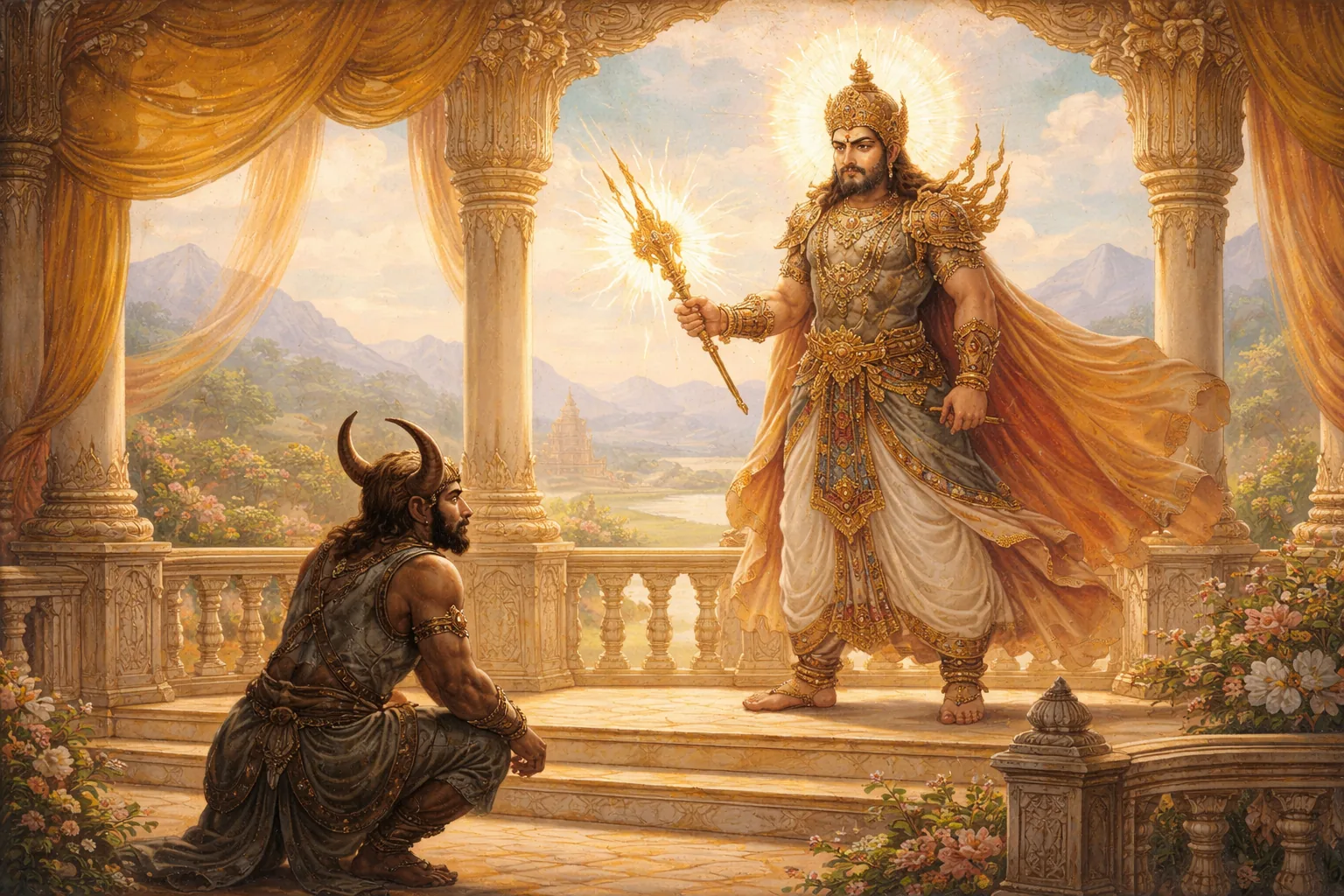
In the battle with the gods, the asura Bali was defeated and gave up all his treasures, but he himself managed to escape. The gods could not find him. Then Indra, having defeated all the asuras, approached the forefather, the lord of the universe—Brahma—and said that Bali, although he had been defeated and had given up all his treasures, had not yet been destroyed, and the gods could not find him anywhere. He said this about Bali:
“He is all-pervading like the wind and the sun. He possesses various magical powers, and we cannot find him. Therefore, indicate to me where he is.”
Brahma said:
“You are acting unrighteously in asking about him. But since you have asked me, I must answer you. I will not speak falsely; I will tell you where Bali is. Seek him among bulls or donkeys, horses or camels. He, the best of his kind, lives in an abandoned house.”
Indra asked:
“O Brahma, if the asura Bali dwells in an abandoned house, should I kill him, or should he not be killed?”
Brahma said:
“You should not kill him; he does not deserve death. Better question him thoroughly about the meaning of life.”
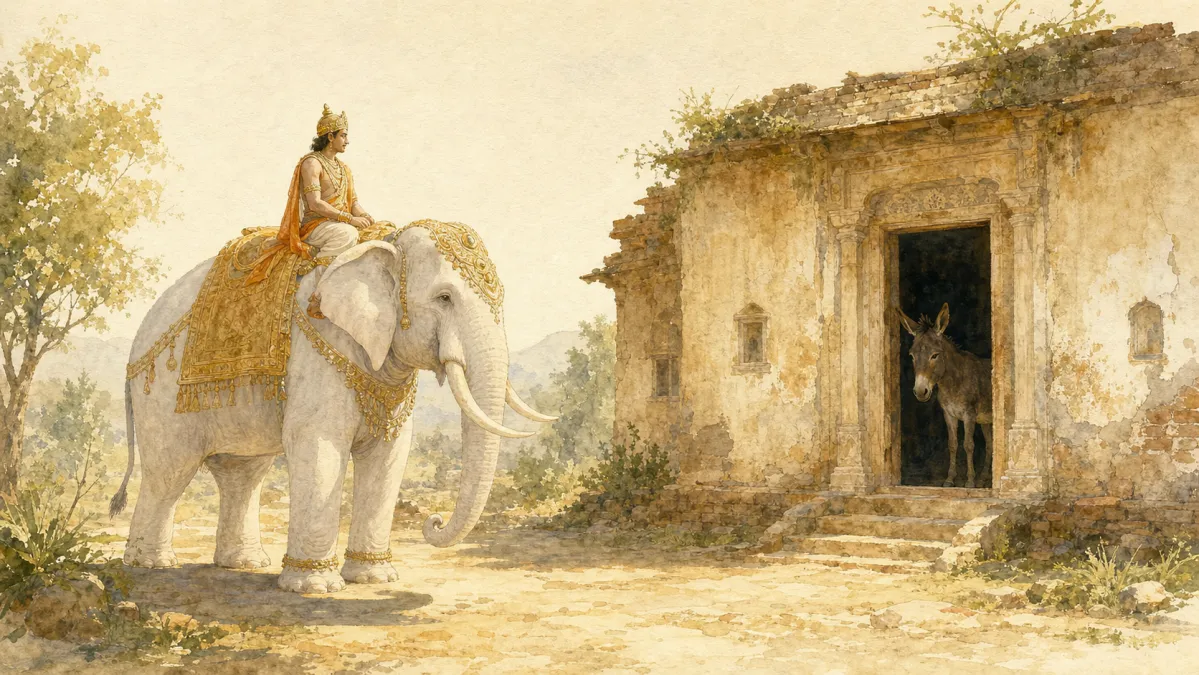
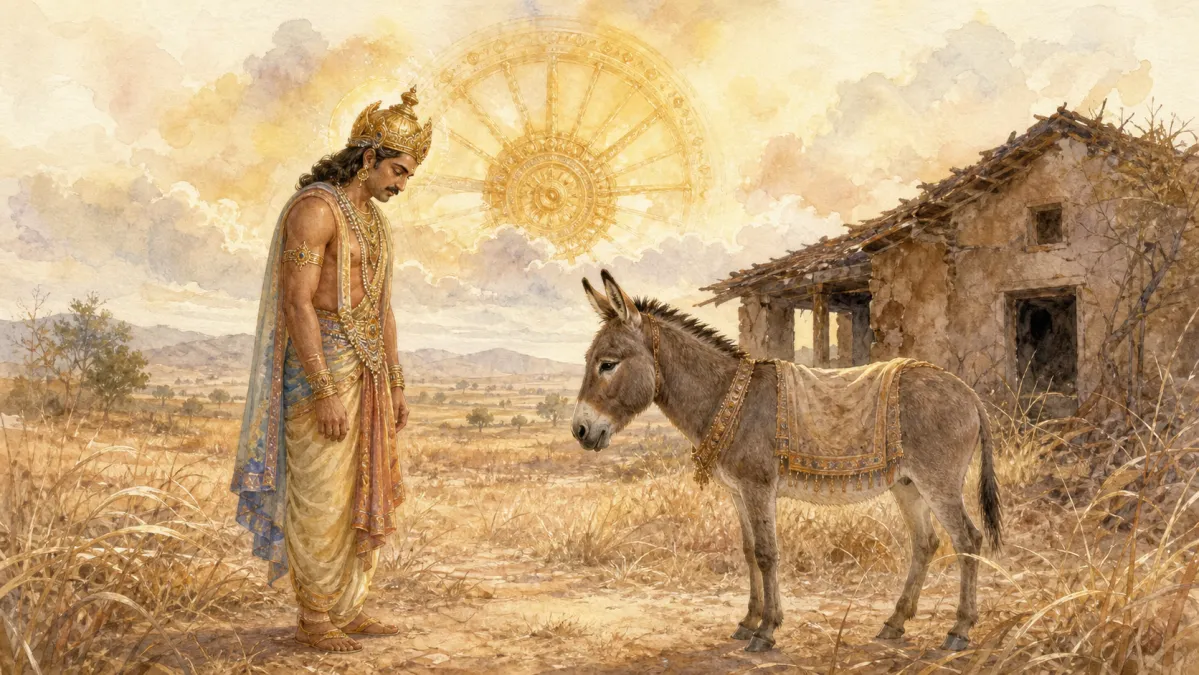
After this, mounting the back of the elephant Airavata (his vahana, that is, his animal vehicle), Indra set off for the world of humans on earth. In an abandoned house he indeed found Bali’s refuge; Bali had assumed the form of a donkey and in this way had hidden himself. That is, he had descended into the lower worlds, which even the gods of samsara do not always perceive, transferred his consciousness into an animal, and thus hid from the wrath of the gods in an abandoned human house.
Shakra (Indra), approaching, said to him: “Having entered the womb of a she-donkey, you have become a grass-eater, O Danava. Does such a lowly birth grieve you, or does it not grieve you? I see you looking quite insignificant.”
Although Bali had entered the womb of a she-donkey, hiding himself in this way, he nevertheless fully preserved his self-awareness, unlike mortals; this was his temporary refuge. When living beings of the lower worlds pass from womb to womb, receiving bodies, the higher levels of their consciousness are blocked in the process; at rebirth they experience a powerful shock upon contact with coarse energies, and therefore the higher circuits of their consciousness, the subtle bodies, are switched off; they lose the channel of connection with buddhi, with the Atman, and fall completely under the influence of material nature.
A Tibetan saint, Marpa, once carried out an experiment in transferring his consciousness into the consciousness of a sparrow, which some boys later knocked down with stones. He said that his consciousness was very strongly subjected to the influence of the bird’s consciousness, and that he almost lost consciousness in that state: being in the body of a bird, and moreover being struck down by stones. He told his disciples that it is very difficult to maintain the higher levels of awareness in animal sheaths. Consciousness, coming into contact with coarse matter, receives a powerful shock from the impact of such seething, turbulent energy of passions and desires, and forgets itself. But divine beings, possessing consciousness of enormous power, can transfer it even into such sheaths.
The Dialogue between Indra and Bali on Impermanence
Indra said:
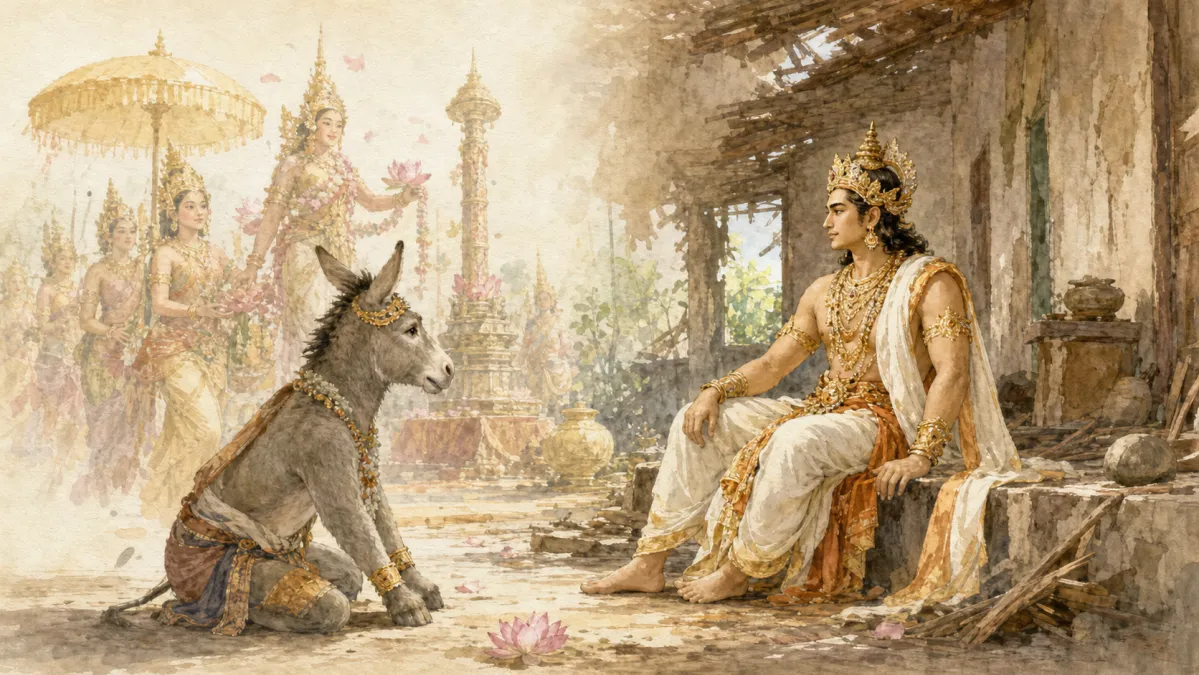
“I see you so insignificant, fallen into the hands of enemies, deprived of both kingdom and friends, your strength broken. And yet once you were surrounded by thousands of followers and chariots; you warmed the worlds and protected the worlds. But now you have hidden yourself, without even caring about us.”
That is how mockingly he began to speak.
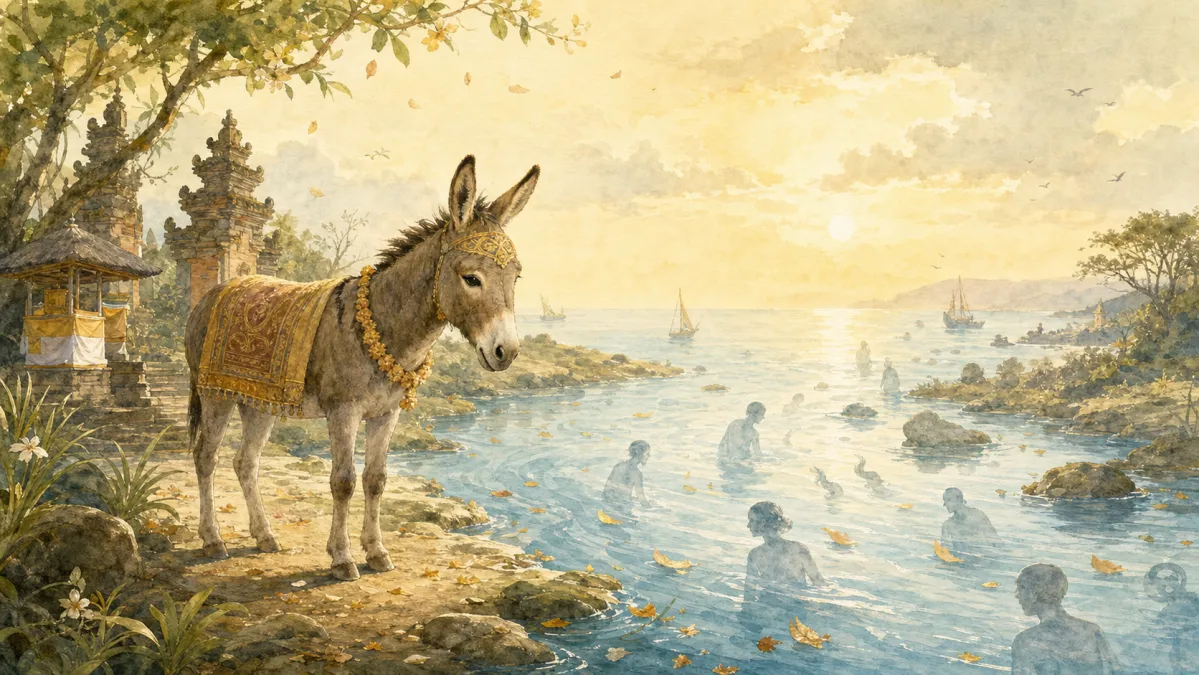
“Formerly you were our patron, but now you do not even care for us, nor for those over whom you ruled, who multiplied under your leadership, nor for the land that was once under your power—you no longer possess any of this. Does this downfall grieve you or not? When you stood on the eastern shore of the ocean distributing treasures to your household, what was in your heart? How did you feel then, when countless divine virgin maidens danced before you? For many years you shone and glittered with your beauty; all the dancers around you were crowned with lotuses and also sparkled with a golden radiance. What was in your heart then and what is in it now, lord of the danavas (asuras)? You had an enormous golden umbrella adorned with stones. At festivals, seventy-seven thousand gandharvas danced for you. You had a huge golden pillar, and there you performed sacrifices. You gave away ten thousand billion cows, thousand upon thousand. What was in your heart when, as the master of the sacrifice, you traversed the whole earth and measured everything by your own measure, manifesting your will? And now, lord of the asuras, I see neither your golden cup, nor the two fans, nor the umbrella, nor the crown bestowed by Brahma.”
Bali said to him:
“Yes, you do not see the golden cup; yes, you see neither the two fans, nor the umbrella, nor the crown bestowed by Brahma. And you ask about my treasures, piled up in caves. But when my time comes, you will see them. And it is not fitting for you, a glorious and noble man of high lineage, while you are prospering and I am suffering, to remind me of past happiness. Those who have fully understood, who are fulfilled, peaceful, and perfected, do not grieve in misfortunes and do not rejoice in happiness. But your mind is coarse; you are boasting, Purandara. You would not speak so if you were in my place.”
Here Bali demonstrates the wisdom that was also inherent in him as the lord of the asuras.
Indra said to him again, as if with a smirk:
“Why then, once surrounded by those thousands of chariots and followers, warming all the worlds, do you not care for us? Seeing your condition so wretched, Bali, completely abandoned by followers and friends, do you grieve or not?”
That is, Indra continued to “taunt” him:
“Once you attained incomparable joy, having subjected the worlds to your will. Now, when this outward splendor has been destroyed, do you grieve or not?”
Bali’s Teaching on Time and Impermanence
Bali said:
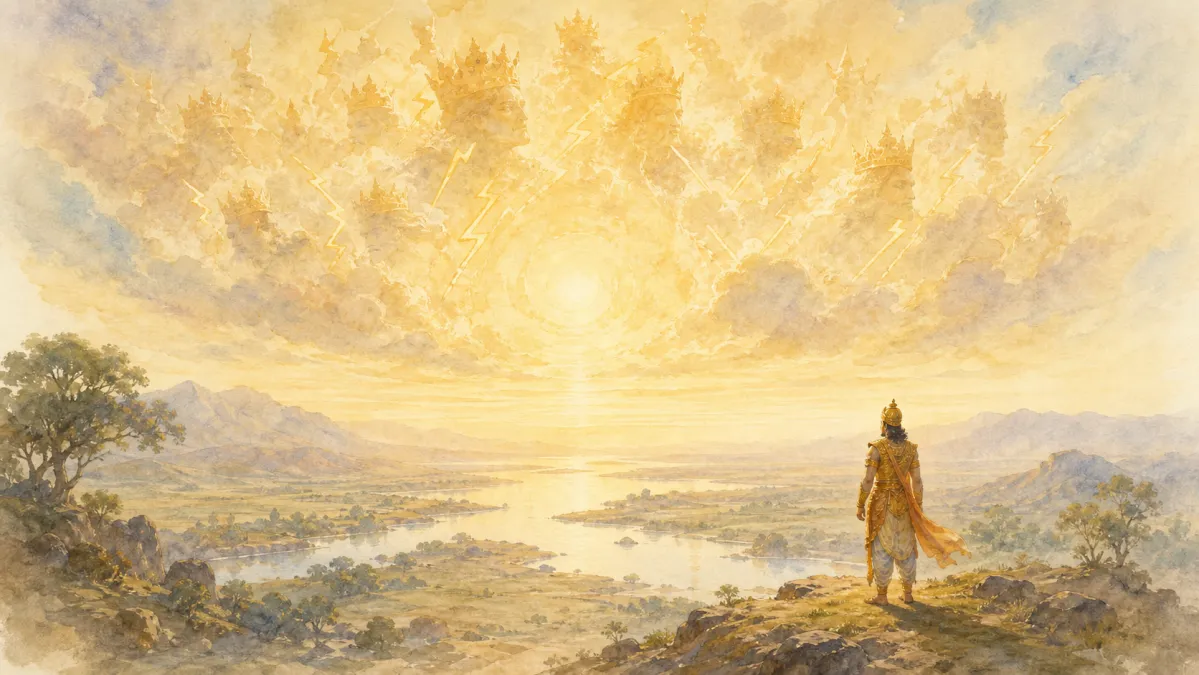
“According to the law of the flow of time, I see impermanence here in everything; therefore, Shakra, I do not grieve, for all things are transient. Our bodies and those of other beings are short-lived, lord of the suras; therefore I do not grieve, Shakra, I am not to blame for this. With birth arise life and body; both develop together, and together they perish. This solitary existence I have accepted not by choice. I have fully comprehended this. And for one who has comprehended, how can anxiety arise? Death is the final goal for beings, as the sea is for a stream, but this, O Thunderer, deluded people do not fully understand. And those who have not understood this, giving themselves over to delusion and passion, fall into despair. When they fall into distress, their reason perishes. But, having attained wisdom and understanding, the Purusha rejects all sins. Freed from sins, he attains clarity (sattva); he becomes peaceful, abiding in clarity. Those, however, who do not have such clarity return, being born again and again, impelled by these aims, and suffer grievously. From the attainment of success and failure, life and death, from the fruits of happiness and unhappiness, I do not turn away, yet I do not desire them either. I do not reject what comes to me according to the law of karma and the flow of time, and I do not regret it when it is lost. The killer kills one already killed when a man kills someone. Both of them do not know—the one who kills and the one killed. If someone acts courageously, conquering, Mathava, it is still not he who acts; there is another here who accomplishes everything—the one who causes both the destruction and the arising of the world. The deed is performed by what has been created, but another is its true Accomplisher.”
In this way Bali says to Indra: “Think more deeply. It seems that we perform actions, but in reality someone acts through us who is far deeper, whom we have not yet come to know.” There is a true Accomplisher of all actions—the Absolute.
“Earth, light, space, water, wind — these are the womb of beings. What grief is there in this? One who has known much, one who has known little, the powerful, the weak, the beautiful and the ugly, the destitute or the happy — time, Kala, seizes them all in its devouring flame. But since everything is subject to time, what concern is this to me, who have understood? Man burns what has already been burned, kills what has already been killed, destroys what was destroyed before, obtains what is to be obtained. I see no end, reflecting on the divine law — neither that shore nor this one is visible.”
“Before a man was killed in battle, he had already been killed by time. Before anyone obtained anything, he had already received it from time. People are the executors of the universal will, the divine law,” says Bali.
“If time did not destroy beings before my eyes, perhaps I would feel exultation, pride, anger, O husband of Shachi. Knowing that I have become a grass-bag (that is, an animal that feeds on grass), that I live in an abandoned house, that I, cast down from the throne, have taken the form of a donkey, you have come and insult me. If I wished, I would change my form many times and become such a ‘monster’ that you would run away upon seeing me. Time gives everything and carries everything away. Time determines everything. Do not be proud, Shakra, of your human form.”
Indra assumed a human form. But Bali says: “If I wished, I would use my magical powers. I could take on such an appearance that I would fill you with terror. My present condition is the result of suffering and conditioning by karma. But there is no point in your laughing at me.”
“Formerly, Purandara, everything trembled before my wrath. Now, however, I have comprehended the eternal law of this world. Look at it in the same way, and do not admire yourself. Power and rise are not established by us. Your consciousness is childish: as it was before, so it is now. Come to your senses, Mathava, and reach a firm judgment. The devas (gods), humans, pitris (ancestors), gandharvas, rakshasas, nagas (serpents) — the whole universe was in my power, and you know this, Vasava. ‘Let there be reverence to the side where Bali, the son of Virochana, is,’ — thus those whose minds were obscured by selfhood bowed down to me. I do not grieve over this and do not waver, O husband of Shachi; I am now under the power of another lord. Such is my firm judgment. It happens that one of noble birth, prominent and splendid, falls into distress together with his advisers, for that is destined to occur. It happens, Shakra, that an ugly, low-born, deluded one lives with his advisers, for that is destined to occur. It happens that a beautiful and virtuous woman receives a bad lot, Shakra; and another, lacking auspicious signs and ugly, receives a good lot. This, Shakra, was not done by us. Nor was it done by you, Shakra, that you became the hurler of thunder — the Thunderer — while this happened to us. And it is not your merit, Lord, nor am I the cause of that, Shakra. Whether happiness or misfortune — all is wrought by fleeting time. I see you resplendent, king of the gods, established, happy, magnificent, hurling thunderbolts at me. If time had not overcome me in this way, I would instantly have brought you down, with your thunderbolt, with my fist.”
Here Bali again says to Indra: “The fact that you have won victory is not your merit. A more powerful force of time is acting, under which all living beings in samsara exist. It is not my fault that I was defeated. Since I myself am under the power of time, if it has decided thus, I am unable to oppose it. If time had not overcome me, I would have knocked you down together with your thunderbolt with a single blow of my fist.”
“But now is not the time for courage; the time for humility has come. Time establishes everything; time brings everything to maturity. And if time has overcome me, the revered king of the danavas, whom else, thundering and blazing, will it not overcome?”
He says: “If time has overcome me, the king of all the asuras, do you really think that it will not also overcome you, blazing and spewing thunderbolts?”
“Against you, the twelve Mahatma Adityas, against all your power, I alone rose up, O Lord of the gods. I raise and pour down water, I warm the threefold world, I protect and destroy, I give, I receive, I encompass, fill the worlds with myself, and govern them. I, the Lord of the worlds, the ruler—and now my dominion has been cast down, O Lord of the immortals. Struck down by the army of time, none of this now shines for me, for the accomplisher is neither I nor you, O husband of Shachi, but there is another Accomplisher. Shakra, flying time itself devours the worlds. Its abode is the month and the half-month; it is clothed in day and night; its gates are the seasons; and the year is its summit. Some sages who reflect on the universe say that it has five divisions, and I can set forth this reasoning fivefold. Like the ocean abounding in waters, profound and hidden, the Supreme, the Beginningless, the Perfect, and the Infinite. Thus do they teach about Him. Entering into beings, Brahman manifests in signs, while His Essence is without signs. People who perceive the foundation revere Him as Eternal, Unshakable.”
Then Bali says:
“Brahman is such a state that, when He runs, you cannot overtake Him; when He stands, you cannot seize Him. He cannot be grasped by any of the five sense organs. Some take Him to be the seasons, the months and half-months; they take Him to be days, to be moments. Others call Him ‘morning,’ ‘evening,’ and ‘midday,’ and also an instant. But all this is one Single One, however variously He may be named. And know: this Brahman is Kala, time. Brahman in the form of time is the Lord of all living beings, including the gods. Time—here everything is in its power. And many thousands of Indras existed before you in earlier times. And like you, O husband of Shachi, they were all filled with strength and courage. You too, O king of the gods, mighty Shakra, when the hour comes, will be subdued by powerful time. It devours the universe; therefore, Shakra, be steadfast. Neither I, nor you, nor those who lived before can turn it away. If you imagine that the unsurpassed royal happiness you have attained will be yours forever, you are mistaken—no one can hold on to it. It has passed through a thousand Indras, far better than you. Fleeting happiness, having left me, has passed to you, O lord of the wise gods. Do not behave so again, Shakra; you need to calm down. Knowing that you are so arrogant, happiness will quickly pass to another.”
Thus, Bali instructed Shakra, showing the wiser side of his consciousness, even though he had been defeated.
The Appearance of the Goddess Shri
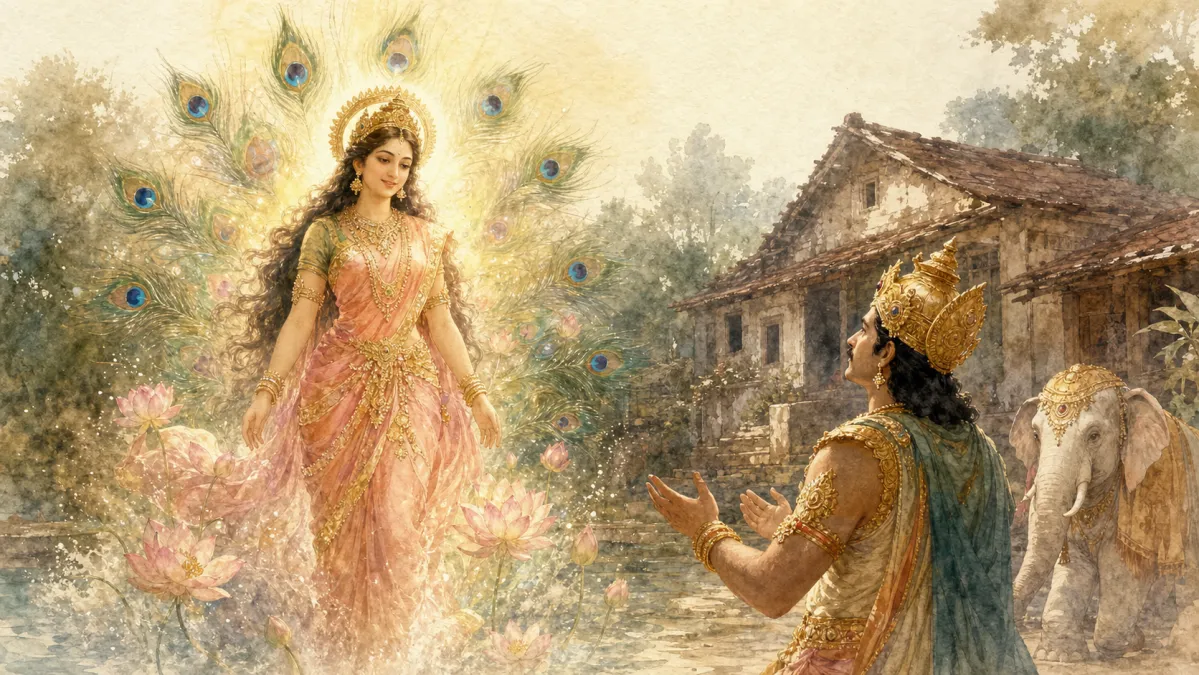
Then Indra saw that the radiant goddess of fortune and prosperity, Shri, or Lakshmi, had emerged from Bali’s body. He saw her luminous brilliance and, in amazement, opened his eyes wide. He asked:
“Who is this radiant one, adorned with peacock feathers, who has emerged from you, Bali? She who dwelt within you, adorned with bracelets, fiery, shining with her own light.”
Bali said:
“I cannot recognize her. She is not the daughter of an asura, not the daughter of a god, not the daughter of a human. If you wish, ask her yourself; act as you think best.”
Indra, astonished, asked:
“Who are you, who have emerged from Bali’s body, gleaming with peacock feathers? Tell me, clear-smiling one, who does not know your name. Who are you, beautiful-browed one, who have appeared before my sight, leaving the lord of the asuras? Answer my question, you who shine with your own light.”
The goddess Shri said:
“Neither Virochana nor this descendant of Virochana—Bali—knows me. They call me hard to hold and know me as the desired one. I am also called Budhir (fulfillment), Lakshmi (beauty), and Shri (fortune). And you, Shakra, do not know me. None of the gods knows me.”
Then Shakra (Indra) said:
“Why then, hard-to-hold one, for my sake or because of Bali, have you left him after dwelling in him for so long?”
The goddess Shri said:
“No Creator or Maker created me. Fleeting time created me; therefore do not despise it, O Shakra.”
Then Indra asked:
“How did you leave Bali, and for what reason did you abandon him? And why do you not abandon me? Tell me this.”
The goddess Shri replied:
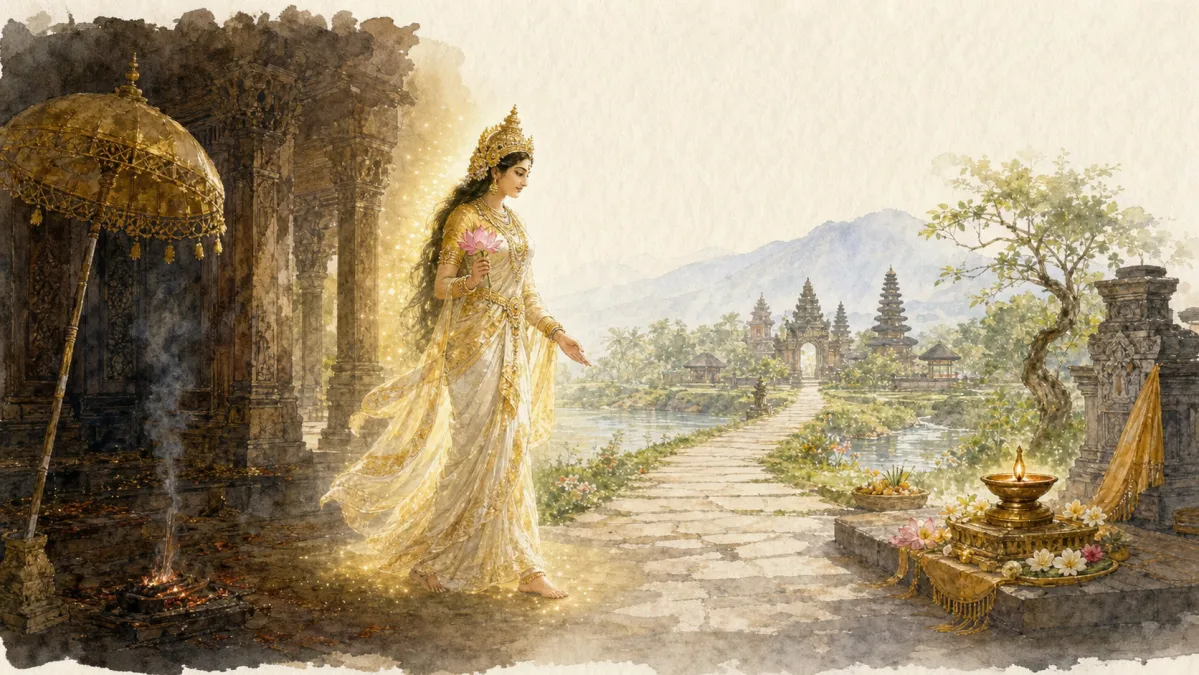
“I abide in truth, in giving, in the vow, in the mortification of the flesh (that is, in asceticism, in tapas), in courage, in dharma, while Bali turned away from them; therefore I left him. At first he was devoted to the brahmanas, truthful, restrained in his senses. Then he began to murmur against the brahmanas, and, without having performed ablution, touched the remains of the sacrifice. Formerly he was diligent in making ritual offerings; he made offerings to me. But then, deluded, he began to oppress the worlds, and time delivered him over to torment. He has lost me, Shakra, and now I shall live with you. I can be held by diligence, by spiritual effort, by tapas, by courage.”
Indra said:
“Neither among the gods, nor among men, nor among all other beings is there a man, O lotus-dweller, who could possess you alone.”
The goddess Shri said:
“Neither god, nor asura, nor rakshasa, nor gandharva—no one, Purandara, can possess me alone.”
Then Indra asked:
“How could you abide in me constantly, O beautiful one? Tell me; I shall carry out your word. Be gracious and tell me the truth.”
Shri replied:
“Understand, O Indra among the gods, how I shall abide in you constantly. According to the ordinances prescribed by the Vedas, divide me into four parts.”
Next, the goddess told Indra how to make offerings, follow the Vedic path, and perform practice so that she would never leave him.
The Loss of the Goddess Shri’s Favor
Bali lost the favor of Shri, the goddess of happiness and fortune, and therefore time destroyed his position, erased it. And he lost such favor because he had turned away from dharma: his mind became arrogant, he stopped performing practices, began to think too highly of himself, fell into ignorance and impure vision, condemning the brahmanas. And when Shri, the goddess of fortune, left him, time appeared before him in an unfavorable aspect.
Although everything is under the power of time, we have free will; therefore we can turn our consciousness in such a way that time becomes favorable toward us or, conversely, unfavorable. If we turn our consciousness toward dharma, then Shri, the goddess of happiness and fortune, is always on our side, and then time is turned favorably toward us. If we turn away from dharma, then Shri, that is, the goddess Lakshmi, also leaves us, and then time shows us its unfavorable side: changes come, and we prove unprepared for them, so they bring us losses and failures.
How to Satisfy the Goddess Shri
In what way, then, can the goddess Shri be satisfied so that happiness and fortune are always on the practitioner’s side? The goddess Shri personifies subtle spiritual energies, the inner deities that blossom in the consciousness of the yogin. She can be satisfied by continuous, unwavering penetration into the nature of consciousness.
The consort of the goddess Shri is considered to be the deity Vishnu, who personifies the stabilizing and sustaining Superconsciousness, that is, the nondual foundation in which everything abides. Therefore, the only way to attract the goddess Shri and “bind” her to oneself is to honor her consort.
And what does this mean? In Laya Yoga there is no dualistic worship; therefore, to honor Vishnu in this context means to honor Brahman, that is, the highest principle of nonduality; it means to abide in proper awareness and meditation, and through this to develop various qualities and powers within oneself. If our awareness is proper, then gradually various powers and qualities unfold within us, allowing us always to be turned toward the favorable side of time.
Question: But how did Indra want to kill Bali? If the body is destroyed, then the soul can pass into the lower worlds—that is understandable. But Indra wanted to find Bali even in the lower worlds. He was searching for where he had hidden in order to completely destroy his consciousness. But how can he be killed at all? After all, Krishna says that the soul is cut neither by the sword, nor by fire, nor by water. Why, then, did they want to find him, searching for where he had incarnated, in order to kill him completely?
It depends on what the identification occurs with. In the absolute sense, as Brahman, it is impossible to kill it. But individuality as ego, embodied in a specific body, can be destroyed. And if it is a deity, then it too has individuality, only it is subtler and more sophisticated, possesses greater power, and can incarnate in many bodies.
For example, it can be blocked in such a way that in this kalpa it will be deprived of all potency and its powers; it will be able to abide only in the unmanifest. In other words, it is indeed impossible to kill it completely, since at its core the soul is Atman. But it is possible to block its personal potential, its ability to possess powers, and allow it to exist only in an unmanifest state for an entire kalpa, that is, to deprive it of the possibility of incarnating in any bodies (in the bodies of humans, animals, gods, in subtle bodies), and to remain only in the causal world. This is precisely what was meant here.
Read 16 times
Articles
Vidya AI
Search
Lectures
November 3, 2026
Mantra of the day
ОМ САДРЩАЙА НАМАХ ОМ Видящему равно – поклонение!
Auspicious Times(Rome)
Brahma Muhurta:
04:54 - 05:49
Abhijit Muhurta:
11:33 - 12:14
Sayam Sandhya:
16:43 - 17:24
Mokshada Ekadashi (6 November)
Ekadashi of liberation. Helps to achieve spiritual enlightenment.