

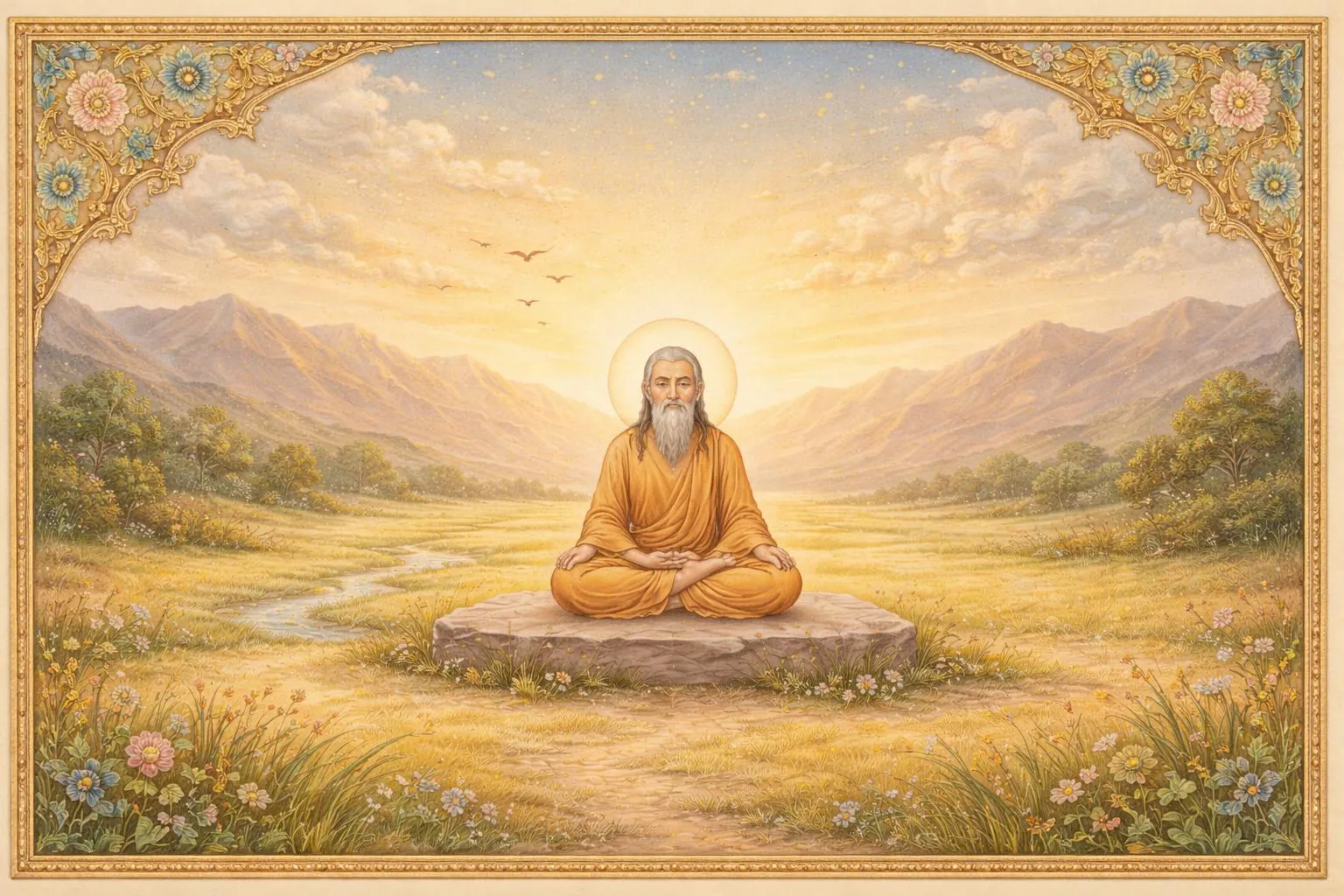
The Element of Space and the Natural State
“Everything arises from space, exists in space, and dissolves into space. Within us, this sacred element (space) manifests as the natural state. Experience is the content of the natural state, that which arises within it, yet at the same time experience is nothing other than the natural state. If the element of space within us is balanced, there is room for everything in life; whatever arises finds refuge. We have plenty of time, sufficient emotional capacity, and sufficient tolerance.”
Sometimes practitioners of Anuttara Tantra are called “sky worshippers” because they often meditate on the sky using shambhavi mudra. When we practice the natural state, the most important image of God for us is space—that is, not some specific image of a deity with many arms or legs, as in the tantra of transformation, but precisely the space of the sky, with which we unite, or the sense of space. For this, shambhavi mudra is performed.
A person who has no connection with the element of space has a contracted mind; he has many attachments and fixed ideas, and is unable to contain much within himself. Even when he practices the Dharma, he is attached to something and restricts something else in his mind. His mind is contracted and narrow: he can practice and perceive some things, while others he cannot “digest” at all. This happens because his mind does not possess the tendency toward all-encompassing wisdom.
A practitioner whose element of space is weakened is fussy; he is constantly caught up in trifles, and his mind becomes attached to some small things, to a person he sees. He communicates with a person, gradually remembers their form, voice, and way of thinking, and becomes attached. If there were someone else, he would become attached to them as well. Such is the primitive work of the mind. A person does something and becomes absorbed in it; for example, he takes prasad every day, and his mind enters into the prasad. Instead of realizing the vastness and greatness of the Universe, in which stars, planets, galaxies, metagalaxies, and other inconceivable expanses of space exist, he becomes attached to particulars and gets lost in them.
The best way to self-liberate a situation is to remember space, expand consciousness, and enter the natural state. One can simply meditate a little on space and understand that it is always greater than your small thoughts, problems, and attachments; that, from the perspective of infinite space, all this does not have the significance you give it. One who does not understand this should simply reflect more often. Suppose intolerance toward another person’s opinion arises. But in fact, if you deeply realize space, you cannot have any intolerance at all, because you understand that space is boundless, that any opinions can exist within it, even the most absurd and wild ones, because space contains all concepts, events, and energies within itself. You look at the problem from the position of space—that is, more detachedly, from a distance. Therefore, a yogin whose mind is absorbed in space possesses all-encompassing, all-containing wisdom; he can contain everything within himself, while remaining himself and not losing himself.
Imbalance of the Element of Space
“All experiences are appropriate; there are neither too many nor too few of them. Experiences are not separate from us, but they do not take possession of us completely either. We do not seek to obtain experience and do not avoid it; rather, we rely more on ourselves, on the one who receives the experience. A person in whom space predominates is not of this world.”
There are basically two kinds of deviations: the predominance of an element and the deficiency of an element. In the case of the predominance of this element—that is, when it is in disharmony with the others—a person tends to lose action in awareness, in the view. Then he walks around with a vacant gaze; his mind is too seized by space, and he cannot respond adequately to situations. Sometimes wandering yogins are portrayed with half-mad eyes, trudging somewhere without watching the road. It is good if a yogin has the correct state, but if he is simply seized by space, if the element of space is excessive in comparison with the other elements, then this is a deviation: the loss of action in the view, or the loss of action in awareness.
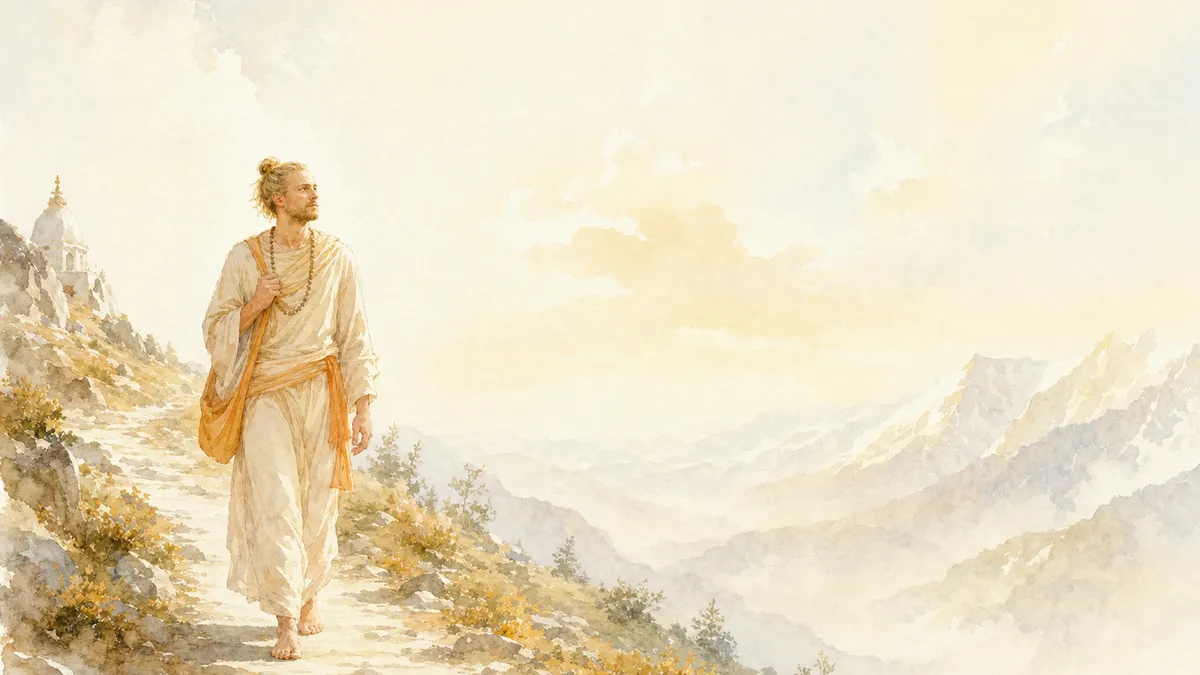
“This state is not union with the nature of Mind. Such a person simply loses connection; there is a loss of meaning, but not from the depression that occurs when earth predominates, rather from a shallow connection with life, because of which we become rootless and unsettled.”
Such a person loses the reference point in practice, the meaning. He feels that he is coming into contact with such a global space that his personal effort, his personal will, his ego drown in it. He loses the ability to study the Dharma, to apply skillful methods, and simply surrenders and goes with the flow, carried by this space; that is, he cannot cope with this space without losing himself.
Often, those who receive deep experiences of space develop a rejection of method, an unwillingness to apply method. They say: “But this is a method; it is based on effort, that is, on something artificial.” They think that if they apply a method, they will lose wisdom. However, the art lies in having both method and wisdom in balance. If they are balanced, then, without losing presence, we can practice a method, continue studying the teaching, and clarify profound questions of the relative dimension. We have no imbalance of any kind.
We can study texts while knowing that words do not express the truth. Someone who has an imbalance may say: “Words do not express the truth, all texts are absurd, I will not read them.” Thus, he cannot use words to clarify what is beyond words. Or he may think: “Enlightenment is not attained by methods, or by working with chakras, or by asanas. The saints say so, therefore I will do nothing.” Thus, he deprives himself of the opportunity to work with energy. Instead of working a little with a method and giving his understanding a flash of deepening, he simply continues to drift with the flow. He seems to hang suspended; his state does not deepen because he clings to it.
But a true practitioner acts differently. He abides in the deepest understanding of emptiness, but at the same time his mind is very flexible in the relative dimension: neither rejecting nor accepting, he uses various methods without getting bogged down in them. That is, he possesses freedom and fullness in the application of everything.
“The result of an excess of the element of space is a lack of awareness, a lack of presence; a person becomes lost, loses contact with the surrounding world.”
“Becomes lost,” “loses contact with the surrounding world.” In other words, he does not know how to play with the manifested, loses the state of play (lila), and simply walks around with mad eyes. And where, then, is the acting mastery, the divine play? If he finds himself in some situation, he will not be able to integrate with it, to play along even when he needs to, even if he wants to. He will not be able to portray manifested energy; he will simply be seized by it. This happens with inexperienced practitioners.
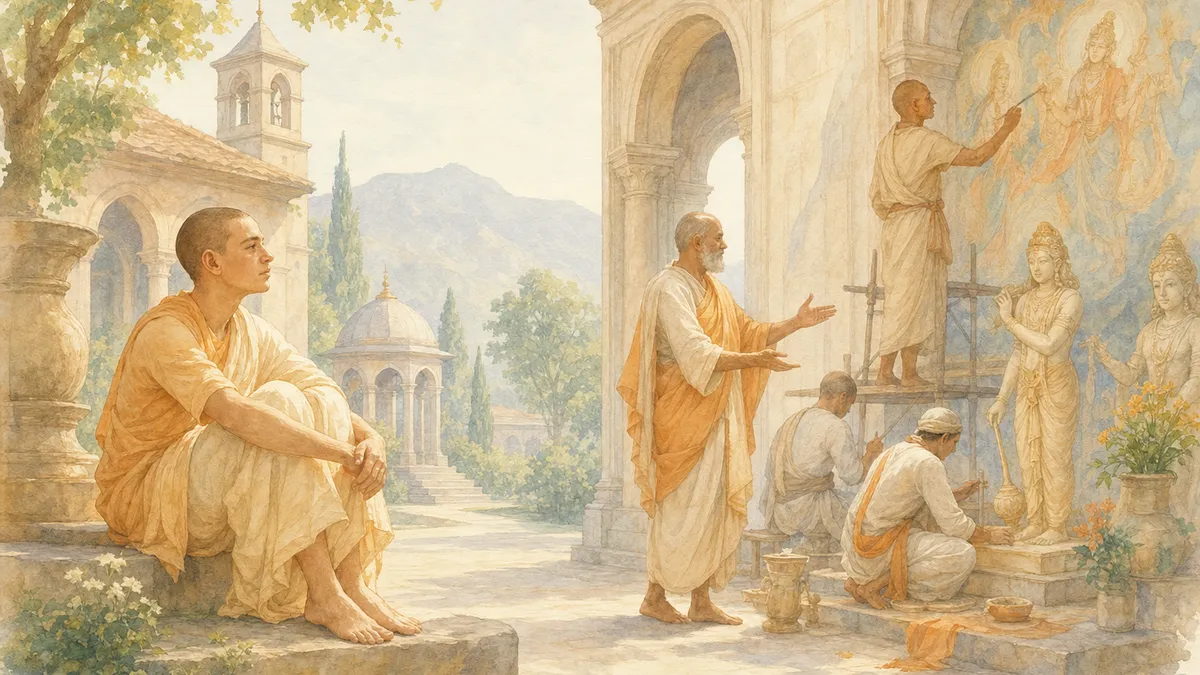
Once a young novice came to a monastery and saw a monk there with detached eyes, completely absorbed in his state. He thought: “This must be the Master.” Nearby he saw another monk, who was giving instructions to others on how to paint the frescoes and which statues to place where. He thought that this was probably the senior monk. However, when they began to talk, it turned out that everything was the other way around: the second monk was the Master, and the first monk was a beginner who had recently received experiences. He thought: “How can that be? The beginner looks like a saint, while the Master looks like an ordinary person.” It was simply that this beginner had not yet learned how to package his state of space and conduct an adequate play in the manifested.
Lack of the Element of Space
“If there is too much of the element of space, it leads us to the loss of the qualities that arise in space. But if there is too little of it, then everything that arises begins to rule over us. Everything seems solid and impenetrable; small obstacles may seem disproportionately large, and large ones completely insurmountable.”
Suppose a person has a lack of space. Then the surrounding environment rules over him; the area in which he lives is very important to him. If his little house is unattractive, then his inner state also becomes unattractive. If there is a neighbor nearby who is not very friendly, he suffers because of it. External things affect him very strongly; in fact, he is a slave to things and circumstances. This means that he does not manage to self-liberate things and situations in order to discover the primordial emptiness behind them. This is the state of an ordinary person.
“A lack of space contributes to another element beginning to predominate and determine our reactions. A person with balanced space can work full-time, have a family, take care of the home, meditate and engage in spiritual practice, and also contain everything within himself.”
Having a family is not for monks. Unless by family one means the monastic sangha, because even if you have a strong element of space, a family will take it from you completely. Only a person possessing Marpa’s qualities will be able to cope with such karmas. At least, if you are a monk, then let such things go in one ear and out the other.
“Another person under the same circumstances, but with a lack of space, would not be able to withstand all this. For him there would be too much work, no time to prepare prasada, and no possibility to relax. A third person under the same circumstances, but with a predominance of space, simply goes with the flow of life; work has no importance for him, he may or may not carry out assignments, nothing becomes an object of his concern.”
Sometimes it seems to me that the element of space predominates in some novices. Service may be performed or not performed, self-liberated; one may relate to something this way, or another way. Sometimes space is useful, but in the relative dimension it must be harmonized with the other elements; that is, if we are responsible for something, then this should be part of our natural state.
Complete Union with the Element of Space
“Usually we identify ourselves with external circumstances, that is, rather with the contents of space, with the experience, than with the one who experiences. In this case, having lost something from the above, we feel lost: relationships end, work comes to an end, and then we say that we feel lost. We are in the gap, in an empty place between things, and we do not even know who we are or what we are.”
From the point of view of the teaching of swara yoga, when akasha-tattva (the element of ether) dominates, such a yogin is useless to the world. In this state it is convenient only to practice yoga, to sit in retreat, not to work with manifested energies, with other elements, and not to apply methods. In this state it is good to practice mahashanti meditation, to practice some walking technique. But it is difficult to practice kundalini yoga in this state. One can say that the state in which the element of space dominates is the absolute practice of sutra, of raja yoga.
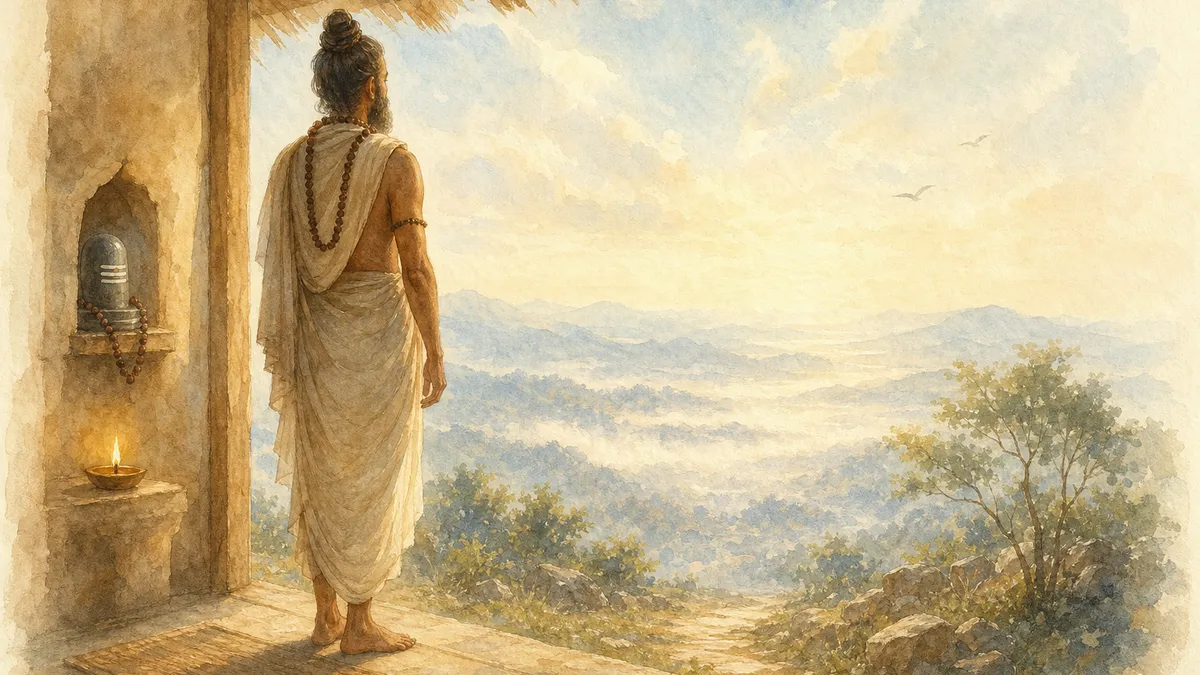
“If we completely unite with the element of space, then we come to know the nature of the Mind. Then we are free, because we are no longer bound by what arises in experience. We realize our true nature and do not try to look for ourselves in the particulars of our circumstances. We are one with our essence and do not search outside for the causes of our problems. We know that any unpleasantness we encounter is simply something arising in space.”
A yogin whose element of space is open possesses amazing abilities for self-liberation. Experiencing anything, he always finds the spatial nature of what he experiences; he does not separate anything from it, and when he discovers the spatial nature of the experienced, everything self-liberates by itself.
Saraha said: “Understand, the mind has a spatial nature; that is, the mind is like space.” However, in the absolute sense, even space is not the final point; there is consciousness beyond space. True presence is very close to space, yet it is not space itself. The fourth state, Turya, shines beyond both space and the other elements.
A person who has a strong tendency toward infinite space or infinite consciousness is no longer born either in this world or in the worlds of the gods who have form. In fact, this is a kind of liberation. However, why do we say that rebirth in the worlds of the long-lived formless gods is unfavorable? In a relative sense, of course, it is a high birth; that is, compared with samsara, with the six worlds, such a birth is on an entirely different level. However, the mahasiddhas say that if your mind has clung only to emptiness, you have entered a one-sided state of the unmanifest and have a tendency to be born in the formless world, then from the point of view of complete liberation this is simply time wasted.
Even if you live there for sixty thousand kalpas, without suffering, as infinite consciousness, without obtaining a body, you will still have to descend and obtain rebirth either in the world of the gods or in the world of humans in order to learn to combine emptiness with form and manifest the relative dimension. Perhaps someone may think: “For now I will spend sixty thousand kalpas in infinite space, and then we shall see.” Of course, these things are incomparable with the scale of human life, but when you are just beginning practice, you must know that clinging to emptiness must also be transcended.
It is considered that the power of such a yogin’s samadhi (the fifth, sixth dhyana) weakens after a great number of kalpas. The universe of the human world will disappear many times while the yogin remains in the samadhi of infinite space of the fifth-sixth dhyana. But even after such an enormous interval of time, the collective samskaras during the mahapralaya (mahamanvantara) will descend, and his consciousness will be carried away by them. He will become one of the souls that is again destined to incarnate.
Or he himself will gain some understanding that his samadhi is weakening, that full realization has not yet been achieved, and therefore he must leave the formless world and move toward a higher state. He will need manifested energy (shakti), and he will consciously make the decision. Or he will receive a transmission of light from the greatest saints and, with the help of this transmission, receive instructions on how to deepen his understanding.
Self-Sufficiency and Inner Support
“We can rely on our own experience of Being, and not on how others see us, or on what we have, or on what we need to do.”
It is considered that a person in whom the presence connected with space has not been revealed lacks self-sufficiency and autonomy. He is an ordinary person oriented toward others’ opinions, toward the opinion of society; that is, he has no inner support of his own. Studying the Dharma, he clings to words; he sees the Teacher as a person, as a specific individual, without having discovered his own spatial nature or the spatial nature of the Primordial Mind. He has a tendency to make friends in the monastic community, but not in the sense that he makes true Dharma friends; rather, in the sense that even in the monastic community he makes semi-worldly friends and becomes attached to them. This is how a lack of understanding of the principle of space manifests.
Such a person experiences ordinary emotions, for example shame, fear, anger. When he finds himself in the environment of worldly people, it constrains him; that is, he has no self-sufficiency, but rather an incorrect desire to hold on to something. All of this disappears when we reveal our spatial nature.
“We are ready to approvingly accept ourselves and what we encounter. For example, a person may be a wonderful family man and businessman; he identifies himself with both, and suddenly loses both. In such a situation, depending on his relationship to space, he may either lose himself or reveal himself. Suffering can produce either a negative or a positive outcome, depending on how one relates to it.”
It is often said that people who suffer come to God, or that those who have gone through much enter the path of spiritual practice. This is because their karmas connected with the lower elements destroy their clinging. The element of space is revealed in them, and then their consciousness changes.
“Having lost an external support, the object of his identification, a person may shrink, oppressed by fear and fragile, or else expand beyond his usual boundaries through union with the space in which experiences arise.”
Two Ways of Interacting with Phenomena
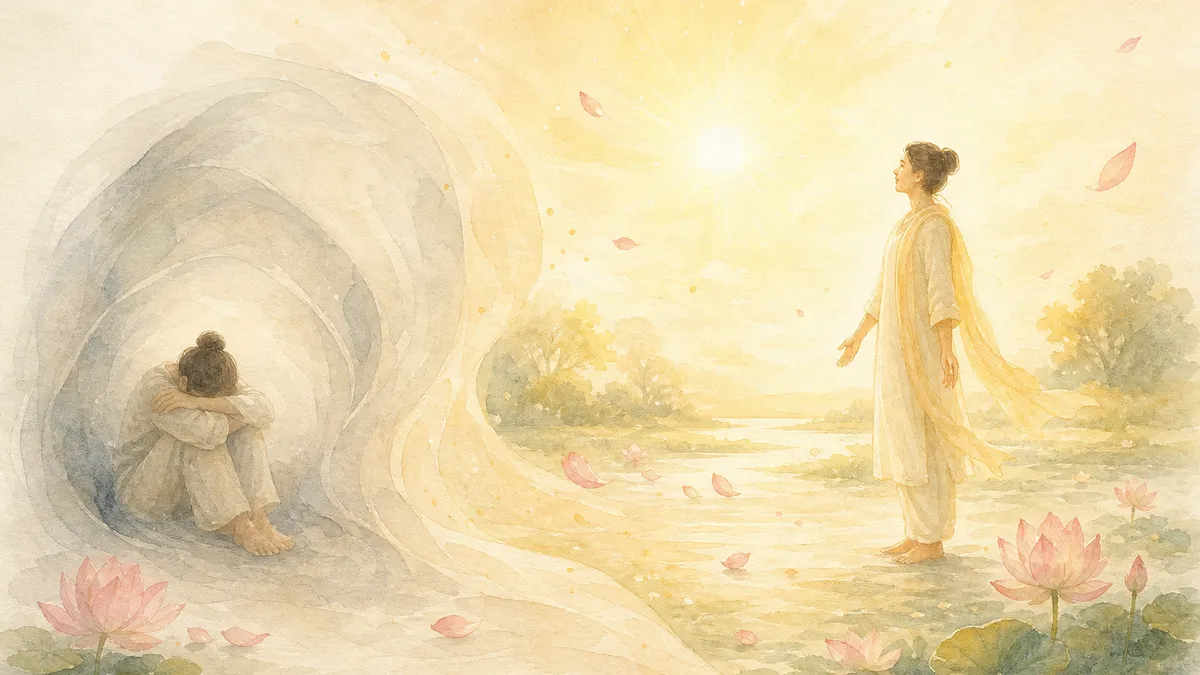
There are two radically opposite ways of interacting with phenomena. In the case of an ordinary practitioner or a worldly person who has not revealed the natural Mind, such interaction always leads to the contraction of the personality. That is, under the influence of certain experiences, consciousness contracts. Fear, anger, and attachment always contract the mind even more, and then no space exists.
On the contrary, a true practitioner, under the influence of experiences, does not lose the mind that is like space, but expands it even more. The same happens in the bardo. For an experienced practitioner, the bardo is a moment when a breakthrough to liberation can be made. His mind was already in space, and in the bardo the network of channels does not restrict the mind, so it can integrate with the deepest lights. Many saints attain liberation at the moment of the bardo if they did not attain it during life. In the case of an ordinary person, however, when the mind that is like space has not been revealed, the experiences of the bardo also cause the mind to contract and diminish.
The Element of Space in Meditation
“In the practice of meditation, the result of an imbalance of space is a lack of concentration and presence. The mind is easily distracted by whatever arises, because the practitioner identifies with the experience rather than with the basis of the experience.”
It is believed that one who has an excess of the element of space tends toward diffuseness. Conversely, one who has a deficiency of the element of space tends toward agitation. One in whom this element is balanced falls neither into diffuseness nor agitation; his meditation is very even.
“Space is understood as the balance of the other four elements. The Wisdom of Emptiness is associated with space.”
In order to experience space in its genuine purity, one should practice the meditation of Infinite Space, in which the yogin, having stopped thoughts, continuously expands his consciousness. Genuine infinite space will be experienced at the stage after the fourth dhyana.
For the practice of natural contemplation, we do not need dhyanas. The most favorable condition for practicing the natural state is not dhyana, but access concentration. Therefore, even if in access concentration you have become accustomed to maintaining infinite space, over time such meditation becomes genuine presence.
Uniting Space with Energy
What happens after space has been revealed and the yogin has acquired contemplation? Next, one should understand that space also has a manifested, relative, dynamic side, and therefore it is necessary to learn to interact with various situations without losing the sense of space. This is called the practice of play (lila). Without such an adequate response to all situations, the yogin is still like a child.
In addition to space, energy (shakti) is also very important. Even if the yogin has revealed space, but it has not united with energy, then only his upper elements have discovered the true nature, while the lower elements are asleep and have not awakened. Therefore, such a yogin must unite the state of space with energy in the lower chakras; that is, he must learn to feel space with the muladhara chakra, the svadhisthana chakra, and the manipura chakra. And then he understands that the primordial Mind can unite with various energies, and depending on this, various experiences will arise.
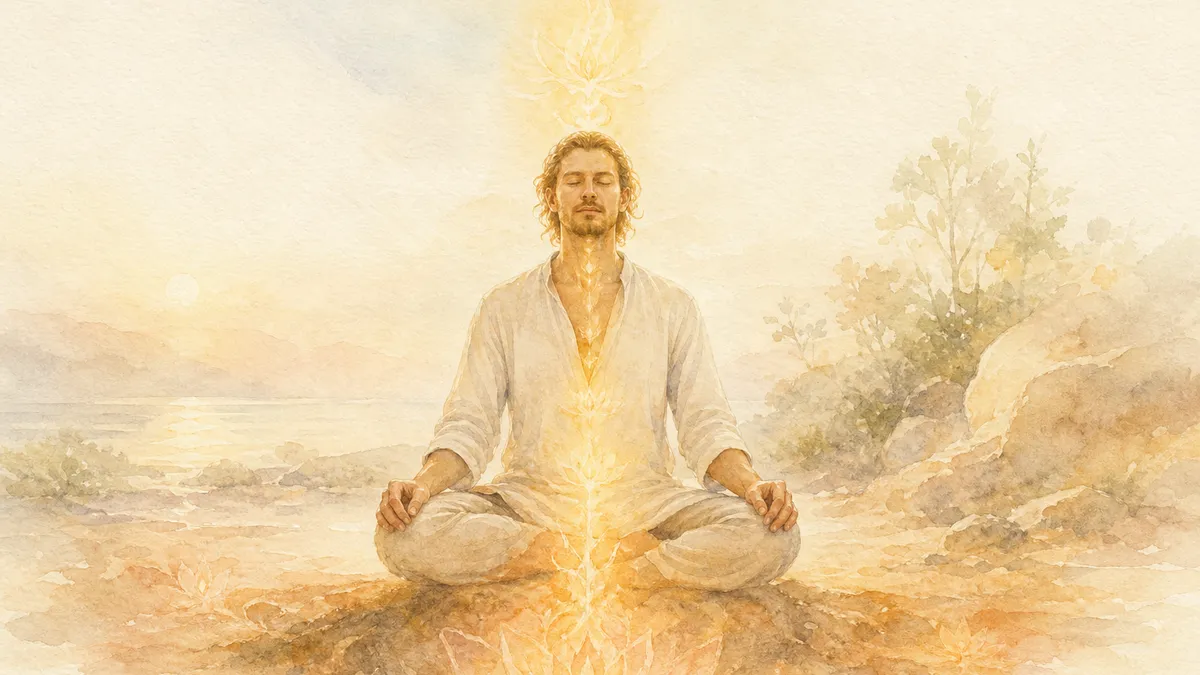
Therefore it is said that the yogin must open five kinds of space in his body: the space of the element of earth, water, and so on. When these five spaces are opened, it is considered that the yogin has attained the deepest realization.
Differences Between Sutra and Tantra
Sutra practitioners do not attach importance to this. It is enough for them to open the element of space and balance it, as in Zen, but everything ends there. In the practice of tantra, great importance is attached to uniting space with energies. In Zen and in sutra, importance is also given to the flexibility of the mind, the ability to be in the manifested, to manifest space in the relative. However, no importance is attached to union with energy.
For us, such union is very important, because if we cannot unite space, the highest realization will not be attained. Perhaps this is not relevant for novices now, but it is given to you simply as theoretical information.
It is believed that without uniting consciousness and space with the elements, it is impossible, for example, to attain the rainbow body, exhaust all karmas, reveal very deep levels of the Clear Light, or realize enlightenment in its relative aspect. Even a saint in the Zen tradition, having attained complete enlightenment, may realize emptiness and no longer be born; however, if he has to be reborn, he will need to take on the physical body of an ordinary person and experience all limitations and karmas. In the case of realizing space with energy, however, such a saint does not need to take on the body of an ordinary person; by the power of consciousness, he creates a mystical body of light that is in no way subject to karma.
The highest method of uniting with energies is nada yoga and jyoti yoga. However, they do not work immediately; that is, they make sense only when the yogin has opened space and energy. One could say they are the final touches in practice. If they are practiced prematurely, without having opened the nature of the Mind and without having learned to control the winds, success cannot be achieved, and sometimes this may even create certain difficulties in practice.
The Difference Between Dhyana and Prajna
Here one should clearly distinguish between the concepts of prajna and dhyana. There are also the concepts of shamatha and vipashyana. Dhyana is the narrowing of the mind in concentration, with effort applied in order to attain one-pointedness. Up to the fifth dhyana, the mind must be narrowed. In the sutra, even if a person has realized deep states of dhyana, they are nevertheless considered to be the games of well-trained people. One can read about this in the text “Visuddhi-magga.” This is not yet the wide-open Mind that is enlightenment.
In the natural state, what is important for us are the aspects of prajna, that is, penetrating wisdom; we do not narrow the mind and do not experience the classical dhyanas while practicing on the move, etc. Levels equal to the dhyanas are experienced, but they differ in that there is no deepening, as in the dhyanas of one-pointedness; rather, there is the constant maintenance of approaching concentration, and only the clarification of the natural state within approaching concentration. That is, consciousness changes approximately in the same way as in the dhyanas, but the mind does not deepen; all of this occurs at the level of approaching concentration.
In raja yoga, in order to enter infinite space, a yogin must pass through the third dhyana: keep the body motionless, stop the breath, and so on. But a practitioner of the natural state can experience this infinite space through the power of the awareness of contemplation while awake, without even entering a trance state. In general, this is precisely what we need; this is the difference between savikalpa and nirvikalpa samadhi and sahaja samadhi. Sri Ramana Maharshi was in such a state.
