

Commentary on the text “Tripura Rahasya,” Chapter 9.
How Hemachuda realized his higher Self after analyzing his own mind and turning inward.
Having married a siddha woman, Hemalekha, King Hemachuda remained unaware of her enlightenment. Being sufficiently enlightened and flexible, Hemalekha, seeing that the king’s mind was not ready for the highest truths, for a long time portrayed herself as an ordinary woman, gradually preparing his consciousness through parables and tales. Finally, a moment came when she launched a decisive attack on the king’s consciousness, and he was simply shocked by the depth of her vision. He felt like an immature boy compared with her.
A siddha yogin can, depending on the circumstances, conceal his state, hide it, play, manifesting it partially.
Finally, when he received instructions and acknowledged Hemalekha’s greatness, he asked: “Who are we? What is our true nature?”
It can be said that only from this moment did the king truly become a spiritual practitioner. This is the only normal question that a disciple asks the guru. When a disciple asks the guru this question, it does not mean that he will immediately receive an answer. Then the guru answers him: “If you want to know this, gain trust and simply remain here, simply follow the prescribed sadhana, receive instructions. In time, everything will begin to become clear.”
Instructions on the Nature of the Higher Self
“Lord, listen carefully to what I am about to say, for this is a subtle subject. Investigate the nature of the Higher Self with an intellect made clear and transparent.
It is not an object that is to be perceived or described.”
So, here such instructions are given to the king: “Investigate the nature of the Higher Self with an intellect that has become clear and transparent.” In the first years, a yogin must make his intellect clear and transparent. At first his intellect is confused and resembles a sky covered with leaden clouds. And even when he tries to investigate the nature of the Higher Self, to immerse himself in contemplation, to be in those lofty truths that are spoken of, karmic pranas, a restless mind, desires, and old notions knock him out again and again. He feels that what is being spoken of seems to be somewhere nearby, but it constantly slips “through his fingers.” It seems that he has grasped it, but no, again it is not that. This happens because the intellect must become clear through training in concentration, transparent through meditation on emptiness, analysis, jnana yoga, and training in contemplation while walking.
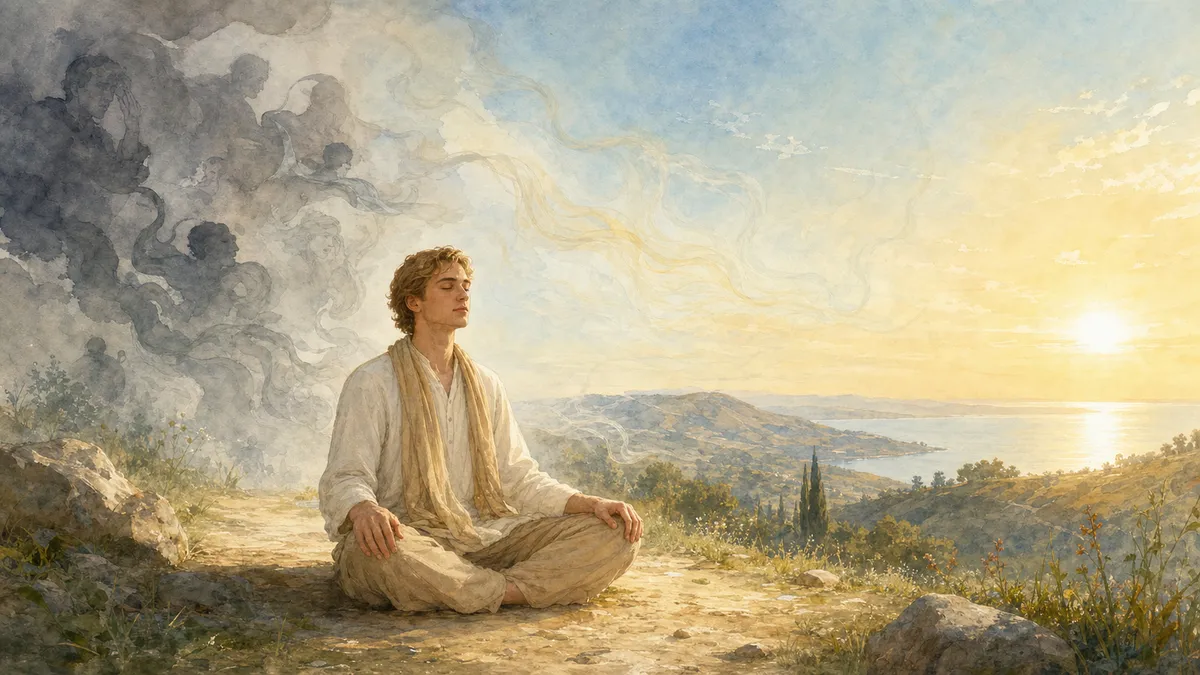
When the intellect becomes clear and transparent, we intuitively begin to grasp the essence of sacred texts and upadeshas (instructions).
“And how, then, am I to tell you about this? You will comprehend the Mother only if you comprehend the Higher Self.
For the Higher Self there is no definition, and therefore no teacher can teach it. Comprehend it within yourself, for it abides in the immaculate intellect.”
Regarding the Higher Self, no instruction can be given; instructions on contemplation can be given. The Higher Self cannot be described in words; only hints can be given as to what it is not. One cannot simply be allowed to approach the Higher Self; one can point out how to get rid of the ego that obstructs it. Everything else lies outside the sphere of actions and outside the sphere of instructions. It is the yogin’s ego that prevents him from approaching the Higher Self when he is strongly identified with it.
The Nature of Ego and Identification
What does ahamkara mean? It is identification with habitual evaluations and notions, and a strong reliance on formed experience.
For example, you are trying to contemplate, something attractive to you happens, and formed experience says that here your ego can feed itself, receive pleasure. And you think: “I’ll still have time to contemplate. Well, what’s interesting there?” This is formed experience, because for many years you have already derived pleasure from it, so by habit you think: “Well, I’ll enjoy this just a little more.” This formed experience is like a powerful wave in the subconscious that pulls one toward objects in order to receive some superficial joy from them. The ego consists of a conglomerate of such experiences, with which a person identifies himself. But in fact, the ego in itself is empty; it is as if it does not exist. It is something that does not exist as an integral whole.
There is a funny metaphor that describes the ego.
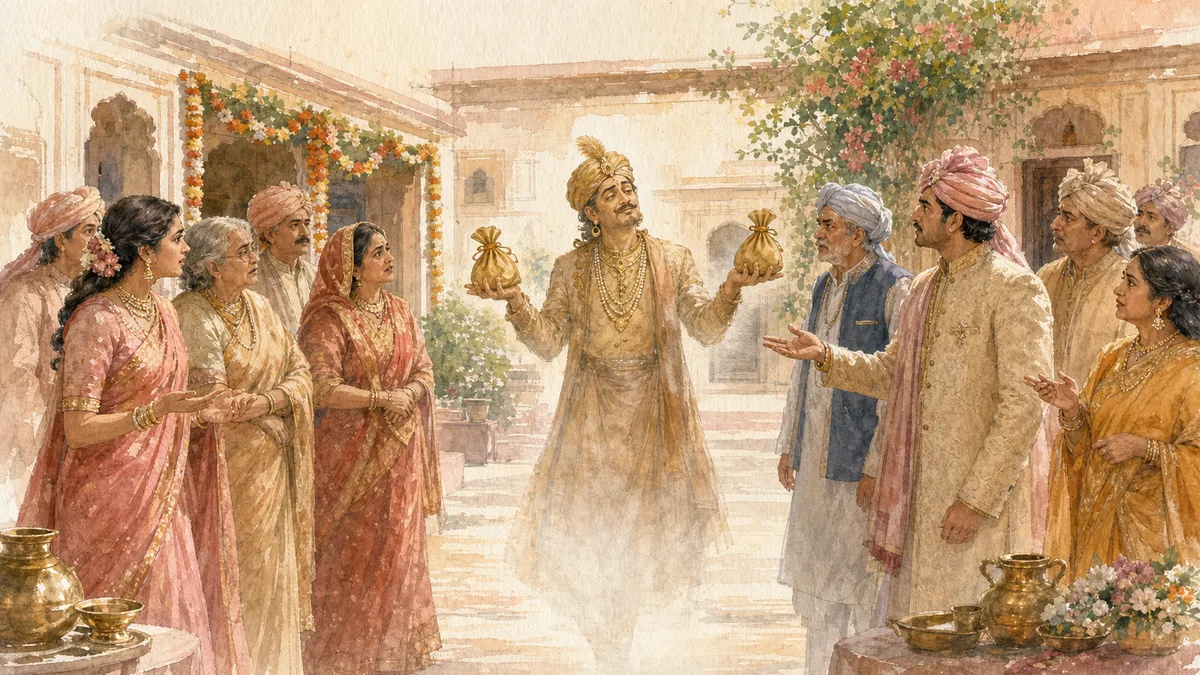
A young man named Vrindavan and a girl named Dvaraka decided to get married. The families agreed to hold the wedding ceremony. Preparations for the wedding are in full swing, and then a stranger named Dashasana appears. He comes to the bride’s parents’ house and says that the groom’s parents are not observing the rituals, are not giving money for this and that, and therefore the young family will have problems in the future. Then the bride’s parents, so that everything may go well, give him a large sum of money to settle the matter. Then he goes to the groom’s parents and says that the bride’s parents have not done this, have not bought that for the wedding, and therefore money is needed to settle everything. Since they think he is a friend of the bride’s parents, they also give him money. In this way, he goes from one family to the other and says that he is performing very important intermediary functions so that everything will happen properly, in accordance with the ritual. But when everyone gathers for the feast and gets acquainted with one another, it turns out that neither side knows this person. The groom’s parents thought he was someone from the bride’s circle of friends; the bride’s parents thought he was a relative from the groom’s circle. Moreover, it turned out that no one had even invited him. Meanwhile, Dashasana, having taken a decent sum of money, quietly disappears. In the same way, the ego with which we identify ourselves, the sense of personality, is such a nonexistent Dashasana.
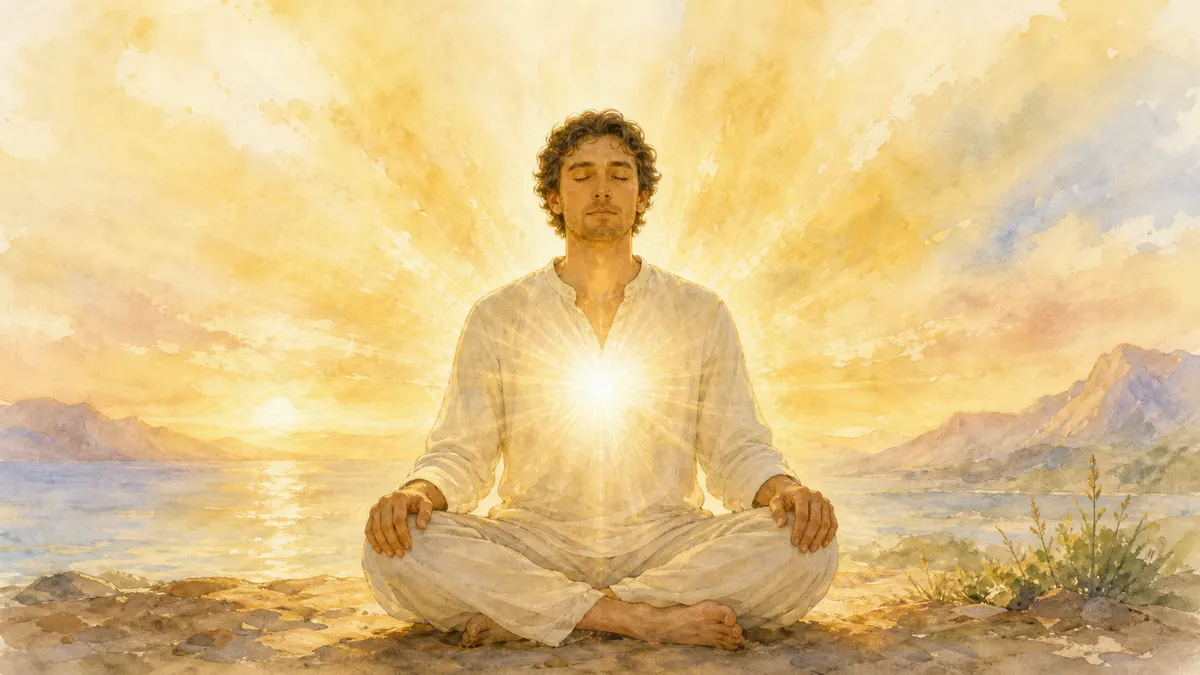
When, thanks to jnana yoga and analytical meditation, you manage to discover the insubstantiality of the ego, you become detached from the formed experience. You no longer identify everything that happens with the personality, with yourself. Suddenly you are seized by a euphoric feeling: “I have understood — I do not exist! I never existed. What I called myself from the very beginning was unreal.” You become established in a new state: “Only the ‘I’ exists, but the ‘I’ is not the ego, but the absolute empty state, the Supreme Source. This is the only thing with which I can identify myself.”
Qualities of the Supreme Essence
“It permeates everything, from the personified Lord to the amoeba, but it is incomprehensible to the mind or the senses. Not being illuminated by any external means, it illuminates everything, everywhere and always. It is beyond seeing or discussion.”
When the qualities of the Supreme Essence are spoken of, in the Shakta and Tantric tradition it is called Mother. In other traditions it is called Shiva. In the Siddha tradition — sahaja, the natural state. In the Vedantic tradition of Shankara, to which we also belong, it is called Brahman. In other traditions it is called prajnana-ghana, the primordial space of awareness, the original Mind. When you hear all these definitions, they do not speak of some abstraction somewhere in the depths of the cosmos, beyond time and space. All-embracing radiance, emptiness, all-pervasiveness — all these are qualities of your own “I.” As soon as you become attentive, clear in perception, and transparent, you begin instantly to reveal these qualities within yourself and to feel them. It is a simple act of attentiveness and recognition of them within yourself. It is like when you listen to the beating of your heart: it begins to become distinct.
“How, where, when, or by whom has it been definitively described, even in part? What you are asking me, dear one, is equivalent to asking me to show you your own eyes.
Even the best teachers cannot make your eyes visible to you yourself. Just as a teacher is useless in this case, so too is he useless in the other matter about which you are asking. At best, he can guide you toward it, and no more. I will also explain to you the means of realization. Listen attentively.”
So, it is said here that the yogin must discover his own nature of Mind for himself. Even the greatest buddha cannot do his work for him, precisely because the Creator has given the living soul the freedom of choice to engage in self-knowledge or not. The teacher gives the technique, guides, teaches, and gives transmission. Nevertheless, the work of investigating the nature of Mind must be done by the disciple himself, because if he does not do this work, he will not attain the proper maturity.
How do we investigate the nature of the Mind? We try to analyze the nature of our consciousness, the “I am” state. First, it should be understood that all things in the world must be reduced to the “I am” state. This is the first link in the five-part formula. If at the very beginning you have not understood that all things in the world are reduced to the “I am” state, then you have understood nothing. But when you have understood that all things in the world are reducible to the “I am” state, you try to analyze it in order to become convinced of its emptiness. Not someone else, but you yourself must become convinced of the complete emptiness of the “I am” state.
Overcoming Concepts and Identifications
“The Supreme Essence will not be found as long as you are tainted by the concepts of I or mine (for example, my house, my body, my mind, my intellect), for it is beyond perception, and it cannot be realized as my essence.
Withdraw into solitude, analyze and comprehend what those things that are known to you as yours really are; renounce all of them and transcend them, seek the true Essence.”
Thus, it is said here that the Supreme Essence cannot be comprehended by one whose mind is tainted by concepts. When we try to comprehend the Supreme Essence with the help of concepts, it is like an old woman trying to hunt hawks—she will not catch a single one.
Concepts are useful when taking exams and when studying philosophy logically. But when you comprehend the Supreme Essence, you must cut off concepts with the sword of discriminating awareness and enter the state of suchness. Penetration into this space is, one might say, the foundation from which the teaching of Laya Yoga actually begins. For many schools, the teaching on emptiness is considered, on the contrary, the culmination. For us, the teaching on emptiness is not considered the culmination. Moreover, for us everything only begins with emptiness, because the experience of one’s consciousness as empty clarity is the starting point, the foundation for the further practice of contemplation. To be in presence, to exercise oneself in presence, means to be in a state of emptiness. But how can one be in a state of emptiness if we have not transcended the conceptual mind, if concepts still continue to mislead us?

“For example, you know me as your wife, and not as your essence. I am only connected with you, without being a part of you, and still less your own essence.
Analyze everything in this way and renounce all of it. That which remains, transcending everything, which is beyond concepts, appropriation, or abandonment—know that this is the Supreme Essence. This knowledge is final liberation.”
When we penetrate into primordial emptiness, all the concepts we have assimilated in the relative world cease to function, and we must part with them in order to know this illuminating emptiness. This does not mean that in the relative dimension we act without concepts or completely discard them. In the relative dimension, concepts have their own power. Nevertheless, when we have known the emptiness of consciousness and return to the relative dimension with this new knowledge, everything looks different. We no longer become attached to concepts and relationships in the relative world. We use them, operate with various connections and energies, yet the main part of our consciousness abides in this illuminating emptiness. And then we are no longer deluded, whatever we may be doing.
Stages of Spiritual Practice
For example, at the beginning a yogin always has great problems with action—he acts and then becomes forgetful in his actions; with communication—he loses awareness during communication, or relationships have a strong influence on him; with attachments—he perceives something and clings to it with his mind. And when he sees that he is constantly caught in the snares of all these identifications, an opposite reaction arises in him: to run away from this, to be in solitude, in retreat. And he begins to build the most incredible plans, for example, to live in a cave on a high mountain for five years. He feels that he is unable not to become attached and to continue abiding in contemplation. He feels that he is being defeated: every action, communication, perception, and so on identifies him. Why does this happen? Because his emptiness is very weak; he has not yet gained any confidence in it.
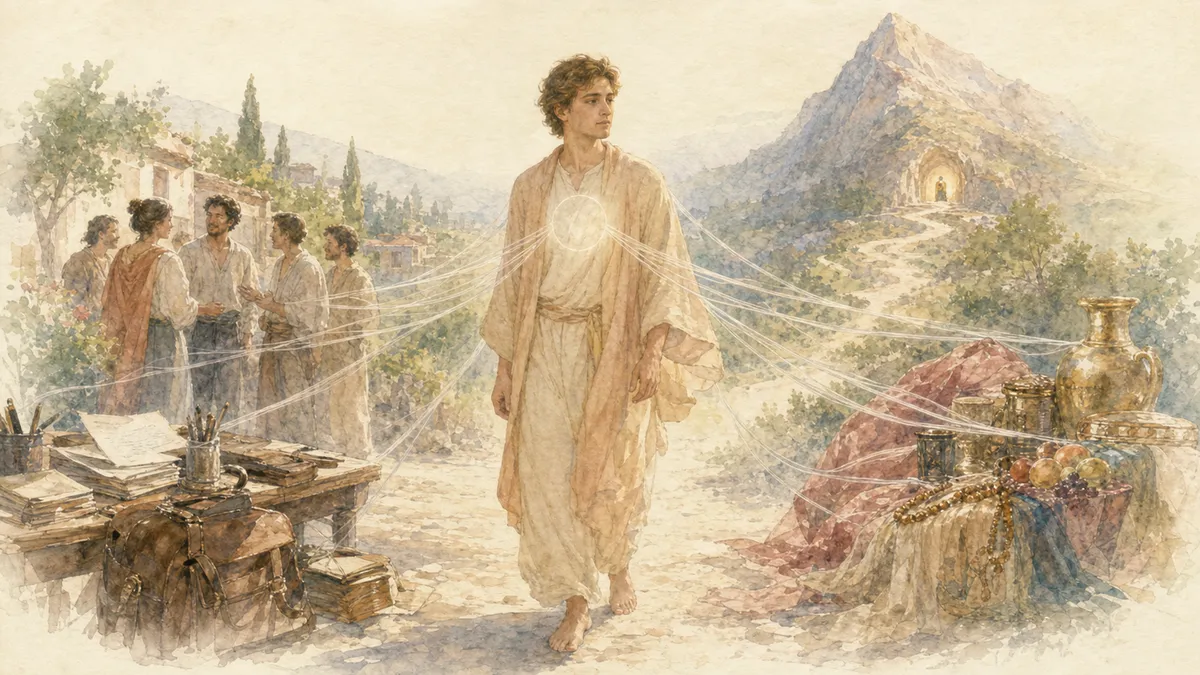
But as he trains in contemplation, retreat practice, and gains spiritual experience, he becomes rooted in this emptiness. Moreover, he begins to see that all things of the world are empty, and therefore they cease to take away his consciousness as they did before. And he spends most of his time abiding in this emptiness, while external forms appear to him rather as a play of the energy of this emptiness. They are no longer self-existent, self-sufficient, or somehow very fascinating for him. Then he sees that this emptiness accompanies him from morning until evening, whatever he may be doing. It is the background against which everything unfolds. And he no longer needs some strong seclusion; he does not need detachment. Moreover, he understands: in order to develop this emptiness, one must learn to unite it with movement, that is, a dynamics is needed that, as it were, fertilizes this emptiness. In other words, when he has experienced static emptiness in retreat and understood the principle of the non-being of everything, and has felt unimaginable happiness from it, then, in order to deepen this emptiness, he needs activity, movement, perception. True success in contemplation becomes possible for him precisely when he learns to unite with movement. This is the next stage in spiritual practice. It is the union with movement, the union with circumstances, the union of contemplation with action that is the culmination, the quintessence of the spiritual practice of contemplation.
Of course, for one who has not discovered emptiness, this is not yet entirely relevant. They really do need to make the most serious efforts in sitting meditation and in retreat practices. On the contrary, when emptiness has been discovered, all your skill is transferred precisely to union with movement and perception. It is like a person who has attained mastery in running and has already become a running champion. Then he hangs a backpack on his shoulders, ties small bags of lead to his legs, and continues to train running in this state, knowing that for further growth in results he needs such exercises with a load.
The Meditation of King Hemachuda
“After receiving these instructions from his wife, Prince Hemachuda hastily rose from his seat, saddled his horse, and galloped out of the city.
He entered the royal pleasure garden located beyond the outskirts of the city, and then went into a beautifully adorned crystal palace.
He dismissed his servants and ordered his guards: “While I am meditating, do not allow anyone to enter these chambers, even if they are ministers or elders, or even if it is the king himself. They will have to wait until you receive my permission.
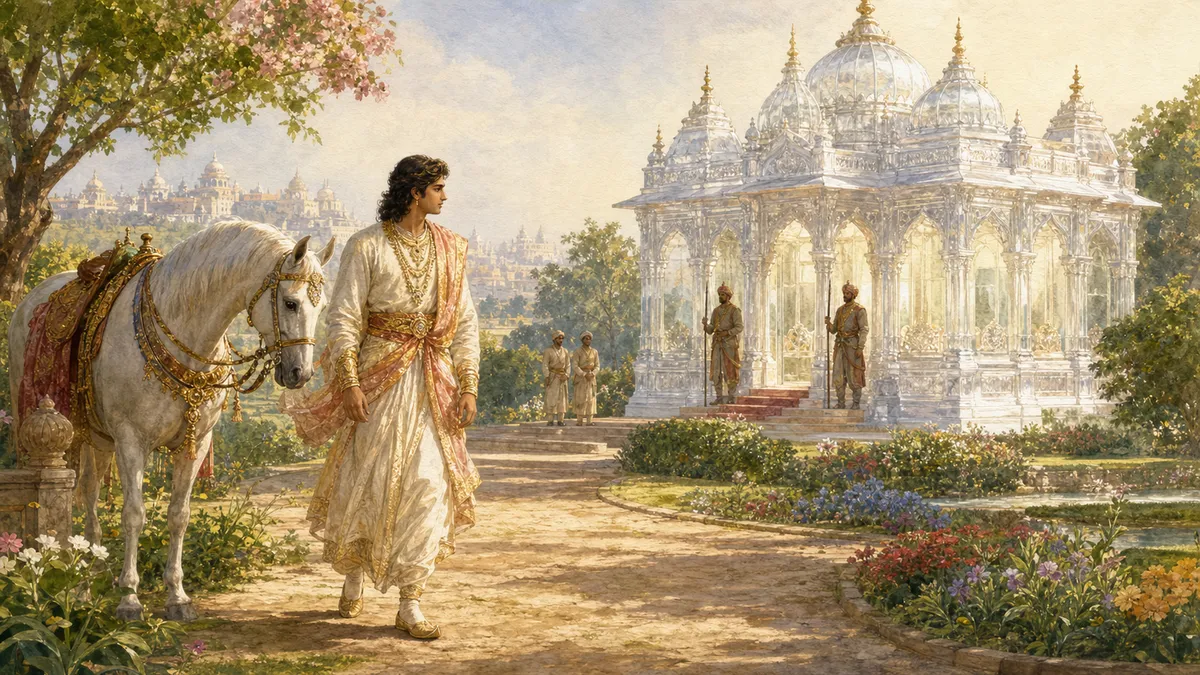
Then he went to a beautiful chamber on the ninth floor, from which there was a view in all directions.
The room was well furnished, and he sat down on a soft seat. He focused his mind and began to reflect as follows:
“Truly, all these people are deluded! None of them has yet beheld the Supreme Being even out of the corner of an eye! Yet all of them act for the sake of their own ‘selves.’ Some of them recite the sacred scriptures; a few others study these sacred scriptures and the commentaries on them; some are occupied with accumulating wealth; others rule kingdoms; some wage war against enemies; others seek a luxurious life. When they become immersed in all this selfish activity, they never ask themselves what exactly the Supreme Being may be; and then what is all this commotion for? Oh! If the Supreme Being is not known, then everything is in vain, and everything happens as though in a dream.”
These words are worthy of being written down somewhere and looked at every day: “If the Supreme Being is not known, then everything is in vain.” You can repeat this to yourself every moment, every second. Such repetition itself will remind you of contemplation.
To know the Supreme Being, nothing external is required, because knowledge of the Supreme Being does not depend on seclusion, diet, or any special circumstances. It depends only on the act of your voluntary attention. Either you are attentive to the process of awareness and contemplation and turn toward contemplative practice, or you are inattentive and your mind wanders.
Thus, by fighting every second for such attentiveness, you draw closer to comprehending the Supreme Essence, and then retreat practice truly becomes beneficial; service begins to produce merit quickly and develop supernormal abilities; reading texts becomes enlightening because you grasp the intuitive essence of the texts; worship and mantra recitation begin to bring benefit as if you had been engaged in this practice your whole life; working with winds and channels becomes extremely successful, and even short sessions begin to yield great results. Previously, you could work with the wind for hours and even days, but the result was small, or you could recite a mantra for hours, but there were no experiences. Now, however, if you are in this state, even a small practice brings great success.
Going Beyond Identification with the Body
“My house, wealth, kingdom, treasures, women, cattle—none of this is me; they are only mine. It is certain that I take this body to be the Supreme Essence, but it is simply my instrument. Certainly, I am the son of a king, with a handsome physique and a fair complexion. These people also think that their bodies are their very ego.”
Reflecting in this way, he contemplated his body. He could not identify his body with the Supreme Essence, and therefore began to rise higher in his reasoning, going beyond the limits of the body.”
Identification with the body is inherent in everyone, and when we look at a person, we habitually identify him precisely with the body and its inner qualities. But the higher the level of practice, the more refined our identification becomes. For example, if you see a person’s subtle body, you can understand that on the subtle level this person may be different from how he manifests on the physical level. And if you notice the illuminating emptiness, the nature of his consciousness, you can understand that the nature of his consciousness does not at all correspond to how he manifests. And then your identification with bodily manifestations ceases.
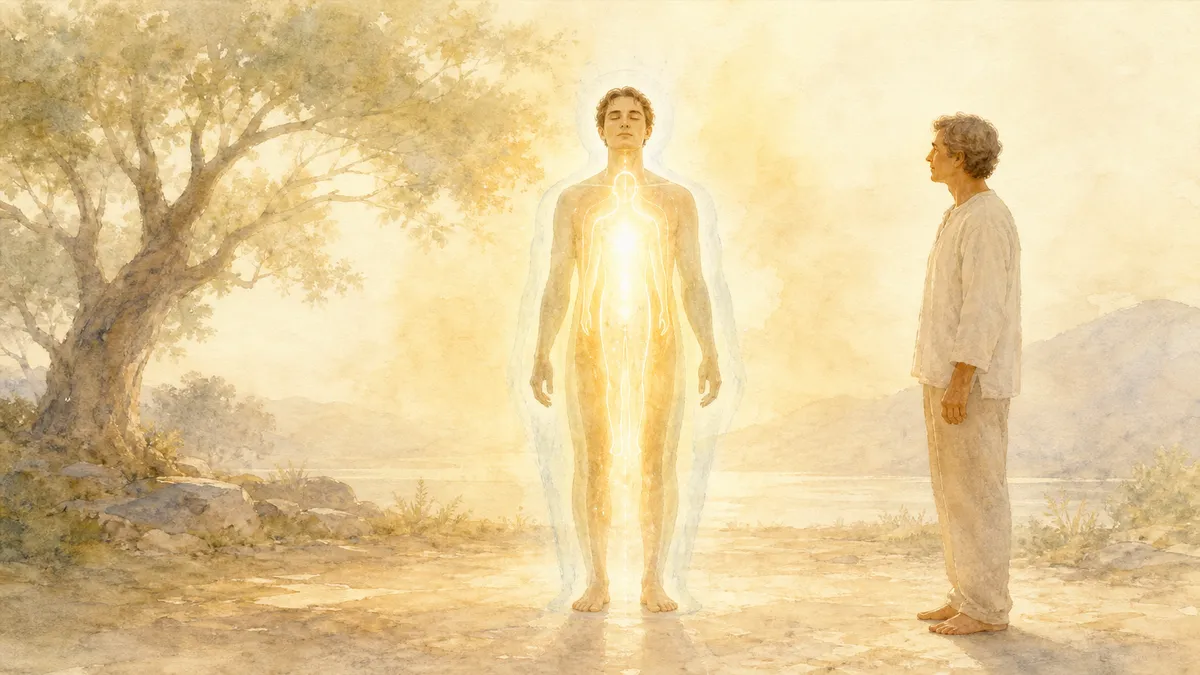
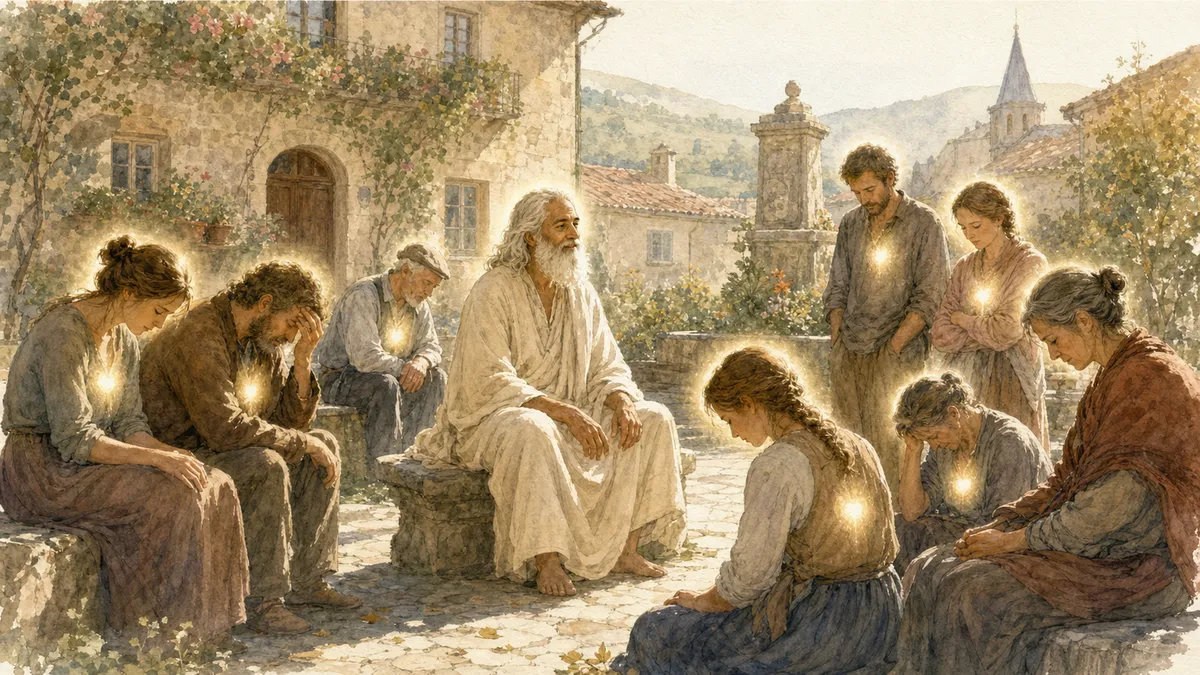
Perhaps I will give an example that is not entirely correct, but nevertheless: when you look at a medium possessed by a spirit, you no longer perceive him as his former personality, but look at him as if from a distance, knowing that another spirit is now in him, that it is not him. In the same way, when you realize the nature of the fundamental Mind, you look at all others as possessed by this spirit, only it is the Holy Spirit, and you do not pay much attention to the personality manifesting on the surface. Even if this personality manifests in some way, you think: “Everything is fine. Sing, swallow, sing.” This is exactly how the awakened look at those who are not awakened. The awakened do not see the unawakened; they see only their awakenedness.
Ramana Maharshi said it this way: “A jnani, seeing ordinary people, sees only their jnana.” Even if other people do not know that jnana is inherent in them and insist that they suffer, that they are deluded, nevertheless the jnani is absolutely certain that primordial awakenedness is also inherent in them. He sees this awakenedness and also speaks to other people about the awakenedness inherent in them.
An unawakened person differs from an awakened one precisely in that his conceptual mind is rather coarse, and therefore he does not grasp his own jnana. Nevertheless, his own jnana does not suffer from this, does not diminish, and does not disappear.
Investigating the Nature of Pure Consciousness
“This body is mine, and not ‘I’ myself. It is made of blood and bones, and changes at every moment. How can it be the unchanging, continuous ‘I’? It is like movable property; it is something separate, distinct from me, just as the waking body is distinct from the dream, and so on. ‘I’ cannot be the body, just as the life (vital) force cannot be the Supreme Essence. It is certain that the mind (manas) and intellect (buddhi) are my instruments, so they cannot be ‘I’. My ‘I’ is something different from all this, from the body up to the intellect. I am always conscious, but I am not aware of this pure state of consciousness. The reason for this inability is not clear to me.
Objects are apprehended through the senses, and not the other way around; life is recognized through contact, and the mind by means of reason. And by what means does reason become evident? I do not know. Now I see that I am always conscious, and that the realization of that pure consciousness and pure awareness is obstructed by other, unceremoniously interfering factors.”
I recommend that you read Chapter 9, in particular ślokas 31–42, many times. Here the process of Hemachuda’s enlightenment is described. Simply by following the logic of Hemachuda’s reflections and observing the chain of his thoughts, you too can experience a certain direct introduction, a “taste” of his enlightenment. By rereading again and again these ślokas, which describe how he practiced jñāna yoga and experienced a flash of enlightenment, you yourself can discover the immense experience of out-of-body awareness.
