

When we enter the path of Dharma, we must find a knowledgeable Teacher, and having found him, we must clarify our position as a disciple. At the higher stages of practice, especially in anuttara tantra, it is difficult to progress without a knowledgeable Teacher. When we must understand ourselves as a disciple, we must fully grasp the principle of discipleship. The principle of discipleship is not only what we try to adopt—that is, not only the intellectual knowledge received from the Teacher—but also his mastery, his spirit, his consciousness. In the process of such adoption, we must change ourselves. Change ourselves? Far more than that! We must pay for it with everything we have, because to adopt this mastery means to part with all illusions. Until we are willing to change ourselves in this way, we cannot be called those who adopt mastery. At best, we can be called listeners, shravakas.
Only at the moment when the practitioner recognizes himself as a disciple and resolves upon such a global transformation does he become a worthy vessel for truly working on himself. And then the process of transmitting the Dharma begins, the process of learning the mastery of practice. When we learn in this way and follow the path, we discover how much of the lower nature is within us, which rebels against the spiritual path. Sometimes one can see that such uprisings occur literally on every centimeter of our spiritual path, and therefore we continuously fight in order to win this battle. And we see how stubbornly our lower parts try to defend their right to exist. Each time they try to assert their old conditioned samsaric nature, and so the yogin feels himself to be in a state of total war. He feels that there is no way back, that the way back is self-oblivion, death, and suffering. And it is hard to imagine anything worse than this. Spiritual death and a fall into maya are the most terrible things that can await a yogin. But he also feels that moving forward is very difficult for him. He understands that the only thing possible in his state is to be in a spirit of absolute impeccability and to do as well as possible what can be done as well as possible at the present moment, literally winning back every millimeter of the space of light within his consciousness. At this stage, a subtle temptation arises to enter a state of great conflict and wage war against everything and everyone: against one’s lower nature, against conditioning, and so on.
When we enter the state of such a higher conflict, we feel that we are trying to do something, but the paradox is that the more we enter the state of conflict, the more we move away from our own nature; the more we try to control it, the more it shows us that this is impossible. And then we feel completely helpless, incapable of practice; we feel that we have taken on an impossible task, one that only great mahasiddhas can accomplish. We feel that we are attempting something so global that, in comparison with it, our own efforts and practice look like some kind of parody. And then the feeling of this inner conflict intensifies even more. Suddenly our ego, which had been making rosy plans that in three years it would begin emitting rainbows and levitating, astonishing everyone, realizes its complete insignificance and unimportance in the face of the absolute mystery, as well as the utter illusoriness of all hopes and plans. And then the ego acquires humility. This is the first humility it experiences. The ego not only understands the full magnitude of the task it has set before itself, but also that, in the process of fulfilling this task, it itself must in a sense die away.
When the ego calms down and understands all its illusoriness and futility, it is already ready to leave behind its clinging, hopes, and fears. Suddenly it begins to see that the matter is not quite about this, that even greater skillfulness is needed here. Then it recedes into the background, and in consciousness there arises a very subtle, almost imperceptible, barely perceptible, yet already sufficiently powerful wave of a certain presence.
At first this presence is like a subtle breeze; nevertheless, when it arises, all the forms of the world, including the ego, become ghostlike, and an immense power standing behind it is revealed. Only from this moment do we begin to understand something in spiritual life. Suddenly we realize that we must catch this subtle breeze of presence and begin, very slowly and gently, to bring it into our life. We must believe in it, trust it, and be very attentive to it. We must understand its inseparability from the Guru and know that it is the quintessence of all sutras, tantras, and esoteric teachings. We must gradually attune ourselves to it and discover it as the absolute Source of all Being, allowing it to penetrate into every corner of consciousness and burn away impure karmas and clinging. In fact, it is from this moment that the practice of the natural state begins. And these instructions concern precisely such an advanced practitioner, one who has gone through this entire process and therefore moves far ahead with greater confidence and stability.
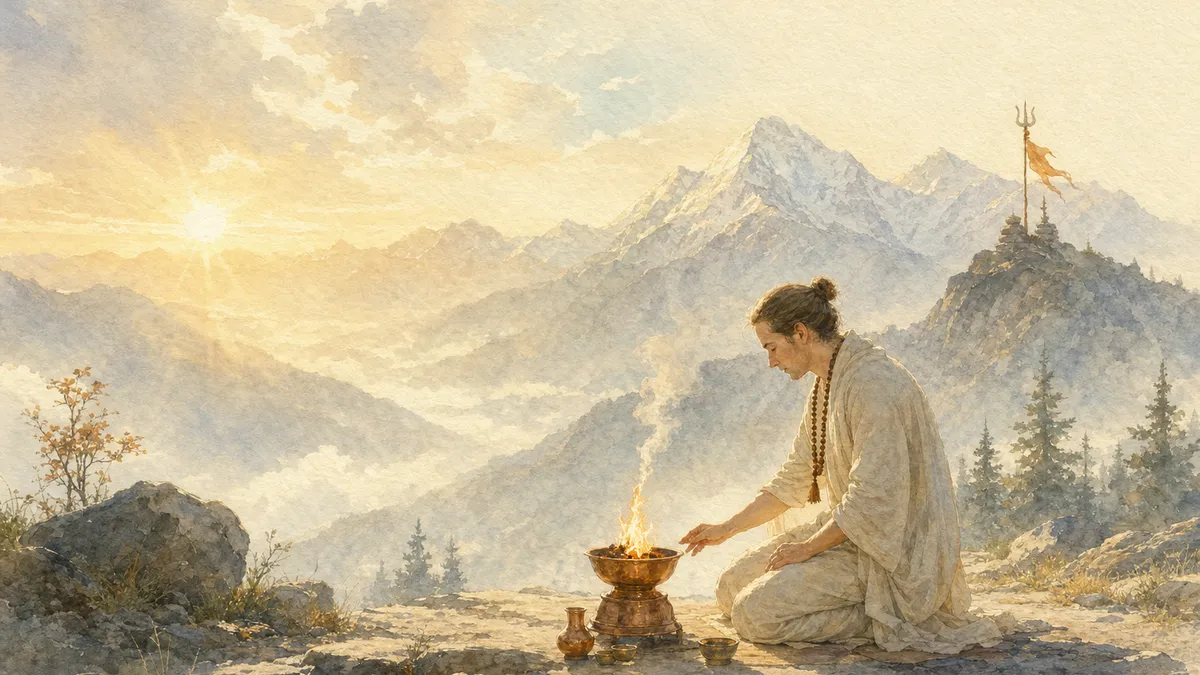
Self-Liberation of Thoughts
Let us take a drawing on water. If one draws on water, the drawing is destroyed at the very moment of its arising. In the same way, the arising of thoughts and their liberation occur simultaneously. Everything ceaselessly arises naturally and is naturally liberated, like a drawing on water.
When this consciousness is discovered, the yogin suddenly experiences the taste of the natural state and understands that everything he previously perceived, dreamed of, clung to, and hoped for was an absolute deception, a total illusion. When he understands this, he knows that only the Clear Light of primordial consciousness is the basis of everything, that its further revelation and surrendering oneself to it is the true essence of the instructions of all saints. And then the yogin begins to remember this constantly. He understands that now the main thing for him is to deepen more and more into this Clear Light and not lose it.
At the same time, because of impurities in the energy channels and in the astral body, all the old karmas continue to move in the yogin and lay claim to influencing his mind, to pulling him out of this state and plunging him into dualistic samsaric vision. If the yogin does not yield to them and again begins to listen to the subtle breeze of awareness, then these karmas, which seem to be something coarse and real, cannot withstand such subtle awareness; they begin to give way before it and dissolve. When such dissolution occurs, it is said that the yogin practices self-liberation.
Thus, without obstructing what arises, allow everything to arise, whatever it may be. Everything that arises is pure in its primordial nature. Applying this on the path should be considered a key point of practice.
Pure Vision of All Phenomena
Everything that arises is pure by its nature. The path to enlightenment means a complete radical transformation of the world, including oneself, a change of mentality, as well as of the awareness that stands behind this mentality. To perceive everything that manifests as pure means to completely change one’s attitude toward vision. All things that manifest do not exist in themselves and do not have even a drop of reality. In other words, when we acknowledge things as self-existent, we are, as it were, subject to a global conspiracy and are in a total illusion. We are as if enchanted and immersed in a virtual reality from which we cannot get out. For example, you have surely noticed that when you tell a person about the path of awakening, about spiritual life, he says something like: “Yes, that is interesting, of course, but I have so many things to do!” This is precisely the global illusion. But a true spiritual practitioner knows that there is only one matter—the path to enlightenment—and everything else merely serves it.
When we try to break out of this total conspiracy, out of this illusion, we completely change our attitude. By what means do we do this? By discovering the natural state. Suddenly, everything that was separate turns out to be united into one. What seemed impure is seen as pure, as a manifestation of special aspects of purity. What seemed external is seen as internal. All phenomena and forms begin to lose their reality.
To see everything as perfect and pure means to see everything as a manifestation of the Absolute. It means continuously thinking in a very exalted way even about the most ordinary or impure things. For example, when you are traveling by train, you may think: “This is a train, and this is the conductor. She brought me tea, and I gave her money.” But if you are a practitioner trained in tantra, you may think like this: “In the karmic vision of the world of humans, this is, of course, a train, and this is the conductor. But in the pure dimension of the gods, this is a vimana, and this is a deity, a worldly goddess or dakini. I make an offering to her, and she gives me worldly siddhis in the form of conveniences.” In an even higher state, you can see all of this as games through which the one spirit, the Clear Light, transmits and manifests itself, projecting itself from your essential consciousness.
The most important thing is the remembrance of this one Spirit and of how it continuously manifests itself in its lilas. What, then, are visible objects and people? They are its illusory bodies. Some of these illusory bodies are bound, and therefore they rigidly play according to the law of karma. They are called people, samsaric beings. And because their mind has not known the Clear Light, they experience suffering called birth and death.
Transformation of the Five Poisons
If our thoughts become an expression of the dharmakaya, then each time a thought arises, the natural state also arises. Therefore, no matter how manifest the thoughts generated by the five poisons may be, the far more powerful clarity of the liberated natural state will always be present.
This is a very important instruction. Within our consciousness there are poisons. Poisons are impure karmas, kleshas; they are blockages in the energy channels, in the subtle body. If the red bindu wants to rise through the channels, these blockages prevent it. For example, why can we not immediately enter samadhi? Because the red drop cannot immediately rise to the crown due to the fact that impure karmas obstruct it. Poisons also exist in the astral body. These are impure states of consciousness: dark, gloomy, depressive, oppressed, angry, irritated, and simply tamasic. All of this is poison, that is, that which shortens life, leads to wrong situations, and clouds awareness.
It is believed that a yogin, while practicing the spiritual path, must purify himself of poisons. In fact, practice, especially monastic practice, is a continuous “polishing,” in which the yogin purifies himself of poisons day after day. Anger, envy, pride, lust, dullness, ignorance, conceit, attachment, egocentrism, greed—all these poisons are purified through continuous self-observation, service, technical practices, meditation, visualizations, that is, through everything that exists in tantra. By and large, the level of a yogin can be determined by the extent to which he is free from poisons, from kleshas. It is said that spiritual practice should liberate one from kleshas, and if it does not, this means that it has not yet penetrated deeply. Therefore, a true practitioner is always free from kleshas. In him these poisons are neutralized, purified. However, here, from the point of view of Anuttara Tantra, a very important idea is expressed: no matter how kleshas and poisons may manifest, at the very moment they manifest, there exists a deeper and more weighty essential consciousness, in comparison with which they lose their value.
In sutra and tantra, poisons must be fought as enemies, or continuously transformed into something positive. But in Anuttara Tantra, one must notice this ever-present essential consciousness and, trusting in it, allow it to descend upon the poisons, thereby devaluing them.
When we practice the path of Anuttara Tantra, we continuously orient ourselves toward this essential consciousness. We suddenly discover that we have a great protector and a great helper who helps us deal with these poisons. Only on the strength of our faith in him, on the degree of our openness and our capacity for self-surrender to this great helper, does it depend how much he can deal with them. If we have trust in the Clear Light and continuous attentiveness directed toward it, it itself liberates all poisons and transforms them into pure wisdoms. Why does this happen? Because these poisons are an expression of this pure wisdom.
The Inseparability of Thoughts from the Natural State
All moving thoughts, no matter how many there are, arise as the self-expression of the transparency of the nature of the natural state.
When we consider ourselves to be the body, think that we have arrived somewhere, that we are performing practices and following the path of enlightenment, these are also certain thoughts that manifest in the space of the natural state. It can be said that the physical body is a condensed thought. This also applies to our thoughts, emotions, judgments, and evaluations.
What distinguishes a high-level practitioner from a low-level practitioner? It is that a high-level practitioner has recognized this ever-present state and realized that thoughts and kleshas are inseparable from it, and therefore they no longer mislead him. A practitioner who has failed to recognize the inseparability of thoughts and kleshas from the natural state is still considered a beginner. Even if he successfully sits in nirvikalpa samadhi, upon emerging from it he may experience all the experiences characteristic of an ordinary person: suffering, taking offense, and so on. And this happens because he has not yet understood the inseparability of thoughts, kleshas, emotions, and everything that manifests from the natural state. He may somehow enter this trance, then come out of it (or be pulled out of it), but this is still not it. It is similar to giving a person chloroform or a drug; it is still something artificial. Through some narrow gap in his channels and karmas he has broken through, but like an ordinary person he becomes irritated, falls into hopes and fears, has a sense of self-importance and other things as soon as he is pulled out of this state. That is, he is still inexperienced in how to bring this state down and manifest it in everyday life. Since he is very dependent on it, he continually strives to experience this trance-like state, and therefore he rejects all external things that do not lead to this trance-like state or that hinder it. And then he again finds himself in a kind of suspended or torn state, as if caught between two fires.
For a long time I myself was in such a state, making vows not to speak and to emerge from samadhi only to satisfy the needs of the body. And this continued until the Guru pointed out this mistake to me.

The Samadhi of the Flowing River
Such a yogi, if he does not curse the external world that causes him to lose this trance-like state, then at least stubbornly tries to ignore it. But even when he stubbornly ignores it, energies and karmas still exist. When he wants to ignore them, he strives to be in thoughtlessness and to withdraw into the very depths of his awareness, but he still cannot become established in this, fails, and because of this falls into confusion. However, if he understands the principle of anuttara tantra and laya yoga, then everything falls into place. Suddenly another, higher and greater truth is revealed to him. He discovers primordial awareness as a consciousness that is always present in parallel and depends on nothing, inseparable from thoughts, emotions, kleshas, and any other manifestations. When the yogi discovers such inseparability, he continually begins to liberate thoughts, emotions, and kleshas into this space of awareness, even without experiencing trance-like states. In fact, after some time he enters such a state of presence that begins to grow from day to day. It is like the flow of a river. There is even a term describing this process: “the samadhi of the flowing river.” This is precisely the samadhi that Milarepa loved to practice. It is this that points to the essence of consciousness and the natural state.
Adepts of the Chinese martial arts later interpreted this term within the understanding of martial arts. Teaching the principles of movement, they said: “You must stand like a mountain and flow like a river.” But “standing like a mountain” and “flowing like a river” are in fact fundamental principles of anuttara tantra that point to the authenticity of the natural state.
There is an expression, “chozhak of the mountain.” I mentioned it when I gave lectures on Tibetan anuttara tantra. It means that when we practice the path of sahaja samadhi, we are in an unwavering state of presence that cannot be disturbed in any way. Nevertheless, this unwavering state of presence is not static; it is very flexible and, like a current, always flows, responding to the variety of situations that arise. That is why it is called “the samadhi of the flowing river.” Only at this moment does the yogi attain wholeness and finally see everything as one. He ceases to be in conflict with the external world, thoughts, and emotions. He ceases to be tormented by fears and hopes for future samadhis. Why? Because he is in it already, right now.
The Depth of Contemplative Presence
Of course, this presupposes deep immersion in contemplative presence. Otherwise, one may be in distractions, subject to dualistic thoughts, while thinking: “I am practicing the samadhi of the flowing river.” Only we ourselves and more holy souls can determine whether we are truly deeply in this state.
Nevertheless, when we discover it, we find that we have opened a secret entrance into another dimension. Now we are in another dimension of the universe and no longer lose it, whatever we may be doing. Then all our subsequent life comes down to remaining in this great dimension. All other instructions like these are intended precisely for those who have already approached it.

The Fire of Contemplative Presence
Our contemplative presence is a continuously kindled fire that burns toward this Source. It is an offering, self-surrender, the cry of the soul, and the song of the heart. To those who come to us, I wish to kindle this fire from a smoldering spark into a bright torch, and then into a universal conflagration. Sometimes I want to shout this directly to all those who study with me but communicate with me little. This universal conflagration is trying to set you ablaze right now, like damp firewood.
