


Overcoming Duality
Duality.
Although the original, primordial state of self-existing wakefulness is free from any duality whatsoever, apparent duality arises from the habit of regarding what is perceived as something other. Dualistic perception must be destroyed.
When monks meditate in retreat, they often say, “The session flies by as if it were five minutes, and this is not sleep. You sink into a very pleasant state, you are comfortable sitting, you seem to dissolve somewhere, and all you hear is the ringing of the bell.” However, I reply that Ramana Maharshi said the following about this: “This is merely manolaya, that is, a certain superficial dissolution of the mind.”
What, then, do we need? We need manonasha—the destruction of bondage to the dualistic mind. Not the destruction of the mind itself, but the severing of our clinging to this dualistic mind. It compels us to divide everything into inner and outer spaces, so that we see external objects as something separate from ourselves. When manonasha occurs, however, there is neither ourselves as the subject nor objects; there is neither inner nor outer.
It is believed that one must meditate for many years—and many people even for many lifetimes—to realize such a state. Nevertheless, it is said that on the path of instantaneous enlightenment, you can enter this state in the time it takes to snap your fingers. To the extent that we can set aside our dividing mind, our attachment to our unique individuality, our ego, our sense of greatness and pride, we will become empty and transparent, allowing the light of awareness to shine within us and reveal the unity of the two spaces in the One.
Primordial Purity
This is precisely why we strive so persistently in meditation to recognize the essence of mind. This is primordial knowing. We become familiar with primordial knowing by recognizing our essence as primordial purity. Nondual wakefulness destroys dualistic perception.
When we immerse ourselves inwardly in meditation or contemplate in ordinary life, we see that there is much impurity within us. Various images and karmas surface; anger, pride, and sexual desire—which we seemed to have suppressed and cut off long ago—arise from somewhere. Nothing of the sort: they manifest again, only in more cunning ways.

At a certain stage, a yogi may come to believe that he has absolutely no chance of attaining liberation. He may feel utterly defiled; he feels that the magnificence spoken of by the saints is just as far away from him as it was many years ago. He thinks that those who attain liberation in a single lifetime are beings such as Ramalinga and Ramana—avatars who were liberated from the very beginning and came here, into the human world, to shine and set an example. Yet in fact, this is not entirely so, because although we have many different karmas and obscurations, there is within us a primordial purity that is no different from the purity of all saints and buddhas. It is already inherent in us, and it is ours by right.
The Natural State and Cognizant Clarity
Nondual wakefulness destroys dualistic perception. When it is destroyed, illusory perception disintegrates and mental constructs cease. This is what we must firmly realize and become free from all doubts about. We need to free ourselves from the dualistic mind; only the unlimited, nondual natural state remains. The natural state that grasps at nothing is already present the moment you recognize it; everyone possesses it.
This purity, which will instantly free us from kleshas, defilements, and all illusions, is that very nonduality. Or rather, it is not nonduality itself, because even animals, bees, and trees already abide in nonduality, but our awareness’s capacity to realize this nonduality.

Every person, upon falling asleep, immerses themselves in nonduality, experiencing dreamless sleep. Every animal enters such a state. However, it cannot be said that upon awakening everyone becomes a perfect saint, a mahasiddha, or an awakened being. Therefore, what interests us is not the simple nonduality inherently present in reality and everything within it, but the cognizing clarity of our consciousness, which is capable of apprehending this nonduality, comprehending it, becoming imbued with it, and interpenetrating with it. When our cognizing clarity apprehends it and becomes saturated with it, all our karmas and impurities are eliminated at the speed of light. It is said that this process is like a forest fire: in a single instant, at tremendous speed, the karmas of hundreds and thousands of different births are washed away.
During retreat, you meditate by practicing the evening sadhana of niralambha meditation and, during the day, mahashanti. When your mind becomes one-pointed and grasps this experience of the boundlessness and grandeur of absolute Reality, when it concentrates on the qualities of Brahman in niralambha meditation just as it would on a single point and does not lose sight of these qualities, then suddenly this boundlessness and grandeur permeate you so deeply that nothing remains in your heart except absoluteness. It is as though you have invoked it and now carry it with you. Then you truly discover the grandeur of the natural state. It is no longer merely some diffuse awareness that is easily disturbed; it is a genuine experience of rapture and happiness that makes the hairs on your skin stand on end.
When such grandeur has been discovered, when it is constant and the mind is directed into it with great depth, there is no need to evoke it deliberately through methods. It is already present, so one should simply trust the Light of this primordial grandeur, surrender to it completely, and set aside oneself, one’s will, preferences, judgments, and desires. One should even set aside the desire for liberation, because it comes from a tiny, microscopic being with a shriveled mind, and it is precisely this that obscures the Light. One should open oneself to the Light, and then it will pour forth in a mighty stream. It is like a heated elephant thirsting for water and rushing to a watering place, heedless of the path. All the animals, insects, grass snakes, and serpents scatter, knowing they will be in trouble if they get under the elephant’s feet, while the elephant cares about nothing and rushes toward the water. In the same way, all the yogi’s sins, karmas, kleshas, and obscurations scatter when he enters this stream of Light. Then, day and night, he is nothing other than this very divine Light of awareness beyond duality.
Detachment from the Worldly View
Unfortunately, living beings do not know how to see, and they do not believe even when they do see. As long as duality remains, Enlightenment can never be attained. As long as we want two things—to get rid of one and obtain another—duality remains. When the essence of Mind is recognized, everything must become one, and then there is no duality.
To fully realize this Light, complete and absolute detachment from everything worldly is necessary. This does not literally imply external practices of renunciation—they are suitable for retreat. When I speak of detachment from the worldly, I do not mean that you need to seal your eyes and ears with wax or do anything else of that kind, because as long as you have a body, you are compelled to see, hear, and eat prasad. If we speak of detachment “from absolutely everything worldly,” then even our body, the walls of the temple, and so on are worldly. What is meant here is detachment from the worldly view, from one’s own plans, hopes, and attachments, from even the smallest personal desires and impulses, from everything that holds us back, and from the desire for anything whatsoever for oneself. For this desire for oneself is the greatest evil spirit, and it is what creates obstacles in practice. By renouncing desire for ourselves, we entrust our entire perception to this Light. Then every action we perform is selfless; it is an offering to this Light of awareness.

Some saints attained awakening in very strange and paradoxical ways. Some of them did not even live in the mountains or sit in dark retreat. One made shoes, but when asked how he had attained realization, he said, “I completely cast aside everything personal and saw no difference between day and night, between action and the subject.” Another was sold into the service of a wealthy Vaishya woman and served her with great diligence, performing all his duties, while at the same time practicing the highest level of contemplative sadhana. This means that the slightest selfish desire to obtain anything has been erased, while consciousness is directed entirely toward awareness, toward contemplation.
At first, we need our will and ego. If we do not have a certain degree of a practitioner’s pride and ego, we will be unable to make sustained efforts; we will have nothing to rely on. But as our awareness develops, our practitioner’s ego must hand over its authority to this awareness, from which everything arises. The ego remains in any case, at least as long as we live in the material world, but now we no longer rely on it. It becomes completely purified (shuddha-sattva); it is like a game and therefore has no significance, while what truly matters is the principle of abiding in nonduality.
Take me, for example. I do not consider myself a teacher, nor do I rejoice when laypeople come, make donations to me, or become disciples. I am not upset when donations decline or the number of disciples decreases, when my fame grows, or when various kinds of spiritual gossip are spread about me, because I do not attribute to myself any actions whatsoever, anything I say or do. I make no plans and consider myself to have no connection with the past. Whether I live here alone, whether a Dharma city for five thousand people arises here, or whether I become someone else—it makes no difference whatsoever, because in contemplation all these things have the same “taste”; they are equal: one is sacred, the other is sacred; one is good, and the other is not bad either. And, by and large, all of this is like dreams.
The first monks endeavored to demonstrate to future generations the various difficulties encountered by novice monks. It seems there was not a single mistake they did not make. They had disharmonious relationships, fought for power, wanted to outrank one another, sought to lead others or open branches in order to gain fame, honor, and wealth; they became attached to one another, almost forming married couples while living a shared monastic life—all of this was very amusing. I simply laughed inwardly as I watched all these games, thinking, “When will they finally have had enough of playing?!” They felt anger, jealousy, and envy toward one another; they endured many different kinds of suffering and disappointment before they came to understand the right way. It was an entire cascade of different manifestations typical of inexperienced practitioners. Why did all this happen? It happened because there was no contemplation—that is, no single unifying thread that renders all kleshas and errors insignificant and equal. Having personally experienced many mistakes and become disillusioned with them, they finally attained the proper peaceful state of consciousness, one that is free, detached, and directed solely toward the Light of absolute Truth.
Since they were the first, there is no longer any need for you to repeat all their mistakes. You can simply look at them and think that you should do as they do.
The Unity of Space and the Natural State
Unity.
Wandering in samsara is the result of our failure to preserve the unity of space and the natural state. Instead, we split them into “here” and “there.” We imagine that space is there while the natural state is here. We split the unity of space and the natural state, falling into acceptance and rejection, hope and fear, affirmation and negation.
Avadhuta Dattatreya often uses the expression “Jnana amritam samarasyā gagana pamoham” in the “Avadhuta Gita,” which means, “I am infinite being and knowledge; I am like boundless space.” If we meditate correctly in Mahashanti, inner space reveals itself to us as boundlessness. The “Chandogya Upanishad” says, “I am above, I am below, I am in front, I am behind, I am to the left and to the right. I am this entire world.” When we experience boundless space in meditation, we should recognize it as a quality of the natural state.
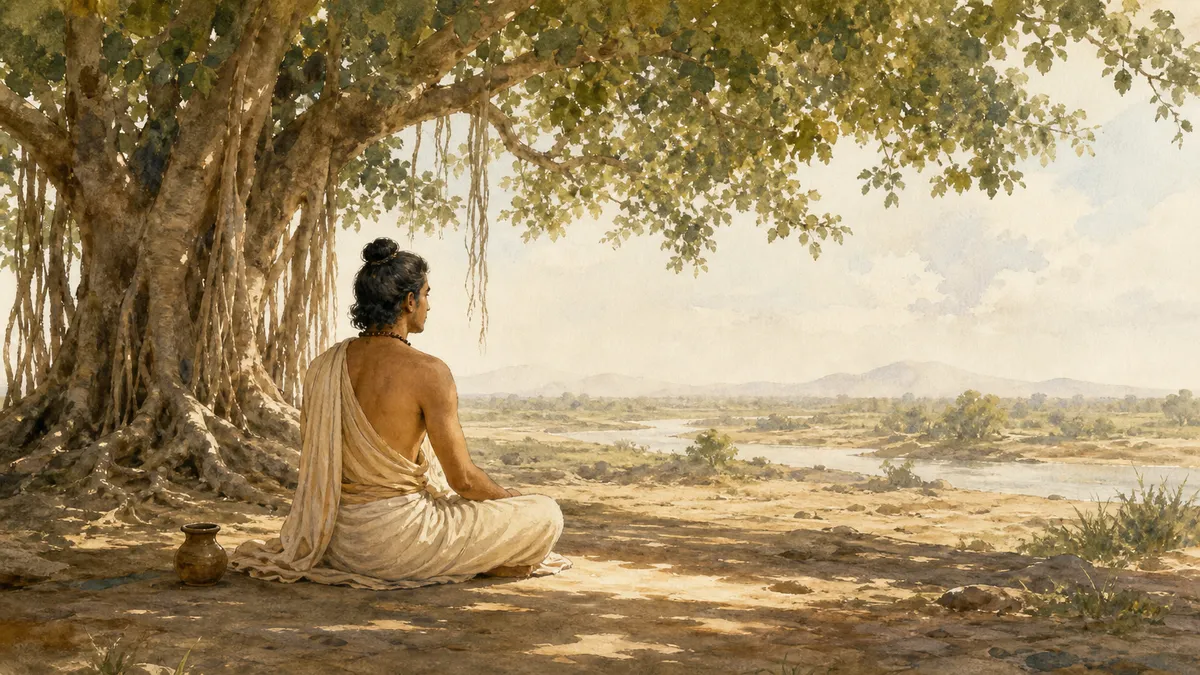
We often think that abiding in the natural state is simply a kind of witnessing awareness: constantly observing, being spontaneous, relaxed, harmonious, and comfortable. This is not so. Such an approach is suitable for basic practices such as atma-vichara, satipatthana, and observation. The natural state, however, entails the factor of space, in which this awareness is not localized in space or in the sense of “I,” but is boundless and extends beyond the horizon.
Ramana Maharshi said the following about this: “One who concentrates on the sense of ‘I’ is like a child.” This means that the practice of concentrating on the sense of “I,” or the practice of being aware of the body’s actions, is needed only to lay bare this awareness. We practice them during retreat as mandatory foundational practices, but ultimately the natural state is not localized; it is like space. This means that your awareness flows freely and encompasses all stars and planets.
Someone might think that they must strive with all their might to imagine expansion, to picture themselves as enormous, and to walk around in that state. If you do this with effort, you will break into a sweat from the strain and gain nothing but a headache. One monk did this for a long time and then complained that he felt as though he were carrying a ten-ton structure in his head. He tried very hard, but the realization of space does not arise from one’s own effort; it comes from letting go, from emptying oneself.
There is no need to create the universe, for it already exists.
If we look upward, we see infinity. In the same way, when we simply abide in awareness, emptying ourselves, clinging to nothing, and opening to Being, Being reveals itself as boundless and pours into us.
The Unity of Emptiness and Cognizance
We cling to the concepts of object and subject. Thus we find ourselves in the duality of samsara and nirvana, taking one to be two. It is often said: “Do not imagine space as being out there. Abide in the natural state as being here, for space and the natural state are a primordial unity.”
A reflection in a mirror has form and color, but no concrete substance that can be grasped. Yet although it is empty, it is still visible. The unity of emptiness and visibility is like a reflection in a mirror.
One may ask: “What is mind? What is mind like? Tell me briefly.” Then you can say: “It is the unity of emptiness and cognizance.” That is the complete answer. The essence of mind is emptiness, while its nature is cognizance. Its capacity lies in the fact that these two qualities cannot be considered separately. Unity means that they cannot be divided; this unity is a special quality.
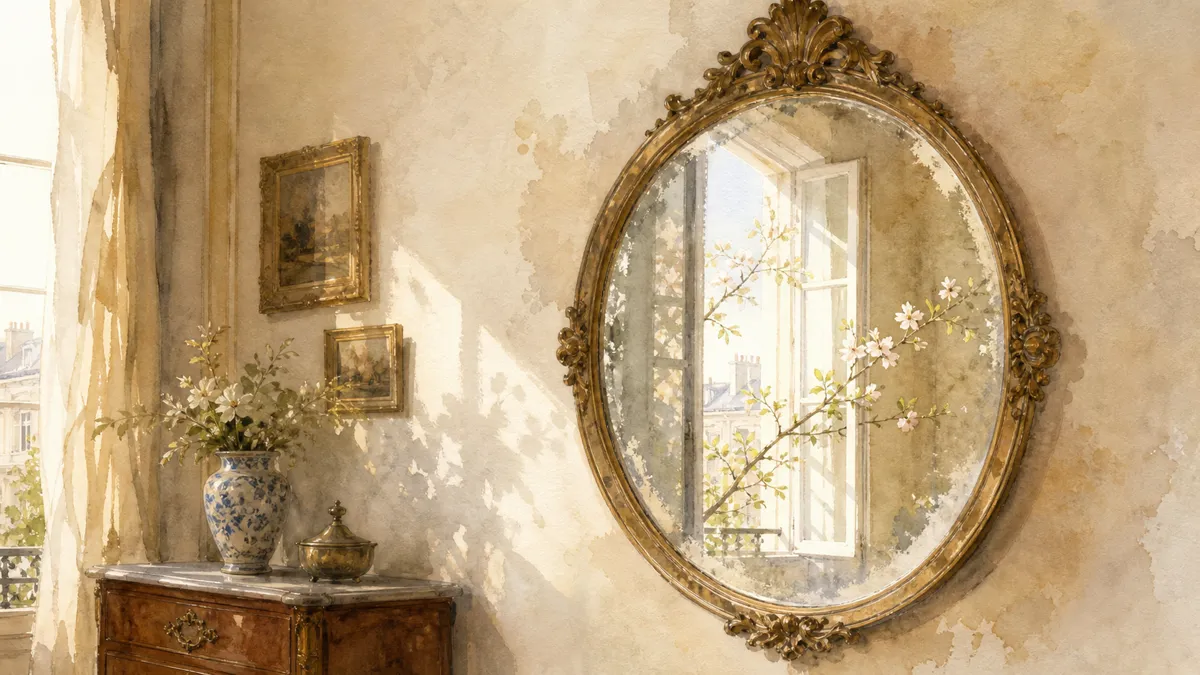
As your practice progresses, your awareness will manifest not only as emptiness, but also as inner sound and various visions of light. You will then discover an entire universe of energy. Therefore, in Laya Yoga we attach importance not only to emptiness, but also to shakti (energy).
Energies manifest in diverse ways throughout the Universe. They manifest primarily as sound and light. Until we enter the natural state, we perceive the impure tattvas (external elements), while the pure ones remain incomprehensible to us. As our perception is purified, deep contemplation reveals the principle of the purity of the elements, the purity of the tattvas. Then the entire Universe appears as something wondrous and psychedelic.
Pure and impure tattvas begin to manifest simultaneously: we hear the sounds of ordinary karmic speech, while at the same time we hear divine melodies and the sounds of nada. We see that all gross objects are ordinary things, while at the same time we see various radiances and understand that external objects are created by various forms of the five pure radiances. We then understand how sounds, moving through the channels via the ear, generate external sounds, and how the universe of external sounds is formed. We understand how light, rising through the channels from the heart to the eyes, forms the external tattvas.
When we understand the interdependence of consciousness, the sense organs, and external objects, the whole of external reality suddenly lies before us as clearly as if it were in the palm of our hand. We realize: “So the Universe is created from within me! So all external visions are created by my inner light emanating from the heart!”
This light comes from the five pure elements, from the five radiances, and these radiances abide in the primordial emptiness of nonduality. The light travels through the channels to the tips of the sense organs (the eyes, tongue, nose, ears, and skin), emerging and coming into contact with external objects to form the holographic illusion of three-dimensional reality. The same happens with sounds.
When we understand this principle of awareness, everything that was previously regarded as external suddenly begins to be understood as internal. We discover that sounds arise from within our heart as anahata nada, are generated, and manifest as external sounds. They arise spontaneously from the space of our pure Self. The same happens with images and visions, as well as with touch, smell, and taste.
When we understand this, an awareness suddenly awakens within us: “If all of this comes from me, if I am so omnipotent that an entire Universe with its boundless cosmos is created from me, then who am I?” Our self-identification then changes. We begin to understand: “It turns out that I am the greatest consciousness, the greatest person, without equal.” And if we are free from pride, we enter nonduality. But if we are not free from pride, we follow the path of the samsaric gods, reveling in our own greatness.
At this level, there is a very great temptation to say: “I am God, I am Brahman.” The little ego desperately wants to pin the “Aham Brahmasmi” medal on itself. It has heard so much about this, dreamed of it so fervently, and finally begins to feel something. Then it thinks and cries out in jubilation: “This is it!” However, this is not it.

The ego must completely relinquish its position and grant primacy solely to “Brahmasmi.” Then the bubble truly becomes one with the ocean, and we actually feel: “I am infinite Being-Consciousness-Bliss. I am boundless like space.”
