From Fleeting Glimpses of the Spirit to Continuous Sahaja Samadhi
19.07.2026
0 мин. чтения
0
Share
copy
search
add
share
Commentary on the text “The Master’s Code”
We now move on to the ancient practices of discovering the natural state as expounded in the siddha tradition. These practices are described in canonical texts, such as the “Vijnana Bhairava Tantra.”
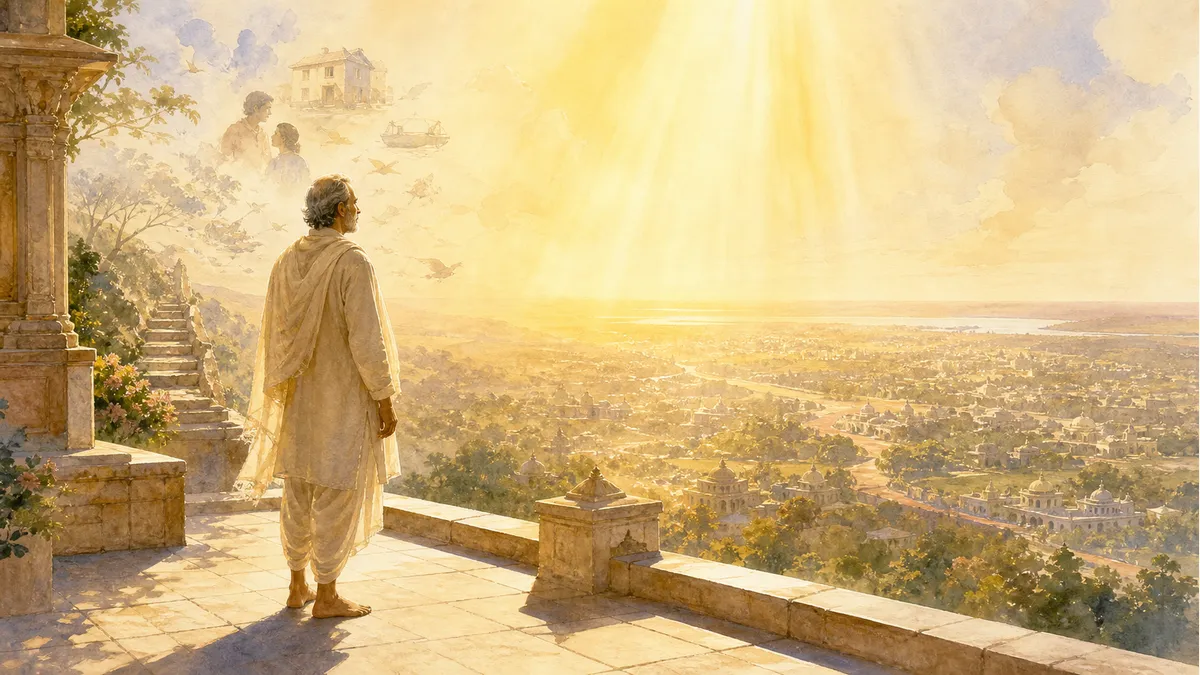
In the eighteenth chapter of the “Tripura Rahasya,” Saint Dattatreya speaks of fleeting samadhis as one of the paths to wisdom. What is fleeting samadhi? There are special moments in our lives, such as states of sudden joy, shock, fright, shame, confusion, yawning, sneezing, the first instant before awakening, a moment of intense pleasure, or some unusual situation in which we find ourselves. All such situations momentarily disrupt our habitual picture of the world, and at that moment our conceptual mind, which we are accustomed to using, is paralyzed. For an instant, surface consciousness contracts, while our primordial nature is laid bare and deep awareness opens up. This happens to everyone, but only practitioners know how to work with it; they use such moments to discover the principle of the natural state.
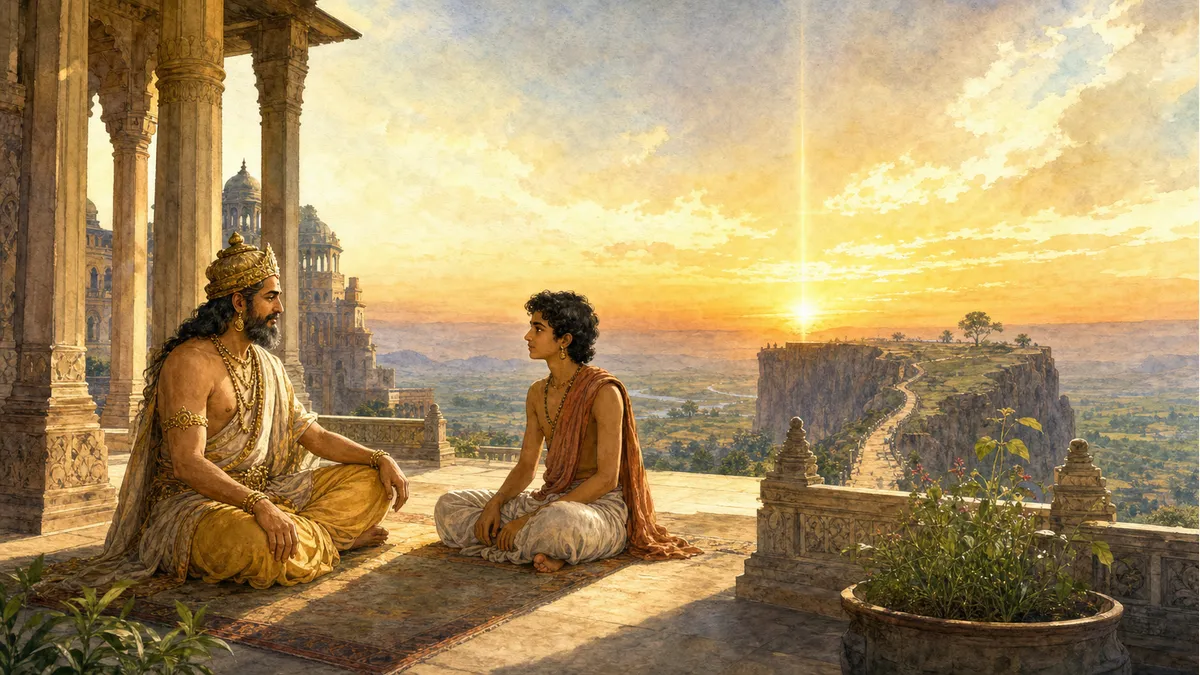
Ashtavakra asked: “O King, please tell me in the greatest possible detail about what you call fleeting samadhi in the waking state, so that I may cultivate it and attain lasting samadhi.”
Janaka replied:
“Listen, O Brahmin! The following are examples of such a state: when a person does not notice the ‘movement inward and outward’ for a brief period of time, while not being overcome by the ignorance of sleep (meaning the first moment before falling asleep and the first moment before awakening); the infinitesimal instant when he is beside himself with joy; when he is held in the embrace of his beloved with the purest feelings; when he obtains something he had desired intensely but had previously given up in despair; when a lone traveler, having no doubt whatsoever about the complete safety of the road he is taking, suddenly finds himself facing the greatest danger.
There are also periods of samadhi that occur in the intervals between the states of waking, dreaming, and deep sleep; while detecting a distant object, when the mind, on the one hand, encompasses the body and, on the other, projects itself through space until it encompasses that object, just as a worm stretches itself while crawling from one leaf to another, seeking to grasp the next support. Carefully observe the state of the mind during such an interval.”
King Janaka then says to Ashtavakra:
“O son of Kahola, know that if someone can discern these fleeting samadhis, then he no longer has any need for any other samadhi.”
Janaka then speaks of inattentiveness as a serious obstacle, saying that inattentive people cannot comprehend the samadhi that occurs again and again in their lives. They are like people who know nothing of the treasure beneath the floor of their house and go out every day to beg for alms.
The Principle of Sahaja Samadhi in Laya Yoga
From the perspective of Laya Yoga, the principle of sahaja samadhi is extremely important to us. Sahaja samadhi is the culmination and pinnacle of the spiritual path, while savikalpa samadhi and nirvikalpa samadhi are its beginning and training. Sahaja samadhi is abiding in transcendental consciousness during the waking state.
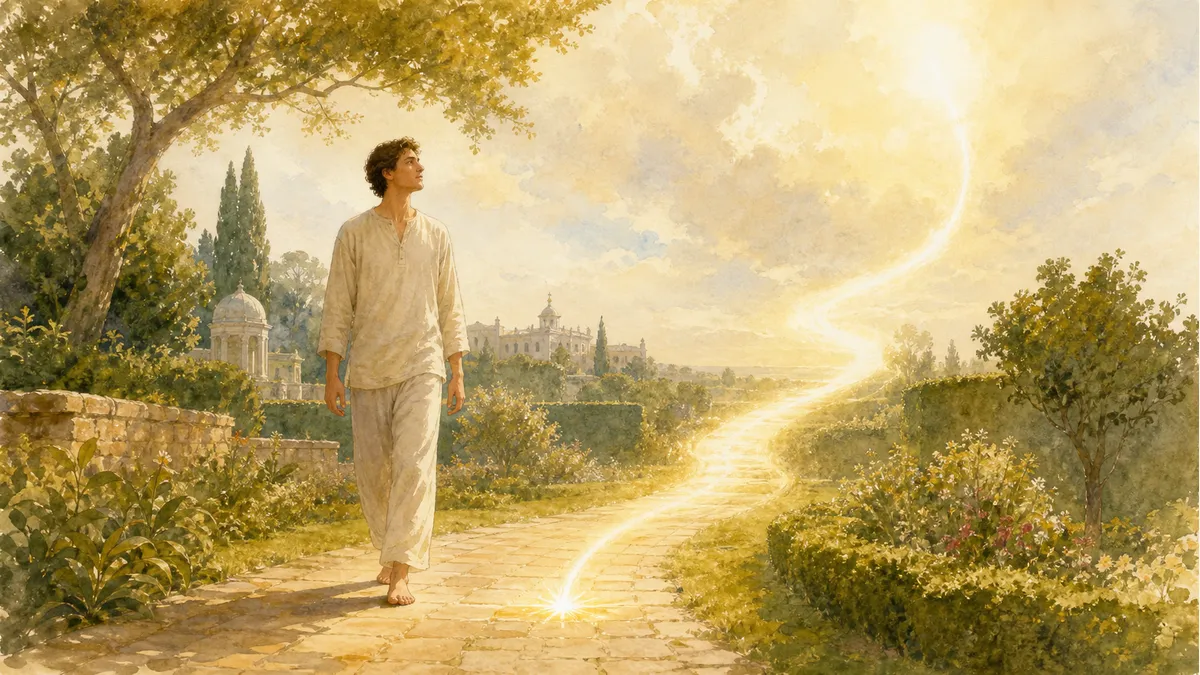
In the language of sandhya-bhashya, fleeting samadhi is called “flashes of the Spirit.” If we are attentive enough to notice these flashes and can prolong them, they develop further and grow into sahaja samadhi. If we are inattentive and fail to notice them, they simply fade away.
Flashes of the Spirit
Chapter 71. Flashes of the Spirit.
1. A flash of the Spirit is a special moment when the radiance of the dreaming being reaches its utmost peak, as though flaring up.
2. Such flashes instantly attract the touch of the Infinite, for the Infinite responds to that which is akin to itself. Flashes of the Spirit attract the Infinite.
3. The touch of the Infinite, in turn, intensifies the flash, and then the radiation of the dreaming being increases many times over.
4. This process can build like an avalanche, like a forest fire, and lead a person of the Path to the ineffable.
5. Fleeting minor flashes occur in almost everyone, but only a Master can notice them and benefit from them.
6. Ordinary beings are too absorbed in their dreams to pay attention to them, whereas the Master consciously creates moments when such flashes occur. When a flash of the Spirit occurs, the disciple’s mind becomes numb for a time, and then the Infinite is laid bare.
7. Flashes of the Spirit come suddenly, when the disciple experiences something unexpected, something that shocks him, in moments of fear or grave danger, at the moment when he receives something he had long despaired of receiving, in the first instant after awakening, when experiencing boundless delight, joy, shame, or any strong feeling that intensifies the radiance of the Spirit.
8. When the disciple feels this, it is as though he were flying on the wings of eternity, feeling the Infinite knocking in his heart.
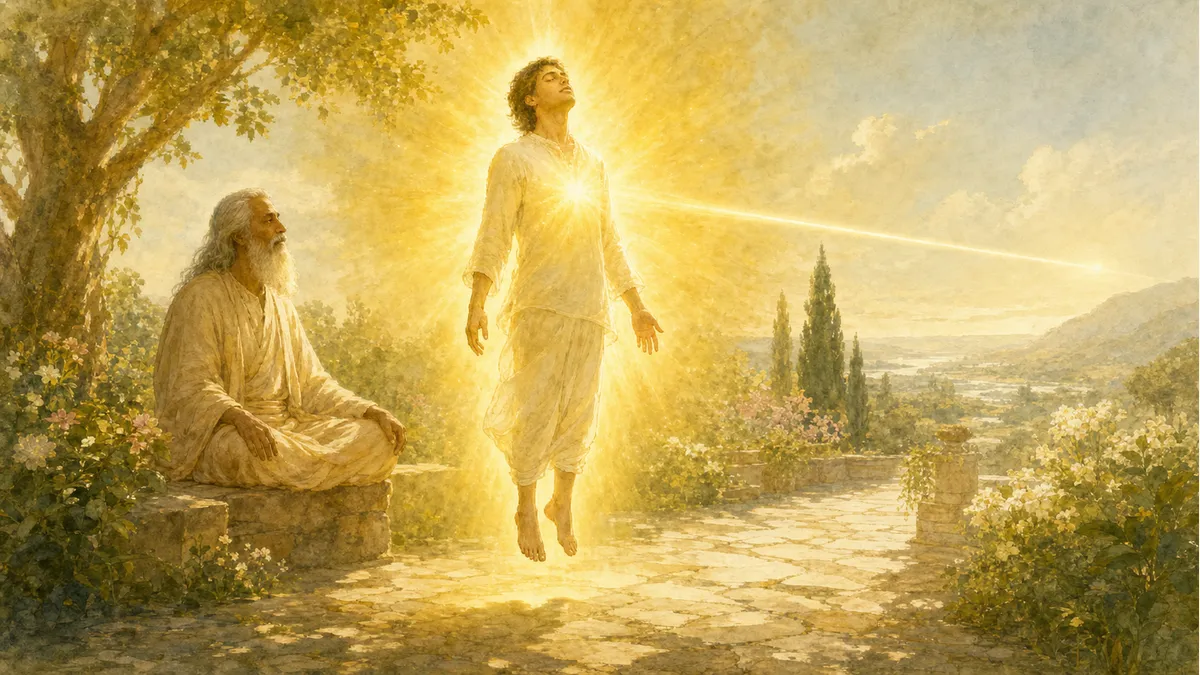
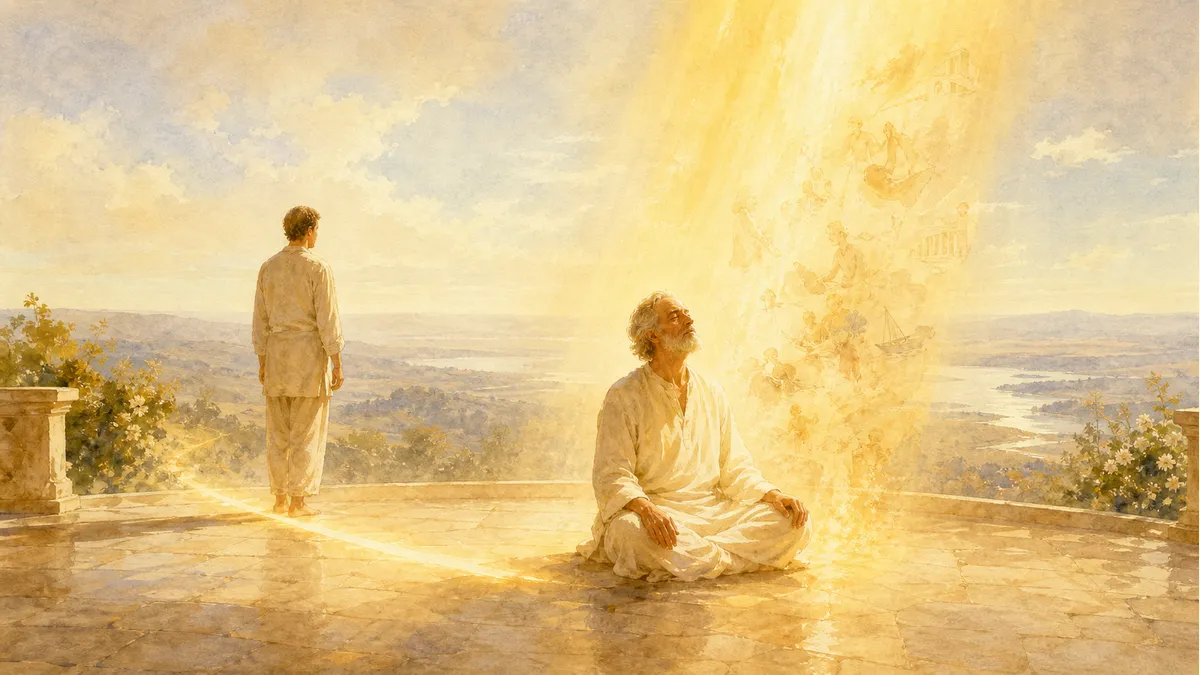
9. When experiencing a flash, the Master consciously prolongs it, remaining detached and relaxed, letting himself go. He allows the sensation to engulf him without losing control. When he is engulfed by the sensation of the flash, he is natural, whole, and remembers himself. Then the radiance increases sharply, expanding inconceivably to the dimensions of an infinite flash.
10. When the flash occurs, the Master surrenders to it completely, letting himself go while maintaining remembrance like an arrow.
Chapter 72. Accumulating Flashes of the Spirit.
1. The disciple tries to live while always remembering the Infinite. Remembering the Infinite, he seeks flashes of the Spirit. He seeks them in order to immerse himself in them, preserve them, and accumulate them. The more experienced the Master, the more frequently such flashes occur and the longer they last.
2. Finally, a moment comes when the Master’s life becomes an unbroken chain of the brightest, most prolonged flashes, which do not fade but, wave after wave, give rise to more and more, like a forest fire or a gigantic wave.
3. Then no effort is required of the Master any longer; all that is needed is his all-acceptance and letting go of himself.
4. It is precisely under the influence of an unbroken chain of flashes that the disciple lets himself go. It is impossible to let oneself go if there is no continuous radiance of the flashes of the Infinite.
5. The dreams of the mind need a very compelling reason to release the disciple’s spirit into freedom, and that reason is an unbroken chain of flashes of the Spirit.
6. As the flashes accumulate, they become a single unbroken chain; then they appear to the Master as something like an endless wall of light or an enormous radiant sphere that sends him its inspiration every second—the descending force.
The wall of light, the infinite sphere—these are merely metaphors. This is not a visual image, but a subtle intuitive sensation.
What happens next? Next comes the experience of a colossal descent of enlightening force.
Chapter 73. The Gift of the Spirit. The Descending Force.
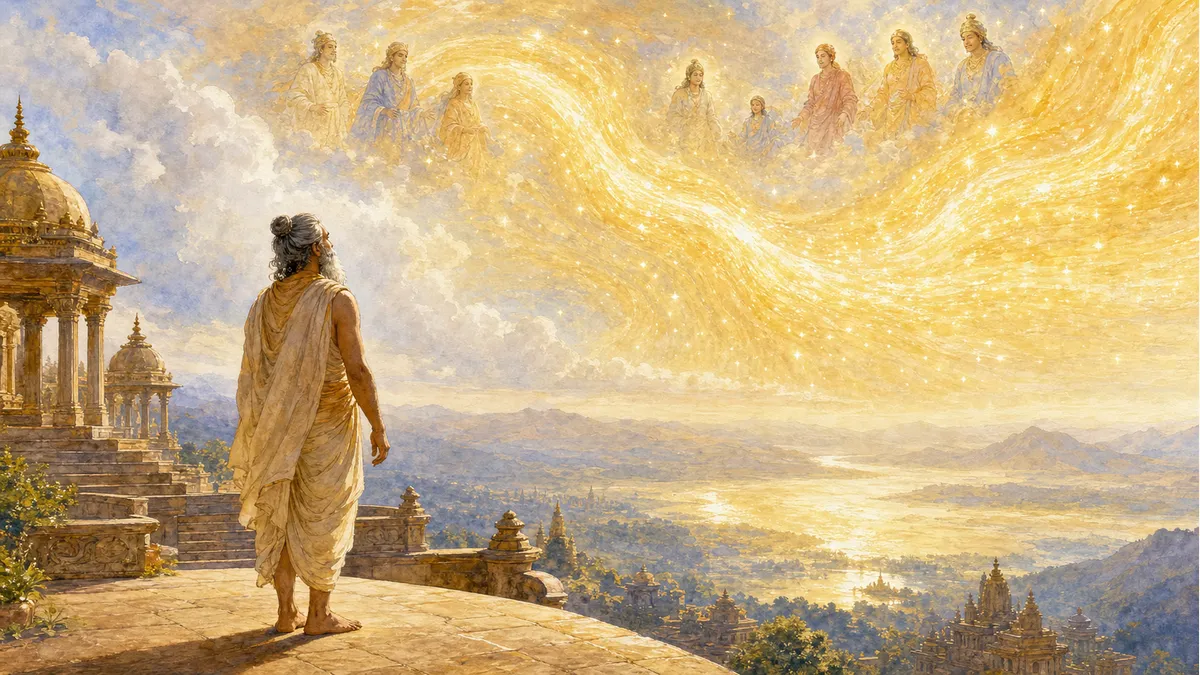
1. Then the wall collapses, and the astonished disciple sees a three-dimensional world composed entirely of flashes of the light of the Infinite’s clarity. It is a great, blinding ocean of light, a blazing abyss like billions of suns. It opens to the disciple from all sides and enters him.
At the stage when such flashes continue without interruption, the yogi may contemplate personal spaces. Such spaces are described in canonical texts such as the “Advaya Taraka Upanishad.”
2. The avalanche of flashes is an extraordinarily majestic sight for the disciple; upon seeing it, he is joyfully welcomed by the inhabitants of the heavens and the celestial wanderers.
The celestial wanderers are gods, siddhas, dakinis, gandharvas, and vidyadharas.
3. All the disciple needs at this stage is not to resist the call of the Infinite, to let himself go, and to allow the avalanche of flashes to enter him and illuminate the densest parts of his energies.
4. Such an avalanche of flashes is called the descending force. Sometimes this force comes to Masters as a playful, capricious, and immensely powerful wave of inspiration and bliss. Sometimes—as a graceful, refined song of the Spirit, full of beauty and unfathomable charm. Sometimes it is breathtakingly majestic, transcendent, and fierce.
The ordinary mind cannot attract it; it is drawn to something extraordinary: expansive thinking, self-surrender, a mind concerned not with itself but with helping all humanity or helping others, a mind that operates on a grand scale. Since such a vast force of enlightenment has no interest in descending into the mundane world, we can attract it only by changing our own values. Then it descends and helps bring our enlightenment to completion.
5. He who has managed to summon and master it is the best among Masters.
6. He no longer needs harsh discipline and restrictions, for the human part of his Path is over.
Of course, this force is not something external. Rather, it is an image describing a subtle aspect of our consciousness; nevertheless, this force is so all-encompassing and majestic that it contains within itself all external manifestations, such as the infinite cosmos.
Then the Master's Spirit is wholly absorbed in the majestic force that descends upon him day and night.
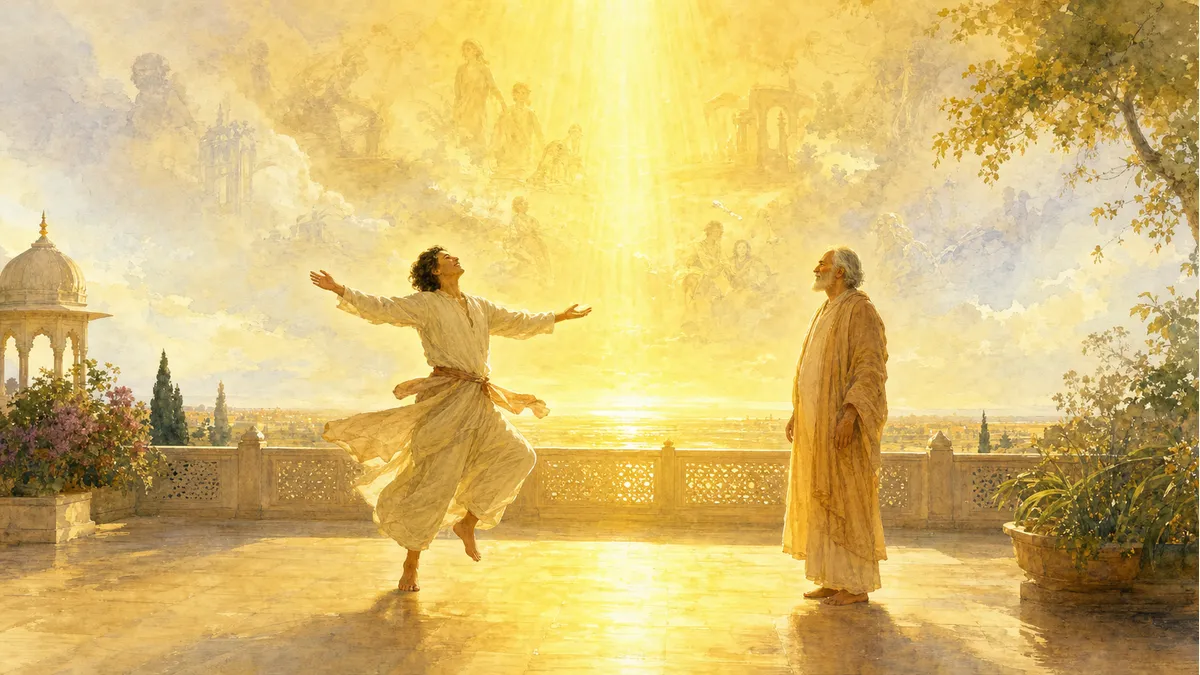
Perhaps you have heard of mad saints who dance with joy day and night, weep in ecstasy, roll in the dust, and repeat the names of God, such as the great saint Sri Chaitanya. This is precisely the case when effortful practice ends and effortless practice begins. The mind of such a saint abides in continuous rapture because he is continuously reuniting with the One Sphere.
7. When the disciple feels the descending force, he dances with joy, for that which he has sought all his life has finally been found.
8. The descending force is the direct vision of the Infinite. Nothing, no dreams, can withstand the descending force when the Master surrenders himself to it completely.
If the disciple is inexperienced, it can literally drive him mad. It is so transcendent that he loses himself in it and becomes unable to act appropriately. But if he has received training from a Master, he can maintain his composure. Many saints, such as Sri Aurobindo, Bhagavan Sri Rajneesh, and Meher Baba, described similar states in which they stood on the verge of transcending the human in order to control this force.
9. By opening himself to the descending force, the Master learns not to lose himself and gradually masters it.
“At first, the yogin's mind plunges like a waterfall; then it flows like a mighty river; and finally, the river becomes a boundless ocean”—such are Tilopa's instructions.
10. It can be mastered only by offering it one's dreams and surrendering to it completely, without hope, goals, fear, or gain.
11. Unconditional, sincere self-surrender is what attracts and delights the descending force, awakening in it the desire to serve the Master without cause.
12. Descending continuously, the descending force gradually dissolves the Master's body and energy, preparing him for the great transition.
Chapter 74. The Master's Great Decision
1. Having opened himself to the descending force, the Master masters it by offering it his dreams. He then completely wins its heart by making the only possible decision—to enter the great non-doing.
2. All the preceding years of the disciple's struggle and training were necessary in order to make the great decision—to enter non-doing.
3. Making such a decision is the dividing line between the disciple and the Master.
4. Only one who has let go of himself and surrendered to the descending force can make the great decision.
5. Without letting go of oneself, it is impossible to make the great decision, for this means becoming nothing, wholly one with the Infinite.
Sahaja-samadhi
Master's Code
Non-Action
Descending force
Fleeting samadhi
Tripura Rahasya
Janaka
Ashtavakra
Read 17 times
Articles
Vidya AI
Search
Lectures
November 5, 2026
Mantra of the day
ОМ ЭКАЙА НАМАХ ОМ Единому – поклонение!
Auspicious Times(Rome)
Brahma Muhurta:
04:56 - 05:51
Abhijit Muhurta:
11:33 - 12:14
Sayam Sandhya:
16:40 - 17:21
Mokshada Ekadashi (6 November)
Ekadashi of liberation. Helps to achieve spiritual enlightenment.