

Commentary on the text “Svabhava-upadesha-chintamani”
As you know, on the path of the line of contemplation, you mainly engage in naked awareness. The discovery of naked awareness is the basis for further practices. Until we have discovered it, our understanding of the Dharma will be an illusion, the teacher’s words will be an illusion, the perception of the Three Jewels and the spiritual path—everything will be presented in an unclear light. The discovery of naked awareness brings us closer to seeing reality as it is. This is the very beginning, but it is already an approach to understanding the essence of things. Until naked awareness is revealed, we remain at the stage of concepts, we remain in ignorance, in illusion, because we are seduced by conceptual thinking.
Naked awareness is revealed precisely with the help of the line of contemplation. When you have revealed naked awareness, an understanding of your “I” arises for you. It cannot be said that a complete understanding arises in you, because this is only the beginning, but you roughly know in which direction to work. You know that the teaching is internal, not external, and therefore you can correctly interpret the instructions of the teaching.
The logic of our practice in the prajna yantra is roughly as follows: first we meditate on the principle of awareness, on the mind, on the “I”; then we meditate “I am God”; in the end we meditate “God,” that is, there is no longer any “I,” but only the Absolute. This is approximately how the principle of awareness develops according to the three lines of practice in the prajna yantra.
First we must discover the principle of awareness, the nature of the Mind, reveal the principle of “I.” But we should not be satisfied with this state, because simply revealing naked awareness means nothing at all. Many consider this a certain achievement, but in fact such a state allows one to become a little more aware, to cease being unconscious. At this stage the principle of samaya and Guru Yoga is very important, because as soon as we begin to approach the “I,” to discover the nature of consciousness, our egoism may increase, and the kleshas may become activated. It is as if we begin to approach the root of Being, and therefore it is very important to have something supra-personal, something that surpasses our small “self,” because, as one monk said, “the world becomes easy prey in the hands of my worldly desires.”
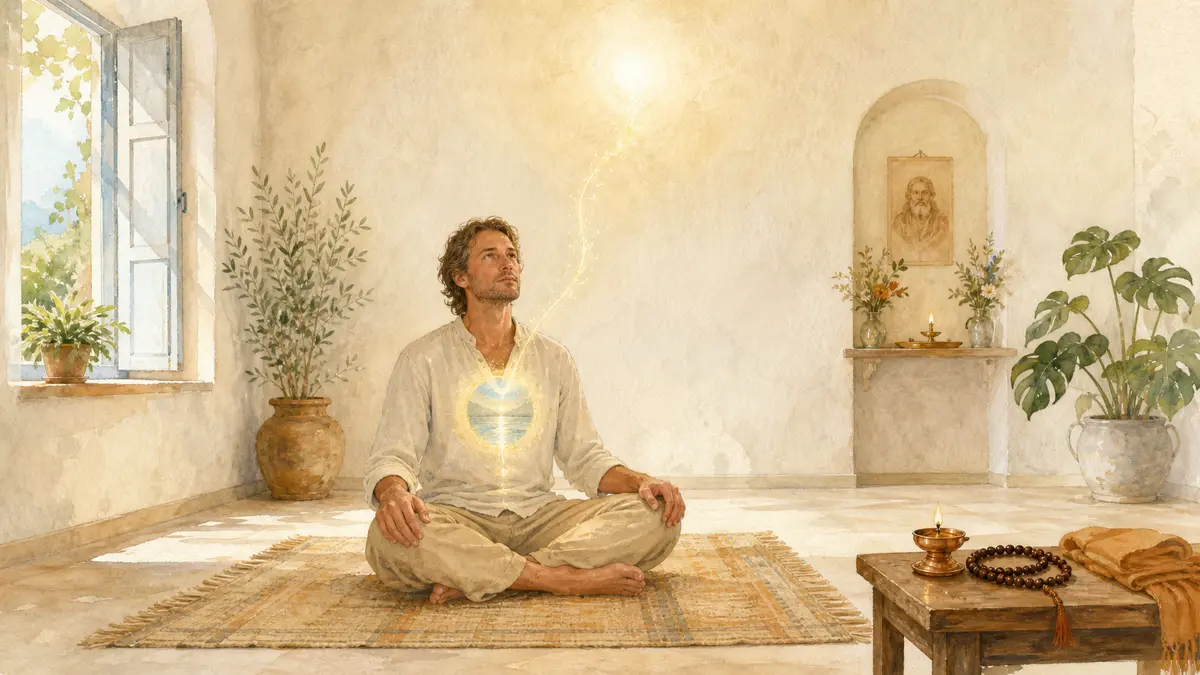
Through the practice of sankalpa we discover the principle of “I” and find that viveka (discriminating wisdom) has appeared in us. Discriminating wisdom allows us to separate the principle of the pure “I am” from the body, emotions, thoughts, even from our will, from ahamkara, from buddhi. And we understand that the pure “I” is essentially connected with nothing, and therefore we become a little freer, invulnerable. When you discover the principle of naked awareness, you acquire this long-awaited inner center. Your heart becomes somewhat emptied, and neither joy nor sorrow can strike you anymore. If joy or sorrow still strike you, then this means only one thing: the principle of naked awareness is still a mystery to you.
Three Stages of Spiritual Development
What happens next? Next we practice in order to transcend this sense of “I,” to completely surrender it to something higher, to move onto a supra-personal level. Therefore comes the turn of the practice of divine pride, when we meditate not only “I,” but “I am the Absolute.” At the same time, our meditation, of course, is non-conceptual. The stage of divine pride means the constant union of naked awareness with bhava until it begins to merge completely.
Finally, when bhava so permeates consciousness that it displaces the residual sense of identification with the “I,” the final experience occurs—it is simply the state of the “Absolute,” that is, without “I.” This stage is called self-recognition.
These are the three stages in the teaching, which are called “self-liberation through naked awareness,” “self-transcendence,” that is, going beyond oneself, and “self-recognition.” These three stages correspond to the three lines of practice that we follow:
- the line of contemplation (for example, with sankalpas);
- the line of divine pride, when we establish ourselves in pure vision;
- the line of space.
Stages of the Realization of Divine Pride
Stage of purification (rasa):
an increase in compassion, love, and creative consciousness.
If you practice correctly, then, at the very least, you become purified. Years pass, and impure vision and impure thoughts gradually begin to be displaced in you, and in their place something purer and more exalted arises. Thanks to the practice of divine pride and pure vision, this happens especially effectively.
As is well known, there are two dimensions: the impure dimension (samsaric) and the pure dimension (pure vision). In the impure samsaric dimension, people are alienated from the principle of the primordial source; they do not abide in contemplation, but in the dualistic mind and kleshas; they are conditioned by karma. The pure dimension is the dimension of subtle clarity, where living beings are immersed in presence and are not tormented by the kleshas. This is a dimension where living beings, each at their own level, abide in the mandala, that is, in sacred space. It can be said that the pure dimension is a space of sacred vision, a space of the holy, created not from gross elements but from subtle, pure elements inseparable from contemplation.
Someone might think that the analogue of the pure dimension in Christianity is Paradise, Heaven. This may be so, or it may not, because for us the main criterion of pure vision is connectedness with nondual awareness. In other words, ordinary Paradises in which duality is present are of no particular interest to us. Pure vision differs from them in that the presence of nonduality exists there, and the energies that manifest in pure vision are connected precisely with immersion in nonduality. When we understand this principle of the “pure” and the “impure,” further practice looks simple: it is a transition from the impure dimension to the pure one. This transition occurs through a change in consciousness, the displacement of certain impure aspects and the manifestation of pure ones.
the growth of pure vision of the guru, saints, dharma brothers and sisters, and the world in general;
an increase in devotion and self-surrender;
a decrease in clinging, hopes, fear, acceptance and rejection, the division into pure and impure, and a deepening of equanimity, of the single “taste” of all phenomena;
the development of flexibility of mind.
When you conduct your practice correctly, another being gradually manifests within you. You do not create it through visualization; it manifests naturally, spontaneously, without any artificial constructions, but simply through abiding in presence. For example, if you contemplate correctly and properly practice attunement to divine pride, then the principle of pure vision should automatically grow. You begin to see clearly that awareness is not only emptiness, but that awareness is also connected with the principle of energy, with manifestation; that is, it is another side of the Absolute. These energies, depending on the degree of awareness, can be viewed in pure vision or in impure vision. In their pure form, energies are regarded as more subtle, creative, emanating from deities. As you practice divine pride, pure vision grows; and if it does not grow, then you need to find where the error is being made.
For example, when you see a person, you know that they are a person only from one angle, while from another angle they are a deity; at the very least, certain divine energies manifest through them. You begin to perceive these divine energies as part of your reality; they open up to you just as naturally as human relationships do. In impure vision, there is a monastery and monks, that is, several people who live in a special way. In pure vision, the sangha is a projection of divine worlds in which inconceivable lilas unfold. In impure vision, the guru is simply a middle-aged person who is very well-read, has experience in meditation, and knows somewhat more than you do. In pure vision, the guru is an emanation of the Absolute, a shakti-avesha-avatar who has the mission of spreading the dharma of the gods. This is only one of the angles. In even purer vision, the guru is Brahman who is carrying out his lila. In impure vision, the disciple is simply a former layperson who has decided to follow the path of practice, struggles with desires, and has limitations. In pure vision, the disciple is a manifestation of the energy of a particular deity, of a particular family, which enters the mandala of the guru.
In other words, when we practice the principle of pure vision, divine pride, an entirely new perception of reality opens up in us; a new angle manifests. And depending on the eyes with which we see, reality manifests accordingly. In other words, if you see a deity in a person, they will be a deity for you; if you see a person in them, they will be a person, because everything depends on the setting in consciousness, since the world is nothing other than a reflection of our own setting in consciousness. Knowing this secret, we consciously cultivate in ourselves the habit of perceiving the world specifically from the standpoint of pure vision. At the very least, this is beneficial for the dharma.
For example, the disciples once said to Milarepa: “Milarepa, you are probably the reincarnation of some great saint, since you are able to practice like this.” Milarepa said: “Whether I am the reincarnation of a great saint or some preta (hungry ghost), if you regard me in the absolute sense, you will benefit in your practice.”
If your understanding of the principle of divine pride and pure vision grows, your devotion and self-surrender increase, because the false “I” (ahamkara) finds bhava, finds a great object with which it can integrate. Your attachments, hopes, and fears also diminish, because the great center of everything is also discovered. Your flexibility, intuitive consciousness, and creative vision of the world deepen, because this is a property of the world of the gods. When such qualities appear in a person, it means that preliminary success in the practice of divine pride has been achieved. What, then, is the further development?
The Stage of Pacification
The stage of pacification:
pacification of one’s own mind, ego, pride, and ordinary kleshas.
At the next stage, you can even pacify at a deep level those energies that were previously inaccessible to you. That is, you can extend bhava and pure vision to your own “I,” to the mind, and to deep-seated impurities. What is pacification? It is the transmission of bhava and purification through the power of bhava.
To demonstrate what the principle of divine pride is, we will now do the following practice. Choose a partner for yourself (prabhu with prabhu, mataji with mataji) and sit opposite each other. Now try to imagine that before you is a being who needs to be pacified. What does it mean to pacify? You need to generate majestic bhava within yourself, that is, enter the state of divine pride and transmit it to another being, as if you want to convey this feeling to them and reveal the deity within them. To do this, you first need to generate this feeling within yourself; that is, in order to instill some idea in another person, you must have it inside yourself. This is one way to show what divine pride is. You must instill in the other person an idea of roughly this content: “I am the Absolute. I am the supreme Source.” You must transmit to them your own inner exaltedness, majesty, vastness, purity, eternity, harmony, beauty, paradoxicality, and incomprehensibility. That is, you must transmit the wave of your consciousness to another. You do not necessarily have to meditate with your eyes closed. It is desirable to do this while awake, with your eyes open. This is much more difficult, but this is precisely the practice of contemplation. When you open your eyes, you see an image that throws you off, but you must not be thrown off; you must maintain this bhava. Moreover, you must maintain it even if someone else is not at all inclined to perceive you. Imagine if another person is irritated, does not want to perceive you at all, and tries in every possible way to knock you out of this state. But you still transmit this state, calm their mind, bring them into harmony, recognize the deity in them; that is, you do not suppress them with bhava, but through your vision you reveal the deity in the other. If you reveal freedom, creativity, awareness, play, and paradoxicality in them, and they themselves understand this; if, under the influence of your revelation, their consciousness, their behavior, and their attitude toward you change, then this is the principle of pacification.
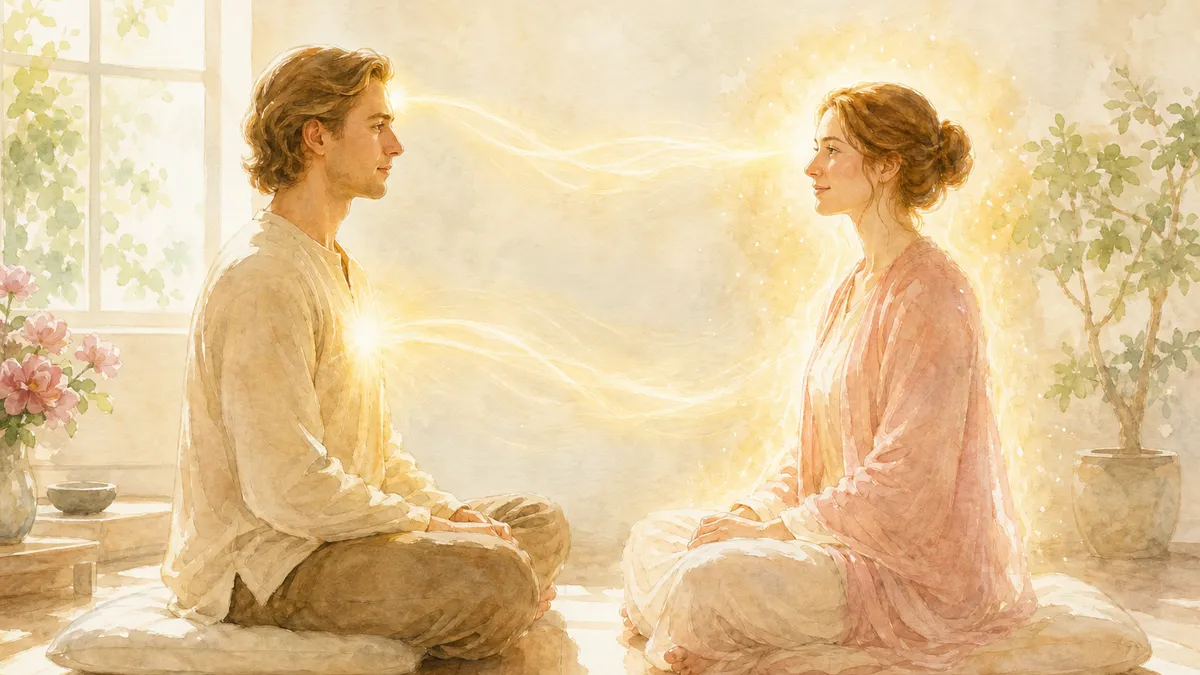
For example, in this way siddhis pacify even demons and harmful spirits. To pacify another—that is, some being who throws you off balance—you must transmit this bhava to them, see the deity in them.
The generation of divine pride can be compared to the principle of a king. That is, you must place your inner “I” on the throne, raise it onto a pedestal. At the same time, you should not strain, frantically trying to generate divine pride while influencing another—this is a mistake. You should relax, enter presence, express devotion to this presence, and allow it to come to the forefront. You generate divine pride not from the ego, not from the relative “I,” but simply allow presence to manifest greatness. This means that you let go of yourself, relax, allow presence to come to the forefront and then influence the external, purify it, and then this will be the true practice of divine pride. In other words, you do not try to transmit this divine pride from yourself; otherwise, it will be self-deception.
Such training is a very good lesson for us; it subdues our egoism well. We begin to understand that our ego has no power, that with the help of the ego we cannot positively influence another: neither purify them, nor inspire them, nor pacify them if it is something harmful. All true power, true divine pride, lies beyond the ego — in the natural state.
The principle of divine pride is a change of status, a change of inner self-assessment. When we truly change our inner self-assessment and inner status, we can also project this into the external space, transmit it to others. This is a very important principle in magical worlds, in tantric sadhanas. For example, if a siddha yogin enters the heavens of the gods, he positions himself in some way, and depending on how he presents himself, he is treated accordingly. This principle operates everywhere in the universe. In other words, you are what your inner status of awareness is. If your divine pride is sufficient to position yourself as Brahma, then the stars and planets will obey you. One movement of yours — the deities of the planets will change their orbits if you need it; one intention of yours or blink of your eyelids — a new universe will be created, because the deities governing the universes will recognize your status if you have a power of presence equal to the power of presence of the creator god Brahma. If your power of presence allows you to transmit bhava to Dharmaraja or Yama, you can intervene in the karma of others, change the destinies of people and gods, increase the duration of their lives, erase them from the book of “Life and Death,” since the deities will obey you. The key to controlling events lies in influencing subtle divine energies, since deities stand behind all manifestations. This means that if you want to influence a situation, you need to act upon these divine energies. But you will be able to act upon them only if your status allows it. For example, if a simple peasant goes to the king and tells him to change the law, the king will not even listen to him. This means that the peasant must present himself, at the very least, in the guise of an even more powerful king in order for the king to listen to him.
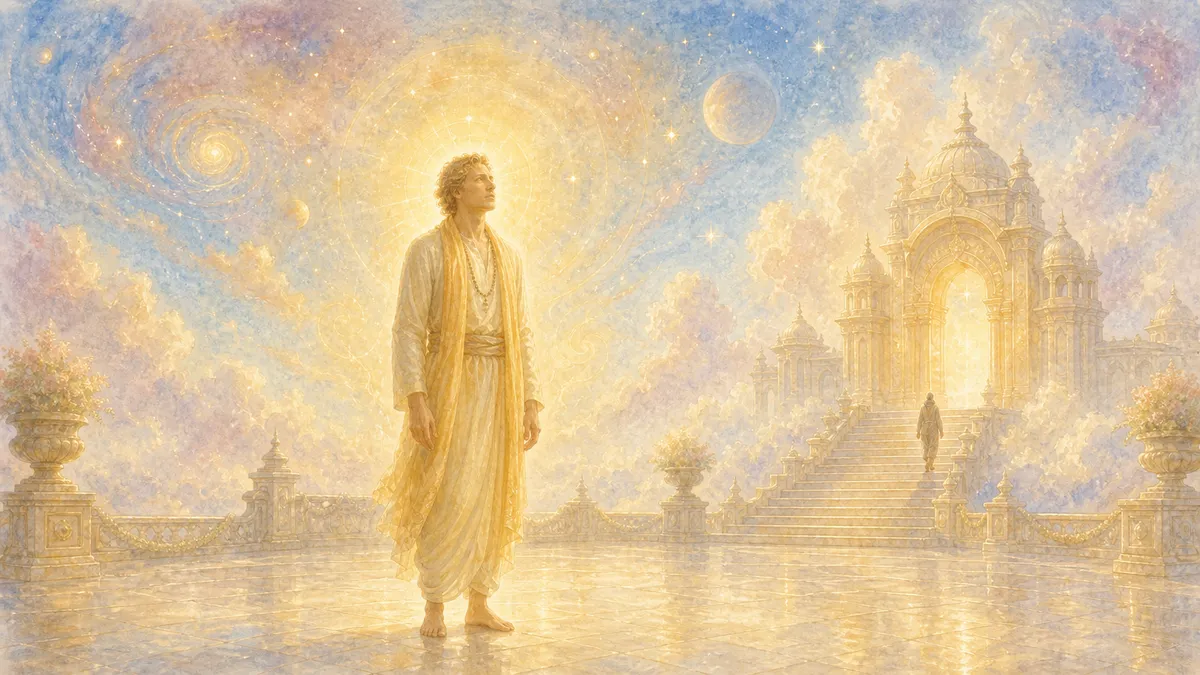
For now, we are not particularly interested in influencing the external world. The discussion concerns influencing our own karma. For example, in order to free ourselves from the cycle of rebirths, our divine pride must develop to such an extent that we can influence the subtle mechanism of our mind, where the mechanism of reincarnation has been laid down by the ruling inner deities. This is the principle of liberation.
the pacification of the subtle states of one’s mind and strong kleshas;
the pacification of the obscured worldly minds of others and turning them onto the path of dharma, the cessation of harmful consciousness on their part.
Such pacification can manifest especially in the dream stage, as well as when you encounter obstacles. It is believed that obstacles often come in dreams, but if your level of awareness and bhava is deep, you are not subjected to these obstacles; on the contrary, you can dissolve or pacify them. When you encounter something and transmit this elevated state, then the energy that can personify itself in the form of some being ceases to harm you; you transmit your will or intention to it, for example, take from it a promise not to harm other living beings and to help the dharma.
the pacification of the obscured minds of non-human beings, such as demons, spirits, samsaric gods, worldly dakinis, and turning them onto the path of dharma through binding them with vows, transmitting instructions, etc.
One can give the following example. When a person appears in a group, those around consider how to evaluate him, how to treat him; if this person has proven himself to be very wise or powerful, then others begin to respect him. Something similar happens with the pacification of energies or kleshas. When your awareness acquires great weight, you can pacify various impure karmas of your mind, various obstacles, and so on; you can transmit divine consciousness to them.

The Stage of Offerings
The stage of offerings (mahabhava):
becoming similar to a deity and transforming the surrounding space of the Universe into a pure dimension (mandala).
When your bhava grows, purity increases and gradually begins to spread to everything around: to relationships, to the external world, to inner vision, to dreams. Everything that begins to radiate from you emanates as a pure manifestation, as subtle creative energies of peaceful or wrathful deities.
For example, the way holy siddhas manifest is an example of transition into pure dimensions. Any of their actions are the play of the Absolute; any words are like blessings; any object that surrounds them is like an ornament or a palace. This means that nothing impure, nothing dualistic or obscured remains.
If siddhas integrate with the lower worlds, with wrathful energies, they will appear in another form — a fierce one, and then their ornaments will change. For example, they will be adorned with a bowl with skulls; or instead of a lotus throne they will dance on a corpse; or their palace will be made of severed heads, and in their hands they will hold a bowl filled with blood. This will be the ornament of a wrathful mandala; nevertheless, they will still be in the mandala, and even with these energies they will still manifest creatively. That is, even these wrathful, fierce energies are connected with the principle of awareness. This is the principle of complete transition into pure vision.
Attracting Divine Beings
attracting the attention of worldly divine beings and receiving initiations, blessings, prophecies, and praise from them;
attracting the attention of great exalted divine beings of the upper world of forms, receiving from them approval, blessings, prophecies, and praise in dreams, in meditation, or in waking life.
What are these beings that you attract? In fact, these beings are not something external; they are your own divine energies. One could say that they are your doubles in purer versions. They are your subtle dimensions or inner deities (devatas), which you never reached in ordinary life, but when your channels and mind are purified, then you begin to see your pure side.
Of course, at first they are perceived as something dualistic and separate, but gradually we begin to understand that these are our own inner devatas and begin to enter into contact with them; that is, we begin to reunite with our subtle divine illusory bodies.
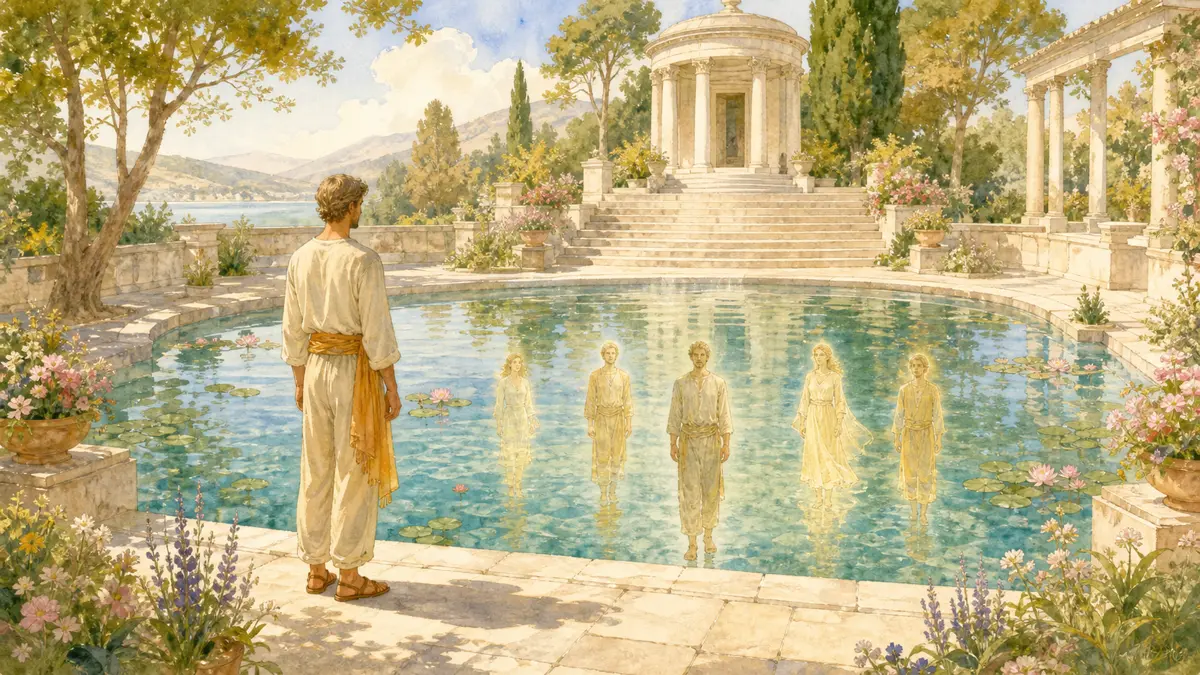
receiving abundant offerings from divine worldly beings and including them in the mandala of the mind as one’s companions and retinue, the deities of the periphery.
When you practice or are in deep presence, pure visions may arise in which deities hand you a casket with jewels, a scroll, or pass something to you. This indicates that your subtle inner energy has opened up, that your pranas are being purified, your lifespan is increasing, awareness is growing, and you are gradually entering a pure dimension.
Such a yogin can perceive the deities of the five elements. If a deity governing some element comes, this indicates that control over the corresponding element (water, earth, etc.) has been attained or that its siddhis are being achieved.
Transition into Pure Lands
As your divine pride deepens, you discover how your consciousness changes, how the space around you is gradually saturated with pure vision. Gradually, a transition takes place into such a world where all actions are play, where all relationships are built on samaya (a sacred bond), where there is no longer anything conflictual, obscured, or dualistic. This is a world that consists entirely of pure consciousness.
There are many descriptions of worlds called “pure lands.” One could say that pure vision predominates in such worlds. Living beings there abide in presence, but their energies have already been purified to such a stage that the elements of the body, the soil, and the external elements are always harmonious. At still higher levels there exist the worlds of the god Brahma and the Akanishtha heavens. This is the state of ultimate pure vision, when presence and energy are completely united.
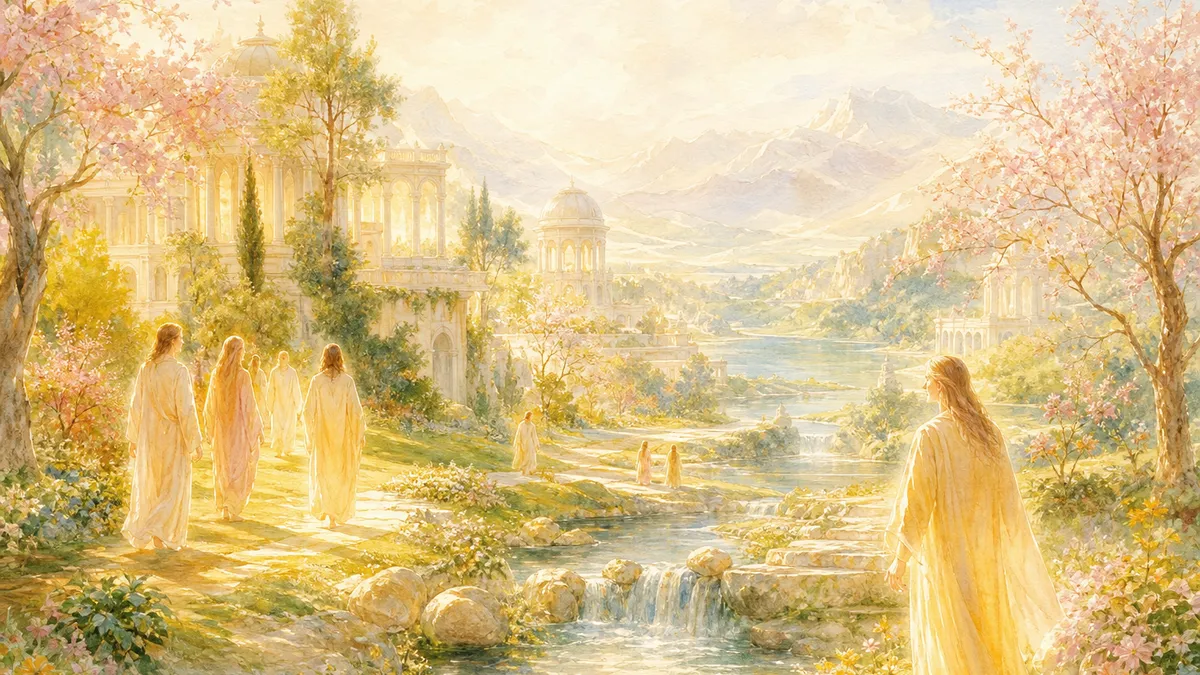
To put it simply, to abide in pure vision means to continuously direct the mind toward the sublime, to always keep the mind elevated. How can such an orientation arise? Only through immersion in the Supreme Source, when you draw inspiration from there. This is the very same as the principle of Guru Yoga.
