

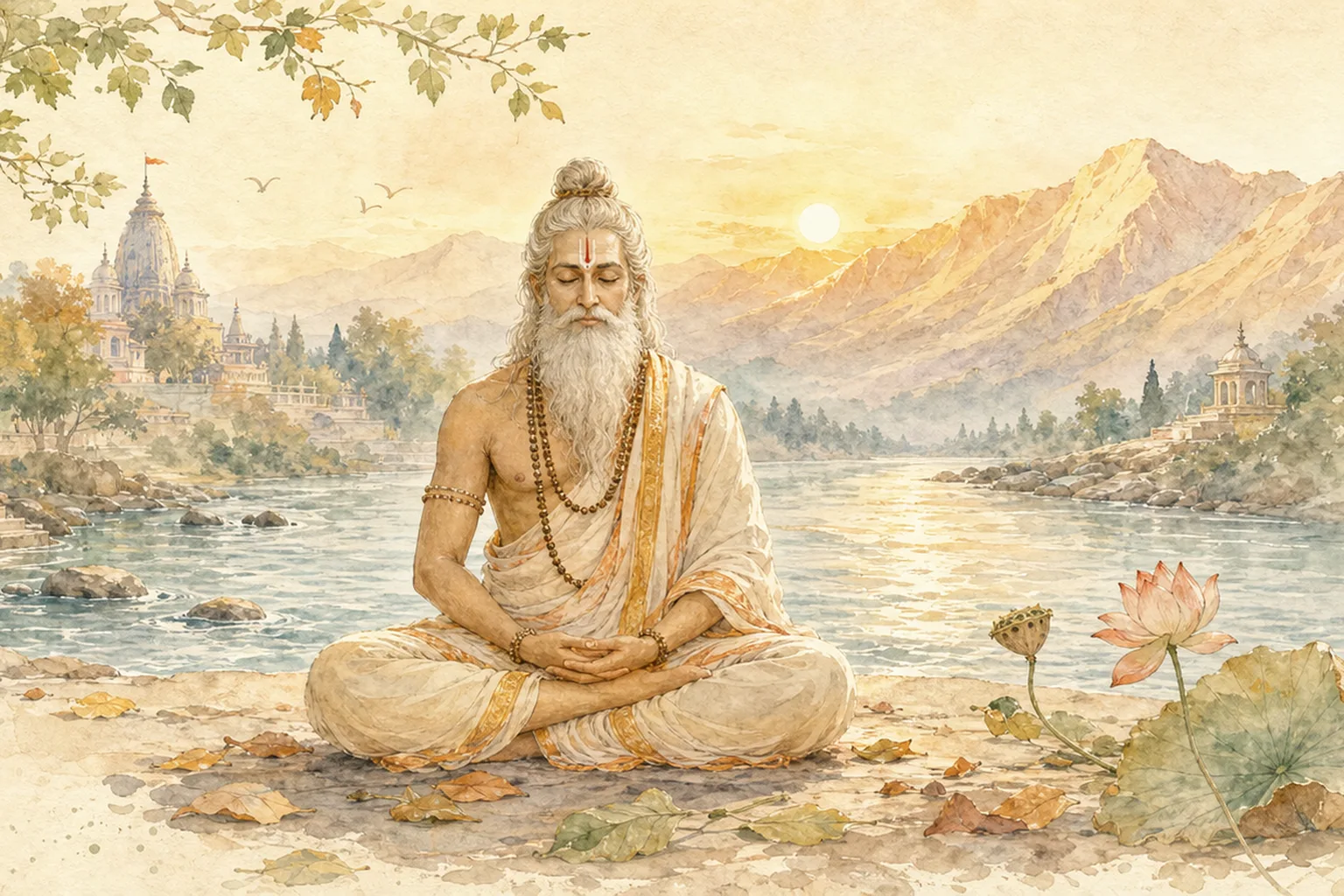
Everything that abides in Atma-tattva is eternal. Everything that exists in our worldly understanding is transient. The world we perceive is ephemeral. Although we know that our bodies are impermanent, as is everything that makes up our everyday lives, we continue to deceive ourselves by considering them permanent.
When we forget about impermanence, we continue to deceive ourselves. When we remember impermanence, we draw closer to the Truth. Impermanence is one of the fundamental truths of this life. Those who do not understand this are simply arrogant ignoramuses. Those who understand it are people of dharma. We are often deceived by forgetting impermanence, and then our minds attach importance to things other than dharma—completely unimportant, trivial things. When we do not remember impermanence, our ambitions seem important, our attachments seem important, and we act as though we ourselves are so important. We simply do not know who we are. But impermanence immediately shows who you really are. Rather than imagining yourself to be important, it is better to remember impermanence, purify yourself, and practise. This is far more important.
Impermanence as a Source of Inspiration
Becoming accustomed to constantly remembering impermanence means radically changing one’s worldview. Usually, we look for something to inspire or entertain us. But a true, genuine practitioner inspires himself through impermanence. Impermanence does not oppress or depress him; on the contrary, it inspires him. He understands the boundlessness of the world and understands the boundless potential for transformation. It is a constant challenge for him, one that he is always working with. Impermanence enables him to keep his mind pure, clear, and humble. It does not allow him to cling to the trivial things of this world. It constantly urges him to move forward.
For someone who does not practise, impermanence can cause great confusion—to the point of tears, fear, or depression—if he thinks deeply about it. That is why ordinary people simply try to avoid thoughts of impermanence. If you want to confuse someone, talk to them about impermanence. They will immediately grow gloomy, turn away, and think poorly of you, because you will destroy all their illusions and castles in the air.
But one cannot run away from the truth! We must always look it straight in the eye. A practitioner is one who looks truth straight in the eye; seeing impermanence every second is already a challenge, an impetus for transformation. If the world is impermanent, how can I condemn another person? If the world is impermanent, how can I think highly of myself or act important, if I know that I stand face to face with impermanence? If the world is impermanent, how can I become seriously attached, how can I lose myself or become distracted? All of this simply fades away. But only those who imagine themselves immortal—pseudo-immortal—can afford such things. A true sadhu does not allow himself this. If the world is impermanent, how can I worry about some trivial matters of samsara and attach great importance to them? I know that all of this is insignificant in the face of impermanence. The most important thing is my spiritual experience, sadhana, and liberation from egoism.
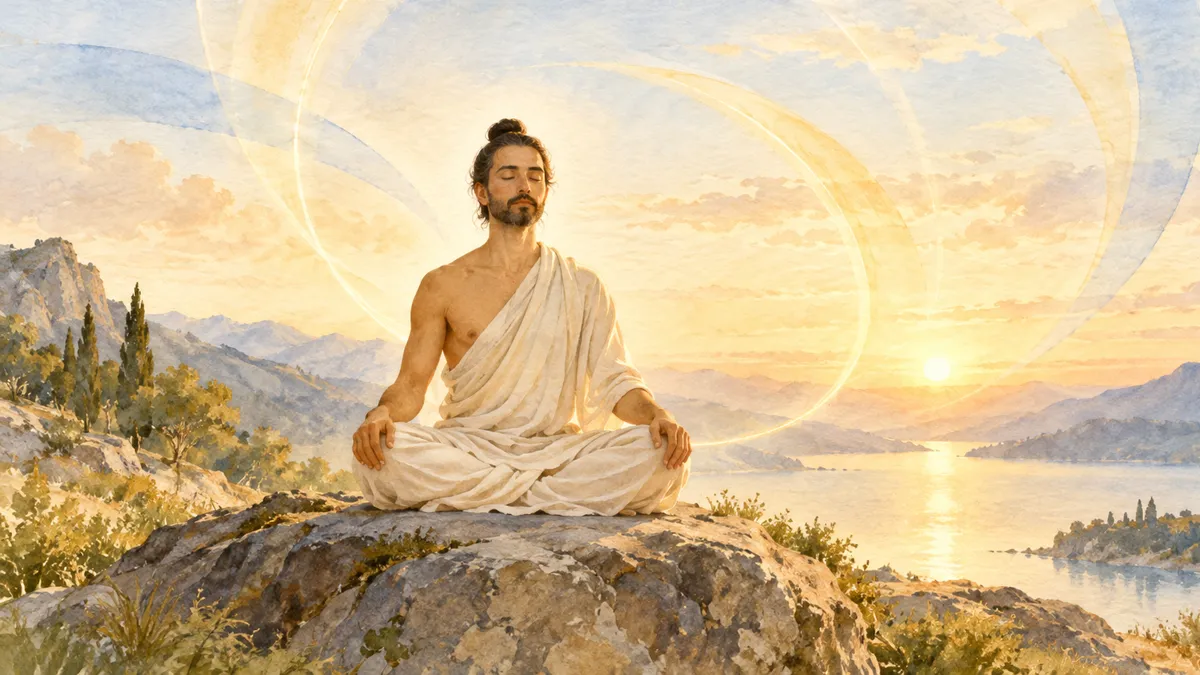
The Search for a Genuine Foundation
Impermanence is such a powerful liberating factor that it enables us to deal with many things. At first, we feel the ground being pulled out from under our feet. Everything we have built is unreliable and ephemeral, like a sandcastle, and if the ground gives way, then so be it. It is impermanent, temporary, and not worth standing on. This is the kind of ground and foundation that we may not need to stand on at all. Sooner or later, it will disappear anyway. Therefore, we need to seek another foundation—deeper, more genuine, more authentic.
Until we become genuine, all our spiritual practice will be a formality. We will bow to the Guru formally, chant mantras formally, meditate formally, and formally accept various vows, statuses, and oaths. All of this will be a form of play, a gratification of the ego, something unreal. Only when we are in an authentic state and know that we have decided to transcend impermanence, taking responsibility for our choice and for our sadhana, do genuine faith, genuine determination, and a true desire to practise awaken within us. We cease imposing our egoistic judgments on both reality and practice.
I would like all my students to be authentic, or to strive for such authenticity, because a false state will never bring Liberation. Sooner or later, even if we hide it deeply and carefully, we will encounter the false state, our inner falseness; sooner or later, it will inevitably crawl out: during a retreat, when communicating with others, on a journey when karma unfolds. Sooner or later, we will have to face it.
Sometimes you look at a person and think: “Let’s wait, let’s wait and see what kind of hero you will be in five years, in ten years, during a three-year retreat. All your heroism will reveal itself at once. Do not attach too much importance to your learning, your qualities, or your great virtues. We shall see—it is not yet time. The time has not yet come.” As a spiritual Teacher, I have seen many “great” practitioners, “great” disciples, “great” monks, “great” sadhus, and “great” hermits. It is not all that simple. Only authenticity guarantees that you will follow the path correctly. Therefore, a true sadhu always practices with modesty, humility, and awareness of himself and his ego. He is always vigilant and sober, and never becomes intoxicated either by external reality, his qualities, or his experiences. Such sobriety arises from inner humility and authenticity.
Once, a man came to a doctor and said: “Doctor, I’m depressed. Could you help me with something?” The doctor said: “You should go on a journey and see different countries, perhaps some coconut islands.” The man said: “I’ve already been everywhere, seen everything, and nothing brings me joy. I’ve traveled all over the earth.” Then the doctor said: “You should inspire yourself through love. Find someone whom you could love and devote yourself to all your life. Such happiness and inspiration!” He said: “I have already loved; no one has ever loved as I have, but it still doesn’t help me.” Then the doctor said: “Perhaps you should take up some hobby: alpine skiing, collecting something? That can also be very entertaining and bring you joy.” He said: “I’ve tried all that too, and nothing helps me.” Then the doctor thought: “I have one last piece of advice for you. Go see the performance of the great Garik. It is pure delight and ecstasy; you simply cannot imagine it—your depression will disappear at once.” The man looked at the doctor and said: “Is that your last piece of advice?” “Yes.” “Then I’m doomed, Doctor. The thing is, I am the great Garik!”
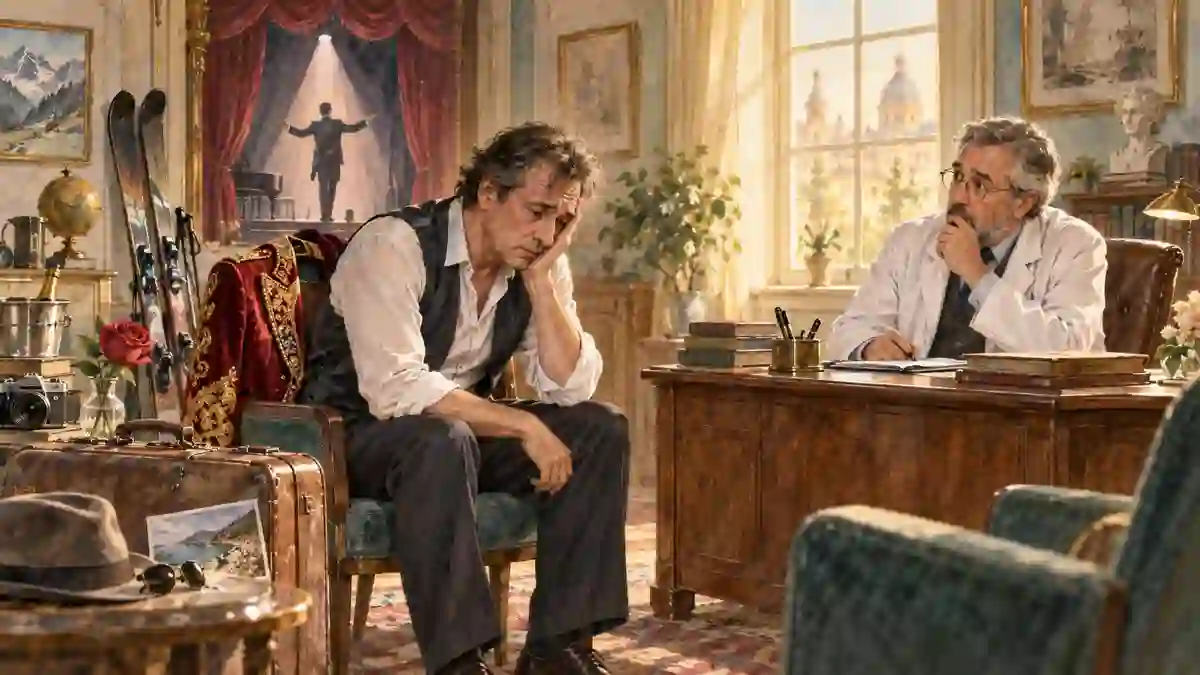
This “great Garik” is the ego, which always suffers. Whatever pleasures it tries to find, sooner or later it becomes disappointed. And when it is invited to look at itself and engage in investigation, it always falls into confusion, because it has to do a great deal of work and discover its own nonexistence. When the ego—this great Garik—turns toward itself and begins vichara (self-inquiry), it falls into immense astonishment and confusion upon discovering the fact of its nonexistence, and it tries to find another, deeper foundation. From this moment, our authenticity begins.
The Eternal Atma-tattva and the Path to Eternity
Only Atma-tattva, which is Jnana, or Wisdom, is eternal and imperishable. It exists regardless of whether we are aware of it or not. It is above all our losses and upheavals, and nothing can shake it.
When we discover the nonexistence of the ego and perceive the subtle space beyond all our false impulses, relying on impermanence on the one hand, vichara on the other, and method and faith on the third, we discover Atma-tattva. This is the immortal, eternal, indestructible essence within us. It alone can be relied upon.
This Atma-tattva is the embodiment of Truth. It is also the embodiment of the highest Bliss, or Ananda-svarupa. The Gita contains many verses that speak of the eternal life of our soul. Lord Krishna teaches Arjuna:
“It was never the case that you did not exist! All those whom you see—Bhishma, Drona, and the others—have also never disappeared and will never disappear. This world, too, is eternal. I—Ishvara, you—the jiva, and this world—the jagat—we have all always existed.”
Reflections on impermanence must ultimately lead us to Eternity. We must inevitably arrive at Eternity. Everything false and inauthentic must fall away, the ego must loosen its grip, and we come to a constant experience of Eternity. It cannot be that you practise and do not come to the experience of Eternity. You will inevitably encounter it. Moreover, you cannot miss it and go anywhere else. Eternity is behind you, Eternity is in front of you. Eternity is below, above, to the right, to the left, inside, outside, everywhere. True practice of Laya Yoga begins when you have already come close to experiencing Eternity. Then all sankalpas begin to work, and even minor methods bring experiences and realization.
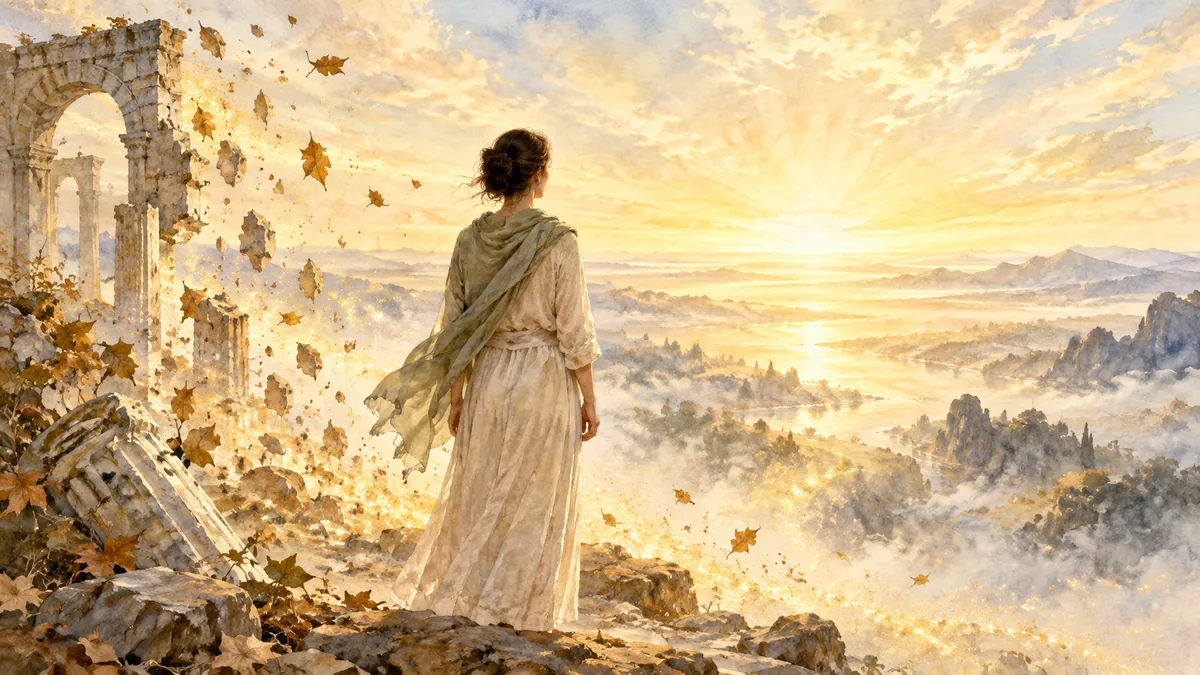
Whether we approach Eternity or not depends on whether we are able to detach ourselves from egoism. There are no fixed methods for detaching ourselves from egoism. This is a method beyond methods. The question is: to what extent will we be able to remain aware, to what extent will we be able to let ourselves go, and how much faith and devotion do we have? Some free themselves from egoism through Jnana Yoga, through the practice of awareness alone; others through faith, devotion, and self-surrender. Whatever path you follow, if you free yourself from your egoism, you will come to the experience of Eternity. When you come to the experience of Eternity, your entire life changes. All false connections, relationships, and all dualistic vision disappear. You remain alone in the whole world, alone with God and with God alone. Your old attachments also disappear; nothing matters anymore except Eternity, you, and your relationship with Eternity. Everything else, if it happens at all, happens as a play.
Darshanas of Indian Philosophy
The three principles—jiva, Ishvara, and Prakriti—have existed at all times, even before the creation of this world, and will exist forever. Although physical bodies undergo changes, Atma-tattva remains eternal and unchanging.
There existed three principal philosophical schools or systems that developed these theoretical approaches to comprehending Atma-tattva. They are Dvaita, Advaita, and Vishishtadvaita.
Let us first try to understand the essence of Dvaita, or the philosophy of duality. According to Dvaita, the world is formed by two eternally existing principles: jiva and Prakriti, which are independent of one another and never merge into one. The unchanging nature of these distinct, imperishable entities is acknowledged.
In Dvaita, jiva, Ishvara, and Prakriti are different things. Jiva is eternal, immortal, indestructible, independent, and exists separately from God. God is also omnipresent, immortal, and eternal. Realization always means attaining some kind of relationship between the soul and God, between jiva and Brahman, the Absolute. Those who follow the path of Dvaita do not aspire to Sayujya-mukti, Liberation through dissolution and reunion. They aspire to other types of mukti. For example, to attain the same form as the chosen deity, or to live in the same loka as the chosen deity (Salokya-mukti, Sarupya-mukti), to establish some eternal, spiritual, transcendental relationship and always maintain it.
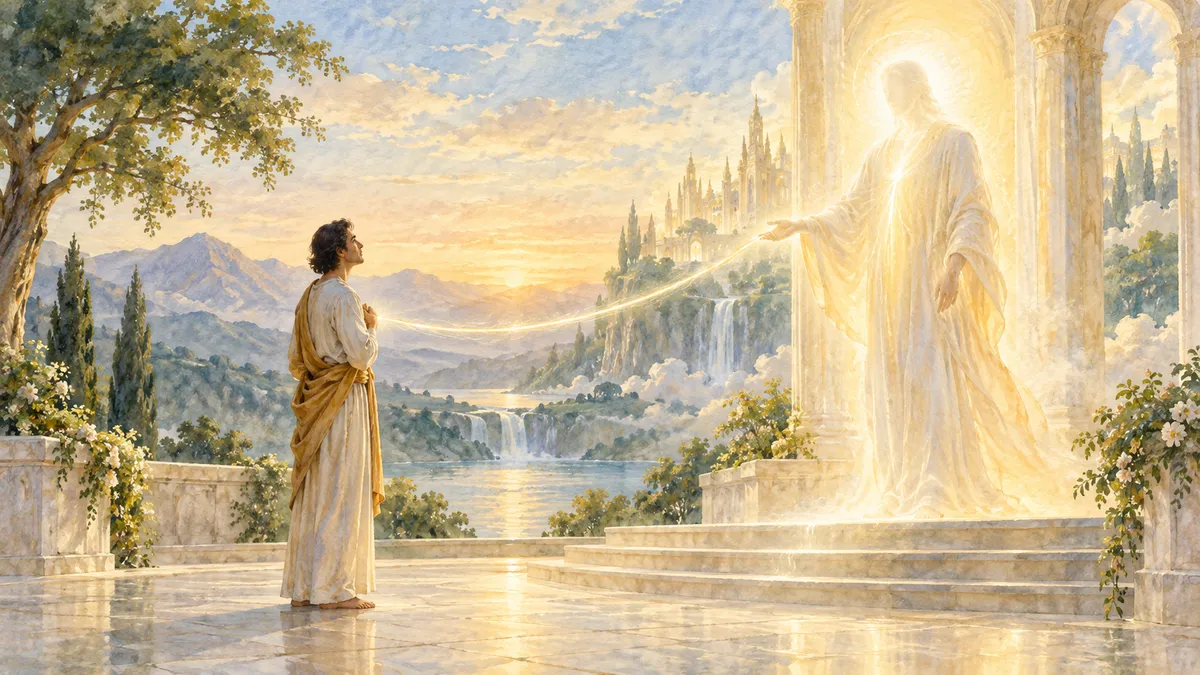
It is believed that Dvaita is suitable for those who cling too strongly to the idea of the self, the idea of “I.” They are so afraid of losing their sense of individuality by reuniting with the Absolute that this path suits them: they must purify their “I” to a pure state, transform egoism into shuddha-sattva-svarupa, the purest form of the jiva, and enjoy an infinite relationship with God. This is enough. They say: “Why become sugar? It is better to eat this sugar and enjoy its taste. For in such a state there is neither suffering nor limitation. Jiva is immortal by nature, Brahman is immortal by nature, and it will always remain in loving, transcendental service to Him. Its service to Him from the very beginning, as an uninterrupted connection, is precisely its purpose.” But Sayujya-mukti—the reunion of jiva with Brahman—does not appeal to them.
Vishishtadvaita postulates the existence of “chit” and “achit,” the conscious and the non-conscious in the manifest world, and acknowledges the phenomenon of reality and illusion. Both principles—“chit” and “achit”—are considered real and significant. Vishishtadvaita proclaims a single basis of the jagat, or world, which possesses the quality of inertia (jada), or of the jiva (soul), which possesses consciousness. According to this philosophy, both jada and chaitanya—that is, inertia and consciousness—are manifestations of one and the same principle: divinity, and are therefore considered equally essential. Although these two eternally existing principles never merge with one another, they are recognized as different aspects of one and the same form and constituent parts of one and the same principle.
In Vishishtadvaita, everything is a manifestation of one Absolute. Jagat—the manifest world, jiva—the conscious soul, and Purusha—the Supreme Spirit—are not three separate entities but, ultimately, one and the same. The greatness of Vishishtadvaita lies in its recognition of their common foundation. Although its manifestations and the ways of comprehending its individual aspects are highly diverse, the presence of a single principle is affirmed—the eternal and unchanging divine Spirit that unites them.
In Vishishtadvaita, it is said: “Of course, the jiva is identical with the Lord (Bhagavan). However, it is identical with Him qualitatively, but not quantitatively. The Lord (Bhagavan), in the form of the localized Paramatma—the individual spark of the soul—resides in every body. But if we consider this quantitatively, the Lord is omnipotent and omniscient, possesses everything, and possesses immense body, glory, wealth, renunciation, beauty, and other qualities. The jiva does not possess these things; instead, it has minor impurities, limitations, kleshas, and karmas. Therefore, one cannot speak of the complete identity of the jiva and Bhagavan—only of qualitative identity, in essence, but not quantitative identity.”
Such is Vishishtadvaita. There is identity and, at the same time, there is difference. This principle is called achintya-bheda-bheda-tattva— inconceivable identity and difference; that is, on the one hand, there is distinction, while on the other hand, there is no distinction.
To illustrate this, followers of Vishishtadvaita use the following example: gold ornaments have different shapes, but the gold from which they are made is always the same. Moreover, they assert that if God did not have at His disposal the entire diversity of subtle and gross forms existing in the world, His very nature would be incomplete.

Let me give you an example: let us imagine a certain kingdom. Without a king, there can be no kingdom; without a people, there can be no kingdom either, and if there were no people, there would be no king. They are all interdependent, since the king, the kingdom, and the people are connected by indissoluble bonds. Vishishtadvaita recognizes the unity of these three entities. If we examine the true nature of the king and the people, we will understand that the principle of Advaita, or non-duality, is also embedded here. The king is one of the people. The king is the ruler and lawgiver, while the people are those who are governed by the law and observe it. However, despite the fact that the ruler and his subjects appear to us as separate from one another, their human nature is one.
Classification of Philosophical Schools
The philosophy of Vishishtadvaita is sometimes also called “limited monism”: there is non-duality, but it is limited. The philosophy of Dvaita is also often called monotheism in some schools. In other words, monism and monotheism should not be confused. Monism means that everything is one, whereas monotheism means that there is one God, but there is always a jiva that defines its relationship with Him and describes Him. Vishishtadvaita is also limited monism, meaning that non-duality exists, but there are certain limitations.
It is believed that the jiva (soul) is the boundary energy of the Absolute, while His inner energy (svarupa-shakti), or subtle energy (atma-shakti), is His own pure, inner, transcendental energy, and the external, gross, material energy is another energy (maya-shakti). These three energies are, as it were, three in one, but nevertheless distinct.
However, Vasishtha says that the two preceding philosophies are suitable for those who are not ready to open themselves, accept, and understand the transcendent philosophy of Advaita. The transcendent philosophy of Advaita frightens and confuses those who are attached to the idea of an individual soul. Their minds are incapable of containing such a transcendent and global Truth. And, of course, we must consider why this is so. We should not think: “I can certainly contain it immediately. I have no problems at all—I can understand the philosophy of Advaita right away. It does not frighten or confuse me in the slightest. Everything is clear: ‘Aham brahmasmi’ and ‘Sarvam eva brahman.’” But obviously, it is not all that simple, since the philosophy of Advaita is immensely vast. As soon as we begin to immerse ourselves in it intellectually and actually practice it, we discover the abysses it opens up. We understand the Dvaitins and Vishishtadvaitins very well: it is in fact not easy to immediately accept and live by the philosophy of Advaita. This means radically reassessing and overturning all our meanings and values.
The Path to Pratyaksha-Advaita
Gradually, reflecting on these types of philosophy and rising higher and higher, we arrive at Advaita.
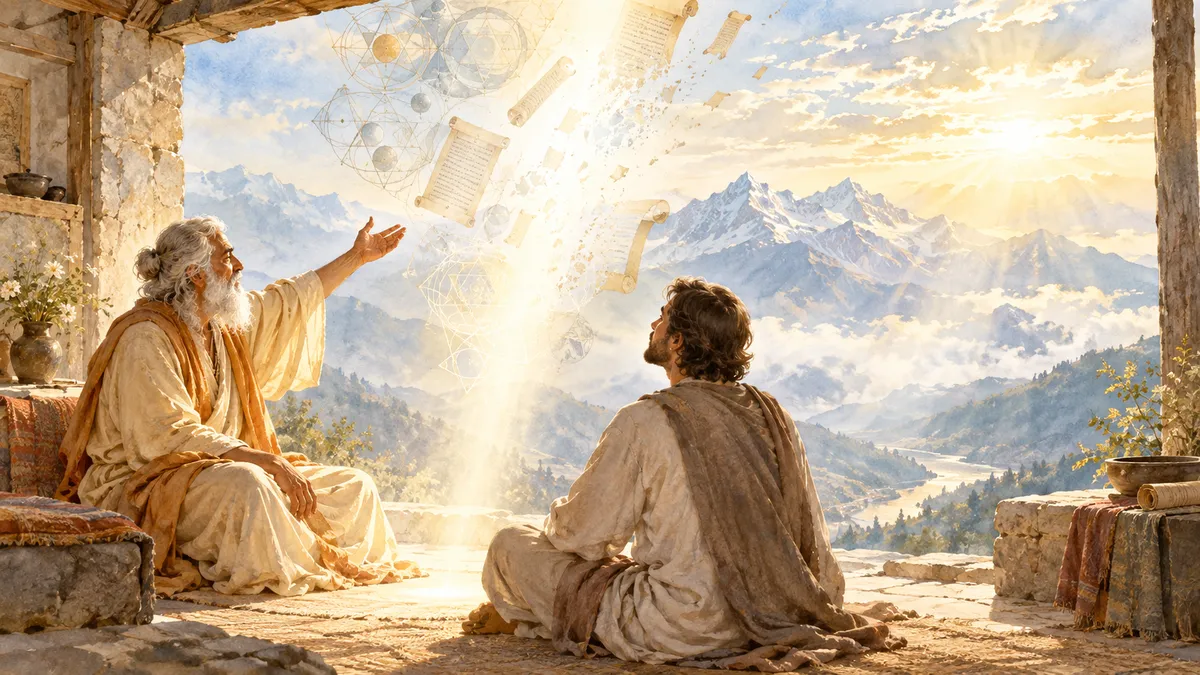
Pratyaksha-Advaita is an even higher sadhana; it is not even a philosophy. It presupposes the absence of conceptual explanations. For example, a disciple asks: “What is God?” The teacher replies: “Phat!” Everything is clear; there is no need for any more philosophies—Dvaita, Vishishtadvaita, or Advaita. There is a direct introduction; sustain it if you can. This is Laya Yoga. Laya Yoga begins with Pratyaksha-Advaita, even bypassing philosophy. When we clarify the philosophy and so on, these are corrections to the overall learning process, whereas Laya Yoga itself begins only at this level.
In Pratyaksha-Advaita, your philosophical knowledge is unimportant. In Pratyaksha-Advaita, many things that are important in Dvaita and Vishishtadvaita are generally unimportant. It may be put this way: nothing matters at all except awareness. It presupposes that you have already understood, realized, and gone through all of this. That you observe the principles and samaya perfectly, that you have pure vision, pure channels, and detachment. You are already a ready vessel; you only need to engage in contemplation, abide in natural awareness, and work subtly with the method.
But if we ask: “Where can such marvelous people be found?”, then of course we will find them: Ramana Maharshi, Ramakrishna, Shakyamuni Buddha. Therefore, even while declaring ourselves followers of Pratyaksha-Advaita, we still go through this preliminary path. In Pratyaksha-Advaita, however, many things are unimportant. Many people do not understand this. Conceptual definitions are unimportant; various descriptions, texts, sutras, and shastras are unimportant; different rules and so on are unimportant. None of this matters at all. It is assumed that your level of self-discipline is very high, that you understand everything yourself, do everything yourself, and observe everything yourself by default, and that you have sufficient merit. What matters is abiding, for example, in Shambhavi Mudra—something along those lines.
The Unity of the Jiva and Chaitanya
We already know about the unity of the jiva and Chaitanya, and therefore we discover Chaitanya, or consciousness, in inertness, while finding the features of the inert in consciousness. Thus, in essence, they are inseparable. The inert cannot exist outside consciousness, and consciousness cannot exist outside the inert. In our everyday lives, in the world of objects and phenomena, we often fall into error, believing that the power of consciousness is unable to penetrate matter, and vice versa. However, this is a mistaken view.
We know that the entire world is permeated by shabda, or sound. Shabda (sound) can arise only where there is movement or an awakening to action. We constantly blink, closing and opening our eyes many times within a single minute. When the eyelids move, a faint sound arises. But this sound is so quiet that we do not perceive it. The fact that the sound is barely audible does not allow us to deny its existence. Just as we are unable to detect a sound that is very quiet, we are unable to recognize the presence of consciousness in inertness or see the elements of inertness in consciousness.

Parinama and Vivarta—the Two Aspects of Illusion
This illusion has two aspects:
One of them is parinama, or evolution
Another aspect is vivarta, the property of illusion that makes us see changes where in fact there were none. This property is based on the brain’s ability to create forms and images in the imagination
Parinama is a change, modification, or transformation of one thing into another. For example, there was milk, and it became sour milk; there was milk, and it turned into butter—the milk became butter, changed qualitatively, and was modified. This is parinama.
What, then, is vivarta? When a rope lying in our path appears, we mistakenly take it for a snake. The rope does not disappear, and no snake crawls up. The entire image is a product of our imagination. Vivarta is the property that makes us forget the real thing and replaces it with another apparent form that in fact does not exist.
Vivarta is our illusion, our projection; it is not a real alteration or modification. For example, we look at a person and think, “This person is a thief!” even though they have stolen nothing. Later it turns out that they are not a thief at all. And this state—“he is a thief,” when in fact there was no thief—is vivarta. Or we enter a dark room and think, “There is a black cat in there, and it is running around somewhere,” but we turn on the light, and there is no cat at all. This is an example of vivarta.

This is one of the effects inherent in illusion (maya). Parinama carries within it the property of illusion, or change, similar to that which turns milk into curdled milk. If there were no milk, there would be no curdled milk either. Parinama is the quality through which something that truly exists undergoes change. But both parinama and vivarta are aspects of the world illusion, or maya.
Deha-bhranti — Bodily Illusion
Today we live completely under the influence of vivarta, despite the fact that we are all Atma-svarupas, embodiments of Atma. We have forgotten the Supreme Reality and immersed ourselves in deha-bhranti, or bodily illusion. We mistakenly consider our ephemeral existence to be the only reality.
Bhranti means error, delusion, or misunderstanding; deha means body. The error of identifying oneself with the body is called deha-bhranti. For example, on the level of the subtle body, each of us is an astral stream constantly flowing from the past into the future—endless, eternal, and essentially empty, full of images—with a trail of karma extending from the past and a trail of prarabdha karma existing in the future. And each of us is simultaneously present in the past, the future, and the present in the subtle body; that is so. Is it not? You all have memories of the subtle body, of the past. Right now, you have the past within you, and you are in it. You all have samskaras of the future. Right now, these samskaras exist in the subtle body. Any clairvoyant can read them. In fact, in your subtle body, the present, future, and past all exist together.
But deha-bhranti means that your subtle body is an infinite stream flowing in all directions; moreover, in the subtle body, the past and the future are not linear. That is, the linear vector of time flowing in one direction from the past into the future does not exist in the subtle body. It is not there at all. This is a characteristic of this phenomenal, material world. In the subtle body, time can flow in different directions, depending on the direction of consciousness.

How can this be demonstrated? Even subjectively, you can freely return to the past and begin replaying it while remaining in the present. You can fantasize about the future, and when you do so, it means that you are activating aspects of your astral body: you can control the vector of time as you wish; at the level of the subtle body, it obeys you.
But what does deha-bhranti mean? It means that during rebirth, this stream entered a human embryo and lost its connection with the subtle body. The stream of consciousness identified itself with the gross body, in which time has a clear linear direction, in which the laws of cause and effect operate, and the connection with the past was lost, as was the connection with the future. This nonlinearity, nonlocality, and quantum uncertainty inherent in the astral world were lost. There is a rigid fixation on the body, a clear identification: “I am, of course, this body, and others are bodies too.” The past life is forgotten, and the future cannot be seen. The ability to nonlocally direct the vector of time has also been lost. All this relates to deha-bhranti. The astral body is capable of intuitively being present, according to the principle of a hologram, at every point in the Universe. This, too, is lost when incarnating in a body. All this also relates to deha-bhranti, the error of identifying oneself with the body.
We are not afraid of a rope, but we are panic-stricken by a snake. We are not afraid of Atma—the divine soul—but we are filled with fear of life. Despite being Atma-svarupas and therefore supposed to be free from fear, we are held captive by fear and illusion.
The Unity of Atman in Many Bodies
Upadhis, or separate vessels, are manifestations of the one Reality, just as there is only one Sun shining in the sky. When we fill a thousand pitchers with water, the same Sun is reflected in all of them. But since the thousand pitchers are filled with water, which possesses the property of reflection, it seems to us that the Sun has split into a thousand Suns. But this is only our perception, and it is false. The truth is that a single Sun shines in the sky. Similarly, our bodies can be compared to pitchers filled with water, in which the one Atma is reflected, split in our imagination into many parts.
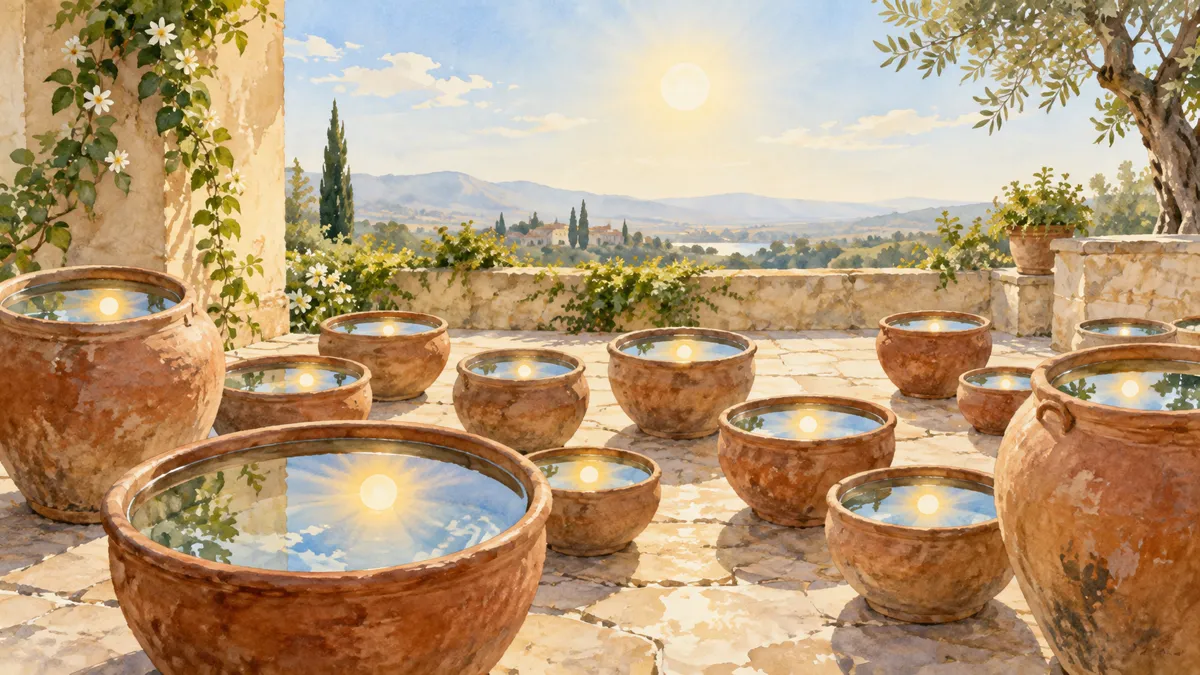
Bodies can be likened to pitchers (upadhis). And the one Atman is present in every body. That is why it is said: “Try to see God in everything! Love everyone! Pure vision,” if the one Atman, like water poured into all the pitchers, is present in every body. Not seeing this, being enchanted by diversity, being captivated by diversity, and basing oneself on deha-bhranti, identification with the body—this is maya. The aspiration to see through this is the path to Awakening.
Many do not fully understand the principle of pure vision, saying: “I do not see any deities or anything of the sort.” That is not the point. It would be surprising if you saw them immediately. Saints see deities. It is simply an attitude: “to love others and try to see God in others,” understanding at least philosophically that Atman is present in all bodies. If you understand this attitude, you will always strive to do this. It is not difficult. This does not mean that you immediately need to see in some special way, seeing gods emerging from other people’s bodies.
Many ask the question: “Swami, please tell me, where does Atma (the soul) go after the body dies?” When a pitcher breaks and the water spills onto the ground, what happens to the Sun that was reflected in that water? The Sun did not come or go. It appeared to us as a reflection because there was water in the pitchers. And when the pitcher broke and the water spilled out, the reflection disappeared.
Another question arises: “If one Sun is reflected in the pitchers, does this mean that all reflections are equal?” The reflection is indeed equal, but the value of the pitchers differs. Some may be made of clay, others of copper or bronze, and still others of silver or even gold. Thus, the value of the pitchers changes depending on a person’s wealth, social status, education, and so on. But the value of Atma-svarupa (the embodied Atma) remains unchanged. All these differences are merely apparent; they are illusory. They relate only to the physical body. Atma-tattva (the nature of Atma) is one and indivisible.
The Parable of the Shepherd Boy and the Bear
On the riverbank, children were herding cows. It was the rainy season, and the current of the full-flowing river was turbulent and swift. It so happened that a bear, having slipped on a rock, lost its footing on the bank and fell into the water. It was immediately caught by the rapid current, which carried it right to the middle of the river. One of the young herders, noticing from afar that something was floating down the river, mistook the bear for a bundle of woollen blankets swept away by the river’s current. He said to his friends, “I’ll jump into the water and catch those blankets,” and plunged into the turbulent river. Since he had taken the bear for rolled-up blankets, when he swam up to it, he tightly embraced the animal with his arms. The bear, in turn, wrapped its paws around the boy. No matter how hard the young herder tried to break free from the bear’s powerful embrace, the bear would not let him go. It clung to the boy with a death grip. His companions on the bank shouted at the top of their voices, “Swim to the shore quickly. Leave those blankets, or they’ll carry you away with them.” And the boy, struggling with the bear in the water, shouted back, “I want to free myself, but I can’t. I’m being held back.”

Drifting along the turbulent river of life, we mistake the “dangerous bear,” or maya, for a pile of harmless blankets, worldly benefits, hoping that they will provide us with comfort, prosperity and happiness. We rush into the river and try to catch them. Later, when we develop the desire to free ourselves, we discover that this is impossible. Through the power of maya, various images attractive to us are created, but the divine principle hidden behind them is always one. Since time immemorial, Vishishtadvaita has taught the unity of the indivisible and eternal Purusha concealed within the multiplicity and illusory diversity of forms.
Four Levels of Relationships with Objects
Thus, we have examined the principle of Dvaita and Advaita. What does the bear that grabs the boy in the turbulent river represent? It represents an incorrect relationship with external objects. When we establish relationships with external objects without awareness, balance (samyoga) is absent. When samyoga is absent, every perception is accompanied by a powerful transporting prana, and the transporting prana seizes awareness. Seized awareness causes us to lose energy. All this happens because we establish our connection with the external world incorrectly. This is the principle of the first level, called the principle of the “worldly wife,” associated with the desire to possess, jealousy, hatred and other such things.

When we learn to establish proper relationships with external objects, however, we gradually move towards samyoga, and then there is no longer a bear grabbing us.
At the “sister” stage, the bear becomes cuddly when we contemplate well and become attentive, and objects no longer seize us. They may still be uncontrollable, but they no longer control us either. Suppose you are walking in contemplation, your mind clear, impartial and attentive. You notice objects, but they do not interfere with you. You are aware; you have an even, unconditional and joyful state, and there is a small degree of samyoga.
And when you are deeply immersed in contemplation, the energy of objects even nourishes you, because you receive the darshan of Anugraha through integration and the unfolding of your being. The power of your immersion in presence reveals the emptiness of all objects. Then all objects become the Great Mother, and “the mother begins to feed her son”; that is, the Light of the Emptiness of external objects begins to give darshan to your inner Light and your inner Emptiness, and your inner Emptiness simply blossoms when perceiving visible and audible objects, if you are in contemplation and samyoga has been achieved—that is, balance in contemplation. Then this bear turns into a beautiful peacock, and it pulls the boy out of the water by itself.
Finally, the last level is an even deeper relationship with objects, when the peacock turns into a mighty Garuda and, spreading its wings, carries the boy completely out of the river of samsara.
