

Commentary on the text “Yoga Vasistha,” Chapter 6.1
The Nature of Self-Recognition
“When gold is not recognized, it is trampled into the mud. Likewise, when Brahman is not recognized, the mud of misunderstanding arises. One who knows Brahman declares that he himself is God and Brahman, while the ignorant person does not recognize this truth; this non-recognition is called ignorance.”
Laya Yoga is also called the school of self-recognition. In the process of self-recognition, we discover the fact of our absolute divine nature. We do not create anything new that we did not originally possess. Yet what efforts it takes for us to discover this primordial God-nature!
The fact that we originally possess a divine nature and recognize it, rather than construct it, by no means means that we do not need sadhana. Self-recognition means that we discover what is already inherent in us, what has always been with us, but to which we have not paid attention. To explain this, the example is often given of a person who has a billion-dollar banknote sewn into the lining of his coat; despite the fact that he actually possesses great wealth, he cannot make use of it and lives like a poor man, experiencing need, hunger, and suffering.
A spiritual teacher is the one who tells a person that he possesses such wealth and points out the possibility of how to feel for and pull out this banknote. The fact that such a person possesses wealth does not yet mean that he can use it.
In the process of self-recognition, we need to restructure something within ourselves, to activate subtle consciousness. If you possess the necessary qualities of a disciple (faith, trust, understanding, attentiveness, cooperation, and so on), then this intuitive consciousness will in time be activated, and the flow of buddhi consciousness will be opened. It is precisely the opened and activated flow of buddhi consciousness that gives the yogi discriminating wisdom, with the help of which the body and pranas can be separated from the higher Consciousness, like milk from water.
The Qualities of a Good Disciple
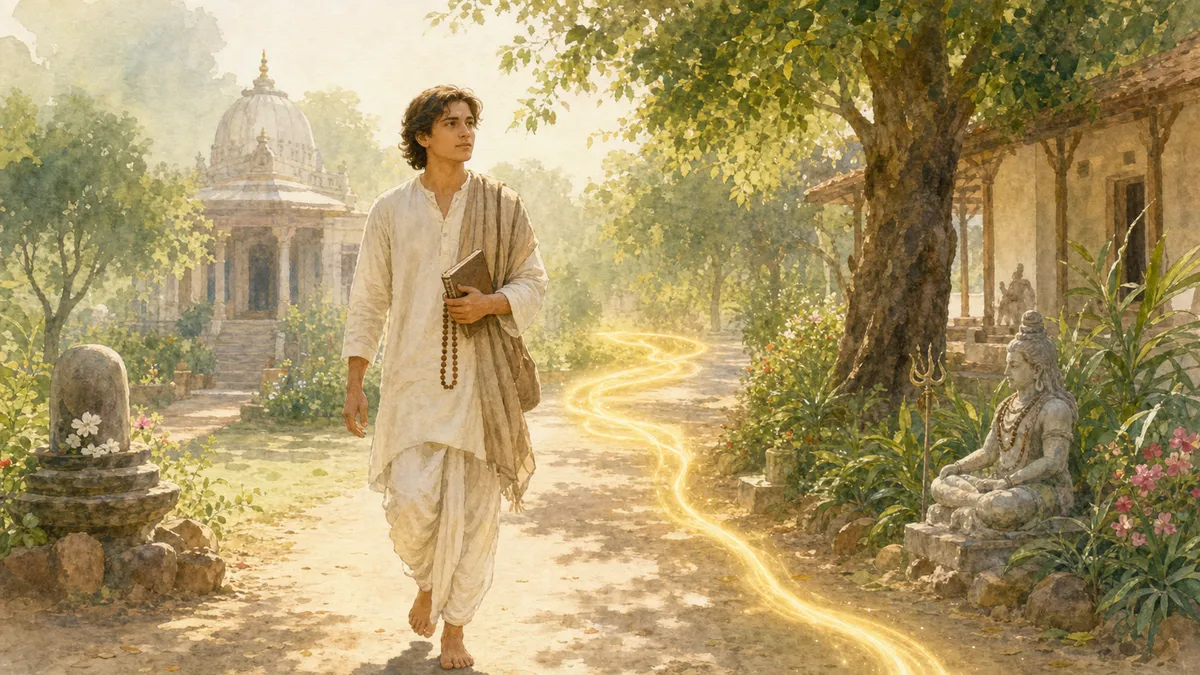
In order to open this channel of buddhi, one should simply be a good disciple. Moreover, one should be a good disciple not so that the community will consider you good, or in order to please the spiritual teacher, or so as not to feel ashamed. All this is too petty, too human. To be a good disciple is a far more serious concept, because only good disciples will be allowed into the Kingdom of Heaven, if by the Kingdom of Heaven we mean liberation—and this is precisely the goal we set before ourselves. In other words, if we want to enter there, we simply have no other choice. We cannot afford to be an average, weak, or bad disciple, since in that case our goal will not be realized.
What does it mean to be a good disciple? It means correctly catching the wave of spiritual learning, spiritual cooperation, spiritual attunement, spiritual empathy, catching the wave of sadhana and samaya, and always being on this wave without falling out of it.
I would not say that the concept of “being a good disciple” comes down only to obediently carrying out the teacher’s instructions. Everything is much more complex. To be a good disciple means to show faith, understanding, one’s own will, and to be able to take responsibility for discipleship upon oneself.
Taking Responsibility for One’s Sadhana

I do not much encourage it when a disciple tries to shift responsibility onto someone else (whether onto the guru or onto God), since spiritual practice presupposes taking responsibility for one’s liberation, the manifestation of a certain strength of personality and individuality, and the expression of one’s own freedom of will.
Devotion and faith by no means imply blindly shifting responsibility onto just anyone. One cannot shift responsibility for personal sadhana onto God. Why? Because God has given you mind and body, sent you texts and a teacher, but you must do at least something, because if you do not do this, then how will you develop freedom of will, cultivate the qualities of a mandaleshwar, and yourself become God?
There is a story about how, during a flood, a man prayed to God to be saved. Fallen trees were floating around, people were drowning, everything was being submerged in water. But this man firmly believed in God and said, “God will help me.” Everyone was being swept away by the current, but several people managed to cling to a log. They called out to this floundering man, saying to him, “Grab onto the log.” He replied, “I am praying to God; He will help me.” And these people floated farther away on the log. The man, continuing to fight for his life and flounder in the water, saw a boat approaching him. Those sitting in it said, “Jump into the boat,” but he answered them, “God must save me.” Then a rescue helicopter arrived, from which they tried to lower a ladder to him, but he said, “Some kind of miracle must happen, for I am praying so much to God.” The helicopter pilots shrugged their shoulders and flew away. Finally, this man saw that no miracle was happening and cried out intensely to God: “Why are You not saving me?” And then God appeared before him, surrounded by angels, and said, “You are simply a fool! Who was it that sent you the log, the boat, the helicopter? You yourself must make at least some decision, do at least something.”
Thus, being a good disciple means accepting responsibility for your spiritual practice and your own transformation, and then actively exercising your will in that direction.
Vasishta says that neither God nor the spiritual teacher can help a person who is not ready to accept responsibility for his spiritual transformation. What does this mean? To accept responsibility for your spiritual transformation means that you yourself are the mandaleshwar for yourself.
The Role of the Teacher and the Limits of His Intervention
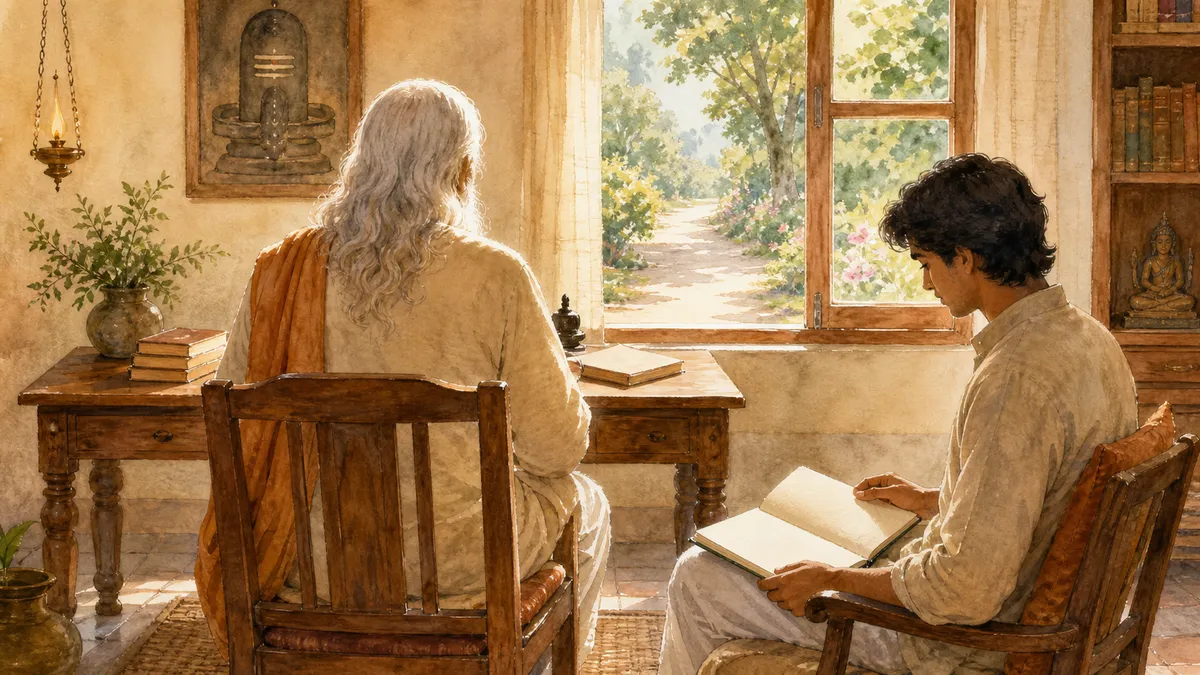
There is a very great temptation to hand over responsibility for spiritual transformation to the teacher. And then such a disciple asks me, “What should I do?” I have ready-made answers and solutions; in general, everything seems very simple to me: “So, you are a layperson. Good. That means tomorrow you come as a novice. That’s it, the question is settled. Go through the trial assignments and retreats, study for twelve years. Go through the whole structure, and I do not even need to think about it. I have an answer ready for you right now—just do it.” But I know that if I give such an answer, I will intrude into this person’s personal karma, into those deep layers of his to which he clings and which, perhaps, he has no intention of giving up at all.
Then the question arises: why should I intrude into a person’s personal karma and make for him the decisions that he himself must make, even if this requires years of suffering, trial and error? Would I not be doing him a “disservice” by making such a decision for him? Perhaps this would strongly affect his spiritual growth if he is devoted to me. On the other hand, will he grow as a yogin if I intervene with my spiritual power and authority, sparing him the mistakes and decisions that he himself must make? This is a big question. And since I respect his free will, I will not tell him this so directly. I will say, “This is a matter of your responsibility. You yourself must decide it. I, of course, know what is right. But my personal wish will not help you. I will not tell you the correct answer, because you yourself must seek it, armed with the knowledge that is being given to you.” This is like when you take an algebra test; the teacher will not tell you the correct answer, since correct answers given for free do not make one any wiser.
Responsibility means that the correct answers at the level of decisions are not handed to you, but a method is given, and you must find the correct answers yourself. This does not mean that dharma or anything of that sort is being hidden from you. It means that the disciple himself must develop decisions, having accepted responsibility for his sadhana. He must himself understand what it means to be a good disciple, what it means to practice correctly.
The Manifestation of Responsibility in Practice
For example, there are stages of training. If a good disciple thinks, “I wonder why these stages exist? How can I rise higher?” he will not pass them by; that is, he will strive to master them. Or there is a retreat rule. If a disciple is mature and sensitive, he will certainly take an interest in it and try to apply it to himself. If a disciple is immature, he will forget it and will not follow it. These are precisely the ways in which responsibility and free will are manifested or not manifested.
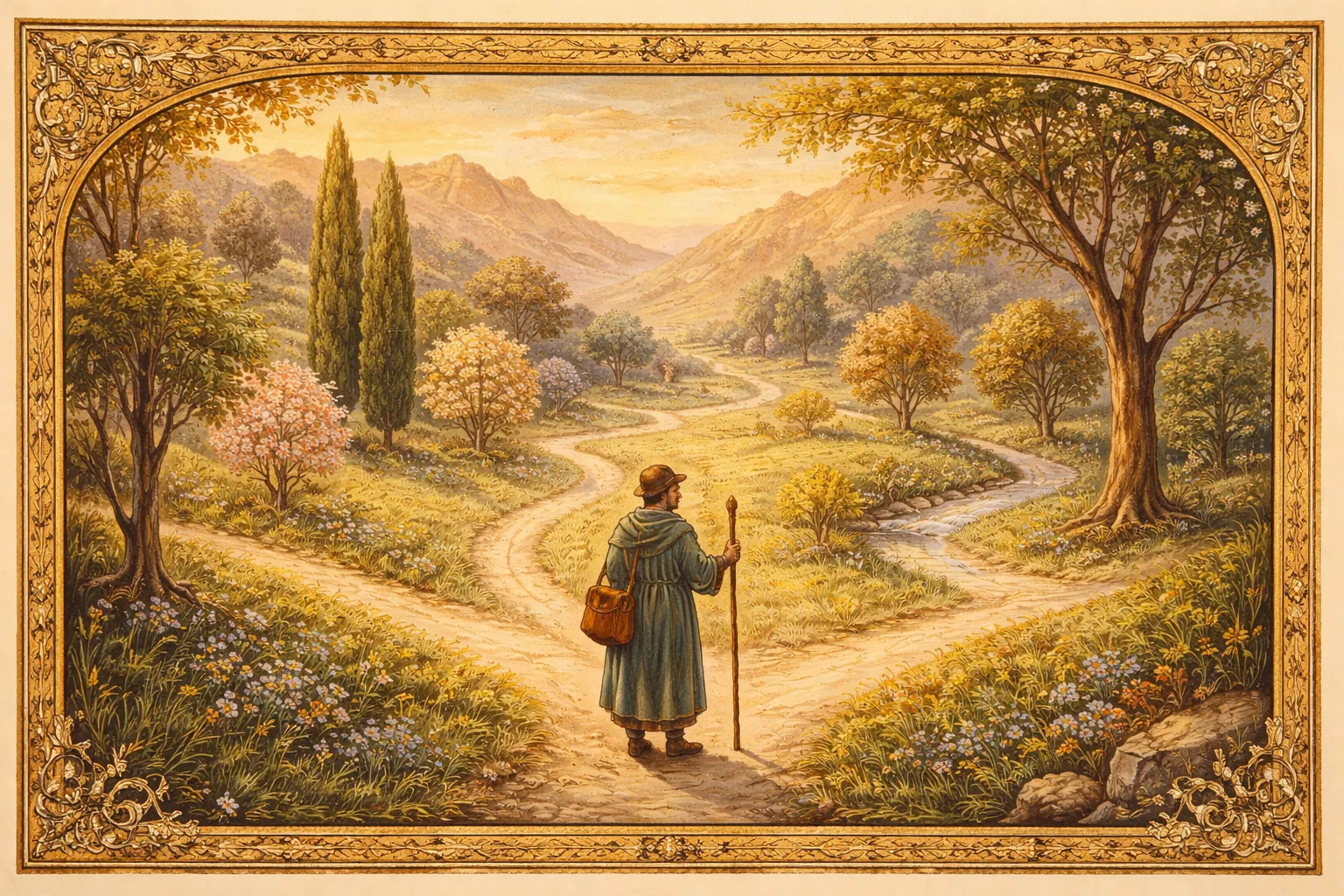
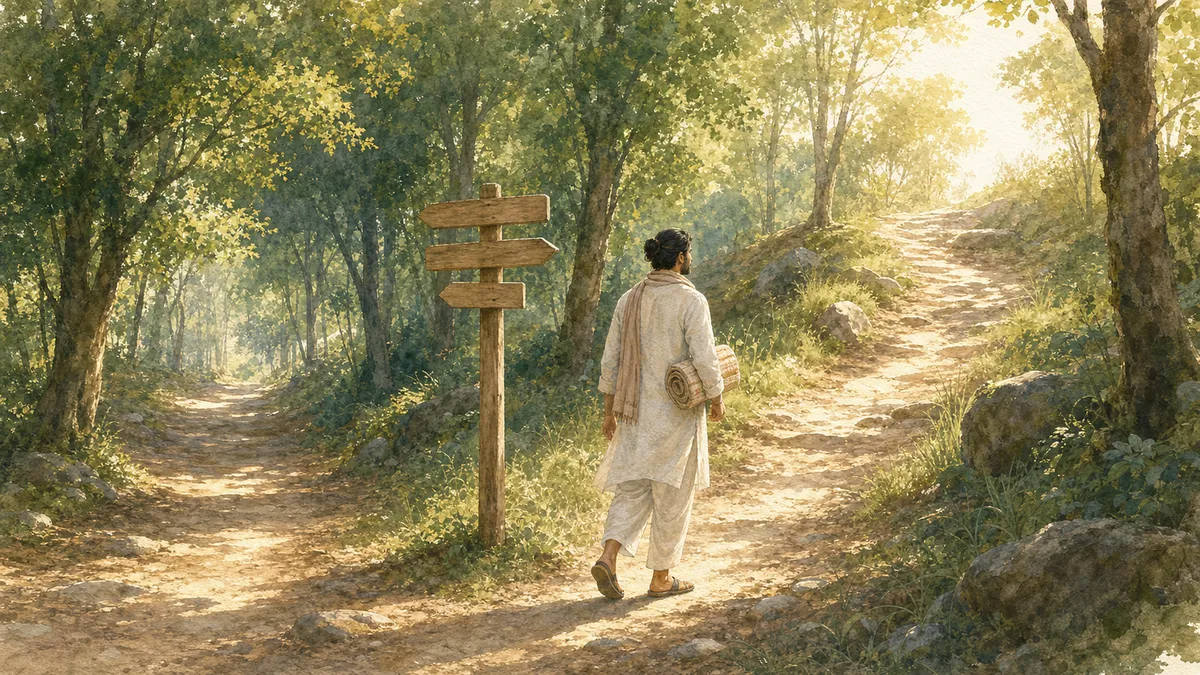
Free will is realized in acts of choice. Acts of choice are certain points of bifurcation, that is, branching of situations, when one can act in one way or another. Your future life, destiny, and achievements depend on your choice at such moments. And being a proper disciple means always, at such points of bifurcation, of branching situations, manifesting the right freedom of choice.
Freedom of choice is the manifestation of your free will, which shifts you into an alternative tunnel of reality where liberation exists. And such a choice is required of you constantly: to follow the path of meditation or to get distracted, to follow the path of desire or to cut it off, to fall into unconsciousness or to be aware, to strive to make the practice more complex or to simplify it, to go through a retreat and meditate every time, challenging limitations, or to give in to limitations.

Responsibility is manifested as a result of decisions made every second. It is precisely in the process of responsibility and making such decisions that we understand that dharma is an opportunity, but it is not something we already have. Dharma is a great privilege, but it is not an obligation. The deepest spiritual maturity comes when we consciously begin to manifest such responsibility.
We have our life, body, pranas, mind, and there is a certain span of time allotted to us for purification and the attainment of realization. And we must learn always to make the right decisions, so that the time allotted to us is lived in such a way that realization occurs in our life.
When I was asked, “Should I get married or not?” in the first years I was actually shocked and confused. I, a monk, was being asked about things which, in fact, I do not even think about. How can I answer them? Does my monk’s sanghati give me the authority to answer such questions? What can a monk answer in the case of such questions? This is simply a question addressed to the wrong person. It is like asking a musician about kickboxing. Therefore, when they ask me, “Should I get married or not?” I say, “Get married, and then we’ll see. You will see everything yourself.”
The point is that a spiritual teacher will not directly give you ready-made answers. He has his own credo of life for himself, which he has developed in the process of his sadhana, and it is quite definite and very firm. But you yourselves must develop your own credo for yourselves in your own conditions and circumstances, using the teaching as an instrument.
There is a very great temptation to say, “You need to do this, and you need to do that. Now look, do everything exactly as I said, and immediately. Renunciation, a shaved head...” But all the decisions I make for disciples will be only my decisions. In that case the disciple will be irresponsible, no spiritual growth will occur in him, and then, in theory, I would have to do pranayamas for him as well.
Principles of Advaita and spiritual maturity
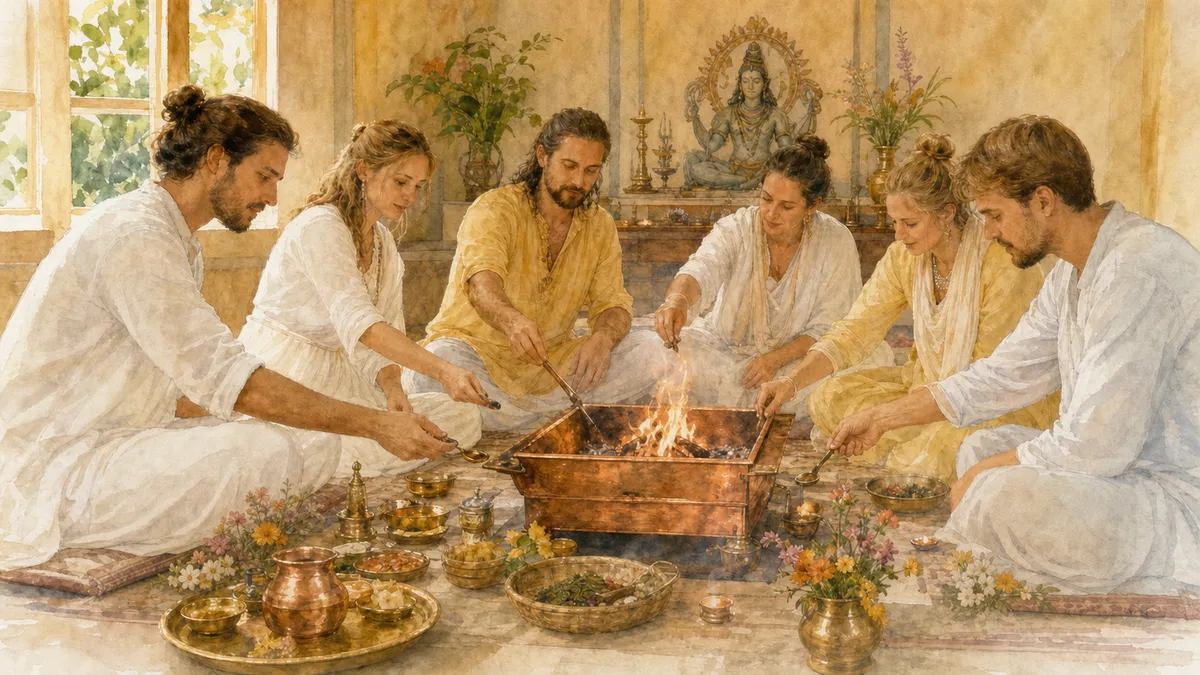
But in reality, spiritual life develops differently. In the process of spiritual life, our free will and our responsibility must grow more and more. This means that, using the teaching as an instrument, we ourselves assess the situation we are in and develop the right vector of action. It is very important to understand this principle of responsibility.
In fact, human beings have always sought to shift responsibility onto something or someone. But the teaching of Advaita does not accept this. Advaita takes away all our spiritual illusions and such inclinations. It does not give us a projected God in the heavens. It turns us toward our own “I.” It does not give us eternalist views and concepts. It always turns us toward our own “I” and says that we must seek absolute truth in the depths of “I am” awareness. Accepting responsibility means that it is always important for us to be aware and to make decisions based on this awareness.
Of course, there is a teaching, a transmission lineage, a system of practice, and training. And here there are unambiguous, clear instructions: how to apply the method, how to perform meditation, and so on. There are no ambiguities in regard to all this, but how we should live, how to relate to practice, what qualities to manifest, how diligently to meditate—all this depends on the extent to which we act from the state of buddhi, of awareness. This is precisely why the important qualities of a disciple are trust, faith, devotion, diligence, understanding, attentiveness, and readiness to cooperate. If all these qualities are present, then all choices will be right.
The Radical Nature of Spiritual Practice and the Role of the Sangha
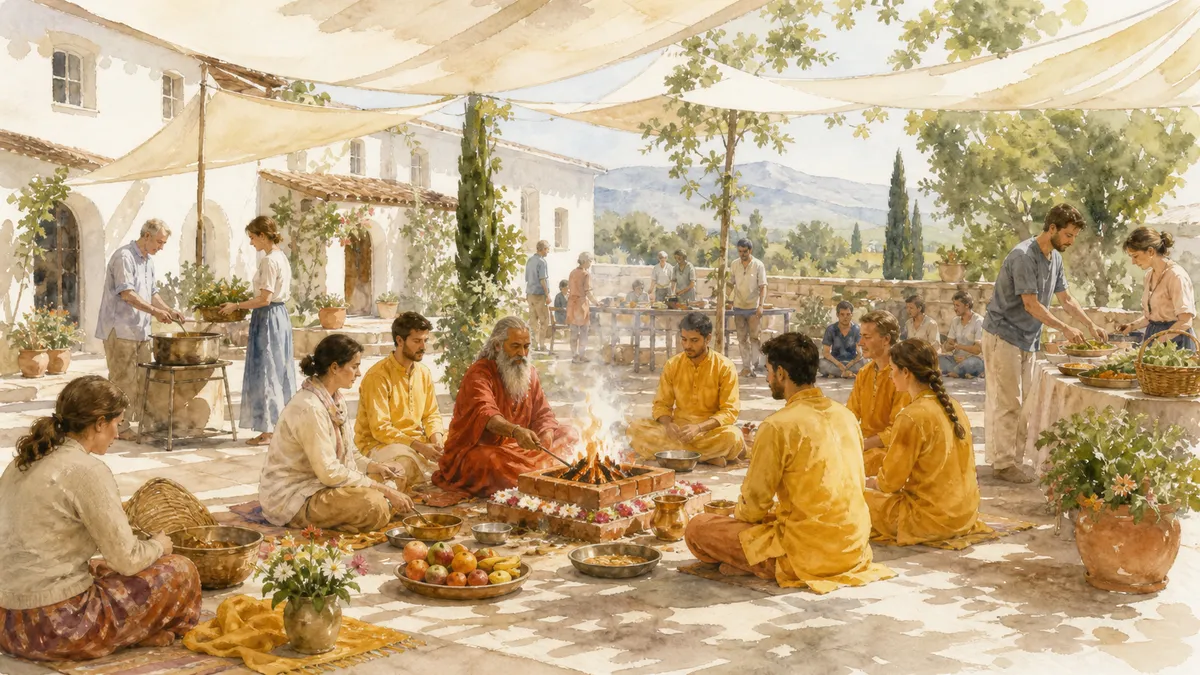
Spiritual practice is always something very radical. It is something that is not worldly, something that leads us into another world. And the question arises: are we ready to accept responsibility in order to move into this other vision, into this other world?
Spiritual practice is the building of a new life, entering into this life, and then making a complete transition into it. It is the creation of a mandala of a pure dimension. But in order to make such a transition and create such a life, it is necessary to work very diligently. Super-concentration, super-effort, super-clarity, super-creative consciousness—this is what can make it possible. But if we allow weakness (weak concentration, weak clarity, and so on), then all of this becomes impossible, left hanging halfway.
In this connection, the third jewel—Arya Sangha (the mandala of practitioners)—becomes very important. The third jewel is not simply a group of people, disciples of one teacher, samaya brothers and sisters. It is an integral meta-mind that manifests through our bodies and minds thanks to cooperation, service, and interaction. And the stronger the third jewel is, the more favorable the conditions will be for attaining liberation. Then the third jewel grows into a buddha-kshetra—the field of the enlightened ones, into a mandala, a pure dimension of deities.
But when does the sangha truly become the third jewel? When disciples, having dispersed after a retreat, continue to be disciples; when they direct their mind toward service, toward the Dharma, toward practice, regardless of whether they are monks or laypeople. When the spiritual teacher, monks, novices, and all other disciples live by the same goals, values, plans, and tasks.
“The one who knows Brahman also knows that the ignorance of an ignorant person is also Brahman. When gold is recognized as gold, it instantly ‘becomes’ gold; when Brahman is recognized as Brahman, it instantly becomes Brahman.
Being omnipotent, Brahman becomes whatever it wishes, without any motivations for doing so.”
The Process of Self-Recognition and the Turning of the Mind Inward
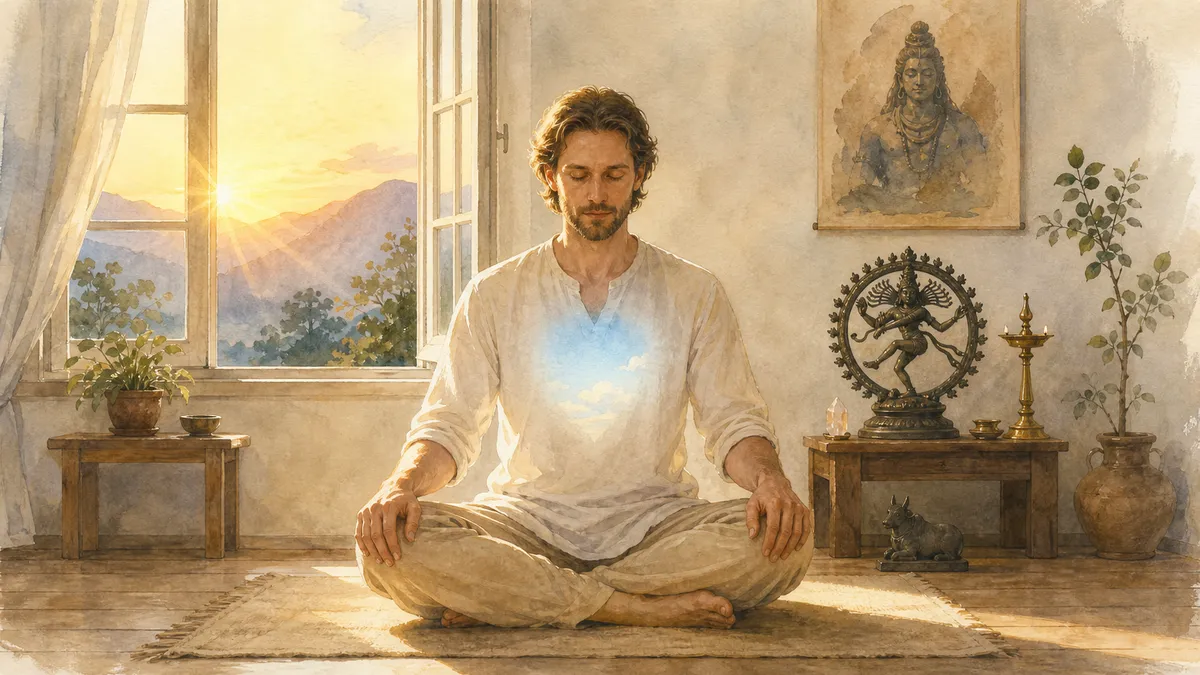
Self-recognition means the process of penetrating into pure vision, the process of revealing divine pride. In self-recognition, we discover the nature, the mirror of our Mind, and find that the nature of the Mind, it turns out, has always been pure, perfect, unstained, but because of inattentiveness we have always missed it and created circumstances in which it is as if it almost does not exist at all. Because we missed it, our coarsened consciousness attached importance to bodily relationships, to the body, to the physical world. The state of our mind was approximately as follows: 3% inner awareness, 97% the external world.
Self-recognition means turning the mind inward, activating the subtle circuits of consciousness through such a turning, switching on the intuitive channel of buddhi, and reuniting with the Supreme Source through this channel.
The intuitive channel of buddhi is activated through self-inquiry (vichara) and contemplative practice. Then the yogin’s consciousness is restructured, rebuilt: about 30–40% is directed outward, while inner awareness takes up 60–70%, and it dominates. There is a constant rooting in the inner, and because of this, integration with the outer takes place.
In other words, the process of self-recognition means that, by turning the mind inward, you increasingly reveal your mind as a space filled with divine pride. The state of a jnani is such that 70% of his consciousness is turned inward, while 30% is enough for life and communication. That is, these 30% should be enough to function adequately in society, while 70% is devoted to contemplation and spiritual work. And when we are 60–70% turned inward, very deep changes occur in our perception of reality; even with 50% of the mind turned inward, profound changes take place.
70% is the state of a saint; 50% is the state of one who is engaged in nurturing. If your mind is turned inward, being 70% in contemplation, then in the waking state you abide as if in deep sleep without dreams; it is as though you are sleeping in dreamless sleep, yet at the same time you act. You are aware of the inner reality and draw strength from the natural state.
At the beginning, while the skills of contemplation have not yet been realized, our mind may be directed 20% inward and 80% outward. Because of such strong extroversion, external objects capture our consciousness, and relationships of attraction or aversion are established. We fully experience the chain of avidya–asmita–raga–dvesha–abhinivesha.
The Psychological Exit from Social Ties
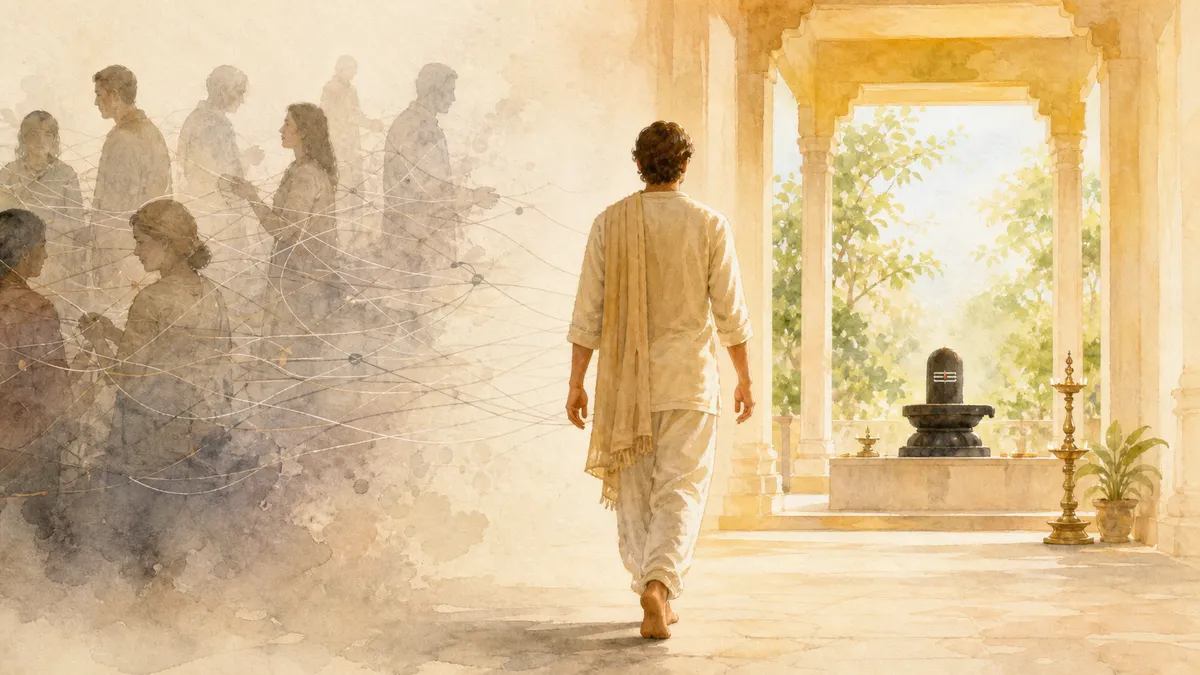
Self-recognition means that we have restructured our consciousness and gradually begin to leave social ties and personal ties behind. That is, we do not begin to leave them externally; first and foremost, we begin to leave them psychologically. If we try to leave immediately at the outset, this may create a great deal of disharmony. This is primarily about a psychological exit. In other words, we gradually enter inner monasticism. That is, I am speaking first of all about the psychological level, not the external one. Without psychologically leaving dependence and ties, it is impossible to truly engage in the path of liberation. All these are things that contradict one another.
In the process of such restructuring of consciousness, we psychologically leave behind social and personal ties, the flow of time and events, and attachments to our preferences. There is a continuous release of consciousness from everything with which we identified ourselves. We leave behind false ties with the body, when we blindly considered ourselves to be “I am this body.” Gradually we discover that the deeper and more strongly our mind turns inward, the less dependent we become on the objects and ties of the external world.
Exit from the Flow of Time and Causality
It is as though we leave the flow of the situation, causal sequences, events, the time continuum itself, because all of this is outside. Time, causal sequences—all of this operates outside. The gross external world operates according to these laws, but the very process of contemplation, of moving the mind inward, transfers us to a plane where different laws operate.
For example, consciousness is not bound by the vector of time; it does not necessarily have to flow only in one direction, from the past into the future. It can freely return, become fixed at a single point, or contemplate all three times from just one point in the state of a single “taste.”
For consciousness there are no temporal limitations. After all, each of you can easily recall the past and, if you wish, enter into the experience of the past by concentrating well, and relive it all just as vividly. Then the past, if we mentally return to it, is activated with renewed force.
For consciousness there are also no causal connections. It can freely change them. That is, the deeper we lead the mind inward and the more we become fixed there, the more degrees of freedom arise for us.
For consciousness, there is no collective history as such, since collective history is understood precisely as a chain of rebirths, karma. Collective history is characteristic of the external world and gross objects, where cause and effect exist. And everyone understands that if you plant peas in the spring, peas will sprout in the autumn; oats or wheat will never sprout. This is the rigid dependence of cause and effect; you decide absolutely nothing here. But if you lead the mind inward, then sometimes wheat may appear even if you plant peas. Why? Because the deeper consciousness is led inward, the more it begins to influence reality, and within, for consciousness as such, there are no rigidly conditioned cause-and-effect connections. Consciousness possesses probability, miraculousness; there, the effect can change the cause, that is, the law of circular causality operates.
Usually in our world, a cause gives rise to an effect, and the effect cannot change the cause. But in the world of deep consciousness, another law operates, namely the law of circular causality, when an effect can easily influence a cause; not only the present, but also the past can influence the future. By returning to the past and changing something there in your consciousness, for example some psychological attitude or a somatic illness, you can instantly change something in your present. That is, consciousness as such has far more degrees of freedom.
From Collective History to Personal History

When we deepen into awareness, we gradually leave the linear historical process and free ourselves from the wheel of history, from the wheel of births and deaths. We leave collective history and gradually begin to understand what personal history is.
Collective history is when you are inscribed in certain general processes—in the process of the laws of nature, in historical and social processes. That is, you are merely a part; you are like a splinter carried along by the river of time and unable to go anywhere.
Personal history means that you leave historical processes and your history becomes subjective. One could say that your life becomes one large psychological diary, or one large painting, or one melody. Your will, by intervening, can determine the pattern of this painting, the mood of this melody, or what will be written in this diary. And all this continues uninterruptedly. Now the painting and the world consist of your spiritual realities, not of external objects.
And the more experienced a yogin is as a contemplator, the richer his soul, the more psychological realities he has. It is like a good writer beginning to live in the world of his books and characters. For him, reality begins to consist of the world of his characters. Much the same thing occurs when we leave collective history for the state of personal history. We begin to live in the world of our deep awareness. This does not mean that one should fantasize here or invent some illusions. Rather, it means that we glide through different levels of the clarity of our consciousness, and such recognition of different kinds of clarity becomes the main part of our life, while external events no longer capture us.
For example, if someone were to ask me as a yogin, “What events have taken place in your life over the past seven years? How are you doing?”, I would say: “My life is going very well; there are many events in my life. This year I practiced the sankalpa ‘Pure Vision,’ and last year—the sankalpa ‘Descending Force.’ For three years now I have been practicing the sankalpa ‘Divine Pride’ in integration with the element of earth. These are wonderful events in my life; these are the most important events.”
If you live this way for years, then your life becomes an experience of inner realities, and everything external ceases to play any role at all. It moves along its well-worn track, but that is not the point at all. You live for the most part in an inner reality that depends on no one but yourself; that is, you yourself determine what your inner reality will be. If you are a good contemplator, your inner reality is always very rich, and if you are a weak contemplator, your reality is poor; you need to draw energy from the external world and stir up your own inner reality. Proper practice always leads to such relationships that your inner reality and the external one interact harmoniously.
Discoveries in the Process of Self-Recognition
Self-recognition means constantly growing into the inner reality through mastering the methods of contemplation. At the same time, growing into the inner reality does not mean nihilism toward the outer reality, since if we draw the mind too far inward and begin to ignore the outer reality, that would be wrong. As I have already said, 30–40% of consciousness should be enough for service, action, self-sufficiency, communication, maintaining harmonious relationships, and evaluating and analyzing this reality. This means that these 30% are very well developed in you, and with your superabilities you are quite capable of managing the outer reality.
As a result, self-recognition leads to the barriers between inner and outer reality disappearing completely, when outer reality and inner reality begin to merge.
In the process of such self-recognition, we discover several things:
We become convinced that the Mind is all-pervading and has a nature similar to space.
We discover that the essence of the nature of the Mind, bhava, is the great experience of divine pride inherent in divine beings.
We discover that this spatiality is emptiness, but this emptiness is not negative or nihilistic; rather, it is full of the potential to create and to manifest in the form of play and manifestations.
We discover that developed consciousness can manifest various powers:
the power of knowledge (jnana-shakti);
the power of freedom (svatantrya-shakti) — as the ability to have an unlimited number of choices and freedoms;
the power of will (iccha-shakti);
the power of mastery over the elements, natural phenomena, and events (aishvarya-shakti);
the power of action, manifestation (kriya-shakti).
The Five Wisdoms and Their Manifestations
As practice progresses, when we abide in such deep contemplation, mastery of the five powers and the five wisdoms gradually begins to unfold. We discover that, depending on which element our contemplation can unite with, one or another wisdom operates. Wisdom is like the coloration of the natural state.
Sometimes the natural state may manifest as the wisdom of equality, when we perceive everything without judgments, in a single “taste”; for us the world becomes like a single mass, in which we do not strive to distinguish anything, but perceive everything with equanimity, when merits and sins, pain and pleasure, right and left, tasty and tasteless, pure and impure are perceived as a single sphere of consciousness.
Sometimes the natural state is perceived as mirror-like wisdom (pratibimba-vidya), when we are able to integrate flexibly with any situations.
Sometimes it manifests as the wisdom of discernment (viveka-vidya), the ability to distinguish very clearly all the nuances and subtleties of any phenomenon in the universe.
Sometimes it manifests as all-accomplishing wisdom, that is, the wisdom of enlightened deeds.
Sometimes it manifests as synthesizing, all-embracing wisdom, capable of uniting disparate objects into one.

Thus, in the process of contemplation, everything consists in correctly understanding the principle of “reducing everything to the mind” (to awareness).
“Those who know Brahman declare that Brahman is God, the great motionless being, without movement, action, or instrument of action, devoid of causal motivation and unchanging.
When this truth is not understood, it manifests as ignorance in the ignorant, but when it is understood, ignorance comes to an end.”
In the old translation of the Yoga Vasishtha, there are harsh definitions: “foolishness” and others. We have softened them somewhat, so instead of the word “foolishness” we use the word “ignorance.” If you say to a person: “You do not possess jnana; you have a lot of foolishness,” he is unlikely to be pleased and want to continue communicating with you. But if you say: “We abide in ignorance,” he may ask: “Ignorant of what?” Of the essence that constitutes us.
But the term “foolishness” itself very succinctly expresses the essence, because we really do foolish things when we act unconsciously. To stop doing foolish things, one must become aware. There is no other way out except to develop this awareness, since otherwise it is fraught with suffering both in the present and in the future.
The Nature of Ignorance and Its Manifestations
When do we do foolish things? When our level of clarity is low, when our consciousness is not deep, and therefore we assess the situation incorrectly. For example, a person hopes for happiness in the material world. This is a mistake, an incorrect assessment of the situation, because he does not take impermanence into account. He strives to become happy and rich, but instead, in the end, he dies, and all his hopes never come true. All of this can indeed be called foolishness without embellishment.
Foolishness is characteristic of beings of the animal world, the world of spirits, and the hellish dimensions, when a living being is immersed in a certain type of karmic vision conditioned by strong rajas or tamas. Tamas greatly slows the movement of consciousness, while rajas knocks awareness off course like a strong disruptive prana. As a result, the situation is assessed incorrectly. When the situation is assessed incorrectly, wrong decisions are made and mistakes are committed.
Worldly Bustle and the Yogic Path
Living beings are immersed in worldly bustle; all their actions take place in the world of illusions, in the world of mortality. Yogis, however, are those who try to free themselves from worldly bustle. Note that I do not say “to free themselves from action,” since action and worldly bustle are not entirely equivalent concepts. Nevertheless, yogis try to avoid worldly bustle as something very unfavorable for their spiritual life.
Because living beings are immersed in worldly bustle, all their energy and life are seized by this bustle and spent on maintaining it. Because of this, it is impossible to think globally, on a large scale; it is impossible to think about the Infinite. Life is wasted on petty aims and tasks, and therefore global strategic goals are not addressed.
When global strategic goals are not addressed, then in fact nothing is addressed, because life is, above all, a strategic task. To ignore strategic tasks for the sake of bustle and small meanings is, in fact, to fail. And in samsara all living beings who do not engage in sadhana suffer such a failure, which in turn leads to suffering.
Human Civilization and the Civilization of the Gods
It can be said that the human world as such, as a certain type of being or as a race, is not particularly fortunate. Moreover, it is entirely a civilization of failures, an incapable civilization. I hope you understand this too.
Why do I say this? Because compared with the gods, one cannot live like this. Because people die, fall ill, do not control their emotions, do not control their feelings, do not control the elements of nature (the external tattvas). They do not even control themselves, constantly sorting out relationships, killing one another, waging wars. Can such a civilization be called happy, fortunate, successful, prosperous? Of course not. It is a low-level civilization, one that has not advanced far along the path of its own evolution. It is still the childhood of reason, considering that the gods are immortal, control the elements and their own feelings, possess personal tunnels of reality, govern space and time, and can create entire worlds, like universes.
And such a civilization, like that of the gods, can be called prosperous, successful, harmonious. But human civilization is a civilization of one-hundred-percent mortality. In other words, within eighty years, with the change of generations, five billion members of this civilization disappear. All its accumulated potential and experience are erased together with their bearers. And all this is the result of a state called ignorance (avidya, ajnana).
Why are the civilizations of the gods more successful? Because the gods (if we are speaking of enlightened souls) possess jnana, wisdom. They are constantly in a state of meditation, self-recognition. Their clarity is so deep that it allows them to control the elements, live without physical bodies, abide in personal tunnels of reality, in pure dimensions, mandalas, govern space and time, and create many illusory bodies (emanations). All this is a sign of harmony, success and prosperity, of mastery over universal forces that are brought forth by the knowledge of reality (jnana).
Liberation from Time Through Practice
When we begin to engage in the practice of contemplation, we gradually emerge from the state of ignorance. It is impossible to remain in such a state for long, for time constantly presents challenges, and if we are not in a state of jnana and wisdom, we will not be able to respond adequately to the challenges of time.
Observing the life of a person who does not practice dharma, one can see how time conditions him, what changes occur in his life. But as for a yogin, everything is different here: time does not condition him in the same way. It cannot be said that it does not condition him at all—for example, his body may also age—but his mind is not grasped by time, he does not accumulate karmic debts, his mind and experience do not influence the subtle consciousness; they all self-liberate—this is the sign of liberation from the course and flow of time.
When a person matures or grows old, his karmic burden increases over the years. He becomes encumbered with family, children, connections, wealth, and so on. All this firmly binds him. In addition, complexes, illnesses, and suffering appear. And the longer a person lives, the harder it becomes for him to free himself from all this. But a true practitioner and yogin becomes ever freer, more natural, spontaneous, and unattached over the years, while his mind becomes ever more youthful and fresh. The flow of transformation in time does not affect him so much, and in the case of realization, does not affect him at all. This is the exit from collective history and the beginning of entry into personal history through mastery of jnana, self-recognition.
And the whole point lies in whether there is self-recognition of one’s “I” as boundless space and bhava, or whether there is not; whether external reality self-liberates or not.
So, in order to realize self-recognition, it is necessary to constantly take responsibility and make choices. From a good student, one becomes a good sadhu, a yogin. From a good sadhu, one becomes a good master—one who has perfectly mastered sadhana and the teaching, who has managed to weave, to integrate his teaching into life. From a good master-sadhu—to a good siddha, a perfected one, a saint. From a siddha—to a mahasiddha and a deity.
Thus, by constantly taking responsibility and making choices, we become liberated, becoming those who will be admitted into the Kingdom of Heaven.
The Kingdom of Heaven and the Intermediate State
What is meant by the Kingdom of Heaven? At the most initial level, it is the pure lands—worlds woven from psychological reality. These are not material worlds, but worlds in which one can live fully as a person, as an individuality, have personal self-awareness, communicate with a spiritual teacher, brothers and sisters in the Dharma, and continue spiritual practice. In these worlds, people have a subtle body, but this subtle body does not need the kind of food that we take here. Nevertheless, in the pure lands life can exist in the same way, similar to life in the physical world, except that there are no gross elements there. By meditating for five hundred years in the pure lands, yogis can attain final liberation. And if you are members of one mandala, disciples of one teacher, then this means that you too can be reborn in one of these pure lands and continue your spiritual practice, if, of course, you do not become immortal in a physical body here on Earth.
The pure lands are much more beautiful than the physical ones. In these lands, the element of consciousness is very important; there, one can create reality by the power of consciousness. To some extent, the pure lands are somewhat reminiscent of a virtual world. In a virtual world, other laws operate; there are virtual bodies there; everything depends on your logic, thinking, and information. You yourself can participate a little and create such a reality by the power of your consciousness. Although it is a completely different world, nevertheless your individuality manifests there through the power of the mind.
The pure lands are worlds woven from the subtle dimension of your consciousness, in which the yogi is reborn as a spiritual being. Such dimensions also have their own laws. But only those who have freed themselves from worldly desires and attachments can enter the pure lands. If consciousness is directed toward the pure lands, then at the moment of death the yogi does not pass through the intermediate state.

There are several ways not to pass through the intermediate state:
To be reborn immediately in hellish dimensions. This is a way for those who have accumulated a great deal of bad karma and therefore are born at once in the world of hells, instead of experiencing the unfolding of the bardo.
To enter a pure land by the power of intention, that is, to concentrate one’s consciousness on the pure land and instantly transfer one’s consciousness there.
To enter the fully nondual state of clear light and, without falling out of it, manifest illusory bodies.
In all other cases, the processes of the intermediate state are experienced.
By the Kingdom of Heaven, if we speak of a reality higher than a pure land (a magical world created from consciousness), one may also mean the worlds of liberated gods, such as Shvetadvipa, Vaikuntha-loka, Kailasa-loka. These are actual worlds in which one can reincarnate or transfer one’s consciousness, possessing an essence consisting only of light. In these worlds, one can also possess an illusory body; however, this illusory body consists of pure consciousness. And finally, the highest level of attainment is when complete liberation comes, separation from the world of name and form, dissolution in Brahman.
Into all these worlds, beginning with a pure land, only those who have attained genuine holiness may be admitted. One who has not yet attained genuine holiness will have to be reborn again on Earth in order to begin spiritual practice anew, to enter a new cycle.
The Importance of Doing and Responsibility for Every Moment
If we continuously abide in inner doing (perform antar-tapasya) and at the same time apply skillful means and accumulate merit, then we can create the necessary causes for proper rebirth. It should be understood that what we do both in the inner world and in the outer world is very important.
It is very important, when perceiving the teaching of Advaita, not to ignore external reality, not to ignore behavior, actions, and service. Sometimes yogis are too inclined to ignore relative reality and overestimate the view of Advaita, although in fact they have not yet absorbed it. But what we do and what we practice in this life determines our next rebirth—the place we will end up in the next life. And anyone who doubts that the next life exists will be convinced of it through their own experience in a few decades.
If a person reflected on this, they would not perform many of the actions they have performed or are performing in the material world. They would perform different actions. For example, from the point of view of rebirth, building temples is beneficial; trading in alcohol is not beneficial. From the point of view of a higher rebirth, serving the Dharma and the saints, making offerings is beneficial, while serving worldly energies is not beneficial, since connection with worldly energies will become a problem both for spiritual realization and at rebirth.
So, what gives us the ability to take responsibility for our choice and make the right choices? Understanding the fact that our consciousness itself creates future cause-and-effect connections, that our choice at every second determines what chain of causes and effects we generate in the present moment.
Every moment is a great responsibility. Perhaps we do not think about it very much; we think: “If only this would pass more quickly!”, or “The meditation session will end soon and there will be prasad,” or “When will this retreat finally be over?” That is, we live within ordinary frameworks and categories. But the point is that, at a certain stage of development, our consciousness begins to become a passionary force (a force of influence), a powerfully volitional operator of reality. And the sooner we understand this, the closer we become to realization. We begin to understand that everything depends precisely on us and on the decisions we make correctly, that a great deal is “at stake.” It is like playing some game of chance where one can win a lot or lose a lot.
The Path to Absolute Freedom of Will
It is precisely this kind of awareness that gives us the ability to take responsibility and shape our future based on the right choices. In this process, our free will increases. And our task is ultimately to attain such boundless freedom of will that we can fully control time and space, that we can realize freedom of will in acts of choice when interacting with any energies of samsara: with external objects, with causes and effects, time, space, the elements of the body, the elements of nature, and subtle dimensions.
Liberation is so named precisely because ultimate freedom of will is realized in it. The blossoming of our consciousness takes place, and this manifests as boundless freedom of will. And this is possible only when we fully transition to the level of existence of the “I” as pure consciousness, since freedom as an energy is inherent precisely in consciousness, and not in inert matter, the gross tattvas, or the gunas. That is, absolute freedom is possible only at the level of pure consciousness.
Thus, the attainment of absolute freedom of will and liberation occur at the moment when we fully transition to the realities of pure consciousness.
Rishi Vasishtha said:
“Whoever ignores the infinite in favor of the finite enters the path of illusions and suffering himself.”
When do we not ignore the infinite? When we recognize the mind that is like space and filled with bhava. Such moment-by-moment recognition is self-liberation itself. That is, self-liberation occurs only if we are deeply immersed in such recognition. But if we are not deeply immersed, then, accordingly, self-liberation does not occur.
