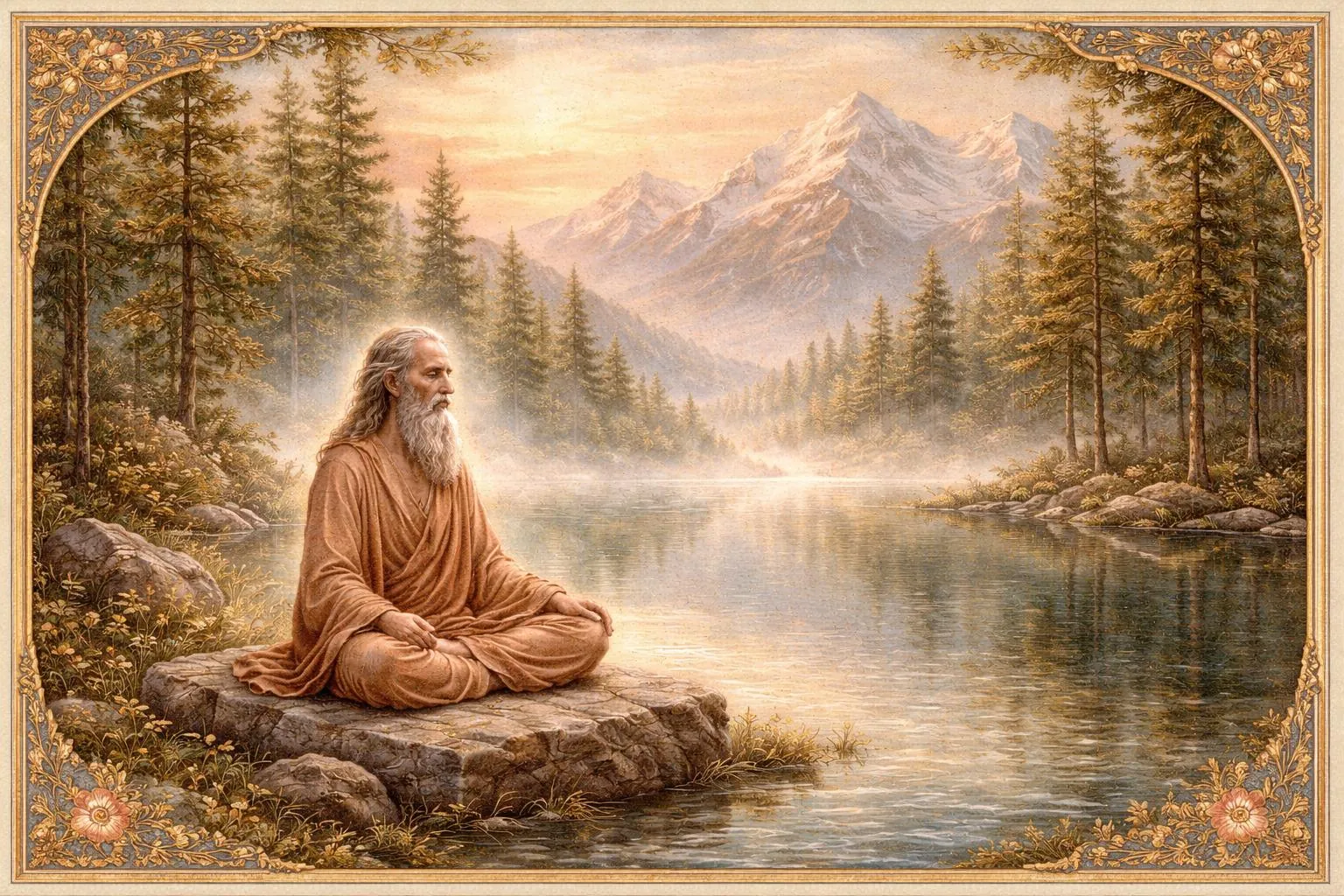
We need to understand; we need only to awaken, as one awakens from sleep, and realize that all of this was not reality.
Usually dualistic teachings and traditional religions try to change a person’s opinion. Opinion is connected with the mind. “You are mistaken, you do not serve God, your life is in vain, you are doing bad deeds, you will go to hell, you need to change your opinion, you need to understand that there is God or the Absolute.” They persuade a person to accept some point of view. If he accepts this point of view, he is considered a believer; if he does not accept the point of view, he is considered an unbeliever. Many theories and philosophies are used to persuade a person. And when he hears them for a long time, his mind becomes saturated, he begins to understand something and becomes convinced. When his conviction is firm and final, they say that he has come to believe.
This is good, but it is not enough from the point of view of anuttara tantra and laya yoga. Therefore, in laya yoga they try not to persuade a person to change his views, but to teach him to be deeply aware—that is, to change not his belief and opinion, but his awareness. Of course, this is much more difficult. That is why laya yoga is difficult to preach in marketplaces and to convert people to by the dozens. In fact, to make a person change his level of awareness, one must oneself possess at least the level of enlightenment, because an ordinary preacher cannot change the level of awareness, but can only give dogma, scripture, authority. But we say that it is far more important to change the level of awareness, since following a change in the level of awareness, the opinion of the superficial mind will change by itself. If you have learned to be aware more deeply, this will inevitably affect your mind.
To change the level of awareness means to awaken and understand that from the very beginning you were asleep, that all of this was not reality. A person can be sleeping perfectly well even when he has absorbed many ideas, including spiritual ones, has visited various spiritual institutions, and communicates with other people. He may even have an academic degree in his religion, but this still means nothing, because his sleep may continue.
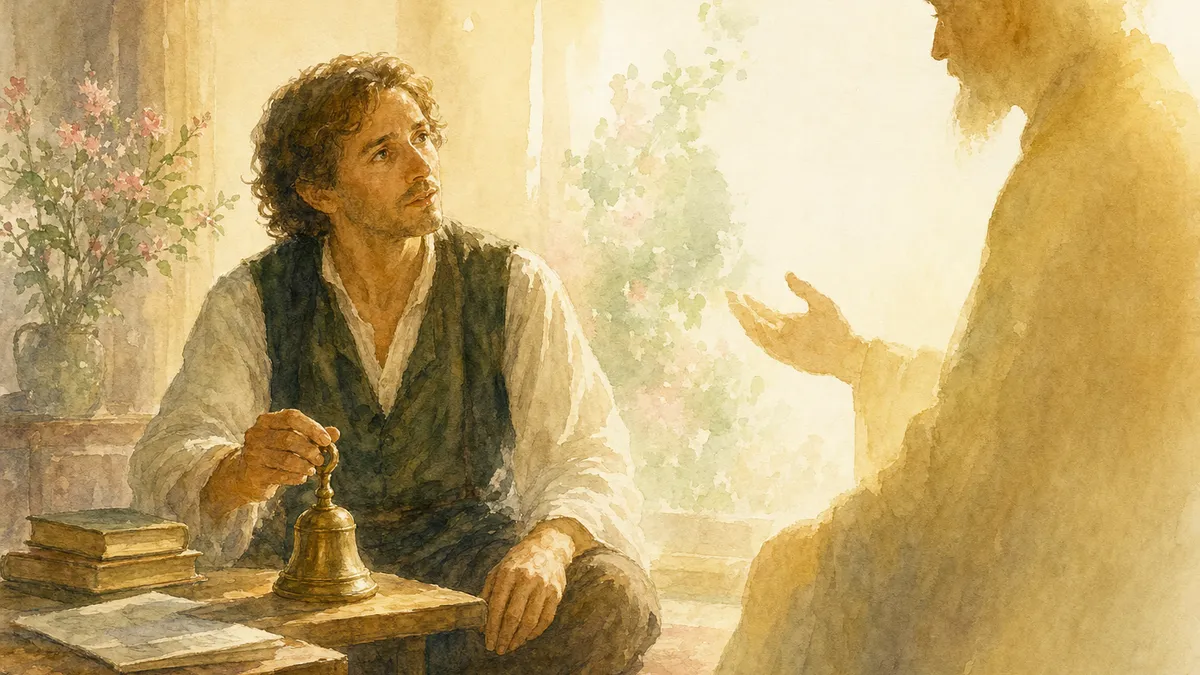
Namkhai Norbu was a scholar in his Gelugpa tradition. He wrote articles in which he praised his school and criticized others. He was even regarded as a pandit. However, when he met his root Teacher, that Teacher was illiterate. When Namkhai Norbu asked him to give him an initiation, it turned out that his Teacher did not even know how to give ritual initiations, although he himself was a master of such initiations. Before giving him the initiation, the Teacher read in the tantra that at a certain moment one had to ring a bell, and he rang it for a full five minutes. What was an ordinary ritual looked like a farce to him, and he was very embarrassed. Nevertheless, when the formal procedure was over, the Teacher gave him, in words, a direct introduction to the natural state, because he was awakened. This understanding deeply shook Norbu; he realized that the teaching lives in every person regardless of his knowledge.
The Development of Divine Self-Esteem
If all phenomena, including the subjective feeling of one’s “I,” are recognized as an empty manifestation of space and light, you are free.
In essence, what does a true Teacher do in contact with a disciple? He develops the disciple by allowing him to change his self-esteem. At first, our self-esteem is very low. We think it has to be protected, because everyone encroaches upon it, and it is already low as it is. We feel that as soon as our “I” is encroached upon, we lose our life force, and therefore we need to set up some kind of shield, a barrier. We think: “I won’t allow anyone to do this! I will make everyone take me into account; I will show them who I am. How dare they at all!” But in our soul we feel that we are doing this because inwardly we are foolish, insignificant, and petty. That is, we do not even suspect how holy and absolute we actually are! Our perception is on the plane of the petty and selfish “I,” but if it were to see more deeply, we would discover how great, immeasurable, vast, boundless, pure, and holy our true great “I” is.
The teacher always pushes the student first to develop very high self-esteem, to move from high self-esteem to absolute self-esteem, and from absolute self-esteem to transcendental self-esteem. Therefore, all of you must develop boundless divine pride. Your self-esteem must increase billions of times. This means that you must first become masters of practice, then geniuses, and then go beyond genius and become the Absolute. When we have high self-esteem, we are relaxed and feel that nothing threatens our “I.” Even the thought that something could threaten our “I” seems ridiculous to us. We have no need to defend it, because it is not a petty, foolish “I,” but God Himself, the Absolute. When a person has low self-esteem, he easily loses vital force when faced with negative, impure situations. The most insignificant events can throw him off balance; he loses vital energy everywhere. The flow of his consciousness is unstable and easily disrupted, and therefore he is susceptible to illness.
When we practice pure vision and self-recognition, our self-esteem changes. It is believed that if you encounter an impure or threatening, foul or humiliating situation, but are able to see it in pure vision, this can give you an influx of vital force and even increase your lifespan. Genuine pure vision arises when our self-esteem changes radically, when we suddenly understand: “I am boundless space, luminous emptiness!”
One monk said: “If everyone has divine pride, who will chop wood?” However, in reality, one does not interfere with the other. It is precisely the one who has immense divine pride who can behave very humbly, because he does not need to prove his greatness to anyone. The one who needs to prove it is the one who does not have divine pride and is trying to convince others of what he in fact is not. But the one who possesses boundless divine pride does not need confirmation or evaluation from others. He can behave very humbly; no impure thing, no lowly work can change his self-esteem, because he knows that the Absolute manifests through any action, that any action is perfect.

At first, our self-esteem strongly depends on what we are doing. When we wash dishes, we feel that we are forced to do something, but when we lead others, we feel that we are almost a deity. However, if our self-esteem changes to absolute self-esteem, then our consciousness does not change because of what we do: whether we lead hundreds of people or wash dishes in the kitchen. We have nothing to defend or assert, because we are already established in absolute consciousness, and nothing can hinder it.
The Path of Non-Effort and Recognition of the Ground
The fruit of the path is already present; nothing needs to be developed, only recognized.
This means that the supreme state is already inherent in us, although it is not recognized. One person studied the teaching of Nisargadatta Maharaj and then said: “So that’s what it is! And there is so much talk around this enlightenment!” He had gained a superficial understanding, but it is not all so simple.
When people hear about the path of non-effort, they think that enlightenment is simply remaining in a relaxed state, doing nothing. In reality, absolute self-esteem is difficult to acquire, because our mind has become established in the thought “I am this body and this mind.” We do indeed possess the absolute state right now; nevertheless, we forget this. Then the idea arises in us: “I must continuously do something in order to develop it.” However, the teaching says that it is much better to “be” rather than to do. In other words, before doing anything, it is necessary to enter the state of the Absolute, and then, from this state, any doing will be absolute. Often, when engaged in service, we want to do something as well as possible or as much as possible, but if we allow the mind to be scattered, then as a result we see that we wanted the best, yet it turned out worse, because we were not acting from the right state. But if we enter the state of divine pride, then we will be able to do anything in the best possible way, since a deity cannot have mistakes, wrong actions, or delusions.

Whatever we encounter is a projection of our own mind.
When a person leaves the body, he is met by holy spirits, angels, the spirits of the dead; then higher spirits conduct a judgment, weighing his bad and good actions. These beings are part of himself — subtle karmas in his channels, inner deities. However, they are more thoughtful, more intelligent; their bhavana is higher. They appear as deities, kings, powerful beings, and therefore a person cannot understand or believe that they are part of his consciousness. He may even have wanted to understand this, but these parts of his consciousness do not depend on him; they are more powerful, more intelligent, and they pass a karmic sentence on him: to go to the heavens or to go into the world of humans. However, if such a living being were able to remain in the natural state, without making any judgments at all, he would see that he can unite with these highly thoughtful beings; moreover, that he is inseparable from them, that they all abide in one space of awareness. Then, in a single instant, the images of the bardo would dissolve, the Clear Light would be revealed, and such a being would attain liberation. Even the gods would begin to praise him.
Do not attach importance to experiences, but recognize their Ground.
This phrase in fact defines the entire path of practice — continuously recognizing the ground of any experiences. When we do not recognize the ground of experiences, we are deluded, enchanted by the experiences that arise on the periphery, not understanding that their ground is empty, luminous Clarity, that it is absolute, perfect, and pure. When we do not know this ground, we have no faith in it, and then we believe in minor experiences that make us confused and suffer, and so we lose our way.
Teachers often behave with students in such a way as to quickly reveal this ground, to teach the student not to attach importance to superficial experiences. Once a student asked a teacher, “Are the waters of Zen deep?” And the Teacher threw him into the water as they were sailing in a boat, thus showing that the ground is very deep. Even when you fall into the water and are drowning, pay attention to it and do not pay attention to experiences. If the student’s mind is wide open, he can grasp this ground. Until he has grasped it, he is like one asleep.
In Monchegorsk, one student from among the long-standing lay students was speaking with monks, trying to prove to them that he had a high level, that there was no difference between him and the monks. The monks did not dispute what he was saying and did not try to prove anything to him. However, when the Guru gave him a direct introduction, he fell silent for several hours because he could not speak, and then said: “I could not even imagine that such a state exists, that it is not connected with feelings, but is only emptiness.” Before this, he had no idea of the ground, and all his notions were mental. But because his mind was nevertheless devoted and open, just two seconds resolved a question that might have taken him decades to resolve.
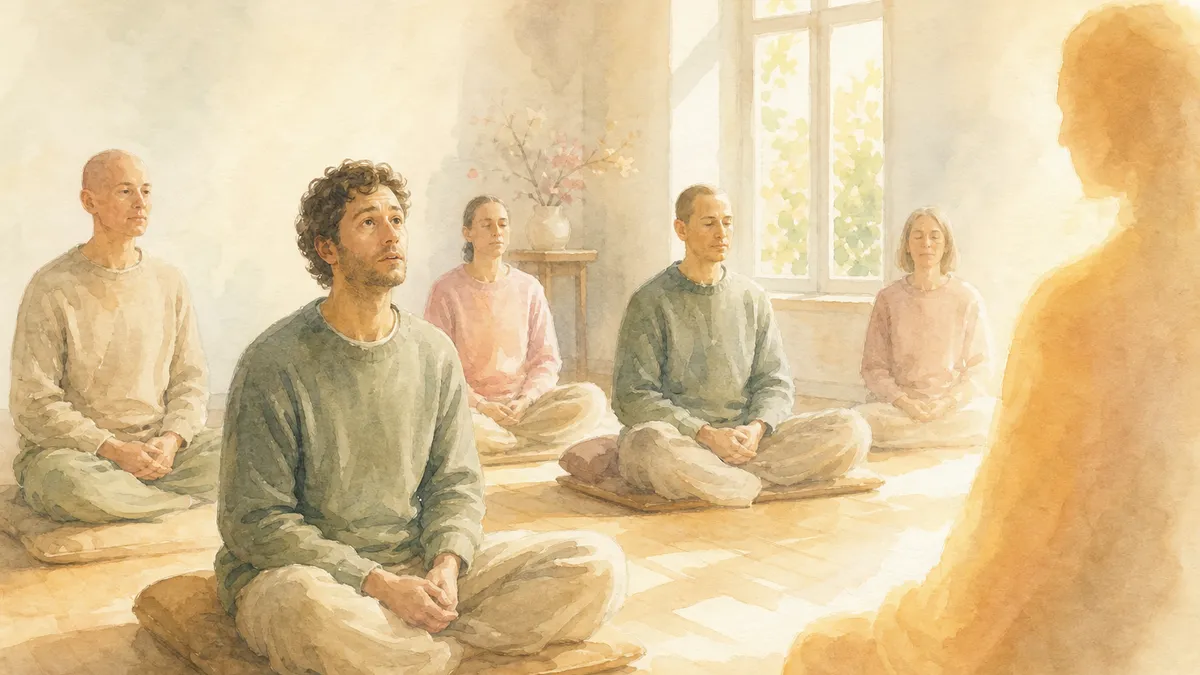
Knowledge of the single ground
To know the One is to know all.
When we do not recognize the ground, we recognize nothing. When we approach the ground, all knowledge becomes ours.
At present, the “vehicles of shamanism” are very popular in the world. This is the vehicle of cause and effect, preceding the sutra, that is, lower than the sutra. They can be arranged in this way: shamanism, sutra, tantra, anuttara-tantra. In shamanism there is much knowledge about how to summon a spirit, how to bind a beloved person, and other rituals; there is knowledge about stones, astrology, and so on, but in the absolute sense all of this brings only worldly benefit, because in shamanism there is no knowledge of the ground. But when you have understood the ground, you do not need any other knowledge, except perhaps in a utilitarian sense.
If we are mistaken about our own nature, then we are mistaken about everything.
If the ground is not recognized, a continuous error occurs. When I gave this layman the assignment about the “horned rabbit,” he began to explain who the rabbit was, who the master was, and so on. He was told that this answer was incorrect, and since this answer was incorrect, any other answers were also incorrect. Because if the ground has not been recognized, you know nothing, no matter how much you may say.
In Moscow, a laywoman came to give an answer to the riddle “the frog swallows the elephant.” She began to say: “The frog is the disciple, the elephant is the Absolute, the process of swallowing is the comprehension of comprehending clarity, non-duality. As it is comprehended, she dissolves; the frog swallows the elephant and disappears herself. The elephant turns into the frog, and the frog into the elephant, and so on.” I said to her: “All this interpretation is incorrect. You are speaking with the mind; try to enter presence and allow presence to respond to this question.” She tried to enter the contemplation she had, and then suddenly said: “There is no frog, there is no elephant,” and burst out laughing, clutching her head. I said: “That is better. This is still not the answer I can confirm, but it is already something. You have progress.” She kept laughing and saying that she had had many more questions, but they had all fallen away, because there is no frog, just as there is no elephant. Thus, when we recognize the single basis, we feel that we recognize everything.