

Dharma begins with Refuge. Every day we repeat the Refuge mantra.
Refuge means that we turn for protection or help to the Three Jewels. Refuge is the foundation of further Dharma practice, just as the foundation for building a house is purchasing a plot of land or laying the foundation. If a person has no Refuge, all his constructions are called into question.
For example, a person asks a question: “I had such-and-such visions. What do you say, Swami Vishnu Dev?” I can answer him something, but this cannot be called genuine practice, because I have answered him now, he has accepted it, and the next day other visions appeared, which he considered to be something important. That is, there is no vector of spiritual practice.
Refuge means that we find great value in something and devote the fullness of our attention to it.
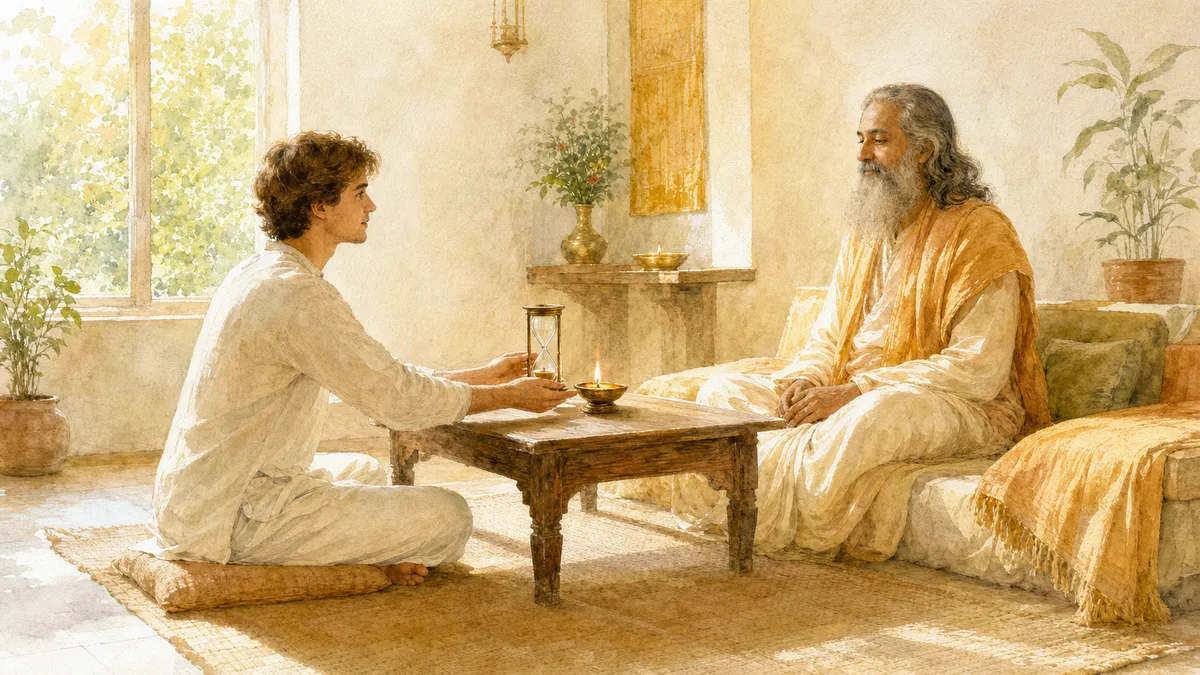
One student once asked a spiritual teacher:
“And what should I offer you as payment for the teaching?”
The teacher said:
“Your undivided attention and time.”
As payment for teaching, a person offers his lower “I,” his undivided attention and time. It is precisely the extent to which a student is able to offer his undivided attention and time to the process of learning that characterizes him as a student.
Often, wishing to test a student’s ability to offer attention and time, teachers gave tasks that had no direct relation to the Dharma.
For example, the Sufi Junayd had a student who asked him:
“How can I serve you?”
Junayd answered:
“Go to the market and spend a year trading sulfur.”
It would seem, what does this have to do with spiritual practice? In fact, this student, especially one belonging to a high social class, had to make many changes within himself: change his way of life, change his circle of acquaintances and everything else, empty himself, become different — this was real practice for him. Over that year he underwent a fundamental spiritual transformation.
You can carry out the instructions of a spiritual teacher of this order and become a student in full Refuge only when you reach this level, when your social status, position, connections, affairs and concerns, place of residence cease to be important to you, when all of this can self-liberate if there is a teaching reason for it. It is precisely then that the student becomes completely empty, completely free from attachments and fixations such as status, connections, position, place of residence. He is so empty that he becomes like a feather carried by the wind. Then they say: “He is ready to enter the teaching.”
Earlier, when I preached the Dharma a little more directly, I often liked to test lay students. You have taken Refuge — good. Here is a train ticket for you; you may set off, and we will see how faithful you are to your Refuge. Some could do this, some could not. Then I stopped testing lay students in this way, deciding that they should test themselves.
But this says a great deal. This is the principle of Refuge.
Refuge means that we are devoted with our soul. That there are no karmic circumstances that could wedge themselves into this principle and somehow violate it; and if there are, it means that Refuge has not yet been attained, that we are still only on the path to attaining such a level of Refuge.
The Principle of Unity in Learning
When we practice, it is very important to understand this principle: one karma, one sangha, one root guru. This principle is connected precisely with learning.
One root guru means that we are learning in such a mandala where we may have several shiksha gurus, that is, spiritual mentors, and only one root guru. Why is this important?
One lay student came up to me and said:
“I somehow received a transmission in one community for the practice of wrathful deities. I was simply dragged there, so I took it, received it. Now I recite the mantras, without knowing myself why.”
Then I said:
“And why, in fact, do you need this? I gave you specific tasks to work with. If you are working with them, then you will not have time for these deities. That is, it turns out that you set my tasks aside and began reciting the mantras of wrathful deities, which you happened to receive somewhere. What is the point of this?”
He thought about it. Then I told him the following:
“One must understand: in that community the practice is good, because it is a deep, authoritative tradition, and in this one it is also good, but one needs to decide certain important points for oneself; one needs to choose. For example, melon is good, milk is good, but milk with melon will cause problems, so it is better not to mix them.”
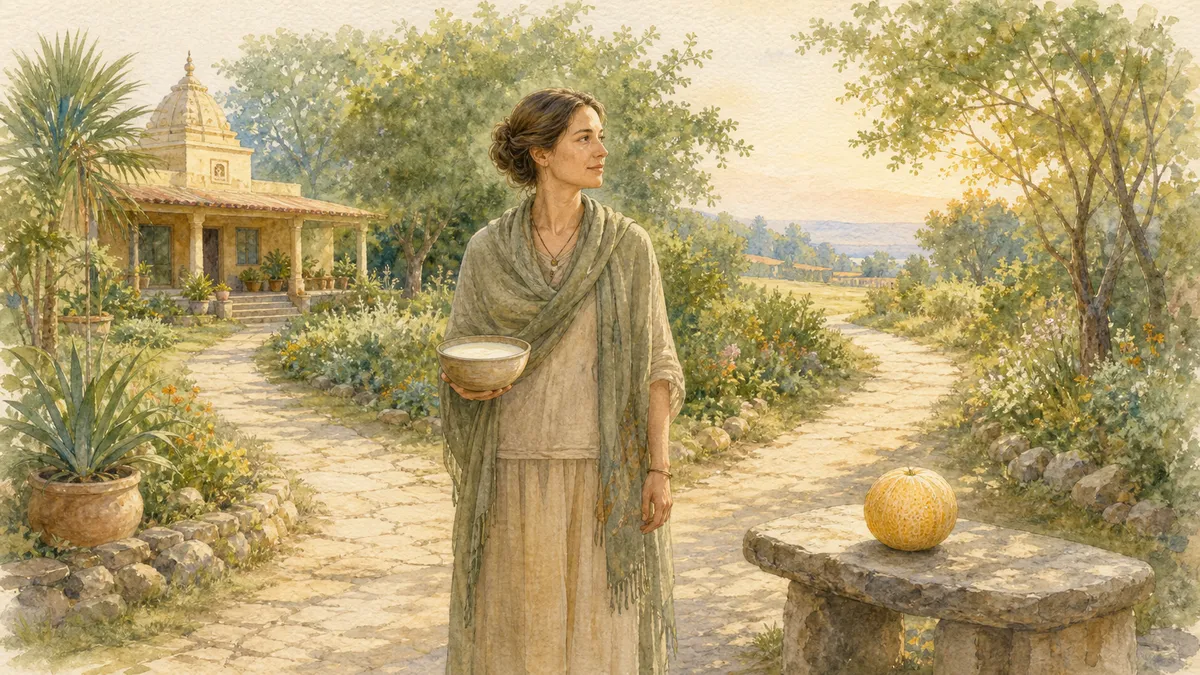
That is precisely why we speak about how one should practice. If you practice under several teachers at the same time, their instructions may come into conflict. Suppose one teacher says: “Engage in service for a year.” Another says: “No, during this time, sit in retreat.” What, then, should a person do? Or one teacher says: “Practice strict brahmacharya, avoid any relationships with the opposite sex.” And another says: “It is all right, one can practice in worldly life as well; live normally with your wife, the main thing is not to lose energy in the process.” And then the disciple will think: “What, in the end, am I supposed to do?”
That is precisely why we must clearly define the principles we follow, and once we have chosen them, follow them unequivocally in order to receive real benefit from them.
Of course, these instructions are not for bees. For a bee, it is quite acceptable to visit different organizations, schools, and theories and be nourished by them, just as a bee gathers nectar. At this stage, this is useful. But since one will not remain at the stage of the bee for one’s entire life, at the stage of the deer practice takes on a fundamentally different nuance: we must concentrate on something and go deeper, instead of fluttering from one flower to another. The same applies to the Dharma.
In fact, there are very many dharmas, like precious diamonds, and laya yoga is one of such dharmas. Moreover, there are also very many branches within laya yoga itself. It is said that in various universes there exist 300,000 teachings of laya yoga. But since we are not gods, but limited beings, we are not able even to read these 300,000 teachings of laya yoga in one lifetime, let alone practice them. Therefore, a certain section of the teaching is usually studied, and then certain methods of the teaching are made central, as if a “favorite specialty,” and close attention must be paid to them. That is, one must become a master-siddha in some field and attain perfection.
Of course, this does not mean that we cannot apply other methods; in fact, laya yoga has no limitations. While abiding in the basic main method of contemplative presence, we can apply any methods without restriction, depending on the circumstances. It is similar to how we can choose clothing depending on the weather.
Nevertheless, the fundamental basic method is one: the deepening of contemplative presence in the natural state.

Sangha as the Third Jewel
Finally, the sangha—the third jewel—is the community. By community one can understand both samaya brothers and sisters in your Dharma, and, more broadly, the siddhas, rishis, and deities included in it. I would put it this way: the sangha is siddha-deham, an analogue of the nirmanakaya, the spirit, the Supreme Source in the manifested dimension.
When we say that the Sangha is the third jewel, this too should be accepted very deeply in the sense that, on the relative level as well, we organize and build our life into a certain mandala, a certain tunnel of reality. It is worth being devoted to this mandala, this reality, and doing everything so that it becomes deeper, stronger, so that it grows. This is similar to how a large family, having gathered together, builds a house in which it will then live for thousands of years.
In the same way, the monastic sangha is a large family that builds such a house on the relative level as well, and this construction may perhaps have no end. Decades and hundreds of years will pass, and the sangha will continue to be built. Perhaps now it is being built as a material or informational mandala; later it will be built as a virtual, energetic, or subtle-informational one; and in five hundred years it will become some kind of vimana hovering in space. We cannot now imagine how circumstances will develop; nevertheless, this is a certain tunnel of reality into which we invest tremendous sankalpa-shakti, the power of will and intention. Understanding that we have no other tunnel of reality in the external world, and that no one will be able to create it for us, that it is precisely we ourselves who must create it. It is, as it were, a reflection of our inner “I” in the external dimension.
Thus, when these three objects of Refuge are present, it is said that we take Refuge in the Three Jewels.
The Main Methods of Laya Yoga
After taking refuge in the Three Jewels, we train in one of the sections of the teaching. And at this moment one should understand its key points and practice as much as possible.
There is nothing to practice in Laya Yoga apart from the five yantras. There are exactly five of them and no more, if we are speaking of the principal methods. As for supplementary methods, their number is infinite. And the prajna-yantra is the most important of the five. In the prajna-yantra there is nothing to practice apart from the three lines of contemplation, and one who knows all three lines of contemplation thoroughly succeeds and becomes a master of practice.
In the line of contemplation, the teaching on the nine self-liberations and contemplative presence is the most important. For one who comprehends it, the other methods are plain to see. These are the nine sankalpas.
In the line of divine pride, meditation on the mahavakya “Aham Brahmasmi” and maintaining bhava are the sole practice. Whoever masters it comprehends the essence of the teachings.
In the line of space, the four attitudes in Shambhavi Mudra are the foremost; the four ways of continuing in presence are the essence of space. One who masters them comprehends the very essence of the teaching.
Divine Pride (Niralambha Meditation)
We often speak of the three golden rules in the teaching. We can talk about them from a slightly different point of view.
When we receive the direct introduction and, thanks to clarity, gain a certain understanding, this is the principle of shravana.
The principle of manana is usually called the cutting off of obscurity and doubts. From another point of view, it can be described as gaining faith. Before manana, you have not yet acquired faith. You must receive some “taste” of faith. It is precisely for this that, through shravana, you receive many instructions. This faith is not external; it is not connected with religious dogmas or with the description of a deity in a form that has a name and shape. This is inner faith, like your own “I am” awareness. Nevertheless, faith still exists. Whether it is external or internal, someday it must be acquired. Until a person has acquired faith, he is very uncertain. He does not know what to concentrate his consciousness on or how to build his practice; his practice is conceptual in nature. And at the stage of manana, one must acquire this very faith. When, thanks to understanding, clarity, or contemplation, you acquire faith, you begin to see that guru yoga and your own state are not different things, but are essentially one. And when faith has been acquired, this means that the stage of manana (the second golden rule) has been completed.
And we move on to nididhyasana—to continuous contemplation of the object of our faith. And then faith grows into devotion. When faith becomes strong, it necessarily becomes devotion. It is like absorption in the object of one’s faith.
For example, I received the direct introduction, studied the scriptures, and experienced a certain clarity that flung open my consciousness. I acquired faith in it. One could say that God awakened in my heart. I cultivate this faith and continuously nurture it. And I cultivate it to such a degree that I attain continuous devotion. And when such devotion reaches its culmination, it becomes self-surrender. I dissolve in this bhava of devotion in such a way that my little “I” melts in this bhava. All of this is the practice of nididhyasana. Finally, when I forget myself in this devotion so completely that I cannot distinguish between my “I” and God, when I dissolve myself in this self-surrender, this is called self-recognition. I recognize that there is no “I” separate from God; I myself am a manifestation of God.
Instructive Stories
Before we begin discussing the practice of divine pride, I will tell two stories.
Once Bhima (one of the Pandava princes) was wandering in the jungle because Draupadi (the wife of the five brothers) had wished that some wondrous flower be brought to her. Why was Draupadi the wife of all five Pandava brothers at the same time? Apparently, such marriages were permitted at that time. In fact, Arjuna had won a contest among the kshatriyas when Draupadi was choosing a husband at a rite called “svayamvara.” Arjuna came out disguised as a brahmin, since no one was supposed to recognize him. His hair was matted, and he was wrapped in coarse clothing. And when he came out, he defeated all the kshatriyas in the contest; the brahmins shouted with joy that a brahmin from their caste had triumphed over the kshatriyas, professional warriors. And when Draupadi chose Arjuna as the winner, he then came to his mother for her blessing and said:
“Mother, today I have obtained something very precious.”
And his mother said:
“As usual, share it with your brothers.”
And since such a blessing had been given, Arjuna did not oppose his mother’s will. Thus Draupadi became the wife of the five Pandava brothers.
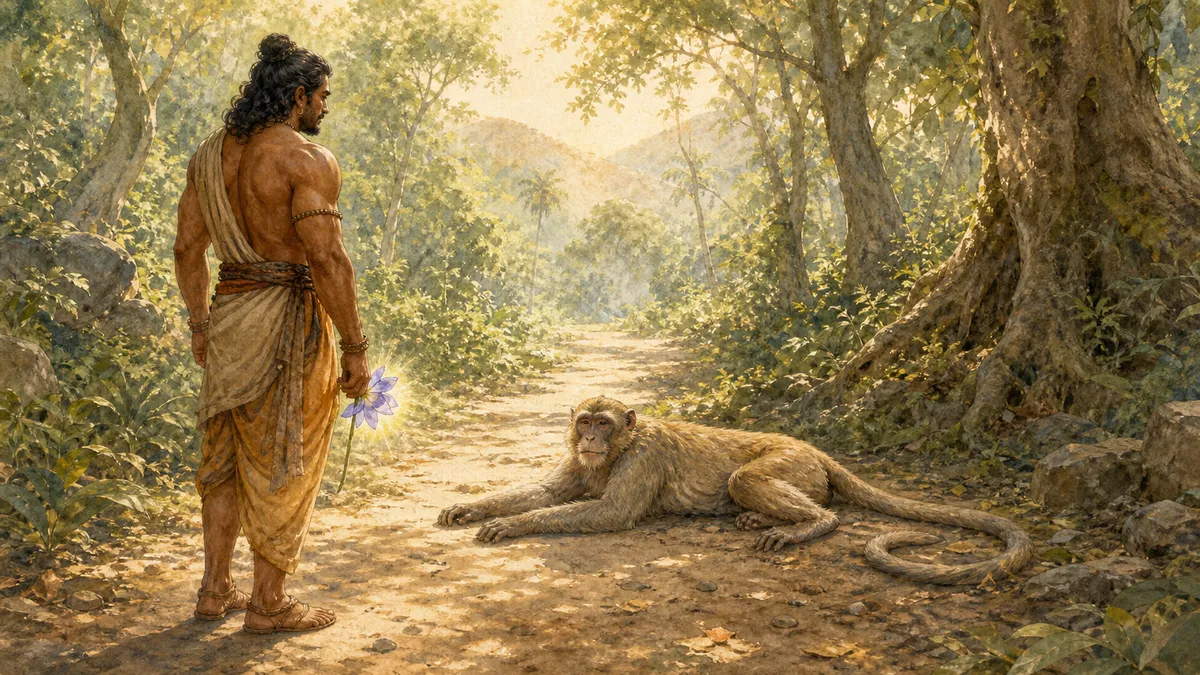
After Yudhishthira lost his kingdom at dice, the Pandavas were given the condition that they had to live in exile in the jungle for twelve years. And one day Draupadi wanted to obtain some wondrous flower. Then Bhima, wandering in the forest, saw a monkey lying across the road. He told it to get out of his way, but it asked:
“And who are you?”
And Bhima, full of complacency, began to extol the virtues of his lineage, the lineage of the Pandavas, and his own greatness as a prince. Then the monkey said:
“If you are so majestic, then why are you living in the jungle? You could not even protect Draupadi when Duryodhana wanted to make her a laughingstock by undressing her before the entire assembly after Yudhishthira had lost her at dice.”
During the game, Yudhishthira lost his reason. After he lost the kingdom, he wagered himself, his brothers, and then his wife Draupadi, and he lost everything. This is a very well-known story described in the Mahabharata.
Bhima found no answer to give the monkey and, growing angry, said:
“Monkey, if you do not get up from the road, I can step over you. But I do not want to do that, because I have a half-brother, Hanuman, the leader of the army of monkeys. I have not seen him; I have only heard of him. But out of respect for him, I am still speaking with you.”
The monkey said, “All right, try to go around me.” And Bhima began to go around it from the side of its tail. But as he began to go around it, somehow the tail kept growing longer, so he could never reach its end. And when he tried to go around the monkey from the other side, it grew again, and again he could not get around it.
Then Bhima realized that the monkey was none other than Hanuman himself, his divine half-brother. He apologized, showing him respect. Since Hanuman was a very learned personality, he told him many ancient stories: how he had served Rama before Rama left this world, and how they had defeated Ravana. Then he instructed him in Vedic wisdom. After that, Bhima asked Hanuman to show him his enormous form, the one he had assumed in the battle with Ravana. Hanuman began to assume that form, growing larger and larger, and he increased to a tremendous size, but this so shocked and frightened Bhima that he turned pale and lost consciousness.
There is the story of Dhruva. A certain king had a son and two wives. One was the younger wife. And this younger wife, through cunning and intrigue, fearing that the son of the elder wife would ascend the throne, forced the king to exile the son and the elder wife to the forest, making them hermits. The elder wife was named Niyati, and the son was Dhruva. And one day Dhruva asked Niyati:
“Who, then, is my father?”
Niyati said with tears:
“Your father is a great king who lives in a palace.”
Then Dhruva decided to go and visit him. And when he came to the palace, the king recognized him, even though he was still a little boy. The king received him very warmly, seating him on his lap. However, when the second wife entered, she flew into a rage upon seeing that the king was joyfully welcoming his exiled son, and she ordered that he be exiled again at once. The king, being under his wife’s thumb, could do nothing. The boy, deeply upset, was forced to go back to the forest, harboring a very strong resentment over the way he had been treated.
One day he approached his mother Niyati and asked:
“Is there anyone in the world more powerful than kings?”
His mother answered him:
“Yes, there is. It is Narayana.”
Dhruva asked:
“And where does Narayana live?”
She said:
“He must live somewhere very far away in the jungle, where the hermits dwell. But why all this talk?”
But Dhruva decided to restore justice at all costs, and so he set out to find Narayana. In the forest he met seven sages (rishis) and asked them:
“Do you know where Narayana is here?”
The sages laughed at him and said that the path to Narayana was long and difficult, and that it would be better for him, as a little boy, to get out of the jungle as quickly as possible. Dhruva did not listen to them and went on, deciding: “If the sages do not want to show me the place where Narayana lives, I will find him myself.”
Then he saw a tiger and thought, “This must be Narayana.” And without any ulterior thoughts, he rushed after the tiger. But the tiger, unable to withstand such pressure, ran away. In the same way he met a bear and rushed after the bear, but the bear ran away too. Yet Dhruva continued with such fierce persistence to search for Narayana in the forest.
Then Narada appeared before him, drawn by the focus of his consciousness. And when Dhruva said that he was looking for Narayana, Narada said:
– Narayana is not somewhere far away, but right in the place where you are now. Sit down and direct your mind toward God.
Dhruva began to meditate so intensely, directing his mind toward Narayana, that Narayana himself blessed him with his darshan and then transferred him to Dhruva-loka, the realm of the Pole Star.
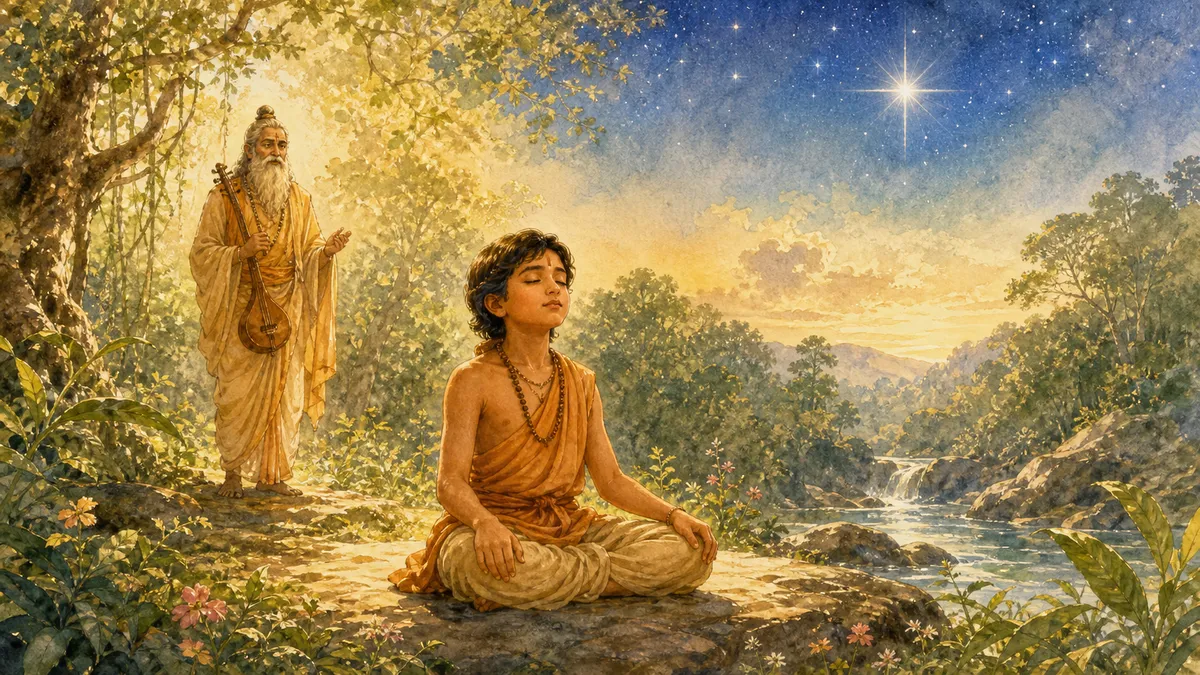
It is believed that the Pole Star itself is the great shining body of Maharishi Dhruva. It is believed that most stars that arise are the gigantic bodies of saints or sages who at one time may also have been human beings. These saints and sages are also the deities of these gigantic stars and planets, and these planets are their immense manifested bodies. It is believed that when a saint or master leaves this world, attaining complete realization, this is accompanied by the explosion of a supernova; his body manifests as such a star.
The Essence of Divine Pride
Thus, bhava is divine pride.
When the natural state manifests in the form of a feeling, this is bhava—divine pride.
In direct introduction to the natural state, it is precisely bhava, a worldview, that is transmitted. Bhava is an aspect of the natural state that expresses the feeling of oneself as a majestic deity endowed with power and glory. At the same time, bhava is not connected with our ego, ahamkara.
Bhava is the manifestation of the greatness, holiness, and purity of the Absolute, not of our small “I.” And through practice we awaken bhava. When bhava awakens, our self-esteem and worldview change. If bhava has not awakened, our worldview remains the same, and the practice of contemplation still remains at the level of observing consciousness.
When bhava awakens, it is like entering a hill and seeing an immense universe inside it, just as described in the “Tripura Rahasya.” You began to concentrate on the sense of “I” and engage in contemplation, but discovered there a colossal source of spiritual strength and energy.
Transformation Through Bhava
When you discover this colossal source of spiritual strength and energy, your life is transformed. Before you acquired bhava, your mind was limited, and even your practice still relied on an egoistic vision; you were roughly in the following position: “Give me something! Help me with something! Love me!” Why? Because the connection with the source, bhava, was closed, and the only thing with which you could perceive reality was ahamkara, the ego. And since the ego is very narrow, it cannot be whole, so life from the vision of the ego appears in such limited, gloomy tones.
And a person fixed at the level of ahamkara, the false ego, always experiences a lack of energy, a lack of self-esteem; he always has a subconscious insecurity or fear for himself, and as its opposite—a desire to assert himself. But when bhava is acquired, everything changes radically. Your self-esteem as a practitioner changes; you already realize: “I am not a limited human being. I am a boundless divine being possessing limitless potential.” And it does not matter that this potential has not yet been fully revealed. This potential is unfolding, and there is no longer any limit to it. And faith means such constant attunement to bhava.
It was precisely through such constant attunement that the little ascetic Dhruva became the deity of the Pole Star; he completely merged his bhava with the bhava of Narayana—the supreme deity, the Creator.

It is believed that the spiritual practice of contemplation without the arising of bhava is like trying to warm oneself by a pile of branches when the fire is not burning, or to swim in a dried-up river where there is no water.
The Experience of Bhava
How is bhava experienced? Imagine that you experience boundless divine wisdom and holiness, refinement, grandeur, beauty, harmony, elevation, sacredness, transcendence, play, paradoxicality, expansiveness, infinity, and an immense globality that manifests as blossoming, as limitless ways of manifestation. If all of this is brought together, one can say that this is the manifestation of the bhava of divine pride. At first we receive a short-lived “taste,” which must be distinguished as a useful signal, and then we attune ourselves to it constantly until it becomes continuous, until we acquire faith in it. Such acquisition of continuity and faith is bhava, while as long as there is no faith and continuity, it is rasa.
When bhava is attained, faith grows into devotion, when our faith in divine greatness becomes so deep, total, and all-consuming that it is now the foremost feeling in life. And such devotion is called mahabhava. When devotion deepens further, it grows into self-surrender, prapatti, atma-nivedana. This means that the false little “I” dissolves in the great bhava of divine greatness.
As one saint wrote: “I am born and die every day.”
Finally, when such self-surrender completely dissolves our notions of ourselves as a personality limited by the ego, this is called svabhava—the discovery of the true nature. It is also called self-recognition, pratyabhijna.
The Practice of Divine Pride
The practice of divine pride means continuously attuning oneself until such faith in bhava is attained. If in contemplation we perform observation with subtle awareness through naked awareness, being as if an uninterested recorder, observer, or witness (sakshi), and work with sankalpa and the nine self-liberations, then in the practice of divine pride the emphases are somewhat different. Here we not only contemplate while remaining such an even, uninterested observer, a witness. Here we work with energy, with feeling, and therefore this practice is more tantric; it is experienced as a specific emotion and sensation. Suppose you can contemplate and simply engage in observation, and your awareness seems to sense a certain level of clarity, and this clarity continuously expands. But in the practice of divine pride you feel not only clarity; you feel inspiration, greatness, depth, devotion, boundlessness. You feel this as though the world around and within you is actually changing, your self-esteem is changing. It is like feeling yourself to be a poor man, and then beginning to feel yourself to be a king, a very exalted being, or a deity.
When such faith strengthens, the mind is purified, and impure bhavas conditioned by past karma are displaced. We begin to feel the bhava of the Supreme Source, while petty states, “mini-bhavas,” gradually begin to be displaced.
Since at first the mind is very uncertain and unstable, it does not understand how to remain in the state of bhava; because of this, our perception of the world often changes. For example, if we find ourselves in a joyful environment, joy dominates in us; if we encounter something that irritates us, we experience irritability; sometimes dullness or uncertainty arises. But the state of bhava is one state of such expanded and exalted greatness that never leaves us. It is a state in which you continuously maintain approximately this kind of attunement: “I am the supreme source of being. I am primordially perfect and pure in my essence.”
Gradually this bhava itself begins to reveal to you a boundless, inspiring experience. Such a yogin, wherever he may be and whatever he may be doing, always practices this contemplation and worship of bhava without division into the worshiper and the one who is worshiped. This may also be called self-worship.
Self-Worship and the Three Stages of Practice
In self-worship it is very important not to fall into error, since self-worship does not mean placing an altar in one’s cell with a large banner saying “Glory to me!” and performing pujas to it. Self-worship means that your object of worship is within you, and it is your higher “Self,” which you discern through contemplation, but experience precisely as a spiritual realization. Such worship is attunement to bhava and nothing more. It is the direct contemplation of the qualities of the Supreme Source, when we experience them in the body and mind as the worldview “Aham Brahmasmi.”
And in the beginning, in niralambha meditation, we place the emphasis on “Brahmasmi,” not on “Aham.” We try to feel the external bhava, since this is much easier. But then, when it gains strength, in niralambha meditation we place the emphasis on the connection between the words “Aham” and “Brahmasmi.” We subtly meditate on the relationship between “Aham” and “Brahmasmi.” We no longer emphasize the external experience of bhava. Finally, when we have become established in the experience of divine pride, our niralambha meditation is performed in such a way that we place the emphasis on “Aham,” that is, everything seems to revolve around our “Self”; it is precisely our “Self” that is the deity, the creator, the mandaleshvara. However, this is done only at a high stage of the practice of contemplation or the practice of divine pride, and not at the initial stage.
Therefore niralambha meditation, the meditation of divine pride, is given in three stages:
- At the first stage we contemplate the word “Brahmasmi,” regarding bhava as external
- At the second stage, we connect the external bhava from “Brahmasmi” and our own sense of “I,” meditating on the union of “Aham” and “Brahmasmi”
- At the highest stage, we meditate only on “Aham”
At the same time, “Aham” is not ahamkara; it is “Aham Brahmasmi.” “Aham” means “I.”
And such a state, when we meditate on the experience of “Aham Brahmasmi,” is called deva-bhavana, or the pride of the deity. The pride of the deity gradually displaces impure bhavanas, one’s own limitations, one’s own incorrect self-assessment.
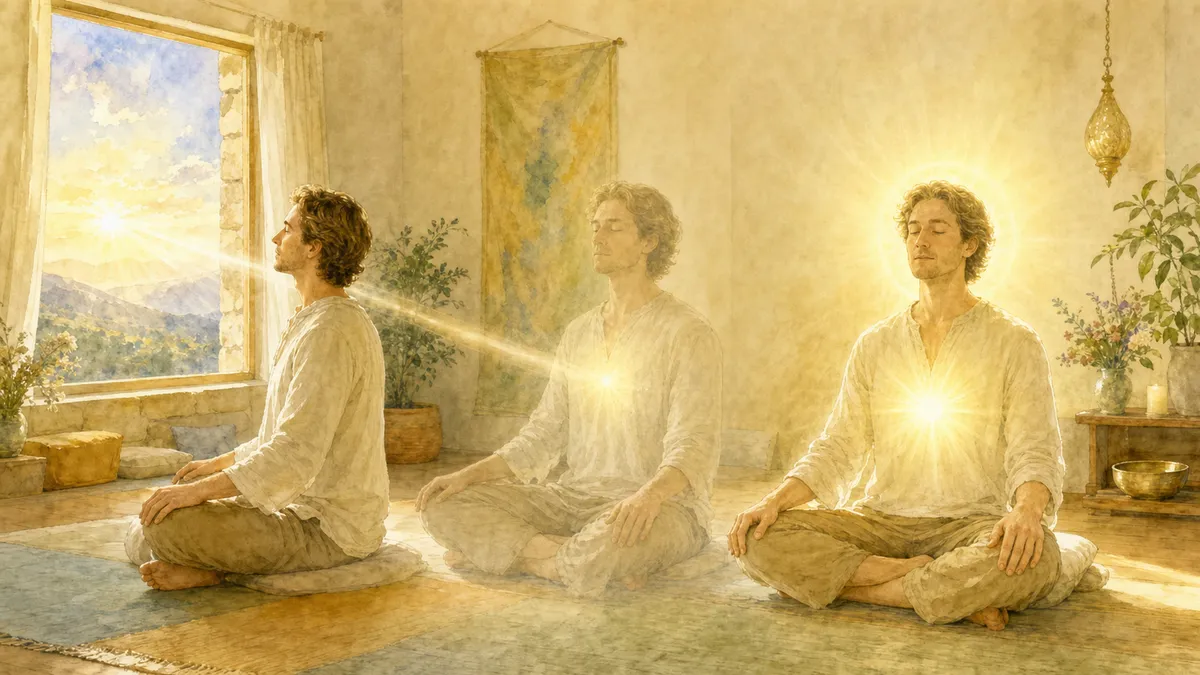
Overcoming Incorrect Self-Assessment
Maya is nothing other than an incorrect assessment of the world and of oneself. For example, a person says: “I am limited by samsara, I strive for liberation.” But his words already contain an incorrect self-assessment, because liberation is such a consciousness in which there is no “I” that is limited by samsara. The very statement already contains an incorrect self-assessment. It is precisely the elimination of such an incorrect assessment that gives the experience of divine pride. It displaces the very idea “I am the body” or “I am a limited person.”
At first, having experienced the bhava of divine pride and gained some faith in it, we convince ourselves of it again and again, allowing it to grow into conviction. These are not convictions produced by the mind, such as: “I am not a person, I am Brahman. I am not a person, I am Brahman.” Such conviction will bring no benefit.
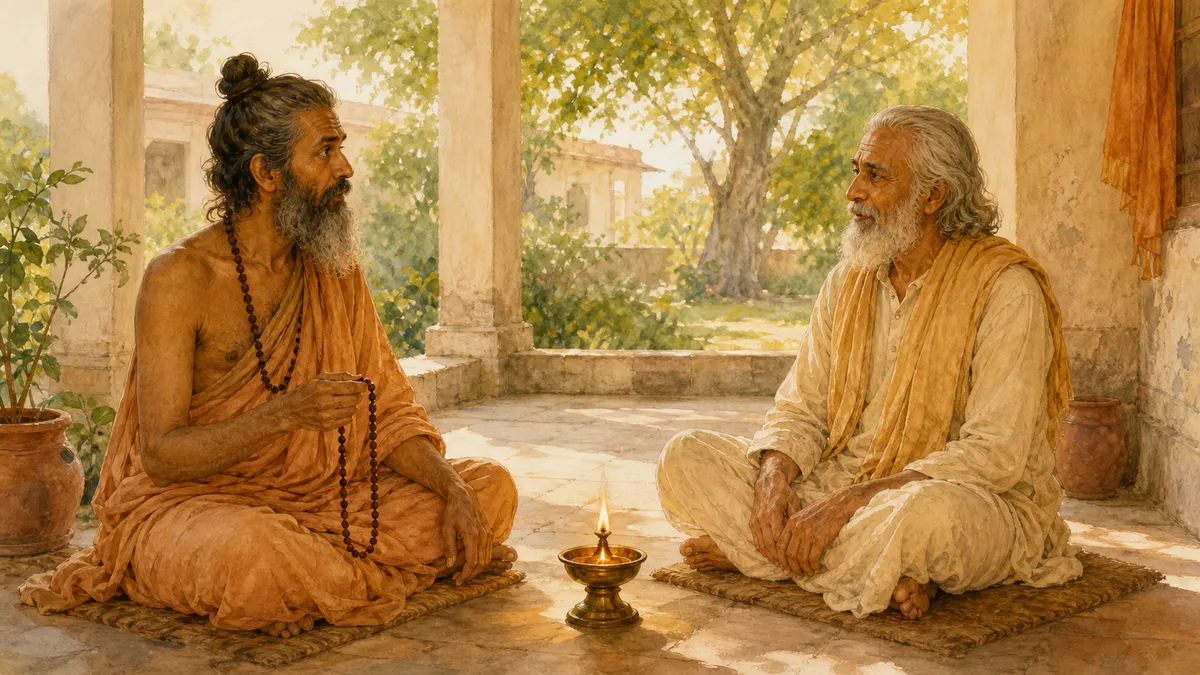
Once Bhagavan Shri Rajneesh met an ascetic who was constantly muttering:
“Aham Brahmasmi, Aham Brahmasmi.”
Rajneesh once invited him to visit and said:
“Can you be silent for a while, and not recite this mantra?”
The ascetic fell silent. After some time he came and almost attacked Rajneesh with his fists. He said:
“You have destroyed twenty years of my sadhana! I stopped reciting the mantra and I feel that everything divine has gone. This is all because of you.”
Rajneesh said:
“You should not attack me with your fists; rather, you should rejoice that I have revealed the truth about your practice to you. You have wasted twenty years! What kind of ‘Aham Brahmasmi’ bhava is it that disappears ten minutes after you stop muttering the mahavakya?”
The ascetic reflected, and then said:
“Yes, perhaps you are right. My practice was mistaken.”
And Rajneesh advised him:
“Do not repeat the mahavakya constantly; better try to be that very state.”
This is exactly how we convince ourselves of the “Aham Brahmasmi” bhava. We convince ourselves that we ourselves abide in this bhava by means of subtle knowing awareness. We place subtle knowing awareness into this bhava through contemplative presence, when, by means of viveka (discriminating wisdom), we see what this bhava is not, and the place where the bhava manifests. When we become convinced, such conviction grows into continuous self-worship. And at this stage there is no longer any need to do something deliberately; one simply needs to allow this bhava to become such boundless rapture, to become greatness without effort. Simply gently and subtly direct one’s consciousness, allowing it to begin to be absorbed. The key to this is relaxation and letting oneself go, eliminating the notion “I am meditating” and even the very notion of “meditation.”
Bhagavan Shri Rajneesh met another saint who also practiced working with the mahavakya “Aham Brahmasmi.” And he, too, repeated it continuously, fearing that he would lose something if he stopped repeating it. And Rajneesh asked him:
“Do you really feel yourself to be Brahman, or are you only repeating ‘Aham Brahmasmi’?”
The ascetic replied:
“You know, I myself am already confused. Sometimes I myself do not understand who I am.”
But if we have true experience and faith, then we have no doubts; we cannot become confused. It does not matter whether we repeat the mahavakya or do not repeat it; the bhava does not disappear. As they say: “True talent cannot be lost or taken away.”
If you have an authentic experience of bhava, it does not depend on the repetition of the mahavakya.
Manifestations of Divine Pride
The experience of divine pride can manifest as admiration, devotion, reverence before the supreme Source and the saints, as majesty, exaltedness, as purity and perfection, as delight, joy and ecstasy, or as a subtle clarity that gives you divine wisdom. It can manifest as the power of divine sovereignty and might (aishvarya-shakti), as the creative power of manifestation, the power of divine creation, the continuous play of manifestations (srishti-shakti), as the power of sustenance (sthiti-shakti). Divine pride can also manifest as the experience of infinity (anata), as incomprehensibility that goes beyond everything human (achintya), and the wonder that accompanies bhava, as the play of spontaneous perfection (lila), as steadfastness and equanimity, as boundless love and compassion. All these are different aspects of the manifestation of divine pride, depending on the states of your pranas and mind.
When we acquire faith in such a bhava, our inner status, our inner self-esteem, usually changes. It is like a person who studied poorly and was a failing student, but suddenly began to surpass the very best students in his knowledge because some new channel of knowledge opened up in him. In the same way, the practice of divine pride changes our inner status, and gradually all our best qualities blossom.
The Fruits of Realizing Bhava
How does the realization of faith in bhava, or the realization of devotion, manifest? Love, compassion, and creative consciousness increase. A person ceases to be preoccupied with his small personality. If before he was strongly obscured or confused by his personality, now he essentially ceases to be preoccupied with it, knowing that his personality has been placed in the very best states, that it is developing in the best possible way. This is not a stage of indifference, not a stage of tamas.
When a person has indifference, he is also not concerned with his spiritual growth. He simply does not care. He simply lives, eats prasad, and every day is the same for him. He is, as it were, placed in the matrix of his own mind, but this is not at all the same. The stage of tamas is even worse. This is when the only experiences are the desire to eat and the desire to sleep. But for a monk this is not the best state, when he sits in meditation and thinks, “Oh, if only prasad would come sooner.” Or in the evening he sits and thinks, “If only shavasana would come already, at least I’ll relax.”
At the stage of divine pride, he ceases to have such obscurations. He does not have an obscured consciousness; nor does he have that rajasic desire to care for his personality, for self-improvement; he does not have that spiritual greed when he is very concerned about himself and thinks only about how to improve his own “I” or “tweak” it in some way. That is, he is no longer running anywhere; he has already found something valuable, and therefore he simply carries it and preserves it.
Developing Genuine Pure Vision
Genuine pure vision of the saints, of brothers and sisters in the Dharma, of the world in general, of the guru, and of oneself also appears. If before some small thing was enough to lose even the beginnings of pure vision, now this pure vision is real, and it is impossible to lose it.
Once, one female disciple confessed to me: “Once I was walking and saw how the guru spat on the ground, and my consciousness immediately dropped sharply. I thought that the guru could not spit on the ground.” I can, of course, promise not to do it anymore, but in fact, as long as you have a human body, you also have all its functions, so I see no restrictions here. It is simply a question of attitude. We can see any thing as pure and exalted, or we can see it as obscured, in duality, precisely because we have fixed ideas about divinity, when we think: “If it is divine bhava and pure vision, then it is only divine beings who fly in bodies of light, who do not eat, do not sleep, do not drink. Only this can be pure vision.”
But truly realized pure vision begins to be perceived in all life experiences; it begins to connect with all manifestations. We no longer divide things into pure and impure; we see that everything is pure, and only our dualistic mind is not pure. We consider something impure due to karma, pranas, conditioning, upbringing, and our own fundamental ignorance. Out of habit, our mind would fall into impure vision and then rise into pure vision. And we would, as it were, move from the pure to the impure, remaining at such an intermediate middle point.
Sometimes teachers deliberately tested students for pure vision, saying: “Since you trust me, let’s see whether you can hold your consciousness.” For example, when students came to Gurdjieff, he assumed a somewhat foolish appearance. The students were from wealthy classes; they thought: “How can one learn anything at all from this person?” And he consciously, being a skillful actor, “let loose” on these people. Sometimes, as soon as some person with strongly fixed ideas came to him, he would make terrible grimaces at him. And if the person did not have serious intentions or the ability to eliminate his ideas, he could not withstand it and simply left. That is, Gurdjieff gave lectures, but during this time he deliberately looked at this person, paid him the most attention, and made terrible faces at him. And when he turned to other students, he assumed a normal appearance, so it turned out that only that person saw it. Imagine, if lectures are given like this, what might arise in the soul? But if there is pure vision, then all this is not important, because such a person has already generated such a level of pure vision that cannot be lost or knocked down.
And this pure vision concerns not only the guru-disciple relationship or brothers and sisters in the Dharma. It also concerns oneself and the world as a whole. We begin to see that the world is positive, self-organizing, exalted, harmonious, very complex, and that it has the subtlest global design. And this is a manifestation of the subtlest divine energies. What we considered wrong, unreasonable, or unjust is in fact all very deep, complex, and secret; everything is ultimately just and harmonious, only this justice and depth go beyond our human notions. Our human ethics are simply unable to penetrate the depth of this design.
As we become established in faith in bhava, our clinging, hopes, fears, acceptance, and rejection diminish; equanimity appears, and the single “taste” deepens. Now everything becomes, as it were, the same: you can eat any prasad, you can perceive blame and praise with equanimity, you can live in wonderful or not-so-wonderful surroundings— all this is perceived purely and positively.
Question: “As far as I remember, at first bhava is created with effort. Is that so?”
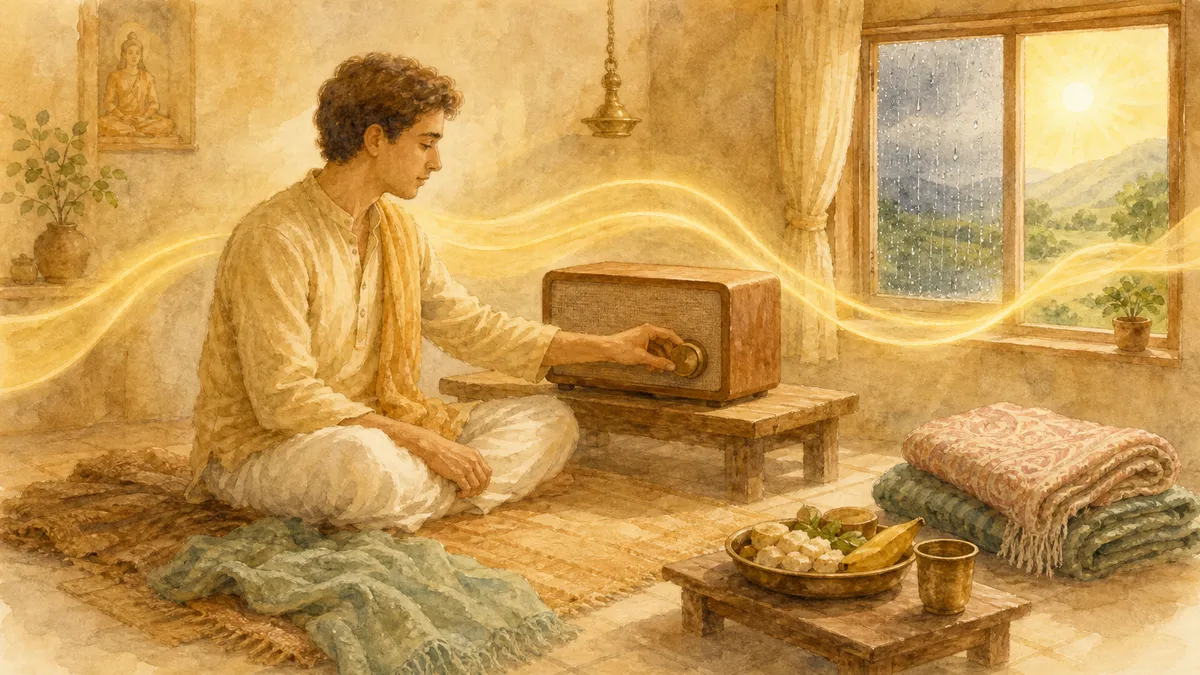
Bhava is not created. We make efforts, but we cannot create it. This effort is like the effort we make to turn the knob of a radio receiver in order to tune in to the desired wave. We do not create bhava; we make an effort to tune the mind to it. We need to keep our mind on a certain wavelength, and for this effort is needed, while everything else happens without our effort.
Three Stages in the Development of Divine Pride
When this level of bhava is realized, the so-called stage of pacification begins.
The previous stage is the stage of purification. For example, if a person was envious or possessed anger, obscurations, and a restless mind, then at this stage he becomes such a deity of passion. At least, at a certain level his mind is pure; he is in a state of all-acceptance, openness, and harmony. But this is only the very beginning.
The Stage of Pacification
Then, when we practice divine pride, the stage of pacification begins. This means that with the help of bhava we truly pacify our mind, ego, pride, and kleshas. We pacify not only gross manifestations, but also subtle ones. For example, if previously there was great agitation of the mind, now it is enough to enter the state of bhava, and it dissolves this agitation. If there were subtle impure dualistic ideas, then now even these subtle ideas are absorbed.
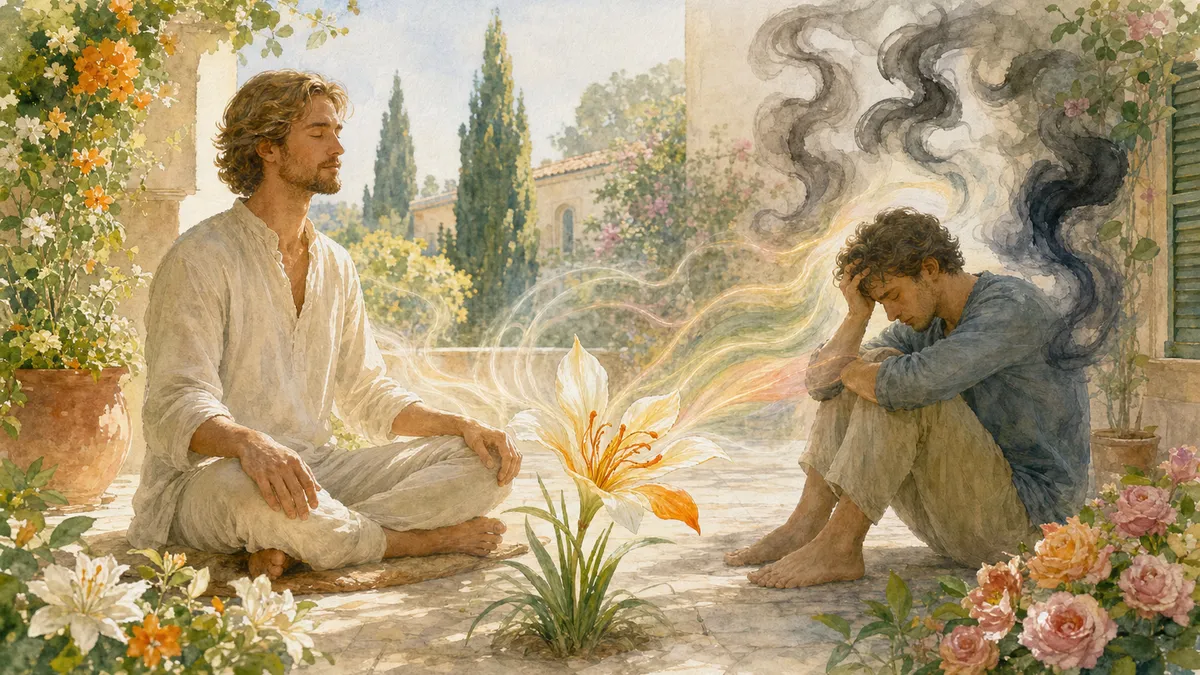
Then the stage of pacification means that we can pacify not only our own mind, but we can also pacify the afflicted minds of other beings. To pacify does not mean to somehow exert influence on someone; rather, this term means to have a positive effect, to change consciousness for the better. To spread bhava, just as a flower, fragrant, spreads its aroma. For example, if you are with a person whose mind is agitated, irritated, then your mere presence can extinguish this agitation or irritation. And at this level a yogin can also pacify non-human beings, such as demons, spirits, samsaric gods, and worldly dakinis. He can even turn them onto the path of dharma by preaching to them or simply by transmitting his state. Since this state is very subtle and exalted, it is accepted by spirits, demons, and gods as their heart, as their life force, and all rejoice in it. And therefore such beings are pacified without difficulty.
The Stage of Offerings
Finally, the third stage is called the stage of offerings. This means that bhava has become so strong and deep that it manifests in the outer dimension. External energies, flowing from inner experience, manifest as offerings. Offerings do not mean that offerings are given to you; rather, it means that the world appears in pure vision.
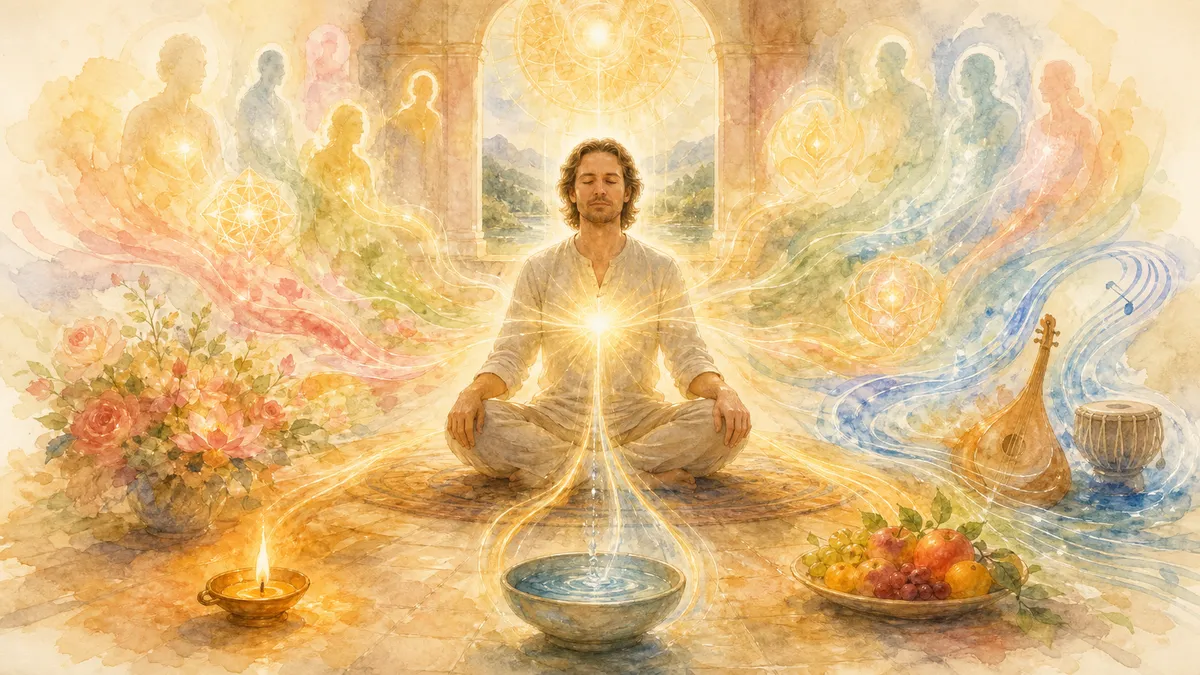
What is a ritual offering? It is the manifestation of pure vision in relation to something. Such a person attracts the attention of divine beings, such as Vayu, Indra, Dharmaraja, siddhis, or rishis, and they appear to him in dreams. He receives praise, prophecies, initiations, and blessings from them. These may be sacred objects, signs or symbols, or praise. Or they say: “You will attain awakening under such-and-such circumstances.” Or they convey the circumstances of future practice. Sometimes it may be a vision of receiving abundant offerings from worldly divine beings, when these beings express devotion and promise to serve the dharma. For example, you may have a dream in which many people are celebrating your birthday, presenting you with songs and dances; all of this is very exalted, and you are at the center of this mandala. This means that your inner deities have gathered around your bhava, around your “I am” awareness.
Once I had a dream in which I met a Taoist magician practicing Eastern martial arts, and he invited me to measure my strength against his. Since he was a very skillful practitioner, it was not easy for me, but in the end he nevertheless acknowledged that on the level of the subtle body I fought faster than he did and more subtly. It was not a battle; rather, it was a demonstration of art. And as a sign of this recognition, he gave me two green spheres that contained spiritual power. Around the same time, Vasudeva had a dream in which he met this same being. When you have such dreams, this too can be a manifestation of pure vision. At the stage of pure vision there can be many experiences of divine beings, who may appear not only in dreams, but even in waking reality.
One Christian monk prayed for a very long time in a state of tapas. He constantly recited a prayer to the Mother of God, which was inscribed on a large stone. And as he was reciting this prayer, a young man came and said: “The prayer should be read like this,” and changed some words on the stone and left. The monk thought: “Well, what an interesting young man.” When the abbot came, the monk told him what had happened. When he described this young man, the abbot thought: “Amazing! The young man draws on stone with his finger.” It turned out that it was the Archangel Gabriel himself who had come in the guise of a young man.
Attracting Divine Beings
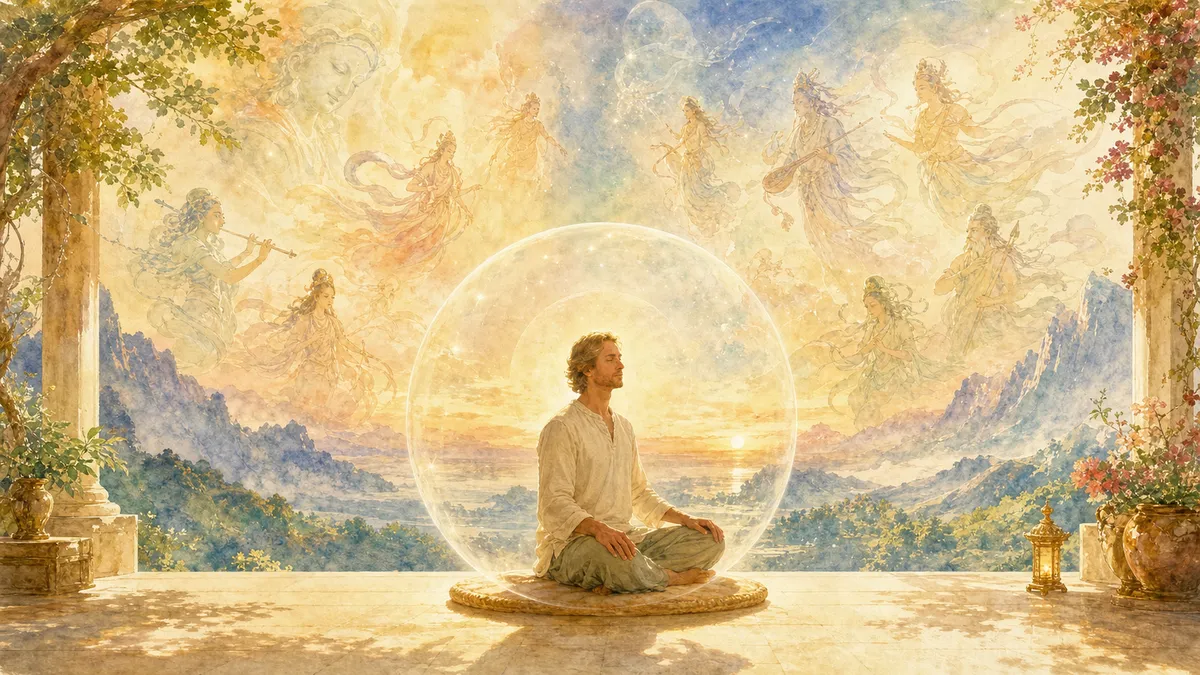
Pure vision attracts pure divine beings. It is like connoisseurs of music coming to listen to a concert by a virtuoso musician, or like scientists being drawn to a famous inventor and wishing to hear about his new inventions. Deities, gandharvas, apsaras, dakinis, yakshas, and siddhis begin to be attracted by the practitioner’s pure vision, praising him and wishing to receive some instructions, or simply taking an interest in him. Often such a practitioner is surrounded by spiritual experiences. In reality, these beings are manifestations of the energies of the primordial “I,” and they have always existed, but were simply hidden from the practitioner, because previously his afflicted state or lack of pure vision did not allow them to draw near.
Monks and saints exist even now, but only those who share samaya can approach them. For example, even if a person lives nearby, he cannot approach them because he does not have sufficient qualities, a point of entry. In the same way, saints, siddhas, deities, gandharvas—all these deities exist right now; however, one can approach them when the bhavana of our mind is pure and exalted.
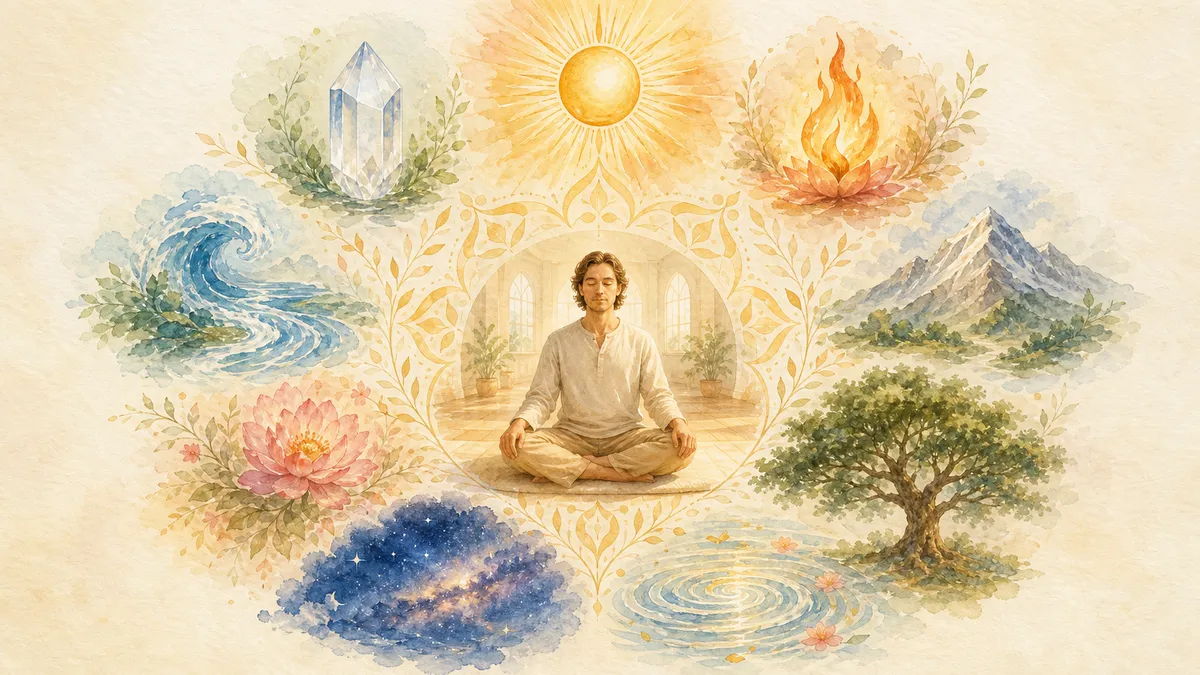
Finally, when the yogin’s spiritual power increases, he begins to attract even deeper energies. These are no longer worldly divine beings, but great divine beings of the upper world of forms, who dwell in bodies created from light, emanations of rishis, the illusory bodies of siddhas, the illusory bodies of gods who govern the elements, or even manifestations of the great deities of the primordial foundation of being, for example the deities of the five elements, the deities of the three main universal forces, or the five forces of action.
How should bhava be maintained with effort? Having received the transmission, one should remember and intentionally, with a little effort, hold the feeling of bhava. And when thoughts or emotions arise, it is necessary to unite the experience of divine pride with them and allow bhava to dispel them, continuing to keep the focus of consciousness on the divine pride itself.
