

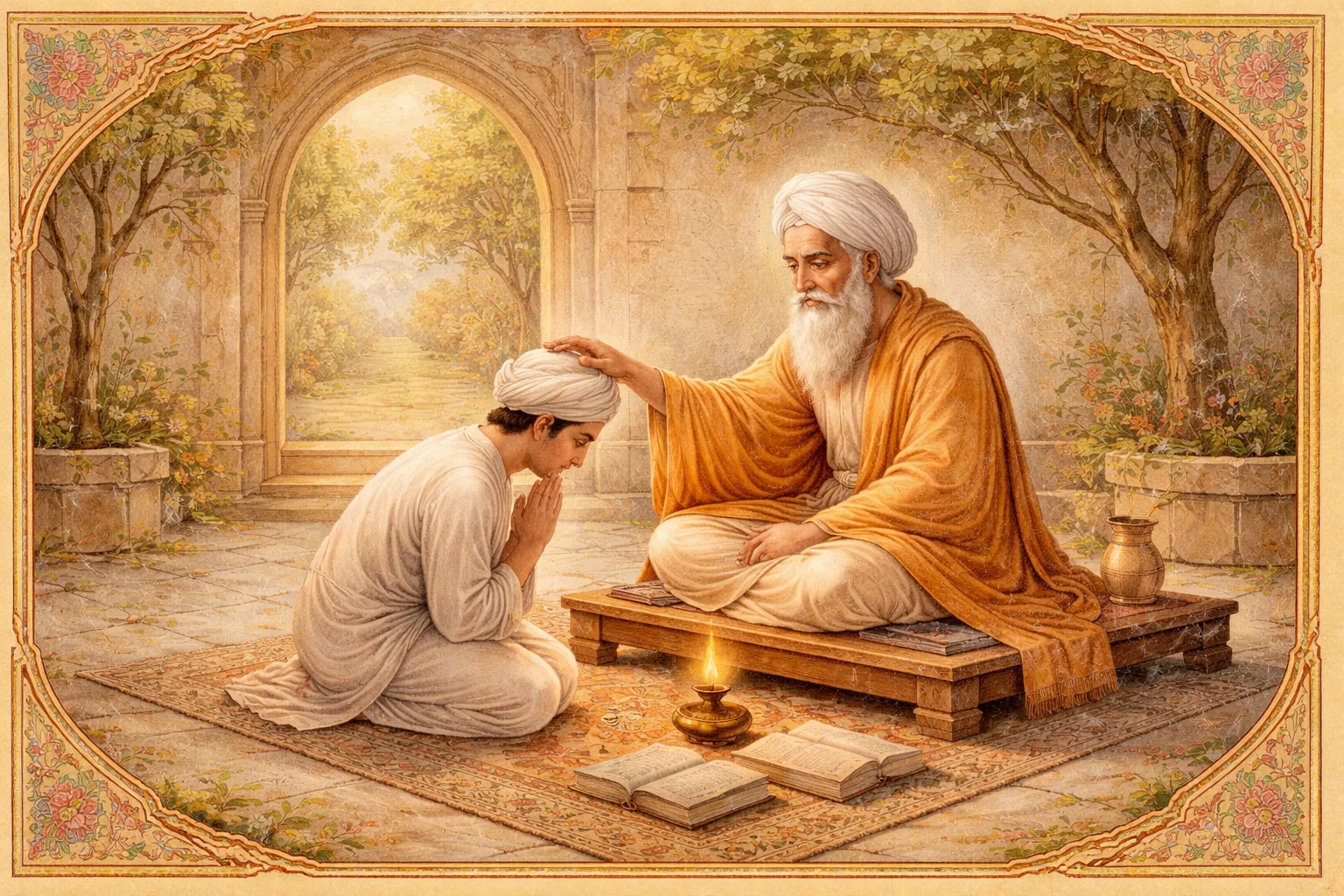
The Practice of Prarthana Mudra and Entering Contemplative Presence
We begin with the practice of prarthana mudra, or, as it is also called, namaste kriya, when we fold our palms at the heart, closing the lunar and solar channels, and enter contemplative presence.
It is very important to understand exactly how to enter contemplative presence during the practice of prarthana mudra. If you do it simply as a gesture of greeting, it has no meaning. The essence is precisely to enter presence.
To do this, you look straight ahead into space, relax, but at the same time your spirit is vigilant, like a tiger ready to leap. You let yourself go, as if distancing yourself from yourself, trying to attune to your causal body, to the buddhi channel of awareness. When you feel as though your vibrations are becoming more refined, you need, having relaxed, to surrender completely to these refined vibrations while maintaining the clarity of awareness. Then the channel of your causal body opens. It is like establishing a mobile connection in order to make a call. If there is a connection, further contact is possible.
Then, when we have entered this state, we perform Guru Yoga with support on Om, as was explained yesterday. Then we perform the movement that indicates the descent of energy, and we make a prostration.
The Principle of Spiritual Transmission
So, yesterday you received the transmission into Guru Yoga with Om; today there will be a transmission into the Brahma Mantra for those who are disciples or wish to become disciples, candidates for discipleship.
When you receive such transmissions, it means that a higher energy enters your life or, one might say, the energy of a higher civilization. The spiritual teacher in this case is its conductor or medium, who carries out the process of such transmission, that is, a kind of transmitting node.
Why is the principle of transmission important to us? Because it is precisely thanks to this principle that we carry out our spiritual path. We connect to certain suprapersonal universal sources that are not connected with this life, with conditioned karmic vision, but with something more global, which is not yet even entirely clear to us.
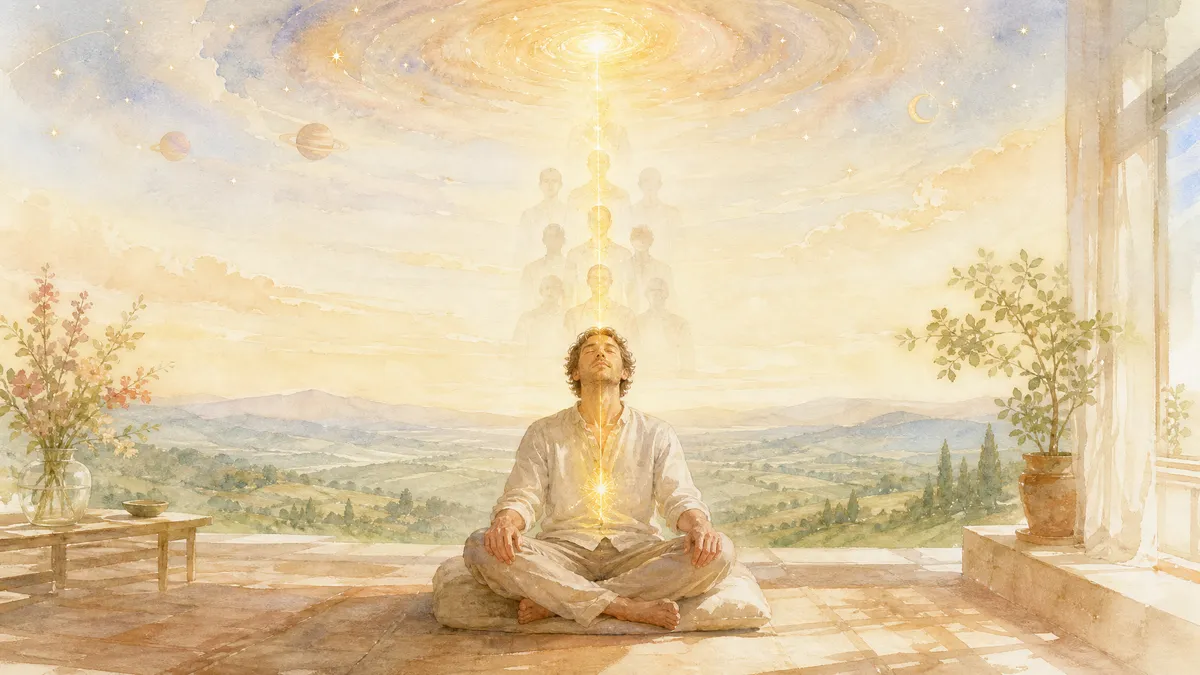
For example, the practice of Guru Yoga is connected with transmission and with connecting to the energy of the Refuge Tree. In the explanation of the Refuge Tree, you will see what place each saint or rishi occupies.
The Refuge Tree and the Holy Lines of Transmission
It can be said that, thanks to Guru Yoga with Om, you open a channel of spiritual connection directly with the saints of our lineage: with my teacher Achintya Baba, with other holy mahasiddhas such as Mauni Baba, Mahamurti Baba, Anama Prabhu (these are saints who are not very widely known), with more well-known saints such as Shankaracharya (the founder of the philosophical system of Advaita Vedanta), with the siddhas Matsyendranath, Gorakshanath, Charpatinath, Kanipanath, Boganathar, Tirumular, and others.
These are the greatest saints, whose level is simply impossible to imagine while in an ordinary state of consciousness. They are all immortal, and therefore to this day dwell in other dimensions of being, in other lokas. They all realized the “great transition,” the state of the rainbow body; in other words, they transformed the cells of the physical body to the level of light energy.
In addition to these saints, the Refuge Tree contains gods, that is, non-human, non-physical beings dwelling in other realities, such as the god Indra and the holy avadhuta Dattatreya, who is an incarnation of the god Vishnu.
The Gods of Brahma Loka and Their Nature
If you rise higher, above the bindu, there is a group of deities of the Brahma Loka level. That is, the gods of Brahma Loka are celestial beings whose bodies are created from subtle-material energy. They radiate light and feed on light. Each of them abides in their own tunnel of reality, their loka. The light of such bodies is emitted over a great distance. And if it is a god possessing great spiritual power, it is in fact infinite light. These are eight lineages of gods. We say that the lineage of gods with which we connect is the Saraswati lineage, that is, the one connected with the goddess of wisdom.
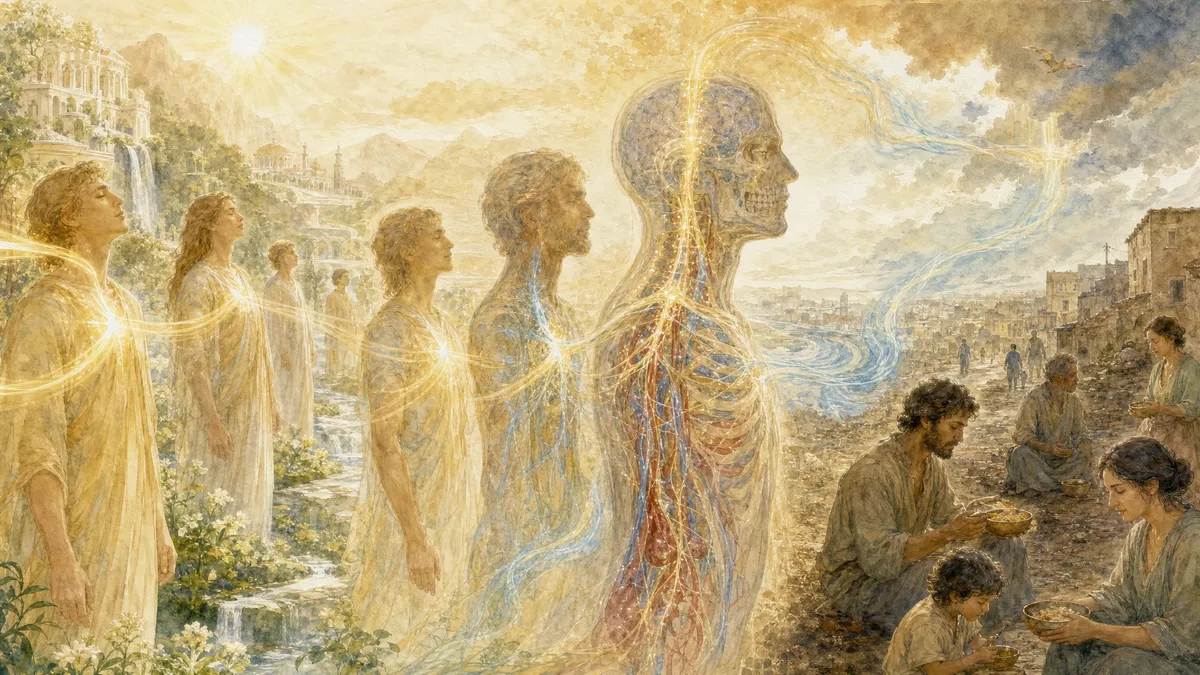
Unlike people, gods have different bodies, not material ones. For example, our bodies are protein-based, consisting of flesh and blood, and therefore they are mortal. The bodies of gods do not consist of protein matter; they are immortal because they do not decay. Gods do not need food as people do.
In general, it is believed that only in Kali Yuga do people feed on food and depend on food, whereas in other epochs of time (Satya Yuga, Treta Yuga, Dvapara Yuga), people did not depend on food and were almost immortal. They nourished themselves with energy, saturating their blood, bones, and bone marrow with it. In other words, their nourishment was prana. Unfortunately, we have not been entirely fortunate; we live in a period of time when the karmic situation on Earth is quite difficult, and therefore we are forced to depend on food. But it was not always so. In Satya Yuga, people fed on light and contemplation, like gods, and were themselves immortal. In Treta Yuga and Dvapara Yuga, people fed on energy (prana). However, over time our civilization degraded, as gross elements came into play. In other epochs, all people were spiritual, all people were holy; everyone lived like a god in an entire universe, being its deity.
Various Levels of Divine Beings
Gods are immortal. The gods of the world of passions, that is, those close to us, have bodies not of flesh and blood, but of the element of fire. They have no gross elements, that is, no earth element (gross flesh) and no water element (blood and other bodily fluids); their lowest element is fire (light), as well as wind (prana-vayu).
The bodies of gods of an even higher order, of whom we have spoken, that is, the gods of Brahma-loka, are created only from the element of wind and the element of space; they do not even have the element of fire. Naturally, therefore, they do not suffer, do not experience the need for food, have no reproduction through sex and no birth through childbirth, and have no death in our understanding. They abide in indescribable majesty and constant meditation.
They are in such a state that they see the past, present, and future as one. By the power of their consciousness, they can model both the past and the future—for them there are no limitations in this sense. They can freely penetrate space and time, creating an illusory body in any reality accessible to their consciousness. Their spirit is not limited to just one shell—they can freely change their form. They can create their magical emanation (double), send it to any point in the universe, and act there. They can endow this emanation with its own independent will and grant it authority. It is precisely in this way that avatars come to Earth into the world of human beings.
Avatars and Their Types
Avatars are personalities endowed with special authority. It is believed that all great teachers are such spirits—expansions or incarnations, or illusory projections of such gods—who, having assumed physical form, took on a physical body of flesh and blood in order to guide humanity.
There are:
- yuga avatars, existing in a specific epoch
- shakti-avesha avatars, that is, illusory bodies of a reborn being endowed with a special mission (for example, teachers who uphold lineages of transmission, founders of certain schools, systems, or religions)
- lila avatars—those who manifest an aspect of the gods in the form of play, spontaneity, and self-liberation
There are not many such illusory magical emanations among human beings; however, all of them are outstanding spirits in the human world, illuminating the road to liberation with their light. In fact, they are not human beings. Their spirit is in a completely indescribable state, although they may have bodies of flesh and blood.
The gods of the level of Brahma-loka, of whom we are speaking, are not limited, like human beings, by the laws of physics, the laws of cause and effect, or karma. Their spirit already abides in nonduality. Naturally, some of them are more enlightened, some less, but all of them abide in a state of the greatest holiness.
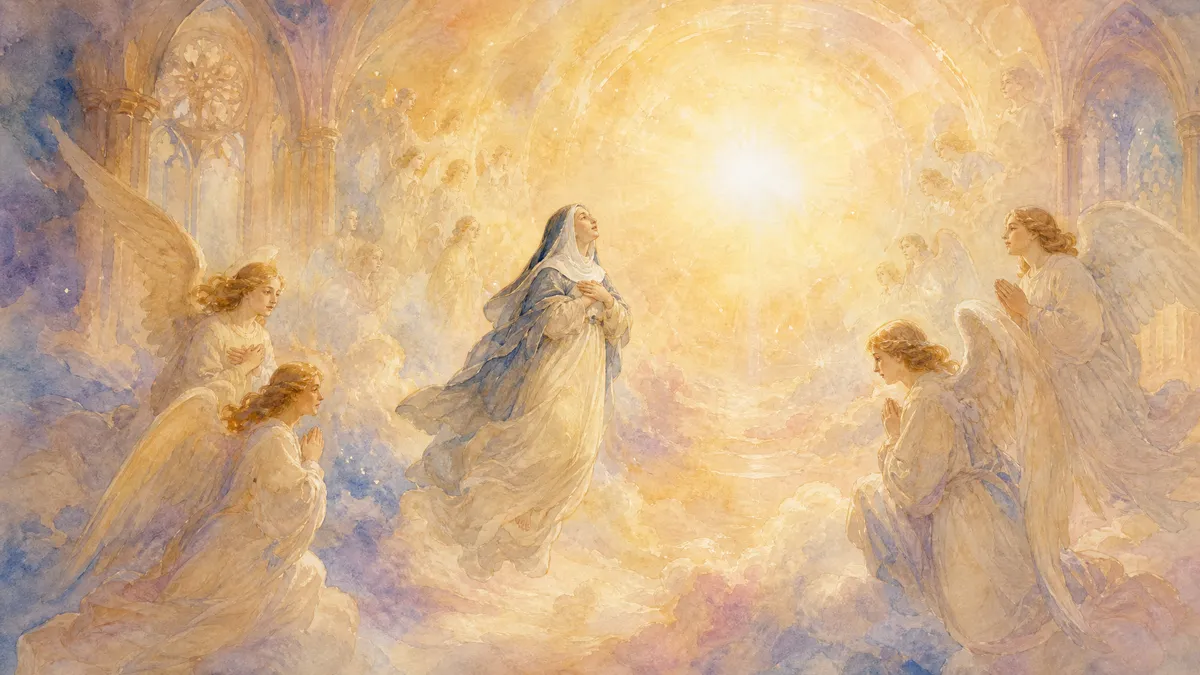
In one of the Christian texts, a nun describes how she ascended into the heavenly heights, into the abodes of paradise. She writes that there were angels there who repeated, “Holy, Holy, Lord of Sabaoth.” That is, they continuously glorified God. What does it mean to glorify God? In our terminology, it means that such exalted beings are continuously in meditation on the Absolute, on the Supreme Source.
The Teachings of Laya Yoga and the Seven Rishis
Next, above the level of the gods of Brahma-loka, on the Refuge Tree you see a five-colored sphere (bindu), which indicates the countless teachings of Laya Yoga. It is believed that in the world of humans, two hundred and fifty thousand teachings of Laya Yoga appeared mystically in the form of revelations. They entered various saints, then were transmitted through the chain of disciple succession and have reached the present time. Some of them were transmitted by the god Shiva, some by the avadhuta Dattatreya, and some by other gods or siddhas, such as Gorakshanath and Matsyendranath.
Only a small part of them is what is preached, what is known to us. For example, in the teaching of Laya Yoga we speak of five sections, or five yantras of Laya Yoga: the teaching of light, the teaching of sound, the teaching on working with energy, the teaching of contemplation, and the teaching of dream yoga. That is, these are the teachings that were preserved in the form of sacred texts, transmitted through the lineage, and have come down to us, but in reality there are far more teachings of Laya Yoga. There are very many similar teachings in the world of the gods at the level of samsara and in the world of the gods of Brahma-loka.
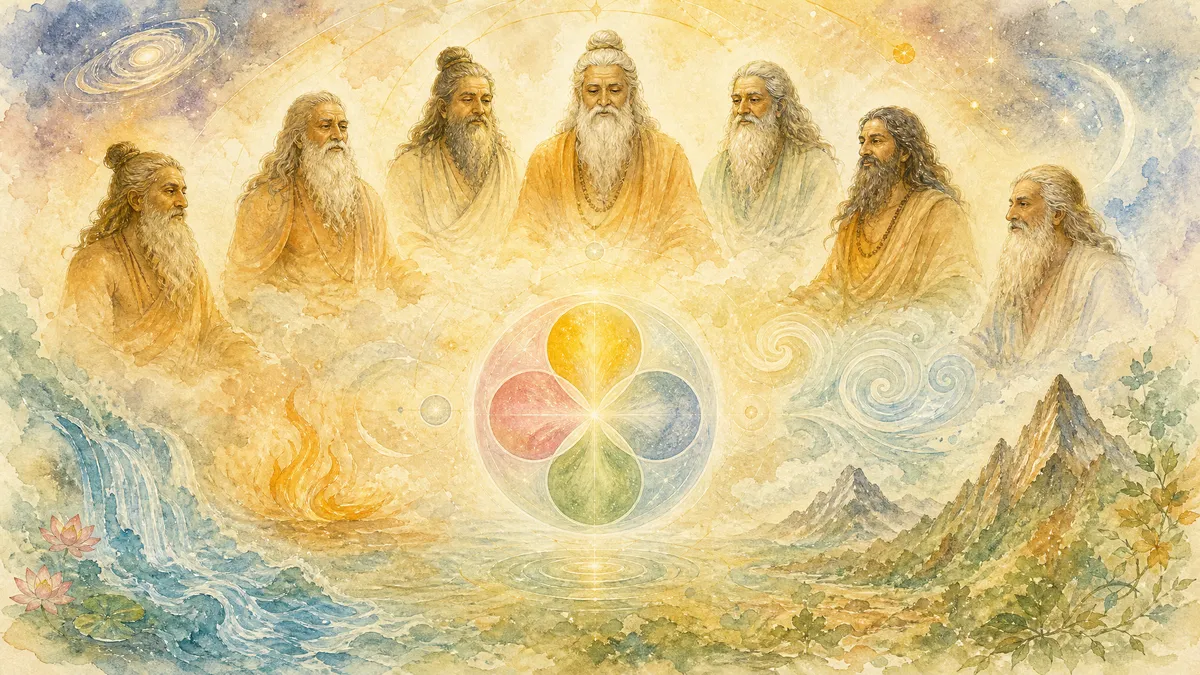
Finally, above the five-colored bindu, which symbolizes the infinite diversity of the teachings of Laya Yoga, there are, as you can see, the seven rishis. The seven rishis are seven great sages who stand at the origins of our universe, at its fundamental foundations. It can be said that the seven rishis personify primordial energies. In modern terms, they are operators of the highest class, to whom the laws of time, space, and the five elements are subordinate. They are not human beings, although they were once humans who attained the highest position. The best known among them are Bharadvaja, Kashyapa, Atri, Jamadagni, Vasishtha, and Vishvamitra. The lives and deeds of these rishis are described in various texts, for example in the Puranas (in the Bhagavata Purana).
Spiritual Sonship and Succession
When we practice Guru Yoga, it is very important to understand this principle: that we are connecting to such a transmission, and that now we have something to work with. A true yogin always tries to be a worthy son of his patriarchs. And when you become a disciple in the true sense, it is important to feel yourself in this way: “I am the spiritual son of the guru. I am the spiritual son of the holy mahasiddhas. I am the spiritual son of Dattatreya. I am the spiritual son of the god Brahma. I am the spiritual son of the rishis. I am the spiritual son of the Absolute. I am the Absolute itself.”
This saying should be understood correctly: “A true yogin always feels himself to be a worthy son of his patriarchs.” By son here, what is meant is not some kinship or family relationship, but a relationship of succession, of spiritual connection.
The Five Foundations of Spiritual Practice
When you practice any teaching, the following points always become important:
- guru (master)
- ashram (spiritual school)
- teaching (the Dharma you follow)
- parampara (a specific lineage of transmission)
- sampradaya (the family to which you belong)
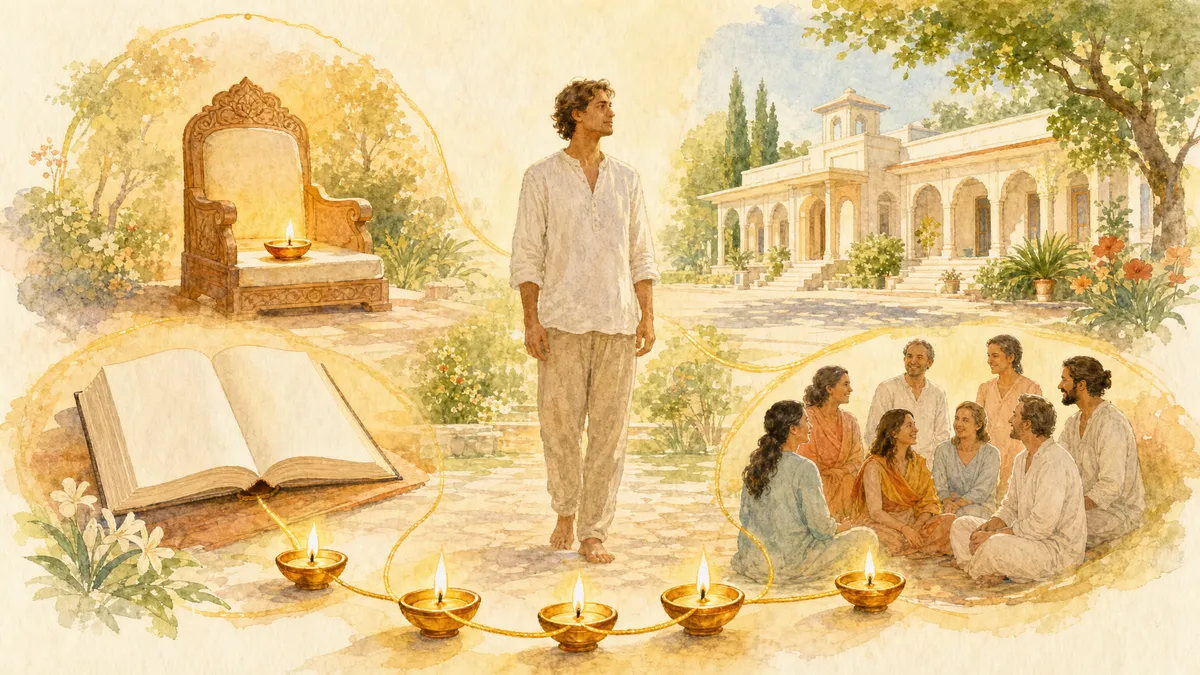
It is very important to understand which guru you follow, which school or direction you belong to, which teaching you identify with, which parampara you belong to, and what your sampradaya is.
At the same time, I am not speaking about absolute things, because in the absolute sense we must see everything as illusion and self-liberate it. When you and I speak in absolute language and in absolute terms, I will tell you that neither guru nor disciple exists, that even the parampara is an illusion, that the spiritual school and sampradaya are relationships of duality. I will say: “Simply look at everything as the Absolute, as the play of the Absolute, because in Advaita Vedanta there is nothing but the Absolute.” But that will be when you and I are communicating in absolute language, at the level of view.
Absolute and Relative Dimensions
As for the view, we must be uncompromising in the sense that at the level of view we must see everything non-dually. This does not mean denying anything. It means self-liberating everything, reducing everything only to the Absolute, seeing only the Absolute and its plays. But when it comes to the relative dimension, that is, to meditation, practice, and behavior, we say that in the relative dimension there are its own laws that cannot be ignored. Therefore, when we speak of the master, the school, the teaching, the lineage of transmission, and the family, we are speaking precisely about the relative dimension.
In much the same way as you speak about the transport you need in order to get home. The whole problem is that most of the time we are in the relative dimension. Moreover, for us the relative dimension is the most important and the main one right now. We cannot say: “I am in Brahman. Everything is illusion, everything is non-dual. I do not need to eat. I am completely self-sufficient. I need neither to live nor to die.” Unfortunately, we cannot say that. Our bodies consist of flesh and blood, and therefore we must eat, travel by a certain means of transport, and take into account a great many connections and relationships in which we find ourselves.
The Importance of Spiritual Specialization
When you enter the spiritual path, any serious practitioner will immediately ask you: “Who is your teacher? Which lineage of teaching do you belong to? Which school do you belong to?”
While speaking with one person, I asked him about this. He answered something like this:
– I synthesize all teachings. I strive to develop a supra-confessional view.
I said:
– This is very good, since I strive to do the same. Moreover, the teaching of the siddhas presupposes precisely such a view. That is exactly what it is called—a “view.”
Then I asked him:
– And what is your specialization? Do you belong to any specific school? What is your mastery in? A supra-confessional view and a synthesis of everything are very good, but they are not enough. You must have some “strong suit,” your school, your specialization, that in which you have reached the heights, that which is a matter of pride for you.
He said:
– Somehow I haven’t thought about it.
In fact, specialization and belonging to a particular school do not contradict a supra-confessional view or the synthesis of everything. They are like two sides of the same coin. Here is an example. There are many different kinds of sport. A person says:
– I love sport in general. I am an athlete.
Then he is asked:
– Do you have a rank in at least some kind of sport?
He says:
– I strive to synthesize all kinds of sport.
– So in what all-around event do you have at least some achievements?
– I don’t know.
But if you want to achieve success, you absolutely need specialization; you must belong to some lineage, some school, and move through it, building relationships with a specific master, with a specific style of practice. Moreover, within a school there is a diversity of methods, and you find precisely the method that is yours. That is, if you study physics, then within physics there is some field that especially interests you (for example: quantum physics, psi-physics, the physics of “impossible states”). It is in this field that you write your candidate’s and doctoral dissertations; you become an expert in this area, astounding the world with your genius, like Einstein or Stephen Hawking.
Stages of Tantric Conduct
The same principle applies in the Dharma. You take some field, for example the teaching of laya yoga, considering yourself most capable of the practice of contemplation with sankalpa or the practice of divine pride, and you train in order to become a master in this area. That is, you try to be in love with your spiritual work. If you do not have this approach of being in love with your work and of total self-giving to it, you will only skim the surface.
But this is only the first stage of tantric conduct, which is called the “bee” stage. That is, a spiritual seeker at the “bee” stage skims the surface in the sense that he listens to the teaching of one teacher, then another, visits one ashram, a second, a third. One could say that this is a kind of spiritual tourism. And at first the yogin, skimming the surface for quite a long time, must gather a certain potential, just as a bee gathers nectar from all flowers. And then he must begin actually drinking this nectar.
The next stage of conduct that comes after the “bee” stage is the “deer” stage. When we try to engage in such specialization, the question of the master, the school, the transmission lineage, and the sampradaya arises—that is, of the particular family to which you belong and with which you work.
Here is a simple example: when you buy a mobile phone, you work with a specific cellular operator (for example, Beeline or Megafon); that is, you do not work with radio waves in general, but work through a specific company and pay it money for this. Something similar happens in the spiritual world: you must choose a root guru for yourself, that is, a spiritual teacher under whom you will study.
For example, a woman came to one teacher and said:
– My root guru is so-and-so. Could you give me the teaching and explain the nature of Mind?
The teacher asks her a reasonable question:
– If your root guru is so-and-so, then why are you asking me this? After all, it is the same as saying: “My wife is so-and-so; could you please look after my children?” If your wife is so-and-so, then she should be the one looking after your children.
If a disciple has a root guru, then it is precisely this teacher who should clarify questions of practice and guide him along the spiritual path. This is the principle. For those who have another root guru, it is he who should clarify questions of their practice.
Our Lineage of Transmission Is the Parampara of the Siddhas of the Natural Path
Our lineage of transmission, or parampara, is the parampara of the siddhas of the natural path. It is also called Sahajya, and the Buddhist version of this direction is called Sahajayana (the vehicle of the natural path). The Sahajya teaching is a vast layer within tantric Hinduism that permeates various schools: Vaishnavism, the teaching of the Bauls, and the teaching of the Kanphata yogis (the yogis of the Gorakshanath tradition). Over time, it also entered Buddhist Vajrayana.
The teaching of the Sahajayana siddhas, the Sahajya tradition, means that in our practice we give priority to the path of contemplative non-doing and the natural state. We try to discover our own true state, work with it, become established in it, and thereby attain full realization. The discovery of this natural state occurs precisely through transmission, Guru Yoga, and, of course, our own efforts in meditation, concentration, and contemplation.
The Principle of Samaya — the Sacred Bond
When we enter into such a transmission, it is very important to establish the right relationship with the root guru, with the spiritual lineage, or with the spiritual school. Such a relationship is called the “principle of samaya,” or the “principle of the sacred bond.” It is very important to respect one’s spiritual school and to respect the saints of the lineage. Moreover, one must feel this spiritual connection, feel such contact, because transmission is not some formal act, like studying at an institute or university, where certain dry knowledge is simply passed on to you, where after the bell the student goes one way and the professor another.
The transmission of spiritual teachings is subtler, more intimate. It is like love; it is like very subtle spiritual relationships. That is precisely why we speak of the principle of samaya, of respect for the transmission. And when we enter into such a transmission, we truly need, from the very beginning, to understand how to observe the principle of samaya.
The Refuge Tree of Our Lineage
At the very top of the diagram of our Refuge Tree there is depicted a sphere that symbolizes the self-born light (svayam-jyoti). This is another name for the Absolute, or Brahman; that is, it is the light that is born from itself.
Next are the seven rishis: Bharadvaja, Kashyapa, Gautama, Jamadagni, Vasishtha, Vishvamitra, and Atri. They are the transmitters and bearers of this light. Here they are depicted in the rainbow state — this means that their bodies are completely non-material; they are beyond the five elements.
Below is depicted a cohort of gods of the level of Brahma who have mastered the stage of contemplation of infinite light. Still lower are depicted the well-known siddhas who transmitted the teaching in the world of human beings: Dattatreya, Matsyendranath, Gorakshanath, Boganathar, Tirumular, Charpatinath, and Jalandharanath. And still lower is the direct lineage of transmission to which we belong. At the bottom of this lineage is your spiritual teacher, Swami Vishnu Dev, and you, as disciples, come directly below.
Thus, when you enter the lineage of transmission, you connect to such an enormous spiritual structure, with which you gradually establish a bond. The transmission of the Brahma mantra is also a connection to such a global network.
It is like when, upon connecting to the Internet, you can establish a connection with certain information and work with it. In the same way, when you connect to a spiritual lineage through such a transmission, you begin to receive psi-information and operate with it at the level of consciousness (in the case of a good connection). The guru in this case is the provider, if one may put it that way.
I deliberately use such comparisons so that it will be understandable, since we live in a certain reality and can operate only with those concepts that are familiar to us. The ancient tantras say that the teaching must spread flexibly, taking into account the mentality, semantic field, and meanings of the beings to whom it is transmitted. For example, many saints or awakened ones are depicted in strange forms, for instance, as wrathful deities. This is connected with the fact that they visit other worlds in which beings may perceive the Dharma differently. That is, these saints assume a form that corresponds to the karmic dimension of those beings.
Brahma Mantra
What, then, is the transmission of the Brahma Mantra? Initiation into the Brahma Mantra is a way to constantly renew and deepen this connection. The transmission of the Brahma Mantra is the establishment of a connection with the Absolute itself. If Guru Yoga based on Om, which we spoke about yesterday, is the establishment of a connection with the Refuge Tree in general, then the transmission of the Brahma Mantra is the establishment of a connection with the essence of the Refuge Tree, with the very highest state, the Absolute itself, Brahman. Therefore, it is very important, especially for those who have not fully understood contemplation.
Of course, the main practice in the teaching of Laya Yoga is not the practice of the Brahma Mantra. Because the main thing in the teaching of Laya Yoga, the main sadhana, is to be in contemplation. You may not repeat any mantras, perform any techniques, or wear a mala, because the very essence of the teaching lies in contemplation, in maintaining vigilant awareness and abiding in presence beyond concept. This is the most important thing we do. And if we are in such contemplation, then we are practicing Laya Yoga; if we are not, then whatever we may say, we are certainly not practicing it.
However, in the teaching of Laya Yoga there are many methods that we can vary and choose depending on our inclinations. The practice of the Brahma Mantra is a method that I recommend everyone perform on the relative level, since it greatly helps and supports the practice of contemplation. We cannot yet say that we are at such a high level that awareness alone is enough for us. We live in a relative world where energies that disturb the pranas and various situations are at work, and therefore our awareness is often strongly influenced by such energies.
The Importance of the Teacher-Student Relationship
So, when we have clarified the principle of transmission, determined our lineage of transmission, and clarified the concept of discipleship and the root Guru, then it is considered that we are ready to receive the transmission. In general, the teacher-student relationship is a very important relationship in the sense that through it the student grows. And these relationships are needed not by the teacher, but above all by the student, because it is the student who is trying to undergo transformation and who himself asks for help in this transformation.
Once I was talking with a person and asked:
“And who is your teacher, your master?”
And he said:
“As the Buddha said, I am my own Teacher.”
That is good, of course, but it is not enough. It sounds very attractive, but the Buddha said this after he had left his palace, become an ascetic monk, and lived in the jungle performing mind-boggling tapas; after he had had two teachers, Alara and Uddaka; after he had realized the samadhi of the seventh dhyana and withstood the battle with temptations and maras; after Brahma had acknowledged his realization. That is, one should not always imitate saints without knowing their path of realization.
Therefore, I told this person that it is important to nurture the inner teacher; this is very correct. And everything we do is indeed dedicated to becoming a teacher for ourselves, because as contemplation develops, our inner guru also develops. However, I tell students this: “Besides the inner Guru, you also have an inner mara, and it is very important to distinguish one from the other in order to defeat the inner mara and cultivate the inner guru.”
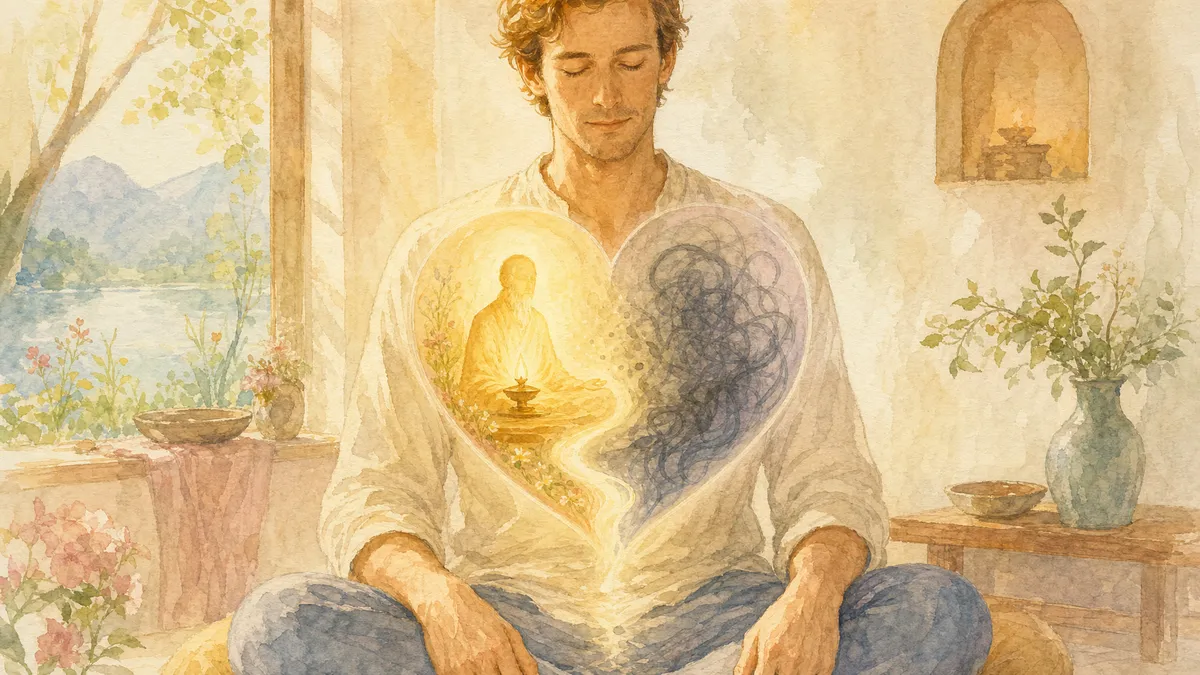
If we are truly trying to become masters—and the goal of discipleship is nothing other than to become great masters, geniuses of spiritual practice, gods—then it is very important to take this principle into account. A superficial approach, amateurism, will not yield results in spiritual life. In order for us to achieve some realization, we absolutely must become masters; we must, by fully devoting ourselves to practice, attain the state of a masterpiece in spiritual life. This is precisely why discipleship on the spiritual path is necessary. It is similar to how, in figure skating or in martial arts, people become champions under the guidance of a coach.
The Natural State — Sahajya
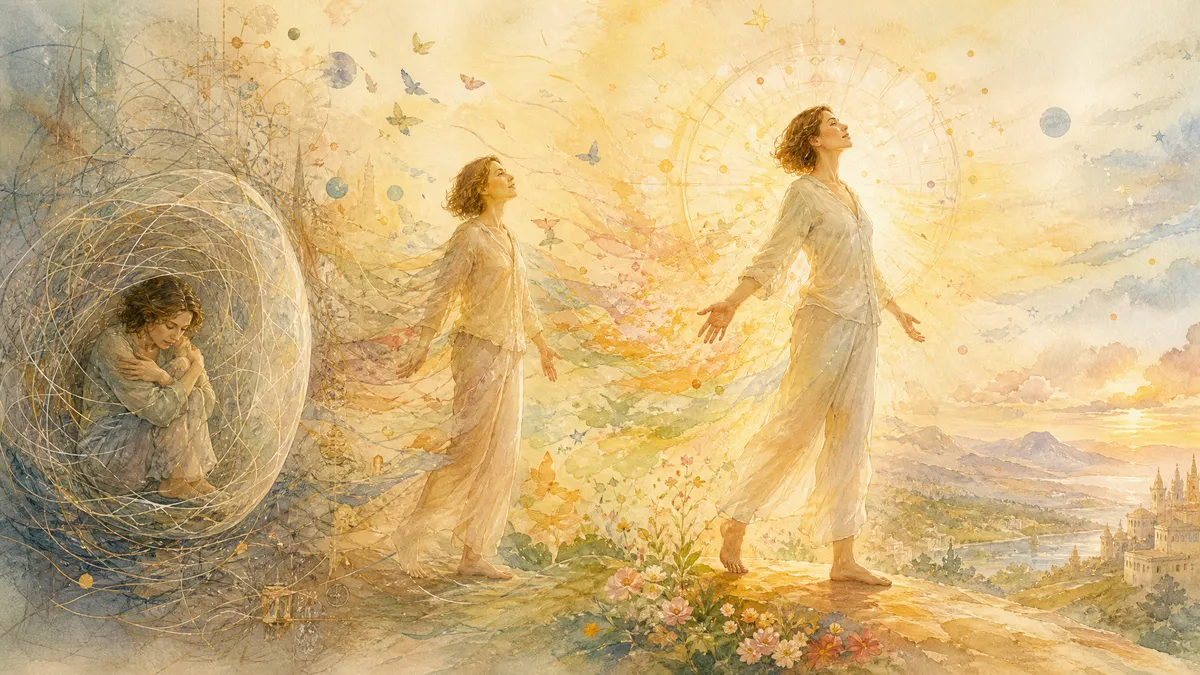
The purpose of spiritual practice is not to discover something external and not to worship any external things, but to understand and reveal, above all, our own natural state. In the teaching it is called sahajya, or sahajya-tattva. The natural state is something that is always inherent in us, but we do everything to ignore it. One could say that the natural state is God within us. But unfortunately, our karmas, the dualistic mind, conceptual thinking, and egocentric fixation create a very large cocoon, a veil that closes us off from this natural state. Because our mind remains contracted, we do not allow ourselves to be who we truly are.

In reality, we are the Absolute. Within us, at least in potential, there are deities—superconscious, supremely wise creative energies. However, if someone is told, “You are the Absolute” or “You are a deity,” he may think, “How can I be the Absolute? Well, all right. And what then?” But the Absolute, a deity, means something global and transcendent. It is operating with entirely different categories beyond time and space. It is abiding in the sacred, holy dimension of eternity, greatness, globality, paradox, and play, where the law of karma does not exist.
And in our present state, when our minds are contracted, we simply do not allow ourselves to be who we are. At the very least, we simply do not know this; at the most, we do not allow ourselves to be absolute, we do not allow ourselves to be deities. In order to be who we are, we must change our consciousness. It is similar to what is said in business: if you want to become a wealthy person, a millionaire, you need to change your mentality; you must allow yourself to be rich. If you have the contracted mentality of a suffering and poor person, no matter how much you work, you will not be able to make a fortune. Something similar must be done in the spiritual sphere as well: in order to reveal our primordial nature, we need to learn to allow this nature to manifest; we need to admit the thought that we can be absolute, that we can be gods or deities.
But the point is that as soon as we try to allow ourselves this or admit it, our ego, the dualistic mind, and certain samsaric obscurations turn on and begin to impose limitations, convincing us: “This is impossible! You are not like that. Your lot is very low.” But if a yogin practices correctly, then in the end he will surely transcend all these limitations.
The Parable of the Test by the Masters
One disciple, after receiving instructions from the guru on the mahavakya Aham Brahmasmi (I am the Absolute), came to the teacher the next day and said:
“Guru, now I am the Absolute, so I am already realized. You told me this, and I understood. I see no need for further practice; perhaps I will go and declare this to everyone.”
The guru said:
“Do not be in a hurry to declare this to others. You must be tested by several masters.”
The disciple asked:
“What kind of masters? I know only you.”
The teacher said:
“A master named Desire will come and test whether you can withstand him or not. A master named Temptation and Enticement will come and check whether you will lose your mindfulness at the sight of him. A master named Obstacle, Suffering, and Illness will come to test whether you can defend your absoluteness or not. A master named Harmful Demons and Spirits will come to cast illusions upon you, confuse your mind, frighten you with terrifying images, and create magical effects. A master named Night will come and force you to fall into oblivion and unconsciousness. Only after passing the tests of all these masters can you say, ‘I am the Absolute.’”
Then the disciple reflected and said:
“Yes, it is not so simple.”
This is exactly how spiritual practice unfolds: from declaration we move toward real experience, which begins to manifest. But in the end, when we work with the natural state, we truly begin to become established in it, and it truly begins to bear fruit.
Stages of Spiritual Transformation
The ultimate goal of spiritual practice lies in accomplishing the “great transition” and creating a mandala—an individual tunnel of reality. Usually, several stages (steps) of our transformation on the spiritual path are distinguished.
- At first, we are an ordinary person.
- From an ordinary person, we become a sadhu, that is, a yogi who practices sadhana, performs exercises, meditates, observes yogic principles, lives in a special way, receives transmissions, and establishes a connection with a spiritual teacher.
- The next stage after sadhu is master. This is one who has become a genius in spiritual practice; that is, not merely a practitioner, but one who has achieved certain results, developed his understanding and energy to such a level that it already allows him to go beyond his limitations.
- After the state of master comes the state of the perfected one (siddha). That is, a siddha is a master who has developed his state even further and can now operate with reality: change the state of energy, influence events, control pranas and elements. A siddha is one to whom certain uncontrolled elements of nature become subject: birth and death, sleep with dreams, and much more.
- When a siddha develops further, he becomes a mahasiddha—a completely transcendent being served by angels, one who can alter time and space. The beings described in our lineage are precisely mahasiddhas.
The text “Chaturakshita Siddha Pravritti” (“The Life Stories of the Eighty-Four Mahasiddhas”) describes some astonishing stories, including those of Matsyendranath, Gorakshanath, Charpatinath, and Jalandharanath. This text attributes these siddhas to Buddhism, although in reality they belonged to the Indian tradition of yoga. It is possible that they belonged to two traditions simultaneously; this did happen in ancient times. Since these siddhas were beyond confessional distinctions, they were not limited by different schools.
For example, Matsyendranath is still revered in Buddhism in the form of White Avalokiteshvara. Gorakshanath and Matsyendranath are also considered founders of the Vajrayana school of Tibetan Buddhism. It is believed that Matsyendranath was the founder of the schools of the Kanphatas, Nathas, Kaulikas, and Kapalikas. He exerted such a colossal influence on the development of the Dharma that he was assigned to several lineages, or sampradayas, at once.
- After the mahasiddha, the being, undergoing further transformation, becomes a deity. If a mahasiddha can still dwell in a physical body, then a deity (devata) is one who already lives in another dimension, another world; they have already completely surpassed the human vision of reality.
- After the state of deity, the yogi passes into a state of unity with the Absolute. This is roughly the level of the great gods, or the level of the rishis. He ceases altogether to be a being limited by the concepts of space, time, and causality, although he may manifest in the form of some body.
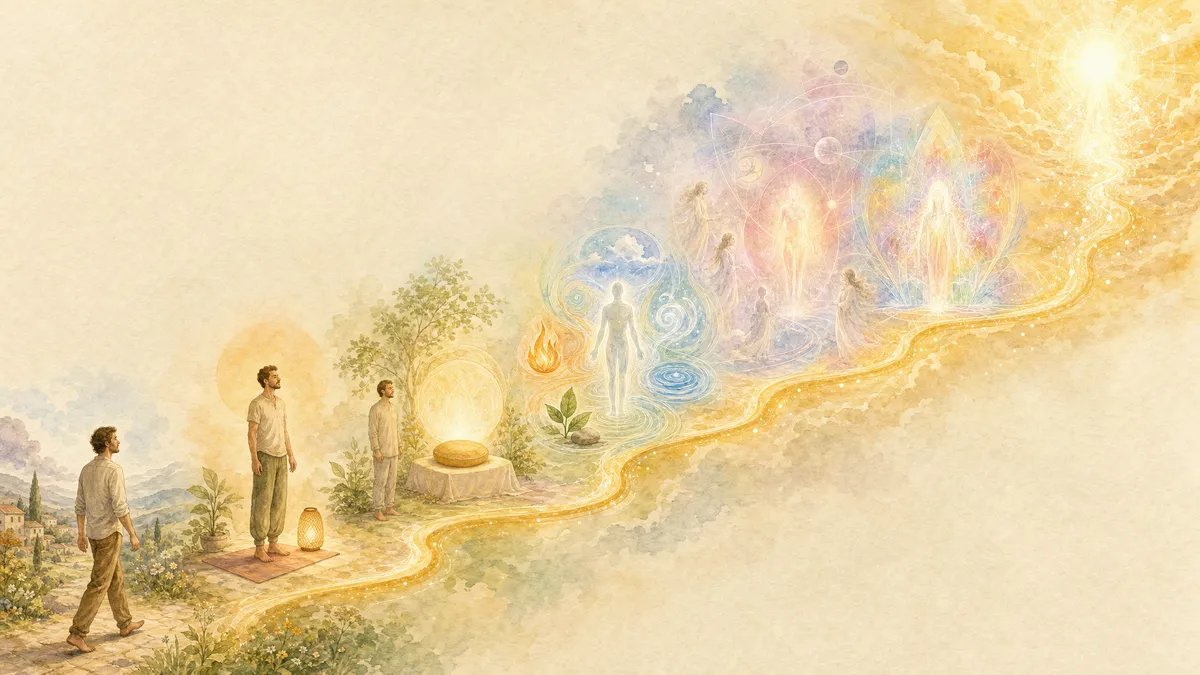
Our spiritual life develops in approximately the same way.
Current Tasks for Practitioners
The great gods, devatas, and mahasiddhas are not yet very relevant for us. To begin with, our task is to move from the state of an ordinary person to the state of a sadhu—a good practitioner—and from the state of a sadhu to the state of a master, that is, a practitioner who has truly mastered the art of his school and his lineage.
Liberation and enlightenment, which all sacred texts speak of, are attained precisely at the stage of master and at the stage of siddha. Beyond that, liberation and enlightenment are no longer relevant, because one who is already liberated and enlightened, one might say, has nothing to do. That is, liberation and enlightenment are important only for people, because people are bound, suffer, and die.
But spiritual life is not exhausted by the concepts of moksha—liberation and enlightenment. Avadhuta Dattatreya says in his texts that only humans and lower beings practice in order to attain liberation and enlightenment, but mahasiddhas and gods do not need liberation and enlightenment. Since they are already enlightened, the next stage of spiritual practice begins for them—lila, play. It is very difficult for a human being to understand the motivation of the spiritual life of these beings. But while we are still human, liberation and enlightenment are very important for us; it is precisely toward this that we strive.
Liberation and the Creation of an Individual Reality Tunnel
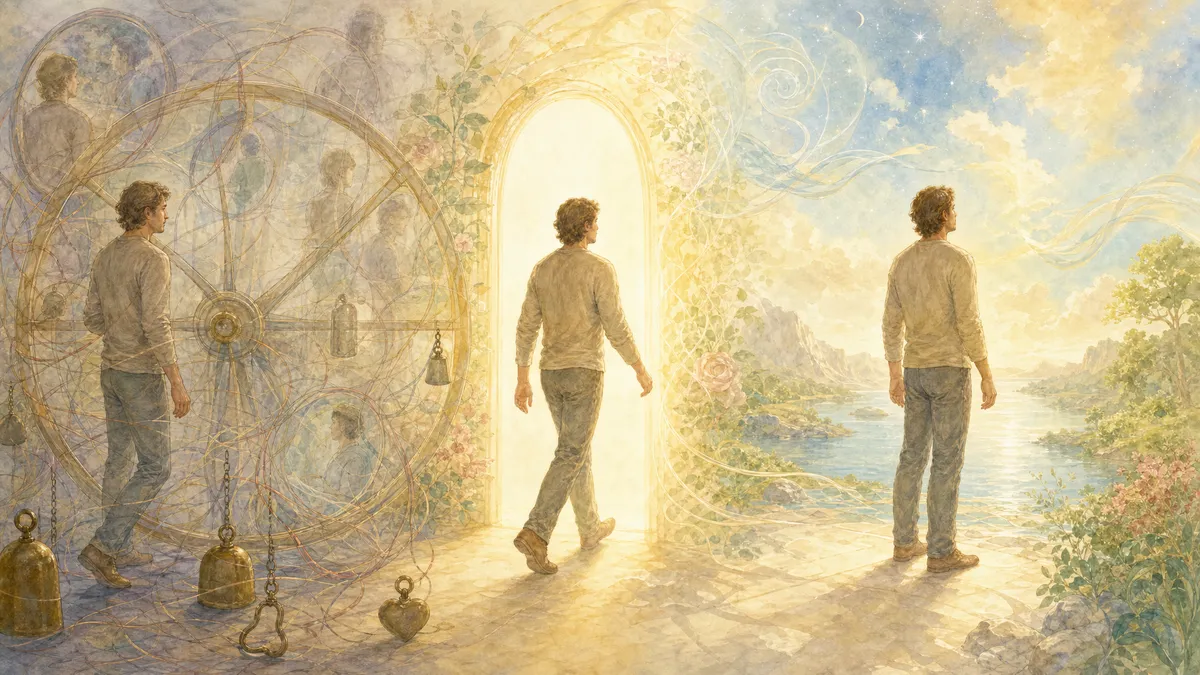
What do liberation and enlightenment mean? Liberation and enlightenment mean the creation of an individual reality tunnel, a certain karmic vision (loka-drishti), in which we could exist as if at the center of the universe. At present we are not at the center of the universe; we are on its periphery. This universe is not something we can operate with; it is not subject to our consciousness, and therefore a human being in this universe is subject to the action of the elements, laws, and so on.
A human being is mortal, subject to the law of karma; he feels cold, is subject to the law of gravity, and cannot, like a god, overcome time and space—all these are examples of limitations and bonds that are referred to by the general word “samsara.” And we are, whether we want it or not, precisely in samsara, that is, in an impure karmic vision in which there are many limitations. To attain liberation means to move into the dimension of nirvana.
The Tantric Approach to Liberation
Moving into the dimension of nirvana does not mean dissolving into some impersonal and absolutely undifferentiated state. Rather, it means uniting this state with material energy and with the manifested elements—such is the view of the teaching of Tantrism. For Tantrism, the external material universe (energy) is not an illusion and is not something bad. It is a manifestation of the energies of the Absolute, which are just as perfect as the Absolute itself. And from this point of view, liberation in the teaching of tantra differs somewhat from liberation in the teaching of Vedanta proper, in the sense that the dimension of energy in tantra is not ignored. Therefore, we can say that to attain liberation means to move from a state of impure karmic vision into the state of a mandala.
Mandala and Mandaleshvara
A mandala is a very important concept on the path of the teaching, one that characterizes the highest stages of attainment. In addition to the concept of “mandala,” there is the concept of “mandaleshvara.” A mandala is a certain reality governed by your consciousness, which you yourself create. Mandaleshvara is the central deity; it is the governing consciousness that stands at its center. A very simple example can be given: a car is, one might say, an analogue of a mandala, a controlled system, while the driver in this case is its governing deity (operator), the mandaleshvara.
A mandala is an individual tunnel of reality that we ourselves create through our spiritual practice. And in this individual tunnel of reality, a person after death can live for an unlimited length of time, can be immortal. We ourselves create this individual tunnel of reality by the power of our consciousness. For example, an ordinary person does not have an individual tunnel of reality, or if he does, it is still in an embryonic state. Therefore, one can say that he has no free will, that his free will exists only potentially. Gurdjieff, for example, said: “In order to do anything, one must be.” To be means to have a certain potential. He told his students: “How can you do anything if you do not yet exist?” meaning that they had not yet been formed as individual tunnels of reality, and therefore whatever they did would not have much meaning. To be means to create such an individual tunnel of reality, or at least to feel out its potential. And entering the natural state is the beginning of such being.
From a Limited Personality to a Mega-Personality
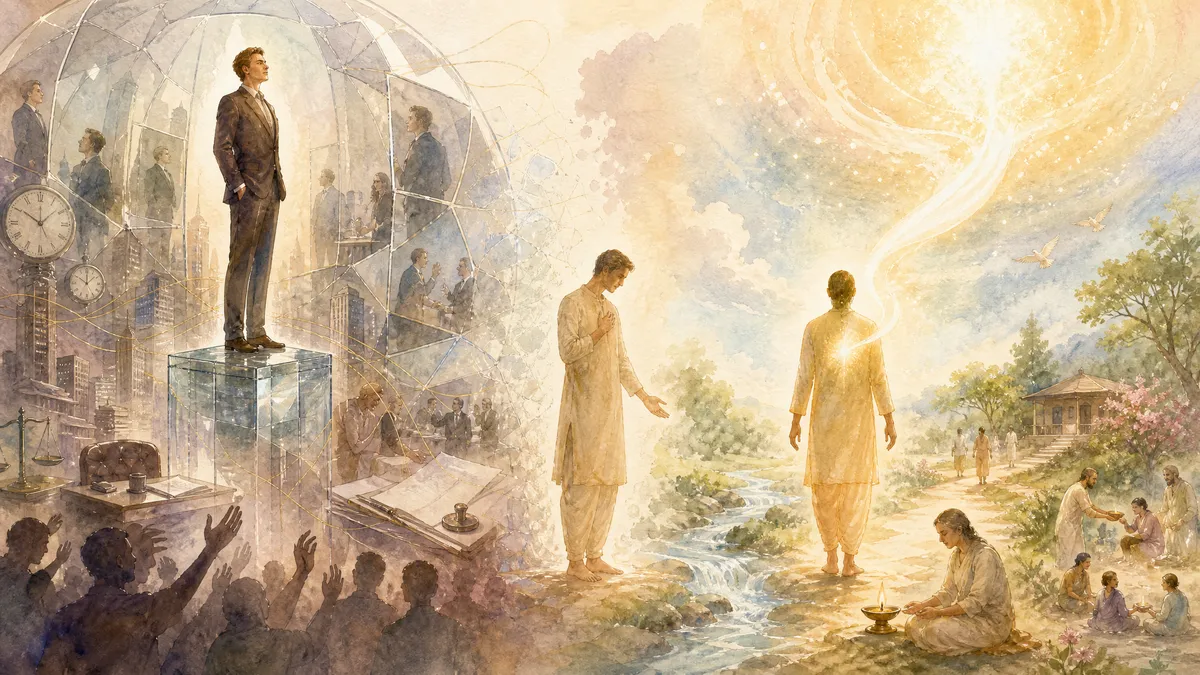
When we live in society, we usually do not live in our own tunnel of reality, but in a collective one, and we are subject to its influence. This is called the collective karmic vision of the world of human beings. But one can create one’s own tunnel of reality when we give rise to awareness, enter the natural state, hold to it continuously, and then it begins to manifest in the form of energy. One can say that to create such a tunnel of reality, that is, another karmic vision, means to move from the state of a limited personality into the state of a mega-personality.
If you consider great people in any sphere of life (business, politics, science, sports, culture, art, and so on), one can say that each of them made an attempt to become a mega-personality through some kind of worldly activity, and therefore they remained limited by samsara. By contrast, the Buddha, Christ, Lao Tzu, the mahasiddhas of our lineage, and the great rishis were able to overcome their egocentric views, break the cocoon of individual perception, reunite with the Absolute, and, drawing energy from the Absolute, become precisely such a mega-personality that had gone beyond the limits of samsara. In Sanskrit, such beings are called mahapurusha. Mahapurusha means “great soul.” And every siddha or rishi is a mahapurusha, that is, a mega-personality.
Our spiritual practice is aimed precisely at creating such a tunnel of reality, one that allows us to transform from a limited personality into a mega-personality. The basis for creating such a mega-personality is the revelation of the natural state, the revelation of awareness in relation to the Absolute. The creation of an individual tunnel of reality, becoming a mahapurusha, that is, a mega-personality, is not a matter of personal growth, but of transpersonal growth. At the level of personality, one cannot become a mahapurusha; the personality must be transcended. It can be said that we do not become such a mega-personality by ourselves; we become a mega-personality only when we turn to the Supreme. One can become a mega-personality only when we turn to the suprapersonal source, which for us is what in European religions is called God, while for us it is Brahman.
God and Brahman
God and Brahman are not entirely identical concepts, if one approaches this question strictly. God in European religions is a personified being who directly manifests in a person’s life, with whom one can converse, establish a connection, and so on. But Brahman is, one might say, such an absolute reality that manifests in all aspects, while itself cannot be defined either through concepts or through an image. But we can establish a connection with God precisely when we reunite with Brahman, dissolve in it, and bring our level of individuality to the state of a mahapurusha, precisely to the state of a mega-personality.
The Practice of the Brahma Mantra and Two Ways of Knowing Brahman
The practice of the Brahma mantra that we are speaking about is the practice of meditation on Brahman. It is believed that the god Shiva transmitted the Brahma mantra to his consort. When Devi asked the god Shiva about the knowledge of the Supreme Brahman, she requested: “Tell me how mortals attain happiness and Liberation.” She also asked how to meditate correctly on this supreme state. And here there is the term “Supreme Soul,” that is, here Brahman appears precisely in the form of the Supreme Soul (mahapurusha). Shiva told Devi that this is the most secret supreme truth, which he is telling out of love for her. It is said here that for Shiva this truth is dearer than life itself, because it is the essence of life itself.
Then Shiva says that there are two ways of knowing Brahman. The first way is knowledge through contemplation, through meditation, and the second way is knowledge through external energies, external manifestations. The main way for us is, of course, contemplation and meditation. However, this path is not an easy one. Years will pass before we truly taste the fruits of our meditation and our contemplation. For this, one must become a truly genuine master of contemplation.
I read how one Tibetan lama said: “Sometimes, when you approach the meditation mat, the very sight of it makes you nauseous.” This happens too. Especially after a long retreat, where for two weeks in a row you diligently tried to sit in the lotus posture, but you had no flashes of emptiness or inspiration, only severe pain in your back and legs. I read how Ram Dass described his visit to a Buddhist monastery: sitting from morning to evening in zazen meditation. He said that there was a monk there who supervised this. You were allowed to leave only to go to the toilet. The meditation lasted from morning until evening. He described how from morning to evening he was not meditating, but struggling with pain in his knees. And when a week had passed, he was already in such a semi-detached state, completely without hope or fear, but still holding on. Then the meditation instructor came up to him and said: “Oh, you are beginning to become a Zen practitioner!” That is, Zen is precisely the state in which we overcome such limitations. It is not that we sit down in meditation and immediately see a majestic light and descending gods.
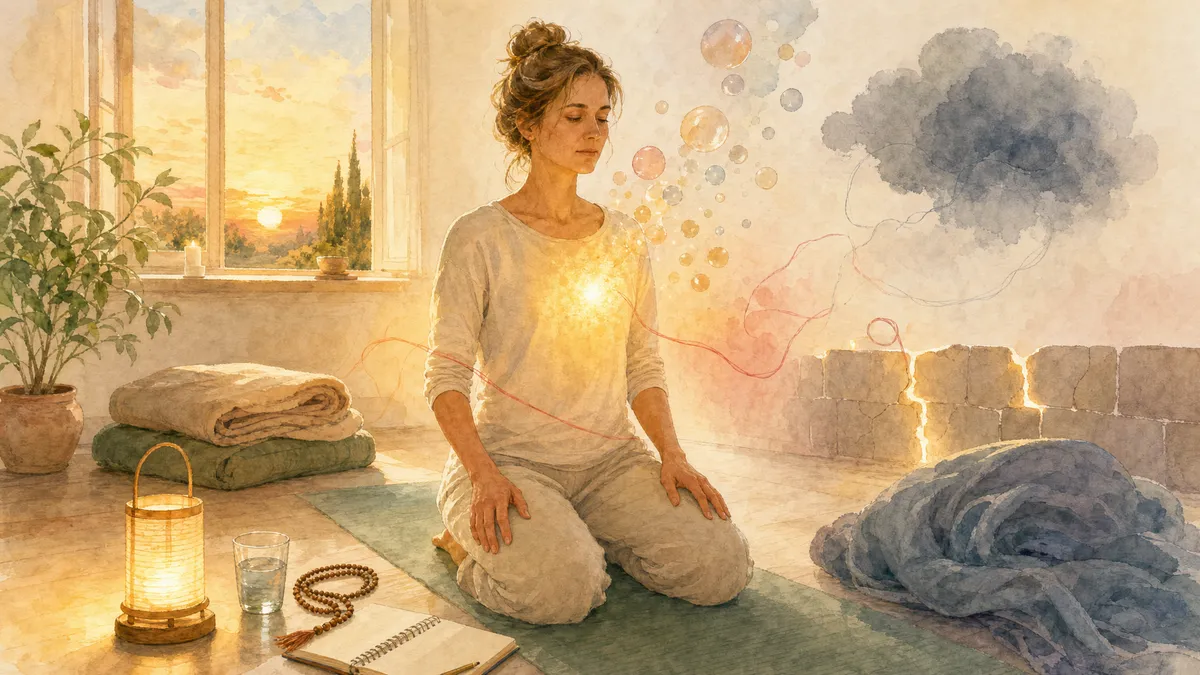
Therefore, the knowledge of Brahman through contemplation and meditation is always a difficult path, an austerity. Only the outstanding attain complete knowledge, while the majority are forced for years to saw through the walls of karma by means of meditation and practice. But Shiva says that the knowledge of Brahman is possible through external manifestation, that is, there exists another way, another exit. He says that besides the unmanifest nature of the Absolute, there is the manifest one. Brahman manifests in the form of energy through trees, houses, people, external elements, and we can also realize absoluteness if we work with this energy. Shiva says here: “Brahman can be realized through external manifestations. For one who wants to realize it through external manifestations, sadhana is necessary.”
The Mahanirvana Tantra and the Practice of Laya Yoga
Chapter 3 of the “Mahanirvana Tantra” is a very important text. The “Mahanirvana Tantra” in Indian Tantrism is one of the most authoritative and respected sacred scriptures. It contains a great many different practices, but if we speak of the teaching of Laya Yoga, it is precisely the practice of the Brahma-mantra that is specifically ours. Other practices are more distant from us. But the practice of the Brahma-mantra and meditation on Brahman through external manifestations are exactly what we can use in the context of the teaching of Laya Yoga.
