

Intention is called “sankalpa” in Sanskrit. The section of the teaching dealing with intention is called “sankalpa-vidya.” This is a very important section, since it is precisely with the help of will, with the help of our intention, that we are able to achieve something. If we do not command the power of our own thought, our own mind, if we have no aspiration, no directed striving, then we cannot achieve success in our spiritual practice.
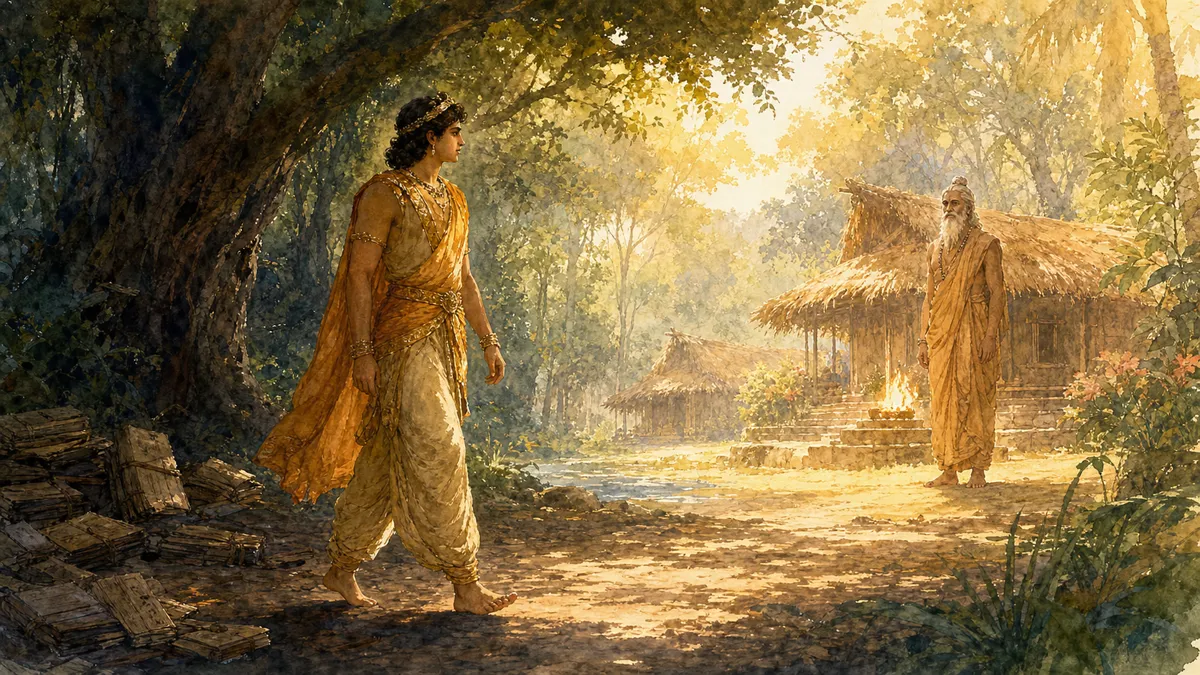
Rishi Vasistha gives Rama the following instructions on this matter:
“As the efforts are, so are the results, O Rama — such is the meaning of personal effort, and this is also called fate. When misfortune occurs, people exclaim, ‘Alas, what a tragedy!’ or ‘Alas, such is my fate.’ Both essentially mean one and the same thing. What is called fate or God’s will is simply the result of past actions, of personal efforts in the past. The present is infinitely more powerful than the past. Only complete fools are satisfied with the results of their past efforts, which they call God’s will, and make no effort in the present.”
Misconceptions About God’s Will
One can often hear various reflections from people on the subject of God’s will. When you speak with people about immortality, they usually say, “But God’s will is that a person should die.” I ask them, “And where did you see this God’s will? Or were you granted an audience with God, and did He personally explain His will to you? And which God exactly do you mean? Buddhists have no god; they have nirvana. Advaitins have Brahman, who grants a person complete freedom of will. Whom do you mean: the punishing Yahweh, Jehovah, God the Father in the Christian tradition? One cannot operate with such colossal semantic concepts so superficially. This is absolutely not the level at which we discuss things concerning our own destiny.”
When we begin to examine this from the point of view of Vedantic teaching, it turns out that God has no will as such that is unambiguous and formulated, as if to say: “Here is my will. That is where you all must go.” This is too primitive a perception.
The Absolute constantly manifests its energies. They unfold in accordance with the cosmic order (rita), but the Absolute itself takes no part in their unfolding. It is like the sun, which shines, and thanks to its light we can warm ourselves, although the sun itself takes no direct part in our getting warm.
The True Will of the Absolute
Various energies unfold in the world, providing us with opportunities. But how we use these opportunities depends on our clarity and our intelligence. And if we are to speak in such terms, then God’s will consists in a person acquiring their own will. Because at a certain stage of evolutionary development, a certain freedom of creativity, understanding, and choice must be given. Further evolution is impossible without choice, without the formation of a meaning-generating vector, without a vector of values and priorities, or, in the language of science, without the stage of proposing hypotheses.

And it is precisely here that a person has the right to freedom of will. That is, God’s will is that the person themselves acquire freedom of will, since further development and God-realization are directly connected with acquiring this freedom of will. And freedom of will presupposes choice and responsibility. It is impossible to become a God-man, to make a radical leap, if you have not acquired the ability to make decisions, to make conscious choices, and to bear responsibility for them. God will not do this for us. He gives us the opportunity, gives us freedom, but we ourselves must make such a decision. And this applies to all aspects.
Then a person becomes frightened, because they see that everything rests on them, that they are responsible for everything, that they must make decisions, that it is no longer possible to shift responsibility for their own destiny onto someone sitting in the heavens, but that they must seek answers within themselves, develop new meanings and a new strategy. However, until we learn to do this, we will remain in childhood, in the cradle of human civilization.
The path to the divine state, to the attainment of spiritual transformation, lies precisely through acquiring such responsibility, through discovering freedom of will within oneself.
Vasistha says the same thing to Rama:
“If you see that your efforts in the present sometimes do not bring results (fate or God’s will), you must understand that your efforts now are simply weak and insufficient. A weak and unintelligent person sees the hand of providence in the fact that he encounters a strong and mighty enemy, and yields to him.
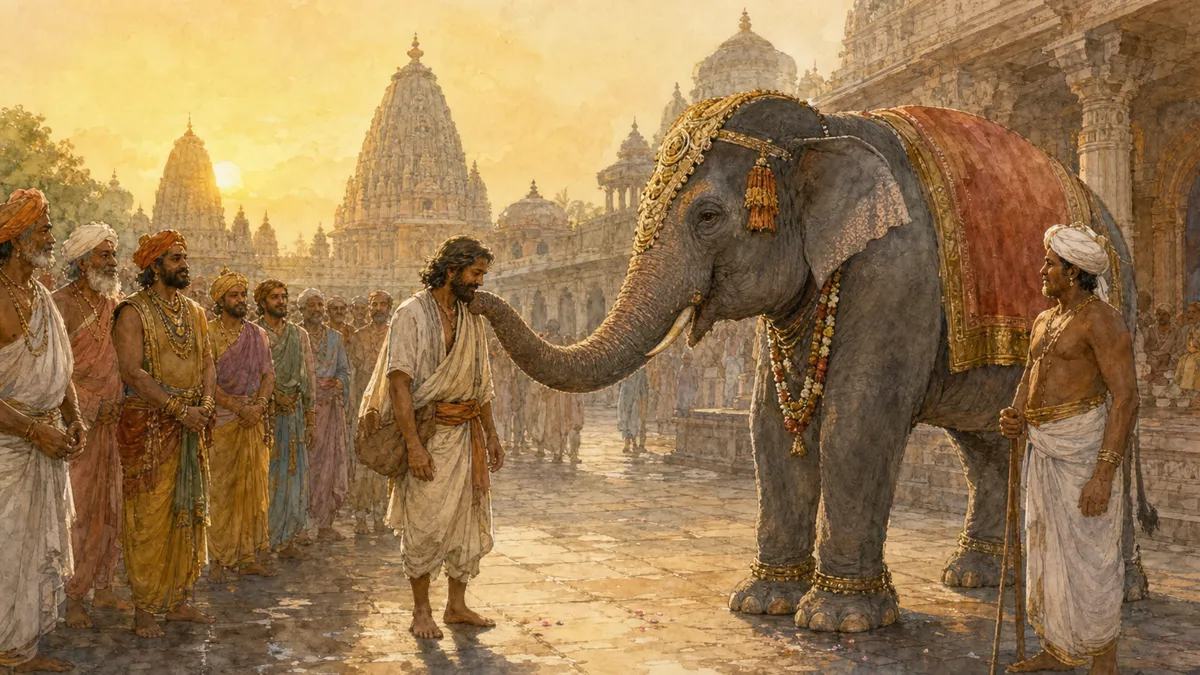
Sometimes it happens that, without great effort, someone succeeds at something — for example, when an elephant chooses (in accordance with an ancient tradition) a vagabond for the post of ruler of the country instead of the deceased king; undoubtedly, this is not accidental and not God’s will, but the result of the vagabond’s personal efforts in past lives.”
In ancient India there was such a tradition: when the king died, all the inhabitants gathered in the square, and the temple elephant, vested with special powers, would ritually choose — that is, arbitrarily touch — some person, and that person would become the king, the ruler. Vasishtha says that in this one may perceive a certain influence of external forces, but in reality it is the result of that person’s merit. Even if a vagabond was chosen, it was the result of his merit, the result of his past efforts.
“Sometimes it happens that hail destroys a farmer’s harvest — undoubtedly, the force of the hail was greater than the farmer’s efforts, and the farmer must now try harder. He should not grieve over the inevitable. If grief in this case were justified, we would have to weep all day long over the inevitability of death. The wise person must, of course, distinguish what can be attained through personal effort and what cannot. However, it would be foolish to attribute this to something external and say that ‘God sends me to heaven or hell’ or ‘fate (or something independent of me) makes me do this or that’ — such fools should be avoided.
A person must free himself from feelings of desirability and aversion, engage in righteous personal effort, and attain the supreme truth, knowing that personal effort is simply another name for God’s will.”
Iccha-shakti — the Will of the Absolute
Here we come to a paradoxical understanding: what we previously considered personal effort, something of our own, egoistic, in fact turns out to be a universal divine power. And this divine power is called iccha-shakti. Iccha-shakti is the will of Brahman itself, the will of the Absolute. That is, will is not a personal process; it is not some personal quality of ours that operates within us. Will is a universal force manifesting and acting through our mind and body. We are conduits of this force to the extent that we are open to it, to the extent that we are aware and abide in presence.
In other words, the paradox of Advaita is that the will of the Absolute acts through each of us, and we are conduits of the will of the Absolute.
For example, when the guru speaks with you, this is the play of the Absolute and the will of the Absolute connected with Anugraha-shakti, the enlightening power. When you encounter elements of creativity, of creation, the will of the Absolute also manifests, connected with the desire for creation. All these are diverse wills, which sometimes come into conflict with one another, contradict one another, and it seems that there is no wholeness behind them. But in reality, all of this is a manifestation of one absolute will. These wills play, intertwine with one another, sometimes conflict, but ultimately this is the manifestation of one global universal will.
Development proceeds precisely through granting complete freedom to various wills, and everyone understands this will according to the level of their liberation. That is, there is no single will for everyone. For the gods, the will of the Absolute manifests in following the dharma of the gods; for the asuras, it manifests as waging war; for human beings, it manifests as liberation from suffering, as following the path of liberation. At every level, many different wills manifest, and all of them are absolute.
That is, in modern terms, the Brahman of Advaita is a multi-level, multidimensional, probabilistic, stochastic system of various energies, which have no single definiteness or algorithmic nature. It is a super-self-organized, super-non-algorithmic system. And any attempt to evaluate this system with the linear mind is doomed to failure from the outset, because this is a state of paradox, absurdity, and transcendence. And only if we are in this transcendent paradoxical state are we capable of understanding the principle of the will of the Absolute.
And if we try to evaluate such categories as the Absolute, free will, predestination, personal effort, and so on with the ordinary linear, algorithmic, human mind, thinking in dualistic subject-object categories, it is like a man sitting on a horse and reading Shakespeare’s poetry aloud, while the horse, not being human, tries to evaluate Shakespeare. This is
At the very beginning of this book, Vasistha gives precisely such instructions in order to inspire Rama to undertake spiritual practice, tapas, and the process of spiritual transformation. Rama had spiritual doubts; he studied various teachings and, in the end, became confused. As a result, he did not have great faith in himself or an inclination toward spiritual practice.
When we say “personal effort, willpower,” we always mean not our egoistic effort, but the energy of the Absolute, which is transmitted and manifested through our mind and body. This energy of the Absolute is iccha-shakti. Therefore, to manifest one’s own efforts and to manifest one’s will means, above all, to open oneself to iccha-shakti, to this energy of the Absolute, to be its conductor, medium, or transmitter. Only then can our will truly bring results.
The Three Main Sections of the Teaching
As you know, in the teaching there are view, meditation, and conduct—these are the three fundamental sections. View is connected with our vision; it is like a creed, it is the principle of nonduality, the way we try to look at the world. It is the meaning of our vision of the world as such. Meditation is our practice, what we do, what methods we perform, what experiences we have in contemplation; it is the practice of awareness. And finally, there is the section of conduct. Conduct is how we live in the relative dimension, how the teaching manifests in our life.
In recent years I have mainly given lectures concerning view and meditation. A huge number of lectures were devoted to this, while I paid very little attention to conduct and the relative dimension. But then, observing practitioners, I began to see that they had a good view and meditated successfully, but they lacked a deep understanding of how to embody the teaching in life. That is, in their life the teaching manifests weakly, not as one would wish. Therefore, I thought it would be useful to discuss how the teaching can be applied in the relative dimension, in conduct, because this is the most important thing, since the relative dimension is where we spend most of our life. And the relative dimension has a much greater influence on us than we think.
The Goal of Laya Yoga and Advaita
To begin with, one may ask the question: “Why do we need laya yoga? Why do we need the philosophy of Advaita, the teaching, the practice?” We must answer this question very clearly for ourselves. If we proceed from the sacred texts, the answer will be this: “In order to move to a new level, to enter the state of a divine being, because only by becoming a divine being can one be freed from suffering, from the cycle of birth and death. And if we do not enter the state of a divine being and remain a limited human being, then, accordingly, liberation from the cycle of births and deaths, from suffering, does not occur.”
In other words, in order to move to a new level, to make an evolutionary leap, to carry out a real transformation—not philosophical, not verbal, and not even psychological, but a complete transformation, which includes energy and the external dimension as well. Once we have determined the meaning of our practice, we can then determine how we can apply effort in the relative dimension. After all, we are speaking about very serious things: about our future, about the meaning of life, about where we should move; therefore, it would be unforgivable if we approached this superficially, unseriously, or made a mistake.
It is like choosing a direction of travel: we must look at the map very carefully in order to reach the final destination we need. For example, if you are planning to travel from Moscow to Mount Kailash, you must know clearly where Mount Kailash is located. If you arrive at Elbrus, Ayu-Dag, or Chatyr-Dag, the task will not be fulfilled, even if you were traveling at a very high speed. In the same way, we too must determine the final goal and the mode of action in order to truly accomplish our goal—divine transformation.
The transition to a higher karmic vision, to a higher dimension, can be compared to the same kind of journey. It is like moving or even relocating to another country, flying to another planet, only on a subtler level. And in order to do this, we must clearly understand what resources we need, how much time we will need, what we must do, and what our role in it is. And if we do not discuss this, do not plan it, do not calculate it, then of course we can simply think: “Oh, it would be good to do this,” but it will never happen. That is, we must apply tremendous wisdom and clarity at all levels. And it is precisely this area of the teaching that the section on conduct discusses.
Features of the Section on Conduct in Spiritual Practice
When we speak about conduct, it may seem that this is not exactly a section of the teaching. At the level of view and meditation, the teaching is connected with philosophy, and there nothing has changed for thousands of years — Advaita a thousand years ago, two thousand years ago, and now is one and the same Advaita. The methods of meditation, Kundalini Yoga, and concentration on the chakras are the same as they were a thousand years ago, three thousand years ago. Nothing has changed here, and we are not going to change anything, since there is a lineage of transmission sanctified by traditions and centuries.
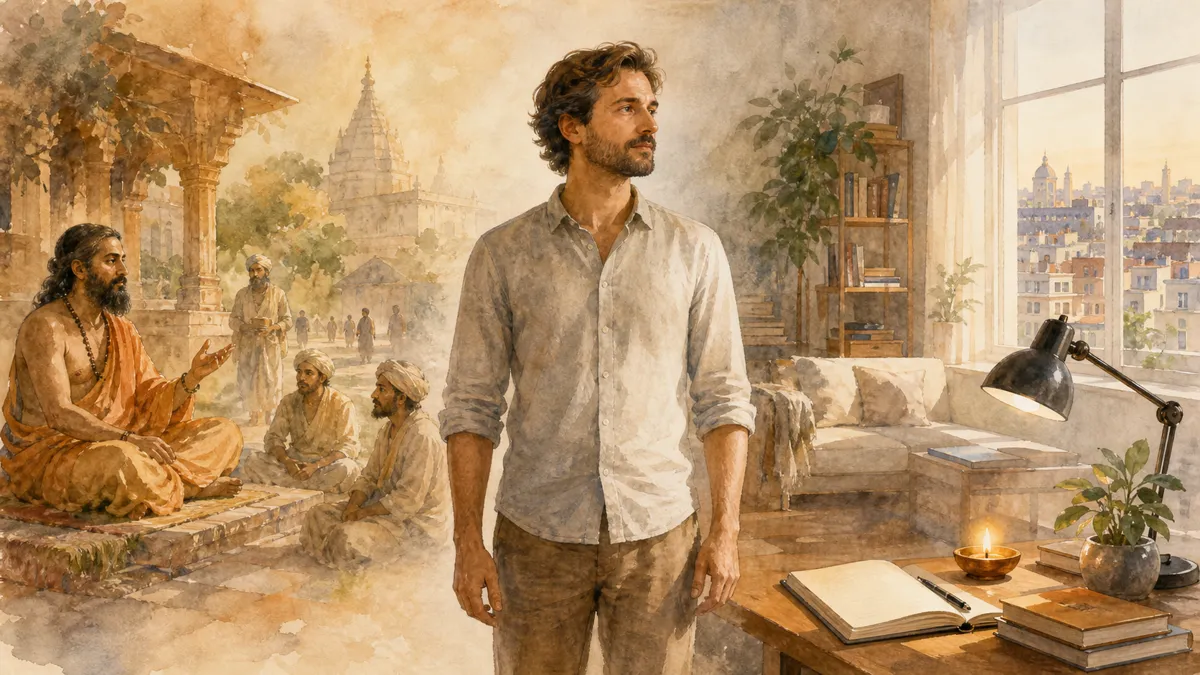
But when the question arises of conduct, the situation here is entirely different. We must assess precisely our circumstances, that is, the circumstances in which we ourselves live, because we do not live in the times of Vedic civilization in the Satya Yuga, we do not live in the times when Dattatreya or Krishna were active, when it was possible to meet gods flying on vimanas. We do not live in India of two thousand years ago with its Vedic civilization, caste system, and numerous ashrams. We must understand the circumstances in which we live and act precisely on the basis of these circumstances — this is the wisdom of conduct.
Spiritual practice is not only philosophy, retreats, and the interpretation of sacred texts; it is also our everyday life, our relative goals, and our plans for the future.
Models of a Practitioner’s Conduct
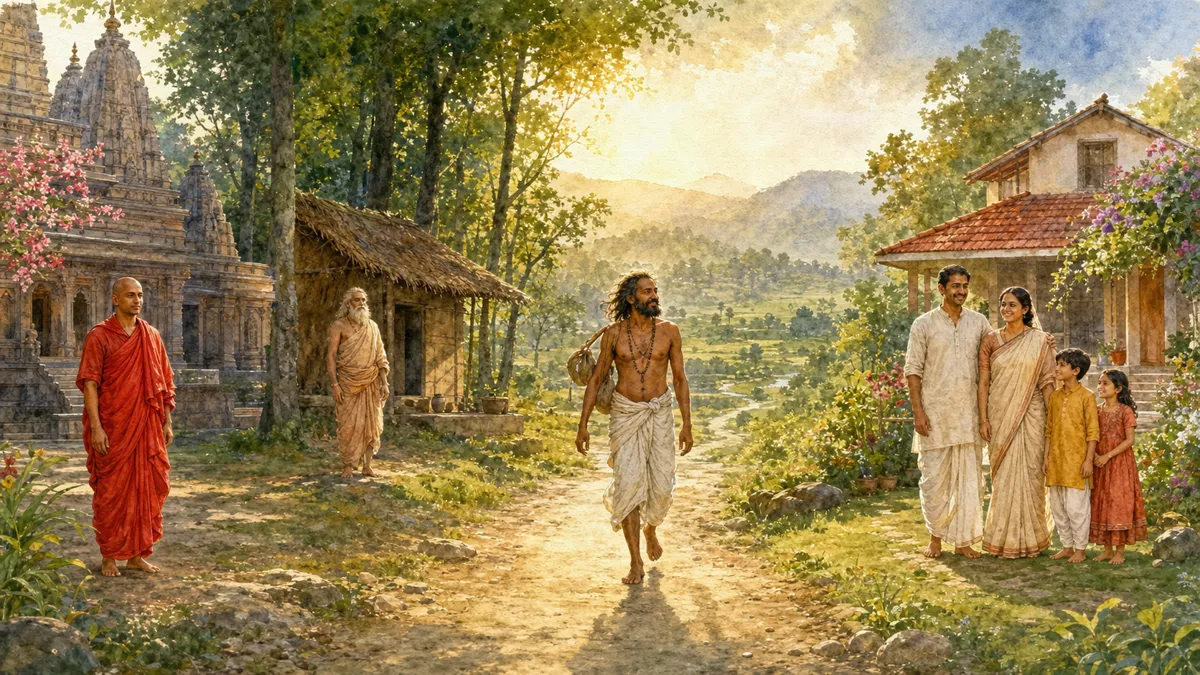
Understanding this, we begin to reflect that there are various models of a practitioner’s conduct. What are these models of a yogi’s conduct?
Monk — a completely clear model of both social and spiritual conduct
Ascetic hermit — another model of conduct
Avadhuta — one who abides beyond all frameworks and prescriptions, a spiritual wanderer, a mad sage
Householder (grihastha) — a family person, one who lives and practices in the world
At the level of conduct, we begin to think about what model of behavior in the relative dimension we need in order to realize that transition, that evolutionary leap that we want, that we speak about.
A Correct Understanding of Spiritual Principles
When we practice, we should clarify several important points for ourselves:
To be in contemplative non-doing does not mean to be lazy on the relative level. The principle of non-doing does not at all imply that we sit relaxed, do nothing, and think: “I am in transcendental non-doing.” In the relative dimension, certain laws operate, and we should take into account the importance of this dimension.
To be detached, unattached, does not mean to be a failure; it does not mean being incapable of operating with material energies and achieving goals. Rather, to be detached is a certain choice that is realized either within or outwardly, but it does not mean that we think: “I am above all this. I do not know how to do anything and I cannot do anything, because I am a great and fully detached yogi.” In reality, detachment is a quality of consciousness, a quality of non-attachment, and how it manifests on the material level — in the form of asceticism and hermitage, in the form of monasticism, or in the form of completely unattached service for the sake of supreme goals — is a question of the relative dimension; it is your choice, how you choose your style of practice.
Practice is multidimensional, not unambiguous, not algorithmic, not linear. In practice there are no rigidly predetermined straight roads. You can always choose the style of practice toward which you have an inclination. There is a saying: “Practice should not govern you; you should govern practice.” We all have different circumstances, so what suits one person may not suit another; the karmas that manifest in one person’s consciousness may not correspond to another person’s karmas. In accordance with this, the teaching contains many statuses, paths, and styles of practice. We even have seventeen types of retreats, by practicing which a student can place emphasis on certain practices.
That is why, in the relative dimension, we must build our own line and seek our own path in practice.
To be humble does not mean to be inhibited or limited. All exalted spiritual qualities should in no way limit us as creative individuals possessing our own choice, our own free will. On the contrary, all these concepts should only open within us a higher state of consciousness.
Divine Pride in Action
The section on conduct is divine pride in action. Divine pride in action means that our behavior manifests in the relative dimension as flourishing complexity, diversity, and creativity. In other words, if we have accepted the status of acting, of living in the world, of not being a monk or a hermit, then our divine pride should manifest in the form of operating with worldly material energies. This is not a situation in which a person thinks: “I am Brahman! I am Brahman!” while in the relative dimension he is completely incompetent or powerless, with his level of action set even lower than that of a non-practicing person. On the contrary, your divine pride always manifests as clarity, as blossoming, as the unfolding of your creative potential.

Generating One’s Own Meanings
We live in a certain layer of collective consciousness. This collective consciousness always possesses great power. Worldly reality (maya) continuously generates various meanings. Our consciousness is constantly subjected to these meanings, whether we want it or not. And what is the way out here? If we live surrounded by maya, by illusory energy, which continuously generates various meanings, then the only way not to fall under these meanings imposed by maya is to generate meanings ourselves.
For example, if you watch the news or a television program, that means a certain generated meaning. When you become interested, you respond and forget about contemplation — this means that you fall under some meaning. Perhaps this meaning is not to your liking and does not correspond to your values, attitudes, and will; nevertheless, you fall under it because you have not generated your own meaning within. In the same way, this also happens in dreams and in the bardo during rebirth, when different energies are generated that give rise to meanings, different tunnels of reality. If we have not learned to abide in presence and generate our own meanings, these meanings begin to take possession of us, and then we follow them. But the point is that following them does not always bring benefit; on the contrary. This is what is called samsara.
A practitioner does not want to live in other people’s realities and meanings; he always tries to generate his own realities and his own meanings. I do not want you to live in my meaning. I want you to generate your own meanings. Someone may say: “But isn’t the teaching also a certain reality, a certain meaning?” Yet in fact the teaching teaches you how to reveal your own meanings and generate your own realities. I do not want to be a god-man alone; I want to be a god-man among other god-people. Therefore each of you, by practicing the teaching of Laya Yoga, must learn to generate your own meanings and your own realities. This is precisely the meaning of the practice of the teaching. Then this will be called liberation.
Mandala and Lila — the Games of the Gods
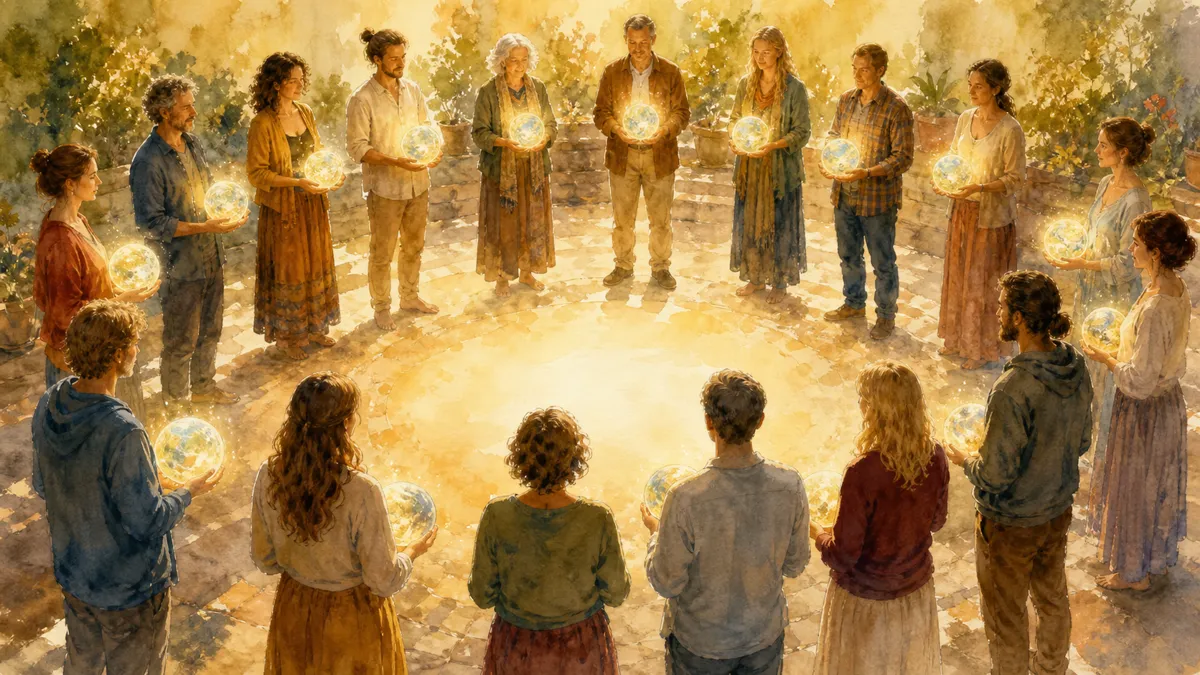
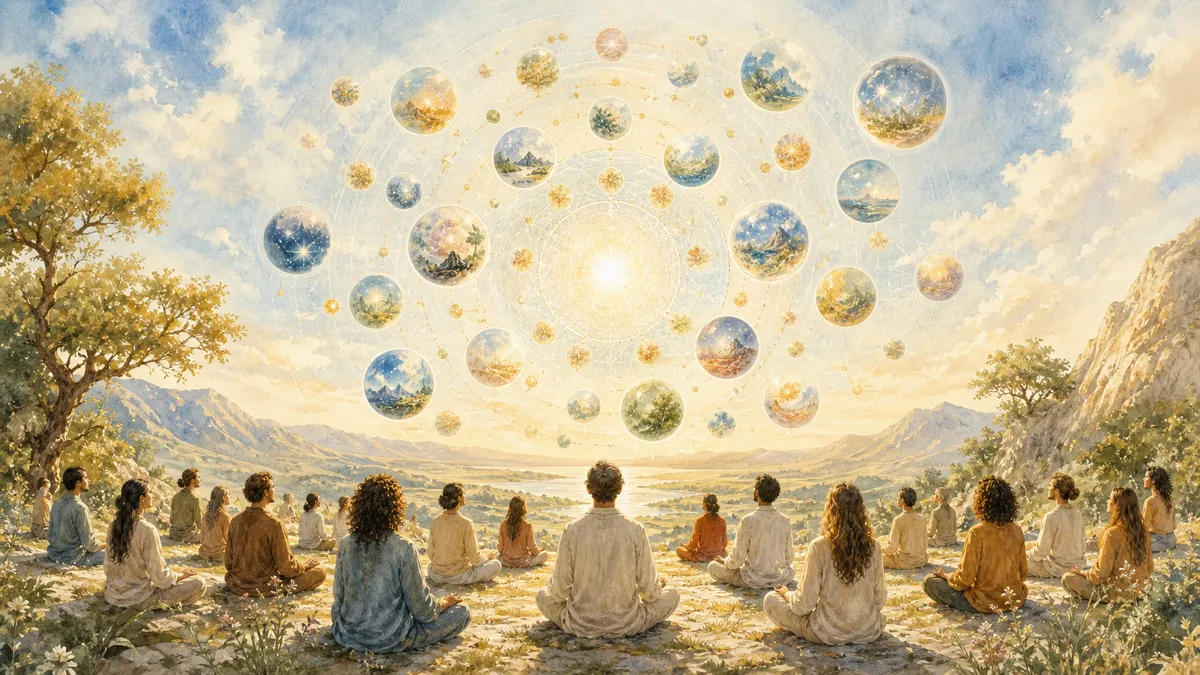
A practitioner strives to live precisely within his own meanings, created by the mind. Such meanings in Sanskrit are called “mandala” — the worlds of the gods, realities created by consciousness. Deities play their own games; sometimes these games are collective, sometimes individual, but they are precisely their games, their creative energies.
Conditioned beings in the lower worlds always participate in a collective history. They do not play games; they play various conditioned states—this is called “krida.” For example, when a war, revolution, or any reforms take place, living beings become involved in them. This is precisely the principle of collective history. But those who participate in them are most likely simply drawn into certain events; it is not something in which they would truly wish to take part. This is exactly how events unfold in the world of samsara.
But in the world of the gods, everyone has their own creative play, everyone generates their own lila—this is what constitutes the qualities of a deity. These shared games unfold and create a certain collective mandala—this is what is called “deva-loka” (the world of the gods). And then every living being has their own personal history—this is called the state of lila (play).
But in order to live in the state of lila (play), one must learn to generate new meanings continuously oneself and surround oneself with them, creating one’s own universe; one must constantly listen inwardly to the source of meanings—the natural state. Because it is the natural state that is the generator of all meanings, the generator of realities and mandalas. If we do not listen inwardly to it, we fall under various other meanings. The principle of contemplative presence is precisely this continuous listening inwardly to one’s natural state, the continuous generation of clarity and new meanings. As soon as we become distracted, other clarities, worldly meanings, begin to be generated, and we fall under their influence.
Living Tradition and the Creation of the Future
How does a living religion differ from a lifeless one? A living religion always creates the future; it develops. A religion that has lost its spirit becomes rigid, loses its flexibility. There are numerous examples of such religions: the Maya, the Incas, the Aztecs, Egyptian civilization, the civilization of the Ainu, the Dogon, pagan religions, and many others. Once these were the greatest religions, and now they are the domain of archaeologists. All that remains of them is archaeological information, inscriptions on clay tablets, and lines in encyclopedias.
Any religious practice has power if it manifests flexibly, if it constantly creates the future, constantly aspires toward new meanings while taking the present moment into account. If, however, it does not take the present moment into account in conduct, it becomes rigid and begins to impose limitations.
The same applies to the spiritual practitioner. A spiritual practitioner is not only directed toward the past. It is very important to study the past, to study mythology and sacred texts, and it is important to practice in the present. However, if we do not set the vector of intention toward the future, if we do not build our future, then we too may become rigid and turn into archaic practitioners. This means that a true practitioner always includes the future, together with the present and the past, in their spiritual practice. They constantly try to comprehend their future, to plan it, to set goals, while remaining in a state beyond both the past and the future. It is precisely then that their practice becomes living, their religion becomes true.
The tradition of the siddhas is not dead; it is alive and always develops through its specific bearers. That is, there is no abstract tradition of the siddhas. Someone may think that there is a tradition of gods or siddhas as some kind of abstraction imprinted in sacred texts and images. In reality, this is not the tradition itself; it is simply its attributes. The true tradition is always alive; it always develops through transmission in the lineage of discipleship, through its specific bearers.
For example, if I, as a representative of the lineage of succession and as a teacher, transmit it to disciples, and you receive benefit from such transmission, acquire various abilities and liberation, then I can say that the tradition continues through its living bearers. And in the same way, disciples, using their own clarity, can continue it further. This is the meaning of the tradition’s being alive.
It is very important for us always to keep our tradition alive; it must never become rigid, it must always be flexible, because the siddhas were the greatest masters of flexibility—not only the greatest saints, but also sages and geniuses. It is in precisely this way that we too need to learn such flexibility, so that our tradition may always be flexible and alive, so that it may develop and never stop, never become rigid, never stagnate.
This is possible only if we truly bring the teaching into our lives very actively, if we bring the teaching into our behavior. If we do not do this, the tradition becomes archaic. If there are no living sources of transmission, no living bearers of it, it degenerates simply into philosophy, scholasticism, something abstract and detached from life. Then it is of interest only to archaeologists and philosophers studying ancient manuscripts. But a true living tradition is always in the present; moreover, it is always directed toward the future, since it encompasses all aspects of our life.
Forming a Scenario for the Future
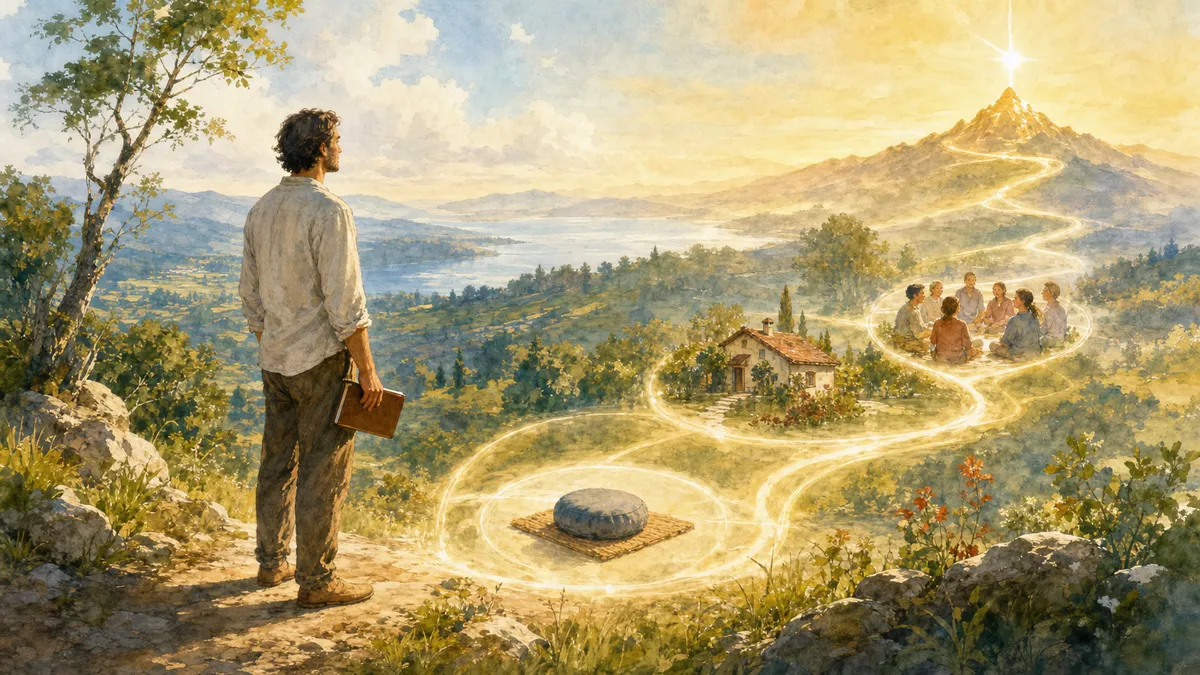
But it often happens that a spiritual practitioner stops thinking seriously about the future. He thinks only about the past, studies mythology, sacred texts and biographies, he practices in the present, but the future is very uncertain for him. He thinks that all of this is very complicated, that it is impossible to plan it in a concrete way. But in reality it is very important to take one’s future into one’s own hands and guide it based on an understanding of the teaching, because it is precisely the teaching that tells us that we must do this. In other words, by using the wisdom and clarity of the teaching, we must apply this clarity and project it onto the future, create the scenario and the version of the future that we ourselves want.
And if we do not create a scenario for the future and do not generate meanings, then this future will come anyway, whether we want it or not, but it may come in a way completely different from our scenario. And how do you like such a future if it comes not according to your scenario?
The future is a factor of time, and time is always challenges. If we respond adequately to challenges, if we integrate with them, then time appears before us as something positive, favorable. But if we respond inadequately to challenges, if we lag behind, if time challenges us and we do not keep up, act unconsciously, then time appears in the form of the black purusha, Mahakala, in the form of a harsh energy that simply sweeps away all your plans, goals, and meanings.
But none of us wants to lose our plans and meanings (I mean, above all, plans for spiritual life and spiritual practice). And, on the contrary, each of us wishes these plans to be embodied, that all our dreams and goals be realized in the very best way. But they can be embodied only if we try to direct the future by the power of our intention, if we try to foresee in advance and form a scenario based on our own clarity.
Individual and Collective Future
A practitioner tries to form the scenario of an individual future. But when we engage in spiritual practice, we must understand that we are social beings, that there is no individual detached from society, at least if you are not a hermit. One way or another, our future is inscribed in the scenario of humanity’s future, therefore it is important to speak not only about our individual, yogic future, but also about the collective future, since we are always inscribed in a certain society, which also has its own destiny, its own collective history, and its own collective future.
What our collective future will be depends on how strongly we generate our thoughts and how much we can concentrate the power of our thought and direct it toward achieving what we have conceived. This is precisely why we need to overcome the gap between the teaching and life.
The River of Time and Anticipatory Contemplation
The universe is not a reinforced-concrete, immutable structure. In reality, it is not some fundamental reinforced-concrete building standing on an immovable foundation. Rather, the universe can be likened to a river that flows very quickly. If we do not flow together with the river and do not understand this, then this river carries us away. We have only one way out — to learn to flow together with the river, to learn to transform together with time. If we can do this, then the river of time does not carry us away, and therefore we will be able to swim to the other shore — the shore of liberation.

How can we avoid being swept away by the river of time? This is possible only if we direct our future, if we act in a state of anticipatory contemplation, if in the relative dimension, through our actions, we manifest divine pride, if we generate anticipatory meanings faster than time and change, if our creative consciousness is capable of acting more wisely, more deeply, and more quickly. Then the transition to liberation, to the state of a divine being, is truly possible.
The Power of Collective Intelligence
As a generation of meaning, I wrote the text “Forward, into the Future, toward God-Humanity.” I think it is very important to understand that reality is created by our thought. It is precisely the thoughts we have that determine the world or the reality in which we can live.
It is very important to understand that there is an effect of collective intelligence. The power of one person’s thought is not great, but if you are able to unite your consciousness into an integral mind, then it will no longer be one thought, but hundreds or tens of thousands of thoughts, and these tens of thousands of thoughts, having united, will necessarily achieve a result and manifest in the form of materialization.
The Goal of Spiritual Practice in the Relative Dimension
What is our goal in the relative dimension or in behavior? Our goal is the transition to god-humanity, to the state of a deva or siddha, if, of course, we take the goals of the Laya Yoga teaching seriously. This is the future toward which we strive. We try to create and build it through the power of our thought, through the power of directed intention.
A god-human is what the sacred texts call an arya, siddha, divya-manushya. This is the natural result of our spiritual practice if we practice correctly. It is an immortal deity, thinking paradoxically, possessing many bodies, living in many realities. It is precisely such divine beings that are depicted in our tradition in iconographic images. As you can see, they are always depicted at the center of a mandala, a very beautiful dimension created by their own consciousness.
Our future is the creation of an immortal god-human of the world, a god-human of the universe, a god-human of a complex, blossoming, multidimensional reality (mandala), who manifests and plays in a multitude of illusory carrier-bodies. I am now explaining in rather simple language complex Dharma terms, for example: the teaching on the self-perfection of illusory bodies, the teaching on the mandala and the mandaleshvara, the teaching on iccha-shakti, and so on.
A god-human is an integral mind that, through the power of its consciousness, can govern reality. It is an immortal genius-player who creates a personal history and thinks paradoxically while abiding in non-duality. This is our goal. If we concentrate on it, continuously apply intention, learn, and develop within ourselves the necessary new qualities, we can move toward this goal quite quickly. If our concentration declines, then this goal recedes. And then the question of the great evolutionary leap, the transition into the mandala of the pure dimension, is also postponed.

The Importance of Choice and Setting Priorities
I think that determining, in the relative dimension, models of behavior, models of action, and the priorities of meanings and goals is the most important thing. The specific methods of the teaching are important, but they work only when this clear determination has taken place in us, when we have decided: “Yes! This is the direction for me! I accept these goals, I decide to generate precisely these meanings, and no others.”
There is an infinite multitude of goals and meanings, and we always need to make a choice; we cannot do without choice, we cannot do without responsibility. If we do not make this choice, then we will still follow some meanings and goals; we will follow smaller and lower choices. But when we have determined the meaning and the goal, then everything becomes clear; then one can speak about the complex aspects of the teaching, about working with sankalpa, about working with chakras, and so on.
But even if we receive transmissions into complex practices (invoking divine beings, the subtlest practices of contemplation, various kinds of work with energy, with light and sound), but we have no priority of goals, the deep choice has not taken place, there is no Refuge, samaya has not been acquired (that is, we have not made a choice in favor of certain meanings and goals, have not accepted responsibility, have not established a connection with the Refuge), then all these practices are guaranteed to be merely blank shots. This will develop you intellectually and energetically, but in the essential sense they will still be blank shots, because a living teaching is always transmitted through samaya, through transmission.
One can approach Refuge, samaya, and transmission only through choice, through defining semantic priorities and certain values. And when this choice has been made, any practice becomes working and relevant; then you are like that person who is like a rhinoceros going forward, and you will certainly be able to realize everything you set out to do in your practice.
The Necessity of Psychological Transformation
In order to realize the goal of the god-man, divya-manushya, it is necessary not only to engage in spiritual practice, but to carry out an inner psychological revolution, a psychological transformation, to cultivate a new consciousness, to bring forth a new person from oneself. It is also necessary to change the external environment (to change it, of course, for the better, not for the worse). This means that one must generate new meanings and new goals in order, on their basis, to build one’s own higher environment.
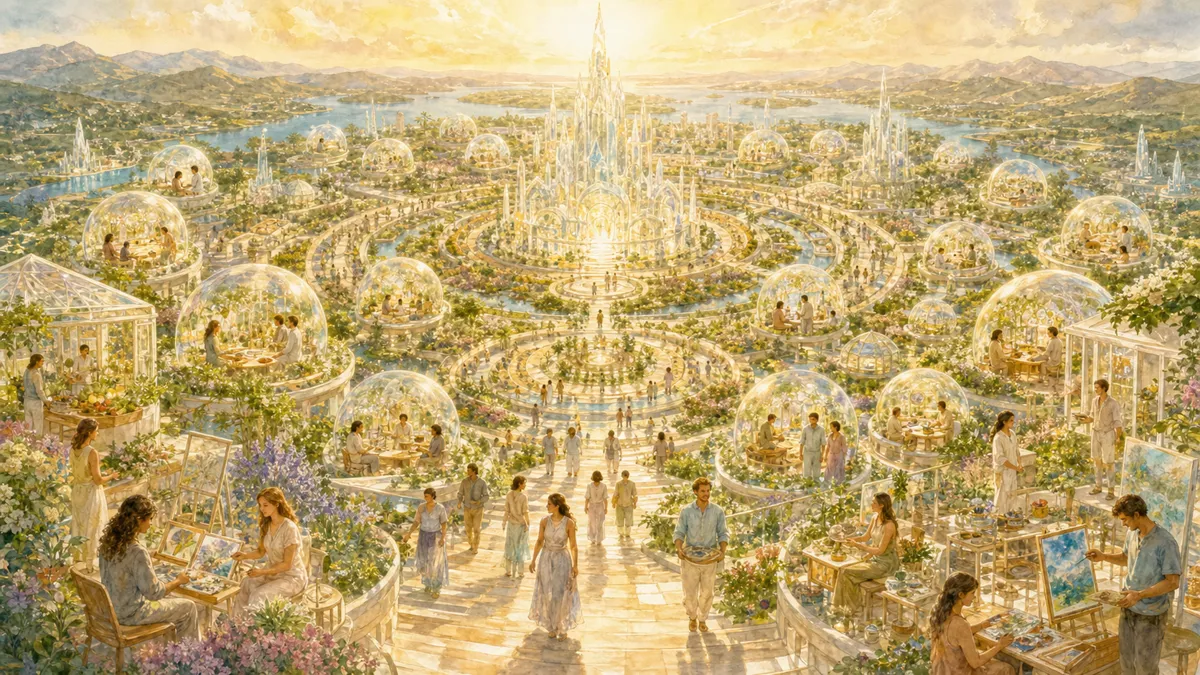
The goal of our practice in the relative dimension is the creation of such a world as a complex, flourishing, governable reality, a mandala, as a superintelligent universe of the pure dimension, where everyone is like a player, a god-creator, where everyone is like a personal universe. This is precisely our future toward which we should direct our thought if we want to create that future. And to create such a world, such a superintelligent universe, to manifest the mandala, the pure field of enlightenment, the pure dimension — this is, in fact, the goal of our practice in the relative dimension.
That is, we must understand that we engage in atma-vichara, maintain sankalpa, and work with contemplative presence precisely in order to change something, to transform something. And when we work with sankalpa, contemplative presence opens up in us in the form of space, in the form of clarity. And this clarity generates a certain understanding, certain meanings and goals. But the point is not only that new clarity and new meanings be generated, but that they be embodied in the real dimension.
Overcoming the Shackles of the Mind
A god-man, a saint or a siddha, that is, the person we want to become in the future, cannot be grown in old conditions, amid outdated relationships, rigid notions, and millennia-old stereotypes. This is impossible, because in the world of illusions and limitations people are held much more firmly than by any chains by the shackles of their mind. Even very wise and strong souls are not free from such shackles. If the mind is in chains and asleep, then even if you are very talented and brilliant, you are still in the chains of your mind.
But when we speak of the transition to the divine state, to a divine being, radical transformation is implied. And we are constantly required to make choices. Choice and the acceptance of responsibility, the definition of new meanings — this is not some one-time act when we once took Refuge or decided: “Yes, I will observe samaya,” and then forgot about it. In fact, it is a continuous choice; it is a choice where there is constantly a branching possibility, chains of cause and effect, and we must constantly, virtually every second, make these choices. One saint said: “Every day I live and die, and then I am reborn anew.” That is, these are continuous choices that we must constantly make, reminding ourselves of the Refuge we have taken, of samaya, and so on.
Creating a Collective Mandala
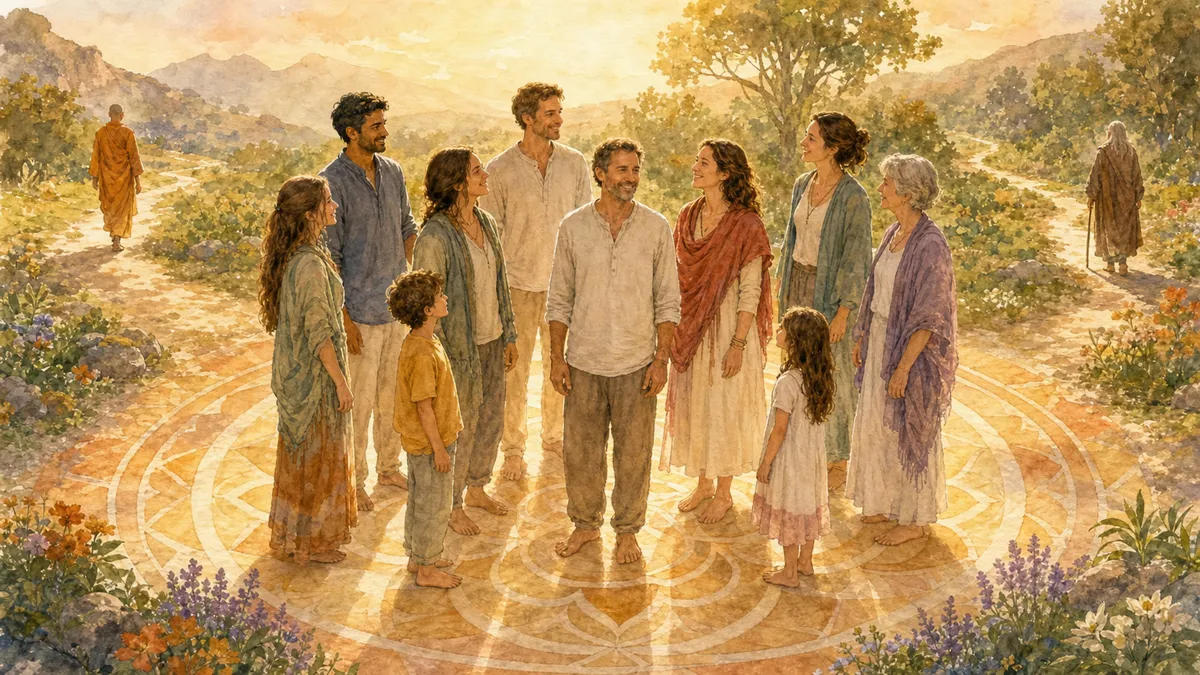
I see that in the relative dimension, for us as practitioners, as a certain collective mind, as an integral mandala, for example, the sangha, the worldwide community of Laya Yoga, it is very important to create such a new world that would be favorable for spiritual practitioners, to create a field of collective consciousness, our own mandala made of the minds of people of genius, creators, god-people-creators, each of whom lives in their own universe.
Without creating such a mandala as a secondary initiating cause, individual development is also difficult or even impossible, unless you are a monk or a hermit. If you are a hermit or a monk, then this can be discussed. But if you have adopted a certain model of behavior, for example that of a householder (grihastha), then without creating such a mandala and collective mind, it will be difficult to progress.
I think that during 2007 we will return many more times to the aspect of behavior, to how exactly the teachings of Laya Yoga could be manifested in the relative dimension, so that they become not only a philosophy and contemplative practice, but real life, a materialized intention.
