

Commentary on Sri Ramana Maharshi’s text “Be As You Are,” chapter “Suffering and Ethics.”
Question: I suffer both mentally and physically. Why do I suffer so much? I have not sinned in this life. Could all this be explained by my sins in past lives?
Maharshi: You say that the mind and body are suffering. But are they the ones asking the questions? Who is asking? Is it not the one who transcends both mind and body? You say that the body suffers in this life and ask whether a previous life is the cause. It should be said that the root cause of all these lives is ignorance. This same ignorance is present even now, prompting this question. It must be removed by jnana.
Over the course of many lives, we have experienced various kinds of suffering, such as suffering in the piercing and cutting hells, and suffering in the hot and cold hells. The hell realms have the same kind of existence as the human realms. They are lokas, particular planes where karmic causes are far worse than in our world. For example, wars and prisons are projections of the hell realms into the human world. It may be said that hells also exist in the human world. The teaching of cause and effect states that the six realms of samsara consist of different karmic causes and are just as real as the human realms. Therefore, we must purify our karmic traces as much as possible.
From Sri Ramana’s perspective, all these worlds exist because of ignorance, and their reality is like the reality of dreams. Even this human world of ours exists because of ignorance. And it exists only as long as there is identification with the body and failure to recognize one’s own awareness. This ignorance is like a magical illusion in which everyone avoids the main question, “Who am I?” and does not investigate what this “I” means.
A monk once had a dream in which there were various beings and people. Then, while practicing within the dream, he became fully lucid in it. He suddenly realized that everything he saw in the dream was merely his own condensed thoughts, projections of himself that had taken on density. In the dream, he had an illusory dream body whose density was roughly equal to that of these projections. Then he thought, “Now I will test this world.” He began approaching all the beings in that world and asking, “Who are you?” Whenever he asked this question, they all became confused and stopped. They could not even continue doing anything. The moment he asked them this question, they would become thoughtful and then dissolve and disappear. When he had asked every being, soon no one remained. The monk felt great joy because all the illusions had dispersed. Then he discovered that one final illusion remained—himself. He realized that he should contemplate deeply the awareness of his “I,” so he began investigating it within the dream. As soon as he concentrated intensely, his illusory dream body disappeared, and he immersed himself in an empty expanse of clarity and awareness. Had he not done this, he would have continued walking through the dream and meeting various people who would say things to him, and he would reply; he would delight in some things and avoid others. Nevertheless, when he asked this question, everything disappeared. Only his naked, bare awareness remained.
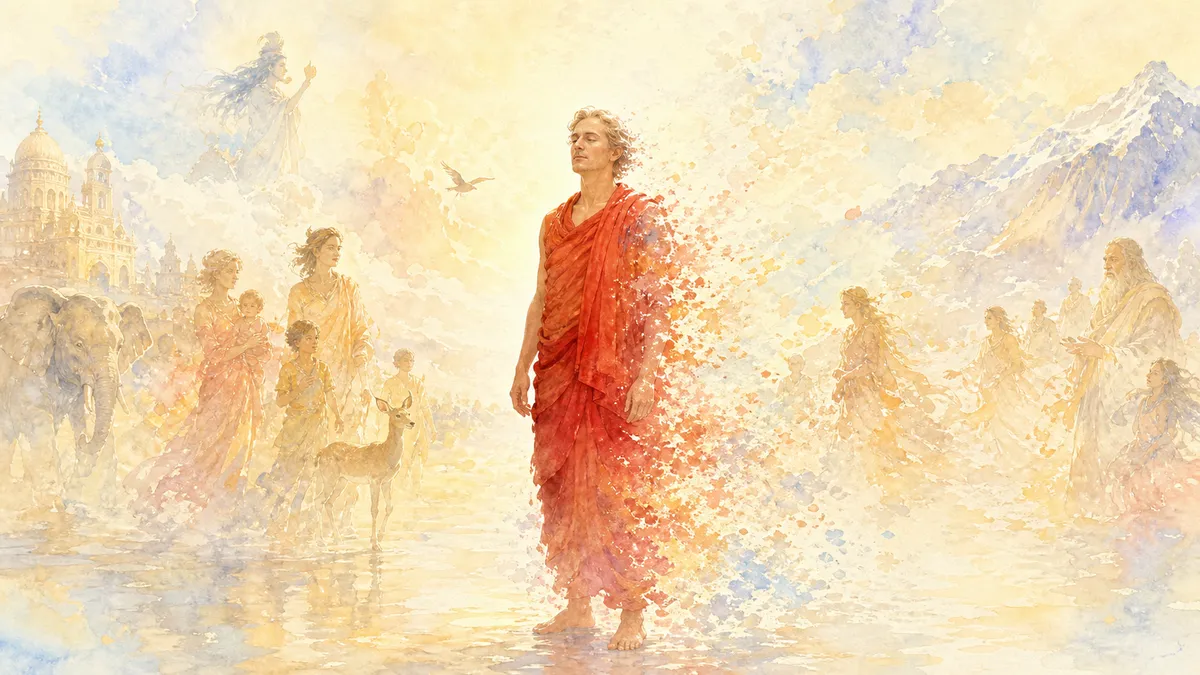
Much the same thing happens when we practice in this world. When the sun of self-born Wisdom begins to shine, we discover that both we ourselves, including the body, and others are the same kind of mirages, seemingly superimposed upon the primordial awareness of “I.” This does not mean that they literally disappear here as they do in a dream. As long as the gross elements remain, bodies remain. Nevertheless, when we discover this self-born Wisdom, identification with this body, with the bodies of others, or with external objects completely disappears; they are seen as projections superimposed upon this primordial awareness. This is the light of jnana, which removes all our ignorance and all our suffering. Even if, due to prarabdha karma, such a jnani experiences certain bodily activities or suffers physically, their consciousness never suffers or falls into delusion again, because they know that all perceived phenomena are nothing more than mirages, like rainbows in the sky, echoes in the mountains, or reflections of objects in a mirror. Or they are like a magical play of light and shadow in a magic lantern that produces different images but contains nothing within itself. Or they are like images projected by a film projector. In other words, they do not contain even the slightest trace of genuine reality.
“Why does this suffering arise, and for whom?” If you ask yourself this question, you will discover that the Self is separate from the mind and body, that Atman is the sole eternal Being, and that It is eternal Bliss. This is jnana.
The Nature of Suffering and the Five Kleshas
For beings who remain in ignorance, there is always suffering, dissatisfaction, and pain. This includes the suffering of birth and death, the suffering associated with losing that to which one is attached, the suffering of rebirth in the lower realms, and the suffering caused by the inability to attain self-realization and self-expression. All these forms of suffering arise from a false view, delusion, and fundamental ignorance.
The following chain usually develops:
avidya (ignorance) → asmita (forgetfulness) → raga (attachment) → dvesha (duality) → abhinivesha (the striving to satisfy the senses and desires).
Avidya is co-emergent (fundamental) ignorance. It arose together with our birth; that is, avidya has always existed alongside self-born Wisdom. Avidya is false knowledge that arose in parallel with the true radiance of our primordial Wisdom. It is the part of our primordial Mind that, in the beginningless past, deviated toward fascination with illusions. It is impossible to determine when individual samsara began for us, when the nondual state was lost. Some sutras state that sentient beings did not originally live on Earth but were gods. They descended from the heavens of Light and Sound, from the Abhasvara heavens. When they were gods, they were still aware of their primordial Self, but when they began taking coarse elements (tattvas) into their bodies with food, the radiance emanating from their energy bodies began to diminish, and kleshas, attachments, sexual relations, and the tendency to eat coarse food arose in them; they also began to need air. Their physical bodies then gradually grew dimmer from millennium to millennium. This was a long process. They descended into increasingly coarse planes of existence, while at the same time their awareness grew clouded, until they found themselves in the state of human beings. Avidya is followed by asmita.
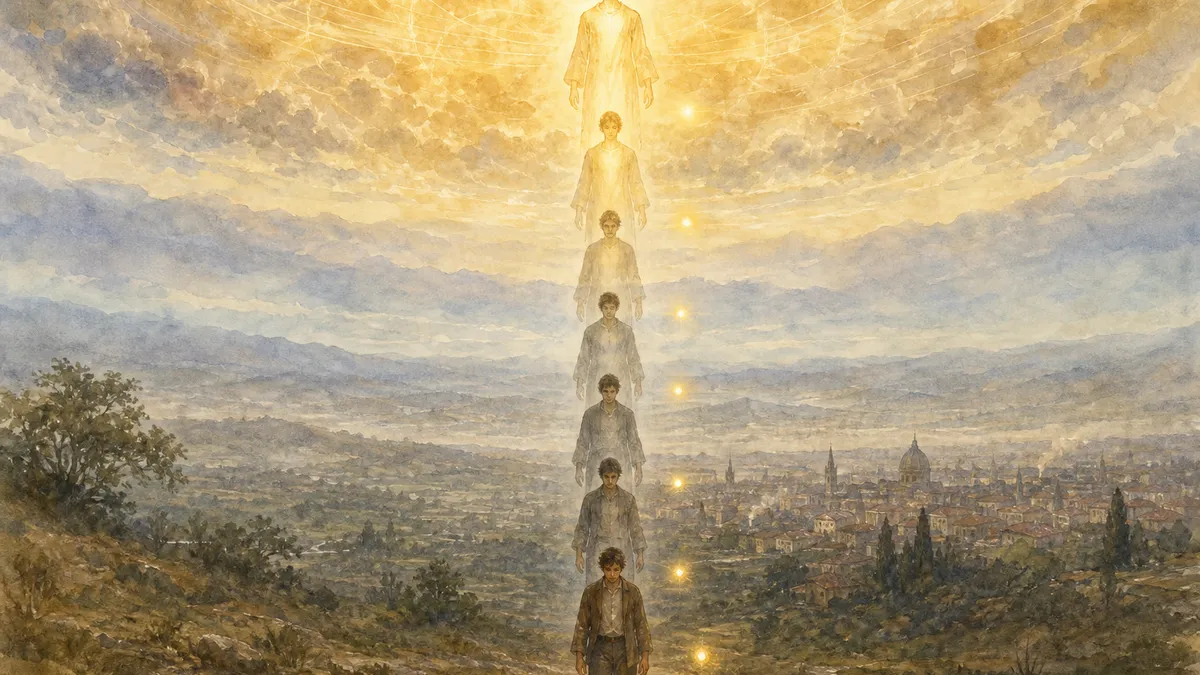
Asmita is the tendency to forget the primordial Wisdom of the Self. Although it always exists, sentient beings behave as though they do not possess it. Asmita is also called the evil forgetfulness of Atman. It is indeed evil because it causes the suffering of all sentient beings. Once asmita has arisen, raga follows.
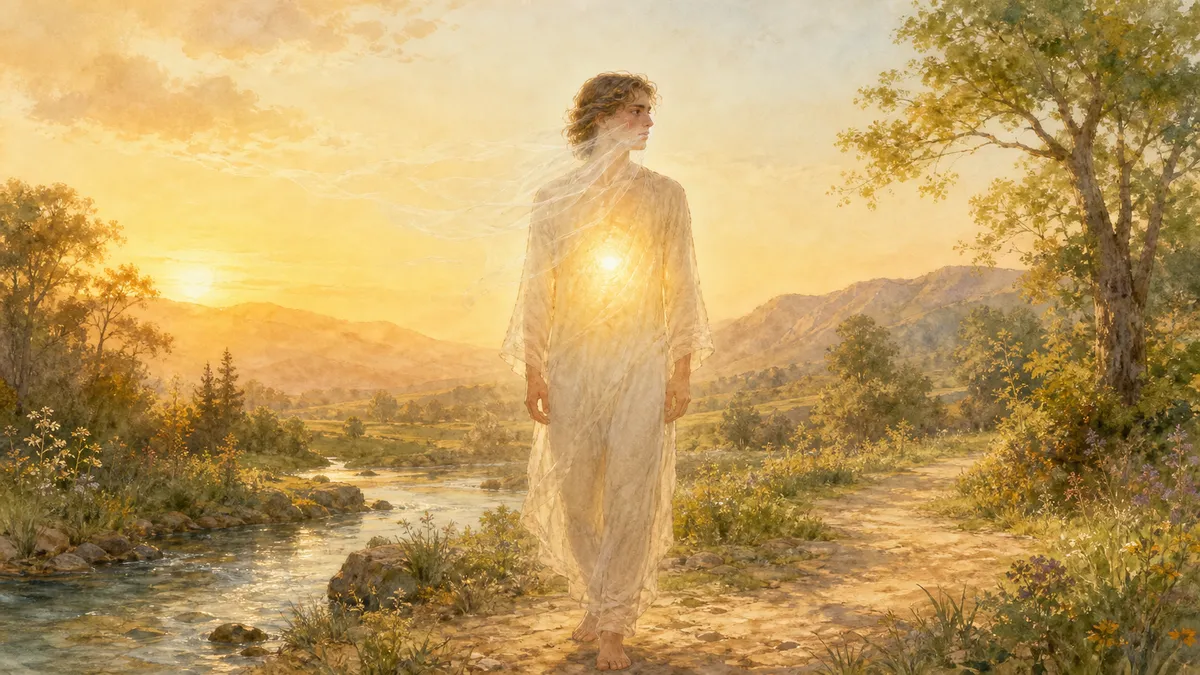
Raga is passionate attachment to something, such as attachment to external objects, to other people, to one’s own states of joy and pleasure, or to internal experiences. Raga is what forms the worlds of passion. Gods are attached to pleasures in the heavens, asuras to their own character traits, humans to one another, pretas to objects of desire, and hell beings to their suffering. Attachment arises from a failure to understand that the tendency toward attachment is not seeking an object of attachment; what it originally seeks is this self-born Wisdom, this radiant light of the shining Self that permeates everything. However, because of karma, this light of the primordial Self is projected onto a particular person or object, and passionate attachment then arises. Human beings are very unsophisticated: they become attached to whatever is nearby, to whatever is at hand; they become attached to what they often see and constantly hear. This is a very primitive type of perception. If consciousness remains in contact with something for a long time, it begins to be conditioned by it and then becomes attached to it. For example, none of us is attached to Sirius or Alpha Centauri; to us, there is not even any difference between them. But if we live with someone for a long time and have feelings for them, we may develop an attachment to that person. Or if we live in one place and encounter a particular style of thinking, we likewise develop an attachment to it. In the boundless Universe, which encompasses countless worlds and countless years, we single out only certain tiny objects. When such attachment arises, duality arises as well, and we divide the Universe in two.
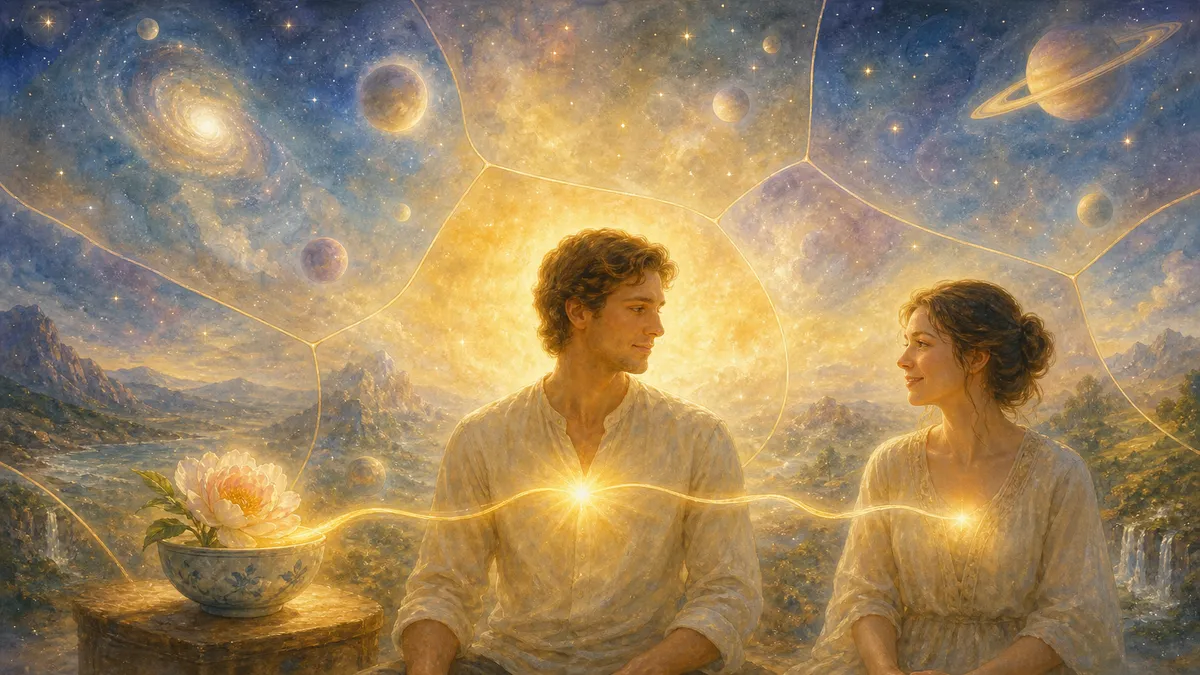
Dvesha (duality) means that we now view the world not as it truly is, but through the prism of attachment. For example, that which supports our attachment is considered good, while that which contradicts it is considered wrong, evil, bad, and a source of suffering. In the Universe, there is neither bad nor good, neither right nor wrong, neither evil nor benevolence; there is only unified awareness. If there is any good, it is the presence of awareness, and if there is any evil, it is the forgetting of this awareness. But when we look at the world through the eyes of attachment to the body, to the human world, or to something else, we see the Universe in a distorted way. Everything is clouded because we project our own narrow views. Having fallen into duality, our karmic dimension now begins to discriminate. For example, if we are attached to the physical body, it is considered natural that low temperatures are bad and warmth is good. However, this is merely a convention of our human perception. Such duality is generated continuously: within a single kshana (an instant long enough to snap one’s fingers), our mind manages to divide reality sixty times. We do not even notice it, but in a single instant our consciousness fluctuates up to sixty times, creating such distinctions. Once this duality (dvesha) has arisen, we develop a persistent acceptance of one thing and rejection of another. This occurs at the genetic level, at the level of the deep subconscious. We cannot even conceive of what we dislike as being equal in value to what we like, or of what brings us joy as being equal to what brings us suffering. Yet, in the absolute sense, this is indeed the case. And we will attain liberation only when we realize this. Once such duality has taken root in us, we tend to impose conceptual labels on reality. The Universe then becomes constricted for us: we isolate only a narrow spectrum from our perception of the Universe and call it life. But reality refuses to accommodate the fact that we have narrowed our perception of the Universe. And when suffering, impermanence, or death comes, our consciousness is forced beyond this narrow spectrum. Yet because of its strong rejection, it cannot acknowledge other spectrums of existence, and suffering then arises. Dvesha is followed by abhinivesha.
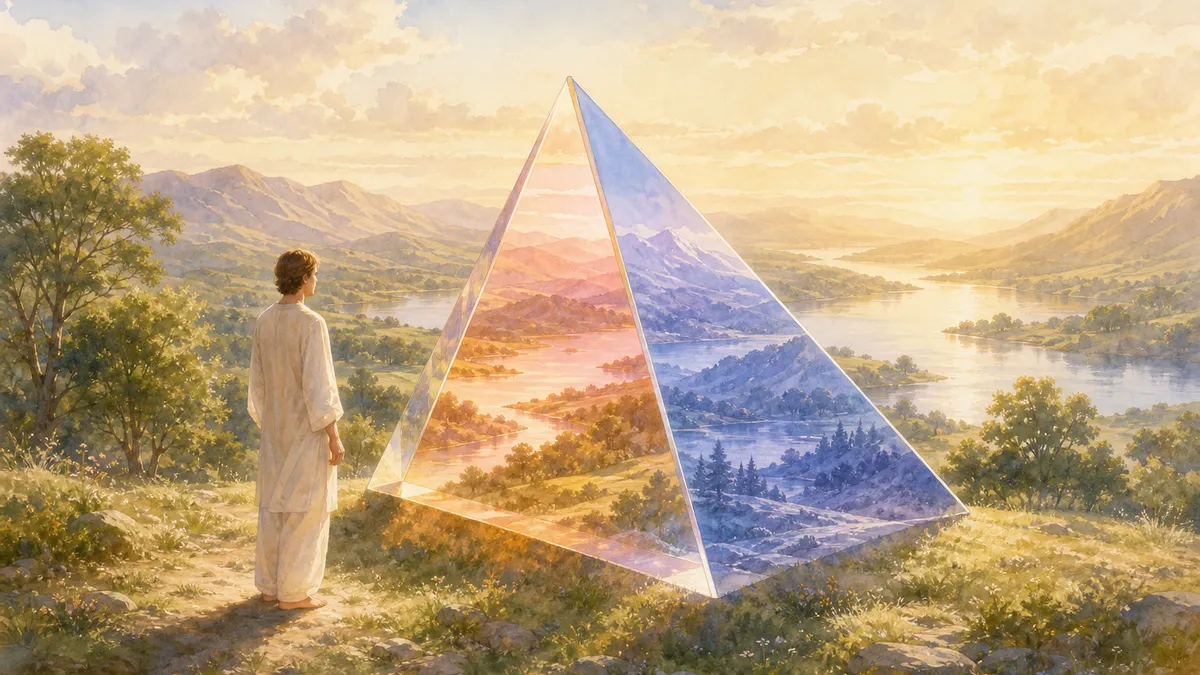
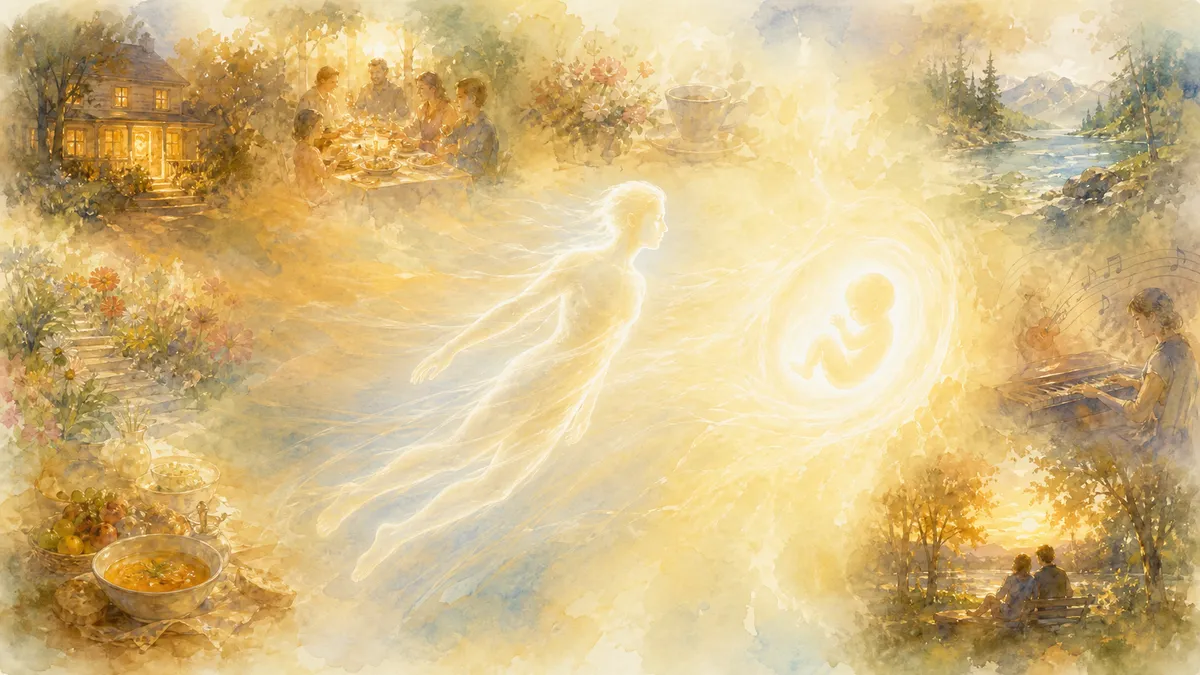
Abhinivesha is a persistent subconscious tendency toward the gratification of the senses or desires. Even when we are reborn, the memory of this remains. We have a persistent tendency to repeat such experiences; that is, we wish to enter a womb again, to receive a body again, to grasp onto and become fixed somewhere again, and then the mind in the bardo thinks: “I would give anything now to receive a body again and continue enjoying familiar pleasures.”
Avidya → asmita → raga → dvesha → abhinivesha—this is the chain that leads to complete immersion in illusion. It resembles the process of a person falling asleep, up to the point when dreams completely take control of them. This is the nature of illusion.
The State of Dreamless Sleep as a Key to Understanding
Question: I am constantly tormented by worries; there is no peace for me, although I need nothing to be happy.
Maharishi: Do these anxieties affect you in deep sleep?
Answer: No, they do not.
Maharishi: Are you the same person now, or are you different from the one who slept without any worries?
Answer: Yes, I am the same.
Maharishi: Then these worries certainly do not belong to you, and you yourself are at fault for attributing them to yourself.
Here Ramana is not speaking to a person, but trying to awaken him, directly granting him the darshan of Self-recognition. However, if there are many kleshas and the samskaras are strong, this cannot be done immediately. One way of abiding in contemplation is to continually attune oneself to the state of dreamless sleep and, by recalling the state of mind in dreamless sleep, try to bring it into this life. In dreamless sleep there are no concepts, no image of the body, not even a hint of suffering. If we master the ability to meditate at this level, we can clearly understand that there is no duality in this world, no suffering, and that we can exist in it as pure Consciousness. Yet here we forget this state, and then ignorance arises. To abide in presence is the same as to abide in dreamless sleep.
Compassion and Service in the Context of Nonduality
Maharshi: From the standpoint of jnana, or Reality, the pain you speak of is certainly a dream, as is the world of which it is an infinitesimal part. In a dream, you yourself feel hungry and see others suffering from hunger. Having eaten, moved by compassion, you feed others who also need food. As long as the dream lasts, all the suffering of those who are hungry is as real to you as your present thought of the afflictions seen in the world.
The question asked here was how one should relate to the world: whether to call it a dream and remain unaffected by the world’s suffering, or to try to help the world eliminate suffering.
Only when you awaken will you discover that the pain in the dream was not real. You may have eaten a hearty meal before going to bed. You will dream that, after working hard for many hours throughout a hot, sunny day, you are tired, hungry, and desperately want to eat. Upon awakening, you will discover that you are full and never even got out of bed. But it does not follow from this that, in the dream, you may act as though the suffering you feel is unreal. Hunger in a dream must be appeased with food in the dream. The beings suffering from hunger in your dream must be provided with food in that same dream. You must not confuse the two states—sleep and wakefulness. Until you attain the state of jnana and thus awaken from this maya, you must perform social service to alleviate suffering whenever you see it. Yet even then, you must do so without ahamkara, that is, without the feeling “I am the doer,” but with the sense “I am an instrument of the Lord.” Likewise, you must not be conceited and think, “I am helping a person who is beneath me; he needs help.” Your help to a person should be a means of worshipping God in that person. Moreover, all such service is intended for you as the Atman, not for anyone else. You are not helping someone else, but only yourself. When we, as monks, practice our dharma, we perform the most powerful act of helping all living beings.
Seongcheol Sunim was once asked:
— When monks seclude themselves in the mountains while the world suffers, is that not selfish?
He laughed and said:
— I think it is your position that is selfish.
The person who had asked the question was surprised. Seongcheol Sunim then asked him:
— How many people are there in your family?
The man replied:
— Three.
— You live for your family, that is, for merely three people in the Universe. Now look at the monks who lead an austere life, meditating day and night and renouncing worldly comforts in order to attain the state of awakening and help all beings in the Universe. Not just three loved ones, but all living beings in the Universe. So who is more selfish?
The man had to admit that his outlook was more selfish.
The Monastic Perspective on Helping Living Beings
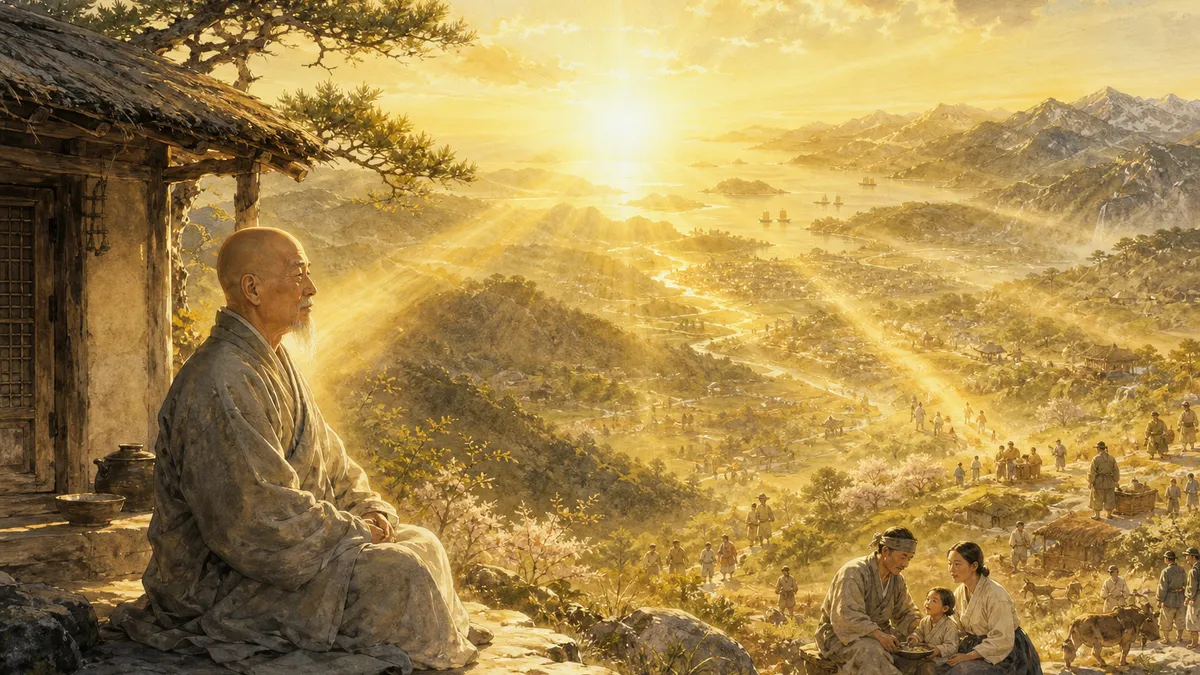
The point is that monks have a broader outlook on life. They understand that they will be able to help this world only when they themselves are free from illusions. For them, the world is not limited to a small circle of family or friends. Countless beings in the Universe can be helped. Humans are not the only class of beings that can be helped. There are suffering spirits, vidyadharas, gandharvas, pretas, kinnaras, pishachas, beings in the hells below, and gods above who are not awakened.
When you gain a broader view of the Universe, you begin to understand what help means in the true sense; you are no longer limited by your narrow notions of helping. You understand that all living beings and objects are not self-sustaining, that they are part of your own karmic vision, and therefore you can help them by engaging in your own practice.
In other words, we help all living beings when we attain liberation, and then the many living beings within the channels of our body and mind are liberated by virtue of their karmic connection with us. Everyone who attains liberation forms their own integral world, or their own pure land, their own mandala. They become the principal deity of this mandala, helping other living beings who are karmically connected with them to integrate into this mandala.
In the beginningless past, you created the causes of karmic connections with various living beings not only in the human world, but also in the worlds of devas, asuras, gods, spirits, and hell beings. And when someone attains liberation, they become the center of the Universe, because to attain liberation means to become the center of the Universe. And when they become the center of the Universe, the radiant light of their self-born Wisdom begins to shine upon all those beings with whom they have formed karmic connections, and therefore all of them begin to awaken. In this way, a new loka, or a new pure land, is created. It is believed that every saint creates their own pure land. One might say that this is a new cross-section of pure perception.
The Teaching on the Suffering of the World
Question: There are widespread calamities devastating this world, such as famine and epidemics. Why does this happen?
Maharishi: To whom do these events appear?
Question: But that is not enough. I see suffering everywhere.
Maharishi: You did not perceive this world and its suffering in deep sleep, but you are aware of them now, while awake. Abide in the state in which you are not distressed by them: when there is no perception of the world, its suffering does not affect you. When you remain as the Self, the Atman, as in deep sleep, the world and its troubles will not touch you. Therefore, look within. Observe the Atman! Then this world and its suffering will come to an end.
Question: But is that not selfishness?
Maharishi: The world is not external, but because you mistakenly identify yourself with the body, you see the world outside, and its pains are distinctly felt by you. But they are unreal. Seek Reality and cast aside this imaginary feeling.
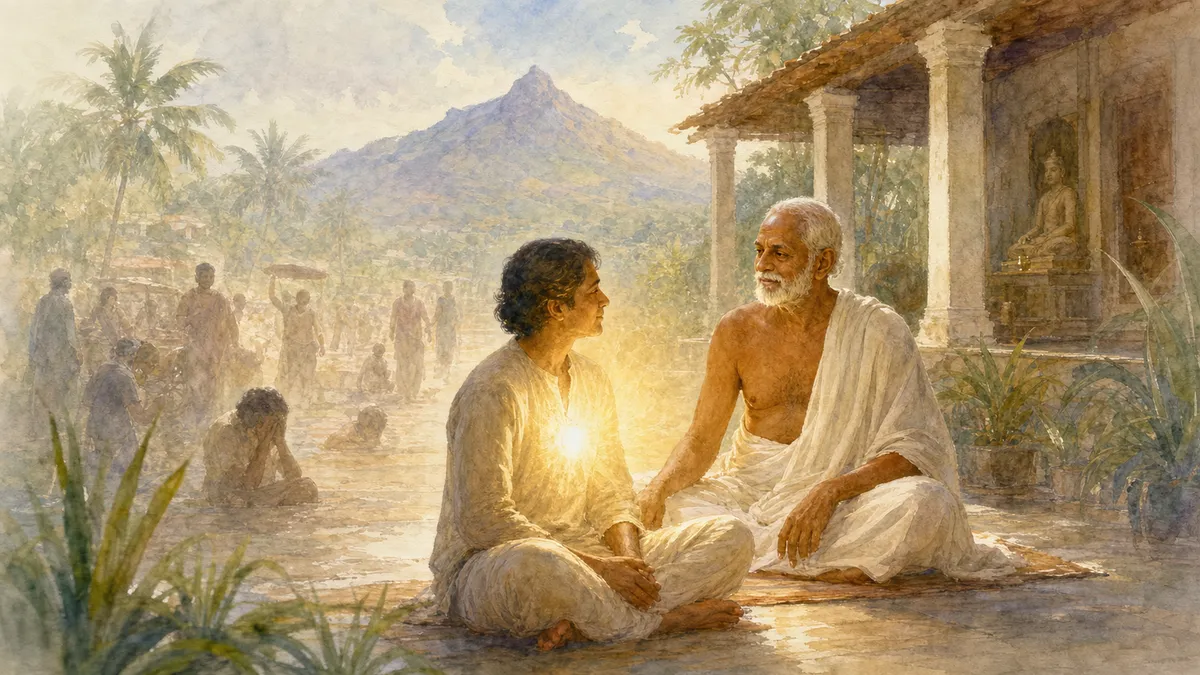
The whole point is that projections mislead us. This magic show compels us to believe in it when it is projected continuously. It resembles a situation in which a person sits in a movie theater and watches a film where wars and other things are taking place. They feel like jumping out of their seat and running up to the screen. From the perspective of the awakened ones, such a person brings a smile. An awakened one would say to them, “You had better sit down and try to understand that this is only a movie.” It is actually very funny when a person tries to run up to the screen and do something to it instead of turning on the light (lighting their own lamp), looking around the auditorium, and realizing that they are simply watching a movie.
Question: Why does the Atman manifest as this dreadful world?
Maharshi: So that you may seek Him. You cannot see your own eyes; place a mirror before them, and you will see them. It is the same with creation.
When Sai Baba was asked why there was so much suffering in the world, he replied, “This is my work; I will come into the world in the form of suffering. So that you may suffer and finally understand that you need to realize your true Self. If you do not suffer, you will never want to awaken. Suffering is a part of this world that helps us grow spiritually.” This is difficult to understand, but we reflect and turn inward only when we see illusions that begin to trouble us far too much.
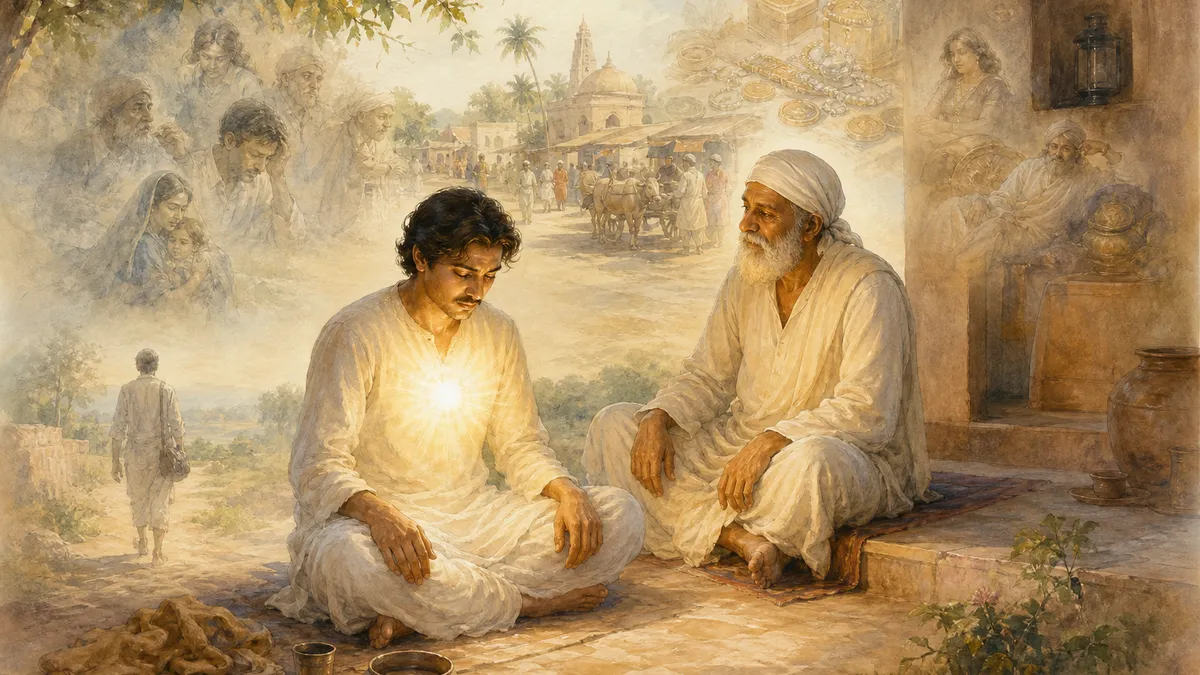
A spiritual seeker asks, “What is wrong with God and His creation?” Ramana says that there is nothing wrong with God; rather, there is something wrong with you. Human beings constantly ask this age-old question, trying to blame someone other than themselves. But in fact, something is wrong with us and with our illusory vision, because we strongly reject a certain part of creation. Creation is absolute and undifferentiated, yet we reject one part of creation and accept another. But Reality is whole; it cannot be divided. And when we are strongly attached to one part of creation, we naturally reject the other part. The part we reject is considered bad: full of suffering, injustice, and so on. Yet this is merely our karmic vision.
Question: God is perfection. Why, then, did He create an imperfect world? The result should correspond to the nature of the creator. But in this case, it does not.
Ramana: Who is asking this question?
Answer: I am—a human being.
Ramana: Are you separate from God that you ask such a question? As long as you consider yourself to be the body, you perceive the world as external, and its imperfections are evident to you. God is perfection, and His work is also perfection, but you see it as imperfect because of your mistaken identification with the body.
Indeed, absolute Reality is purity and perfection in every respect. However, we are simply unable to see this purity and perfection because of our strong and persistent fixation on duality, on acceptance and rejection.
Visions in the Bardo and Pure Perception
For example, in the bardo, a person sees wrathful deities. These deities appear to be drinking blood; they are adorned with garlands of skulls, may have terrifying appearances, and hold hooks, axes, curved knives, and other implements in their hands. In the bardo, a person may have visions in which these deities rip open their abdomen, pull out their entrails, drink their blood, suck out their brain, and so on. The person experiences intense terror. They do not die, but this happens to them. And they develop a strong aversion to all of it.
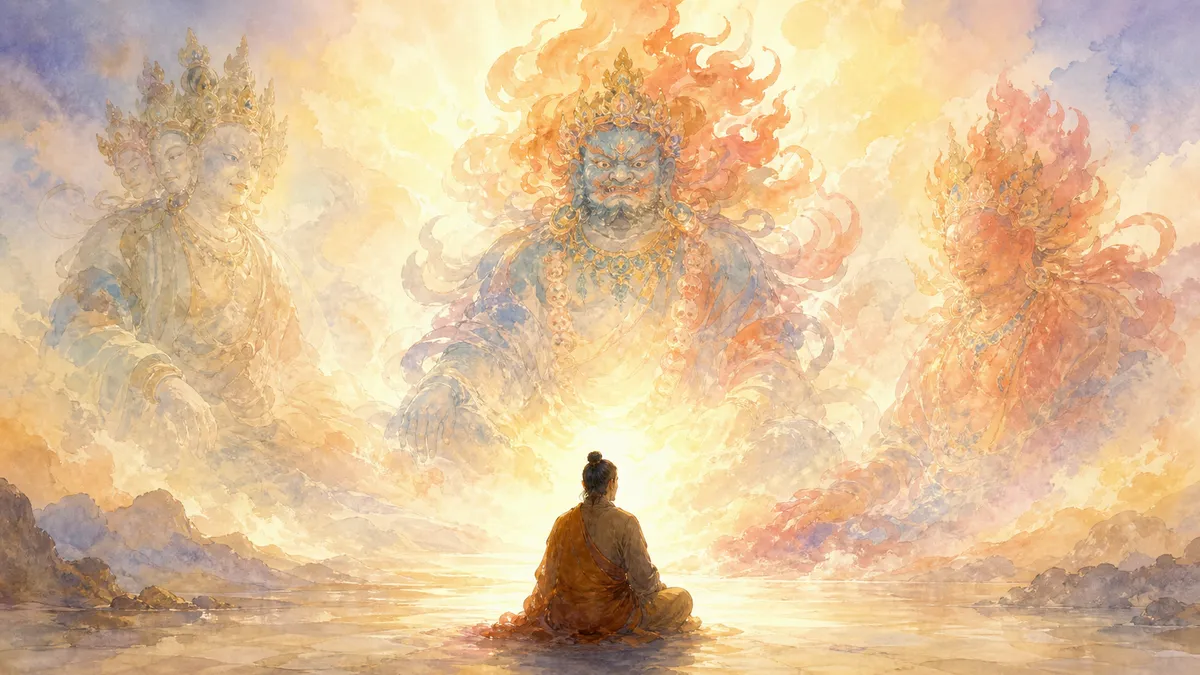
However, the instructions on the intermediate state say that these visions can actually do no more harm than a stuffed lion, for all these visions are the person’s own projections, their own energies. In other words, when the body disintegrates, fierce energies that constitute the mind and body emanate from the knees, lower back, heels, and other parts of the body. They are usually perceived as wrathful deities resembling human beings. Why are they perceived in precisely this way? Because the mind is accustomed to perceiving what was most familiar to it during life. Therefore, deities are usually depicted in human form. Obviously, if humans had the form of elephants, they would also see deities in the form of elephants. Deities are pure vision.
When these fierce energies manifest in the bardo, they appear in this way, but the person becomes frightened of them and is unable to accept them, integrate with them, or self-liberate them into the Clear Light. They then fall into a clouded, completely dormant state of consciousness and become obsessed with these visions, growing frightened and trying to hide from them, even though they are projections of their own thoughts. Because they experience such strong rejection, they cannot remain in an even, serene state of awareness. They then try to hide in a mother’s womb, and thus rebirth occurs.
The Practice of Pure Vision
When we understand that the world around us is a manifestation of our “Self,” we will feel neither attachment nor aversion toward it. This is why tantra includes practices (sadhanas) involving wrathful deities. When we train ourselves to perceive them as something pure and positive, without rejection, the terrifying deities no longer seem wrong. We accept them as something sacred and pure, despite the fact that they have skull cups filled with blood, wear garlands of skulls around their necks, and hold swords, knives, and other implements in their hands. We perceive them simply as the fierce energies of the deities. Then we relate to this calmly, are able to recognize it as a manifestation of pure vision, and our mind remains pure and serene.
Such methods are usually used in Kriya and Charya Tantra. In Laya Yoga, special visualization methods and practices involving specific forms of deities are not used; however, such pure vision is generated by contemplation itself. In other words, if our contemplation has gained strength, then when encountering such images, we perceive them as pure, because the entire world is then perceived by us as a manifestation of Brahman (a mandala), all living beings as forms of deities, and all sounds as mantras.
This pure vision means that we are able to see the manifestations of the lila of absolute Reality in everything. In impure vision, when you encounter a wicked person, you perceive them as a wicked person, and if they behave improperly toward you, you do not like it. In pure vision, however, this wicked person is a particular manifestation of the wrathful aspects of absolute Reality, and any way they behave toward you is lila, an incomprehensible play that teaches you a lesson in pure vision and non-attachment to the self. Why do we observe various principles in our relationships? This, too, is a lesson in pure vision.
Pure vision means that we regard all manifestations that occur as absolute. For example, if someone speaks angry words to you, then in pure vision this should be regarded as follows: “Undoubtedly, this is the play of absolute Reality, teaching me a lesson in non-attachment to my own personality.” Learning to perceive everything through pure vision means attaining such a profound state of mindful presence that it can no longer be disrupted, and seeing behind all forms the play of absolute Reality (lila). Some lilas are peaceful, while others are wrathful, but they are still a play, like the play of deities. A true practitioner always recognizes such plays. A practitioner who is inattentive does not recognize them, makes mistakes, and falls back into duality.
When you look at monks, perceive them as deities or as Buddhas. Perceive in this way even someone who, in your opinion, is neither a deity nor a Buddha. Think: “Undoubtedly, his wondrous essence manifests in accordance with my karma; this is a lesson in pure vision for me. If I do not learn this lesson, I will not attain profound contemplation.”
When an awakened person looks at other people, they see only awakened beings. People may be unaware of this and may suffer; nevertheless, in the absolute sense, they are all awakened and originally perfect. Therefore, every living being in the Universe, every person, is worthy of reverence. The point is not to forget this.

When we acquire such a view, our relationships are purified and become harmonious. We can no longer seriously be angry with anyone, hate anyone, or become attached to anyone. But we can admire every living being, seeing in them the play of absolute Reality, and then all living beings will teach us a lesson in true pure vision.
