

Commentary on the text “Yoga Vasistha,” Chapter Five
“The Supreme Consciousness, becoming the mind because of these foolish self-limitations, is as if polluted by the objects of this world; but that same consciousness, when it awakens to its own true essence, abandons its foolish delusions and attains knowledge of itself. Then the mind looks at the body as if from a great height. Recognizing the body as an assemblage of different elements, it transcends bodily awareness and becomes enlightened.”
Two Approaches to Awakening
There is an expression: “Living beings are awakened from the very beginning.” But they cannot manifest their qualities of awakening because there are obstacles that limit this. They will be able to manifest these qualities of awakening only when they remove all these obstacles, these hindering impediments.
There are two examples that embody the approach of instantaneous enlightenment and the approach of gradual enlightenment.
The first example is connected with cause and result, with consequence. If a seed is placed in the soil as the main cause and secondary causes are created, then this seed will sprout and subsequently become a tree. That is, the originally awakened cause existed in the form of a seed, but secondary causes are needed for this cause to develop into a result. And the path of gradual enlightenment is similar to such a practice, when we gradually transform our seed of awakening into the result of complete awakening.
The second example uses a crystal and a ray of light that falls upon it. If the crystal has eight or sixteen facets, if it is already cut, then it is already self-perfect; therefore there is no need to turn the cause into the result, that is, it is already both cause and result at the same time. However, due to the absence of secondary factors, this crystal cannot manifest its radiance, but as soon as a ray of light falls upon it, its awakened state will immediately manifest instantly. For example, it will emit glints that will be reflected on the walls. And there was no need to polish the crystal in some way or add anything to it so that it could emit these glints. From the very beginning, the crystal already possessed this ability; it simply was not manifested because there was no secondary cause, that is, the ray of light.
The approach of the higher tantras uses precisely this style of understanding and practice, which says that our state is already originally self-perfect, natural (sahaja), exists in itself, but there simply are no secondary causes, and therefore it cannot manifest in all its fullness.
We may accept the first or the second view depending on our qualities and abilities. Most often it happens that we accept the second view as wisdom, and the first view as method. Or we accept the first view as the path, and as soon as the opportunity arises, as soon as our understanding grows, we try to jump to the second view. And spiritual practice develops roughly between the first and the second view, with a tendency of evolution from the first view to the second as the level of awareness and understanding develops.
The Parable of the Roasted Grain
There is a story about a peasant named Gopol. He was poor, but one day he was fortunate enough to earn a sack of grain. When all the peasants were preparing to sow their plots, he too decided to sow his grain in order to obtain a harvest, but his grain was somewhat damp. He thought: “Perhaps I will dry it.” And he placed the sack of grain on the stove. But he forgot about it, and therefore all the grains not only dried but were well roasted. When the time came to sow, he diligently sowed these roasted grains in his garden. From time to time he watered them, but when the time came, green shoots began to grow for everyone, while nothing sprouted in his field. In the end, all of them grew wheat, while he had nothing but bare earth.

This is an example showing that our karmas, if we roast them with the fire of understanding, will no longer sprout, will not yield any harvest in the form of new causes and consequences.
The karmic tendencies of the mind, obscurations, and kleshas can be imagined as such a sack of grain. If it is sown without first being roasted, it will inevitably sprout—such is the law of cause and effect. For example, all your karmic judgments existing in this life are already being directed into the next life; they are already creating the prerequisites to shape it. That is, some part of your consciousness is already preparing for itself in the future a certain niche, a certain new body, and a new destiny. Future subtle causal connections are already being formed. They are not yet fully shaped, somewhat blurred, probabilistic; nevertheless, the thread of cause and effect is already weaving our future lives.
And in order for this not to happen, the practitioner’s task is to sever these threads of future lives right in this life, because they will develop if he does not sever them. And such roasting of the seeds, that is, of karmic causes, takes place through understanding. This fire of understanding is called “viveka” (discriminating wisdom). Viveka means that we can distinguish the mirror from the reflections, we can discover the mirror and abide in the state of the mirror. Through such discrimination, we devalue the captivating influence of the reflections.
The State of the Mirror and Reflections
To be in a state of understanding means to abide in the knowledge of one’s nature, which is different from the body. It is not that you once received some glimpse and then forgot it. To be in the state of knowledge of one’s nature means to do this continuously and apply it in everyday life.
Usually prana and the body obscure our nature so strongly that it seems as if it does not exist at all. Moreover, the sense organs act from the outside, and they are thieves in relation to the mind. For example, if we do not protect the mind, the sense organs act as thieves that drag our perception and life force away from this center. It turns out that we are as if under crossfire. From outside, six thieves take away our perception, so there is not even a second’s possibility to abstract ourselves from them. From within, the sensation of the body and pranas disrupt awareness so strongly that there is no possibility of recognizing the subtle essence of the nature of the Mind, which is deeper than the body and pranas, and then it seems as if the knowledge of one’s nature goes somewhere. We fall out of the state of the mirror and are captured by the state of reflections, and in the state of being captured by reflections we do not see the world as it is; that is, we are in non-understanding, we are sincerely mistaken about everything that is happening, taking one thing for something completely different.
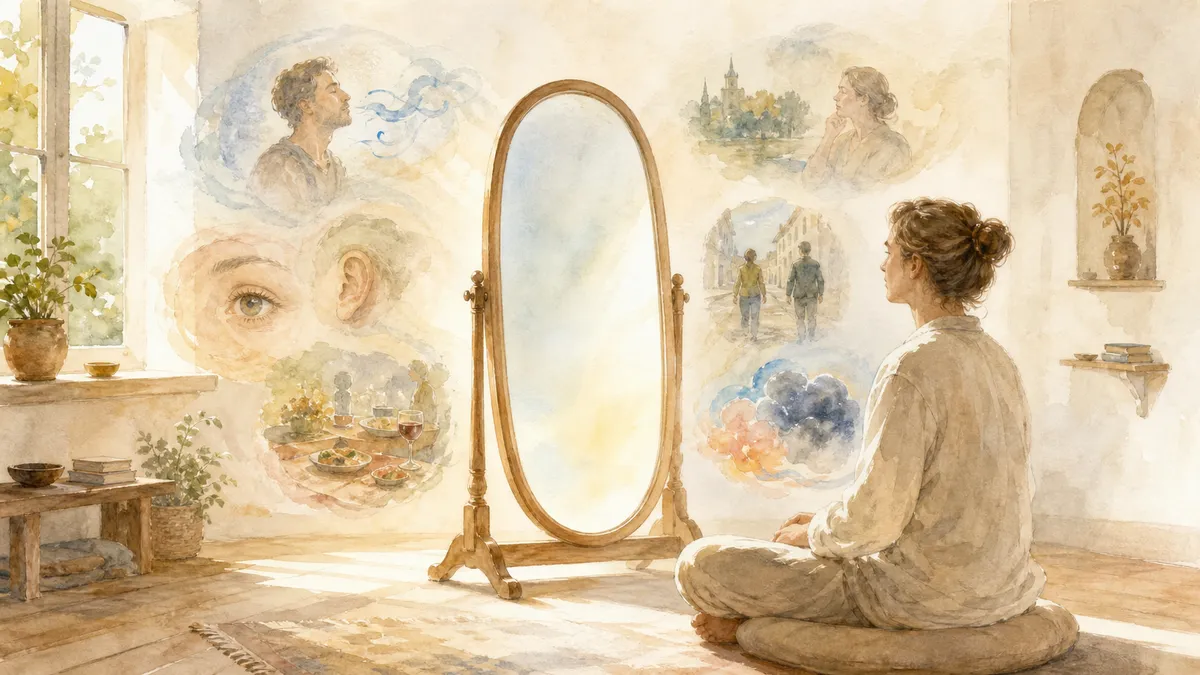
When we become rooted in these delusions, kleshas appear. Kleshas are like delusions that have strongly developed in some direction, and then they can become certain traits of ours that bring us various problems. The question is to acquire such understanding with the help of which one can stop losing oneself in reflections, enter the state of the mirror, and become free from kleshas. This is a matter of a monk’s daily struggle from morning till evening. As soon as you awaken, you immediately restore the level of clarity. And depending on how successful this struggle is, our future reality, our future destiny, is created. That is, at every moment there is a certain probabilistic blur, and you can make a choice either in this direction or in that one. And depending on which choice you make, your future destiny begins to change.
The practitioner is in a state of such choice at every moment: whether to slip onto the sense organs, whether to slip onto the internal data and enter internal reflections, illusions, or to enter the state of the mirror, that is, the most subtle state, and hold to it. And there are very many such choices; only we do not notice them immediately. But a true practitioner always notices this state of subtle choice. He is in utmost vigilance, as if he were the pilot of some huge starship who monitors the instrument readings and on whom a very great deal depends. He is so focused and concentrated that he does not simply walk, but carries his body like a huge starship. Any incorrect movement begins to change the trajectory. Even one small omission leads to the beginning of large deviations. One could say he is afraid of falling out of this state, and therefore he is very careful.
Pure and Impure Vision
When, thanks to practice, we become accustomed to being in understanding, to seeing the mirror and not being mistaken about the reflections, then such understanding gains strength over time. When we abide in impure vision, we think linearly, unambiguously. For example, we can read sacred texts and literally perceive what is said there, but sacred texts have several meanings; they must be perceived more deeply.
About twenty years ago, when I read sacred texts, it seemed to me that these texts expressed exactly the meaning that was stated there. Then I began to think that the texts did not express any meaning at all. Then, finally, the understanding came that the texts do express a certain meaning, but there are many more such meanings, that the texts reflect only one of the possible meanings, while the true essence is in general inexpressible in words.

When we abide in duality, it is said that we are in pure vision. Dualistic vision is characterized by linear thinking, subject-object perception. It is not guided by the laws of ordinary formal logic; it is probabilistic, proceeds from the Source, and sees everything as play. Conditioned dualistic thinking does not see the world as play; it sees it as cause-and-effect connections, as subject-object relations. It itself proceeds from a clouded mind, from the ego and the kleshas. We have two ways of perceiving reality. The first way is as the play of the Absolute. The second way is as ordinary cause-and-effect connections, as subject-object relations, simply as events that unfold. The second way of perception is also permissible. But the first way is the way of seeing in understanding, in awakening, while the second way is the way of seeing in ignorance.
Transmutation of Perceptions
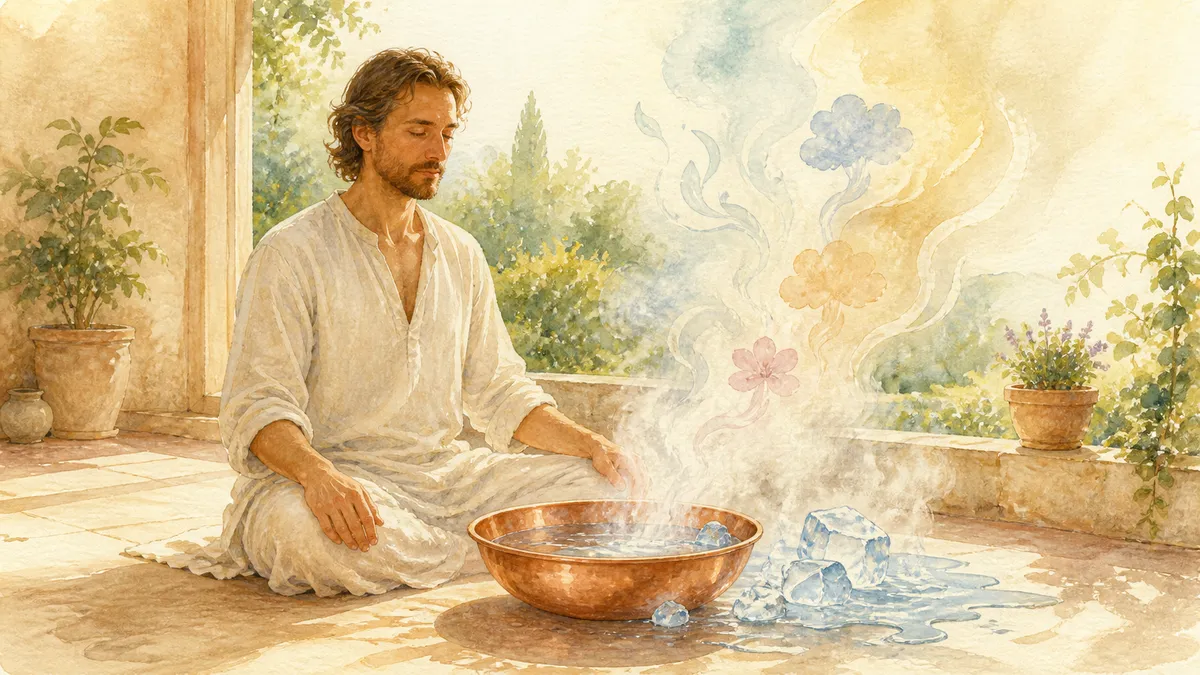
Everything we see from the state of understanding self-liberates. It is like water that instantly turns into vapor. Our thoughts, emotions, and perceptions are like water that quickly evaporates. All this disappears instantly when it encounters our understanding. In the state of lack of understanding, on the contrary, all our perceptions are like water that, instead of vapor, turns into ice. That is, words, thoughts, or perceptions strongly change our consciousness. If water is an indefinite state—that is, it can take on one form or another—then living beings, upon encountering water (water in this context is experience), turn it into solid figures that begin to surround them. And this continues until they become cramped, until this whole world becomes completely filled with these solid figures. They themselves surround themselves with these piles by the power of their consciousness, and then become angry with them or hate them, thinking: “Why have I been given such a fate? Why is it so? Why is everything not the way I want?” But they themselves created these icy figures when they came into contact with water, with subtle perception. Conversely, the state of the awakened one is when water turns into vapor. It not only does not harden into ice, but passes into a subtle, empty, gaseous state. And then, even if there are some problematic situations, difficult experiences, obscurations, all this leaves no karmic traces and dissolves in empty awareness.
The difference between a practitioner and a dilettante lies in the ability to smelt water into vapor, not make ice out of it. The deeper the level of presence, the greater the amount of water such a yogin can process into a gaseous state. He can even take someone else’s ice and process it too, as if his own were not enough. Everything that touches his consciousness will be processed. To others this seems like something supernatural, miraculous, incredible. But in fact there is nothing incredible about it. It is simply that the nature of our primordial state is such that it can dissolve (self-liberate) energies, kleshas, obscurations, thoughts, and even coarse dense matter. Everything depends on how rooted you are in this original state.
Holistic and Fragmentary Vision
Vision from the state of understanding is holistic. This means that everything is seen in unity. But from the state of ignorance, everything is seen fragmentarily, discretely. Holistic vision means that, when encountering anything in perception, I look at it not from a narrow point of view, but from a more global one. For example, if a problem arises in a relationship with another person, then I think that the other person is to blame if I am not in a state of knowledge; without understanding, I assess the situation taking place as bad or feel offended, evaluating everything emotionally. But if I am in a state of knowledge, then I instantly understand the entire chain of causes and effects; I understand what is happening, why this person manifests themselves in this way. Moreover, I see the system into which the person is inscribed, the family of karmas that they express through themselves, the energies (shaktis) that pass through them. I also see the embeddedness of this situation in some even greater play that stands behind this situation, that is, an even greater wholeness. I see the deities that manifest through this situation, through these shaktis. All of this is as clear to me as the palm of my hand, and so I simply smile at the fact that such lilas are unfolding. I see this situation as inscribed in the general flow of infinitely flowing time, in the general state of space, and I assess it from some vast, global positions. And in fact there is no end to such wholeness, because you can see different levels of one and the same situation all the way to infinity. You can begin with a conversation between two monks, and eventually find, behind the two monks, the play between Shiva and Shakti, Brahma and Vishnu, or the Absolute itself. That is where it may all end, if your vision is sufficient. This happens because abiding in understanding, in such a mirror of awareness, allows you to impeccably see everything that manifests as it truly is, and not to be mistaken.
The Inner Reactor of Transmutation
“Such an enlightened person cannot be soiled by the dirt of the world or of misunderstanding, even if he acts in the world. He is neither attracted nor repelled by anything in the world. He knows that what is called the ‘I’ and what is called the ‘world’ in the past, present, and future is only a continuation of the union between pure sensation and the process of sensation.”
Everything we perceive is, in fact, the consequence of interdependence. Because of the external, the internal occurs; because of the internal, the external occurs. Nothing manifests by itself.
Why is awakened consciousness not obscured either by kleshas or by perceptions? Because when you have understanding and abide in the state of the mirror, it is as if you have a mini nuclear reactor inside you that continuously carries out an inner reaction of decomposition. Whatever enters through the body, mind, prana, and sense organs (eyes, ears, and so on), everything encounters it and breaks down into the state of emptiness. Imagine that such a reactor is designed for a certain power output. There is a load on the sense organs and pranas. And as long as the load does not exceed its capacity, it will continue such processing.
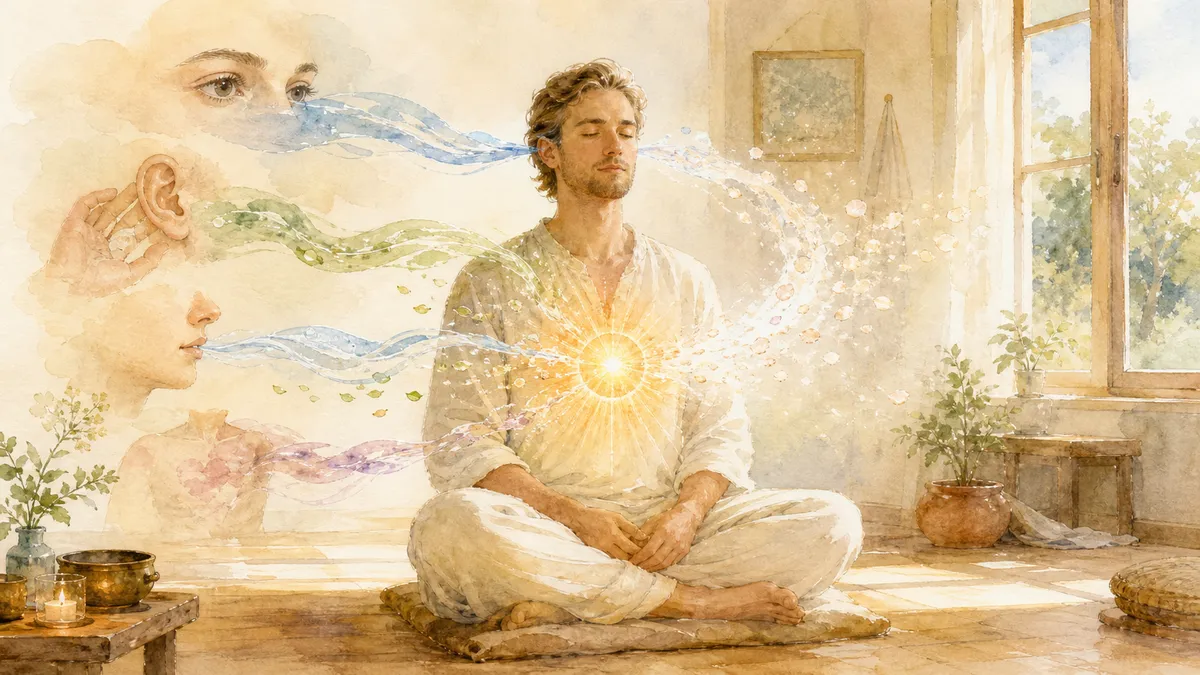
Abiding in understanding is precisely such an inner reactor, which allows all of this to be transmuted and processed. But such a transformation can arise only if we are truly in the state of the mirror. And in order for us to be in it, we must either continuously search for it, or, if we have found it, take care to maintain it. Such transformation is not connected with our supposedly trying to transform something. In reality, we do nothing, because the transforming power is already contained in the mirror itself. Rather, we recognize what comes to us through the five sense organs, and in the process of such recognition, transmutation occurs every instant. Abiding in such moment-to-moment awareness is the essence of practice. Nothing else is the essence of practice. When you hear from some other practitioner that the essence of practice is something else, do not believe him, because the essence of practice is precisely abiding in moment-to-moment awareness, and everything else is only auxiliary means.
Of course, I am speaking now about Laya Yoga, not about other religions. Other religions have the right to consider certain ideas of their own to be the essence of practice. That is their internal affair. But we are speaking specifically about the teaching of Laya Yoga.
Thus, all other methods are auxiliary, and they help either to reveal this moment-to-moment awareness, or to maintain it, or to deepen and clarify it.
Absolute Brahman as Pure Perception
“Whether the objects of sensation are real or unreal depends solely on the one who senses. How, then, do joy and sorrow arise? The false is always false, truth is truth, and a mixture of the two is false! Do not be deceived. Abandon false perceptions and behold the truth, and then you will never be deceived again.
Everything that exists is only a continuation of the relationship between the pure process of perception and the perceived. This perception is truly the delight of self-awareness. It is pure perception. Therefore it is known as the absolute Brahman.”
The Interdependence of Perception and the Perceived
This is not easy to understand. Everything that exists is a continuation of the relationship between pure perception and the perceived. This can be explained as follows. There is a statue of the Buddha or of some saint; I perceive it, and it evokes in me a divine sensation which, in turn, was born in the process of interdependence. My perception, vision, and upbringing have combined with the skillful work of some master, with tradition, vision, and so on. As a result, a sacred sensation, an understanding, arose: “This is a statue of the Buddha.” A certain reality arose: the reality of spiritual practice, of the sacred.
But if a cat or a person completely far removed from practice were placed before the statue, none of this would occur, because in that case interdependence in his consciousness would not generate such causes. And conversely, if before my consciousness, raised in the tradition of spiritual practice, there were placed a statue not of the Buddha but of some other deity (for example, Quetzalcoatl), I would not even understand that it was a deity, that it was something sacred. At best I would think: “Yes, an interesting image from Aztec culture.” That is, no interdependent existence would have occurred; something else would have occurred instead.
Thus, when the causes of the perceiver and the perceived come together, reality begins to be created.
Transporting Prana and the Great Meeting
“The enjoyment that appears in the process of contact between this pure process of sensation and the sensed is supreme, but for the fool it is the world, and for the wise it is liberation. This pure sensation itself is infinite consciousness. When it inclines toward objects, it is attachment and bondage, but when it is free, it is liberation.”
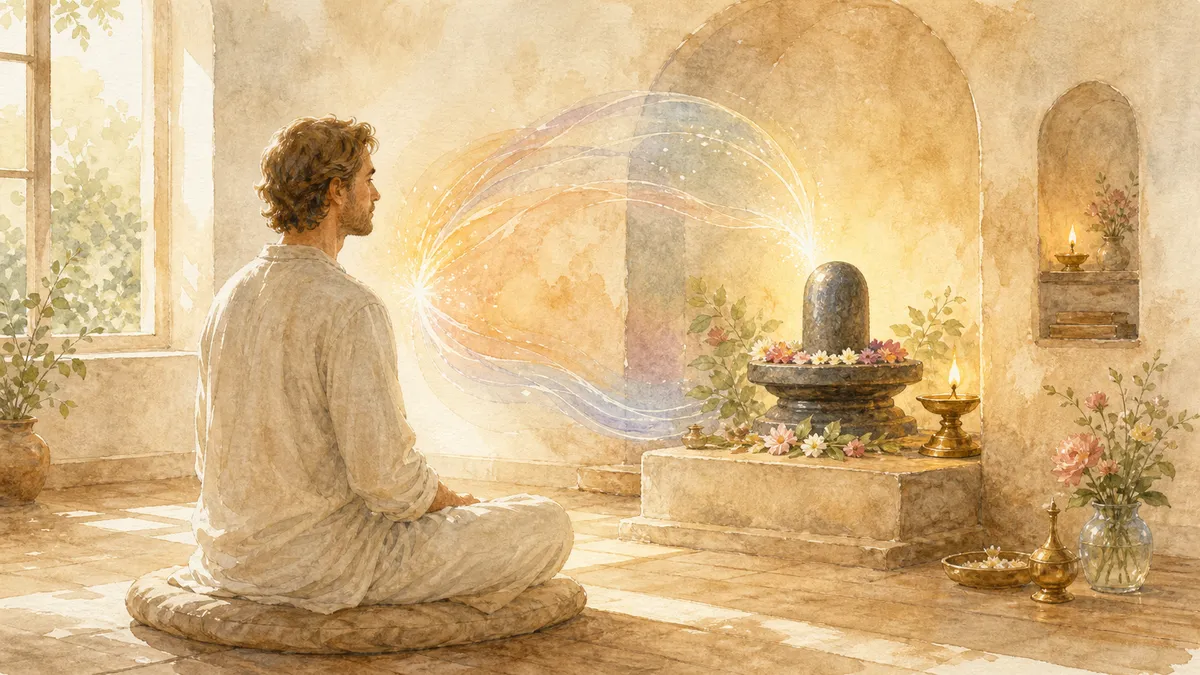
When we perceive, a reaction arises in our body, and energy (prana) is generated. As a rule, perception is accompanied by transporting prana, which is carried toward the object. Transporting prana is the prana that leaves our body and touches the object, conveying perception to it. If we are in a state of understanding that all objects are reflections, and that behind any object there is a mirror, this transporting prana does not leave us, or, having left, returns back. And then we lose nothing in perception; the six sense organs act as thieves. But if we are not vigilant, and for us the object is only an object, then this transporting prana goes out and slightly empties us, and then what is called being captured by objects takes place.
Whether this transporting prana goes out or, on the contrary, remains depends on the state of awareness in which I abide. If I am vigilant and, in the first act of perception, recognize the mirror that stands behind the object, then the focus of vision instantly shifts to the essence, and what is called “mahamelana” (the great meeting) occurs. The tantric term “great meeting” means precisely this: in the first moment of perception, in the first moment of the awakening of energy (feeling, desire, and so on), to recognize its emptiness, to discover the mirror, and by means of it absorb this energy. That is, the mind is closed, subject and object are closed, and there is a return to primordial awareness.
Whether mahamelana (the great meeting) occurs or does not occur depends on the extent to which I am in moment-to-moment awareness when perceiving something. It may be the perception of a deity, the perception of an ordinary situation, or the perception of something worldly, impure, and repulsive. It does not matter what it is. The only question is whether this great meeting occurs or does not occur. When a person with awakened understanding perceives the world, he always does so in a state of such reunion. This great meeting is constantly taking place for him. But if a person, while in a vigilant state, does not perceive objects, then such a great meeting does not occur.
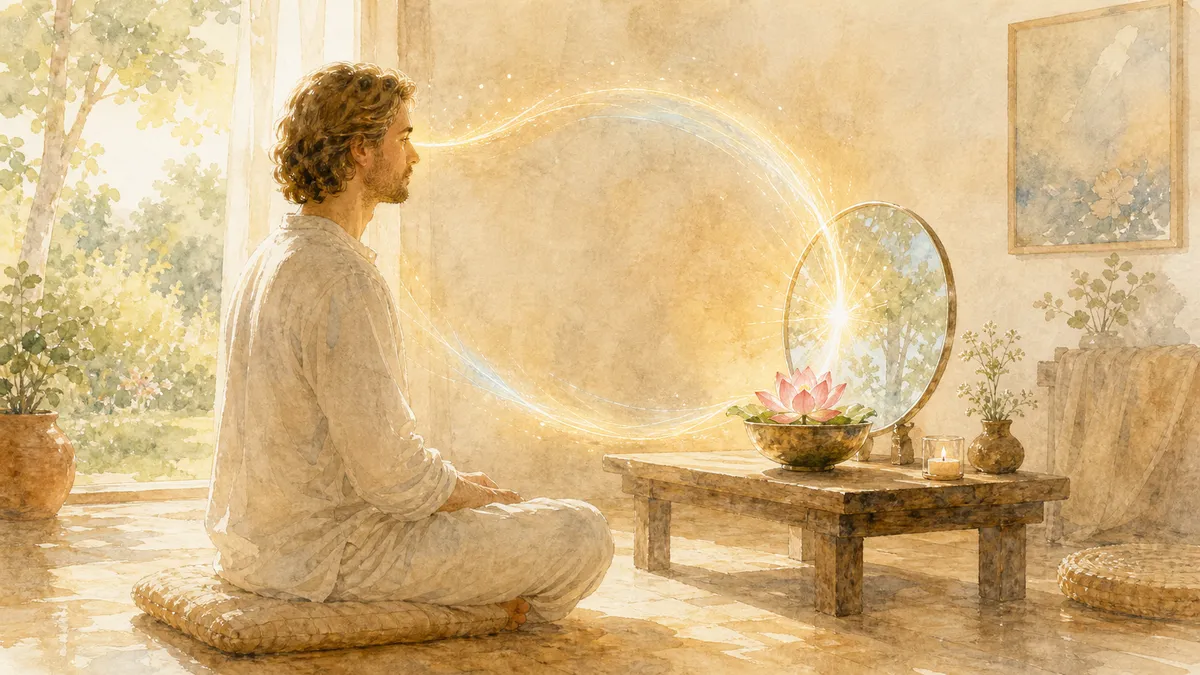
“When such a feeling is free from decay or curiosity, that is liberation. When such a feeling is liberated even from this contact (subject-object relations), then this apparent world completely ceases.”
