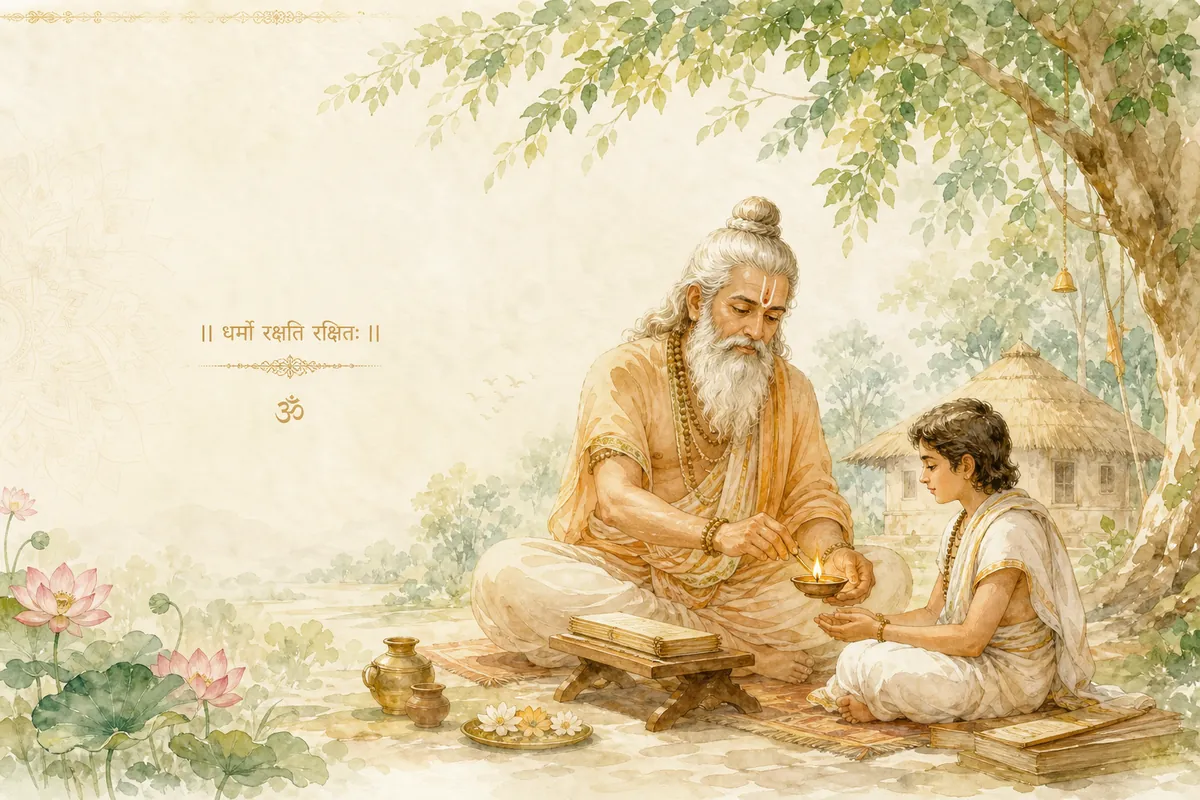
There are five sections, five yantras, five parts in the teaching.
The first thing studied is the yantra of wisdom, that is, prajna-yantra, when we learn to contemplate and reveal the nature of the Mind.
The second yantra is shakti-yantra, when we learn to control inner energy.
In turn, the section of wisdom is divided into three lines: the line of contemplation, the line of divine pride, and the line of space. There is no need to somehow separate these lines. One could say that they are different facets of one and the same thing. If we understand the principle of one line, then the second also opens up to us. Nevertheless, these are self-sufficient, complete sections of the teaching.
The line of contemplation teaches us the practice of naked awareness. For example, when you perform atma-vichara (self-inquiry), satipatthana (observation of the actions of the body), this belongs to the practices of the line of contemplation, when we open our awareness, the inner observer. The line of bhava is the practice of divine pride, when you work with your own sensations, nurturing and developing them. Finally, the line of space is the practice with shambhavi mudra. This is a more advanced option.
The path of divine pride is a more developed practice. You will be able to practice it fully if you have become a disciple and established the proper connection with the Three Jewels.
Today you will receive transmission into the line of divine pride. But you need to know that such a transmission will acquire the fullness of authorization only when you become a disciple. For now, you can simply take note of it as interesting material.
Usually, transmission is initially given only to those who are already disciples. We always place special emphasis on this, because it is impossible to receive the full benefit from the teaching without being a disciple. Only if we study properly, following a certain learning algorithm, can we truly derive the maximum benefit from the training.

The Essence of Bhava
In the tantras, bhava is spoken of as follows:
“Spiritual practice is nothing other than bhava. Bhava is the essence of liberation.”
The word “bhava” is translated as worldview, as karmic vision, the experience of oneself. That is, it is the being that determines our ontological status, our selfhood.
Each of us feels oneself in some way. And you do not feel yourself to be an animal, a hungry spirit, or a deity. You feel yourself to be precisely a human being. That is, human bhava is inherent in you. In other words, bhava is the worldview of oneself as what one is. The path of divine pride consists in changing this worldview, changing one’s own self-assessment, self-identification.
For example, we now have a self-assessment based on the false idea “I am this body,” “I am a human being.” And it is precisely this self-assessment that is the fetters of samsara. The path of divine pride is based on the text of the founder of Advaita Vedanta, Sri Adi Shankaracharya, called “Contemplation of Brahman” (“Brahmachintanam”).
The Teaching of Shankaracharya
“Truly I am the Supreme Brahman, indestructible, known as Vasudeva.” Whoever reflects in this way with certainty will become free. Another, however, will remain in the chains of ignorance.
O mind! Meditate with conviction: “I am truly the Supreme Brahman, for My essence is pure consciousness, and there are no attachments for Me, for no efforts can limit Me or destroy Me.”
“I am Brahman.” Whoever knows this becomes all of this himself. Even the gods cannot cause him harm, for he becomes their soul as well.
“I am the Absolute.” Whoever lives with this faith unceasingly will not commit a bad action, and neither difficulties nor bad karma will touch him.
Whoever, even for a moment in meditation, realizes himself as “I am Brahman” will destroy even his grave sins, just as darkness dissolves in the rays of the rising sun.
The entire text “Contemplation of Brahman” is precisely the transmission of such divine pride.
Further, Shankara says:
“Truly I am Brahman, eternally free” — establish yourself in this truth. If it is difficult to realize it, then at least repeat these words unceasingly.
What you think about, that you become. So cast aside your doubts and practice the contemplation of Truth with determination.
Through the yoga of meditation, within one month one can be freed even from a grave sin. Whoever practices meditation continuously for one year acquires the eight supernatural powers. And whoever meditates constantly throughout his entire life attains liberation even in this life.
Attaining liberation in this life is a very rare phenomenon. Only a handful of saints attain liberation in this life. The rest, unfortunately, are forced to take various new conditioned births. Some become divine spirits in the heavenly worlds, some become humans, some go to higher worlds. Shankara says that through this practice even a conditioned person can attain liberation within one lifetime.
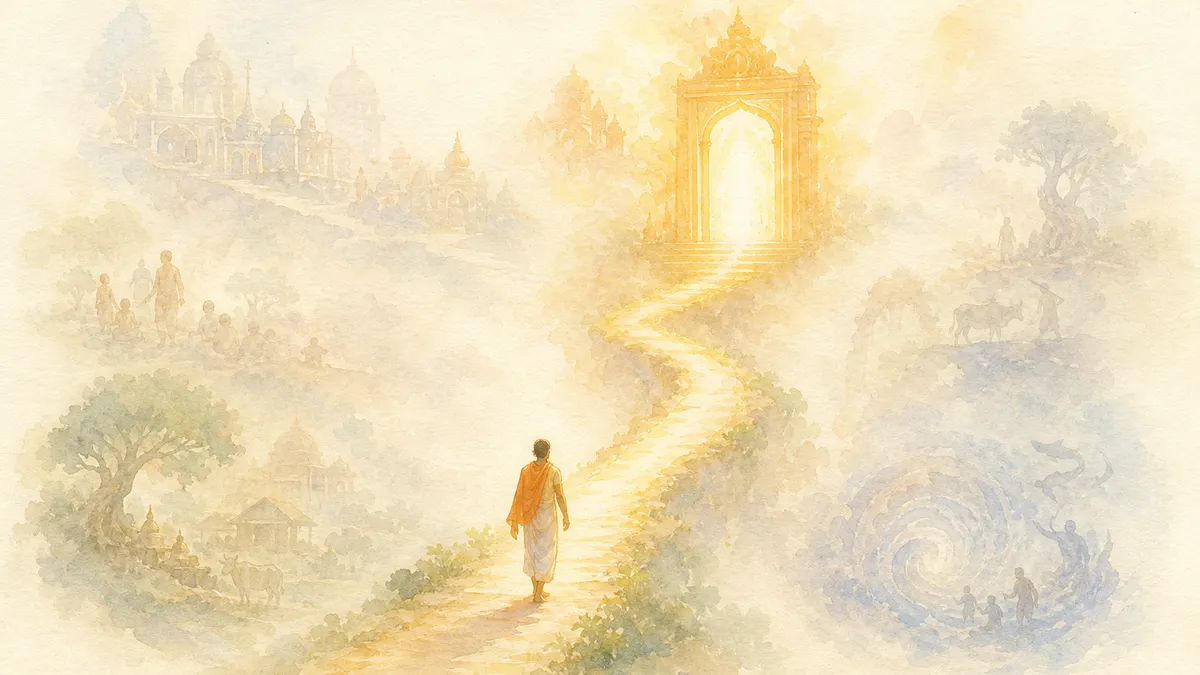
I regard the transmission of the lineage of divine pride as a sacred treasure, and therefore it must be perceived as a very profound practice and carried in one’s heart. Your entire remaining life and sadhana, which will unfold under the sign of the practice of divine pride, depend on the extent to which you can realize this practice.
The Path of Developing Bhava
In connection with this practice, there is an upadesha called “Svabhava Upadesha Chintamani,” or “The Path of Divine Pride.”
Bhava is our self-esteem, our sense of self. When we practice the path of divine pride, we must generate this bhava through transmission from the spiritual teacher. When we generate this bhava, we constantly cultivate it. It is like watering a sprout and nurturing it as it grows.
When this bhava grows, it must displace all impure states; it must completely change our self-identification. We must become fully established in seeing ourselves as a deity and become disillusioned with seeing ourselves as a human being.
One could say that our belief that we are a human being is a false belief. It is based on our karma and on the blind idea “I am this body.” We must displace this old belief and accept a new belief: “I am the Absolute,” “I am an enlightened deity.” And this worldview must completely fill our consciousness. It must overturn our values, our self-esteem, our vision of ourselves, our status, until we are fully convinced of it.
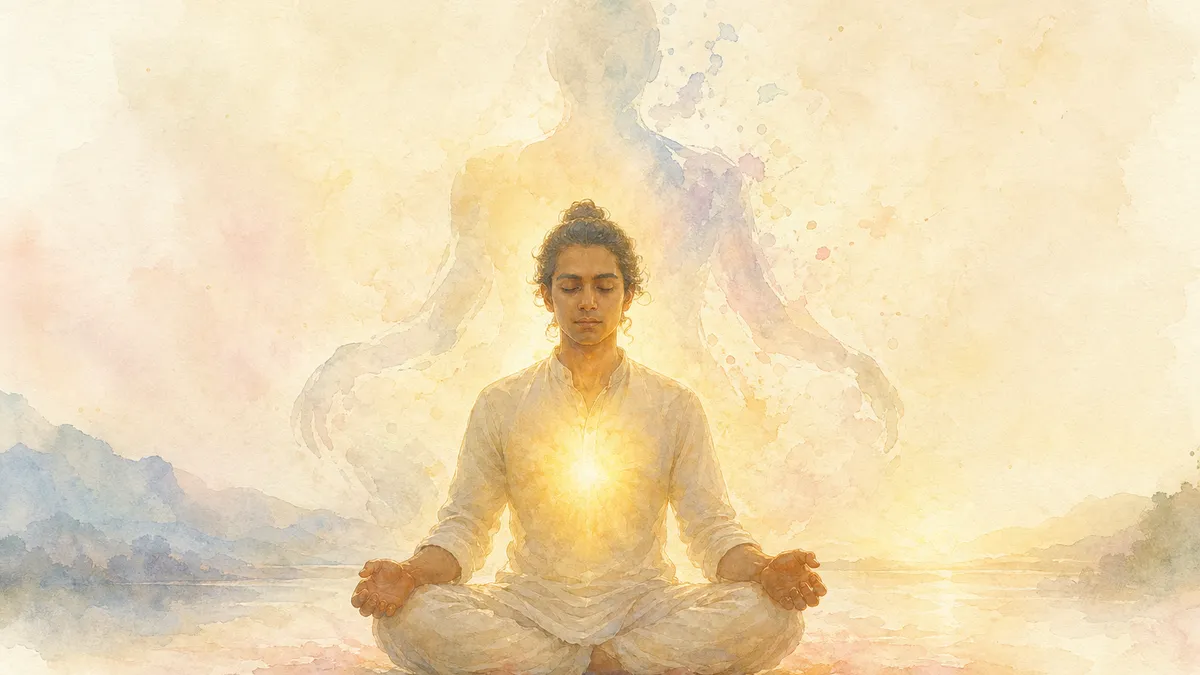
What prevents us from transcending our own limitations, the frameworks within consciousness? When we have these frameworks, we cannot go beyond our own limitations. This means that we cannot attain liberation until we change our ideas about ourselves.
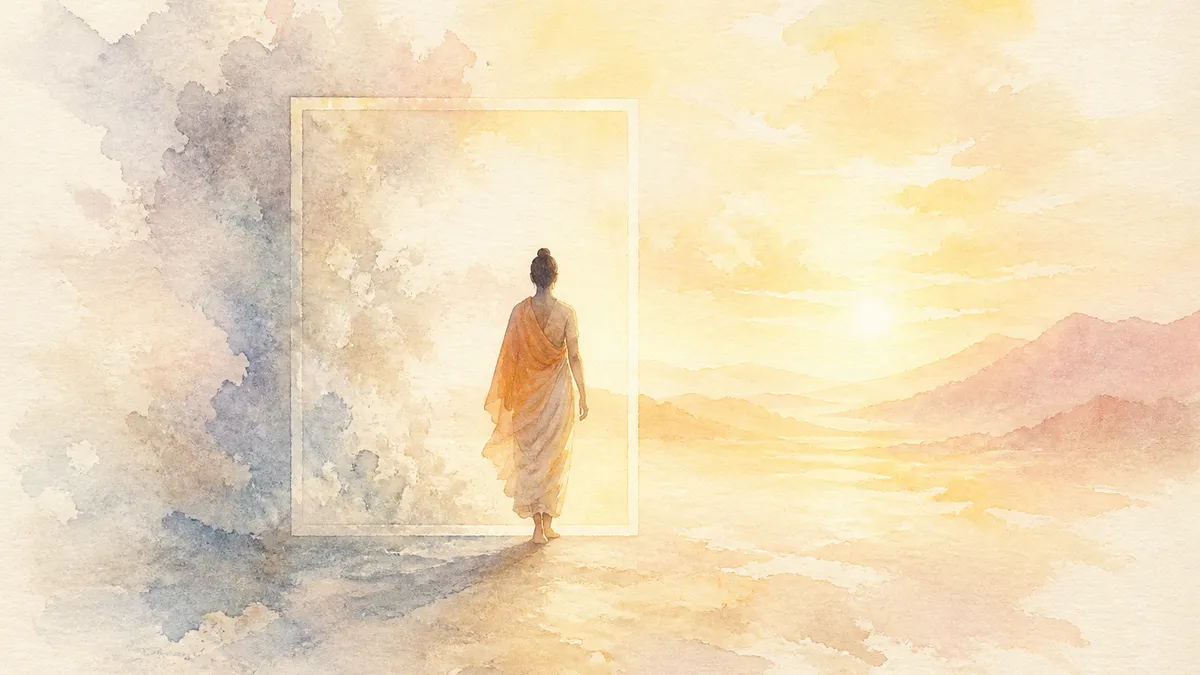
Worldly Analogies and Spiritual Practice
For example, today there are many courses and trainings in personal growth. And they make very effective use of the idea that a person must change his self-esteem, his vision of himself. But this is not a new idea. In fact, this idea is many thousands of years old; it is described in ancient texts. But in the worldly version, they say something like this: “If you want to earn a lot of money, you need to change your mentality. You have the mentality of a poor person, and therefore you cannot earn a lot of money. Even if you work sixteen hours a day, you will not become rich until you move beyond the karmic vision of a poor person. You need to change your state of mind.”
And in such trainings they teach how to adopt a majestic posture, how to believe in oneself through various positive affirmations: “I can do anything!”, “I am the best!”, “I am a winner!”, “I am lucky!”. By constantly attuning themselves in this way and engaging in such autosuggestion, they dream of becoming a millionaire or even a billionaire, solving problems in relationships with other people, and so on. This is a simplified principle of that very same divine pride. But we are not interested in such samsaric achievements. The manifestation of control over material shakti is simply a secondary blossoming that manifests by itself when you possess the siddhis to control various energies, since material energies are only one aspect of the primordial energy.
We are more interested in the actual practice that allows one to experience complete identification with Brahman. Bhava means that, as a result of practice, we experience a sense of unprecedented greatness, refinement, depth, exaltation, and the sacred. And this feeling accompanies our spiritual practice.
Features of the Line of Bhava
The lines of naked awareness are, generally speaking, a line of wisdom and clarity. There are no sensations in this; that is, you simply observe this world as an illusion and remain aware.
The line of bhava is always connected with energy, with one’s sense of self. The bhava of divine pride is a path that gives very great joy and a powerful emotional transformation. You truly begin to feel: “Yes, I am changing. The practice is bearing fruit.” And when this feeling fills our consciousness, we can remain in a very deep state of contemplation without being distracted. We see that the scourge of practitioners—distraction during the practice of contemplation—no longer applies to us, because this feeling is so strong that it can be maintained in any situation.
It is said that the great experience is nurtured through regular training. At first, a taste (rasa) arises, and then it grows into a stable worldview or sense of the world (bhava). And when bhava is nurtured, it grows into the great experience—mahabhava. That is, the great experience is a state in which the yogin is continuously immersed in a very powerful experience of exaltation, transcendence, and ecstasy. In other words, it is a state very close to the state in which the great saints abided.
If you read the biography of Sri Chaitanya and some other saints, you will see that they were constantly immersed in a very majestic state. It was so powerful that at times it was even difficult to control, and therefore some of the saints behaved like madmen. This is the state of mahabhava.
Finally, when mahabhava reaches its culmination, it becomes svabhava, that is, the primordial true nature. When the yogin fully experiences and immerses himself in this divine pride, he suddenly discovers that this state has always been inherent in him, that it has always been his primordial nature. And then what we call self-recognition occurs; the understanding comes: “It turns out that I have always been boundless, absolute, majestic, and sacred. However, my conditioned mind made me feel like a petty, insignificant, suffering human being.”
It is said in the “Rudrayamala Tantra”:
“Having rejected all other experiences of bhava, one should take refuge in the great experience, mahabhava. Through bhava, liberation and supreme happiness are attained.”
The Nature of the Experience of Bhava
How else can bhava be described? For example, if, while watching some elevated film, reading a book, or listening to beautiful music, you have a very deep experience, then the moment of such elevation of consciousness is precisely bhava.
At the moment of transmission, you are given a technique, and after some time, if you perform it correctly, this kind of feeling begins to arise in you. Through Guru Yoga and veneration of the Three Jewels, such bhava also arises. If a disciple has stable samayas, then such bhava must necessarily arise.
And gradually this bhava should grow in your soul until it becomes so familiar that you can look at yourself and at the world through the eyes of this bhava. Over time, this bhava will begin to displace your old sense of self, your old karmic vision, and you will move into a new worldview. This new worldview is also called devabhava, that is, the divine sense of oneself.
The natural state of which we speak is nothing other than bhava. Bhava is the essence of the natural state.
As you know, sahaja, the natural state, is central in Laya Yoga. That is, by it we mean our primordial nature, our limitless potential. And the natural state is often described as follows: “it is like a huge mountain,” or “it is like thousands of golden lions,” or “it is like the ocean.” Of course, these are only metaphors, but they give us a certain feeling, experience, bhava. And if we attune ourselves to this experience, then we can understand what is being discussed.

Transmission and Development of Bhava
In direct introduction to the natural state, the teacher transmits this worldview to the disciple. Guru yoga is attunement to the teacher’s worldview, since he is always in such a state of mahabhava. Therefore, thanks to Guru yoga, you will be able to enter such presence easily. When bhava becomes stable, you can invoke it on your own, because it has already become your inner state.
What is faith? Faith is attunement to this bhava. For example, there is a person who has doubts and confusion in spiritual practice. A more experienced monk may say to him: “You simply have no faith. In fact, this is a very simple matter. If you have any difficulties, then you have simply missed something important. You have no faith. But if you have faith, then everything falls into place, everything becomes easy and blessed.”
What is faith? It is attunement to the absolute bhava. If you have such attunement, then you constantly abide in a state of unity with this Supreme Source. You cannot lose it anywhere. It is like a beacon or a ray that constantly guides you. It does not even depend on technical practices, on how well you know the theory or doctrine. It is simply your state of openness in the heart, your intuitive mind directed toward this subtlest worldview, when you never lose it again.
Therefore, in the understanding of anuttara tantra, a sincerely and deeply believing person is one who is constantly attuned to such a worldview, to this bhava. He is constantly attuned to the Supreme Source, and such attunement gives him an enormous charge of positive energy. But if such attunement is destroyed, the connection with the Supreme Source also disappears. A person loses faith, and therefore all his practices become something fragmented, all his knowledge becomes mental. They do not give him genuine experience.
The goal of all spiritual practices and types of yoga is sahaja samadhi. It is one-pointed immersion in such bhava, when the yogin is continuously immersed in the Supreme Source. When he is so immersed in it that at times he can no longer say: “Am I immersed in it, or is it immersed in me,” when he no longer distinguishes himself from the Supreme Source, from the Absolute.

Spiritual practice without the arising of bhava is like trying to warm oneself by a pile of dry branches when there is no fire, or trying to swim in a river that has no water. It is something superficial, technical, and lifeless.
“Bhava is transmitted from master to disciple just as the flame of one candle is passed to another. This is the meaning of Guru yoga. The disciple’s mind, resonantly attuning itself to the frequency of the teacher’s consciousness, gradually becomes established in new vibrations. Therefore, the unfolding of bhava is Guru yoga, and Guru yoga is attunement to bhava.”
The Experience of Divine Pride
How is the taste, the primary sensation of divine pride, experienced? It is experienced as the feeling of oneself as an enlightened deity, as elevation and majesty, as the sense “I am the Supreme Essence,” as amazement before the great mystery of infinity, space, and time, as all-embracing rapture and ecstasy, as the feeling of great strength, power, and steadfastness.
When the primary sensation has arisen in us, we then constantly work with it in order to continue deepening it. This practice is called “self-worship.” This means that our individual “I” is constantly attuned to the Higher “I.” Self-worship does not mean that we exalt our lower, egoistic part, because that would be, at the very least, simply foolish. Self-worship means that we constantly attune ourselves to our absolute, higher “I,” as a result of which our relative, false “I” (ahamkara) becomes completely subordinated to the higher “I.” And in such self-worship, the mind is purified, and impure bhavas conditioned by past karma are displaced by the single bhava of the Supreme Source. When you no longer have any impure worldviews, but only the most transcendent and most exalted sensation, then one can say that the purification of consciousness has occurred. Whatever you may see in such a state, you always perceive it in a very exalted vision.
This does not mean that you have an attachment to sattva, that is, to certain ideas about the positive aspect of reality. Even when you encounter some negative aspects of reality, from the standpoint of divine pride you perceive them as sublime. Even if you perceive something impure, low, humiliating, foul, or evil, from the standpoint of divine pride you still perceive it as pure and sacred. In other words, everything upon which you cast your gaze is absolute and sacred if you look with the eyes of divine pride.

Practical Application
“One should regard one’s thoughts, speech, and actions as a spontaneous, natural expression of bhava; the entire world, all sounds and images, should be regarded as the manifestation and play of bhava. In any situation, one should feel oneself to be a channel and bearer of bhava and manifest it secretly or openly.”
To manifest it secretly means to keep it within and not display it. To manifest it openly means to display it when necessary. When you practice the path of divine pride, this does not mean that you should portray yourself as a proud person.
Once I was transmitting the teaching to monks. After some time I saw one monk with a very proud air: he seemed to be floating above everyone else and looking down on them.
The practice of divine pride does not imply that we should become proud. These are your inner feelings, connected with the subtlest parts of your consciousness, while outwardly you may behave quite humbly, without showing it in any way. That is, there is no need for others to see it. However, you may manifest it when it is necessary.
Flexibility in the Manifestation of Bhava
“How to train in flexibility in the manifestation of bhava.
Sometimes one should conceal bhava, drawing it inward and, as if playing, portray an ordinary worldly person, a fool, or a scholar.
Sometimes it should be manifested openly and directly.
Sometimes it should be manifested partially, depending on the conditions, while the rest is concealed.”
When your bhava intensifies, your karmic vision changes. You then feel like an elephant that has entered an anthill; that is, your inner state differs so greatly from the ordinary state of others that if you begin to reveal it, it may cause confusion among them, and you may even overwhelm them with the power of your bhava, since you are in a completely different layer of consciousness. Therefore, you behave harmoniously so as not to show this state unnecessarily. That is, you train in the practice of flexibility, in the practice of play, as if you were an actor playing your role in this show.
Mixing Bhava with Various Actions
“How to mix bhava and deepen flexibility.
Sometimes, while maintaining bhava, one should perform positive, neutral, as well as actions of body, speech, and mind that are not considered auspicious (pure), and practice maintaining and being flexible in bhava, adhering to the pure vision of everything in endless situations.”
You should mix bhava with all positive actions, such as prostrations, mantra recitation, technical forms of practice, bhajans, and the accumulation of merit. Then learn to mix bhava with neutral actions, such as walking, preparing food, attending to the body’s needs, and everything else considered worldly or ordinary. Nevertheless, you must maintain this state. Finally, you should notice those moments when control weakens and the lower nature breaks through, that is, when your impure aspects manifest. For example, sometimes anger arises in you, sometimes lust, sometimes envy, sometimes greed. And even in such moments, when the kleshas become active, you should maintain divine pride in order to merge it with all manifestations of body, speech, and mind.

Sometimes siddhis perform so-called wrathful actions, manifesting themselves in the form of a wrathful deity. For example, they go to a cemetery or into the mountains to subdue spirits, non-human beings, or demons there. Sometimes siddhis allow wrath or perform certain other actions aimed at subduing demons, manifesting themselves in the form of a wrathful deity. Their divine pride can unite not only with peaceful and neutral actions, but even with wrathful ones. However, ordinary people are not advised to do this, because subduing impure spirits and demons is available only to those who have at least realized the stage of sahaja-samadhi.
For example, Padmasambhava subdued the demons of Tibet. He bound them by oaths not to harm people, not to accumulate bad deeds, to serve the Dharma, and to help practitioners.
Often, in order to increase the level of their contemplation or divine pride, siddhis go to the mountains, to cemeteries, or to places of power where the influence of spirits is strong. They summon these spirits, enter into confrontation with them, and subdue them by the power of their bhava. That is, by the power of their consciousness, siddhis force these spirits to retreat, suppress them, and bind them with oaths or vows not to harm living beings, to enter the path of serving the Dharma, the path of nonviolence, and so on. It is believed that if such spirits give oaths and promises, then, unlike people, they cannot break them.
However, we should first establish ourselves in the practice of divine pride in positive and neutral actions and deeds. If we try to subdue non-human beings without possessing sahaja-samadhi, then we will accumulate nothing for ourselves except obstacles, and in the end we ourselves will not be happy about it.
Once, after a lecture in Moscow, a young man of about twenty approached me and told me that he had traveled to India and received initiation there. His father is a well-known Sanskrit scholar and religious studies expert. Having lived in the ashram of his Guru for some time, this young man received from him a transmission into the practice of wrathful deities. Imitating avadhutas, he then settled in a cemetery in order to strengthen his practice. Many avadhutas perform practice in cemeteries in order to develop renunciation, the vision of impermanence, and so on. Some practice there with the aim of summoning various spirits and subduing them. Cemeteries are very powerful places.
This practitioner stayed in the cemetery for about three days. He had many mystical experiences, but nevertheless after three days he fled from there, because his consciousness could not cope with these experiences. He was so impressed by them that he developed fear of the practice. This is a clear example of how sometimes we greatly overestimate our strength.
At the higher stages of the teaching, there are practices in which monks are indeed prescribed to perform sadhanas in places of power or to travel to certain places. However, it is assumed that the practitioner’s consciousness by that time has already fully attained the highest perfection.
Deviations and Mistakes in Practice
“How to recognize deviations and mistakes
The main deviations and mistakes are as follows:
distraction and loss of bhava — means losing attunement to bhava because of bustle, thoughts, and affairs;
lack of diligence — means not concentrating on attunement to bhava;
weak faith — means having doubts about the liberating power of the bhava of the Great Source;
dullness — means that the bhava is unclear, dim, and does not give inspiration;
agitation and anxiety — means that, against the background of bhava, many thoughts arise that do not self-liberate;
excessive effort — means artificially inventing bhava with one’s mind instead of attuning to it;
weak effort (a lack of it) — means not applying a light effort to maintain attunement to bhava;
applying effort at the stage when it should be abandoned, the inability to let oneself go — means that effort hinders the disciple at the stage of self-surrender if he does not abandon the concept of meditation and the concept of “I”;
being carried away by bliss, clarity, or emptiness means that the disciple becomes absorbed in temporary experiences instead of recognizing the true enlightened nature of the bhava of the Supreme Source.”
If you become a master, then you know very clearly all the deviations and mistakes that may arise, and you try in every way to avoid them.
“On what should not be done:
confusing bhava with ordinary worldly pride and behaving arrogantly;
manifesting bhava fully before someone who is not a proper vessel;
competing with those who are equal, trying to impress them;
hiding bhava from disciples who need it;
subduing those who are stronger, trying to conquer them;
boasting before those who are higher, trying to attract their attention.”
Deepening the Practice for Yogins of the Highest Qualification
When your divine pride and contemplation gain strength, you will have a precious opportunity to deepen your practice by following the instructions for a yogin of the highest qualification. For example, there are ways to deepen the bhava of divine pride when a yogin reaches a high stage.
Bhava is contemplated when the five poisons (the five obscurations or five kleshas) are used as the path.
Using the five poisons means that you sublimate the kleshas by practicing bhava. Bhava deepens through the practice of generating the great wind. Bhava at the stage of single taste deepens in the practice of the dog-pig conduct characteristic of the mahasiddhas.
Through the principles of “the mother feeds the son,” bhava deepens. All these are esoteric ways of deepening natural contemplation inherent to the mahasiddhas.
Through union with the bliss that arises in the body, bhava deepens. Through uniting bhava with the contemplation of the five elements, mastery over the elements is attained.
Through meditation on the inner light and sound, according to the teaching and the Guru’s instructions, bhava deepens.

Maintaining Pure Vision
If you want to progress in generating divine pride, then you should avoid generating any sense of sinfulness, impurity, or self-doubt, excluding these feelings in every possible way even on a subtle level. That is, deep in our soul we must always meditate on our own perfection. If you generate a feeling of impurity, sinfulness, or self-abasement, it means that you are coming into contradiction with what you are nurturing. This does not mean that you cannot critically analyze yourself in a relative sense: your mind, your energy, the course of your practice, and the qualities of your character. But deep in your soul you never support this side; that is, deep in your soul you always preserve the feeling “I am the Absolute,” because you distinguish between your absolute side and your relative one.
You never generate a sense of guilt, impurity, or sinfulness within yourself. You also try not to generate a feeling of impurity and aversion toward any phenomena in the universe. Instead, you try to recognize their manifestation as a manifestation of bhava, of divine pride. You also avoid generating impure vision with regard to the practice, Dharma brothers and sisters, the teacher, or the saints, since this is a root downfall.
With regard to obscured states, obstacles, worldly desires, and everything else, you avoid generating impure vision. This does not mean that you encourage it. Nothing of the kind. However, if obstacles and impure states arise, you do not fall into despondency, sinfulness, confusion, or self-flagellation. You still maintain divine pride and understand that some obscured areas of your “I” are nevertheless parts of this divine pride; you simply have not reached them yet. Because your divine pride is maintained at that time, you can bring them under control and purify them.
That is, in any situation you maintain stability in sustaining divine pride. For example, some obstacles, suffering, or emotions may arise in you, but you do not fall into confusion because of them; instead, you unite them with the principle of divine pride, thinking: “Everything that arises benefits my practice.” Such trials truly help deepen your practice.